3-2 zone defense: teach the responsibilities, not just the shape
The 3-2 zone is not just “three guards high and two bigs low.” It is a way to crowd perimeter catches, make wing threes uncomfortable, and force the offense to prove it can play through the corner, short corner, and high post without getting sped up.
The promise is simple: keep a body near the ball, protect the nail, close the corner with urgency, and finish the possession with five rebounders. If you cannot get those four things, the 3-2 becomes a standing formation. If you can get them, it can steal rhythm from a shooting team and give your own players a clear defensive job.
This guide is written like an install plan, not a chalkboard theory page. Use it to decide when the 3-2 fits, how to align it, what rules to teach first, and what needs to show up in practice before you trust it on game night.
Rules every zone defense needs
These rules apply to every zone we teach in the OBP system, whether it is a 2-3, 3-2, 1-3-1, matchup zone, or zone press look.
- Allow no one to shoot where they catch it.
- Hands never drop below the waist.
- When the ball moves, you move.
- Communicate on screens, cutters, flashes, and actions.
- High-hand closeout on each catch.
- All five rebound.
- All five players move on each pass.
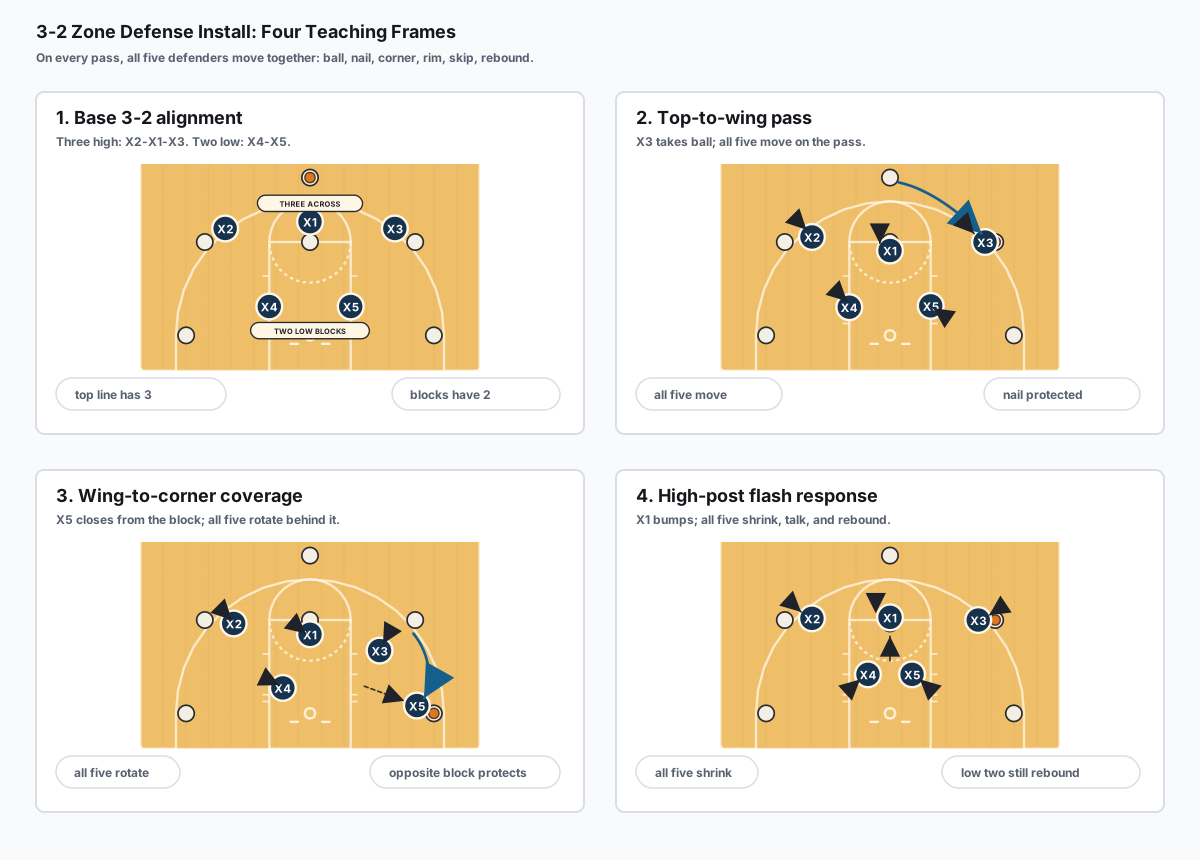
That last rule is the one that makes the rest of the defense work. The 3-2 is not X3 closing to the wing while everyone else watches. On a top-to-wing pass, the ball-side wing closes, X1 owns the nail, the opposite wing squeezes, the ball-side low defender prepares for corner coverage, and the weak-side low defender protects the rim and rebound. On every pass, all five players should be able to name their new job.
When to use the 3-2
Use the 3-2 when the opponent wants clean catches above the free throw line extended. It is especially useful against teams that reverse the ball for rhythm threes, start offense through the wing, or struggle to make quick decisions from the short corner. The top line lets you contest the first pass without pulling a low defender too far from the rim.
It also works as a possession changer. After a timeout, after a made free throw, or for a short second-quarter stretch, the 3-2 can make the offense pause. You do not need to live in it for an entire game. Sometimes the best use of a zone is to make the other coach spend two possessions organizing against it.
Do not use it casually against a team with a great corner shooter, a skilled high-post passer, and weak-side cutters who understand timing. That does not mean you can never play it. It means your corner rule, high-post rule, and weak-side rebounding rule must be sharper than the opponent’s spacing.
When not to use it
Do not use the 3-2 if your bottom two defenders refuse to sprint to the corner. That is the first stress point. If the ball hits the corner and your bottom defender jogs, the possession usually ends in a shot, baseline drive, or panic rotation.
Do not use it if your top line chases every pass like a trap. The 3-2 needs pressure, but it also needs shape. If X1, X2, and X3 all get pulled above the arc, the nail and high post become free offense.
Do not use it if your team treats zone as rest. A good zone is active. It talks early, moves on the pass, hits bodies, and rebounds. If the defense stops competing because the word “zone” was called, go back to a defense that gives them clearer accountability.
Base alignment
Start with X1 at the top, X2 and X3 on the wings, and X4 and X5 on the low blocks. The exact personnel can change, but the jobs cannot be vague.
| Defender | Starting area | First job | Coach cue |
|---|---|---|---|
| X1 | Top / point | Pressure the ball, then protect the nail on wing pass | ”Touch the ball, then own the nail.” |
| X2 | Left wing | Guard wing catch, stunt middle, recover on reversal | ”No rhythm catch.” |
| X3 | Right wing | Guard wing catch, stunt middle, recover on reversal | ”No rhythm catch.” |
| X4 | Left block | Corner closeout, low-post body, weak-side rebound | ”Sprint corner, then hit.” |
| X5 | Right block | Corner closeout, low-post body, weak-side rebound | ”Sprint corner, then hit.” |
X1 should begin high enough to bother the point guard but low enough to discourage a direct pass to the nail. X2 and X3 start around free throw line extended. If they are too low, the top is exposed. If they are too high, the corner is automatic. X4 and X5 start near the blocks, but they must see the ball and the nearest low-post or short-corner threat.
The alignment should look connected, not flat. The top three are not standing on a string across the arc. The bottom two are not glued to the lane. Every player should be close enough to move on the pass and arrive with a purpose.
First install progression
Teach the defense in layers. If you jump straight to live offense, players will guess. If they guess, they will blame the zone. The problem will not be the zone. It will be the install.
First, install the shell with no cutters. Put five offensive players around the perimeter and move the ball from top to wing, wing to corner, corner back to wing, then reverse. On every pass, all five defenders move while the ball is in the air. Freeze and ask each defender to name the job: ball, nail, corner, rim, skip, rebound. This keeps the defense from becoming a shape with no purpose.
Second, add the corner pass. This is where the 3-2 usually breaks. When the ball goes to the corner, the nearest bottom defender closes out. The ball-side wing drops to take away the easy return pass and support the lane. X1 slides toward the nail. The weak-side bottom defender protects the rim. The weak-side wing squeezes toward the middle and prepares for the skip.
Third, add the high-post flash. Decide your rule before practice starts. A simple first rule is: nearest top-line defender bumps the flash, X1 protects the nail, and the bottom defenders stay connected to the low-post and short-corner threats. If the catch happens, collapse with high hands and make the high-post player pass out.
Fourth, add shot and rebound. A zone possession is not over when the offense misses. It is over when your team owns the ball. Teach rebounding as part of the defense, not as an extra sentence at the end.
Ball movement rules
On a pass from top to wing, all five move at once. The wing defender takes the ball. X1 drops toward the nail. The opposite wing slides toward the middle. The ball-side bottom defender shades the low post and prepares for corner coverage. The weak-side bottom defender protects the rim and starts thinking rebound.
On a pass from wing to corner, all five move again. The nearest bottom defender closes out. The wing above the ball drops to help the lane and discourage the return pass. X1 holds the nail. The opposite wing squeezes to skip help. The opposite bottom defender protects the rim and rebound. That closeout has to be urgent but not reckless. The goal is to arrive with high hands, take away the shot, and keep the ball on the side. If the defender flies by, the corner player drives baseline and the defense is finished.
On reversal, the defense moves while the ball is in the air. Bad zones move after the catch. Good zones move on the pass. The top line slides together so the opposite wing does not catch and shoot against air. The bottom line rotates back before the offense can throw the skip or seal the weak block.
Corner and baseline responsibilities
The corner is the test. If your bottom defenders cannot close out and recover, the offense will keep throwing the ball there until you leave the defense. Give the bottom defenders simple language: sprint, stop the shot, keep baseline closed, rebound.
When the ball is in the corner, the on-ball defender should force the ball toward help, not give up a straight baseline drive. The wing defender above the ball discourages the easy return pass and is ready to stunt at a driver. X1 protects the nail. The opposite bottom defender is the rim protector. The opposite wing is the skip-pass player.
If the offense puts a player in the short corner, decide whether your bottom defender owns that player or whether you want a bump-and-release rule. For the first install, keep it simple: the bottom defender must know where the short-corner player is before closing out. If the ball goes to the short corner, the nearest bottom defender takes it and the rest of the defense collapses to protect the rim and rebound.
Do not let “no baseline” become a slogan with no footwork behind it. The bottom defender should arrive outside shoulder to outside shoulder, baseline side closed, hands high.
High-post rule
The high post is the pressure point that decides whether your 3-2 is organized or just hopeful. If the offense can flash, catch, turn, and see both corners, the defense is in trouble.
Teach a clear rule. Against most teams, the nearest top-line defender bumps or fronts the flash, while X1 protects the nail behind it. If the high-post catch still happens, the closest top defender bothers the ball with high hands, both bottom defenders pinch in, and the opposite wing takes away the easiest kick-out.
The goal is not to steal every high-post pass. The goal is to make the high-post player catch under stress. A rushed catch at the nail often becomes a harmless pass back out. A clean catch with no pressure becomes a corner three, dump-down, or one-dribble pull-up.
Rebounding rule
Rebounding has to be assigned. “Find somebody” is not enough for young teams and not enough for tired teams.
On the shot, the bottom defenders hit the nearest inside threats. The top three crack down and pursue long rebounds. X1 cannot stand at the free throw line watching the shot. X2 and X3 cannot leak out because they think the bottom players own every rebound. The 3-2 only works if all five players finish the possession.
Use this rule in practice: no rebound, no stop. If the defense forces a bad shot but gives up an offensive rebound, the possession continues and the defense gets no credit.
Common player mistakes
The first mistake is flat feet. Players think zone means rest. The ball can travel faster than the defense. Make players talk and move on air time. If they wait until the catch, they are late.
The second mistake is over-chasing. The top three defenders can get pulled too far outside the arc, especially against teams that pass and cut well. When that happens, the middle opens. Remind the top line that pressure is not the same as panic. They need active hands, controlled slides, and awareness of the high post.
The third mistake is soft closeouts from the bottom line. A late corner closeout makes the defense look broken. A wild closeout also breaks it. You need urgency with balance. Sprint early, chop late, hands high, no baseline.
Corrections and coach cues
Use short cues and use the same ones every day.
- “Move on the pass” fixes late rotations.
- “No baseline” fixes corner closeouts.
- “Own the nail” fixes soft high-post coverage.
- “Sprint, chop, show hands” fixes reckless corner closeouts.
- “Hit and get” fixes rebounding.
When the corner is open, do not just yell at the bottom defender. Check the whole chain. Did the wing defender start too high? Did X1 fail to drop? Did the weak-side defenders stay spread instead of squeezing? Most zone breakdowns are team breakdowns, even when the final shot makes one player look guilty.
When the high post is open, tighten the top line and rehearse the bump. Put a coach or manager at the high post and make the defense respond to flashes before adding live offense. Make the catch uncomfortable before you worry about the next rotation.
15-minute practice segment
Use this as a first-day install segment.
| Time | Drill | Constraint | Coach focus |
|---|---|---|---|
| 2 minutes | Five-on-zero slides | Coach points or passes ball around perimeter | Shape, talk, air-time movement |
| 4 minutes | Five-on-five no dribble | Offense can pass, flash, and cut | Corner rule and high-post bump |
| 4 minutes | Corner closeout reps | Ball must touch corner before shot | Sprint, chop, no baseline |
| 3 minutes | One-dribble live | Offense gets one dribble after corner or wing catch | Contain without losing shape |
| 2 minutes | Score and rebound | Defense scores only on stop plus rebound | Finish possession |
Freeze the drill only for teaching. Do not turn the segment into a lecture. If a defender misses the corner, freeze, move the player to the correct angle, repeat the pass, and play again. The second rep is where the learning happens.
Game adjustment checklist
Before using the 3-2 in a game, answer these:
- Can our bottom defenders close out to the corner without giving up baseline?
- Can X1 protect the nail after the first wing pass?
- Do we have a clear high-post rule?
- Are the top three cracking down to rebound?
- Do we want this as a primary defense, a short changeup, or a dead-ball call?
If the answer to the first three is no, keep teaching. If the answer to rebounding is no, the defense is not ready. If the answer to the last question is unclear, pick one use first. Players defend better when they know why the defense is being called.
Download tie-in
This page is the first piece of the future Zone Defense Coach Pack. The natural free download is a one-page 3-2 install sheet with base alignment, corner rule, high-post rule, rebounding responsibilities, and the 15-minute practice segment above.
The full coach pack can expand this into a complete zone-defense module: 2-3, 3-2, 1-3-1, matchup zone, zone rebounding, zone offense counters, and printable Playdraw diagrams. The free page should teach enough to be useful. The paid product should save the coach time by giving them printable diagrams, teaching scripts, and practice segments.