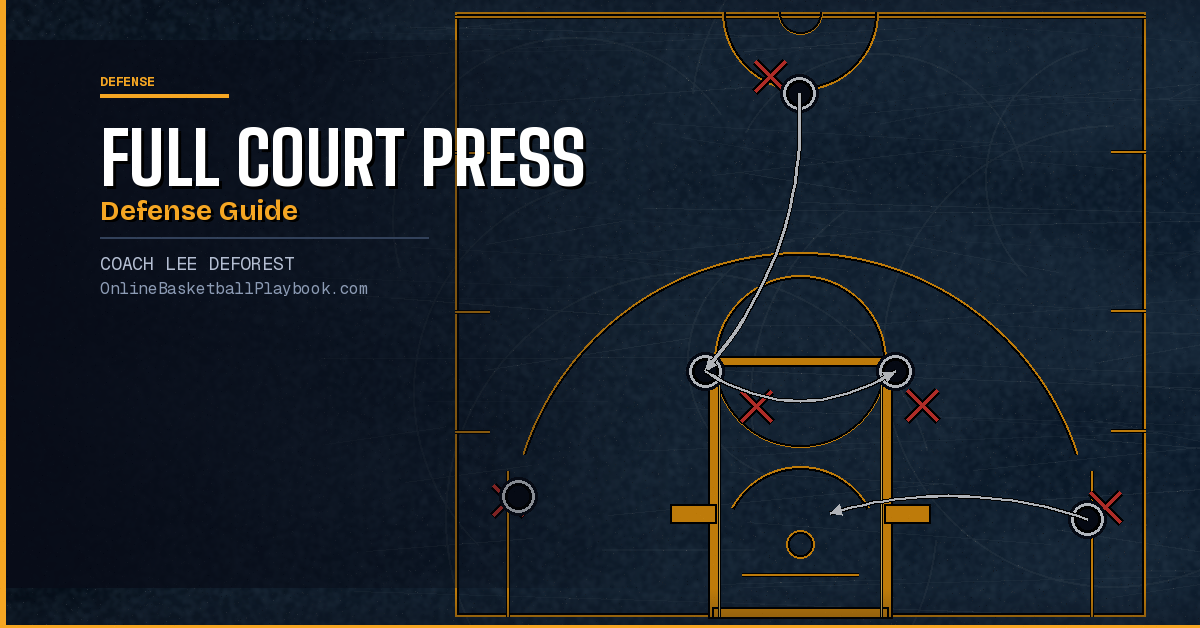

The full court press extends your defense the entire length of the floor — forcing turnovers, accelerating tempo, and putting opponents under pressure before they can settle into their half-court offense.
Why Coaches Use the Full Court Press
Most defenses wait. The full court press attacks. Instead of setting up in a half-court shell and letting the offense come to you, you're pushing the fight all the way back to the inbounds line — forcing the opponent to execute under duress, on a clock, against pressure they haven't had a chance to prepare for in a walk-through.
The primary goals of a press are not simply to cause turnovers, though those happen. The deeper objectives are tempo control and fatigue management. A pressing team dictates the rhythm of the game. Opponents who spend 30 seconds working through your trap have less time to run their half-court sets, less energy in the fourth quarter, and a coach who is spending timeouts early to settle his team down instead of saving them for late-game situations.
At the high school and youth level, pressing is particularly effective because ball-handling quality is inconsistent. A poised point guard can thread a press. A nervous sophomore in her first road game cannot. Coaching the press is, in many ways, coaching teams to exploit the weakest link in the opposing backcourt.
Elite pressing teams use it as a recruiting and identity tool. When a program builds its entire culture around 94-foot defense — conditioning, communication, athleticism — it signals something to recruits and opponents alike. Pressing is a commitment, not just a scheme. Teams that run it three possessions a game get none of the benefits. Teams that commit to it for 32 minutes get everything.
"When we use this defense we want the ball."
— Georgetown 1-2-1-1 press principle
The Three Press Families
Every press in basketball falls into one of three structural families. Understanding the families — not just memorizing one press — is what lets a coach adapt mid-game, adjust to personnel, and choose the right tool for each opponent.
Zone Presses (1-2-1-1 / 1-2-2 / 2-2-1)
Zone presses assign players to areas of the floor rather than to specific opponents. The most common are the 1-2-1-1 (also called the diamond), the 1-2-2, and the 2-2-1. Each has a different shape off the inbounds, different trap locations, and different recovery patterns into half-court defense.
The 1-2-1-1 is the most aggressive. You have a player right on the ball at the inbounds, two players at mid-court ready to trap or steal, one interceptor behind them, and one back protecting the basket. It is designed to force a specific path and punish the opponent for taking it. The Georgetown system built by John Thompson is the canonical version of this press — it was never just a scheme, it was a philosophy of physical dominance and ball-hunger that filtered through every player they recruited.
The 1-2-2, made famous by programs like UNC-Greensboro under Wes Miller, is built around zone identity. Rather than seeking the steal, the 1-2-2 version seeks to dictate. The goal is to keep the ball out of the middle third of the court, force lateral passes, and wear the opponent down over four quarters. It is a more sustainable, team-oriented press that drops cleanly into a 2-3 half-court zone when the press is beaten.
The 2-2-1 is the most conservative of the zone presses. Two defenders sit near the inbounds, two more at mid-court, and one back. It surrenders the inbounds pass more readily but creates a firm trap at the half-court line. Coaches often use the 2-2-1 as their base press when they want turnovers without gambling defensively.
Man-to-Man Full Court
Man press — also called run-and-jump — is a different animal. Every defender has a man, and the press lives in the constant disruption of passing lanes and dribble traps. The run-and-jump technique involves one defender guarding the dribbler while a teammate sprints from off-ball to jump the path, either double-teaming or forcing a rotation that creates a scramble. Done well, man press is nearly impossible to scout because the rotations are read-based, not scripted.
Man press requires elite athleticism and communication. Switches must be called clearly. Help rotations must be seamless. One slow rotation and the opponent has an easy layup. The reward is a defense that generates chaos — because chaos is hard to practice against and hard to prepare for when you don't know exactly what rotations you'll see.
Match-Up Presses
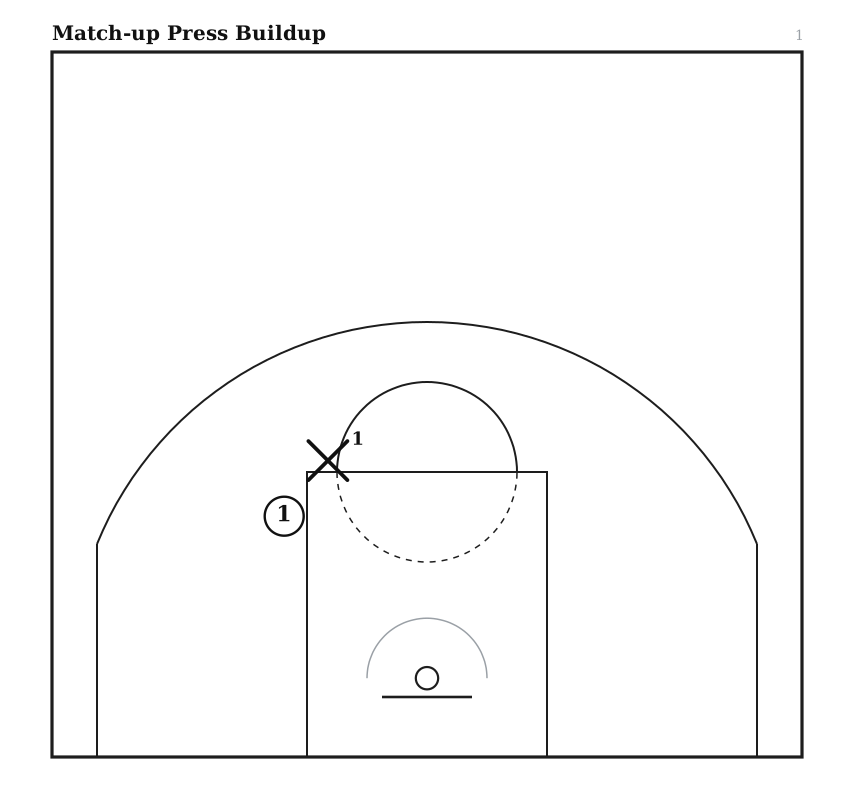
Match-up presses blend zone and man principles. Defenders start in zone alignments but match up to offensive players as they enter their zones. The most well-known versions use conditional trapping — only trapping when the offensive player makes an uncontrolled dribble, for example. This makes the defense more conservative while still creating confusion about whether defenders are playing man or zone.
Personnel and Positioning Rules
Every successful press is built on personnel clarity. Each position in the press has a specific job, and misassigning players — even talented ones — breaks the scheme. This is where many teams go wrong. They run a press without coaching the roles, and when a trap collapses or a rotation is late, they blame the press instead of the preparation.
The Point Man (Lead Defender)
The point man is the most demanding mental position on the press. This is not your fastest player — it is your smartest one. The point man's job is to funnel the dribbler toward the trap area, not to steal the ball. Aggressive point play that reaches for steals blows up the entire press by letting the dribbler go middle. The point man must be patient, disciplined, and constantly communicating with teammates. In a 1-2-1-1 or 1-2-2, this player sets the tone for everything that follows.
The Wings
Wing defenders in a zone press have to read the flight of the pass and sprint before it arrives. The timing window is short — a wing who waits for the catch before moving has already lost the play. The discipline is to declare the ball on the flight of the pass and sprint on air time. Wings who do this consistently create the turnovers that make press teams look dominant. Wings who react after the catch are always a step late.
The Interceptor / Stealer
In a 1-2-1-1, the player at the middle of the three-layer formation is the interceptor. This player reads the trap and anticipates where the opponent will try to throw. It is a gambler's position — the interceptor must commit to a lane and trust the trap to hold. If the trap breaks down and the interceptor has gambled, the offense has a direct path to the basket. Great interceptors have high basketball IQ and the ability to read the passer's eyes before the throw.
The Safety
The deepest defender in a press has one primary job: protect the basket. The safety cannot be lured forward by a read or a skip pass. Giving up layups while pressing is the fastest way to convince a head coach to pull the press. A disciplined safety who takes away the cheap basket keeps the press sustainable for 32 minutes.
When introducing the press to a new group, teach the safety role first. Players who understand what they're protecting — and why the basket cannot be surrendered — execute every other press role with better awareness.
The Three Rules Every Press Needs
Pressing systems that work over a full season share a common trait: they are built on a short list of non-negotiable rules rather than a long set of complicated instructions. The longer the rulebook, the harder it is to execute in a game — especially late in a close game when fatigue and pressure are both high. Great pressing coaches strip it to its essential rules and repeat them constantly.
The first rule is keep the ball out of the middle. Whatever your press alignment, the middle of the floor is where presses die. A ball in the middle opens passes in every direction, splits trap angles, and lets the point guard see the whole court. Forcing the ball sideline keeps the offense in a narrower decision space and keeps your trap angles clean. This is the rule the point man owns — and why the point man must be your most disciplined defender, not your most aggressive one.
The second rule is never allow a forward pass into the ball's third of the court or into the middle. Forward passes beat presses. A team that can consistently advance the ball forward against your press in one pass will eventually score. Your press must wall off the forward passing lane. This does not mean blocking every forward pass — it means making forward passes difficult enough that the offense settles for lateral or backward passes, which keep them under the time clock and in your trap zones longer.
The third rule is make the dribbler uncomfortable. An automatic double-team in the trap area is a standard mechanism in most zone presses. The moment the dribbler enters the designated trap area — typically six to eight feet on either side of half court — the trap closes. If the trap is half-hearted or slow, a skilled ball handler will simply dribble through it. The double team must be immediate, physical, and decisive. Discomfort forces the dribbler to pick up the ball or throw a hurried pass. Either outcome benefits the defense.
These three rules work together as a system. Violating any one of them unravels the other two. A ball in the middle defeats the forward-pass wall. A slow trap lets the dribbler stay comfortable. Teach the rules before the positions, and position play becomes intuitive.
How Teams Break the Press — and How to Adjust
Understanding how the press gets broken is as important as knowing how to run it. Coaching the press without coaching press breakers is incomplete preparation. Your team will face teams that have a plan, and your press must have adjustments ready.
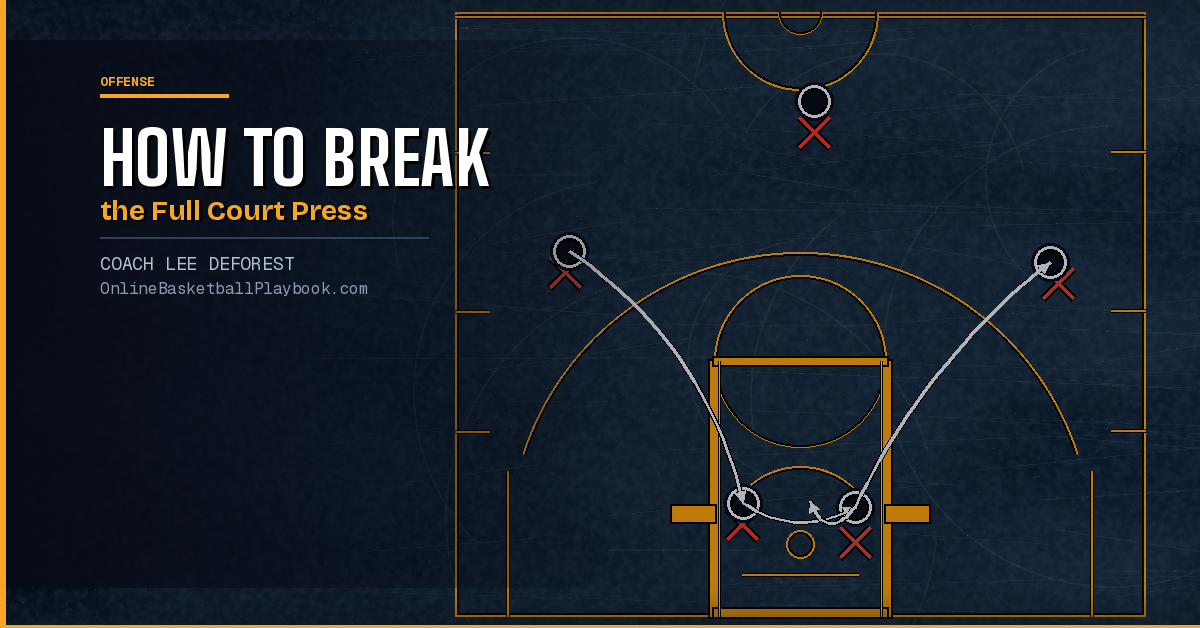
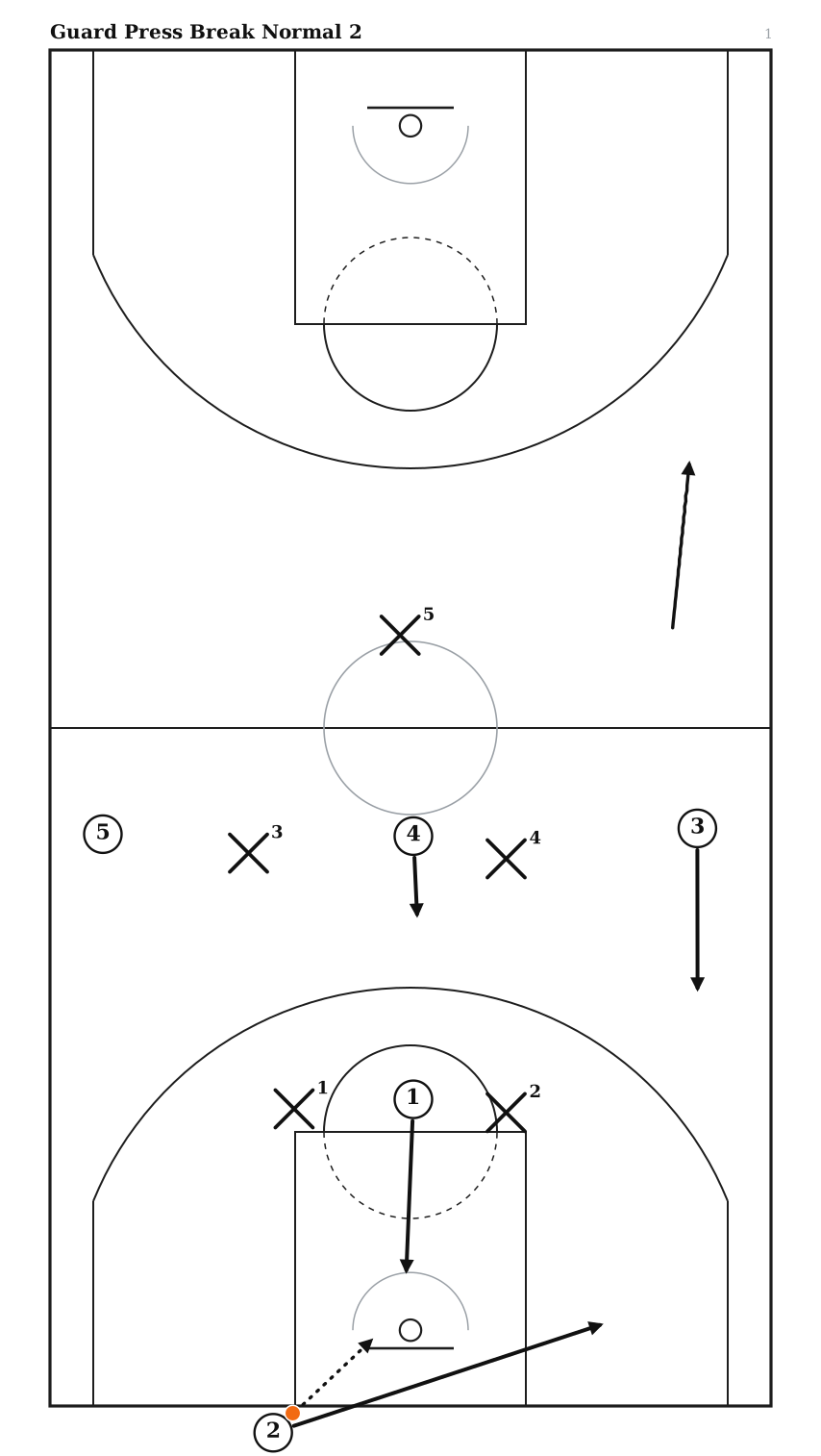
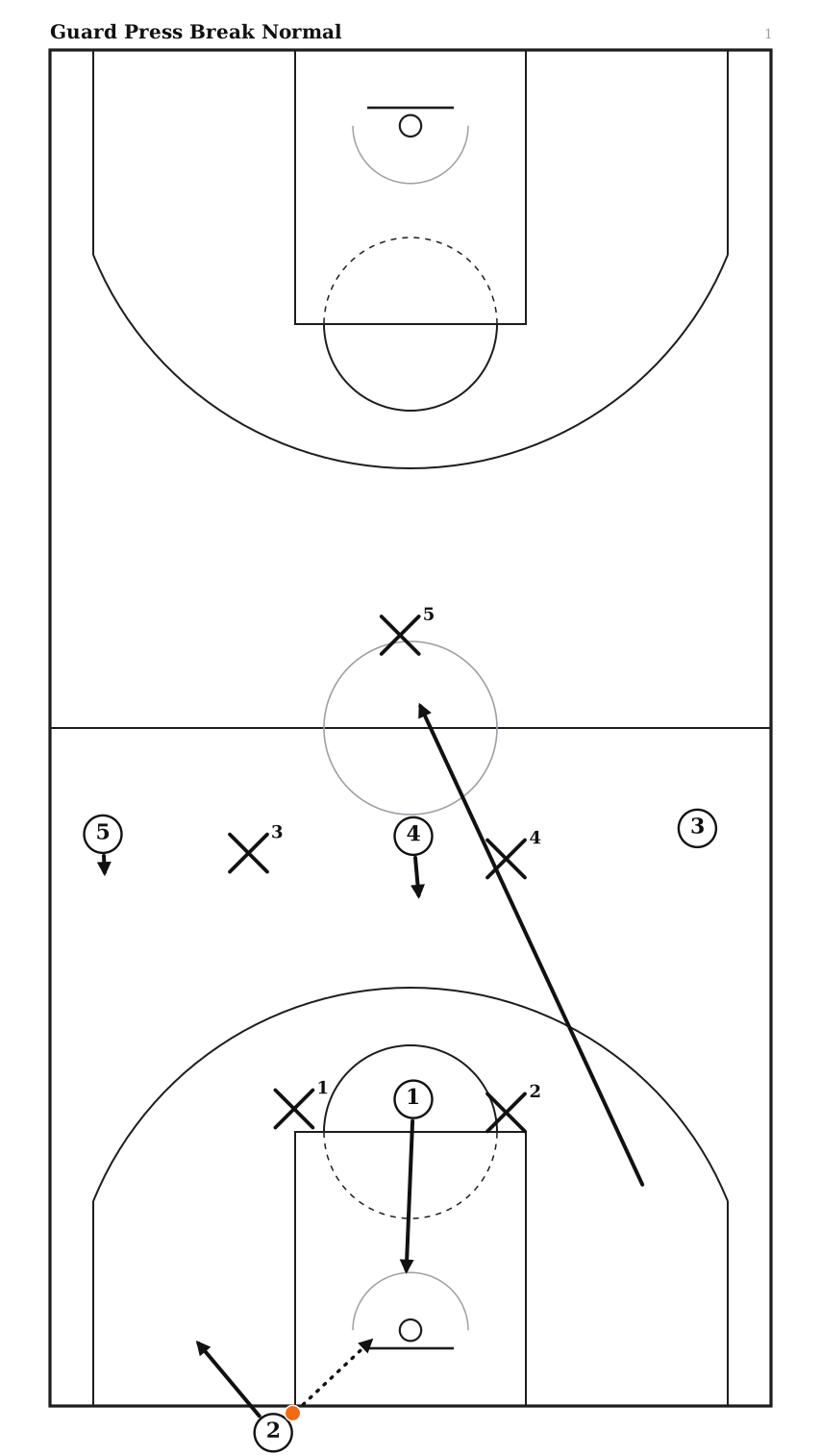
The most common press-breaker is the four-across inbounds set. The offense spaces four players at half court or just below, takes the inbounds pass, and immediately makes a simple pass to an open teammate. This creates 4-on-3 or 4-on-4 numbers before the press can rotate. The counter is to take away the easiest first pass — either by having your inbounder guard function as a fifth player or by denying the first receiver more aggressively off the inbounds line.
Long passes over the top are the second most common press-breaker. A confident point guard who sees the press in transition can throw a pass to a sprinting wing before the safety gets back. The counter is either a faster safety rotation or a press that delays the inbound longer, reducing the window for the long pass.
Poised ball-handlers are the third and hardest problem. Some teams simply practice against the press more than you do. They handle the double team calmly, make the simple pass, and advance the ball in two or three clean passes. Against this type of opponent, pressing becomes less effective over time. The adjustment is to vary the press look — switch from a 1-2-1-1 to a 2-2-1, or from zone press to man press, to prevent the opponent from getting comfortable with your rotations.
The most important adjustment principle: if a press is getting beat consistently, reduce the gamble. Pull your interceptor back, shade toward protection, and force the opponent to make more passes. You sacrifice turnovers but prevent layups, which is the right trade when the press is not working in its aggressive form.
Practice Breakdowns and Drills
Pressing teams practice the press more than other teams practice their half-court defense. That is not a small commitment. It requires dedicated chunks of practice time every week, not just a walkthrough on Monday before the Tuesday game. The teams that run a press effectively in March are the ones that ran it in November when it was ugly and used the chaos to teach the principles.
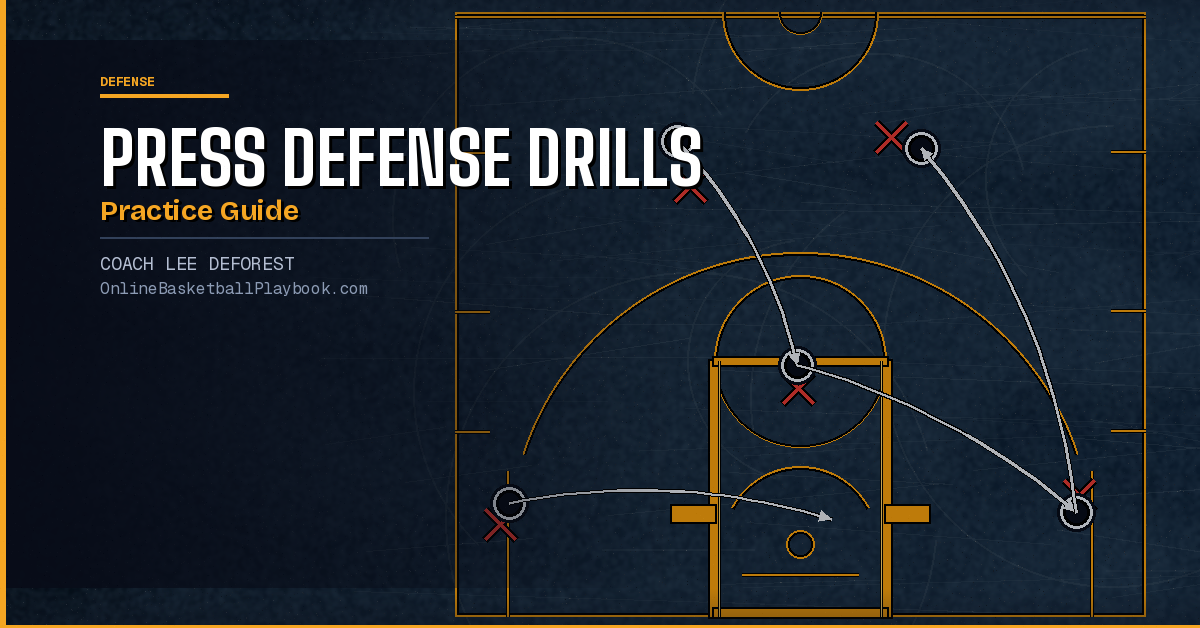
The foundational drill is the 2-on-1 trap drill. Two defenders set the trap on a ball handler near the sideline or corner. The ball handler has a third player as an outlet. The purpose is to teach trap angles — feet inside the trap, hands active, no reaching — and to teach the interceptor to read where the pass is going before it's thrown. Run this drill daily at the start of press practice. It is the muscle memory that makes the full-speed press work.
The three-on-two rotation drill extends the trap drill to include the safety. Two trappers, one interceptor, two offensive players. The interceptor must read the trapped player's eyes and either commit to the outlet lane or fall back to help. This drill teaches communication — the trappers must tell the interceptor which passing lane they are taking away. Silence in this drill means mental errors in the game.
Full-press shell scrimmage is the final piece. Five defenders, five offensive players, live inbounds. The difference from a regular scrimmage is that the coach stops play to walk through every mistake in real time. A trapped ball handler getting out unscathed is a teaching moment, not a free basket. Pull the play back, explain what happened, and run it again. Press teams learn from mistakes in practice or they repeat them in games.
Conditioning is woven into all of it. You cannot press for 32 minutes if your players are gasping at 20. Sprint work, defensive slides, and scramble recovery drills are not separate from press practice — they are press practice. Teams that condition for the press rather than just conditioning for basketball in general have a significant advantage by the fourth quarter, when their opponents are exhausted and your players are still running at game speed.
- Point man funnels, never reaches — the trap closes for him, not because of him
- Wings sprint on the flight of the pass, not after the catch
- Ball out of the middle third at all times — this is rule one, every possession
- Automatic double in the trap area: six to eight feet each side of half court
- Safety protects the basket — no gambles, no early reads forward
- When the press is getting beat, reduce the gamble before pulling it entirely
- Practice trap-angle drills daily; game-speed execution comes from repetition, not film
Want more defensive schemes, press breakdowns, and drill libraries delivered to your inbox?
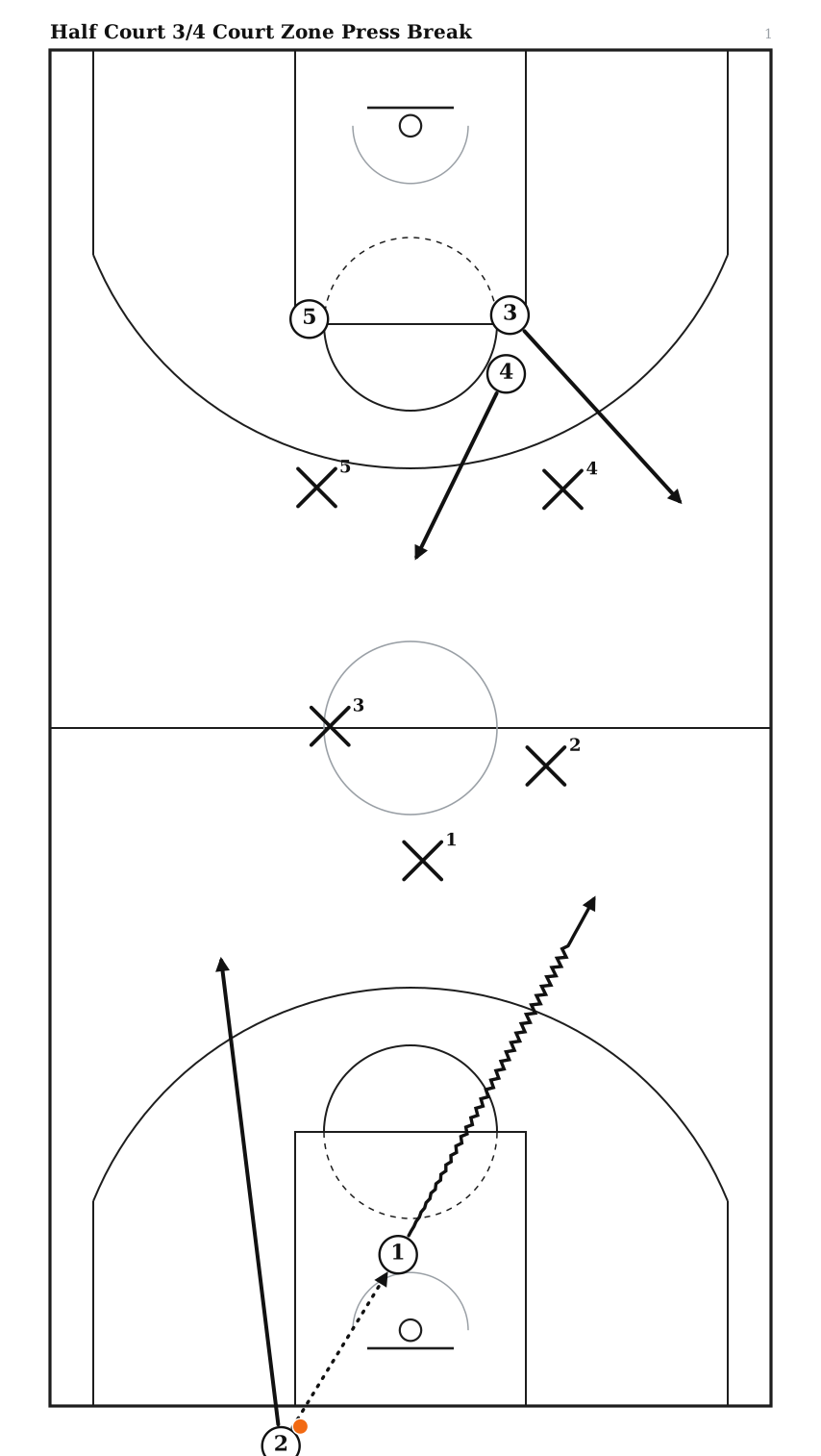
See it drawn up
Related diagrams
Keep Building
Related breakdowns
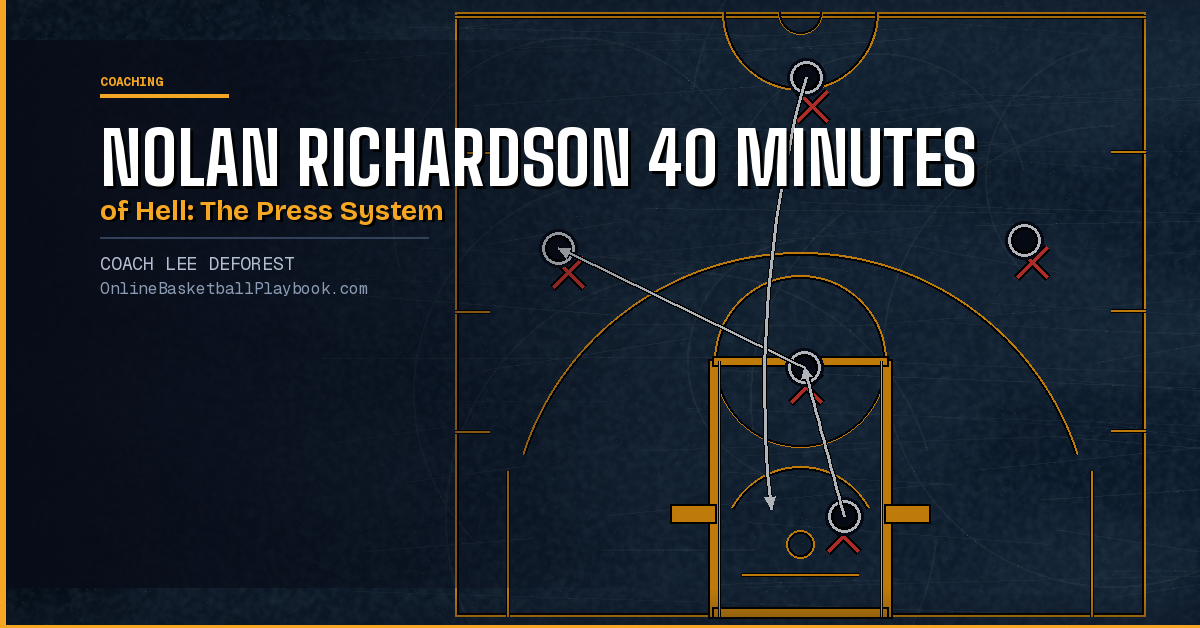
Nolan Richardson 40 Minutes of Hell: Teaching the Full-Court Press
Nolan Richardson 40 Minutes of Hell: Teaching the Full-Court Press