
The full court press rattles teams that aren't prepared. Coaches who install a clear press-break attack — proper spacing, smart reads, and decisive ball movement — turn the pressure into easy buckets at the other end.
Why Presses Work (and How to Exploit That)
Before you can beat a press, you have to understand what it is actually trying to do. Most teams treat the press as a steal machine — a defense designed to rip the ball away and score. That framing leads to panic, rushed passes, and exactly the turnovers the defense wants.
The better framing comes from Billy Donovan's Florida program, which ran one of the most disciplined full-court pressures in college basketball. Donovan taught his players that the press is a disruption tool first and a steal machine second. The press succeeds when your offense can't run its plays smoothly. It fails when your team stays calm, moves the ball on time, and attacks the gaps.
Wes Miller's 1-2-2 press at UNC-Greensboro makes this explicit: the program's stated goal is to "dictate, control, and disrupt" — turnovers are a byproduct, not the measure. That means every trapping team has a vulnerability baked into its design. When the defense commits two players to trap the ball, three defenders are covering four offensive players. The math is in the offense's favor every single time a trap forms — as long as the offense can identify that extra man and move the ball before the defense rotates.
The key insight for coaches: the press is not scary when your players know where to look. Panic is the press's real weapon. Poise is yours. Drill your players to see the numbers advantage every time a trap forms, and the press becomes a gift, not a threat.
The Spacing Principles Every Press Break Needs
Poor spacing is the single most common reason a press break collapses. When offensive players crowd together, one trap covers two men. The defense doesn't need to rotate — the offense has done the work for them. Good spacing forces the defense to cover every corner of the floor, and it creates passing lanes that are impossible to take away simultaneously.
The Four-Spot Rule
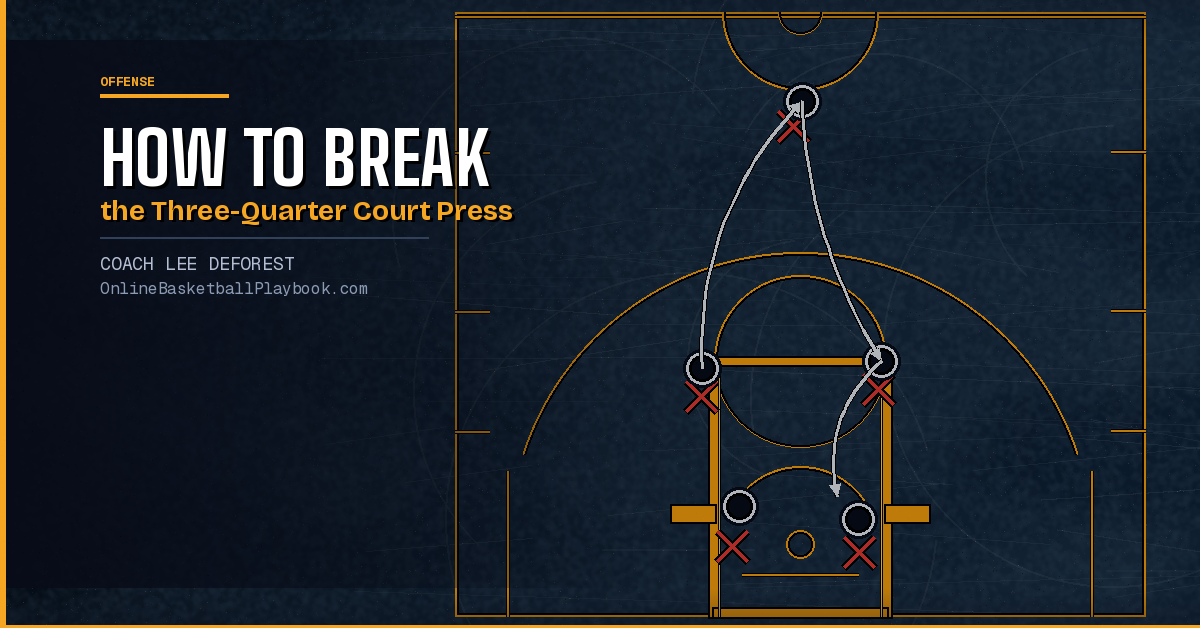
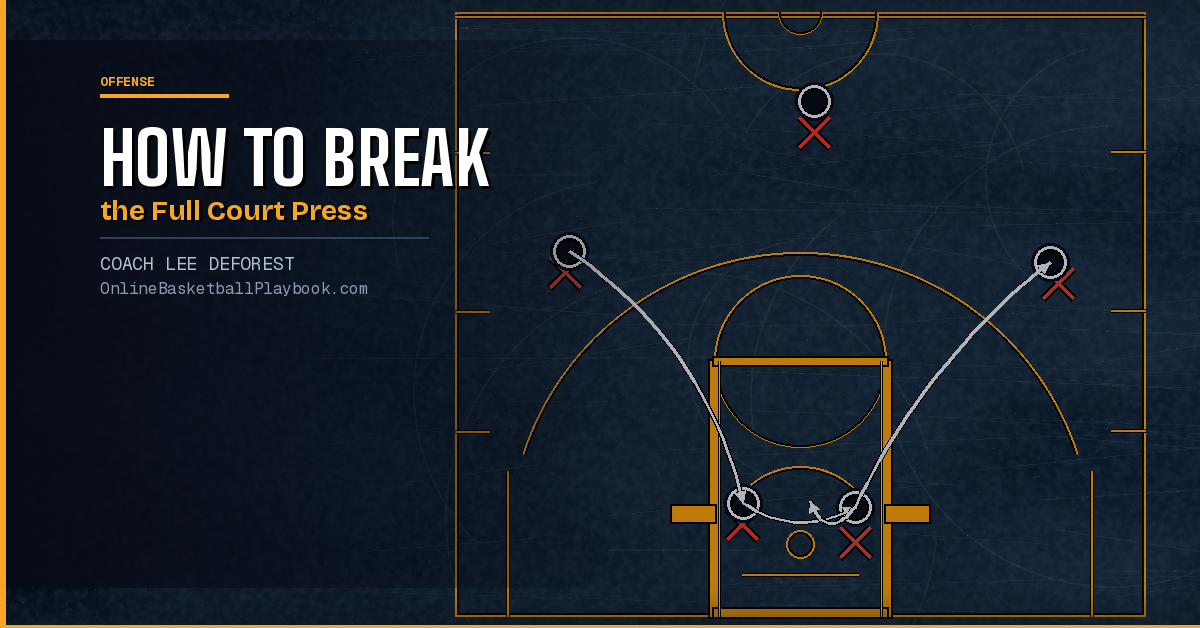
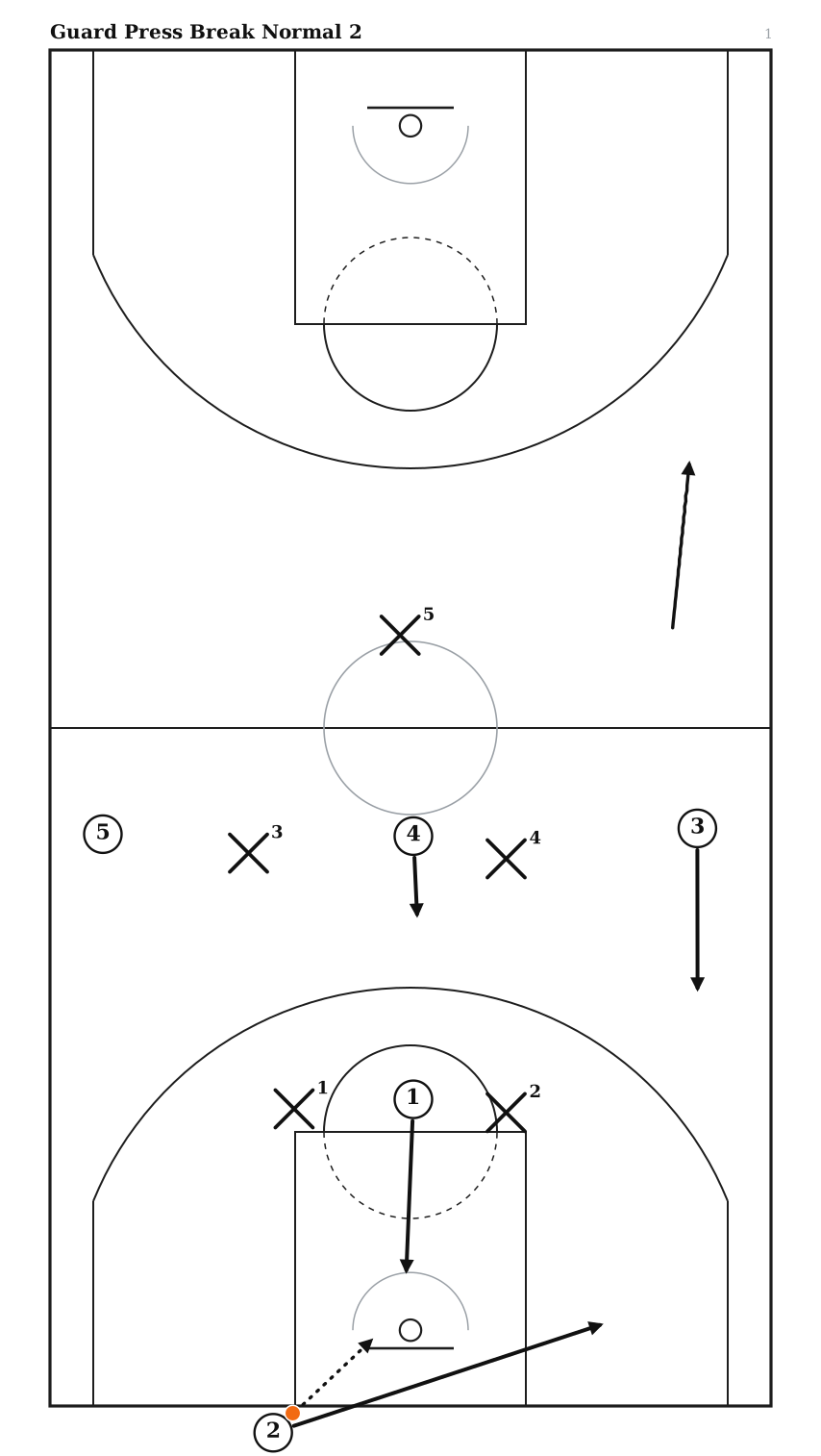
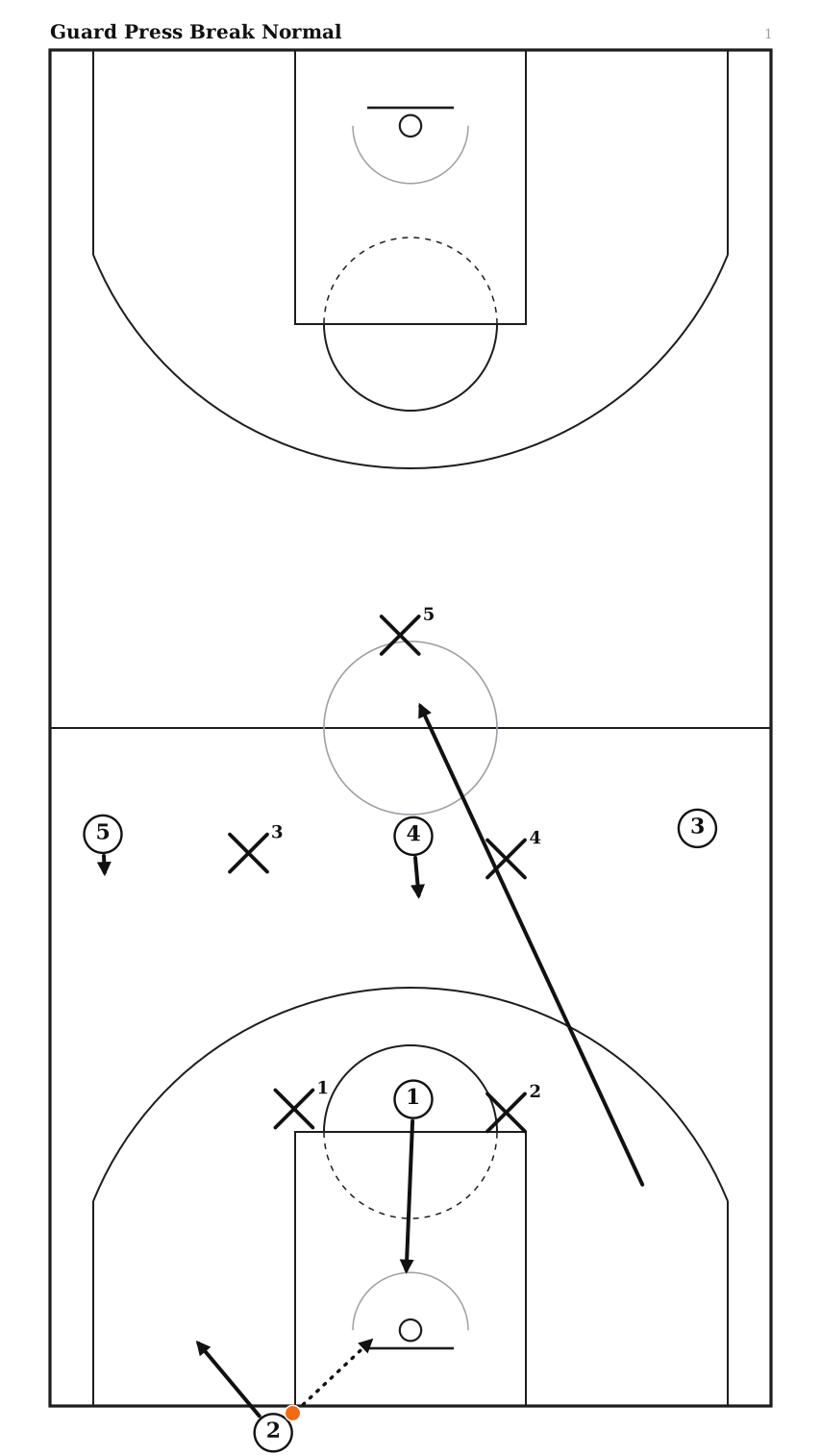
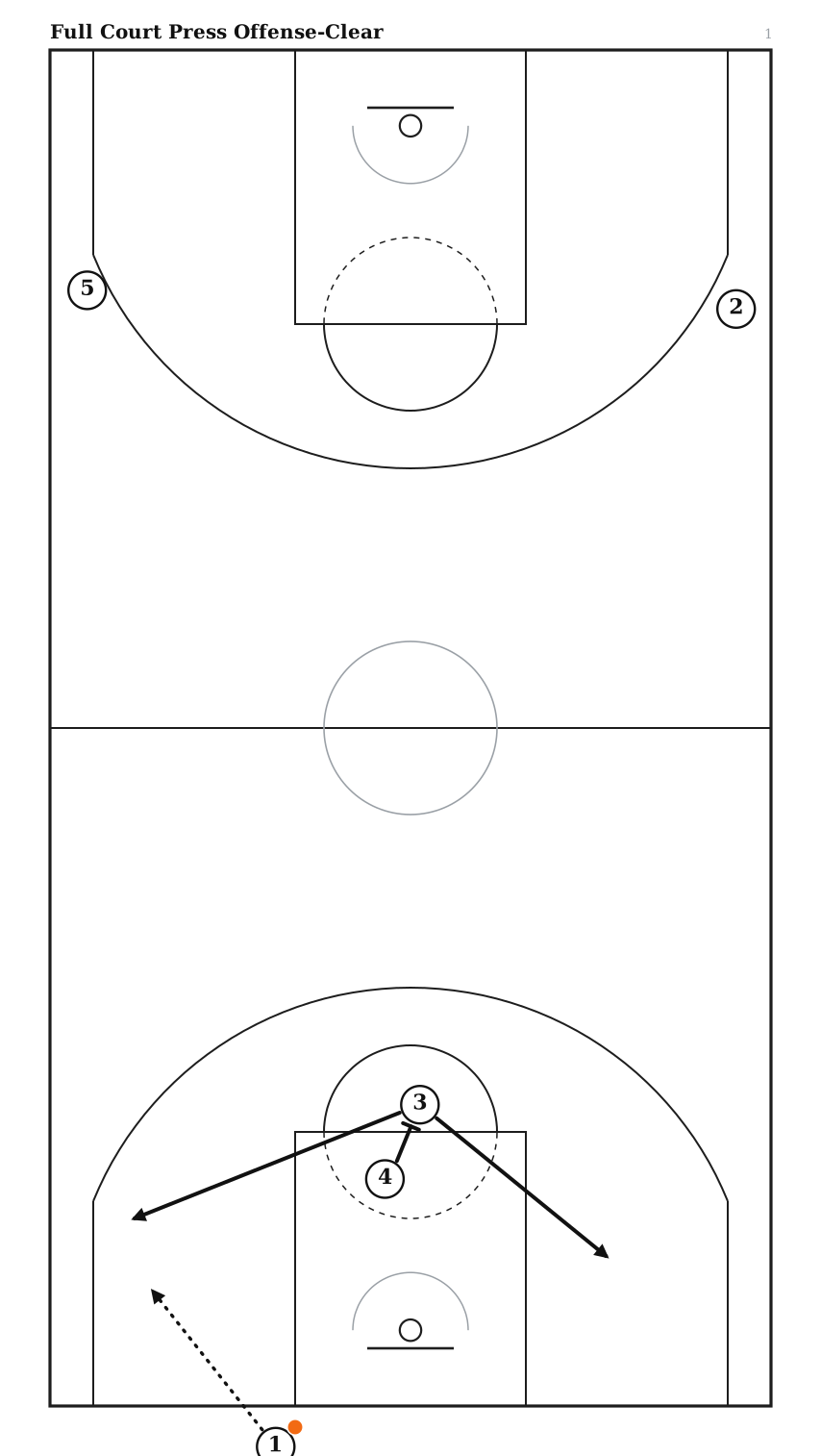
The simplest structural fix: put four offensive players in four spots spread across the full court at all times. One player inbounds the ball. One player receives the inbound pass near the near sideline, roughly at the free-throw line extended. One player occupies the middle of the court around half court. One player is stationed long, near the far free-throw line. The fifth player, your safety, trails behind the ball to provide a back pass if the front is clogged.
This layout — sometimes called the 1-4 vertical alignment — forces the defense to cover 84 feet of court with five players. If the defense sends two to trap the inbounds receiver, three defenders are left to cover three offensive players over 60 feet of floor. A clean skip pass or a quick advance should produce an uncontested layup or a wide-open catch in the frontcourt.
Keeping the Ball Out of the Middle
Interestingly, the spacing rule most important to the defense is the one your offense should mirror for different reasons. Press coaches like Wes Miller make ball-out-of-the-middle their first rule: "the ball always stays out of the middle third." Why? Because a ball in the middle has passing lanes to every part of the floor — it breaks the press instantly.
Teach your ball handlers to attack the sideline deliberately when bringing the ball upcourt against pressure, then use the sideline position to draw the trap and fire the skip pass to the middle or the far wing. The middle of the floor should be where your second receiver sets up — open, stationary, and ready to catch and attack.
Don't Dribble Into Traps
One spacing principle that lives in player behavior rather than formation: your ball handler must stop before the trap fully closes. A dribble killed in a trap is a five-second call or a turnover waiting to happen. Players need to catch the ball, read the defense, and pass before a second defender arrives. Practice the "catch and face" habit — receive the ball, stop your feet, and immediately identify the next pass. The decision should be made before the catch, not after it.
Reading the Trap and Finding the Open Man
Every press break ultimately comes down to one skill: reading where the extra man is and delivering the ball on time. This sounds simple and is surprisingly hard to teach, because the read happens quickly and the consequence of a late pass is severe.
The first read is always the same: when two defenders commit to a trap, count bodies. Three defenders remain. Four offensive players are uncovered. One of those four is the open man. That open player is always one pass away from the trap — either directly ahead of the ball, diagonally across the court, or in the deep position near the basket.
The Three-Pass Rule
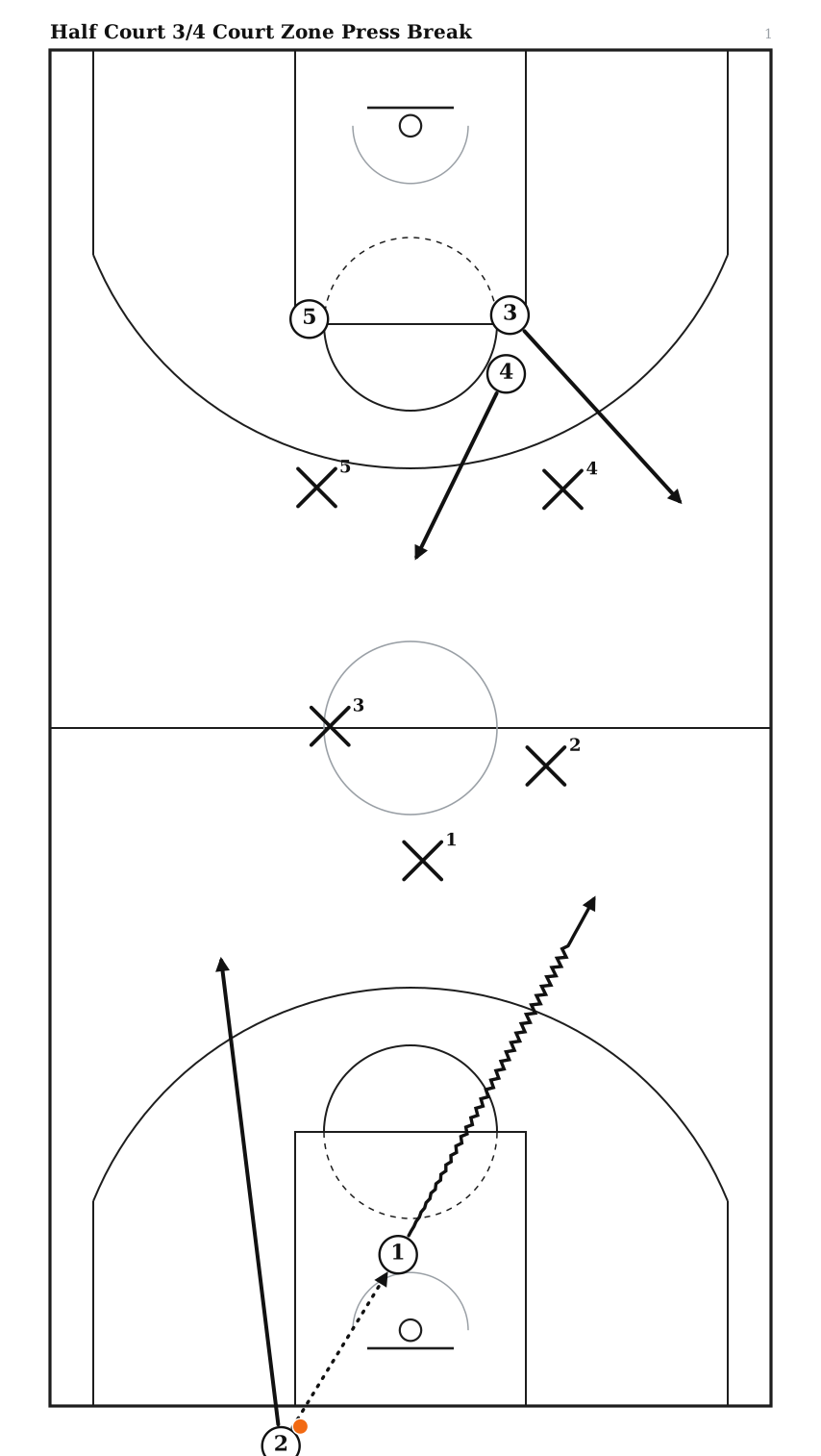
Against a well-organized zone press, the open man is rarely at the first pass location. The first pass gets the ball out of the trap. The second pass advances the ball past the second line of defenders. The third pass finds the open player for a shot or layup. Teach your players that three quick, clean passes almost always beat a zone press — regardless of the press family.
NKU's press scheme under John Brandon identifies three situations it never wants to see from its defenders: getting split by a ball handler in the middle, running at a handler who has clear court ahead, and committing three players to one ball. All three of those "sins" from the defense's perspective are the exact reads your offense should be hunting. When you see two defenders sprint at the ball, the player behind them is wide open. Move the ball there.
Declaring the Pass on the Flight
Wes Miller uses the phrase "declare the ball on the flight of the pass" to describe how his press rotations work. The receiver of a pass is already matched up before the ball arrives. Your offense should use the same concept in reverse: as a pass is in the air, the intended next receiver should already be moving to their spot. Ball movement and player movement happen simultaneously, not sequentially. The offense that passes and then watches is slow. The offense that passes and moves is a press's nightmare.
The press is successful if they can't run their offense — unsuccessful if we foul or give up a layup or an open three. Good players avoid traps; pressure the ball, take the primary handler out of it, and never surrender the easy basket.
— Billy Donovan (Florida), Basketball Vault
Attack Angles: Getting Layups Out of Pressure
Breaking the press is not just about surviving — it's about scoring. Teams that merely dribble through pressure and set up their half-court offense are leaving points on the floor. The best press-break offenses treat the press as an opportunity to get easy baskets before the defense recovers its shape.
Attack the Numbers
Every time a trap forms and the ball gets out, count the defenders between the ball and the basket. If your player catches the skip pass past the second line of defenders and there is only one defender back, that is a 2-on-1. Attack it immediately. Don't reset into your half-court offense — attack the advantage before the defense recovers. Press-breaking coaches call this "attack for a layup." The press gives you the chance; you have to take it.
The Middle-Reverse Entry
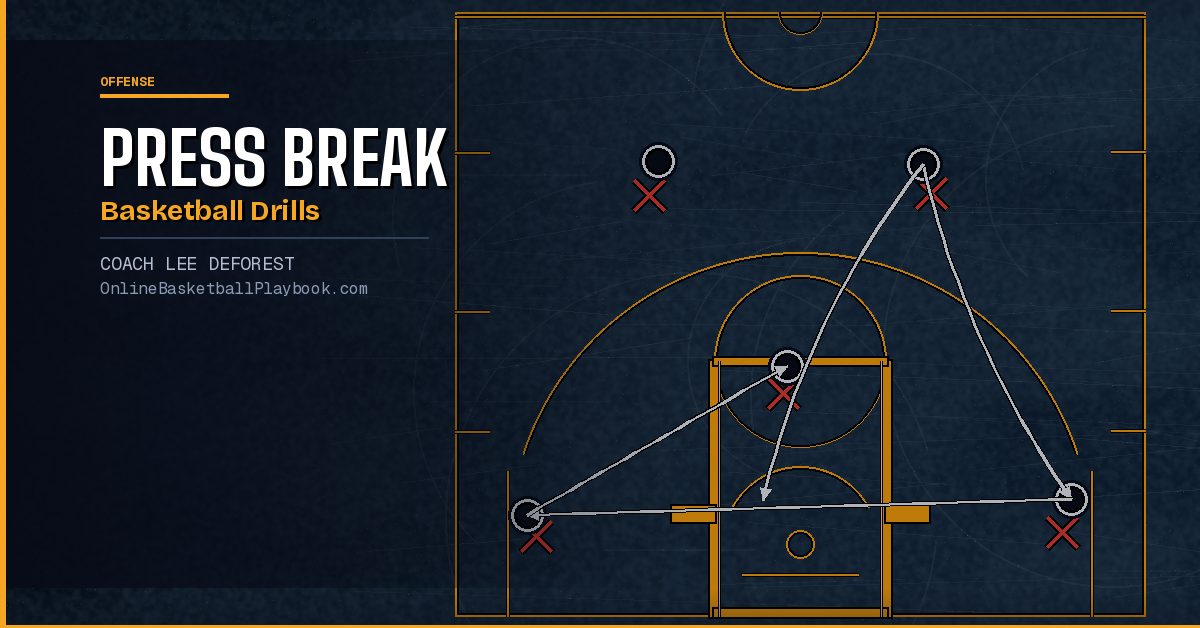
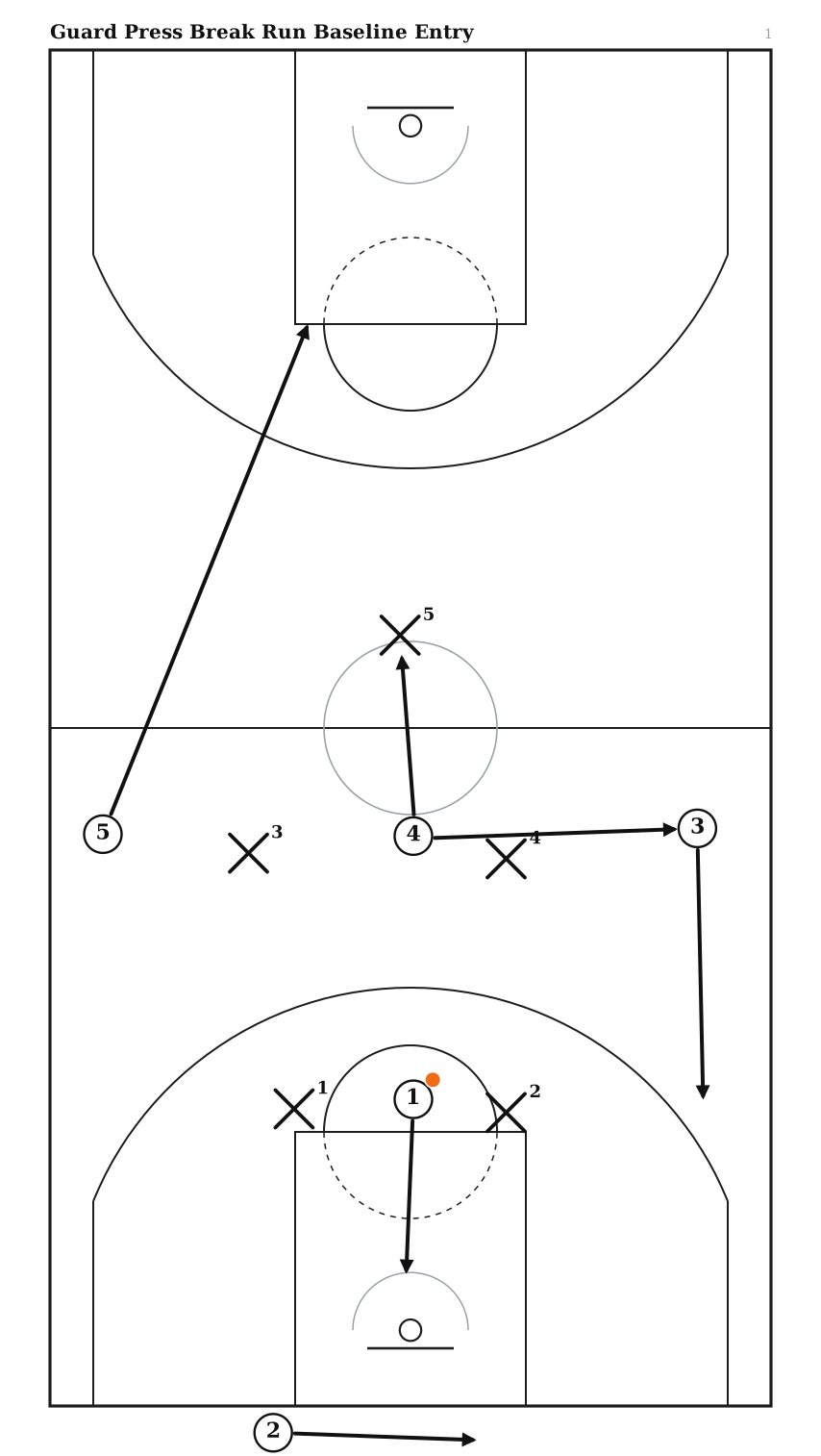
One of the most reliable press-break actions is the sideline-middle-reverse sequence. The inbounder hits the near-sideline player. That player passes quickly to the middle player at half court. The middle player pivots and immediately looks to reverse the ball to the far side. The defense, which loaded up to stop the near-side advancement, is now sprinting laterally with the ball moving faster than they can rotate. A clean catch on the far side should produce an open shot or an uncontested drive.
Tom Davis's press-break philosophy at Boston College builds from this foundation: "convert to pressure the instant the ball goes in." The press break starts at the inbounds, not after the team has reset. Fast, immediate movement in the first two seconds gives the defense no time to establish its trapping positions.
The Long Pass Over the Defense
Every press break needs a home-run play. When the defense over-commits both its front line and one of its middle players to trap, someone is sprinting long and uncovered near the far basket. This is the look to practice deliberately. The inbounder or the ball handler who just escaped the trap should throw the skip pass over the top if the lane is clear. One well-executed long pass turns defensive pressure into a layup and makes the pressing team immediately cautious about trapping.
Personnel Roles in the Press Break
A press break is only as strong as the players executing their specific jobs. Confusion about who goes where produces the clutter that press defenses love. Each player needs one clear assignment.
The Inbounder
The inbounder is often your most experienced perimeter player. Their job after making the inbound pass is to come inbounds and offer a safety valve — a back pass if the front of the press break is clogged. They should never stand and watch. Step inbounds, fill the trail spot, and be ready to receive a back pass and restart.
The Primary Handler
This is your toughest, most composed player. They receive the inbound pass and are immediately under pressure. Their job is not to dribble through the press — it's to catch, face the defense, read the trap, and make the next pass before the trap fully closes. Walberg's press systems specifically target the primary handler with a "wear-down" strategy, applying full-court pressure on every possession to drain their energy and force untested backup guards into uncomfortable situations. Train your primary handler to catch cleanly, stay in their stance, and move the ball without turning their back to the defense.
The Middle Player
The middle player is the engine of the press break. They set up at half court, open to the ball, and are the pivot point for the entire offense. When the ball reaches them, they need to turn and attack immediately — either driving the open gap or swinging the ball to the far side. This player must be a solid ball handler and a strong decision-maker. Walberg's Oceanside 2-2-1 press is specifically designed to take both the sideline pass and the middle pass away — which means your middle player is the primary target and must be someone who stays composed under immediate pressure.
The Deep Receiver
Stationed near the far free-throw line, the deep receiver's entire job is to be a threat. Their presence forces one defender to stay home, which opens spacing everywhere else. When the press break is working, this player should be receiving skip passes and converting easy looks. They should never drift or wander — pin yourself to a spot that threatens the basket and demands defensive attention.
The Trailer
The fifth player fills behind the ball as a safety and a secondary option. If the press break has stalled and the primary handler is in trouble, the trailer provides the back pass that relieves pressure. In the next possession, the trailer may rotate into a different role, but their priority on any given trip is ball security and reset.
Drills to Install Your Press Break Fast
Knowing the reads is half the work. The other half is building the muscle memory through deliberate practice so that calm decision-making happens under pressure, not just in walk-throughs.
2-on-1 Full-Court Press Break Finish
Two offensive players start at half court. One defender is stationed between them and the basket. On the coach's signal, the two offensive players attack and must convert. This drill builds the "attack the numbers" habit and eliminates the tendency to reset when an advantage is present. Run it at game speed. Require a layup or a clear shot — no dribbling past the opportunity.
5-on-5 Half-Court Press Entry
Set up a half-court full-press situation: one team inbounds from the baseline, the other applies pressure from the half-court line down. The offensive team practices the first two passes — inbound plus the advance to the middle player. The drill ends when the ball crosses half court or a turnover occurs. Repetitions of this segment build the inbounder-to-handler-to-middle connection and make those early passes automatic.
3-on-2 Middle-Reverse Sequence
Three offensive players run the sideline-middle-reverse entry against two defenders. The offense must execute all three passes before attacking. This trains the sequence without the chaos of five-on-five and lets coaches correct the timing of individual passes. Once the three-pass sequence is clean, add a fourth offensive player and a third defender to simulate the full press break at speed.
Full 5-on-5 Against a Live Press
Once the individual reads and sequences are solid, run full-court five-on-five with a pressing defense. The pressing team uses its actual press scheme. The break team executes against real pressure. This is where the reads, spacing, and attack habits get tested under conditions that match a game. Run it until your team is no longer rattled — until the press feels like a familiar problem with a familiar solution.
When introducing your press break to a new group, start with three-player walk-throughs at half speed before adding defenders. Players need to see the spacing and the passing lanes clearly before pressure is applied — rushing to five-on-five too early buries the reads under chaos and slows learning. Build the picture first, then add resistance.
Common Mistakes That Keep Your Press Break Broken
Even teams that understand the concepts make predictable errors under live pressure. Knowing these in advance lets you catch them in practice before they show up in games.
Dribbling into a formed trap. This is the most common and most costly mistake. Once two defenders have committed and closed the space, the dribble is over. Players who keep dribbling in a trap end up picking up their dribble in traffic with nowhere to go. Teach your players to recognize the trap forming — before it closes — and pass early.
Crowding the ball. When a trap forms, offensive players instinctively drift toward the ball to help. This is exactly the wrong impulse. Offensive players away from the ball should hold their spacing, stretch the defense, and wait to receive — not narrow the floor by moving toward the trouble.
Dribbling sideways instead of passing. A ball handler who dribbles laterally to escape pressure wastes the time advantage. Every sideline dribble is a second the defense uses to recover. Pass the ball — it moves faster than a dribble every time, and passing advances the ball toward the basket.
Skipping the middle. Teams trying to go sideline-to-sideline in two passes instead of three are trying to shortcut the break. Skip the middle player and the defense can rotate. The three-pass rhythm — inbound, middle, attack — exists for a reason. Trust the process, even when the long skip looks open.
Not attacking after the press breaks. The single biggest missed opportunity in press breaking: the ball gets to half court, the press is beaten, and the offense slows down to set up the half-court game. If you have numbers — attack. If the defense is sprinting to recover — make them pay. The press break should produce easy baskets regularly, not just clean half-court possessions.
- Spread to four spots immediately: assign every player a spot before the inbound — near sideline, middle at half, far free-throw line, and a trailer safety — so spacing is automatic, not improvised.
- Catch, face, pass before the trap closes: the primary handler must receive the inbound pass already knowing their next pass and deliver it before a second defender arrives; drill the "catch and face" habit daily.
- Count defenders on every pass: after each pass, the receiver must count how many defenders are between the ball and the basket and attack any numerical advantage immediately instead of resetting.
- Use the three-pass rhythm: inbound to near sideline, quick advance to the middle player, reverse or attack — trust all three passes rather than trying to shortcut to the basket in two passes and giving the defense time to rotate.
- Practice the trailer safety valve: every press break rep must end with the inbounder stepping inbounds and filling the trail position, ready to receive a back pass — this player saves more possessions per game than any other single role.
- Attack the numbers after the break: if your team arrives at the frontcourt with a numerical advantage — a two-on-one or a three-on-two — take the layup; do not slow down and reset into half-court offense when the defense has not recovered.
Want more basketball coaching strategies, drills, and tools?
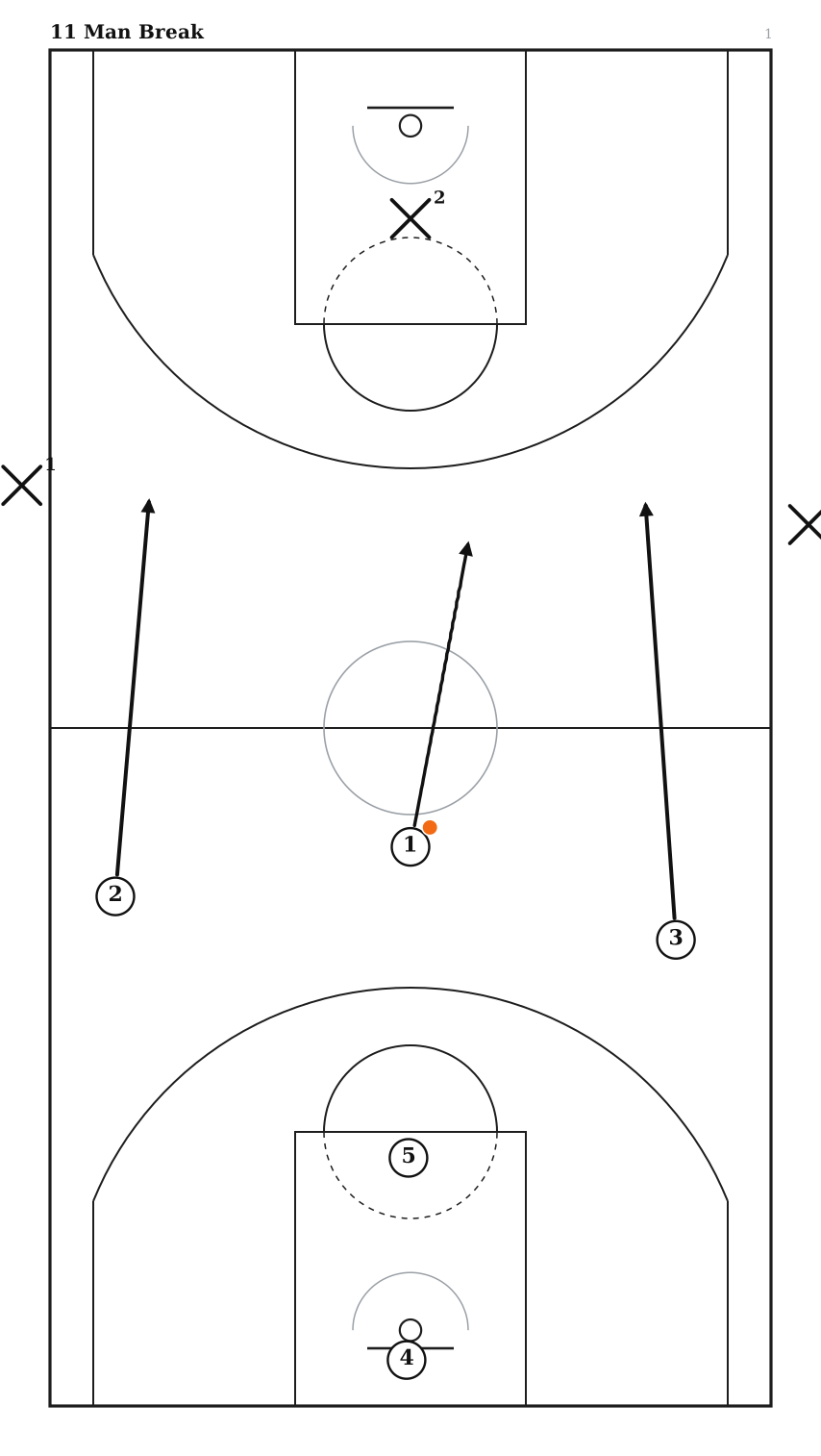
See it drawn up
Related diagrams
Keep Building
Related breakdowns
Nolan Richardson 40 Minutes of Hell: Teaching the Full-Court Press
Nolan Richardson 40 Minutes of Hell: Teaching the Full-Court Press