Building Team Chemistry in Basketball: Roles, Rules and Habits
Building team chemistry in basketball comes from clear roles, a few rules applied to everyone and daily habits. Here is how to set up each one and how to drill it.
Coaching
Playbook Vault
The deep stuff: how to coach each system, with the why and how, not just the X’s and O’s. Grouped by offense, defense, and drills so you find the topic fast.
Offense
Sets, motion, ball-screen, zone attacks, transition, and beating the press. How you score.
Building team chemistry in basketball comes from clear roles, a few rules applied to everyone and daily habits. Here is how to set up each one and how to drill it.
How to become a basketball coach: where coaches start, youth, school, club and college paths, entry jobs, coaching education, networks and mentors.
A printable basketball scouting report template with team, offense, defense, player and game plan sections, the questions to ask and how to brief players.
A coach's guide to basketball tryouts, with session plans, drills and scrimmages, evaluation forms, what to look for, and how to tell players the decision.
How to build a mentorship program for young coaches: set goals and a length, match on style and time, meet on a schedule, give one real job and review it.
Basketball coaching leadership in five habits: state who your program is, keep a few standards, build culture in practice, declare roles and develop player leaders.
Basketball team culture as winning coaches build it: identity, recruiting, written standards, accountability, roles, shared language and daily habits.
How to build a basketball program: identity first, written standards, staff roles, the season calendar, feeder programs and recruiting players who fit.
Coaching youth basketball for ages 6 to 14, with practice shapes by age, skills taught inside games, man-to-man defense, playing time, feedback and parent meetings.
Tips for basketball tryouts from the player's side: how to prepare, what coaches watch, what to show by position, what to wear and what to do if you do not make it.
Cutting players: what to say on day one, in the meeting and to parents, the words to use and avoid, what to hand the player, and how to keep the door open.
A basketball tryout evaluation form you can copy: the eight rows to score, what the scores mean, which drill fills each row, and how to turn scores into a team.
A school coach's guide to AAU vs high school basketball: how the two seasons differ, how to place players and plan the summer, and how to coach an AAU team well.
Basketball coaching tips from real coaches for practice planning, teaching and talking, game day, youth teams and parents, with the versions where they disagree.
Basketball coaching philosophy examples from Pat Summitt, Dean Smith, Bob McKillop and Dan Hurley, what a philosophy covers and a fill-in template.
Basketball scouting for coaches: personnel first, what to chart, report formats, self-scouting, film sessions and turning the report into a game plan.
Basketball leadership for coaches: how captains are picked, standards and consequences, accountability systems, mental toughness tools and named coach frameworks.
A basketball parent meeting agenda for any level: what to cover, what goes on the handout, sideline rules, who talks about playing time and the 24 hour rule.
Self scouting in basketball: how much prep goes to your own team, what to chart on your own film, the numbers that matter and what an opponent will steal.
Coaching communication for basketball: the teaching order, fewer and clearer words, how to correct a mistake, one team vocabulary and calls taught inside the drill.
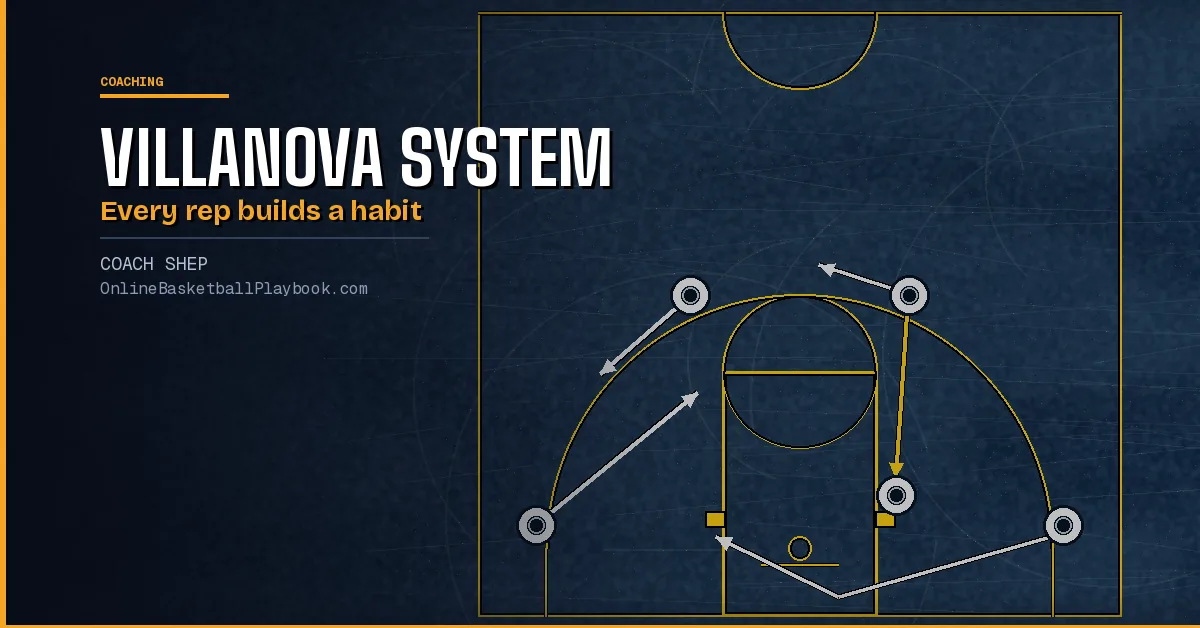
Jay Wright's Villanova system: the habit doctrine, the daily skill block, shooting and footwork drills, 4 out 1 in spacing, Calculated Risk defense and culture.
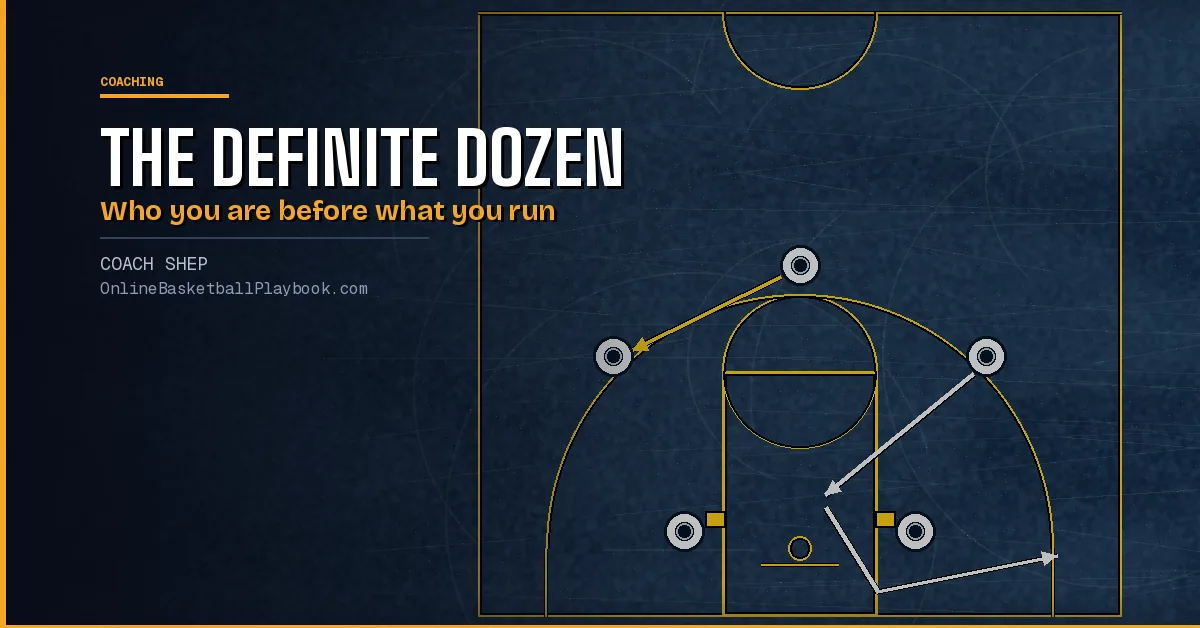
Pat Summitt's Definite Dozen: all 12 principles in order, plus the Tennessee identity, practice rules, game goals, offense and defense that sat beside them.
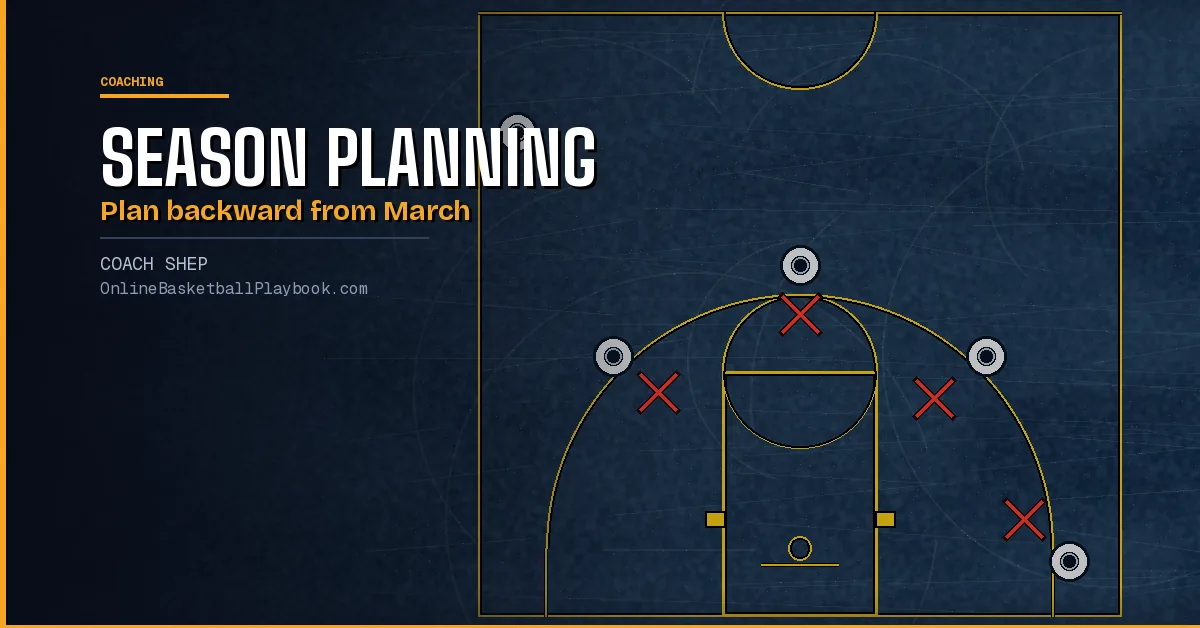
Basketball season planning: plan backward from March, the four phases of the year, the post-season review, summer plans, preseason install and the in-season week.
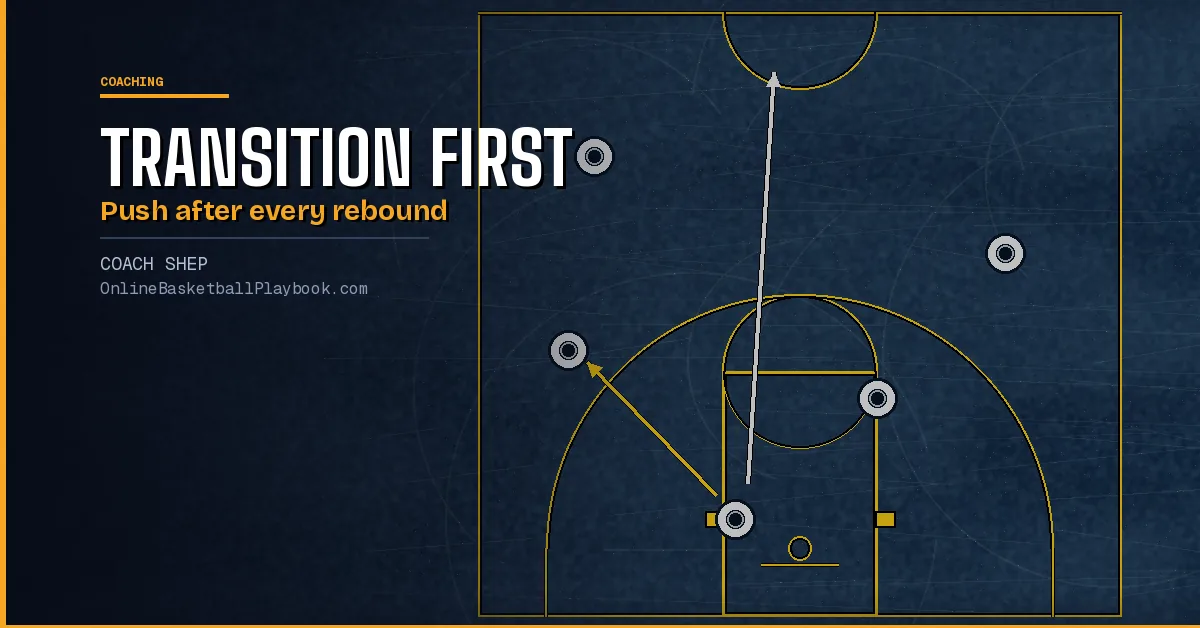
Coach Shep's transition first program model: three core beliefs, push after every rebound, layups and threes, no called plays, one contested shot, scored practice.
Program culture case studies from Obradovic, Dean Smith, Kelvin Sampson and John Beilein: the rules, routines and enforcement each one used, side by side.
Mental toughness in basketball: what it looks like, next-play habits, cue words, a mistake routine, pregame and free-throw routines, pressure drills and the staff.
How to build a basketball coach resume: measurable lines, a specialty, the coaching portfolio, the program plan and how coaching jobs are really filled.
Teaching Teamwork and Collaboration in Basketball
Teaching Players to Adapt to Different Playing Styles
Five Lessons I Have Learned from Coaching Basketball
Mike Jarvis on 40 Years in the Game of Basketball
How to Balance Individual and Team Development
Essential Training on Coaching: Elevate Your Skills and Impact Lives
Why Sending Your Child to Basketball Camp is One of the Best Decisions
Becoming a College Basketball Coach: The Power of One
European Basketball Principles American Coaches Should Steal
Basketball Pace and Tempo Strategy for Coaches
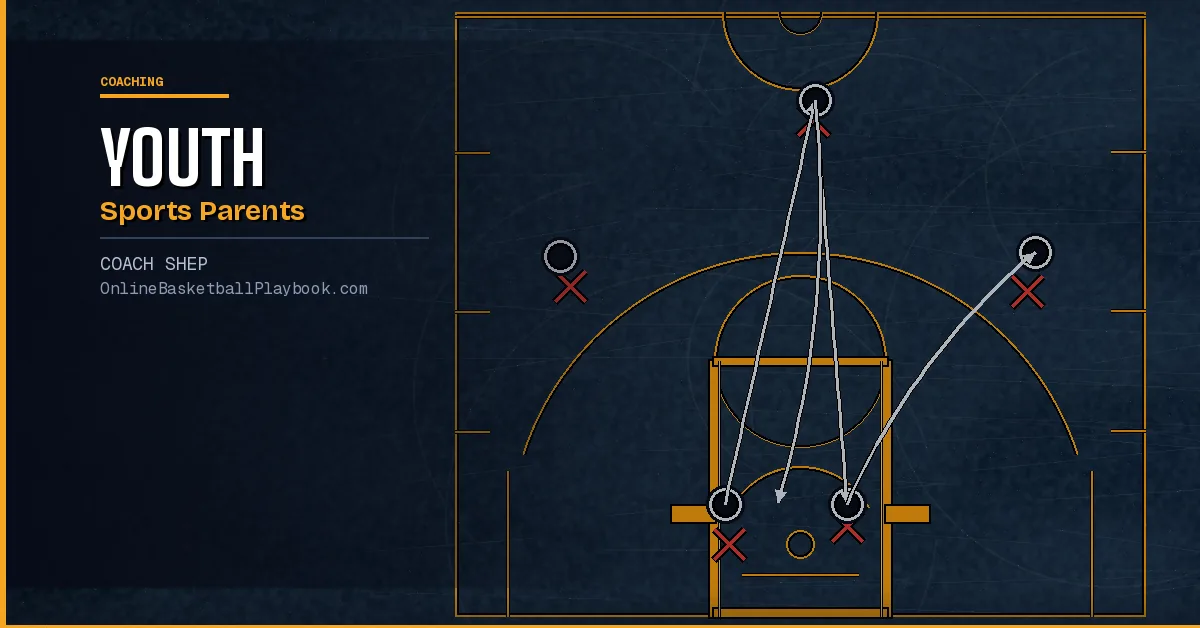
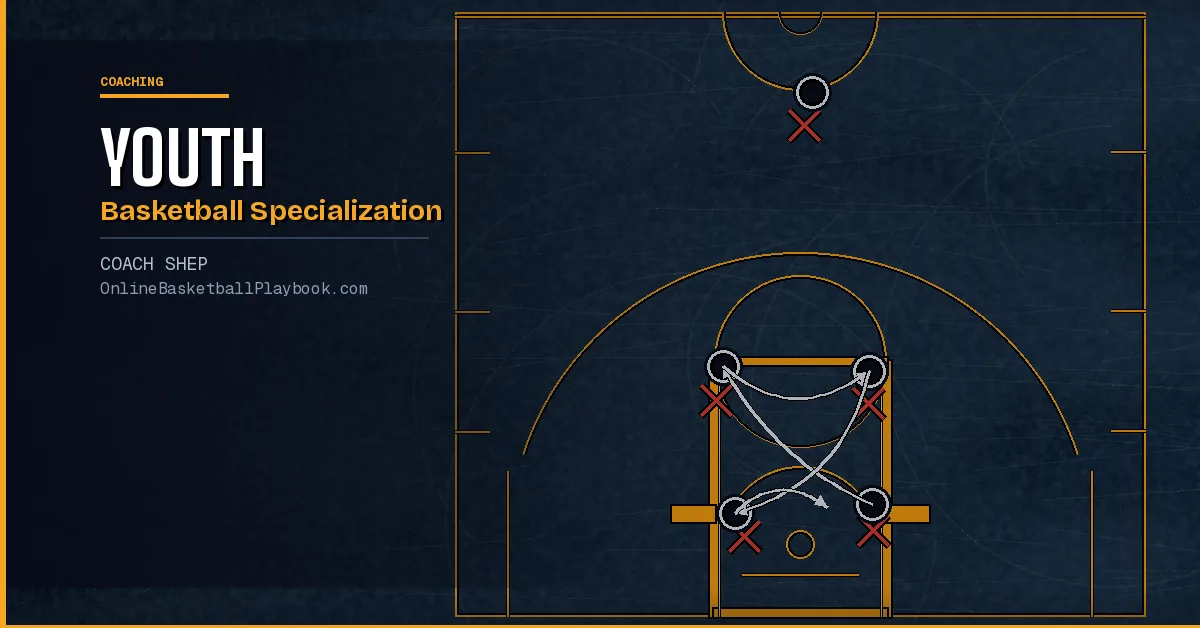
Youth Basketball Specialization: Is It Worth It
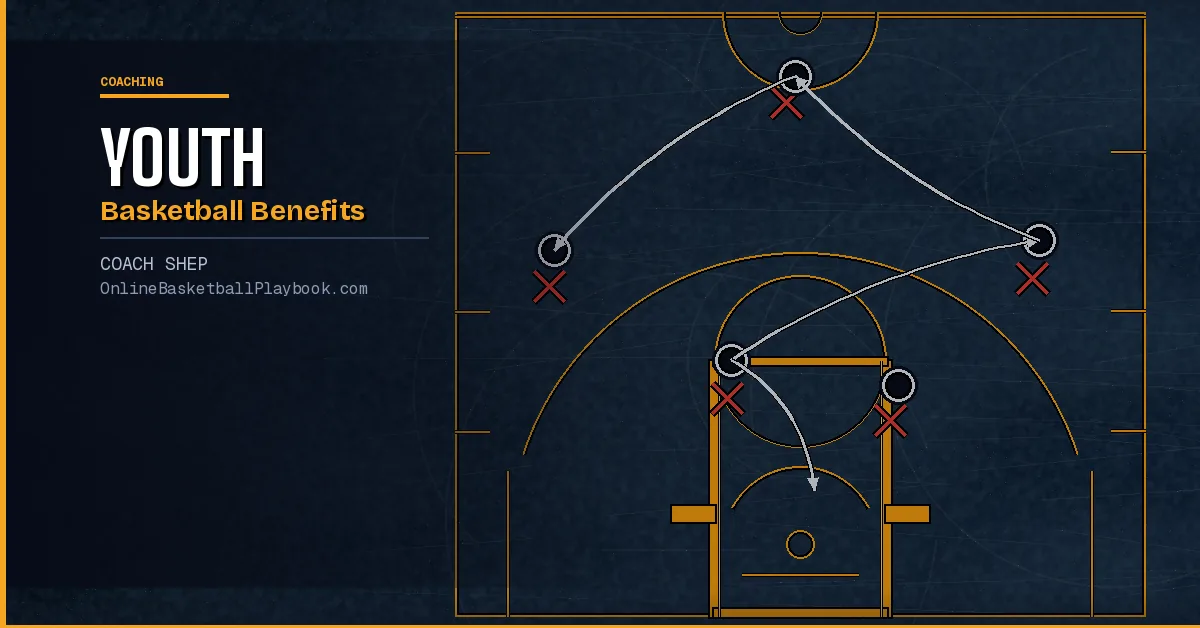
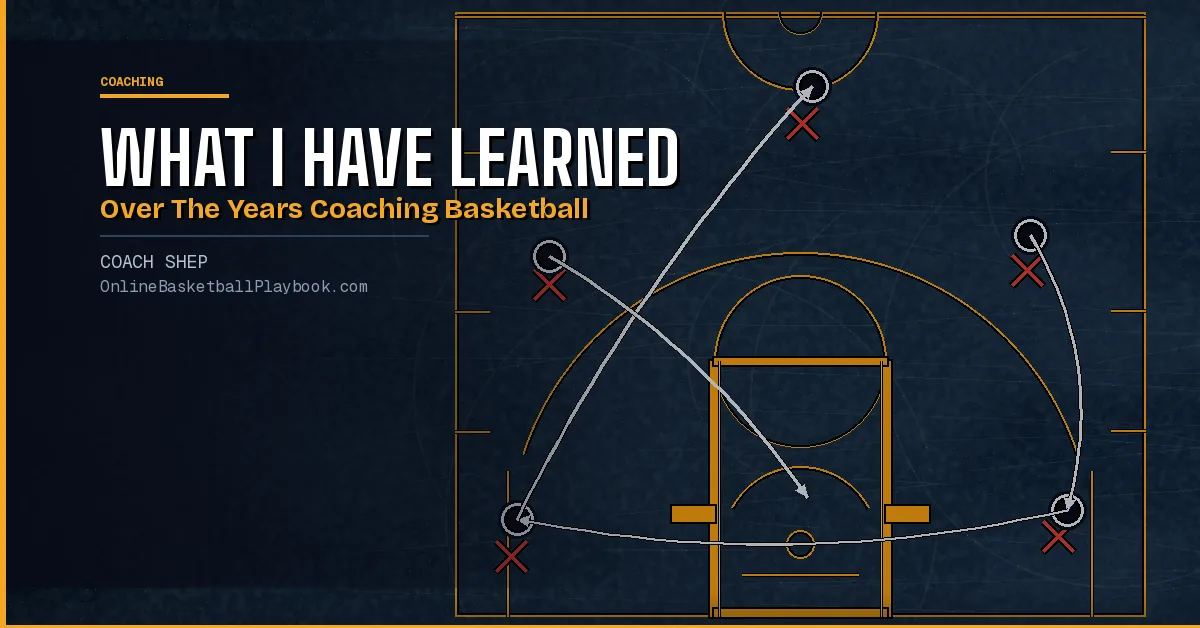
What I Have Learned Over the Years Coaching Basketball
Top Tips for Basketball Beginners: Start Your Journey to Success
Top 10 Coaching Tips for New Basketball Coaches
The Ultimate Guide to Coaching Junior High Basketball
The 10 Commandments of Basketball Coaching Longevity
How to Use Technology to Improve Basketball Coaching
Strategies for Coaching Against Highly Skilled Opponents
Strategies for Coaching Against High-Tempo Teams
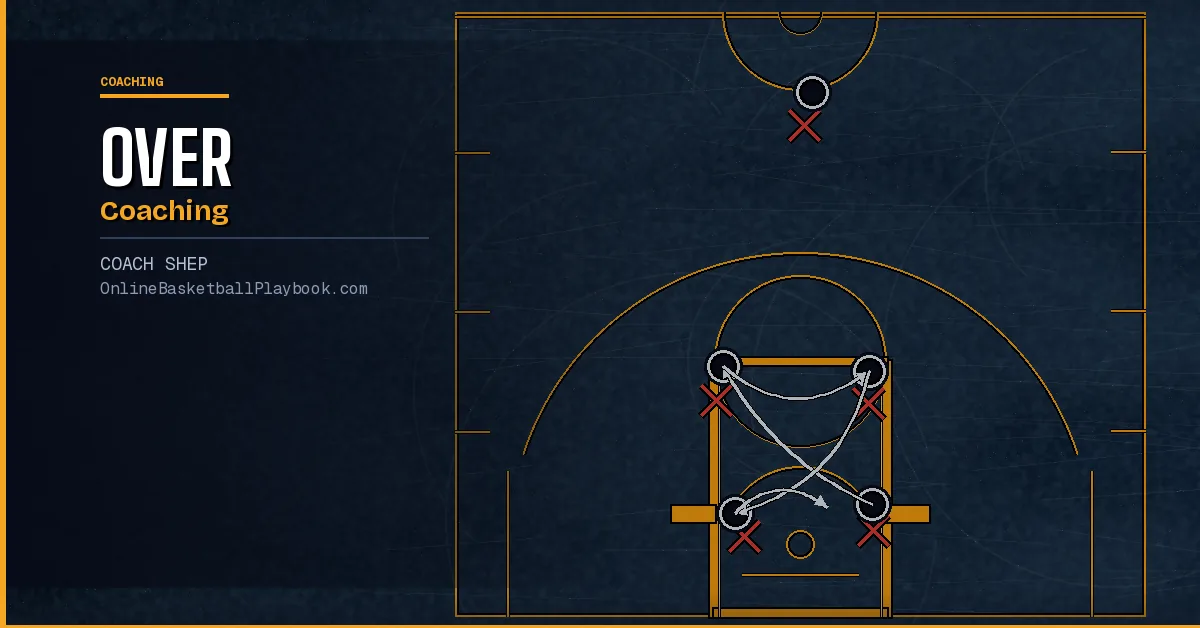
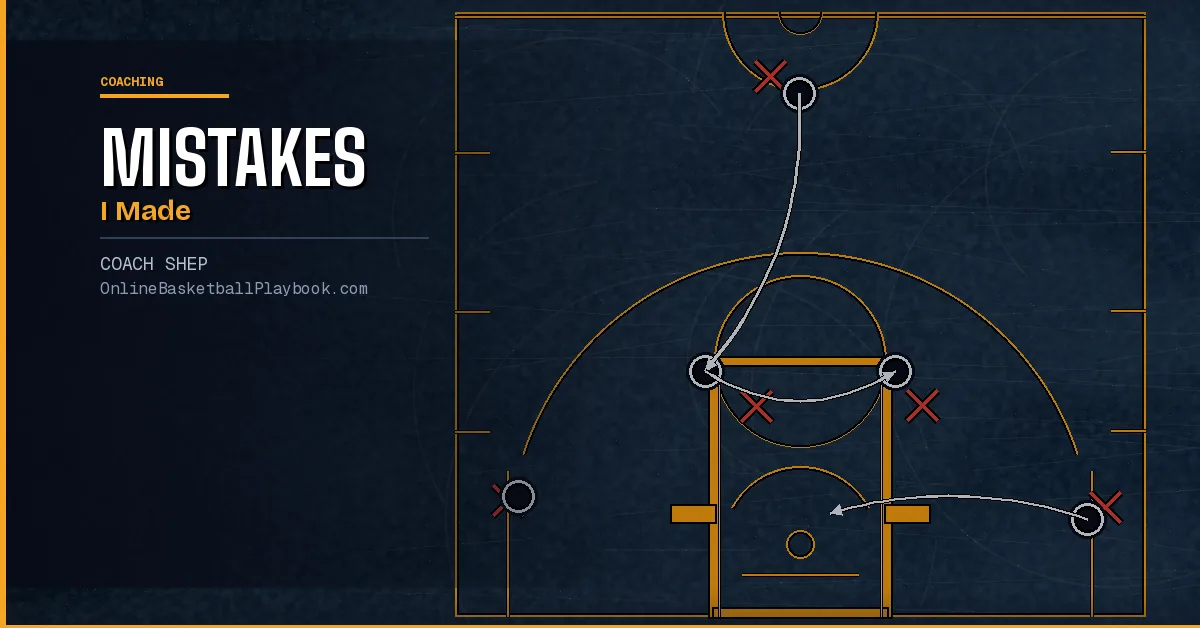
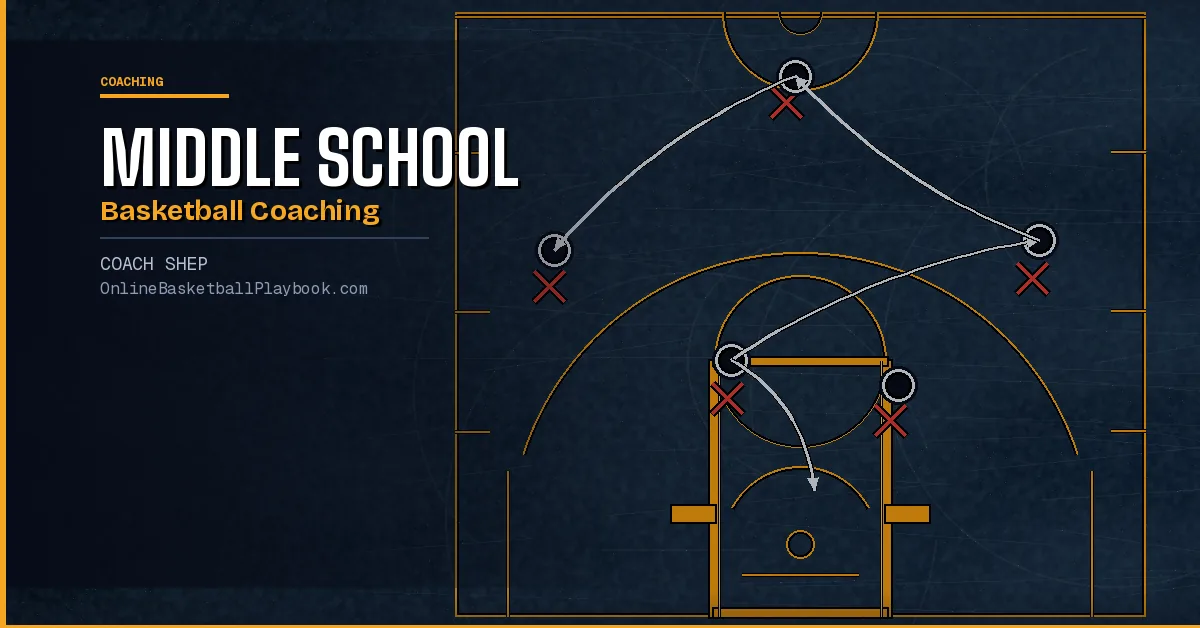
Middle School Basketball Coaching: What Matters Most
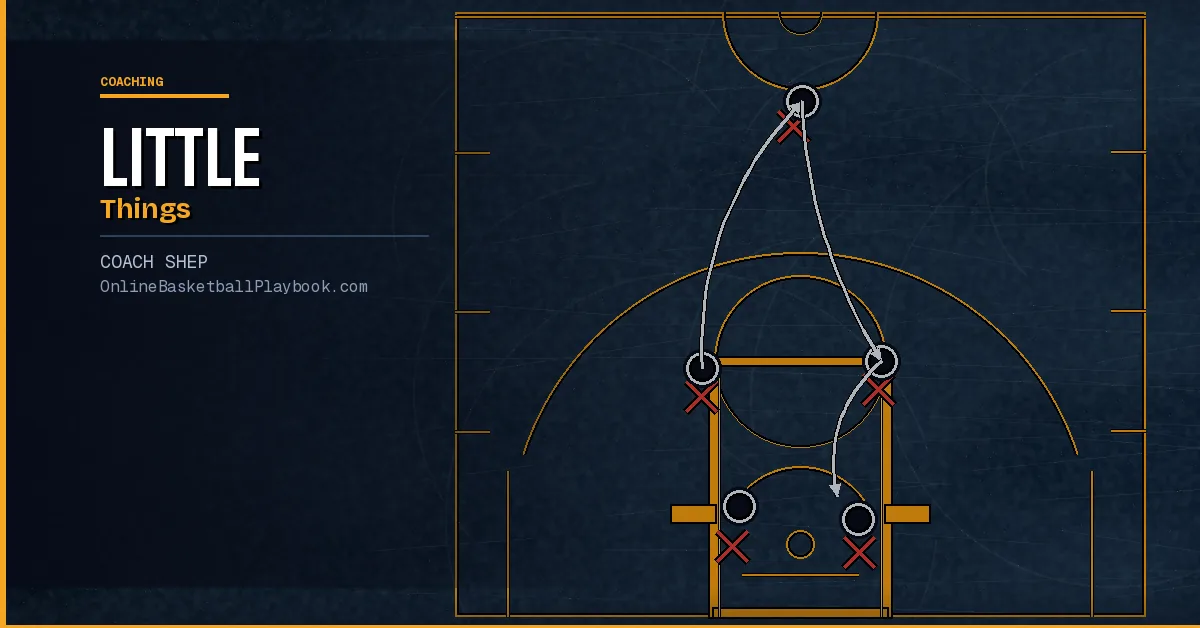
How to Integrate Technology into Basketball Coaching
How to Develop and Use a Coaching Code of Conduct
How to Build a Successful Youth Basketball Program
How to Adapt Your Coaching Style for Different Players
High School Basketball Coaching: Complete Guide
First Timers Guide to Head Coaching in Basketball
Effective Strategies for Coaching Basketball for Different Age Groups
Creating a Competitive Yet Supportive Coaching Environment
Coaching Every Basketball Player to Their Full Potential
Coaching College Basketball: What You Need to Know
Budget Management and Success in College Basketball
Strategies for Coaching Diverse Player Skill Levels
Kentucky Basketball Program Under Calipari: Lessons for Coaches
10 Characteristics of High Character Basketball Players
Geno Auriemma Culture of Excellence Coaching Philosophy
Developing a Long-Term Vision for Your Basketball Program
Characteristics of a Loyal Assistant Basketball Coach
Basketball for Beginners: Complete Skill Guide
Basketball Coaching Styles: Finding Your Style as a Coach
Basketball Coaching Resources: What You Need to Know
Basketball Coach Essentials for Effective Team Management
At What Age Should My Child Start Practicing Basketball
Strategies for Coaching Different Offensive Styles
Luka Doncic Offensive System Breakdown for Coaches
How to Handle Player Development and Team Success
How to Be a Better Basketball Coach: 10 Principles
Using Social Media to Promote Your Basketball Program
Transitioning Into a New College Basketball Program
Ten Ways to Transform Your Basketball Players Into Team Leaders
Managing Team Travel and Logistics: A Comprehensive Guide
Implementing New Coaching Techniques in Your Program
How to Prepare Your Team for High-Stakes Games
How to Mentally Prepare for a Basketball Game: Essential Strategies
How to Improve Team Chemistry Through Off-Court Activities
How to Foster Leadership Skills Among Your Players
How to Coach Basketball Fundamentals to New Players
Gregg Popovich Coaching Philosophy and Culture
Essential Basketball Basics for Beginners: Learn the Fundamentals Fast
Erik Spoelstra Together-Tough-Trust Coaching Philosophy
Effective Ways to Coach Basketball Fundamentals Remotely
Effective Team-Building Exercises for Basketball Teams
Developing the New Players in Your Basketball Program
Developing Coach to Player Relationships: The One Per Day Rule
Community Outreach Through Basketball: Building Stronger Communities
Coaching Strategies for Improving Team Discipline
Basketball Team Captains: How to Select and Develop Leaders
Basketball Player Motivation Techniques for Coaches
Basketball Offensive Game Plan: How to Build One
Basketball Parent Communication: A Coach's Guide
5 Keys to Building Relationships With Your Players
Building Accountability in Your Basketball Program
AAU basketball is a club-based tournament circuit run through the Amateur Athletic Union, separate from school ball. Here's what it actually is, how it differs from school and rec ball, and how to evaluate a program.
The best basketball documentaries teach history, culture, and hard-earned lessons no drill can. Here's how to use The Last Dance, Hoop Dreams, and others with your team.
Every basketball program eventually needs to raise money beyond what parents can cover. Here's a breakdown of product, event, service, sponsorship, and digital fundraisers, and how to pick the right mix.
From Hoosiers to Hoop Dreams, the best basketball movies double as coaching tools. Here's a guide organized by underdog stories, real-life dramas, comedies, and documentaries.
A basketball scholarship is rarely won by talent alone. Here's how AAU exposure, a real recruiting profile, direct coach outreach, and grades all factor into landing an offer.
A stat sheet only helps if you know what to track and how to use it. Here's the standard box-score categories, advanced stats worth tracking by hand, and how to turn halftime numbers into real adjustments.
A well-timed quote can crystallize a lesson faster than a long speech. Here are verified, accurately-attributed basketball quotes on hard work, teamwork, failure, and leadership, plus how to actually use them.
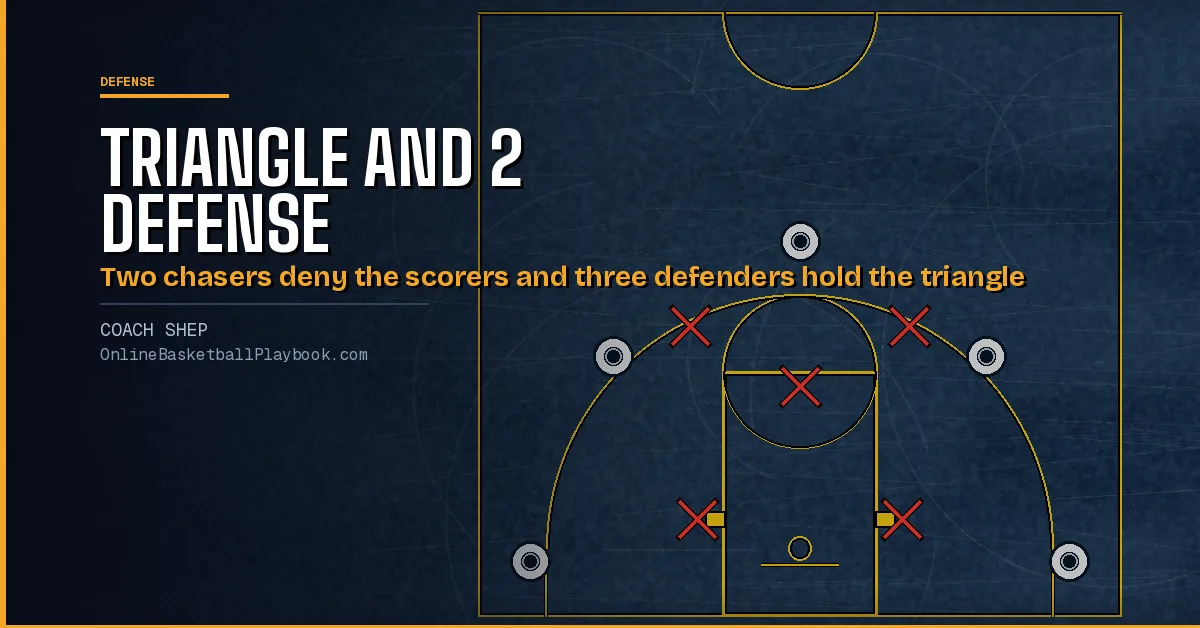
Triangle and 2 defense explained with the chaser and triangle roles, rotations by ball location, the inverted version, when to use it and how offenses attack it.
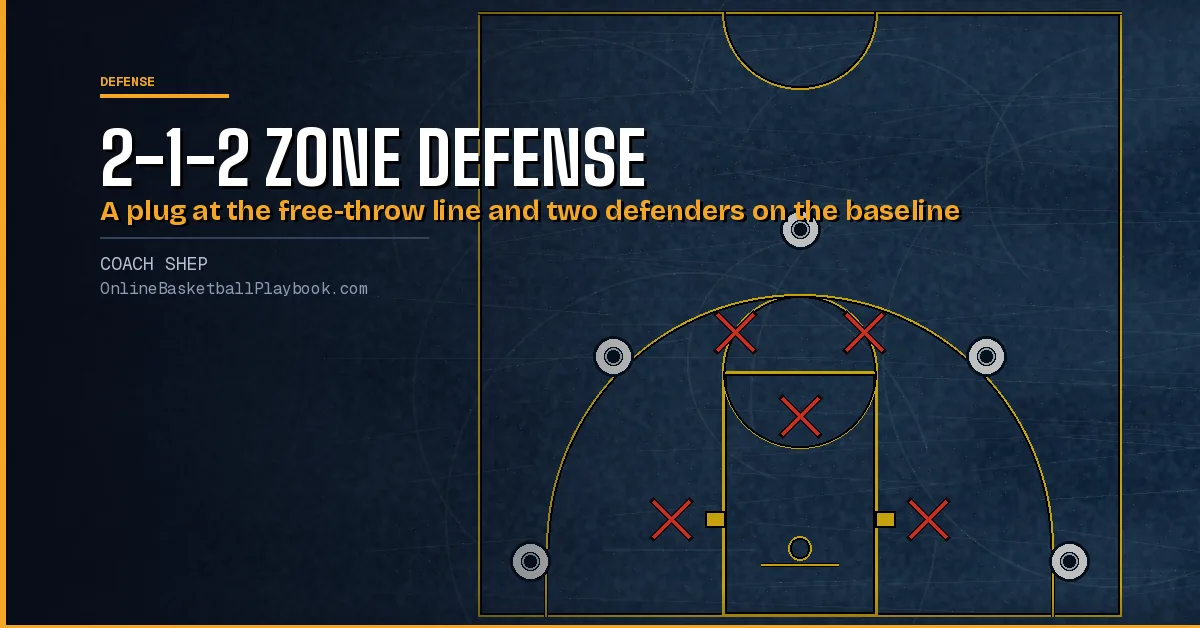
2-1-2 zone defense guide with the alignment, rotations by ball location, how it differs from the 2-3, who plays the middle and its weak spots.
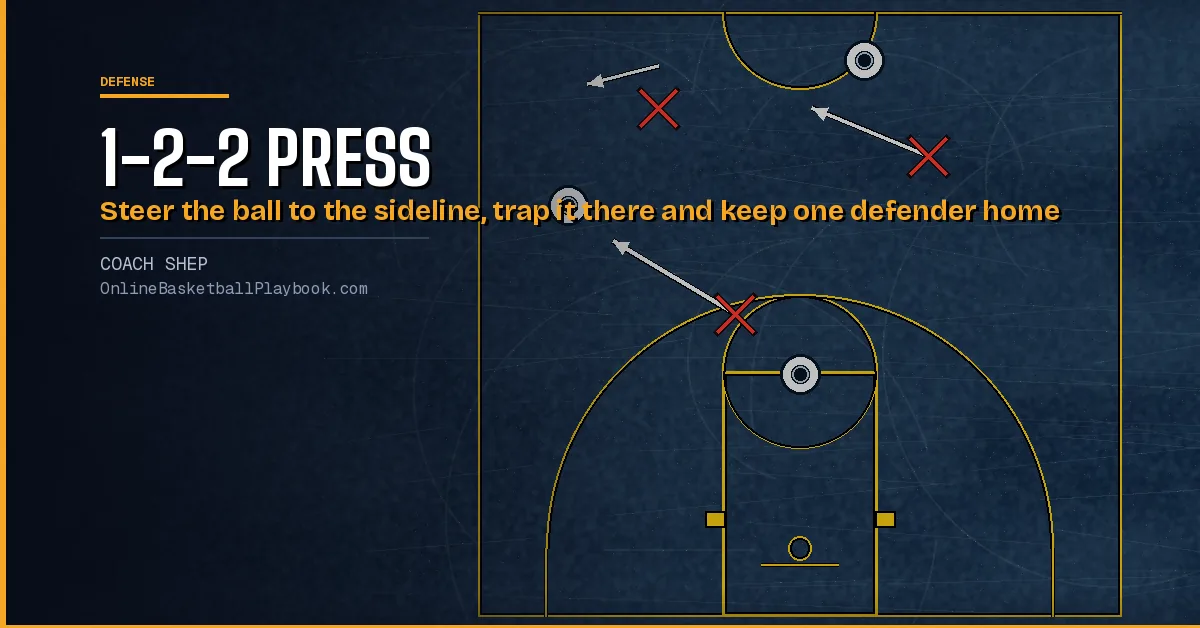
1-2-2 press guide covering who plays the top, middle and back line, where each version traps, how it rotates on a reversal and what to do when it breaks.
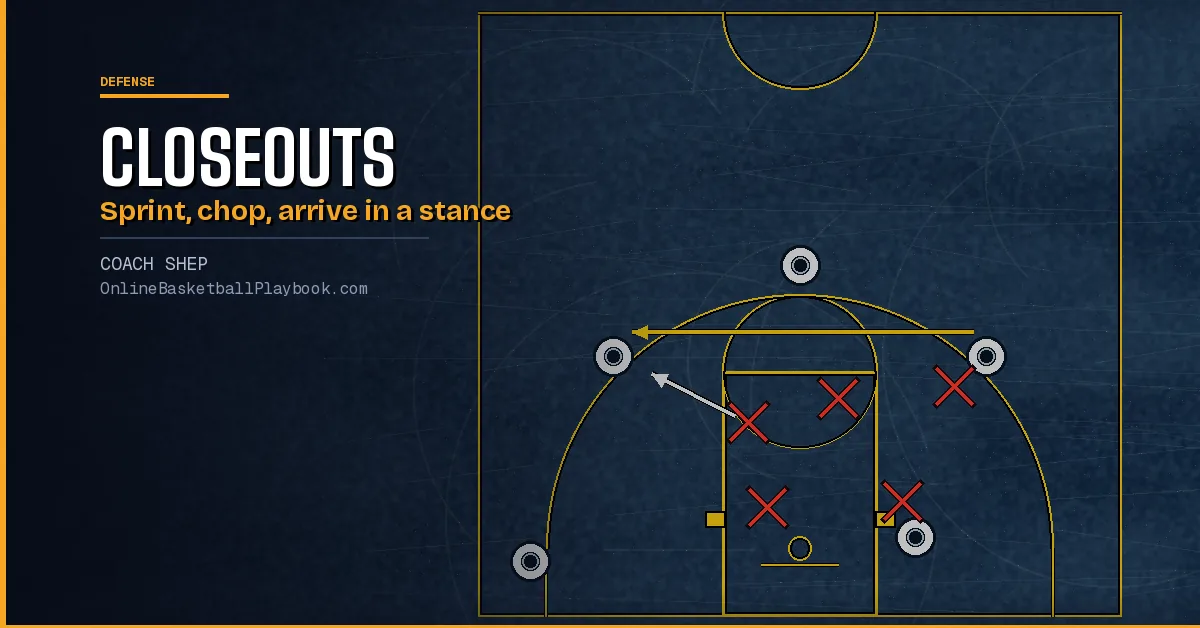
Closeout basketball explained: when to leave, sprint and chop, hands and feet on arrival, which way to send the drive, shooter labels, and closeout drills.
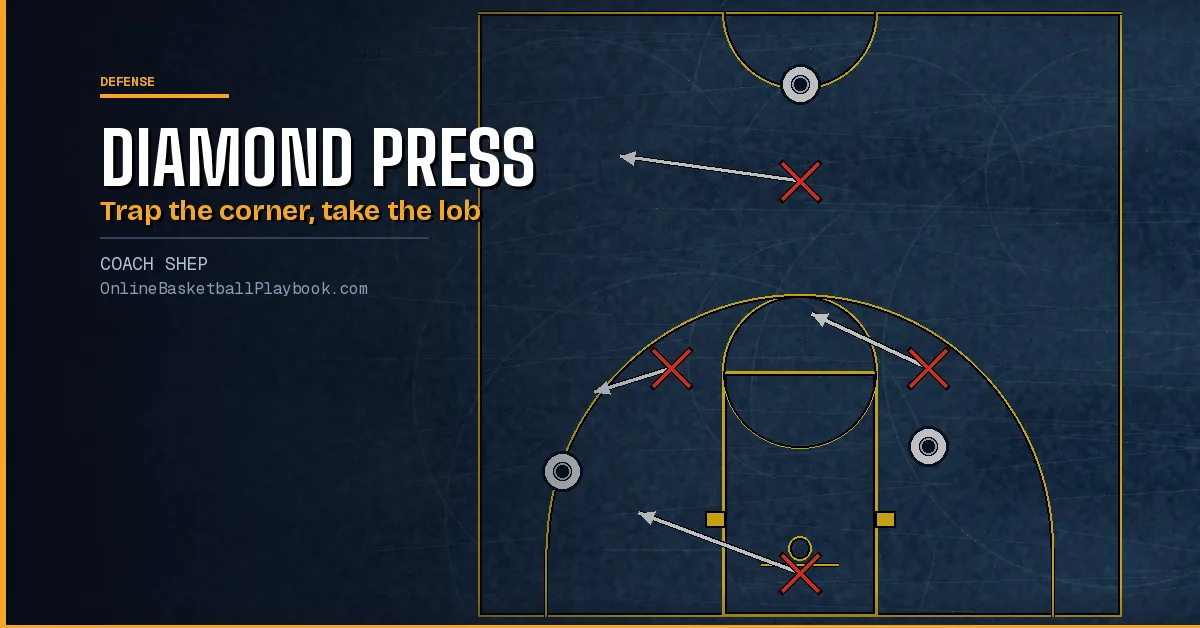
How to run the diamond press in basketball: who plays each role, how to trap the corner, what to do on the reversal and the lob, and how to install it step by step.
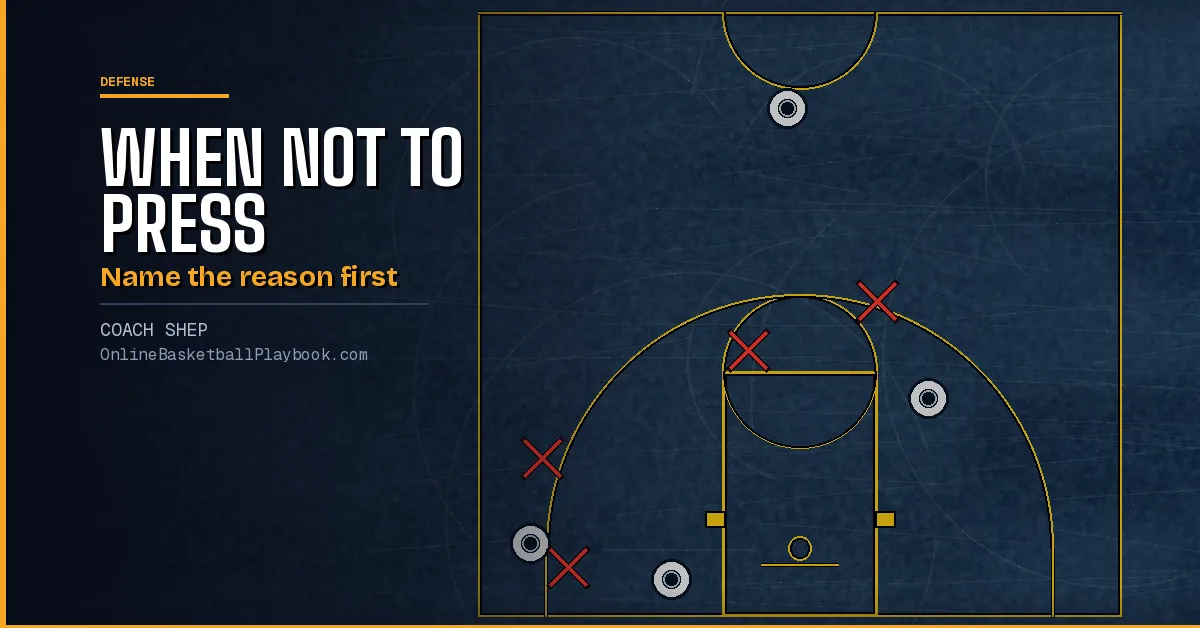
When not to press in basketball: the bad reasons, the roster you need first, the opponents who beat it, the moments to drop it and the youth limits.
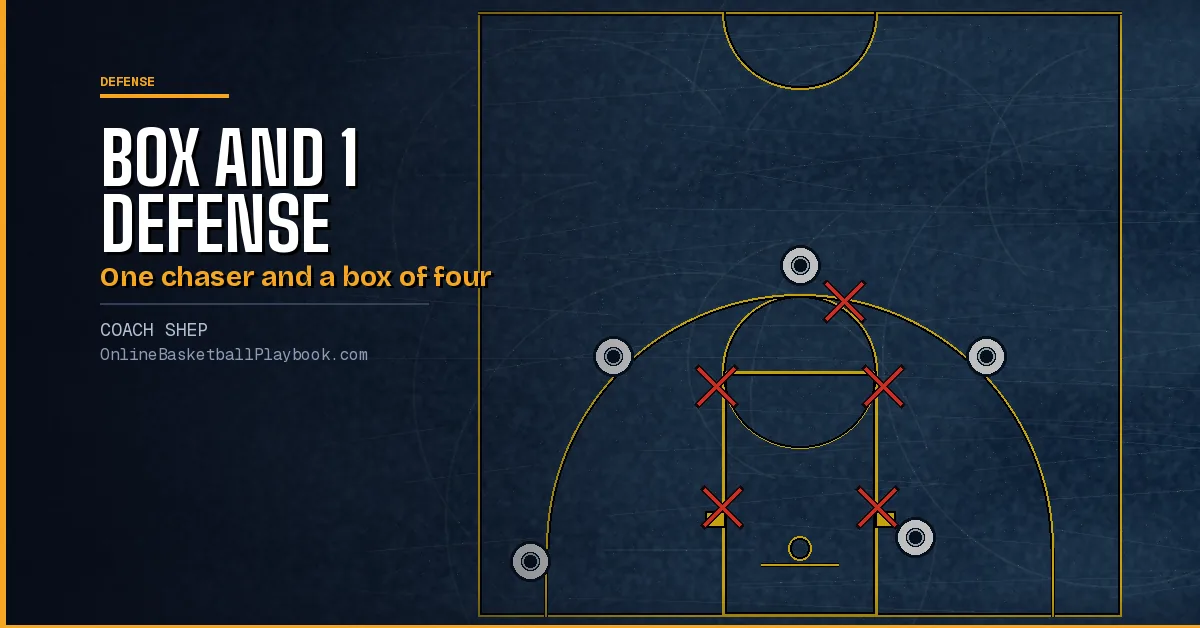
What the box and 1 defense is, how the chaser and the box play, when coaches call it, where it leaks, and how an offense beats it with a decoy star.
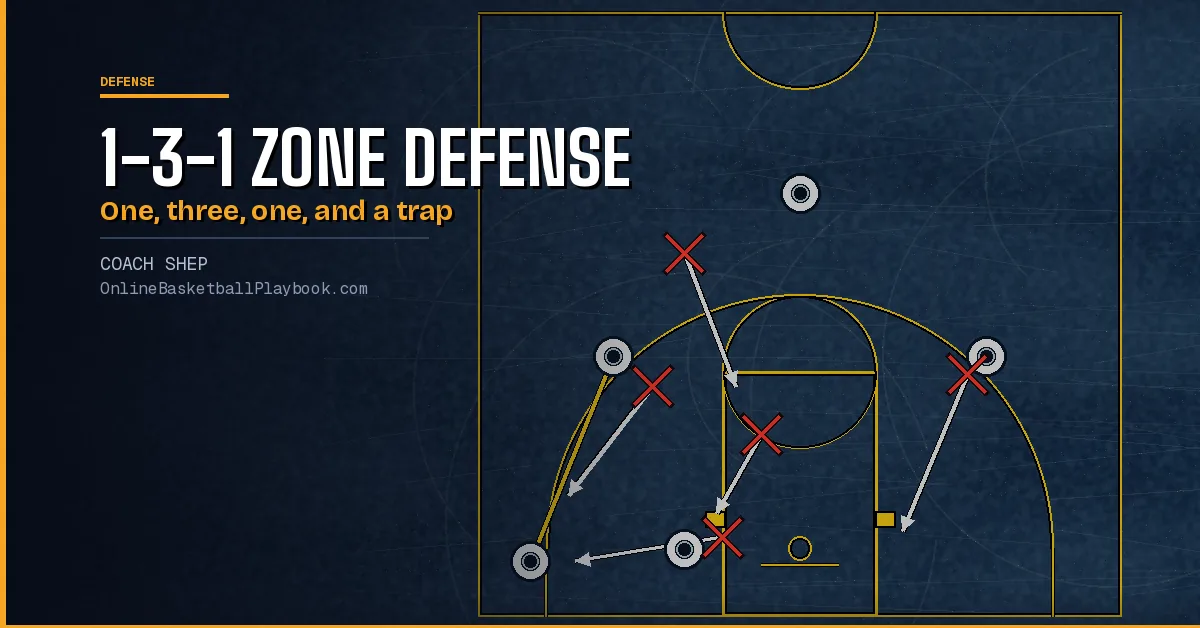
How to run the 1-3-1 zone defense: the five roles, the corner and wing traps, the skip pass that beats it, loose and tight depth, and the drills to install it.
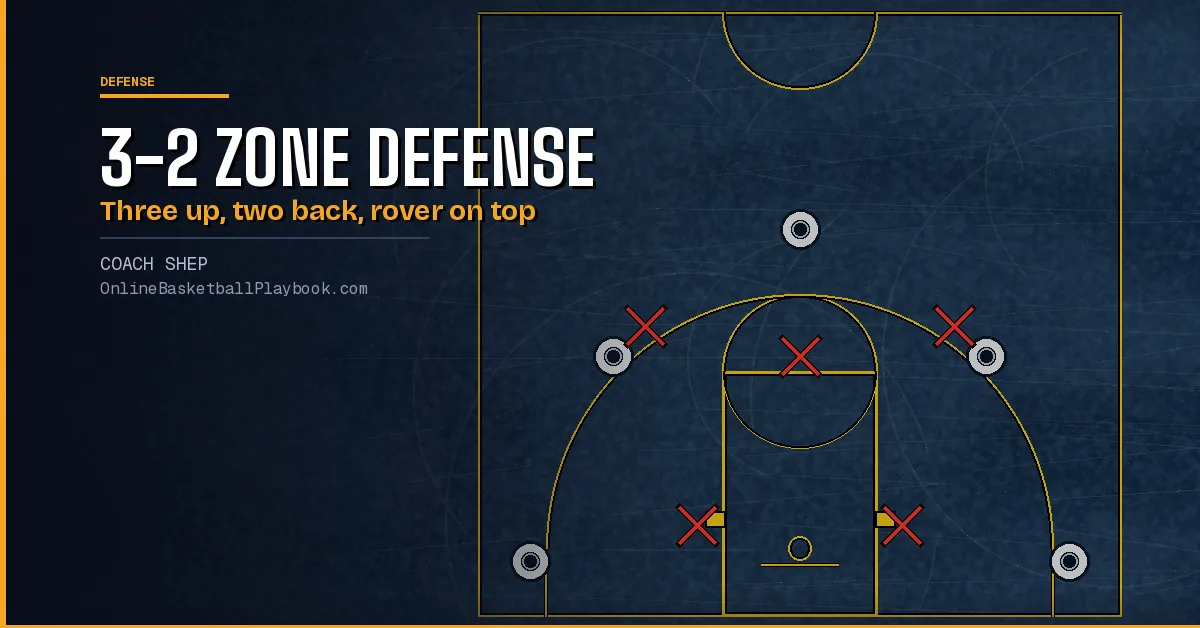
How to run the 3-2 zone defense: the alignment, the rover, every rotation, the weak spots, the 3-2 matchup zone and the drills, plus when to pick it over a 2-3.
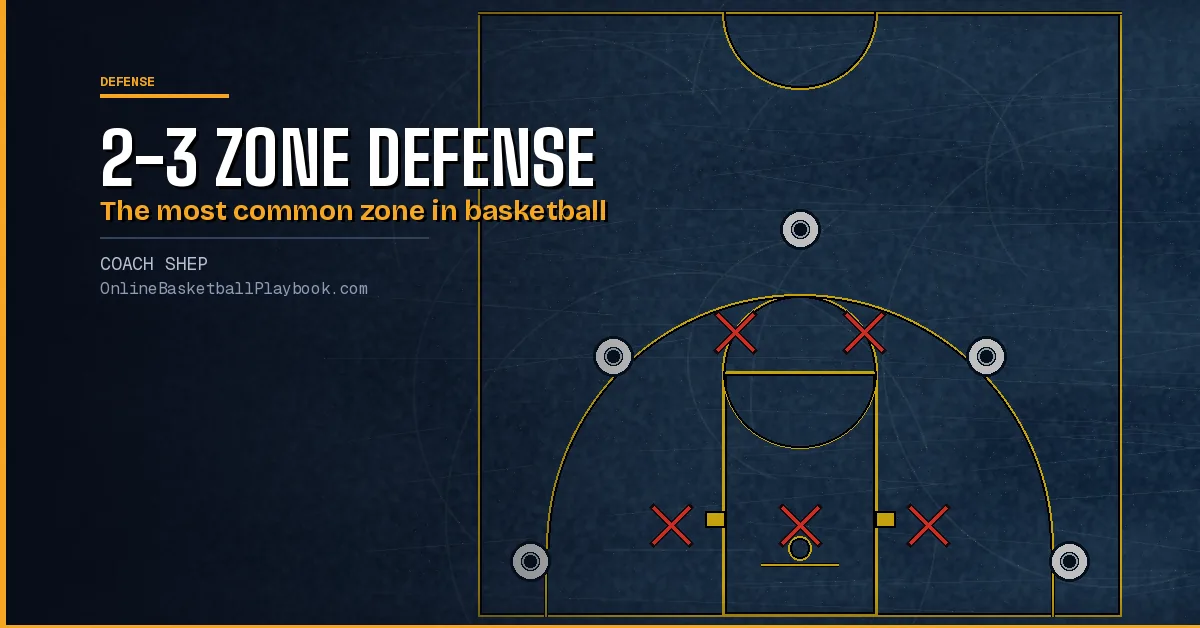
How to play the 2-3 zone defense: the starting positions, how it shifts to the ball, where it leaks, when to trap, and the drills that install it.
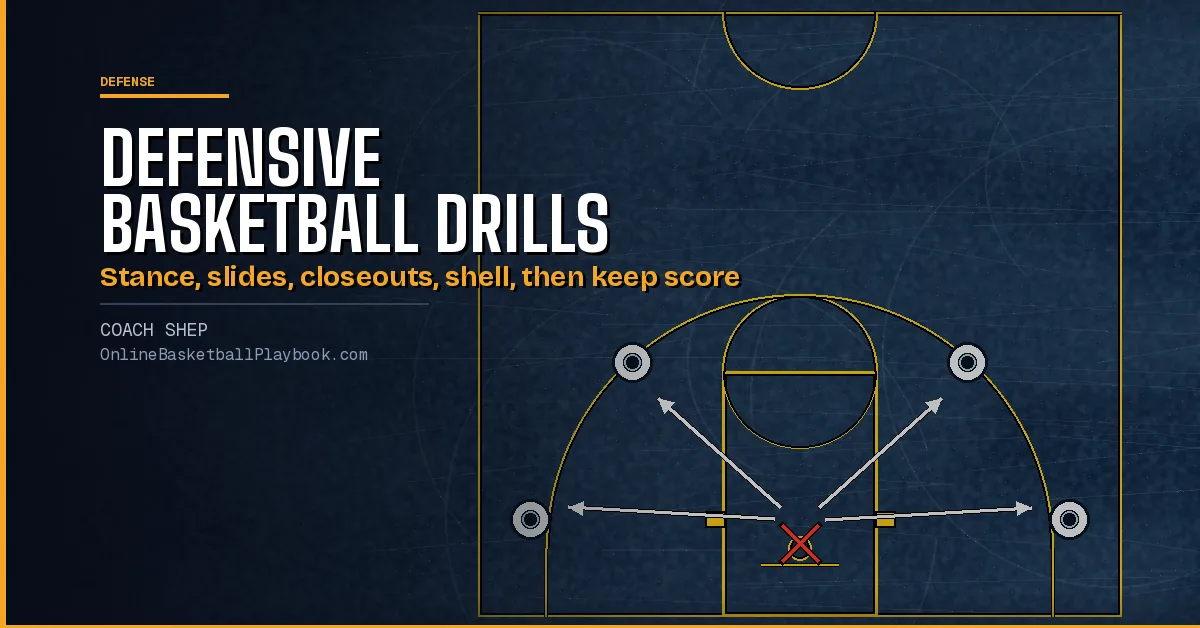
Defensive basketball drills in teaching order, from stance and defensive slide drills to closeouts, pass denial, shell and scored games, with the versions coaches split on.
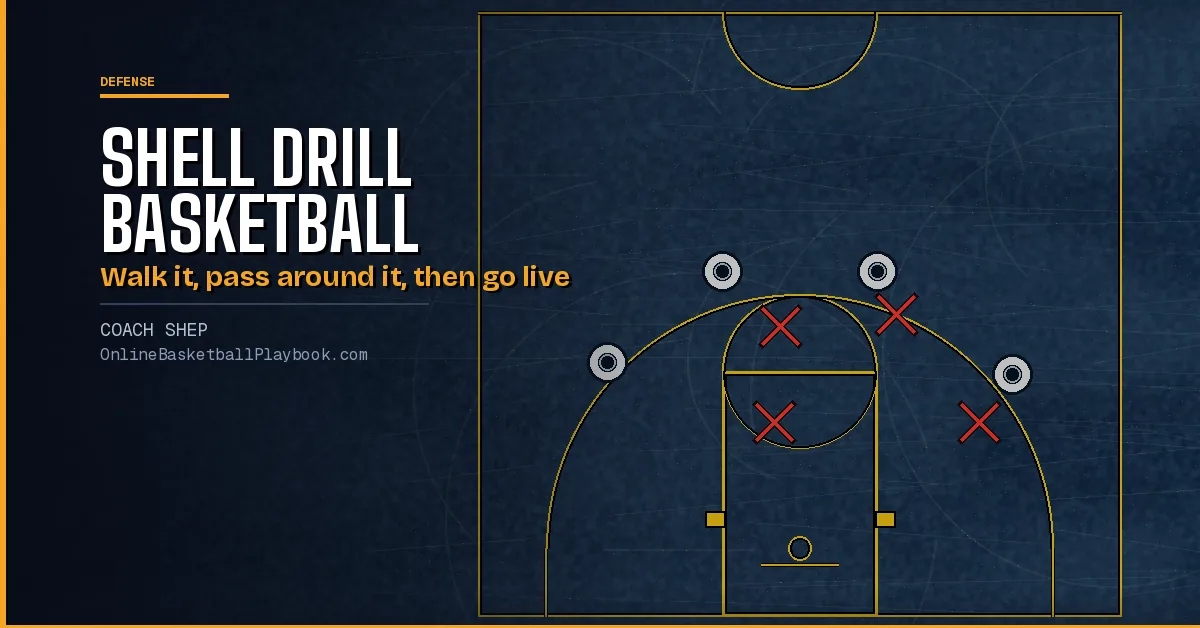
Shell drill basketball guide with 4-on-4 setups, the stages from walk-through to live, rules on the offense, scored live versions and where coaches differ.
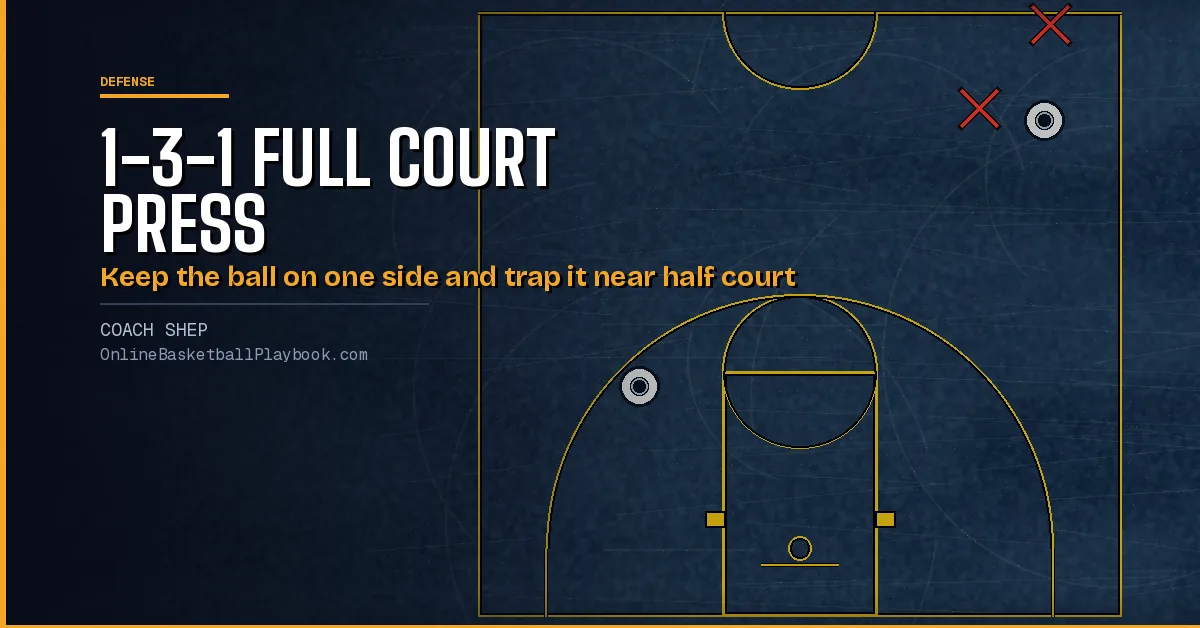
The 1-3-1 full court press from setup to frontcourt trap: each role, the reversal rotations, an aggressive version, the costs and when coaches call it.
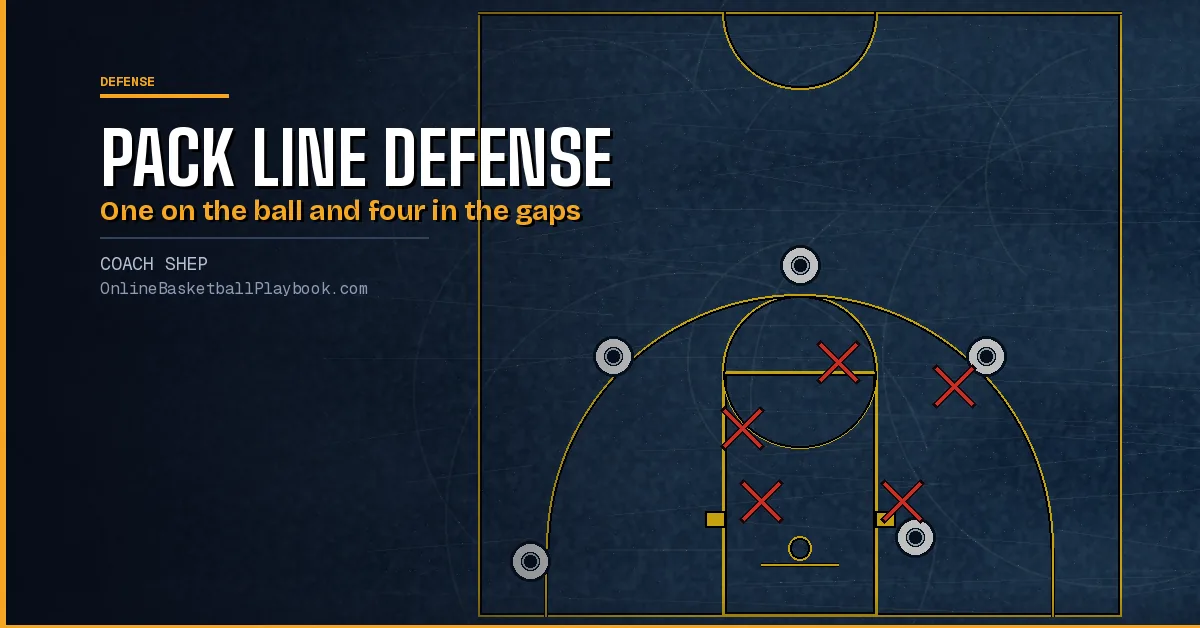
Pack line defense as coaches run it: where the line sits, on-ball and gap rules, post doubles, screens, dead balls, the costs and an install order.
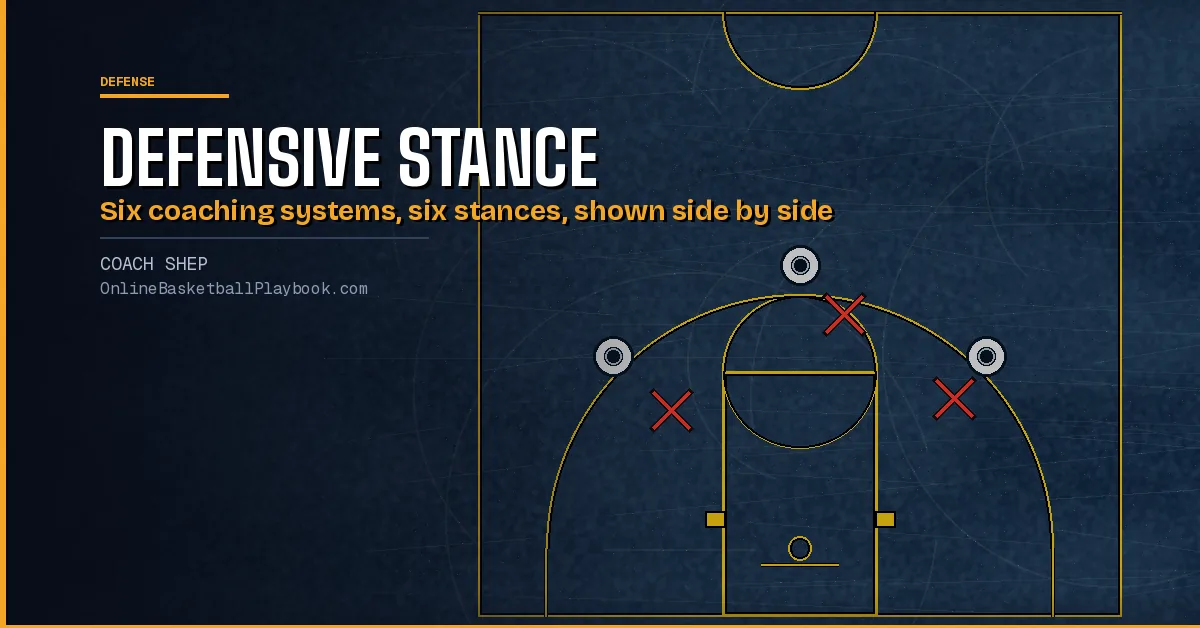
Defensive stance in basketball: weight, feet, hands and eyes, the footwork out of the stance and the drills that build it.
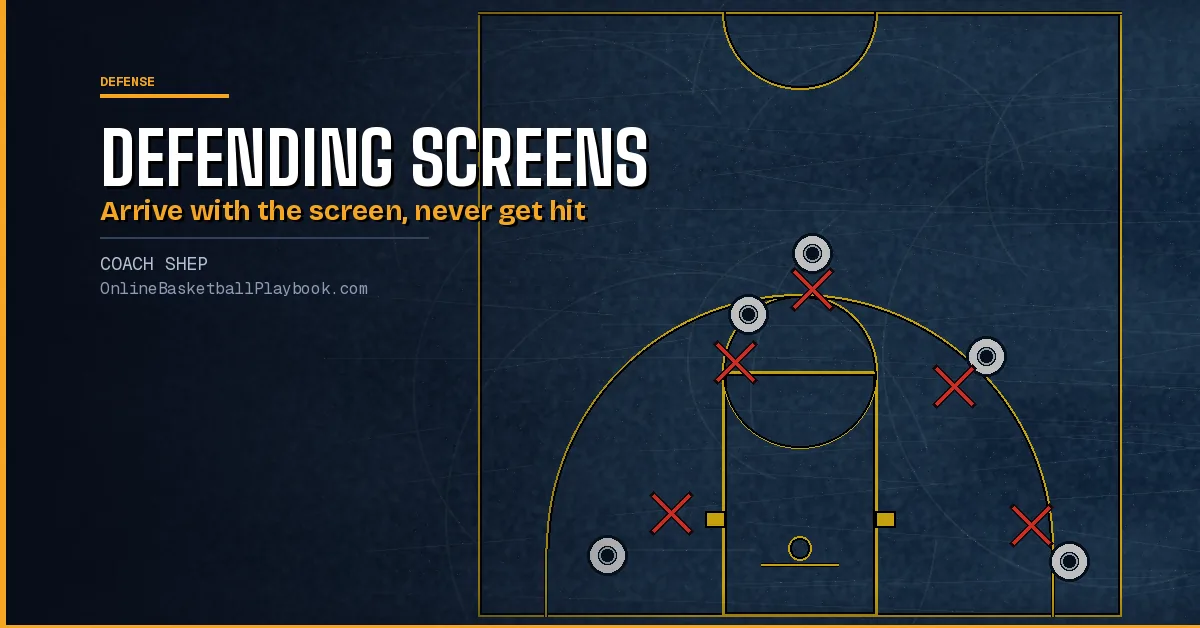
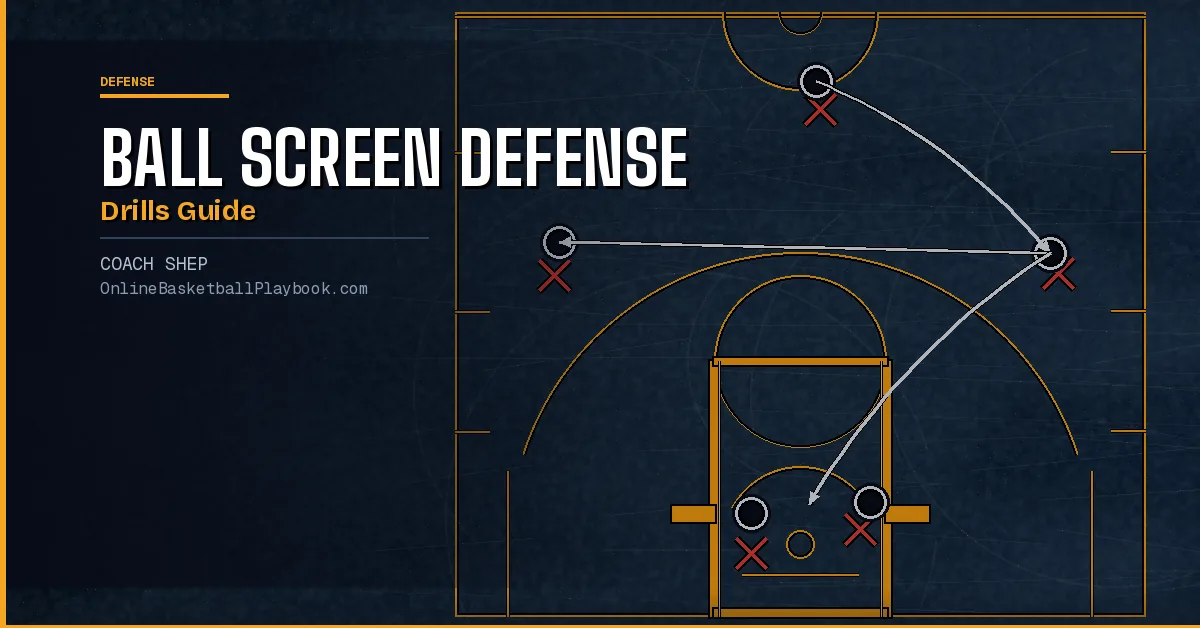
Defending screens in basketball comes down to five keys that hold under any coverage, for ball and off-ball screens, with the mistakes that cost baskets and drills.
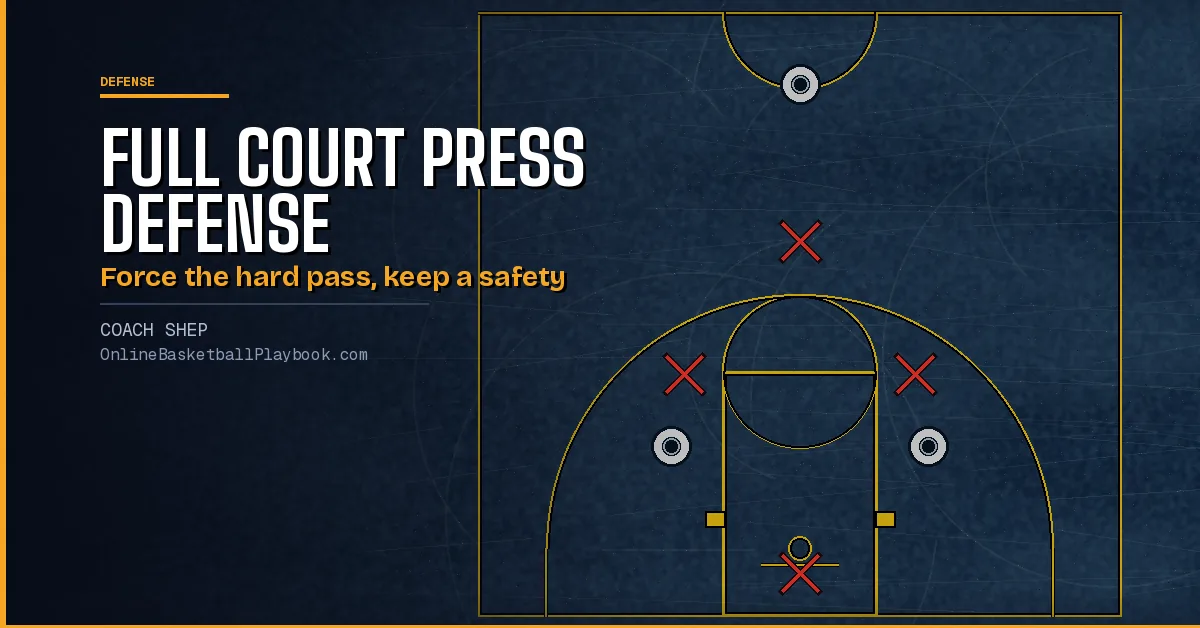
Full court press defense pressures the ball for 94 feet. See the press families, shared rules, trap mechanics, the cost, the install order and drills.
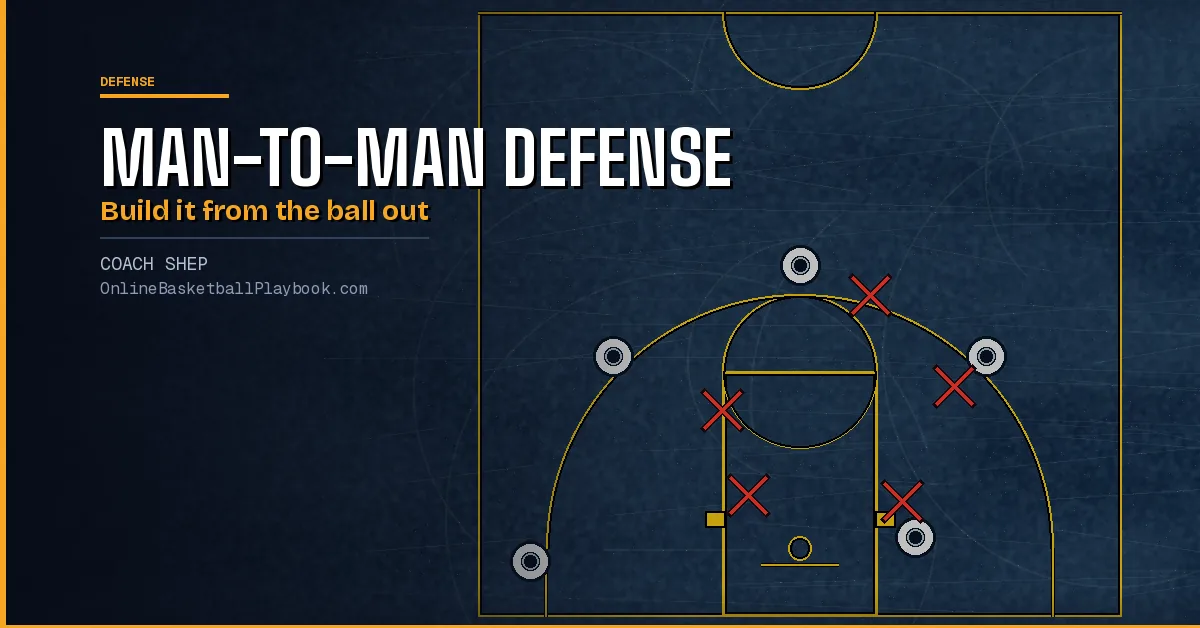
Man-to-man defense starts with the ball-you-man line. Build it in order from the on-ball stance to one pass away, help and rotation, screens and the shell drill.
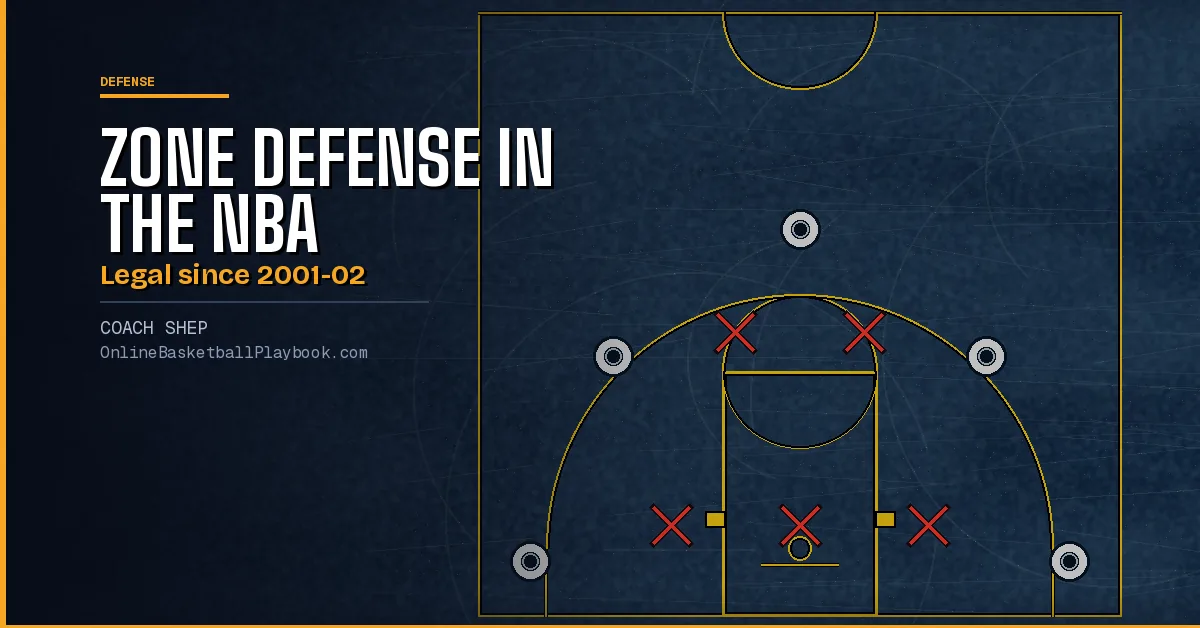
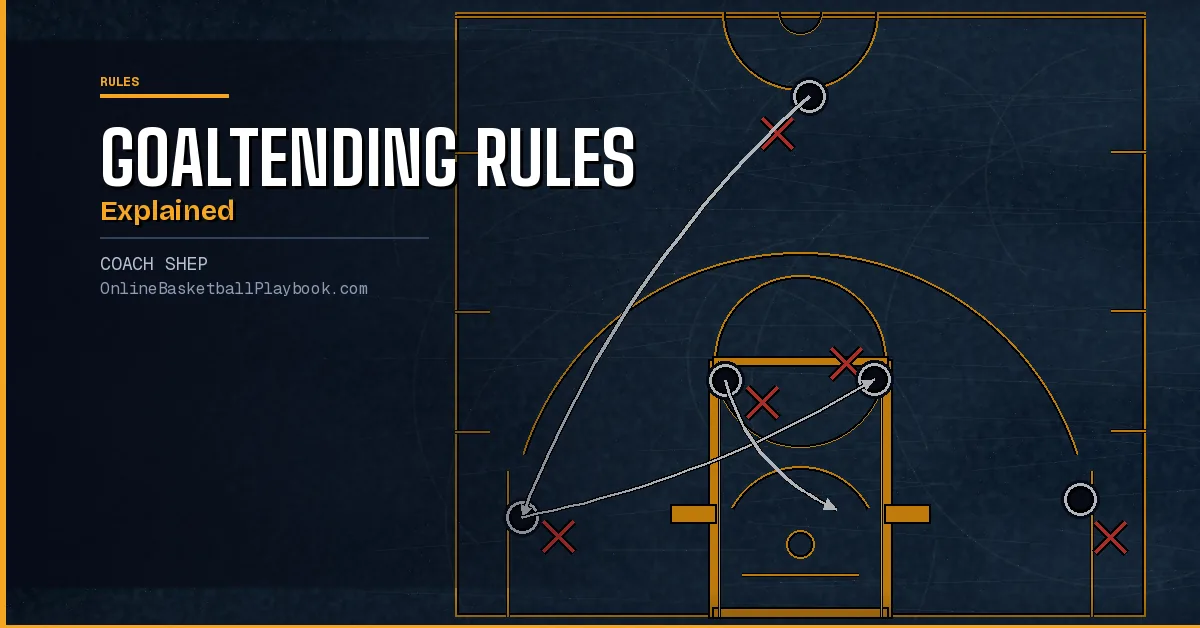
Is zone defense allowed in the NBA? Yes, since the 2001-02 season. The defensive three-second rule, what it allows, its penalty and how zone compares by level.
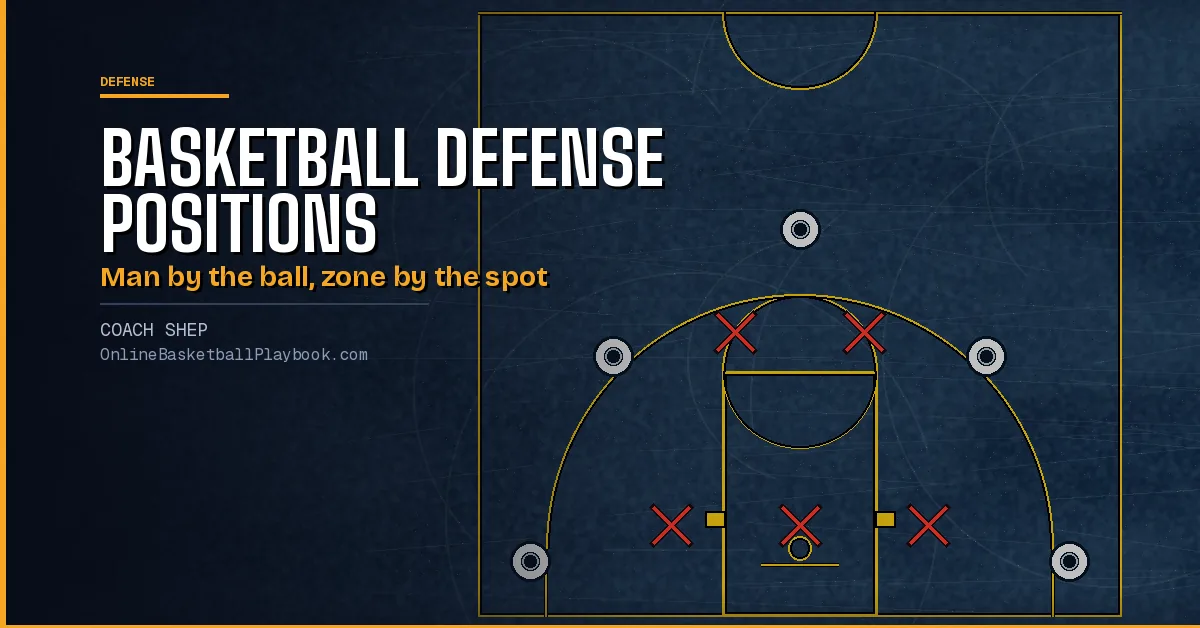
Basketball defense positions in man-to-man and every common zone: where each defender stands, what his spot asks of him and which player usually fills it.
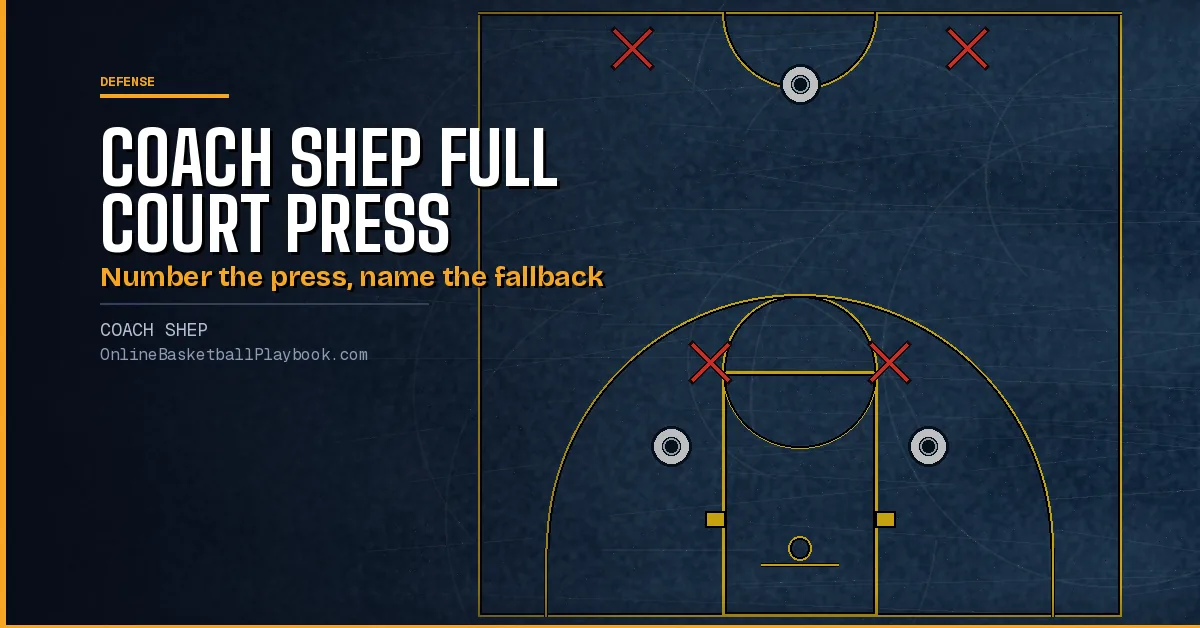
Coach Shep's full court press: the numbered looks 55, 22, 25 and 12, Black, Hold Fist, the fallback behind each press, his scoring target and how he practices it.
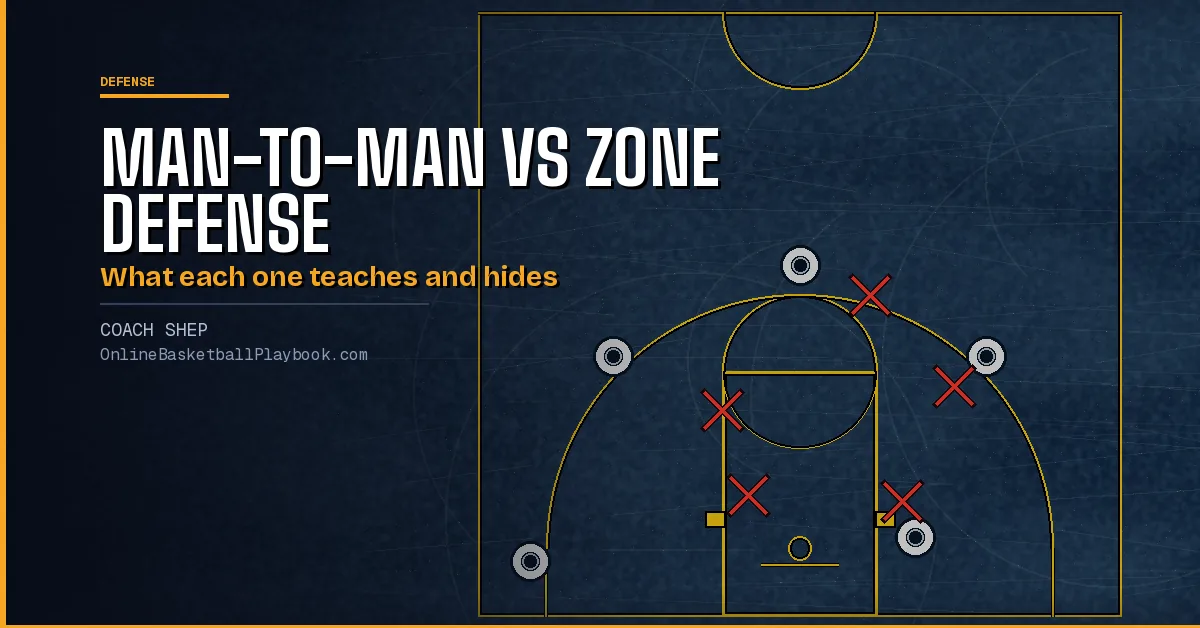
What each one teaches, what each one hides, when to switch mid-game, and the hybrid that sits between them.
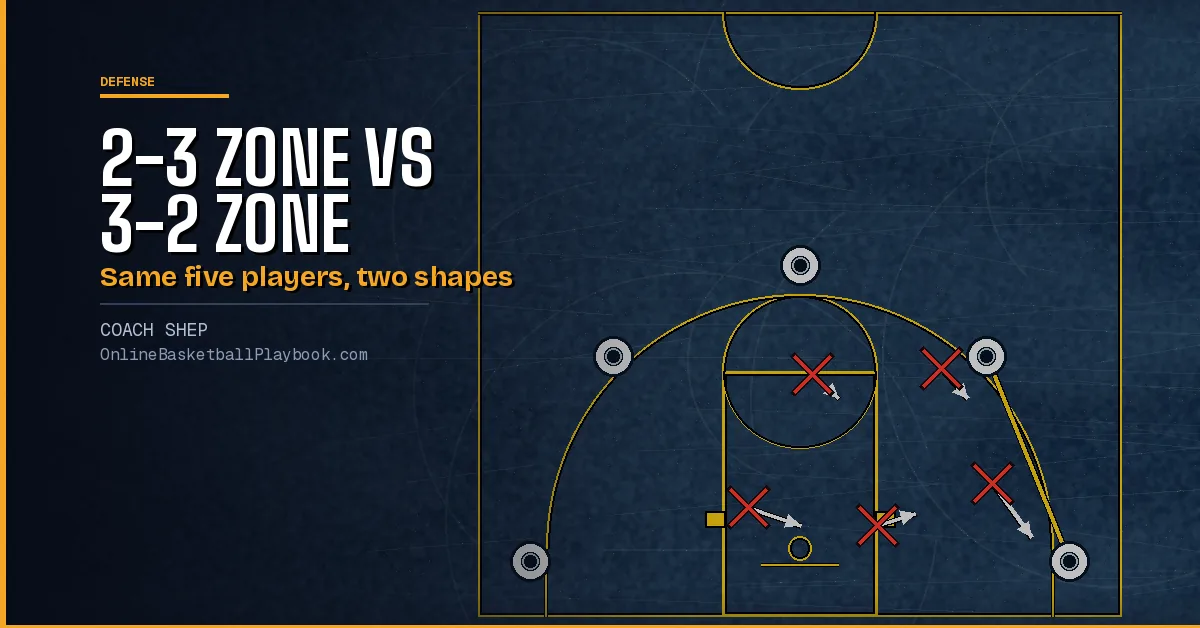
The same five players in two shapes. One guards the rim, the other guards the high post, and each leaves a different spot open.
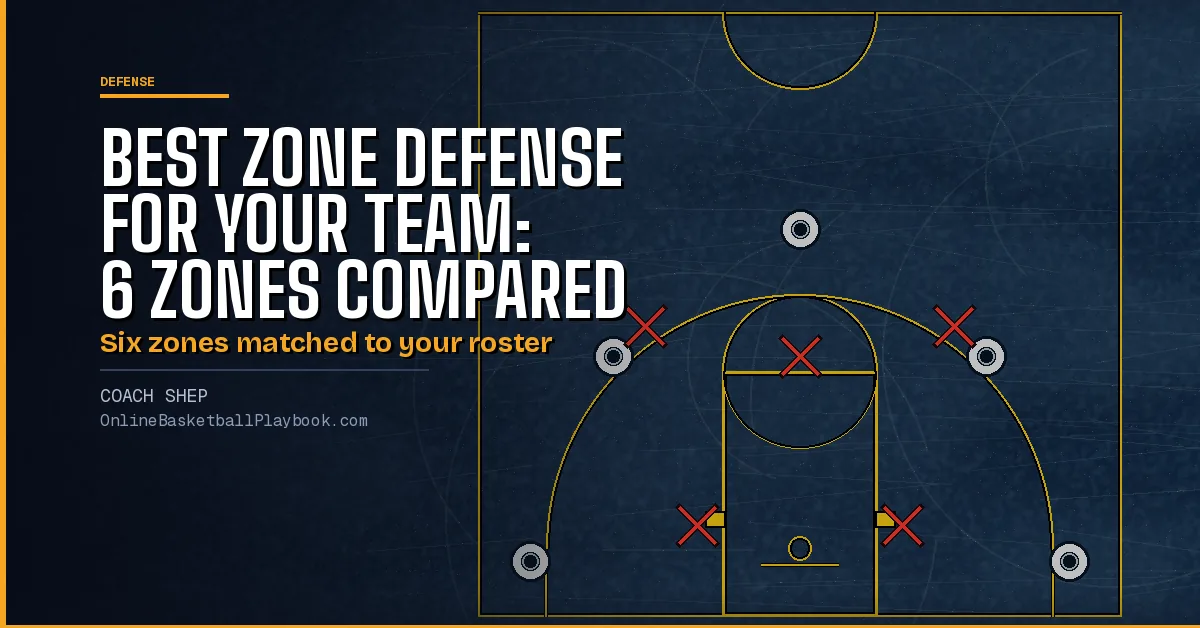
The 2-3, 3-2, 1-3-1, 1-2-2, 2-1-2 and matchup zone, each matched to the roster and the opponent it beats.
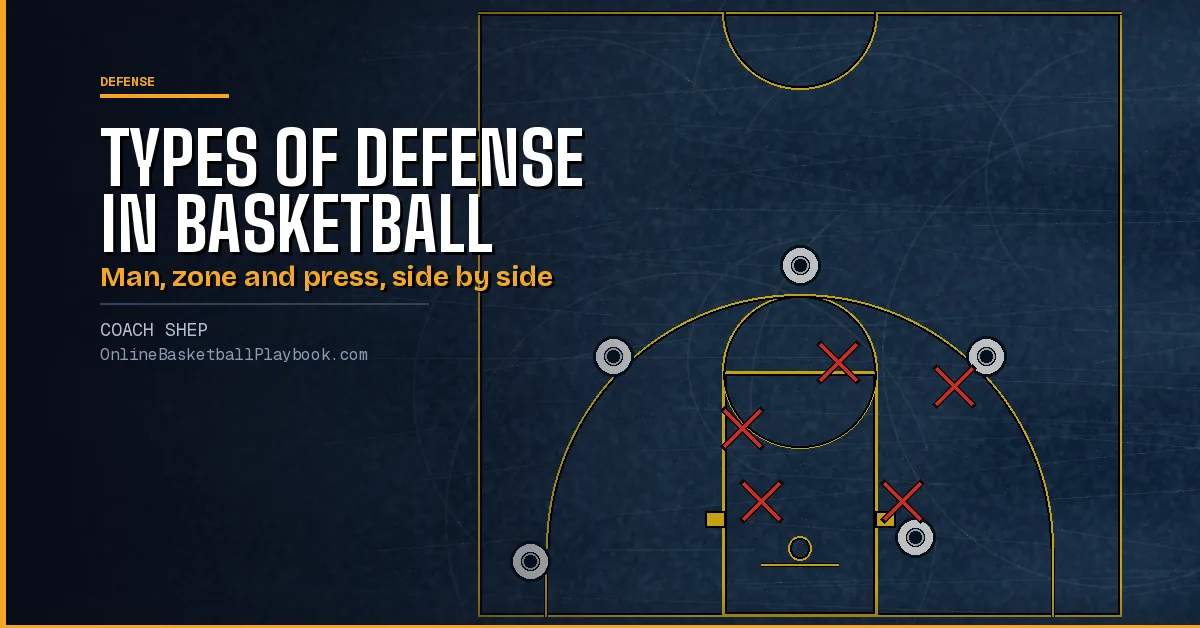
Every man-to-man, zone and press variation side by side, with what each one gives up and where coaches split.
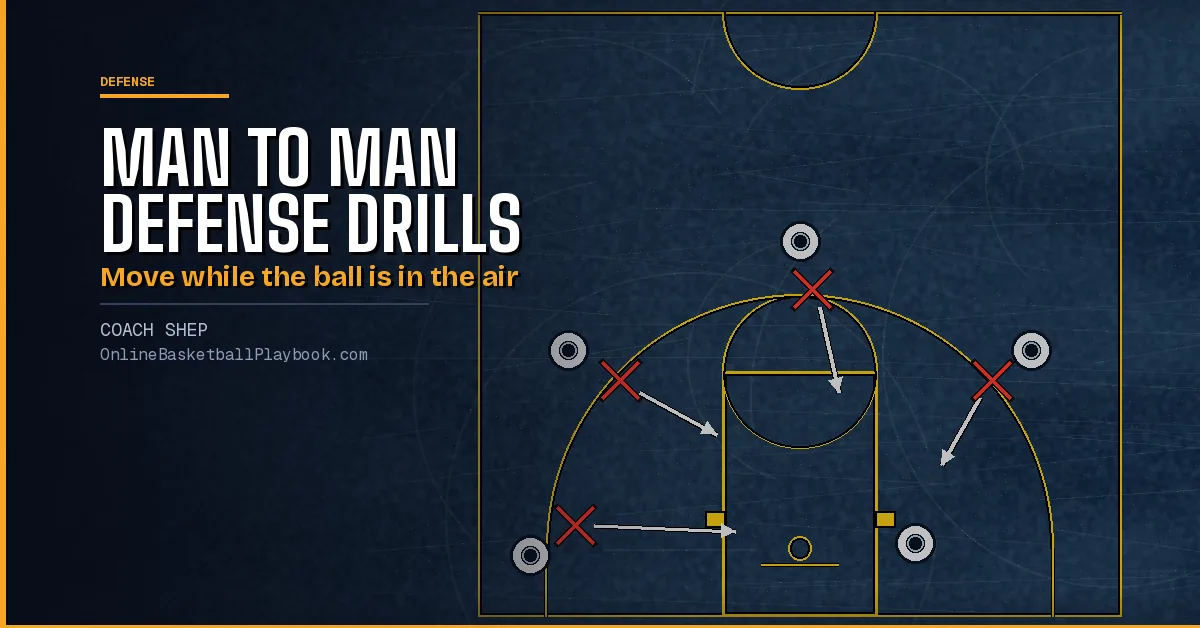
Man to man defense drills in teaching order: full ladders from 1 on 1 to 5 on 5, denial, help and recover, post and screen drills, scored games and youth versions.
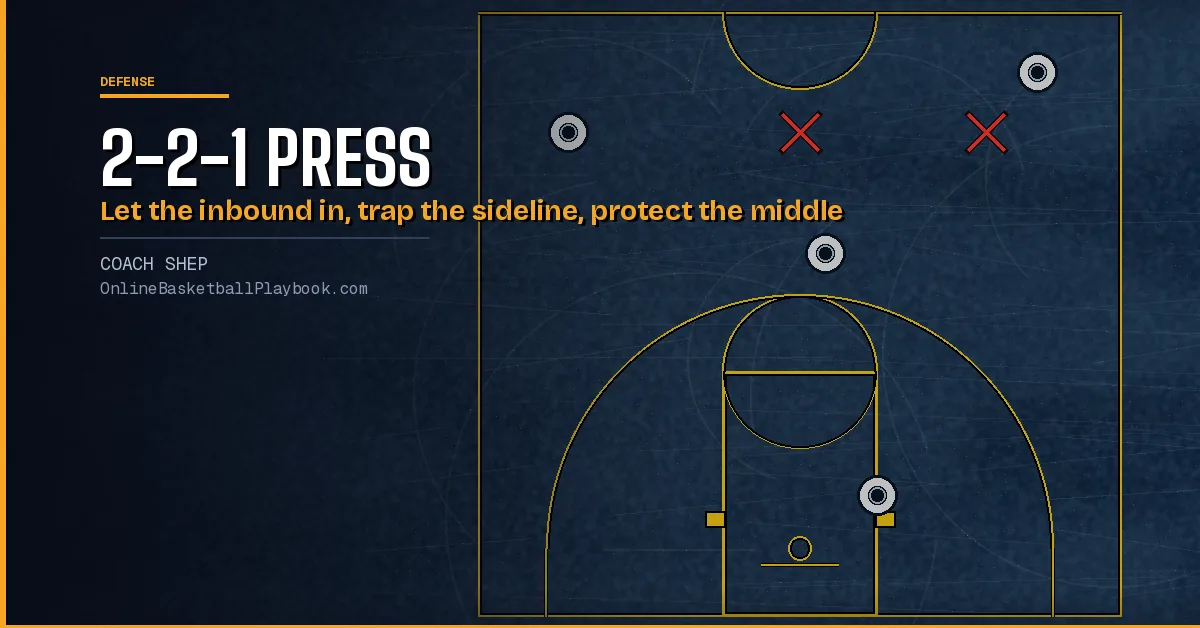
How to run the 2-2-1 press: who plays each spot, how coaches trap the sideline, the rotations after a reversal, how it breaks, how offenses attack it and the drills.
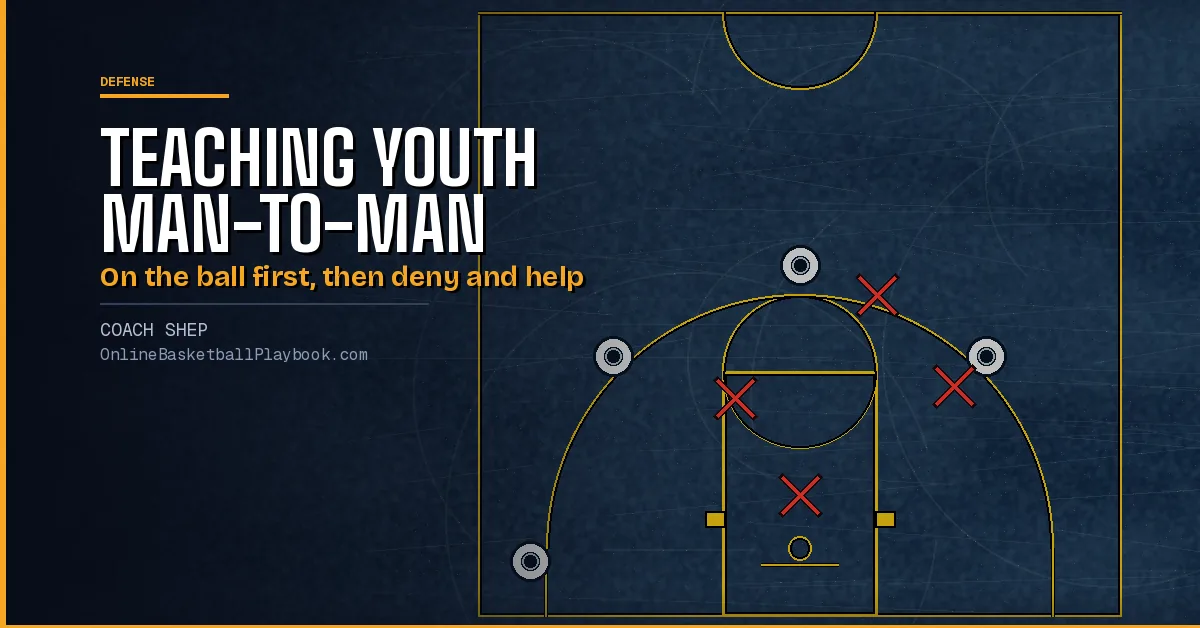
Teaching man to man defense in youth basketball: what to teach first at each age, the cold, warm and hot levels, the pistol cue, deny and help, and when zones fit.
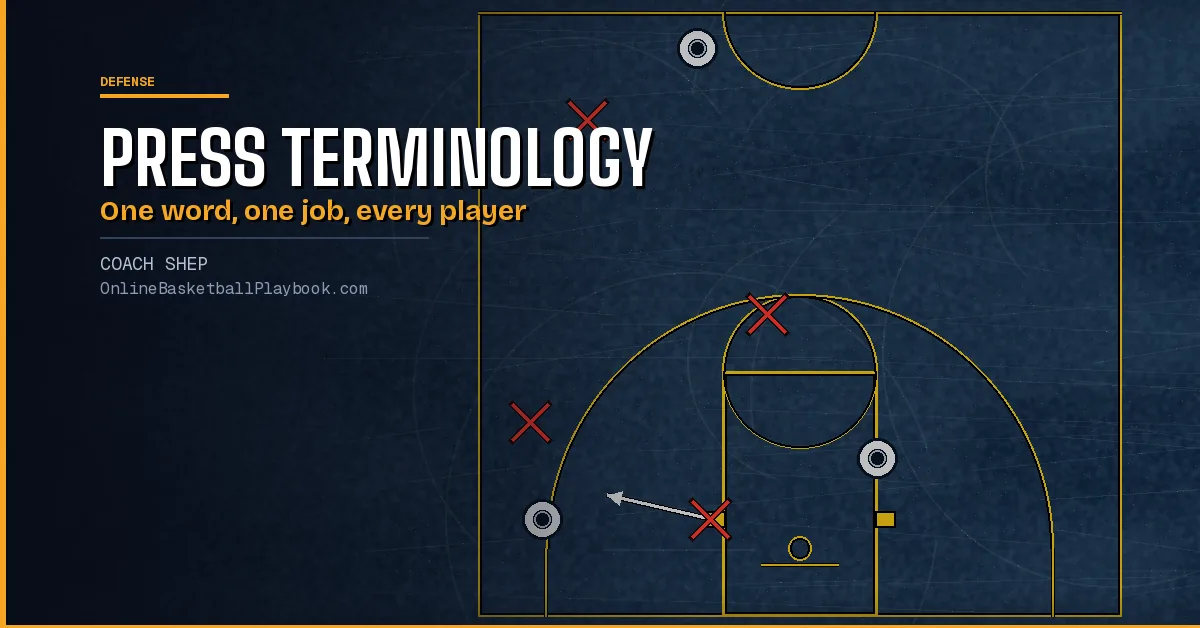
Basketball press terminology by job: trappers, interceptors, safety and goaltender, line names, run and jump, peel down, rotate and calls that change meaning.
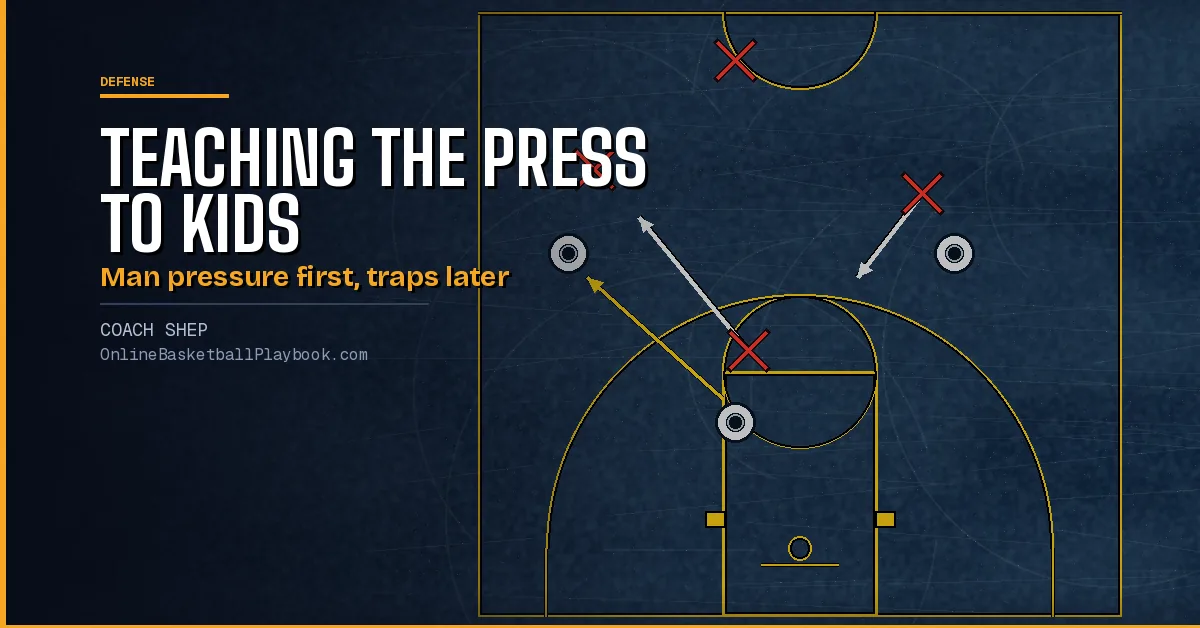
How to teach a press to youth teams: check your league's rules, start with man pressure, build it through small games, then add a simple trap or zone press later.
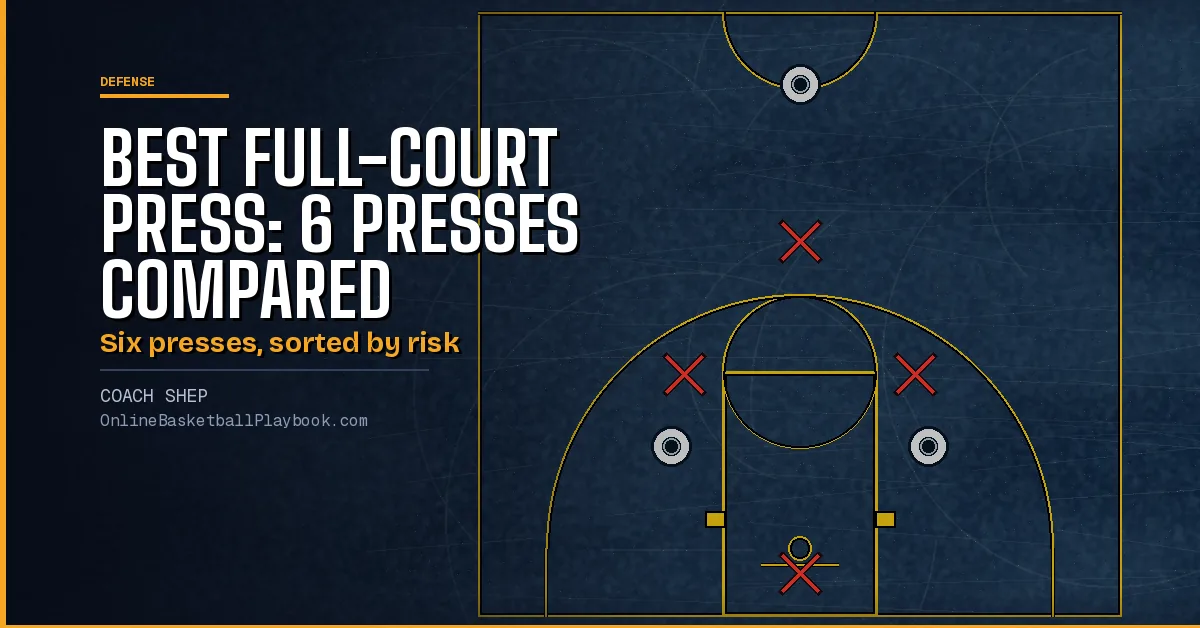
The 1-2-1-1, 2-2-1, 1-2-2, 1-3-1, run and jump and full-court man, sorted by where they pick up, where they trap and how much they risk.
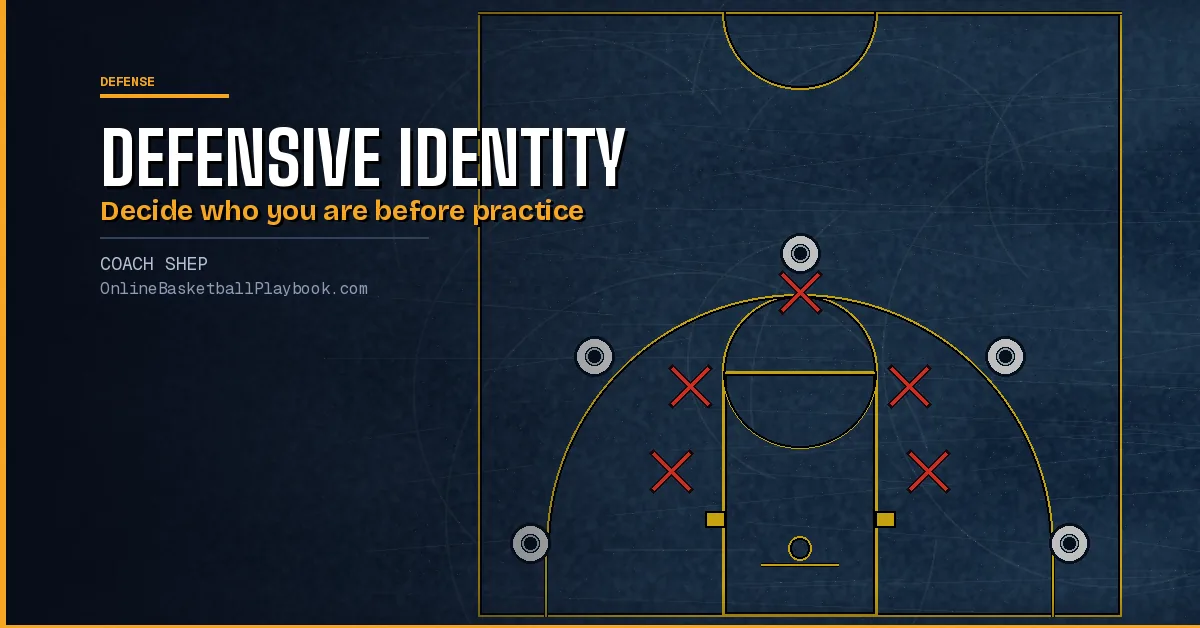
Defensive identity basketball coaches build on purpose: deny or pack, switch, force, press, zone, crash or get back, plus the standards that make it stick.
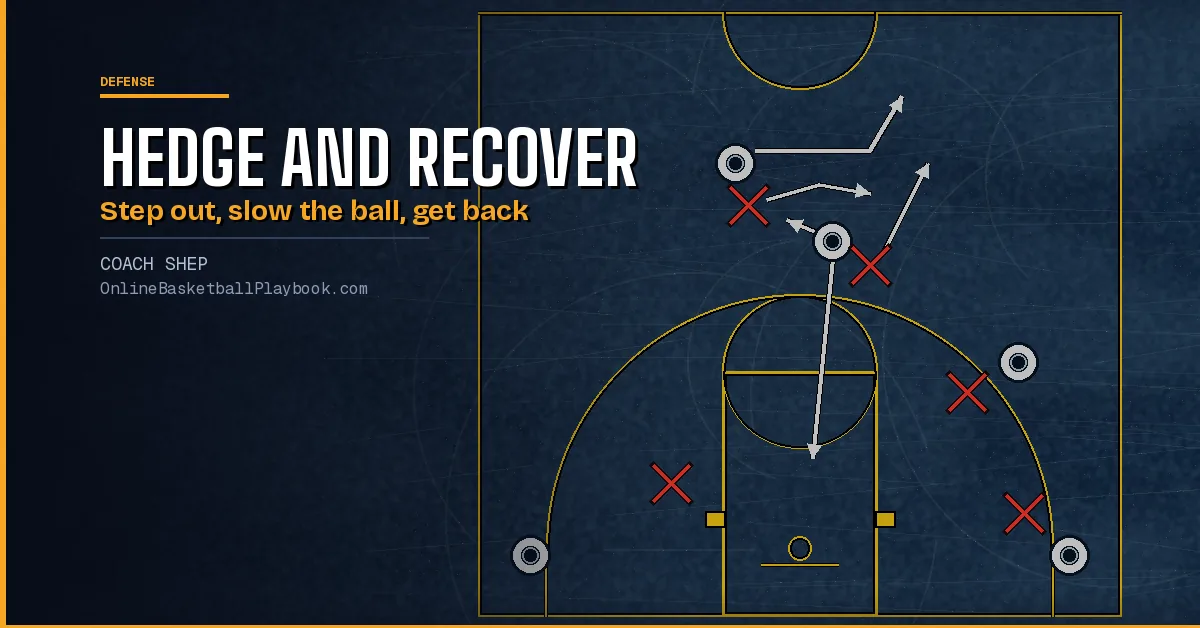
Hedge basketball explained: the hard hedge, flat hedge, soft show and show and recover, both defenders' footwork, the split, the slip and how to teach it.
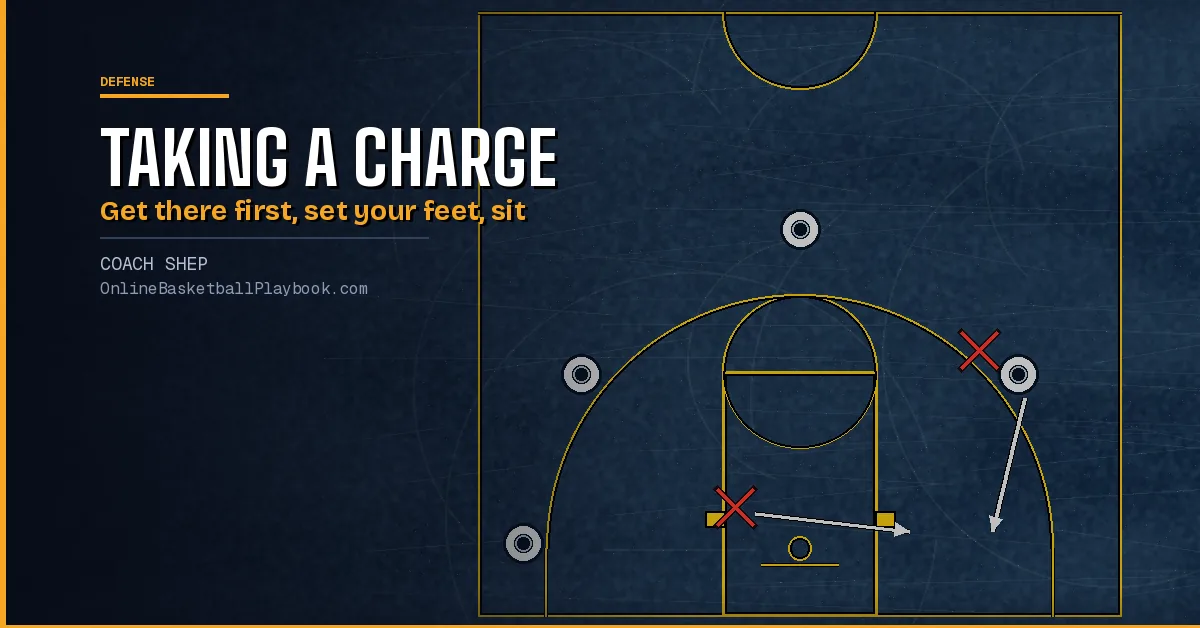
Taking a charge in basketball: where charges come from, setting the feet, the legal spot by level, three ways to fall, the drills and when to wall up instead.
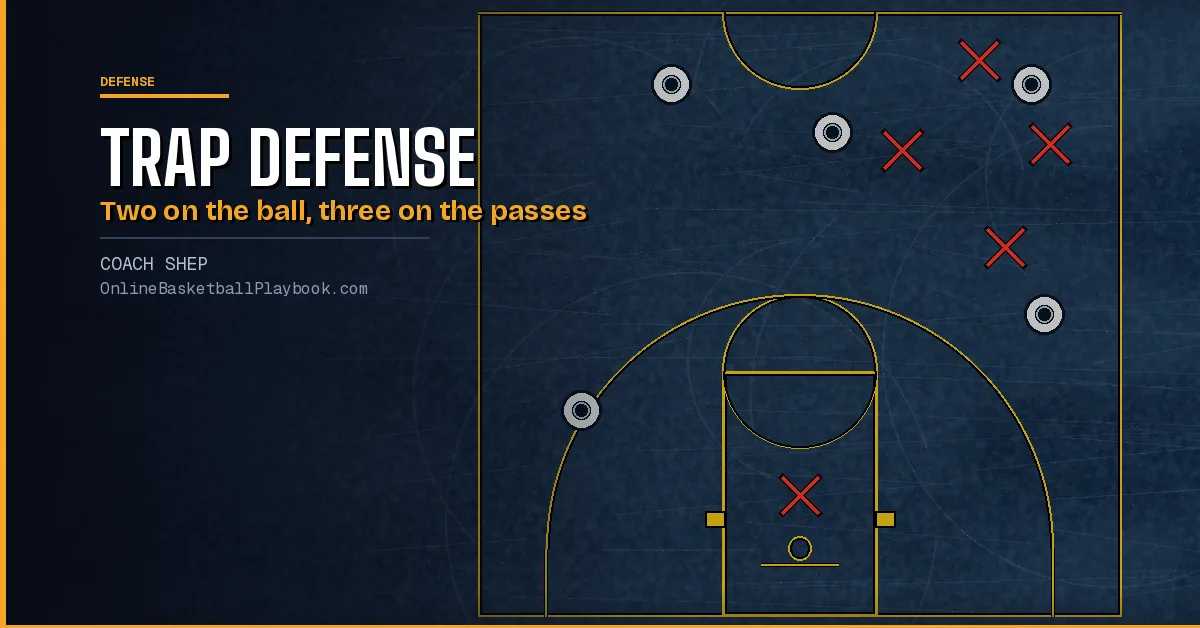
Trap defense basketball explained: how two trappers close, when to spring the trap, the spots on the floor, the interceptors and goaltender, and every version.
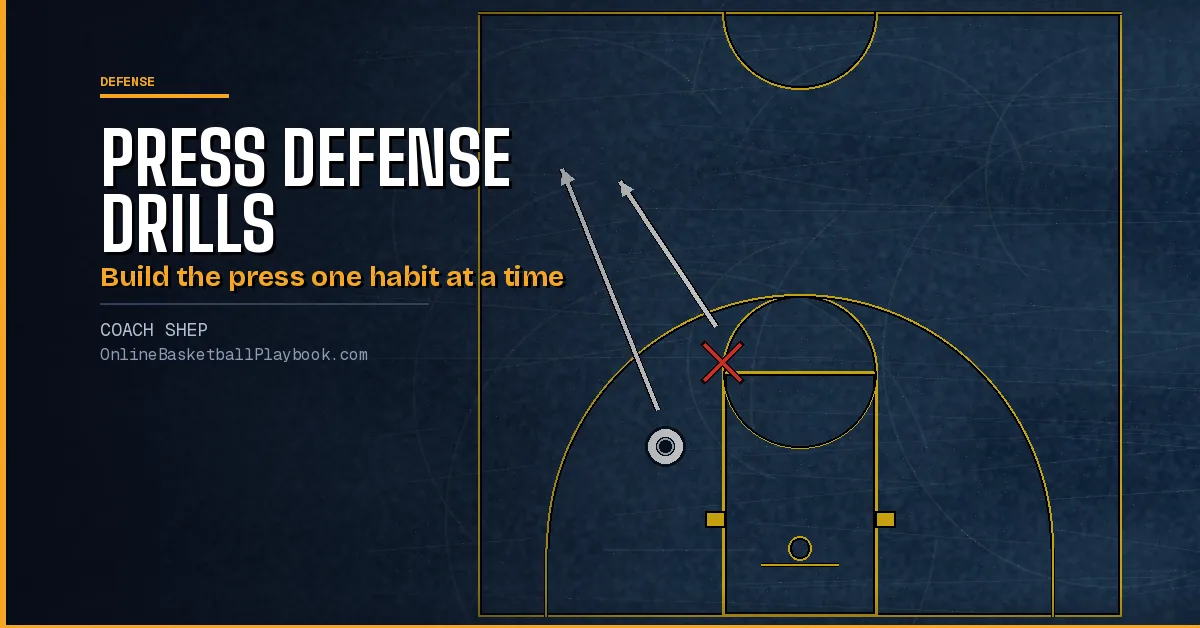
Full court press defense drills that build the press in pieces: footwork, trap drills, back-tips, sideline traps, rotation drills, live games and how to score them.
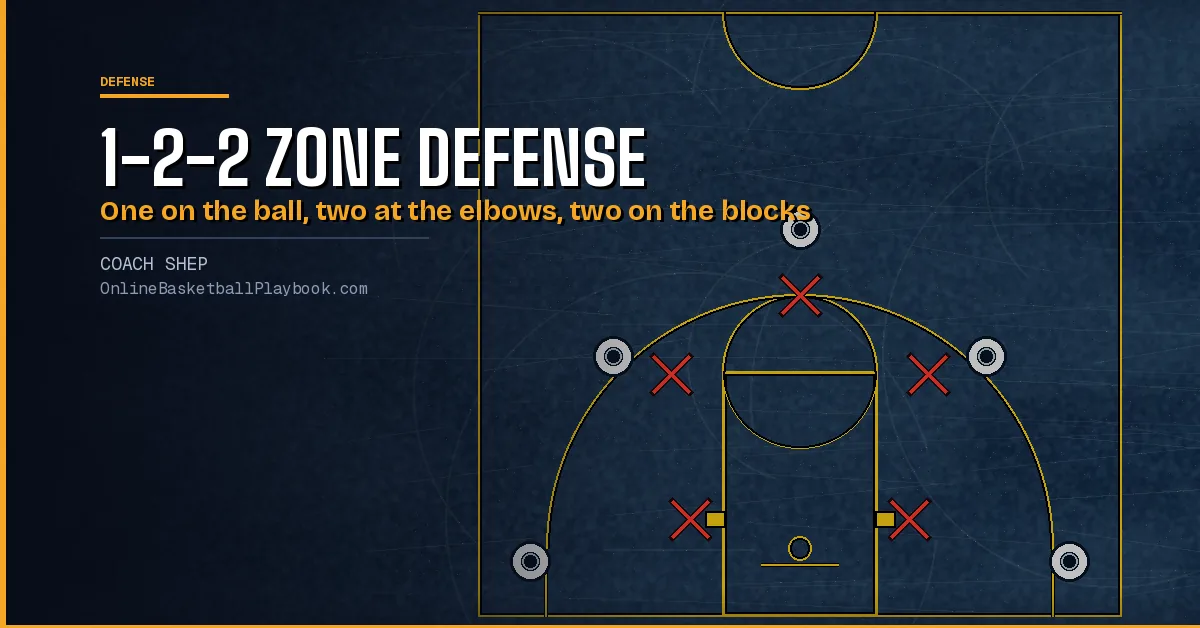
How to run the 1-2-2 zone defense: the five roles, rotations for every ball spot, the corner trap, the high post problem, the variations coaches run and the drills.
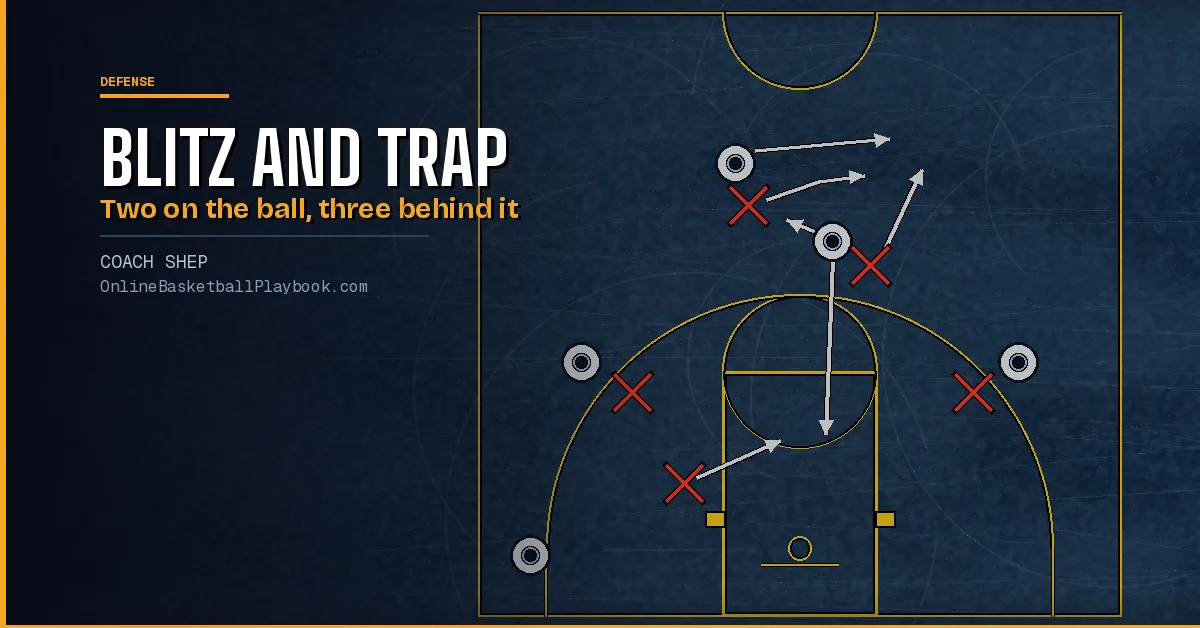
Blitz pick and roll defense explained: how to trap a ball screen, when the blitz fires, the rotation behind it, the offense's answers and the disguise.
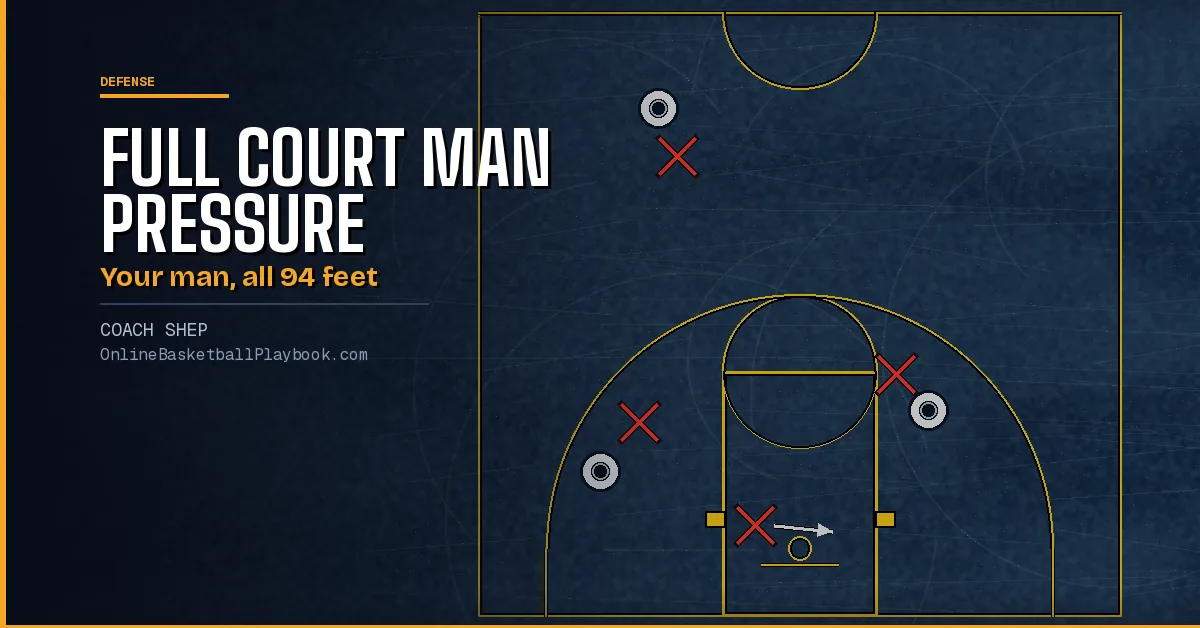
Full court man to man pressure by type: the no-trap press, the trap on a trigger, the half man, half zone 55, the inbound deny and the exit when it breaks.
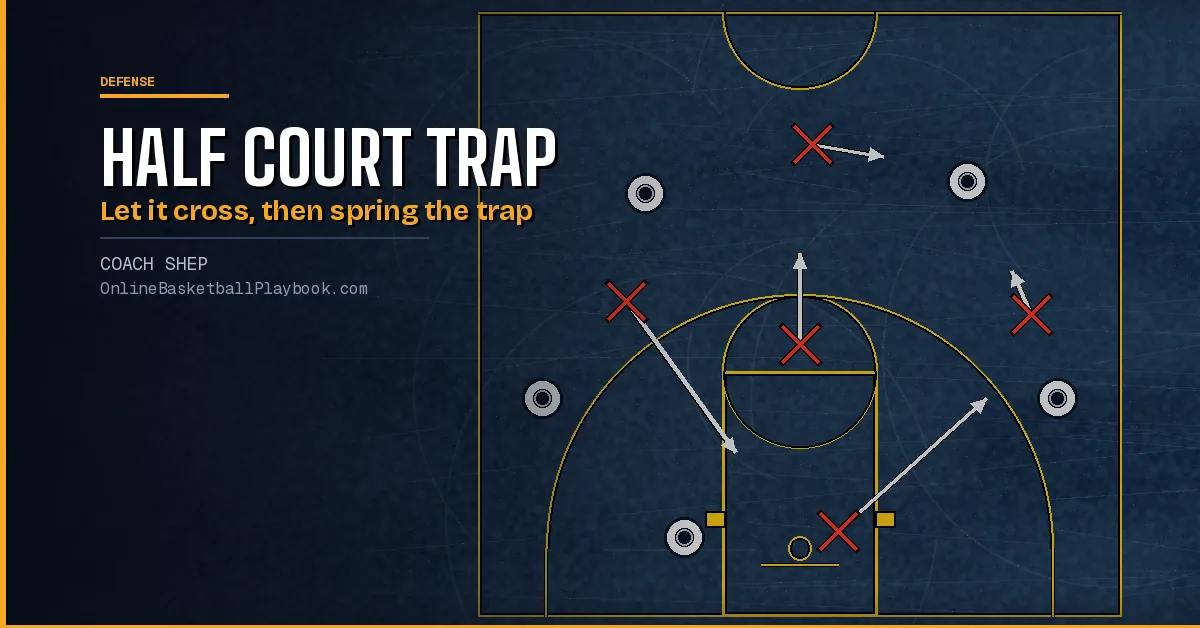
Half court trap defense by shape: the 1-3-1 half court trap, the 1-1-3 and trapping 2-3, the 1-2-2 trap at the line, when to call it and how to teach it.
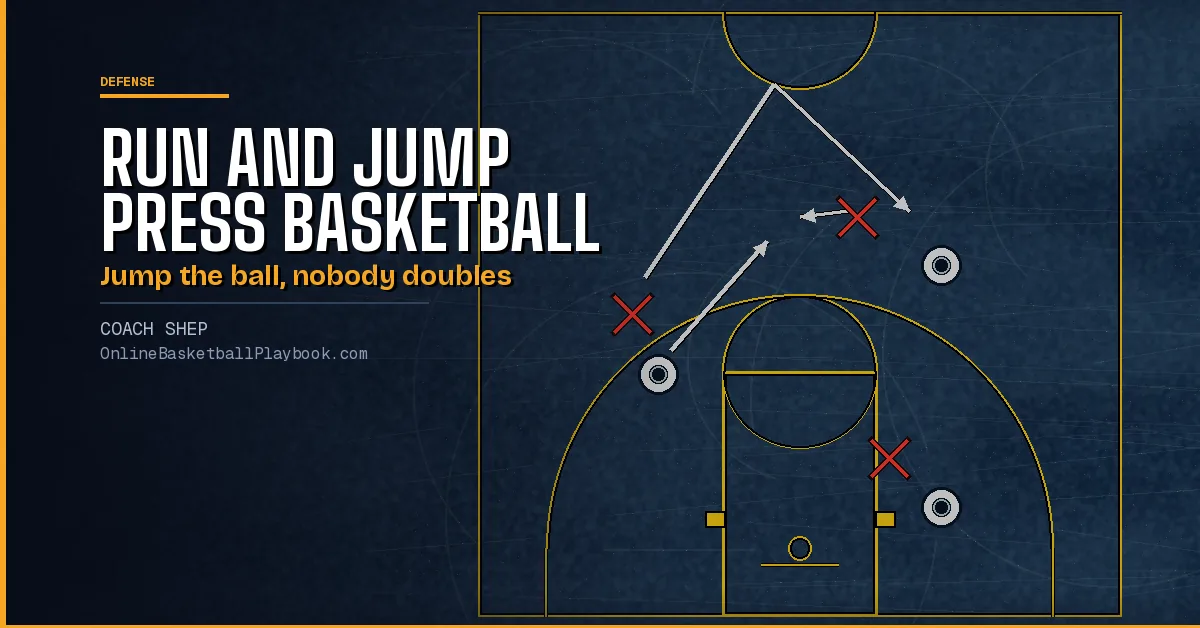
Run and jump press basketball explained: the jump switch, when to jump, middle or sideline, the rotation, when to call it, how offenses beat it and the drills.
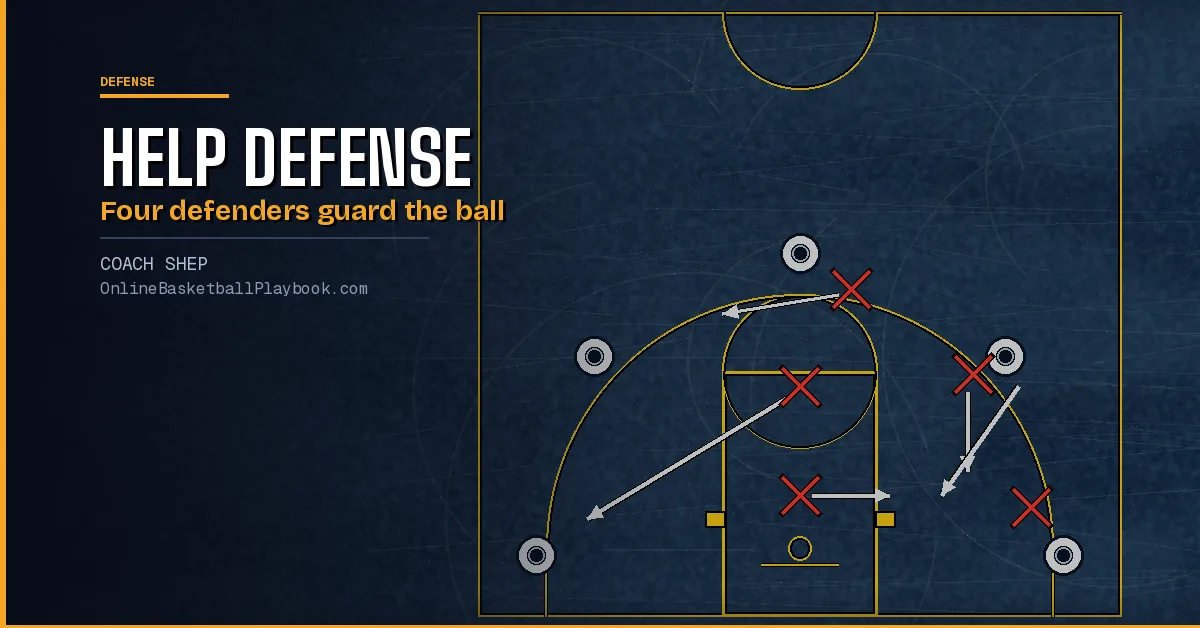
Help defense basketball explained: where help side defenders stand, stunt or commit, who rotates on a drive, the 911 call, and how coaches teach each.
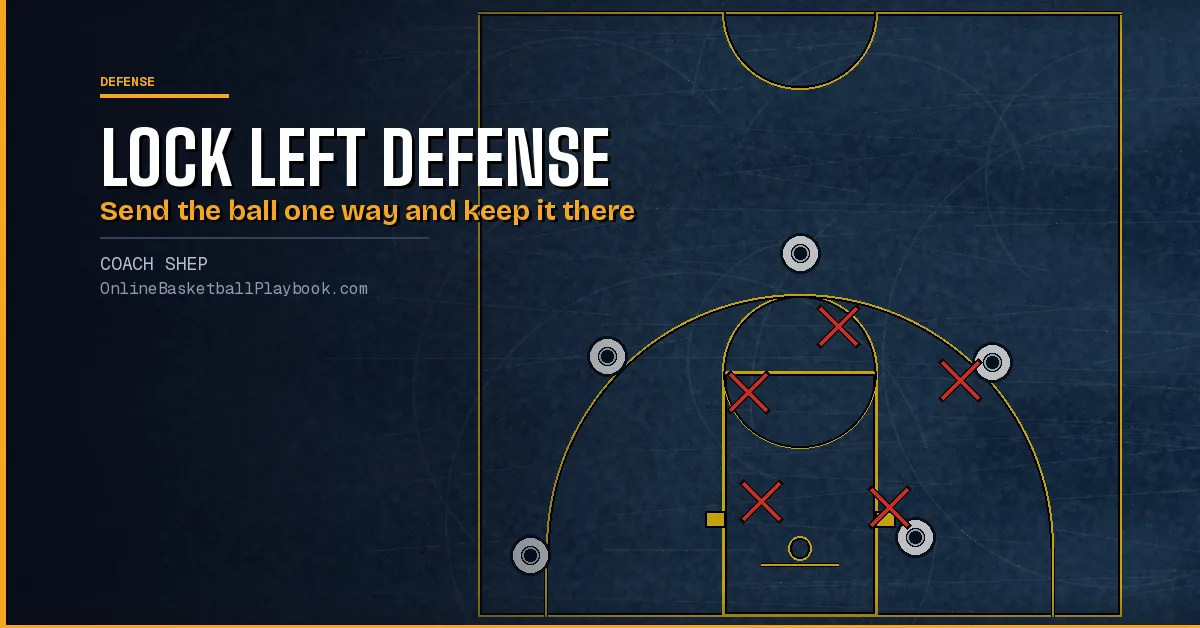
Lock left defense explained: force the ball to the offense's left all game, the stance and layers, how help changes, and the other ways to force the ball.
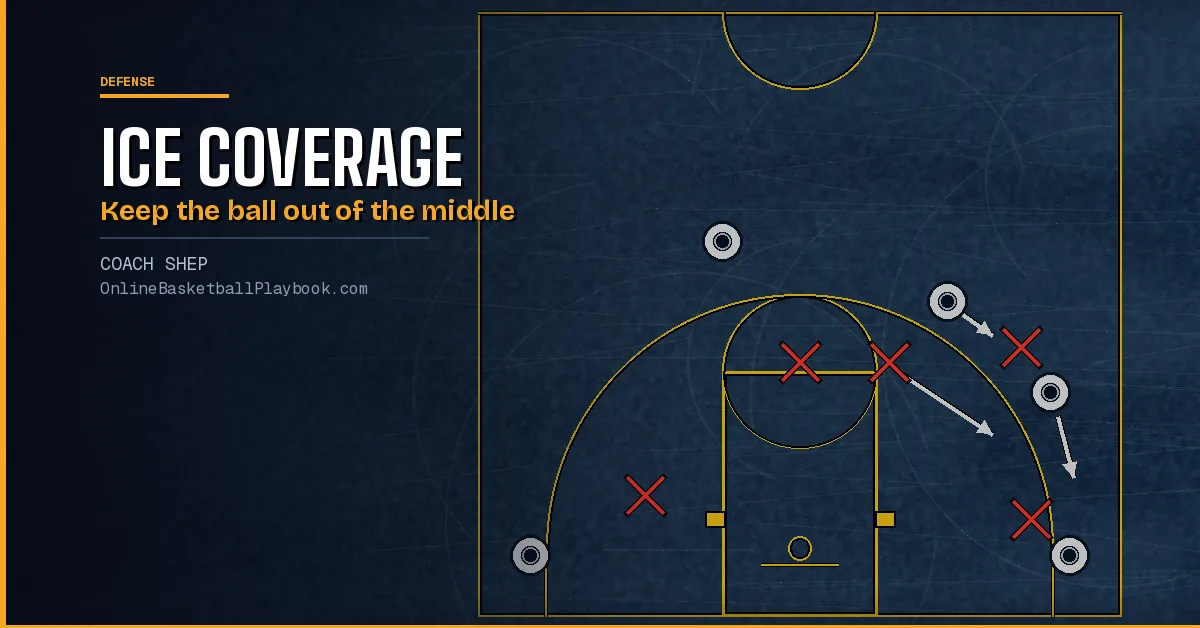
Ice basketball defense explained: how to ice a side pick and roll, both defenders' jobs, the box, the nail stunt, the rotation and weak on the middle screen.
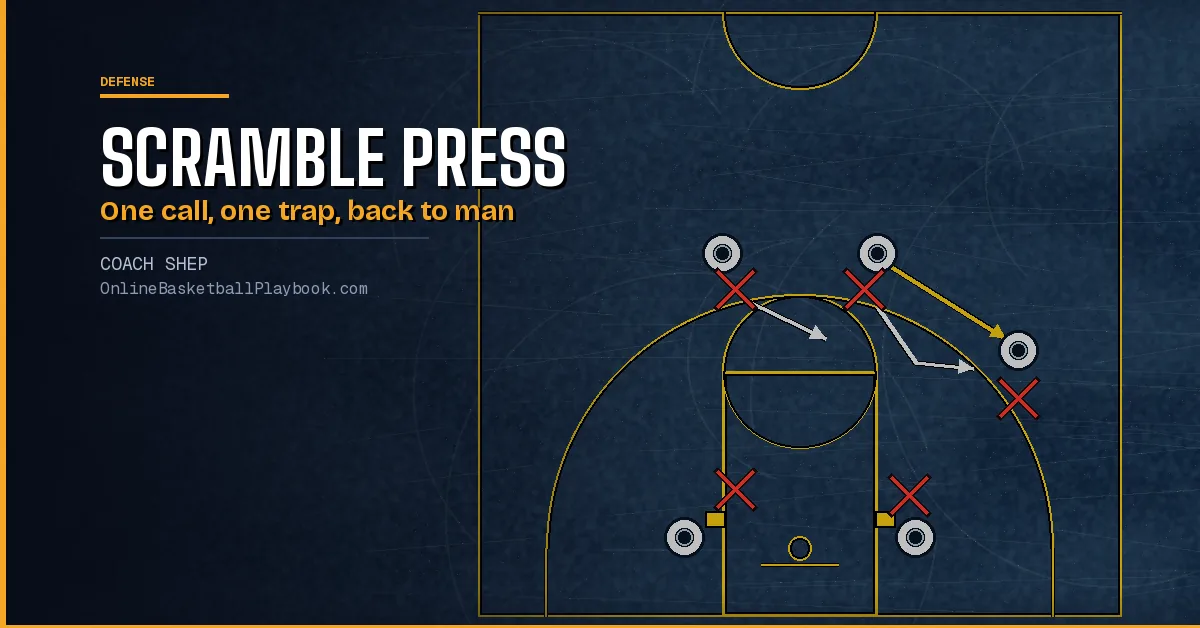
The scramble press explained: five hand calls after a score, Larranaga's Twist and 55, half-court Thumbs Down and Thumbs Up, Don Meyer's fist calls and drills.
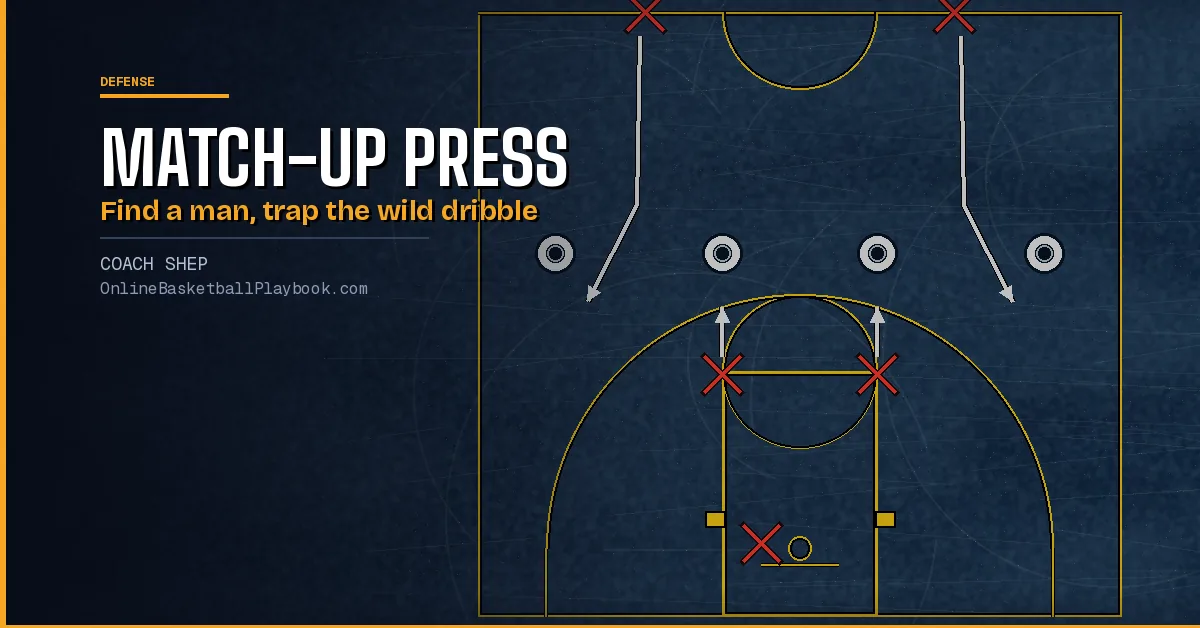
The full-court match-up press: matching up from spots, box and diamond, trapping the uncontrolled dribble, the coffin corner, pressing by shot and call menus.
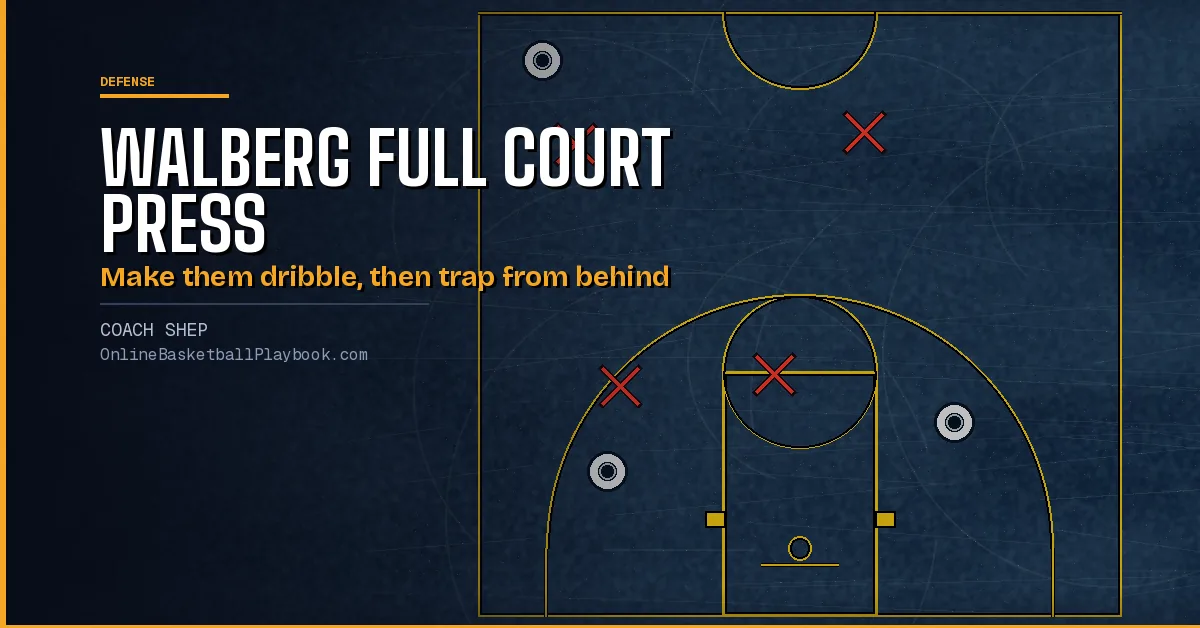
The Vance Walberg full court press in action: five jobs, zones and quarters, trap the sideline and jump the middle, Gold, the vertical re-trap and the umbrella.
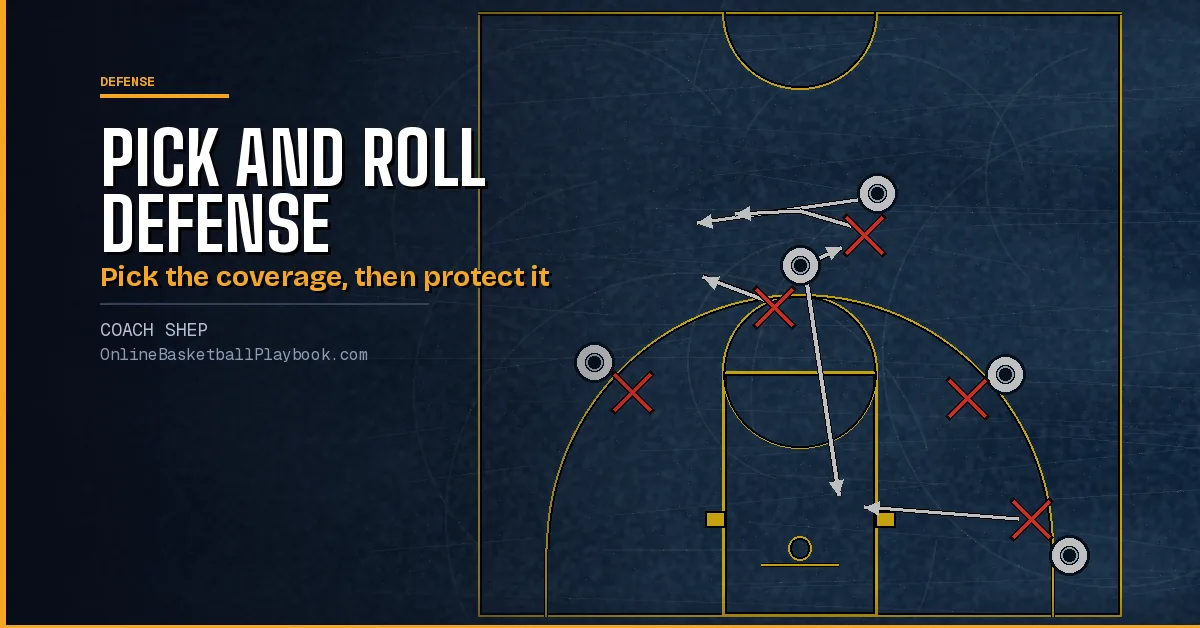
Pick and roll defense compared: drop, show, blitz, switch, ice and under, what each takes away and gives up, the help behind it and how to choose.
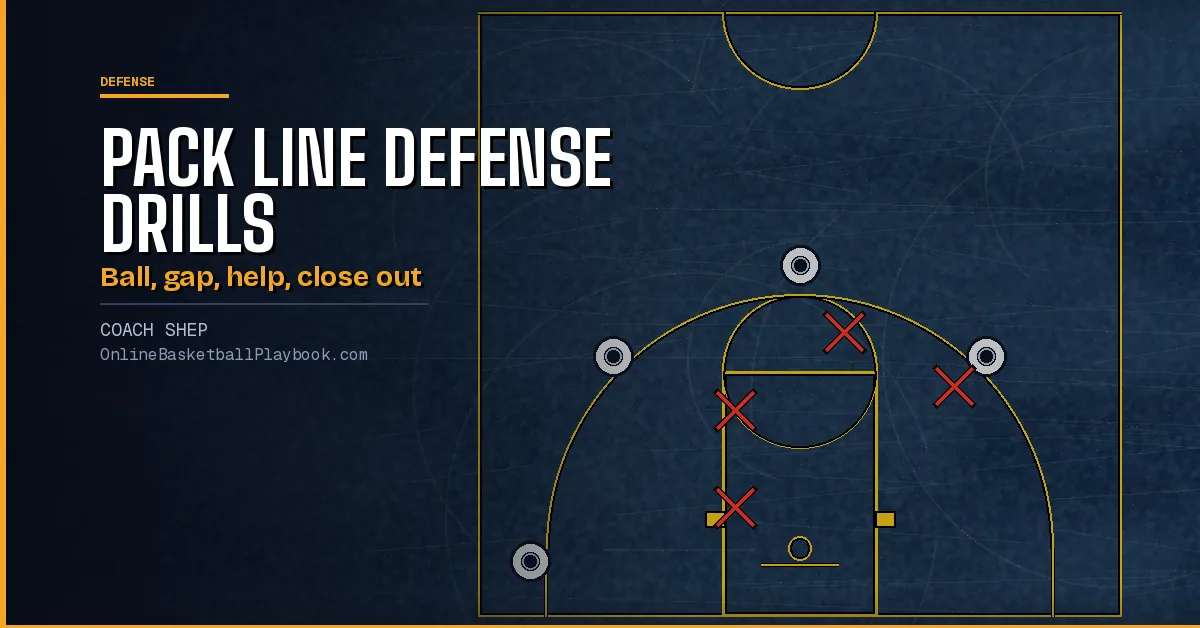
Pack line defense drills for every habit: on-ball containment, 2-on-2 gap work, Vegas closeouts, Blackhawk, shell, post wall-ups, scored games and transition.
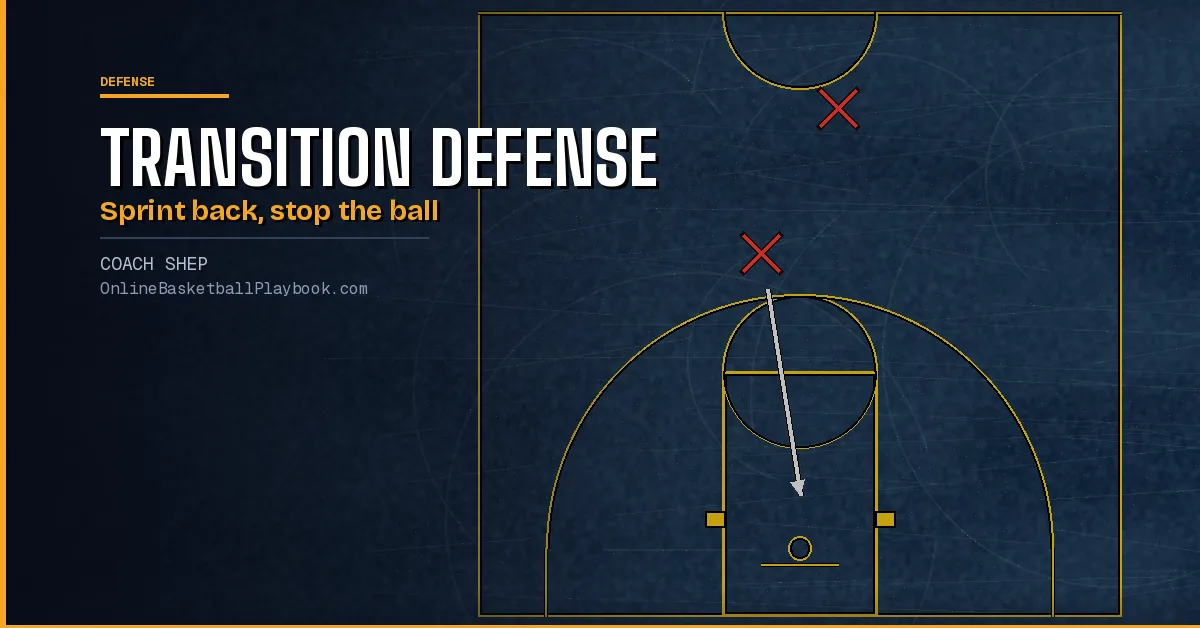
Transition defense basketball explained: who sprints back, rim first or ball first, where to pick up the ball, matching up, 2 on 1 and 3 on 2 rules, and the drills.
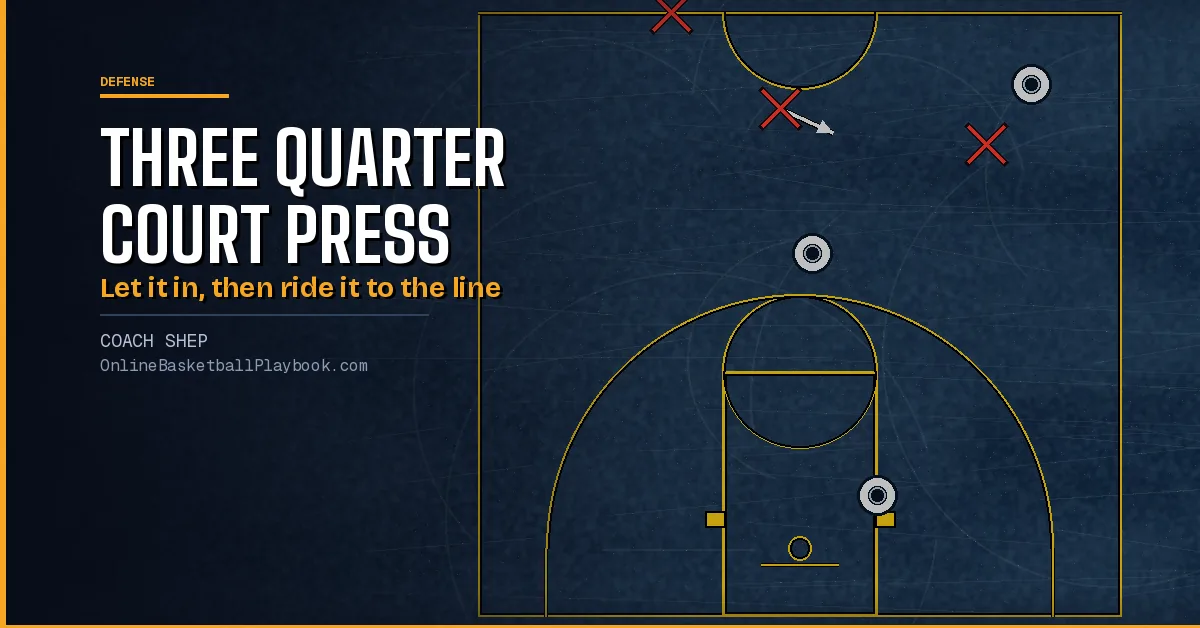
Three quarter court press explained: where the pickup line sits, the 2-2-1 and 1-2-2 shapes, trapping near half court, the rotation behind it and the exits.
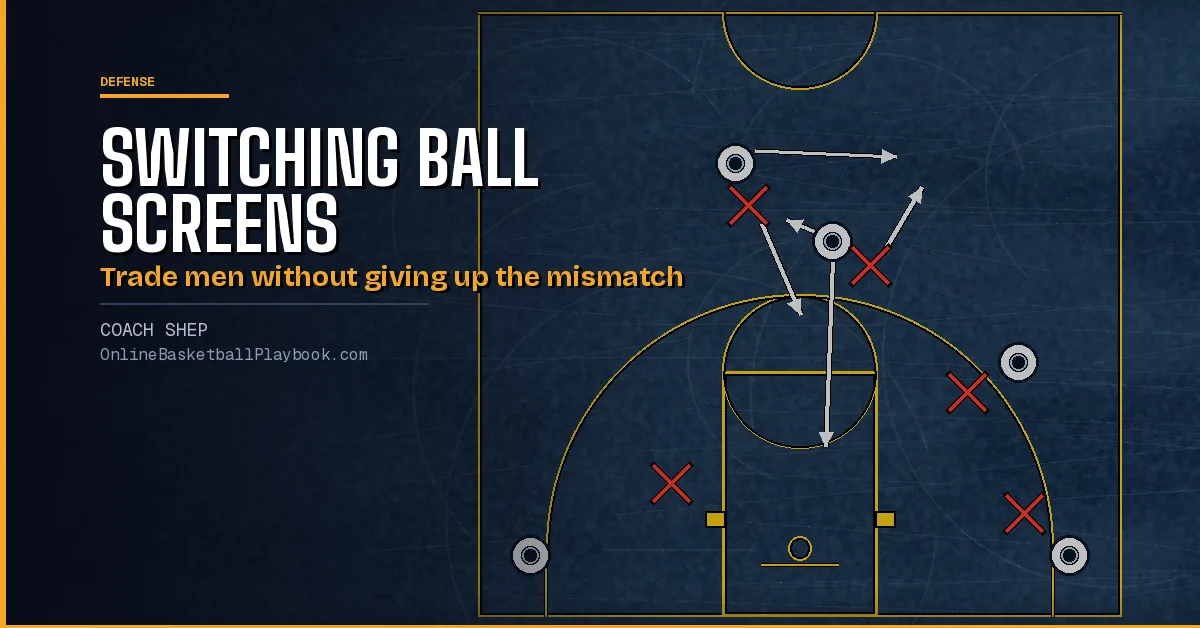
Switching defense in basketball: when to switch ball screens, who calls it, the jump switch, the late switch, the scram after a mismatch and drills to install it.
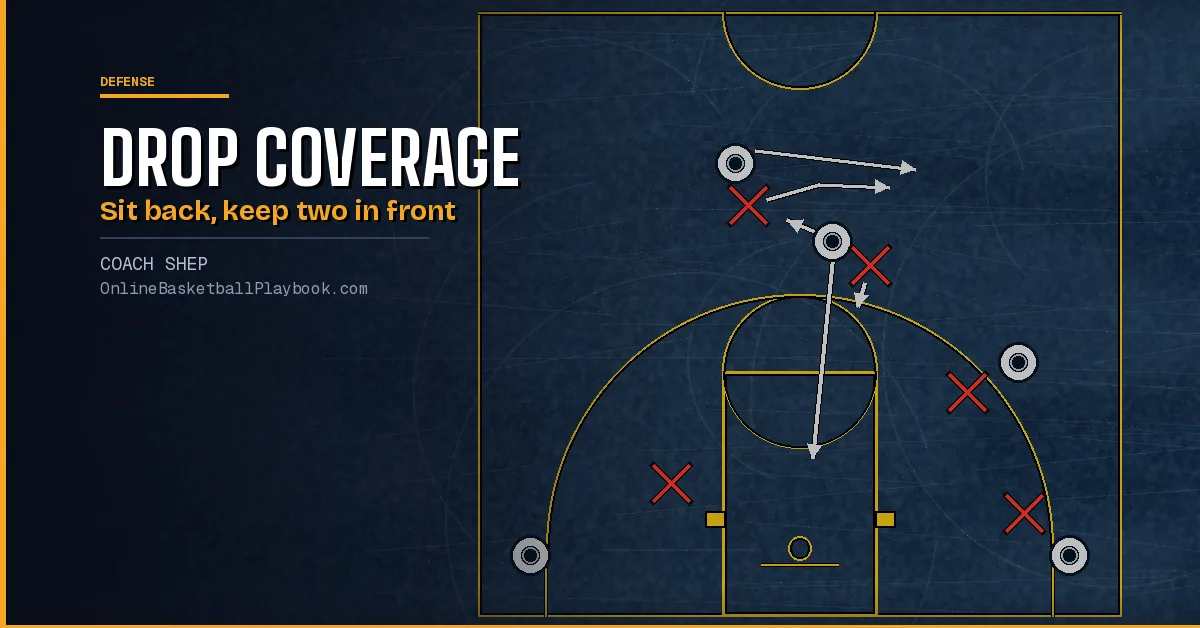
Drop coverage basketball explained: both defenders' jobs, how deep to drop, when to call it, the pop and the pull-up, the help behind it and how to teach it.
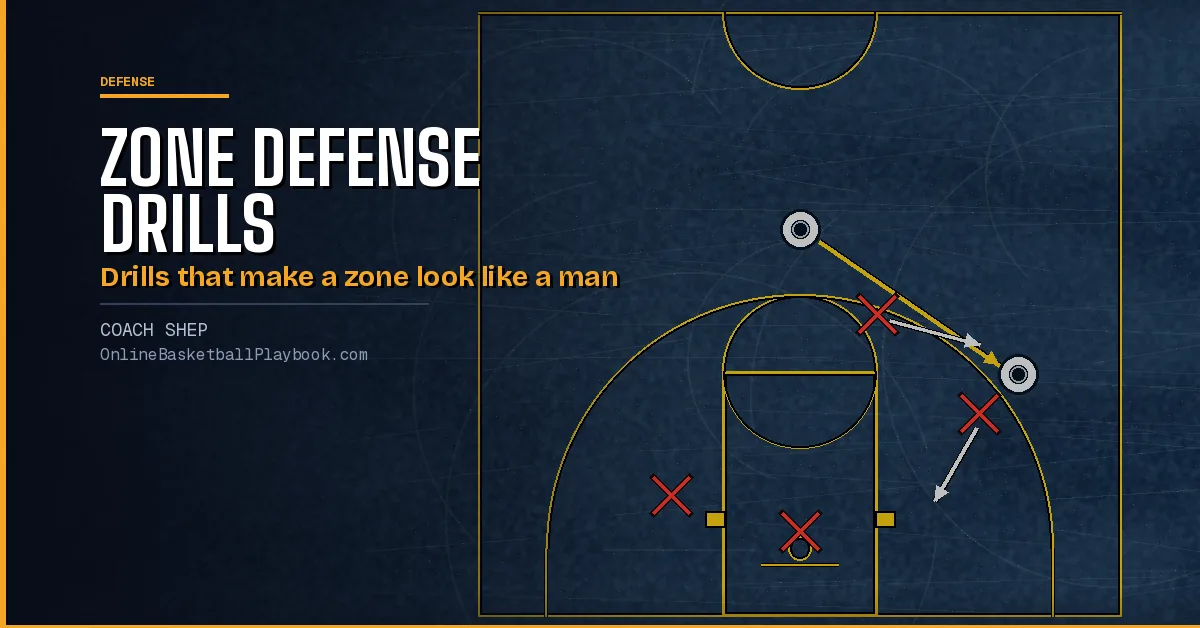
Zone defense drills for any zone: deflection and closeout work, the on-off bump, rotation drills with no shot, build-up ladders, trap drills and zone rebounding.
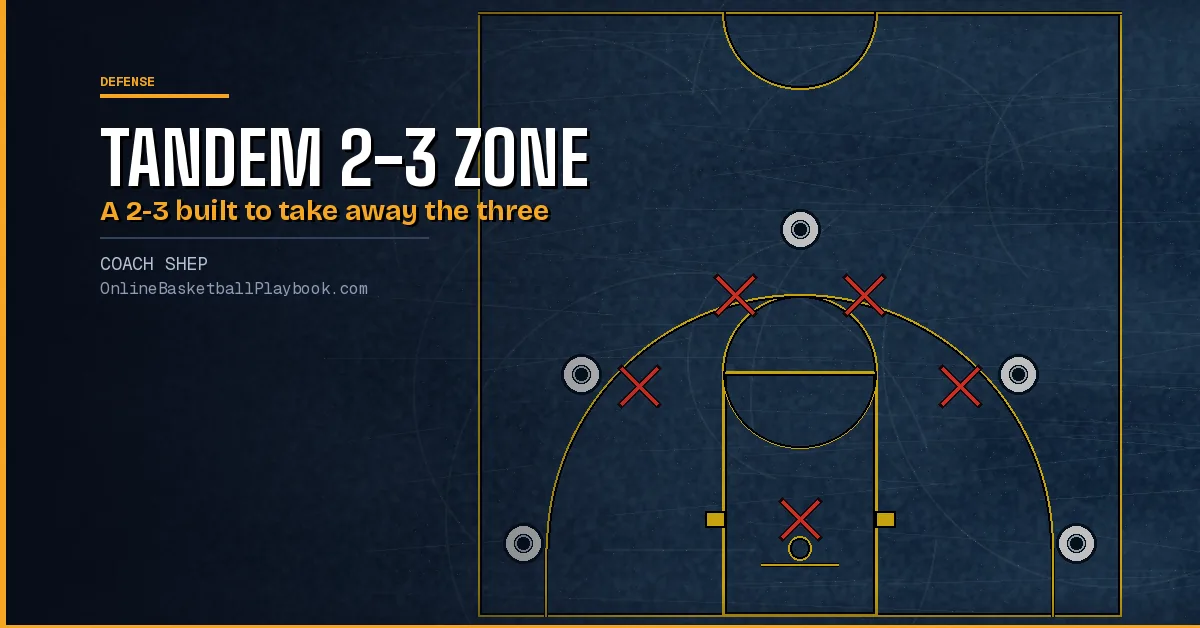
The tandem 2-3 zone explained: the five rules, the high wings, the X5 hub, the wing bump, high post and short corner coverage, ball screens and the tandem front.
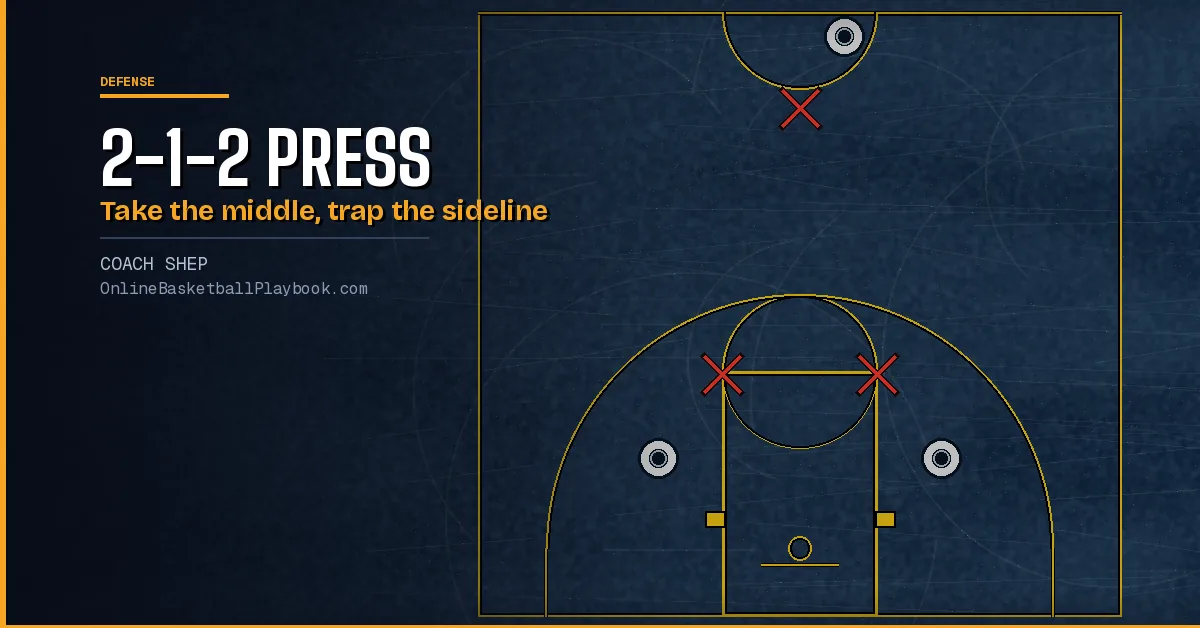
The 2-1-2 press explained: the full court setup, each line's job, the inbound, the first and second sideline traps, reversals and the match-up and tempo versions.
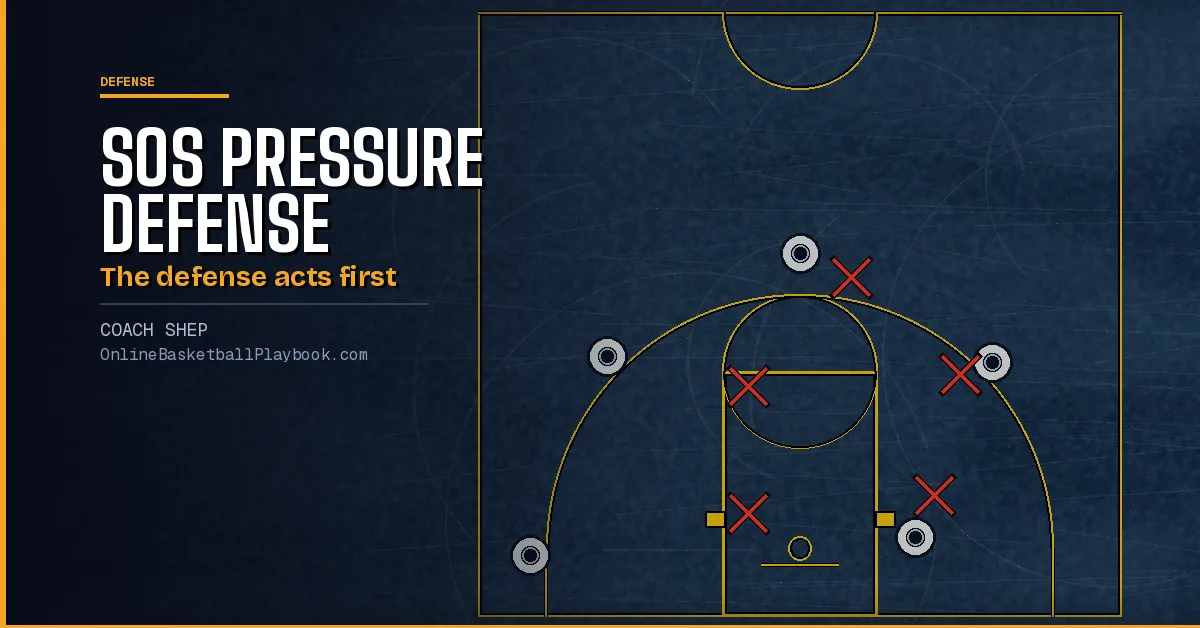
Pressure defense basketball through the SOS system: on-ball, deny and help rules, checkpoints, switching, traps, the presses it grows into, and its costs.
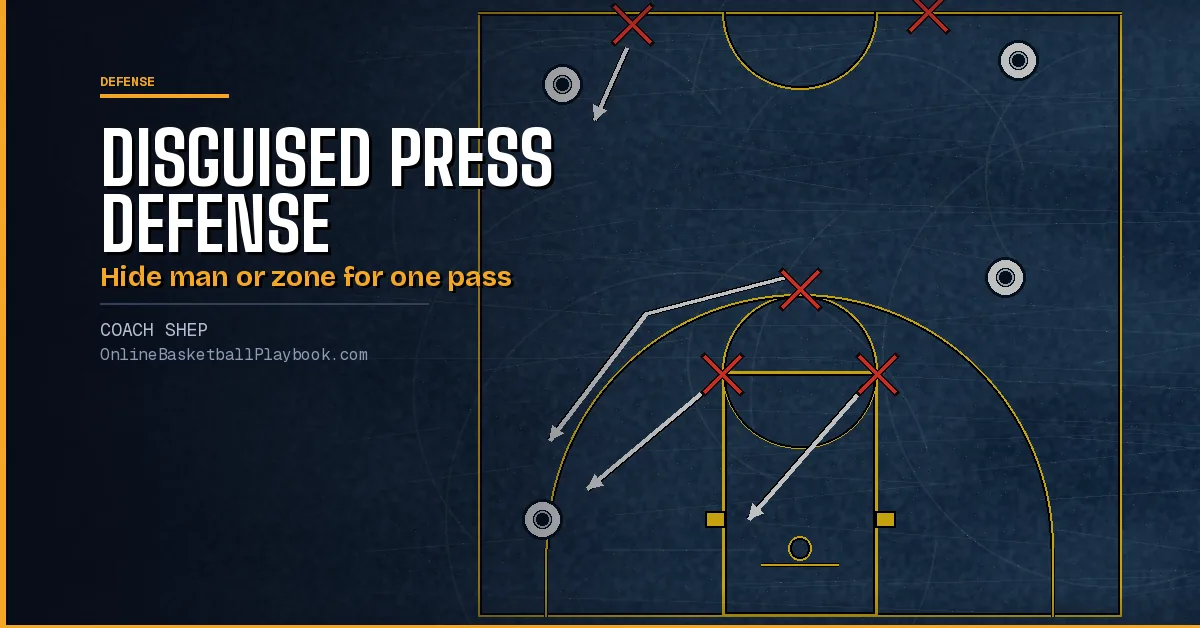
Disguised press defense that hides man or zone for a pass or two: the 1-1-1-2 Conceal, the Circle with its pass count, the 21 press and the Face call.
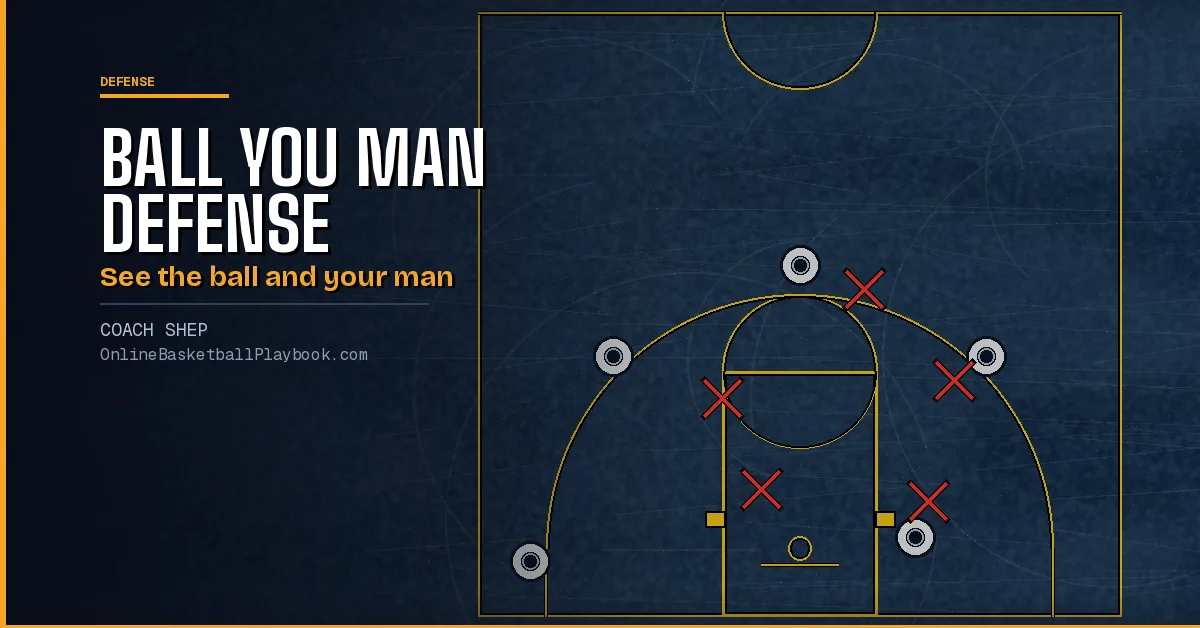
Ball you man defense explained: the triangle between ball, defender and man, positions one, two and three passes away, and the pressure and pack line versions.
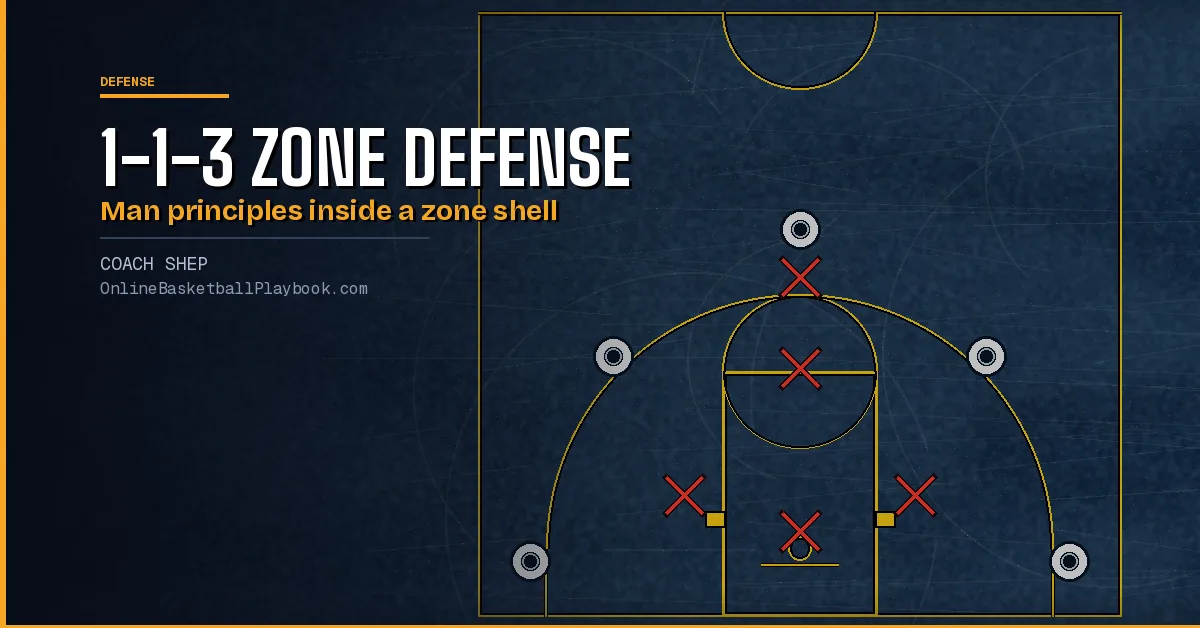
The 1-1-3 zone defense explained: the alignment, the roles, the sideline pin, who takes the wing pass, the elbows, corner traps, rebounding and when to use it.
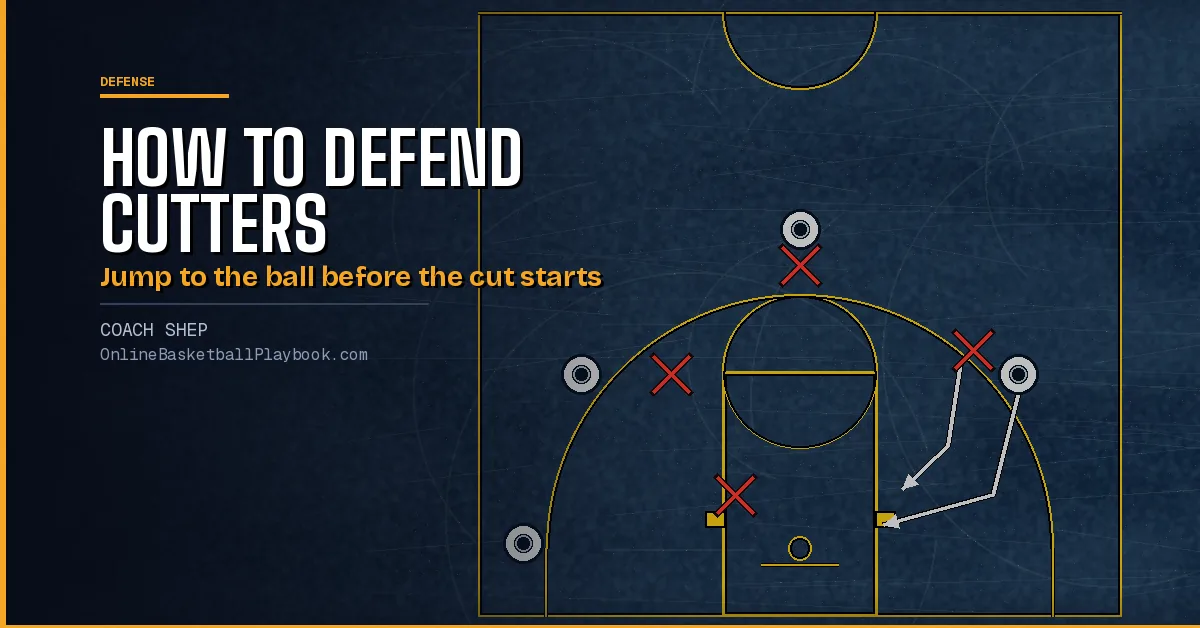
How to defend cutters in basketball: jumping to the ball, the one-pass-away stance, bumping the cutter, the give and go, back cut, flash, curl and screen cuts.
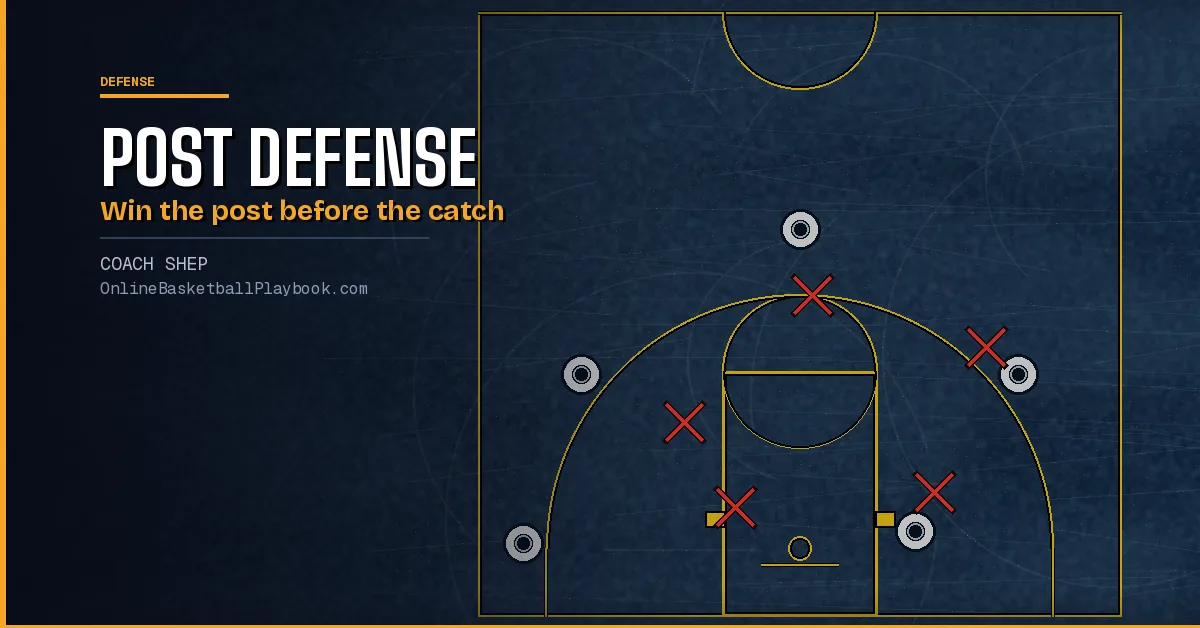
Post defense in basketball: winning before the catch, where to stand by ball spot, fronting, three-quarter, behind, changing sides, the lob and the double.
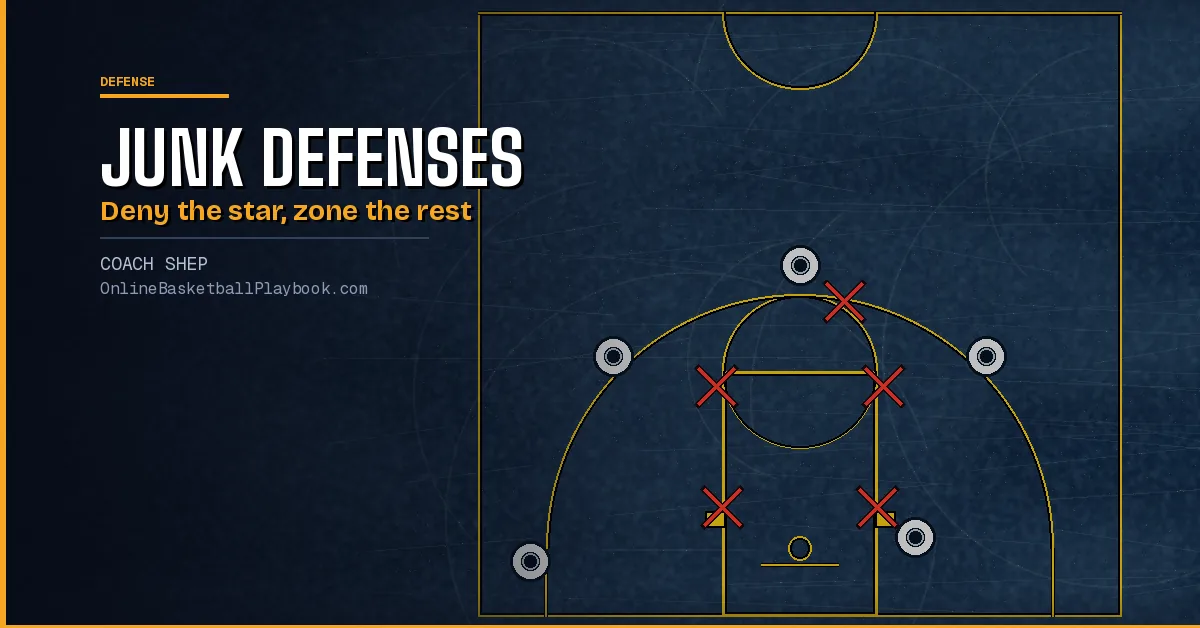
Junk defense basketball explained: the box and 1, diamond and 1, triangle and 2 and inverted triangle, when to call one, what it costs and how offenses beat it.
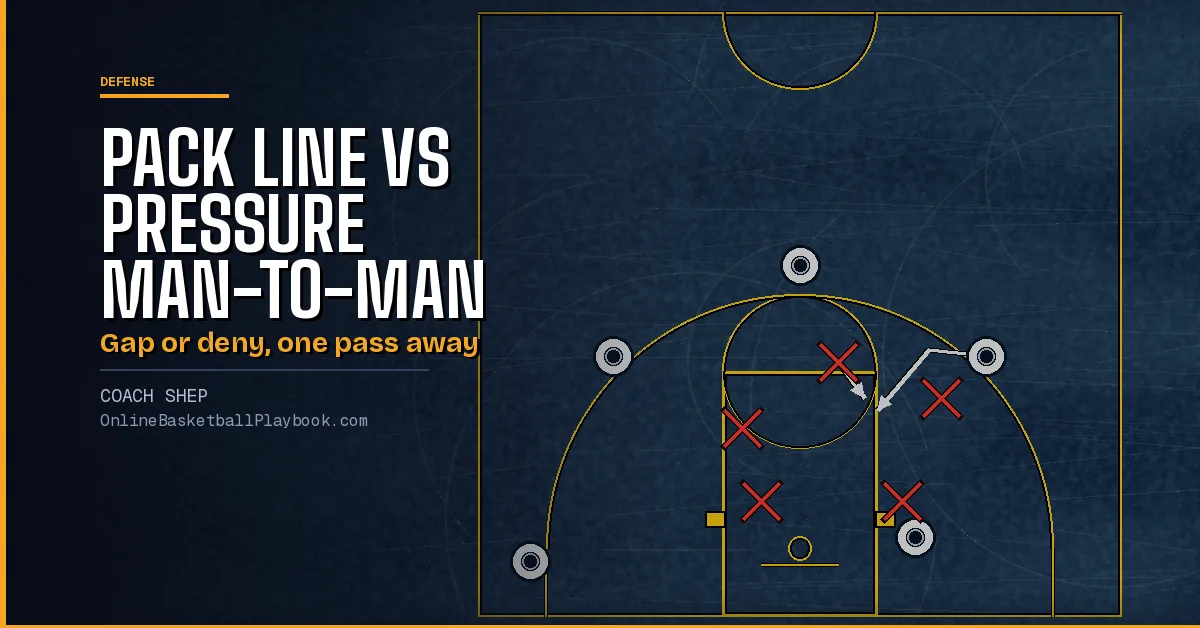
Both pressure the ball. They split on the defender one pass away, and that one choice decides drives, backdoors, screens and fouls.
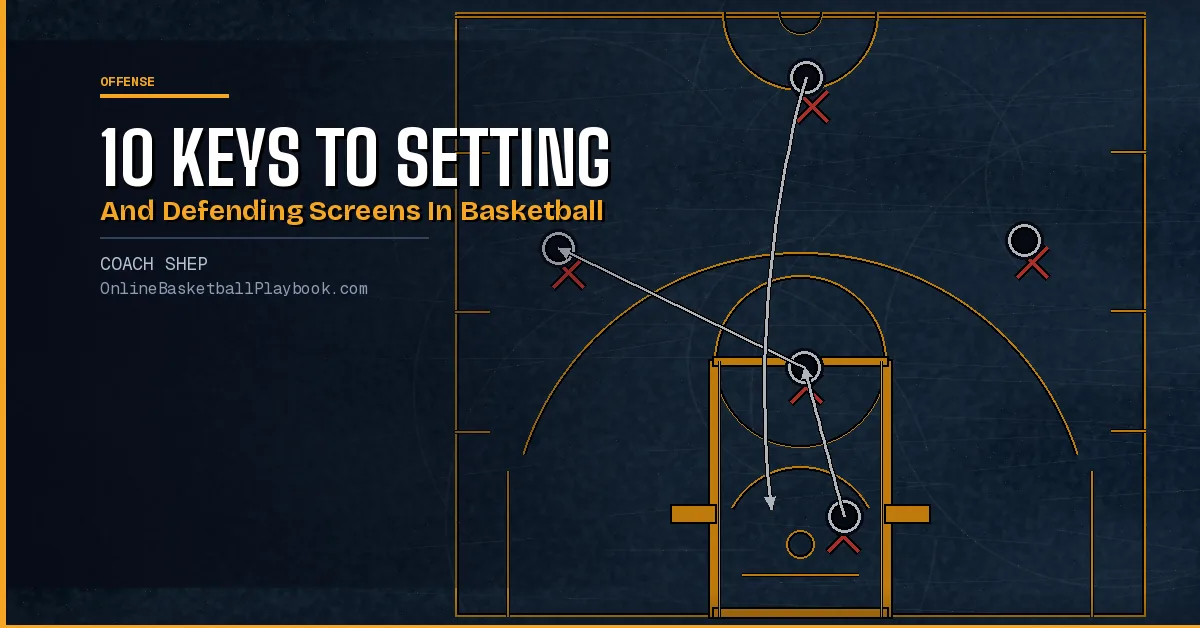
10 Keys to Setting and Defending Screens in Basketball
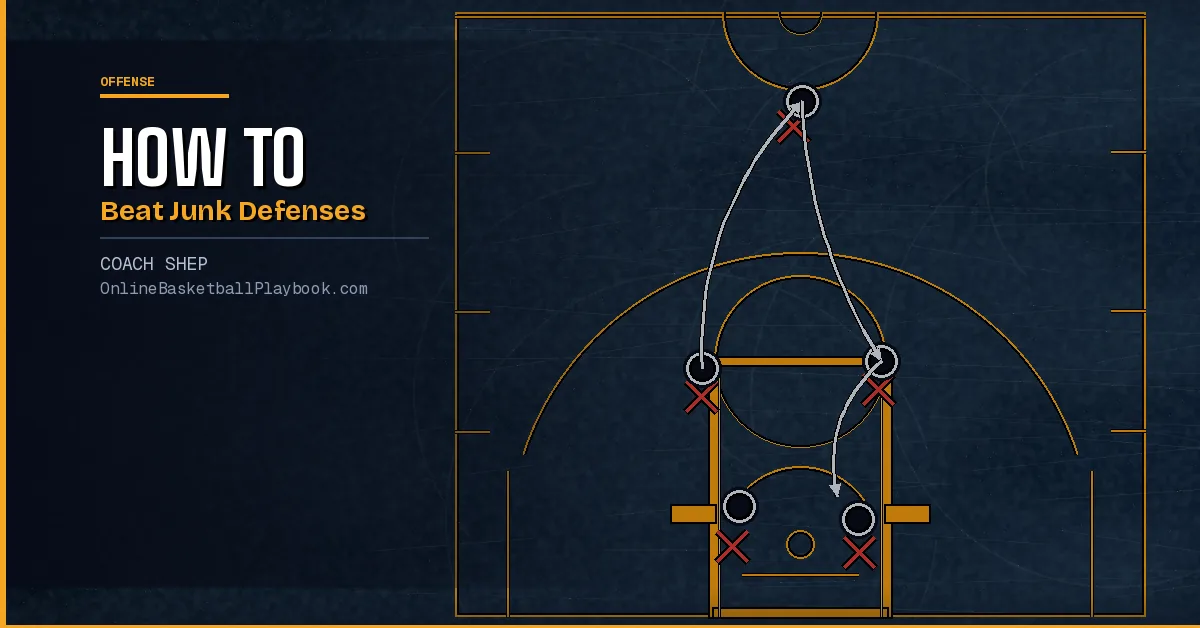
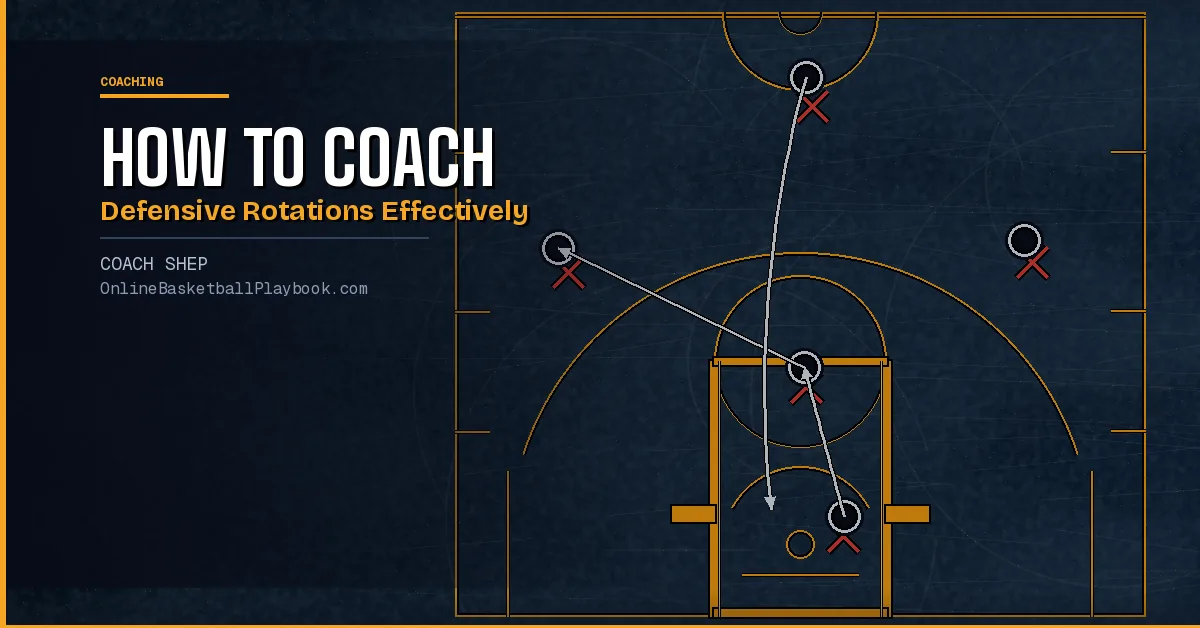
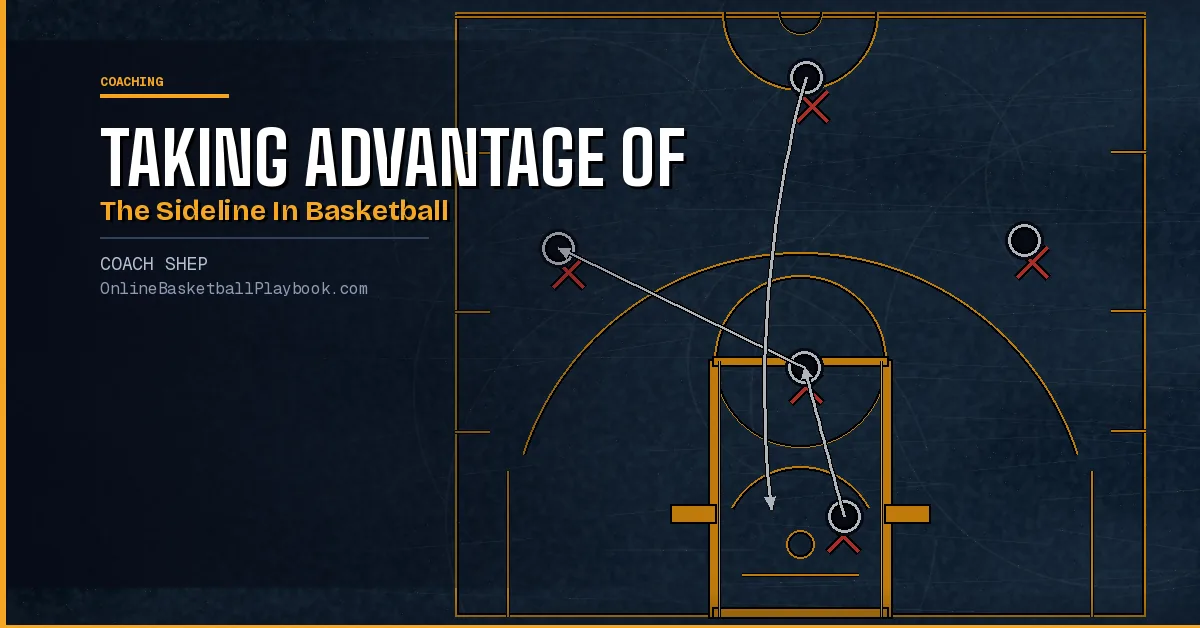
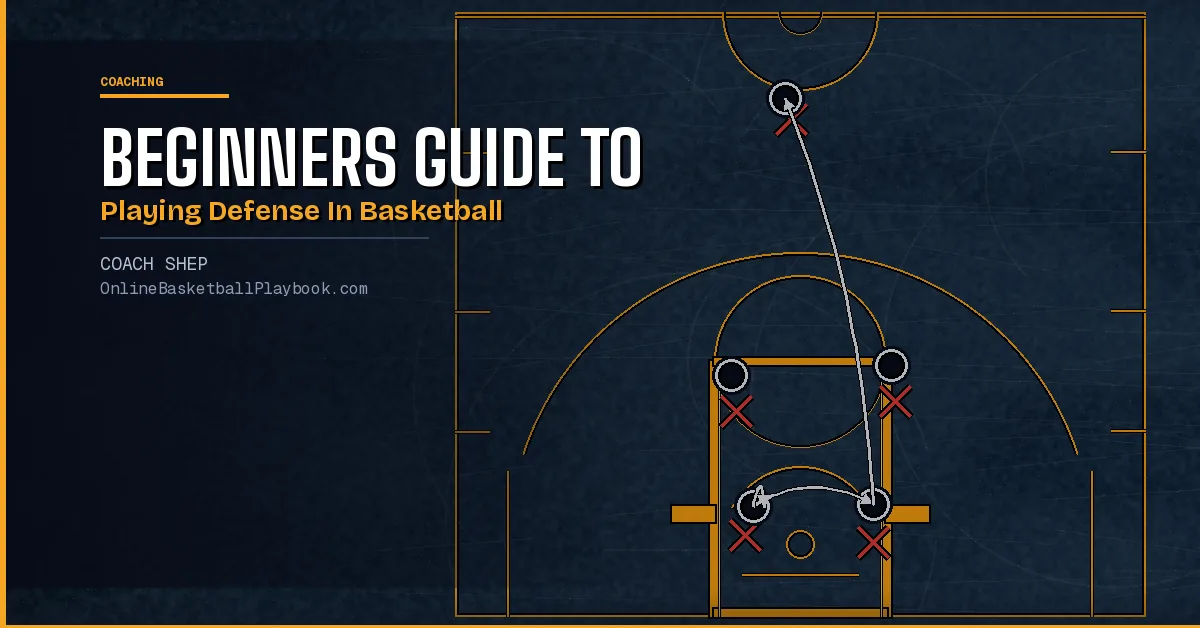
The Beginners Guide to Playing Defense in Basketball
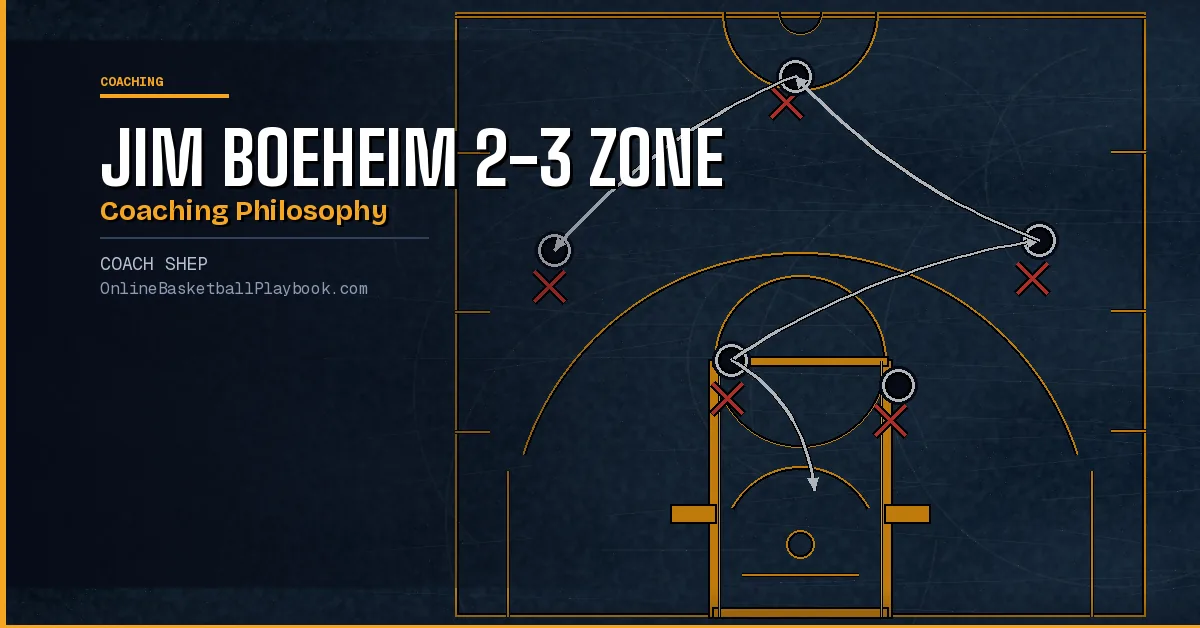
Jim Boeheim 2-3 Zone System and Coaching Philosophy
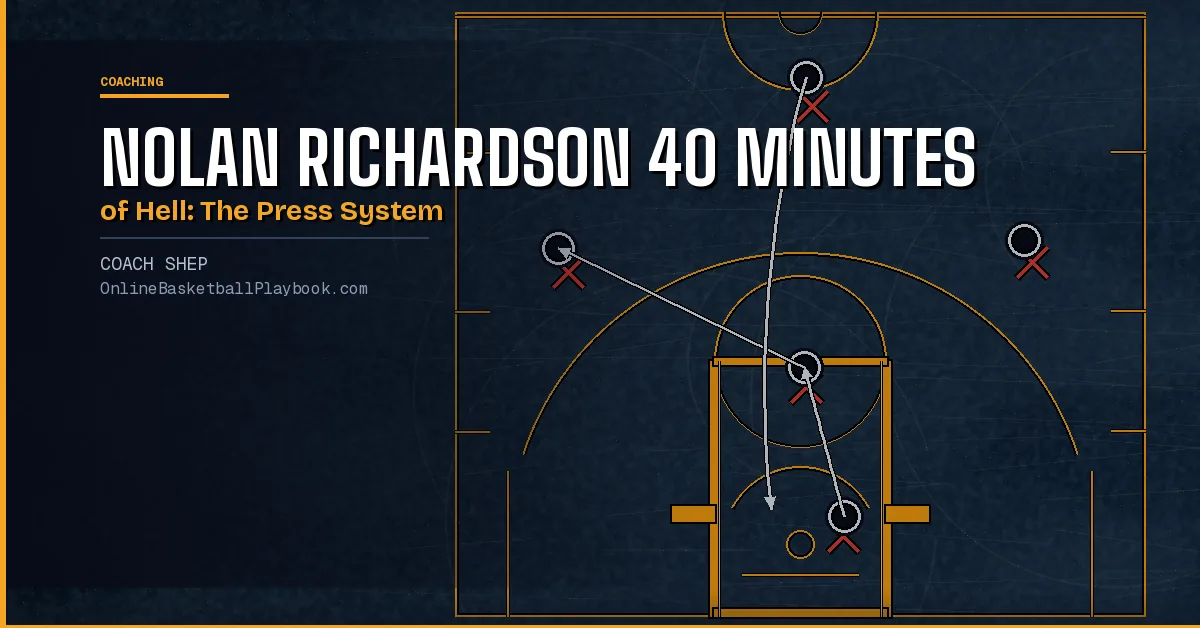
Nolan Richardson 40 Minutes of Hell: Teaching the Full-Court Press
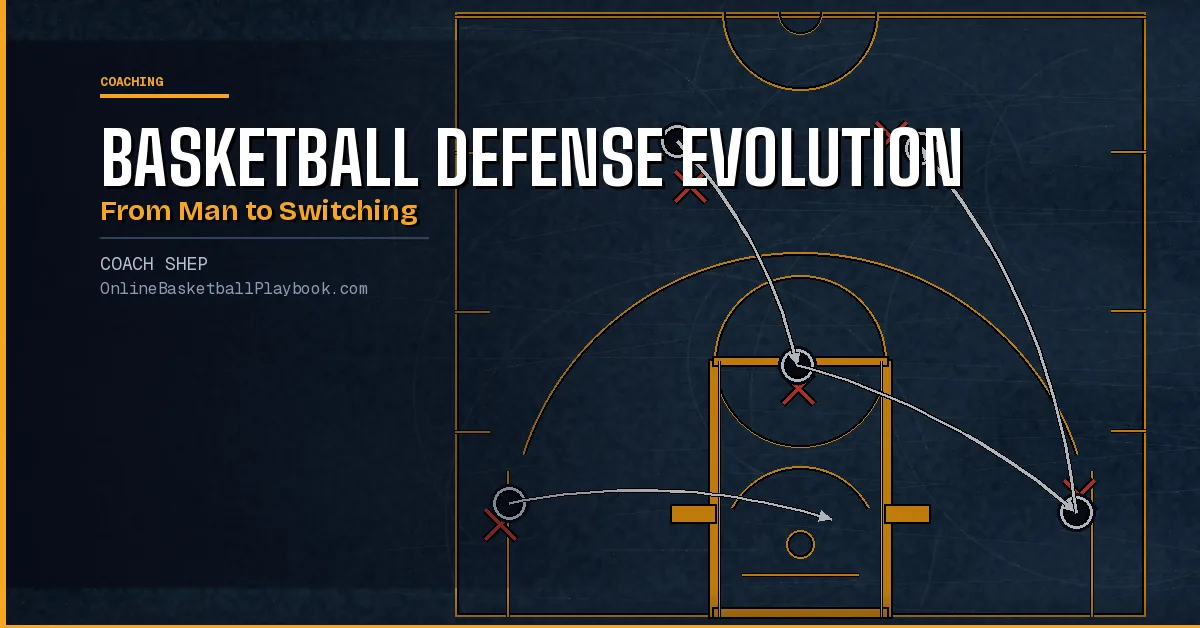
Basketball Defense Evolution: From Man to Switching
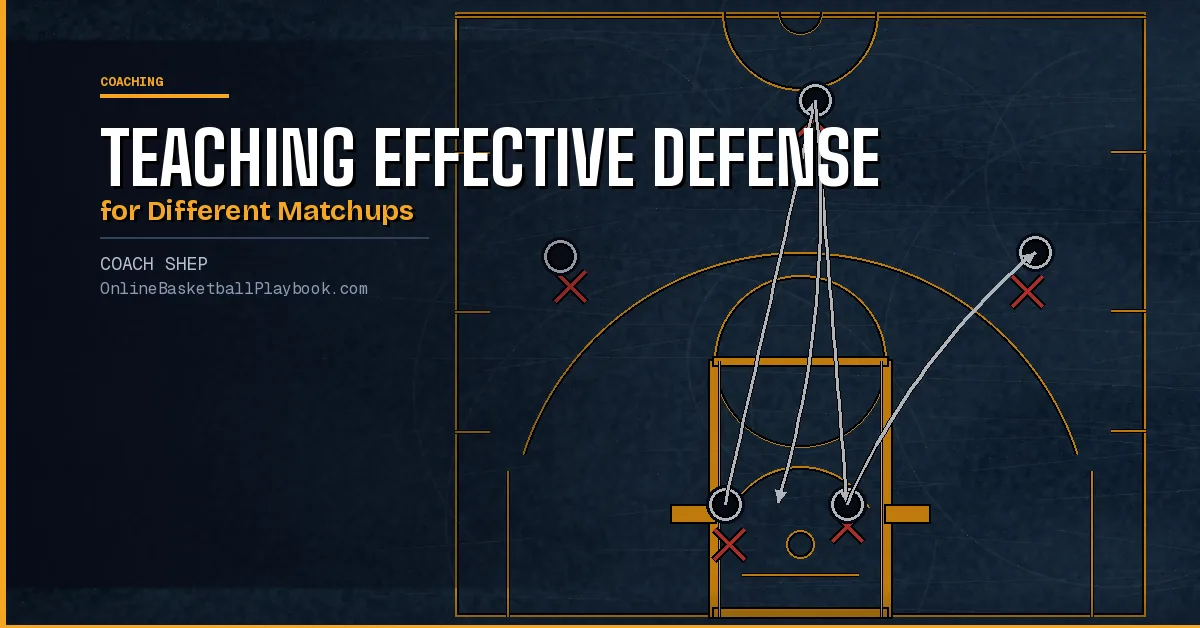
Teaching Effective Defensive Strategies for Different Matchups
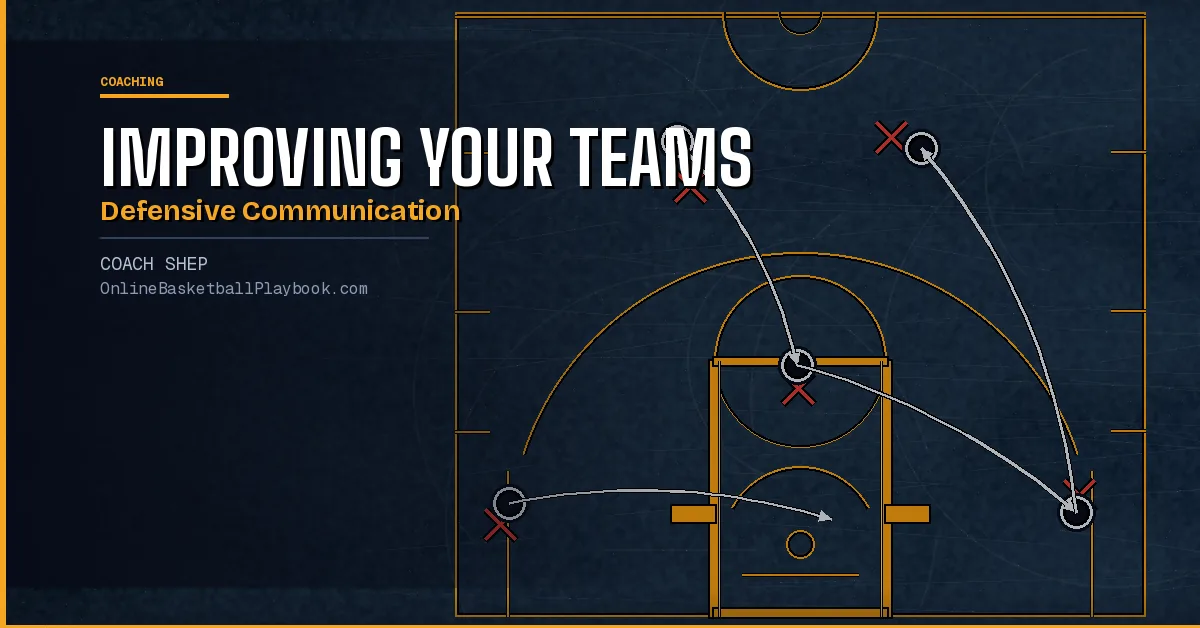
How to Improve Your Basketball Teams Defensive Communication
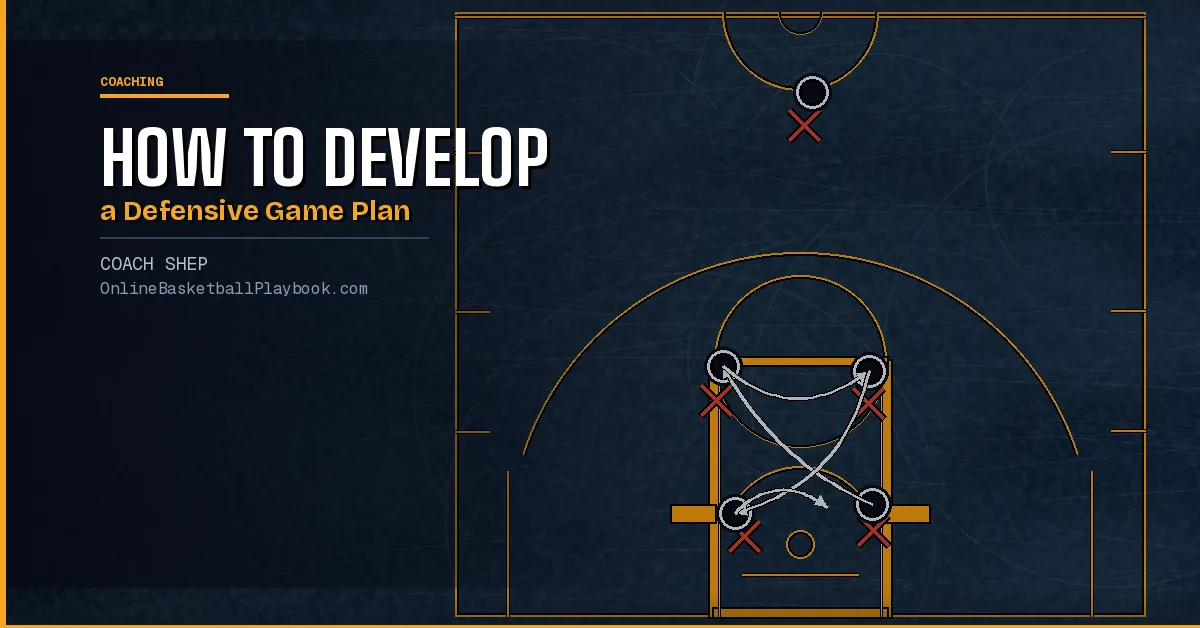
How to Develop and Implement a Defensive Game Plan
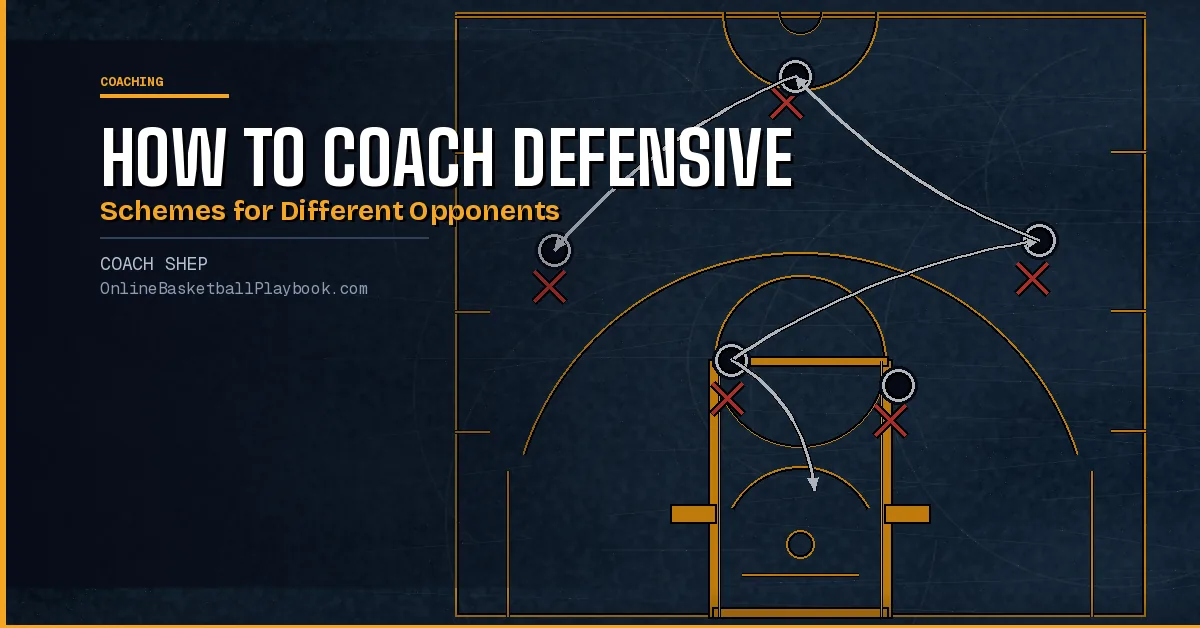
How to Coach Defensive Schemes for Different Opponents
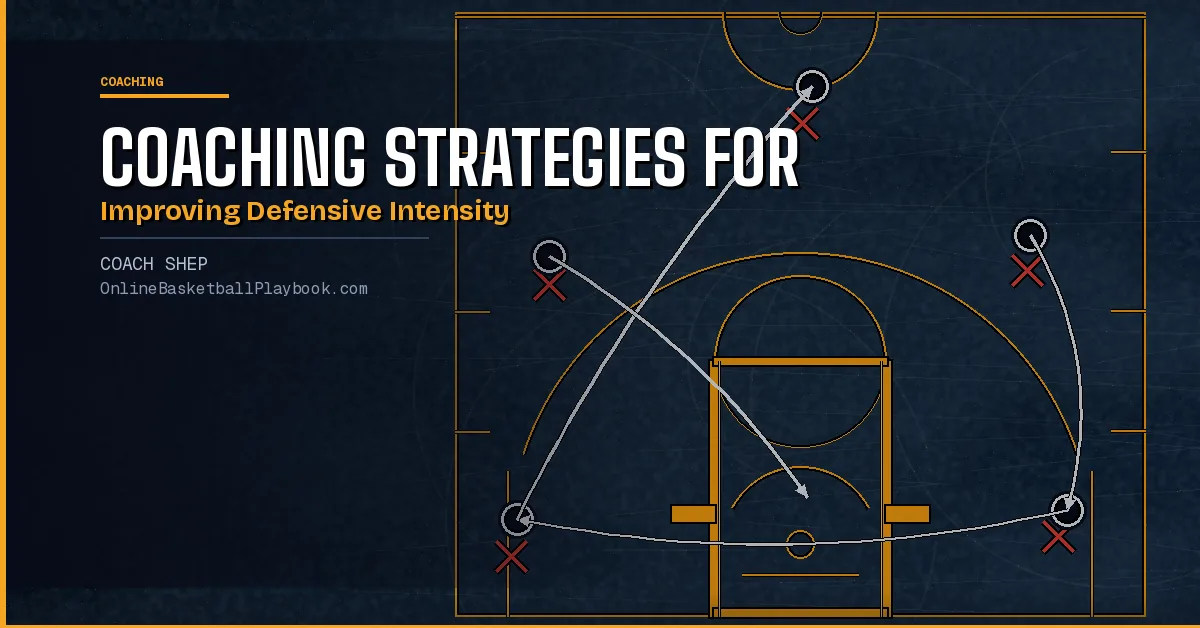
Coaching Strategies for Improving Defensive Intensity
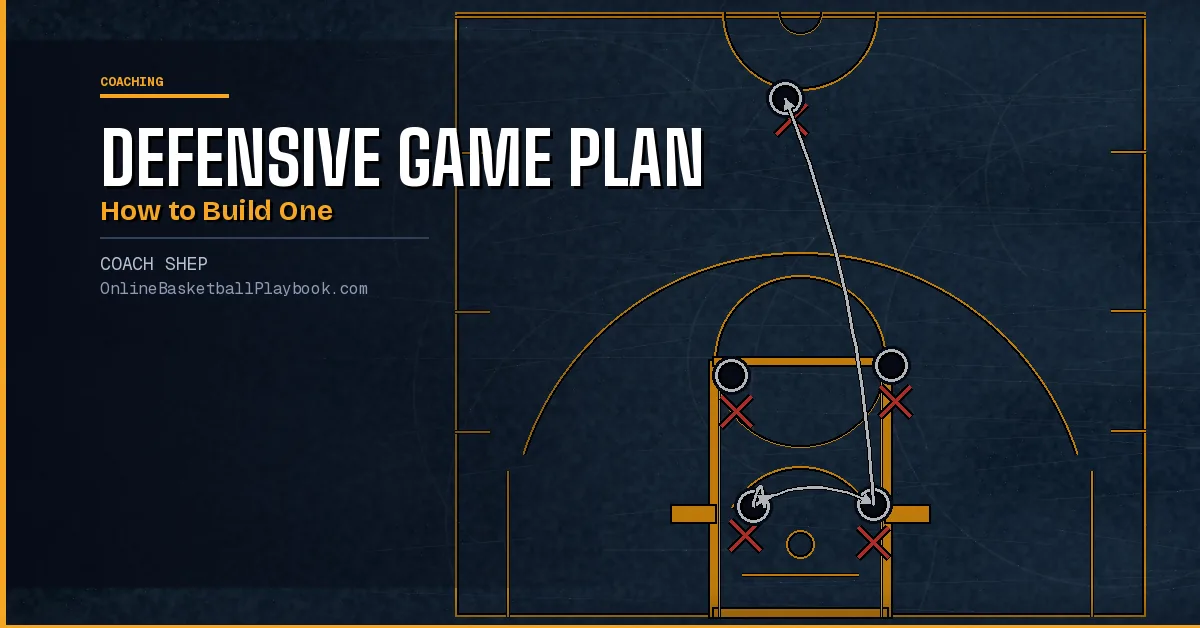
Basketball Defensive Game Plan: How to Build One
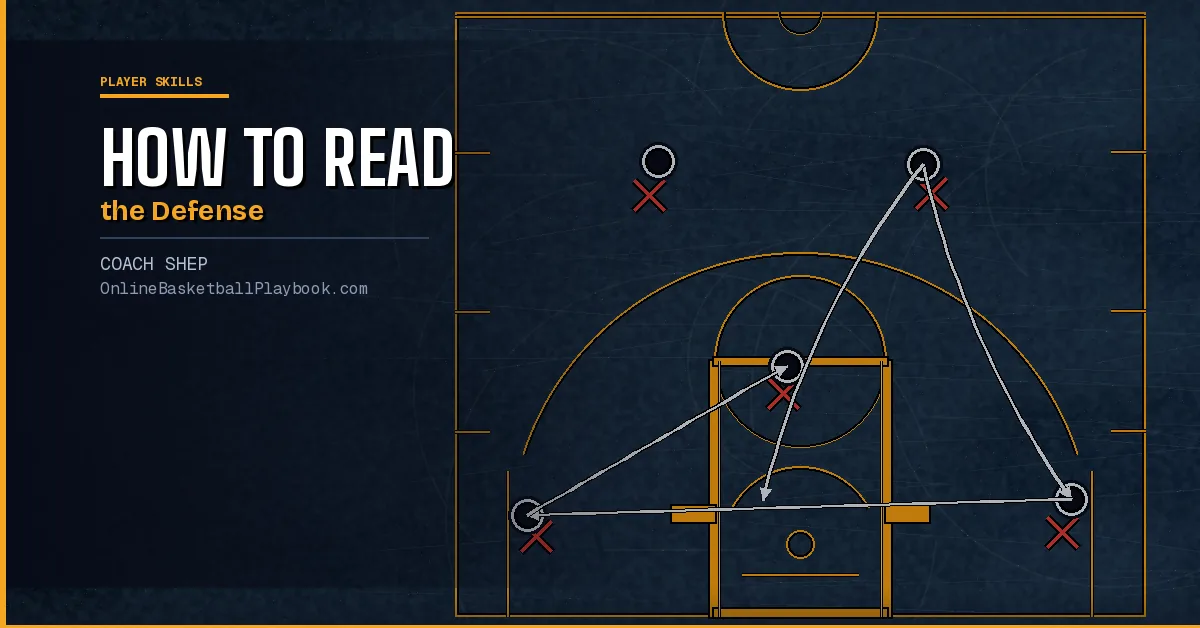
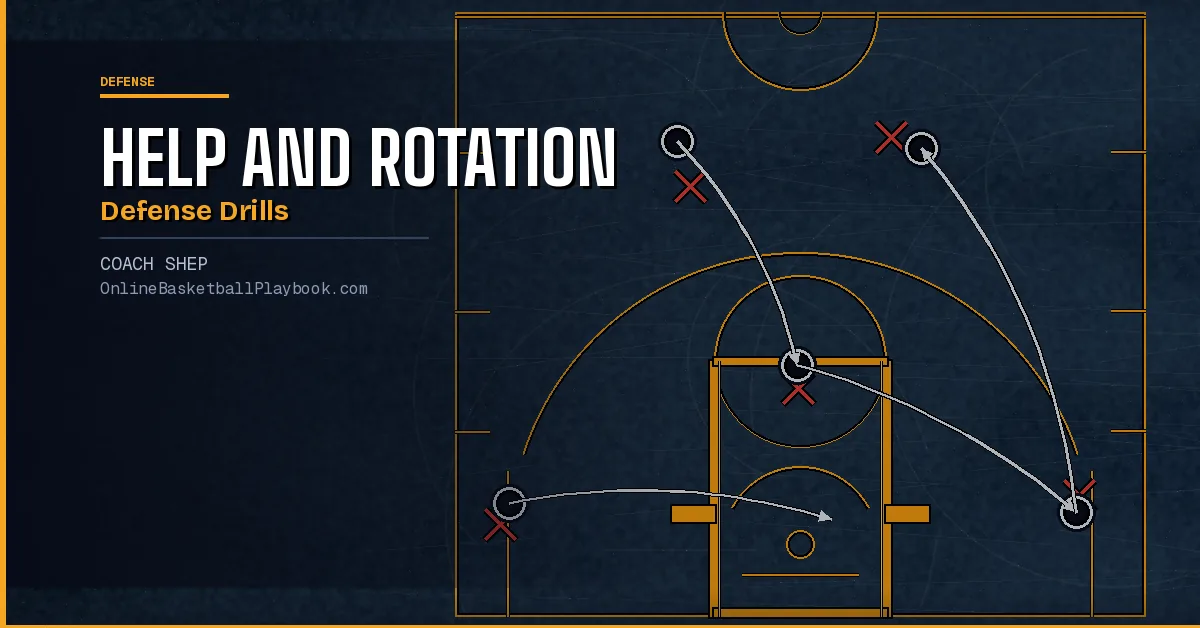
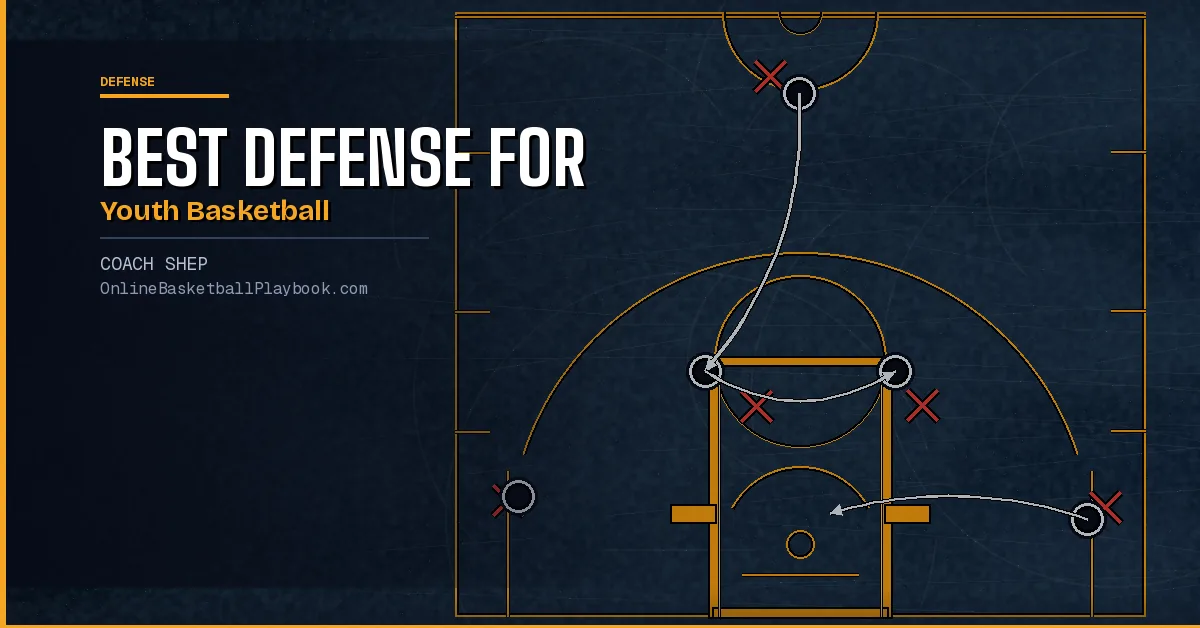
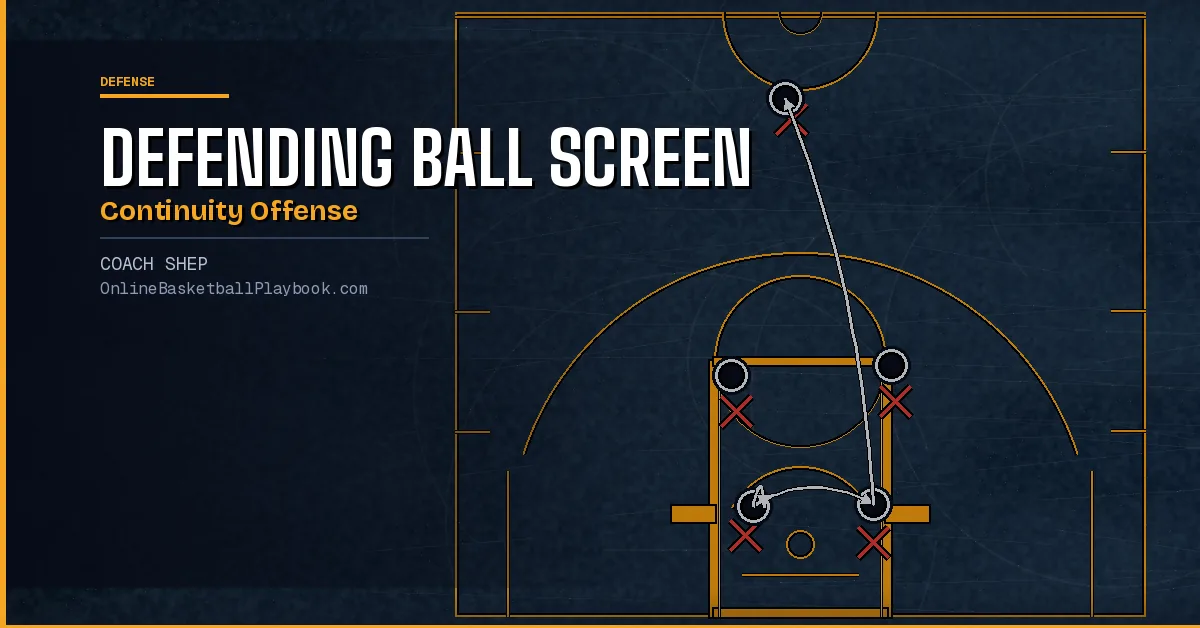
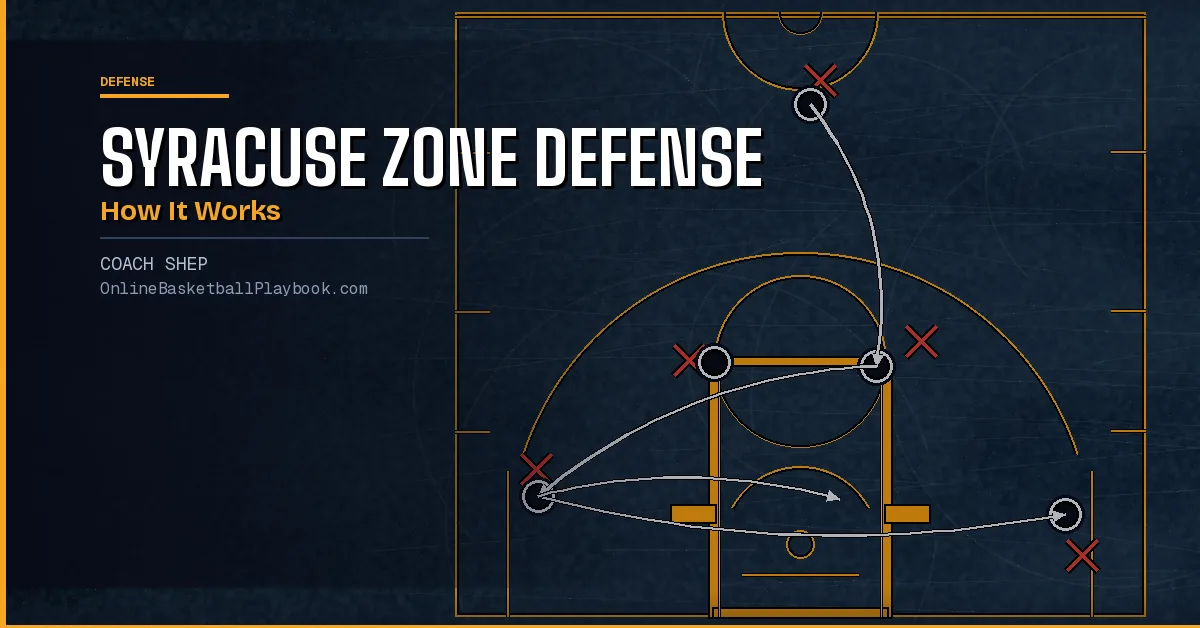
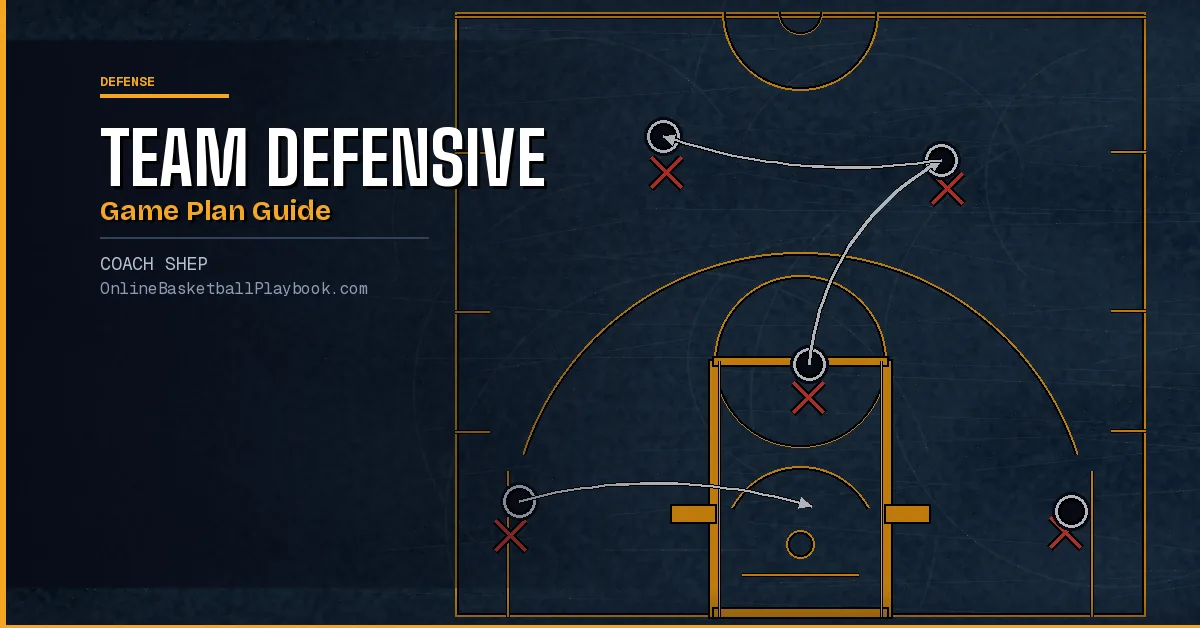
The Complete Team Basketball Defensive Game Plan
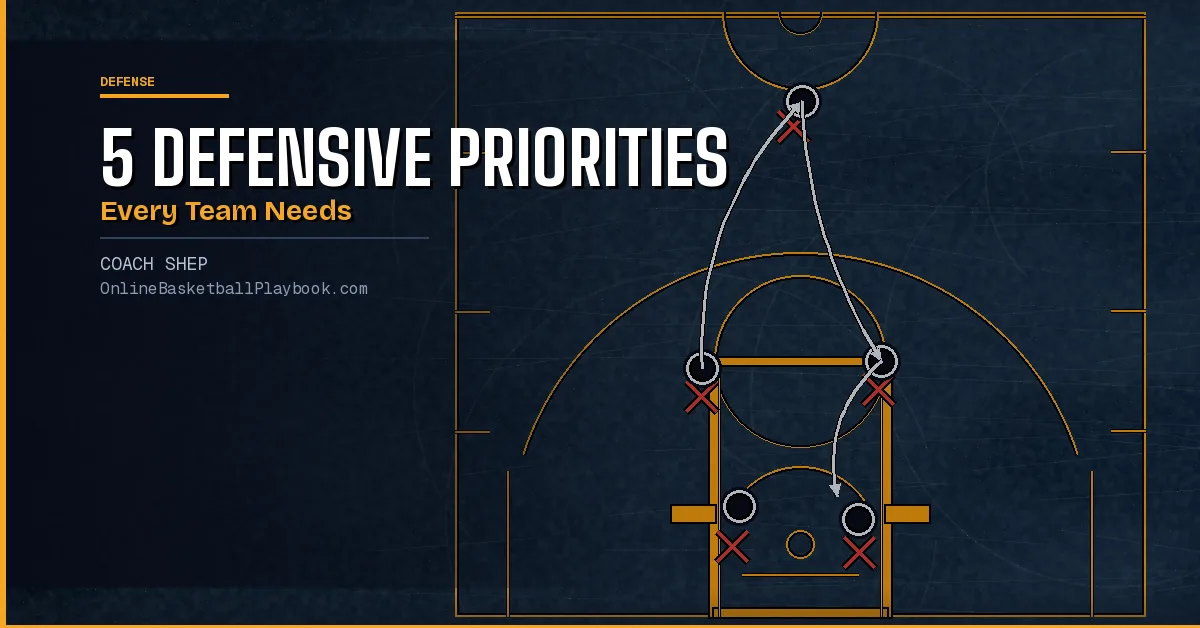
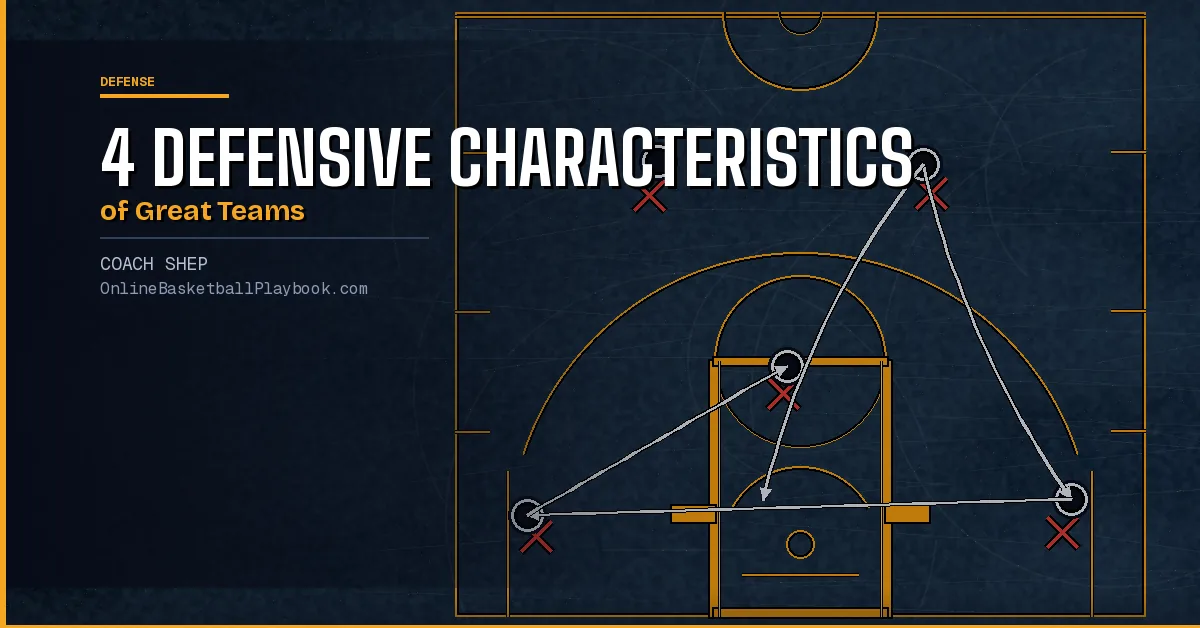
4 Characteristics of Great Defensive Basketball Teams
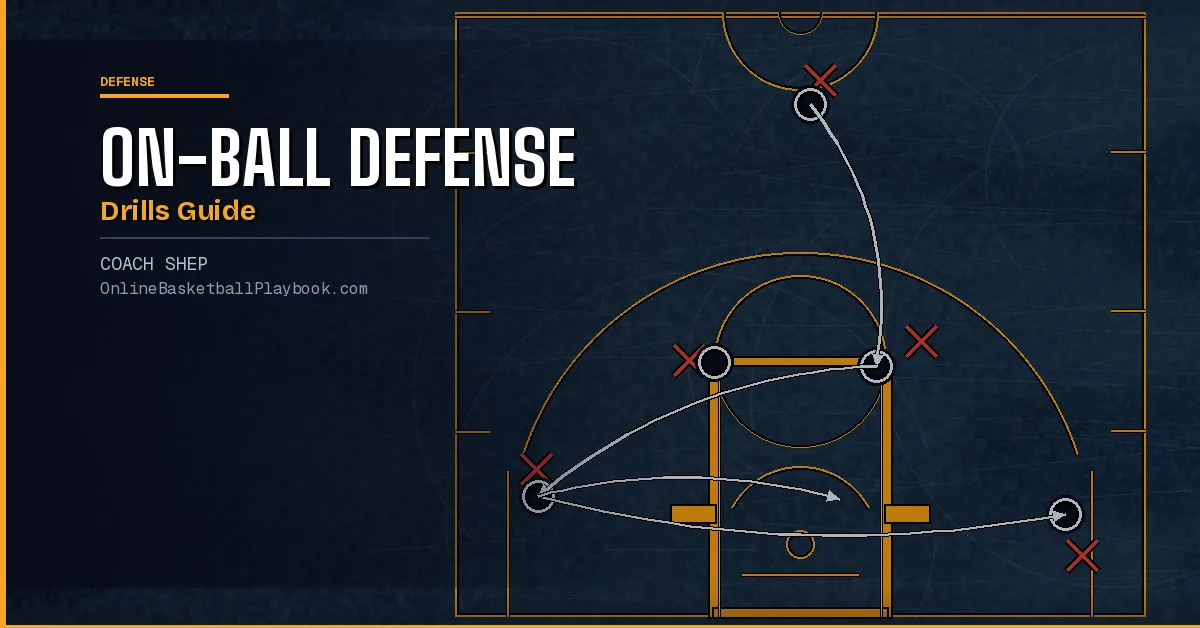
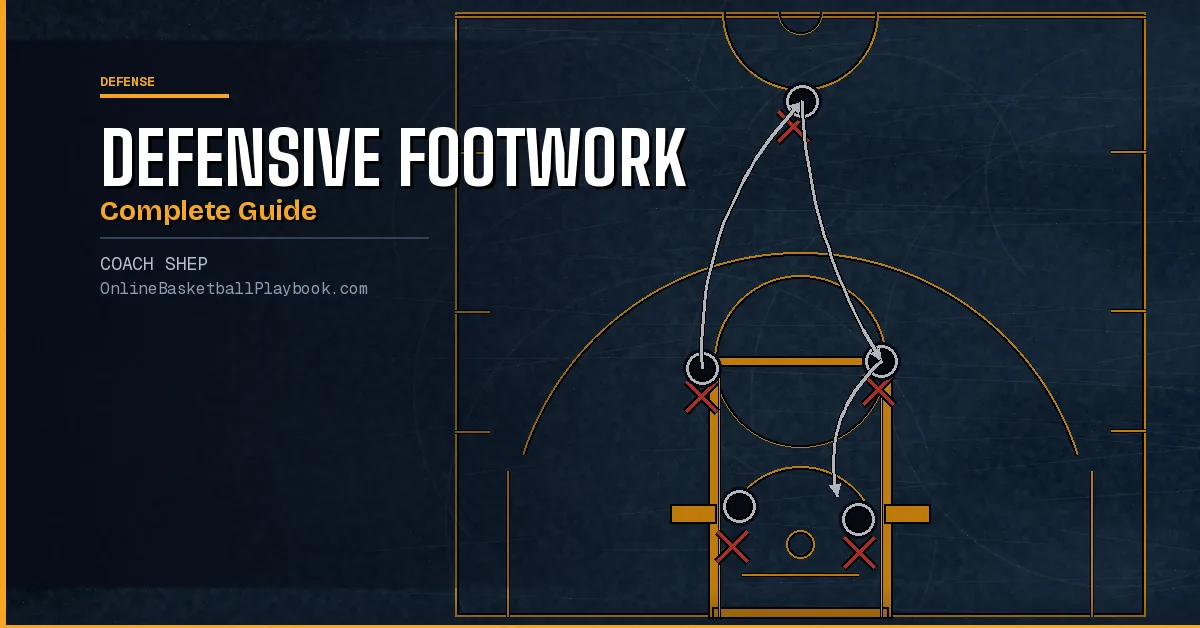
Basketball Defensive Footwork: The Complete Guide
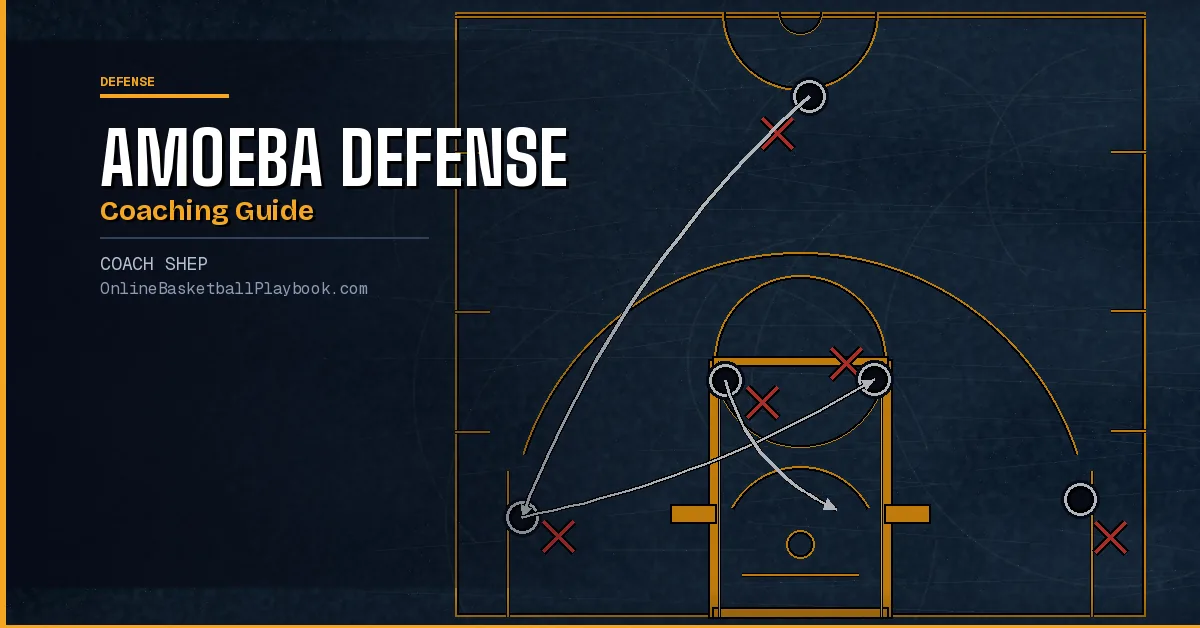
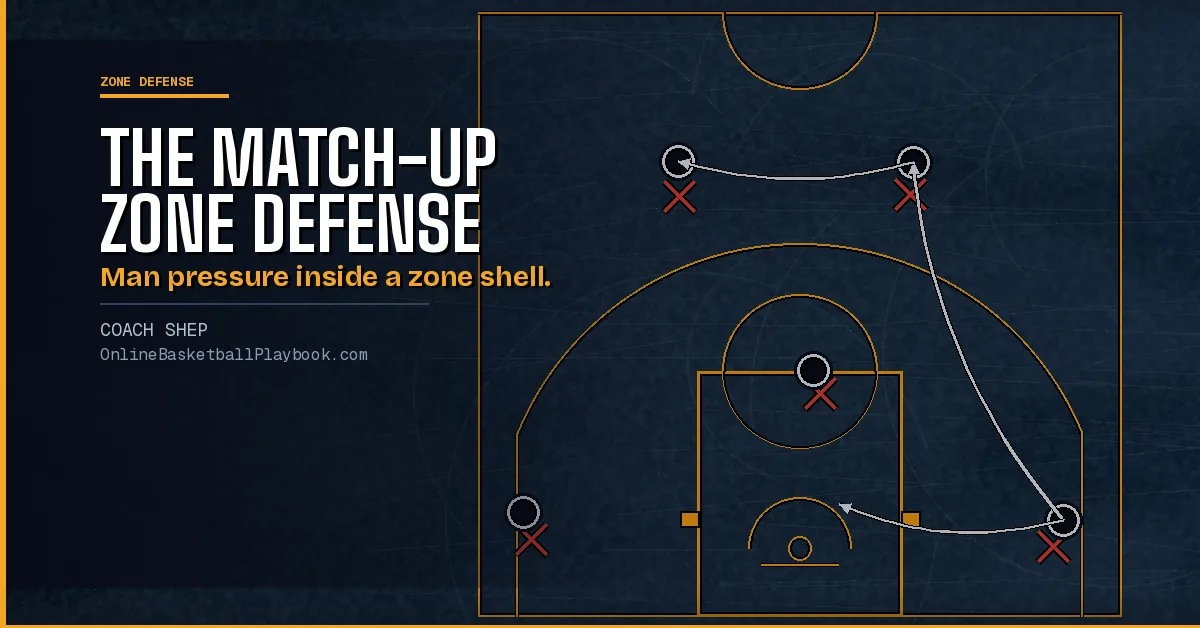
The hybrid defense that looks like a zone, plays like man, and confuses every scout who tries to figure it out.
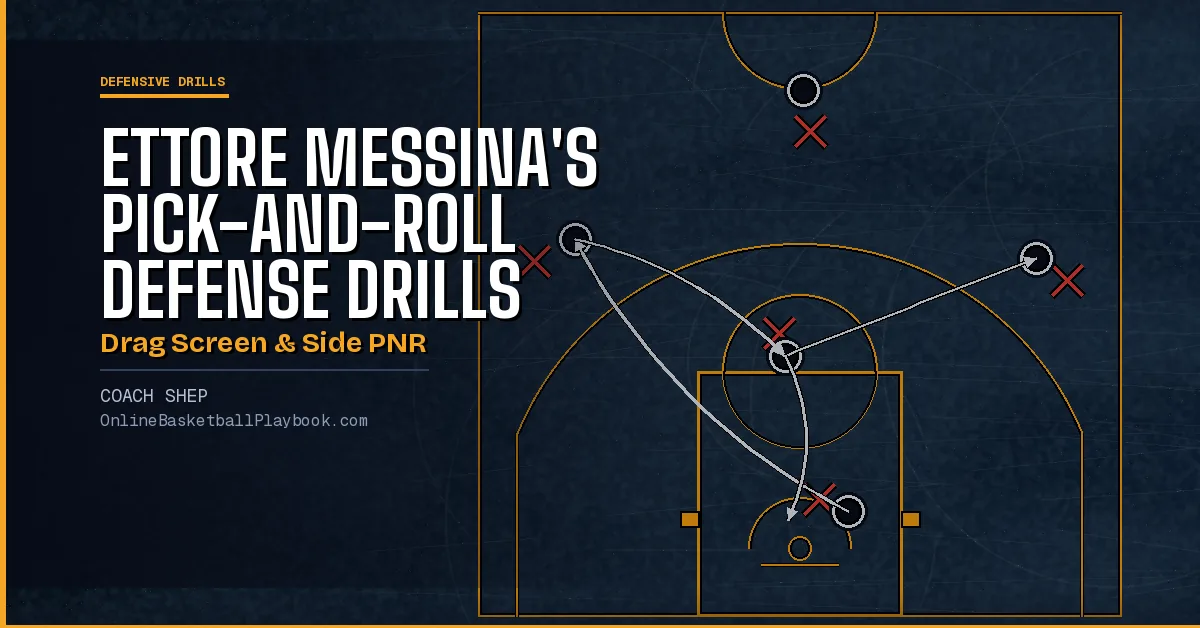
Two 2-on-2 drills from Messina's clinic notes that fix the biggest reason teams give up easy buckets in transition: letting the ball handler reach the arc before the screen arrives.
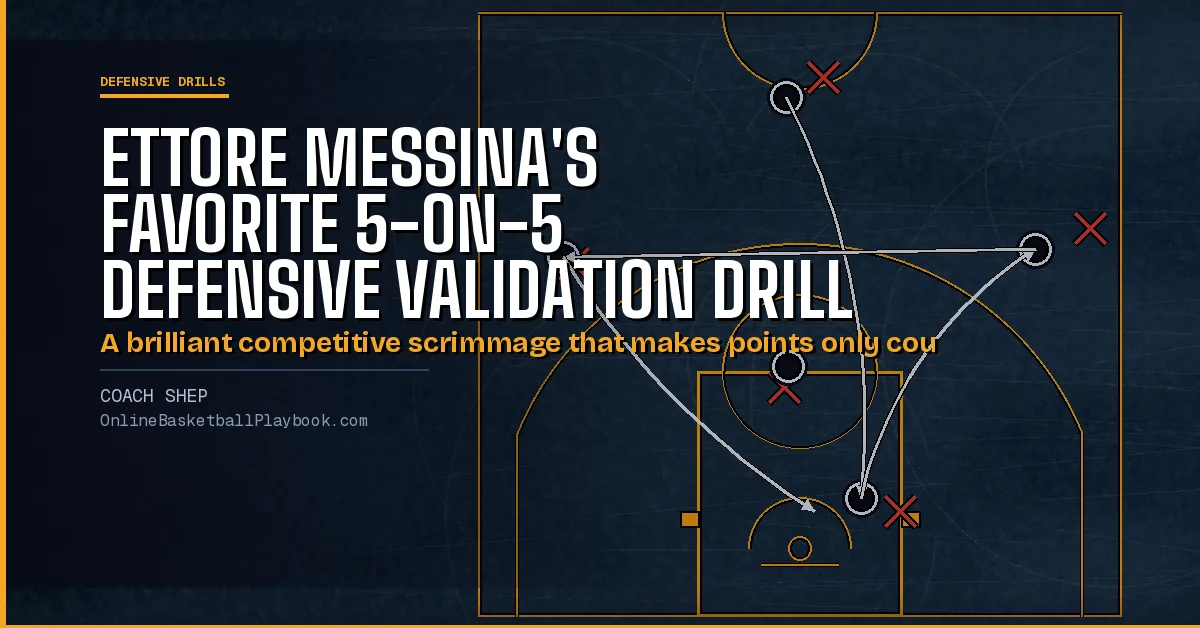
A brilliant competitive scrimmage that makes points only count when followed by a defensive stop, putting the emphasis on defense without ever saying the word "defense."
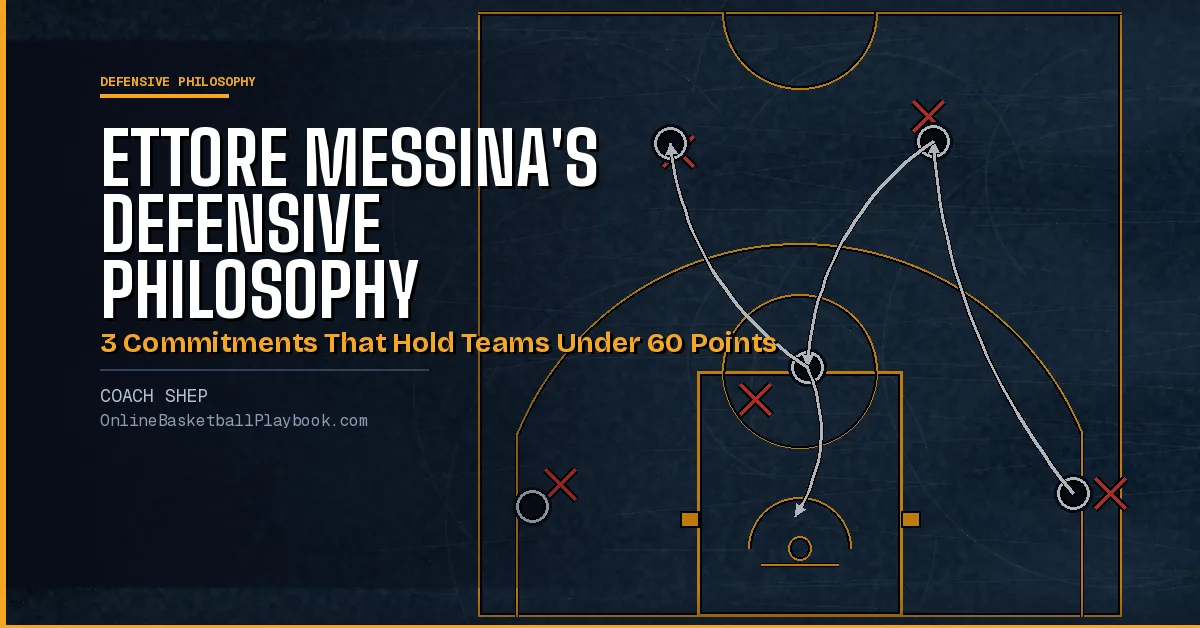
A four-time Euroleague champion and longtime Popovich assistant explains the three non-negotiable rules that have anchored his defenses for 30 years, and the off-ball positioning system that makes them work.
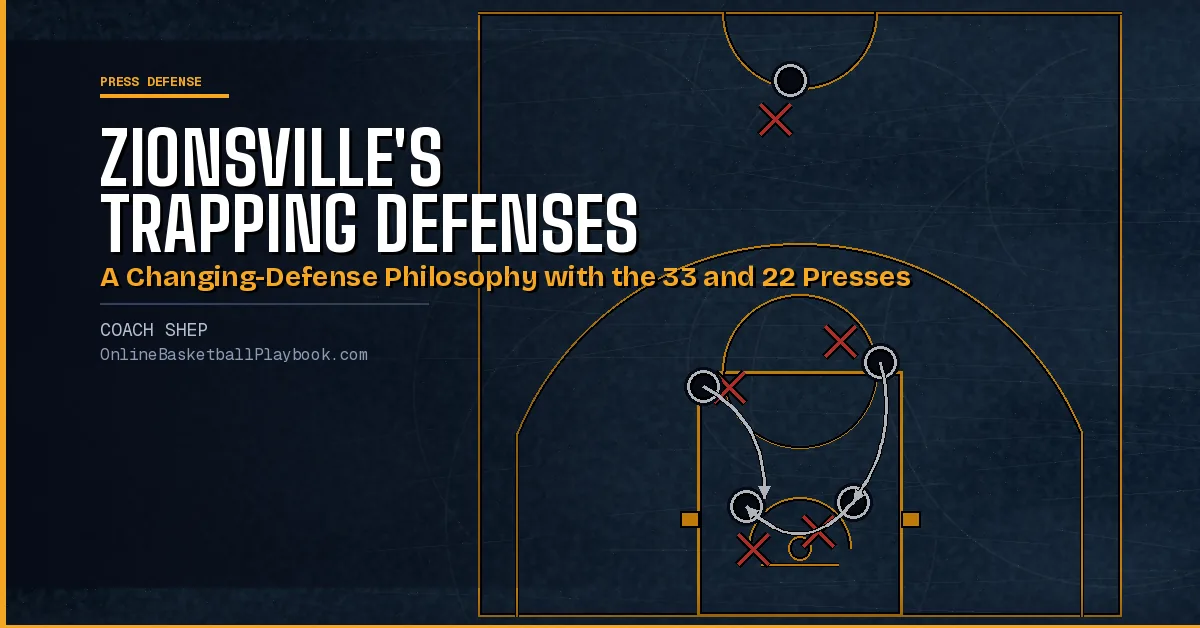
A changing defense taxes an opponent's prep time: a three-quarter 1-3-1 trap, a half-court trap, and a Run & Jump variant that ends in deny-everywhere.
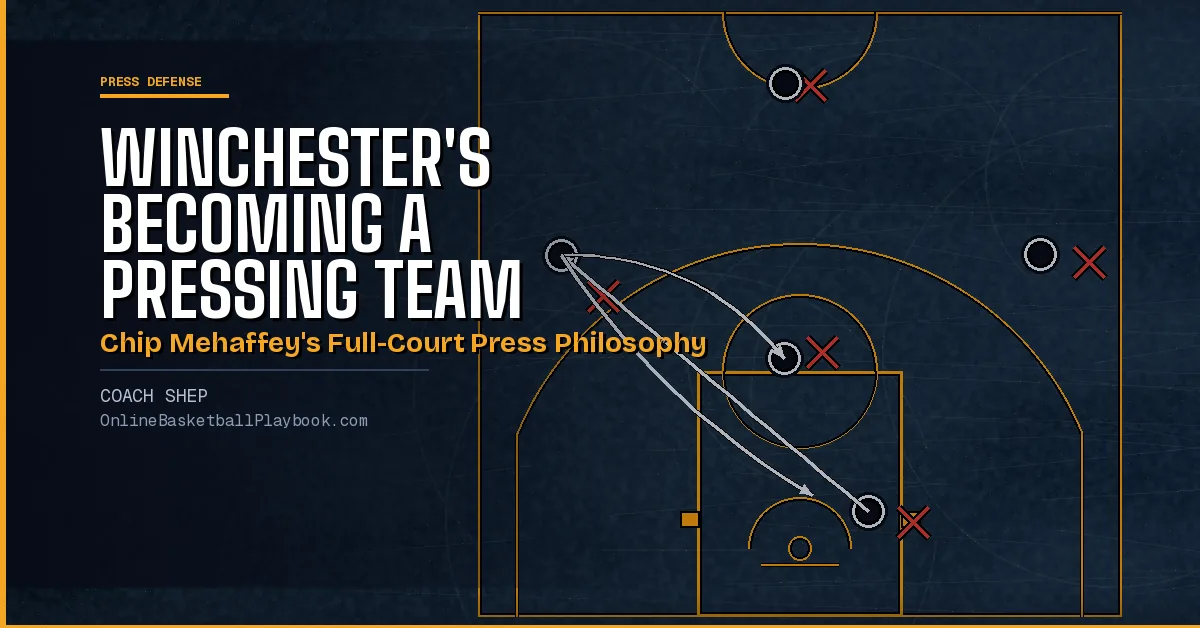
Build a pressing team with one identity goal, trap the backcourt every possession, plus the rules, daily skills, and drills that make it hold up.
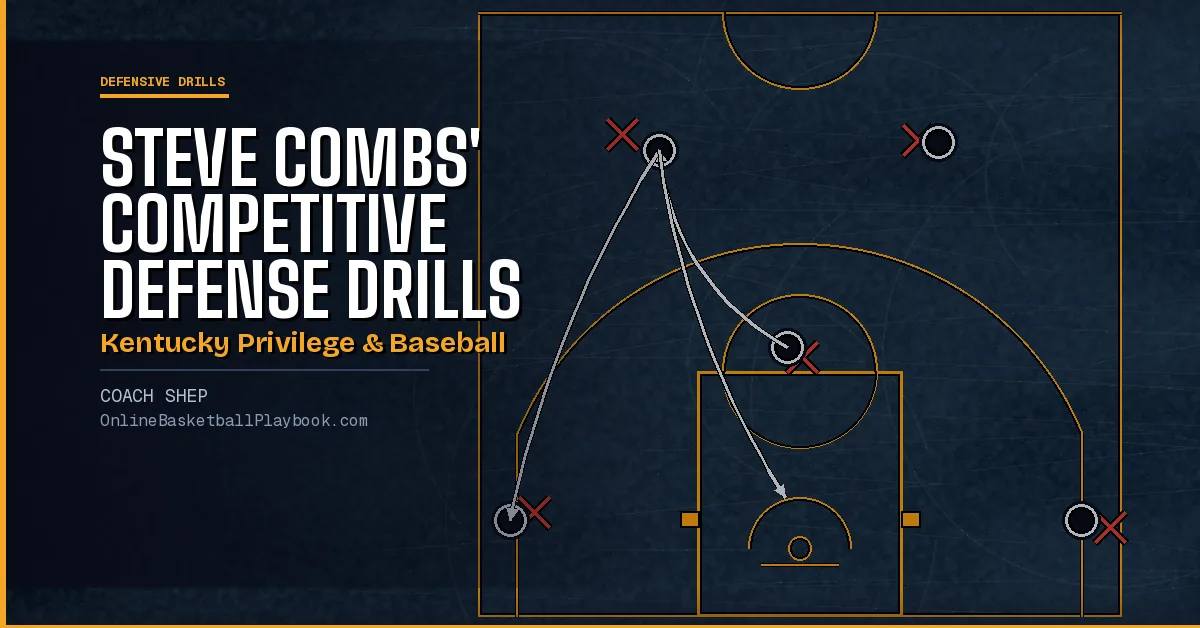
Two drills that make a defensive stop the only way to score, so players finally compete for stops in practice.
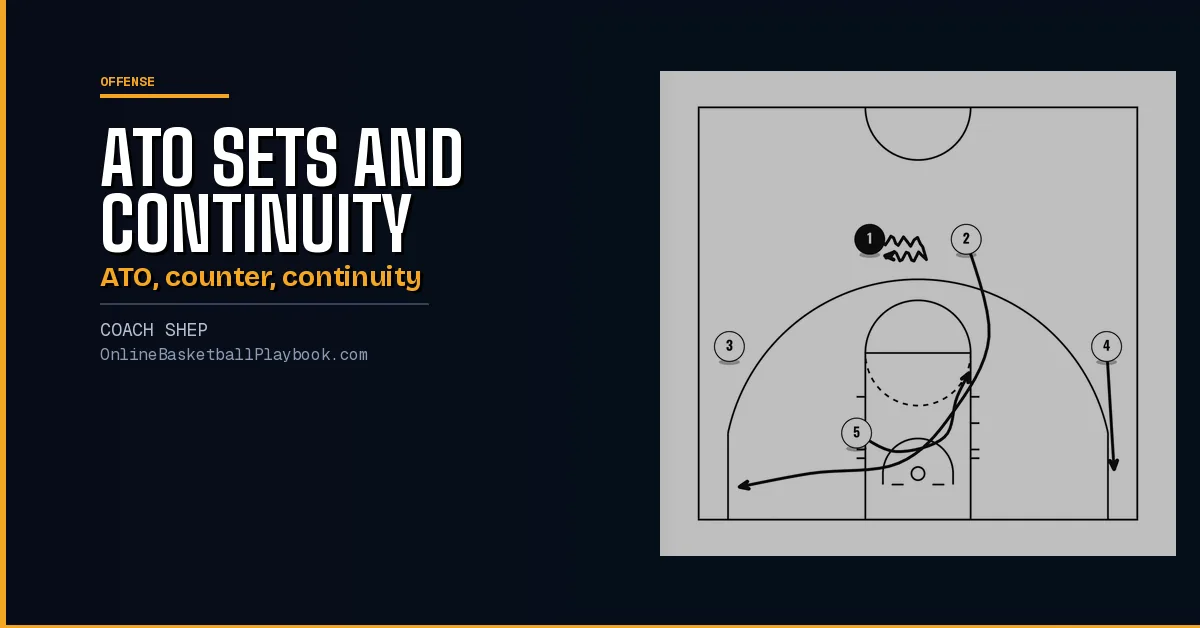
After timeout and continuity sets: two ATO plays, the Princeton Pearl Counter and the 2-3 low offense, each drawn frame by frame with where every player goes.
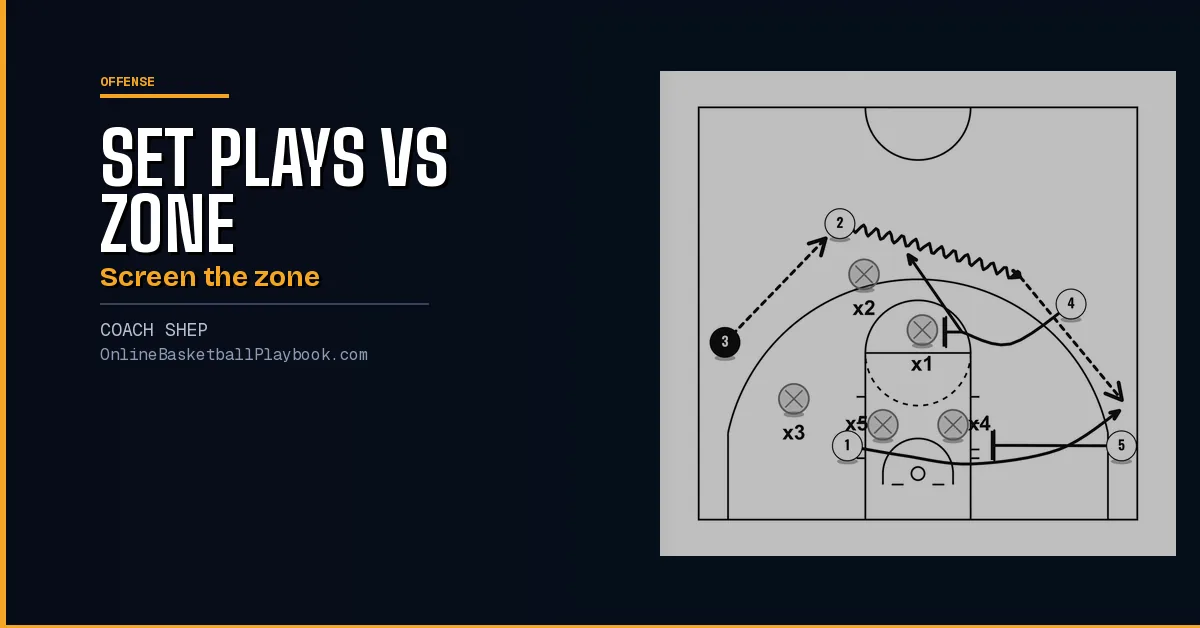
Basketball set plays vs zone: 14 sets from the high-low stack, 1-4, box, 3-out 2-in and 4-out 1-in, each drawn frame by frame with where every player goes.
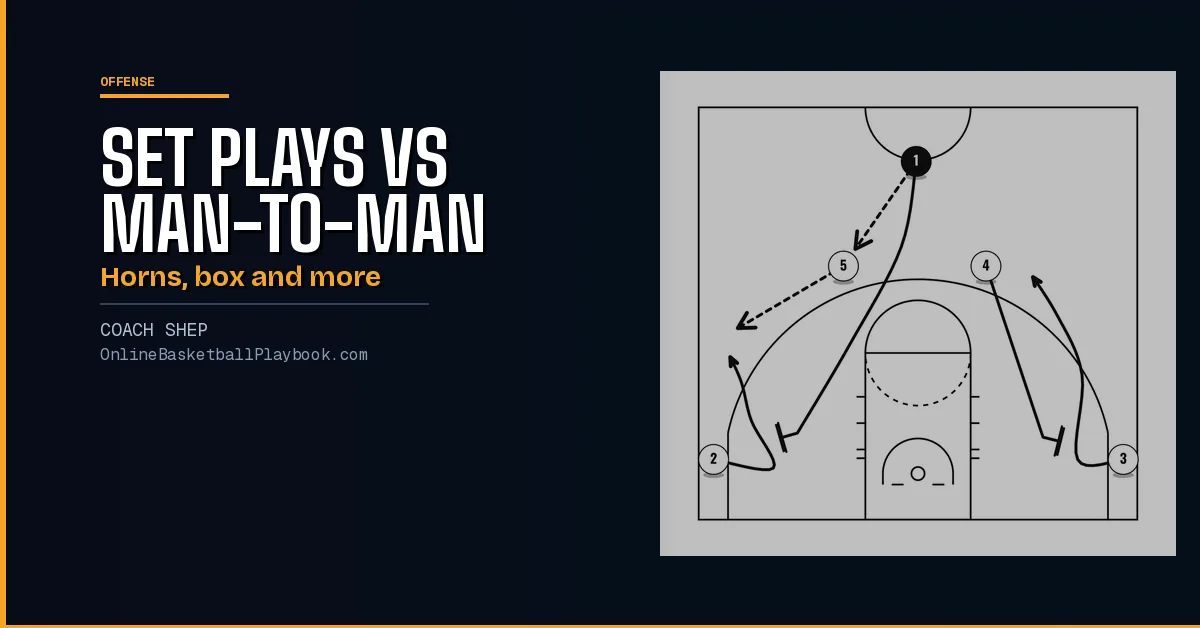
Basketball set plays vs man-to-man from horns, the box, a wide box and 3-out 2-in: 14 sets, each drawn frame by frame with where every player goes.
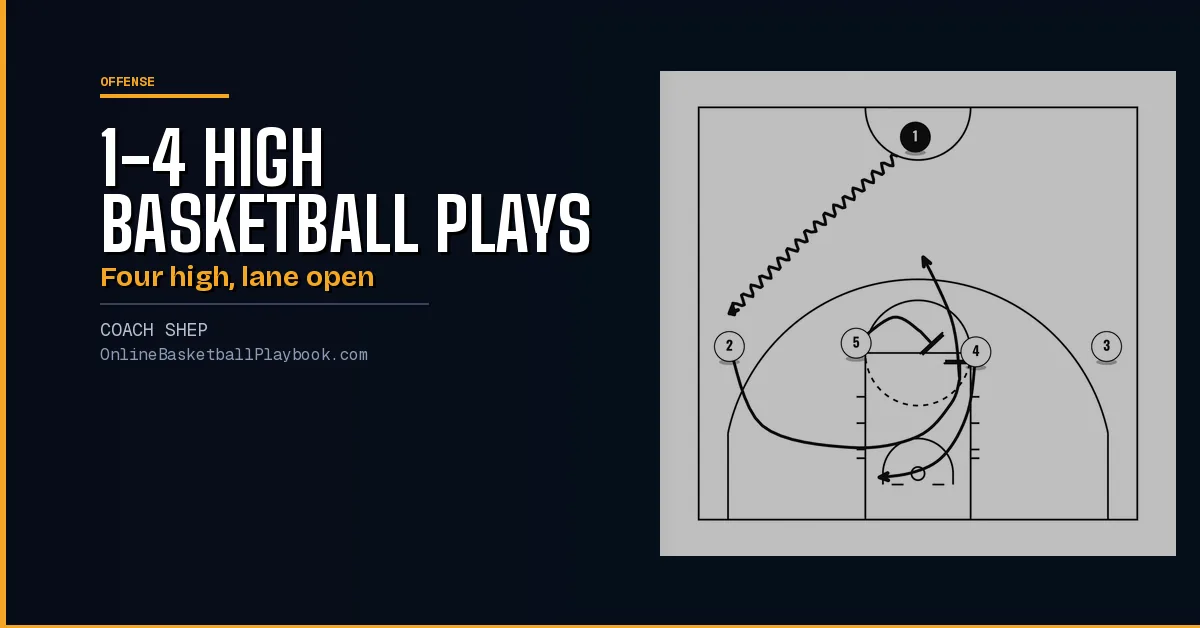
1-4 high basketball plays against man-to-man: 19 sets from the 1-4 high and the 1-4 high stack, each drawn frame by frame with where every player goes.
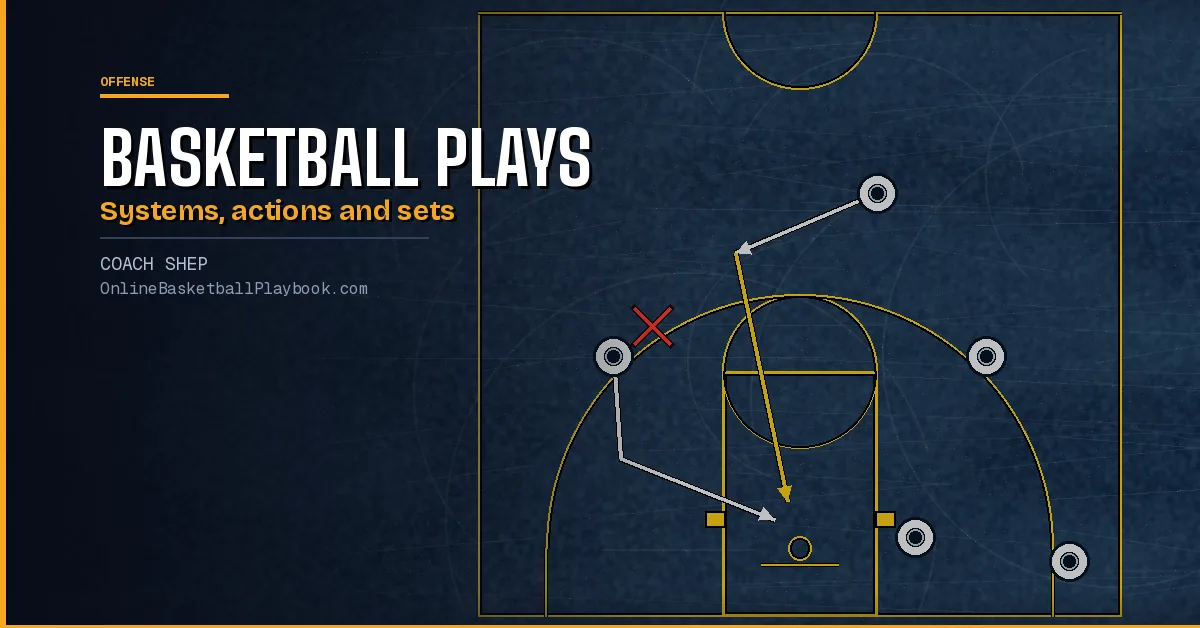
Basketball plays explained for coaches. Systems, actions and sets, the types of plays, when to call one, how many to carry, and three diagrammed plays.
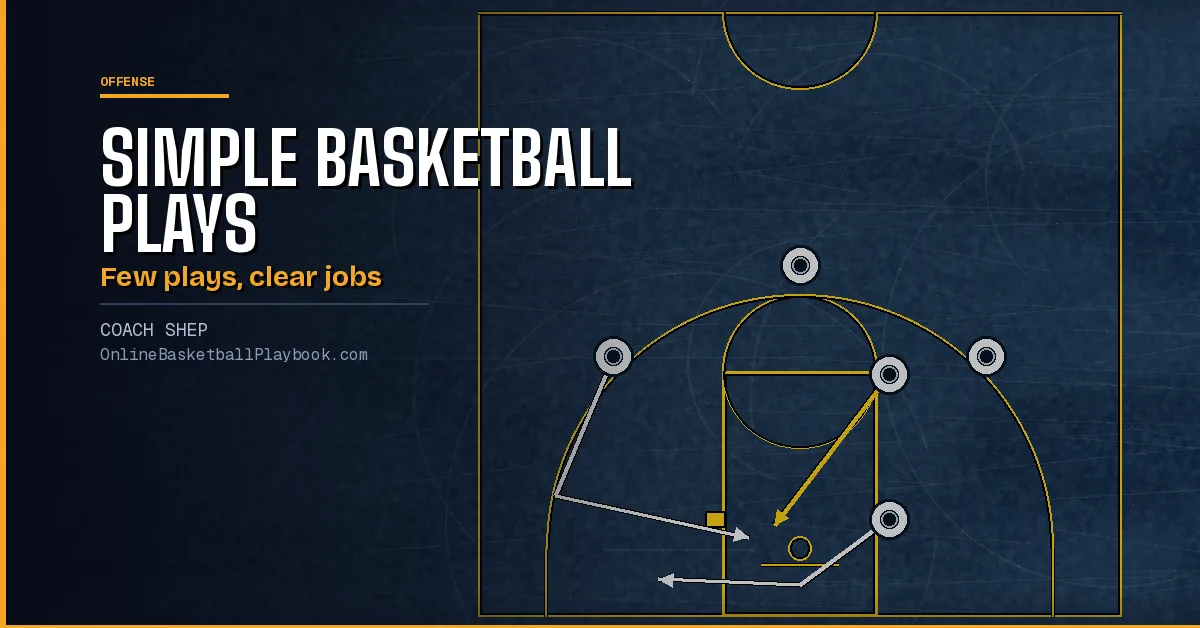
Simple and easy basketball plays for youth and beginner teams. Six basic plays with diagrams and plain steps, an inbounds play, and how to build a small play menu.
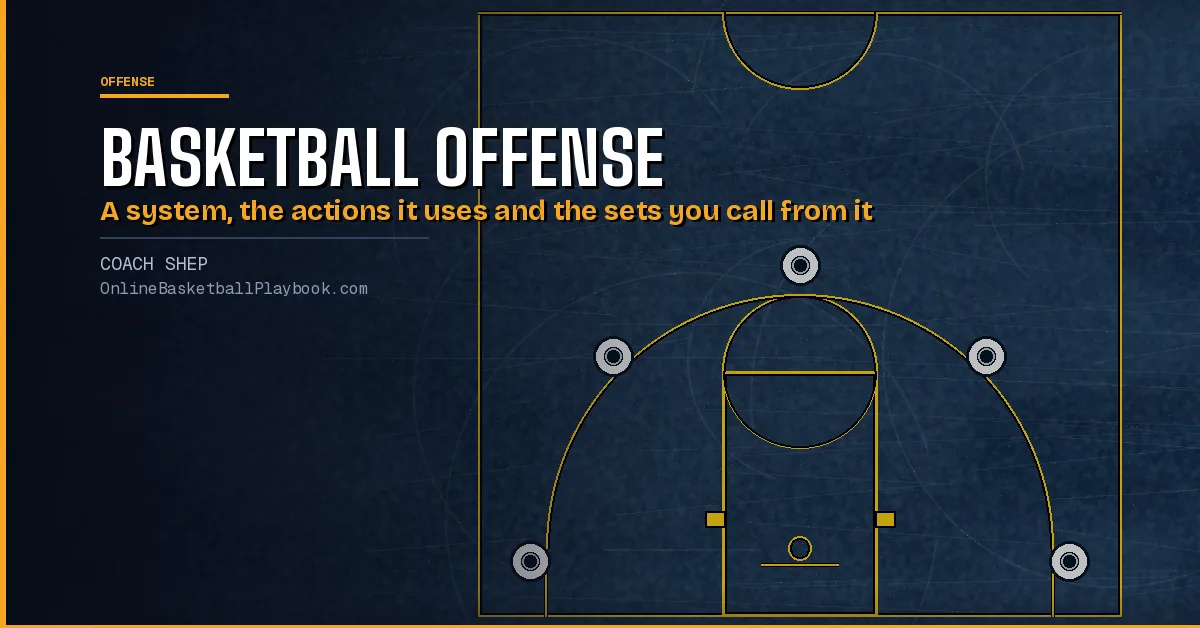
Basketball offense explained as three layers, systems, actions and sets, with the formations, spacing numbers and a map of the major offenses and their pages.
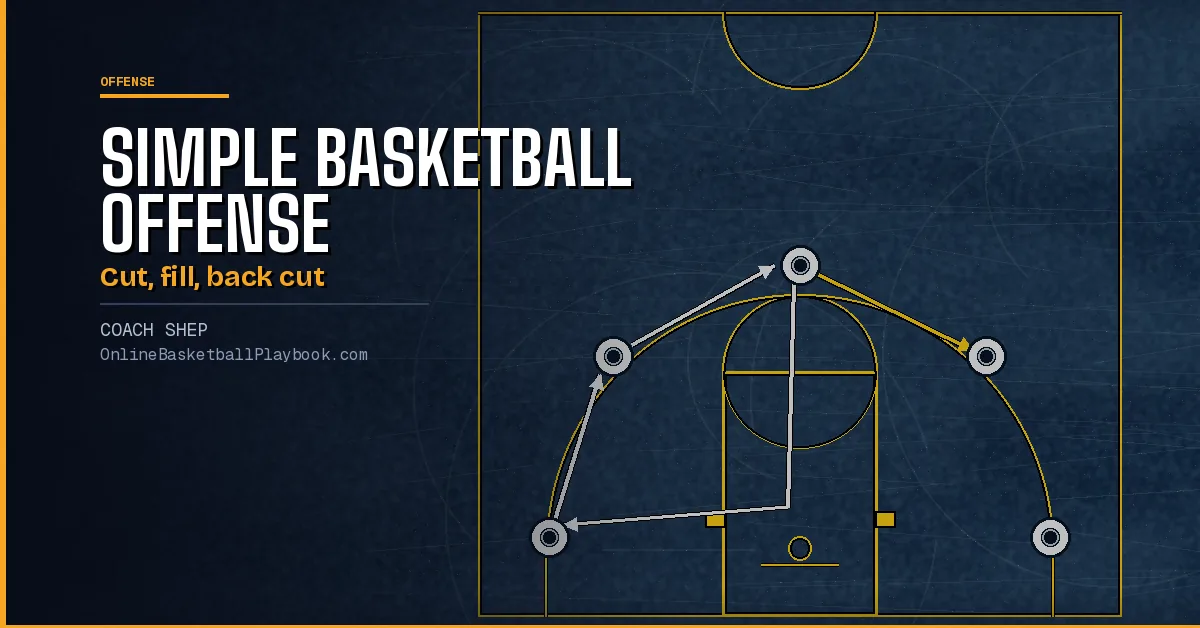
A simple basketball offense for youth, middle school and beginner teams: a spacing set, the three-rule 5-out, 4-out options, a zone answer and a press break.
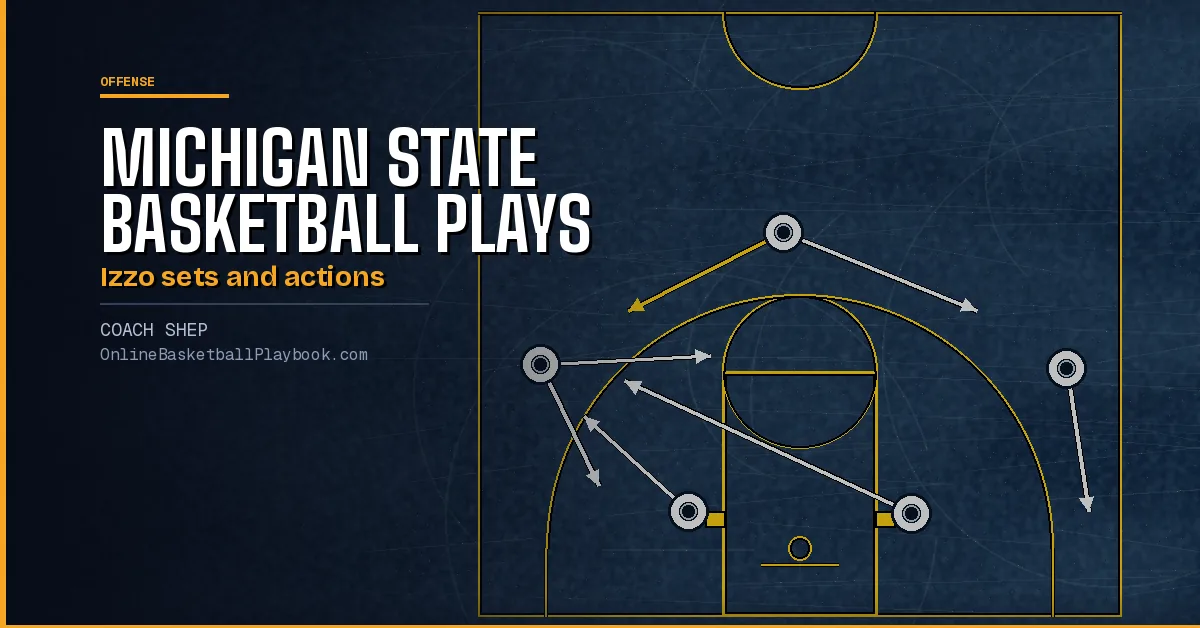
Michigan State basketball plays from Tom Izzo's set menu: 1-4 high, box, isolation, ball screen, zone and out-of-bounds sets, drawn frame by frame.
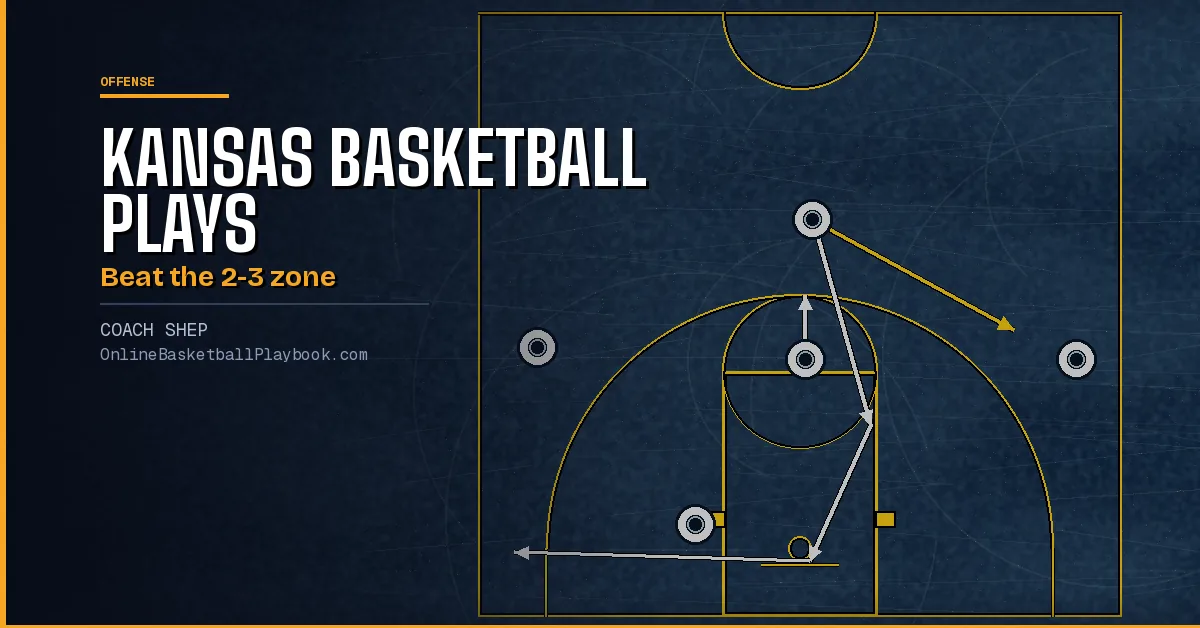
Kansas basketball plays against the 2-3 zone from Bill Self: the post rule for each pass and the numbered zone plays, drawn frame by frame.
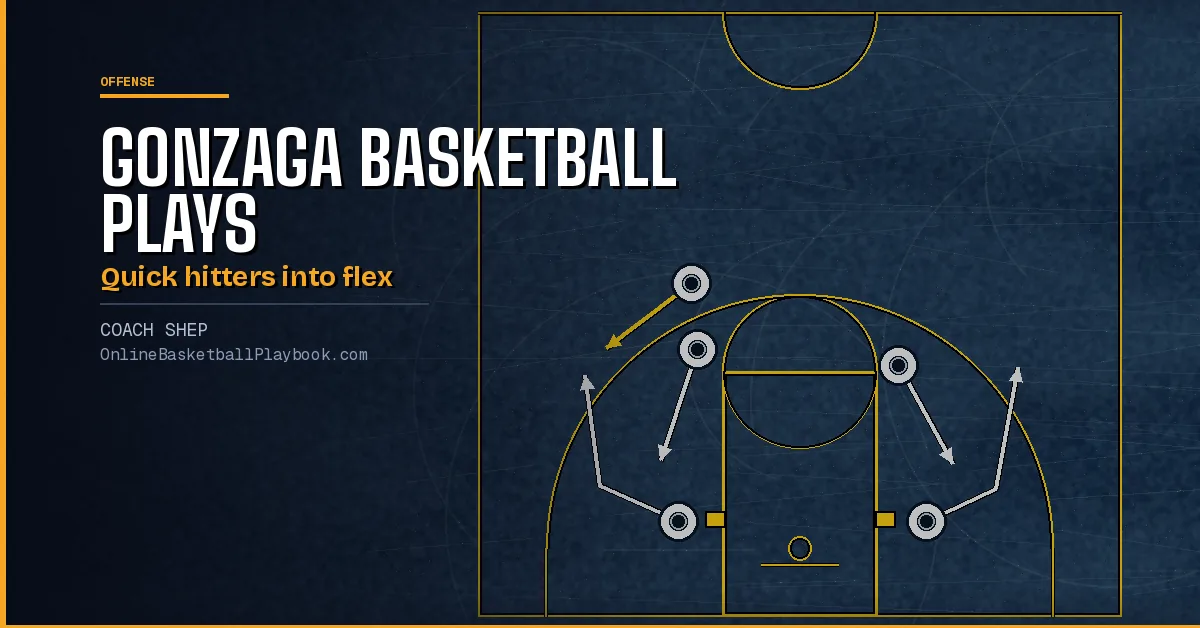
Gonzaga basketball plays that flow the break into the flex: all 11 named entries, drawn frame by frame with where every player goes.
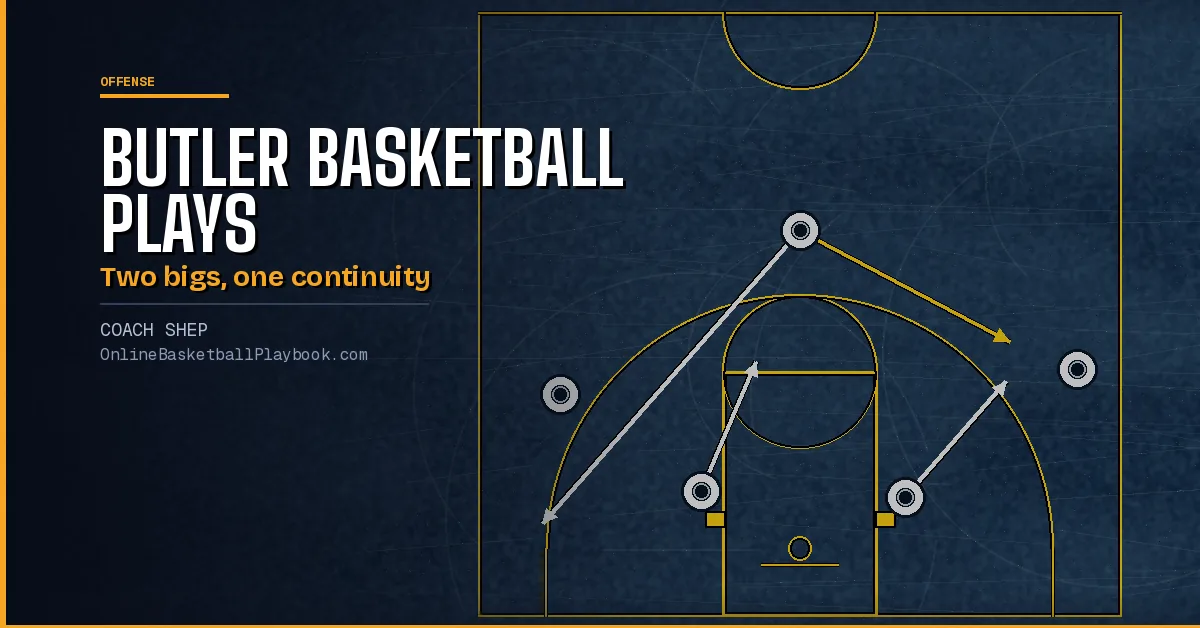
Butler basketball plays from the Brad Stevens ball screen package: every set drawn frame by frame, with where all five players go.
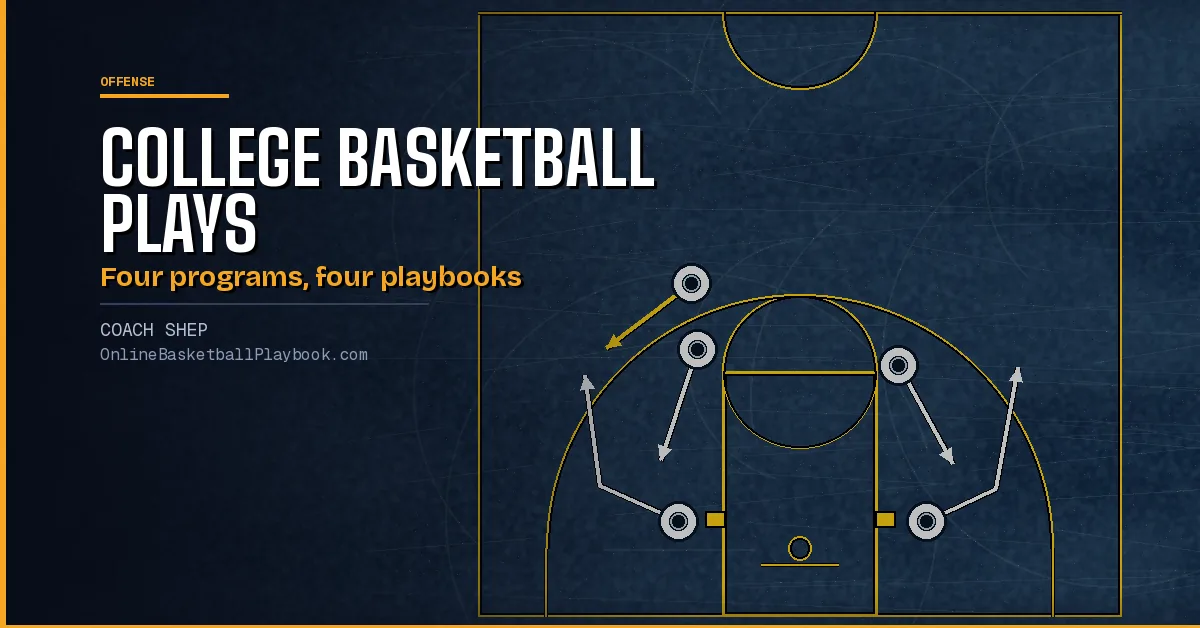
College basketball plays sorted by program: Butler, Gonzaga, Kansas and Michigan State sets drawn frame by frame, plus the UCLA and swing offenses.
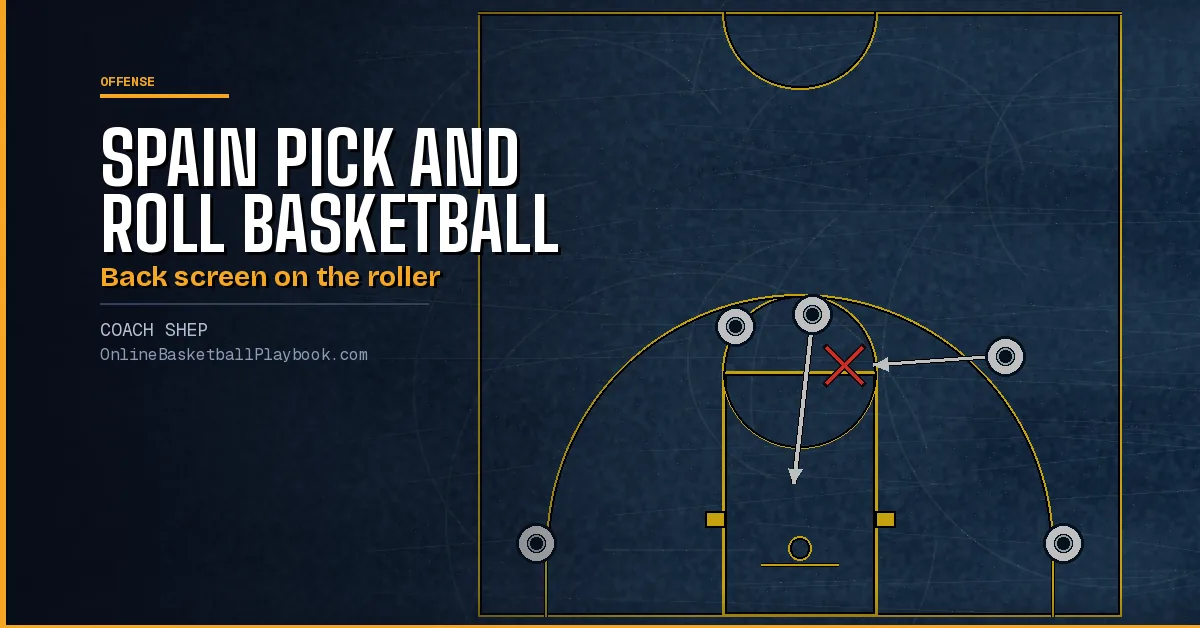
The Spain pick and roll explained: a ball screen plus a back screen on the roller's defender, the pop, the hedge counter, the versions and the coverages.
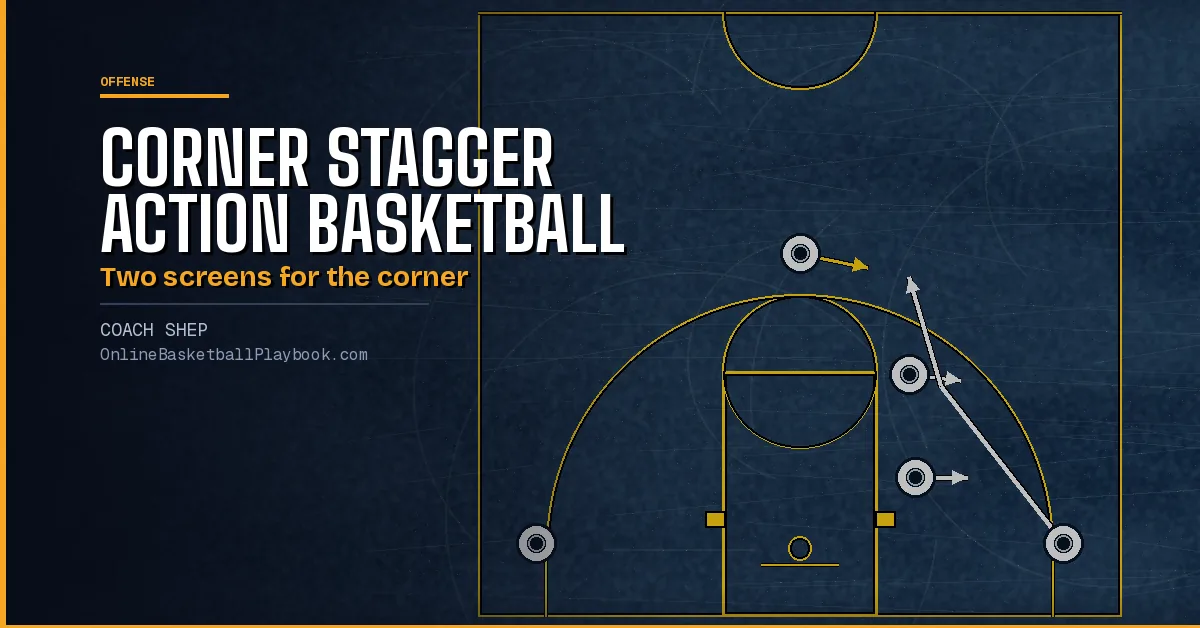
The corner stagger action explained: two screens in turn for a shooter in the corner, five ways into it, the exits, the switch counters and the spacing rules.
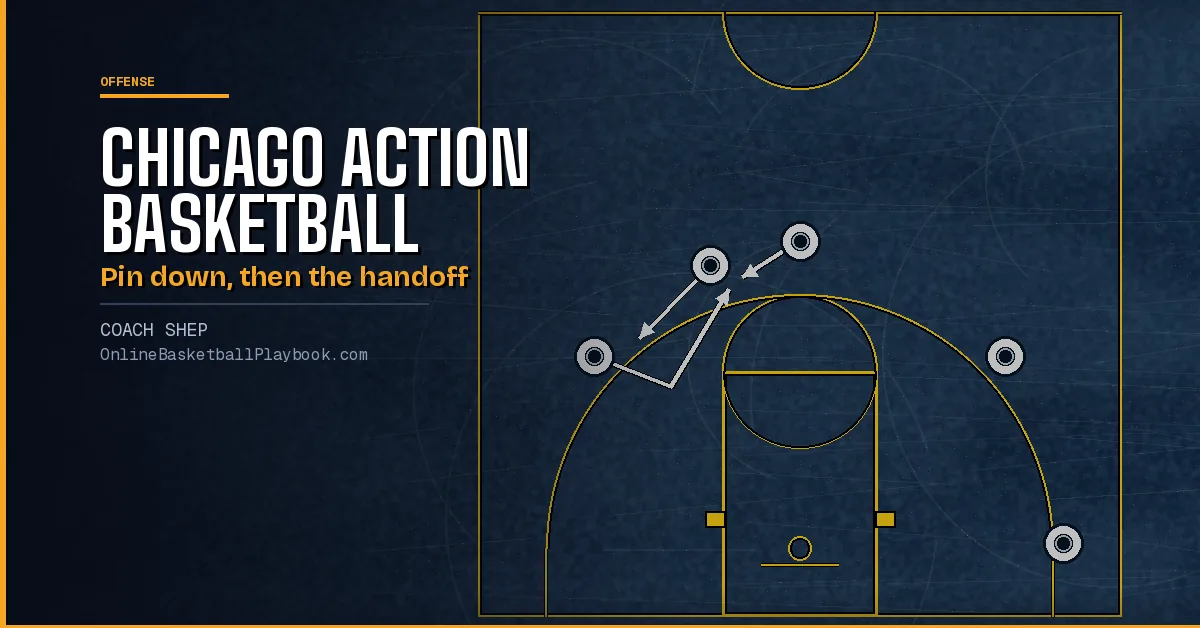
Chicago action basketball explained: a pin-down into a dribble handoff, the delay and elbow versions, what the screener does after, the reads and other meanings.
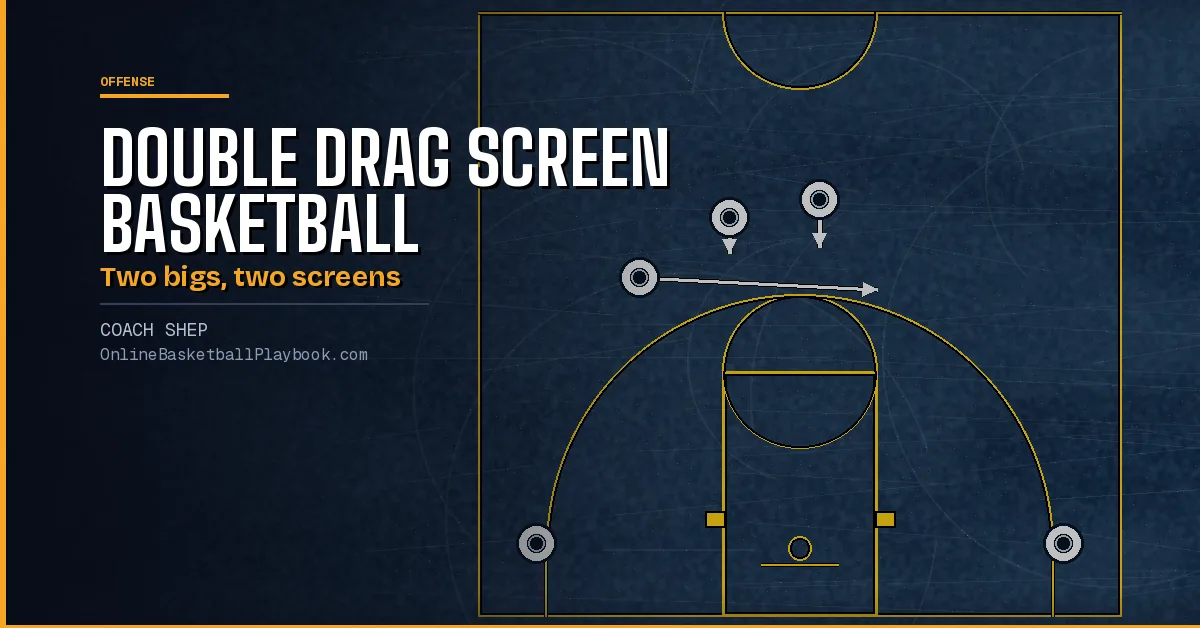
The double drag screen explained: two trailing bigs screen in turn for the ball handler, with the roll and pop rules, the slip, the reads and the coverages.
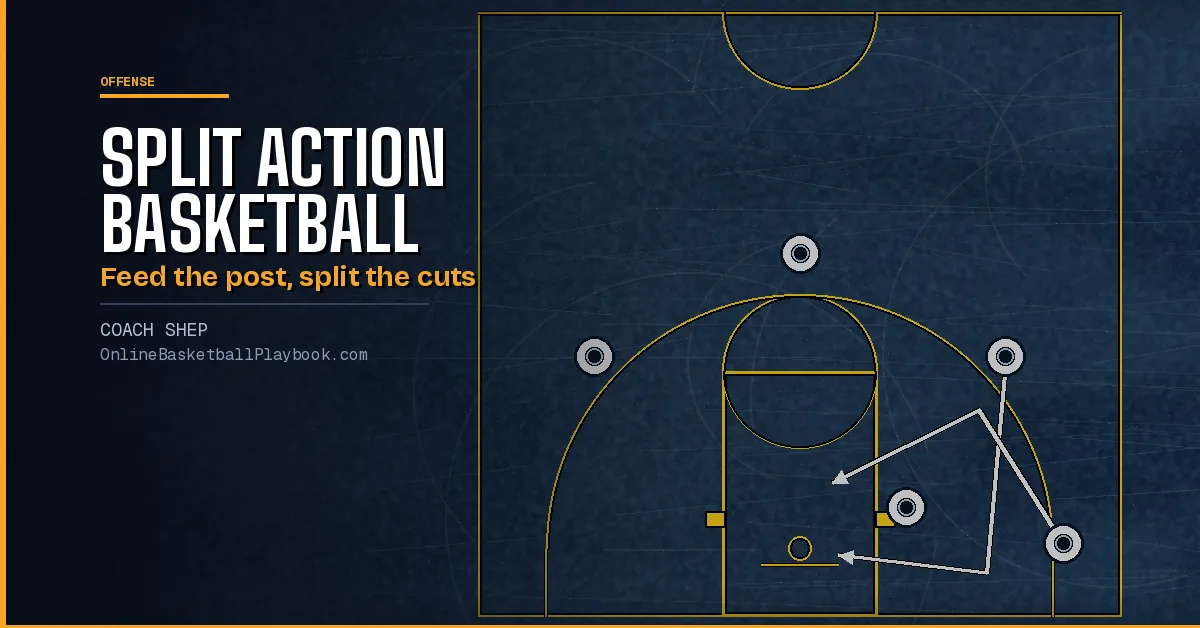
Split action basketball explained: the post feed and the two cutters, straight and reverse splits, the high post split, the reads and counters, and how to defend it.
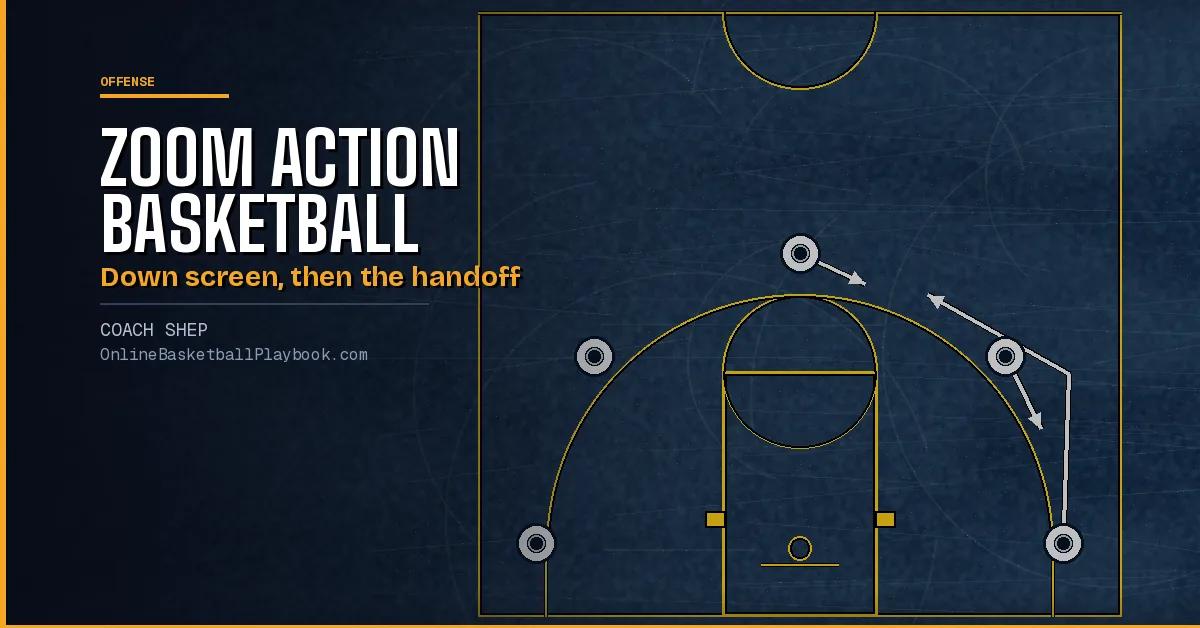
Zoom action basketball explained: the down screen into a dribble handoff, the three reads, the back cut and slip counters, every version and how to teach it.
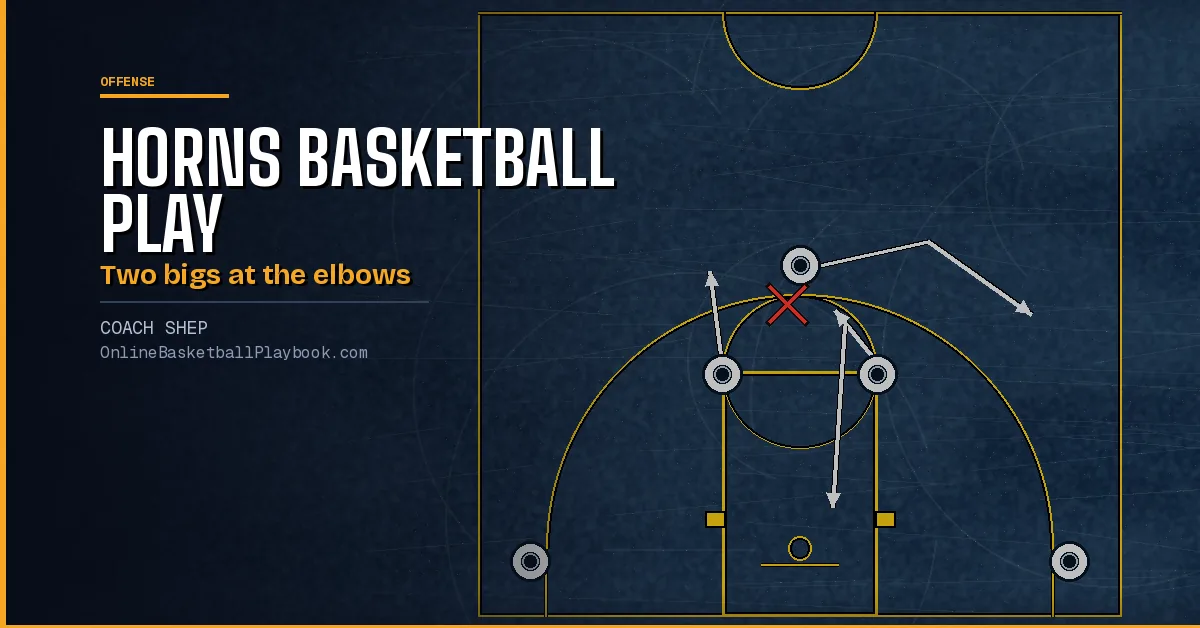
The horns basketball play explained: the horns set, the elbow pick and roll, roll and pop rules, hi-lo, flex and shooter actions, the reads and the install.
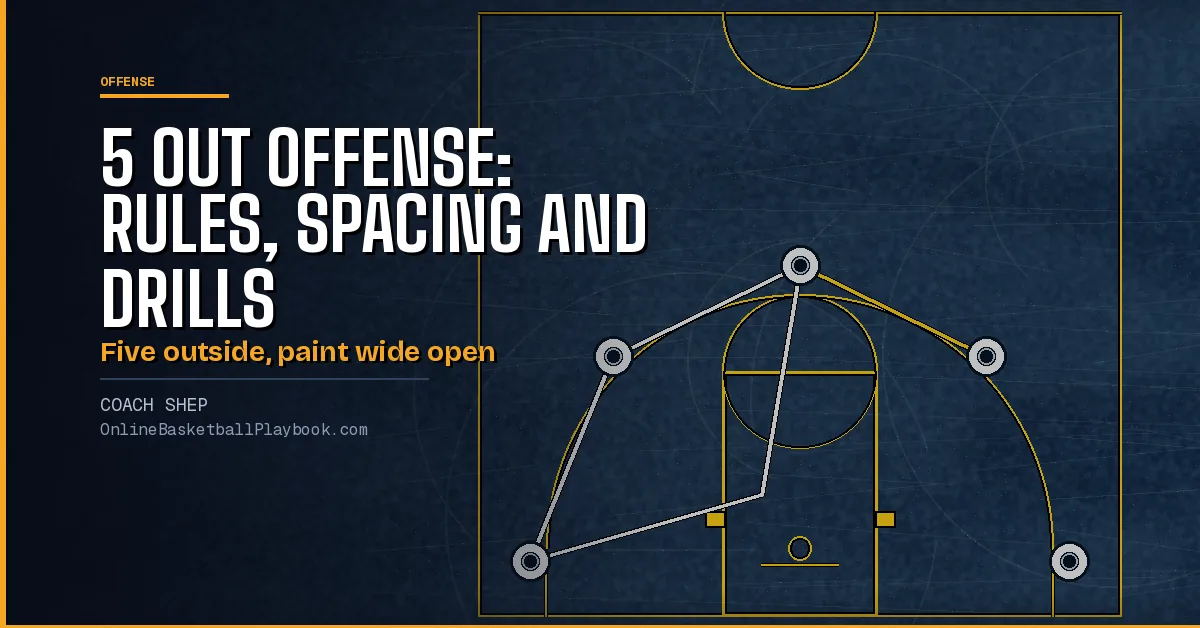
How the 5 out offense works: the five spots, the rules, pass and cut, back cuts, screen away, circle motion, youth teaching order, and what to do against a zone.
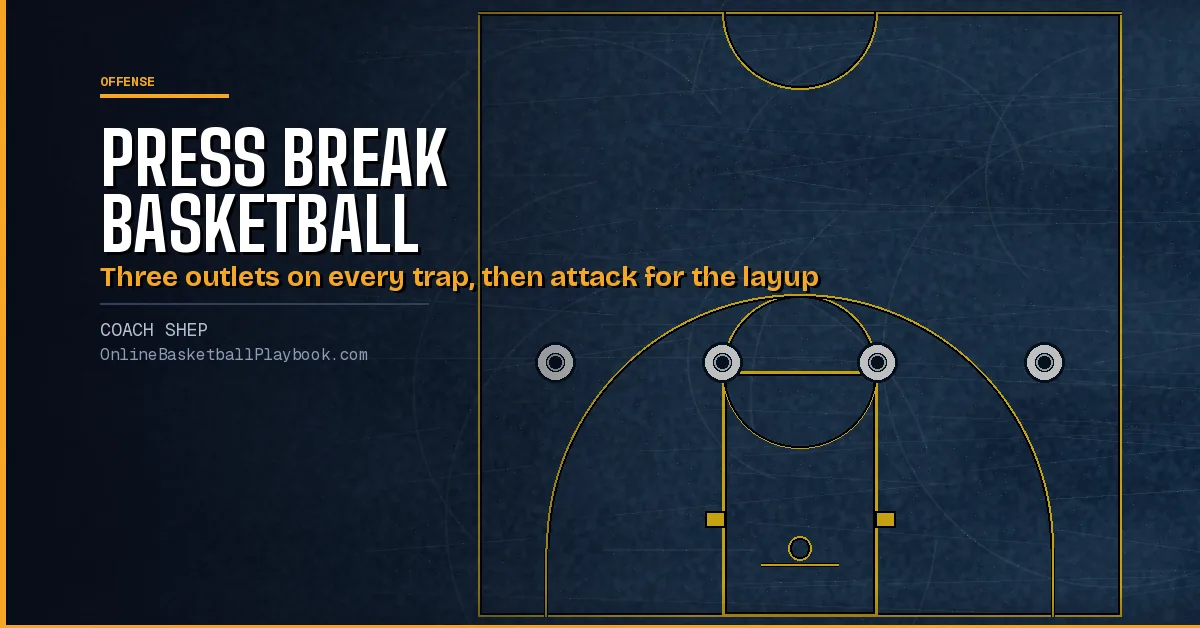
Press break basketball guide with the 1-4, 80-60-40 and 4-across alignments, reads against the 2-2-1, diamond and 2-1-2 press, and where coaches disagree.
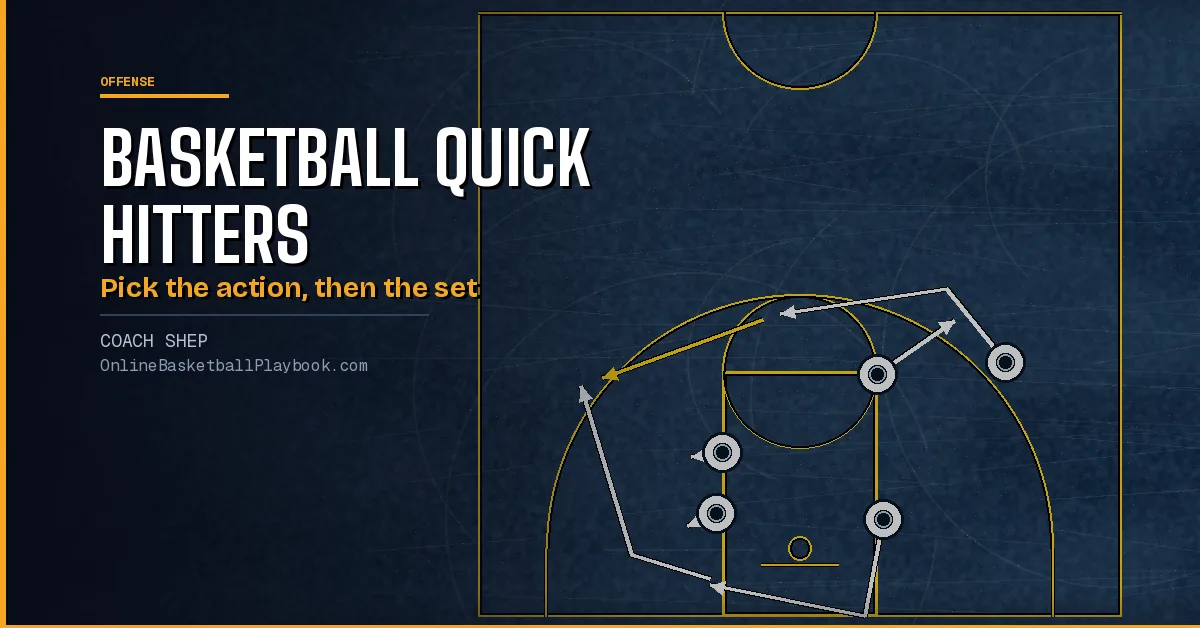
Basketball quick hitters sorted by the action you want, catch-and-shoot to post feed, with each set's formation, diagrams, the read and the counter.
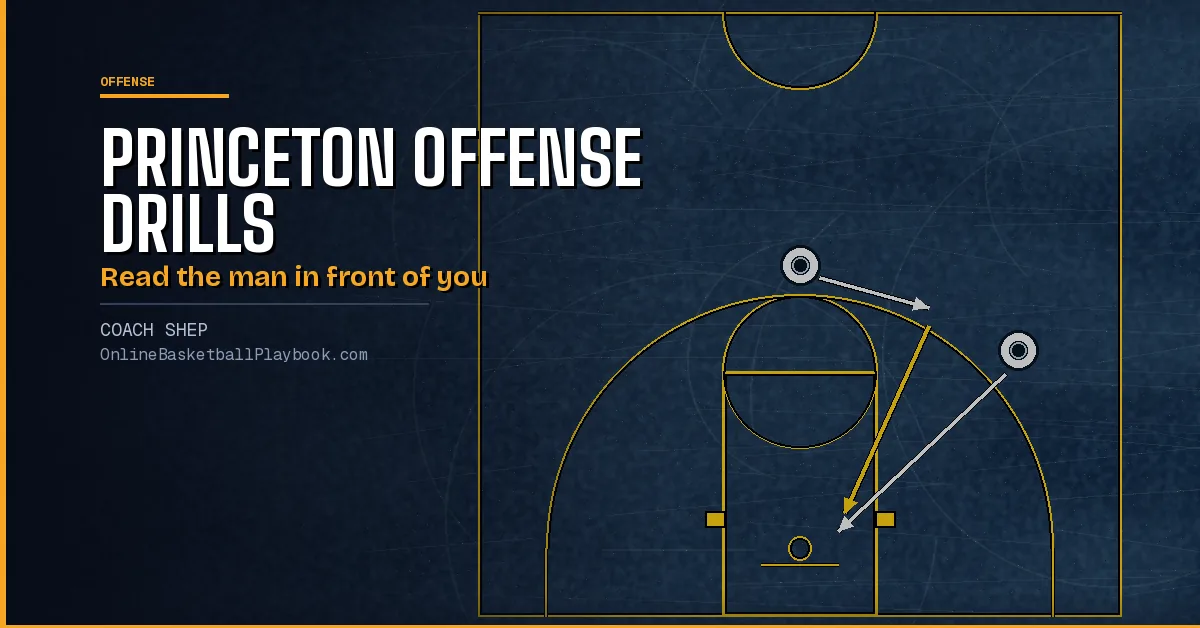
Princeton offense drills that teach the reads: spacing, backdoor and hand-off breakdowns, 3-0 Chin and wave drills, Point shooting, a drive drill and an install.
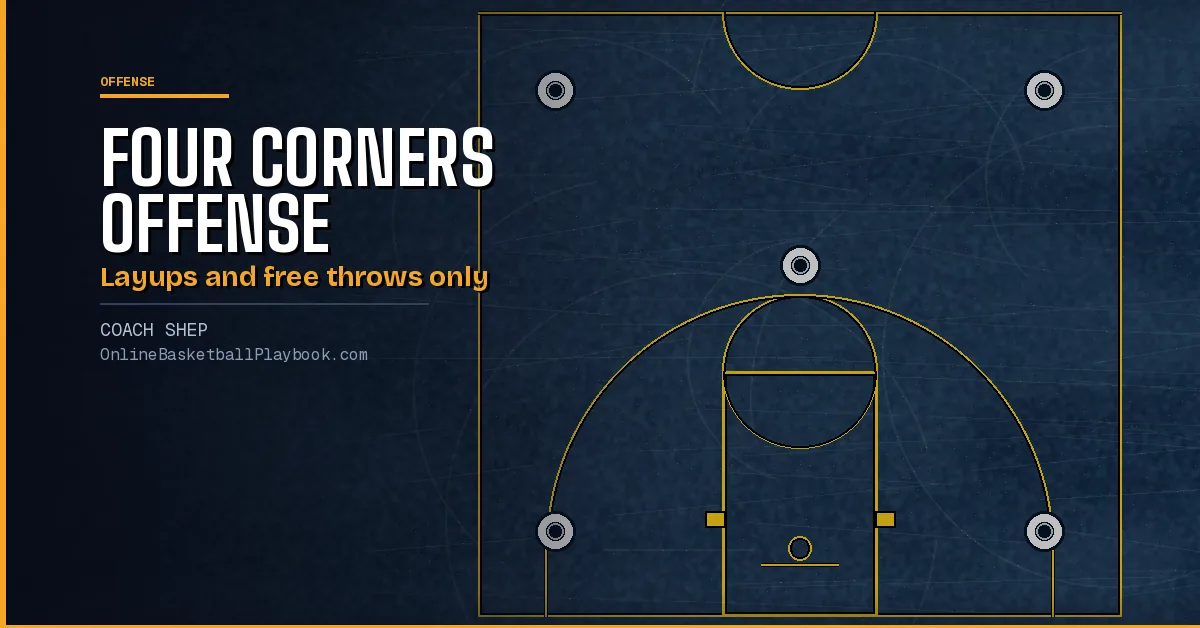
Four corners offense basketball: the set, the chaser, the corner and post rules, three versions, when to run it, the shots it hunts and shot clock limits by level.
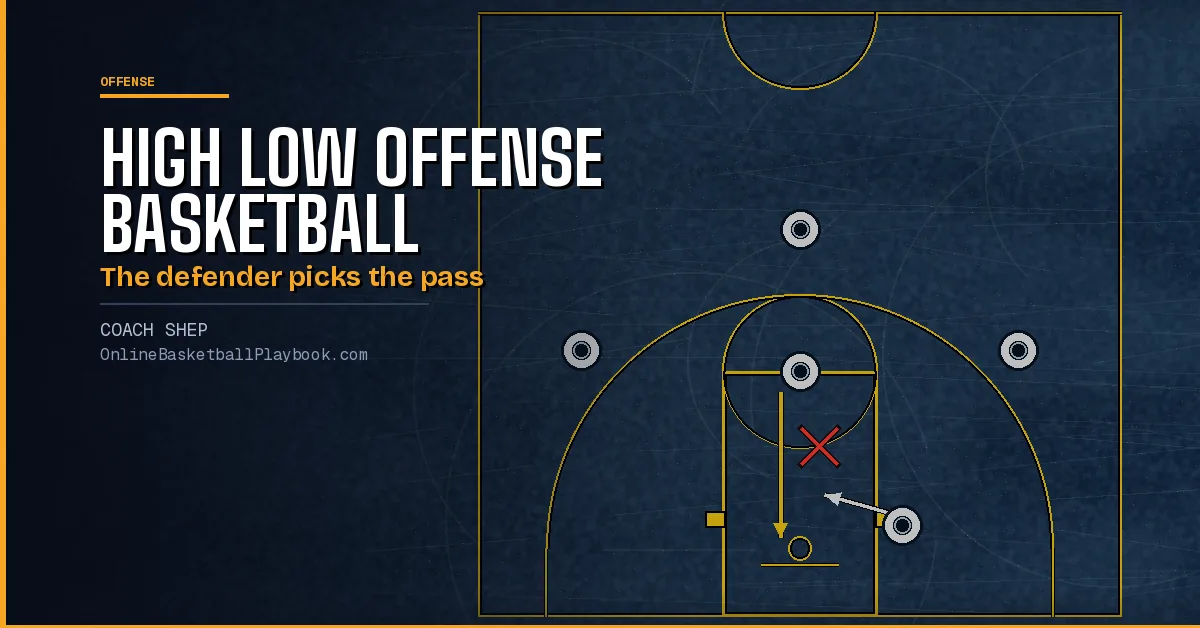
High low offense basketball explained: the two-post shell, the lob and bounce reads, answers to a front, down-screen reads, 1-4 low sets and the hi-lo against zones.
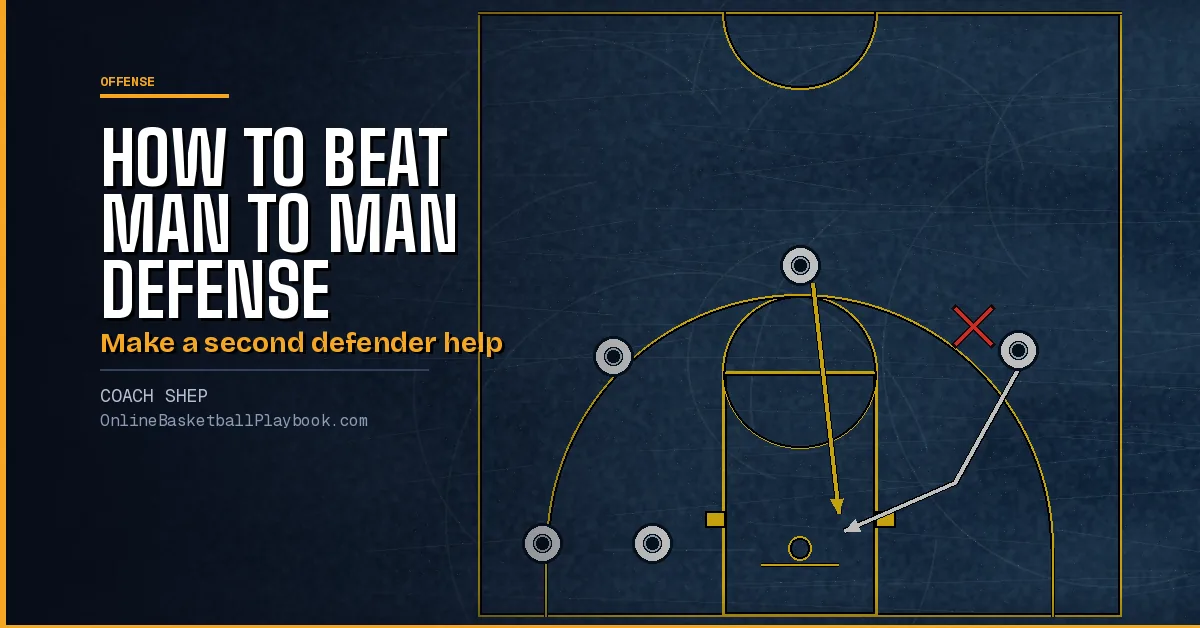
How to beat man to man defense in basketball: spacing, catch reads, beating denial, drives, off-ball and ball screens, post feeds, the Pack Line and drills.
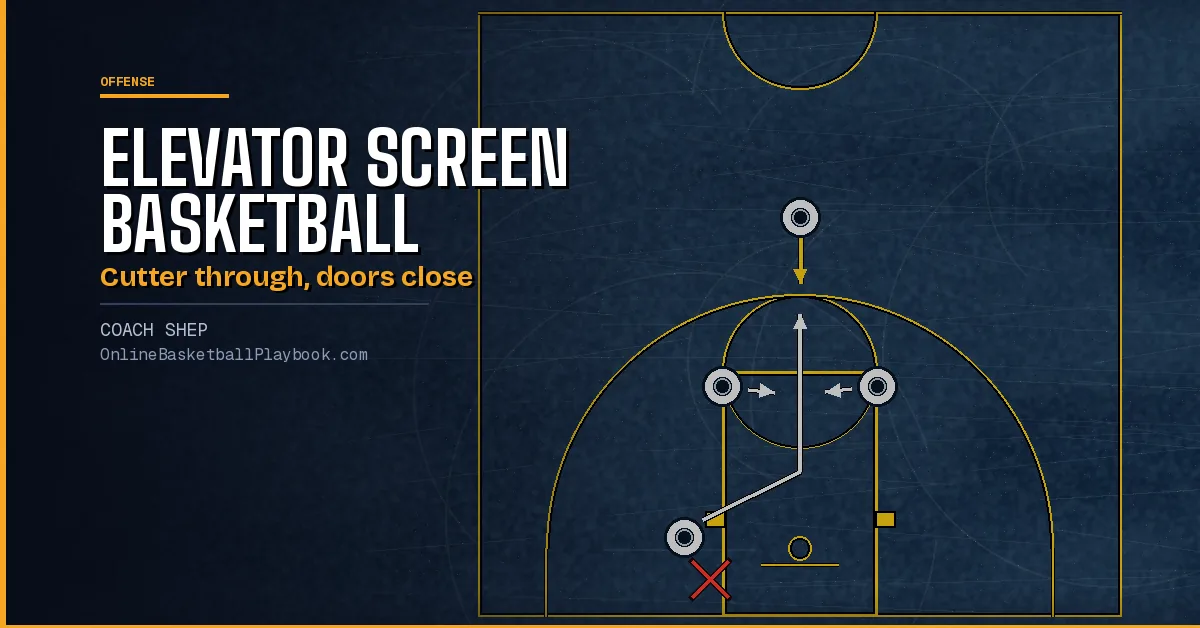
Elevator screen basketball explained: how two screeners close on a cutter, the plays that use it, how to time it legally, and the counters when the defense reads it.
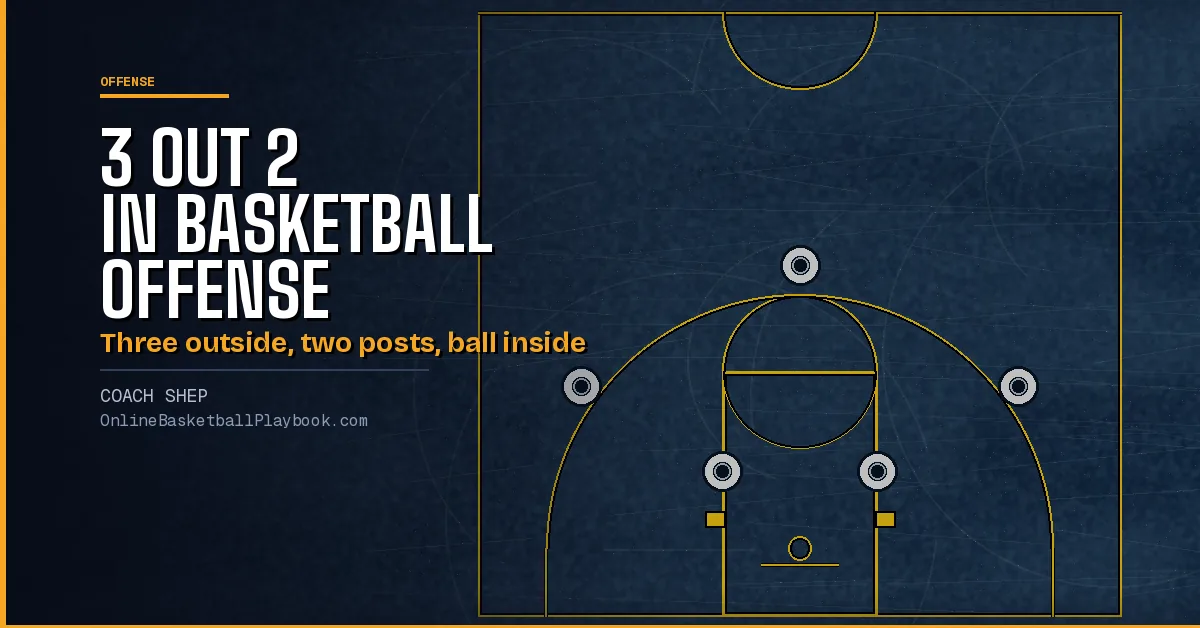
The 3 out 2 in basketball offense explained: alignment, actions off every pass, the high-low counter, drive rules for the posts, add-on plays and who fits it.
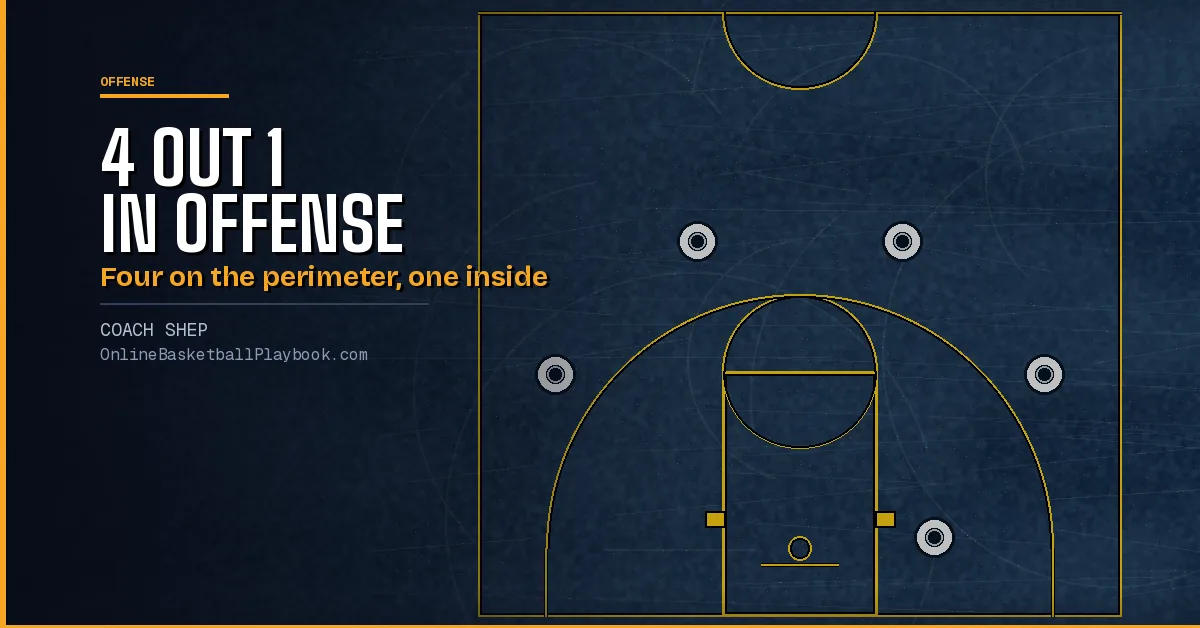
How to run the 4 out 1 in motion offense: spacing, the six rules, what the post does, pass-cut-fill, screens, quick hitters, zone adjustments and how to install it.
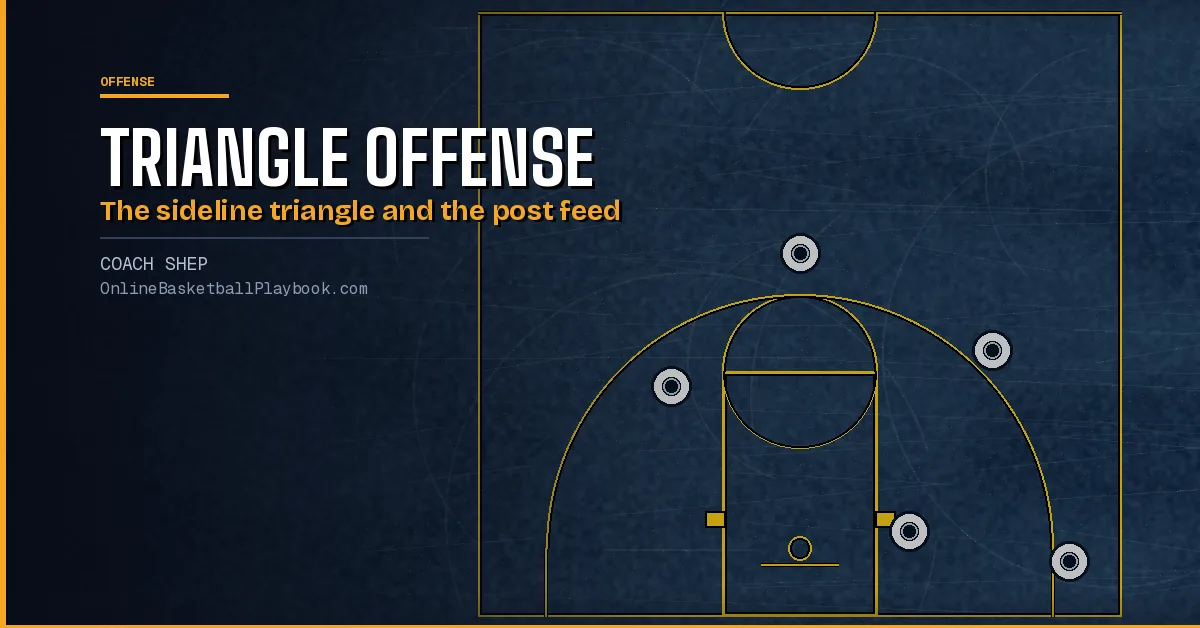
How to run the triangle offense in basketball: the sideline triangle, spacing, entries, the four wing reads, post splits, counters and how to teach it in pieces.
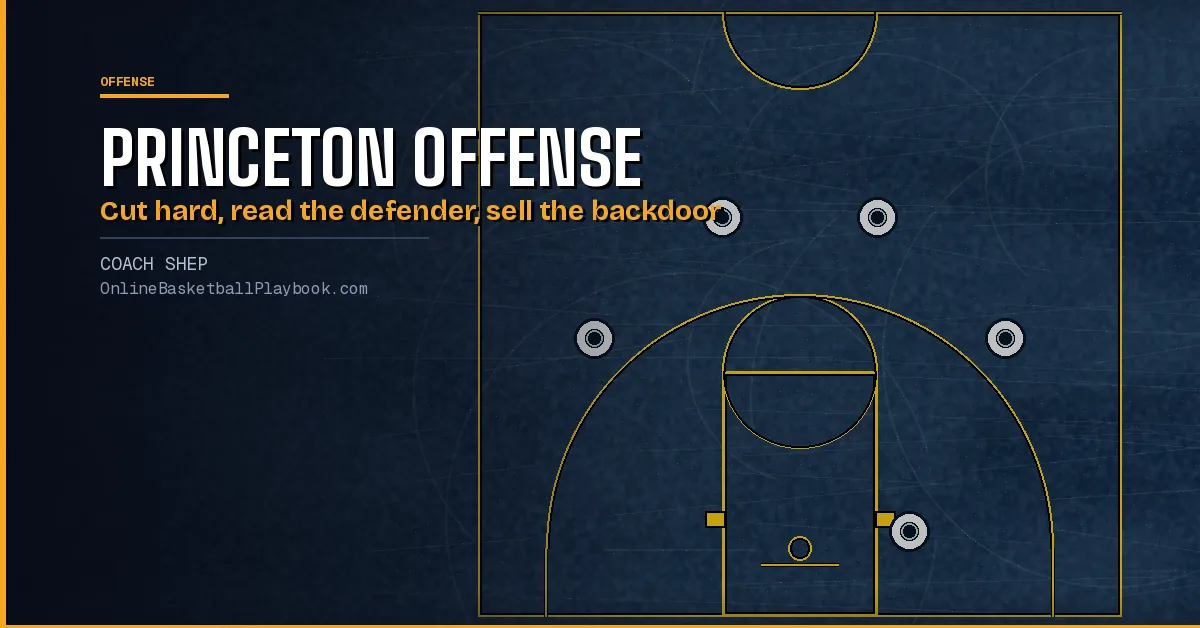
How the Princeton offense works: the Chin set, backdoor cuts, the high-post reads, the players it needs, how to install it and what defenses do to stop it.
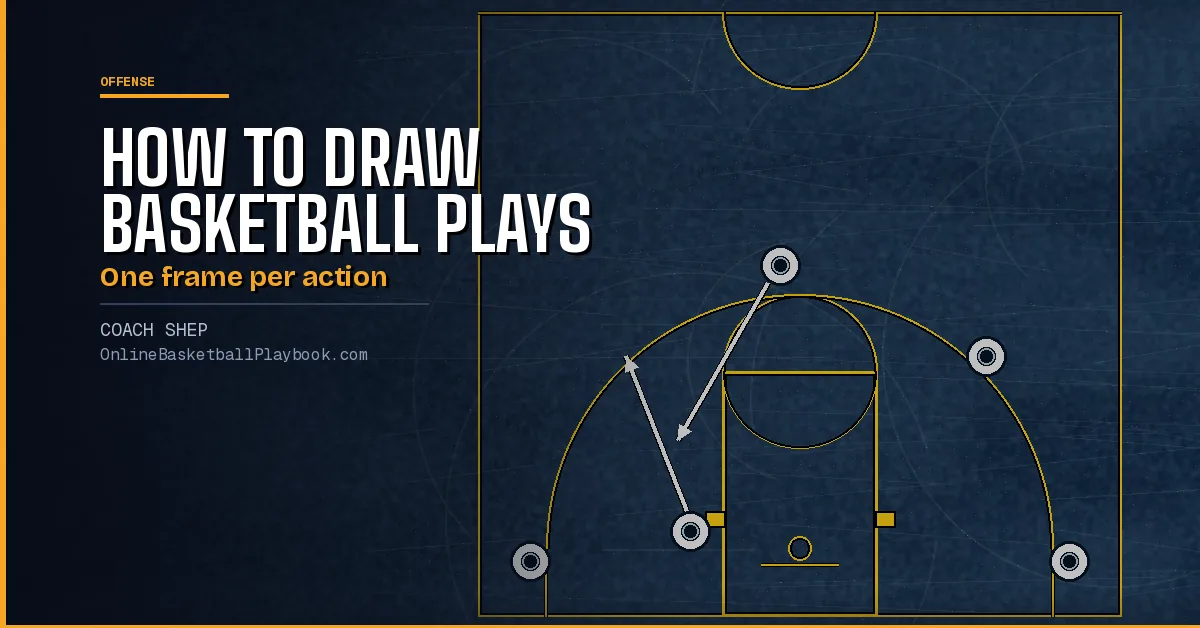
How to draw basketball plays by hand or online free: the court, the symbols, one frame per action, captions, and how to use the free play drawer.
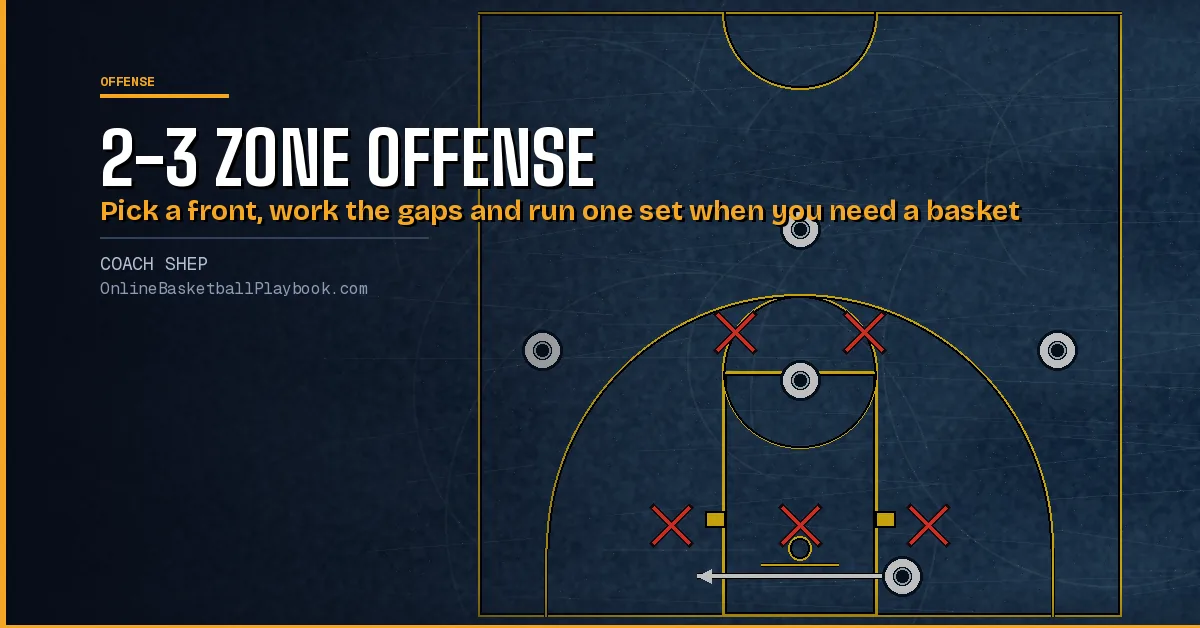
2-3 zone offense with the fronts coaches start from, the continuities they run, quick-hitter plays for a basket, how to choose and where coaches disagree.
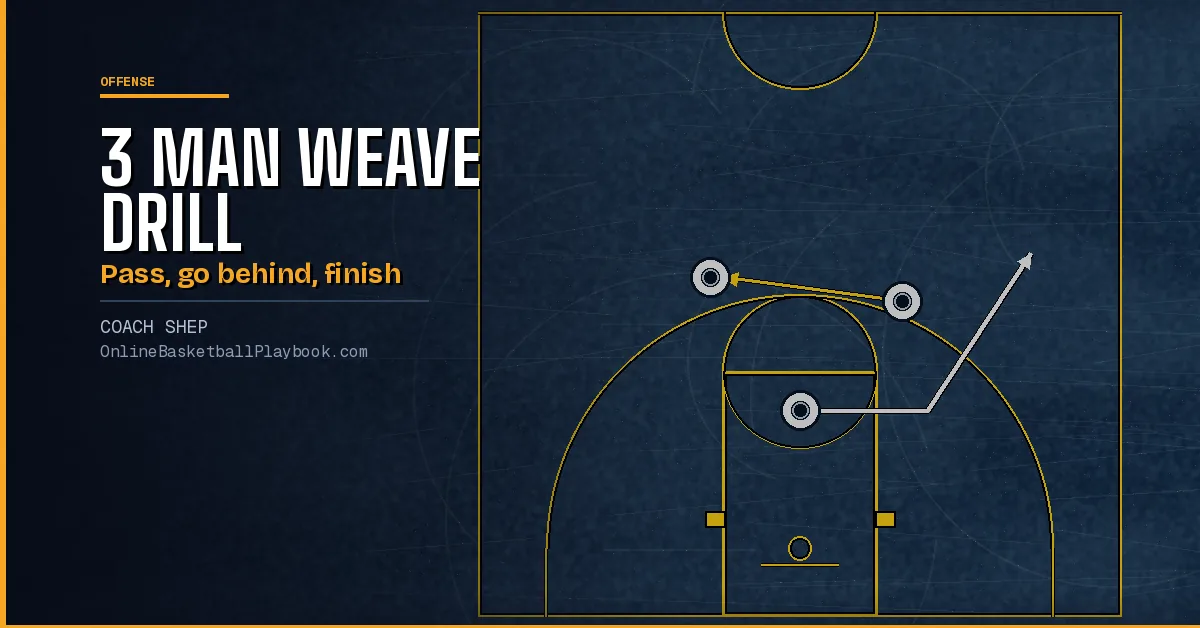
How to run the 3 man weave drill: the setup, the pass and go behind rules, the finish, scoring and 3-point versions, the 5 man weave, and its limits.
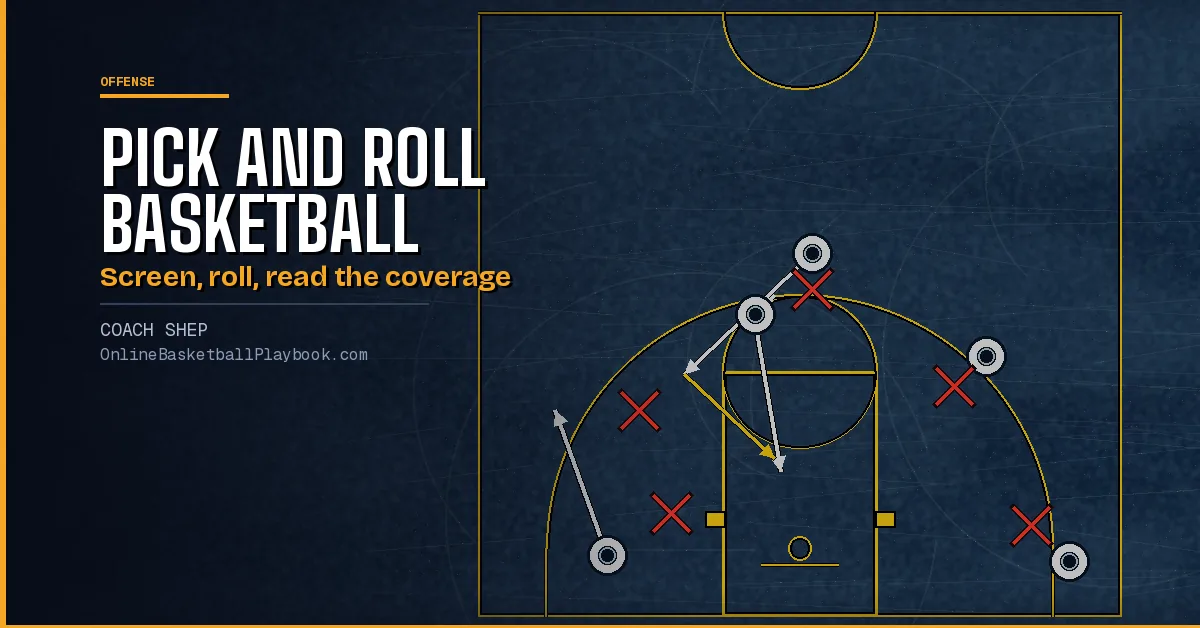
How to run the pick and roll in basketball: the screen and its angle, the handler's reads, roll, pop, slip and short roll, spacing, and a youth teaching order.
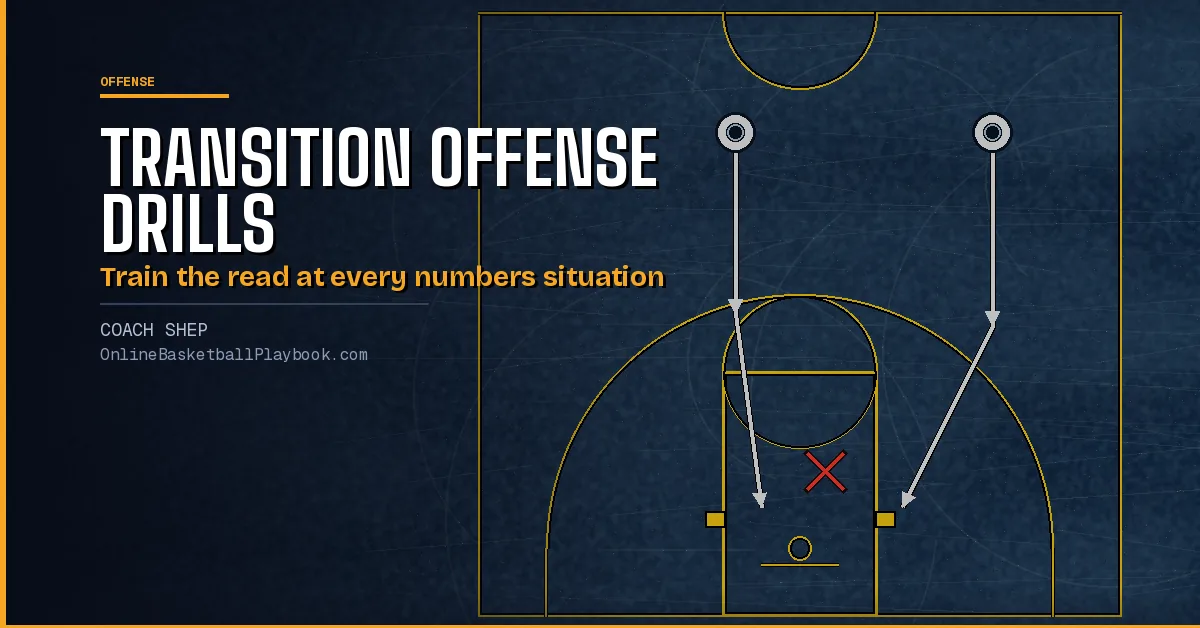
Transition offense drills that train a rule for every numbers situation: the outlet, lane filling, 2-on-1, 3-on-2, the 2-on-1 to 5-on-5 ladder and the numbered break
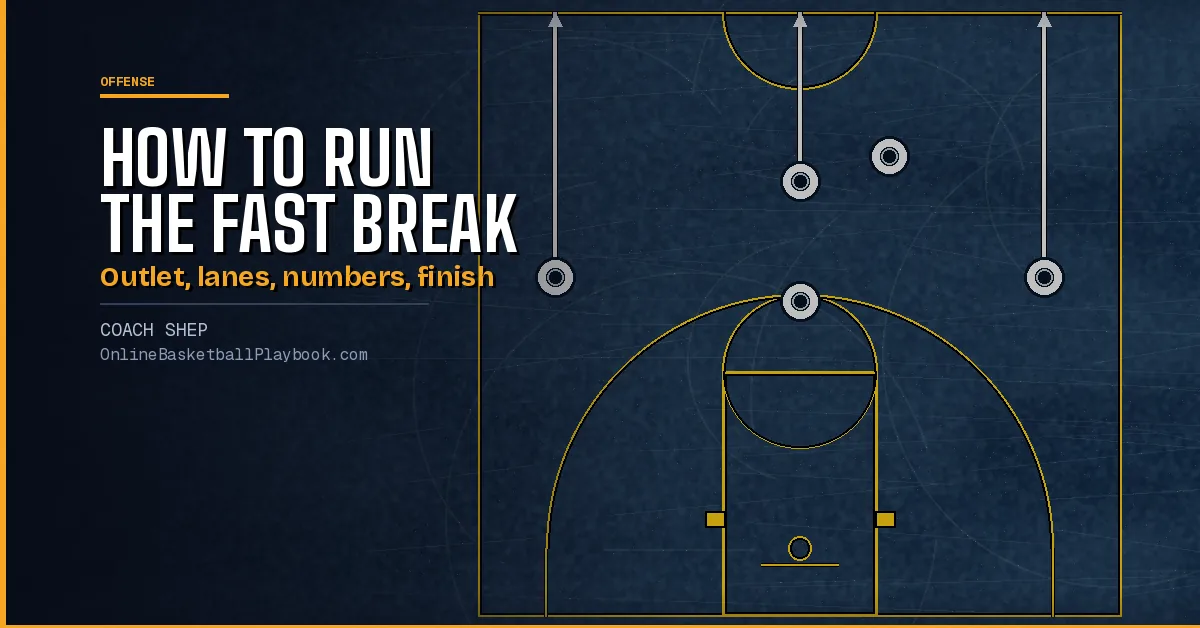
How to run a fast break: start it off a stop, fill three lanes, read each numbers situation, flow into a secondary break and build the habits with a drill ladder.
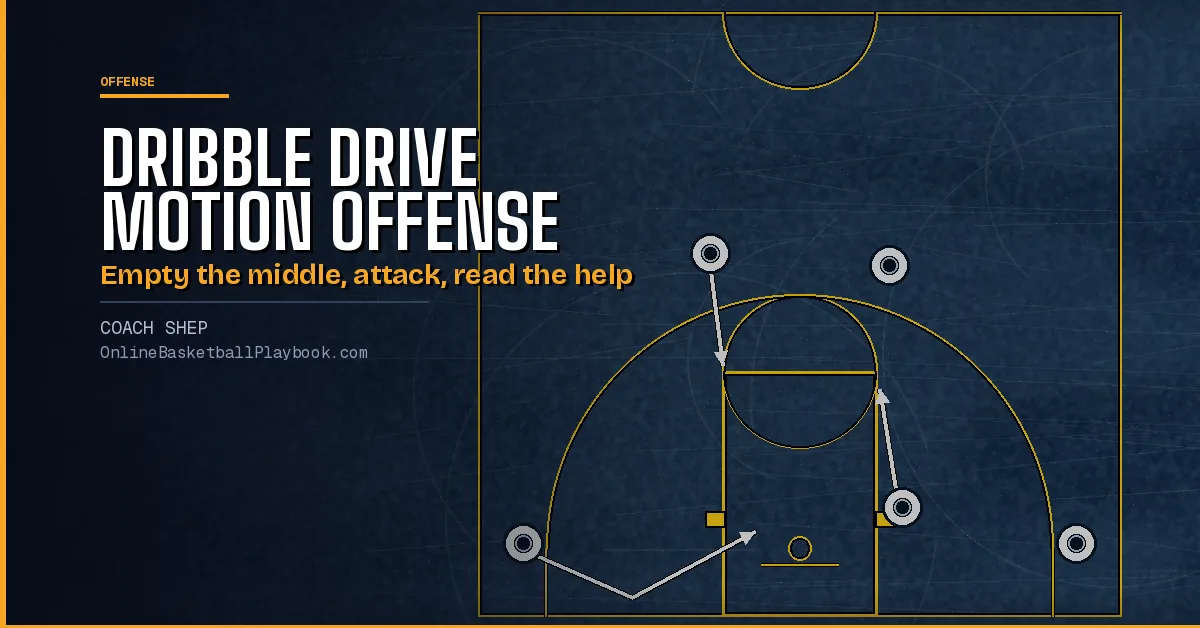
The dribble drive motion offense explained: 4-out 1-in spacing, the Drop, Drag and Rack zones, the read off a drive, shot diet, weak spots and the install.
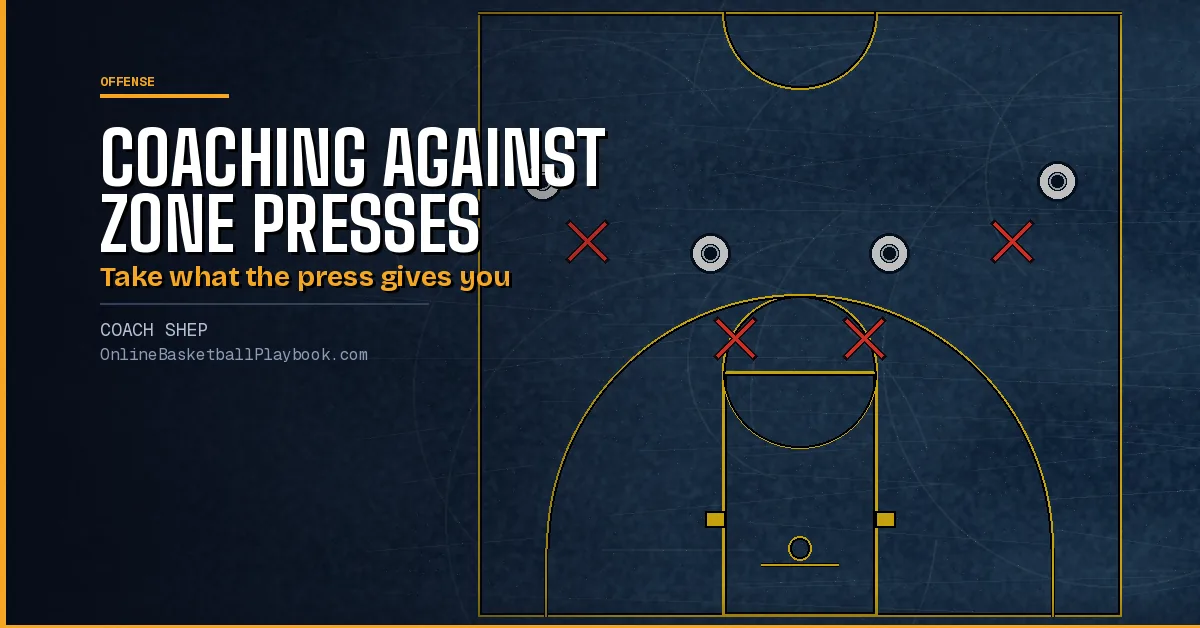
How to coach against zone press defenses: what the 1-2-1-1, 2-2-1, 2-1-2 and 1-3-1 take away, the spacing that beats them, how to break the trap and the drills.
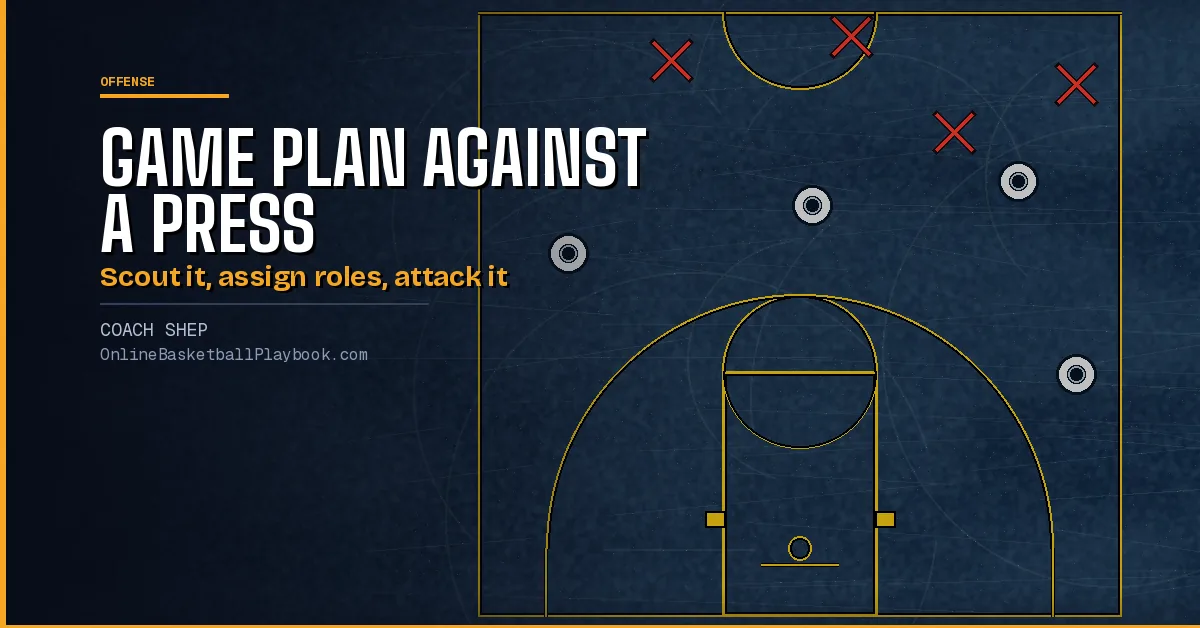
Build a game plan against a press defense: scout the press, assign every role, set the rules, plan your timeouts and turn a broken press into a fast break.
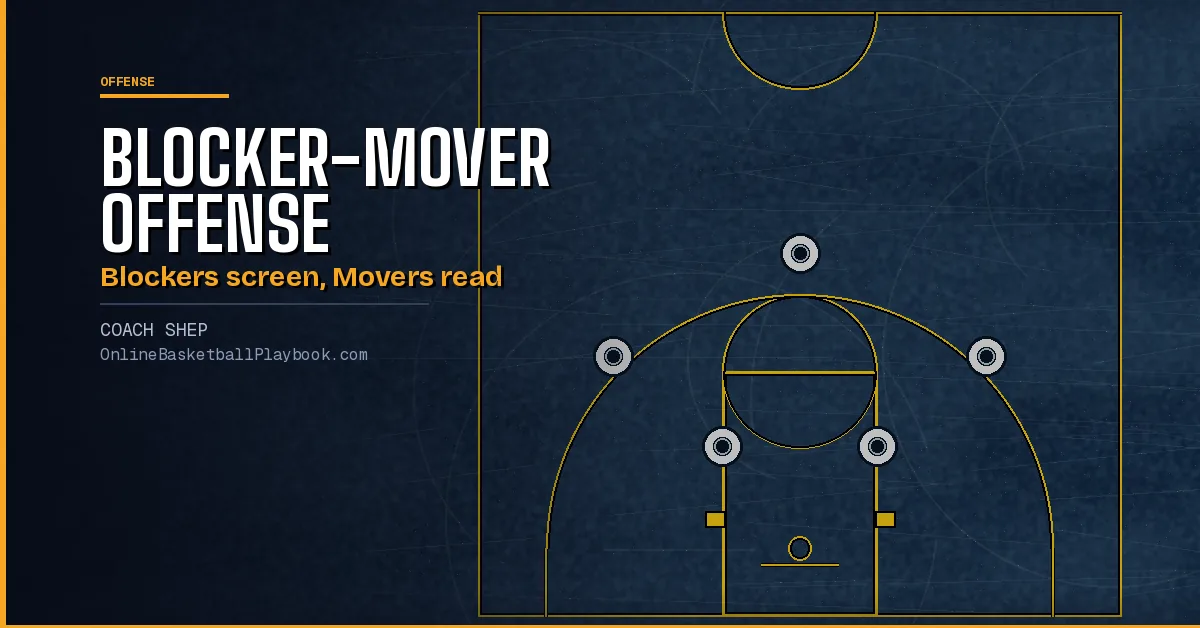
Blocker-Mover offense splits five players into Blockers who screen and Movers who cut and read. See the roles, four alignments, screen reads, sets and install plan.
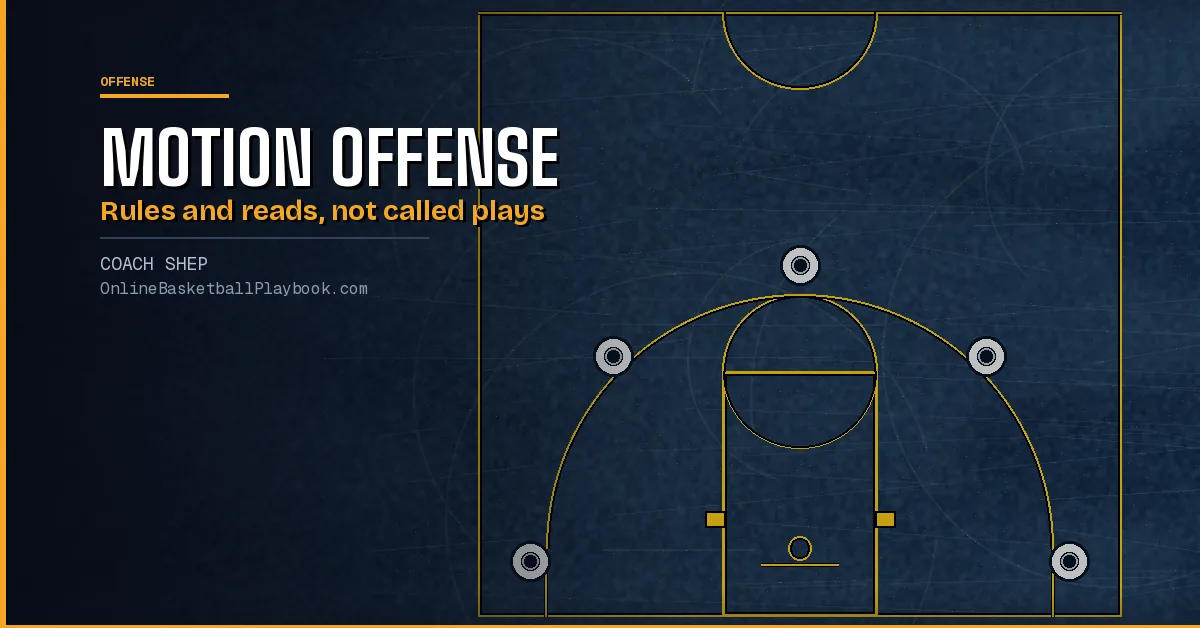
Motion offense runs on rules, not called plays. See the spacing, four core actions, 5-out versus 4-out 1-in, the install order, drills and where it struggles.
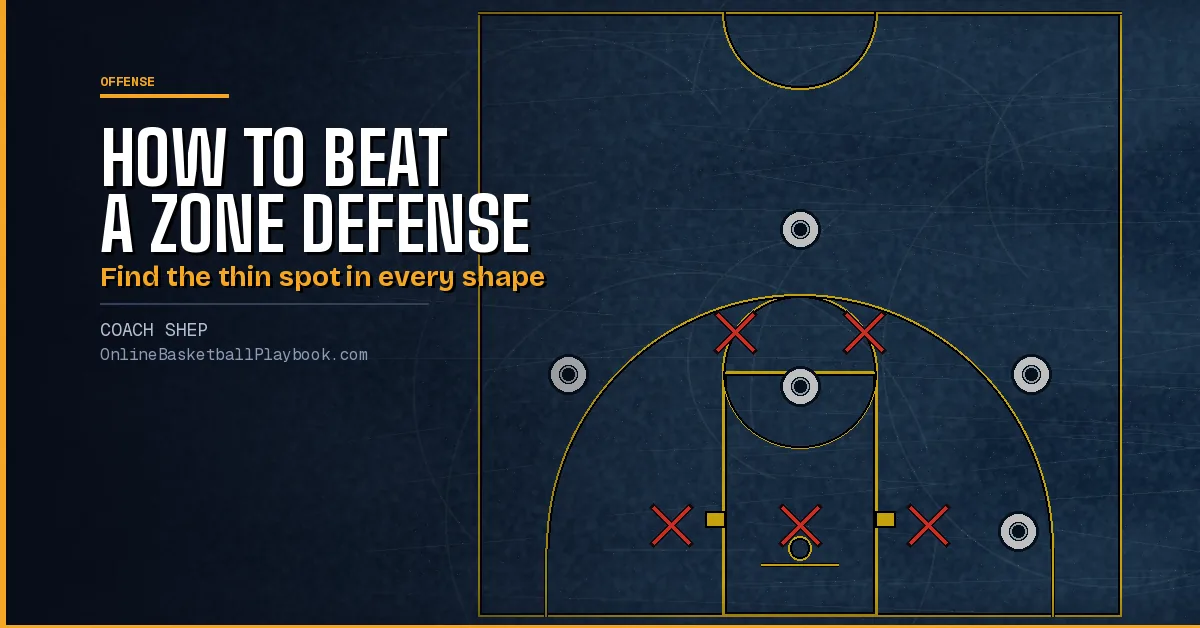
How to beat a zone defense, one zone at a time: what the 2-3, 3-2, 1-3-1, 1-2-2, 2-1-2, matchup and junk zones take away, give up and where to attack.
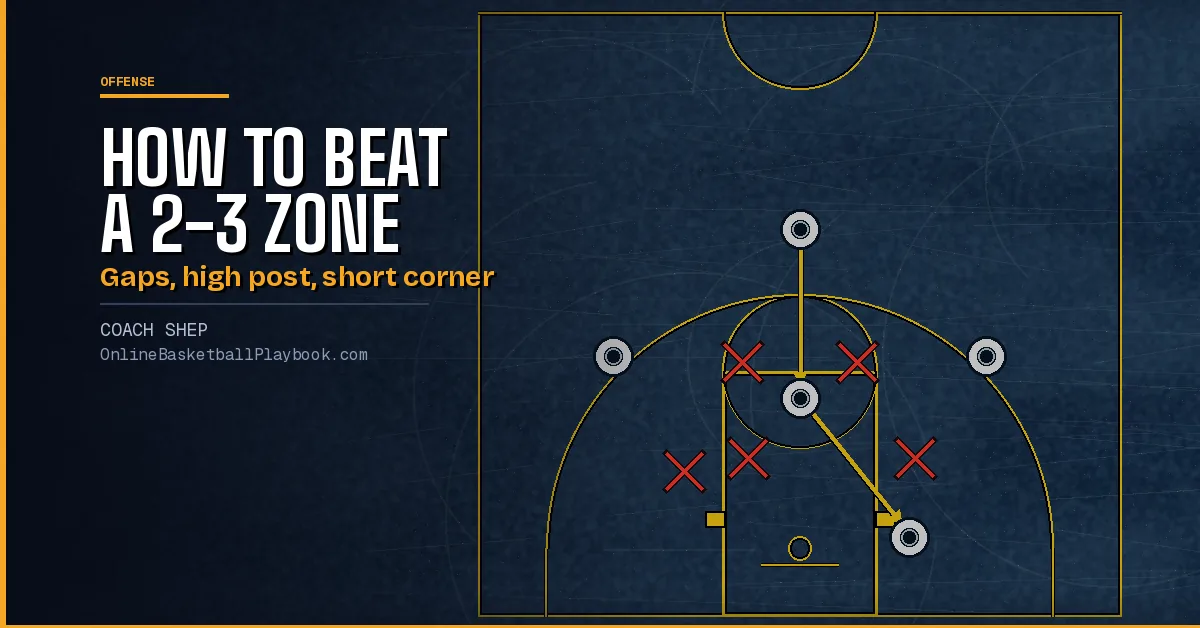
How to beat a 2-3 zone: sit in the gaps, flash the high post, use the short corner, skip to the corner and reverse, plus a simple version for youth teams.
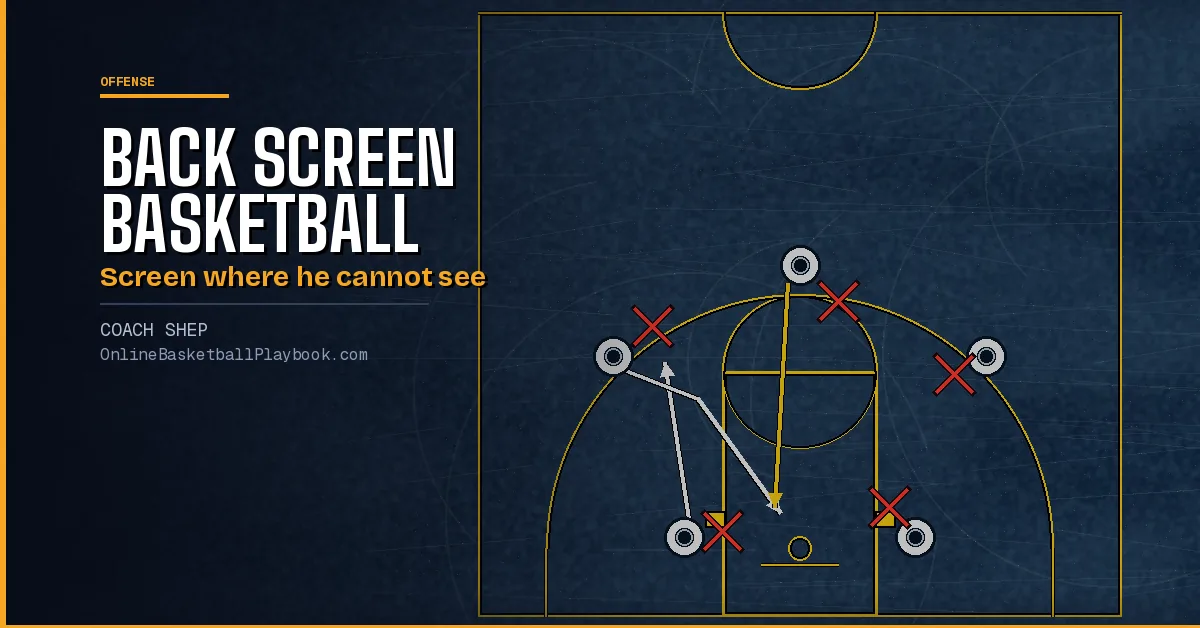
Back screen basketball guide: what a back or rip screen is, setting it legally, the cutter's and screener's reads, the UCLA cut, chained actions and defending it.
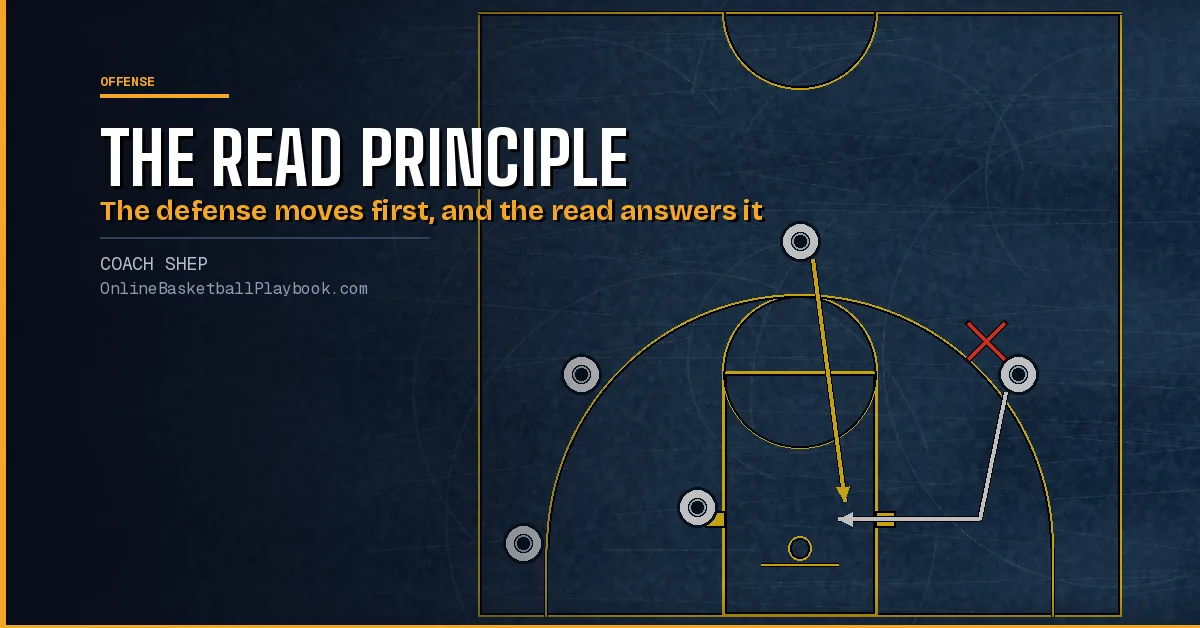
The read principle in basketball: the defender's position picks the cut or pass, the triggers players watch, why reads are hard to scout, and how to teach them.
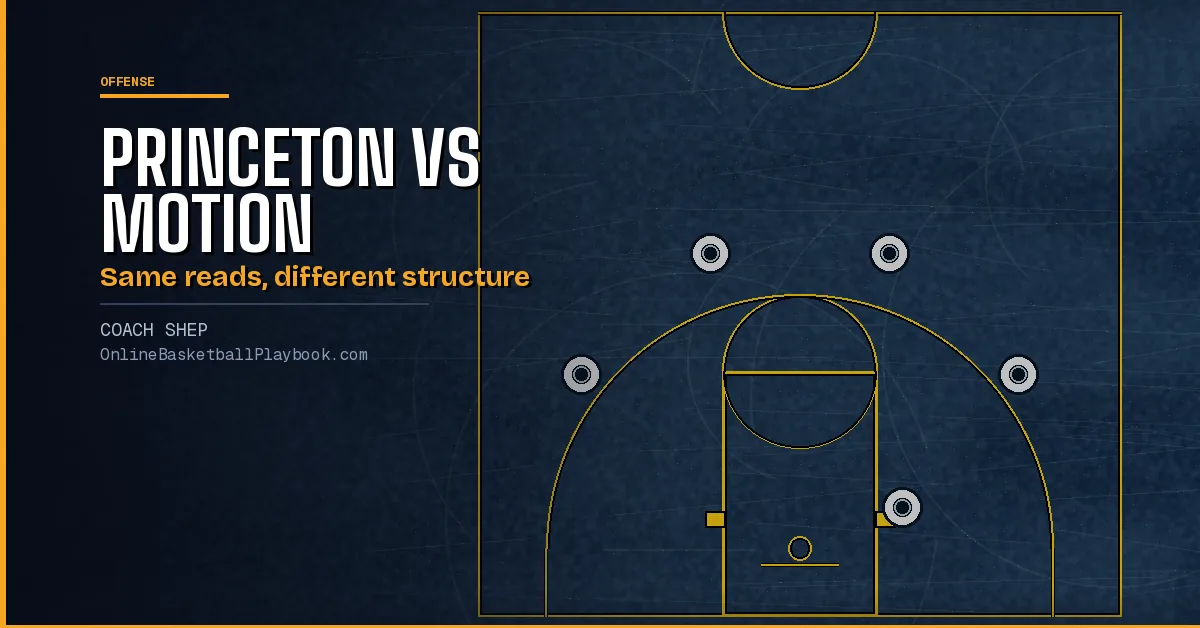
Princeton offense vs motion offense, side by side: spacing, the post's job, cuts and screens, reads, the dribble, called sets, personnel, shots and the install.
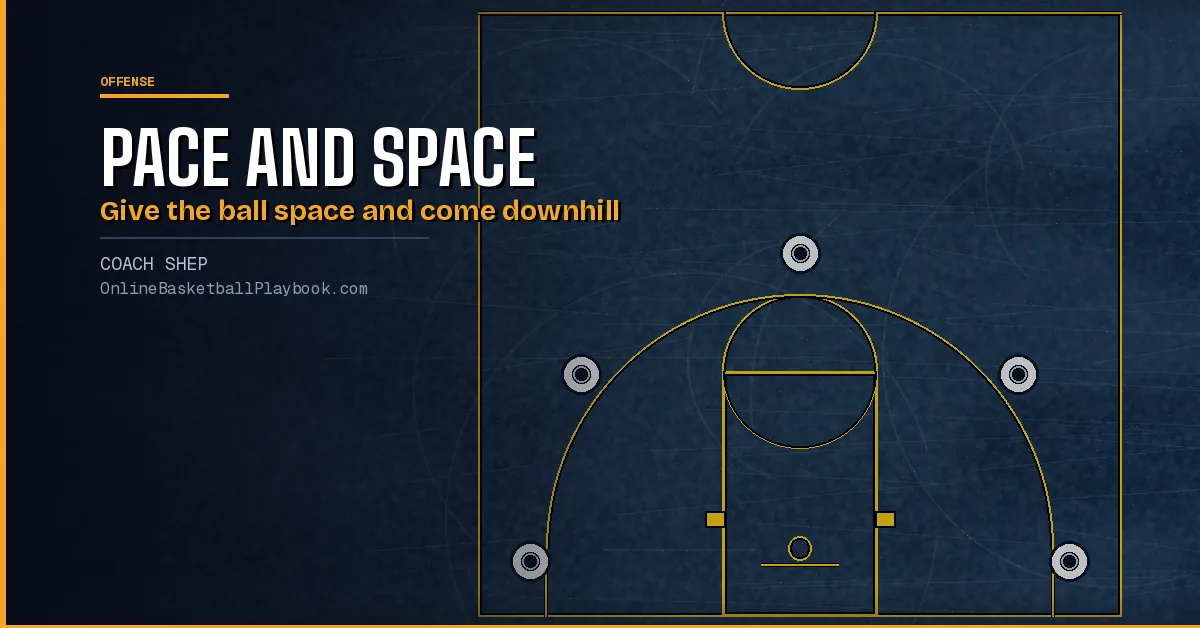
Pace and space offense explained: five-out spacing, the 0.5 catch-and-go habit, drive-to-score rules, step-up and drag reads, shot diets and scored practice.
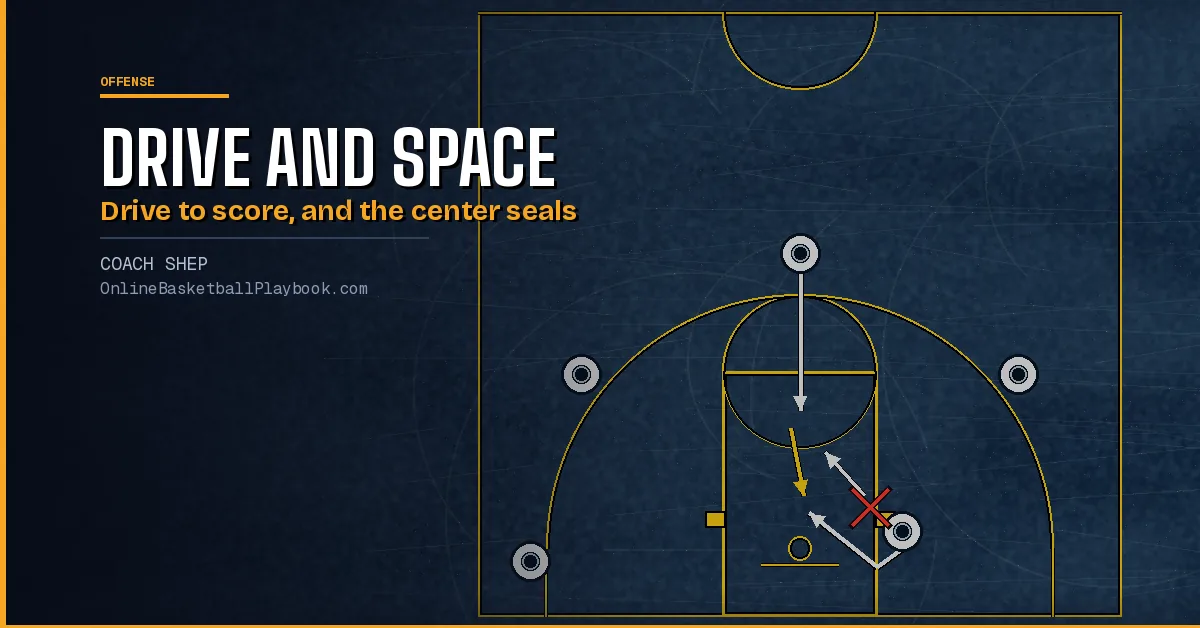
Drive and space offense explained: the three cues, penetrate pitch post, the advantage chain, the sealing center, protection plans, trail spots and how it morphs.
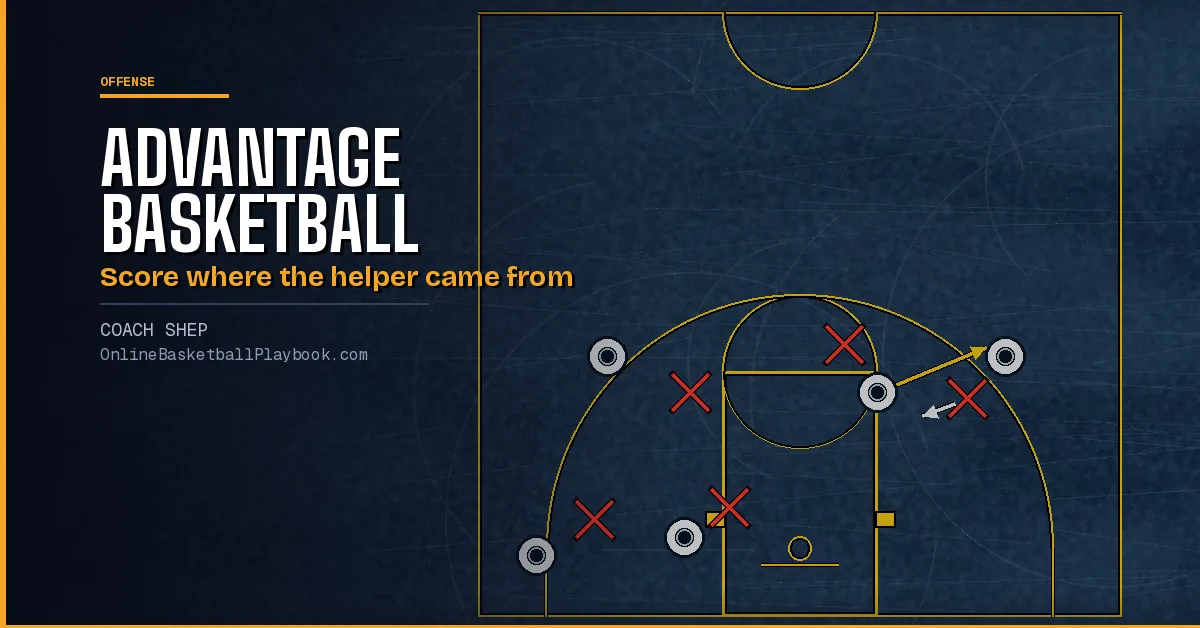
Advantage basketball explained: what an advantage is, how to read the help defender, where the ball goes next, and how systems keep the edge alive.
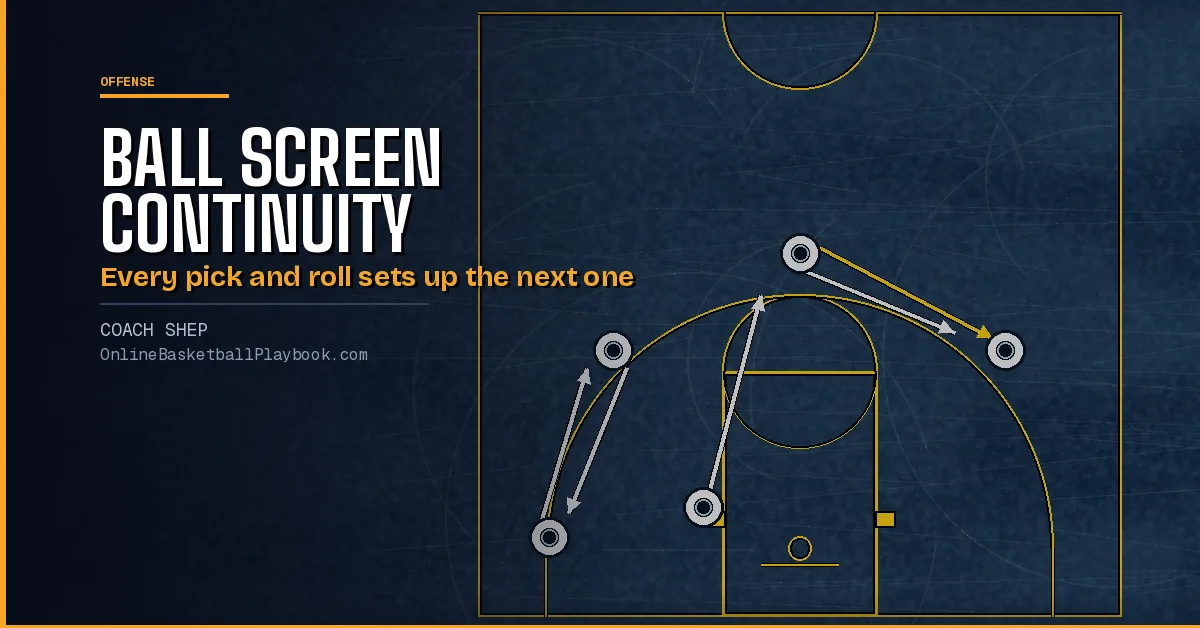
Ball screen continuity offense in full: the 4-out and two-big engines, reload rules, spacing, angles, reads, counters, Spain, Ram, double drag and zone sets.
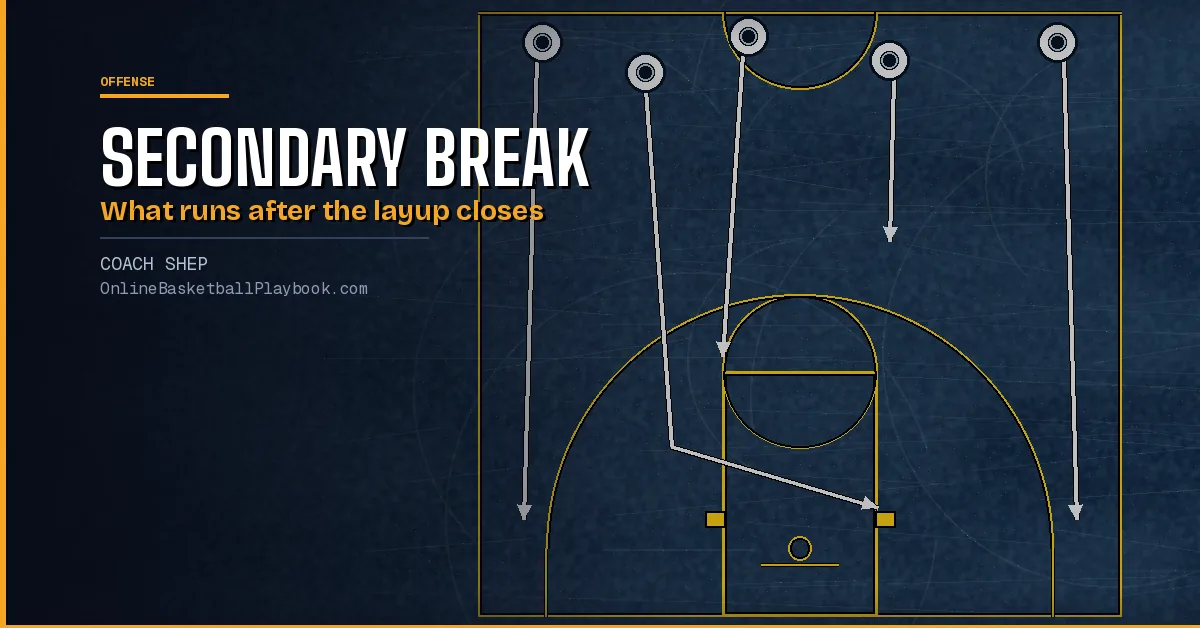
Secondary break basketball explained: where the primary break ends, the lanes, the numbered options, the trailer, after-make looks and where it flows next.
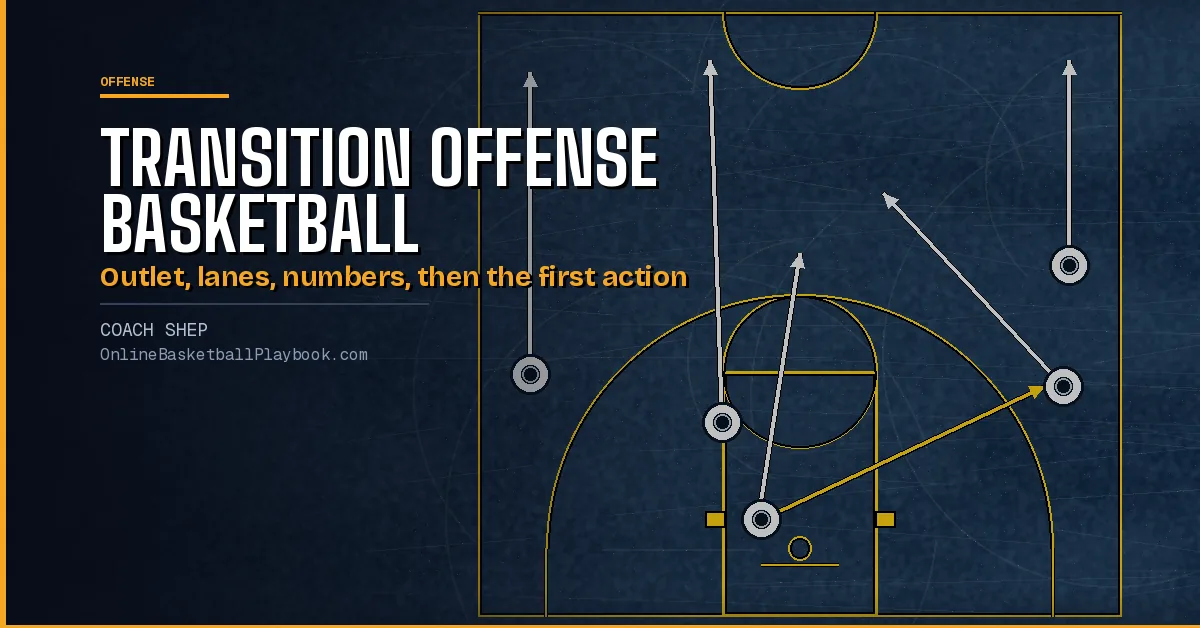
Transition offense basketball from rebound to first half-court action: outlets, lanes, 2 on 1 and 3 on 2 reads, the secondary break, early offense and crashing.
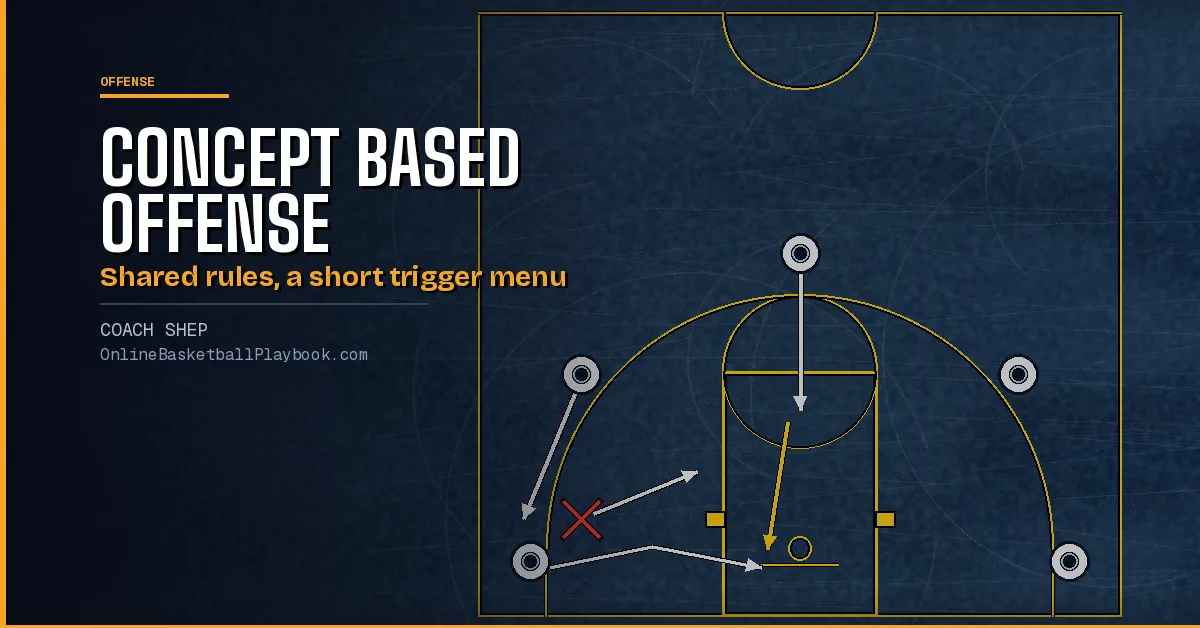
Concept based offense explained: arrival spacing, a shared shot value scale, the read-rule chain, one-can't-guard-two answers, triggers and how teams install it.
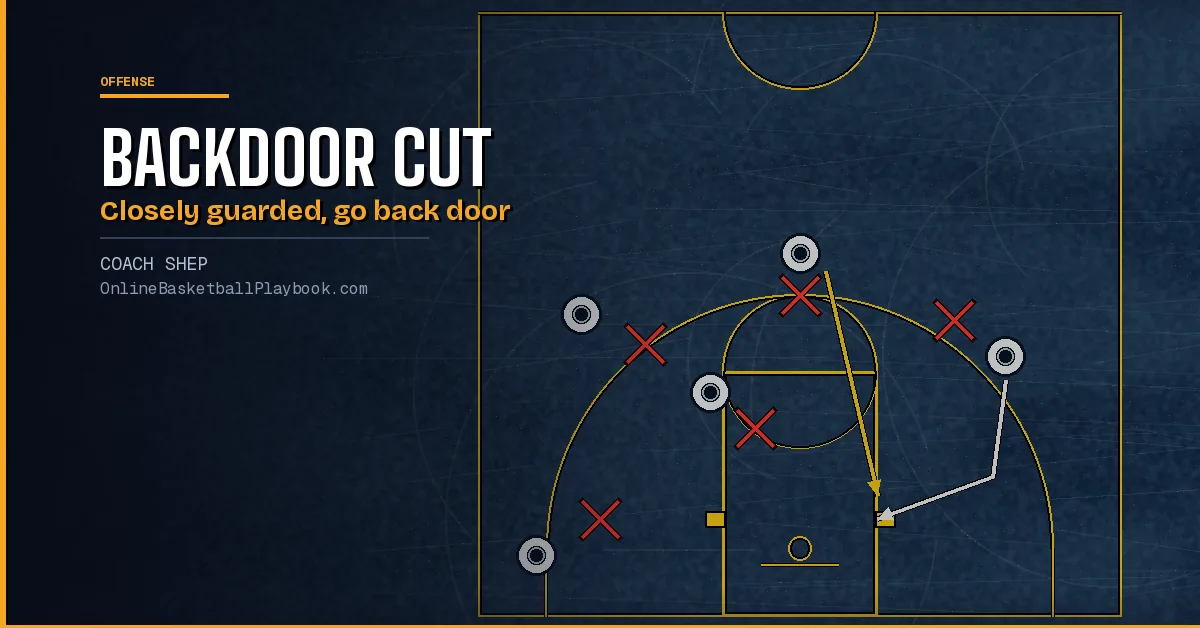
Backdoor cut basketball: the cutter's read of a denying defender, front cut or rear cut, timing, the passer's job, and the diagrams for each version.
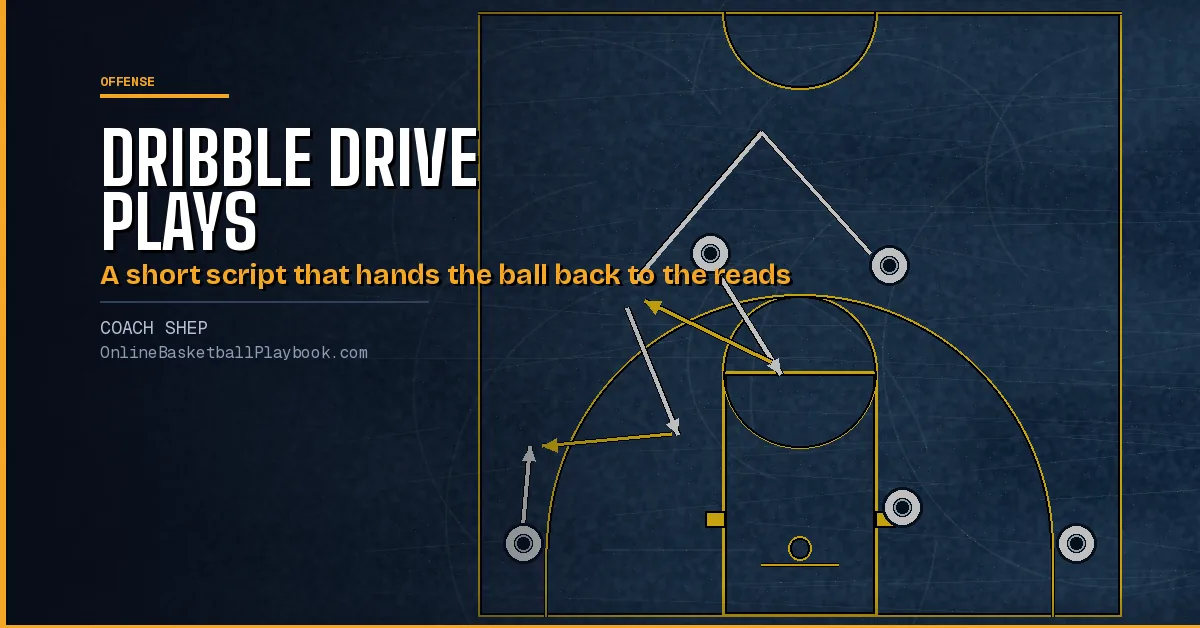
Dribble drive named plays, each drawn: Drop, Drag, Quick and Pop calls, a corner ball screen set, one entry with four finishes, the numbering and when to call one.
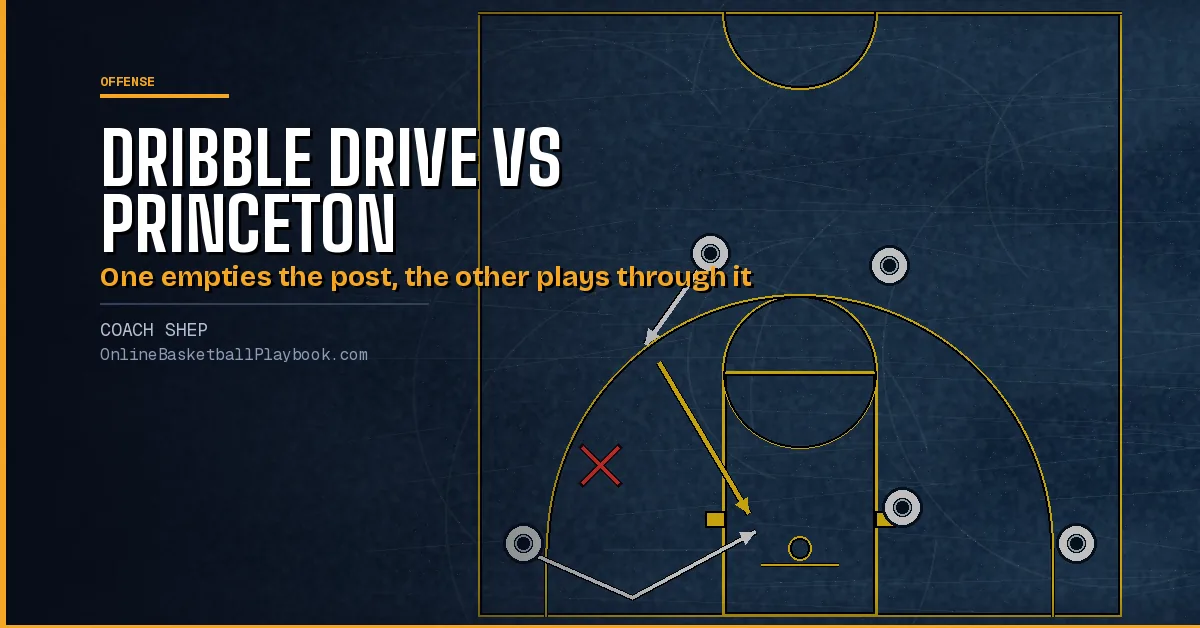
Dribble drive vs Princeton offense, side by side: the post, spacing, dribble or cut, the backdoor read they share, screens, shots, tempo, personnel and borrowing.
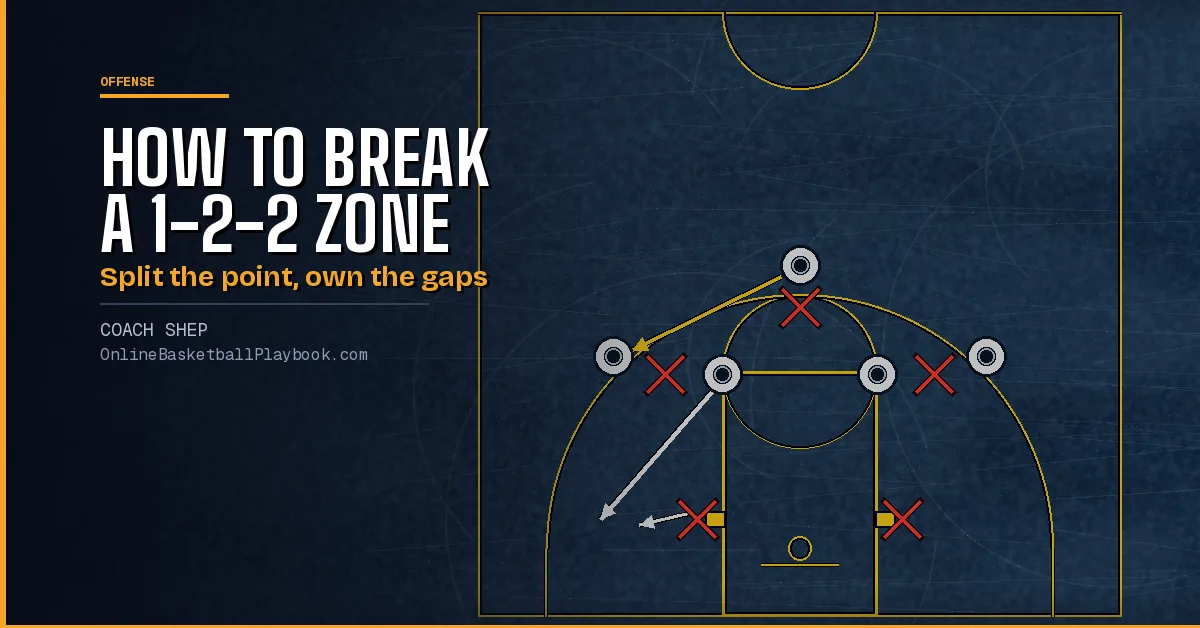
How to break a 1-2-2 zone defense: split the point defender, attack the middle and the short corners, and run a 1-4 high, 4-out, 1-3-1 or baseline runner offense.
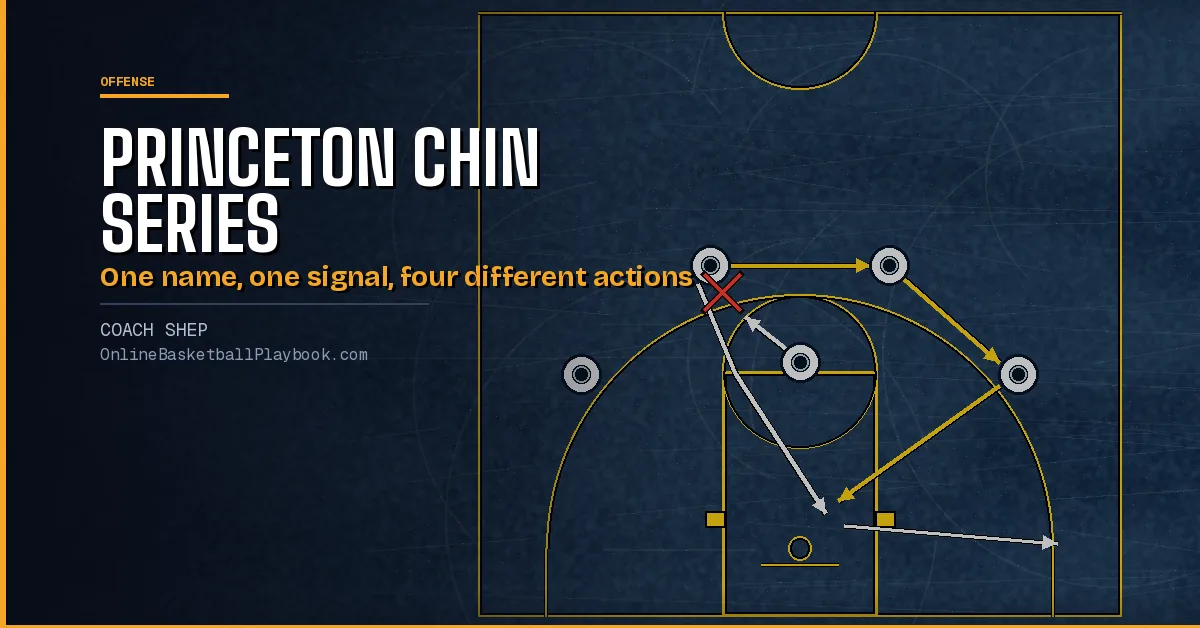
The Princeton Chin series compared: dribble weave and flare, shuffle cut, down screen and pop, and the two-guard read, plus branches, resets and counters.
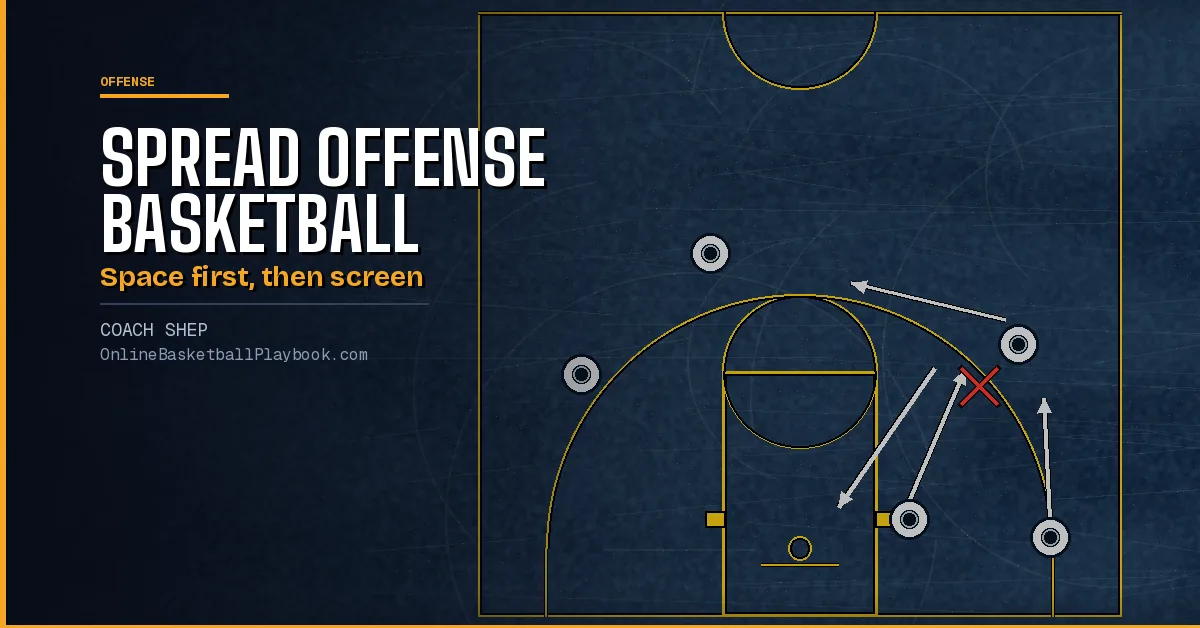
Spread offense basketball explained: the spread pick and roll, its alignments and spacing rules, the screener and handler reads, a no-post spread and a spread delay.
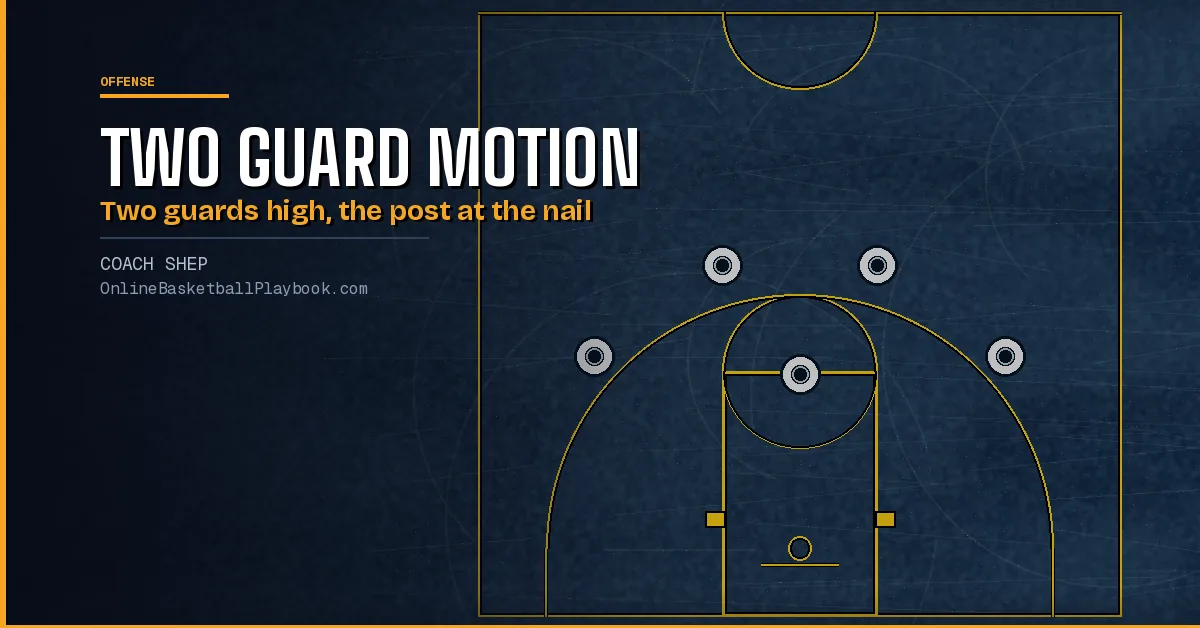
John Beilein's two guard motion offense: the high 2-3 set, the post at the nail, Chin entries, the flare, ball screen and backdoor read, and the Shuffle series.
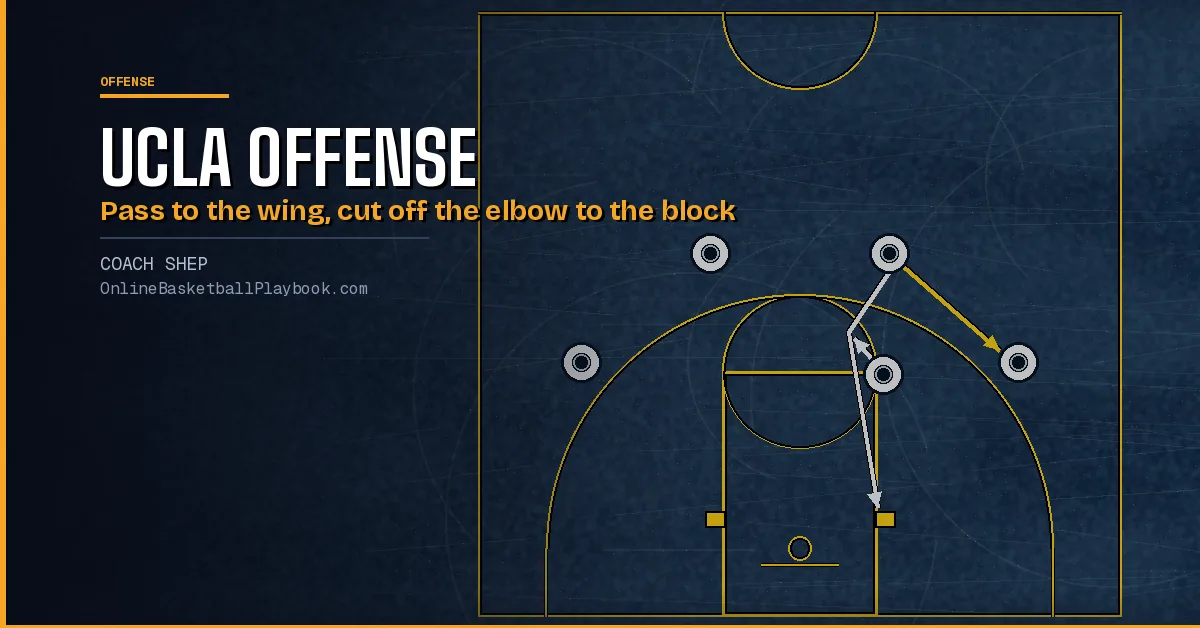
UCLA offense basketball in full: what a UCLA cut is, the 2-3 high and 1-4 high starts, reads off the cut, denial counters and the high-low offense.
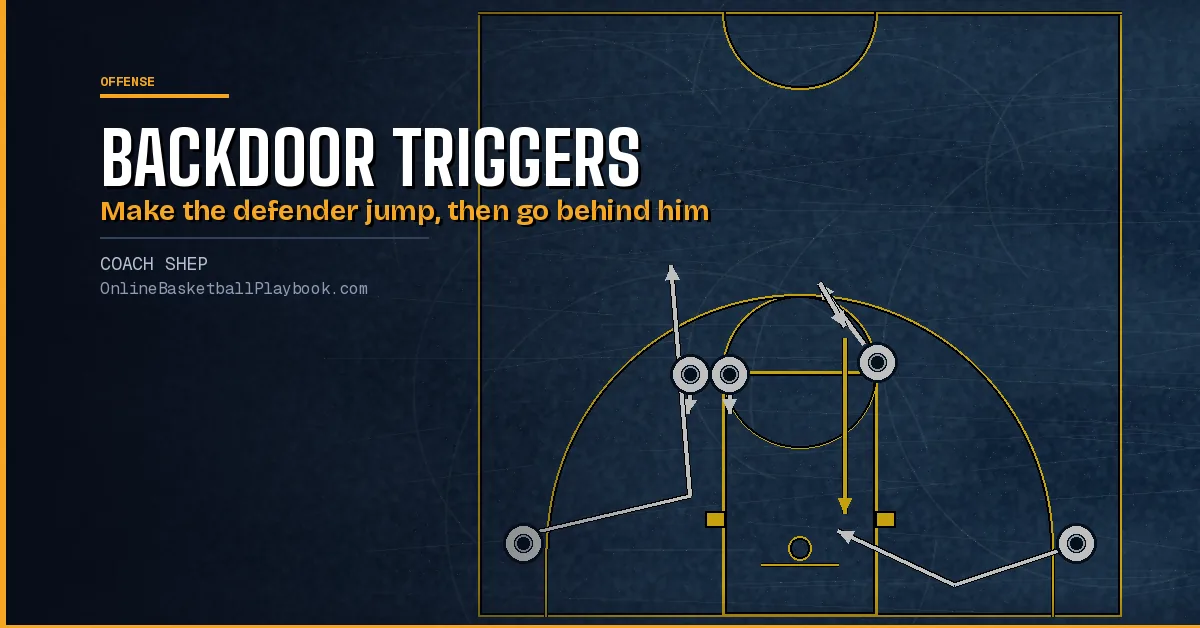
Six backdoor triggers seen across offenses, from the overplay and dribble-at to the pass fake and spin dribble, plus the decoys and backdoor plays built on them.
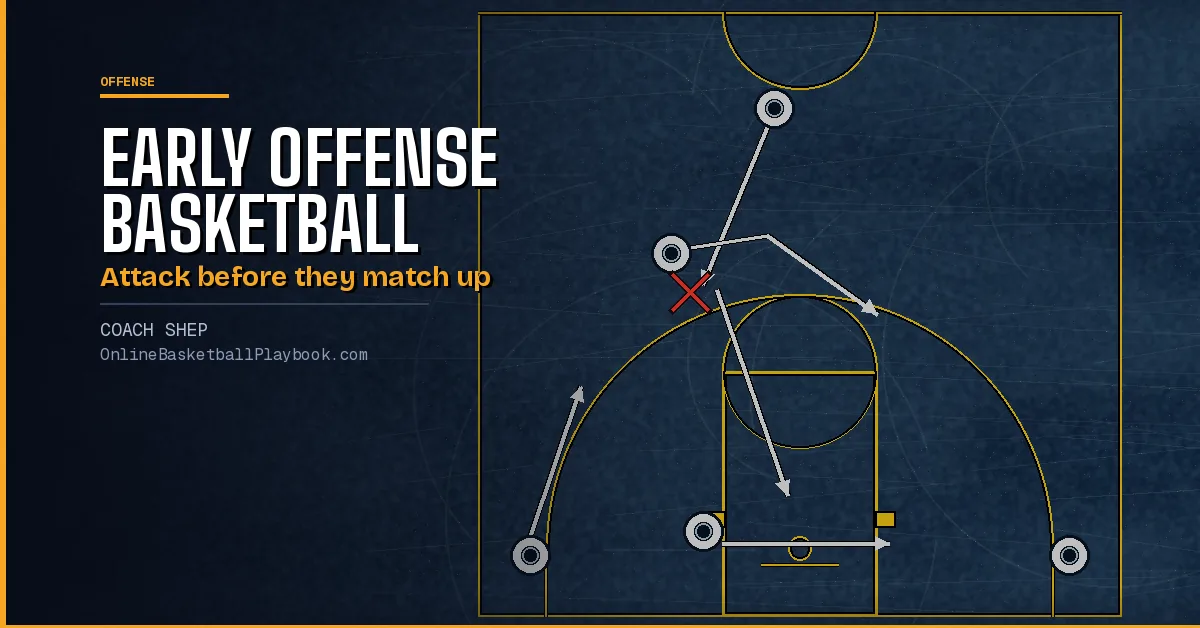
Early offense basketball from the outlet to the first action: the push clock, the outlet, drag screens, pistol, flowing into your offense, shot rules and the drills.
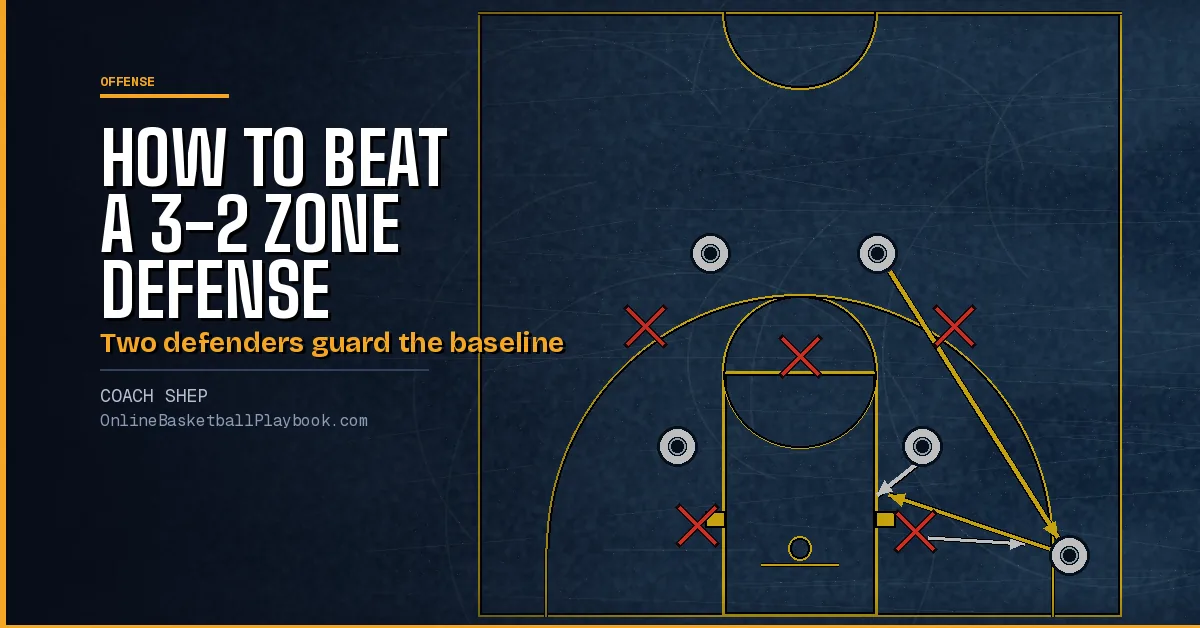
How to beat a 3-2 zone defense in basketball: alignments that split it, corner attacks, inside screens on the back line, the high post, skips, drives and rebounding.
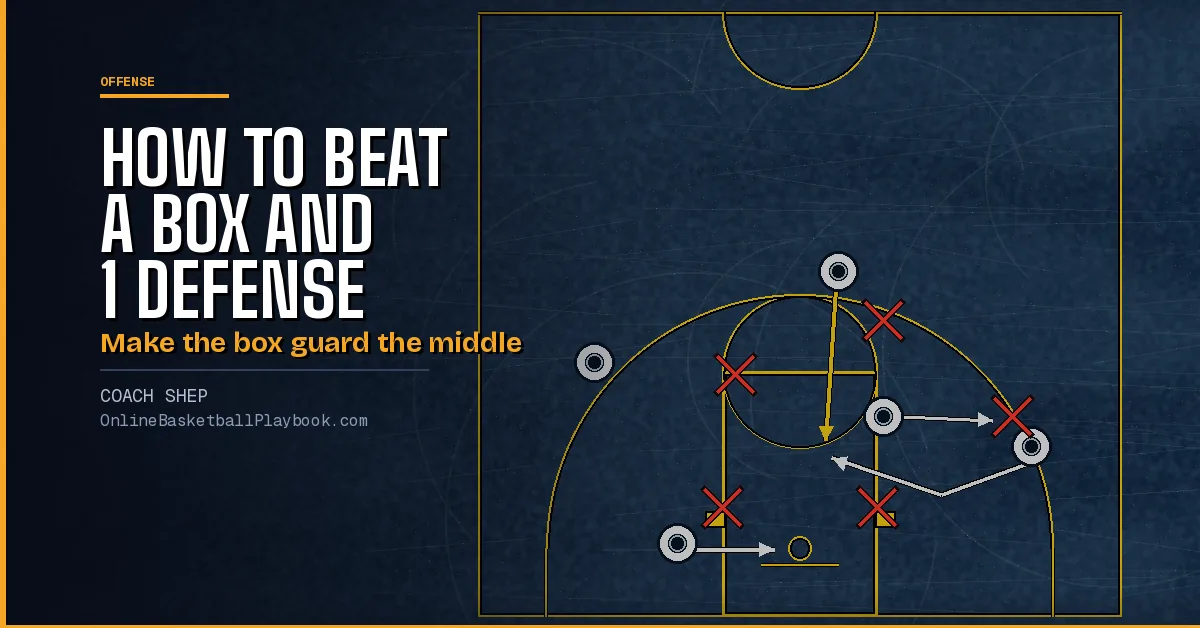
How to beat a box and 1 defense in basketball: whether to isolate the star, the soft middle, flare, hand-off and back screens for the star, the decoy and set plays.
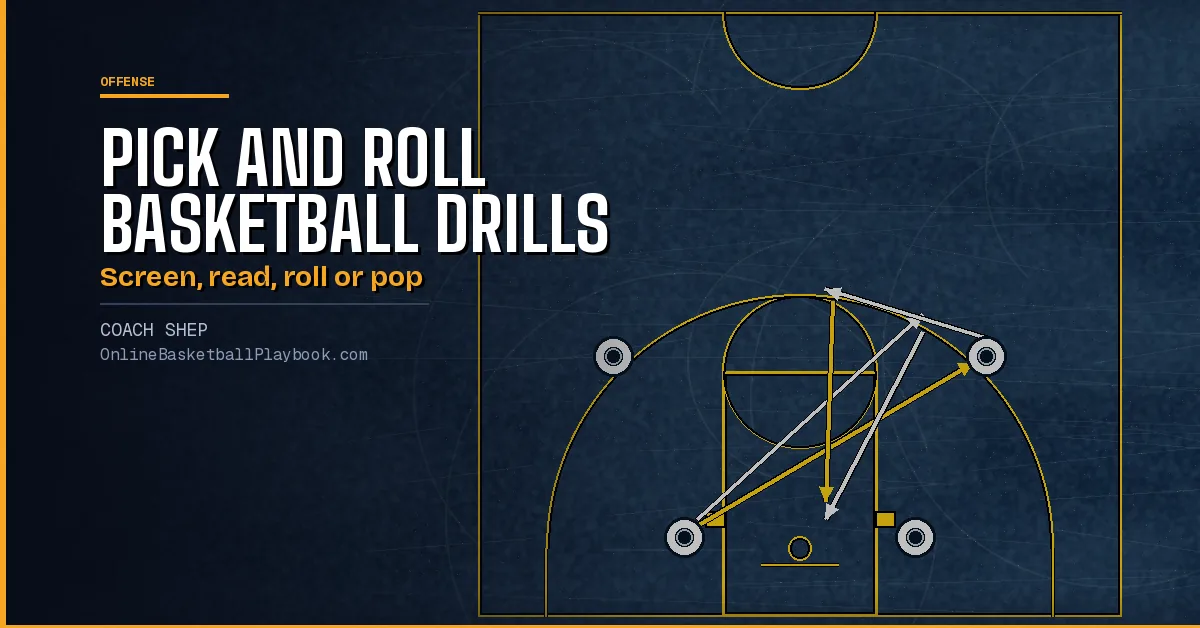
Pick and roll basketball drills that teach the action in order: a 2 on 0 screener series, chair reads, advantage drills, live coverage drills and youth steps.
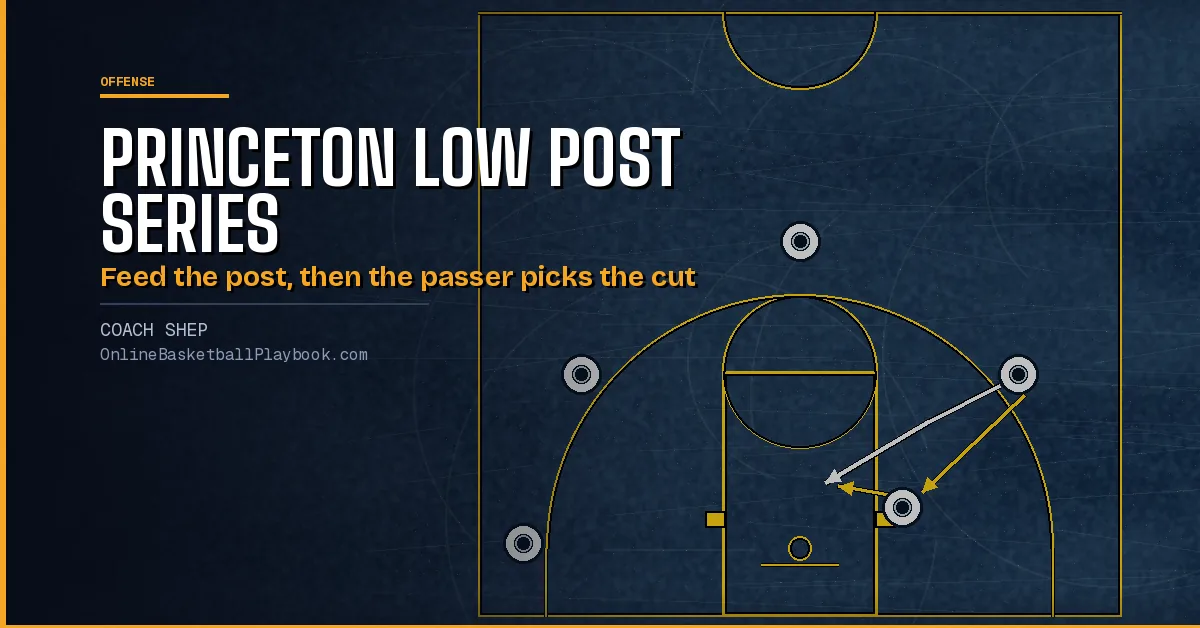
The Princeton low post series: the wing entry, the passer's options after the feed, the high post split, the Laker cut and what to do when the post is denied.
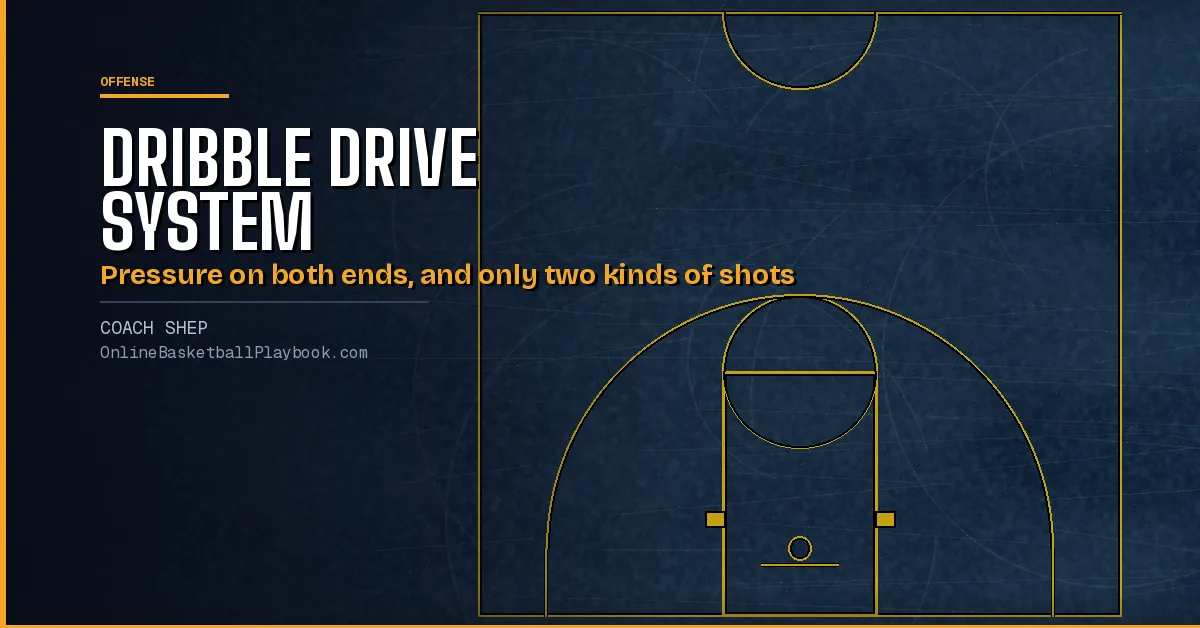
The dribble drive system explained by its owners: why Walberg built it, the press behind it, the shot math, players over plays, depth, sub rules and scored practice.
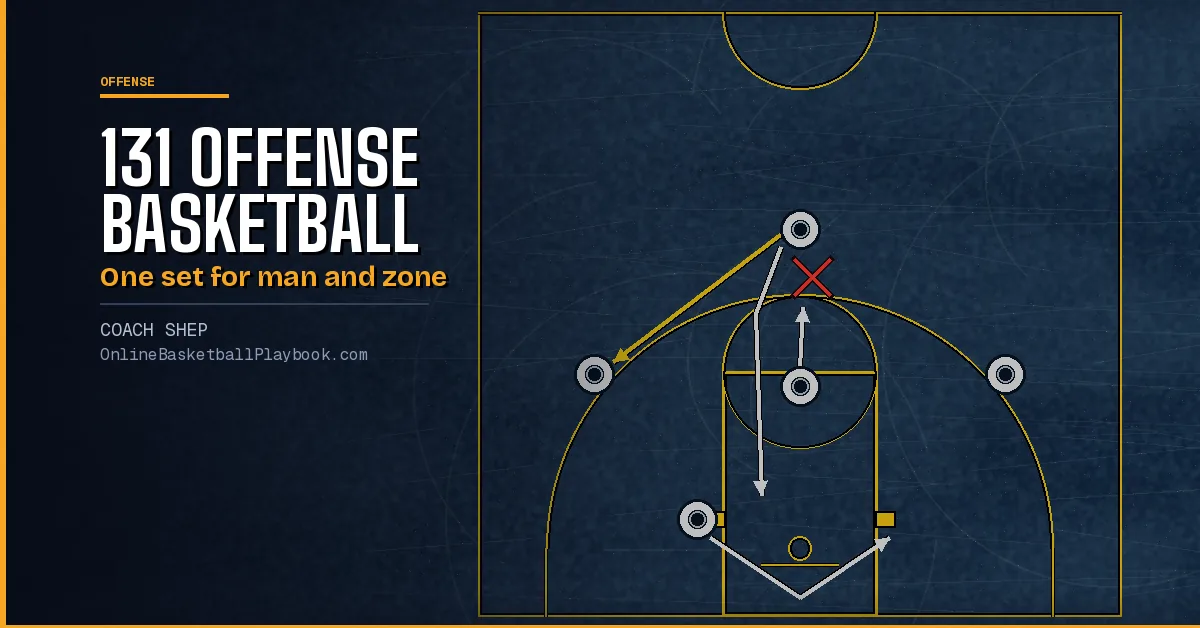
131 offense basketball: the 1-3-1 set, motion patterns against man-to-man, overloads and a low-triangle continuity against a 2-3 zone, youth rules and the 1-3-1 zone answer.
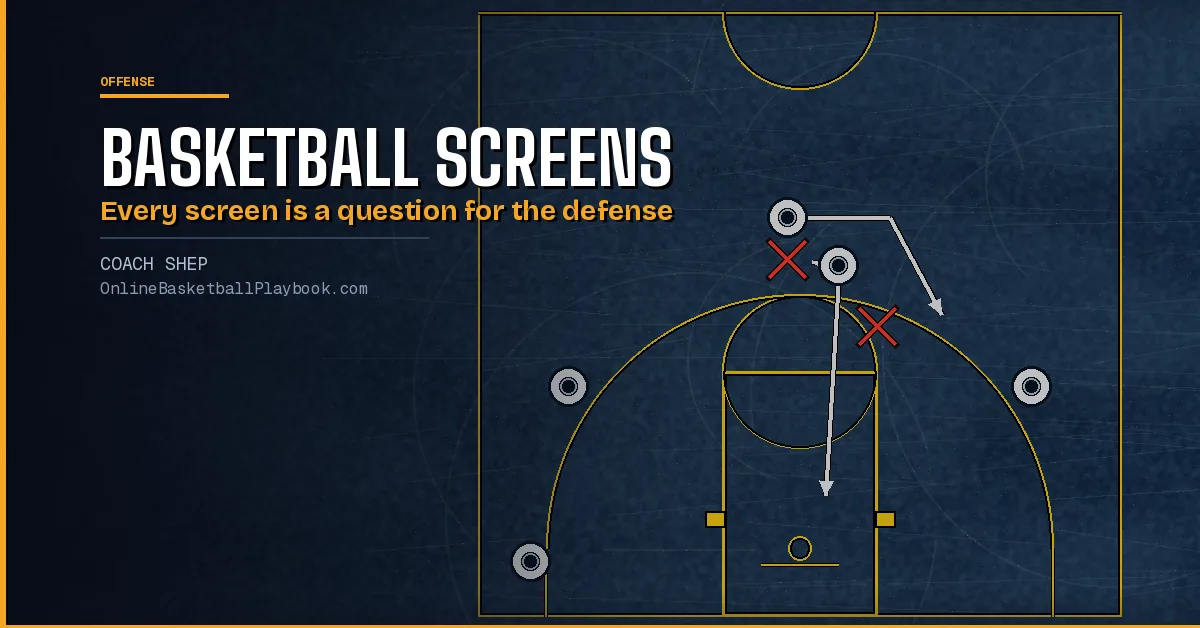
Basketball screens explained by type: on-ball, down, flare, back, pin down, cross, stagger, elevator, screen the screener and hand-off, with each read and counter.
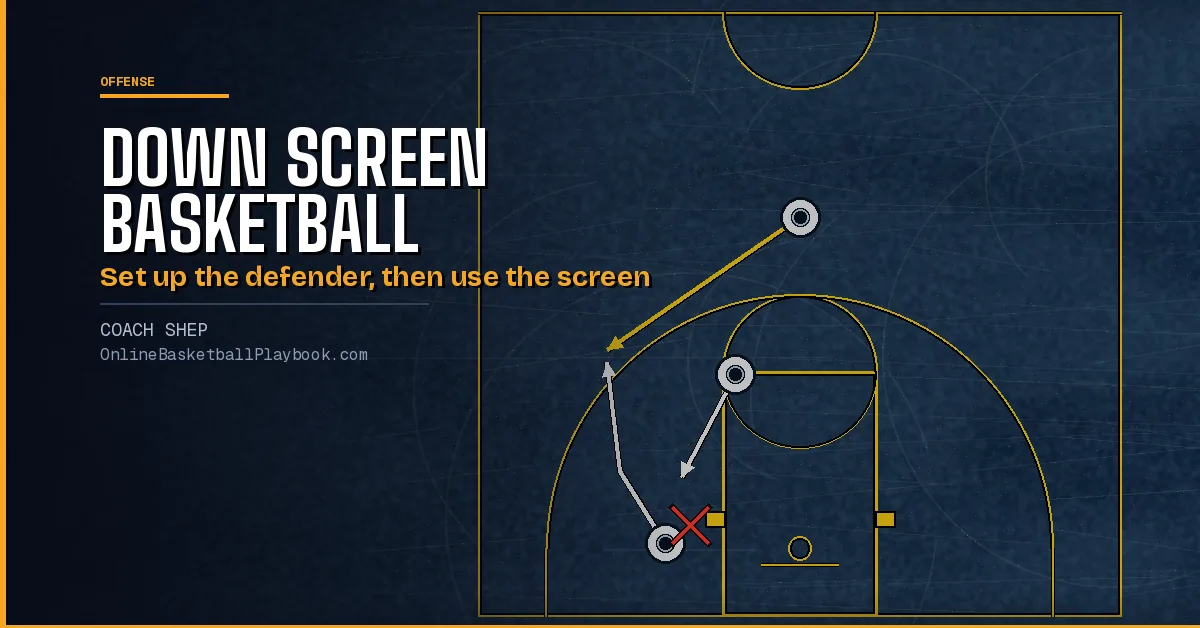
Down screen basketball for both players: how to set it, how the cutter uses it, the curl, pop, back cut and slip reads, and where coaches disagree.
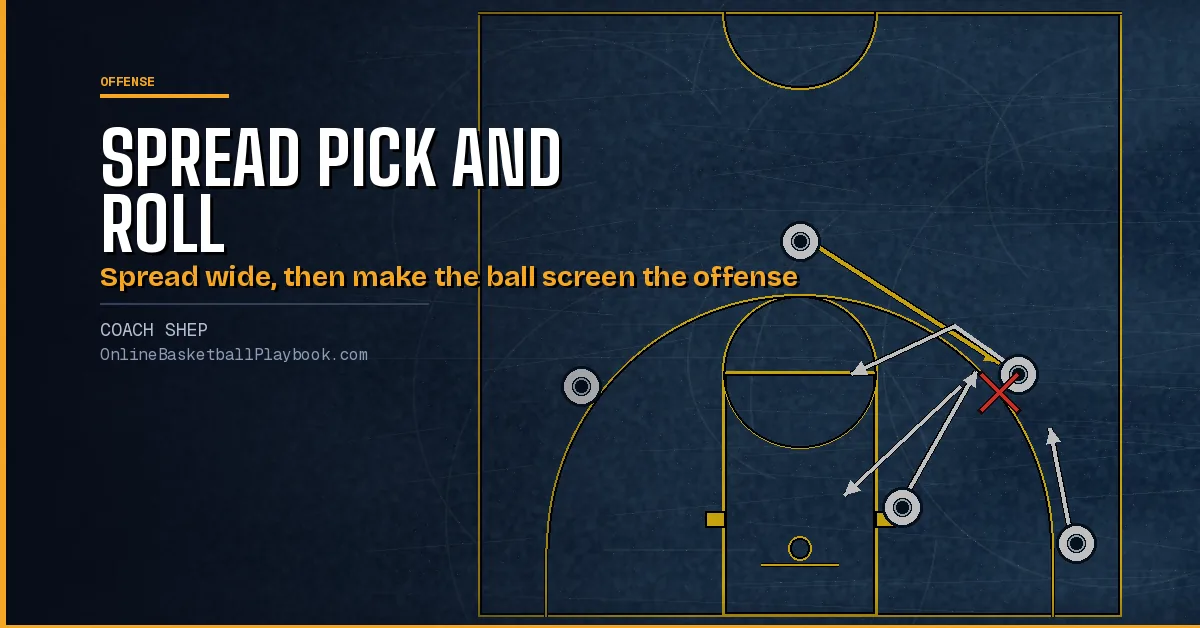
Billy Donovan's spread pick and roll offense step by step: the trail pass, the angled wing screen, the second side, the flat screen and the counters.
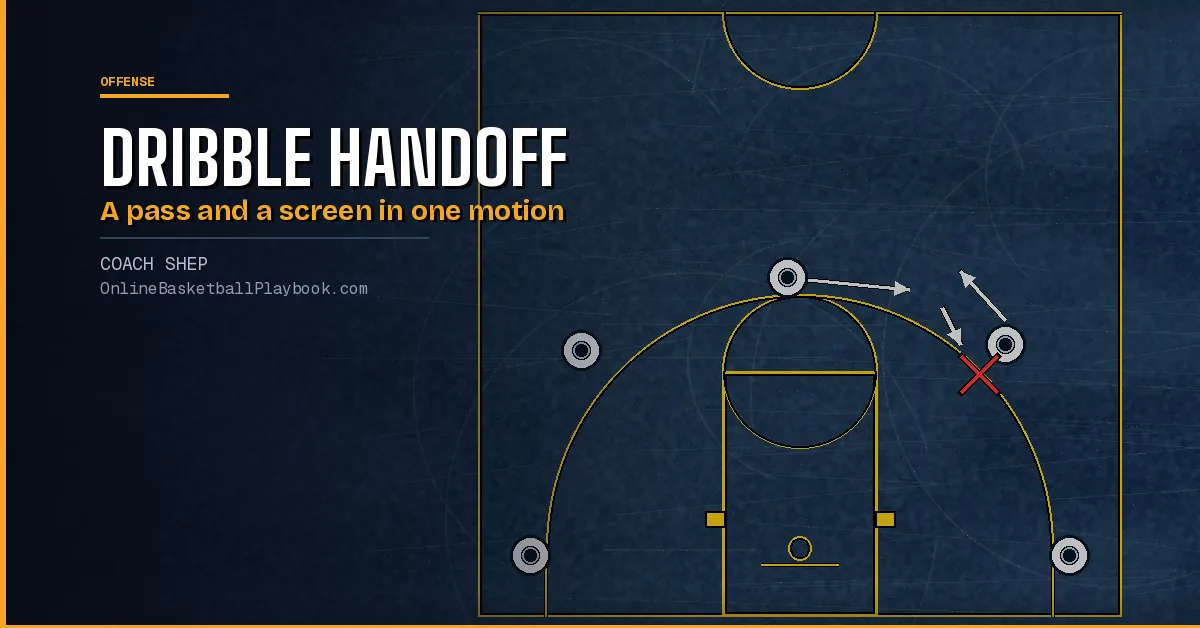
The dribble handoff in basketball: the types of handoff, how the giver delivers it, the reads for both players, the counters, and how defenses guard the DHO.
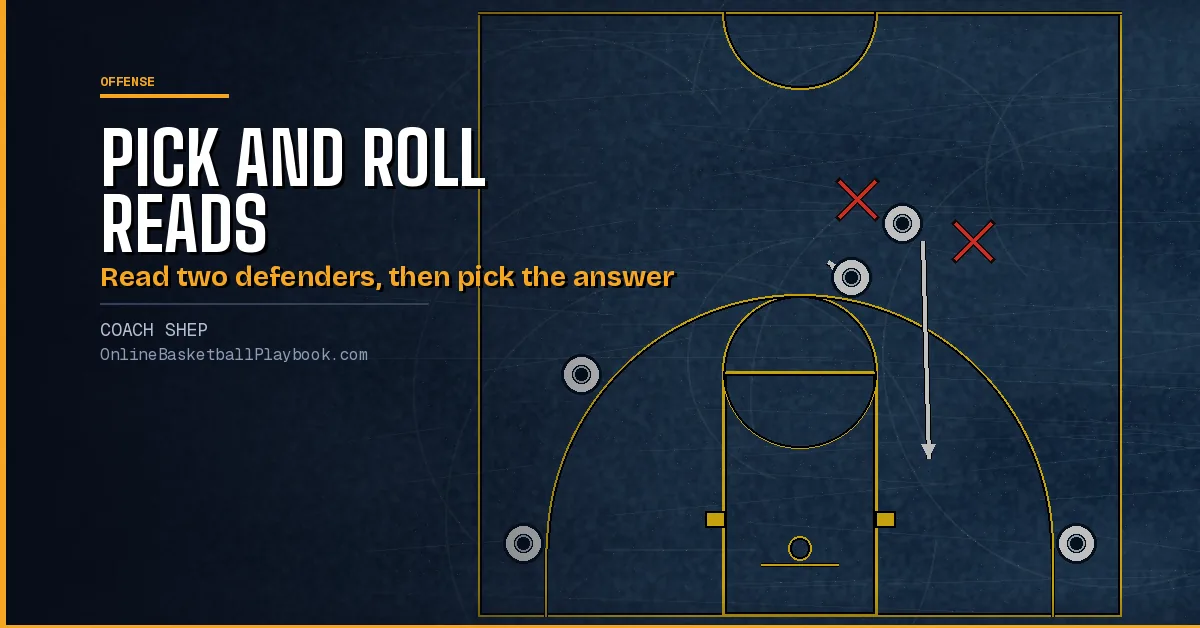
Pick and roll reads for the ball handler and the screener: the first read, every coverage and its answers, the third defender, the names and a teaching ladder.
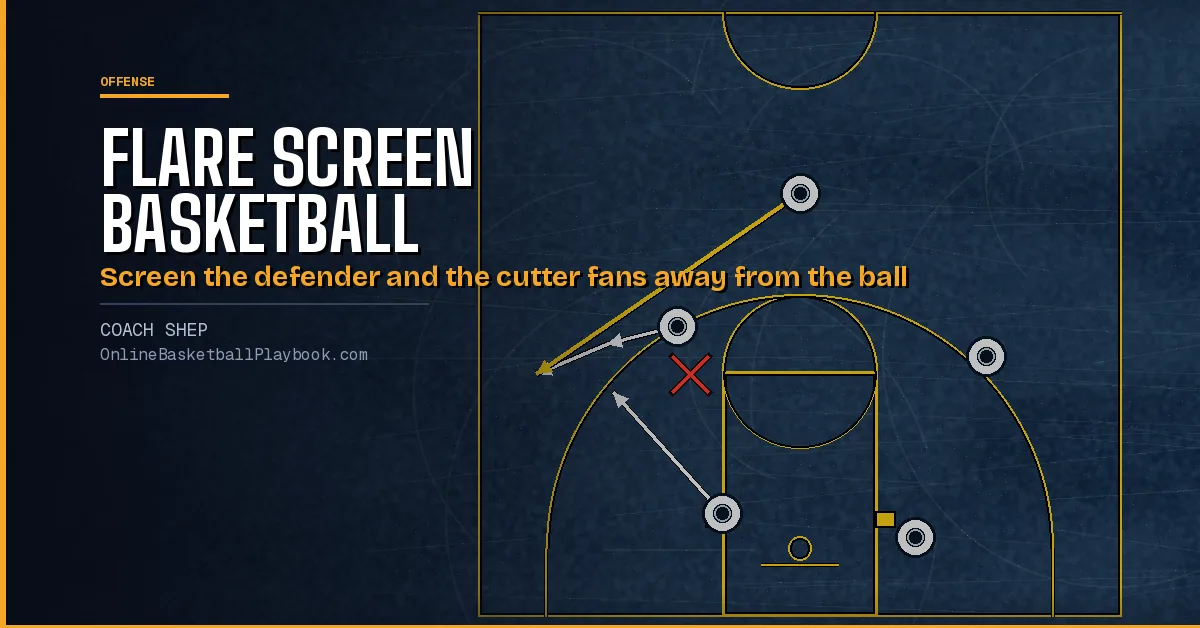
Flare screen basketball explained for coaches, with the screen, the cut, the pass, the three reads, where teams use it and how coaches teach and defend it.
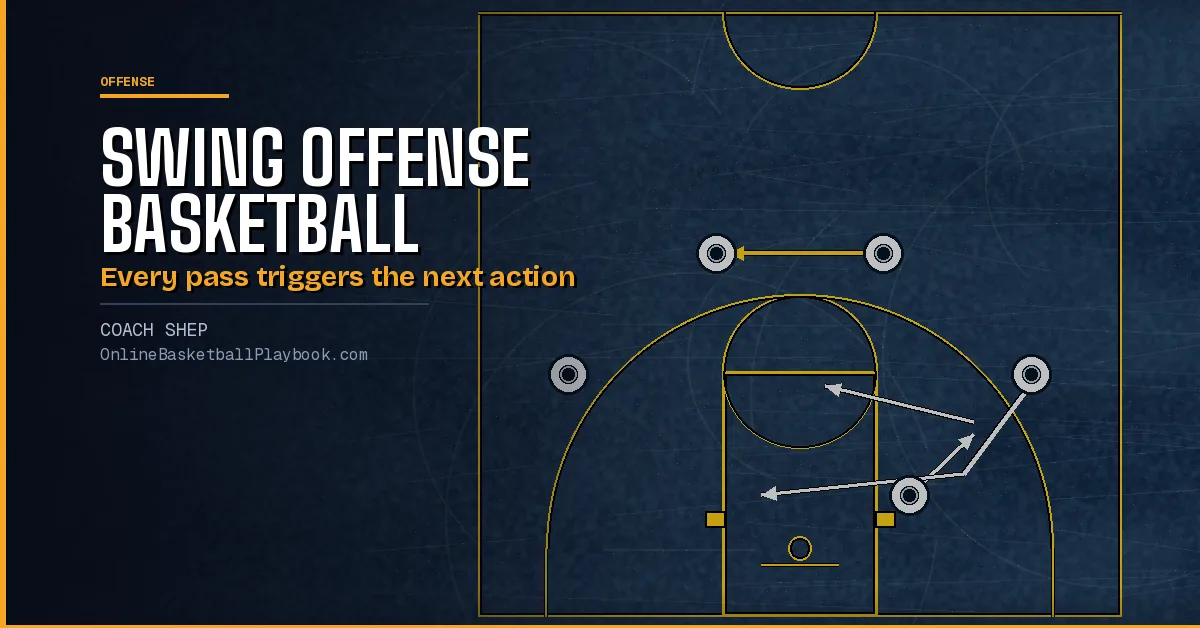
Swing offense basketball explained: the 4-out 1-in set, the pass triggers for the UCLA, flare and flex screens, post entries, pressure releases and drive rules.
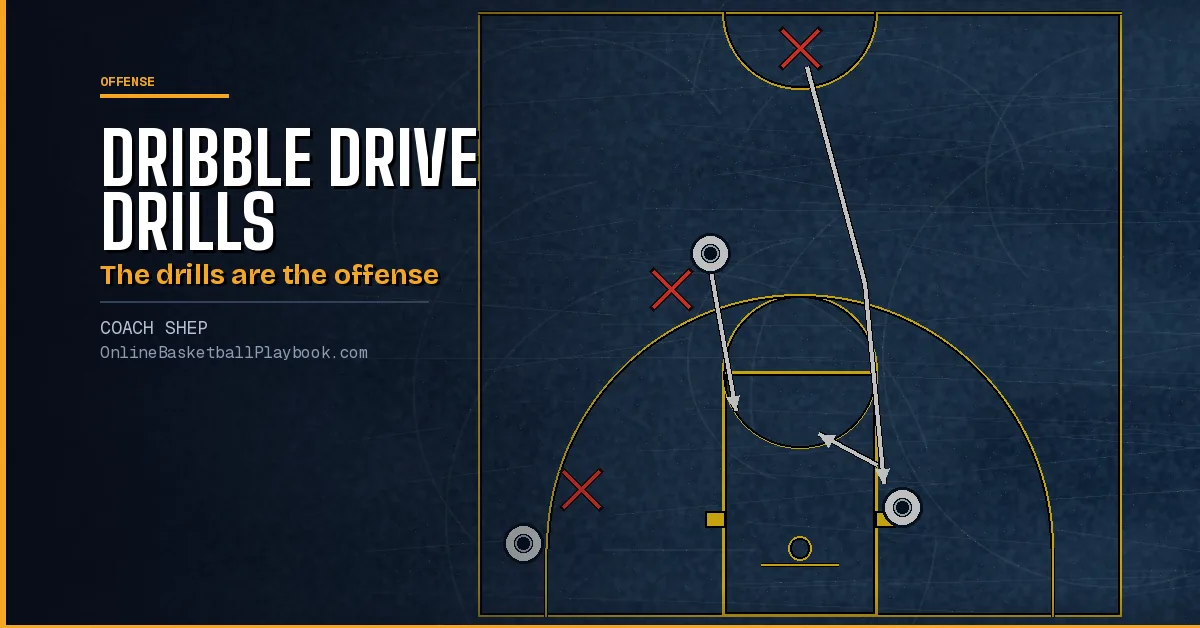
Dribble drive drills that build the offense: finishing and footwork, Drop and Rack zone breakdowns, Blood read drills, passing drills, Scramble and scored shooting.
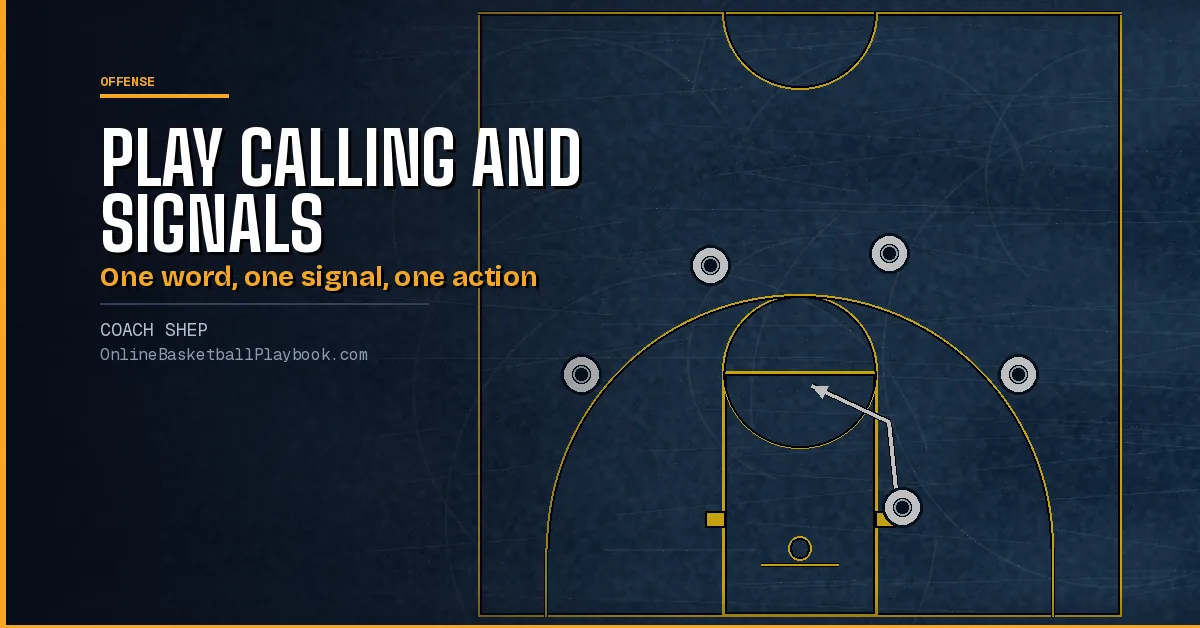
Basketball play calling explained: how much to call, who calls it, naming systems, verbal calls, hand signals, disguise and how teams install the calls.
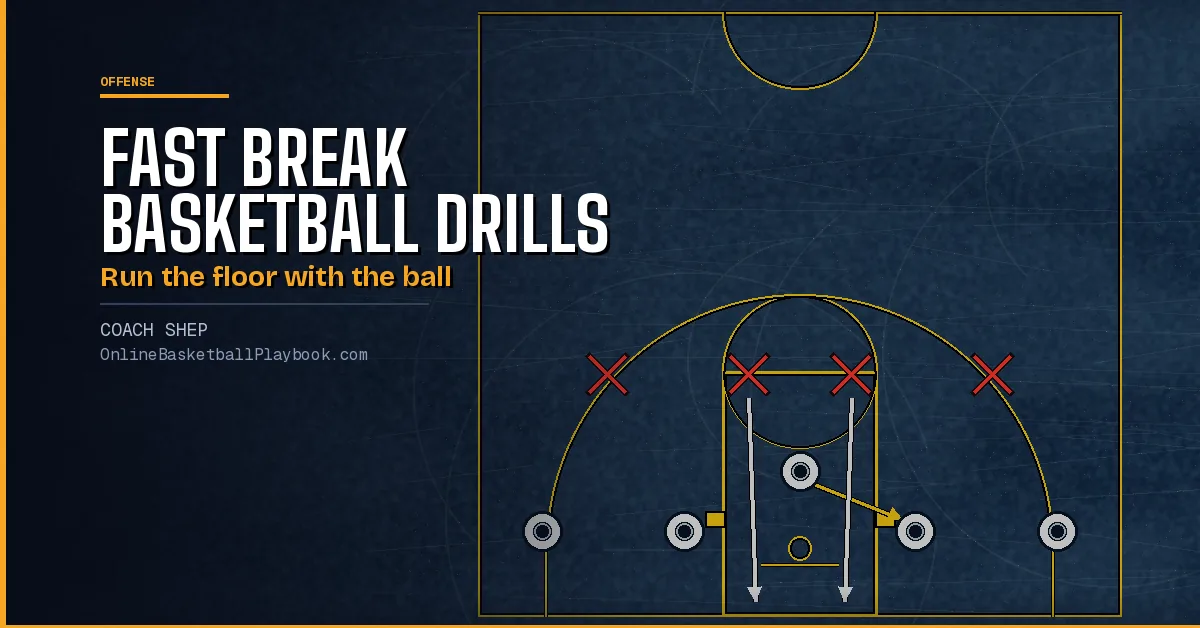
Fast break basketball drills that run the floor with the ball: weaves, partner and no-dribble drills, catch-up drills, a finishing series and youth versions.
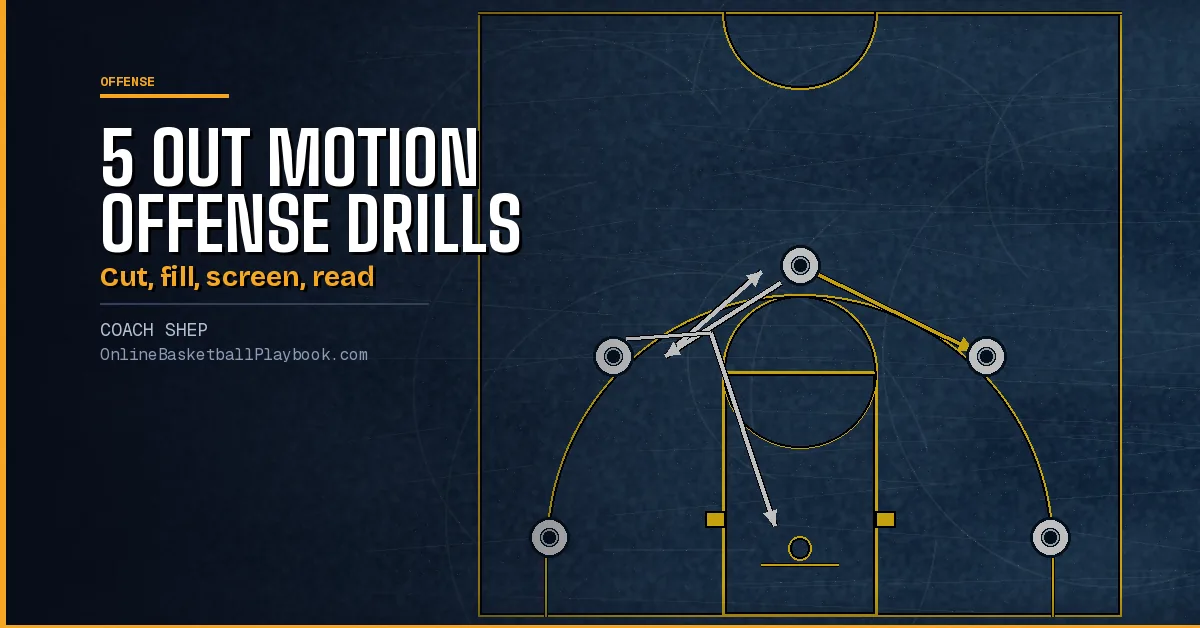
5 out motion offense drills from 5 on 0 pass and cut through back cuts, screen away, dribble at, ball screens, quick post-ups and no-dribble live games.
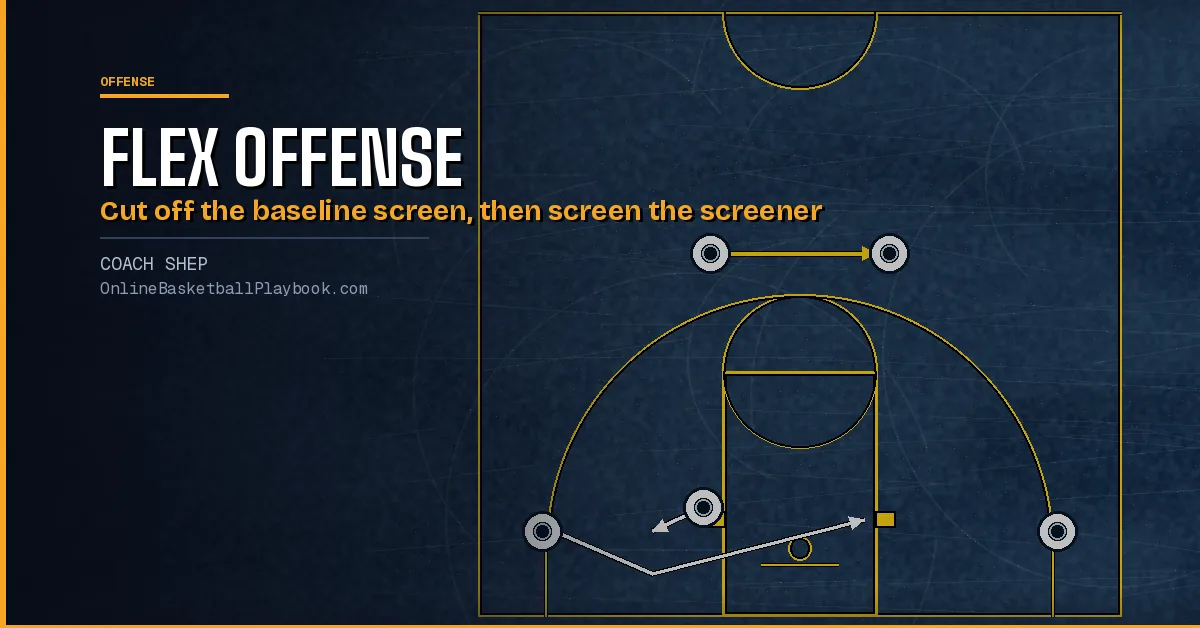
Flex offense basketball in full: the flex cut and down screen, seven after-cut options, eight starting sets, counters for denial and switching, and install drills.
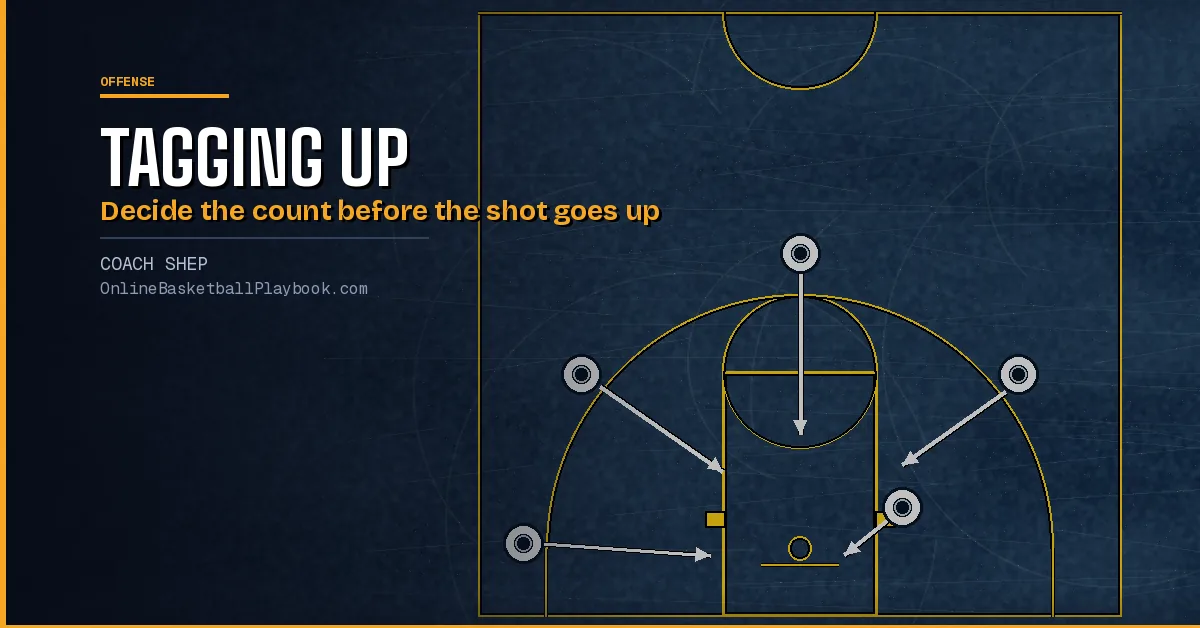
Tagging up in basketball explained: how many crash the offensive glass, who gets back, the tag-up matchup rule, crash technique, the numbers to chart and the drills.
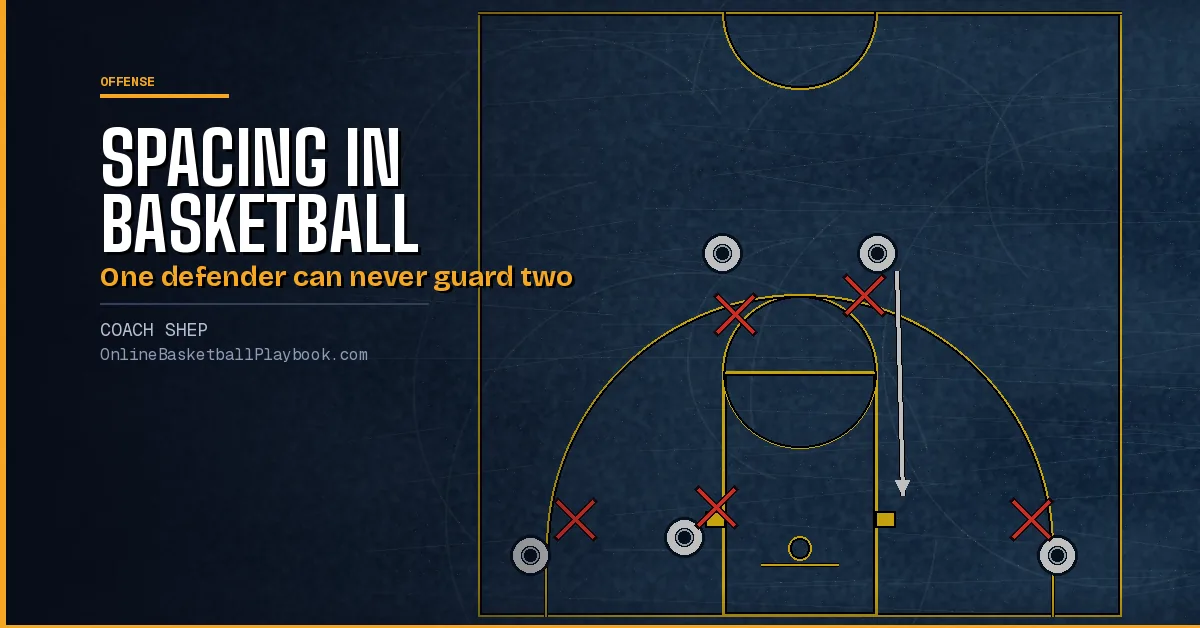
Spacing in basketball explained: the distances coaches teach, single, double and triple gaps, spacing in 5 out, 4 out 1 in and 3 out 2 in, and the common errors.
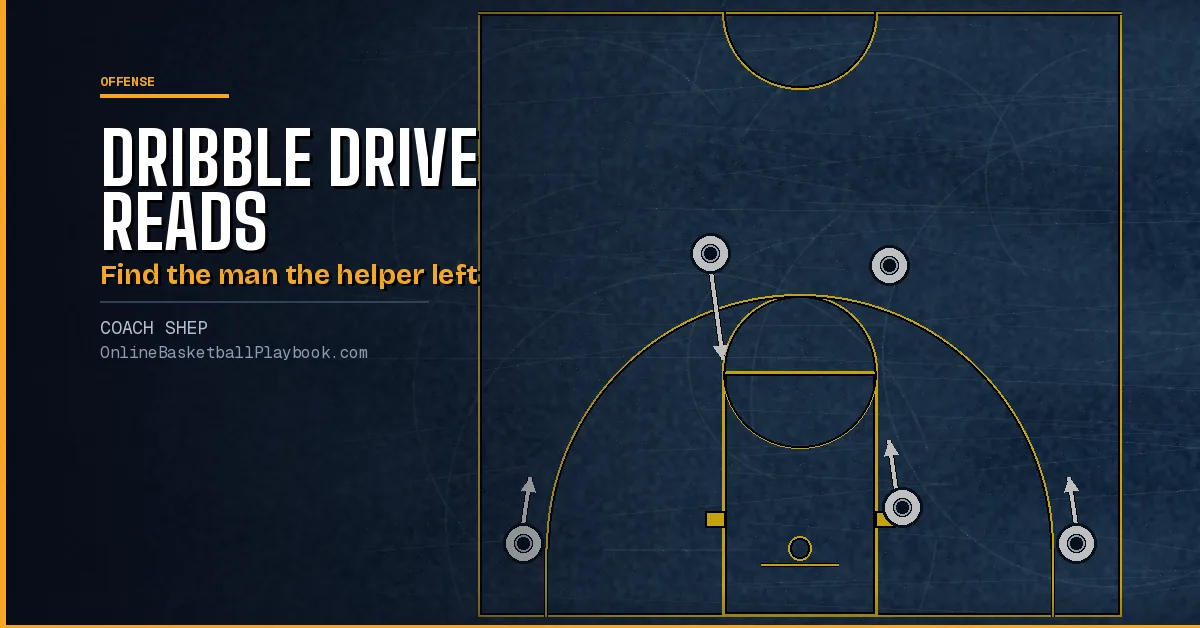
Dribble drive reads for the driver and the four players around him: the helper tree, kick up, kick back, loop cut, dump, baseline drive jobs and the passing rules.
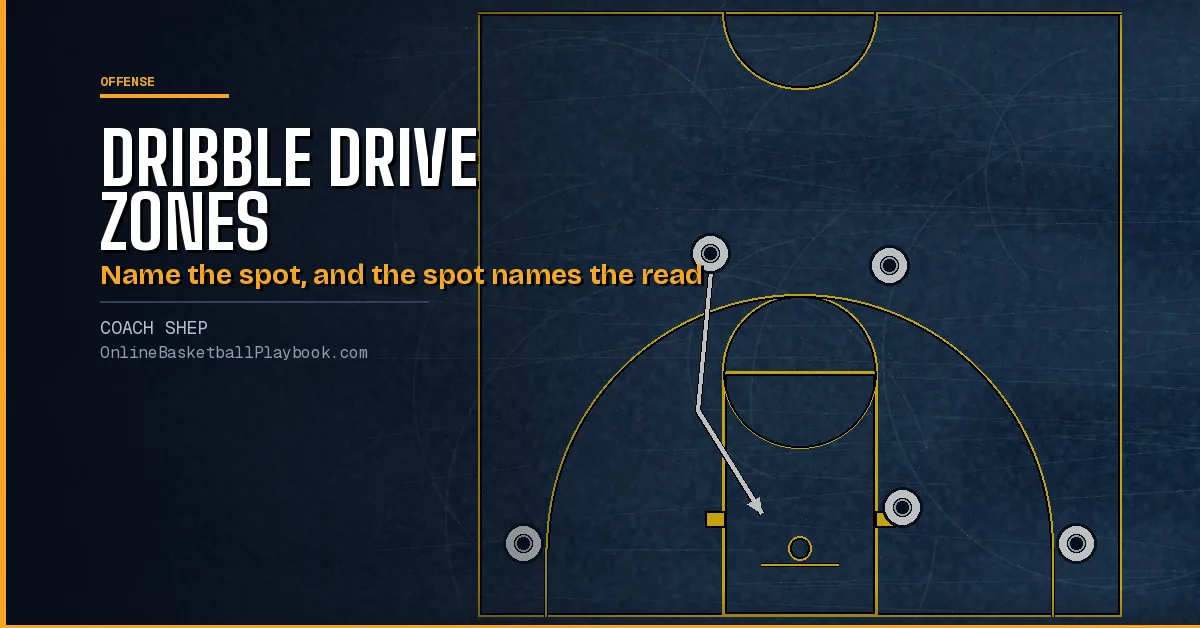
Dribble drive zones explained: the maps of the Rack, Drag, Drop, Breakdown and Blow Out zones, what to do in each, the stops, and the call words built on them.
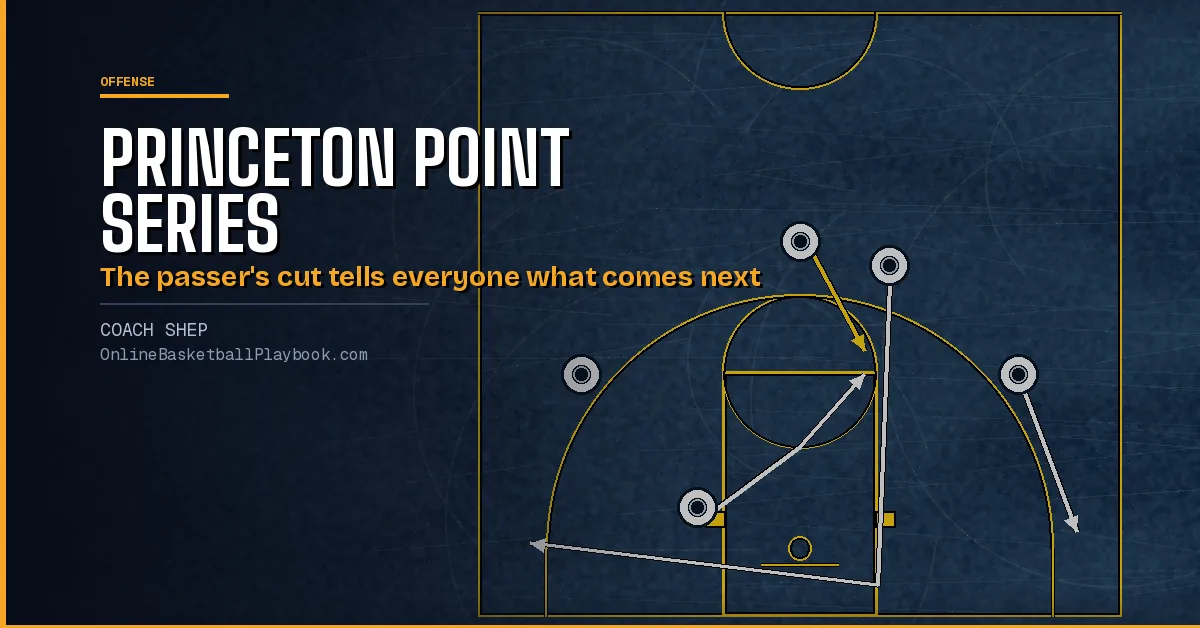
The Princeton Point series: the wave-through entry, the Over, Away and Under cuts, the side ball screen, post and flare options and the spin counter.
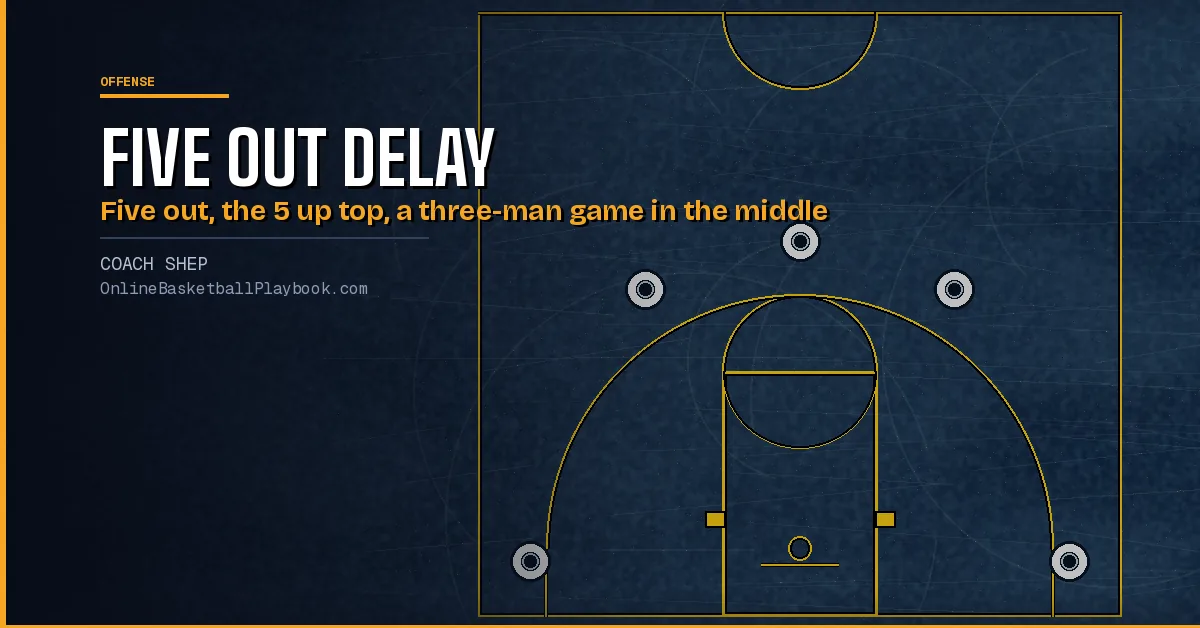
Modern NBA offense explained: the five-out delay front, the away trigger, Ram, Spain, zero cuts and zoom, the two outcomes each action hunts, and the history.
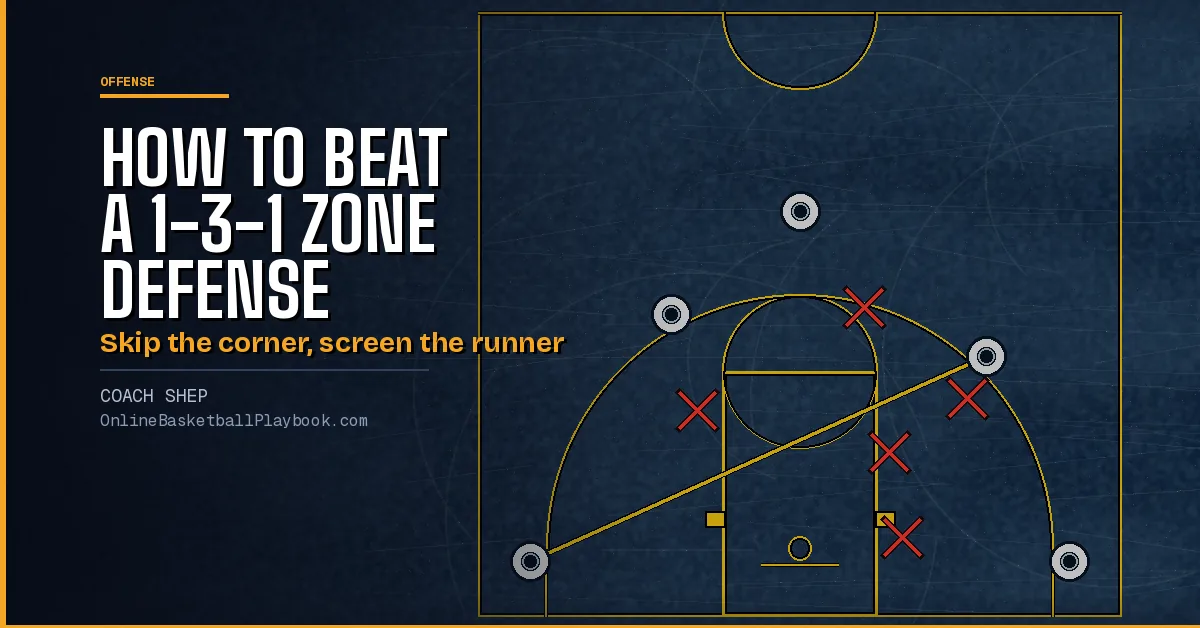
How to beat a 1-3-1 zone: an even front, the corner skip, screens on the top and baseline defenders, overloads, lobs and the tempo that beats the set.
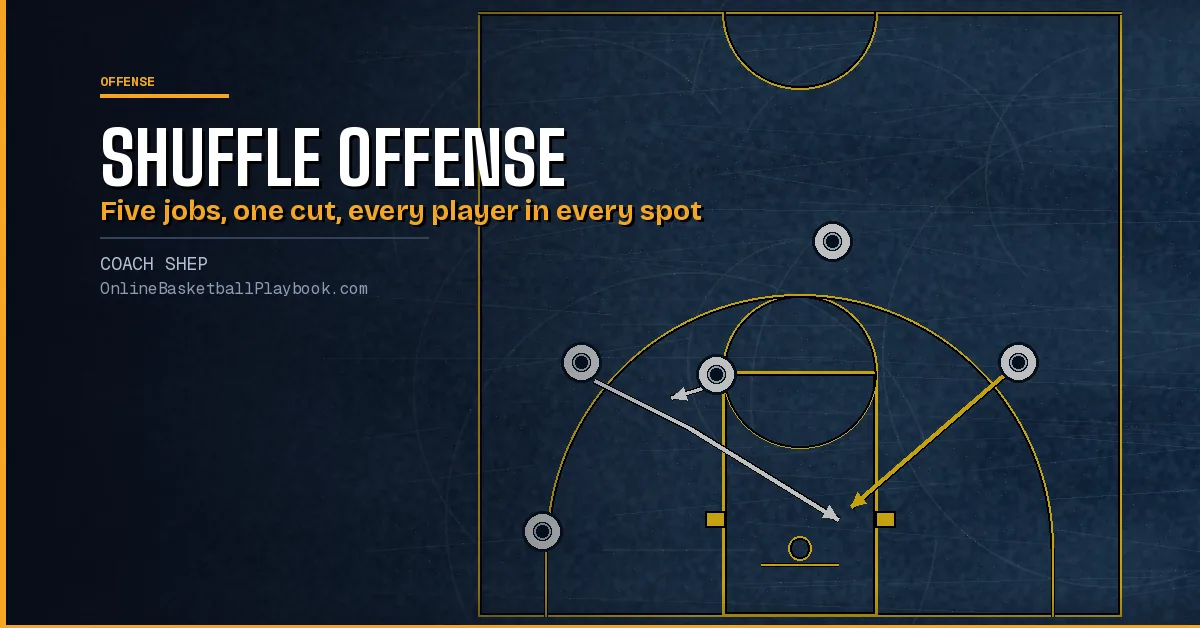
Shuffle offense basketball in full: the five spots and their jobs, the shuffle cut, the rotation, counters for denial and fronting, zone versions and drills.
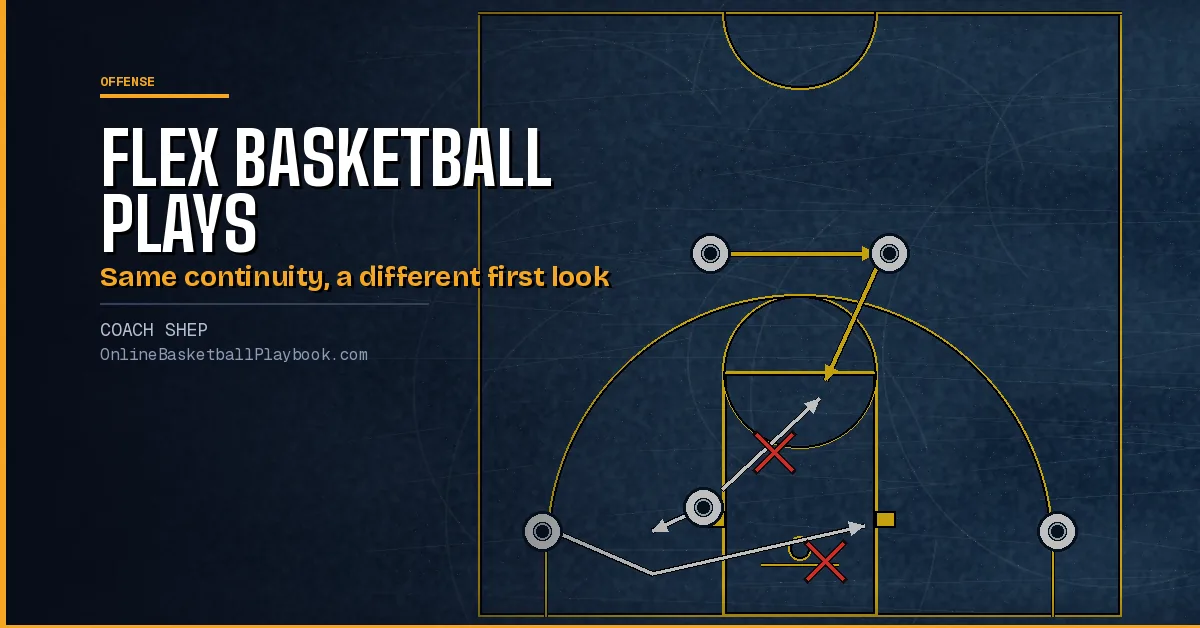
Flex basketball plays drawn and explained: the eleven specials, Push, Go and Bump in each version, read counters, personnel swaps and flex actions in other offenses.
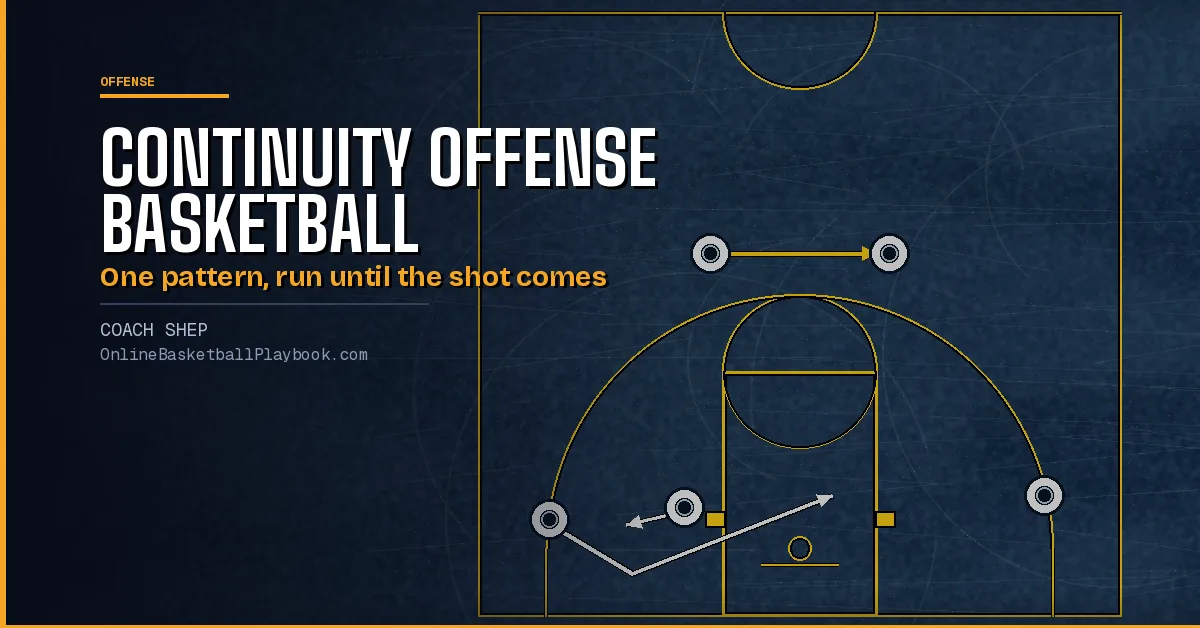
Continuity offense basketball explained: what a continuity is, how it differs from motion and set plays, the main continuities, shared rules and trade-offs.
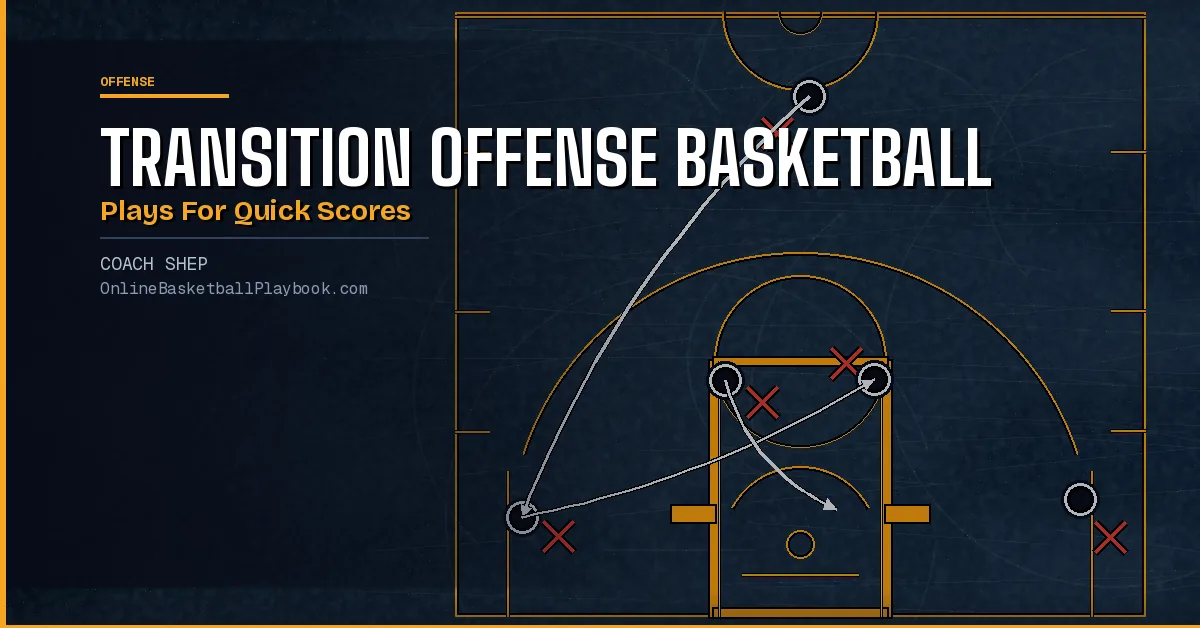
Transition Offense Basketball Plays for Quick Scores
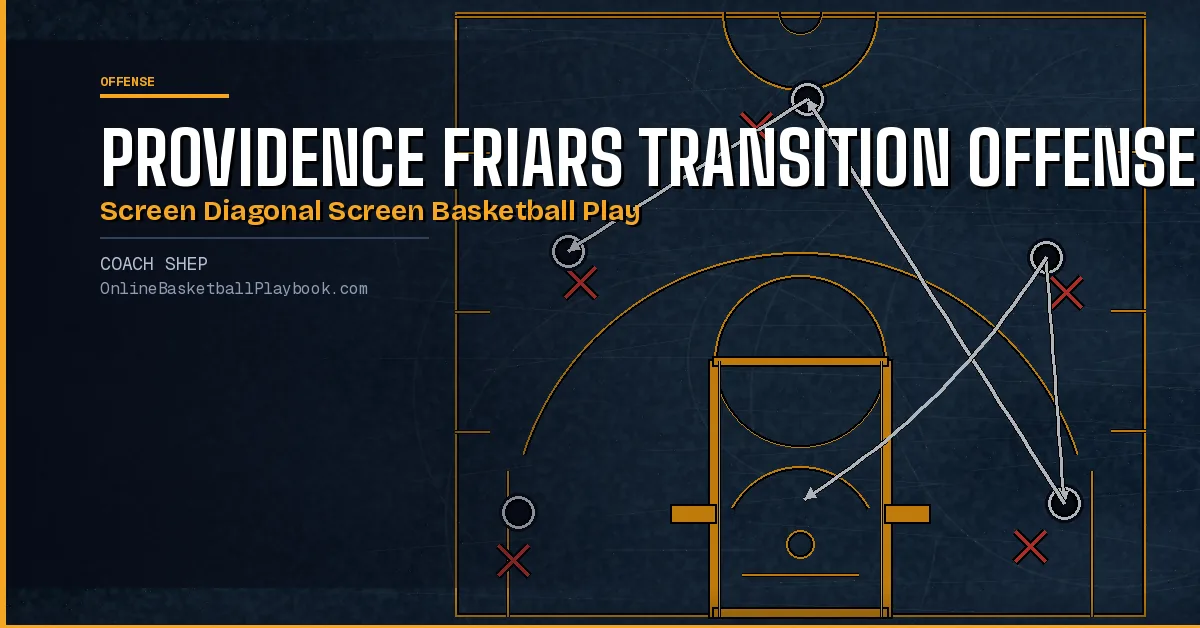
Providence Friars: Transition Offense Back Screen Diagonal Screen Play
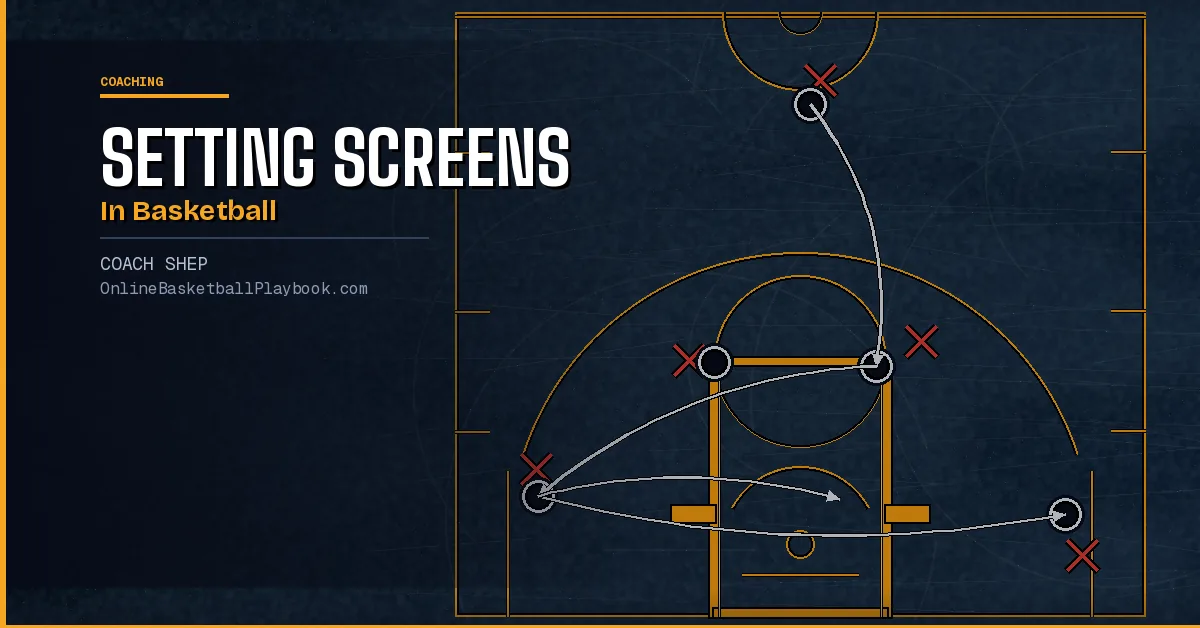
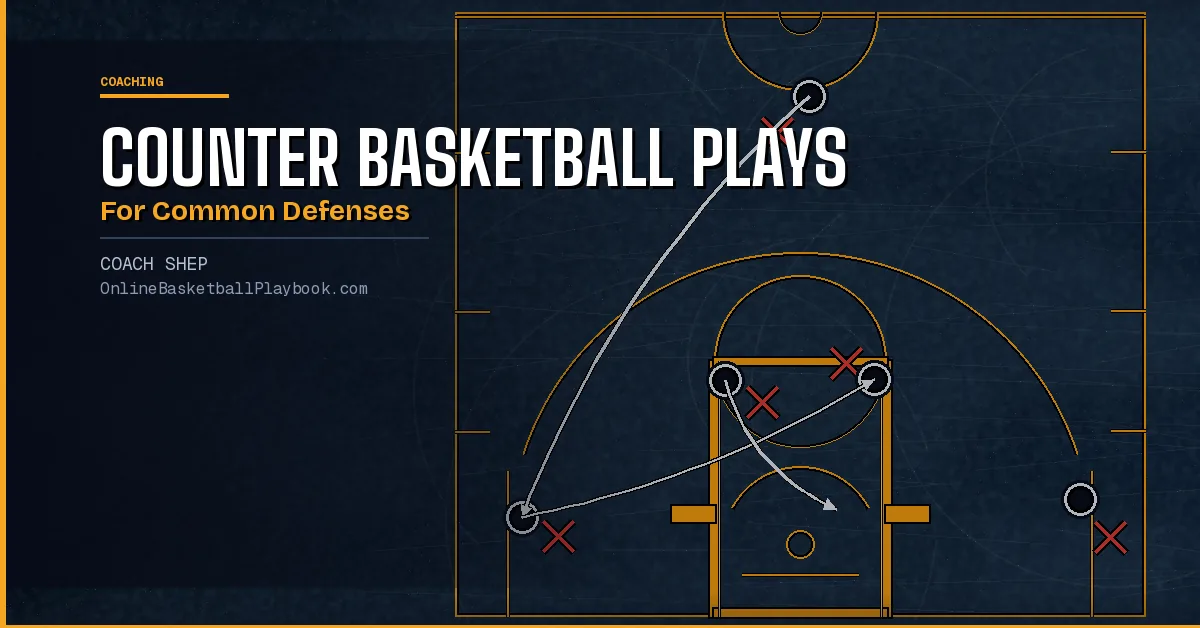
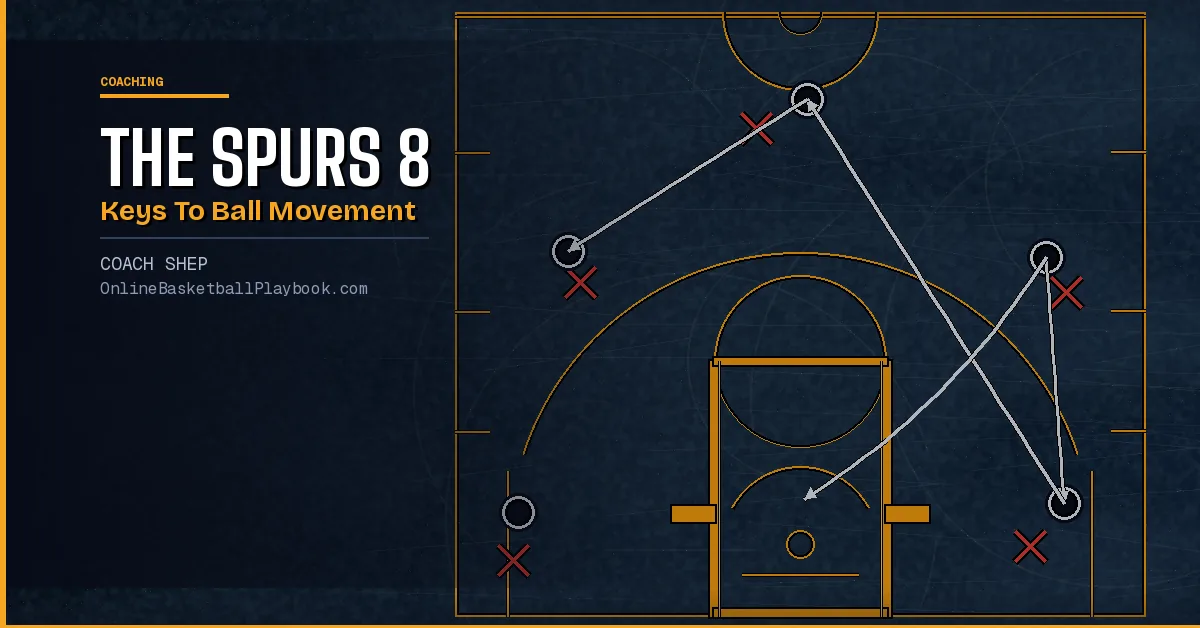
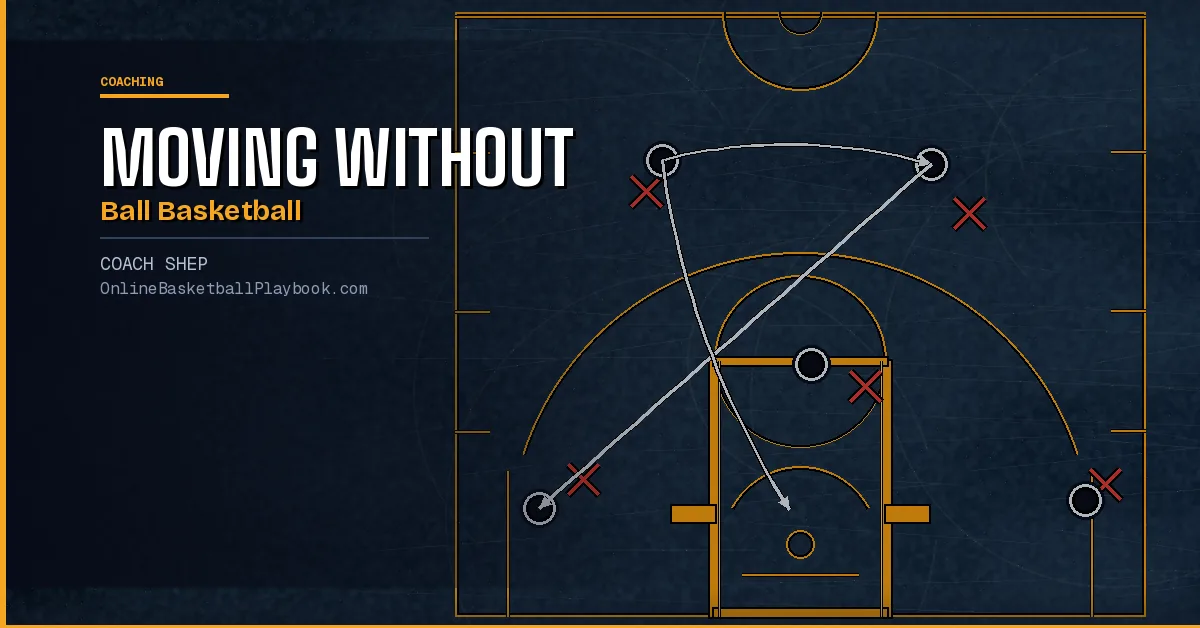
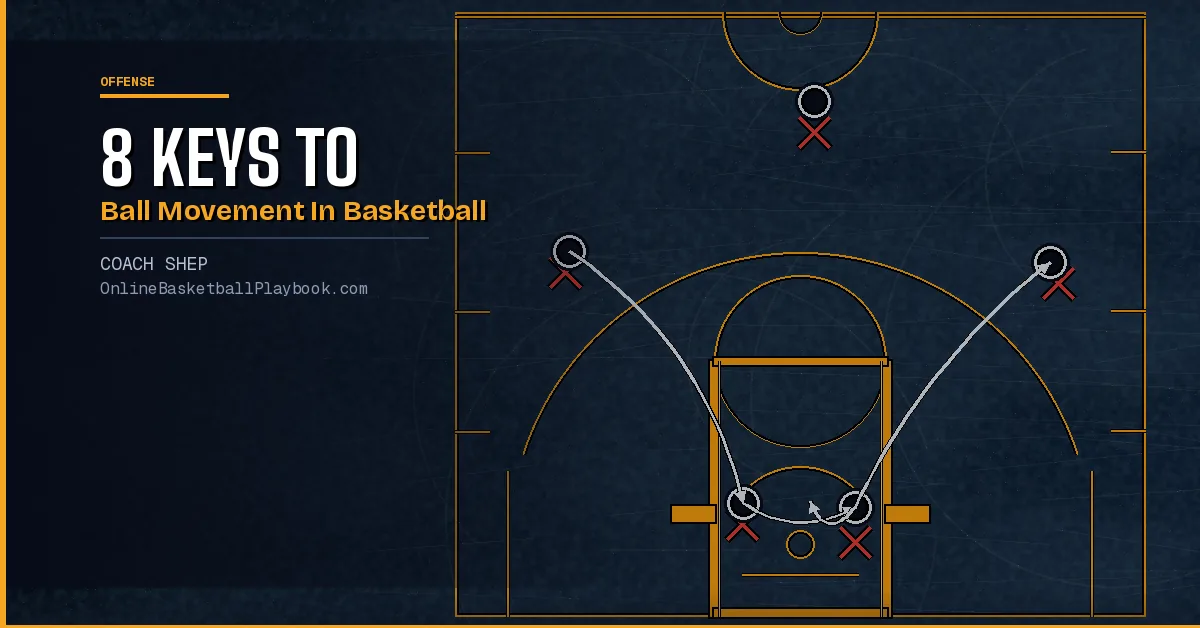
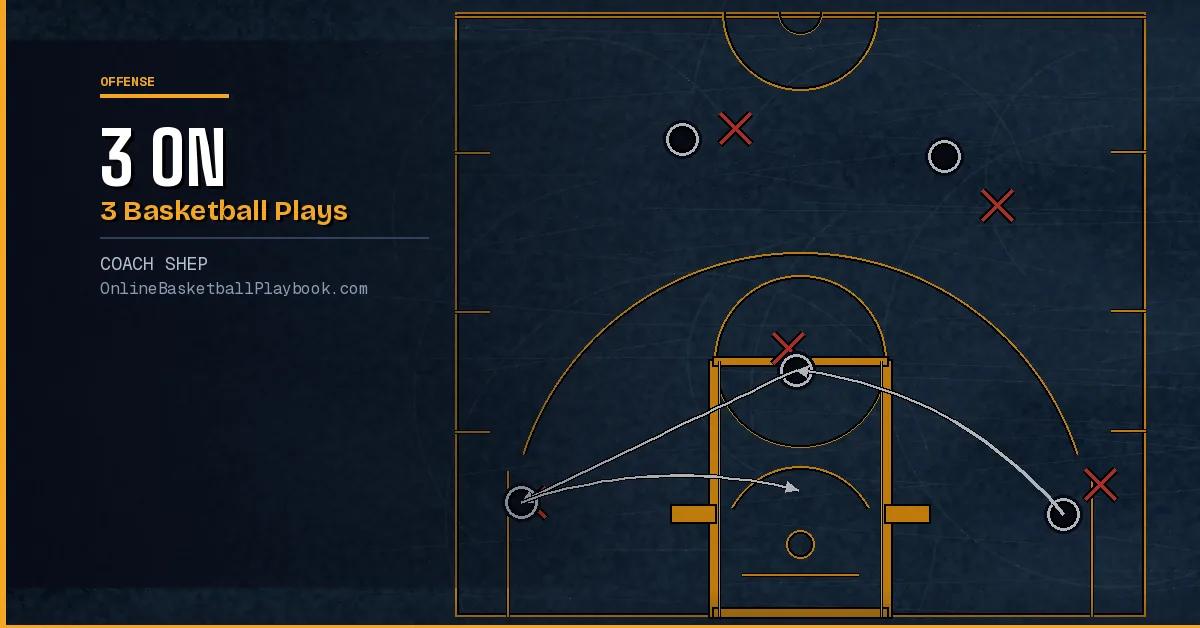
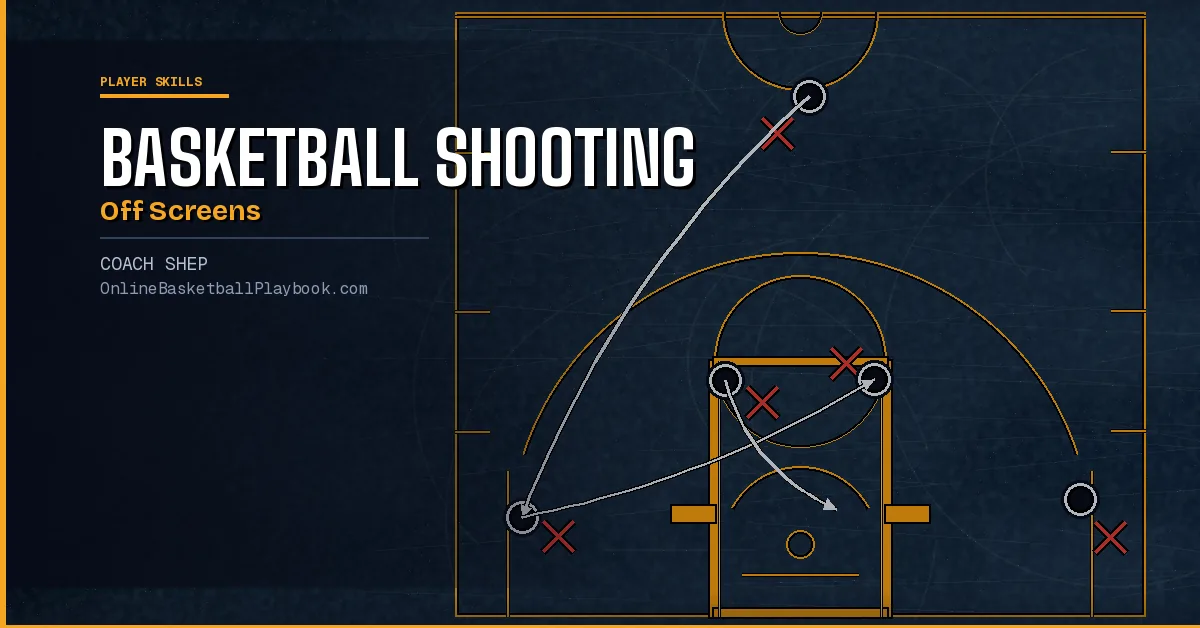
Basketball Shooting Off Screens: Complete Guide
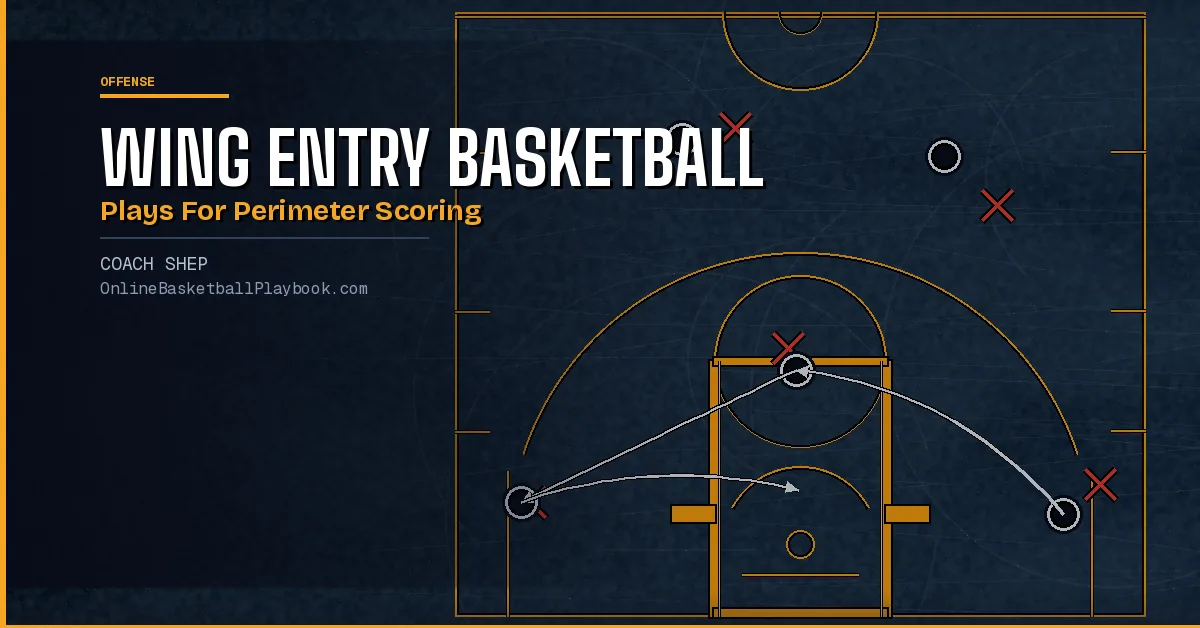
Wing Entry Basketball Plays for Perimeter Scoring
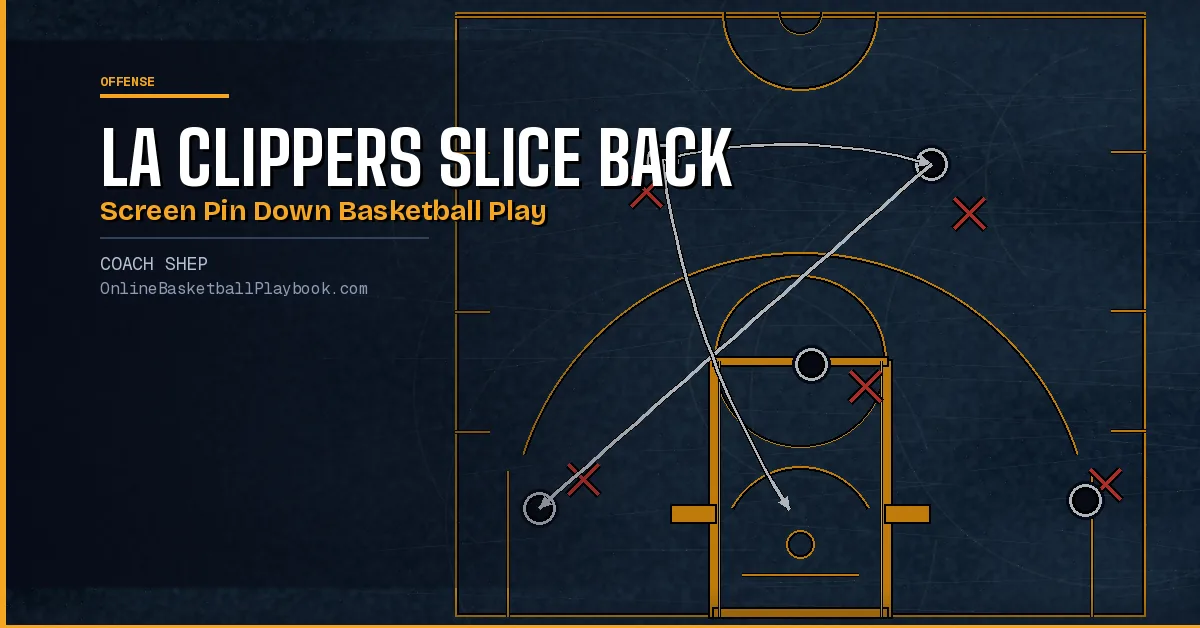
LA Clippers: Slice Back Screen Pin Down Basketball Play
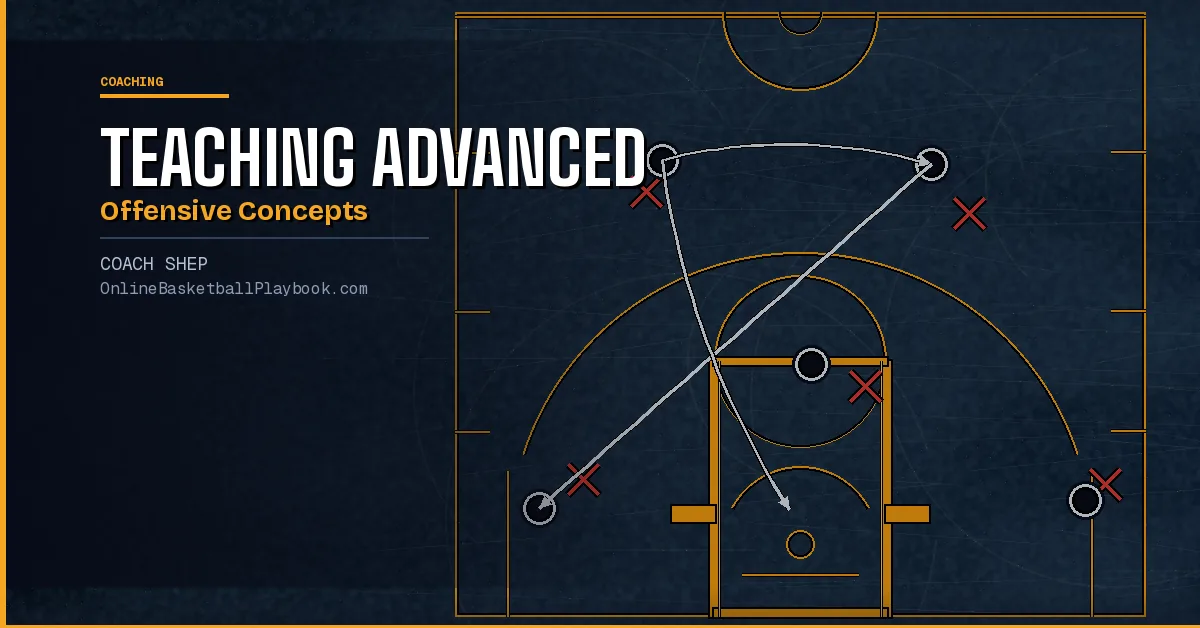
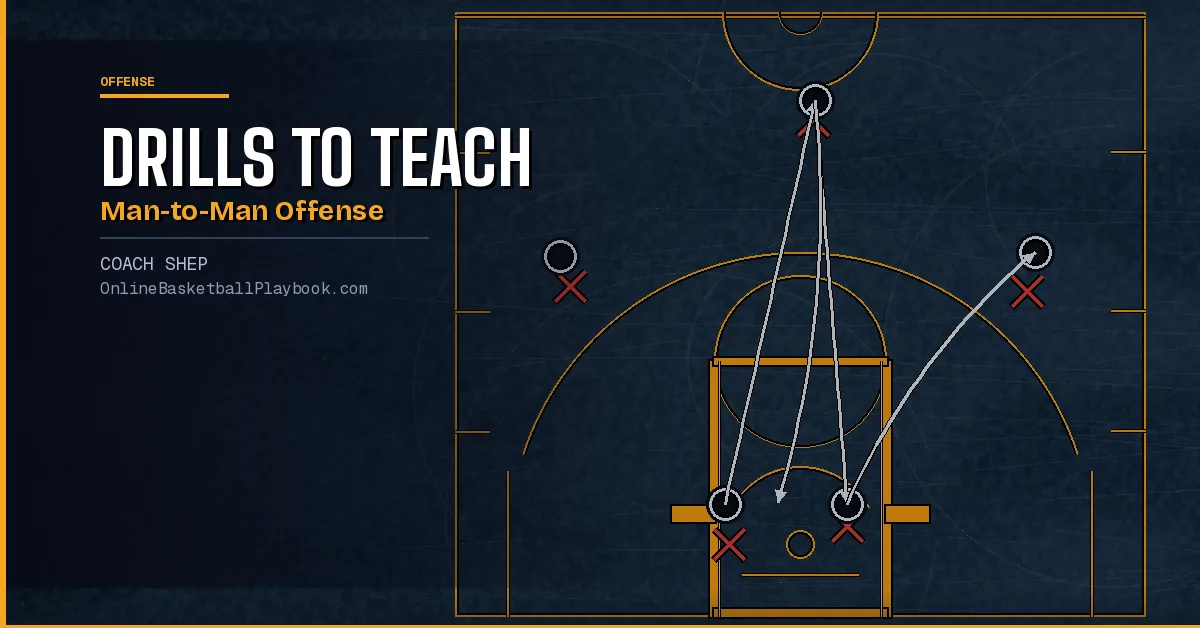
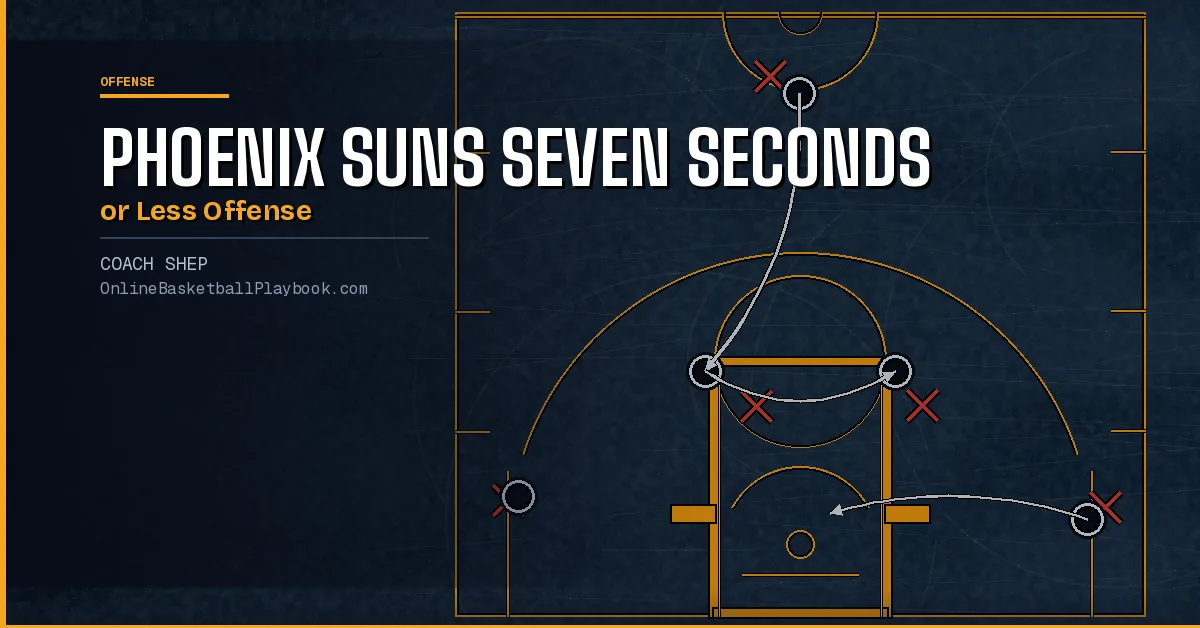
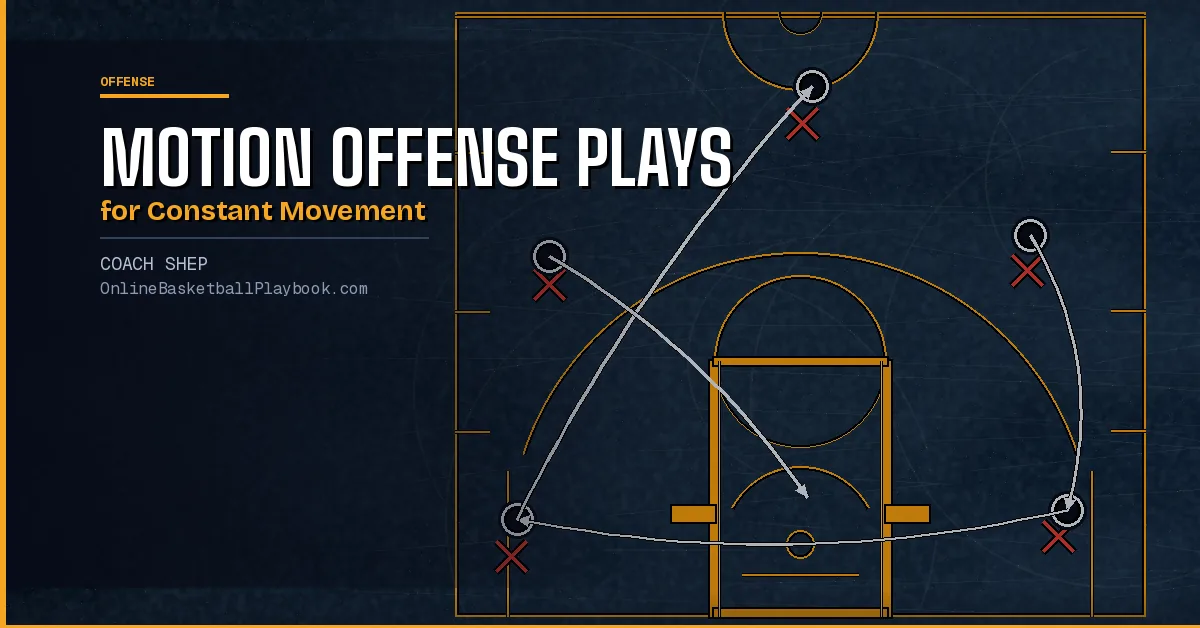
Motion Offense Basketball Plays for Constant Movement
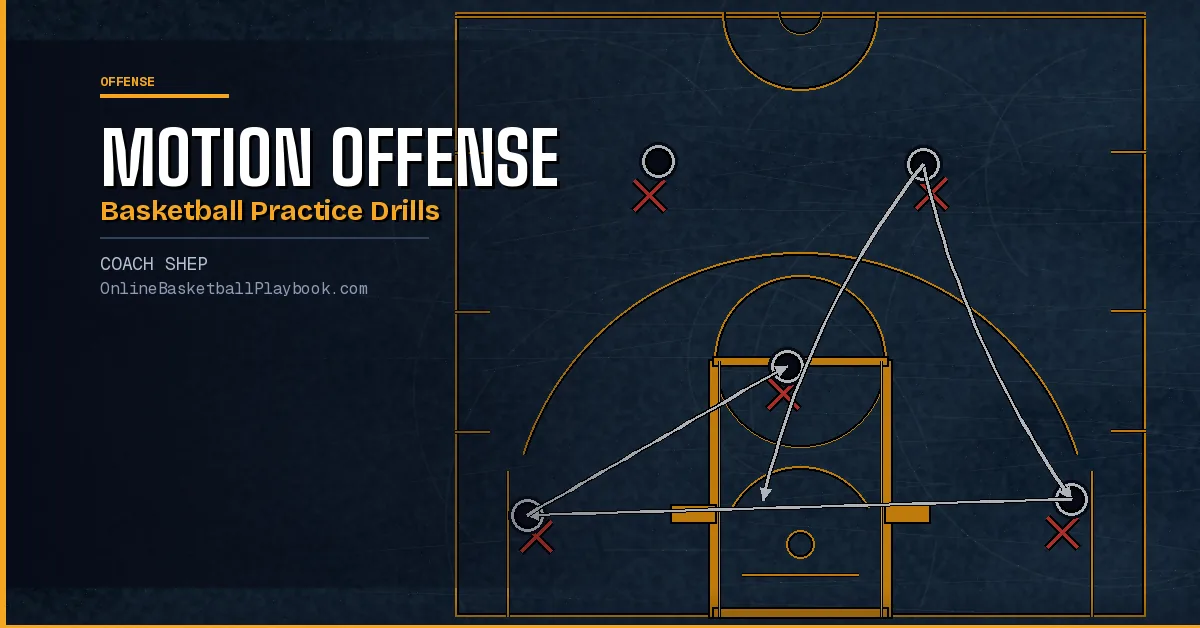
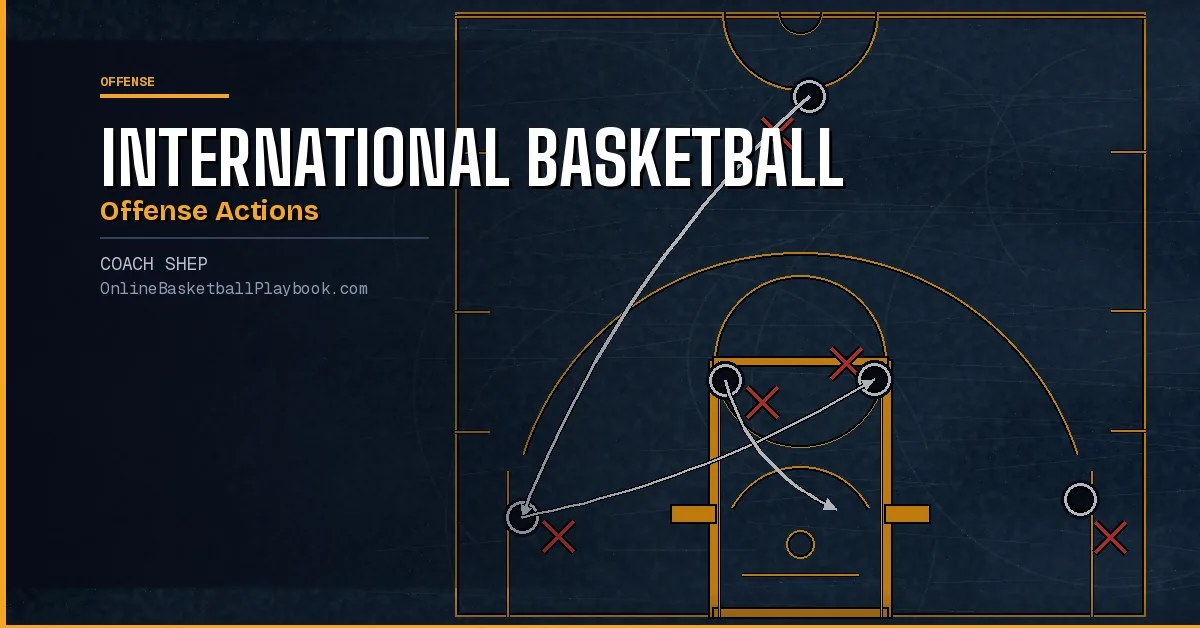
International Basketball Offense Actions Every Coach Should Know
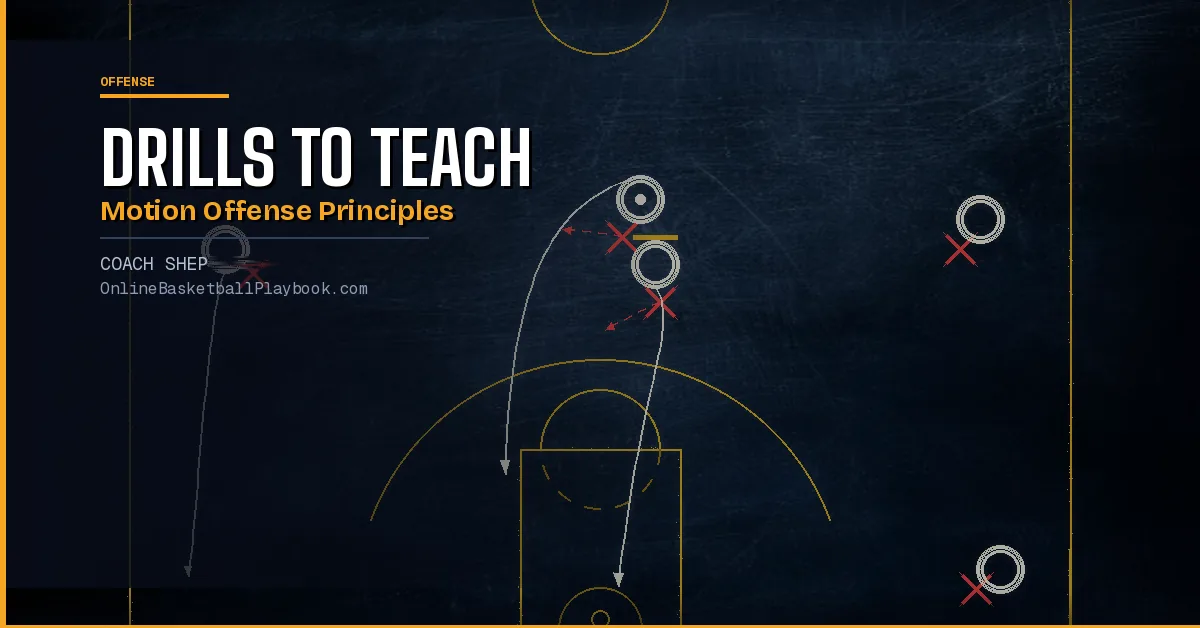
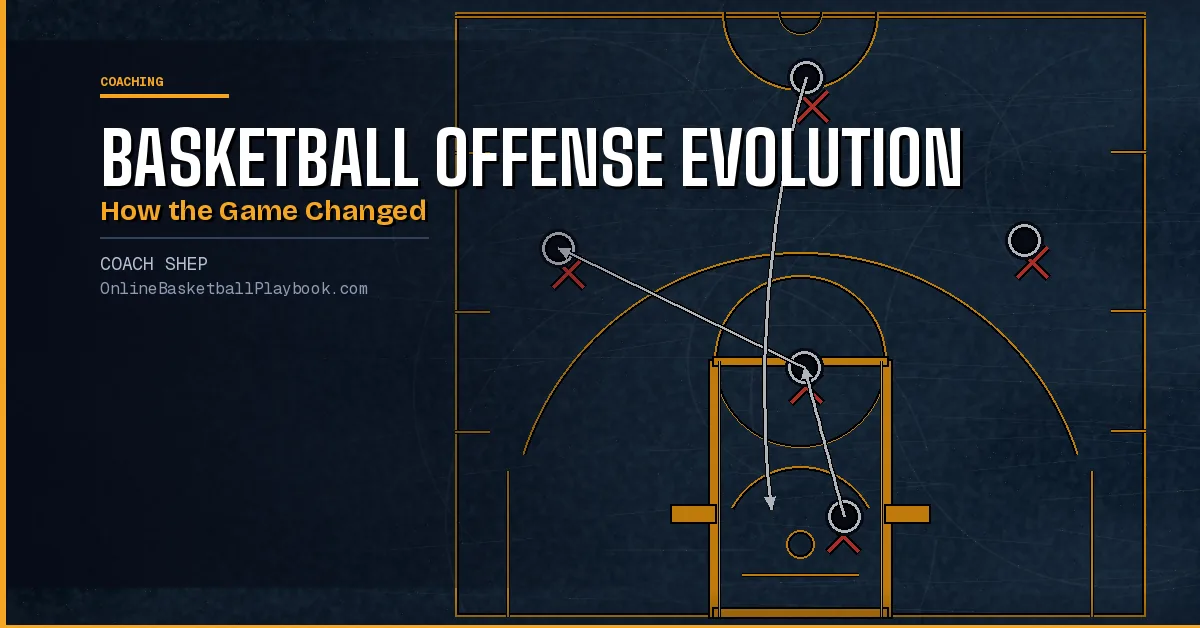
Basketball Offense Evolution: How the Game Changed
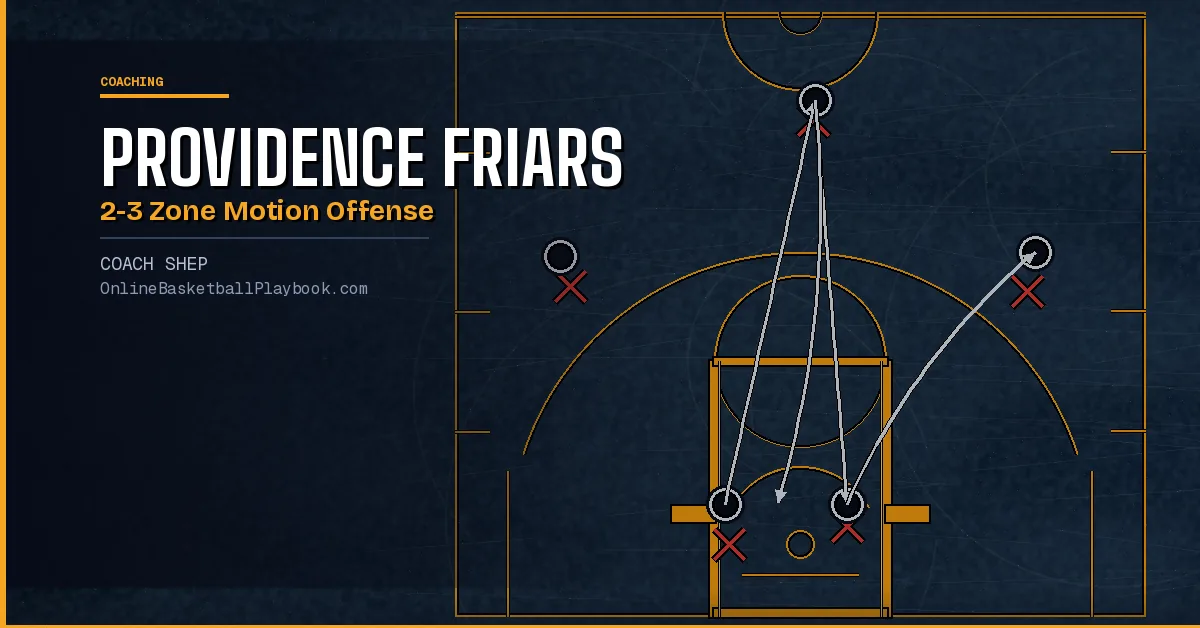
Providence Friars 2-3 Zone Motion Offense Baseline Runner Basketball Play
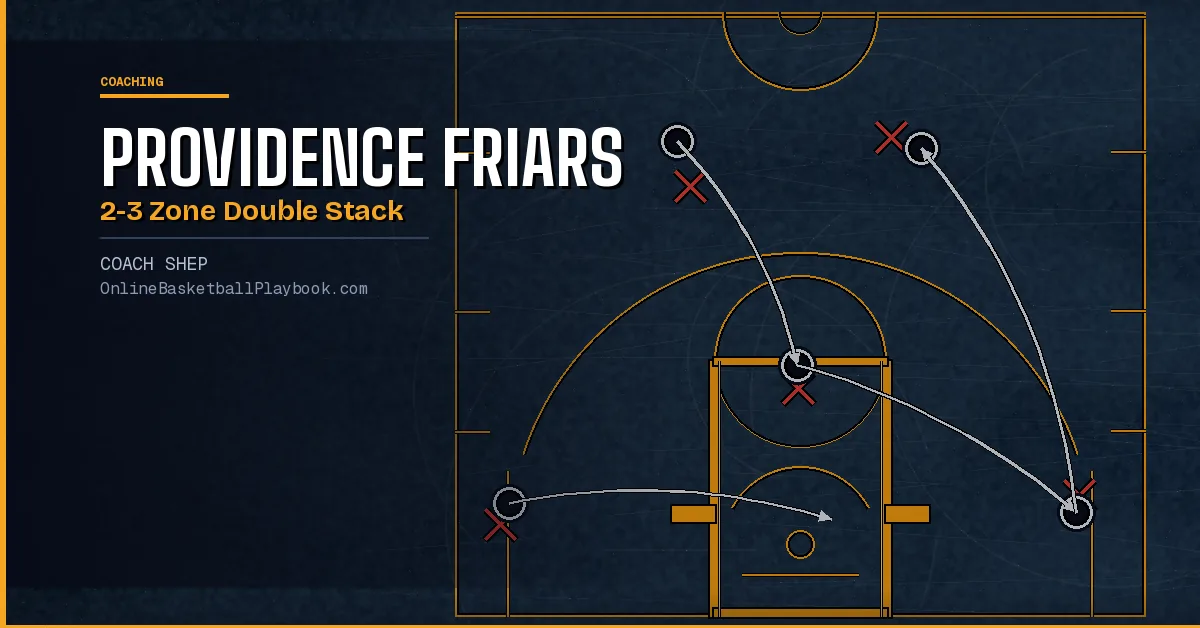
Providence Friars 2-3 Zone Low Double Stack Post Flash Basketball Play
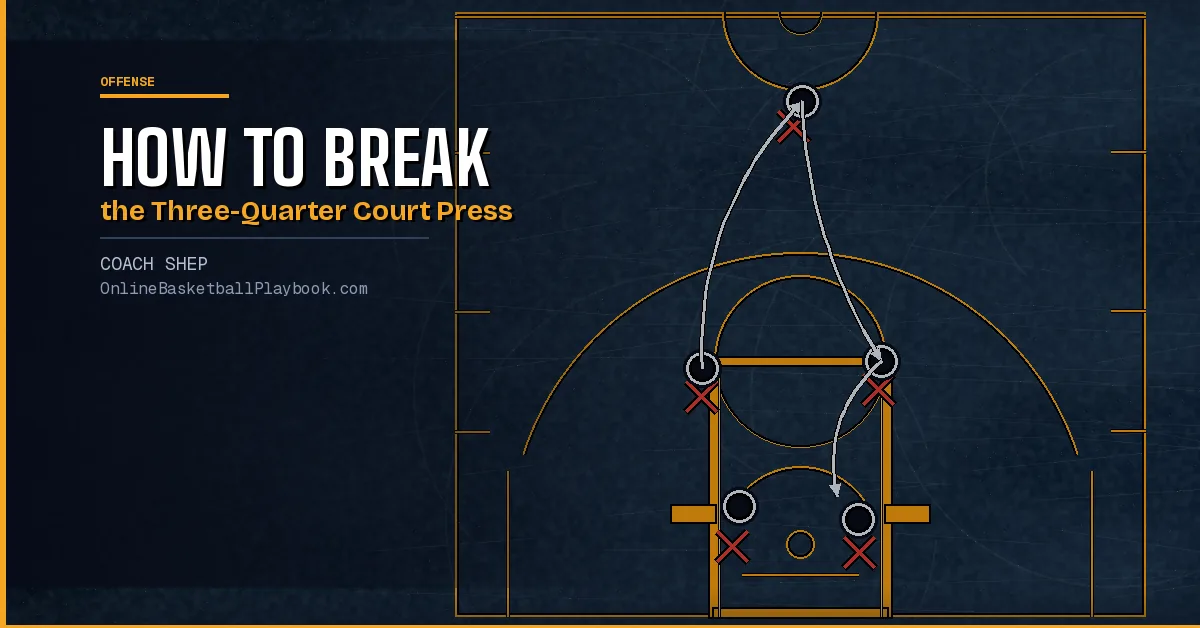
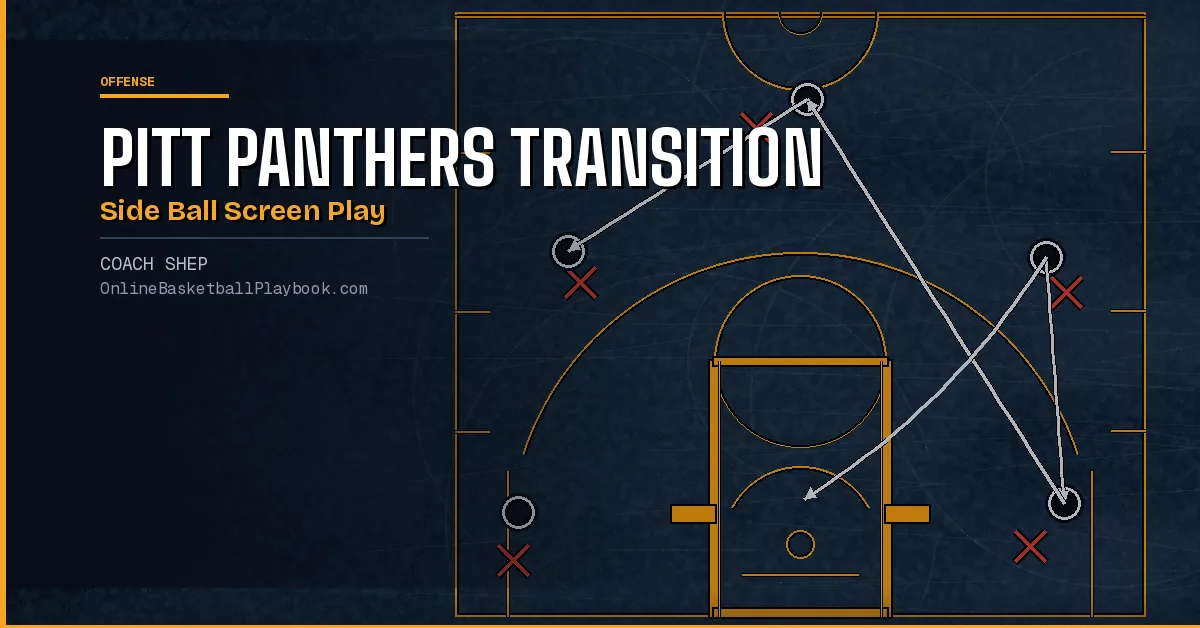
Pitt Panthers: Transition Side Ball Screen Basketball Play
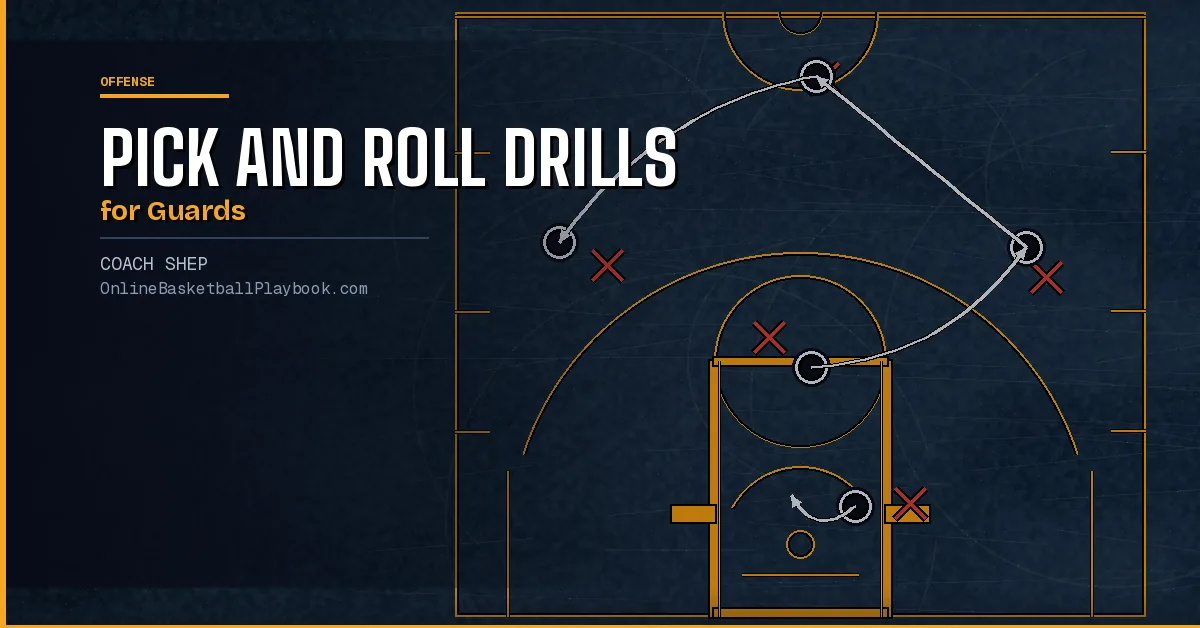
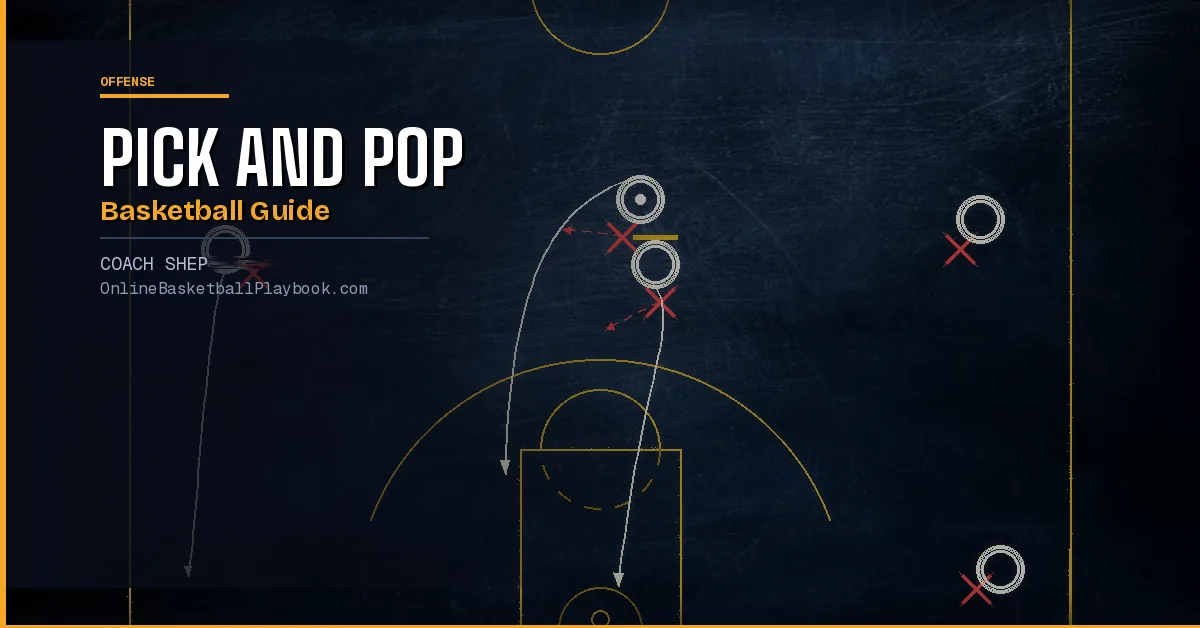
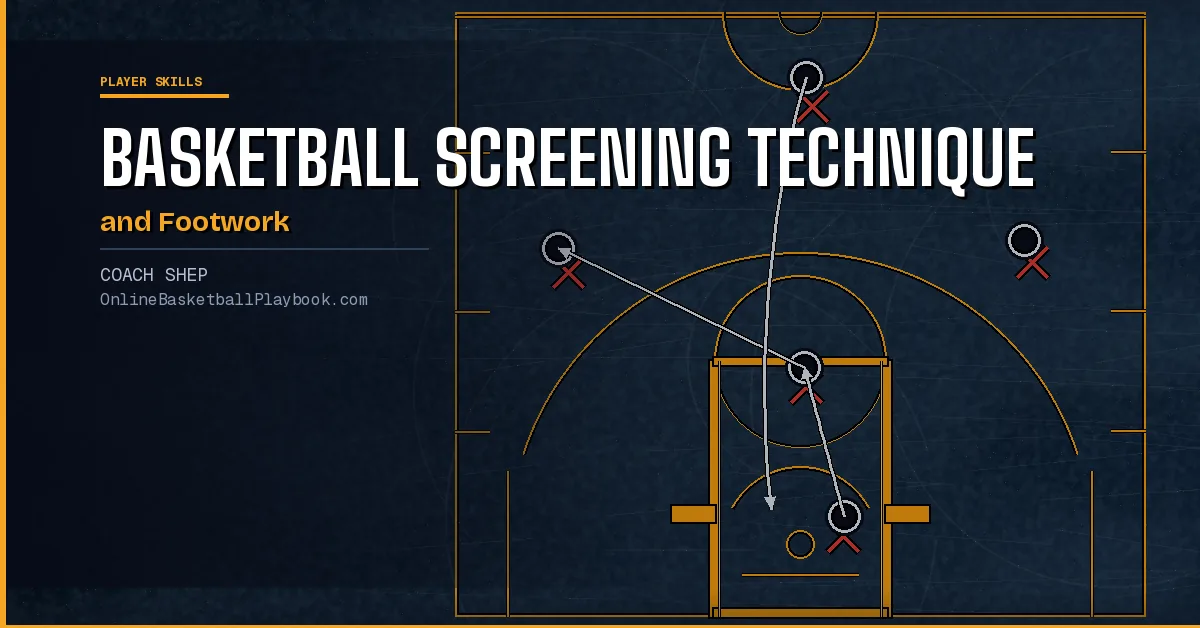
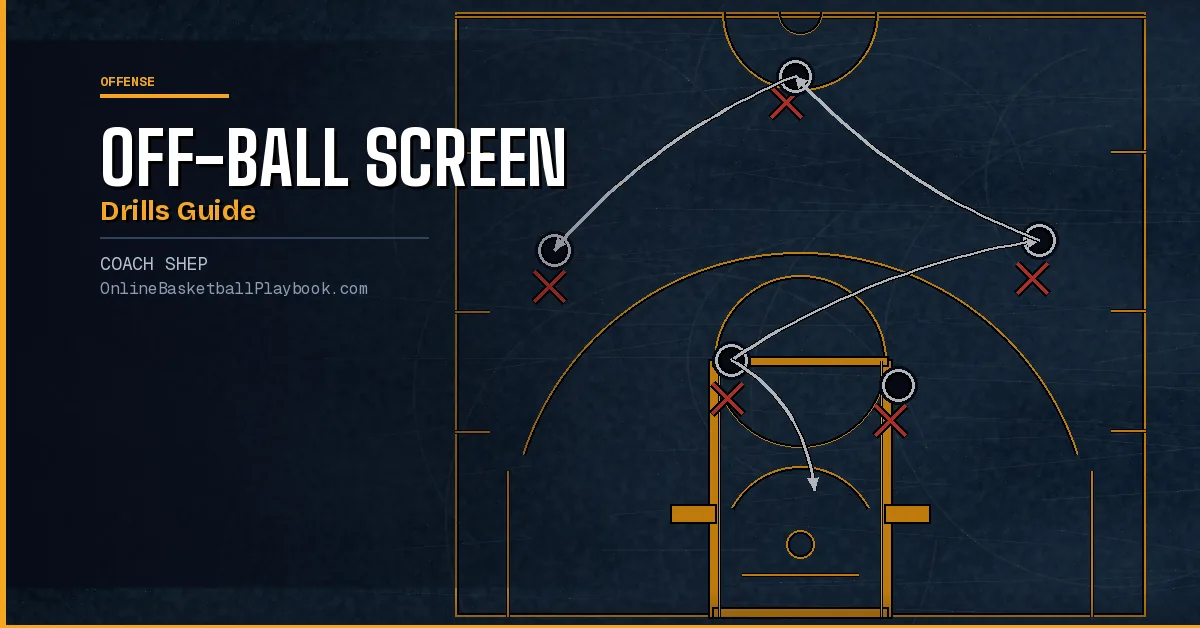
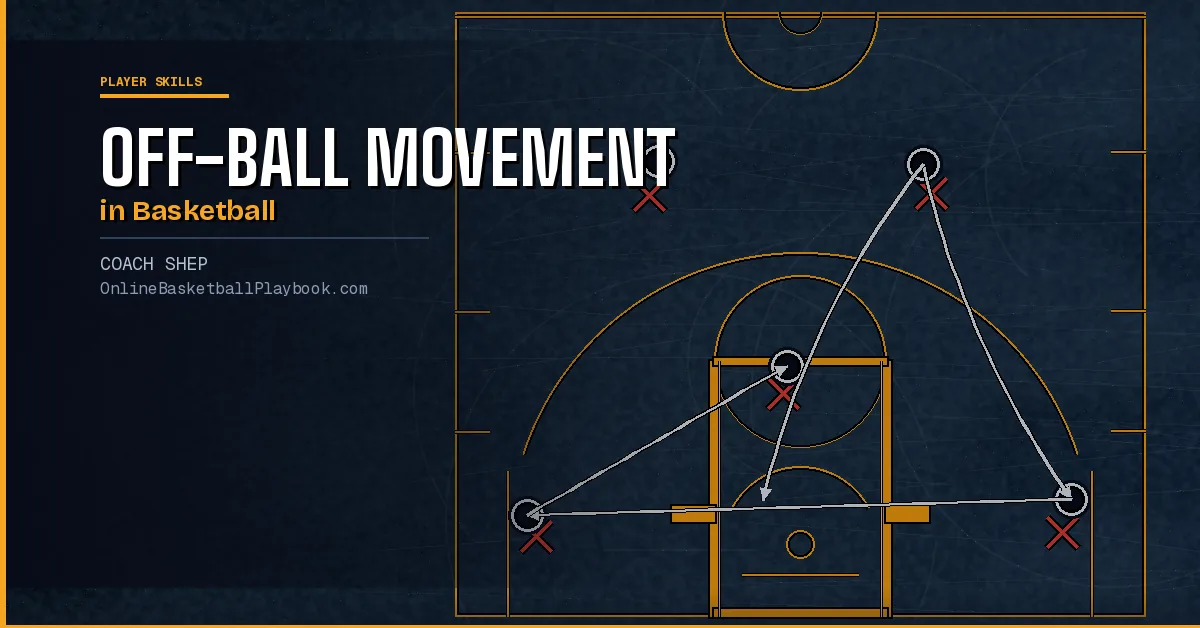
Off-Ball Movement in Basketball: Complete Guide
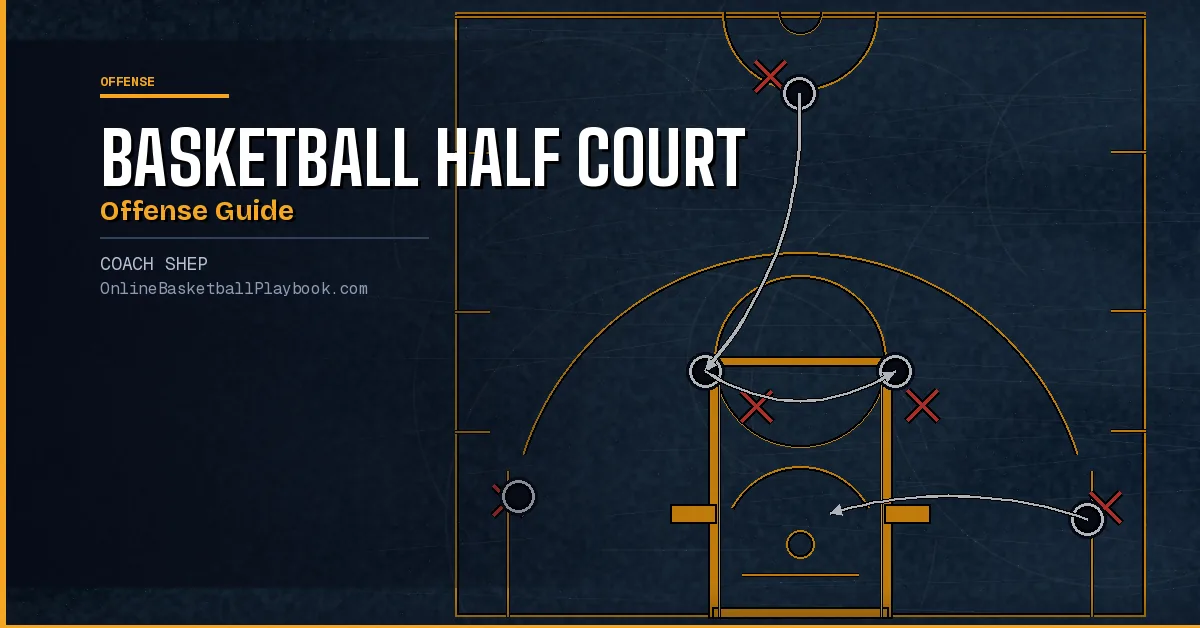
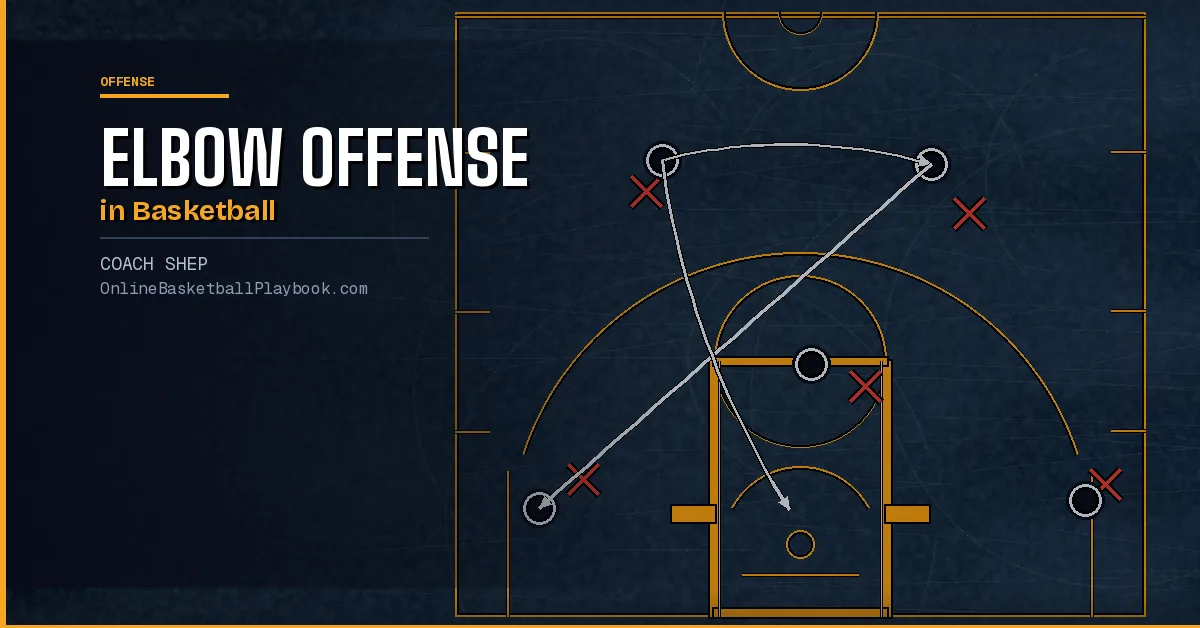
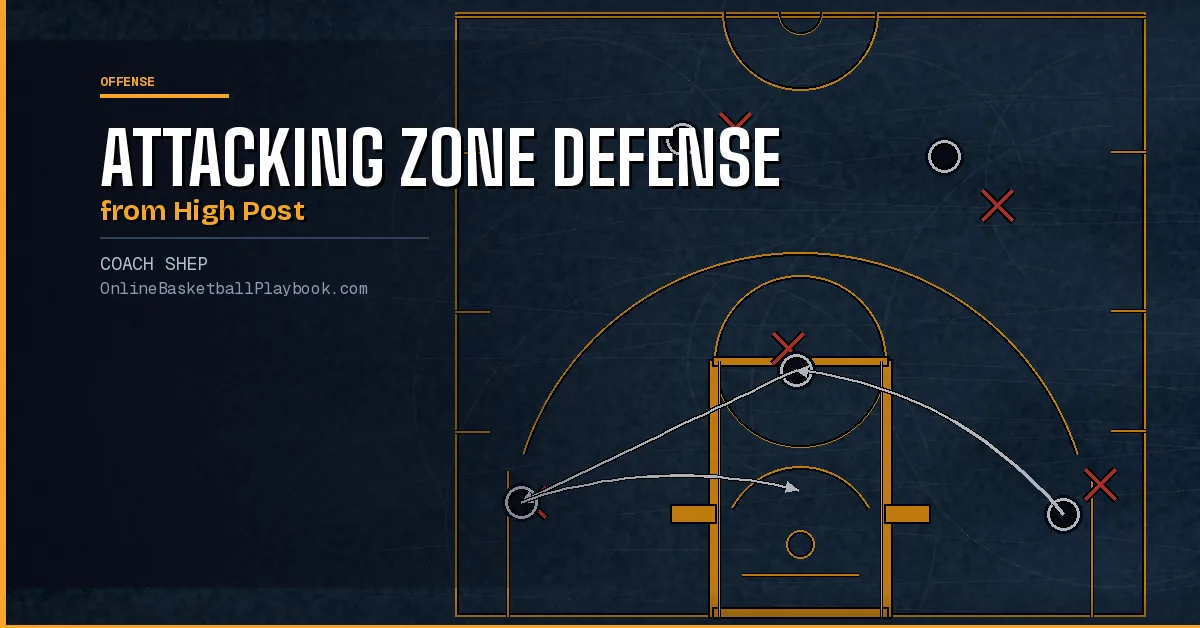
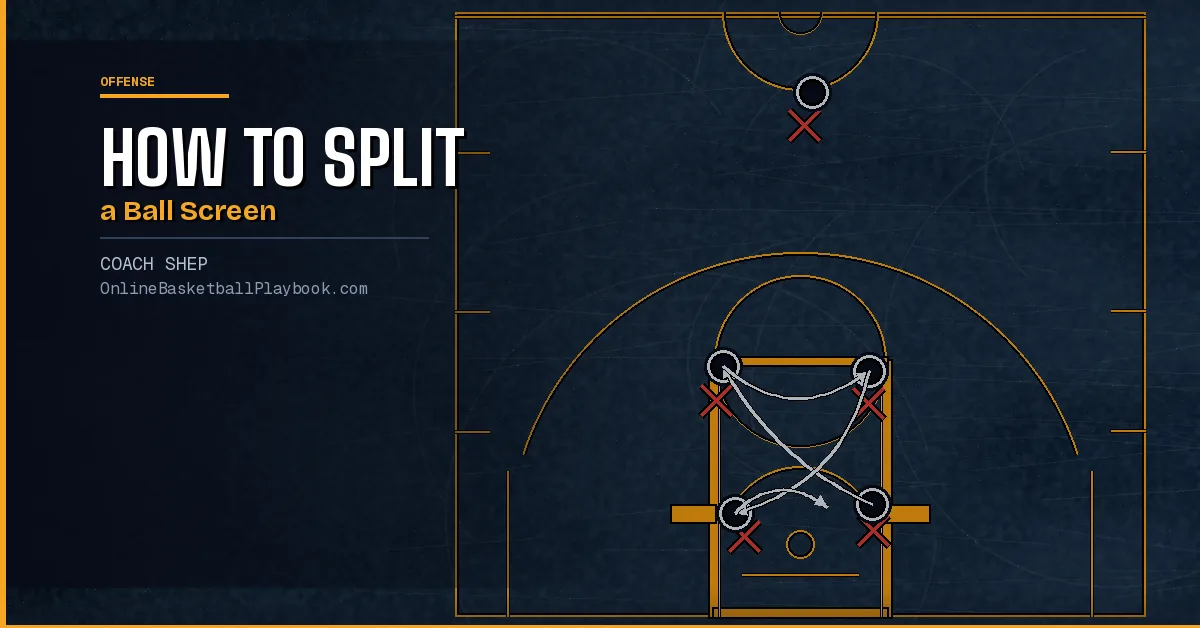
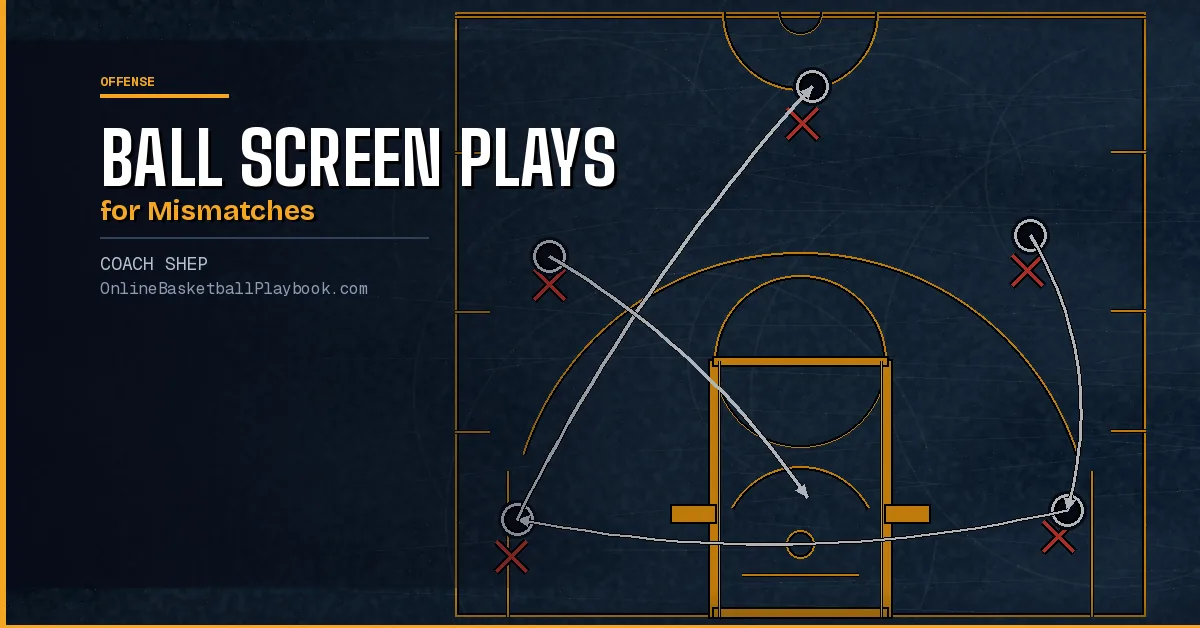
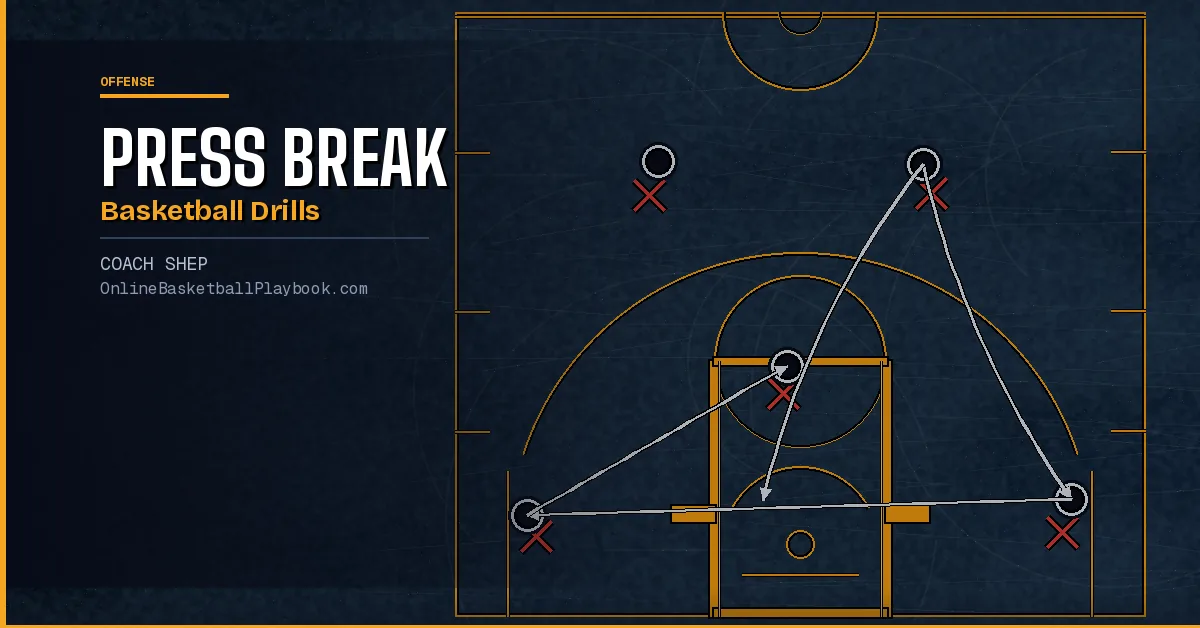
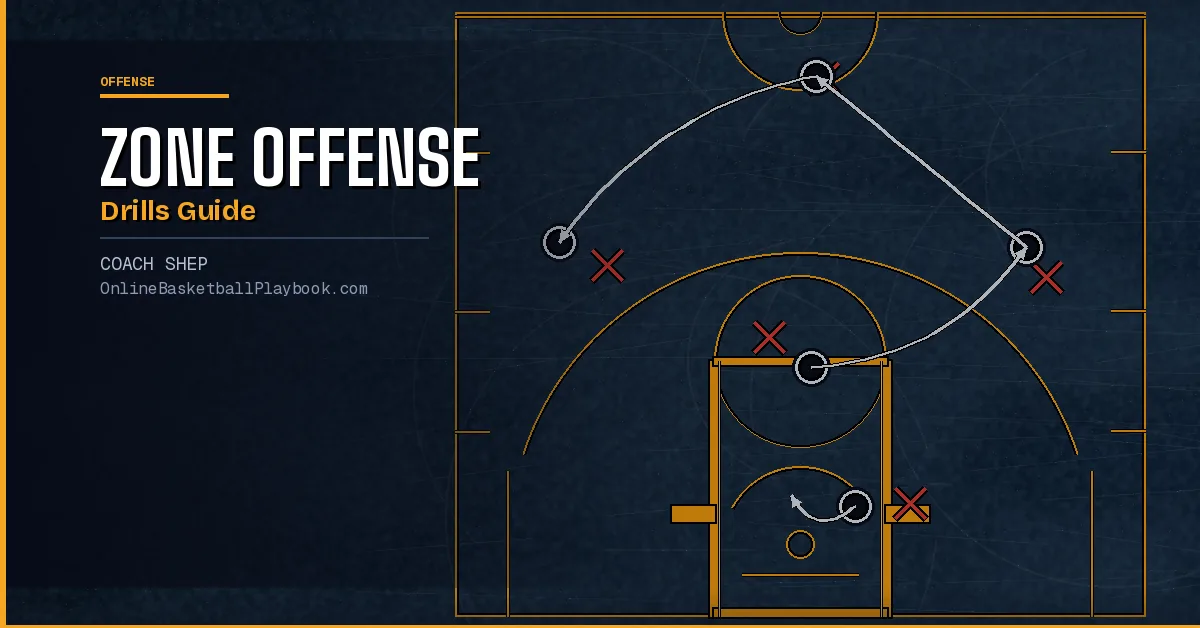
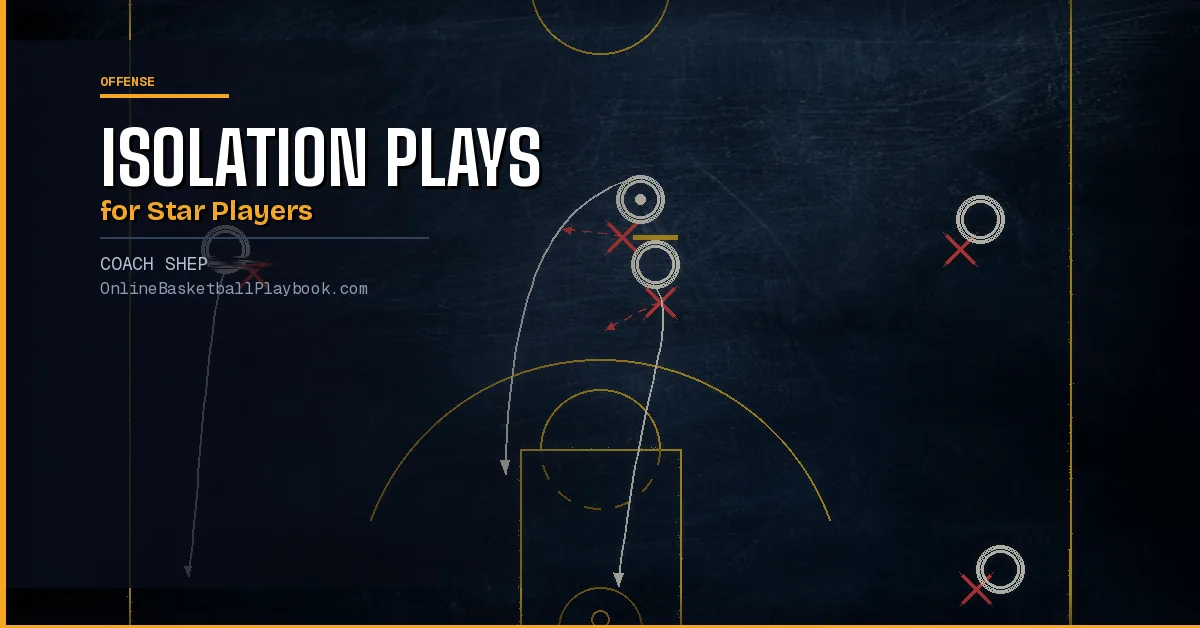
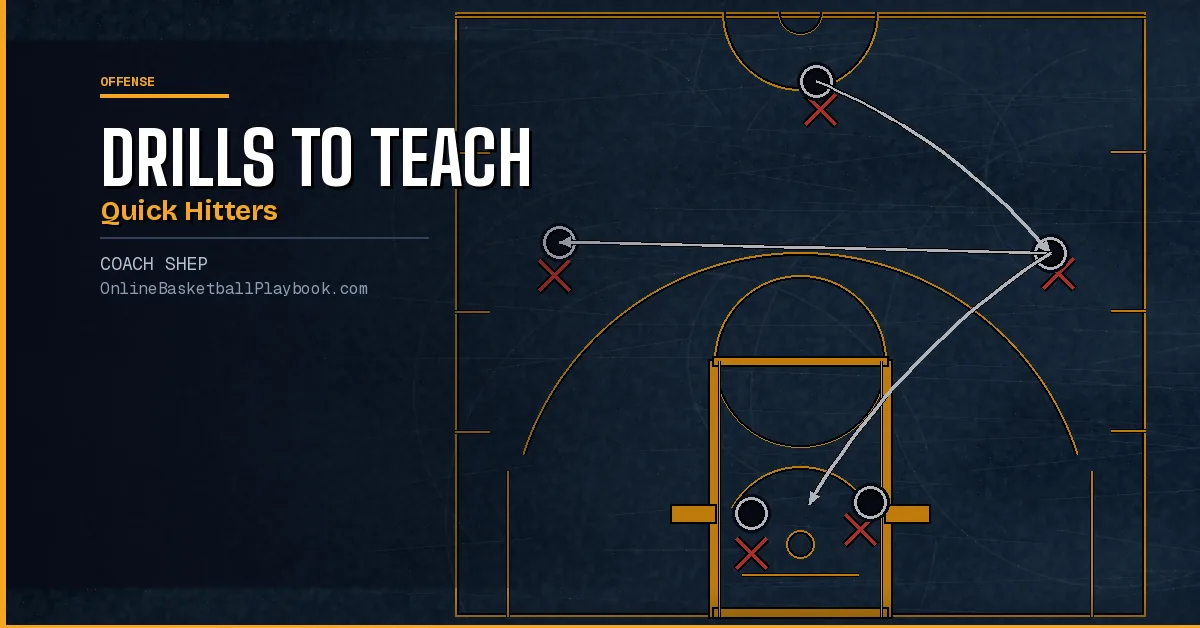
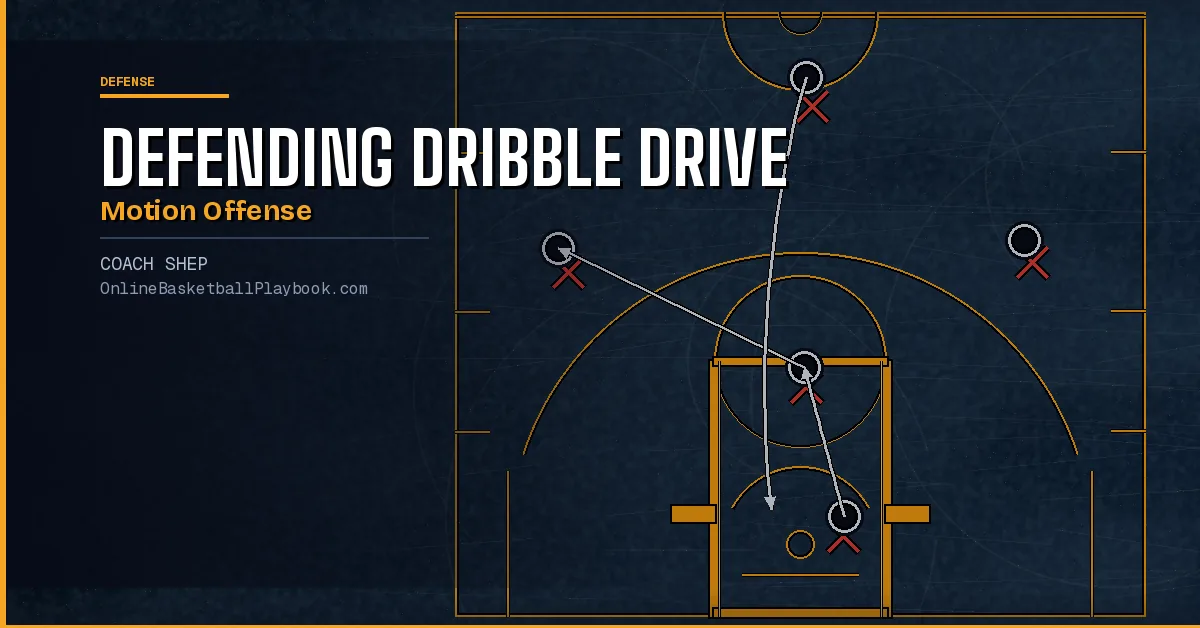
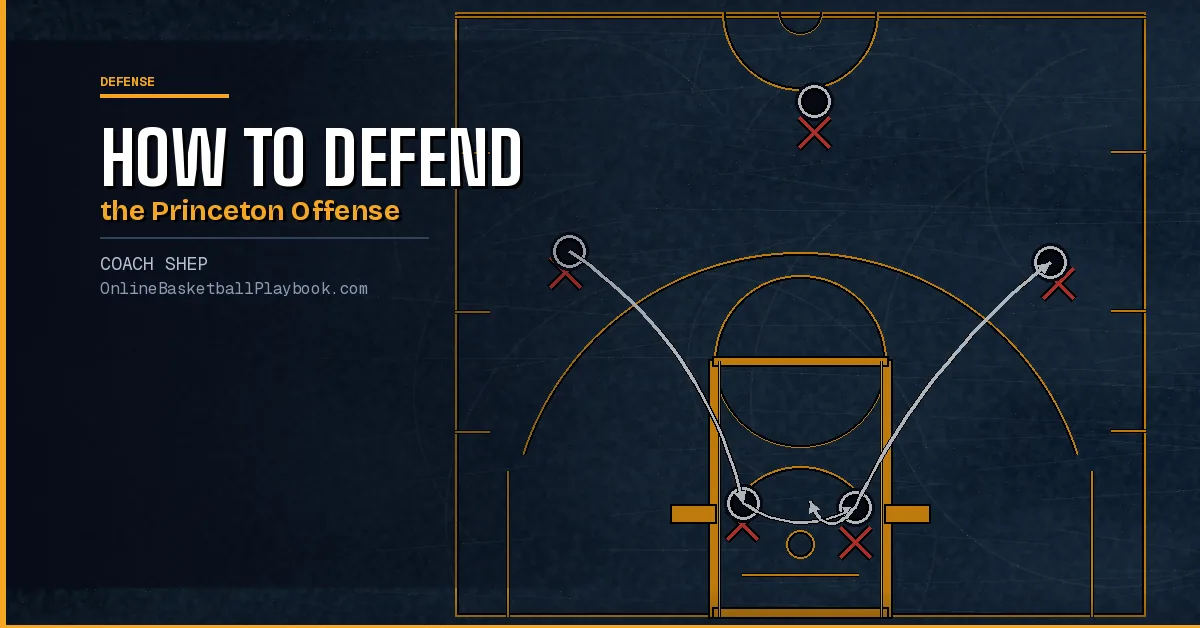
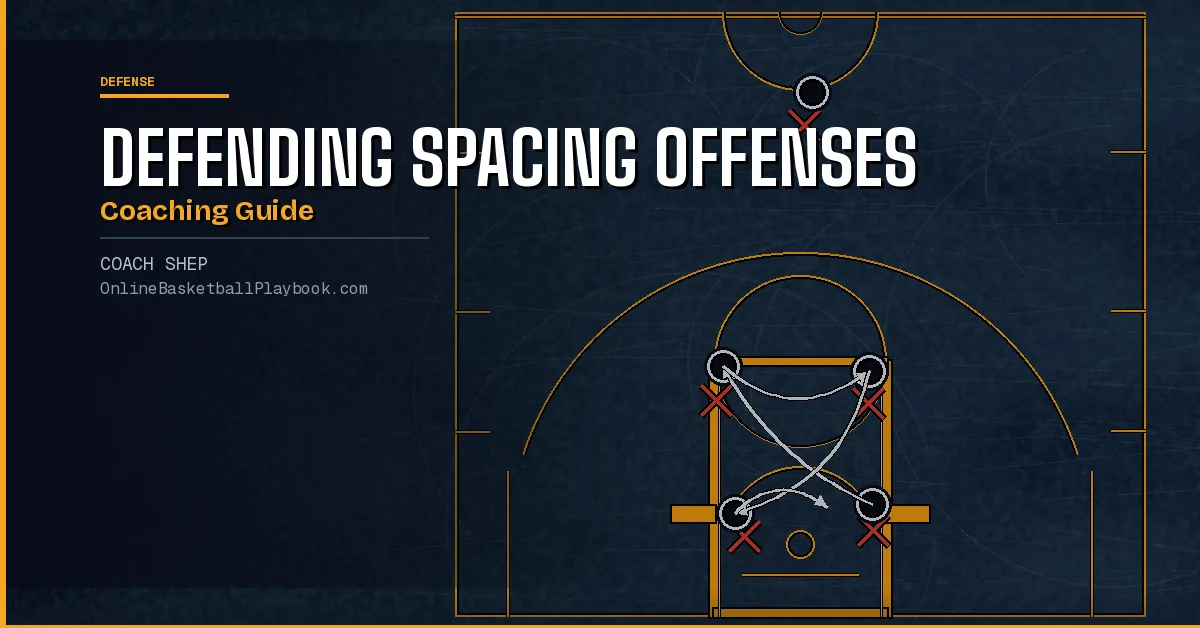
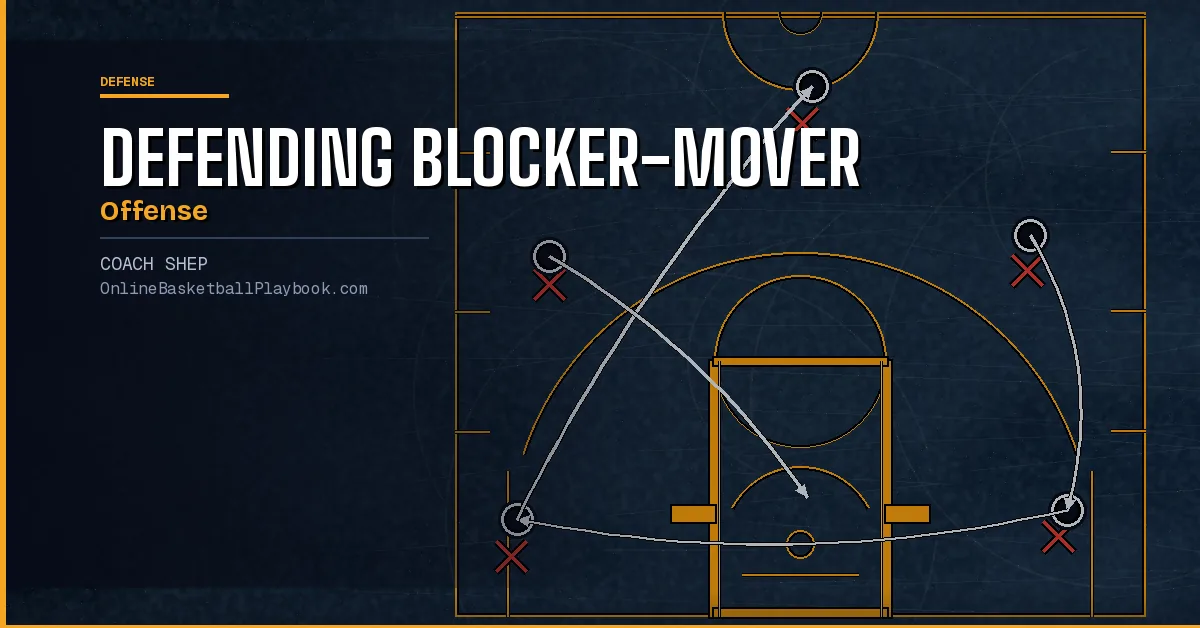
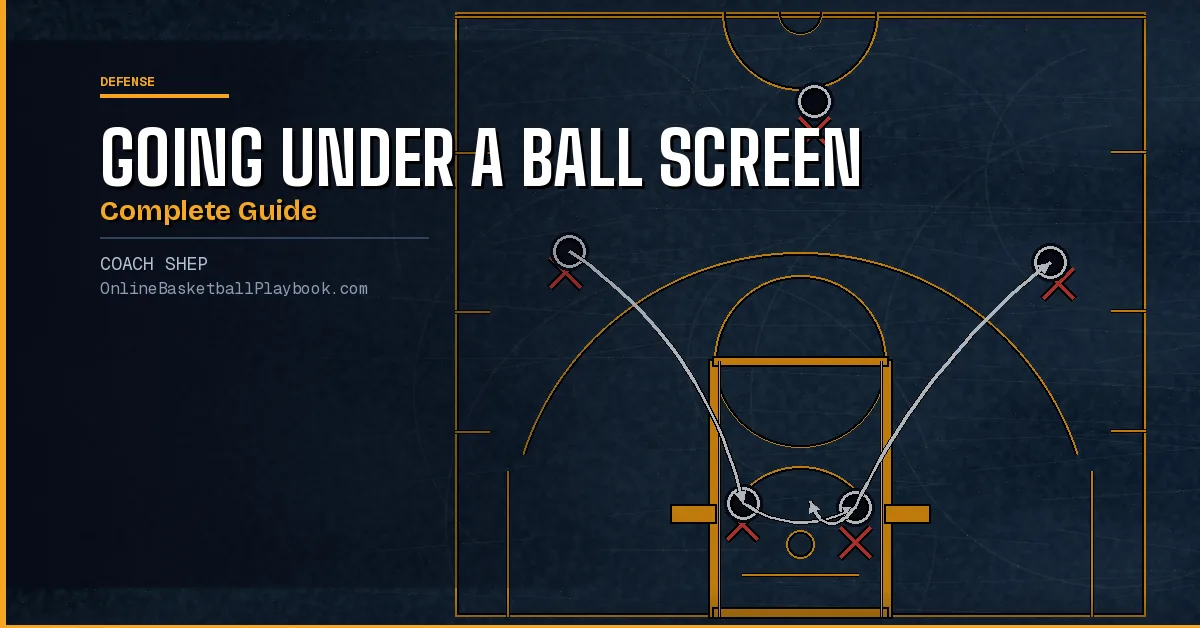
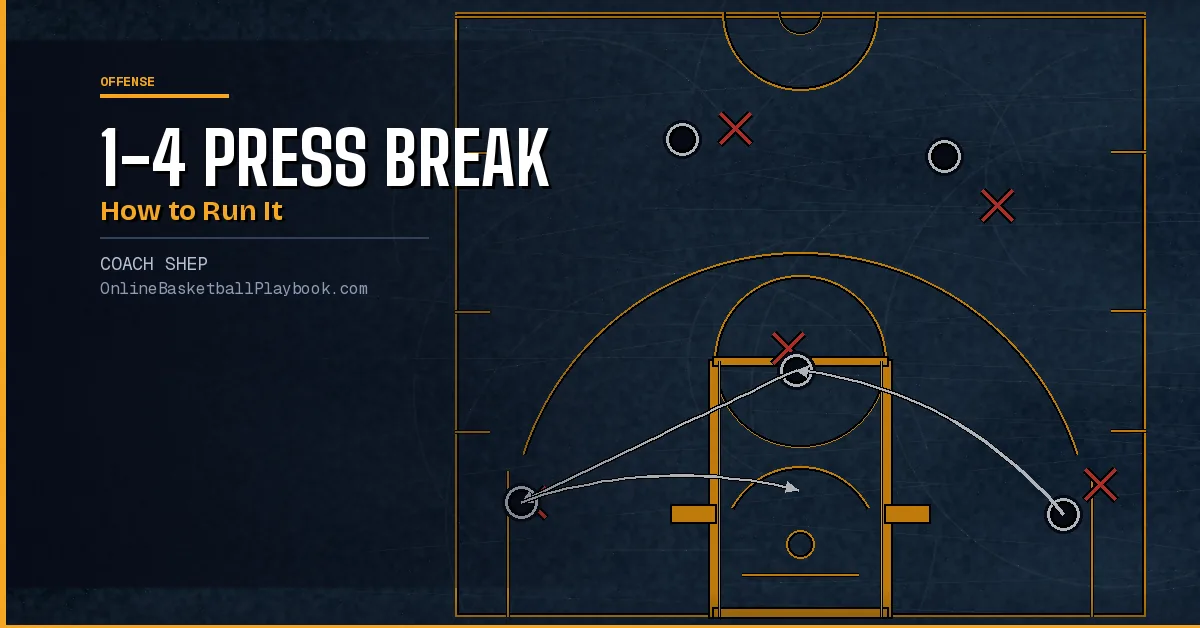
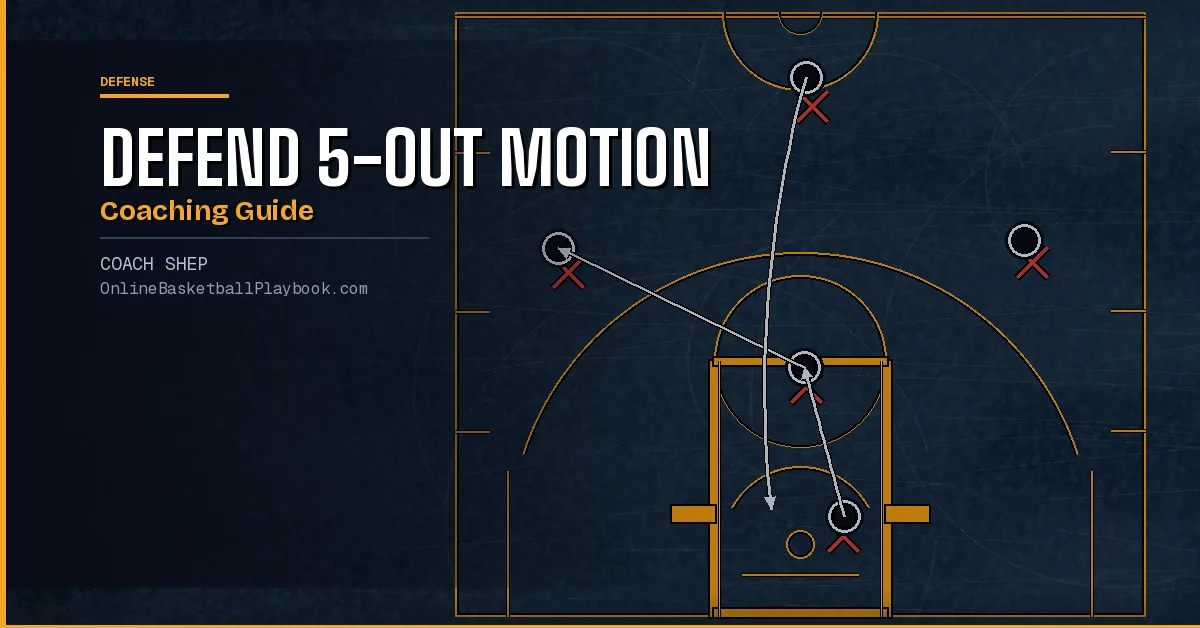
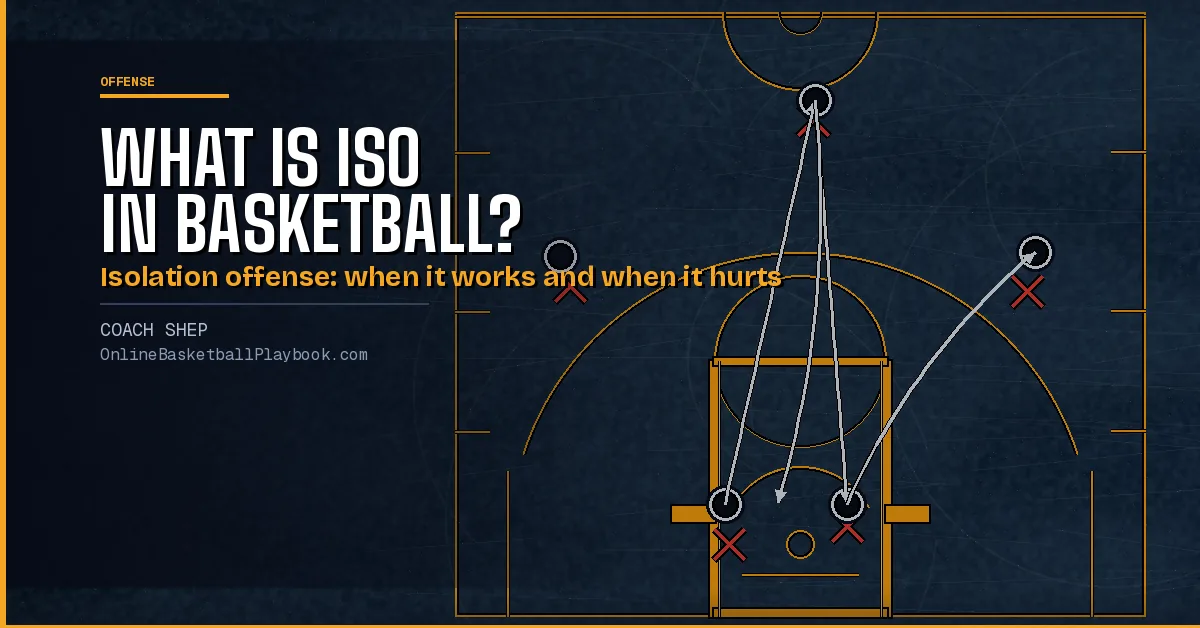
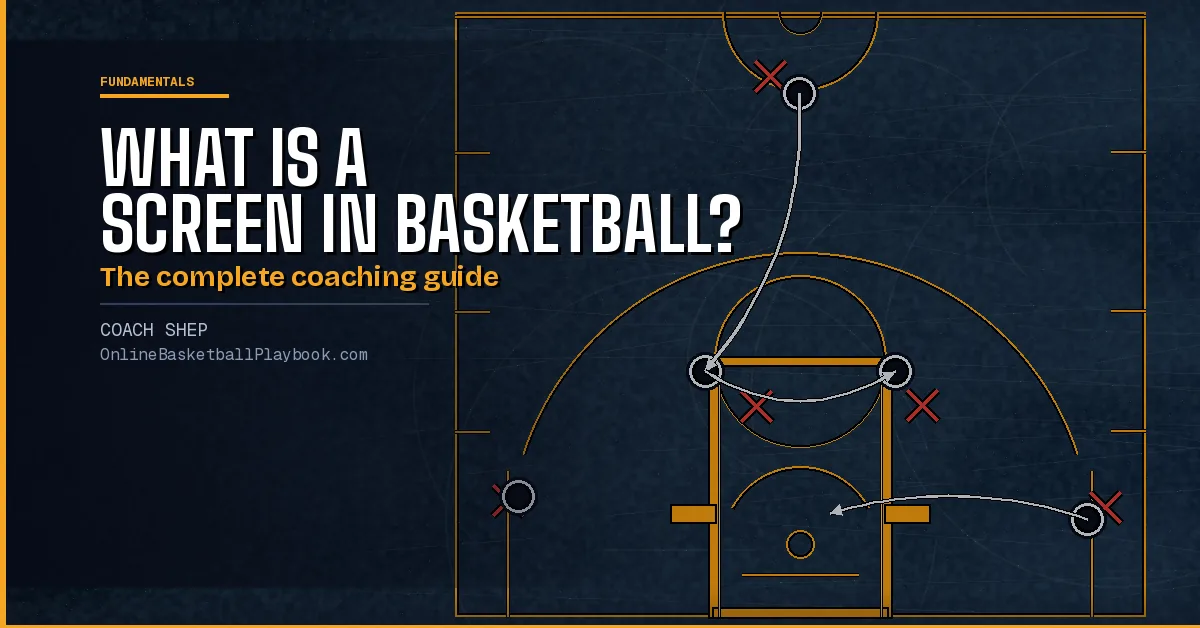
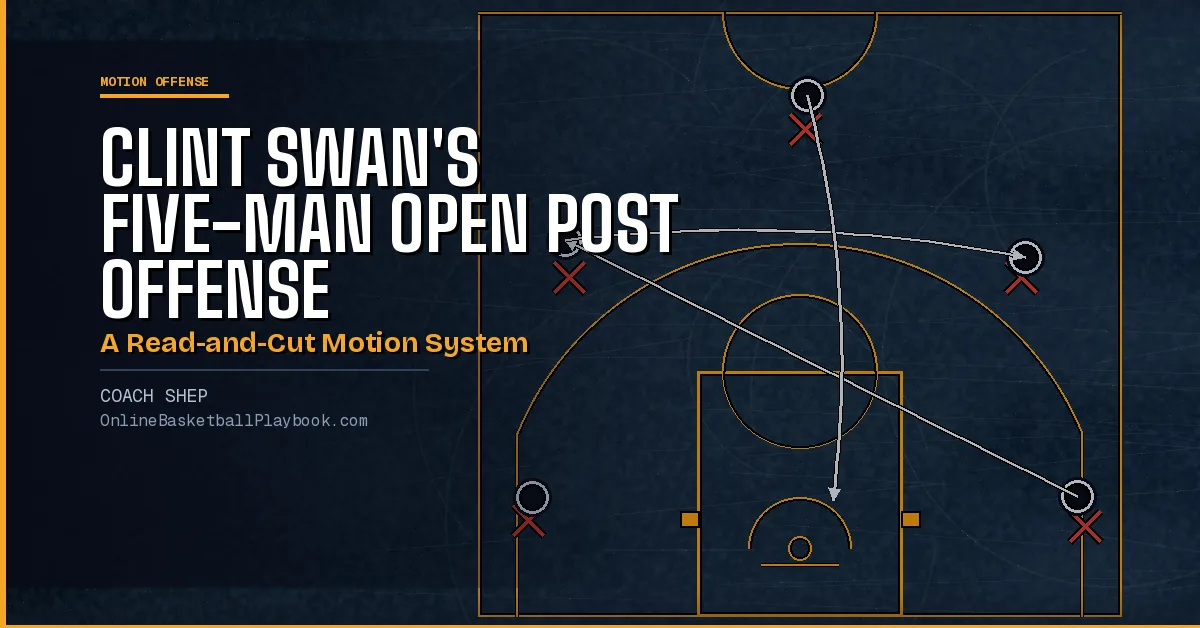
A continuity offense, keep five spots filled, cut hard to the rim, and run a numbered menu of cuts and screens any team can learn.
Cutting is purposeful movement without the ball that forces the defense into bad decisions. Here's the fundamentals of a good cut, the timing with the passer, and drills to build the habit.
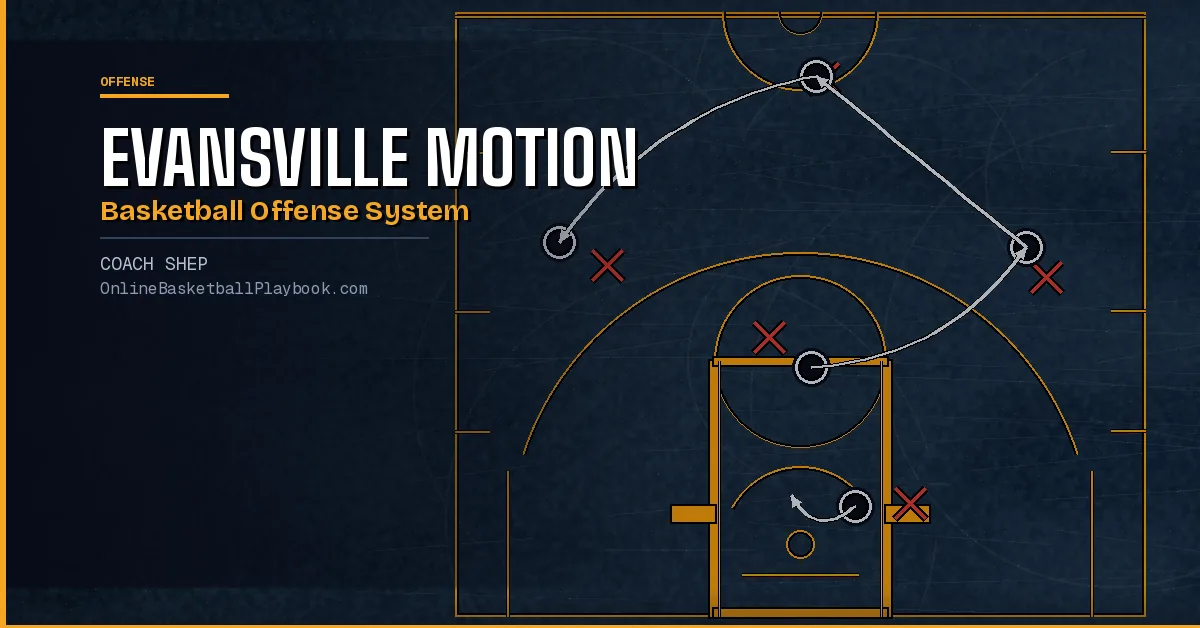
This motion offense is a read-based system built on spacing, ball movement, and purposeful cutting. Every pass triggers a decision.
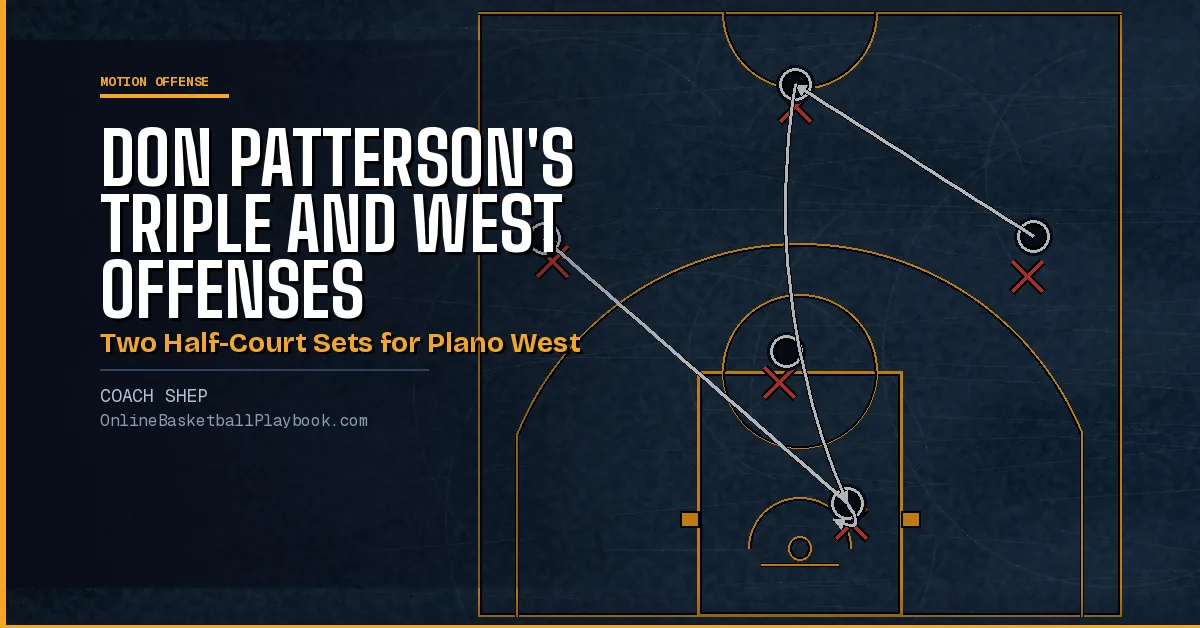
Two half-court offenses for tall, skilled teams: a three-option post-feed set built to punish size against man and zone, and a pick-and-roll-into-screens set that has worked for years.
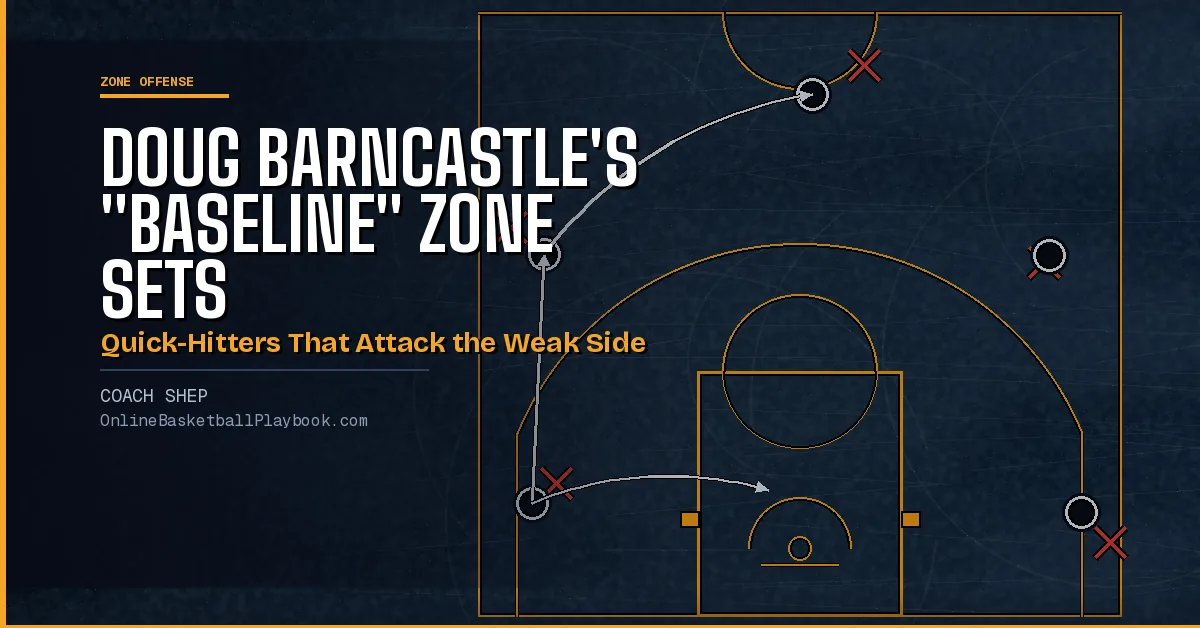
A handoff-action quick-hitter and two counters, Baseline Push and Baseline Dive, built to attack a zone to the weak side and get clean, makeable shots.
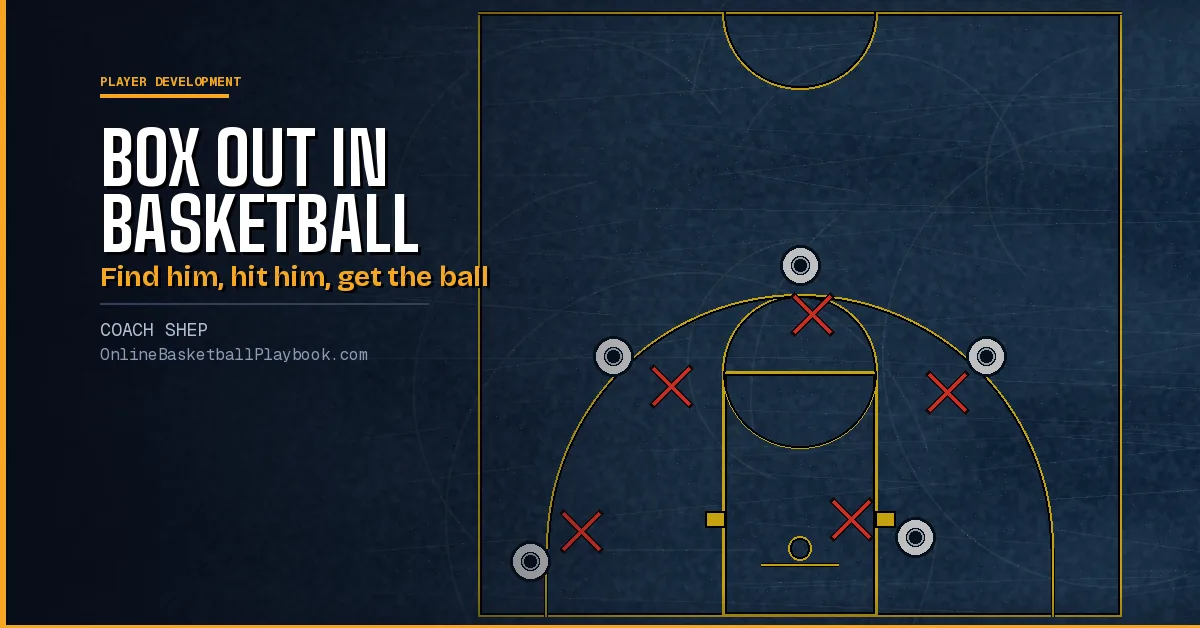
How to box out in basketball: find, hit and get, contact before the turn, where coaches split on hold or go, free throws, the zone triangle and the drills.
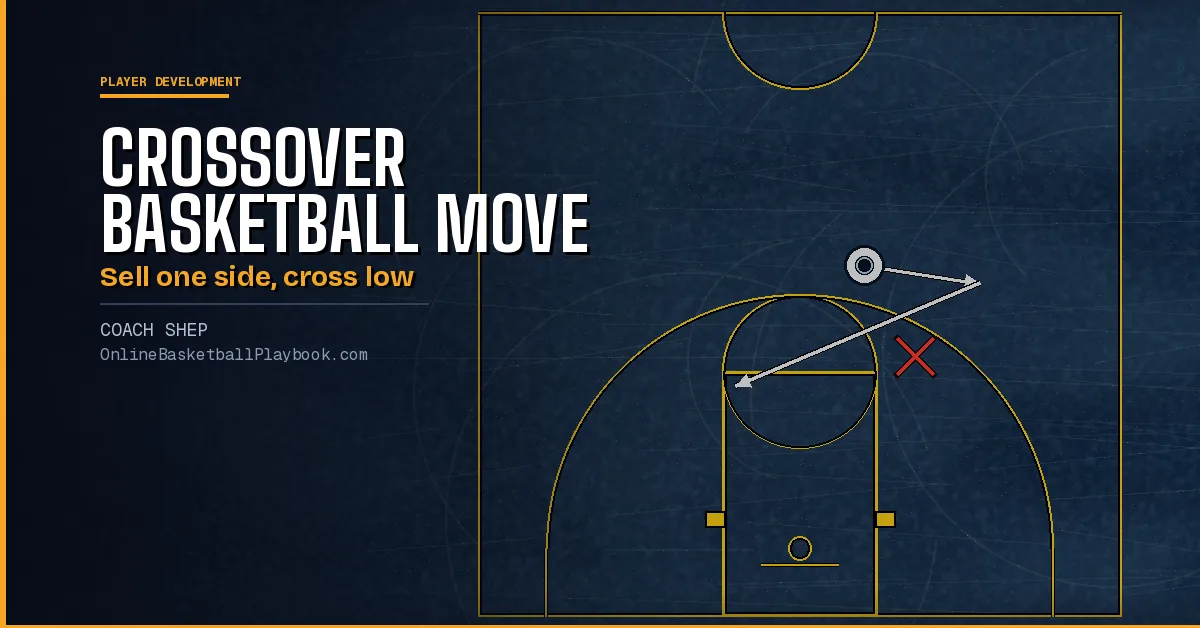
How to teach the crossover in basketball: the four steps, change of pace, footwork after the cross, the in and out counter, the read that follows and drills.
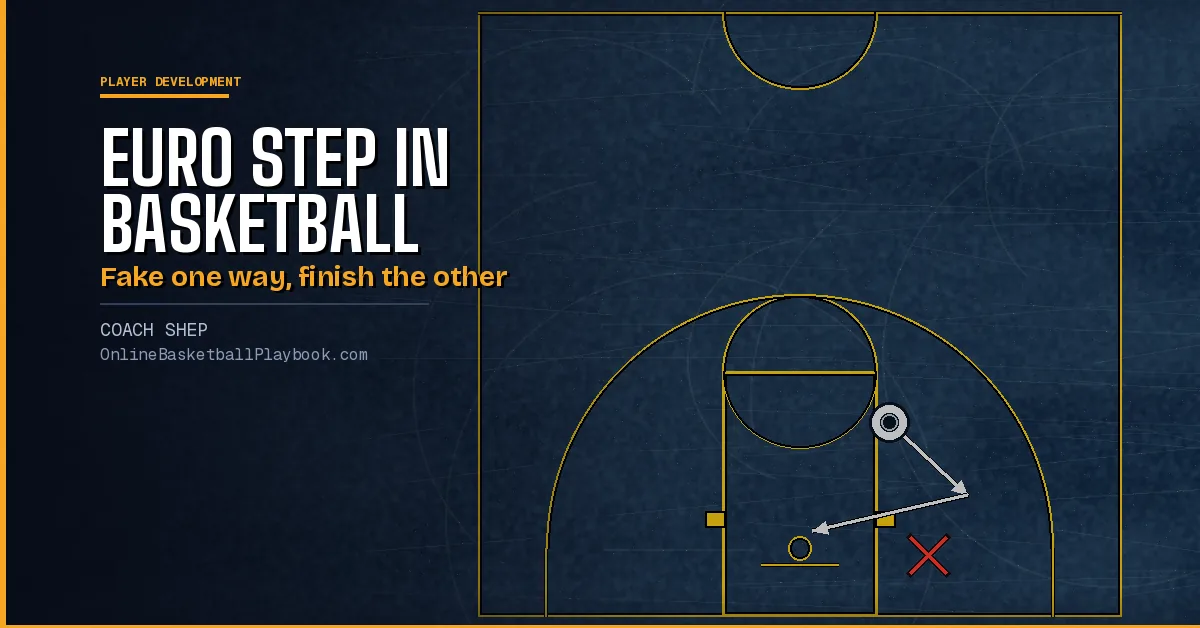
How to teach the euro step: the four-part footwork, when it beats help and shot blockers, the decelerated version for transition, the travel question and drills.
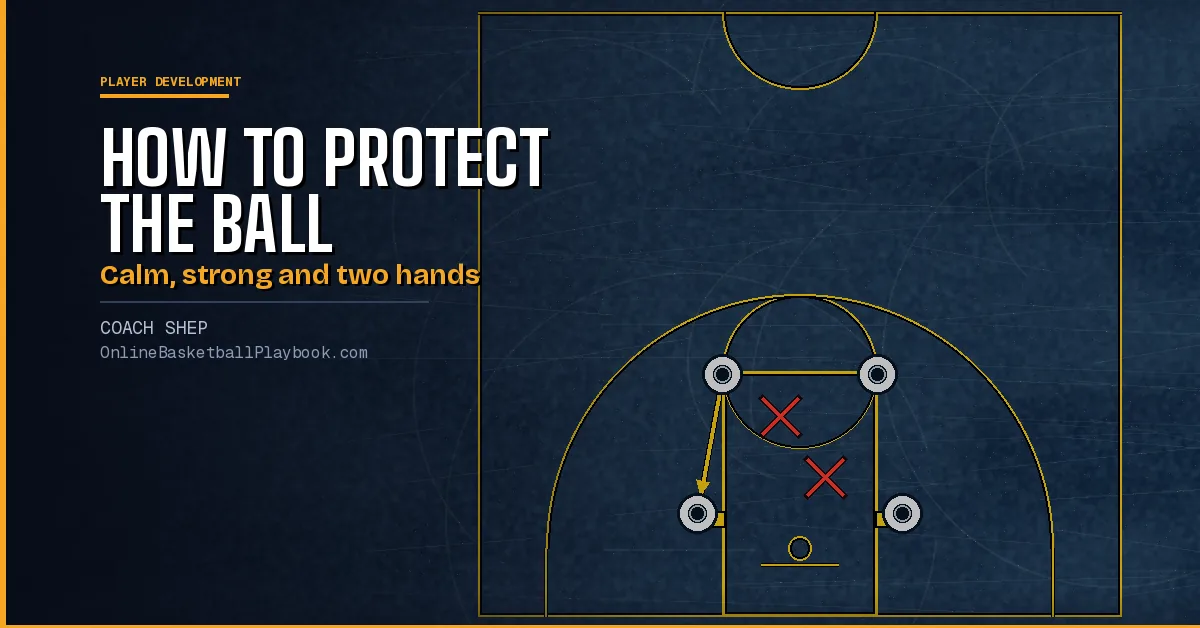
How to protect the ball in basketball: where turnovers come from, ripping and catching, the sure pass, beating a trap, ball security drills and pricing turnovers.
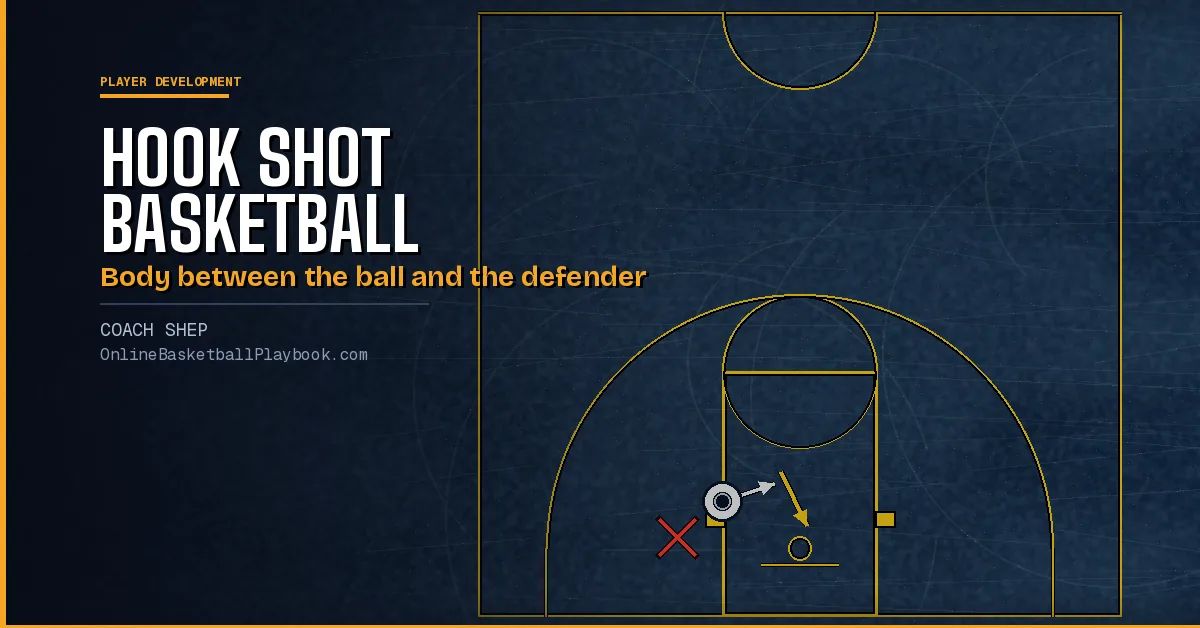
Hook shot basketball for post players and coaches: the classic hook, sky hook and jump hook, the footwork steps, when to use it, the pivot foot rules and drills.
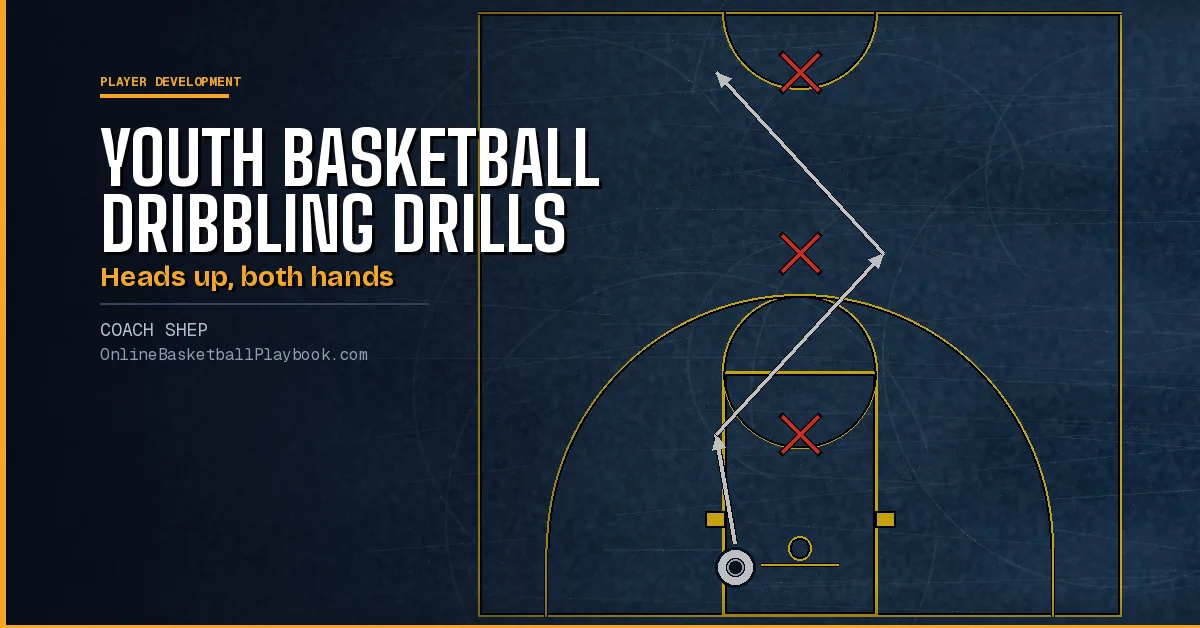
Youth basketball dribbling drills for kids: finger-pad work, eyes-up games, cone dribbling drills, line drills and harder drills by age.
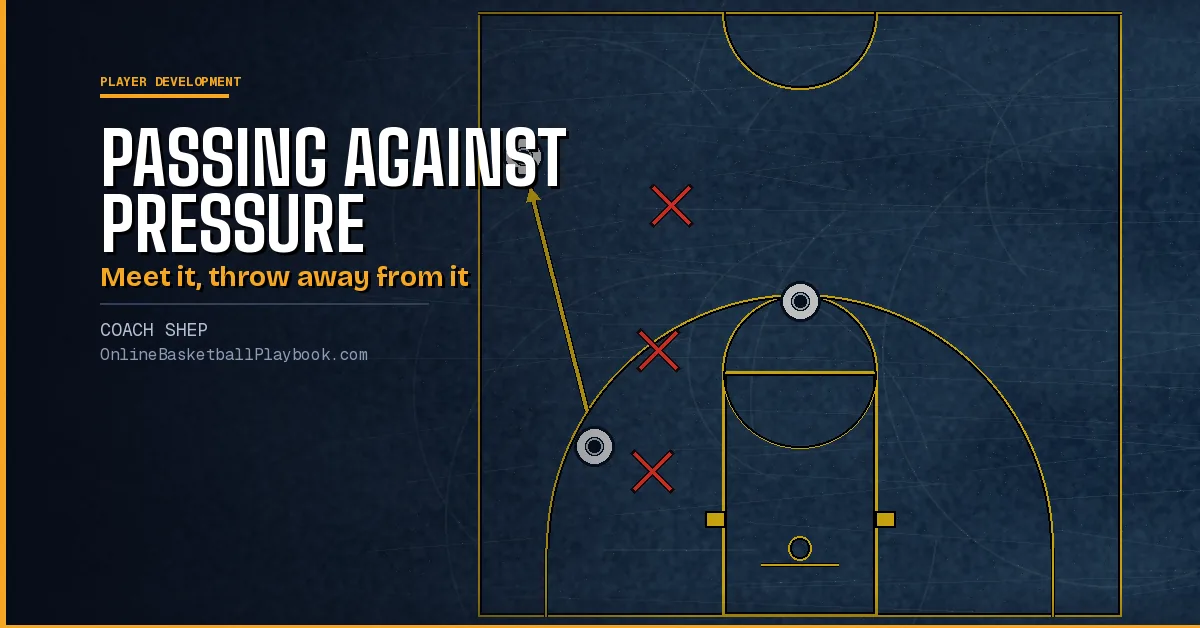
Passing against pressure: the receiver meets the ball, the passer throws away from the defense, the first pass against a press, passing out of a trap and drills.
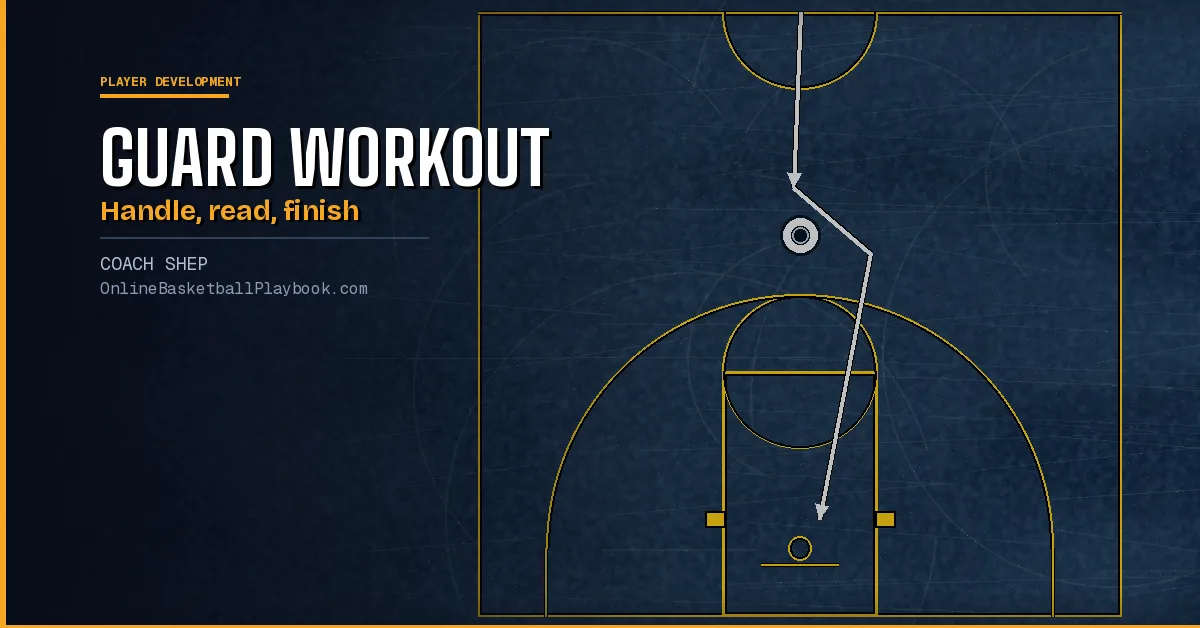
A guard workout you can print: a full session with its standards, plus handle work, jab, closeout and ball-screen reads, finishing and shooting off the dribble.
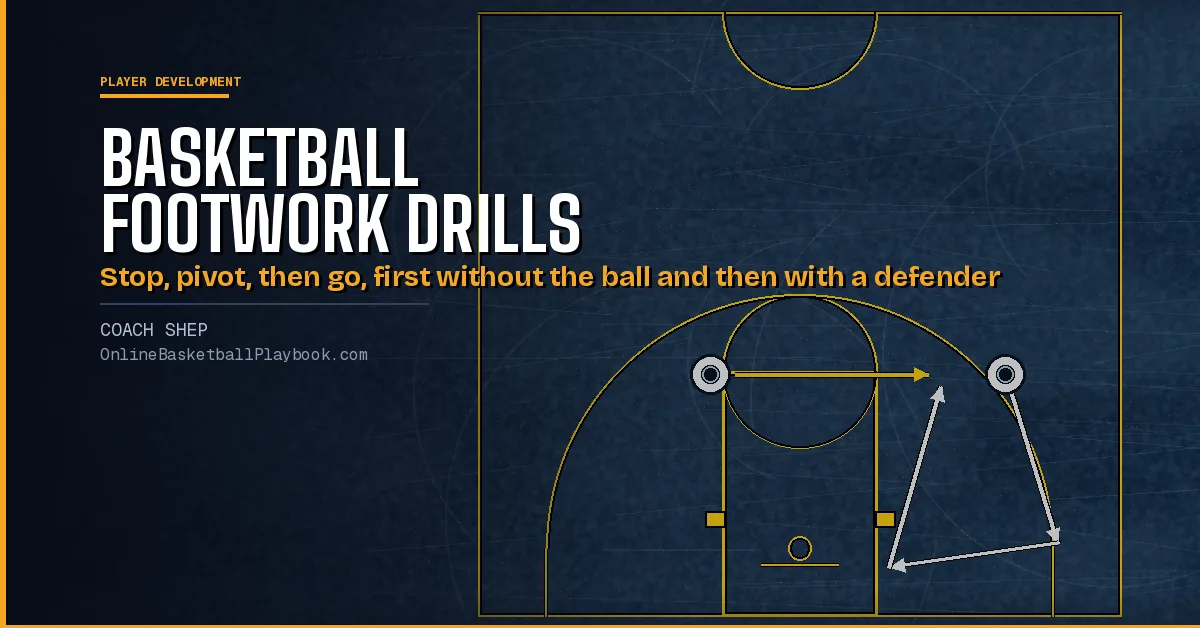
Basketball footwork drills for stops, pivots, cuts, jab moves and defensive slides, from the box drills to 30-minute workouts and where coaches differ.
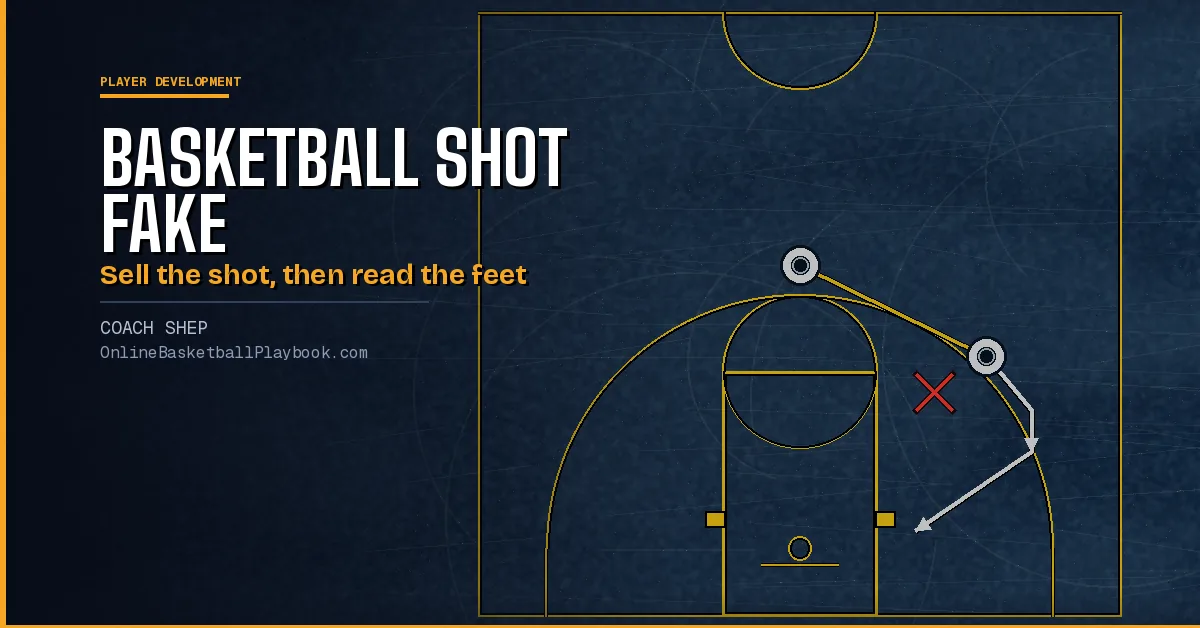
The basketball shot fake, also called the pump fake, works when it looks like the real shot. The mechanics, the pivot foot footwork, the read and the drills.
Basketball player development runs on a plan, game speed and a make count. Learn the skill progression, scoring, error fixes, drills and how to program a season.
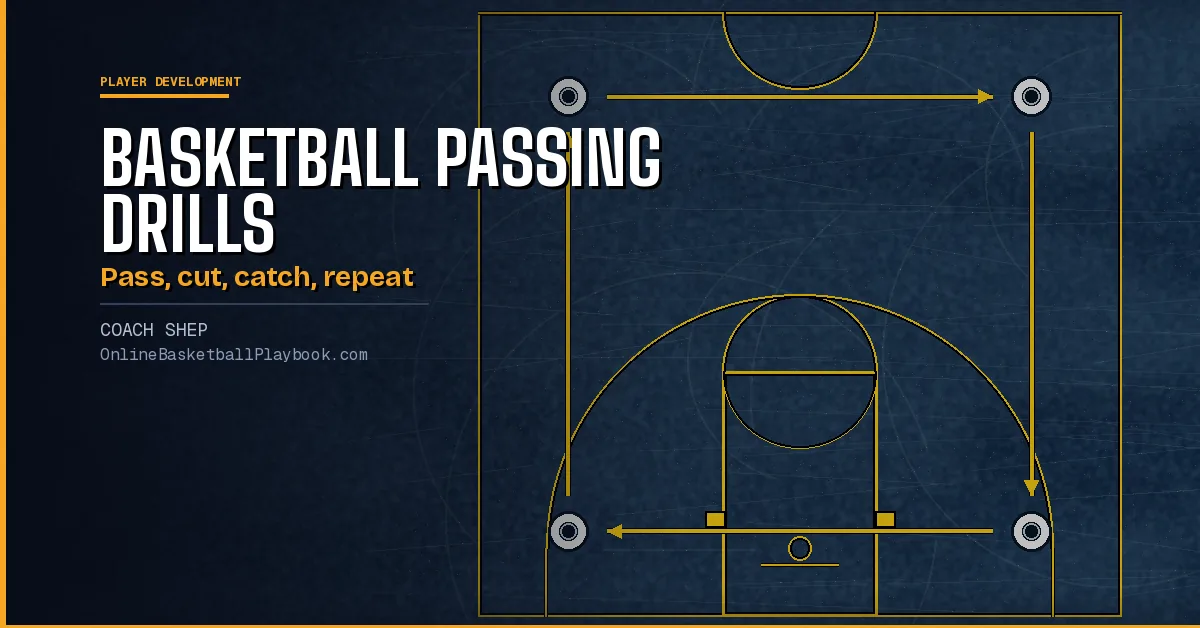
Basketball passing drills for beginners, partners and full teams: the basics to coach, drills with setups and coaching points, pressure drills and scored games.
Basketball shooting form step by step, from the ready stance and grip to release and follow-through, with drill progressions and where coaches disagree.
Basketball dribbling drills from beginner to advanced. Stationary series, moving drills, two-ball work and pressure drills, with how to run each block.
Free throw shooting starts with a routine the player never changes. Form cues, the mental side and drills that copy the fatigue and pressure of a game.
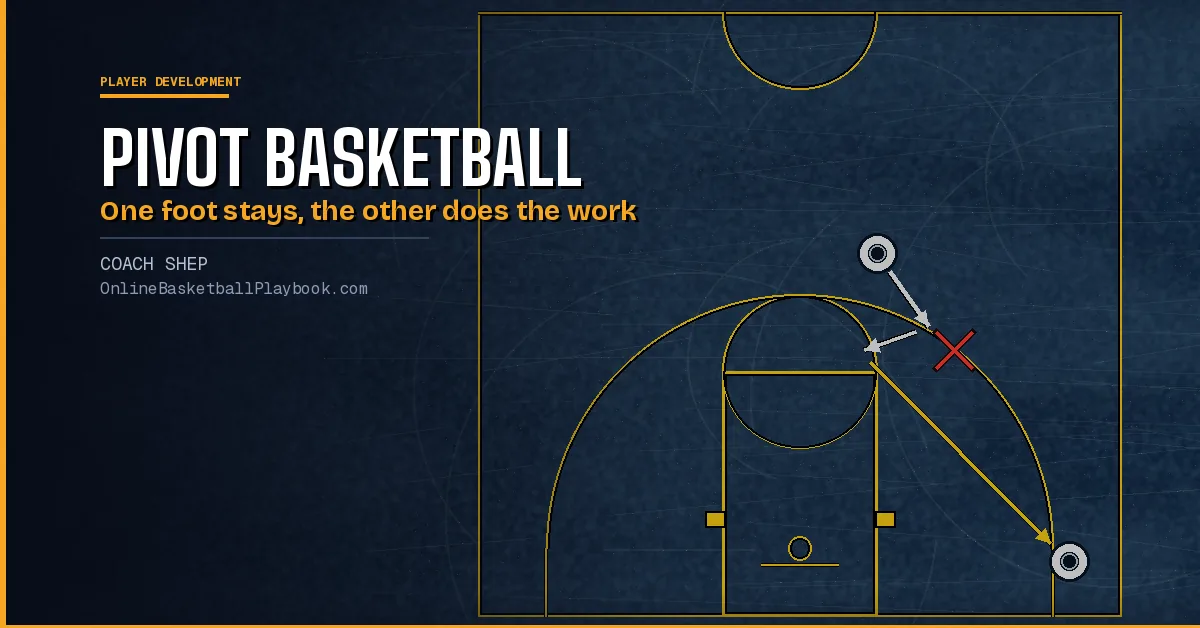
What a pivot means in basketball, which foot is the pivot foot after each stop at every level, front and reverse pivots, the inside pivot on the move and the drills.
How to build a basketball workout plan: the blocks to include, the order, how long, make counts and game speed, position work, tracking, and where coaches disagree.
Competitive shooting drills with a score on every shot: streak games, timed targets, Beat the Pro, plus and minus, 2-on-1 shooting and record boards.
Post moves basketball coaches teach, from the seal and the catch to the drop step, jump hook and face-up, the read on each defender and the drills that build them.
Types of passes in basketball: the chest, bounce, overhead and baseball passes, one-hand and post passes, named passes like the skip and pocket, and when each fits.
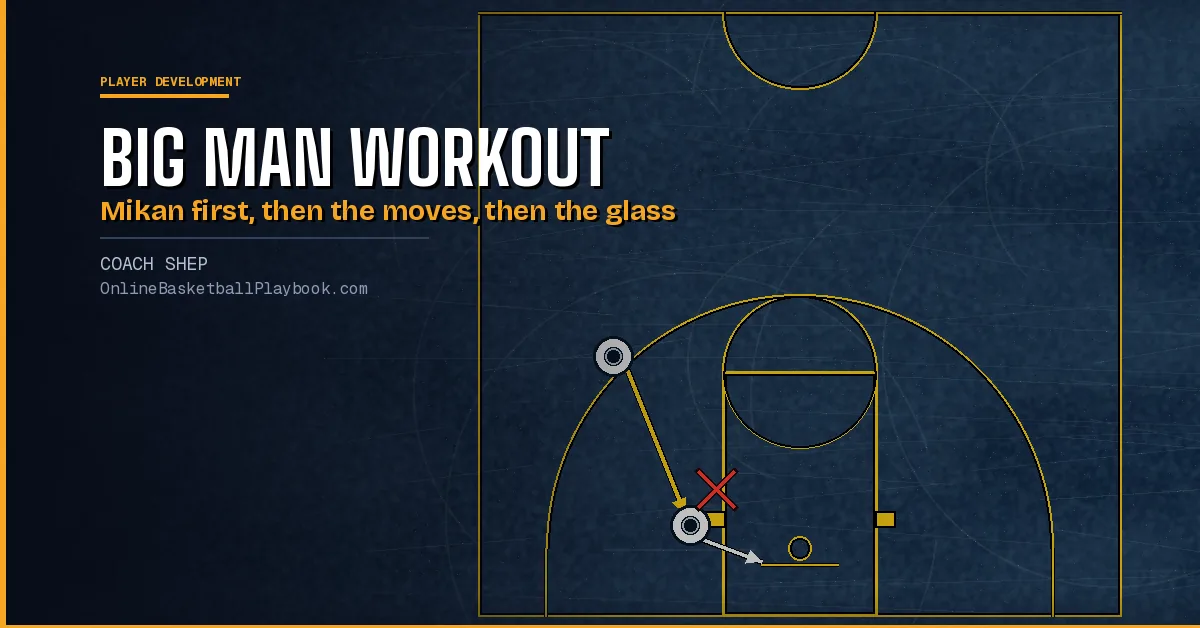
Big man workout basketball: the order of a post session, Mikan and McHale finishing, catching drills, block-to-block moves, face-up work and make counts.
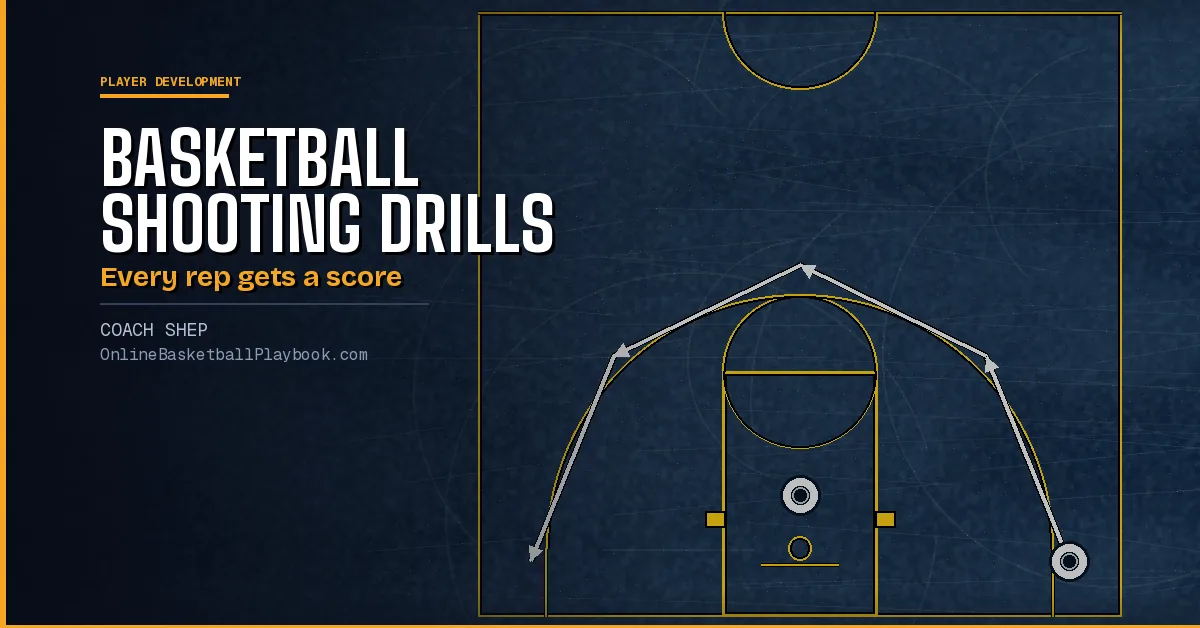
Basketball shooting drills for every level, from form work and youth games to team competitions and free throws, each with a score or a consequence.
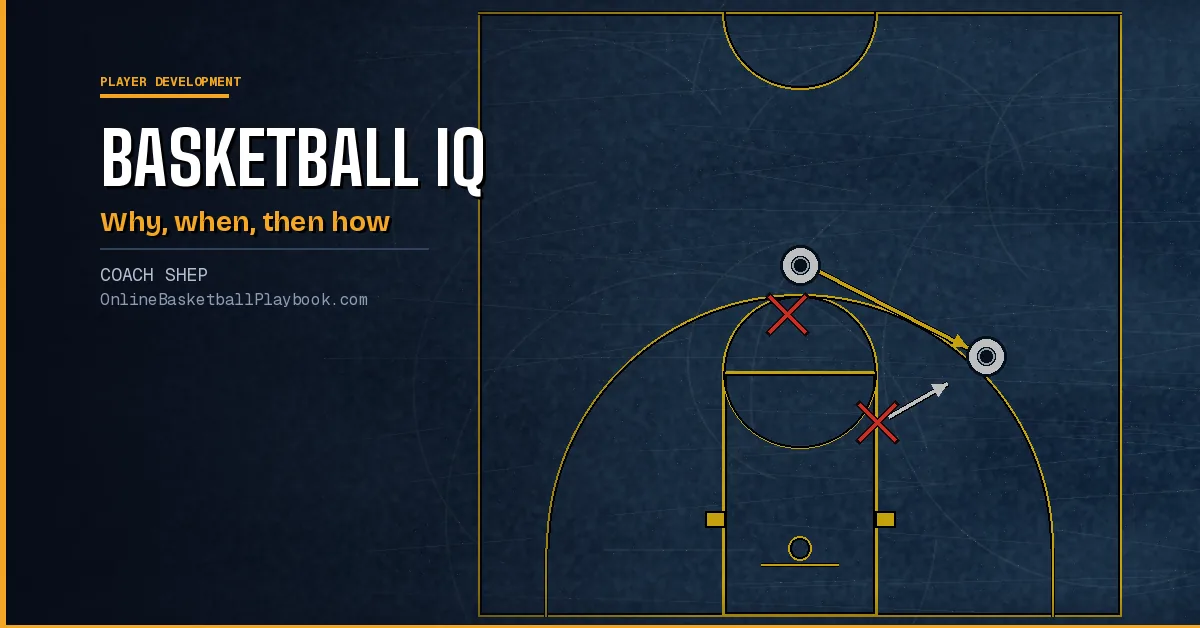
Basketball IQ is knowing why and when, not just how: the reads players learn, thinking ahead, rebounding and shot reads, game state, and how coaches teach it.
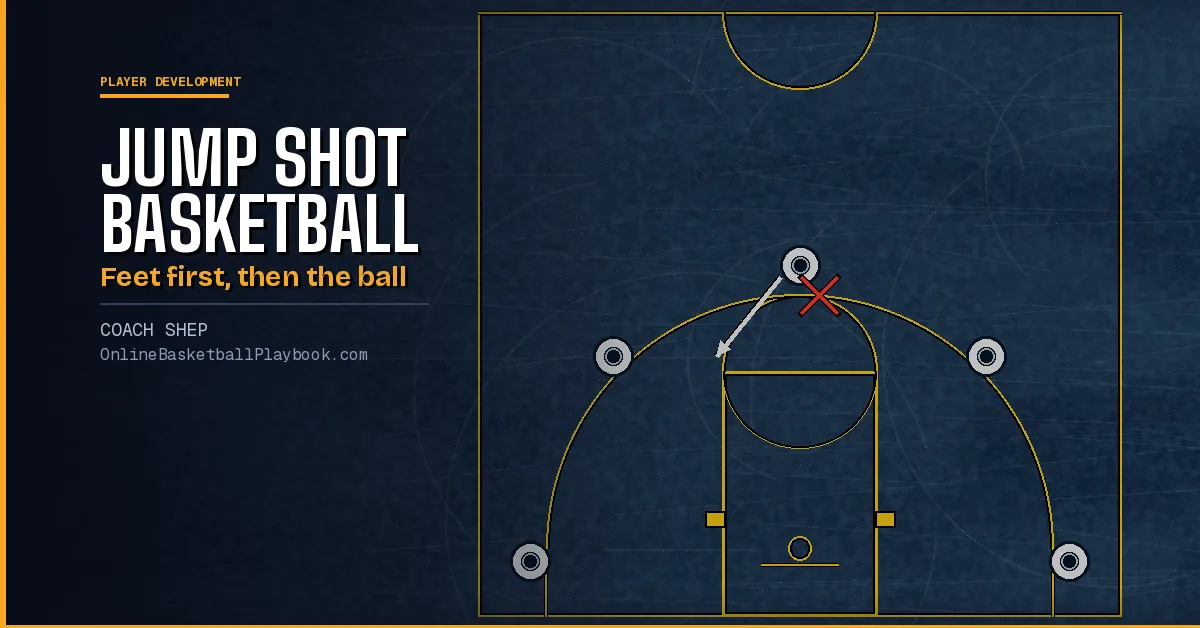
The jump shot in basketball from the feet up: catch footwork, the lift and release, shooting off the catch or the dribble, the step-back jumper and fixing a miss.
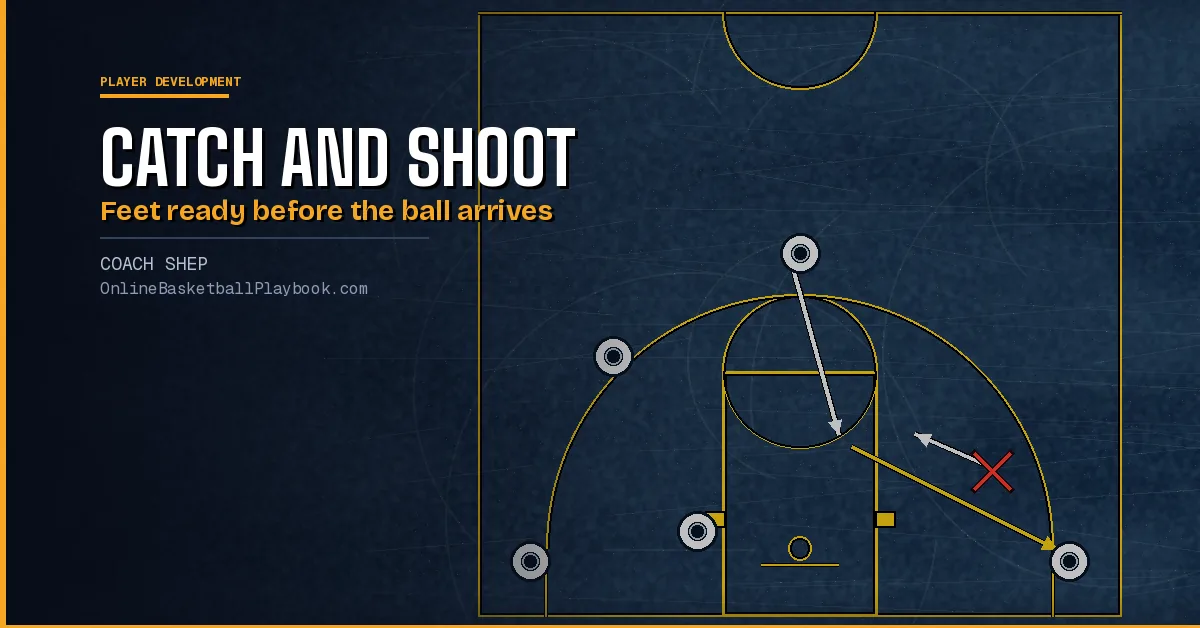
Catch and shoot basketball: getting ready before the pass, hop or 1-2 footwork, the inside pivot, reading the defender early, screen reads and scored drills.
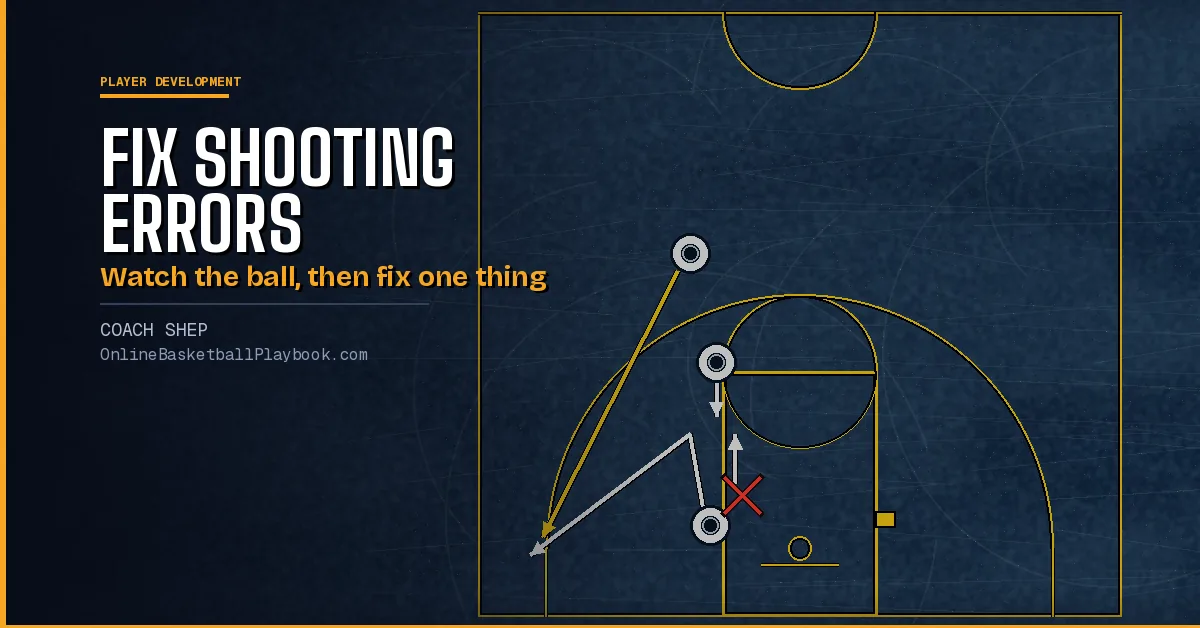
How to fix common shooting errors: read what the ball does on the rim, find the cause, apply one correction, and coach the shooter through the dip.
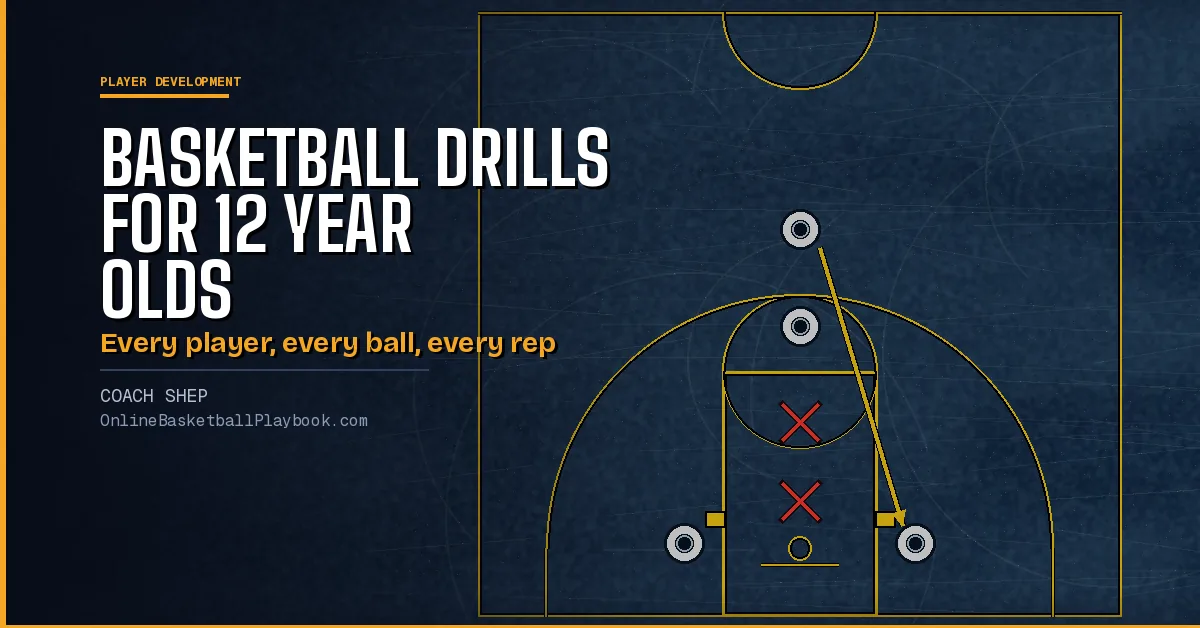
Basketball dribbling drills for 12 year olds, passing and cutting drills, decision games and a 90-minute practice, all written for players this age.
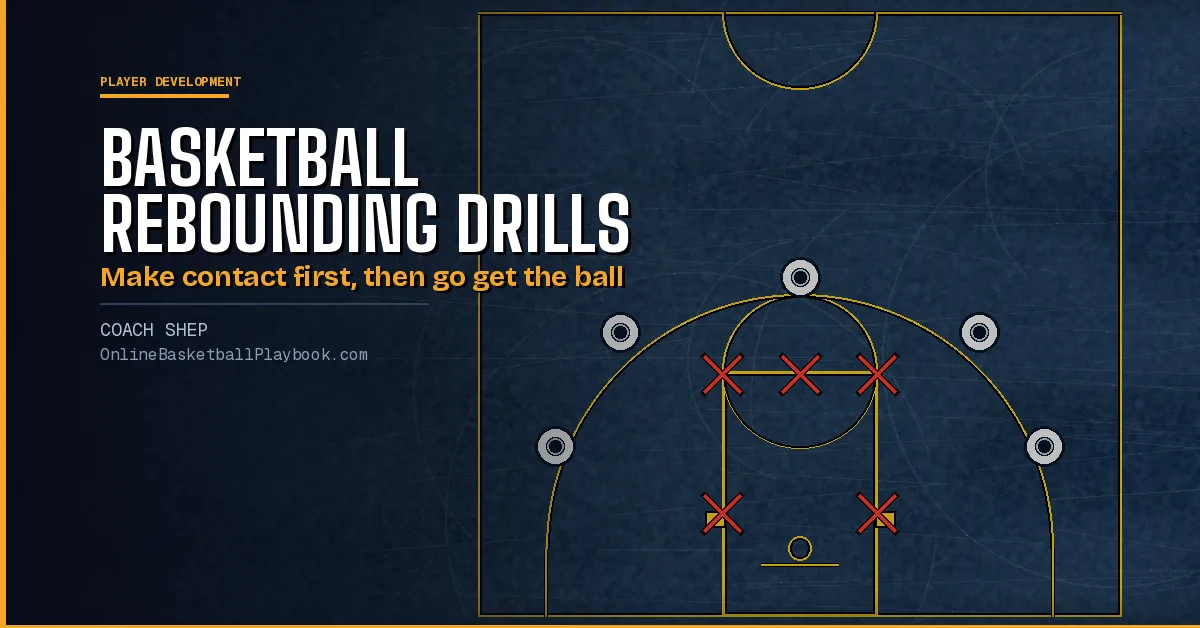
Basketball rebounding drills from technique and box-out circles to scored small-group games, War drill and youth drills, with the goals and rules coaches attach.
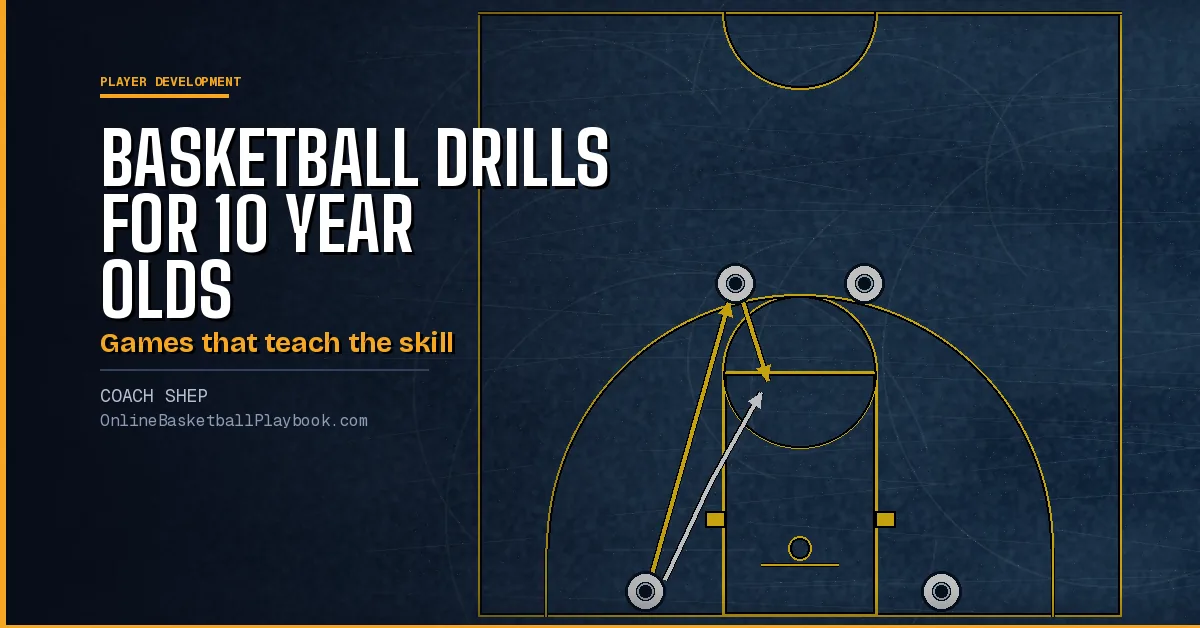
Basketball drills for 10 year olds: shooting drills and rim height, dribbling games, passing, footwork, layups, a simple offense and practice plans.
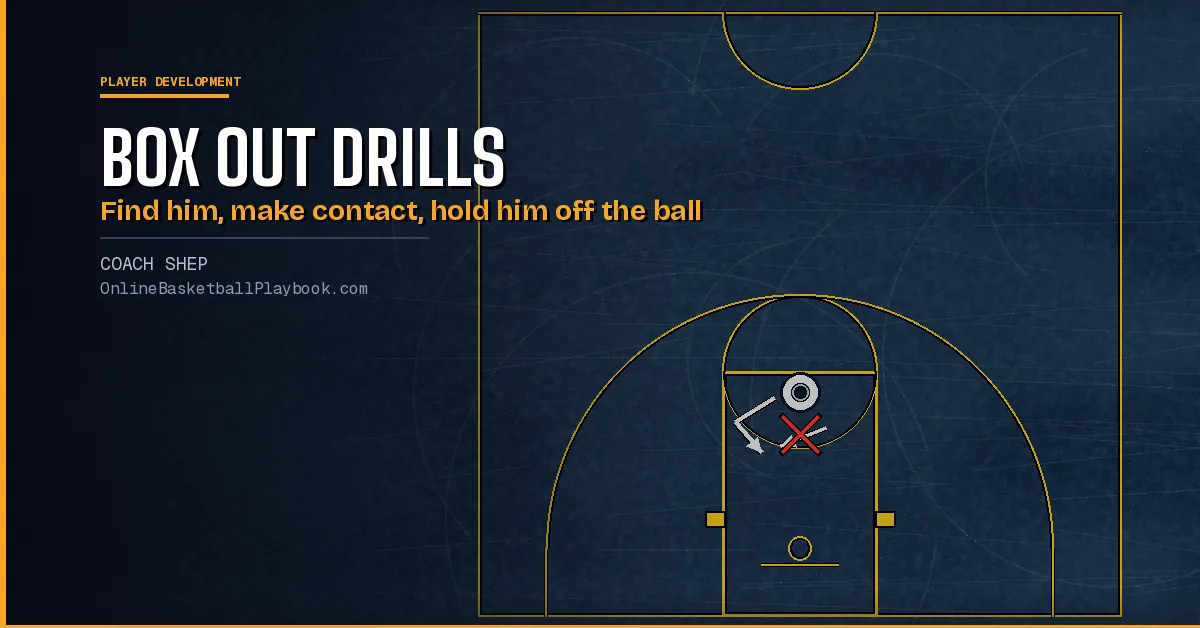
Box out drills basketball coaches use, from one-on-one footwork and youth contact drills to close-out, help-side and scored games, with the hold time for each drill.
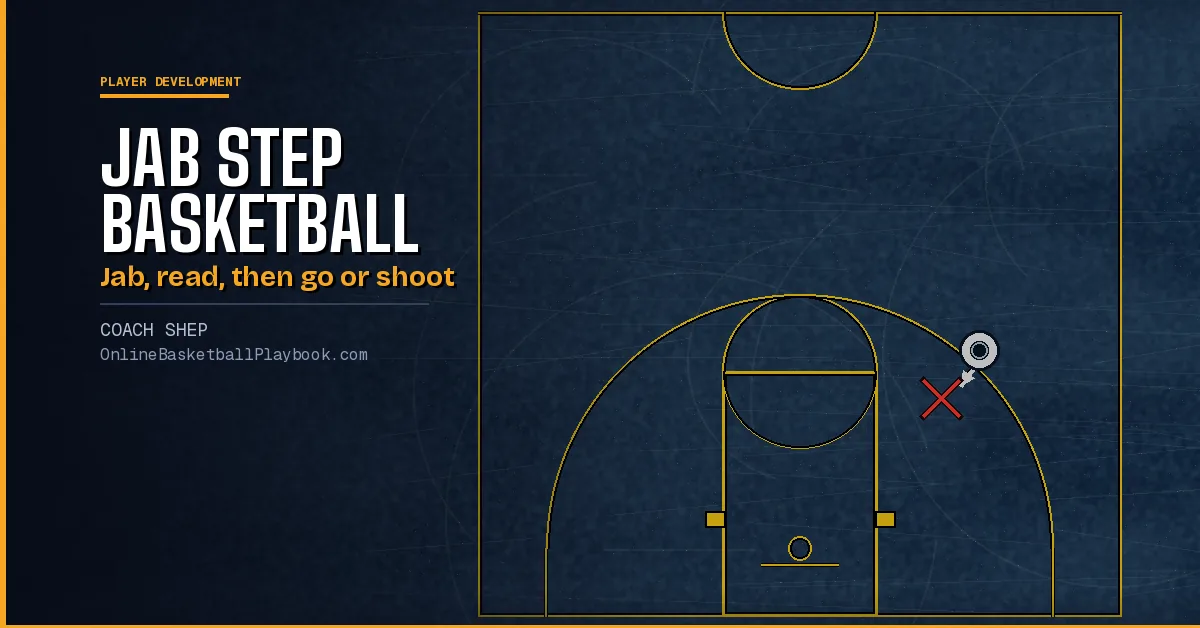
Jab step basketball for players and coaches: the footwork, reading the defender, jab and go, jab crossover, jab and shoot, the jab series, travel rules and drills.
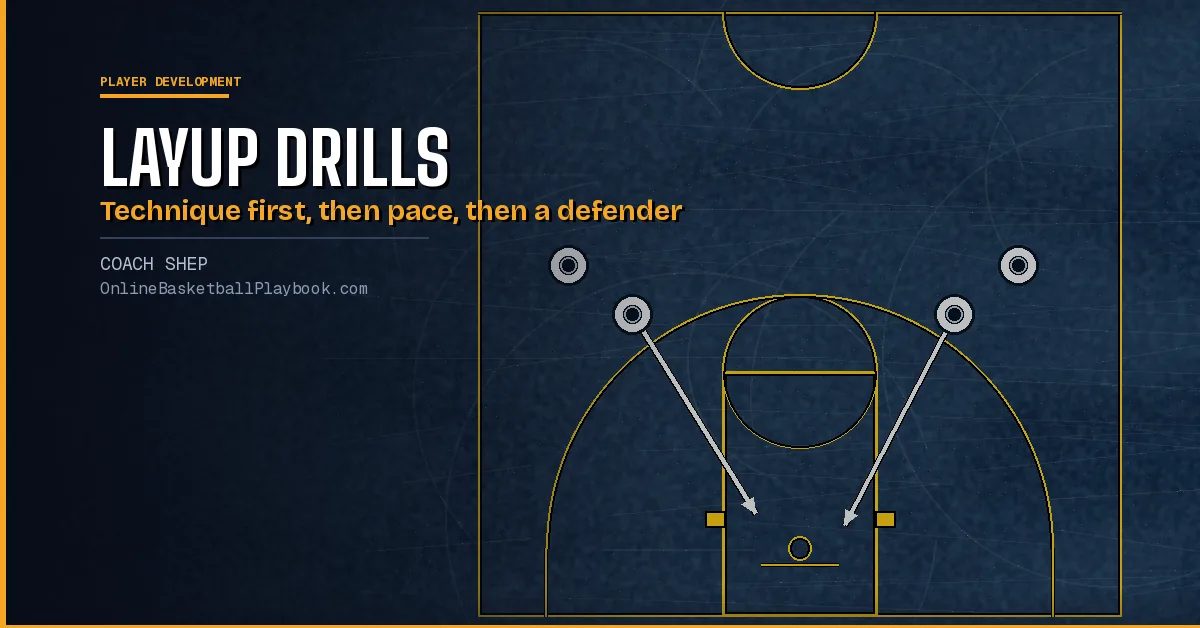
Layup drills for youth and teams, from footwork and the Mikan drill to layup lines, full-court drills with a made-shot goal and finishing against a defender.
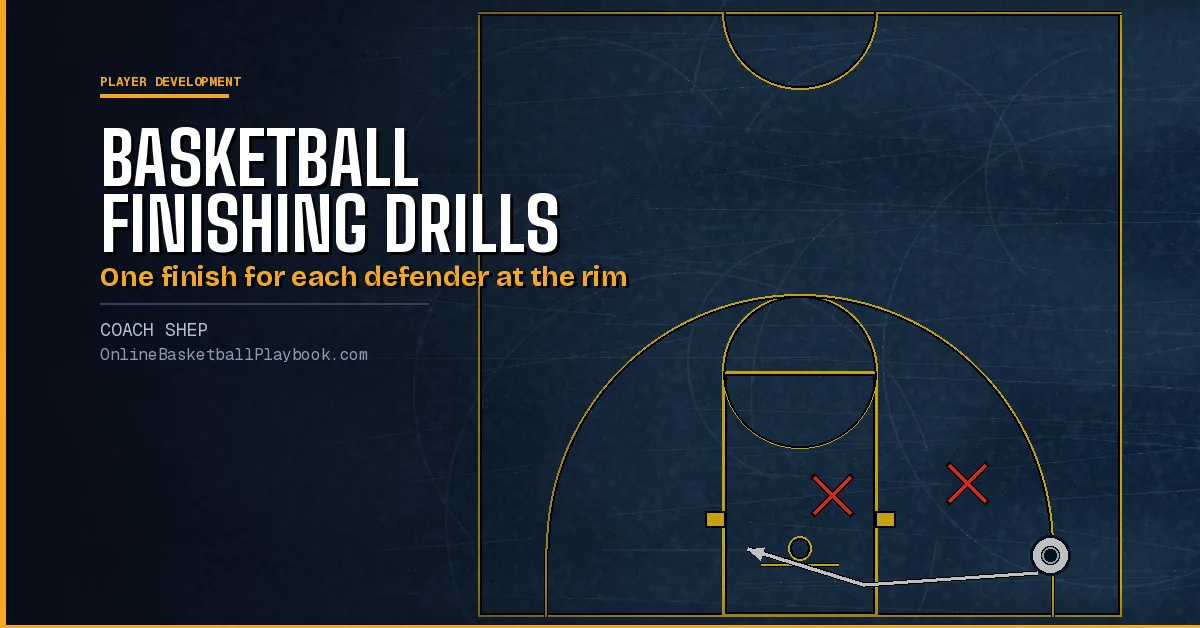
Basketball finishing drills matched to the defender at the rim, from inside-hand and reverse finishes to the pro hop, contact drills and live progressions.
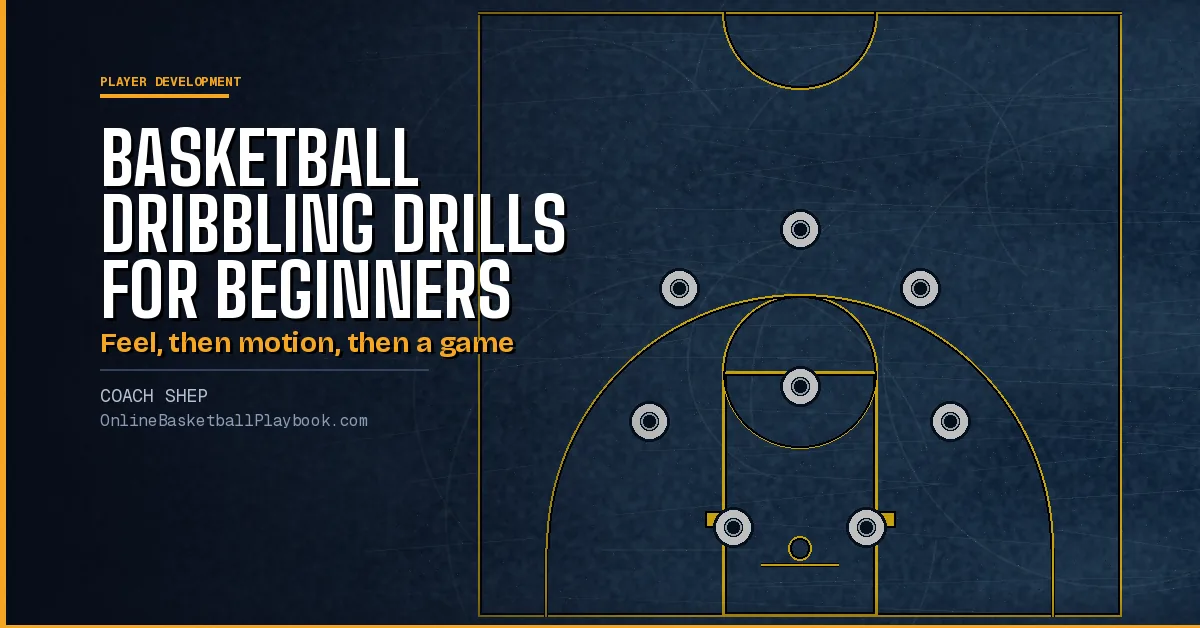
Basketball dribbling drills for beginners first, then the shooting, passing, footwork and finishing drills new players need, with how each runs.
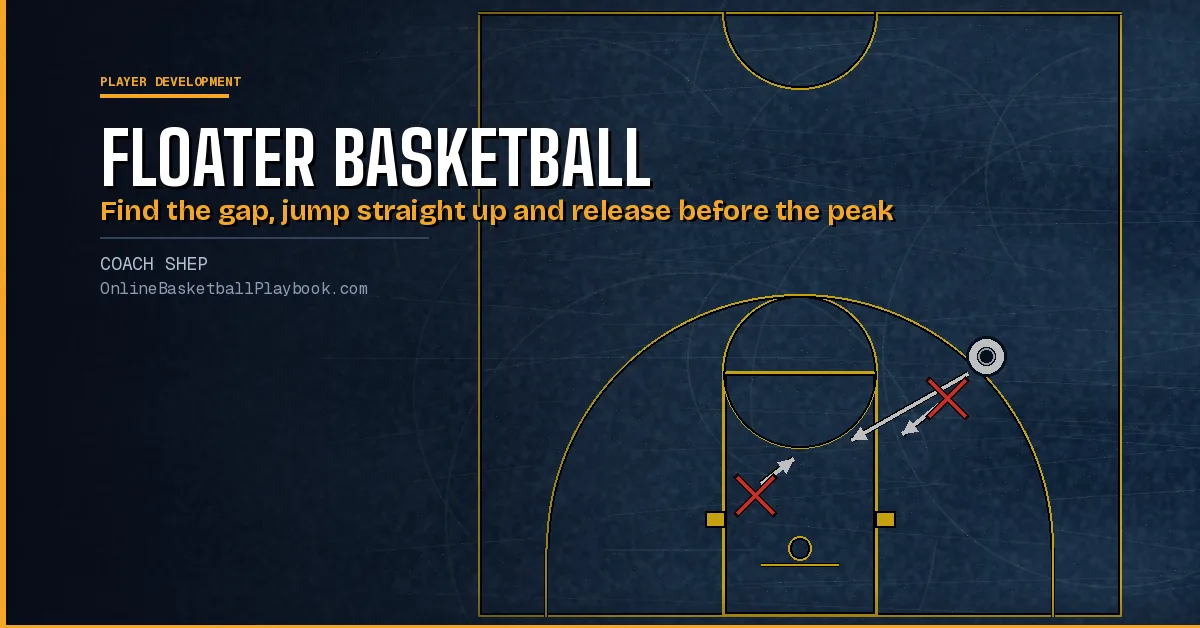
Floater basketball shot explained for coaches, with the read, the footwork, the three versions coaches teach, the drills that build it and where they disagree.
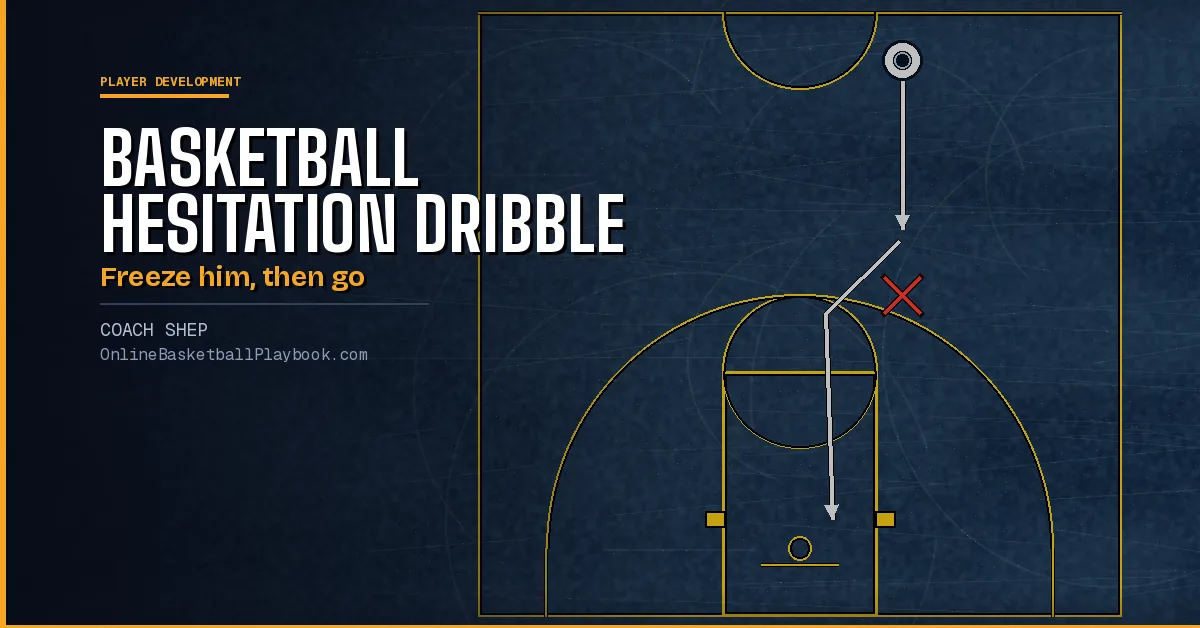
The basketball hesitation dribble step by step: the stop and rock back, selling it, when to use it, its crossover and pull-up counters, the hedge read and drills.
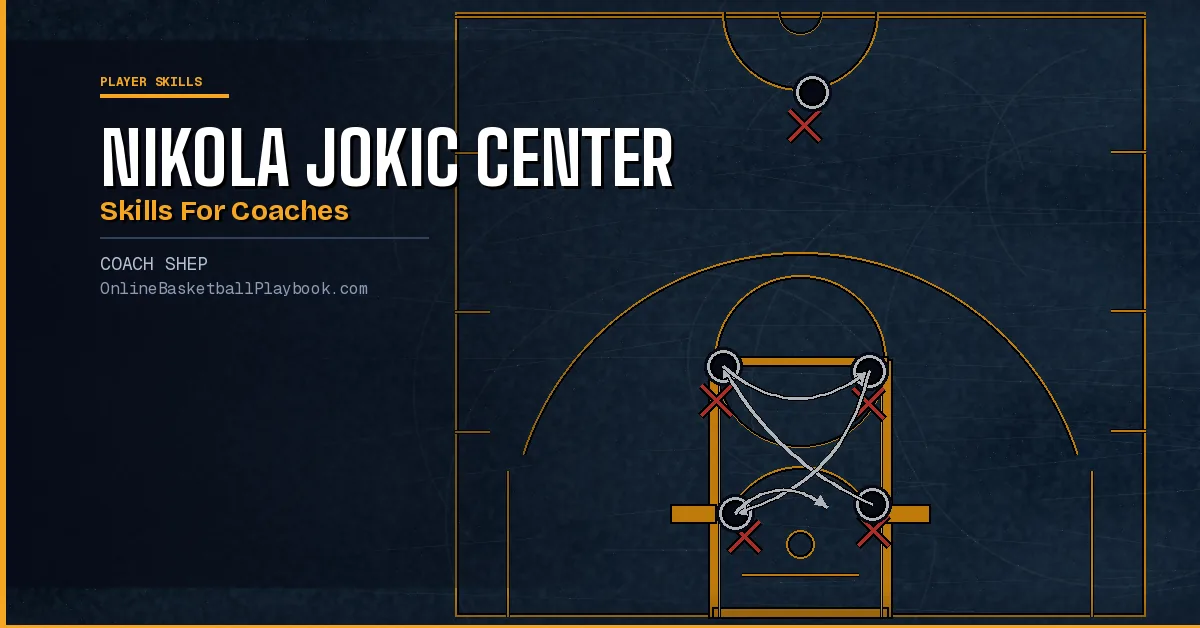
Teaching Nikola Jokic Big Man Skills to Your Centers
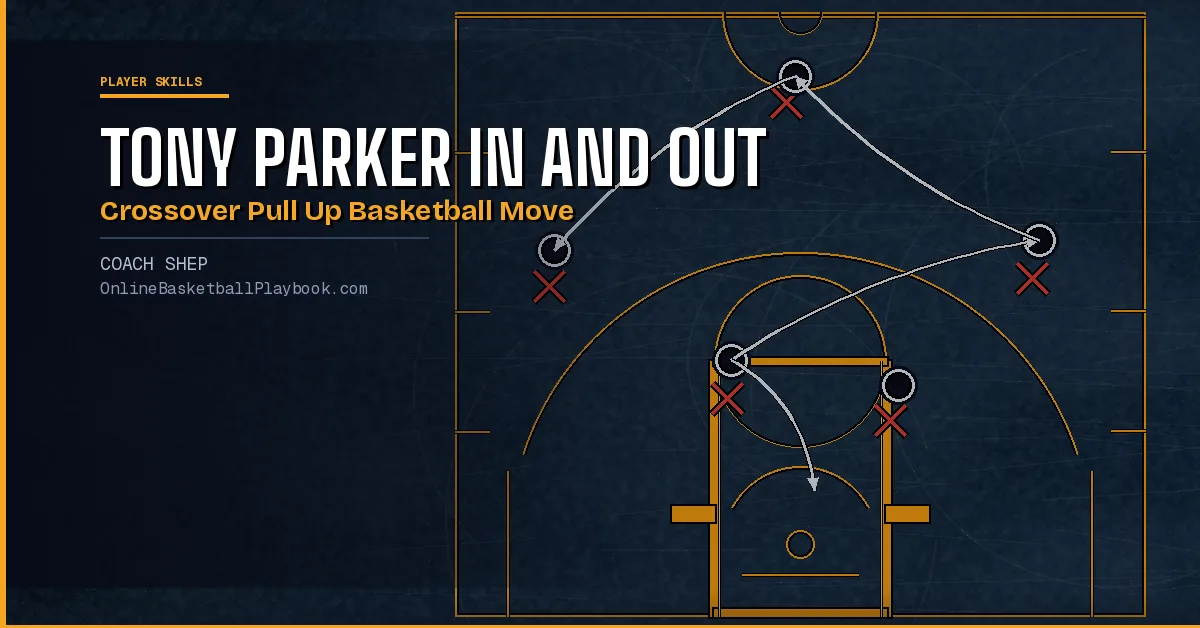
Tony Parker In and Out Crossover Pull Up Basketball Move
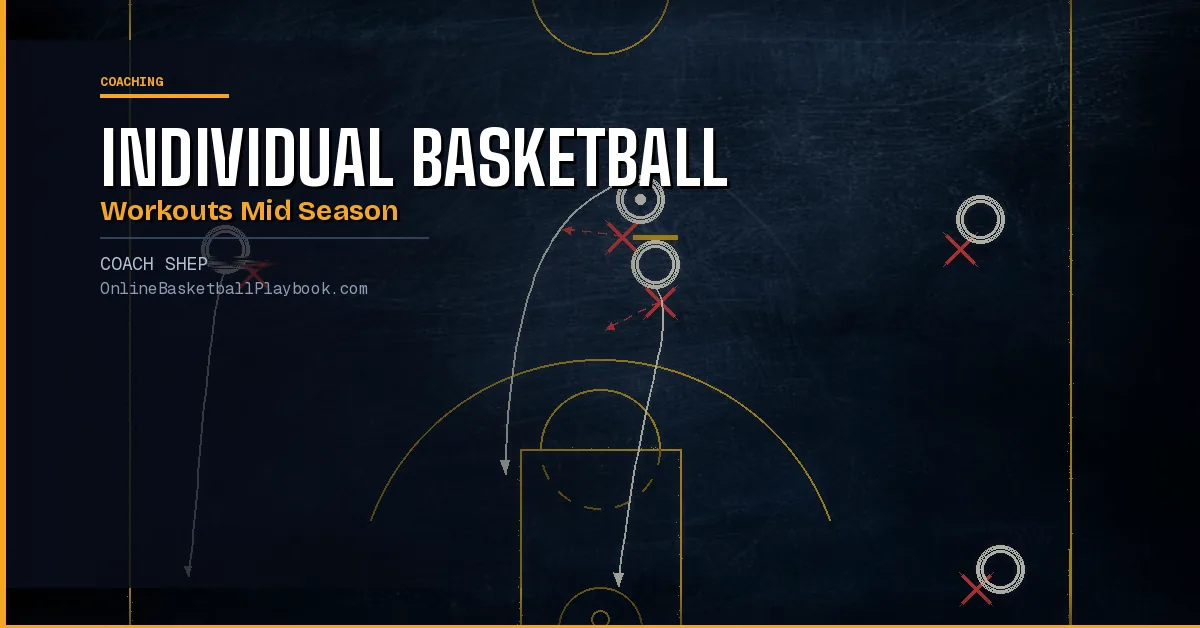
Individual Basketball Workouts Mid Season
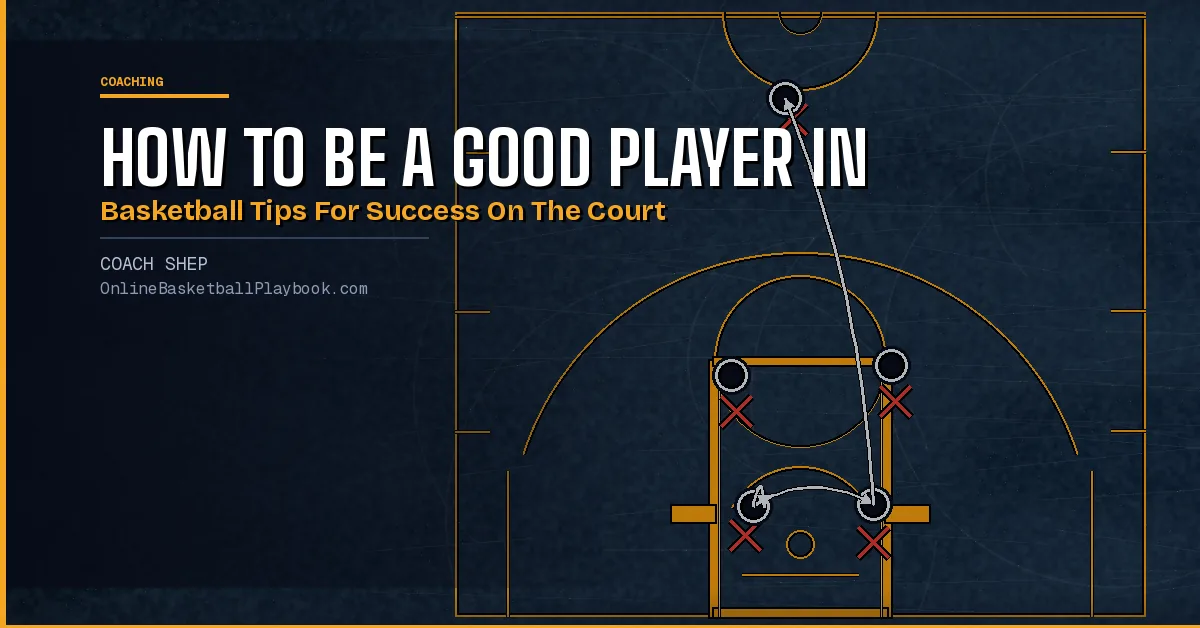
How to Be a Good Player in Basketball: Tips for Success on the Court
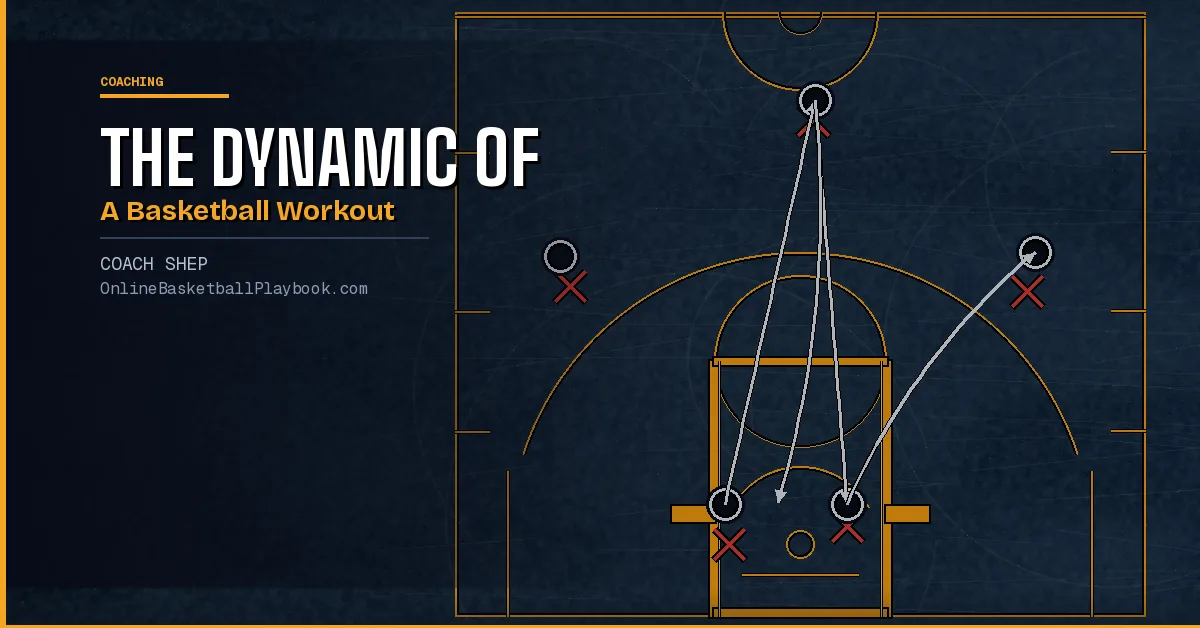
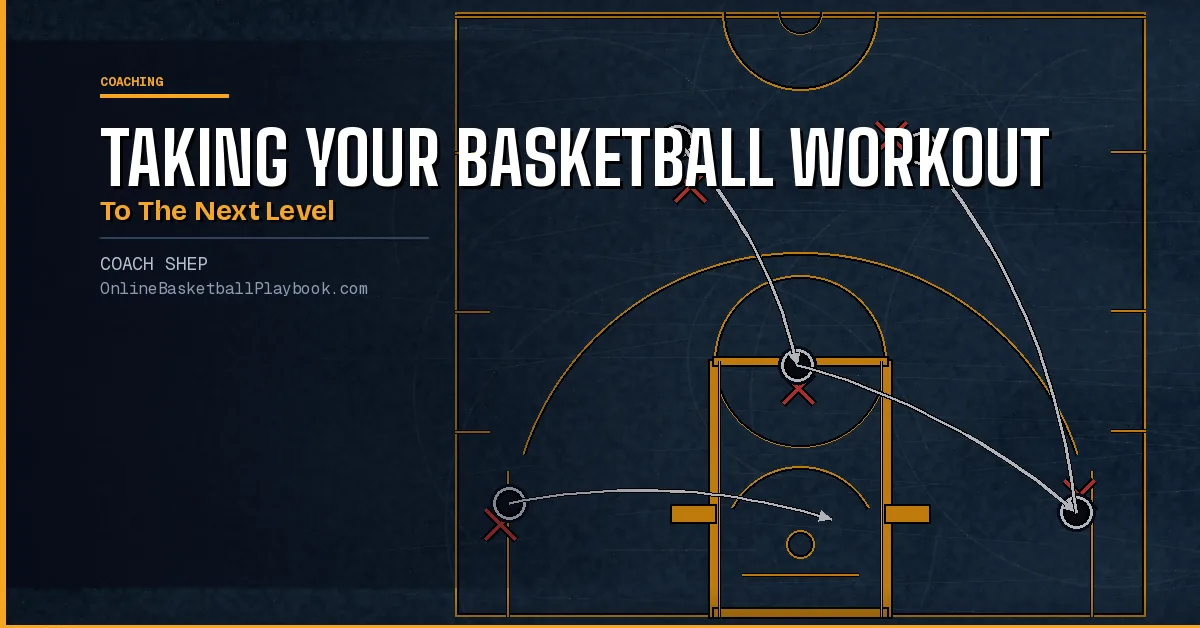
Taking Your Basketball Workout to the Next Level
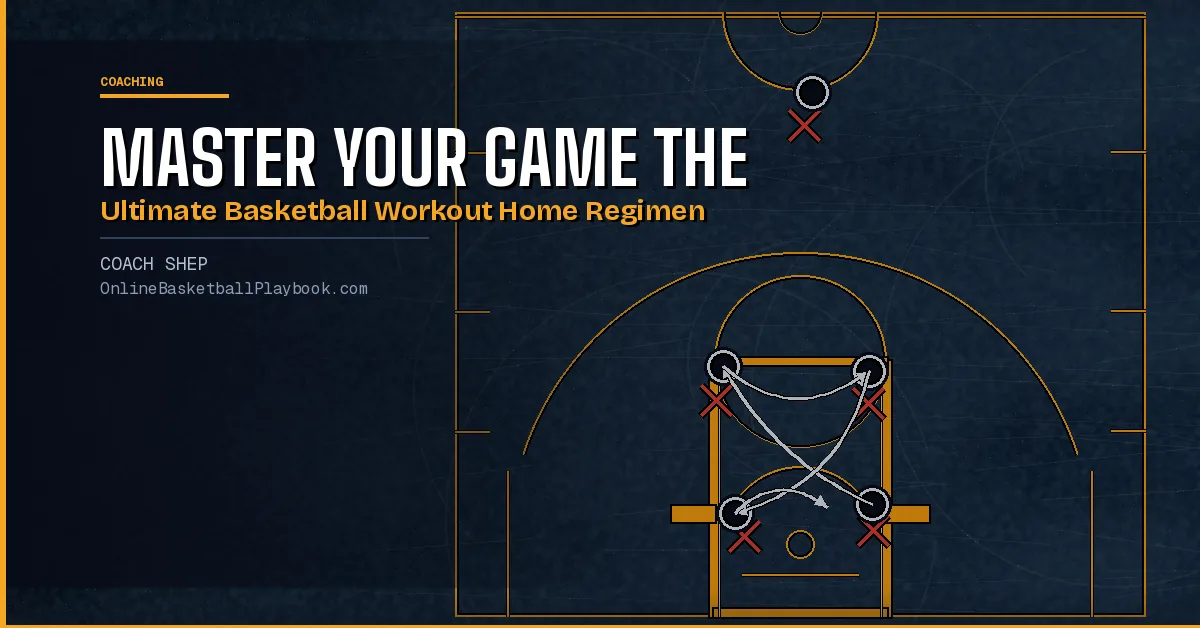
Master Your Game: The Ultimate Basketball Workout Home Regimen
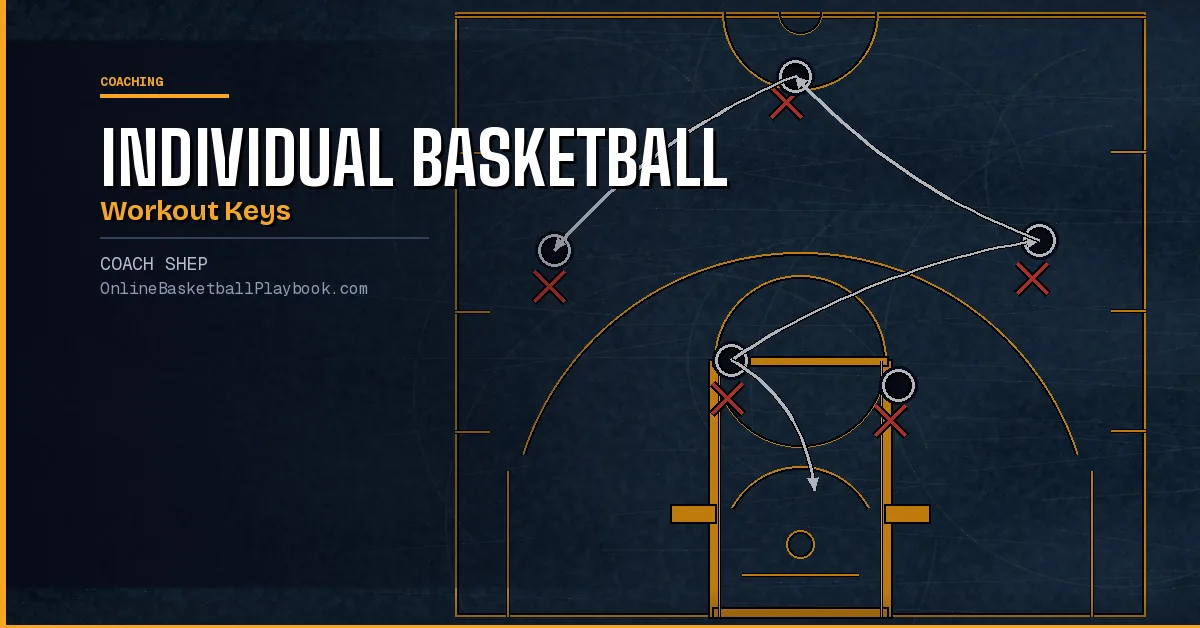
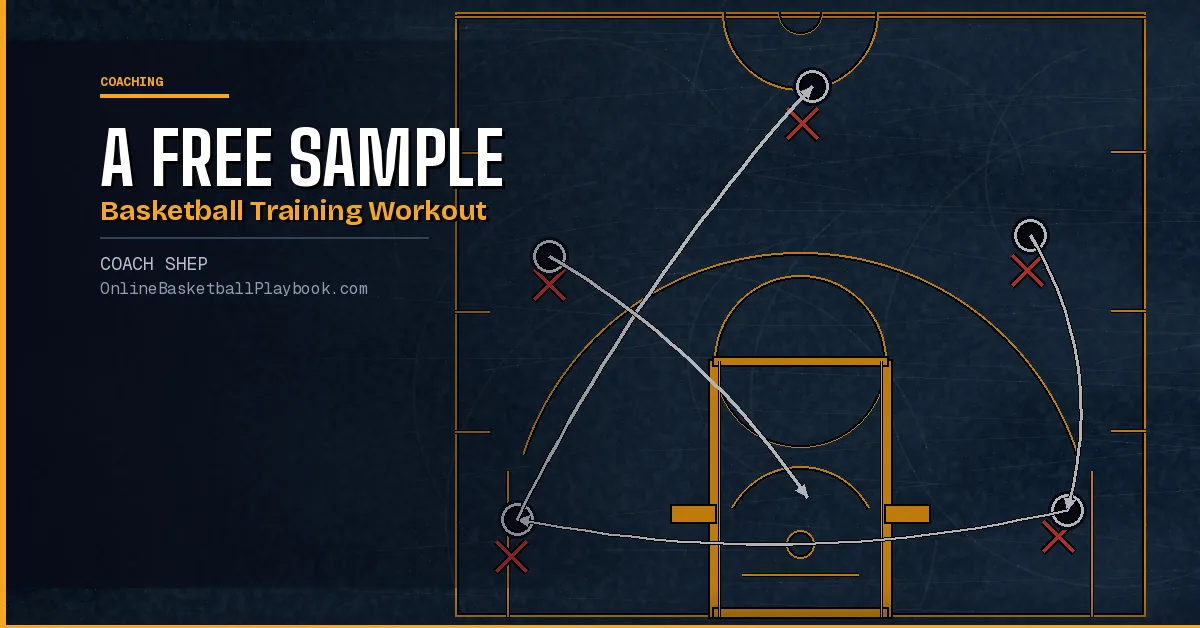
A Free Sample Basketball Training Workout
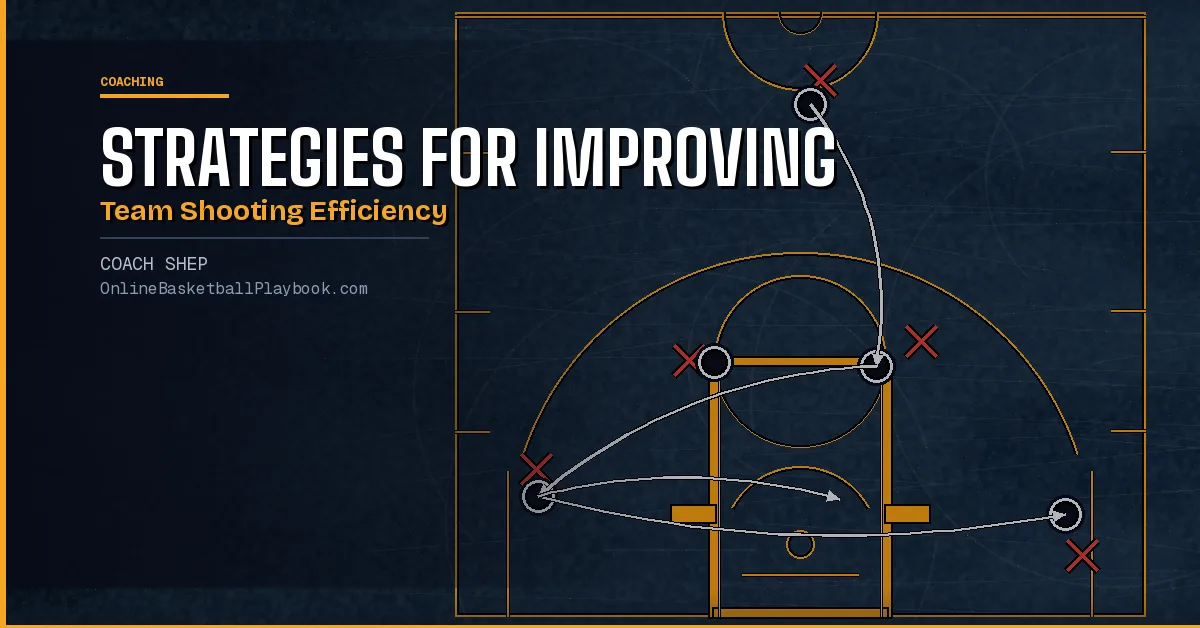
Strategies for Improving Team Shooting Efficiency
Separating Shot Takers from Shot Makers in Basketball
How to Do a Rondo Fake Shot Fake Step Through Move in Basketball
Which Part of the Rim to Aim At When Shooting
Find Your Best Online Basketball Trainer for Skills Development
How to Utilize Data Analytics in Player Development
How to Teach Effective Shot Selection in Basketball
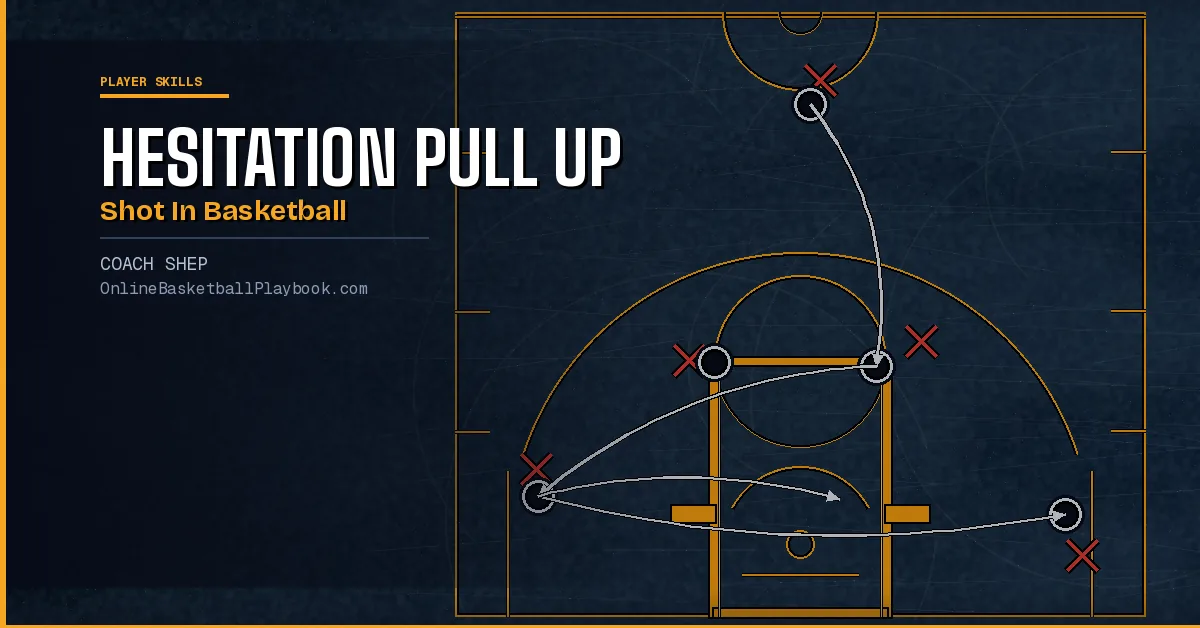
How to Do the Hesitation Pull Up Shot in Basketball
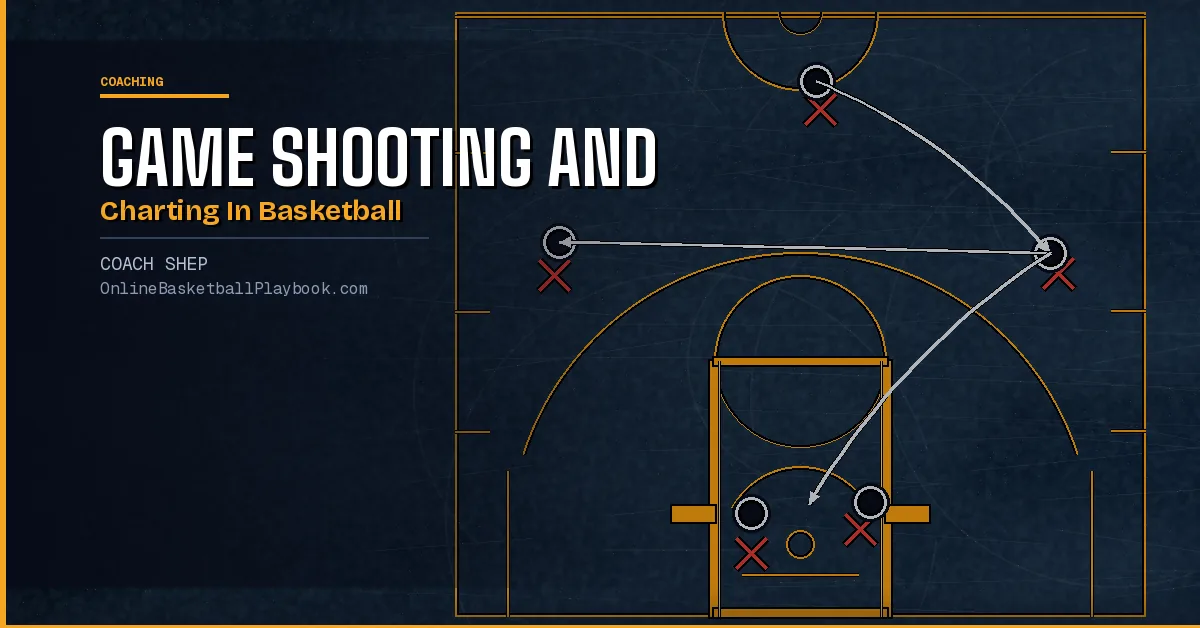
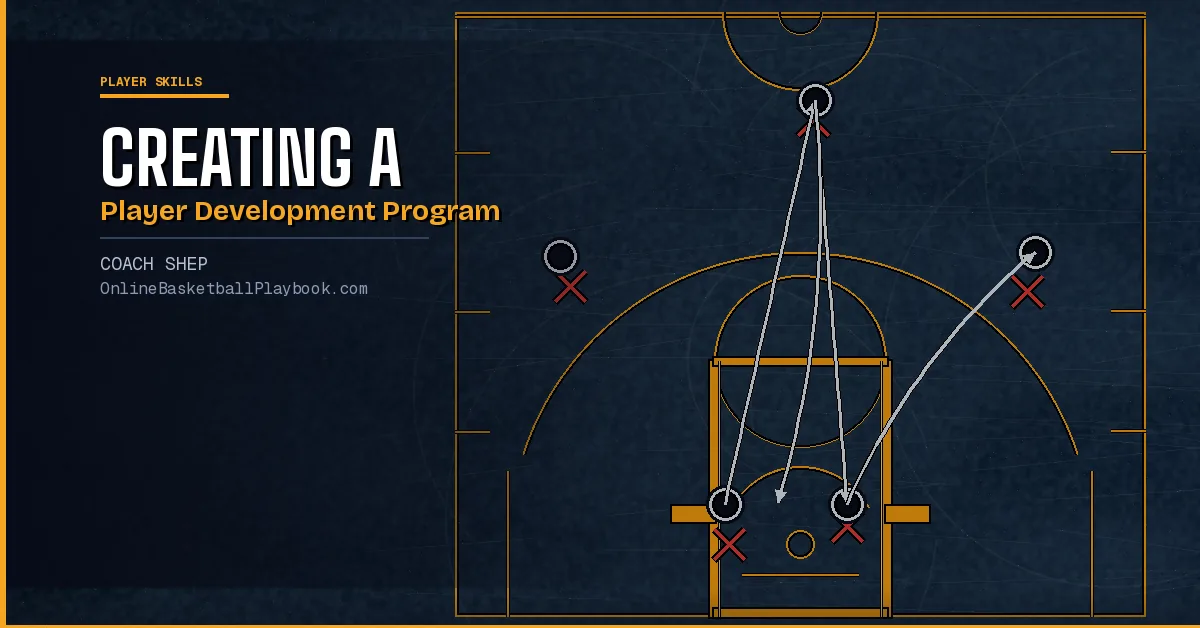
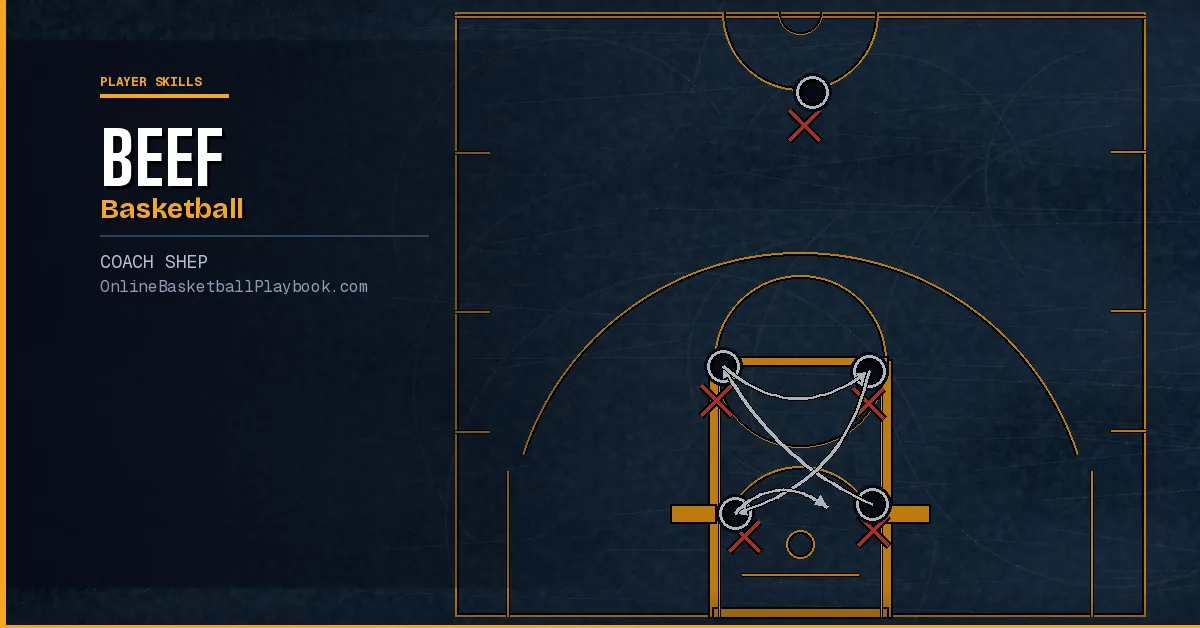
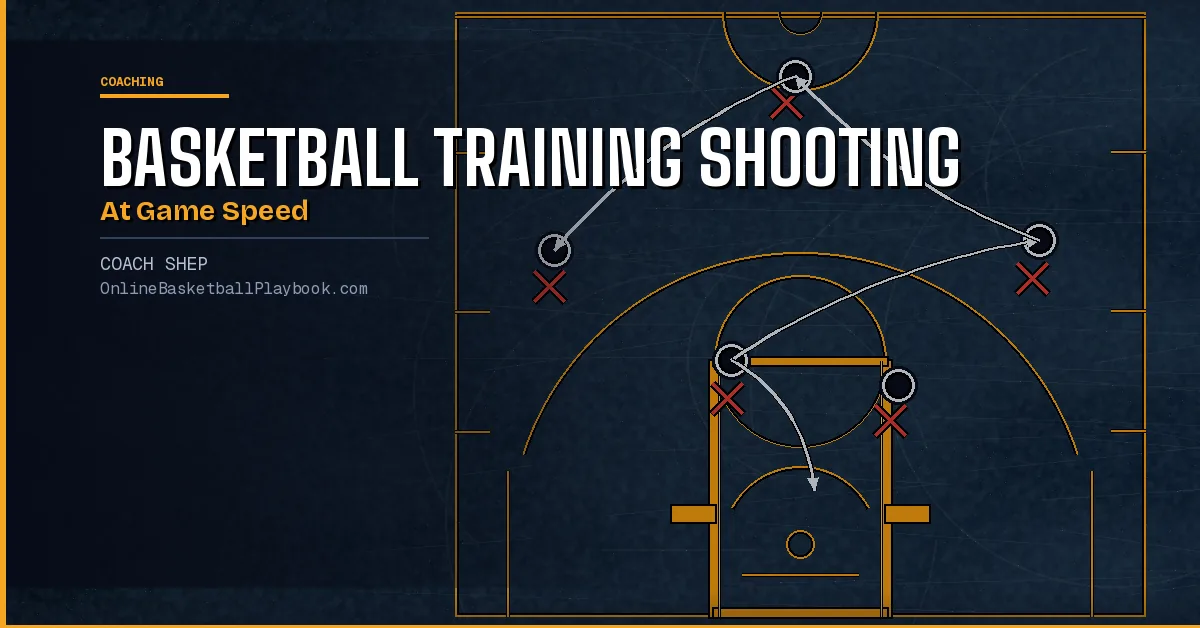
Basketball Training: Shooting at Game Speed
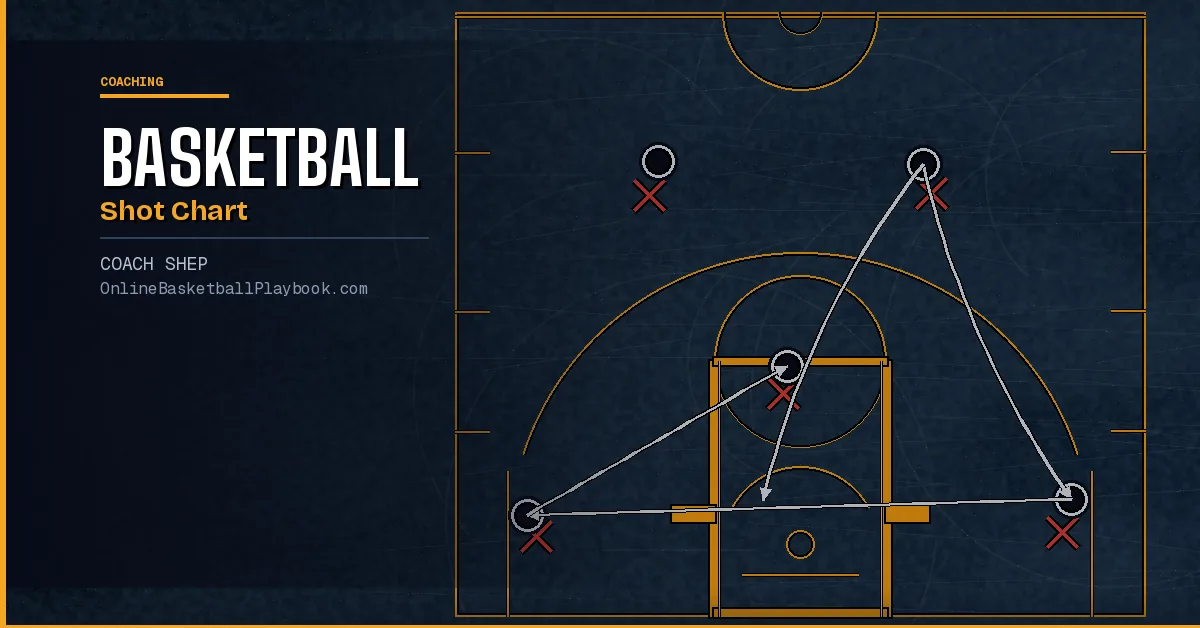
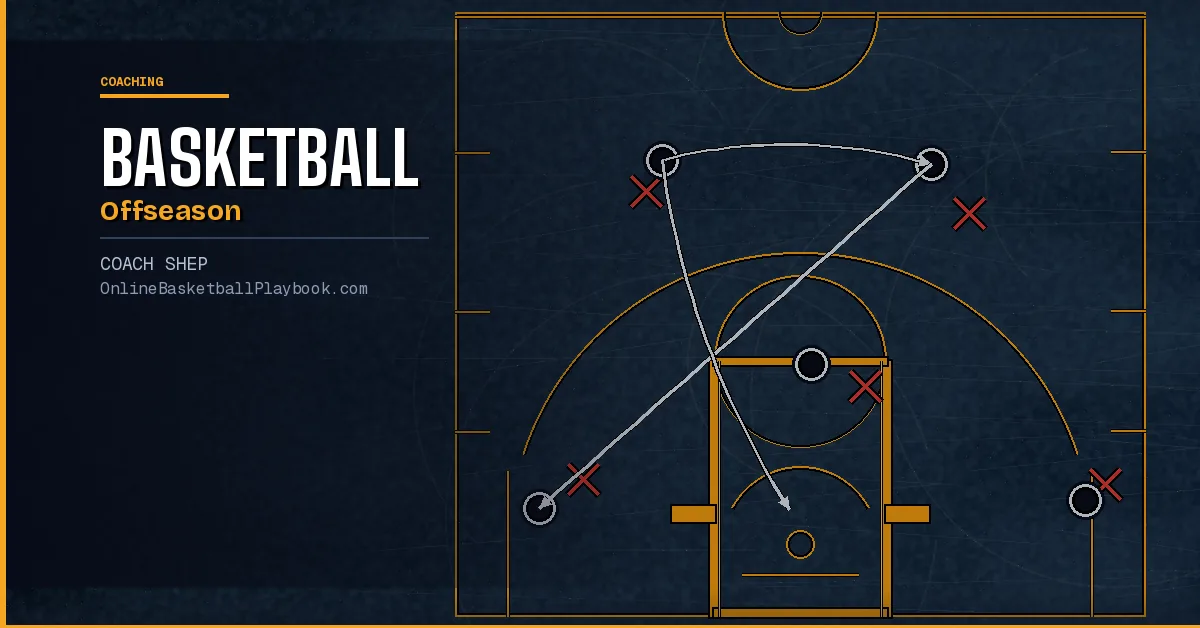
Basketball Offseason Development: What You Need to Know as a Player
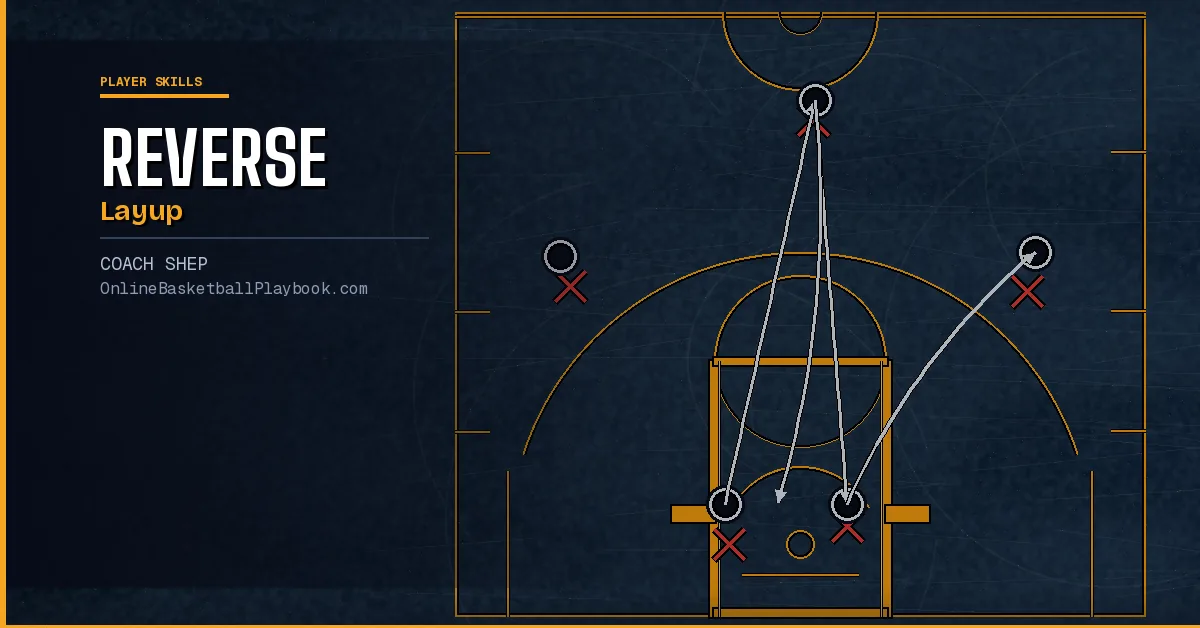
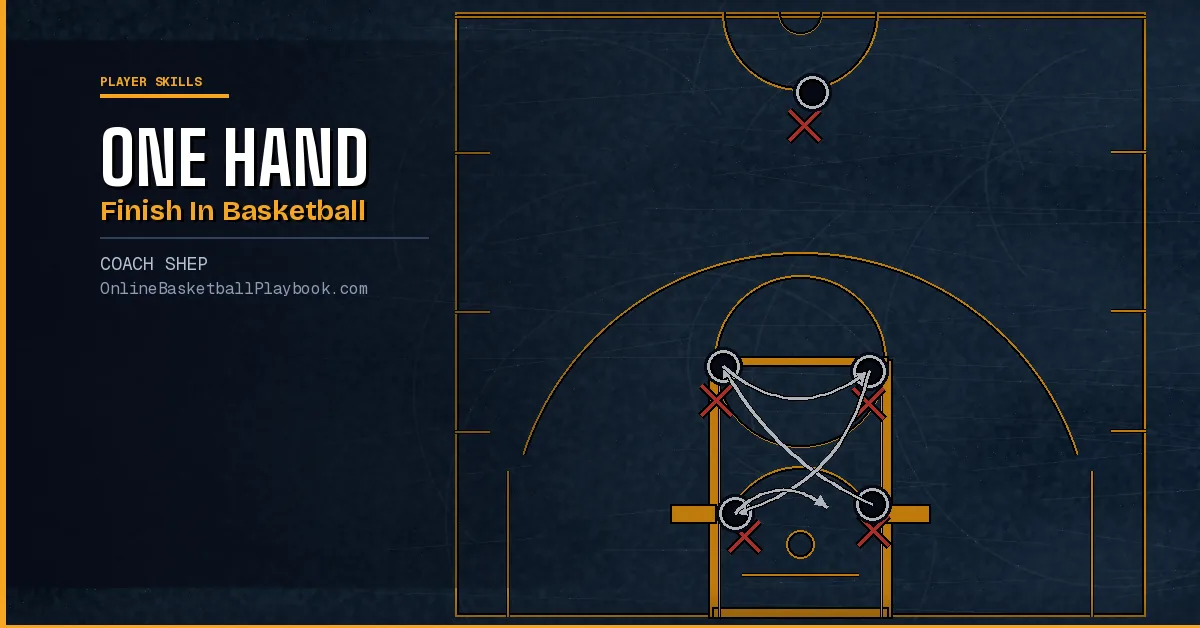
Learning the One Hand Finish in Basketball
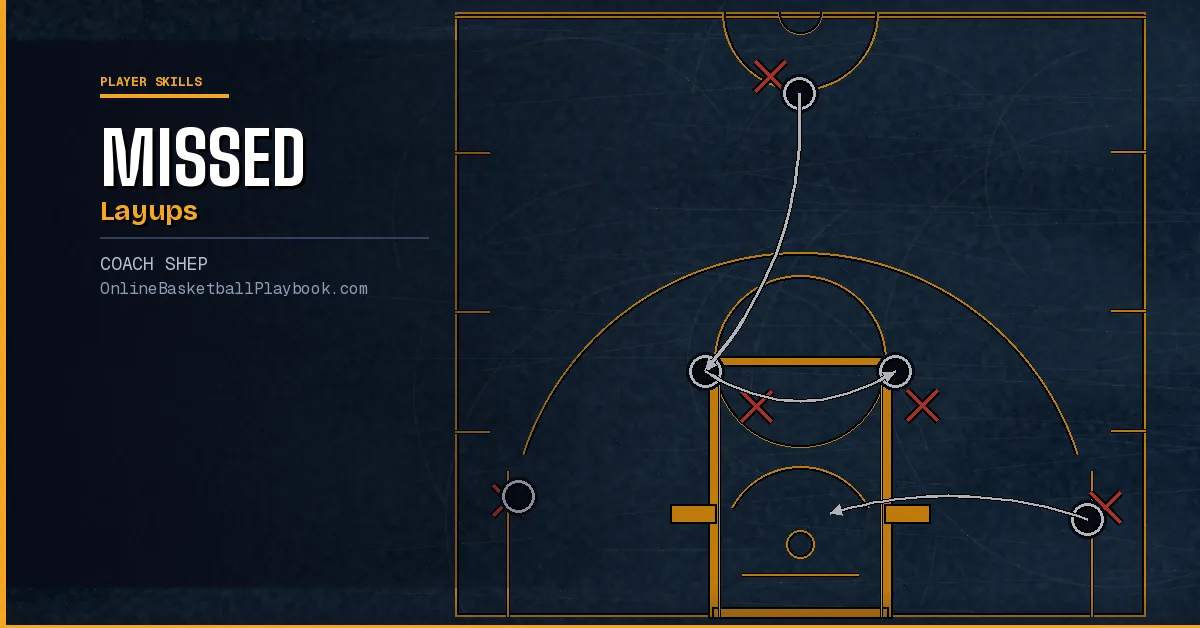
Why Players Miss Layups and How to Fix It
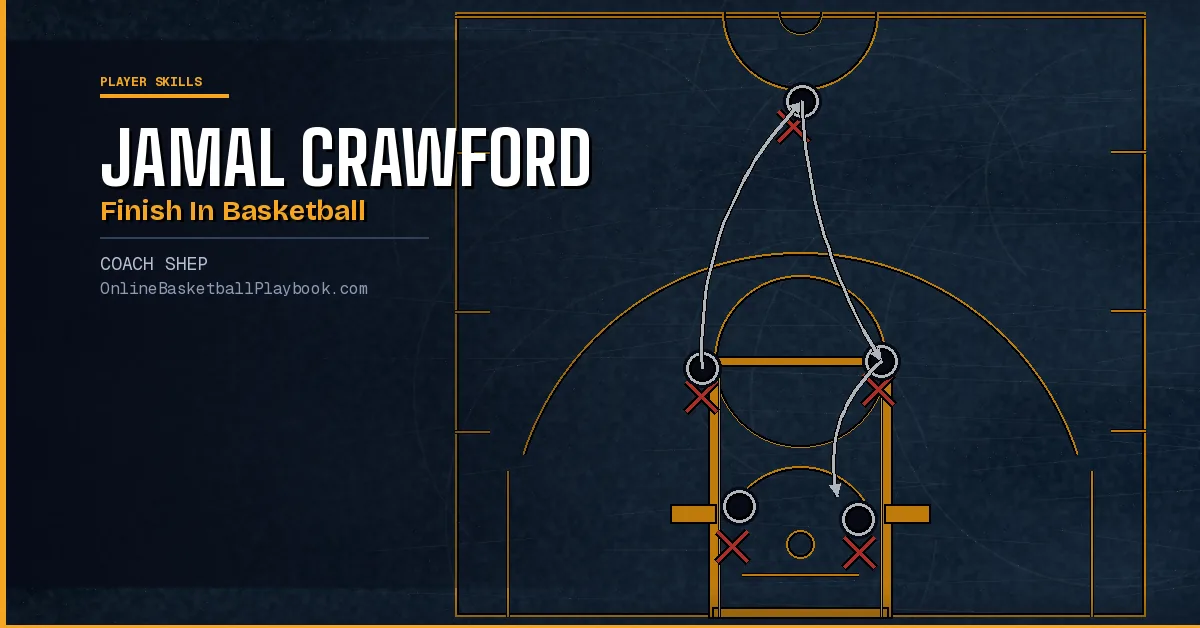
How to Do a Jamal Crawford Finish in Basketball
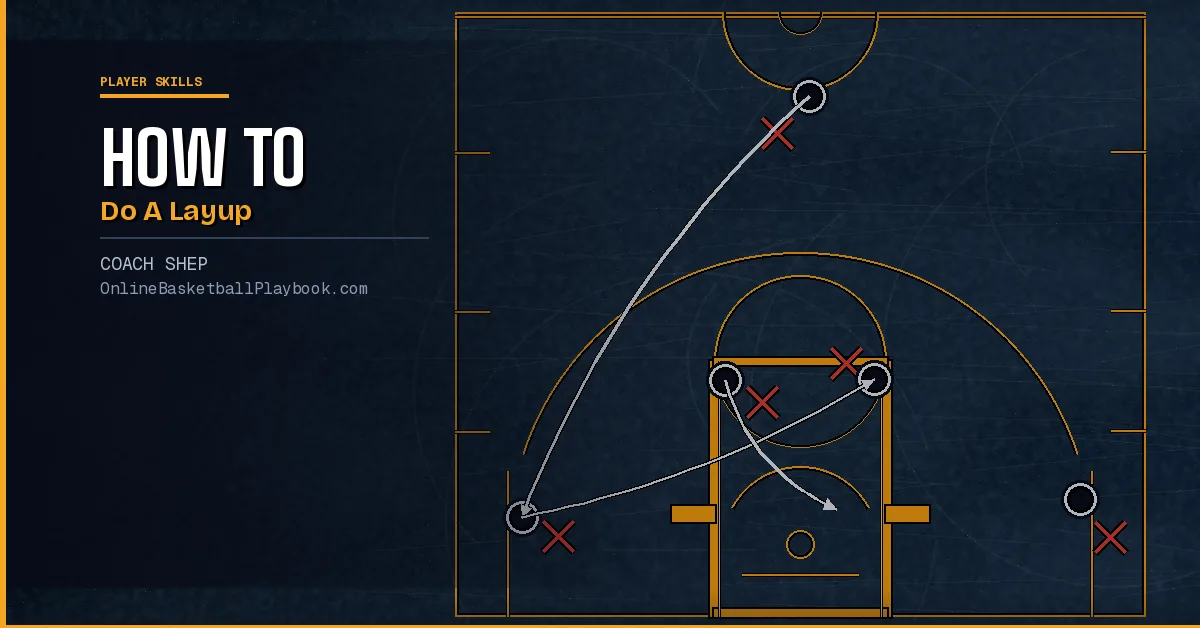
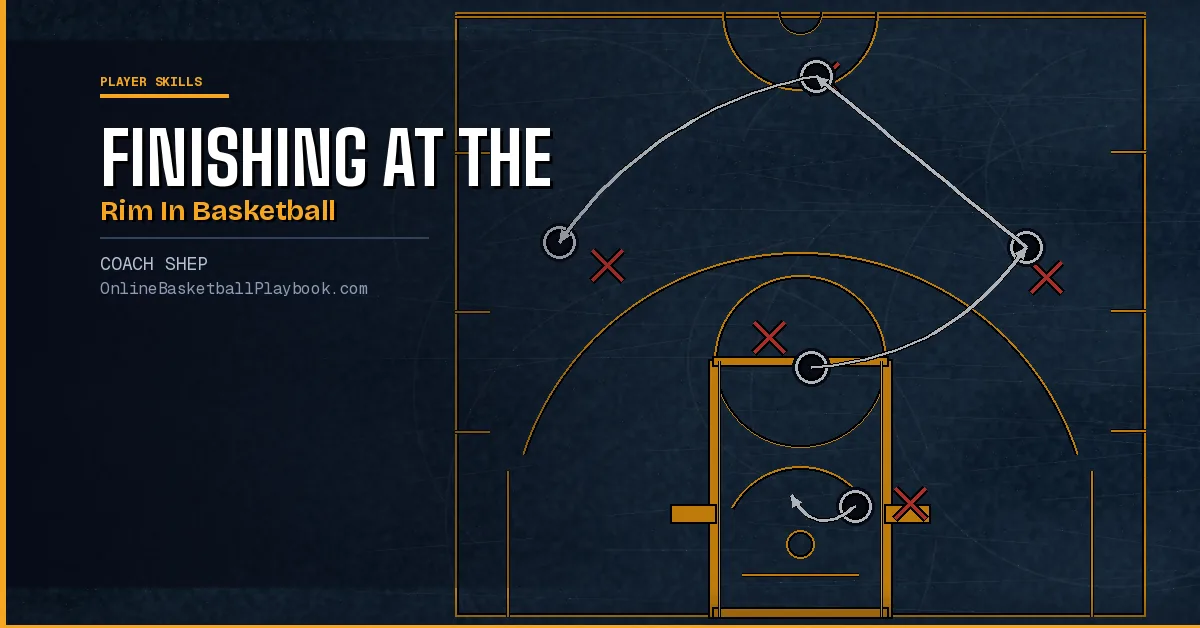
10 Keys for Finishing at the Rim in Basketball
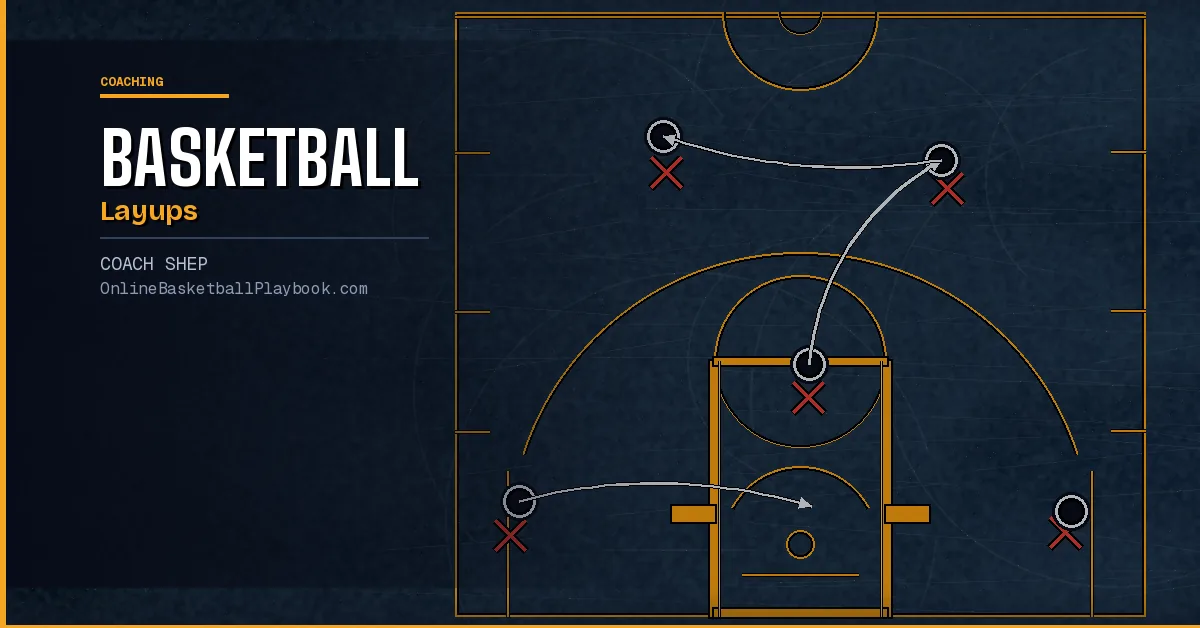
Basketball Layups: Learning How to be a Great Finisher
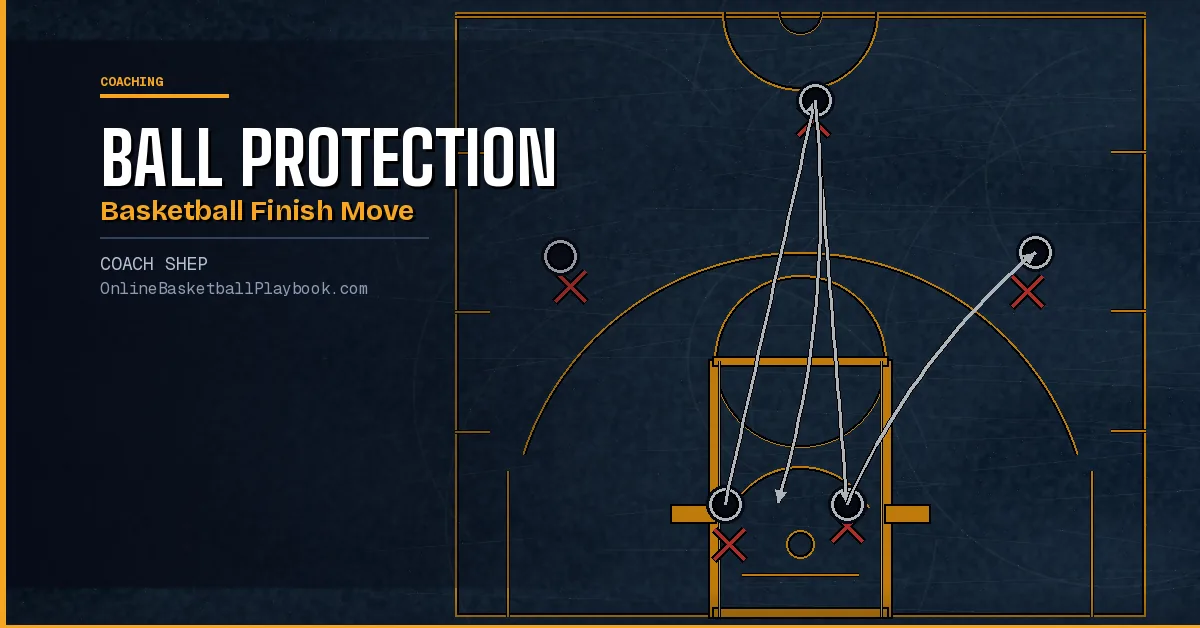
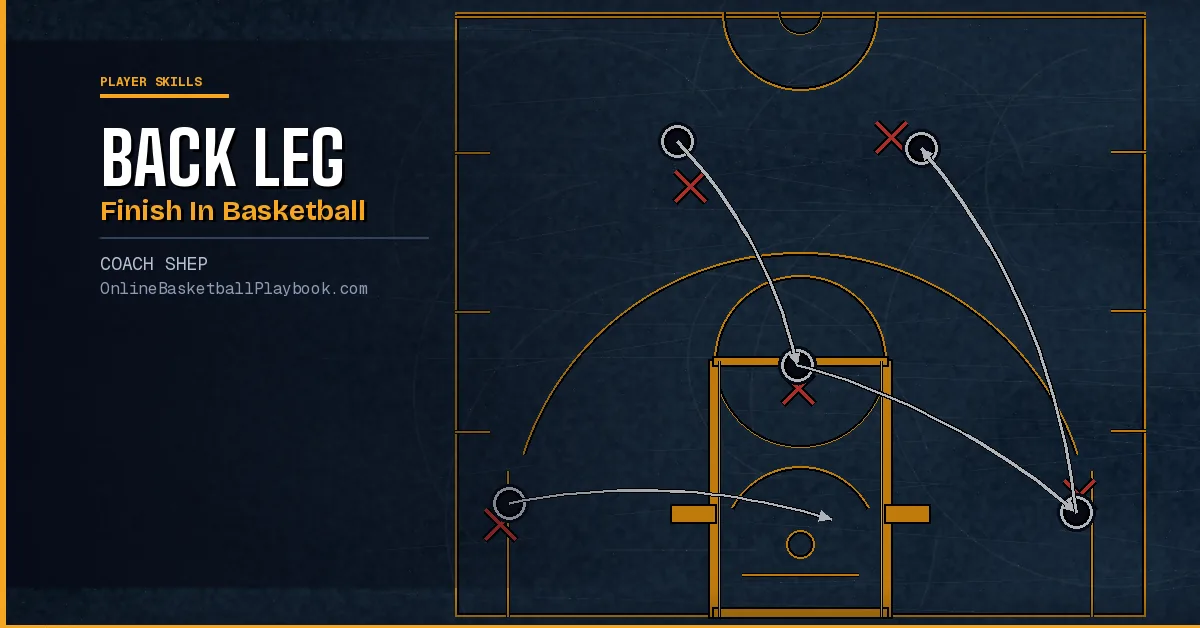
How to Do the Back Leg Finish in Basketball
The Evolution of the Big Man in Basketball
Learn to Play Basketball: Essential Tips and Techniques for Beginners
How to Train to Play Basketball: Complete Guide for Beginners
How to Play Basketball for Beginners: Essential Tips and Guidelines
Basketball Passing Fundamentals and Drills
Master Your Game with Our Top Basketball Skill Training Program
Individual Basketball Skill Development Philosophy
Effective Small Group Basketball Training for Skill Improvement
Basketball Dribble Moves: Complete Player Guide
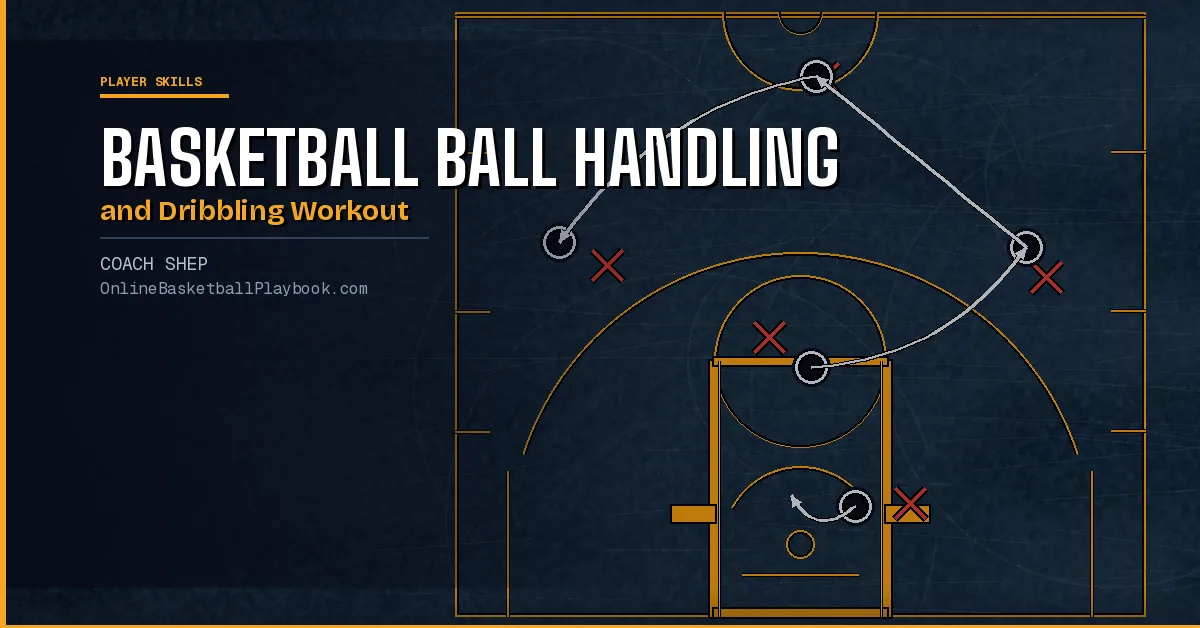
Basketball Ball Handling and Dribbling Workout
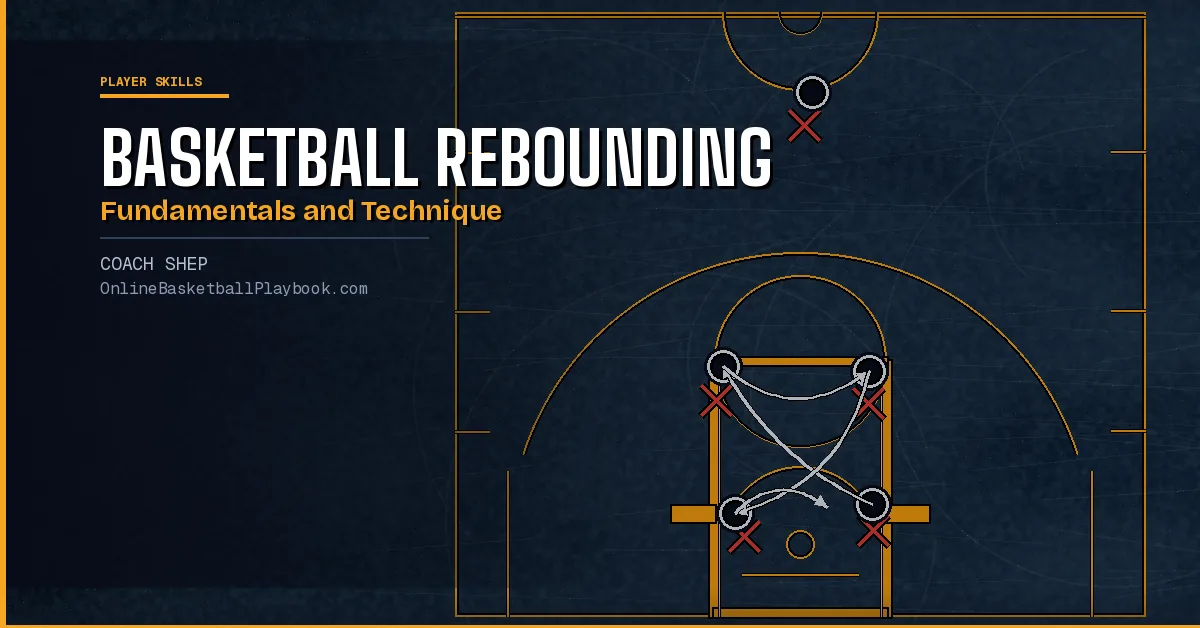
Basketball Rebounding Fundamentals and Technique
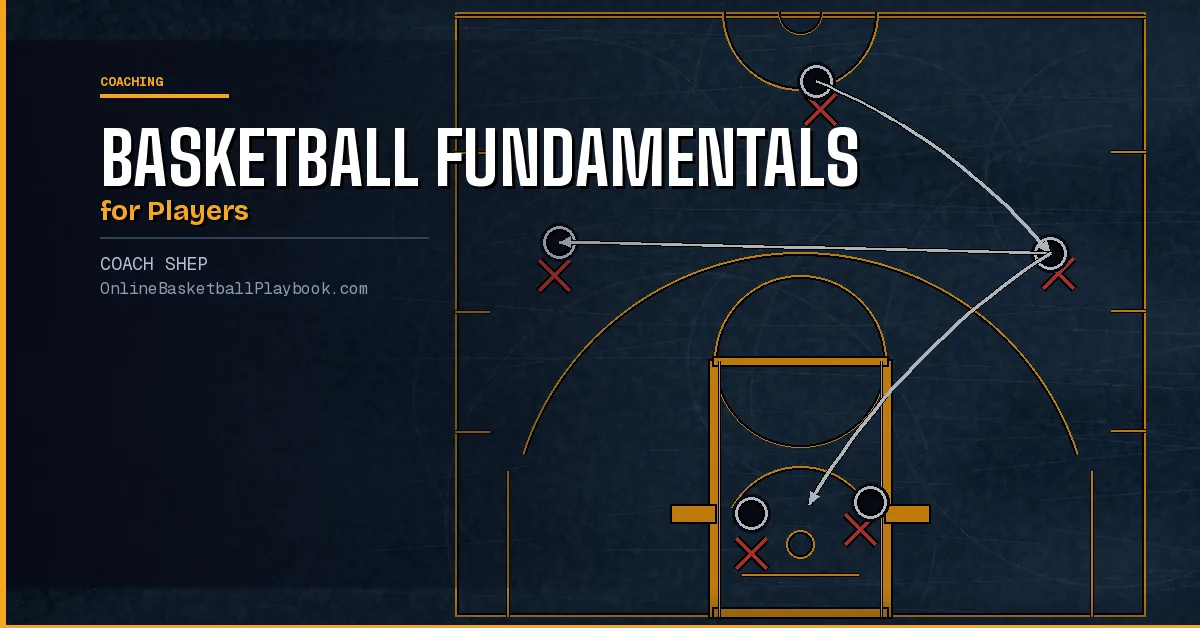
10 Basketball Fundamentals for Players to Master
Basketball Shot Selection: The Complete Guide
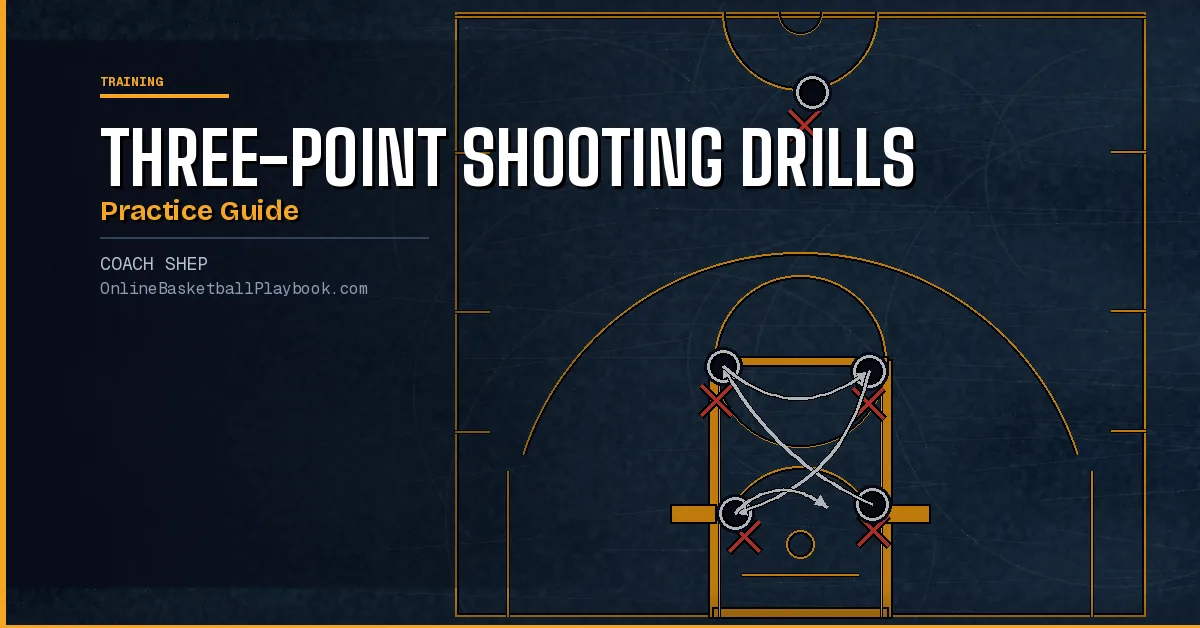
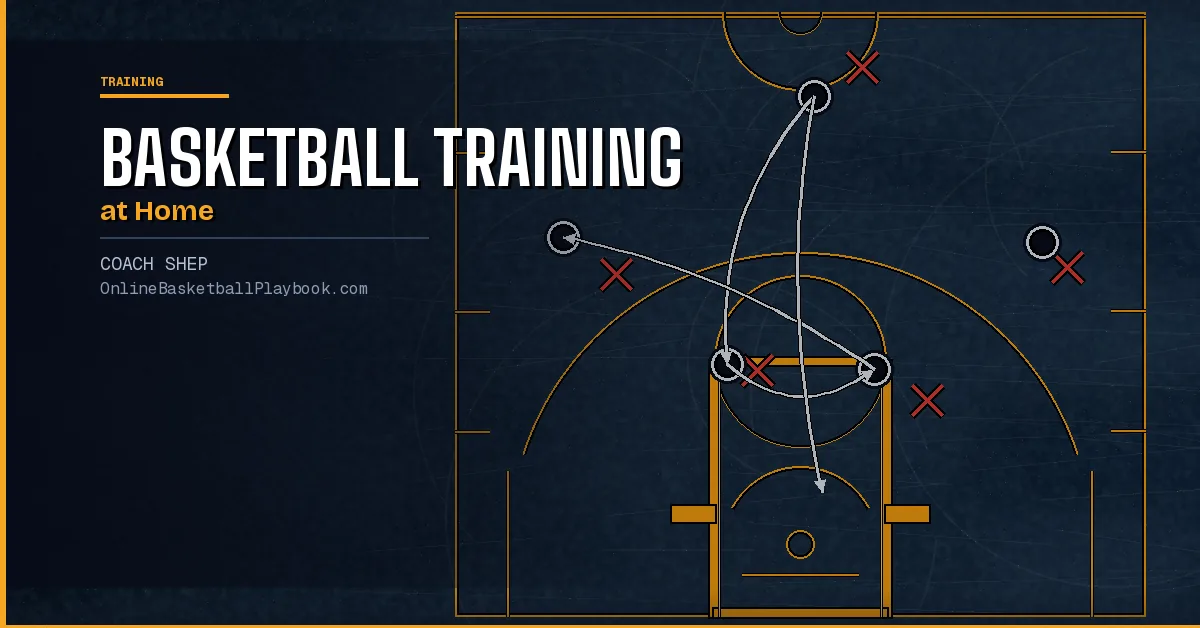
Basketball Training at Home: Complete Guide
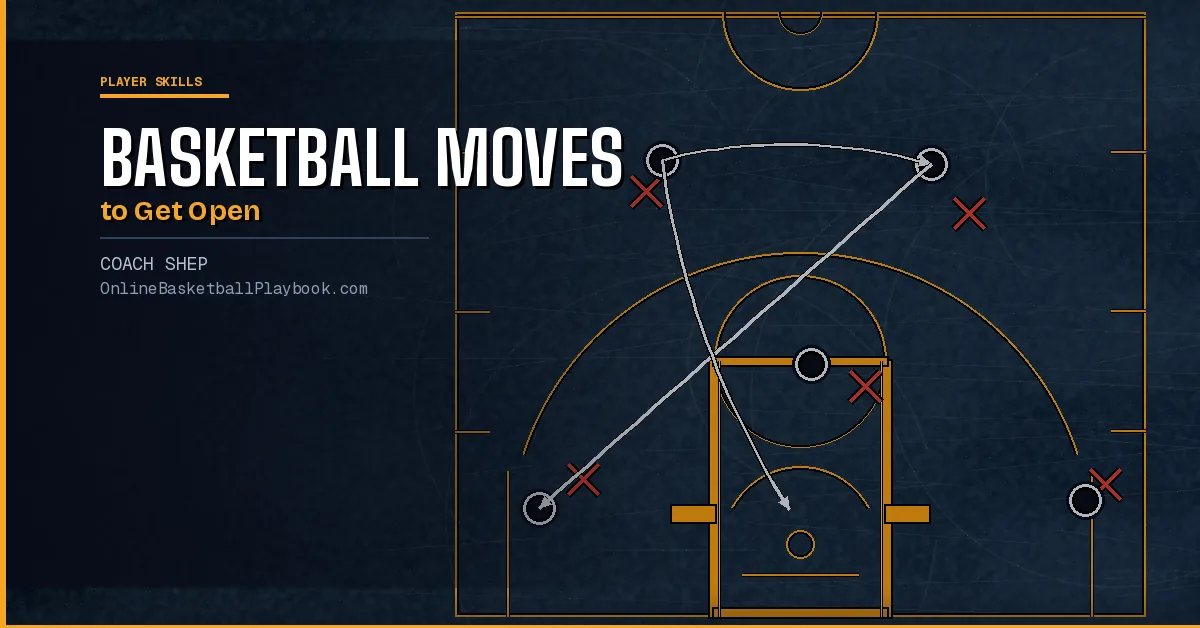
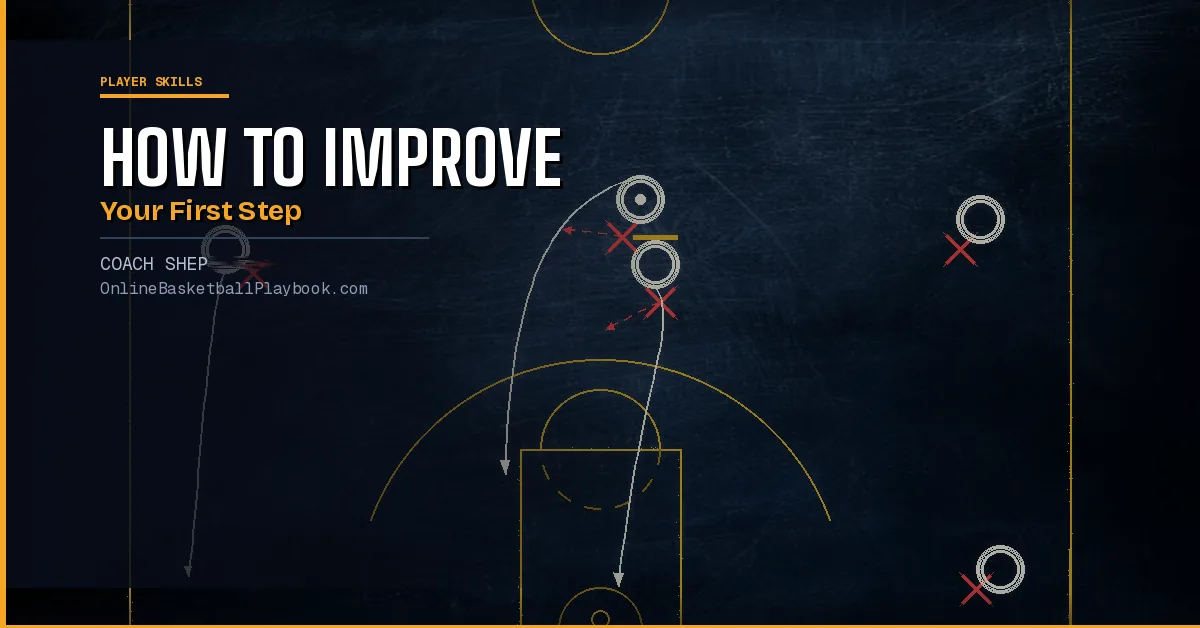
How to Improve Your First Step in Basketball
Basketball Finishing Moves: Complete Guide
Ball Handling Drills for Basketball Players
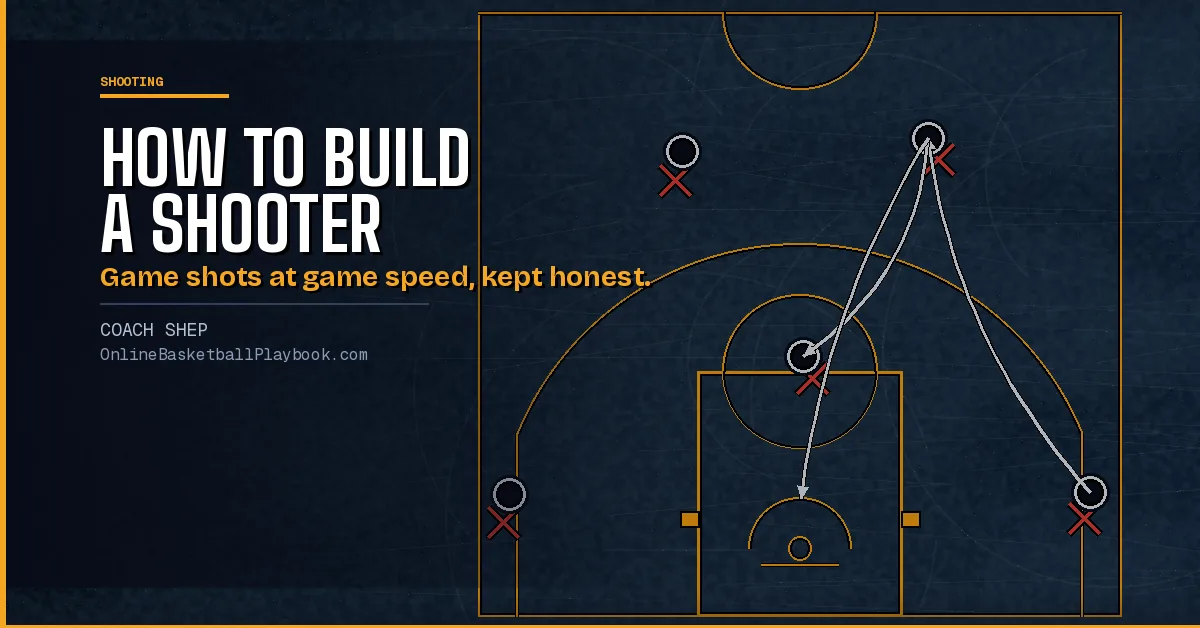
Game shots, game speed, a score on every rep, here's how to structure individual shooting workouts that turn gym time into real shooting ability.
Allen Iverson's 1997 crossover on Michael Jordan is still replayed today. Here's the actual footwork, hand speed, and coaching progression behind the move, not just the highlight.
Knockout is a fast-paced elimination shooting game played in a line at one basket. Here's the setup, the rules, common variations, and how to run it efficiently with a full roster.
The chest pass is the fundamental two-handed pass in basketball. Here's the hand placement, step-and-push mechanics, common mistakes, and drills to teach it.
Around the World is a classic shooting game where players advance spot by spot around the arc. Here's the setup, the gamble rule, common variations, and how to run it with a full team.
Getting better at basketball takes a repeatable structure, not vague effort. Here's how to actually train ball handling, shooting, conditioning, and basketball IQ, and how to schedule it without burning out.
The bounce pass gets the ball under a defender's reach instead of through it. Here's the mechanics, the exact bounce spot that makes it work, and drills to build accuracy.
Sharks and Minnows turns basic ball-handling into a full-team elimination game. Here's the setup, the rules, how it escalates, and variations for isolating specific skills.
The overhead pass clears a defender's reach or covers longer distances than a chest pass. Here's the correct starting position, the most common mistake, and when to use it over other passes.
The right training equipment is almost never the flashiest gear in the catalog. Here's what rebounders, ladders, weighted balls, and resistance bands actually train, and how to prioritize a limited budget.
The gather step is what makes the Euro step and spin move possible. Here's how a strong, controlled gather creates a scoring advantage, plus footwork drills to build it.
Fun basketball games for practice at any level: shooting games, defense-only scoring, rebounding contests and passing games, with scoring rules and records.
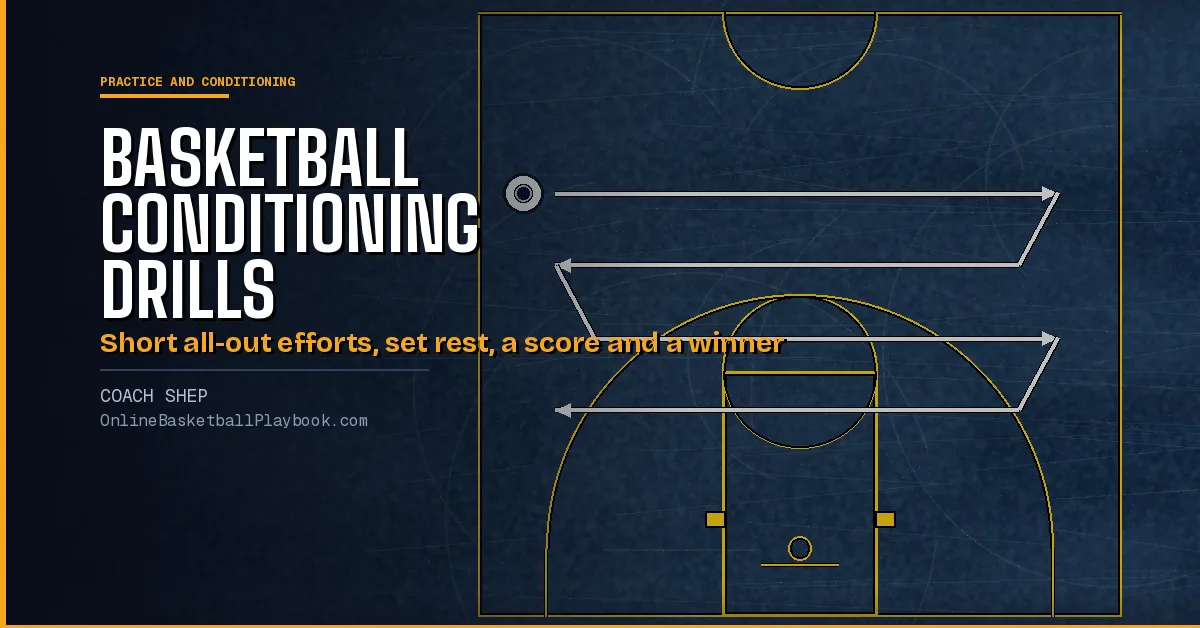
Basketball conditioning drills in three styles, timed runs, conditioning inside skill drills and scored games, with the tests and yearly plans coaches use.
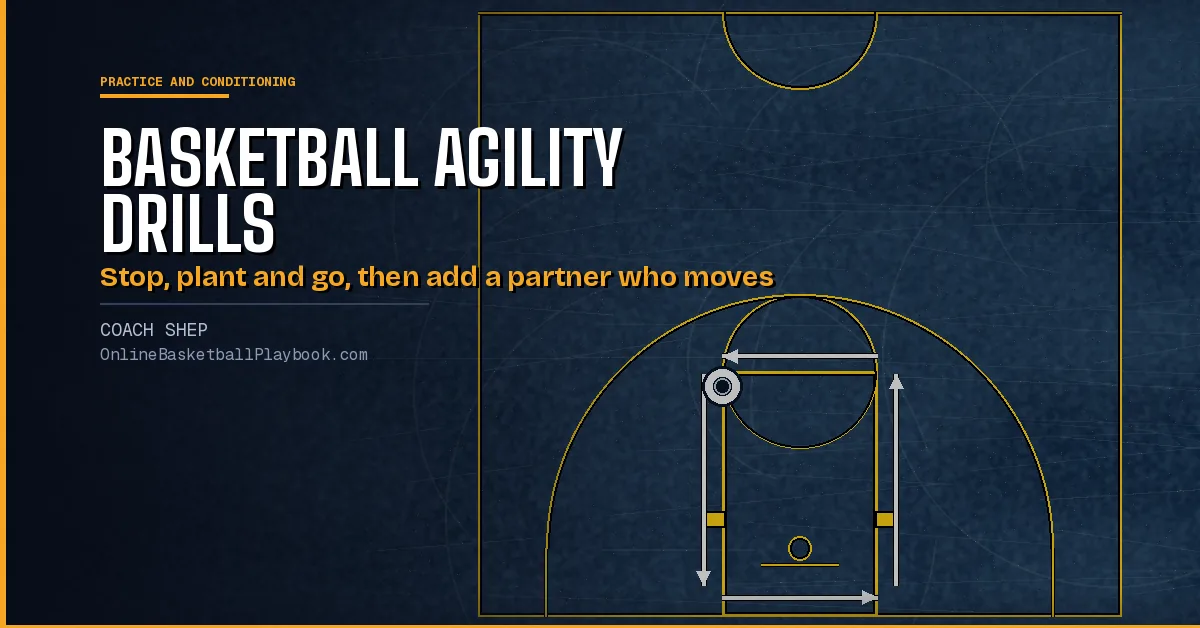
Basketball agility drills from timed cone tests to reaction, mirror and ladder drills and defensive circuits, with schedules and where coaches differ.
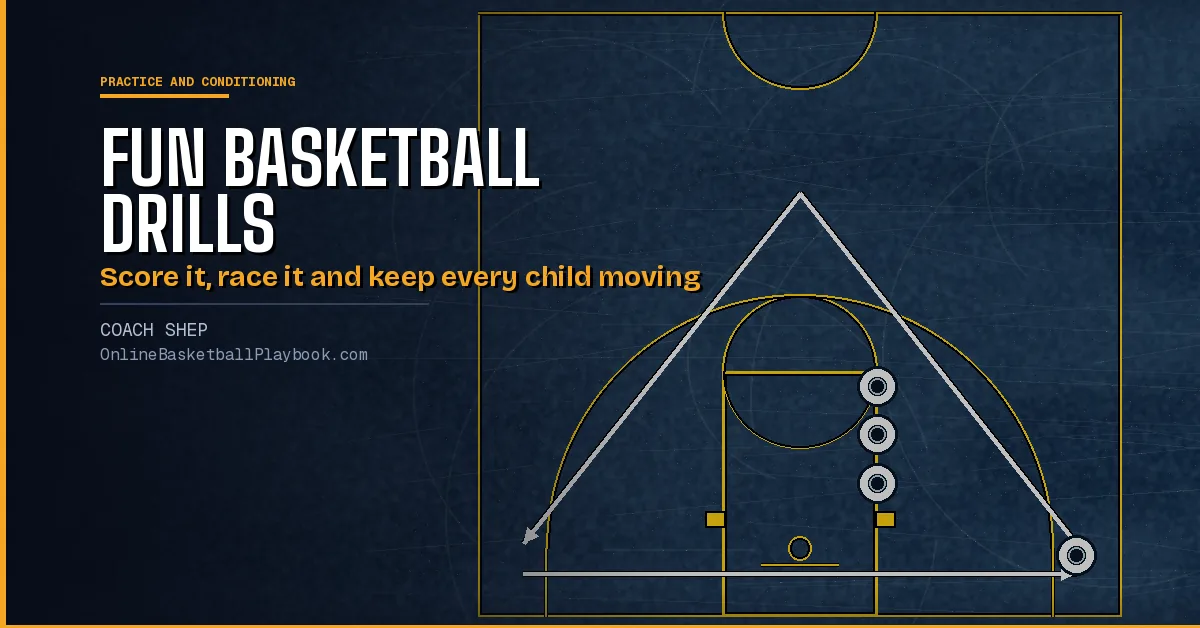
Fun basketball drills for kids built as contests, relays and elimination games, with the rules, the changes that keep every child playing and where coaches differ.
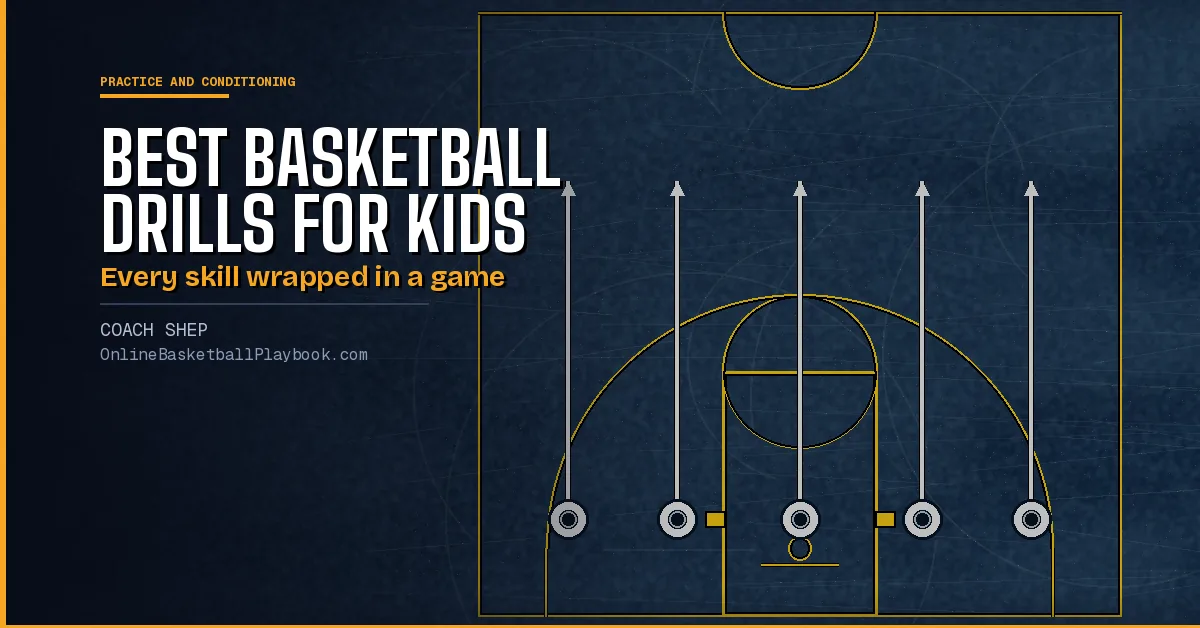
The best basketball drills for kids, sorted by age and skill. Fun dribbling, passing and shooting games that keep every child moving and learning.
A basketball practice plan template you can copy, youth plans by age, high school orders from named coaches, rules for timing and scoring and where coaches disagree.
Competitive basketball drills explained: the scoring formats coaches use, what the losers owe, the validation free throw, and how scored reps carry into games.
Basketball practice length from preseason to playoffs: how long practices run each month, preseason ramps, late-season cuts and off-season sessions.
Small sided games for skill development: why fewer players teach more, how to shape a game with one rule, scoring both ends, and four formats to run.
Game situations in practice: how much time to give them, situation cards, formats side by side, scrimmage rules, pressure free throws and checking transfer.
Movement screening for basketball players: how to run a screen, the squat, lunge, balance and step-over screens, reading results, landing checks and the pain rule.
Strength training for basketball: the lifts that carry to the court, the conjugate method, loads and reps, jump training, in-season lifting, youth rules and tests.
Basketball warm up drills from dynamic movement and ball work to layup, closeout and shooting lines, with warm-up lengths and the static stretching debate.
Basketball conditioning built as a program. The energy system, work and rest, the runs and tests, cardio, a preseason ramp and how programs split the year.
Breakdown drills in basketball, from 2 on 0 to 5 on 5: whole first or parts first, the ladders coaches climb, dummy then live, advantage drills and drill length.
Basketball practice structure from the opening drill to the last whistle: segment orders, time budgets, the daily core, rest and the week around it.
Basketball speed and agility drills for teams and players: short sprints, starts and stops, court drills with cones, an eight-week summer plan and how to dose rest.
How to run an effective basketball practice: write the plan, start on time, cap drills on a clock, score every rep, pick your pace and use film.
Basketball practice consequences side by side: how coaches score drills, what winners earn, what losers owe, who limits running and when to set the cost.
How to run a basketball camp: goals by age, the daily schedule shapes, stations, small-sided games, contests, staffing, safety, and where camp directors disagree.
The Best Basketball Plyometric Exercises for Explosive Power
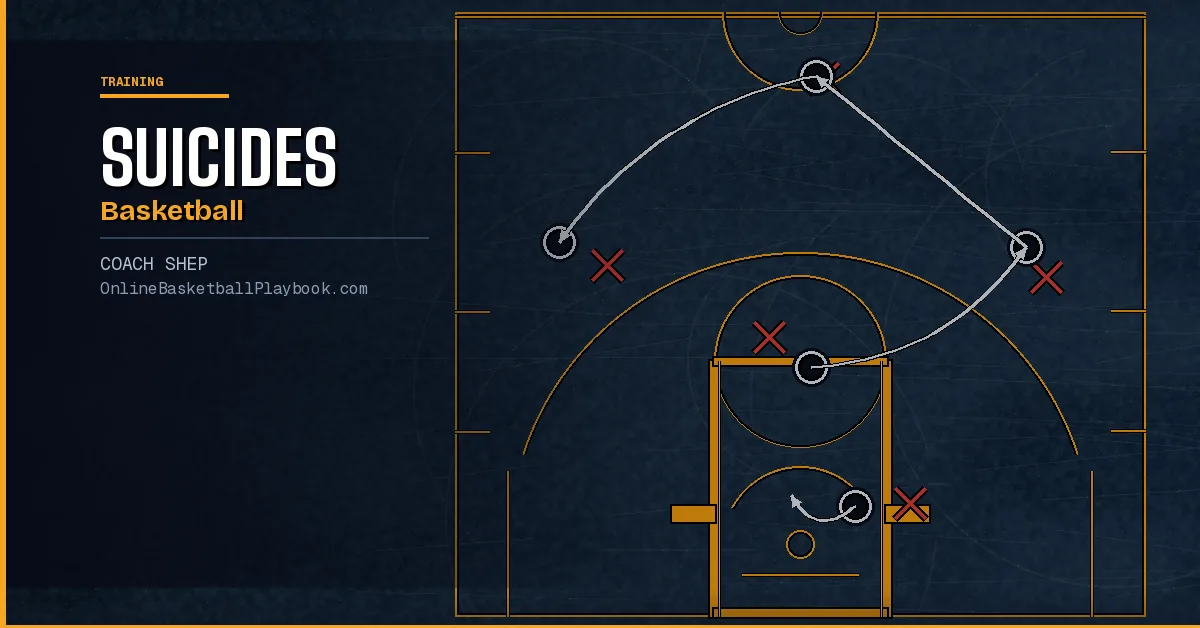
Suicides in Basketball Sprint Conditioning
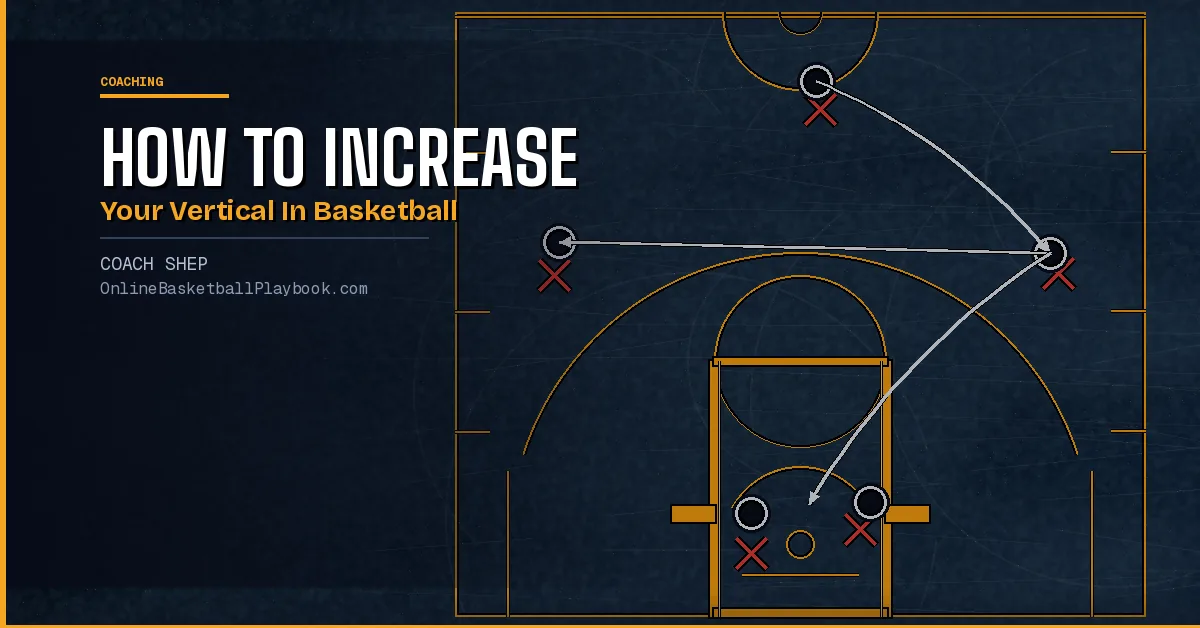
How to Increase Your Vertical in Basketball
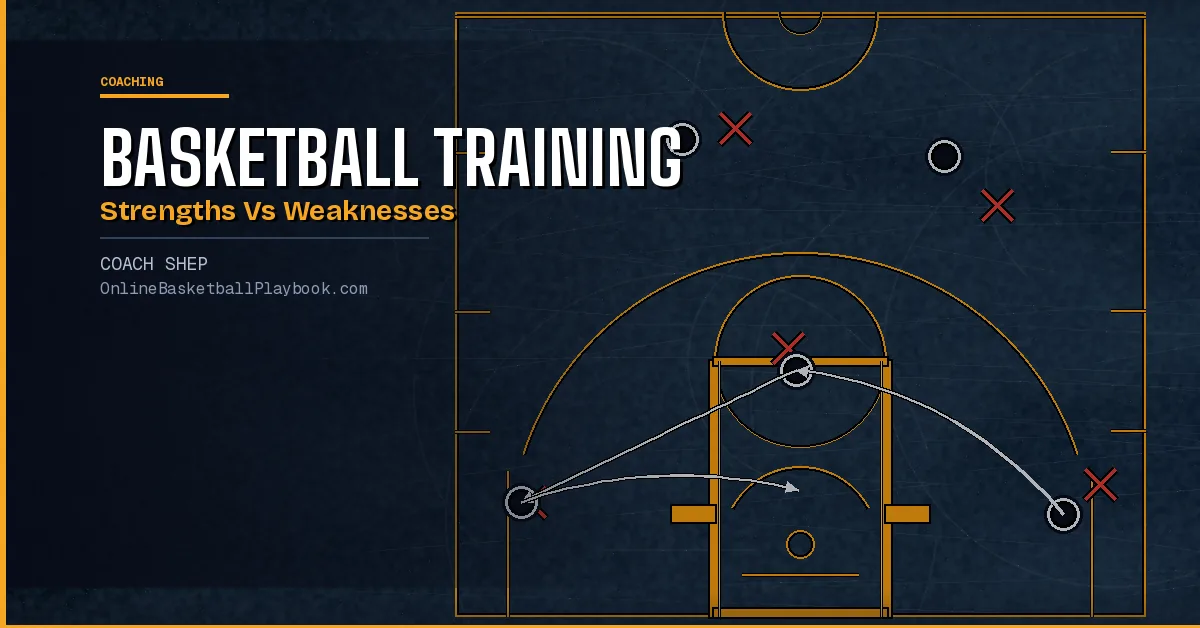
Basketball Training: Strengths Vs Weaknesses
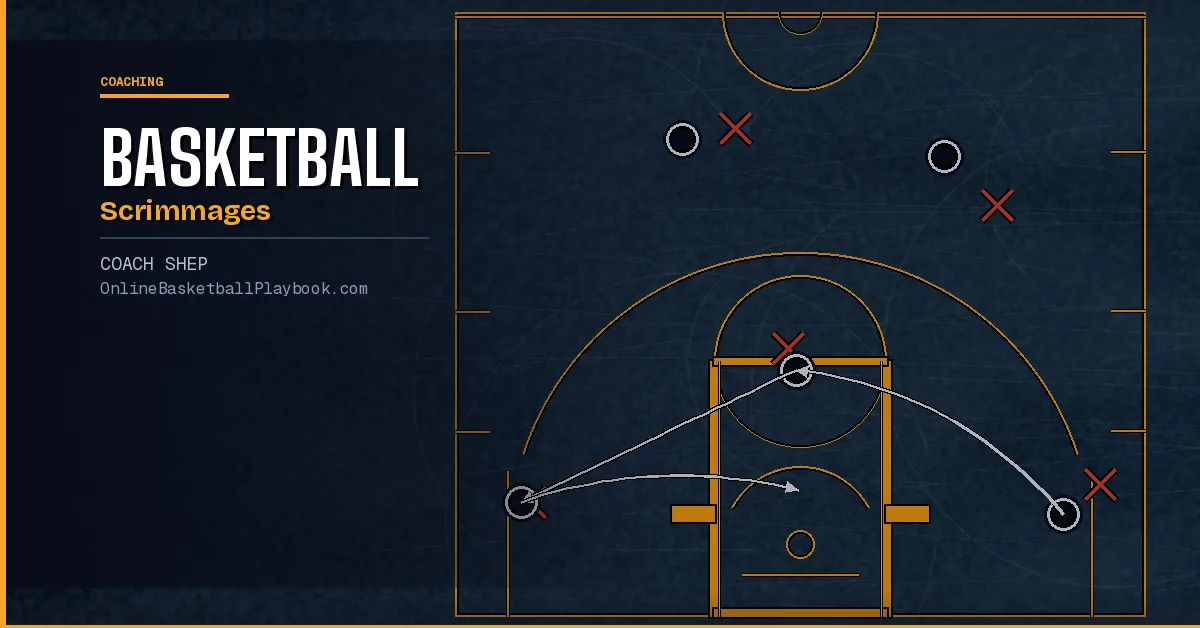
How to Run Productive Basketball Scrimmages
Where to Practice Basketball: Complete Guide to Finding Courts and Training Spaces
How to Use Practice Time to Build Team Confidence
How to Maximize Practice Time for Efficiency
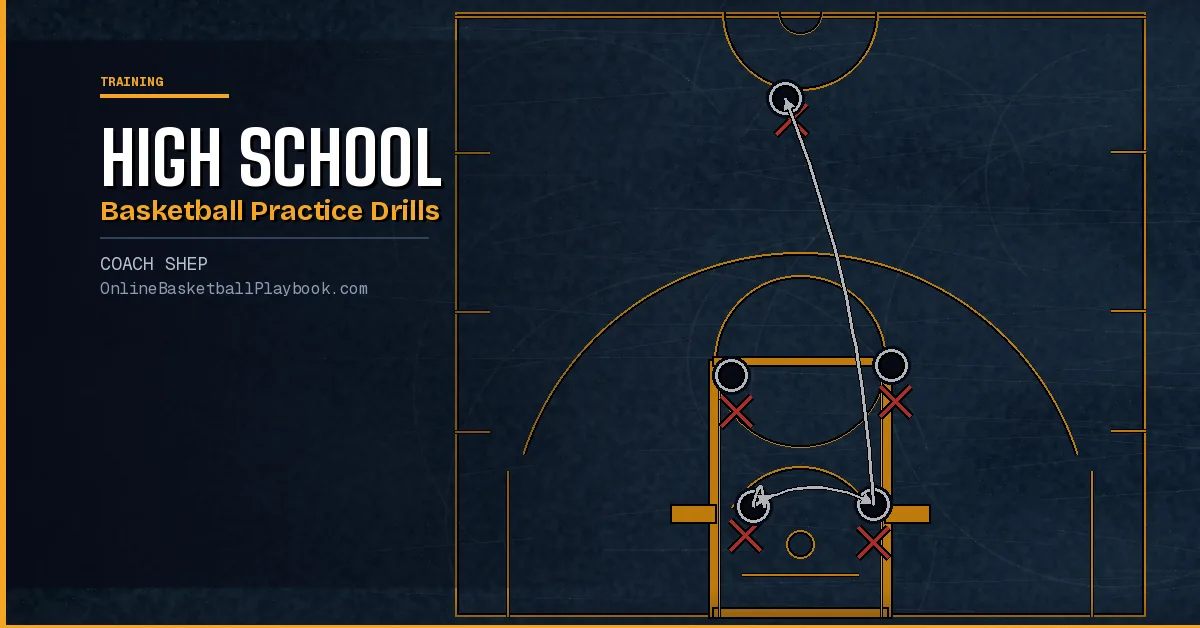
High School Basketball Practice Drills
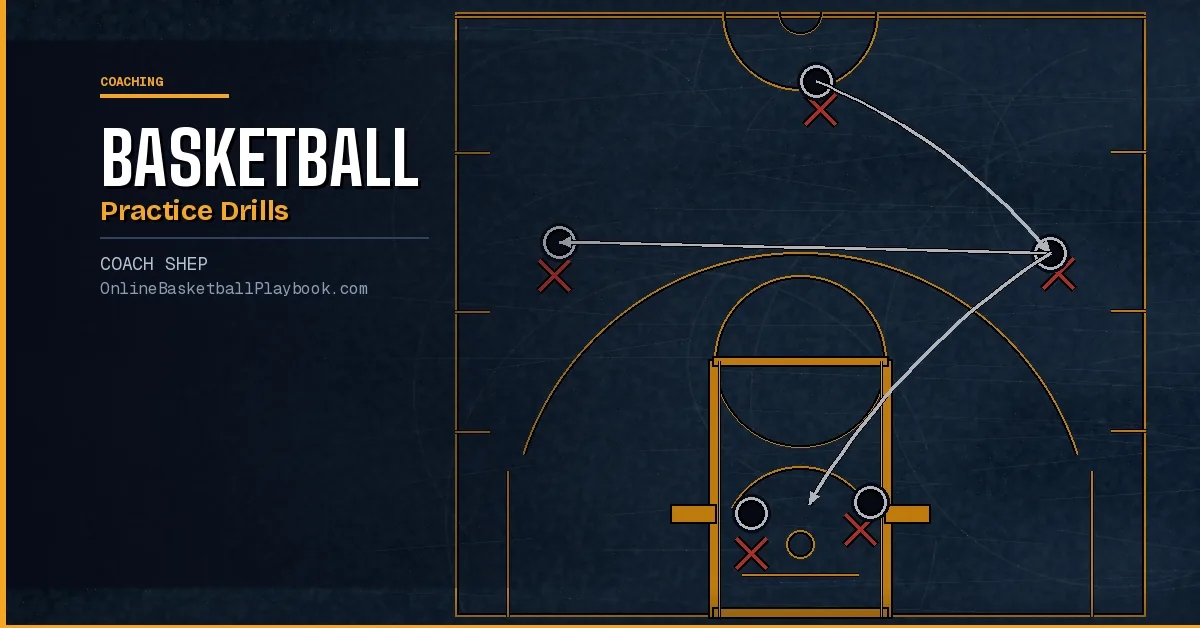
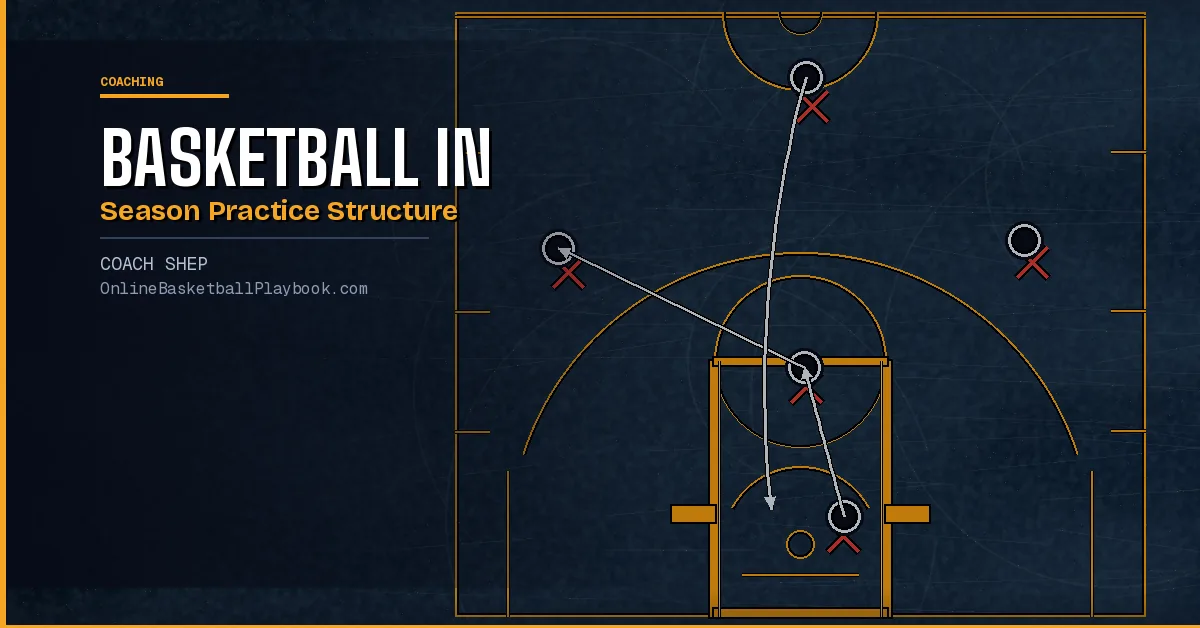
Basketball In-Season Practice Structure Guide
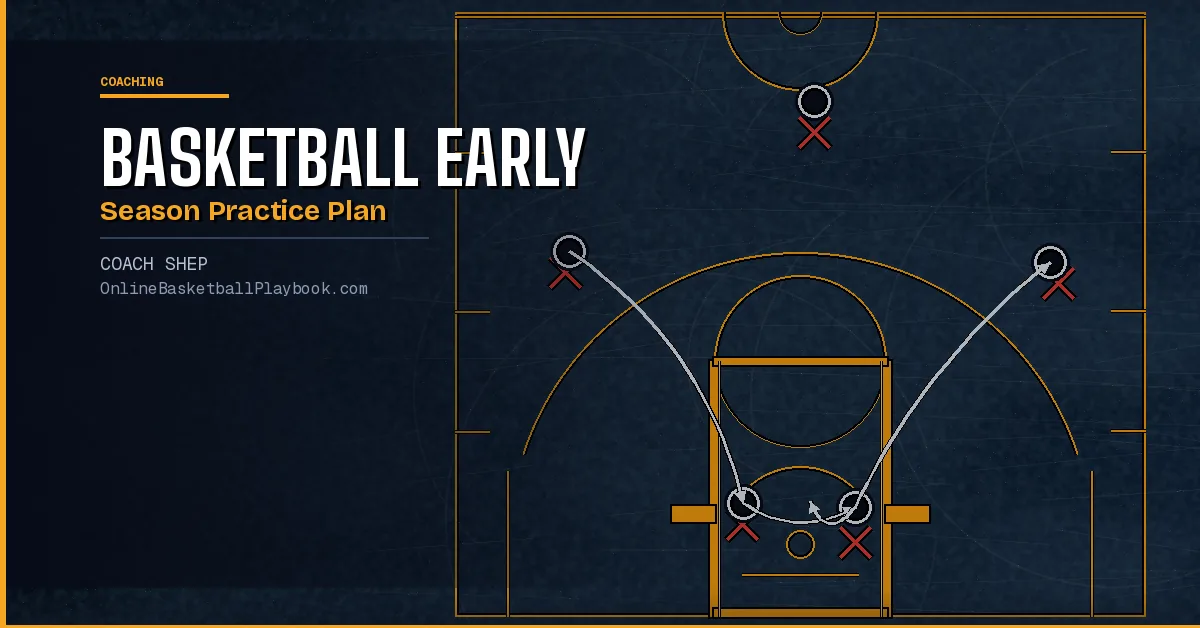
Balancing Offense and Defense in Practice Planning
Using Technology to Enhance Coaching Practices
How to Handle Injuries and Recovery in Your Basketball Program
Offensive Breakdown Drills for Basketball Practice
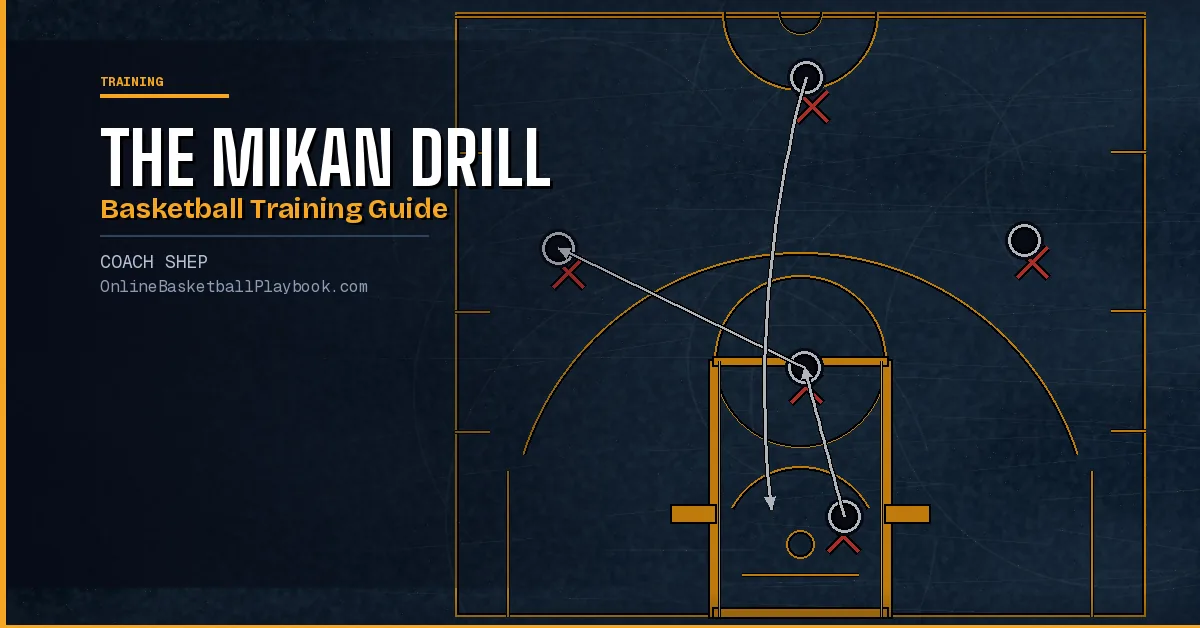
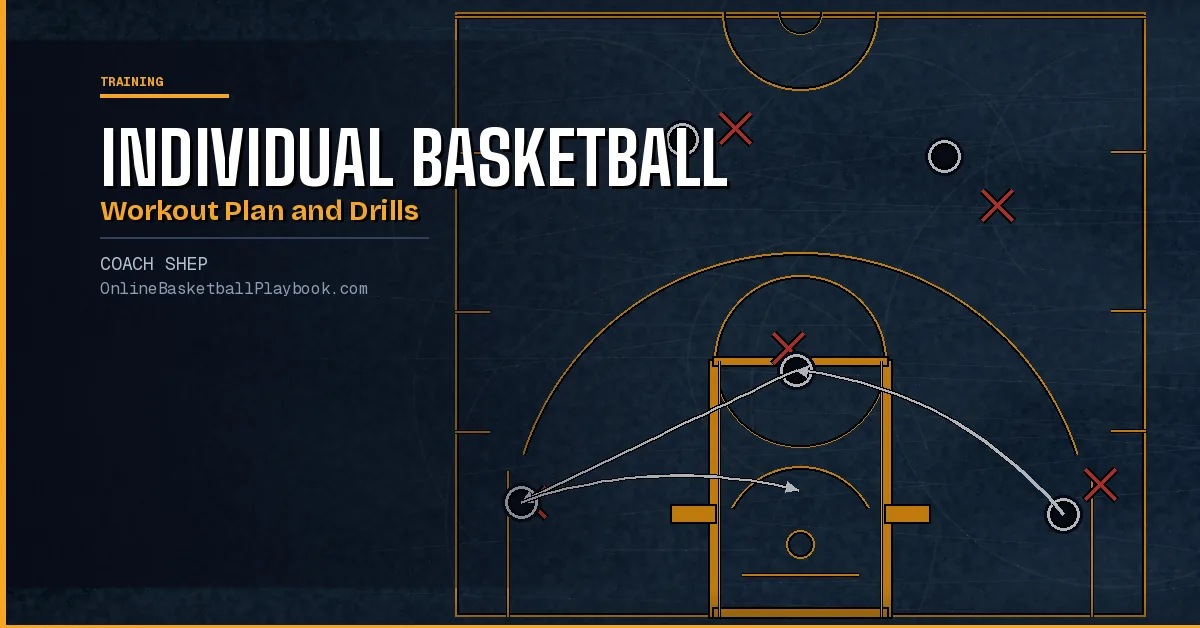
Individual Basketball Workout Plan and Drills
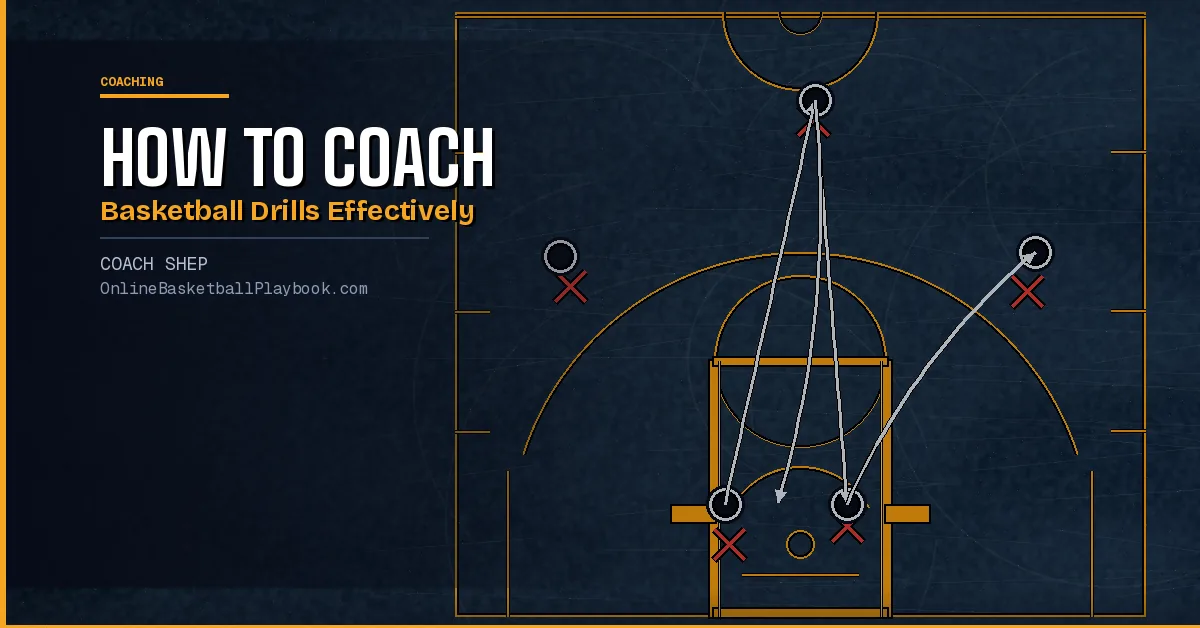
How to Coach Basketball Drills More Effectively
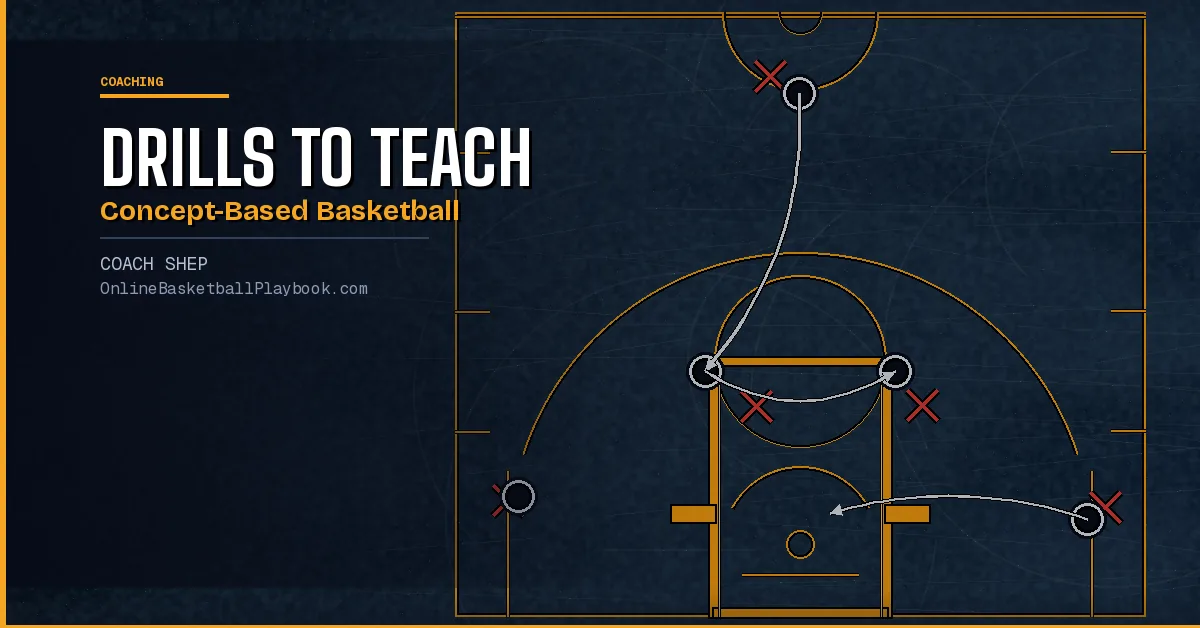
Drills to Teach Concept-Based Basketball
Basketball Drill Design: How to Create Drills That Work
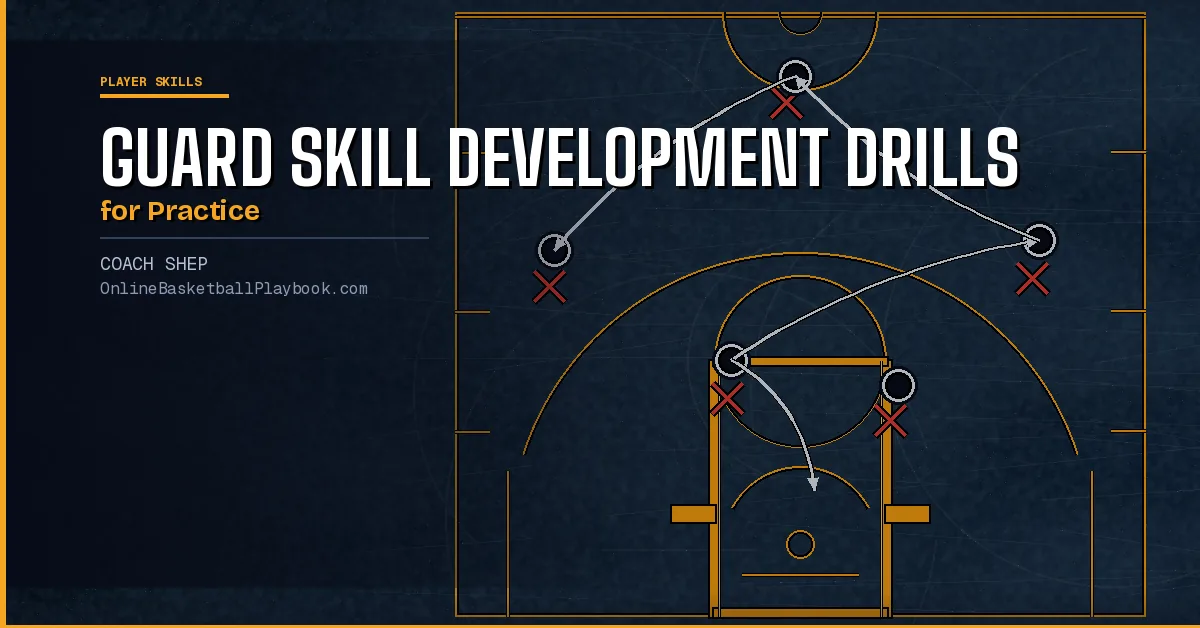
Guard Skill Development Drills for Practice
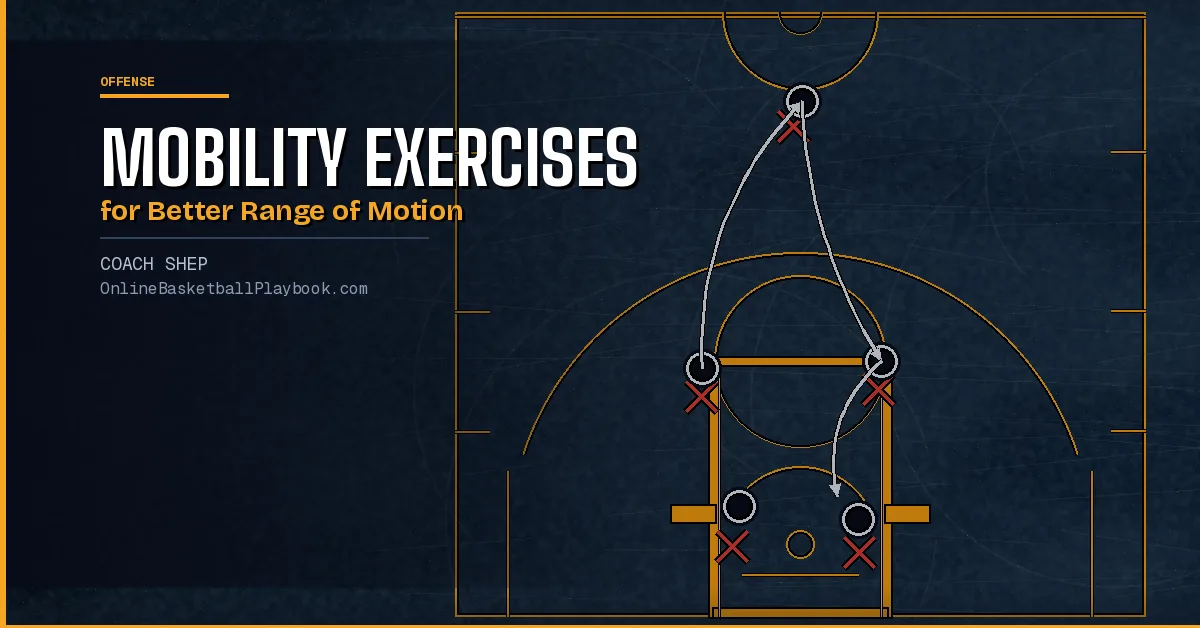
Mobility Exercises for Better Range of Motion in Basketball
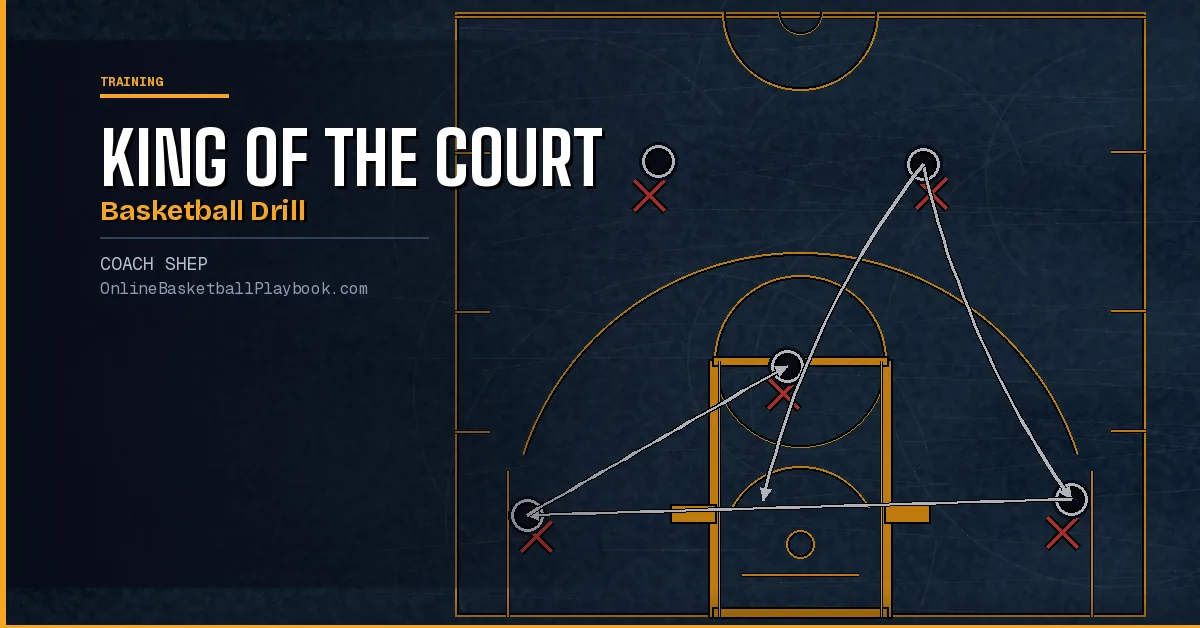
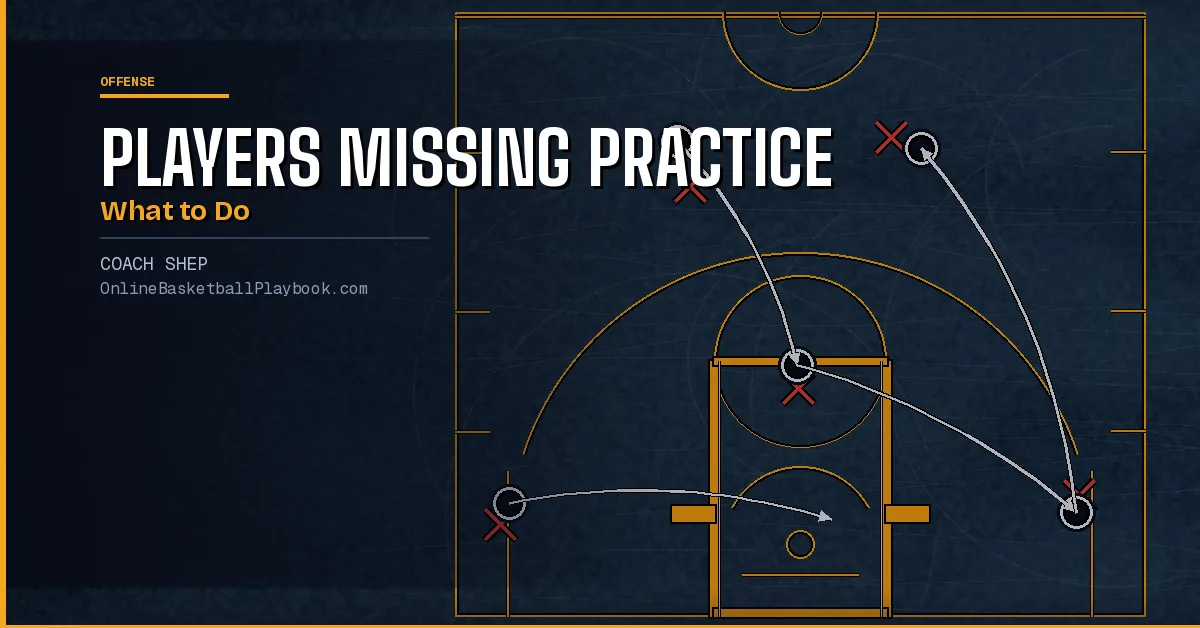
Steve Forbes: Getting the Most Out of Your Practice
Generating Pressure and Intensity in Basketball Practice
How to Prepare Your Team for Different Game Conditions
Basketball Nutrition Guide for Players
Individual Basketball Drills for Players
Basketball Practice Drills for Youth Teams
Basketball Flexibility and Mobility Training
Basketball Recovery and Injury Prevention
Basketball Stamina Training for Players
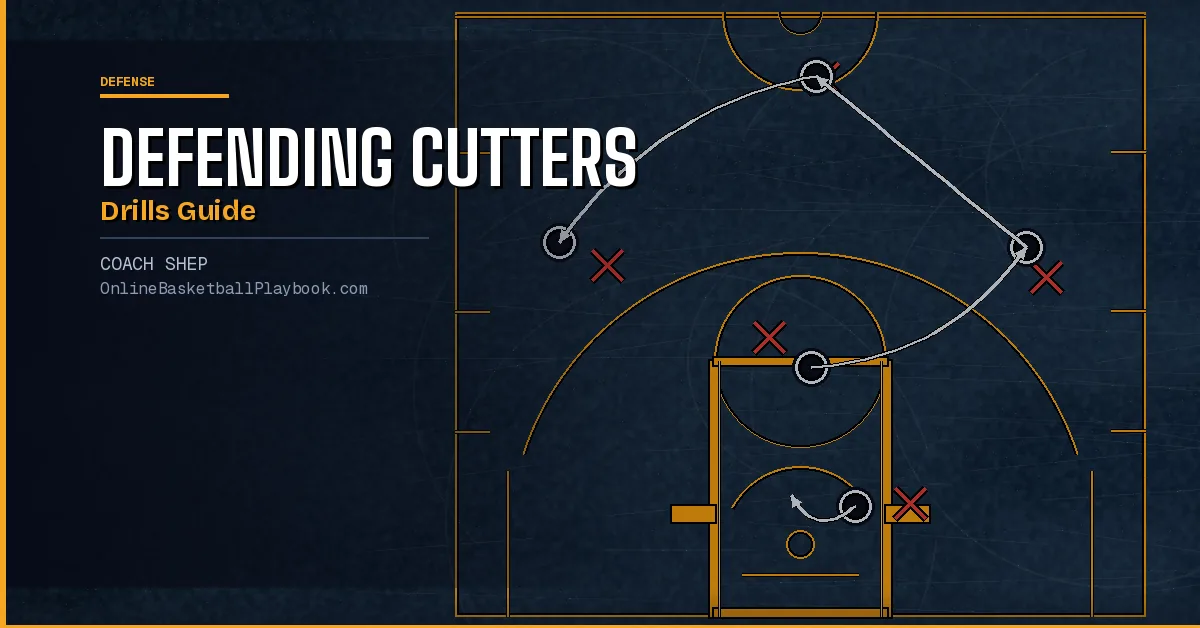
Basketball combines aerobic and anaerobic conditioning in a way steady-state cardio doesn't. Here's what type of cardio it actually provides, and how to maximize the fitness value of a session.
A knee sleeve is a compression garment, not a brace. Here's what a sleeve actually does, how to size it correctly, and when persistent pain means it's time to see a professional instead.
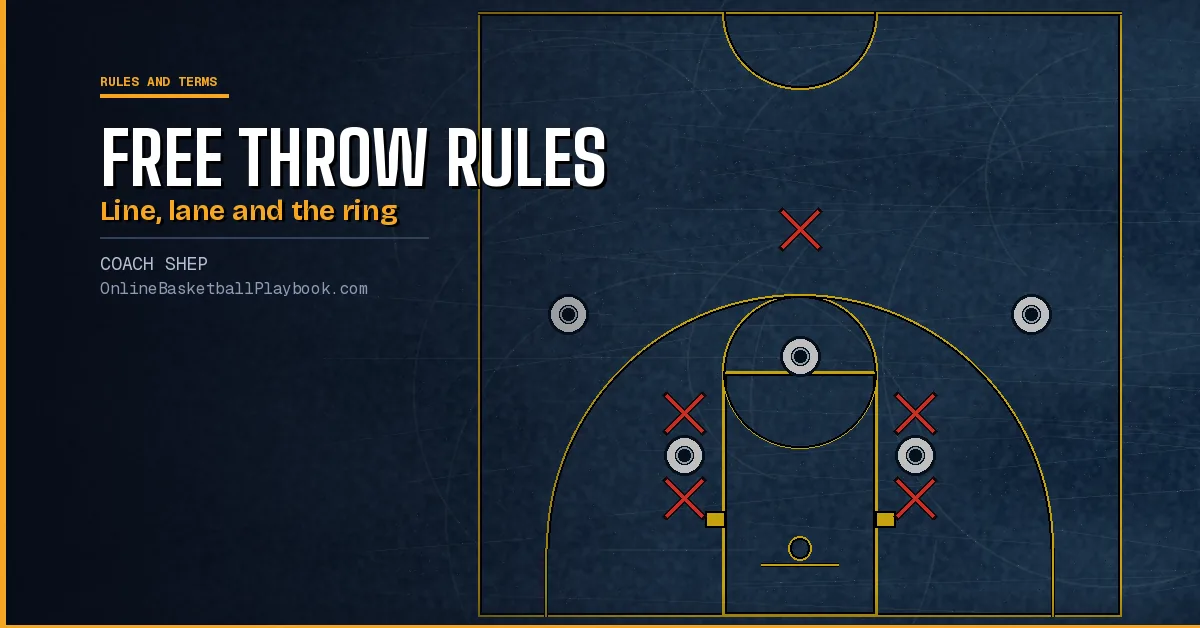
Basketball free throw rules at the NFHS, NCAA, NBA and FIBA levels: the time limit, the ring rule, lane spaces, when players may enter, violations and the bonus.
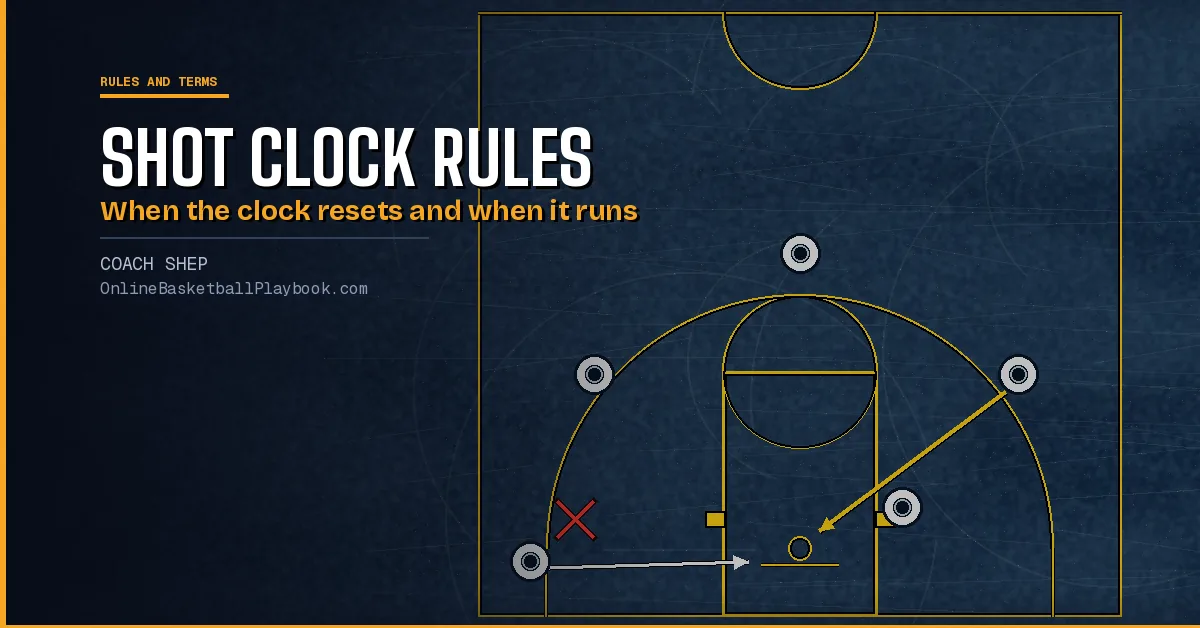
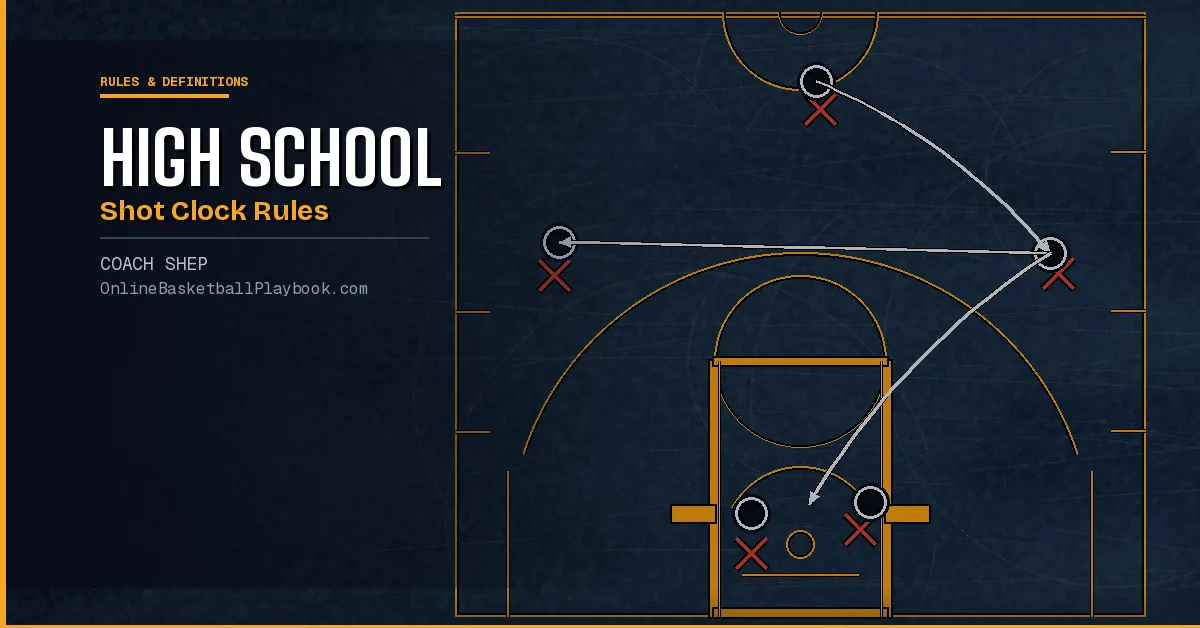
Basketball shot clock rules at the NFHS, NCAA, NBA and FIBA levels: the length, what counts as a try, and when it resets on rebounds, fouls and kicked balls.
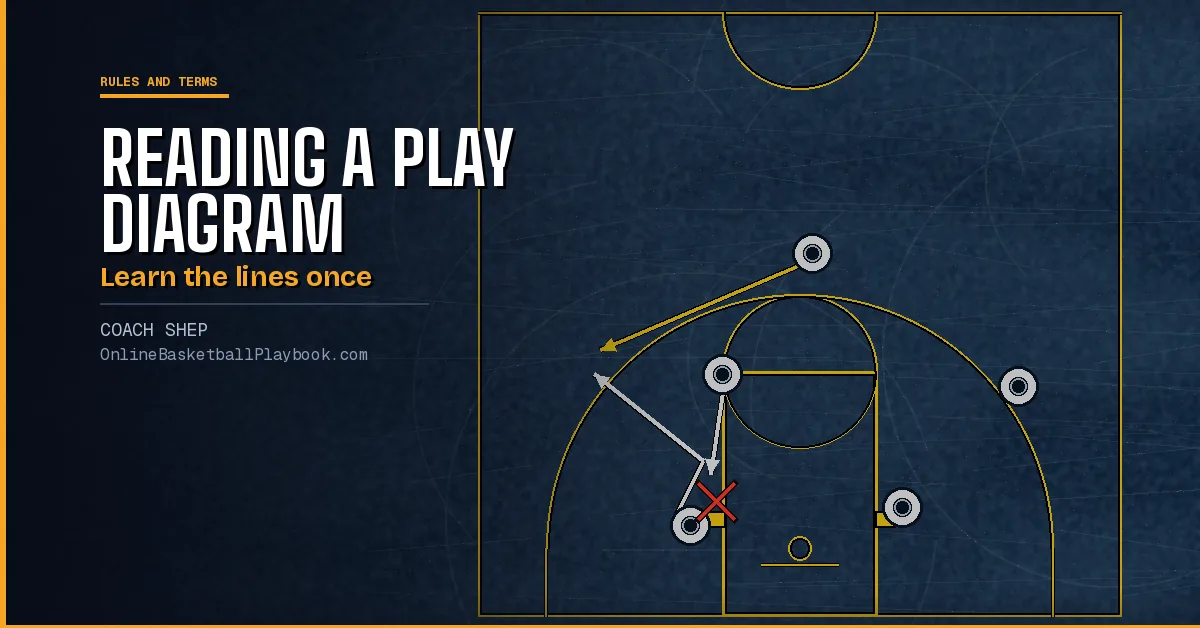
How to read a basketball play diagram: the players, the ball, and the lines for a cut, pass, dribble, screen and hand-off, shown one symbol at a time.
Basketball terms in plain English, grouped by court spots, positions, offense, screens, defense, rules and stats, each linked to the full guide on this site.
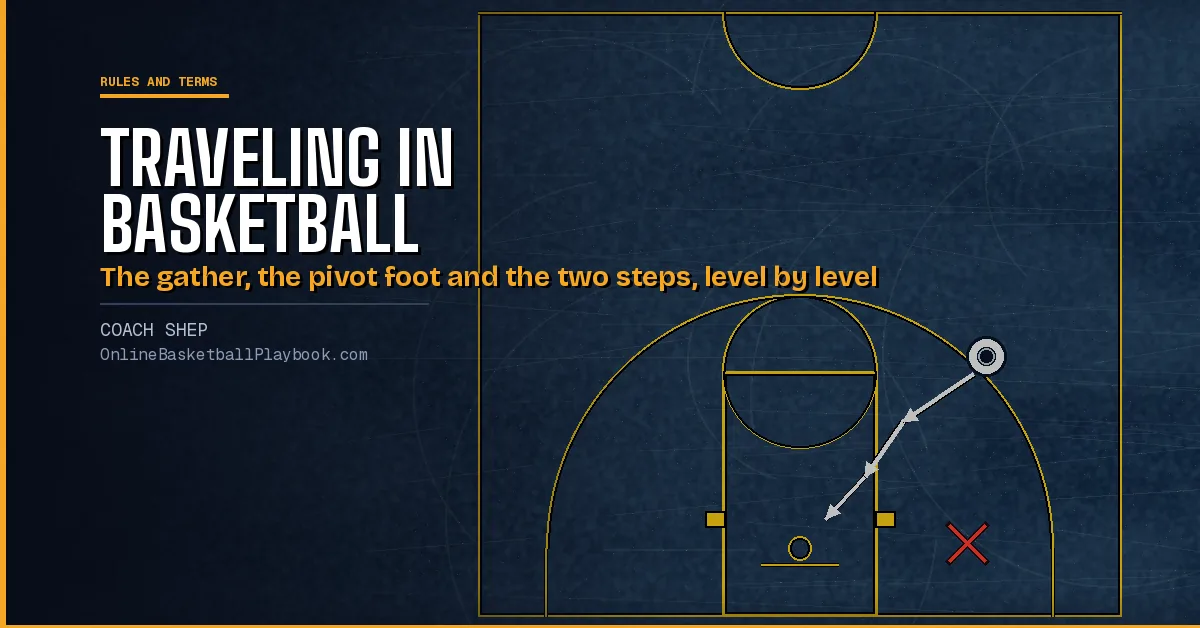
Traveling in basketball explained level by level, with the pivot foot, the gather, steps, the jump stop and the penalty at NFHS, NCAA men and women, NBA and FIBA.
How long is basketball halftime? 15 minutes in college, the NBA and FIBA, and 10 in the last high school rulebook text. Quarter breaks and halftime rules by level.
Basketball rules for beginners in plain words: scoring, the clock, moving with the ball, time limits, out of bounds, fouls and free throws, with a quiz.
The point guard, shooting guard, small forward, power forward and center, what each one does on offense and defense, and when to ignore the numbers.
Basketball game clock rules by level: when the clock stops, when it starts on a throw-in or a missed free throw, made baskets late and the last-two-minute rules.
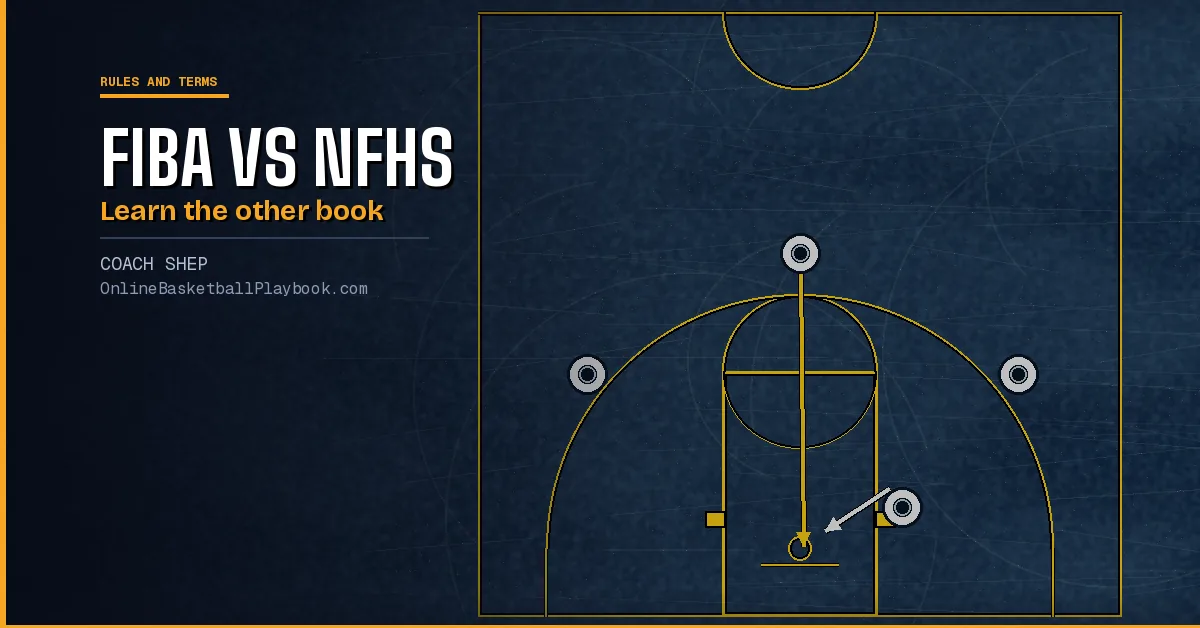
FIBA vs NFHS rules for coaches: goaltending and the ball on the ring, timeouts, travel and the gather, the clock, the throw-in, plus Olympic rules vs the NBA.
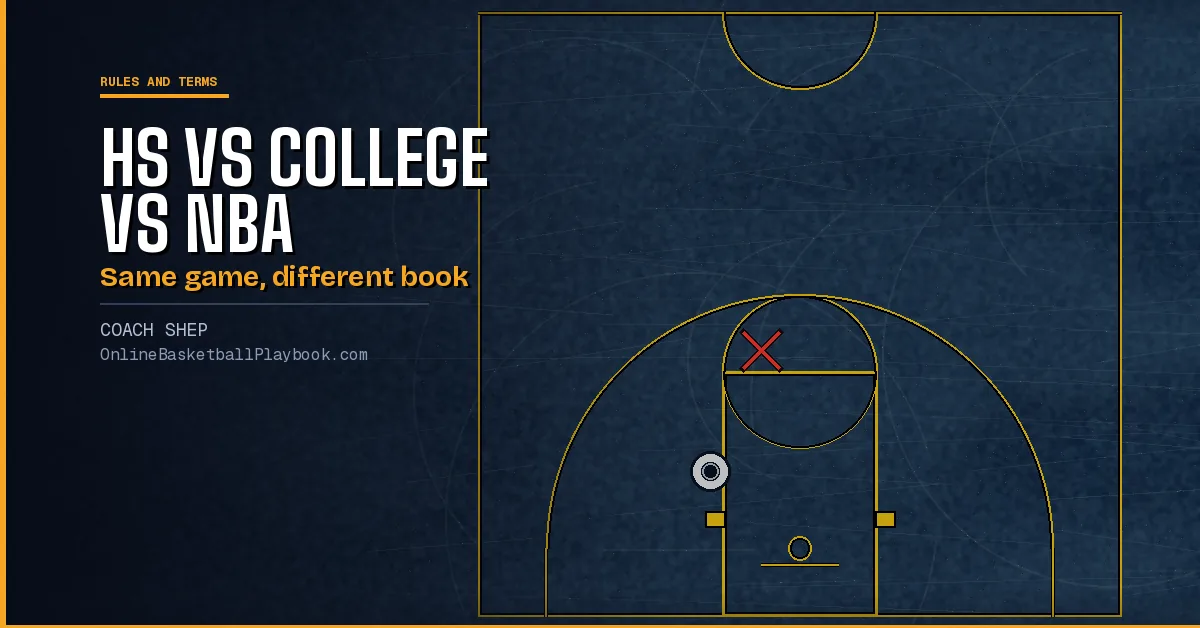
High school vs college vs NBA rules: shot clock, three-point line, bonus, fouling out, timeouts, backcourt count and defensive three seconds, and what each changes.
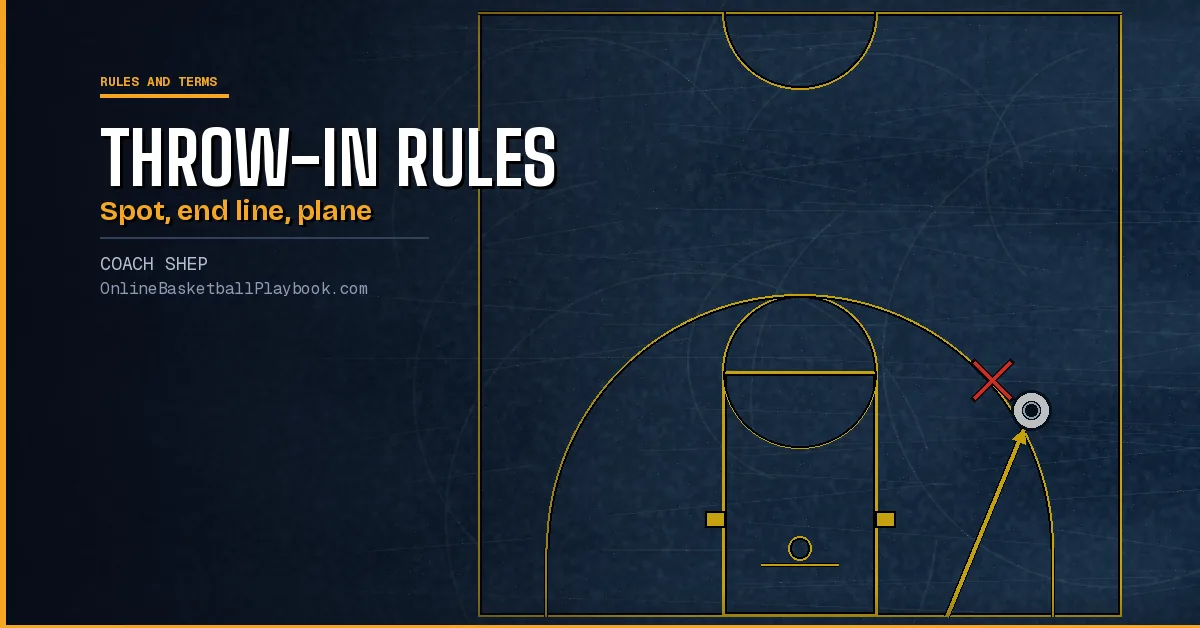
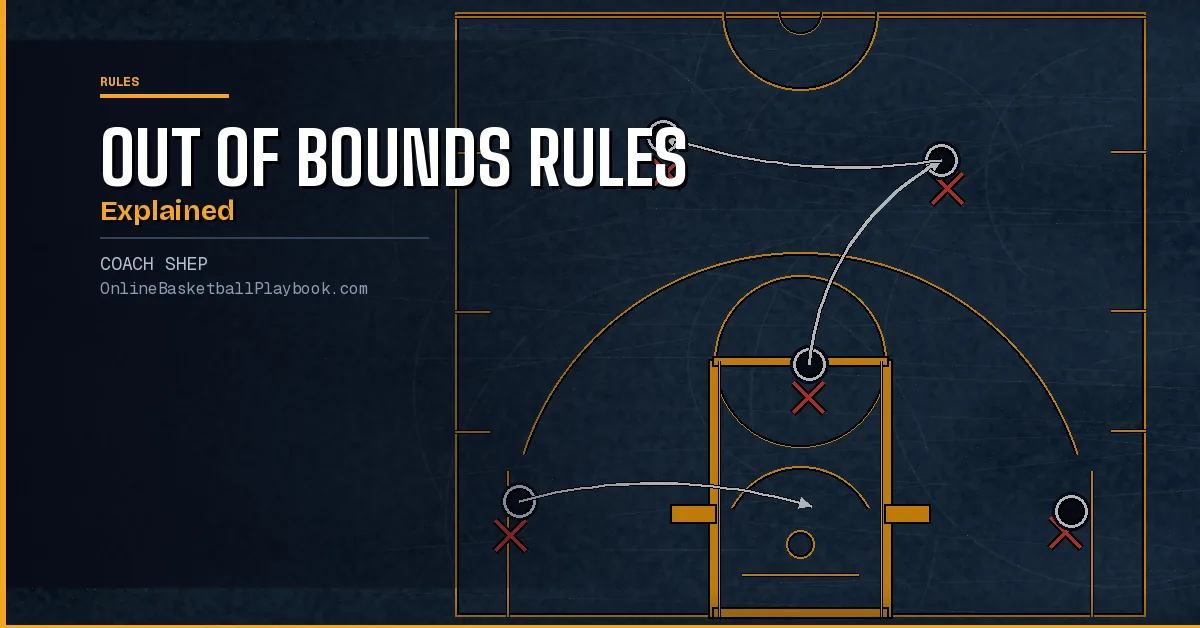
Basketball throw-in rules by level: the designated spot, the five seconds, the boundary plane and delay warnings, and throw-ins after a made basket or a timeout.
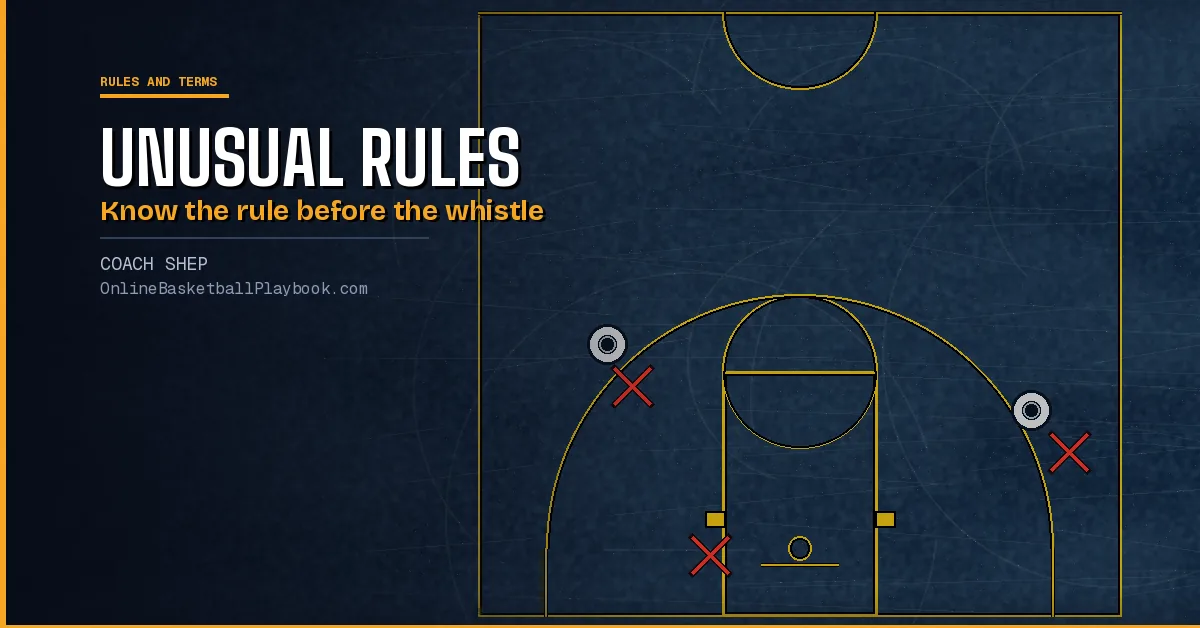
Unusual basketball rules by level: blocked shots and the shot clock, backboard-only free throws, the clock on a throw-in, the end line and the boundary plane.
FIBA basketball terminology for coaches abroad: ball screen coverage words, screen and cut names, spacing words, the rulebook's terms and one word per idea.
Basketball rules and regulations from the official books by level: court, clock, shot clock, fouls, violations, free throws and timeouts for NFHS, NCAA, NBA, FIBA.
HORSE basketball rules: how many play, setting the order, calling a shot, copying it, taking letters, who calls next, the shorter PIG game and HORSE in practice.
A double dribble is a second dribble after the first has ended. Rules by level (NFHS, NCAA, NBA, FIBA), what restarts a dribble, examples and how to coach it.
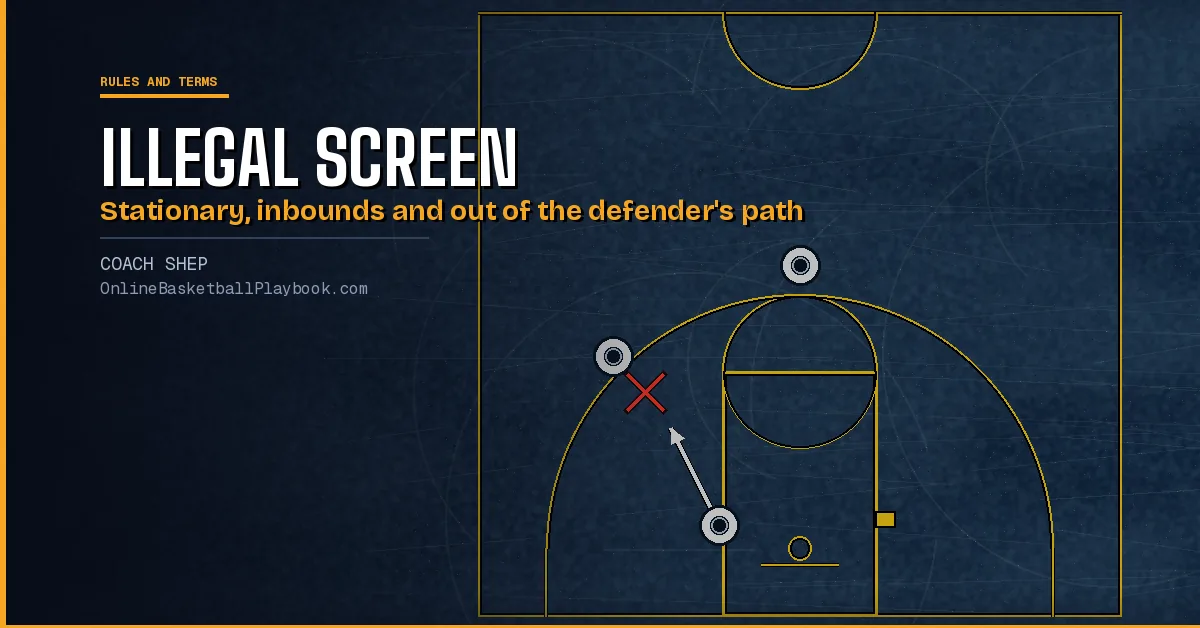
Illegal screen basketball rules at the NFHS, NCAA, NBA and FIBA levels, with the stance, the one-step and two-stride distances, moving screens and the penalty.
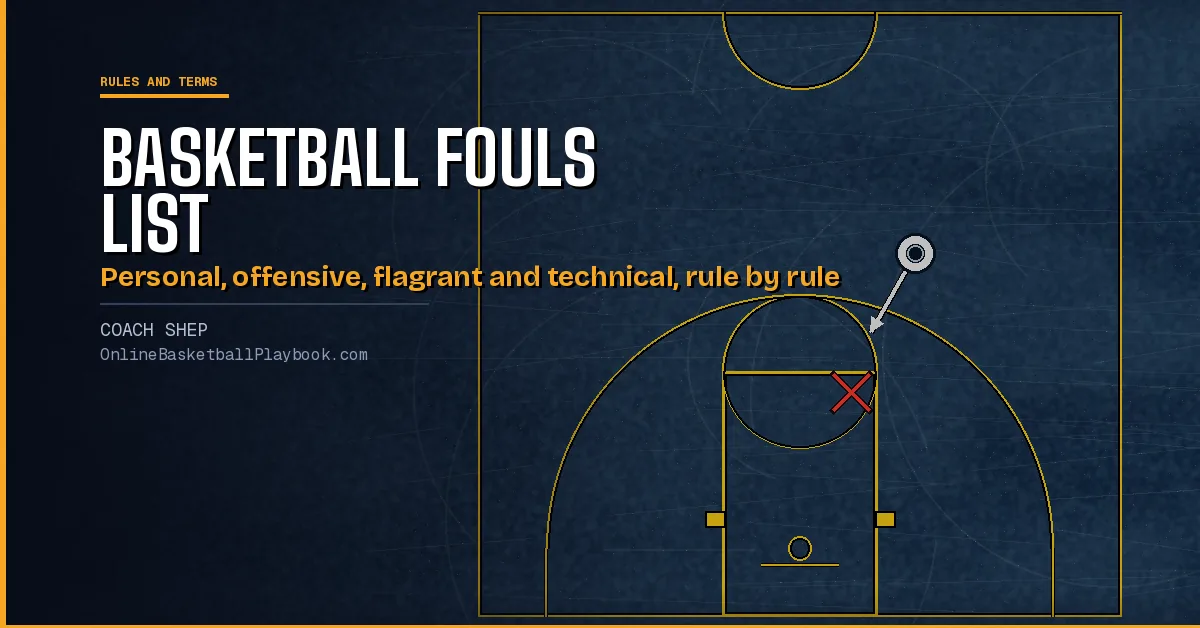
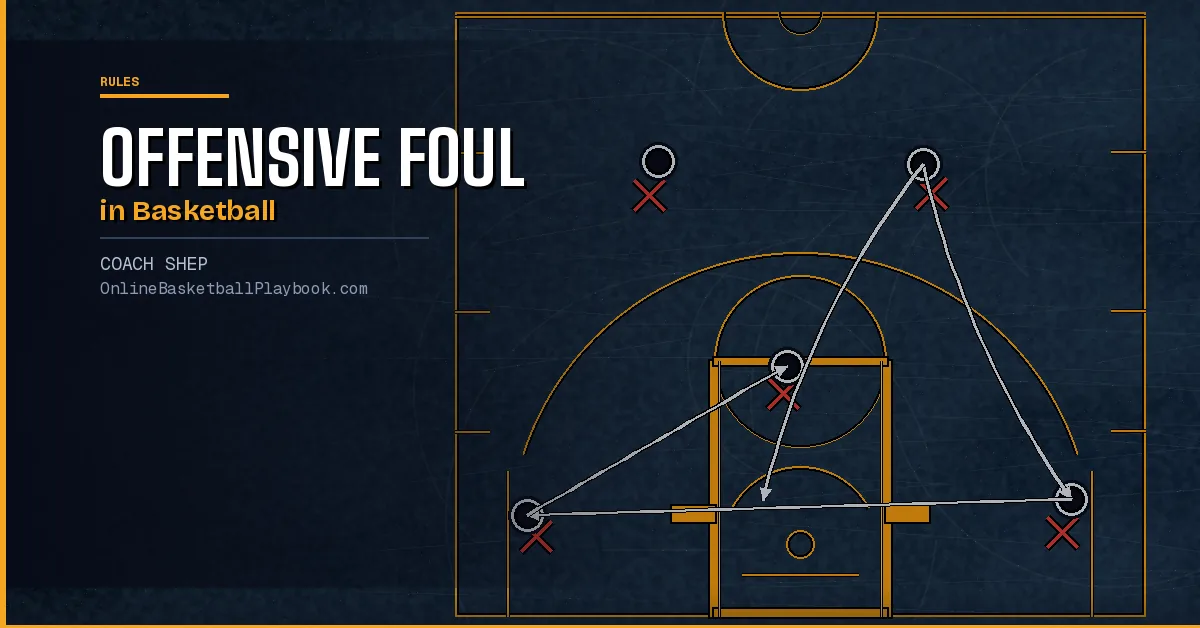
Basketball fouls list for coaches, with every personal, offensive, flagrant and technical foul, the free throws, the bonus and the foul-out limit at each level.
A backcourt violation is sending the ball back across half court after gaining frontcourt control. Rule by level, exceptions, the 8 or 10 second count and examples.
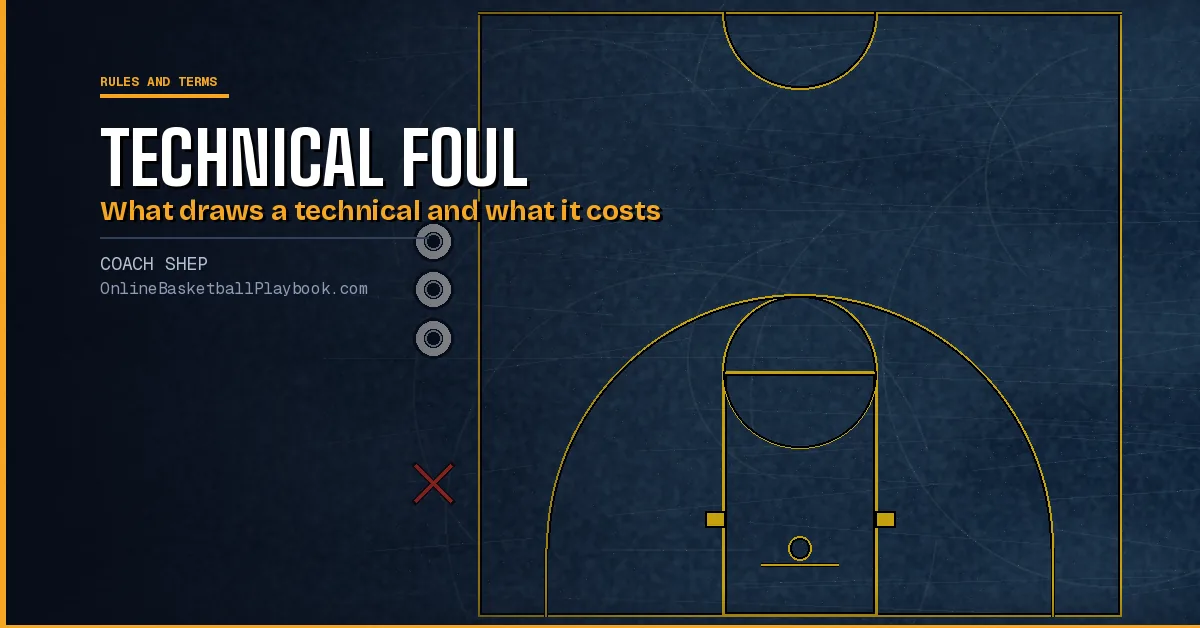
What a technical foul is in basketball, what draws one, what it costs in free throws and when it ejects a player or coach, labeled by NFHS, NCAA, NBA and FIBA rules.
Middle school basketball rules: who writes them, quarter length, ball size, shot clock and running clock by state, and the high school rules middle schoolers play.
3x3 basketball rules from the FIBA rulebook: teams, scoring, the 21-point win, the 12-second clock, check-ball, clearing the ball, fouls and penalties.
21 basketball rules: who gets the ball first, scoring to 21, clearing a rebound, free throws after a basket, fouls, and the three-basket and shooting versions.
Basketball referee signals from the official NBA, NCAA and FIBA charts: how a foul is reported, foul signals by level, and violation, scoring and timeout signals.
Basketball timeout rules by level: how long a timeout is, how many each team gets, who may call one and when, the timeout signal and media timeouts.
A list of basketball violations from the NCAA, NBA and FIBA books with NFHS notes: ball handling, time counts, out of bounds, throw-ins, free throws, goaltending.
Flagrant foul basketball rules by level: what makes contact flagrant, flagrant 1 vs flagrant 2, free throws and the ball, ejections, replay and FIBA 2026.
Moving screen basketball explained by level: what makes a screen moving, how time and distance fit in, what officials call and how to teach screeners to stop first.
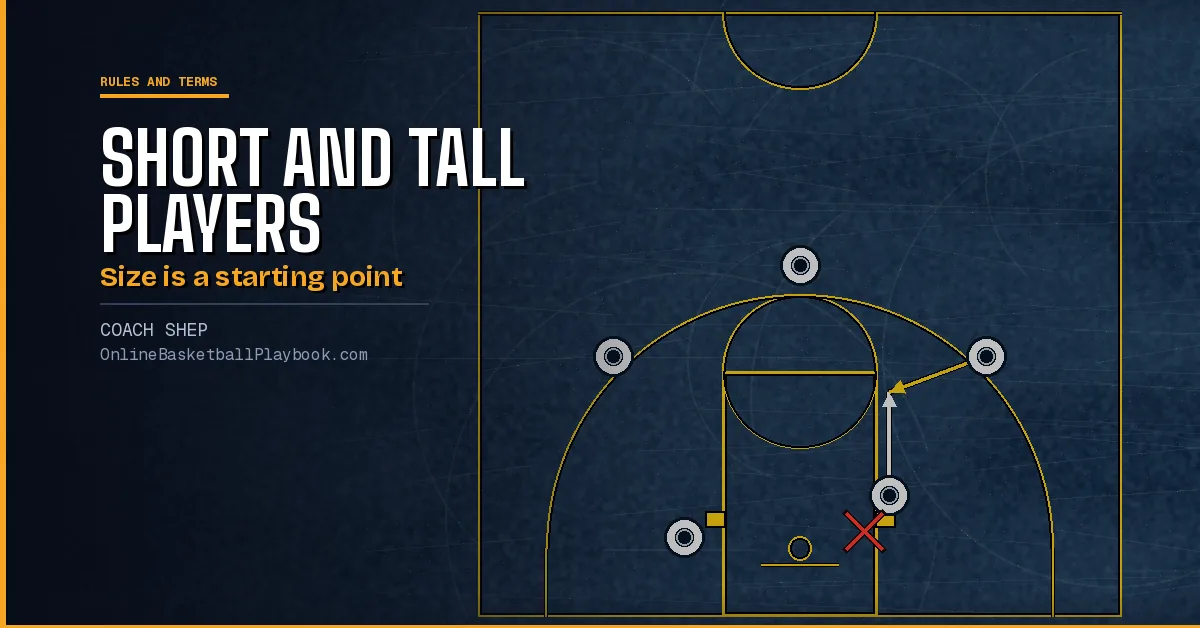
Which basketball positions fit short people and tall players, why height matters less than skills at young ages, and how undersized and tall players win their spots.
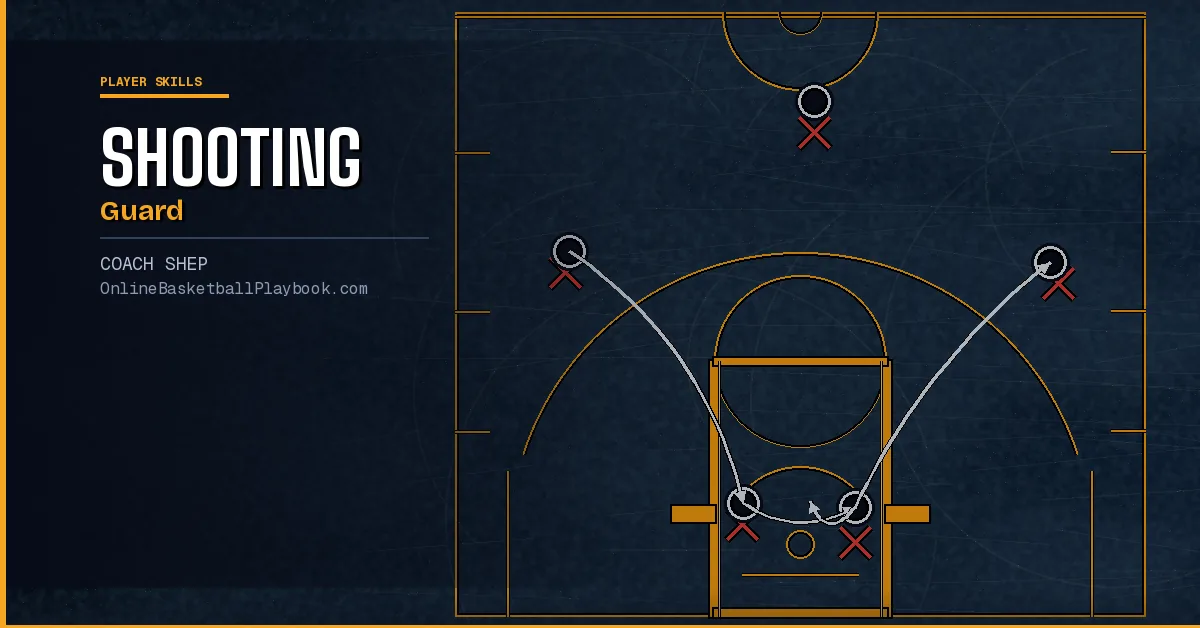
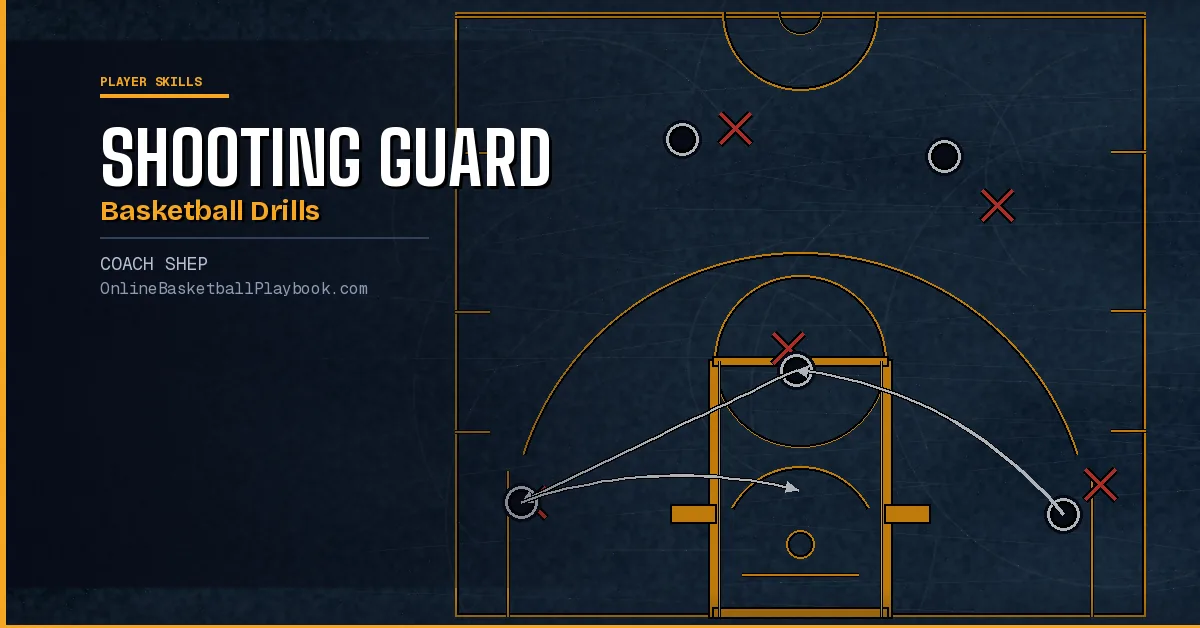
Shooting Guard Drills for Basketball Practice
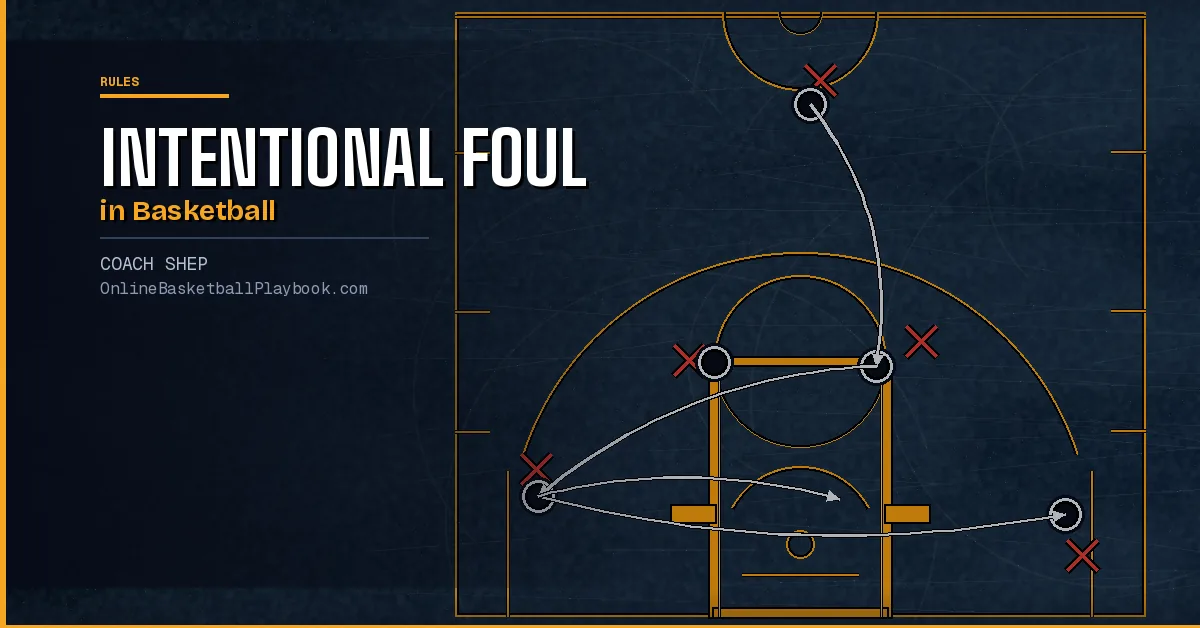
Intentional Foul in Basketball: Complete Guide
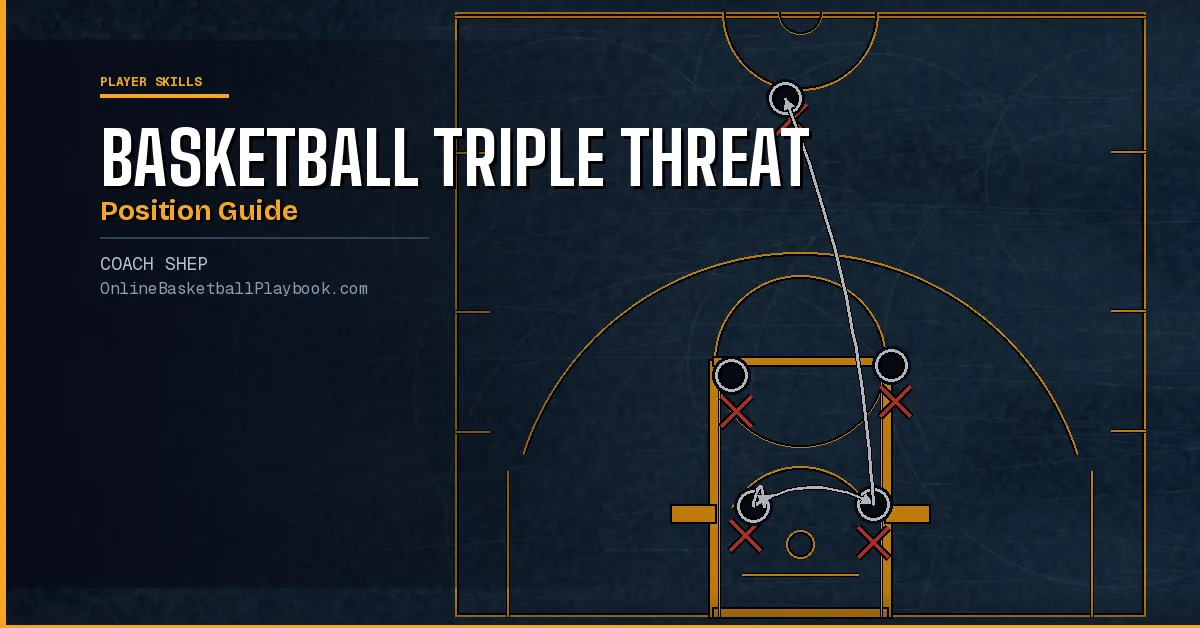
Basketball Triple Threat Position: Complete Guide
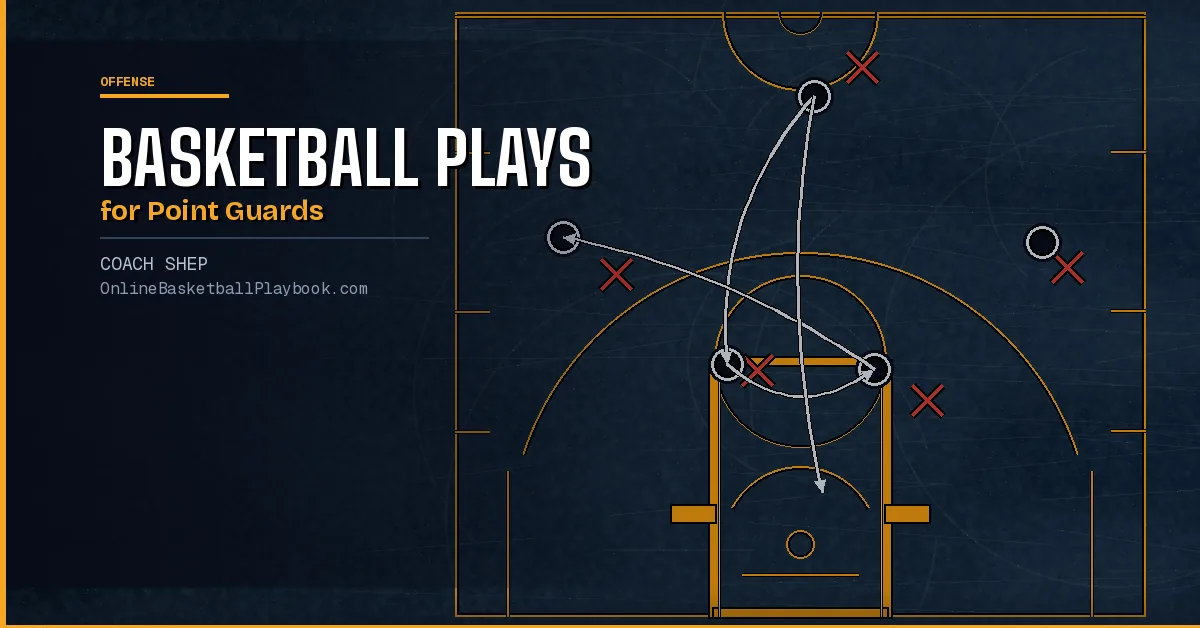
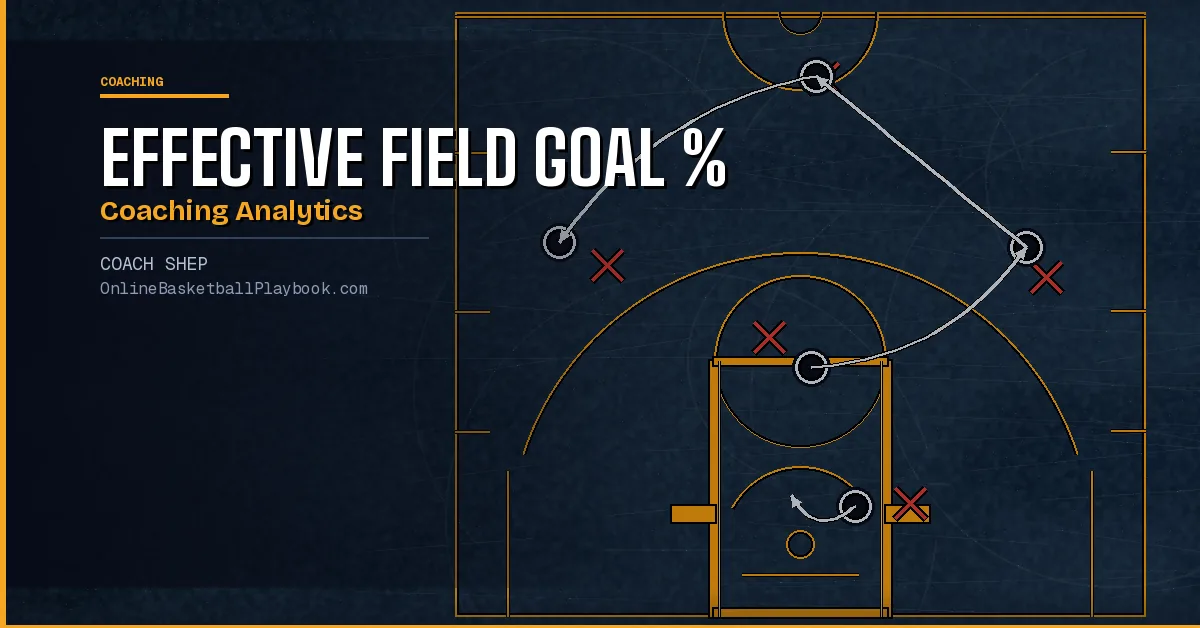
Effective Field Goal Percentage in Basketball
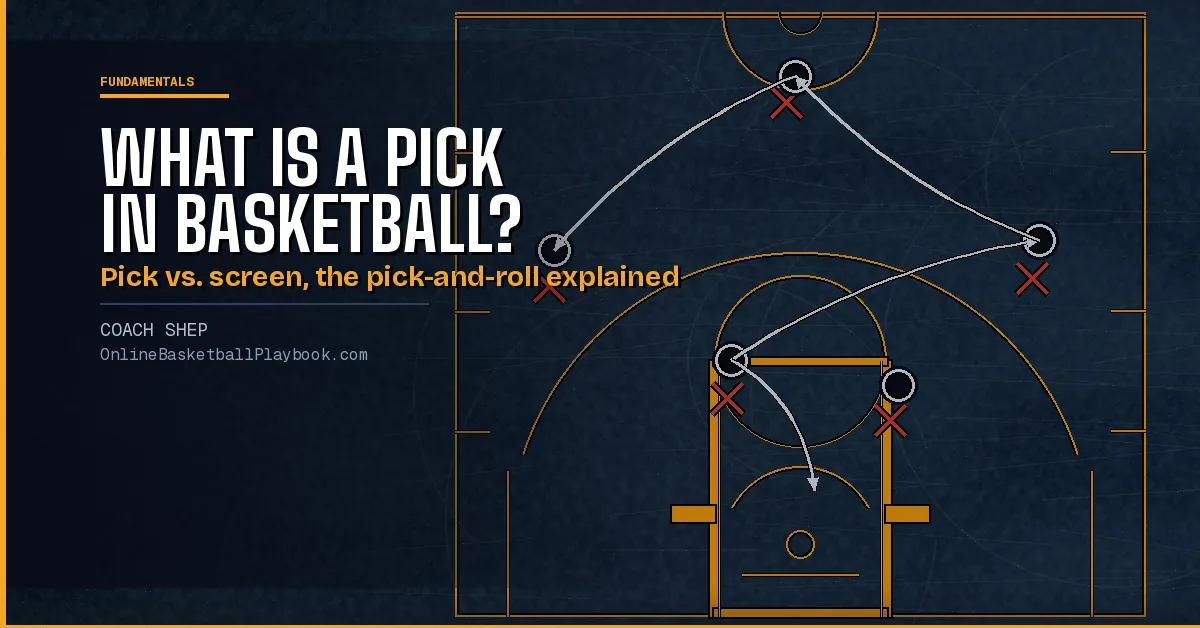
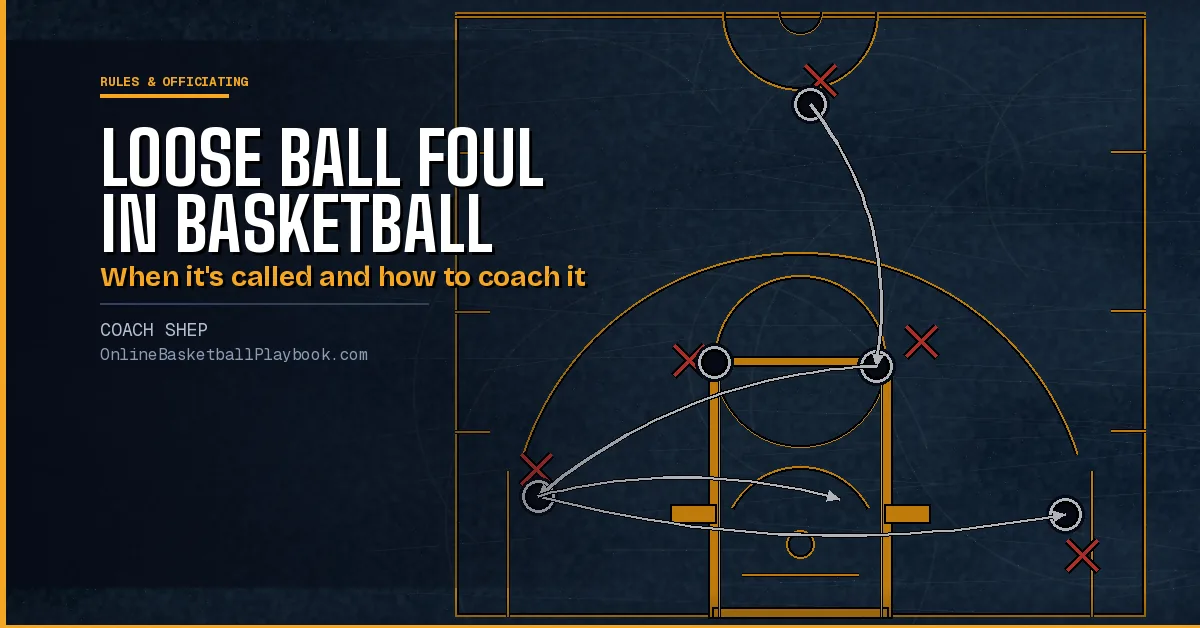
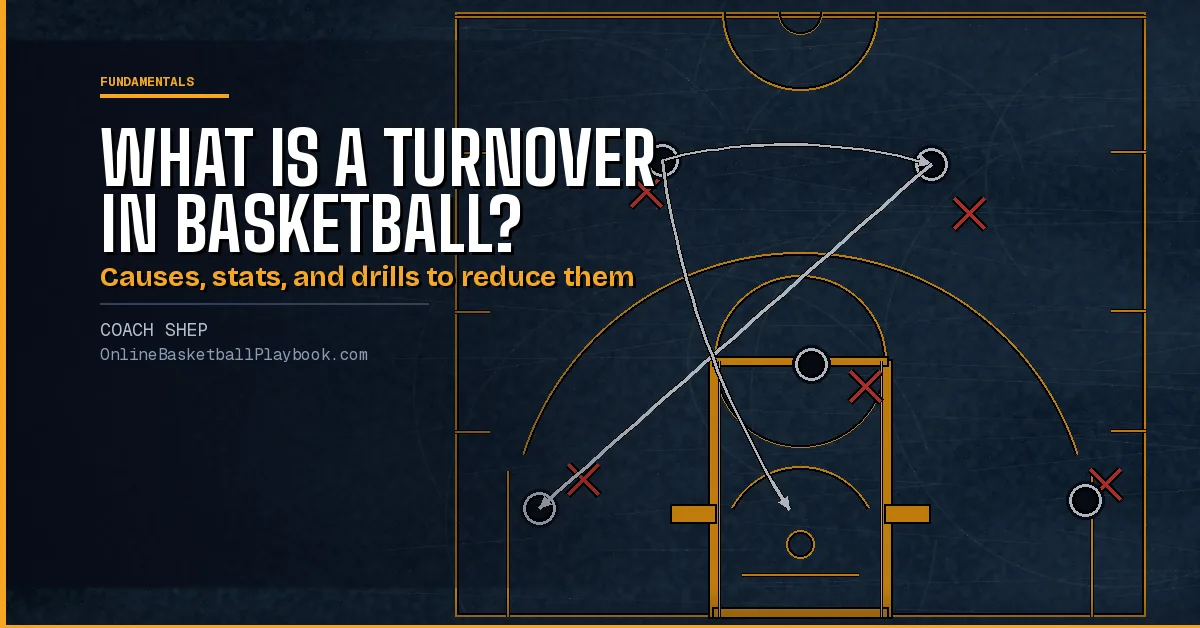
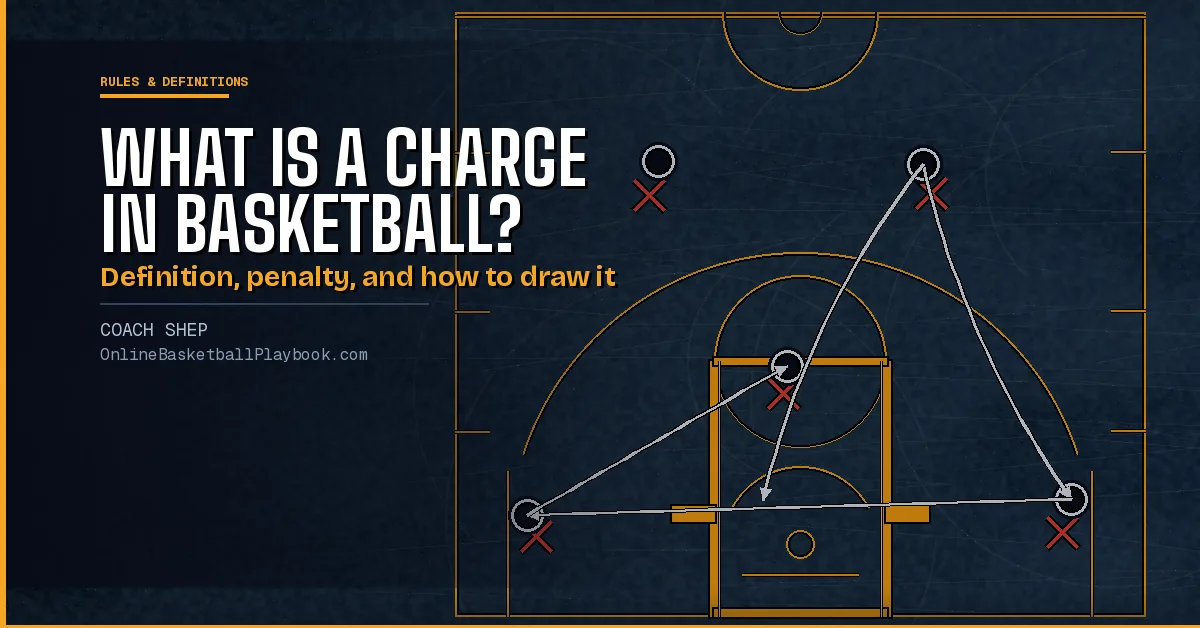
A charge is an offensive foul called when a ball handler drives into a defender who has already established legal guarding position. Here's the rule, the restricted area, and how to teach your players to draw charges.
An assist is a pass that directly leads to a made basket, but "directly leads to" is more of a judgment call than most fans realize. Here's the official definition, the hockey assist, and how to coach players toward more of them.
A carrying violation happens when a dribbler's hand moves under the ball and it comes to rest. Here's the official rule, why it's barely called at higher levels, and how to teach legal dribbling mechanics.
The restricted area is the semicircle under the basket where a defender can't draw a charge. Here's the size of the arc, how officials judge feet position, and how it interacts with legal verticality.
Basketballs come in standardized sizes based on age and gender. Here's the full size chart, circumference and weight specs, and why sizing down can save a young player's shooting mechanics.
A blocking foul is called on a defender who hasn't established legal guarding position before contact. Here's exactly what legal position requires, how it differs from a charge, and how to coach it out of your defense.
The power forward has split into two distinct tracks: the traditional interior scorer and the modern stretch four. Here's the physical tools, key skills, and development priorities for the position.
The small forward blends guard skills with forward size and usually draws the toughest defensive assignment on the floor. Here's what the role actually requires and how positionless basketball has reshaped it.
The center anchors the paint on both ends, but the position has evolved with the rise of the stretch five. Here's the physical tools, core skills, and pick-and-roll coverages every center needs.
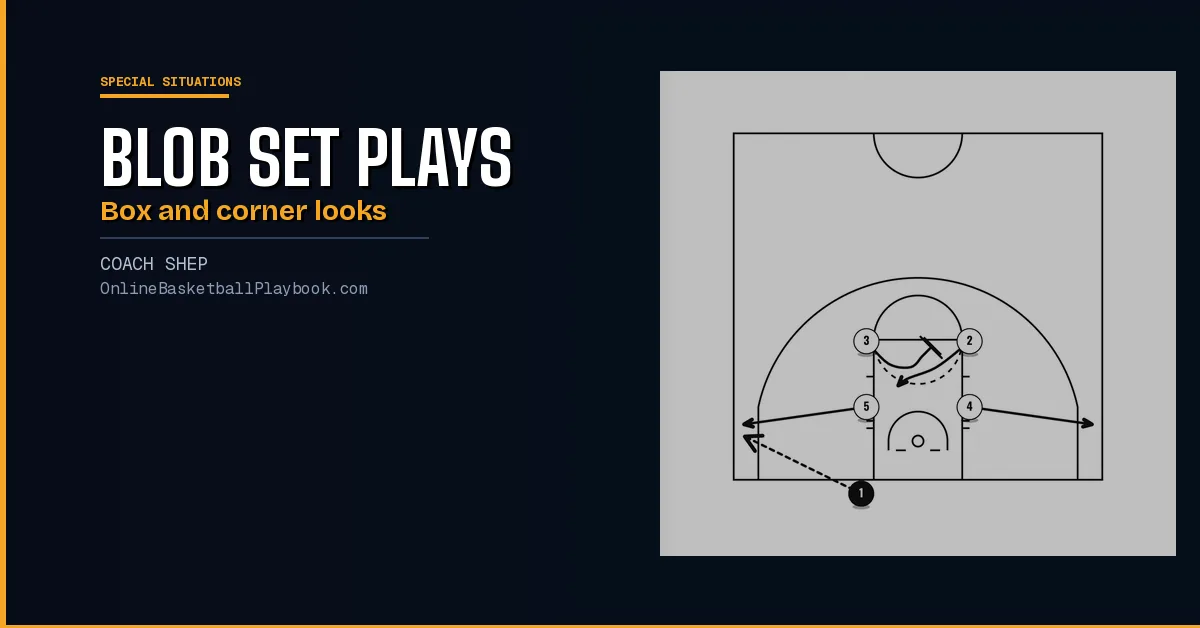
BLOB set plays from the box and the corner look: 7 baseline out of bounds sets against man and zone, each drawn frame by frame with where every player goes.
When to call a timeout in basketball, when to play on, how to budget them for the finish, how to run the huddle, and how many timeouts each level allows.
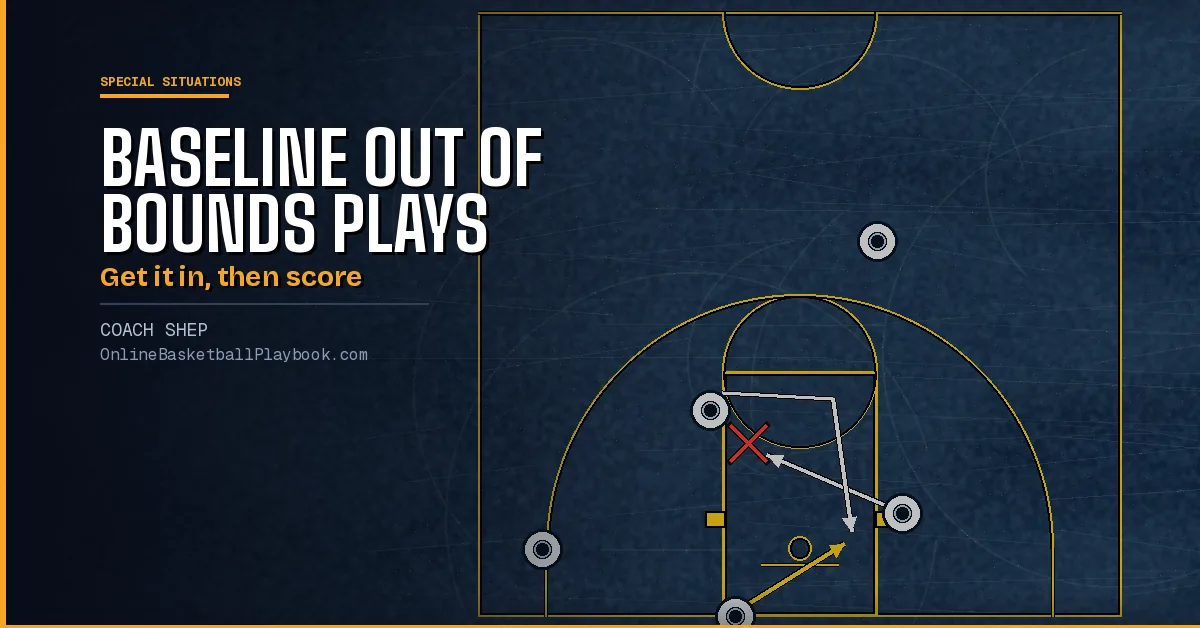
Baseline out of bounds plays drawn step by step: a box back screen and roll, Pick the Picker, the double stack, a 2-3 zone play, youth one-pass plays, the rules and the reads.
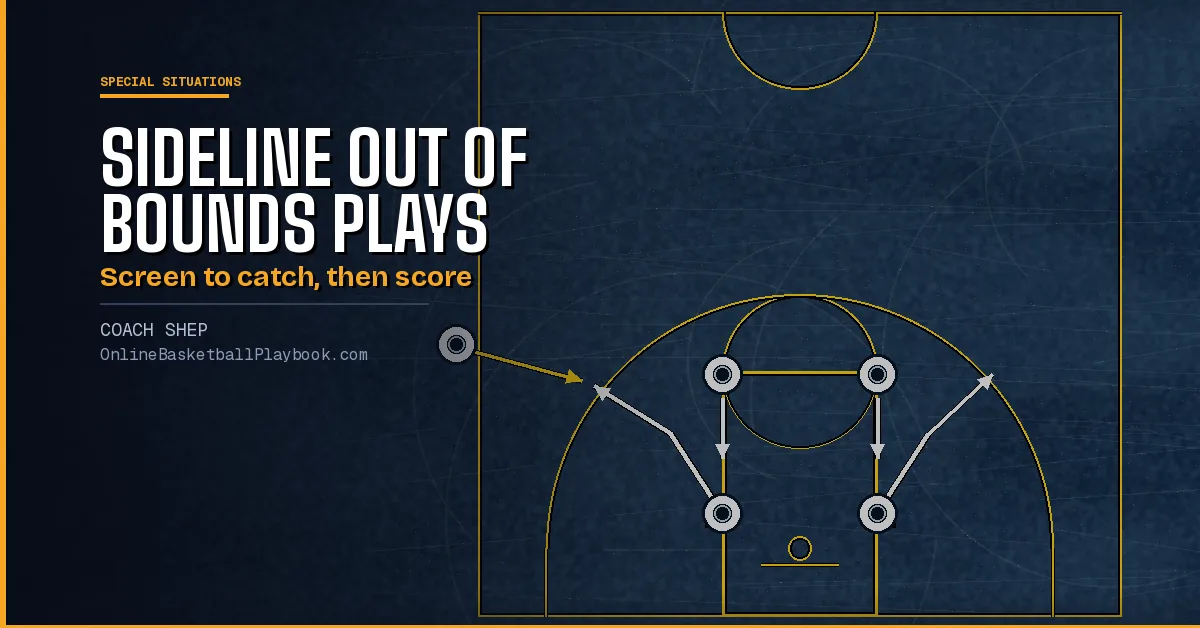
Sideline out of bounds plays for coaches: SLOB sets from a box, stack and line, the inbounder's reads, plays against zone and denial, the clock and practice.
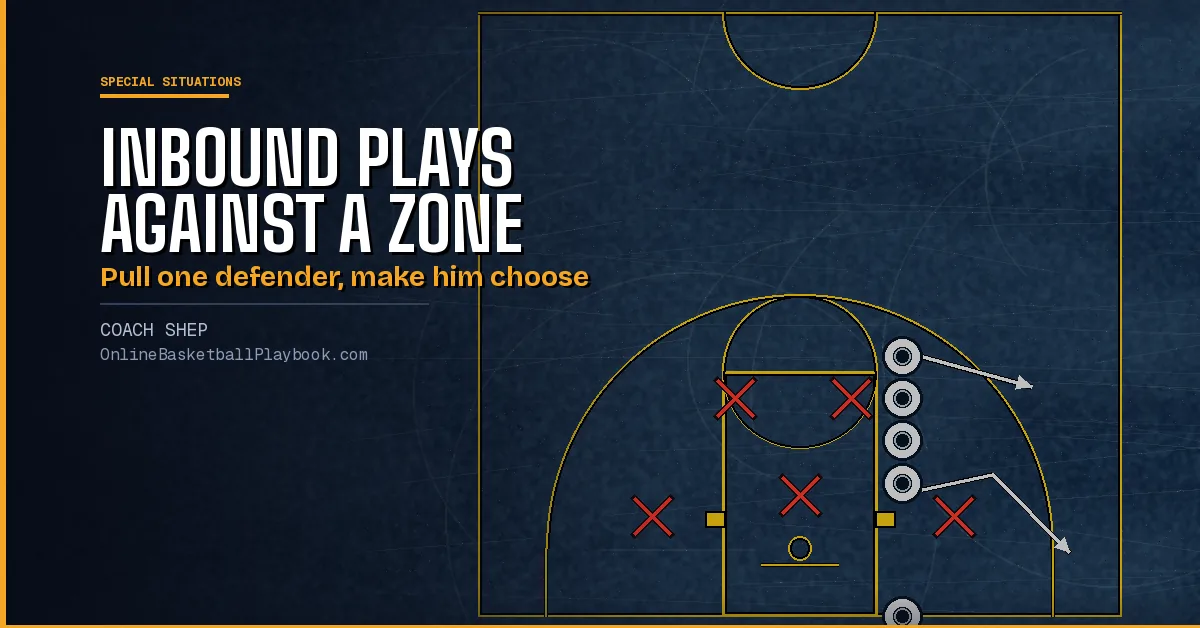
Inbound plays against a zone from the baseline and sideline: the read, the stack near the elbow, short-corner pulls, split cuts, two-part sets and sideline answers.
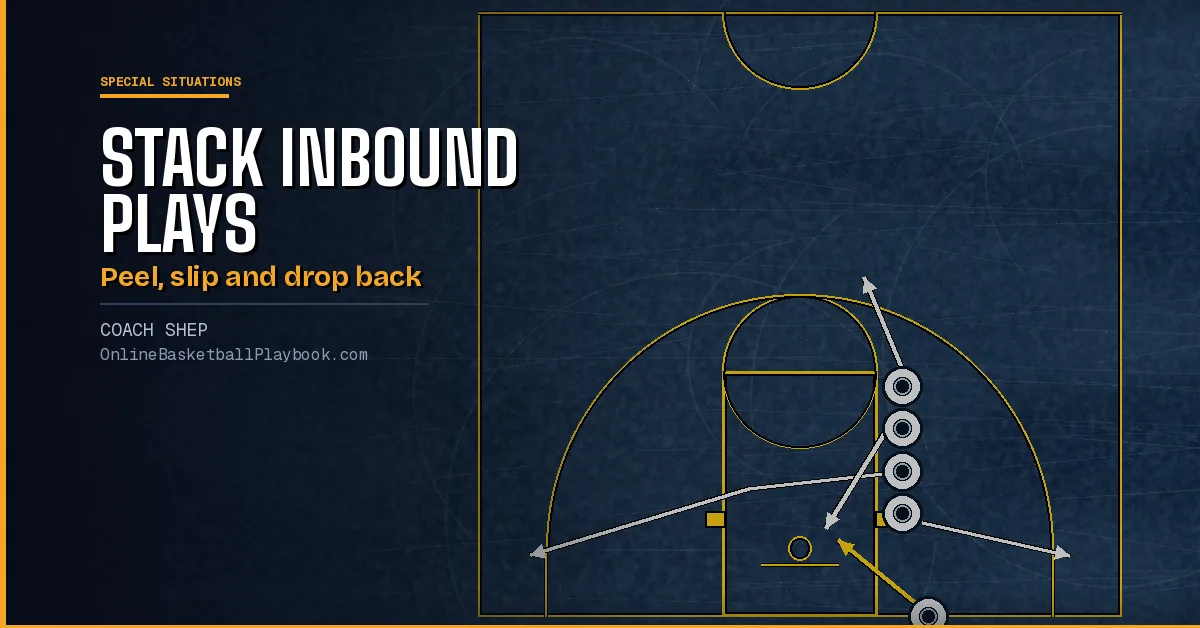
Stack inbound plays and line sets from the baseline and sideline: splits, stacks away from the ball, rubs, screens inside the stack, line plays and the reads.
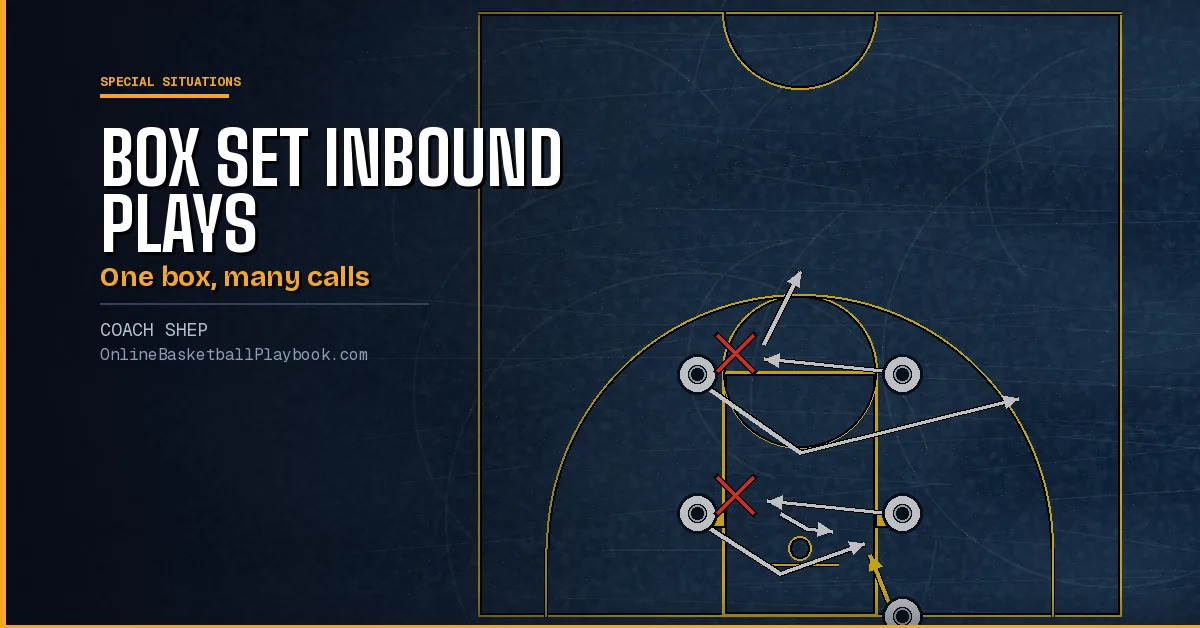
Box set inbound plays from the baseline: the box shell and its variations, cross screens, back screens, plays for the inbounder, switch reads and how to teach them.
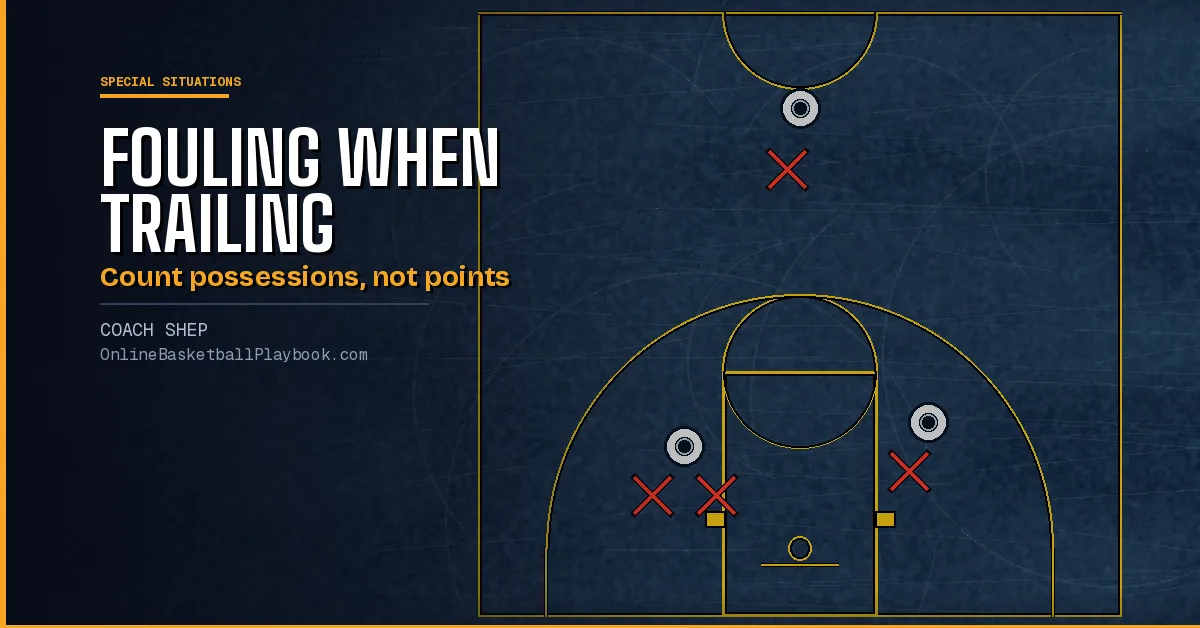
Fouling when trailing late: when to start by possessions and seconds, the bonus and clock rules by level, how to foul, who to foul, down 3 and the rebound.
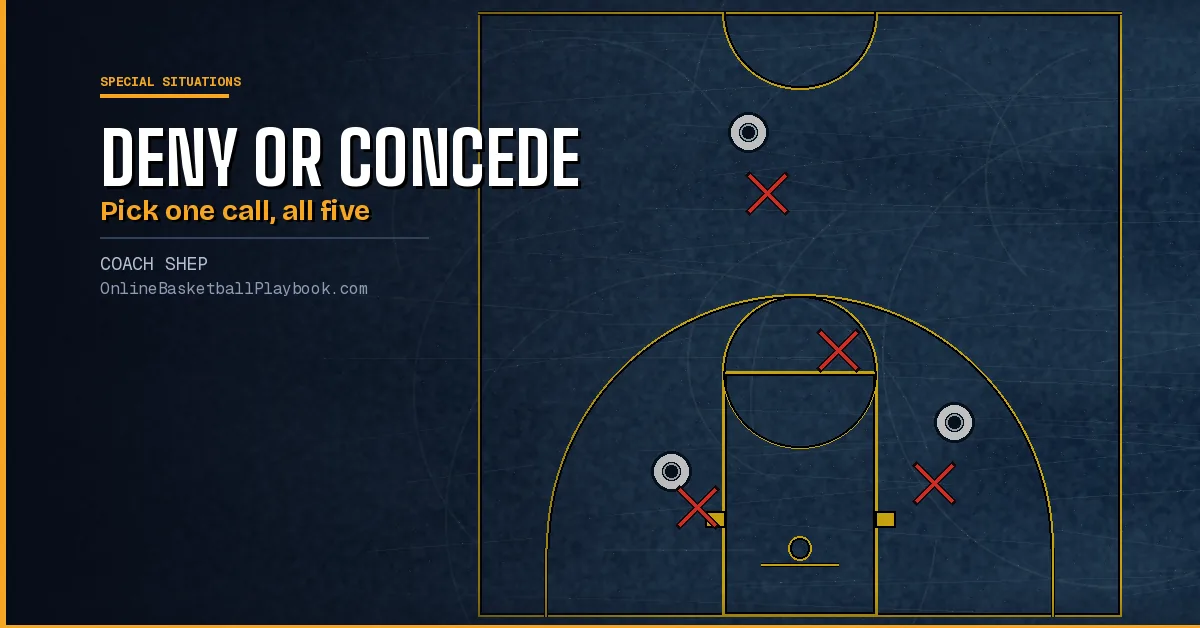
Deny the inbound pass or concede the catch and protect the rim? Both schools of inbounds defense, the middle ways, what each risks and how to choose your call.
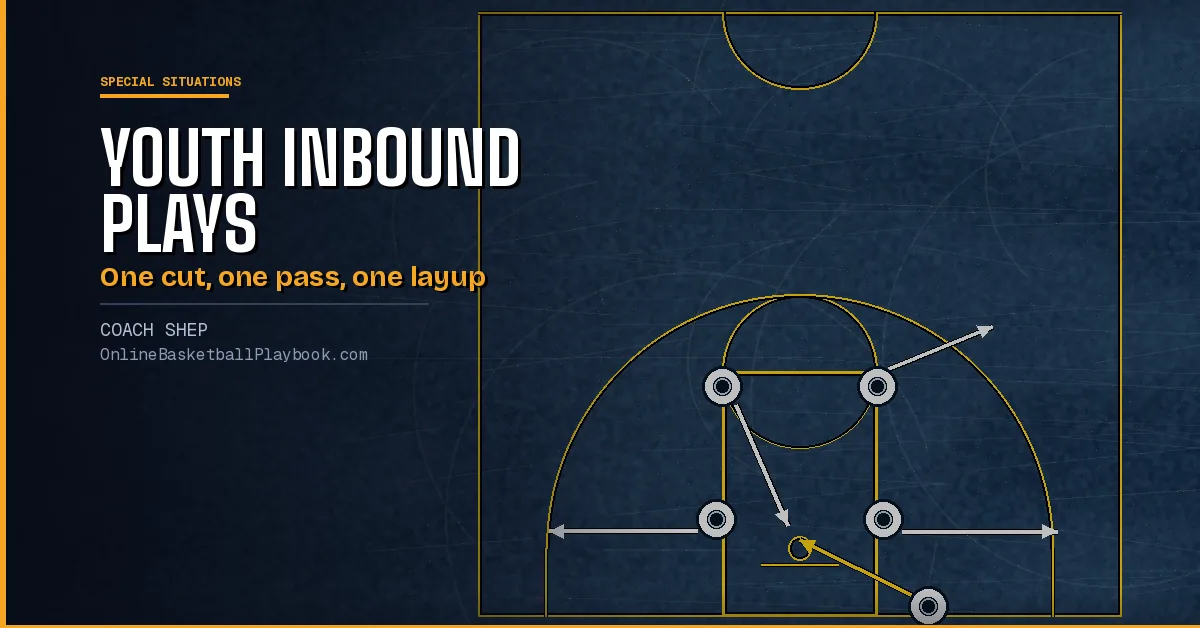
Youth basketball inbound plays that work: one-pass baseline plays from the box and the line, the reads under every play, the inbounder, zone answers and practice.
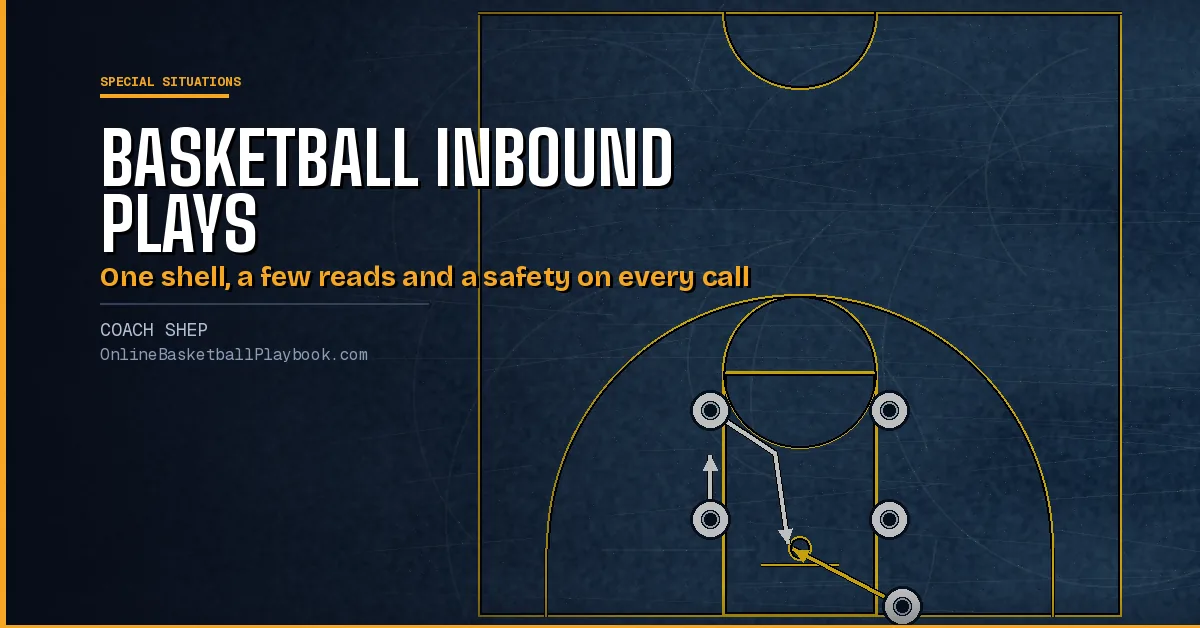
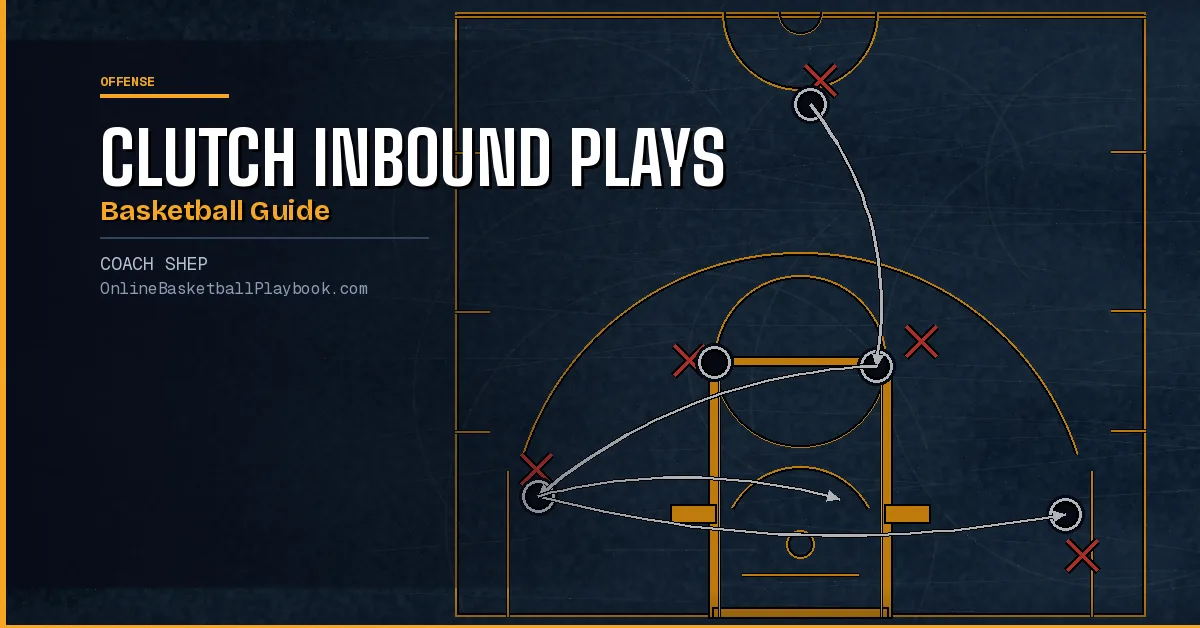
Basketball inbound plays for baseline and sideline throw-ins, with six drawn sets, simple plays for youth teams, zone looks and where coaches disagree.
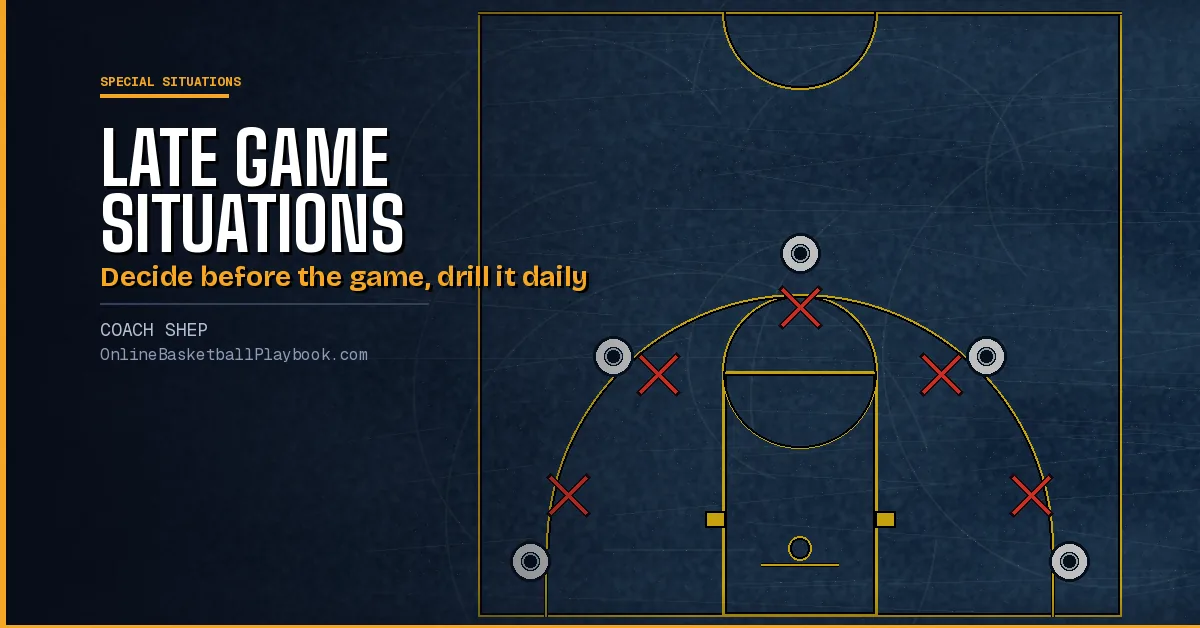
Basketball late game situations settled before tip-off: the score math, timeouts, fouling up three and behind, the last shot, protecting a lead and daily practice.
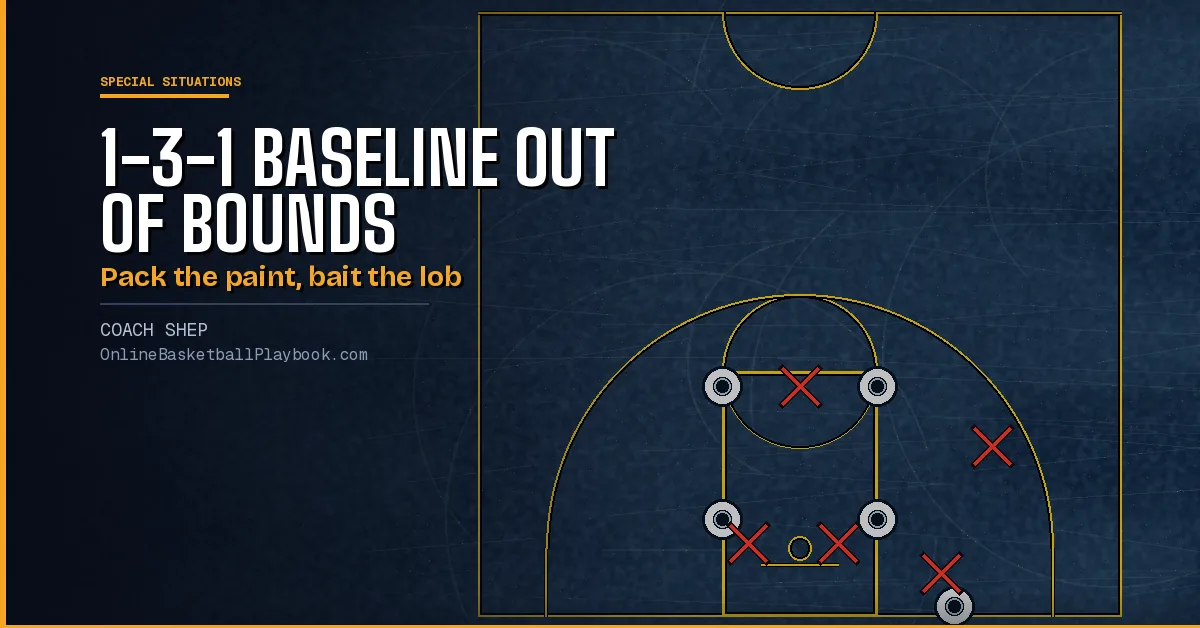
The 1-3-1 baseline out of bounds defense packs the paint and baits a deep lob. See the five jobs, the corner trap, the pass above the line and when to use it.
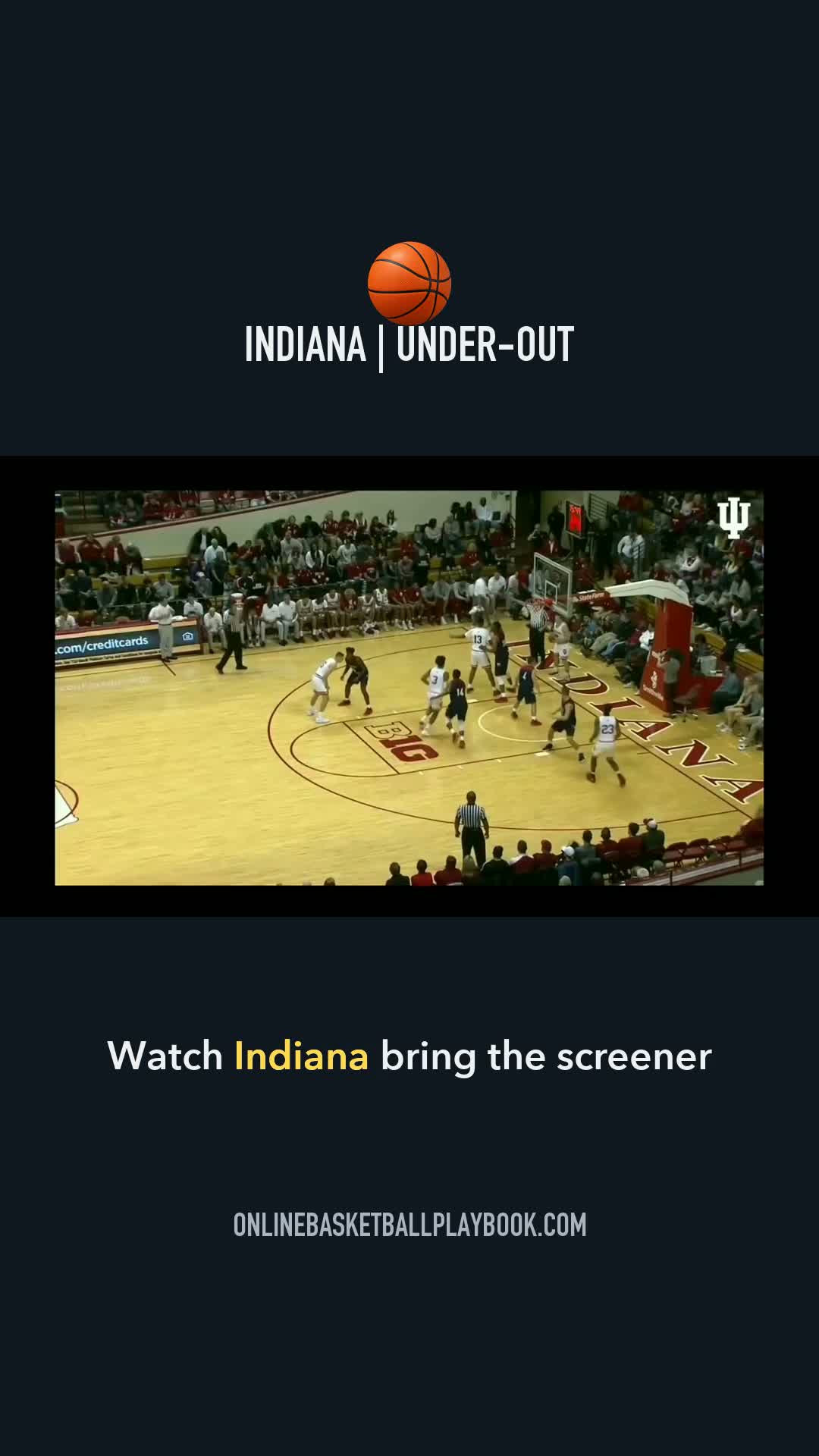
Watch Indiana’s box loop against Southern Indiana, track the returning screener, and download the editable play from this exhibition possession.
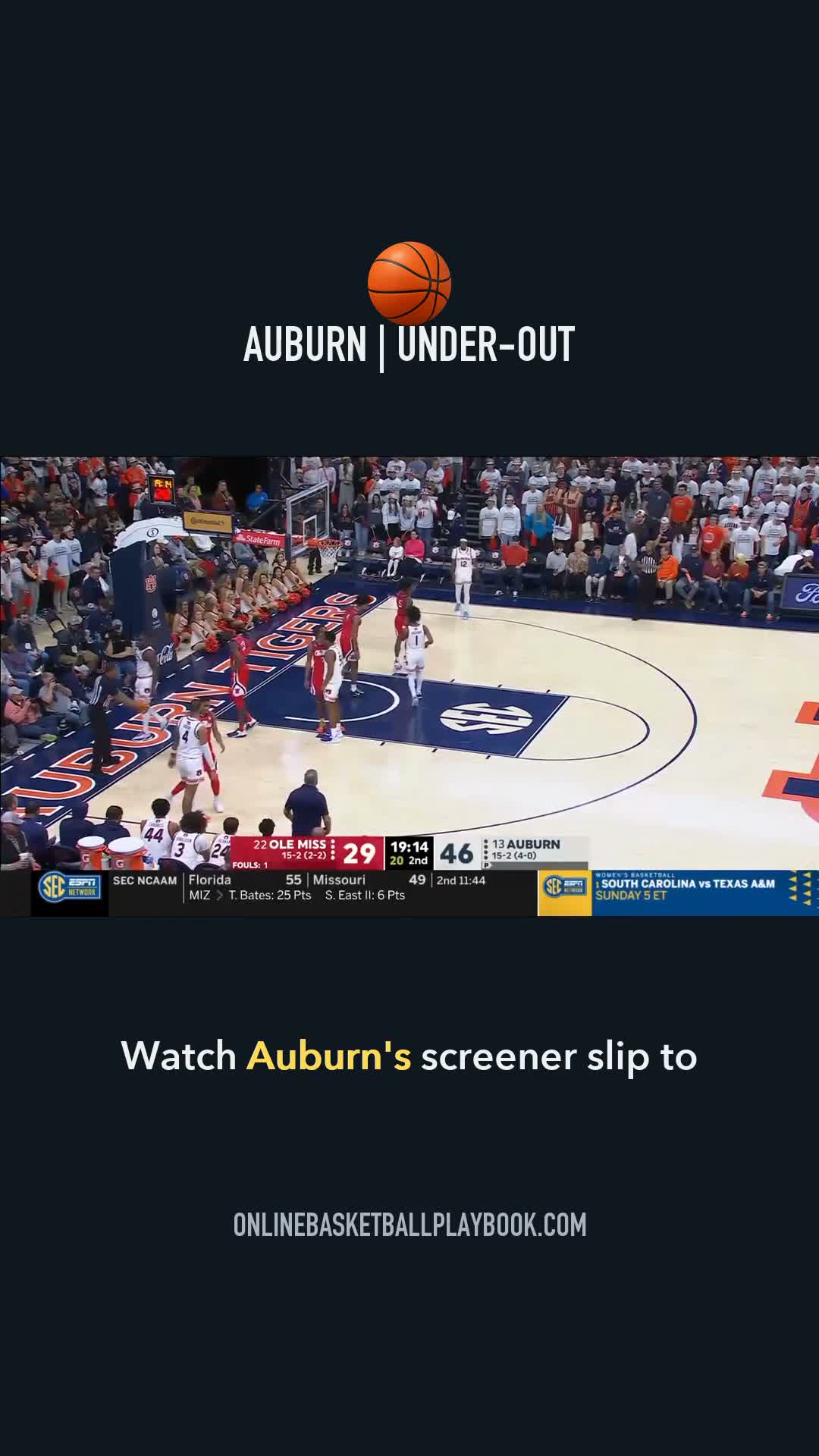
Watch Auburn’s four-low baseline play against Ole Miss, follow the screener’s slip to the rim, and download the editable play.
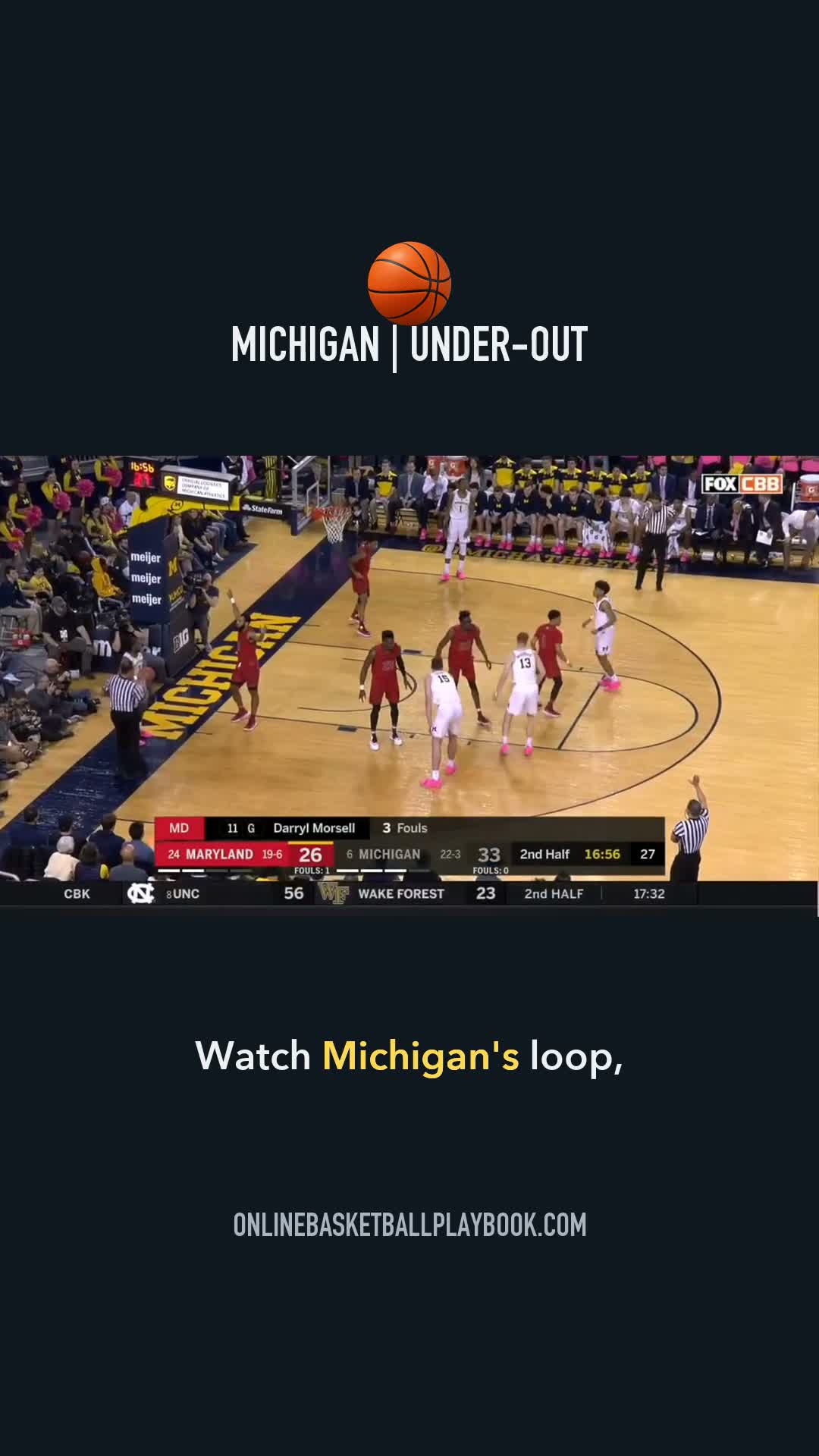
Watch Michigan’s baseline loop, handoff and flare against Maryland, follow each screen, and download the editable play.
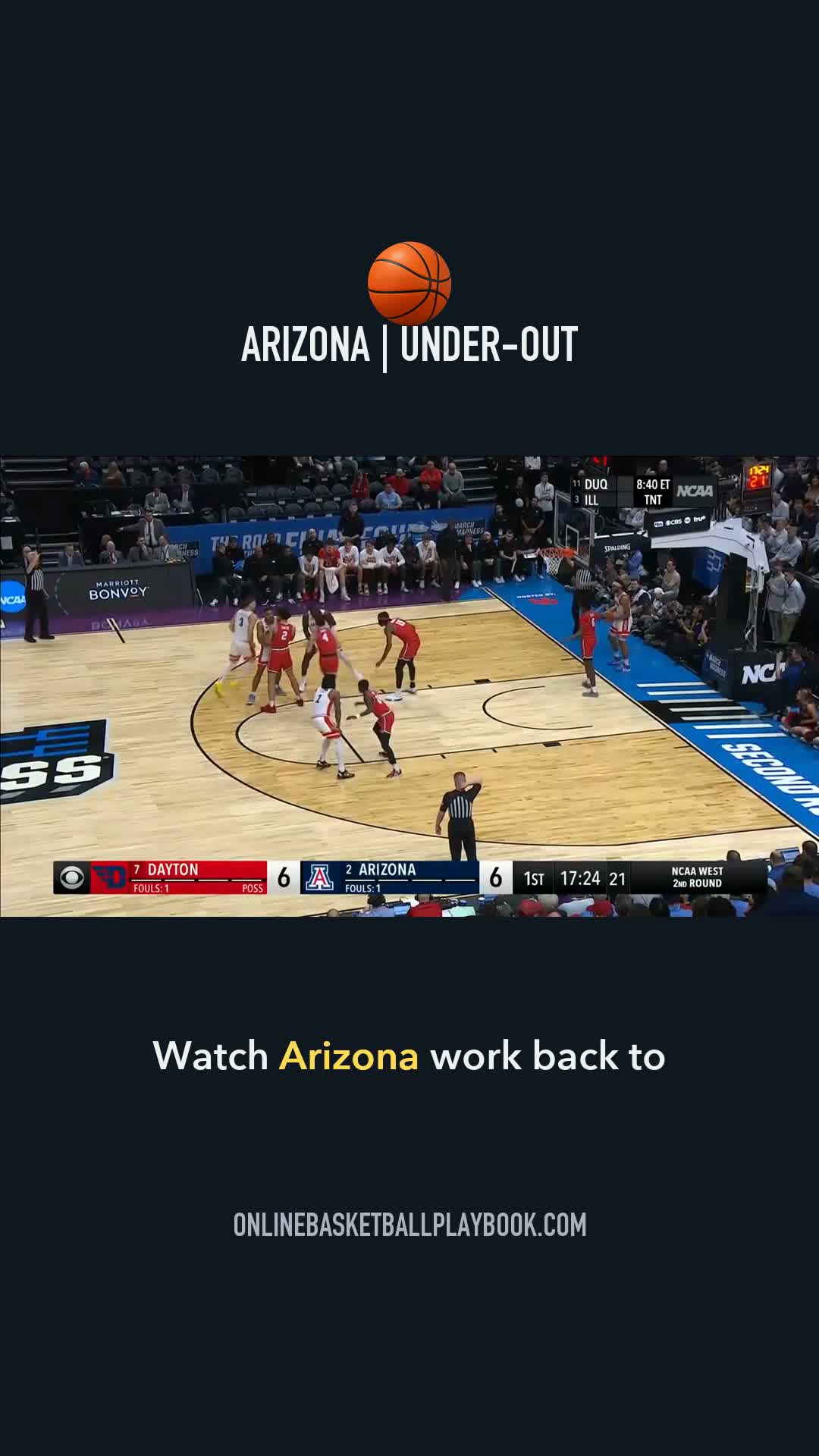
Watch Arizona’s baseline stagger flow into a corner pick and roll against Dayton, then download the editable play with the full passing sequence.
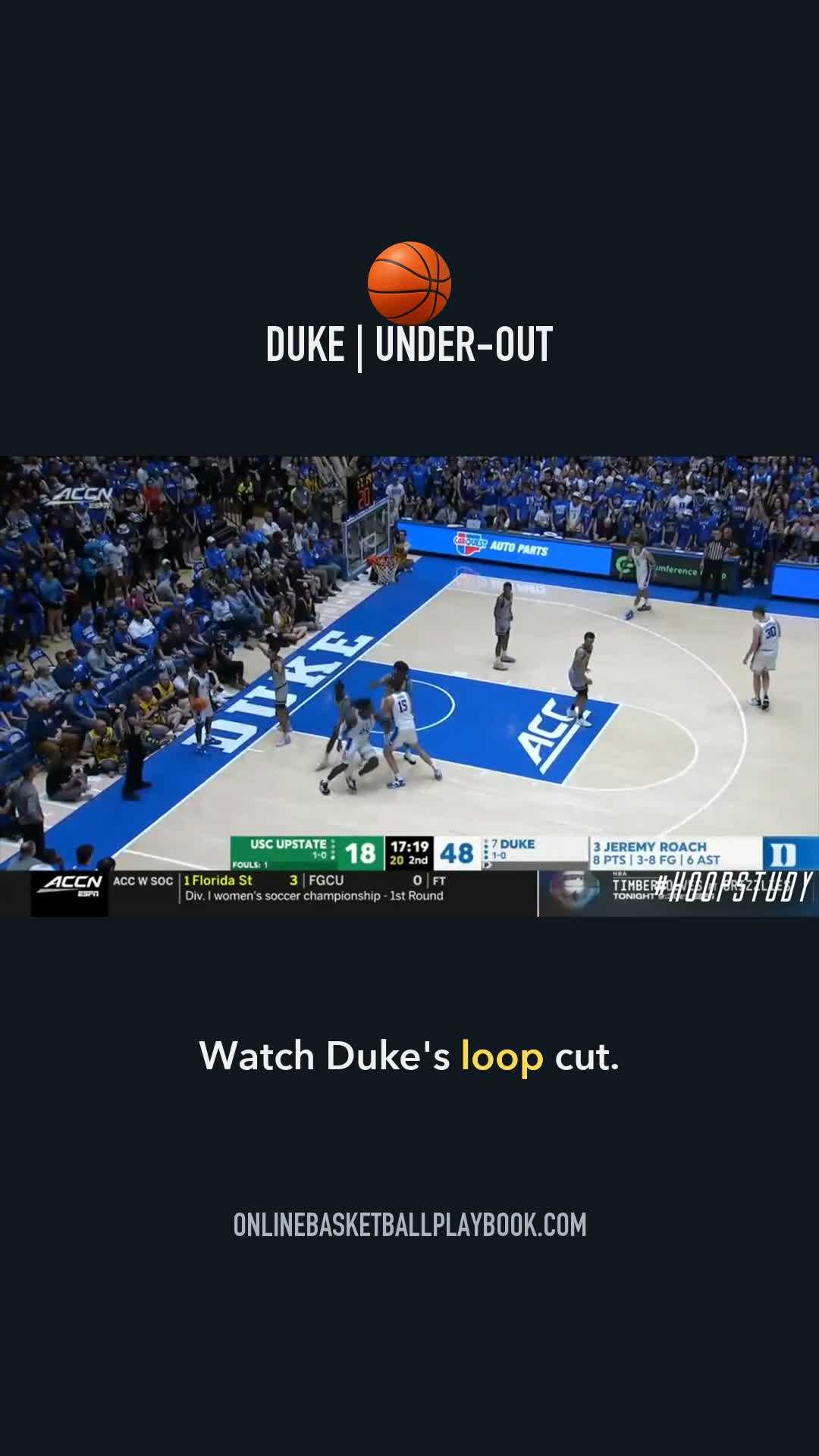
Watch Duke’s baseline loop lob against USC Upstate, compare the numbered animation with the film, and download the editable play.
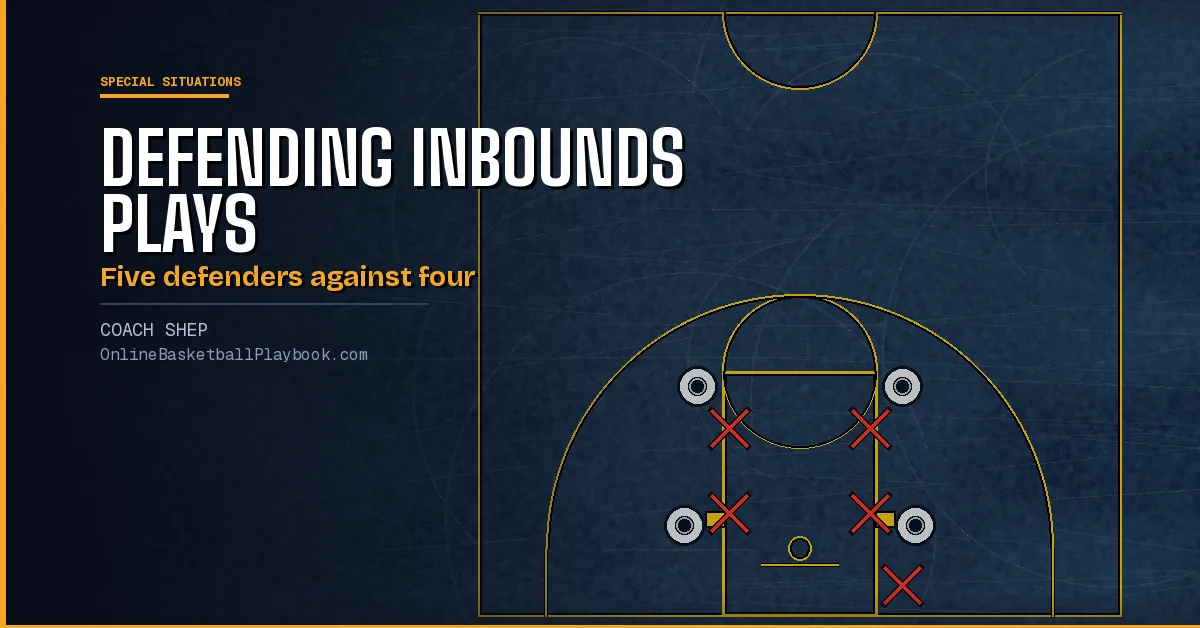
How to defend inbounds plays: the 5 on 4 edge, what to do with the inbounder, Jam, Jump Switch, Trap and zone options, sideline answers and late-game calls.
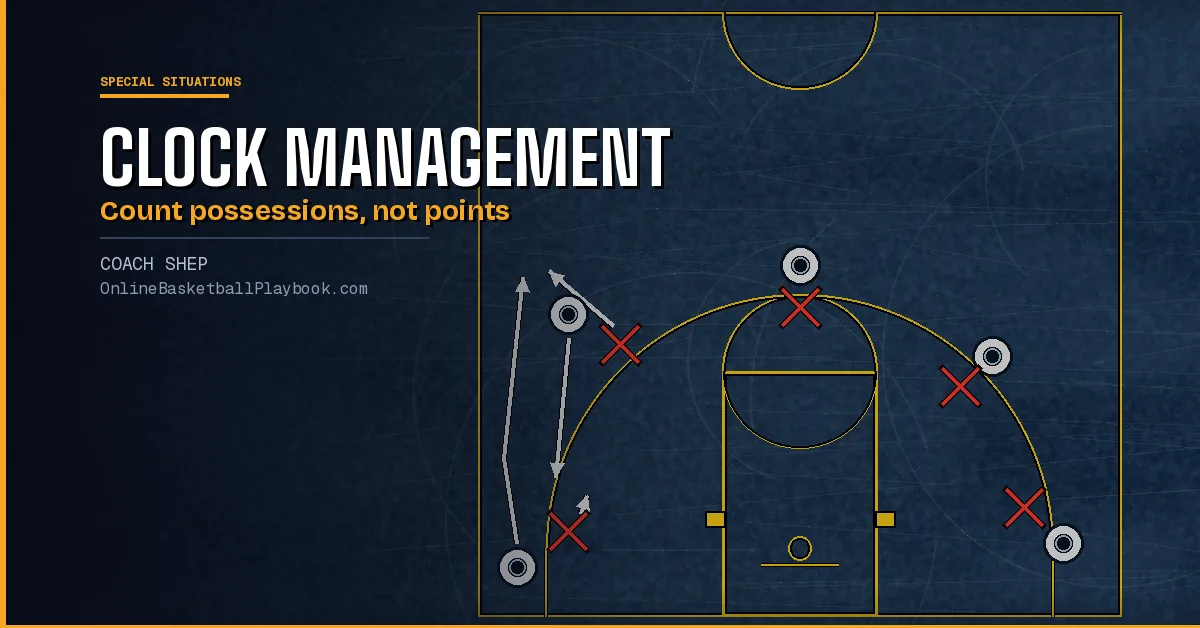
Basketball clock management explained: the clock rules by level, counting possessions, foul or defend up 3, fouling when behind, the two for one and the last shot.
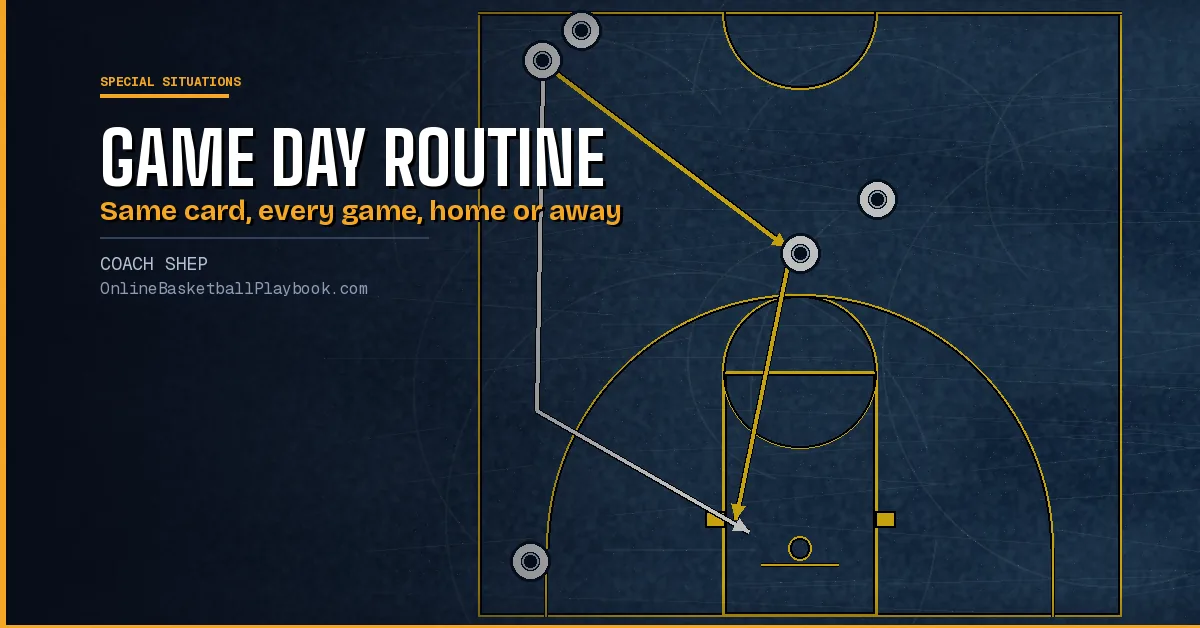
A game day routine for basketball coaches: the morning, meals, arrival, warm-ups, the pregame talk, staff jobs, bench rules, halftime and the hour after the game.
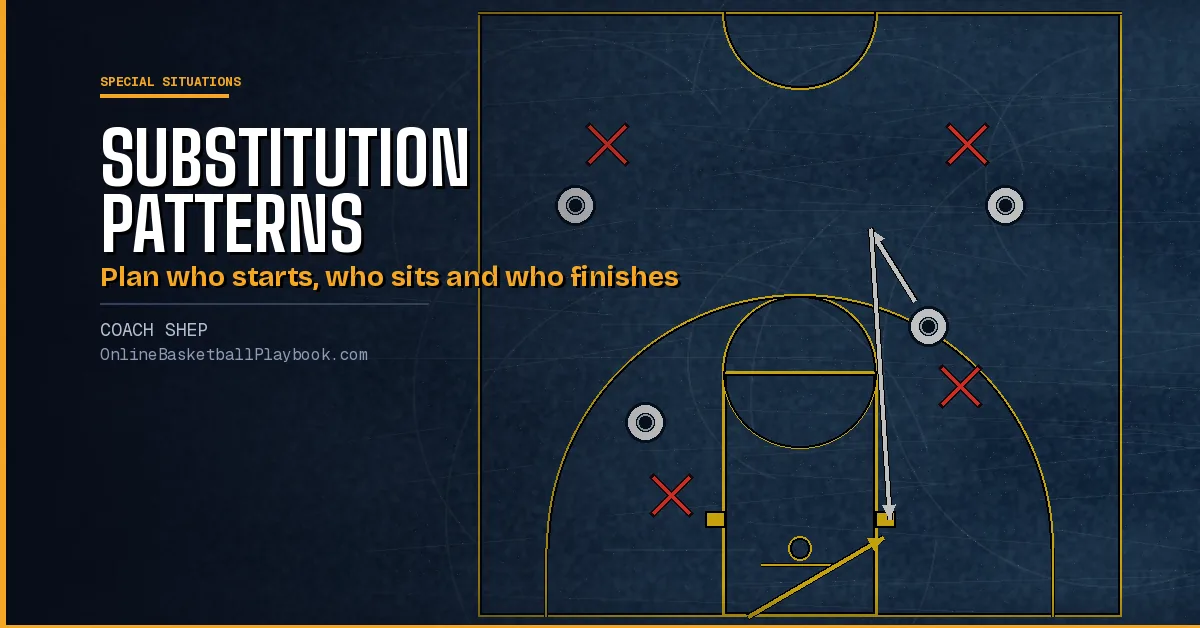
Basketball substitution patterns from tip to final horn: who starts, how long shifts run, unit subs, foul-trouble rules, subbing after a mistake and bench roles.
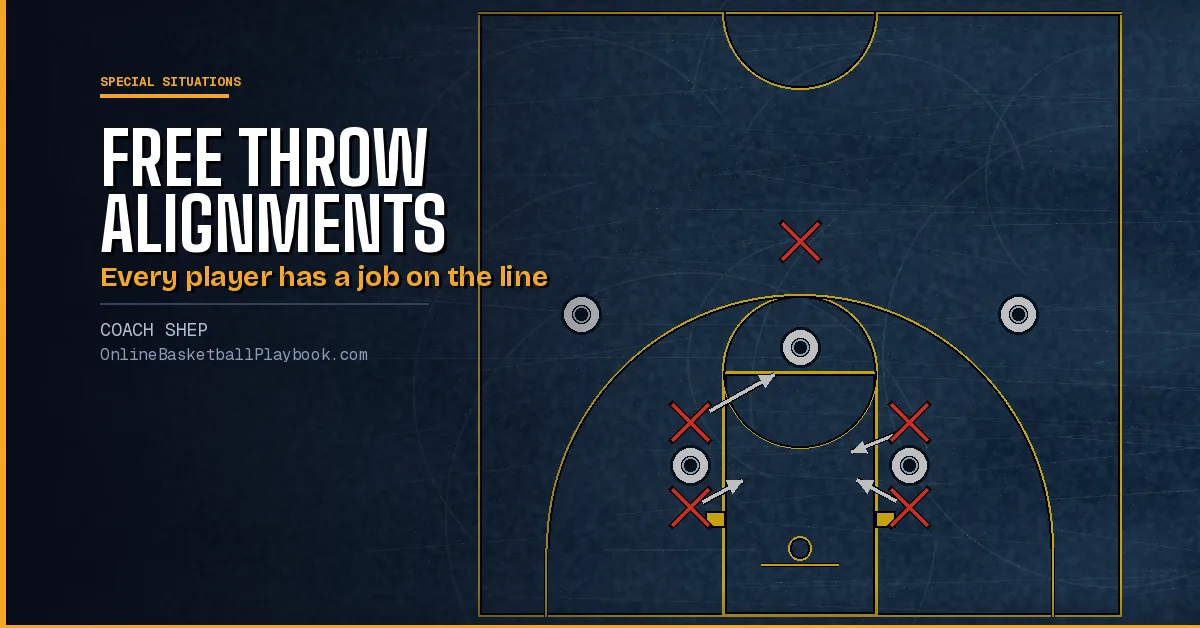
Free throw alignments basketball coaches use on both ends: lane spaces by level, defensive box outs and pinches, offensive rebounding calls and the intentional miss.
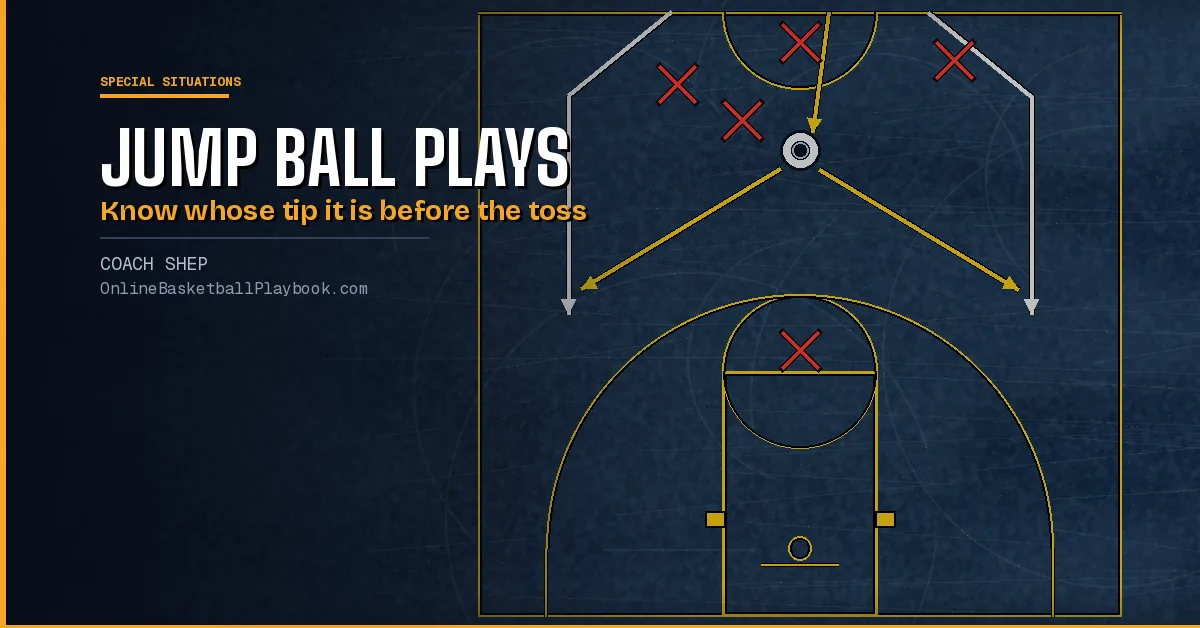
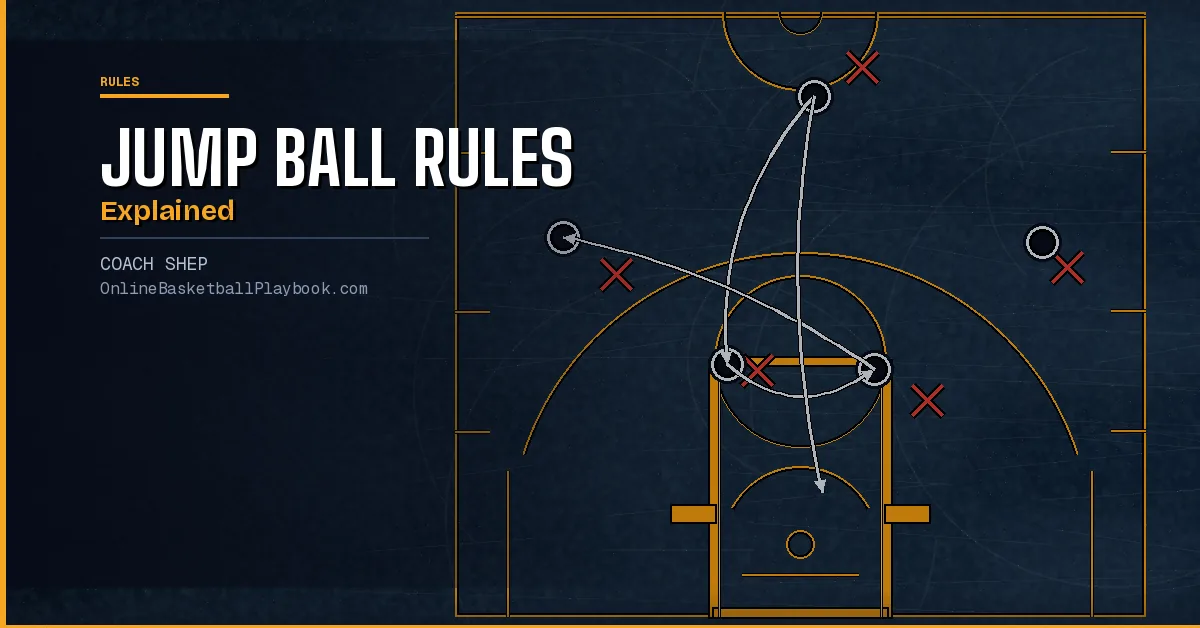
Jump ball plays and tip off positions: box and diamond alignments, opening tip plays with a height edge, defensive and even tips, and the rules by level.
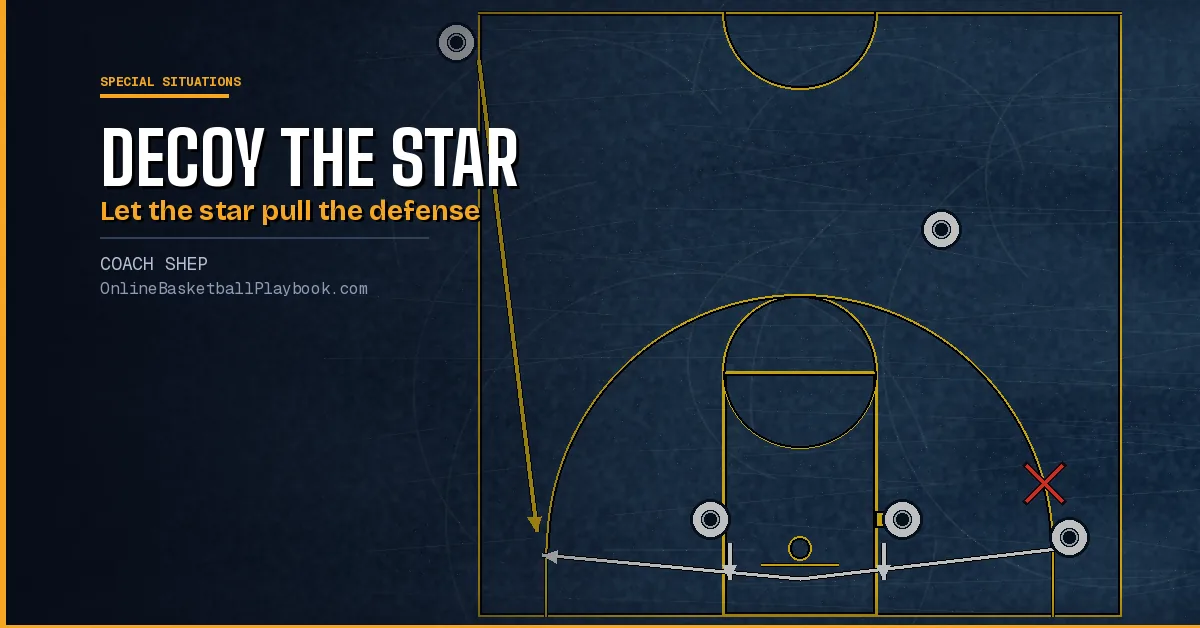
Late game plays for when the defense denies your best player: decoy the star, where he starts, reads for the sag and the deny, the open inbounder and the back door.
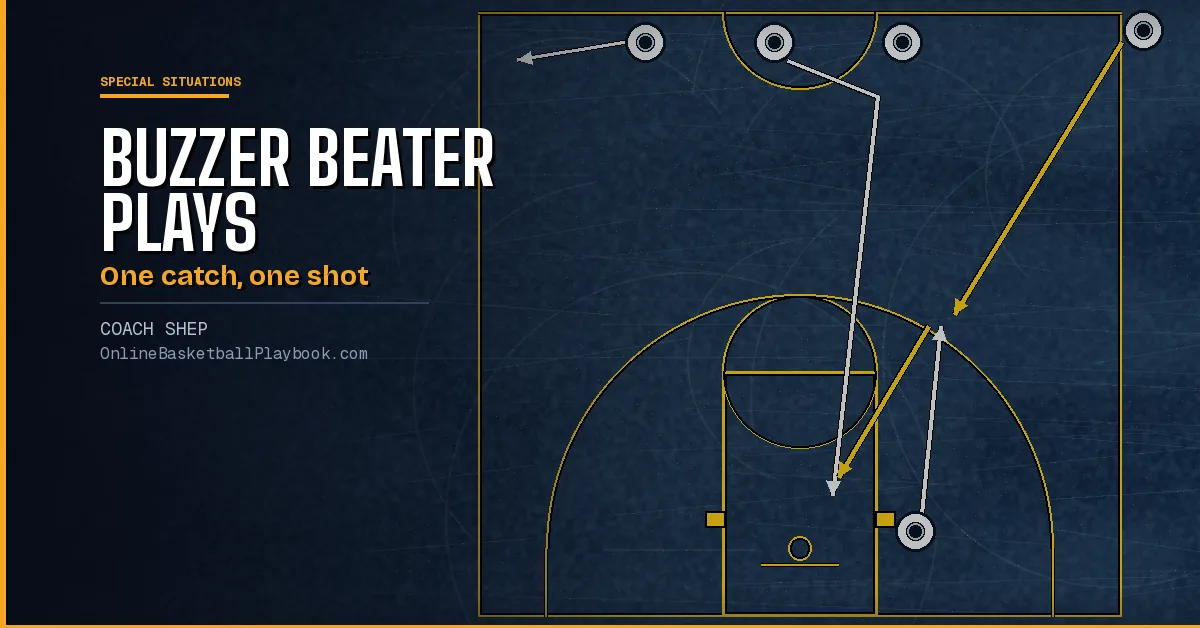
Buzzer beater plays from half court for one catch and one shot: sideline sets at the half-court line, baseline lobs for one second, the reads and the rules.
Full court last second plays for a baseline throw-in with seconds left: the long pass and pitch, screen releases, the slip against a switch and the clock rules.
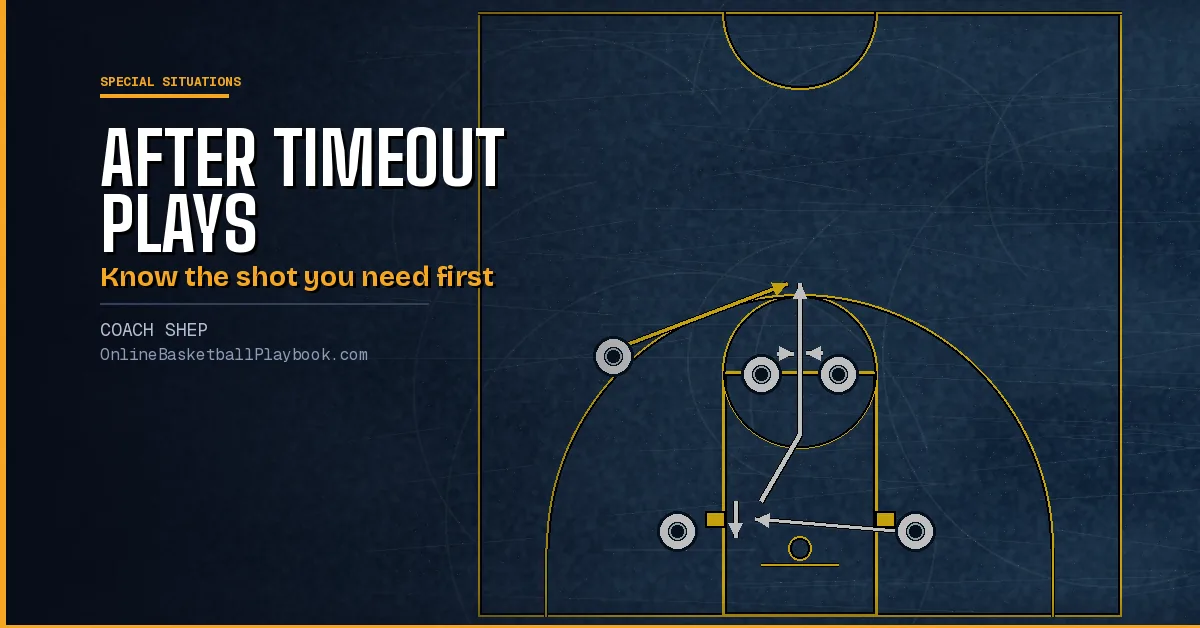
After timeout plays sorted by situation: need a three, need a two, stop a run, sideline or baseline, man or zone, with the fake, the counter and the huddle rules.
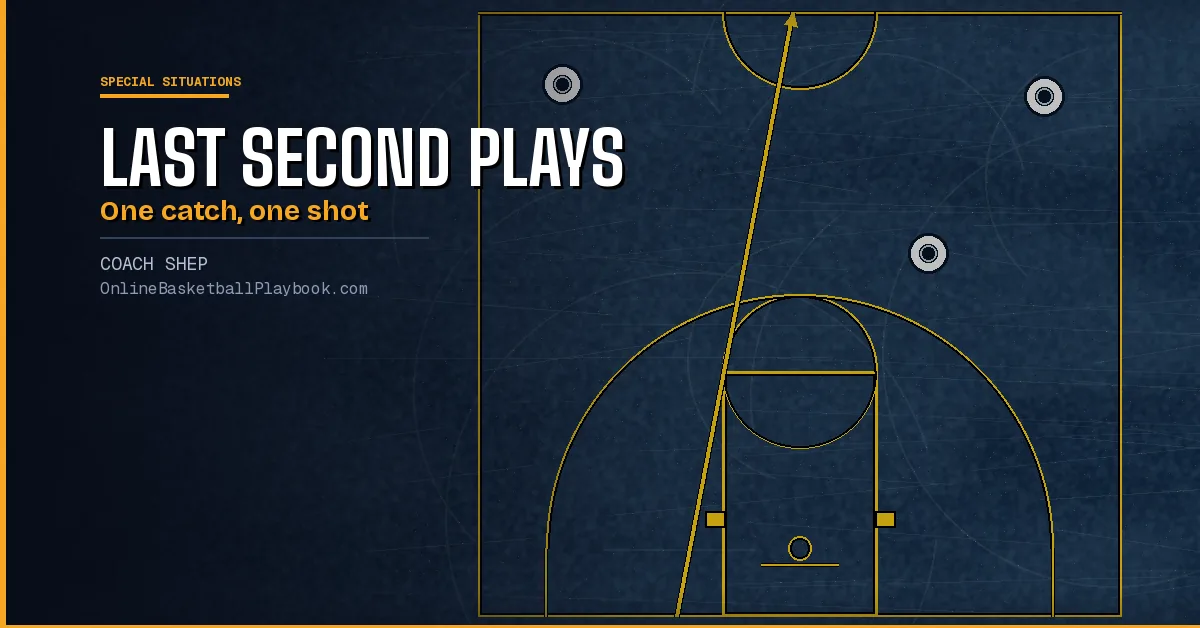
Last second basketball plays for the final seconds: full court long passes, a three-quarter court loop, side out sets for one second and the clock rules behind them.
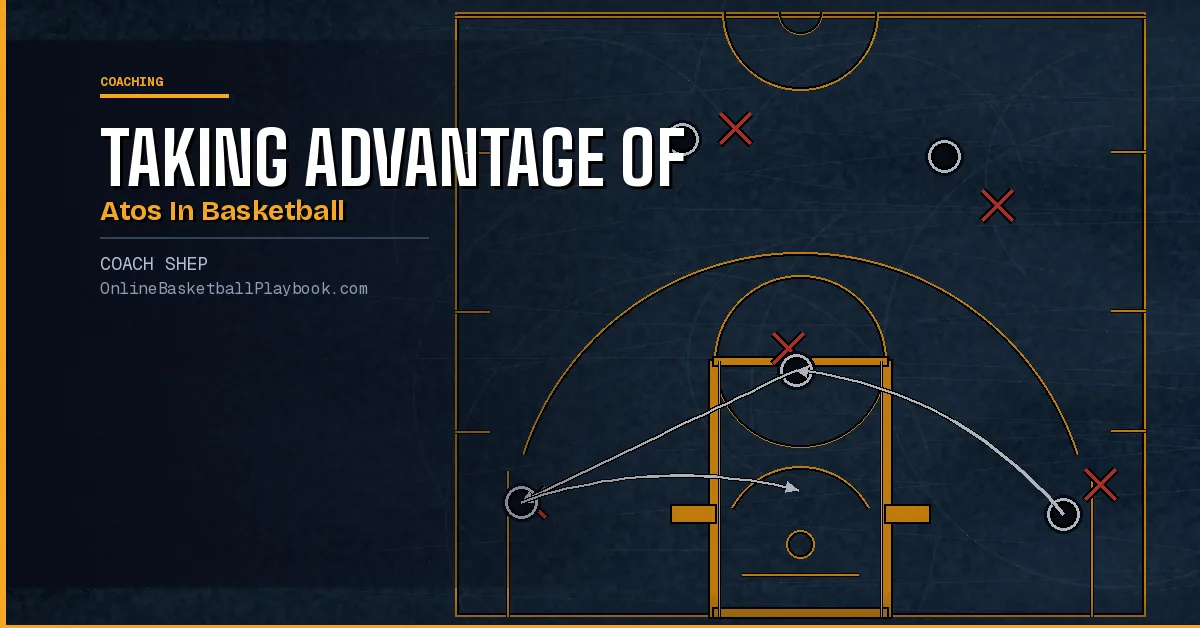
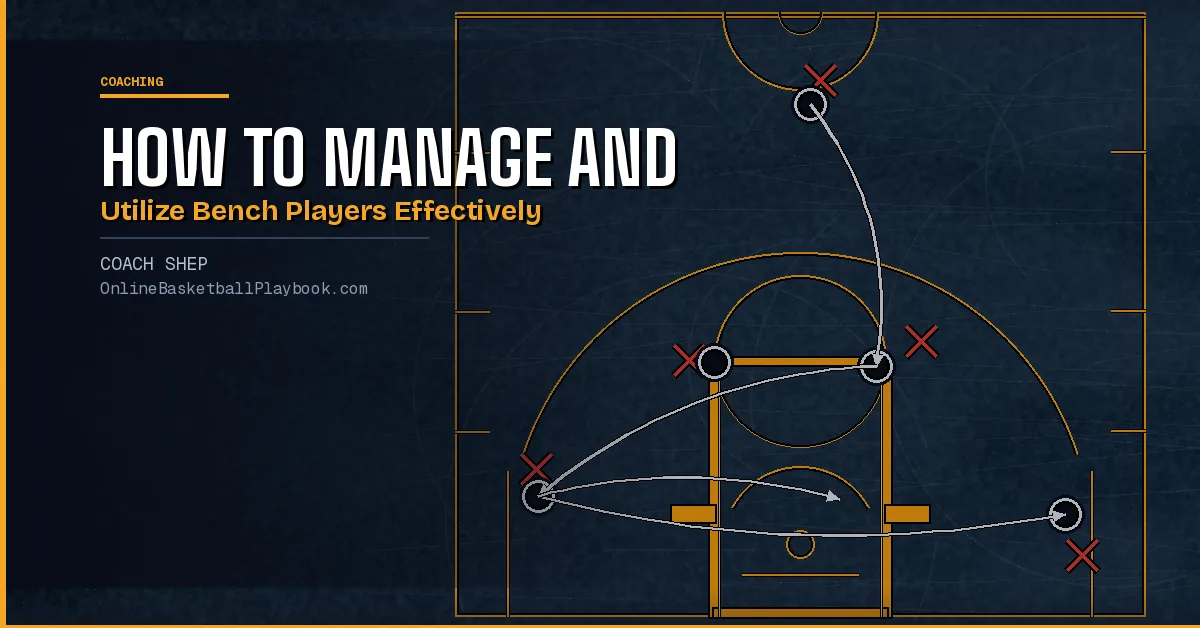
How to Manage and Utilize Bench Players Effectively
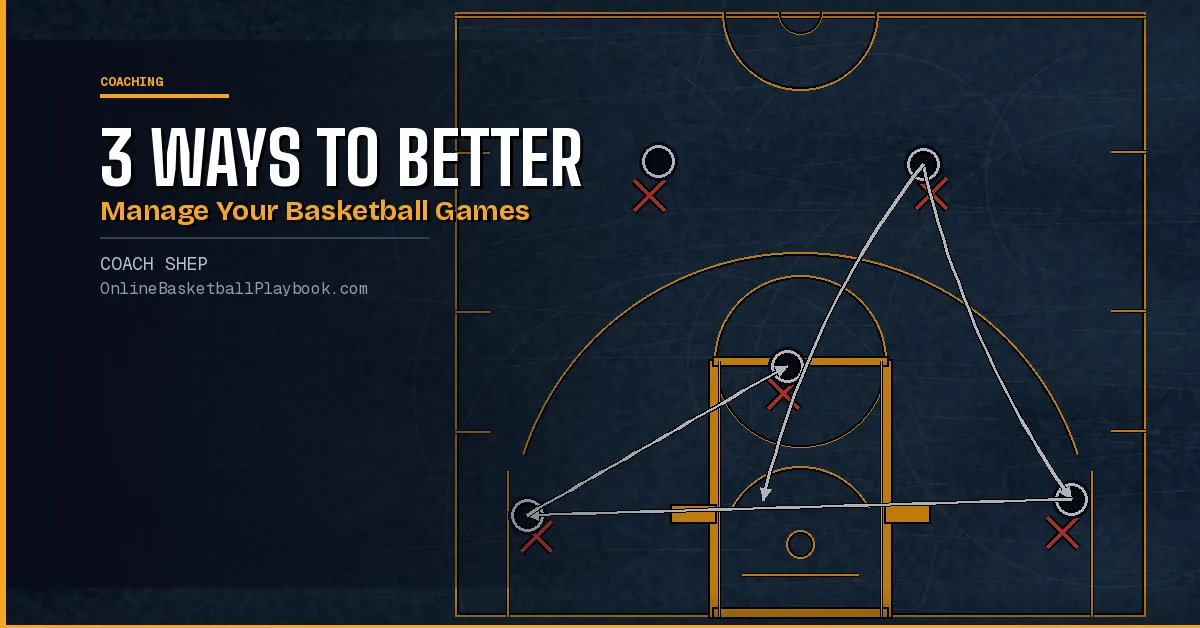
3 Ways to Better Manage Your Basketball Games
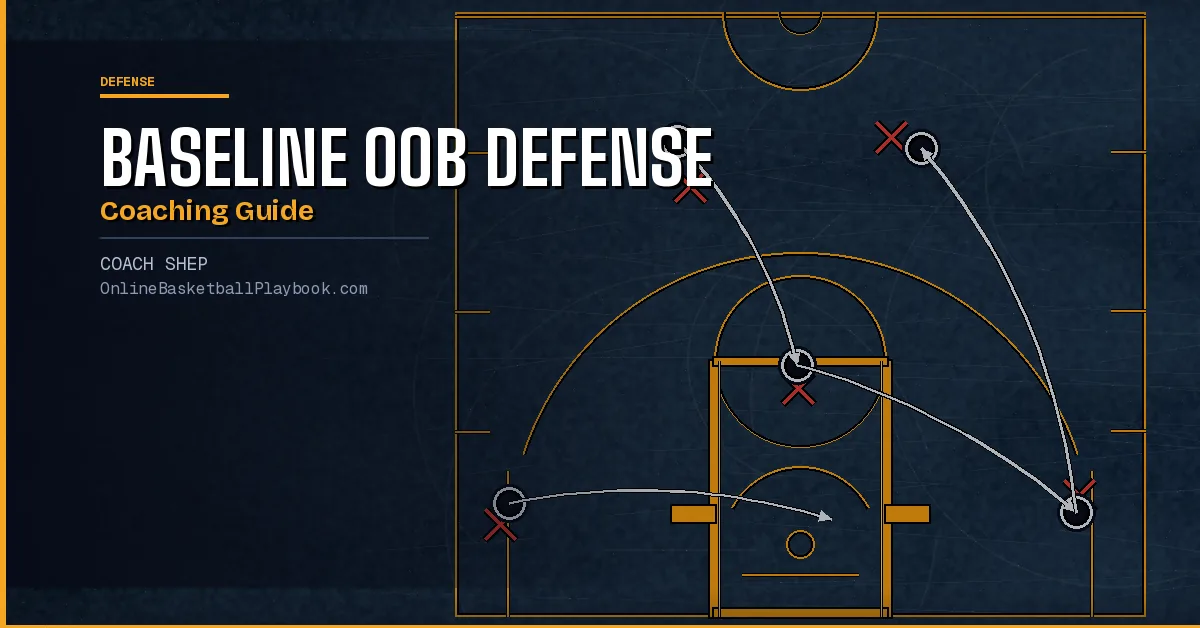
How to Defend Baseline Out of Bounds Plays
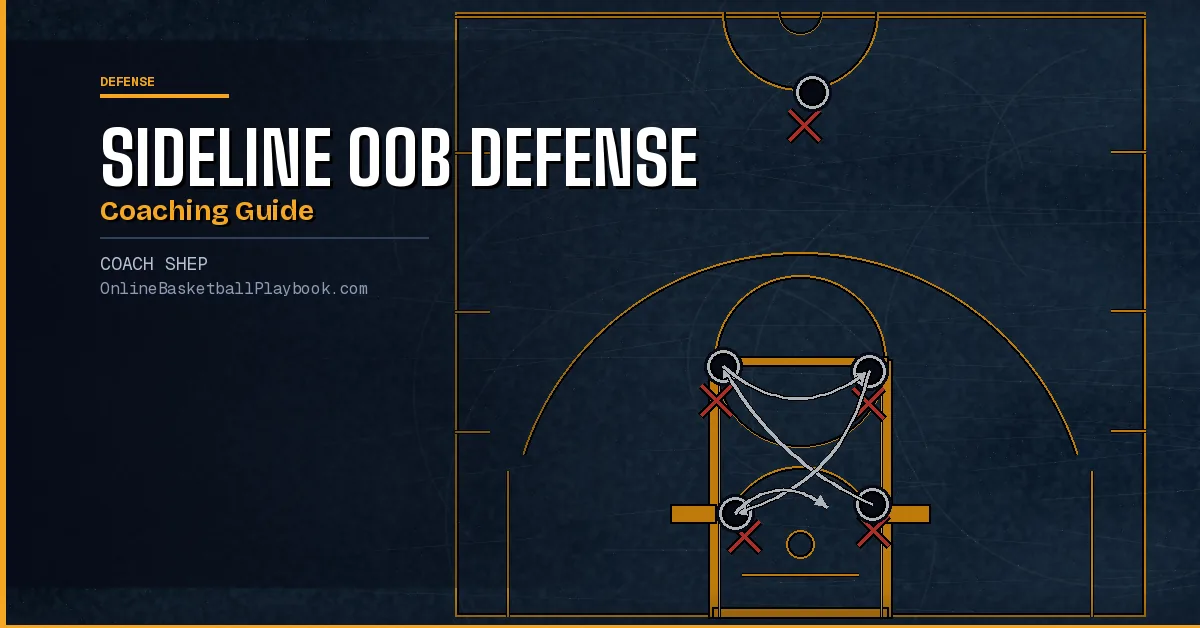
How to Defend Sideline Out of Bounds Plays