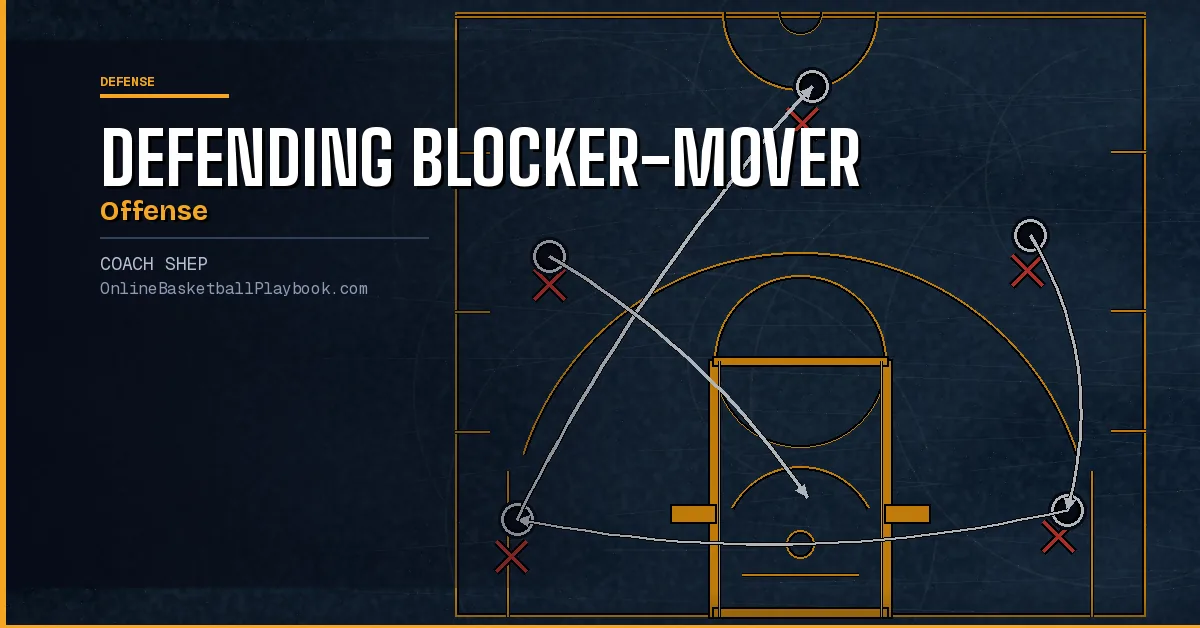
The blocker-mover offense is built to exhaust your defense with relentless, structured screening. Here is what your team needs to know to slow it down, disrupt its reads, and take away the easy cuts.
What Makes Blocker-Mover Hard to Guard
Dick Bennett's blocker-mover system, popularized at the highest level when Tony Bennett's Virginia Cavaliers won the 2019 national championship, is not a set play offense. It is a read-based, role-defined motion system that splits all five players into two groups: blockers, who screen, and movers, who cut. That clarity of roles is exactly what makes it so difficult to defend.
Most motion offenses require defenders to make multiple decisions simultaneously. Blocker-mover forces the same problem but with a key twist: the blockers are assigned to specific floor areas (lane, wide, top, and bottom alignments) so the screening is not random. It is organized, repeatable, and designed to grind your defense down over 30 seconds of possession. By the fourth quarter of a game, defenders who have been navigating screens for three hours are mentally and physically taxed in ways that do not show up on a box score.
The offense also punishes poor communication. If your on-ball defender loses the dribbler for a split second while a mover cuts behind a screen, the offense gets a layup or an open mid-range shot. Understanding the structure, that blockers screen and movers cut, is the first step to defending it effectively. Your players cannot guard something they do not understand.
This is also an offense that gets better as the season progresses. The screening and cutting reads improve with repetition. That means if you face a blocker-mover team twice in one season, the second game will be harder to defend. The best antidote is defensive repetition of your own, which we will cover in the practice section below.
Deny the Movers Early and Often
The movers are the engine of the blocker-mover system. They set up their defenders, use the screen, and cut unpredictably based on how the defense plays them. If you allow movers to catch the ball comfortably on every possession, you are playing defense on the offense's terms. Your primary objective is to make the movers earn every touch.
Denial positioning on the movers, particularly the best shooter or finisher in the mover role, forces the offense to improvise. When a mover cannot get the ball at the position they want, the blocker's screen is either wasted or must be reset. This disrupts the timing of the entire system. Timed well, active denial can force the offense into a 10-second reset that eats into their shot clock and rattles their rhythm.
Deny with purpose, not desperation. Overplaying to the point of gambling on steals leaves you vulnerable to back-cuts, which is exactly what a well-coached blocker-mover team will look for when they see denial. The mover's job includes reading the defense. If you deny hard, they are trained to back-cut. Your denial must be paired with a weak-side helper who takes away the back door.
This concept connects directly to help defense principles: no individual defensive action works without a support system behind it. The denial defender is the first line; the weak-side helper closes the back door. Both pieces have to be in position, or the offense exploits the gap.
How to Defend the Screens
Screening is the backbone of blocker-mover. Blockers do not freelance. They screen for movers in assigned areas. That structure means you can prepare specific techniques for each screen type your opponent uses. The three core methods for defending off-ball screens are going over the top, fighting through, and switching. Each has trade-offs, and your choice depends on personnel and scouting.
Going Over the Top
Going over the top of a screen keeps the defender between the ball and the mover. It is the preferred technique when the mover is a dangerous shooter, because it denies them a clean catch on the catch-and-shoot. The trade-off is that the defender must work around the blocker's body, which requires physical strength and active footwork. A defender who gets lazy and dips under the screen will give up open threes to elite mover-shooters.
Fighting Through
Fighting through a screen, forcing through contact rather than going over or under, is physically taxing but effective when the mover is a slashing, north-south threat rather than a shooter. The technique requires the on-ball or help defender to bump the screener's path and create enough space for the mover's defender to recover. This is where shell drill work In practice it pays off. Fighting through screens cleanly under game conditions only happens when players have logged repetitions in a controlled setting.
Switching
Switching screens eliminates the need to fight through but creates mismatches. Against a blocker-mover team that hunts mismatches, particularly if their best mover attacks the rim when switched onto a bigger, slower blocker's defender, switching can cost you easy points. If your roster has five interchangeable defenders, switching becomes viable. Most high school and college programs do not have that depth, so selective switching (only on certain screen types or screen-the-screener actions) is more realistic.
Help Defense and Rotation Principles
No single player can stop a blocker-mover offense alone. This system is designed to create advantages through collective screening, and the only way to neutralize those advantages is through collective defense. Help defense and rotation are not supplementary. They are the core of your defensive plan.
Proper help positioning means every defender who is one or two passes away from the ball must be in the lane, visible to their man and the ball simultaneously. Blocker-mover teams will probe your help line before attacking it. A well-positioned help defender takes away the back-cut and the slip, two of the most dangerous actions in the offense. The slip occurs when the blocker reads that their defender is hedging or switching and cuts to the basket instead of setting the full screen. If your help defender is not at the lane, the slip results in a layup.
Rotation sequences should be practiced until they are automatic. When a mover beats their defender off a cut, the helper must rotate early, before the layup threat materializes. Late rotations result in fouling, which blocker-mover teams gladly accept. Early rotations require the original defender to sprint and recover, closing off the next read before the offense can make it.
This is also where man-to-man defense fundamentals carry the load. Help rotations, recovery sprints, and help-the-helper principles all stem from sound man-to-man defensive habits that have to be built over weeks and months, not installed the night before a game against a blocker-mover team.
Building Defensive Reps in Practice
The blocker-mover offense gets better with repetition. Your defense has to do the same. Teams that face this system cold, without having practiced against its structure, will give up 10 to 15 points in the first quarter alone simply from confusion: defenders chasing cutters, switching at the wrong time, and losing track of who has who in the rotation.
The antidote is scout team simulation. Build a scout team that runs a simplified version of the blocker-mover principles (two designated blockers, two movers, one handler) and run your defense against it for at least two full practices before you face a blocker-mover opponent. The goal is not perfect execution; the goal is that your defenders have seen the cuts before and have muscle memory for the screen coverage technique you have chosen.
Incorporate specific drills that isolate the hardest reads. Two-on-two off-ball screen drills where the mover must read the defense and the defender must communicate coverage are foundational. Defending the pick and roll Principles overlap here more than most coaches realize: reading the screener's feet, communicating the coverage call, and recovering after the screen are identical skills in both contexts.
Video review during practice week also speeds up recognition. When your players can identify the blocker-mover alignment before the offense initiates, they can set their defensive positioning earlier and communicate their assignments before the screen is actually set. Pre-scout recognition is the single biggest difference between a defense that holds a blocker-mover team under 60 and one that gives up 80.
End each practice with live 5-on-5 reps against the scout team running blocker-mover. Keep track of turnovers forced, clean catches denied, and open shots allowed. Give your players a number to beat each day. Competitive tracking turns defensive drill work from an obligation into a challenge, which is the only way to sustain effort in practice across a full week of preparation.
Before game week against a blocker-mover team, install one clear coverage call (over, fight through, or switch) for every screen type you expect to see. Mixing coverage calls without a clear rule creates hesitation, and hesitation is the thing blocker-mover exploits most efficiently.
Scouting and Game-Night Adjustments
Scouting a blocker-mover team requires a different lens than scouting a set-play offense. You are not looking for specific plays to stop, you are looking for tendencies, personnel roles, and the two or three actions the team runs most often out of its base alignment.
First, identify who the movers are. In most programs, the two or three best scorers play mover. Chart where those players prefer to catch the ball (left wing, right elbow, corner) and build your denial plan around taking away their preferred spots. Second, identify which blockers set the best screens. The best blocker in the system is the most dangerous slip threat. If their blocker slips consistently and scores, you need a hedge-and-recover answer ready for that specific matchup.
Look for their entry actions. Blocker-mover teams typically use base entries to get their best movers a look before the free flow begins. If you can identify the two or three entries they favor, you can take away the best one and force them into their secondary option, which is usually less comfortable and executed with less precision.
Game-night adjustments should be straightforward. If you are giving up back-cuts in the first quarter, your denial is too aggressive. Back it off one step. If you are giving up catch-and-shoot threes, your screen coverage is too passive. Go over the top or push the mover wider. Have one adjustment per half ready before the game starts so your timeout huddle has a clear direction rather than a diagnosis session.
The blocker-mover offense is one of the most disciplined systems in basketball, but it is not magic. It works because most defenses are unprepared for relentless structured screening over 30 to 35 seconds. A prepared, communicating, physically connected defense can slow it down significantly, and in a close game, that is the difference.
- Identify movers before tip-off and assign your best on-ball defenders to them.
- Choose one screen-coverage technique (over, through, or switch) and apply it consistently. Mixed signals cause breakdowns.
- Help defenders must be in the lane before every screen, not after. Early positioning takes away the slip and the back-cut simultaneously.
- Run scout-team blocker-mover reps in at least two practices before game day to build defensive recognition and communication habits.
- Track back-cuts and slip catches during film review. If either appears more than twice per half, adjust your denial depth or hedge angle immediately.
- Communicate coverage calls out loud before every screen is set: no silent switching, no assumed switches, no guessing.
Get free play diagrams, drills, and coaching guides delivered weekly.
Draw this play free in the play drawer →
Membership: the full library, playbook packs, and Pro drawing tools →
Keep Building
Related breakdowns
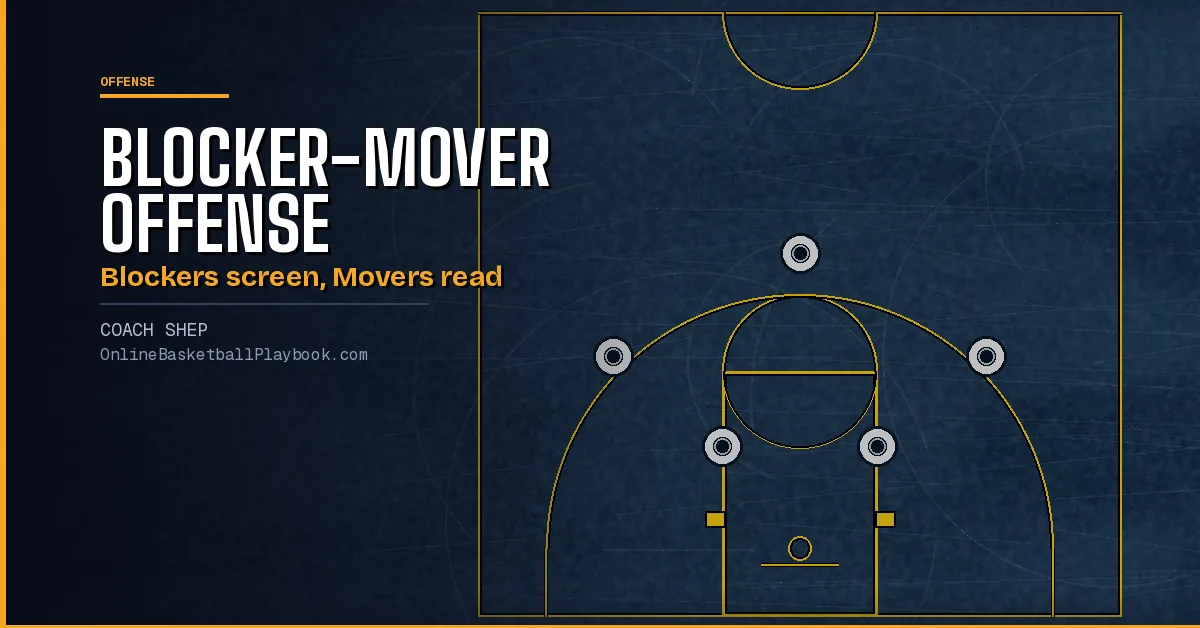
Blocker-Mover Offense: Roles, Alignments, Reads and Install
Blocker-Mover offense splits five players into Blockers who screen and Movers who cut and read. See the roles, four alignments, screen reads, sets and install plan.
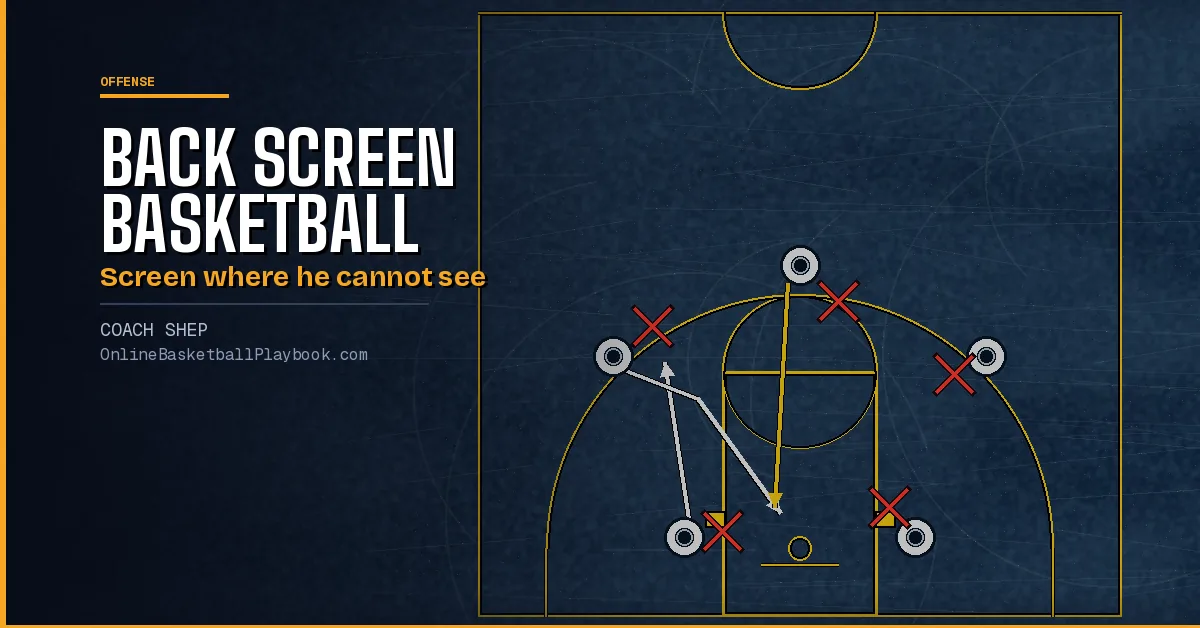
Back Screen Basketball: How to Set, Use and Defend It
Back screen basketball guide: what a back or rip screen is, setting it legally, the cutter's and screener's reads, the UCLA cut, chained actions and defending it.
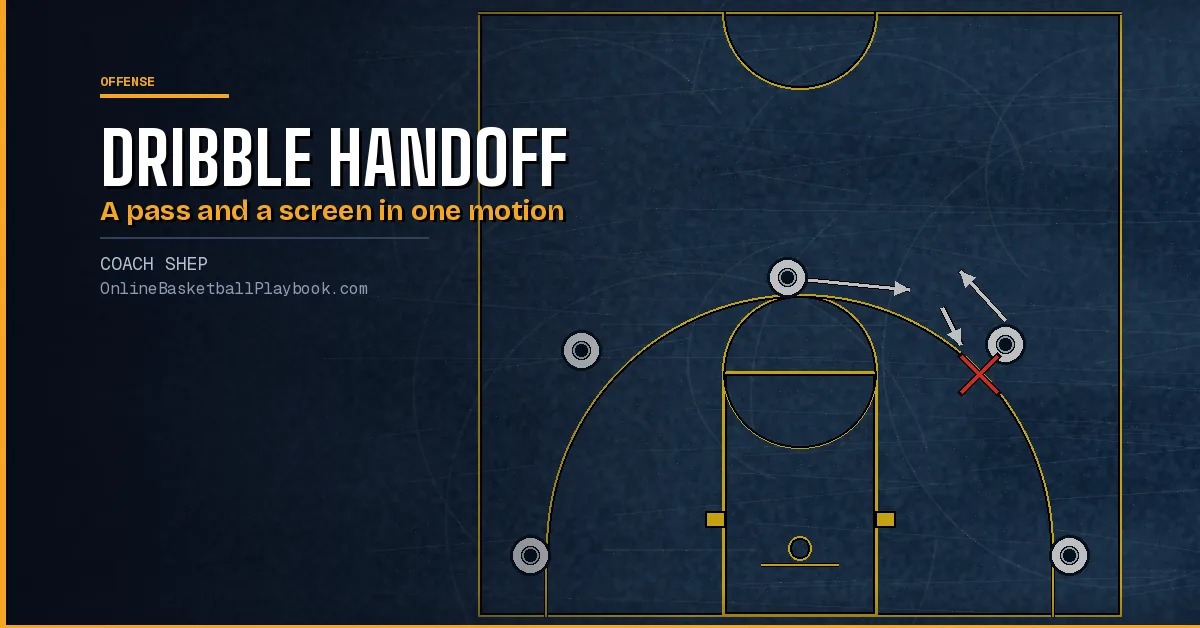
Dribble Handoff: Types, Reads, Counters and How to Defend It
The dribble handoff in basketball: the types of handoff, how the giver delivers it, the reads for both players, the counters, and how defenses guard the DHO.