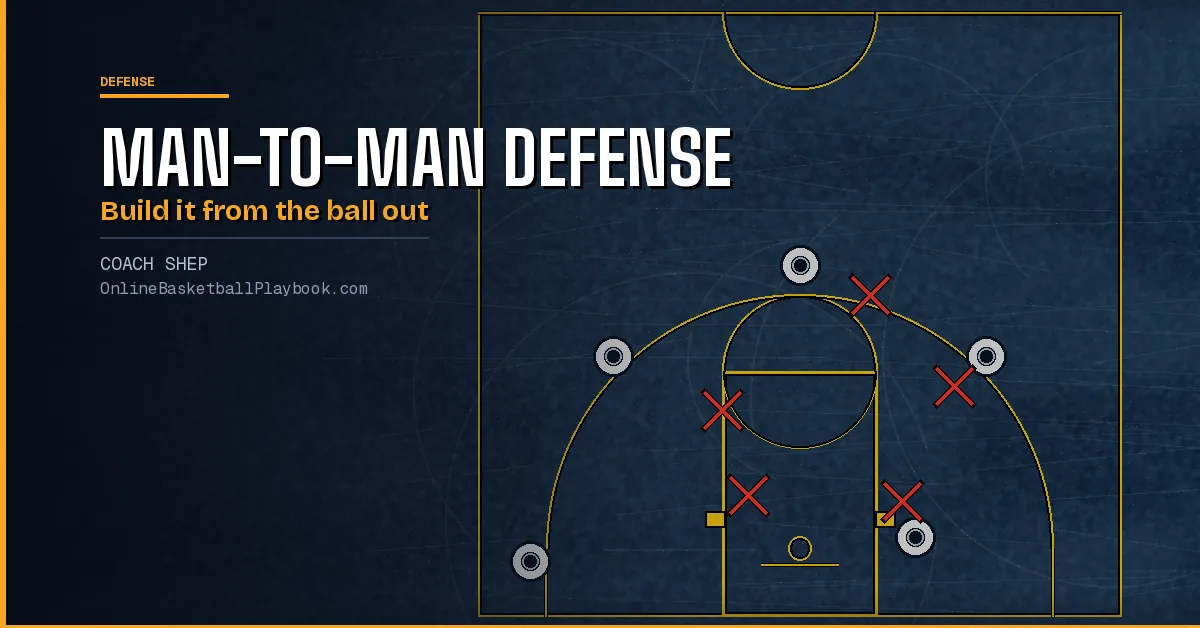
Man-to-man defense is the base team defense in which each defender is responsible for a man but stands where the ball, his man and the basket tell him to stand. Without that structure, five players chasing their matchups is man-to-man in name only. This guide covers the on-ball stance, off-ball positioning, help and rotation, screens, the order to build it in, the shell drill and the points where coaches split.
Man-to-Man Defense at a Glance
| Piece | What the defender does |
|---|---|
| On the ball | Pressure without fouling, nose on the ball, no straight-line drives |
| One pass away | Flat triangle, seeing ball and man, or deny up the line |
| Two passes away | One foot in the lane, still seeing both |
| Three or more away | Both feet in the lane for maximum help |
| On every pass | Move while the ball is in the air |
| Help | Guards help guards and bigs stay home |
| Screens | Pick one rule per screen and drill it |
What the Defense Is Trying to Do
Good man-to-man teams state the goals in a few words. One standard for the half court is three rules a player can repeat. Give up nothing at the rim, nothing from three and contest everything in between. A longer version names three goals, which are no easy fast-break points, no catch-and-shoot jumpers and no offensive rebounds. The methods, in rank order, are individual responsibility, breaking the offense's timing and taking away the preferred passing angles.
Coverage alone loses to a team that passes and moves well, so breaking the offense's timing ranks above positioning. The three-point line works as a wall.
On-Ball Defense
The on-ball defender sets the tone. A comfortable ball handler picks up the dribble when he wants and drives uncontested.
- Stance. Weight forward, chest out and knees bent in a chair position. The inside hand mirrors the ball and the outside hand is the deflector.
- Nose on the ball. Keep the nose on the dribbler's ball hand and the pace follows without reaching.
- Concede nothing. No straight-line drives and no lob passes. The baseline and sideline are co-defenders. Force the extra pass. The goal is not to stop the ball, it is to make the offense handle it more times than it wants to, farther from the basket.
- Jam the pickup. The instant the ball handler picks up his dribble, belly up and crowd him with both hands up.
- No fouling. Pressure defense does not foul. Do not put hands on the handler. Keep the butt down and hands up to force a higher, slower pass so help has time to rotate. On a jab or fake, back up and do not slide side to side, because side-to-side movement widens the gaps.
- Footwork. Three tools. The retreat step stays in front of a drive, the advance step forces the dribble before the offense is ready and the swing step counters a drive toward the defender's front foot. See Defensive Stance and Basketball Defensive Footwork.
- Closeouts. Short choppy steps, high head, settle into a stance. Do not close out short on a good shooter, and do close out short on a driver to force a dribble. See Basketball Closeout Technique.
Deny passes that penetrate, not passes that do not. Read the intent, not the direction of the ball.
Off-Ball Positioning
Ettore Messina names the most common defensive mistake as standing between the man and the basket instead of between the man and the ball, and every off-ball rule in his curriculum corrects that one habit. Ball-you-man means every off-ball defender sits on the line between his man and the ball, and the farther his man is from the ball, the farther he is from his man.

- One pass away. A flat triangle, with one body part in the passing lane and eyes on the ball and the man.
- Two passes away. One foot inside the lane, still seeing both.
- Three or more passes away. Both feet in the lane, so help is at its maximum.
- Below the free-throw line extended. When the ball is below that line, drop to the ball line, a line parallel to the baseline through the ball.
- Jump to the ball. Move on the flight of the pass, one or two steps while the ball is in the air, not on the catch. Drop diagonally along the passing line and not straight back, because a straight drop invites the skip pass.
- Tails to the baseline. Angle the backside toward the defensive baseline so the field of view is widest.
- Help-side I. The two weak-side defenders stack on the midline, which walls off skip passes and puts two rotators near the paint.
Give every defender three questions. Where is the ball? Where is my man? Where is the basket? The answers set the position. Staying with a man once he cuts is on how to defend cutters.
Help and Rotation
Help defense holds the team together when the on-ball defender is beaten. One rule set says never help from the strong side. Guards help guards and bigs stay home, so a rotation still leaves a guard on a guard and the rim stays protected. A helper steps in to stop the drive and the next defender rotates to the vacated man. A team that plays in the gap can instead recover to its own man on the pass.

- Cover the open man first. In a scramble, guarding an open man who is not yours is better than chasing your assignment and leaving a shooter open.
- Sink call. A verbal trigger such as 911 sends everyone to the lane to stop penetration or a post catch.
- Post. When the ball enters the post, defenders one pass away dig in and retreat when the ball comes back out. Guarding the post man himself is on post defense.
- Do not over-help. Over-helping is as costly as under-helping.
See Help Defense Principles and How to Coach Defensive Rotations for the rules in full. The helper's charge is on taking a charge.
Screens
Screens are a second fork, and the team should choose one answer per screen type. One rule set says to go over the top of any screen inside the three-point line and, outside it, have the screener's defender step off to let his teammate through, with the exception of a hot shooter, when the defender goes over regardless. Another approach fights through everything and never switches, and another makes switching the default. Whatever the choice, call it. The common calls are ball, help, screen and switch.
More is on Defending Screens in Basketball, How to Coach Effective Defensive Switching and Drills to Teach Ball Screen Defense.
Get the next coaching guide in your inbox
One email when a new guide or diagram set goes up. Free.
How to Build It Up
Build in order. Team rules sit on top of individual habits, so a defender who has not mastered his own assignment should not be asked to rotate.
- Conditioning and habits. Stance and footwork on the ball come before any team concept.
- On the ball. Stance, nose on the ball, no straight-line drives.
- Two-man actions. The on-ball defender with a denying partner.
- One pass away, then help side. Positioning by ball distance.
- Five-man rotations. Help, recover and screens.
Think about three phases of every possession. The setup before the ball moves, the reaction as the ball moves and the contest as a shot or drive starts. Each phase has its own priority. Sequence zone after man, too. Zone is the same fundamentals applied to areas instead of people, and it is only as good as the man defense under it.
A transition rule belongs in the plan. Guards sprint back the instant a shot leaves the shooter's hand and post players when the other team controls the ball. The standard is no layups, no threes, no fouls and no second shots. See How to Build a Defensive Identity.
Man-to-Man Defense Drills
Zig-zag. The defender mirrors a dribbler up the floor with his nose on the ball. Teach the stance and footwork here before any team concept.
Shell drill. The shell is the standard team-defense drill. Four offensive players stand on the perimeter and four defenders guard them. With the ball on a wing, one defender is on the ball, one denies and two are on the split line. With the ball in the slot, two deny and one is on the split line. Run it as a walk-through, then a pass-around with the ball held about three seconds, then two live rotations. Players point at ball and man and call ball, deny and help. When you stop play, watch two things only. A defender is in the paint at all times, and the ball and the defender arrive together.

Outnumbered defense. Train the defense while it is outnumbered. Examples are 4-on-3 overloads and 4-on-4 with extra drivers on the baseline, and a full-court 5-on-4 that turns into 4-on-5 on the way back. The habit is the same in each. Talk and rotate.
Count the talk. Track communication events in practice. Treat talk as a stat, because silent defenders are out of position.
The full drill sets are on Man-to-Man Defense Practice Drills, Shell Drill and Drills to Teach On-Ball Defense. How to teach it to young players, by age, is on teaching man to man defense in youth basketball.
Where Coaches Split on Man-to-Man Defense
Every man-to-man system picks a spot between two poles, and the two systems below are the clearest picture.

- Deny or pack. Deny-and-pressure systems put a body part in the passing lane on every one-pass-away. The theory is that if you are already denying, you are already in help. The risk is the backdoor, so help side must be ready. Pack line teams keep every off-ball defender inside the arc in a gap and never deny. Their risk is the open catch at the wing, so they need strong on-ball defense. See Pack Line vs Pressure Man-to-Man.
- Where to force the ball. Forcing baseline exploits speed, breaks the opponent's sets and keeps the ball on one side. Forcing middle keeps players out of foul trouble and helps against a more athletic opponent's drives. Pack line teachers never give up the baseline, and lock left forces one sideline. Talent decides, so learn both.
- Just recover or help the helper. Gap defenders are already in help and simply recover on the pass. Other teams help early, recover quickly and rotate the next defender to the open man.
- Screens. Some fight through every screen with no switching. Others make switching the default so nobody hesitates.
Pick one answer for each and teach only that. The versions disagree on the answers but agree that the worst defense is an unsure one.
Coach Cheatsheet
- Nose on the ball and no straight-line drives.
- Belly up the instant the dribble is picked up.
- Stand between the man and the ball, not the man and the basket.
- Move on the flight of the pass.
- Guards help guards and bigs stay home.
- Sprint back on the release and keep a defender in the paint.
- Choose one answer for denial, forcing and screens.
Questions Coaches Ask About Man-to-Man Defense
What is man-to-man defense in basketball?
Each defender is responsible for a man, and where he stands is set by the ball, his man and the basket. Off-ball defenders sit on the line between their man and the ball.
How do you teach man-to-man defense?
Teach the on-ball stance and footwork first, then one pass away and help side, then five-man rotations and screens. Use the shell drill to hold it together.
What is ball-you-man?
It is the off-ball positioning line. Stand on the line between your man and the ball, and stay farther from him the farther he is from the ball.
Should you deny the pass or play in the gap?
Coaches split. Deny teams pressure the passing lane and gap teams protect the middle. Pick one answer per ball location and teach only that.
What is the best man-to-man drill?
The shell drill teaches positioning, jumping to the ball, one pass away and help in one continuous drill.
All defense pages sit under the Defense hub. Related guides include Types of Defense in Basketball, How to Coach Pack Line Defense, Man-to-Man vs Zone Defense and How to Beat Man-to-Man Defense.
Want the printable playbook packs?
OBP Pro members get the premium playbook packs: the zone attack, out of bounds and practice plan PDFs, plus each new pack as it is finished. The membership page lists what is in each one. Or draw your own version free in PlayDraw.
See what OBP Pro includesMore Coaching Guides
- Basketball Player Development: Workouts and Skill Progressions
- Motion Offense: Spacing, Rules, Actions and How to Install It
- Full Court Press Defense: Types, Rules and How to Install It
- Basketball Shot Fake (Pump Fake): How to Do It and Teach It
Back to Types of Defense and every Defense page.
Keep Building
Related breakdowns
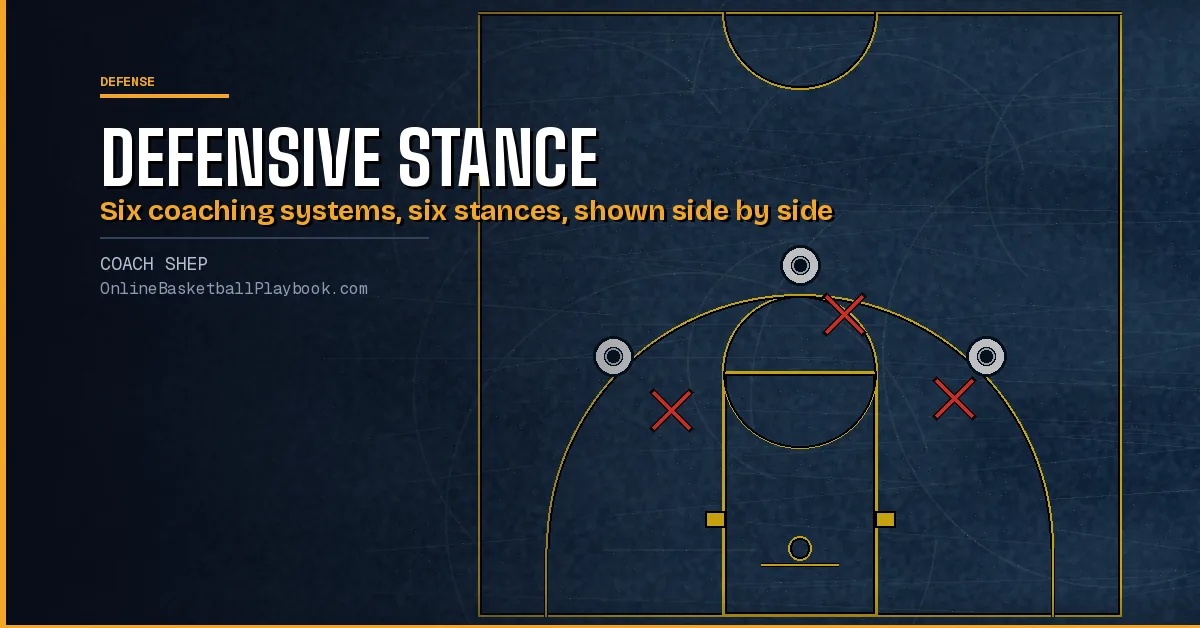
Defensive Stance in Basketball: Weight, Feet, Hands and Drills
Defensive stance in basketball: weight, feet, hands and eyes, the footwork out of the stance and the drills that build it.
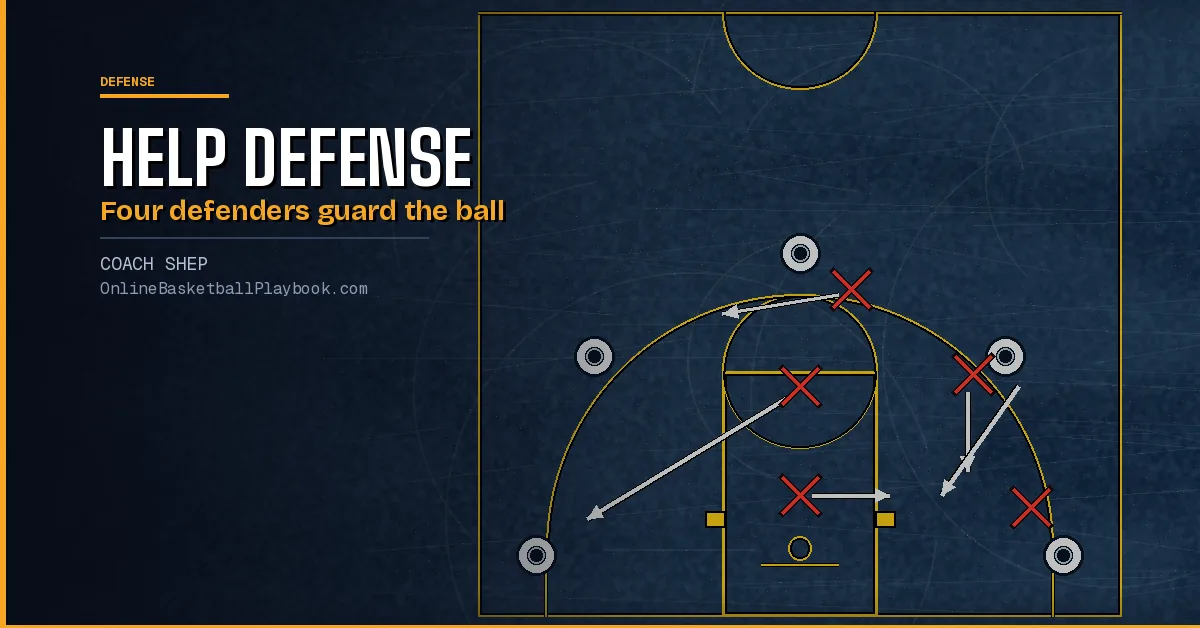
Help Defense Basketball: Help Side, Stunts, Rotations and 911
Help defense basketball explained: where help side defenders stand, stunt or commit, who rotates on a drive, the 911 call, and how coaches teach each.
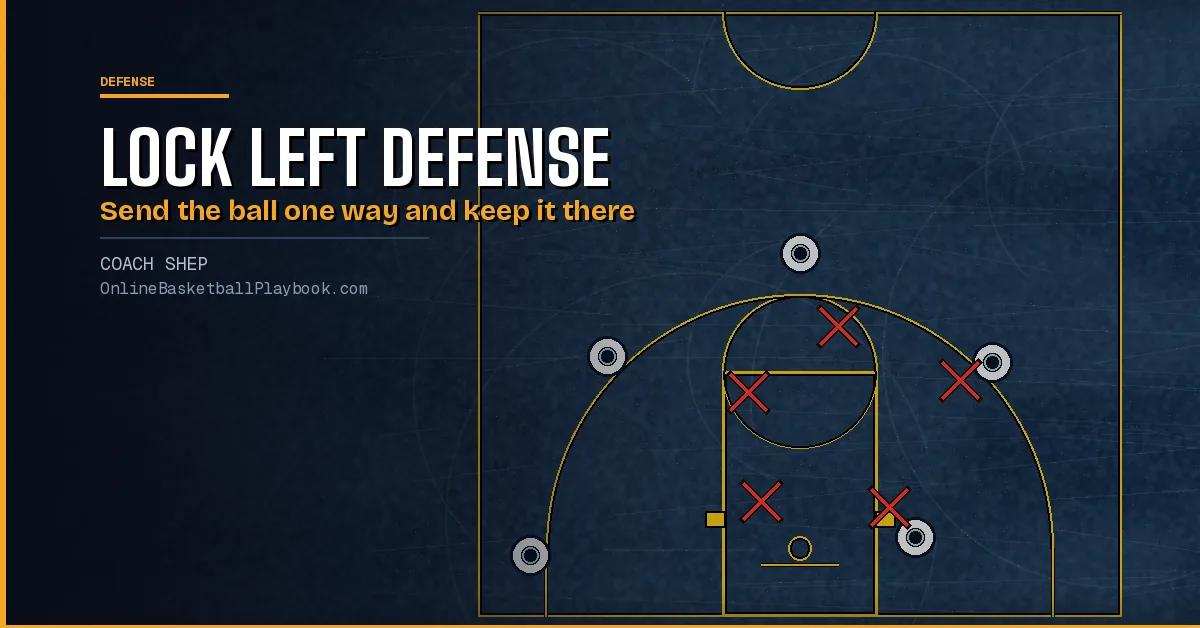
Lock Left Defense: Force Direction, Rules and Help Rotations
Lock left defense explained: force the ball to the offense's left all game, the stance and layers, how help changes, and the other ways to force the ball.