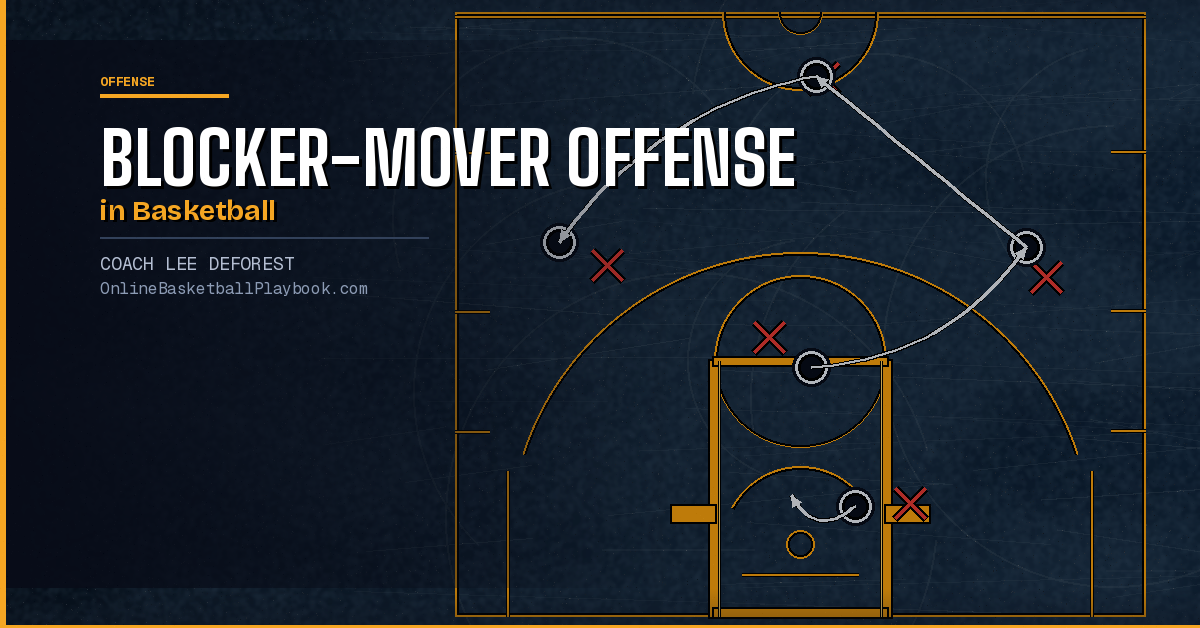

The blocker-mover offense splits your five players into two defined roles — screeners and cutters — creating a structured-motion system that exhausts defenses, builds team identity, and levels the playing field against more talented opponents.
What Is the Blocker-Mover Offense?
The blocker-mover offense is a structured-motion system developed by Dick Bennett and later refined and elevated by his son Tony Bennett at Virginia, where it served as the offensive backbone of the 2019 national championship team. The core idea is deceptively simple: instead of running a motion offense where every player does everything, you assign permanent roles. Some players screen — they are Blockers. Other players cut — they are Movers. Everyone operates within that structure, and the continual screening and cutting action flows freely within it.
What makes this system unique is that it marries the freedom of motion offense with the accountability of a set system. A Blocker always knows where to go and what to do. A Mover always knows which screens to attack and how to read the defense. This role clarity is a profound coaching advantage. It means you can put every player in a role they can genuinely succeed in, limit their decision-making to a manageable set of reads, and still run something that looks like freelance offense to the defense.
From a defensive standpoint, the blocker-mover offense is one of the hardest systems to prepare for. Because it is not play-based, there is no single action to take away. Defenders must guard screens on virtually every possession, often multiple screens in sequence. Over the course of a game — and especially over the course of a long season — that physical and mental toll adds up. Defenses get tired. Rotations break down. And the offense, which only gets sharper as players internalize their reads, begins to win the attrition battle. Coaches looking for a complement to their defensive focus — or considering something like motion offense but wanting more structure — often find the blocker-mover system is the right fit.
The Two Roles: Blockers and Movers
The entire system rests on a clean division of labor. Understanding each role deeply is the first step to teaching this offense effectively.
Blockers
Blockers are your designated screeners. Their primary job is to set screens for the Movers — and only for the Movers. In traditional blocker-mover, a Blocker does not screen the other Blocker. This is a defining constraint of the system, and it keeps the offense organized.
A common mistake coaches make when introducing this system is telling their Blockers they are "just screeners" — which makes players feel like second-class citizens. The truth is that Blockers are the engine of the offense. And great Blockers understand something important: the screen creates their own scoring opportunity. When a Blocker sets a hard screen and the Mover uses it, the defender guarding the Blocker must make a decision. If they hedge or help, the Blocker slips to the basket. If they stay home, the Mover gets the shot. The slip and the seal off the screen are primary Blocker reads, not afterthoughts.
Blockers need to be physical, willing, and spatially aware. They must set screens at the right angles, get to their assigned areas, and read the defense to decide whether to hold and set or slip early. Developing your Blockers is really about developing footwork and positioning — the craft of screen-setting is teachable and rewarding for players who embrace it.
Movers
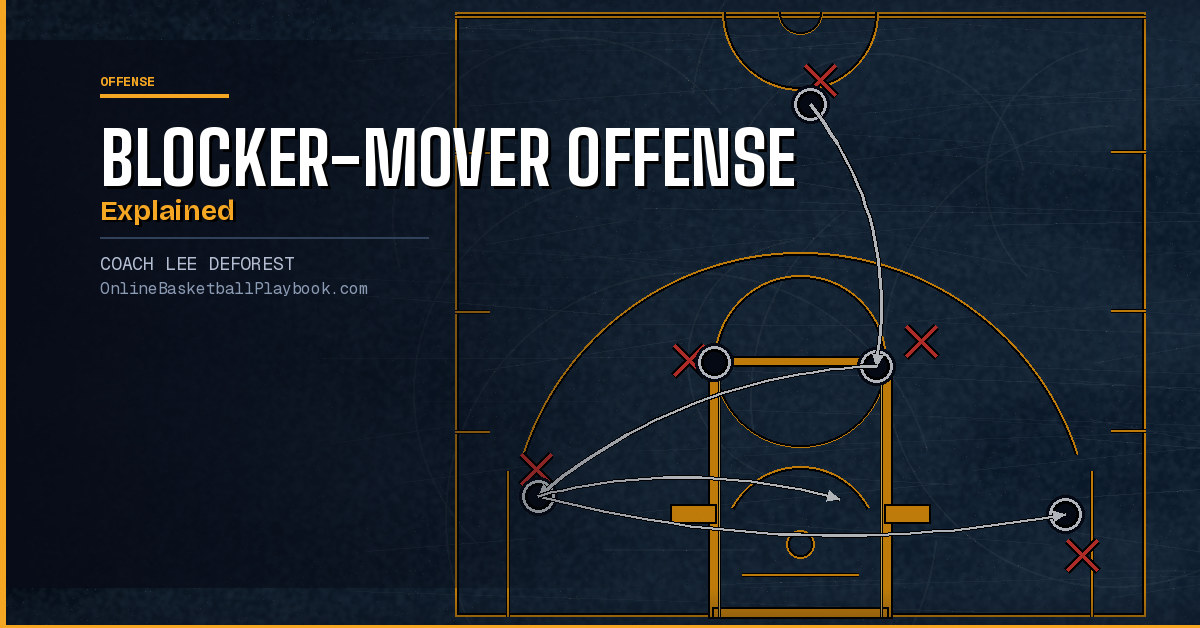
Movers are your cutters and primary offensive threats. Their job is to set up their defenders, use the screens Blockers set, and attack the basket. The Mover's read — how the defense plays the screen — determines the cut. If the defender trails, the Mover curls. If the defender goes over the top, the Mover flares. If the defender goes under, the Mover pops. These are the same reads you teach in any motion offense, but in the blocker-mover system, the Mover is doing them full-time, which means they develop mastery faster.
Movers should be your best scorers and your most basketball-intelligent players. They need sharp off-ball movement, the ability to read the defense while in motion, and the finishing skill to convert at the rim or pull up from mid-range. This system is excellent for developing basketball IQ in your offensive players because every possession demands a real read — there is no memorized play to fall back on.
"The continual screening is exhausting to guard, hard to scout, creates an offensive identity, and gets better as the season progresses because it's a read system, not memorized plays."
— Basketball Vault
Floor Alignments and Screening Areas
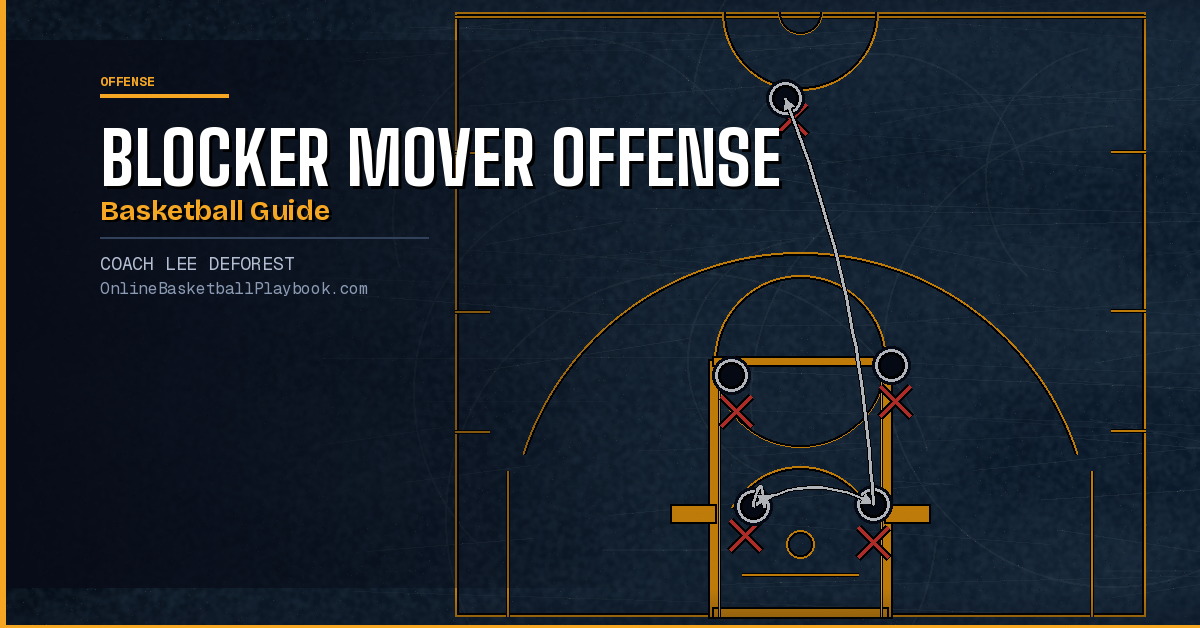
One of the structural details that separates the blocker-mover offense from generic motion is that each Blocker is assigned to a specific area of the floor. Dick Bennett identified four areas: Lane, Wide, Top, and Bottom. These area assignments determine where Blockers operate and what kinds of screens they set.
The most common alignments combine two Blockers into pairs: Lane-Lane, Lane-Wide, Wide-Wide, or Top-Bottom. Each combination creates a different look and different angles for the Movers to work through. A Lane-Wide alignment, for example, puts one Blocker near the elbow and another on the wing, giving Movers two different screen angles depending on ball position. A Top-Bottom alignment gives a more vertical spacing that stretches the defense north-south.
Coaches should select an alignment based on personnel first, then scheme. If you have two big, physical screeners, a Lane-Lane set gives you maximum congestion at the elbows and great angles for cutters to the basket. If your Blockers are more mobile, a Wide-Wide set opens driving lanes and creates more perimeter screening. The flexibility of the alignment system is one of the reasons this offense scales so well — you do not need a specific body type to run it effectively. It pairs naturally with concepts from the 5-Out Motion Offense if your personnel allows all five players to space to the perimeter.
Spacing Principles
Regardless of alignment, spacing is non-negotiable. Blockers must be far enough from the ball handler that their screens cannot be easily switched or hedged by a single defender. Movers must give themselves enough room to set up their cut before using the screen. Crowded spacing kills this offense more reliably than any defensive scheme.
Teaching the Reads
The reads in the blocker-mover offense are what make it a living system rather than a set of plays. Teaching these reads well is the core coaching challenge, and it is where most programs either succeed or fall short in their first season running it.
The Basic Mover Reads
Every Mover must learn three fundamental responses based on how their defender plays the screen:
- Curl: Defender trails the Mover over the screen. The Mover curls tight off the Blocker's hip and attacks the basket or pulls up at the elbow.
- Flare: Defender goes under the screen or cheats inside. The Mover flares to the perimeter for a catch-and-shoot opportunity.
- Pop: Defender goes under and the Mover has shooting range. Similar to the flare but with a quick stop for the shot.
These reads must become automatic. The best way to build that automaticity is through slow repetition in practice — walk through each scenario, call out the defense's position, and have the Mover execute the correct response before you ever add live defense. Introducing reads too fast leads to Movers ignoring the defense and running a pre-decided route, which defeats the entire purpose of the system.
The Blocker Reads
Blockers read two things: when to slip and when to seal. If the defending player is shading in front of the screen, the Blocker slips early — cutting to the basket before the screen is set. If the defending player is trailing the Mover around the screen, the Blocker seals and establishes post position. These reads turn passive screeners into active scoring threats and keep the defense honest.
Drill Structure for Teaching Reads
A two-man read drill — one Blocker, one Mover, one passer — is the foundation. You can run this for five minutes at the start of every practice during the early part of the season. The passer reads the Mover and delivers the ball on time. The Mover executes the read. The Blocker reacts. This drill isolates the core mechanism of the offense and builds the muscle memory your players need before you layer in multiple screens, secondary actions, and live defense. Structure your practice plan to prioritize these reads early in the week so players have them internalized before scrimmage days.
Entries and Set Plays
A common misconception is that the blocker-mover offense has no structure at the start of possessions — that the Blockers and Movers just start randomly moving. That is not how Bennett ran it. Base entries are the designed actions that initiate the offense and, critically, get your best players a look before the free flow begins.
A base entry might be a designated action where your best Mover cuts off a specific Blocker position on the entry pass. This gives your top scorer an early opportunity before the defense has settled into its rotations. If the entry does not produce a shot, the offense flows naturally into the screening and cutting action without breaking rhythm.
Set plays in this system work similarly — they flow into the offense rather than dead-ending at a single action. A play might start with a specific screen sequence designed to free your top Mover off a double-screen, but if the shot is not there, the Blockers reset to their areas and the motion continues. This continuity is what makes the offense so hard to guard — there is no clear "end" to a play that a defense can time and recover to.
Coaches running this system should design two to three base entries for the early season and add to them as players develop their reads. Keep entries simple enough that players can execute them under pressure in November, then expand the playbook as the season progresses. This mirrors the approach outlined in the vault: start simple, then expand.
Base entries are your offense's opening statement every possession — design them to get your best Movers a look first, before the defense settles, and let the free-flowing screening action take over from there if the early shot is not available.
Implementing With Your Team
The blocker-mover offense requires full buy-in and patient teaching. It is not an offense you can install in a week and expect to run well in November. Most coaches who struggle with it give up too early — before players have internalized the reads and before Blockers have developed the craft of screen-setting. Here is a practical implementation framework.
Role Assignment
Start by evaluating your roster and assigning roles before the first practice. This is not about permanent pigeonholing — you may reassign roles as the season develops — but players need clarity from day one. Your most physical, willing players who are not primary ball-handlers are strong Blocker candidates. Your best scorers and most basketball-intelligent players are Movers. If you have a player who can genuinely do both, you can create hybrid rules for them, but keep the core roles clean for most of your roster.
Teaching Sequence
Week one: teach the two roles without defense. Walk through Blocker positioning in each alignment area and Mover read patterns. Week two: add passive defense that shows predictable coverages so Movers can practice each read correctly. Week three: add active defense. Week four: run full five-on-five with your entries and let the offense flow. By week four you should see recognizable patterns and Blockers slipping and sealing automatically.
Accountability in Practice
Hold players accountable to their role, not to making every shot. A Blocker who sets a perfect screen that frees the Mover for an open look — even if the shot misses — did their job. A Mover who ignores the Blocker's screen and forces a contested drive did not. Building accountability around role execution rather than outcome is what develops the culture this offense needs to thrive.
- Assign roles before day one — Blockers and Movers should know their designation before the first practice begins
- Teach reads before you add defense — walk through curl, flare, and pop reads against air so Movers build the right mental model first
- Blockers earn scoring from slips and seals — never let them think their only job is to set the screen; the scoring follows the hard screen
- Design base entries for your best Movers — the free flow should begin after your top scorers have had an early look, not instead of it
- Use two-man read drills daily in early season — one Blocker, one Mover, one passer; build automaticity before adding complexity
- Expand the playbook gradually — add one new entry or set per week as players demonstrate mastery of the foundational reads
How Defenses Attack It and How to Counter
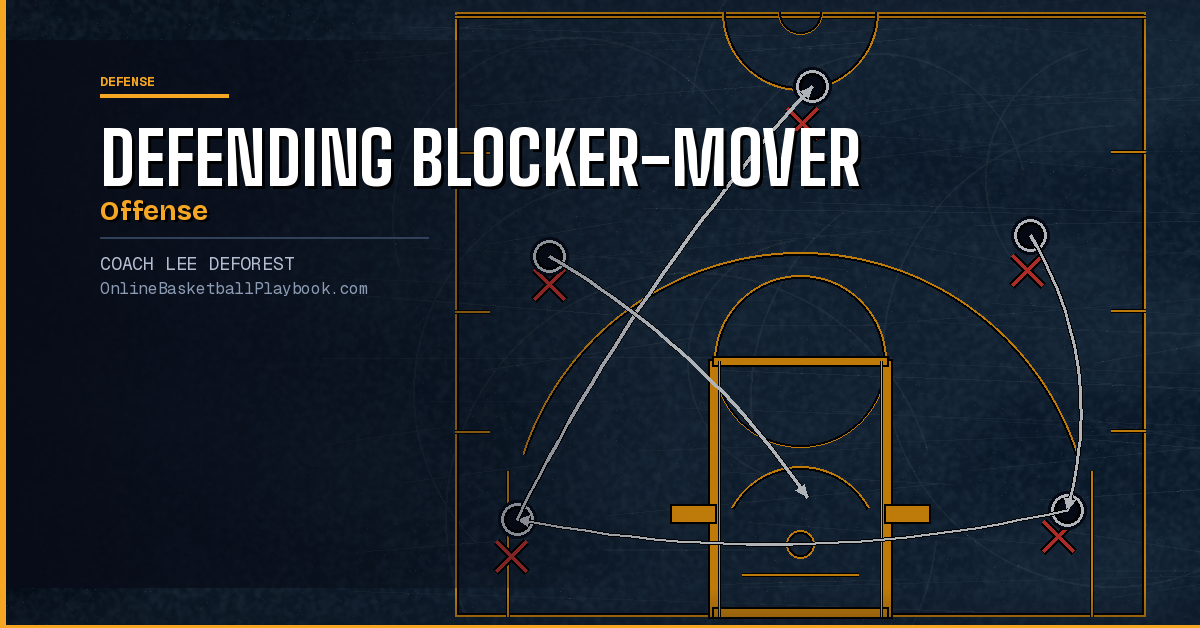
Understanding how defenses attack the blocker-mover offense makes you a better teacher of it — and helps you counter what you will inevitably see.
Switching
The most common defensive answer is to switch every screen. Switching eliminates the advantage of the screen because no one gets open off the action. The counter is player-type mismatches — if your Movers are guards and your Blockers are bigs, switching creates a guard guarding a big in the post (a Blocker seal opportunity) or a big guarding a guard on the perimeter (a Mover flare opportunity). The offense is built to exploit switches if Blockers are trained to recognize and attack the mismatch immediately after a switch occurs.
Physical Denial
Some defenses will try to physically prevent Movers from using screens by bumping them in their routes. The answer is for Movers to change speeds and directions more sharply — a Mover who sets up their cut with a real jab step and a change of pace is much harder to bump off their path than one who jogs into the screen at a consistent tempo. This is an area where individual player development work off the ball pays off directly in the offense.
Pressure and Denial
Some man-to-man defenses will deny the ball to Movers entirely, trying to take away the catch before the screen can be used. The blocker-mover system counters this with backdoor cuts — if a Mover is denied, they cut backdoor away from the denial, and the Blocker shifts to maintain spacing. When players understand this read, full denial becomes a gift rather than a problem. Teams that run the 2-3 Zone against you create different problems — the screening structure is less relevant against zone, so coaches should have a zone attack package ready alongside their man-to-man blocker-mover actions.
Keep Building
Related breakdowns
Get free play diagrams, drills, and coaching guides delivered weekly.