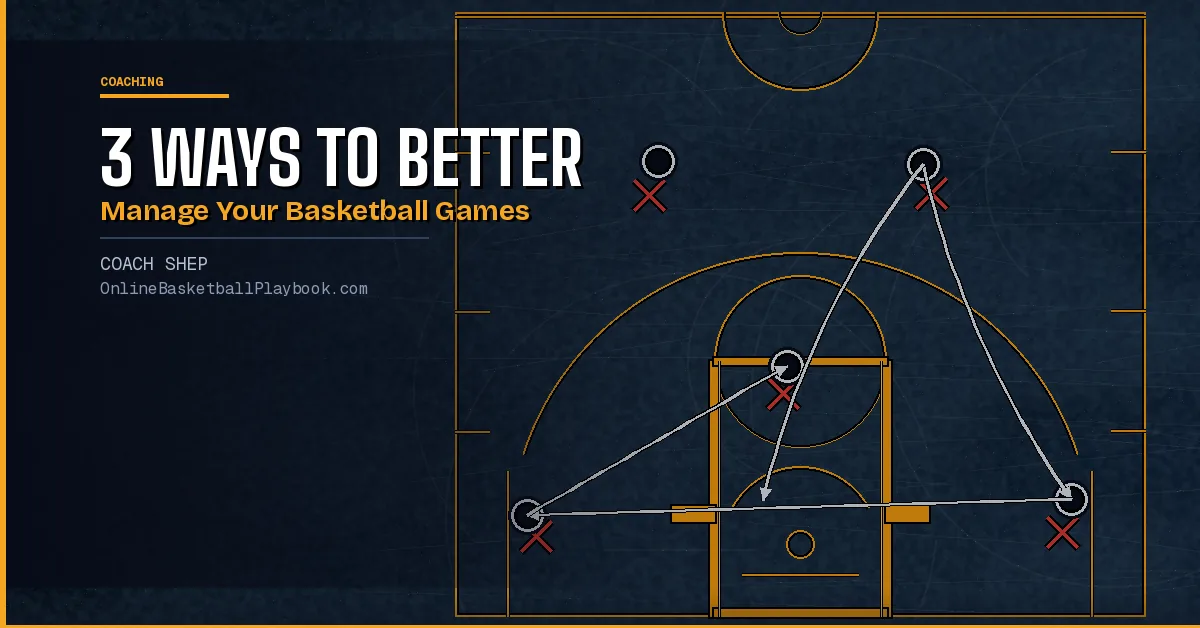
Most games are lost in the last four minutes, not because of talent gaps, but because coaches run out of answers. These three in-game management systems give you a clear plan when the pressure is highest.
Timeout Management: Spend Them Like Money
Timeouts are your most finite resource. Every coach has a handful per half, and the coaches who use them well are the ones who treat each one like a currency with a hard cap, not a panic button to grab whenever the other team scores twice in a row.
The first principle of timeout management is knowing the difference between a momentum timeout and a strategic timeout. A momentum timeout stops a run. A strategic timeout gives you time to draw up a play, adjust a coverage, or protect a lead with a specific possession plan. Mixing them up is where coaches burn timeouts they needed later.
The Three-Timeout Rule for the Second Half
Enter the second half with a simple mental budget: use one timeout before the five-minute mark only if the game requires it, hold one for the two-minute mark when you may need to advance the ball or protect a lead, and save one for the final minute. If you reach the four-minute mark with all three, you are in excellent shape. If you have burned all three at the six-minute mark, you are managing the rest of the game without a safety net.
Write this on your clipboard at the start of every game: how many timeouts you have, and what the target use-points are. It sounds mechanical, but having the plan written down prevents emotional spending when a three-point run makes you feel like you have to act right now.
What to Actually Say in a Timeout
The other half of timeout management is what happens during the timeout itself. Most youth and high school coaches waste the first 20 seconds repeating what just went wrong instead of telling their team what to do next. Start with the solution, not the problem. "Here's what we're running" lands better than "here's what we've been doing wrong." Players in a timeout are already aware something went sideways. They need a reset, not a recap.
Keep it to one or two instructions maximum. A timeout is 60 seconds. By the time water gets passed and everyone huddles, you have 30–40 usable seconds of communication. Pick the one thing that will most directly affect the next possession and say that clearly. Then let your players execute.
Substitution Rotation That Keeps Everyone Ready
One of the most underrated aspects of in-game management is having a substitution system your bench understands before tip-off. When substitutions are predictable, players stay mentally engaged because they know when their next minute is coming. When substitutions are random, bench players mentally check out, and when you need them, they are cold and distracted.
Build a Rotation Map Before the Game
The simplest system is a rotation map written on your clipboard or practice card. For a 10-player roster, decide before the game which players are in which rotation group and at what point in each quarter those groups swap. It does not have to be rigid (a foul situation or a hot hand can override it), but having the default plan means you are only deviating when the game demands it, not improvising from scratch every four minutes.
For younger programs especially, a predictable rotation does something else: it eliminates the anxiety players feel about whether they are in the coach's good graces. When a player knows they play the last two minutes of the first quarter regardless, they stop performing for the coach and start performing for the game. That is the environment you want to build.
The Four-Minute Unit
A practical system for most youth and high school coaches is the four-minute unit. Each quarter is split roughly into two four-minute segments. Your starting group runs the first segment; your second group takes the second; then you reassemble the best lineup for the fourth quarter based on how the game is going. This gives every player a defined role, keeps your starters from carrying 32 minutes of load, and ensures you know exactly who is fresh when it matters.
Track who played in each segment. A simple tally mark next to each name on your clipboard takes three seconds and gives you a running picture of workload. Coaches who track this in real time almost never find themselves at the two-minute mark realizing their best defender has been on the bench for the entire second half because they lost track of the rotation.
Communicating Substitutions to the Bench
Before the game, tell your bench players the system you are using. Not every detail. Just the shape of it. "You'll come in at the four-minute mark of the first quarter" tells a player what they need to know to stay ready. Tell them to stay warm, stay watching, and have one thing they are focused on improving when their next stint comes. A bench player with a job is a focused player. A bench player who is just waiting is a distracted one.
Halftime Adjustments That Actually Stick
Halftime is 10 minutes. If you spend eight of those talking, your players will only retain the last two minutes of what you said. The adjustment has to be short, specific, and centered on one or two changes, not a full tactical overhaul.
The Halftime Format That Works
Use a simple three-part halftime structure. First, let players rest and hydrate for the first two to three minutes without being talked at. Second, address one defensive adjustment and one offensive adjustment, no more than two things. Third, end with something that builds confidence, not something that escalates anxiety. Players who walk back onto the court nervous about all the things they are doing wrong play worse in the second half, not better.
The defensive adjustment is usually the most important one. Look at how the other team scored in the first half. Were they getting paint touches because your players were not helping? Were they hitting open threes because you were chasing ball and leaving shooters? Pick the single biggest issue and make one clear change to address it. Say it simply: "Their number 23 is getting the ball in the paint because we're not helping from the weak side. Second half, every time ball goes away from you, take two steps toward the lane."
Film What You Can, Forget What You Can't
If you have a manager or parent filming games, a brief halftime review of one or two possessions can be effective at the high school level and above. At the youth level, skip the film and stick to verbal cues. The goal is clarity, not complexity. The adjustment that a player can execute on the next possession is more valuable than the tactically perfect adjustment they cannot quite remember when the moment arrives.
Player Input at Halftime
One of the fastest ways to improve your halftime adjustments is to ask your players what they are seeing. A 30-second round of "what's working, what's not" from your point guard or your most aware player often surfaces something you missed from the sideline. Players who feel heard at halftime are also more committed to the second-half game plan. They own it because they helped build it.
Sideline Communication and Composure
How you act on the sideline is a coaching variable most coaches underestimate. Your body language, your tone, and your consistency under pressure all feed directly into how your team performs when the game is tight. Players read their coach constantly, especially youth and high school players, whose confidence is more fragile than they show.
Shout Praise, Whisper Criticism
The most transferable communication rule for any level of coaching is this: shout praise, whisper criticism. Most coaches default to the reverse. They correct loudly in front of everyone and praise quietly or not at all. This inverts the effect on a young player's confidence and willingness to take risks. When a player makes a great play, name it loudly so the whole team hears what right looks like. When a player makes a mistake, get close and correct it in a low tone: what went wrong, what to do instead, move on. That two-part correction (specific, brief, forward-looking) is the one that actually changes behavior over a season.
The 30-Second Composure Reset
Every coach goes through moments where the game is pulling them toward emotional reaction: a bad call, a turnover on a play you've run 40 times in practice, a momentum swing at the worst moment. Build a composure reset into your sideline habits. Take a breath. Look at your clipboard. Focus on the next possession, not the last one. It is a small thing, but players notice it. A coach who stays composed in the chaos signals to their team that the situation is manageable. A coach who loses composure signals the opposite.
Keep Your Message Short and Certain
When you speak to players during live action (during a dead ball, when a player comes off), keep it to one sentence. "Stay in front of your man." "Set the screen higher." "Get to the block on the catch." Players cannot process a paragraph during a game. One clear instruction lands. A cluster of notes creates confusion and hesitation. Certainty in tone matters as much as accuracy. Even if you are not 100 percent sure it is the right call, deliver it with conviction. A team that plays uncertain offense beats a team that plays no offense at all.
End-of-Game Execution and Late-Possession Decisions
The final four minutes of a close game are where all your management choices pay off or fall apart. If you still have timeouts, you have options. If your rotation kept your best players fresh, they are ready. If your halftime adjustment landed, you have the right coverage in place. Now the job is execution, getting the right plays to the right players at the right moments.
Late-Game Offensive Decisions
In the last two minutes, simplify your offense. You do not need your most creative plays. You need your highest-percentage plays run by your most composed players. Know before the game which two or three late-clock actions you trust. A pick-and-roll with your best ball-handler. A post-up for your most reliable scorer. An inbound play you have practiced specifically for end-of-game situations. The coaches who prepare two or three late-game sets and practice them specifically (not just run them in scrimmage but specifically drill them under late-game simulation) are the coaches whose teams execute under pressure.
Fouling Strategy and the Two-for-One
Two decisions that many coaches avoid planning for: when to foul intentionally if you are down late, and how to manage the two-for-one possession opportunity at the end of a half. Both are situations where having a pre-decided rule takes the cognitive load off in the moment. On fouling: decide before the game at what point differential and time remaining you will start fouling. On the two-for-one: know your number. If you have the ball with 55 seconds left in a half, you can get two possessions before halftime if you push the pace. If you use 40 seconds on the first possession, you will not. Teach your players this concept in practice so it is not a surprise when the situation arrives in a game.
Build Late-Game Reps Into Practice
The single biggest separator between teams that execute late and teams that collapse late is simple: how often they practice late-game situations. Add a five-minute late-game simulation segment to your practice twice a week. Set the score, set the clock, put the starters on the floor, and run two possessions each direction under real pressure. Call fouls. Make it real. Players who have won a simulated two-possession drill 50 times in practice have a reference point when the real moment arrives. Players who have never practiced it are just hoping.
Before your next game, write three things on your clipboard: your timeout budget (when you plan to use each one), your rotation order for the first half, and your two go-to late-game actions. Having those three answers already decided frees your brain to read the game instead of solving logistics in real time when composure is hardest to maintain.
- Enter every half with a timeout budget written on your clipboard. Assign each timeout to a use-point so you are never spending them reactively out of frustration.
- Build a four-minute unit rotation before tip-off and communicate it to your bench so every player knows when their next stint is coming and stays mentally engaged.
- At halftime, address exactly one defensive adjustment and one offensive adjustment, no more, then close with a confidence-building statement, not a list of problems.
- Shout praise loudly and correct mistakes quietly in a one-sentence, forward-looking cue: what went wrong, what to do instead, and nothing else.
- Practice late-game situations twice per week in a five-minute end-of-practice simulation with real score, real clock, and real pressure so your players have a reference point when it matters.
- Know your two or three highest-percentage late-clock offensive actions before tip-off and trust them in the final two minutes instead of improvising under pressure.
Want more basketball coaching strategies, drills, and tools?
Join the Online Basketball Playbook newsletter →
Draw this play free in the play drawer →
Membership: the full library, playbook packs, and Pro drawing tools →
Keep Building
Related breakdowns
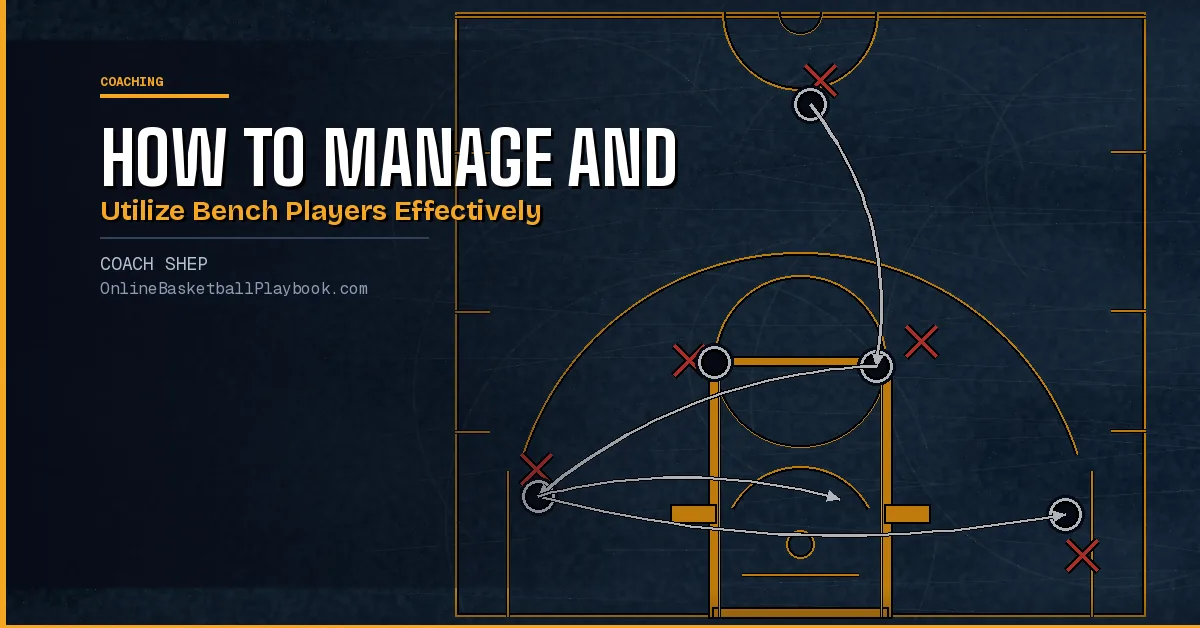
How to Manage and Utilize Bench Players Effectively
How to Manage and Utilize Bench Players Effectively
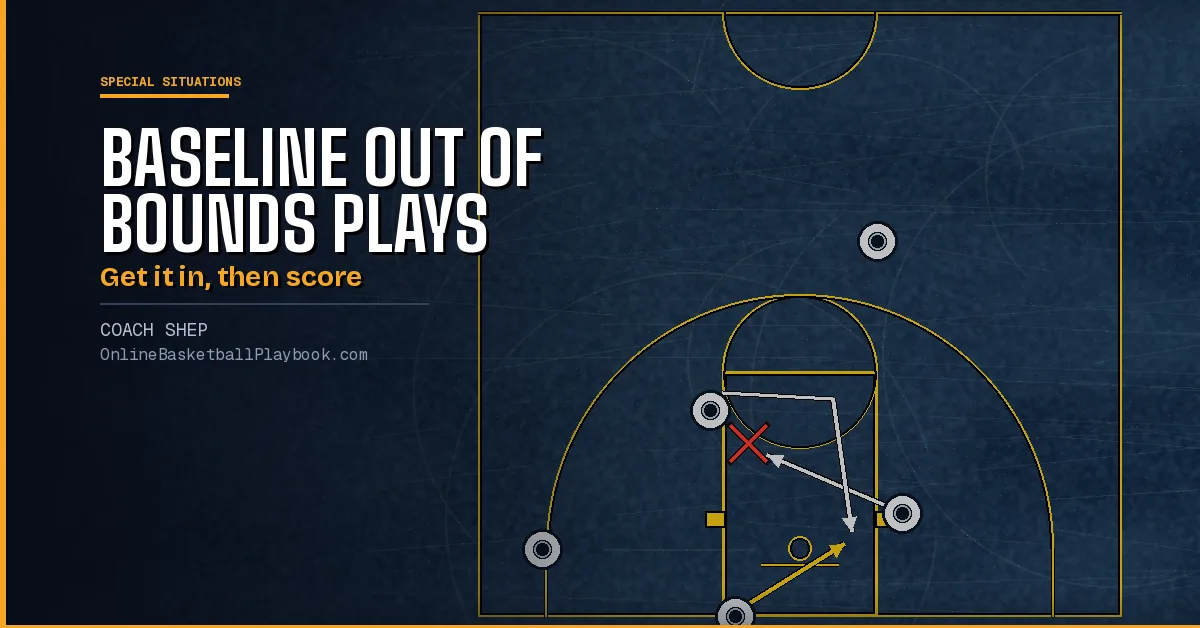
Baseline Out of Bounds Plays: Sets vs Man, Zone and for Youth
Baseline out of bounds plays drawn step by step: a box back screen and roll, Pick the Picker, the double stack, a 2-3 zone play, youth one-pass plays, the rules and the reads.
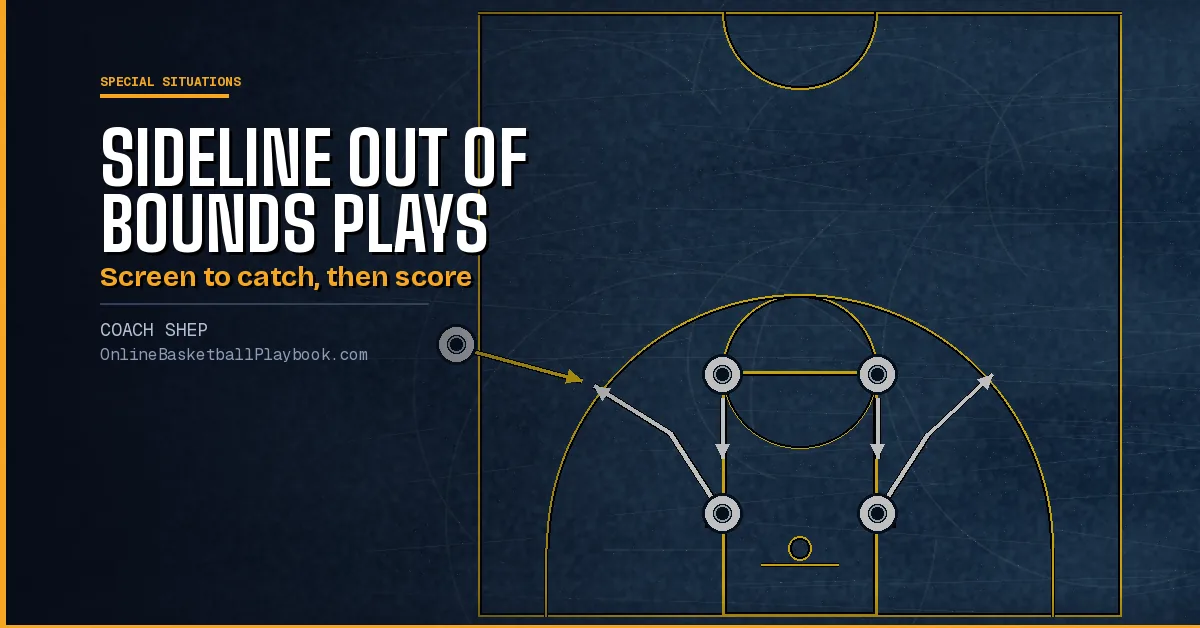
Sideline Out of Bounds Plays: SLOB Sets, Reads and Practice
Sideline out of bounds plays for coaches: SLOB sets from a box, stack and line, the inbounder's reads, plays against zone and denial, the clock and practice.