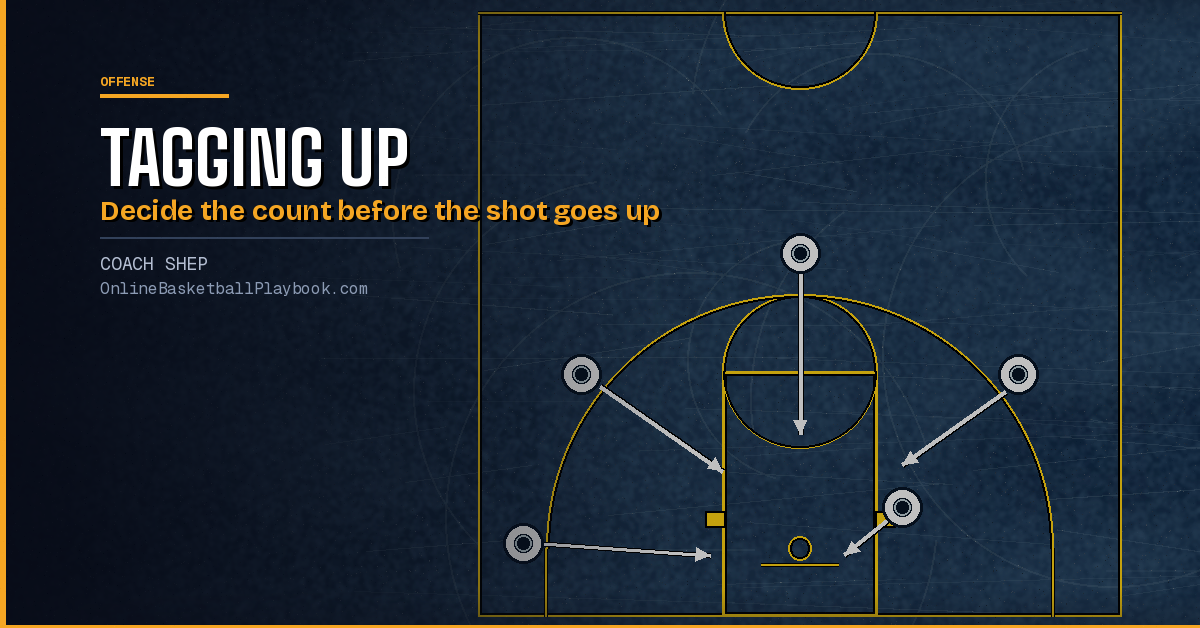
Tagging up in basketball is the set of rules a team uses when its own shot goes up. It decides how many players crash the offensive glass, who gets back and when, and how the crashers turn into defenders the moment the other team secures the ball. The name comes from a send-five version where every crasher tags the nearest body, so the matchup is set when the rebound is lost. This page is the offensive side of that choice. The get-back side (stopping the ball, protecting the rim, numbers down) is on transition defense, and the boxing out that the other team does to your crashers is on box out basketball.
Two Meanings of Tagging Up
The word is used two ways, and both are about the moment after a miss.
- Guard whoever guarded you. In the send-five version, when the opponent secures the board, nobody hunts for his own man. The player who was defending you is your matchup for that trip, even if that puts your center on their point guard. Teams sort back to their usual matchups once the ball is in the half court.
- A high-side bump. In another version a crasher finds his man, bumps him from behind without pushing and gets to his high side, the side nearer half court. From there he can slow that player's first steps in transition and still contest the ball. Another version asks all four off-ball players to read the shot off a kick-out and get that high-side tag.
A third use of "tag" belongs to pick and roll defense, where the help defender tags the roller. That one has nothing to do with rebounding and is covered on how to defend the pick and roll.
Tagging Up in Basketball: How Many Crash
Coaches disagree on the count. Several versions put one rule first. Every player knows his role, crash or get back, before the shot goes up. The counts:
| Version | Who crashes | Who gets back |
|---|---|---|
| Five crash, then tag up | All five | Nobody. Each player tags the nearest body on a lost board |
| Four crash, point guard back | Everyone but the point guard | The point guard, to half court |
| Four crash, shooter back | The four who did not shoot | The three-point shooter, first |
| Four crash, one at the top | Four | One who rotates to the top of the key, ready to press |
| Three crash, half back, safety | Three | One half back and one safety |
| Three crash, two back | Three | Two guards, or two chosen by who shot |
| Two crash, three back | Two, usually the bigs | Three |
| Five back | Nobody | All five, an option for small teams |
Tom Izzo is the best-known name on the four-crash side, sending everyone but the point guard to the paint. Dick Bennett's pack line sits on the other side, with two or three back. John Beilein sends two.


The half-back player splits both jobs. In the three-one-one version three crash, one player stops between the arc and half court as a half rebounder and half safety, and one gets all the way back. One 1970s pro version called it "two and a half men on the boards."

Can a Team Do Both?
Coaches give three answers:
- Yes, with rules. The send-five version says its two gates (below) and the tag-up rule let a team crash hard and still be matched up.
- No, pick one. One version says a team cannot crash four and also expect to give up no transition layups, so it picks one and keeps it all year, based on its athletes, the league's best teams and its own offense. A pack defense version says a team cannot be great at both unless it is faster than the opponent, and it picks transition defense.
- It depends on the level. A third view says pro teams lean toward getting back because opponents are fast and shoot the three well, while high school and youth opponents are less of a transition threat.
The offense changes the cost. Spread teams give up rebounding position, so one version says 4-out and 5-out teams must build the crash rules in from the first day. Others say perimeter starts produce offensive boards because a running start is hard to box out, and a dribble drive version says its players are already moving to the rim. The trade-off from the defensive side is on how to defend the offensive rebound.
Crash by Who Shot
Some teams change the count by the shooter instead of fixing it by position.
- Hubie Brown's rule. When the point guard or the center shoots, three go to the glass. A 3 or 4 taking a soft close shot also sends three. A forward who shoots from outside the paint stays back.
- Shooter back first. The three-point shooter is the first player back and the other four crash.
- Shooter follows his shot. A dribble drive version has the shooter follow his shot and leaves the corner player who did not shoot as the safety.
- Best shooter as the safety. Vance Walberg keeps his best shooter back.

Where the Crashers Go
The side away from the shot. Most misses are said to come off on the side opposite the shot, about 70 percent in the usual figure and 75 in one version. Izzo overloads the weak side for this reason. One version wants two of four crashers on the help side, and another wants crashers to get to the opposite side and inside their men.
The elbows for the long rebound. Three-point misses go long over the posts. One version sends the 1 and 2 to the elbows while the 3, 4 and 5 crash. Another sends the two perimeter players who are left to the wing and elbow areas.

A physical standard. One version requires its crashers to touch two feet in the paint and charts it in games, with the point guard always back. Another has three crashers touch the backboard after a make in 5-on-0 work. The wider rebounding skills are on basketball rebounding fundamentals.
Get the next coaching guide in your inbox
One email when a new guide or diagram set goes up. Free.
The Send-Five Rules
The send-five version was built by a staff tired of losing the offensive glass. Its players called it the easiest system they had learned. Its rules:
- Two gates. Never turn it over, because a live-ball turnover with five on the glass cannot be defended. Take predictable, good shots, because a teammate surprised by the shot reacts half a second late and the crash dies.
- Front foot on the shot. Most guards stand, watch or drift back. These players get on the front foot as the shot is released.
- Outside first, then over the top. Step baseline or outside first, then come over the top to the high side of your man and drive him toward the paint. Rebound to the middle, not the baseline.
- Legal contact. Get even with the defender and use the hips and an arm bar, with the other hand high. Never a hand in the back.
- Tag up. On a lost board, guard whoever was guarding you.
- The flyby rule. If your defender flies at a three-point shooter and then leaks out, you go with him and guard him.
- Full-court man at once. One pass away is in the gap, two passes away is the safety, no pass down the line, and load to the ball.
The version also names a benefit on the other end. A team that has to box out five cannot sprint or leak out. Its goal was four offensive rebounds a quarter.
The Players Who Get Back
The 50/50 rule. A crasher who believes he has a real 50/50 chance at the ball goes to get it. Otherwise he sprints back at once.
Jam the outlet or leave the rebounder alone. One version sends a jammer to the opposing point guard to slow the outlet while a safety gets back on the shot. Another denies the outlet pass without doubling the rebounder. A third has everyone sprint back without pressuring the rebounder at all.
Crashers who become the press. In some pressing systems the crash and the press are one plan. One sends four to the glass and rotates one to the top of the key, ready to press a defensive rebound. Another presses on misses and sends four to the boards on every shot. Full-court pressure is on full-court press defense.
Two mistakes to name. Crashing when not assigned is one of three common transition mistakes in one list. Over-crashing a numbers advantage, turning a 3-on-1 into a 5-on-1, is named in another as a mistake, because it hands the opponent an instant counter break. The break the crash feeds is on early offense.
Numbers to Chart
| Version | What it charts |
|---|---|
| Offensive rebound rate | Your offensive rebounds divided by your offensive rebounds plus the opponent's defensive rebounds. 35 percent acceptable, 40 percent good |
| Per quarter | Four offensive rebounds a quarter |
| A season goal | 33 percent, later raised to 35, and called the most meaningful goal on the list |
| Effort | Crashers touching two feet in the paint, charted in games |
For the film, the send-five version asks one question. Are players on the front foot when the shot goes up, or standing and watching?
Drills
Build it up. The send-five version goes 2-on-2, then 4-on-4, then 5-on-5 off a set, then a game called Ring-a-Rosie where players guard the closest player, not their own.
The War drill. Many programs train the crash and the conversion together in some form of War. The versions differ:
- Find and hit. In a version credited to Izzo, everyone but the point guard crashes. Defenders must find their man and make contact before going for the ball. A defensive rebound is outletted and run the other way at once. No out of bounds, and made shots are rebounded too.
- Escape the paint. Defenders start inside the lane, must get out to hit their man outside it, then cut him out and knock him back. Baseline and wing players attack the glass and the point guard sprints to half court.
- One push, then reset. Eight minutes, full court. An offensive rebound is a point, and a defensive rebound pushes the other way once, then resets, so it stays a contact drill.
- Scored. Five defenders in the paint, five offensive players on the perimeter, the coach shoots. A defensive rebound is 1, an offensive rebound 2, a basket 1, a steal 1, a turnover or foul minus 1, to 15 or for 10 minutes, losers run.
Make it a habit in every drill. One practice rule is to stop isolating rebounding drills and require three offensive rebounders to crash on every shot in every drill and scrimmage. More drills are on offensive rebounding drills and rebounding drills.
Questions Coaches Ask About Tagging Up
What does tagging up mean in basketball?
When your shot is missed and the other team gets the ball, each crasher guards the player who was guarding him for that trip, instead of looking for his own man. Some coaches also use "tag" for bumping your man and getting to his high side as the shot goes up.
How many players should crash the offensive glass?
Coaches send anywhere from five to none. Four with the point guard back, three with two back, and two with three back are all common. The choice depends on your athletes, your offense and the opponent's break.
Who should get back on defense when the shot goes up?
Usually the point guard, or the guards. Some teams send the three-point shooter back first, and some decide by who shot.
Should the shooter crash his own shot?
Versions differ. One dribble drive version has the shooter follow his shot, while others make the three-point shooter the first player back.
Where do most missed shots go?
The usual figure is about 70 percent on the side away from the shot, so teams send crashers to the weak side.
Want every diagram on the site?
OBP Pro members get the full diagram files for every guide on the site, ready for a practice binder or a scouting report. $9 a month. Or draw your own version free in the play drawer.
See what OBP Pro includesMore Coaching Guides From This Batch
- Pick and Roll Reads: Reading Ball Screens by Coverage
- Basketball Play Calling and Signals: How Coaches Call Sets
- Secondary Break Basketball: Lanes, Options and Trailers
- 1-1-3 Zone Defense: Man-Zone Rules, Slides and Traps
Back to Fast Break and Transition Offense and every Offense page.
Keep Building
Related breakdowns
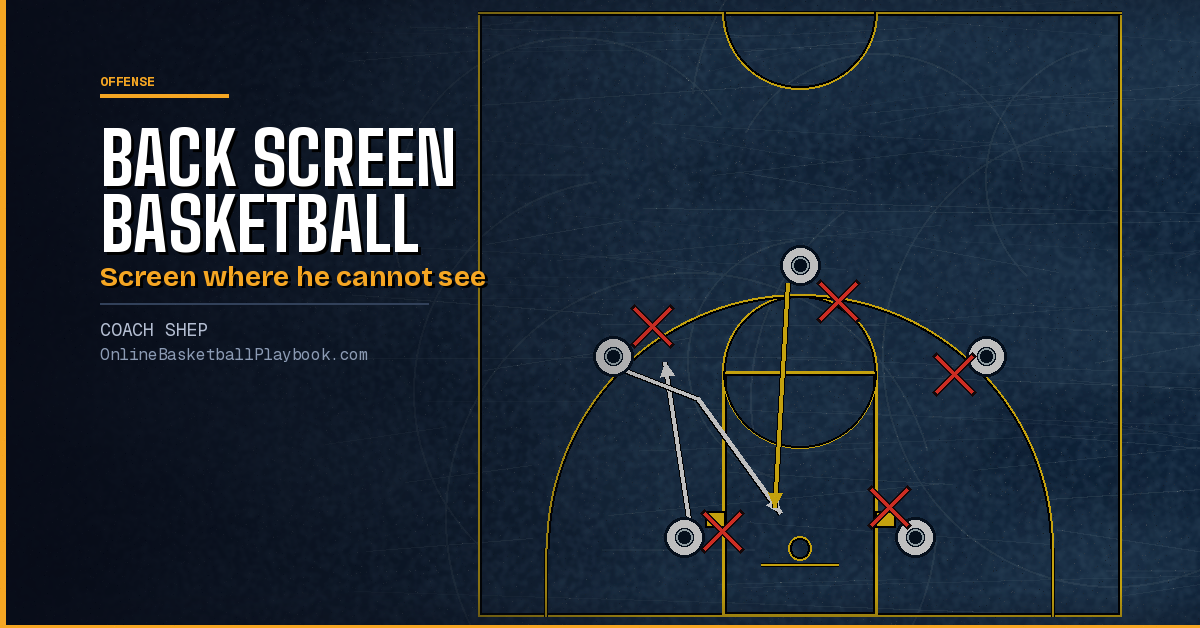
Back Screen Basketball: How to Set, Use and Defend It
Back screen basketball guide: what a back or rip screen is, setting it legally, the cutter's and screener's reads, the UCLA cut, chained actions and defending it.
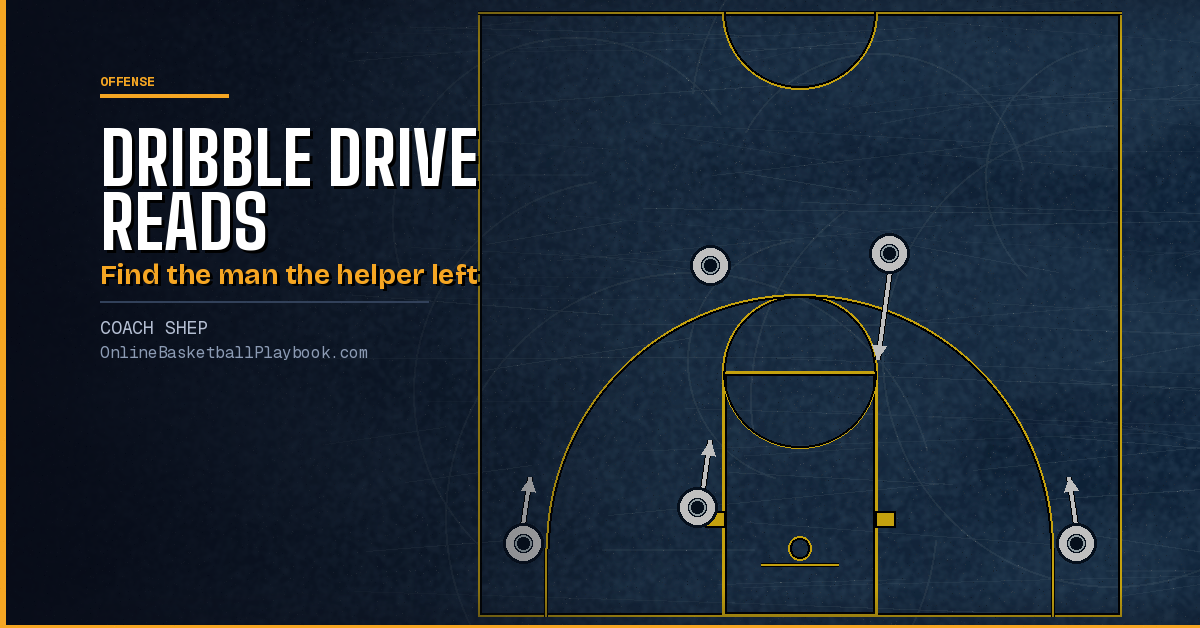
Dribble Drive Reads: Kick Up, Kick Back, Loop and Dump
Dribble drive reads for the driver and the four players around him: the helper tree, kick up, kick back, loop cut, dump, baseline drive jobs and the passing rules.
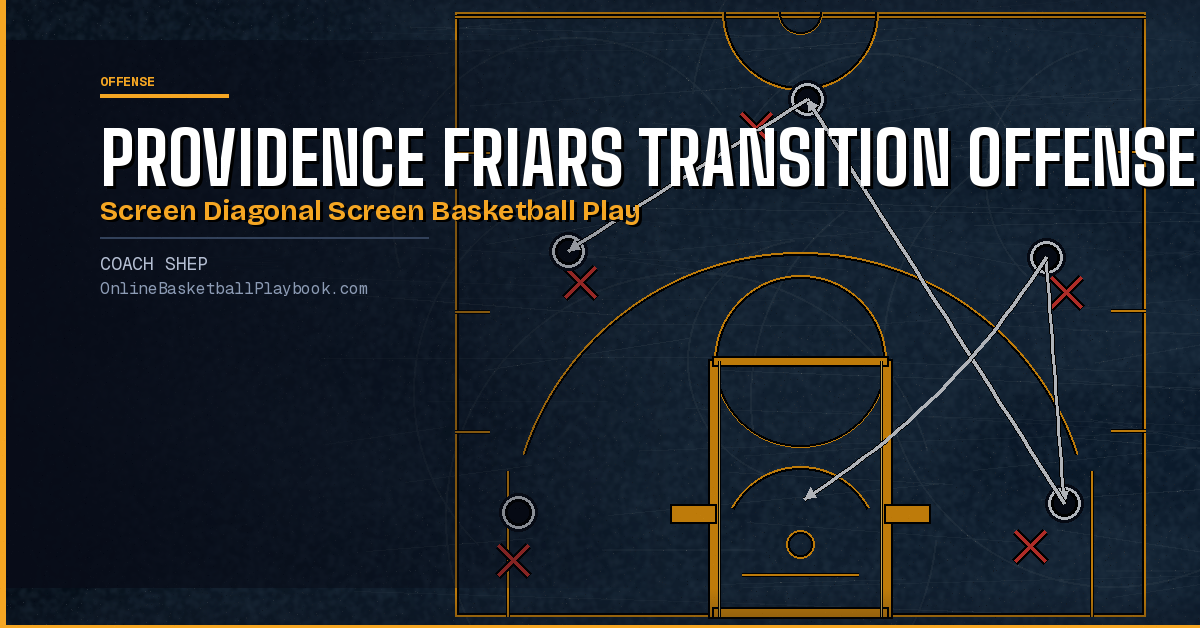
Providence Friars: Transition Offense Back Screen Diagonal Screen Play
Providence Friars: Transition Offense Back Screen Diagonal Screen Play