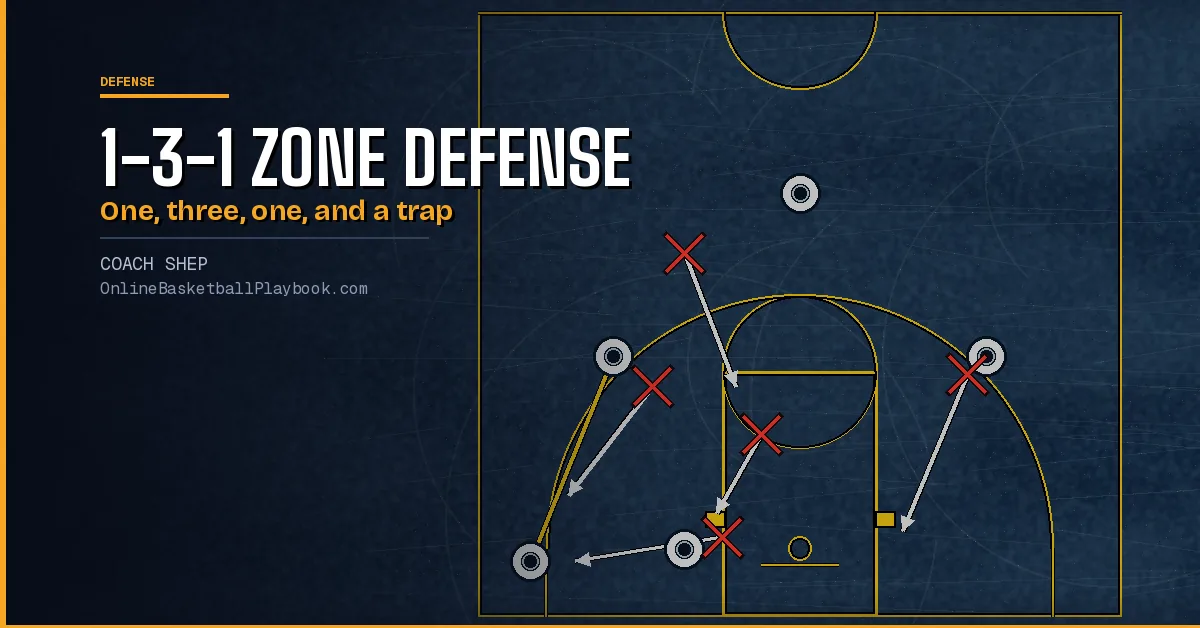
The 1-3-1 zone defense is the most aggressive of the standard zones. One player guards the top of the key, three stand across the middle and one runs the baseline. It is built to deny ball reversal, push the offense into strange angles and trap the corners and wings. The 2-3 protects the paint. The 1-3-1 gives up some of the paint and asks the offense to score over a defense that is rotating fully. This guide shows how to run a 1-3-1 zone defense, the roles, the traps, the weak spots and the drills. The 1-1-3 zone is a different shape, with three across the baseline instead of the middle.
The 1-3-1 at a Glance
| Role | Who fits | Main job |
|---|---|---|
| Point (X1) | The tallest guard, long arms, quick first step | Deny the guard-to-guard reversal, force the ball one way |
| Wings (X2, X3) | The best athletes | Cover from the elbow to the corner on their side |
| Middle (X4) | Strong and mobile | Roam from high post to low post, front the post, stunt at the wing |
| Baseline (X5) | The smallest, most vocal guard | Cover corner to corner and call everything in front of him |
1-3-1 Zone Defense Diagram

The Five Roles
The point. He closes out on the ball handler fast and forces one direction. On a wing pass he cuts off the reversal lane instead of chasing the ball. Forcing the weak hand helps, because it sends the handler toward the side where the middle defender is already reading the reversal.
The wings. They cover the ground from the elbow to the corner. On a ball-side wing catch, one wing closes out and the other drops to the paint to stop the high-post dive. Both move on air time.
The middle. He is the engine of the zone and gets no rest. He fronts post entries and stunts at the wing in a trap. He reads the ball handler's eyes and steps into the passing lane before the pass leaves.
The baseline. Usually the smallest, most vocal guard on the floor. He reads the floor and calls everything in front of him. He runs corner to corner and is the first trapper on a corner entry. He must never cheat toward one corner, or a patient passer will wait him out and reverse to the other one.
How to Run a 1-3-1 Zone Defense
Move while the ball is in the air. Think tip, not steal. A deflection means the zone worked, and a defender who leaves his area to chase a clean steal is how a zone gives up a layup.

With the ball on the wing, the ball-side wing closes out and the far wing drops to the paint. The point cuts off the reversal lane. The middle slides toward the ball side to cover the high post and the baseline player shades toward the ball-side corner.
Trapping Triggers

The corner trap. This is the main one. When the ball enters the corner, the ball-side wing and the baseline player trap. Arms are up and there is no easy pass line. The second defender to the trap steps into the handler's legs so he cannot dribble out. The other two perimeter defenders sprint to the passing lanes and do not stay in their spots.
Coaches differ on who traps. Some teach the wing and the baseline player. Others have the point and the baseline player trap while the middle blocks the outlet. Choose one and drill it.
The wing trap. It carries more risk. The point traps with the ball-side wing as soon as the ball hits the wing, the middle covers the high post and the baseline player runs hard to the corner. Every defender is gambling. Use it only after the rotations are drilled.
The midcourt fake trap. The point and a wing threaten a double on the guard bringing the ball up. The goal is a lob or a blind reversal, and no real trap happens.
Get the next coaching guide in your inbox
One email when a new guide or diagram set goes up. Free.
The Elbow Escape and the Corner Skip

The most dangerous pass is the corner-to-elbow skip after a corner trap. If it arrives before the middle or the wings recover, the zone is scrambling and the offense has an advantage look. The middle rotates to deny the first skip out to the strong-side elbow. The other defenders find the pass lanes.
Weak Spots in the 1-3-1
- The corners and the baseline. One runner covers both. Skip passes are hard on him.
- Screens on the top or baseline defender. Even a half-second delay on the baseline runner frees a corner shooter. An even front, a 2-1-2 or a 2-3 look, splits the point, because the offense reverses just as he commits.
- Overloads. Two in the corner and one on the wing pull the wing and the baseline together. A third player who catches and shoots before the middle recovers has a clean look.
- Pass fakes and lobs. A defense that jumps lanes can be beaten by a fake. Lobs to the weak-side low block are often open.
- Offensive rebounding. The spread shape leaves the glass open. Do not run it against the best offensive rebounding team on your schedule.
- Turnover risk. More steals come with more layups when a trap breaks. Budget for both, or use the loose setting.
The offense's side is on How to Beat a 1-3-1 Zone Defense and How to Beat the 1-3-1 Zone.
Loose and Tight
The 1-3-1 adjusts by depth, and a timeout instruction changes the whole zone. Play loose against weak ball handlers and poor shooters. Drop back, bait lobs and trap less. Play tight against poor shooters with penetrating guards. The point extends beyond the arc to deny the first catch. Against one great shooter, some coaches drop back inside about 15 feet and give up the perimeter to protect the paint.
Half Court and Full Court
Two different defenses share the name. The half-court 1-3-1 waits for the offense to cross half court and then sets its trapping shape. The full-court 1-3-1 presses the inbound and traps near half court. It is tiring, so most coaches use it for a few possessions after a made basket. Running both from the same five-player alignment gives an opponent two looks to prepare for. Read more on 1-3-1 Full-Court Press.
1-3-1 Zone Defense Drills
- Corner-to-corner skip drill. The baseline runner sprints to cover the skip until it is routine.
- Baseline screen drill. A low post or short corner player screens the baseline runner while he sprints corner to corner. The runner and the weak-side wing learn to fight through or switch.
- Weak-hand forcing. The point forces the handler's weak hand and the middle reads the reversal lane.
- Eye-reading. The middle watches the dribbler's eyes and the ball during penetration.
- Attack it yourself. Use a high post, two short corners and a top shooter against your own zone so defenders feel where it leaks.
- Trap and rotate. Run the corner trap with a coach on each wing so the wing and the top defender learn to cover the elbow.
Build the rotations on man fundamentals. Stance, closeouts and boxing out come first. See Basketball Defense Drills.
When to Run the 1-3-1
- Guard-heavy opponent with poor outside shooters: run it tight.
- Opponent with one great shooter: drop back and protect the paint.
- Opponent that beats you inside on the glass: pick a 2-3 instead.
- Opponent with big, strong players who can throw skips over the top: expect trouble.
- Your team as the base or the change-up: run it as your identity or as a surprise. Both work, and it is a program choice.
- A young opponent may struggle with the skip pass. Your own young players will struggle with it too when they attack.
- Install the half court first, then add three or four possessions of pressure after a timeout.
Questions Coaches Ask About the 1-3-1 Zone Defense
How do you run a 1-3-1 zone defense?
Set one player on top, three across the middle and one on the baseline. Move on the flight of the ball, deny the reversal, trap the corner with the wing and the baseline player, and keep someone ready for the elbow.
What is the weakness of a 1-3-1 zone?
The corners, the skip pass and offensive rebounding. A quick corner-to-elbow skip after a trap is the biggest danger.
Who plays the baseline in a 1-3-1?
Usually the smallest, most vocal guard. He covers both corners and calls everything in front of him, so he has to read the floor well.
Is the 1-3-1 better than the 2-3?
It creates more turnovers and gives up more layups when it breaks. The 2-3 is the lower-risk shape. See 2-3 Zone Defense.
Can the 1-3-1 be a full-court press?
Yes. The full-court version presses the inbound and traps near half court. It is tiring, so most coaches use it in short bursts.
Every defense sits under the Defense hub and Types of Defense in Basketball. Related pages are 3-2 Zone Defense, Best Zone Defense for Your Team, Man-to-Man vs Zone Defense and How to Coach a Matchup Zone Defense.
Want the printable playbook packs?
OBP Pro members get the premium playbook packs: the zone attack, out of bounds and practice plan PDFs, plus each new pack as it is finished. The membership page lists what is in each one. Or draw your own version free in PlayDraw.
See what OBP Pro includesMore Zone and Junk Defenses
- 2-3 Zone Defense: Rotations, Weak Spots and Drills
- 3-2 Zone Defense: Rotations, Weak Spots and Drills
- Box and 1 Defense: How It Works and How to Beat It
Back to Types of Defense and every Defense page.
Keep Building
Related breakdowns
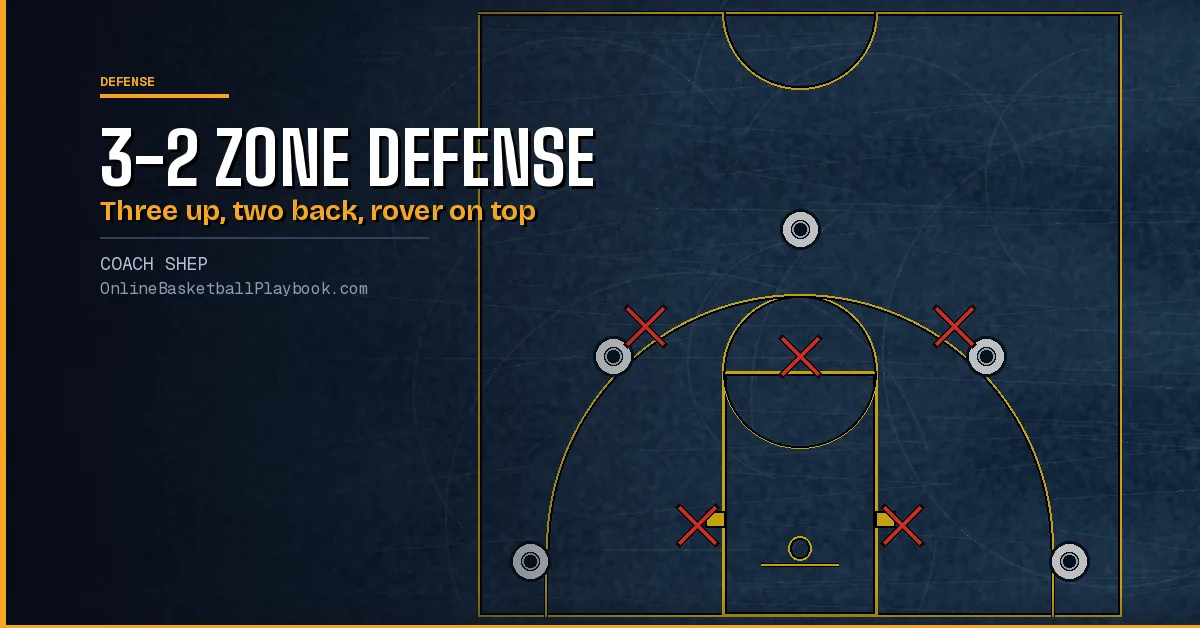
3-2 Zone Defense: Rotations, Weak Spots and Drills
How to run the 3-2 zone defense: the alignment, the rover, every rotation, the weak spots, the 3-2 matchup zone and the drills, plus when to pick it over a 2-3.
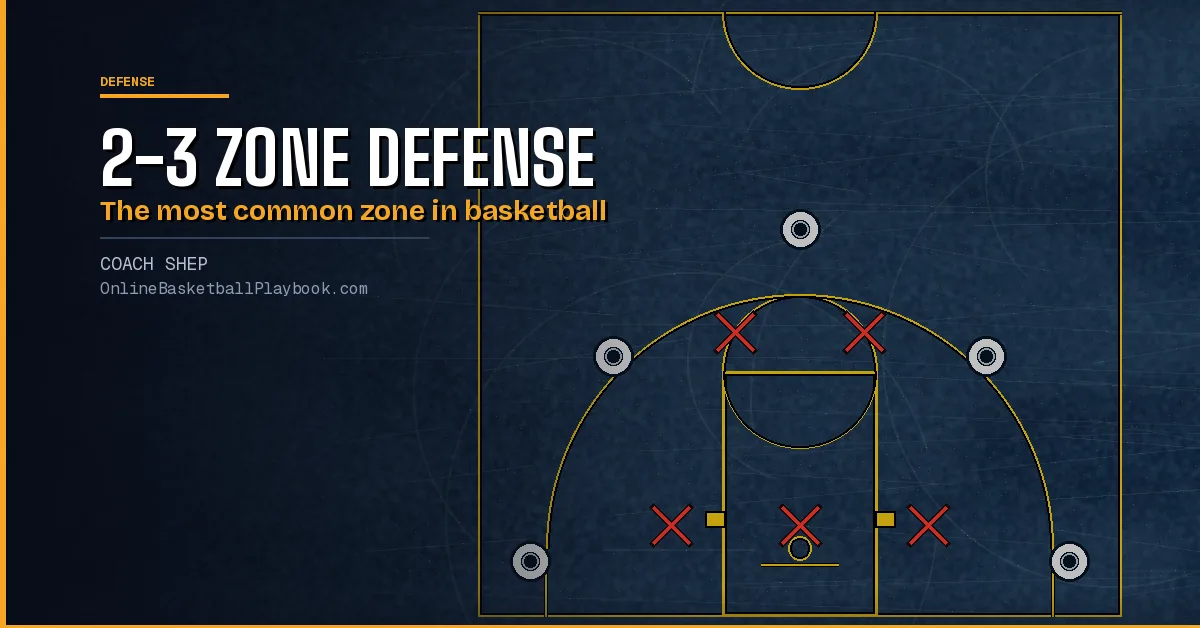
2-3 Zone Defense: Rotations, Weak Spots and Drills
How to play the 2-3 zone defense: the starting positions, how it shifts to the ball, where it leaks, when to trap, and the drills that install it.
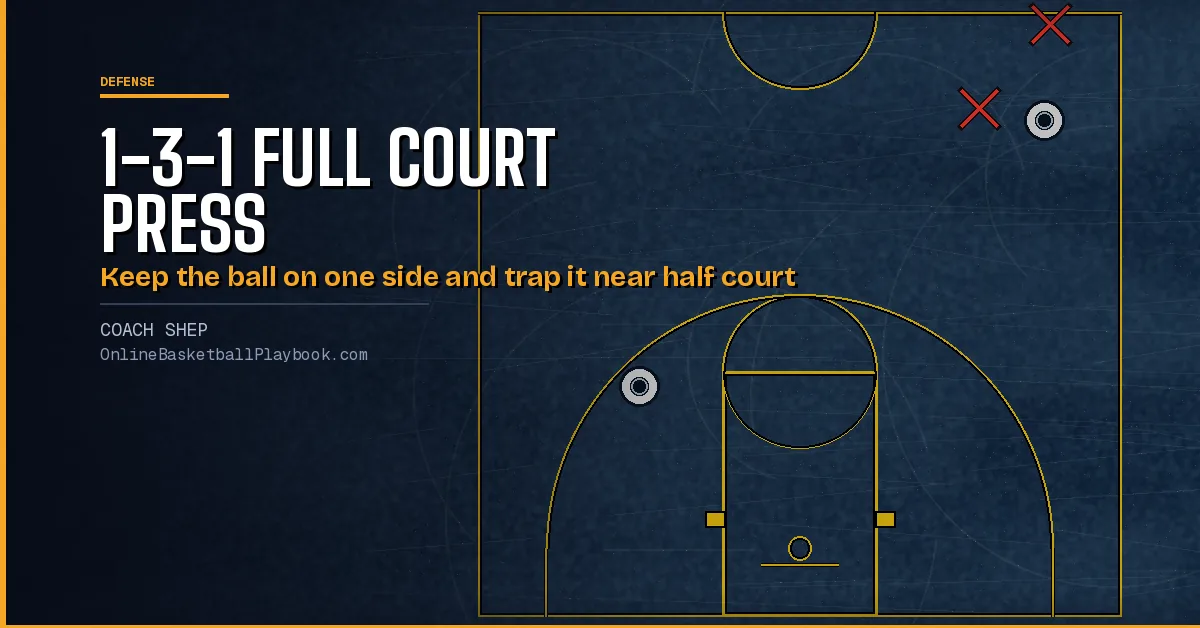
1-3-1 Full Court Press: Roles, Traps and Rotations to Install
The 1-3-1 full court press from setup to frontcourt trap: each role, the reversal rotations, an aggressive version, the costs and when coaches call it.