Defensive rebounding drills dominate most practice plans, but games are often decided on second and third shots. Offensive rebounding basketball assigns who crashes, from where, and what they do when the ball is in the air. Defensive technique and rebounding posture live on box out in basketball. This page stays on the attack side: pursuit, tips, putbacks and team crash rules.
Pair crash rules with your shot profile. Long rebounds off deep shots need perimeter pursuit. Short misses need lane runners. Post those pairings before you run a single putback drill.
Team Crash Rules
Sample policy for man-to-man offense (adjust for your transition needs):
- Shooter: Hold follow-through, then pursue along the shot line.
- Opposite guard: Sprint to weakside long rebound area on threes.
- Near big: Hit the weakside glass on middle drives; offensive rebound on ball-side post seals.
- Far big: Balance to rim on short shots; do not leave both feet on the floor on a floater miss.
- Point guard: Crash only on corner threes when you chart that the defense does not box the nail. Otherwise get back as first safety.
Against zone, send the player behind the zone's backside seam instead of crowding the same block as your post. Zone shot quality ties to drills to teach zone offense.
Shot Location and Pursuit Angles
| Shot type | Likely rebound | Crash emphasis |
|---|---|---|
| Rim finish | Short, same side | Ball-side big and cutter |
| Wing three | Long, weakside | Opposite guard and weak big |
| Slot pull-up | Center lane | Opposite wing through the nail |
| Baseline drive | Weakside glass | Weak block and dunker spot |
Teach players to start moving on the shot, not on the miss. Rebound down on offense means two hard steps toward the rim while the ball is in the air.
Putback and Tip Technique
Chin the ball on the grab. Keep elbows wide on the way up so defenders cannot strip through.
Two-foot power if crowded. One-foot only when you have a clear lane.
Tip series. Alternate-hand tips on the backboard keep the ball high. Score only with both feet off the floor on tips in competitive games.
Continuous putbacks. Coach or partner throws off the glass; player rebounds and scores before the ball hits the floor again. Rotate after thirty seconds.
Putback games that combine free throws and tips teach pursuit after a set shot. See also finishing footwork on layup drills.
Offensive Rebounding Drills
Shell offensive rebound. Five-on-five shell, coach shoots on command. Attackers use an arm-over or swim move to get inside position before the shot. Live on the rebound only.
3-on-2 box-out to break. Coach shoots with three offensive and two defensive rebounders. If offense boards, play to a score. If defense boards, they push 3-on-2 the other way. Links to 3-on-2, 2-on-1 drill.
Putback 21. Shooter takes seven one-point shots from seven spots. Partner tips two-point putbacks on misses before the ball touches the floor. Race to twenty-one.
Search and score. Two players face the basket; coach shoots between them. Contest the space, score on any board. Teaches hands without fouling every rep.
How Box-Out Habits Help the Crash
Players who understand defensive box-outs read spin-outs better. When your team practices box out in basketball, add one offensive station: the same player who just boxed out now seeks inside position on the very next rep.
Rebounding disadvantage drills (4-on-3 on the glass) teach offensive players where help leaves the boards thin. Defensive coverage while you crash is on transition defense basketball when you send only one safety.
Questions Coaches Ask
How many players should crash the offensive boards?
Most man-to-man teams send two consistent crashers plus the shooter. Youth teams often send one big and keep both guards back for balance.
Is offensive rebounding just hustle?
Hustle without angles wastes steps. Assign lanes based on shot location and teach the first two steps on the release.
What putback should youth players learn first?
Two-foot power under the rim on a short miss, then dominant-hand tips before switching hands.
Team crash rules fit into youth basketball practice plans as a five-minute segment after shooting. Motion teams that miss inside-out threes can revisit spacing on motion offense basketball before blaming effort on the glass.
Get the next coaching guide in your inbox
One email when a new guide or diagram set goes up. Free.
Want the printable playbook packs?
Playbook packs: zone attack, press break, press defense, out of bounds, quick hitters, practice plans and the youth turnover cure, each a printable PDF. Or draw your own version free in PlayDraw.
See the playbook packsMore Guides From This Batch
- Youth Basketball Practice Plans: Timed Blocks by Age Band
- Basketball Shooting Games: Competitive Reps That Transfer
- Iverson Cut Basketball: Shallow Cut Through Double Elbows
- Cross Screen Basketball: Set, Use and Defend the Lane Cross
- 3-on-2, 2-on-1 Drill: Full-Court Advantage to Disadvantage
- Drive and Kick Drills: Paint Touches and Kick-Out Decisions
- Transition Defense Drills: Get Back, Match Up and Slow the Ball
Back to Box Out in Basketball and every Offense page.
Keep Building
Related breakdowns
4 Out 1 In Penetration Rules: Drive, Fill and Kick
4 out 1 in penetration rules: straight-line drives, baseline drift, post dives, weak-side fill and kick-out corners when the defense collapses.
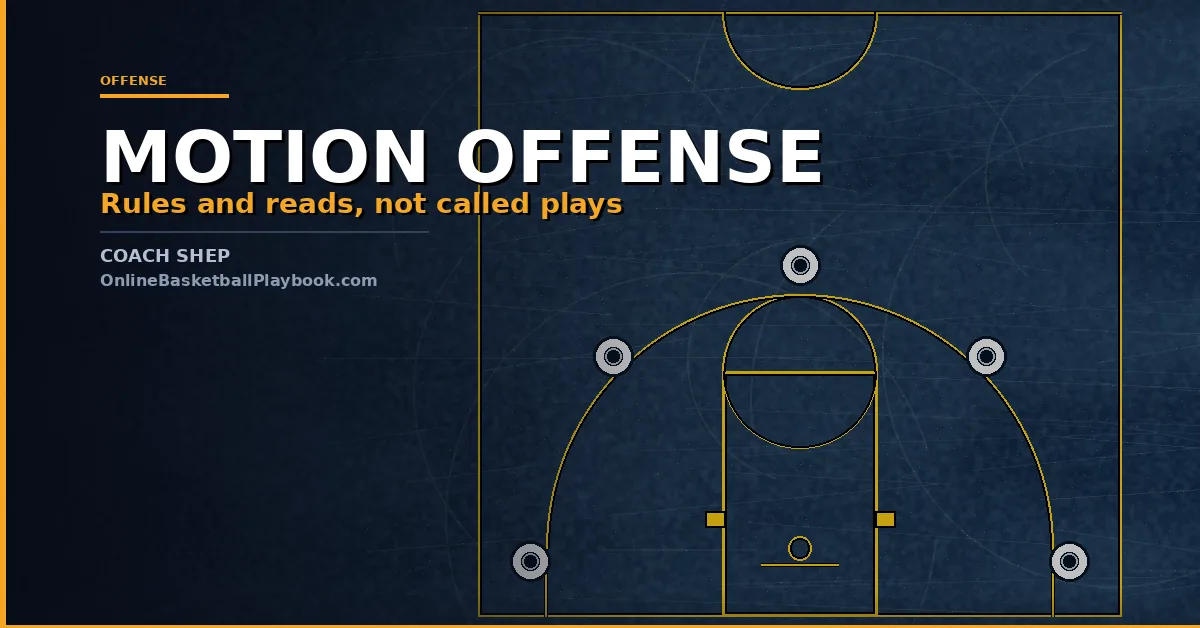
Motion Offense: Spacing, Rules, Actions and How to Install It
Motion offense runs on rules, not called plays. See the spacing, four core actions, 5-out versus 4-out 1-in, the install order, drills and where it struggles.
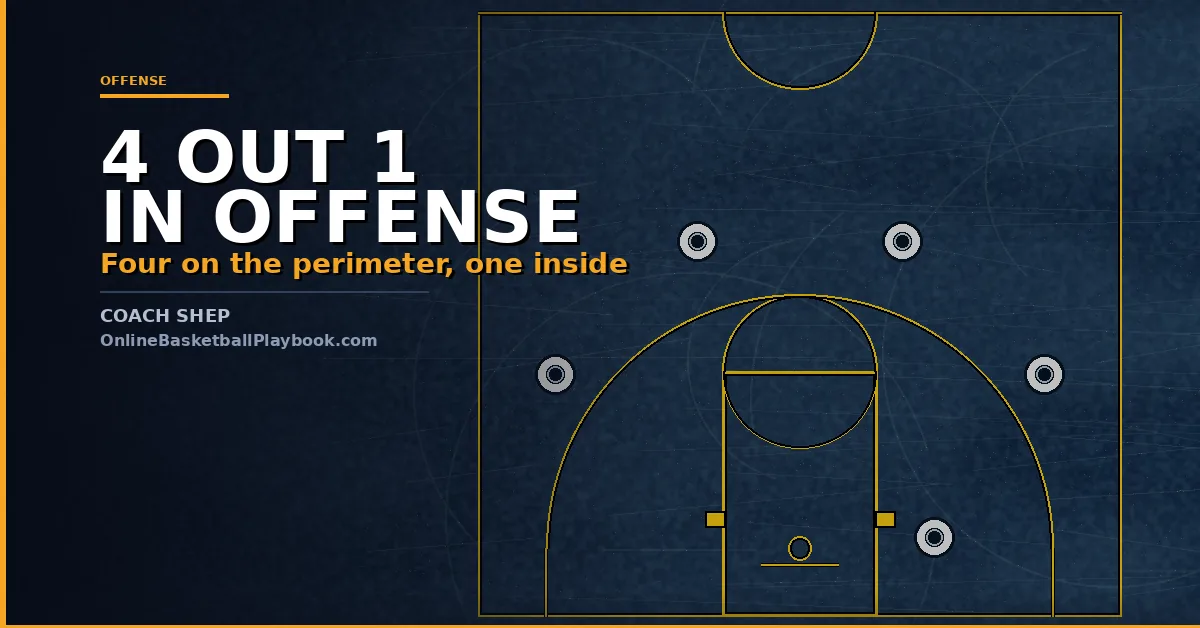
4 Out 1 In Motion Offense: Rules, Spacing and Sets
4 out 1 in motion offense: spacing, the six rules, what the post does, pass-cut-fill, screens, quick hitters, zone adjustments and how to install it.