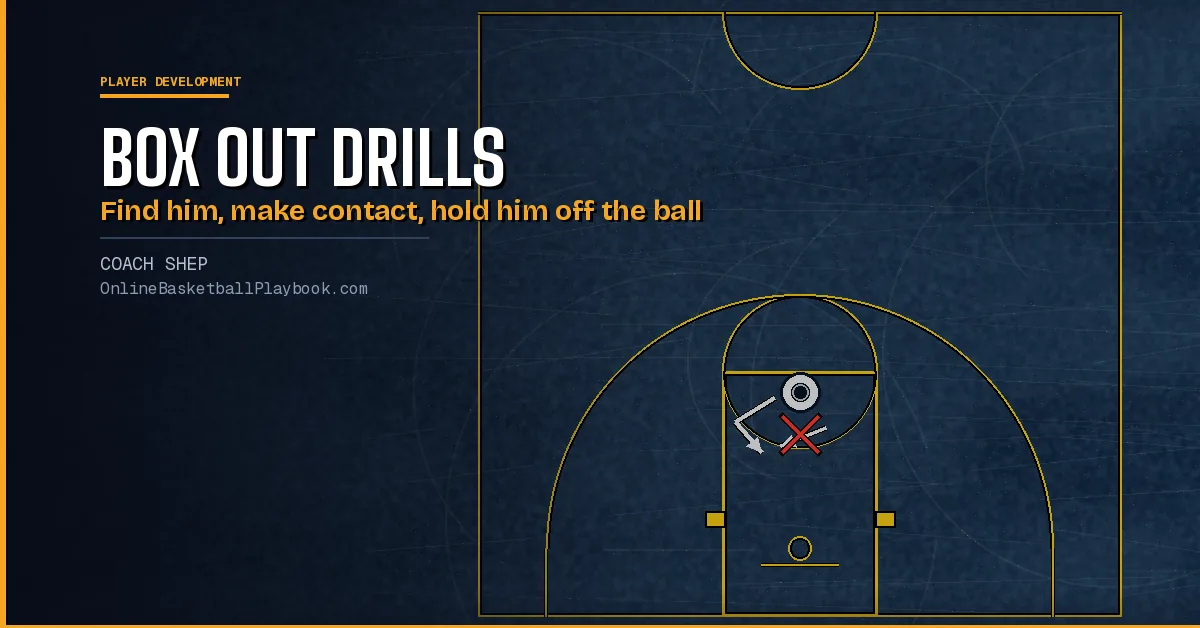
Box out drills basketball coaches run fall into a short ladder. First comes footwork with a partner who cooperates, then contact against a player who tries to get around, then box-outs after a shot, and last scored games.
This page is about the box-out itself. The technique is explained on box out in basketball, and the wider menu of scored rebounding games, War drill and transition drills is on rebounding drills. Where the hold times and the footwork differ, the options are listed side by side, and youth box out drills are marked.
The Box Out Drill Ladder
| Stage | What the drill trains | Drills on this page |
|---|---|---|
| Footwork and contact | Turn, step across, stay low and wide, keep contact | 1-on-1 Box Out, Circle Challenge, Butt in the Gut |
| After a shot | Find the man at the release, then box | Box Out the Shooter, Close-Out and Box-Out, 3 Person Shooting |
| Help side | Find a man who is not next to you | 2 on 2 Help Side Block Out, Cross-Box, Numbers Game, 3 on 3 Rotate the Box |
| Games | Hold the box out under pressure | Outside Shot Blockout, Rebound by Numbers |
Footwork and Contact Drills
Start with footwork against a partner who cooperates, then add contact. The defender turns, steps across, stays low and keeps his feet moving.
1-on-1 Box Out. Two players face each other two to three feet apart, and a ball sits five to ten feet behind the defender. On the whistle the defender tries to keep the offensive player from the ball for three seconds. The offensive player must not dive.
- Step across. Step the near foot across the body to the outside of the offensive player's foot.
- Drop into contact. Drop the other foot to the outside of his other foot for full contact.
- Stay low and wide. Keep the feet wider than the opponent's, elbows out but not swinging, and slide the feet to keep contact.
- Pay for a miss. A miss costs the defender push-ups, sit-ups or a run.

1 on 1 Fundamentals. One defender, one offensive player and a coach with the ball. The offensive player plays soft at about a quarter of full speed. The coach shoots, the defender boxes out, attacks the ball, chins it and outlets to the coach. The drill stays non-competitive so new skills can be learned. Flip the roles so the offensive player can learn the spin move against a light box-out.
Circle Challenge. Two size-matched players stand back to back in a circle and try to push each other out using box-out and post-up stances. The cues are:
- Legs shoulder-width. Bent knees and a straight back.
- Hands up. About shoulder height, just outside and slightly ahead of the shoulders.
- Pull the chair. The phrase that sets the stance.
- Winner stays in. The winner stays in the circle.
- Run the whole team. Open the circle to the whole team so small players practice against bigger ones.
Win the footwork first, then add the fight.
For the circle drills with a ball in the middle, see the table of holds on rebounding drills. The holds run from a count of five to a count of three, and Skip Prosser's holds for three.
Youth Box Out Drills
Youth players learn contact first, then the close-out. A defender who does not touch the offensive player will not know which way he is going.
Butt in the Gut (beginner youth). The ball sits on the free-throw line. The defender starts with his heels on the circle and the ball behind him, and the offensive player stands in front of him. On the coach's "go" the defender turns with a front pivot or a reverse pivot, whichever he prefers, and puts his backside into the offensive player's midsection.
The offensive player tries to get around and touch the ball, and wins if he does within five seconds. The drill stresses contact.

- Move up to the close-out. The intermediate level is a close-out and box-out drill.
- Add a pump fake and a dive. This is the advanced level.
- Teach a "shot" call and a chopped shoulder. A 12-week youth plan builds both.
The wider youth set is on rebounding drills. For youth practice structure see basketball practice plan. Make every young player touch his man before he looks for the ball.
Box Out After a Shot
After a shot the defender finds the man at the release, then boxes.
Box Out the Shooter. A shooting line stands on the wing and the box-out line at the free-throw line. The first defender defends the wing shooter and lets him shoot. As the shot is released the defender checks the shooter, goes to the ball and gets the rebound, even if the shot goes in. The shooter tries to rebound, but no second shots are allowed.
- Pay for the offensive rebound. If the offensive player gets it the defender does five push-ups.
- Pay for a bad outlet. A bad outlet pass costs the passer five push-ups too.
The coaching point is the perimeter box-out. Do not use the under-the-basket seal on a player out on the perimeter, because he gets around you or you foul.
- Find and check him. Check him with a forearm.
- Arc him outside. If he tries to go around, arc him outside, then pursue the ball.
- Switch to the standard block out. Do this if a stronger man pushes you into the paint.
- Go to the nearest elbow. Do this if he releases to half court as a safety.

3 Person Shooting. Groups of three, a shooter, a passer and a rebounder. The passer passes to the shooter, closes out and then must box out the shooter. The shooter follows his shot. It combines shooting technique, the closeout and the box-out in one rep.
Close-Out and Box-Out (youth). Two offensive players stand about twelve feet from the basket in a catch-and-shoot position. When the coach passes to one, the defenders close out. The defender on the shooter gets a hand in his face and then boxes him out, and the other defender boxes his man. If the defense gets the ball the drill is over. If the offense gets it they try to score.
Close-out, cross and box (UCLA women). X1 starts under the basket, closes out on the wing shooter, then sprints over to box out a second offensive player and rebounds the first player's shot. He speed dribbles up the floor, passes to the coach and finishes with a pull-up jumper at the free-throw line. It is good for conditioning. Find your man at the release, every shot.
Help-Side and Cross-Court Box Outs
The man a defender has to box is often not next to him. These drills train the search: slide with the pass, find the man, make contact.
Cross-Box. Four players, two on offense and two on defense. An offensive player stands on each block with a defender between him and the basket. On the shot the defenders sprint to the opposite block and box out the other player. If the offense gets the rebound it tries to score, and the drill runs until the defense secures the ball. The point is making contact to slow the offensive player down.

2 on 2 Help Side Block Out (Skip Prosser's competitive rebounding drills). Slide with the pass into a denial or help stance, then find the man and box. Meet the cutter outside the lane and keep him "outside of our house."
3 on 3 Rotate the Box (Skip Prosser). The man you box out is not next to you, so defenders talk, find him, make contact and push back, and do not go for the ball until it touches the floor. The exact rules come second-hand, so treat these as an account of Prosser's drills.

Numbers Game. Two teams of five at opposite ends. The offense has ten seconds to get open, and if a player does, the player at the free-throw line can pass to him. If nobody gets open the free-throw-line player throws up a missed shot. Offensive players hold up fingers on one raised arm.
- Win the rebound. Whichever team gets the rebound earns a point.
- Name the fingers. The defense earns another point if both defenders can say how many fingers their man was showing.
The point is that a defender must find his responsibility to box him out. The coach reminds players to put a hand in the passing lane and go up with two feet and arms extended. Find the man before you look for the ball.
Scored Box Out Games
Put a point on the box-out so the hold matters under pressure.
Outside Shot Blockout. Half-court 3 on 3 or 4 on 4, played to ten.
- No shots in the lane. An offensive rebounder cannot put the ball right back up inside.
- Score both ways. A score is a point and a defensive rebound is a point.
- Keep the ball after a make. The offense keeps it.
- Offensive rebound point. Discouraged but allowed as an option.
- Call your own fouls. If the defense fouls, the offense has to call it.
Rebound by Numbers (Skip Prosser). In a zone setup the coach calls two numbers, and those two offensive players go for the rebound against defenders who have to box. For Rack Up, Seesaw, Let It Bounce and the War drill see rebounding drills, and for the other end of the floor see offensive rebounding drills and how to defend the offensive rebound.
Get the next coaching guide in your inbox
One email when a new guide or diagram set goes up. Free.
Where Coaches Disagree
Coaches split on whether to hold or go. The drill you choose depends on which box-out you teach.
| Approach | What the defender does |
|---|---|
| Hit and hold | Seal and keep the man off the ball for a count, or until the ball hits the floor. Counts in the drills above run from three seconds to five |
| Hit and go | Make contact, then release and attack the ball |
| Hold near the rim, go farther out | Hit and hold close to the basket, hit and go from midrange and out |
| Check and arc on the perimeter | Forearm check, arc him outside and pursue the ball |
| Cut out | Meet the man outside the lane and knock him back, as in Skip Prosser's cut-out War drill |
A hold drill and a go drill train opposite habits, so pick the approach that matches the one you teach in games. Whichever you choose, tell players what a legal box-out looks like.
- Keep both hands up. Never wrap the opponent.
- Know the fouls. Hooking, wrapping, holding a jersey and pushing with the hands.
Pick one box-out and drill only that one.
Want the printable playbook packs?
OBP Pro members get the premium playbook packs: the zone attack, out of bounds and practice plan PDFs, plus each new pack as it is finished. The membership page lists what is in each one. Or draw your own version free in PlayDraw.
See what OBP Pro includesQuestions Coaches Ask
What are the best box out drills in basketball?
For footwork, 1-on-1 Box Out and Circle Challenge. For contact after a shot, Box Out the Shooter. For help-side work, Cross-Box and the 2 on 2 help side drill. For a scored game, Outside Shot Blockout.
What are good youth box out drills?
Butt in the Gut with a five-second hold and a front or reverse pivot, plus the close-out and box-out drill.
How long should a defender hold a box out in a drill?
It depends on the drill. 1-on-1 Box Out uses three seconds, and Butt in the Gut uses five. The circle drills with a ball hold from three to five.
How do you teach players to find their man on the weak side?
Use Cross-Box and the help-side block out so the defender has to travel to a man who is not beside him.
Should every player box out?
Yes, because one missed box-out wastes the other four. Perimeter defenders check with a forearm and pursue the ball, and near the rim you hold and hit and go farther out.
More Guides From This Batch
- Basketball Warm-Up Drills for Practice, Games and Youth Teams
- Moving Screen Basketball: The Rule, the Call and How to Coach It
- Down Screen Basketball: How to Set It, Use It and Read It
Back to Basketball Player Development and every Player Development page.
Keep Building
Related breakdowns
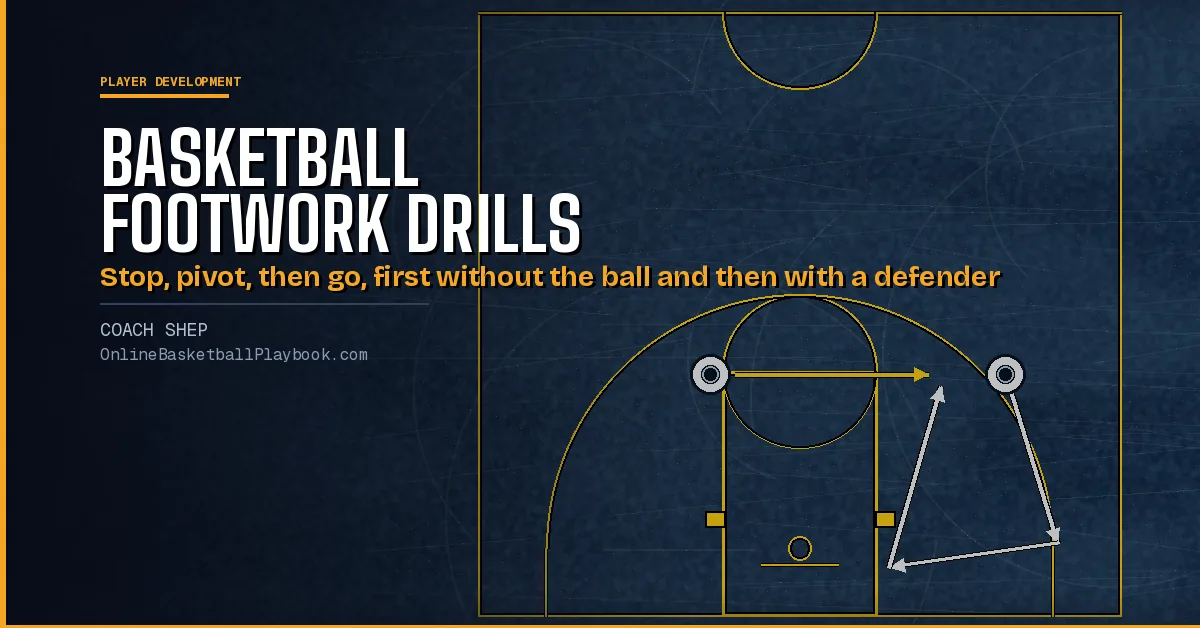
Basketball Footwork Drills for Teams and Individual Workouts
Basketball footwork drills for stops, pivots, cuts, jab moves and defensive slides, from the box drills to 30-minute workouts and where coaches differ.
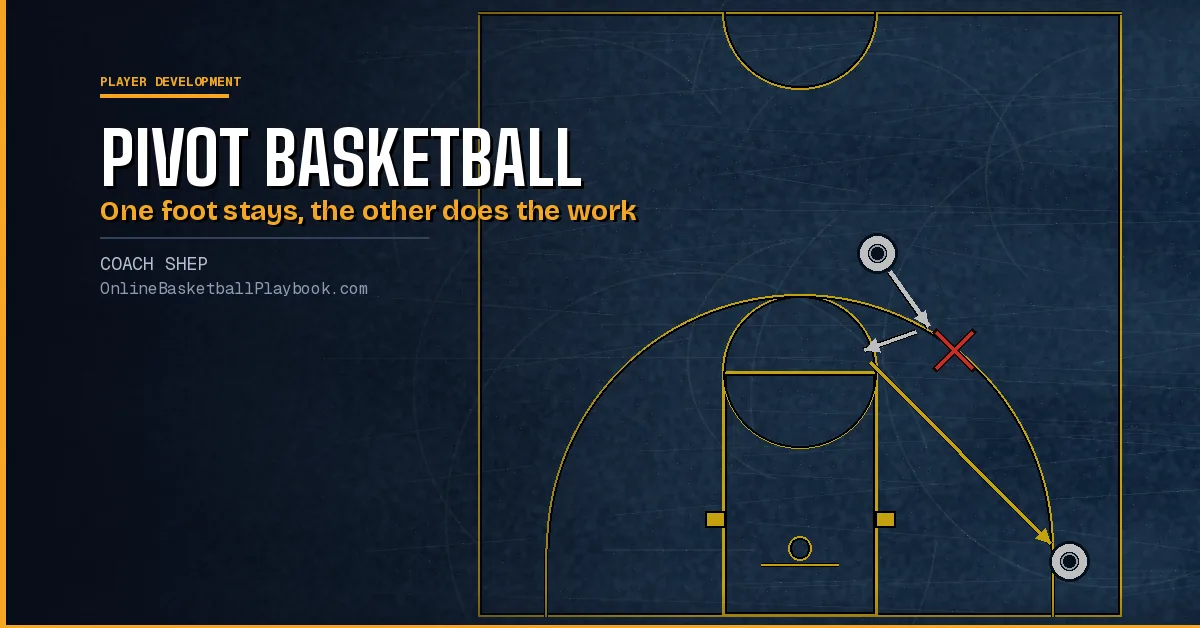
Pivot Basketball: Pivot Foot Rules, Footwork and Drills
What a pivot means in basketball, which foot is the pivot foot after each stop at every level, front and reverse pivots, the inside pivot on the move and the drills.
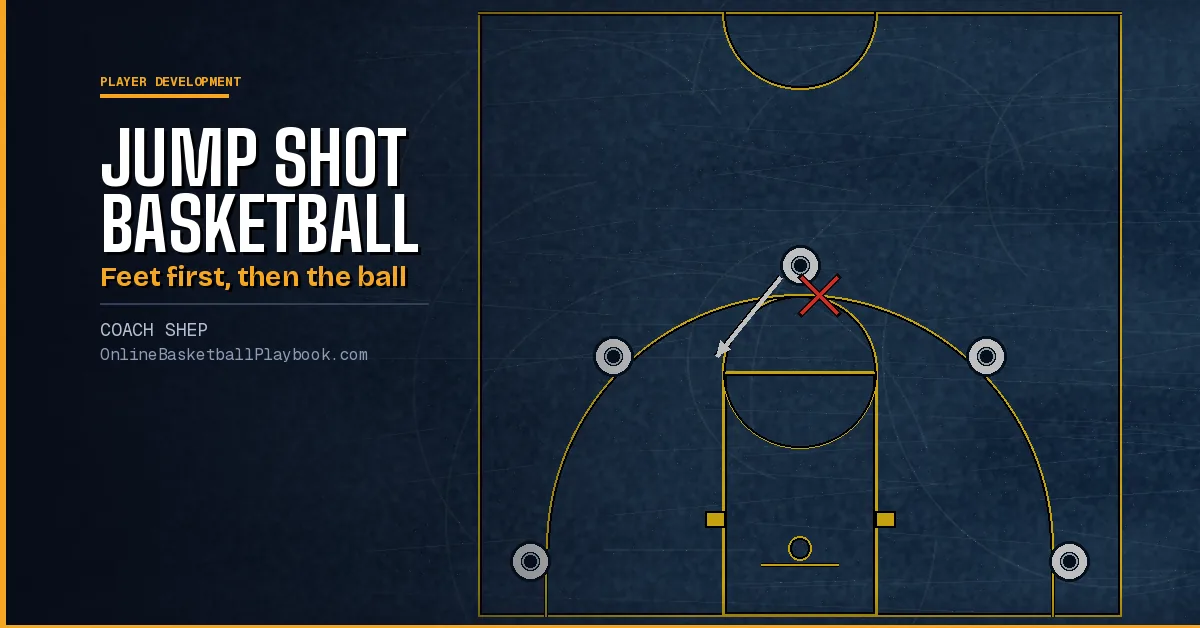
Jump Shot Basketball: Footwork, Release and the Step-Back Jumper
The jump shot in basketball from the feet up: catch footwork, the lift and release, shooting off the catch or the dribble, the step-back jumper and fixing a miss.