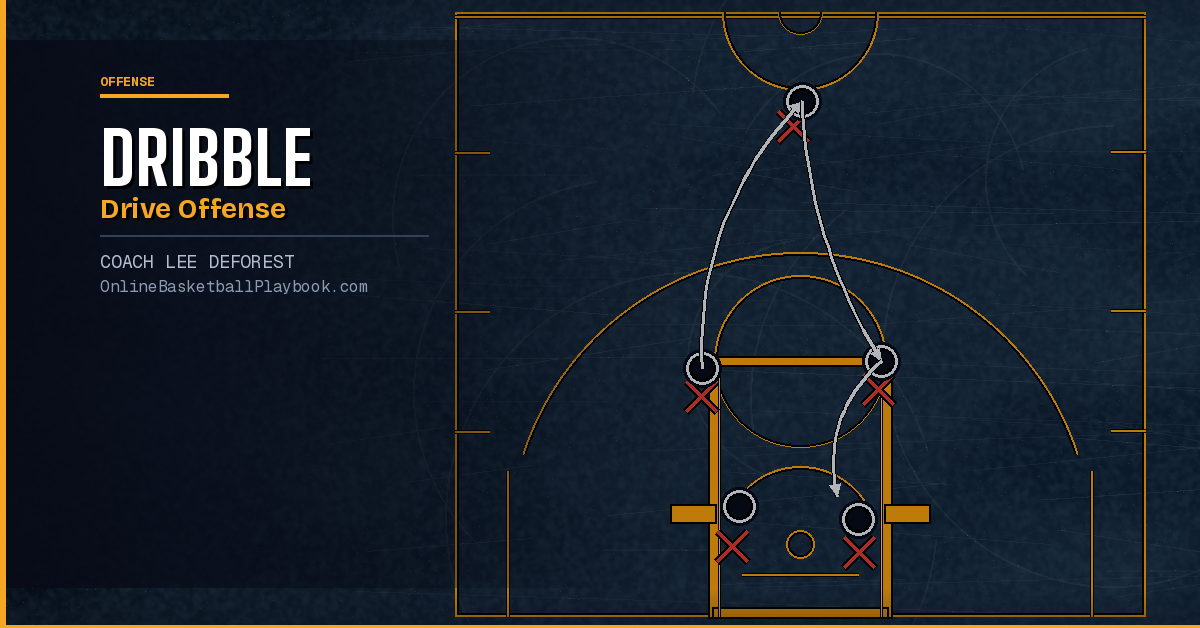

The Dribble Drive Offense attacks the rim through an empty middle, hunting layups and kick-out threes while treating the mid-range jumper as a shot worth avoiding. Created by Vance Walberg, made famous by John Calipari at Memphis.
What the Dribble Drive Offense Is
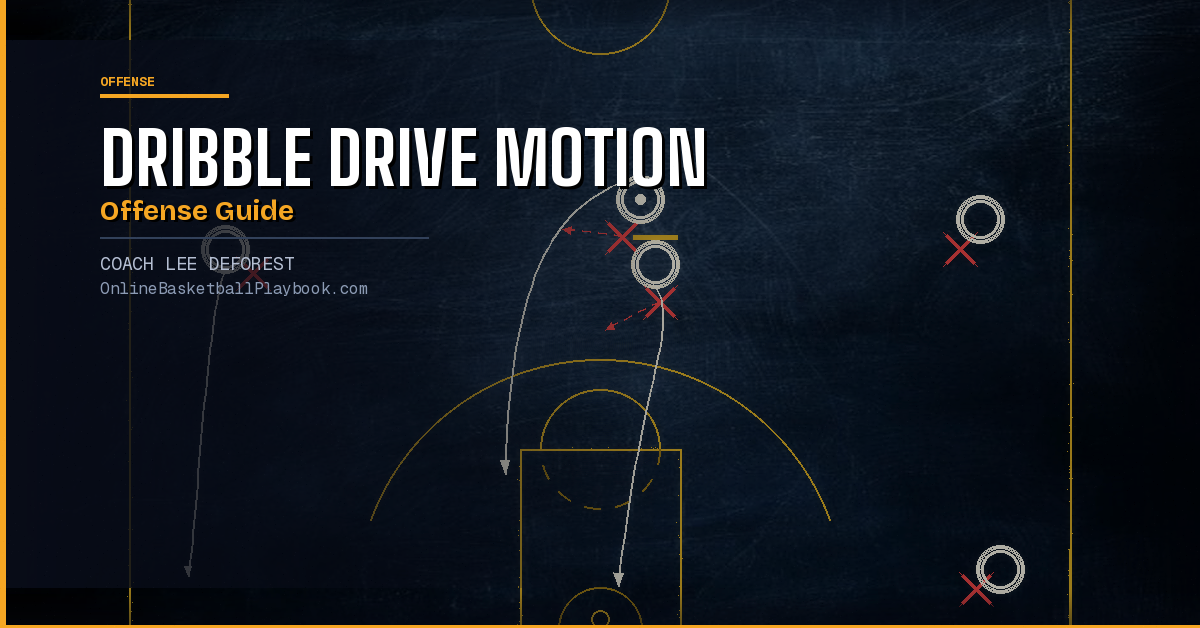
The Dribble Drive Motion (DDM) is a 4-out, 1-in motion offense built around one core idea: if you empty the middle of the floor, guards with the ball can attack the rim in a straight line rather than threading between bodies. Vance Walberg developed it at Fresno City College, refined it across multiple stops, and John Calipari brought it national attention during his Memphis tenure. Since then, versions of DDM have spread through high school and college programs at every level.
The system is not a set play. There is no script telling players where to be on every catch. Instead, DDM is a read-and-react framework built on repeatable decision cues — the kind that can be drilled until they become automatic. Players learn to recognize what the defense is giving them, then execute from a short menu of trained responses. That simplicity is the point. The fewer decisions a player has to make, the faster and more accurately they make them.
The offense works equally well at the high school, college, and professional levels because it is built on universal math rather than personnel advantages. It targets Dean Oliver's Four Factors — effective field goal percentage, offensive rebound rate, turnover rate, and free throw rate — simultaneously on both sides of the ball. When it is installed correctly, driving to the rim does not just improve your team's shot quality; it forces the defense into scramble mode and degrades theirs.
Spacing and the Empty Middle
DDM's spacing is what makes the driving lanes available in the first place. The four perimeter players set up roughly 15 to 18 feet apart. That gap is deliberately chosen: wide enough that a single help defender cannot guard two players at once, but close enough that a kick-out pass is catchable and shootable without a pump fake or reset step.
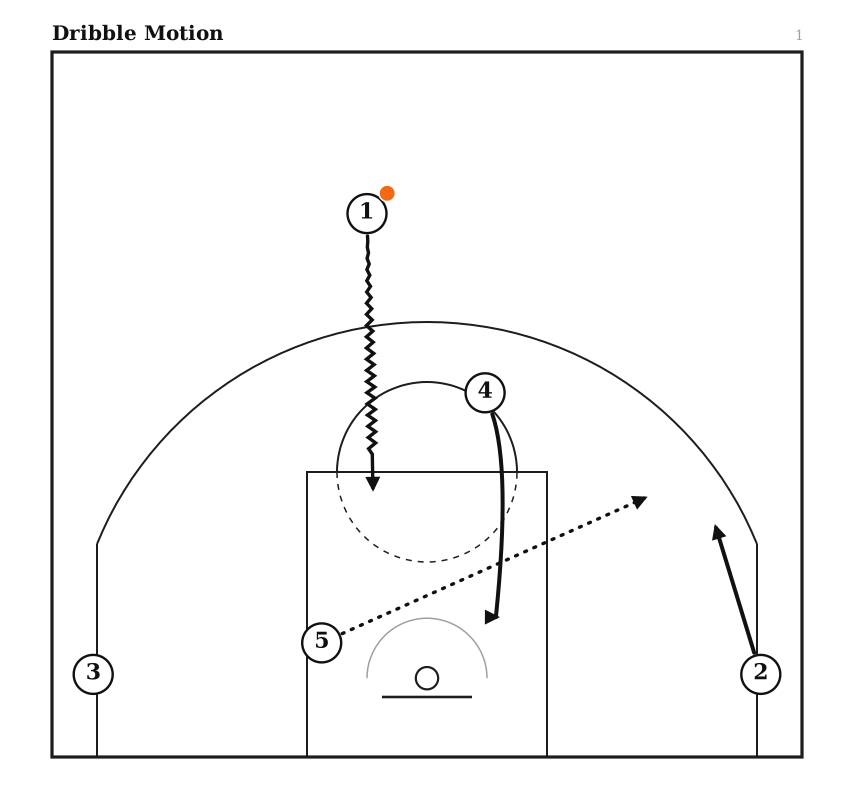
The lone post player — typically the 5 — starts opposite the ball and clears to the backside block on every drive. The post does not follow the ball. The post does not set up in the middle. Their job is to keep the lane empty so the driver has a straight path to the rim. On any dribble pickup in the drop zone, the 4 flashes to the opposite elbow, simultaneously clearing the backdoor cut lane for the ballside corner player.
The named zones make the spacing decisions concrete. The Drop Zone runs from the free throw line elbow area out roughly four feet beyond the lane on each side. The Drag Zone is the area closer to the basket, where the driver is pulling help defenders toward the rim. The Rack Zone is the rim itself — the only acceptable outcome there is a layup or drawn foul. Each zone has its own decision rule, which is why the system can be taught consistently across age groups using the same vocabulary.
The operative test inside the Drop Zone is not where the ball handler's feet are — it is whether their shoulders have cleared the defender's shoulders. If yes, they push through to the rim. If not, they pick up the dribble immediately, use a 360-degree pivot to survey the floor, and initiate a kick-out. This body-position decision trigger converts a vague "attack!" instruction into a repeatable, self-administered cue that works the same way for every player on every possession.
Penetration Reads: The Five-Level Hierarchy
On every dribble drive, the ball handler works through the same sequential read. Skipping a level is a mistake. The five reads, in order:
1. Finish at the rim. If the lane is clear and the body position is right, score. This is the whole point of the offense, and players who bypass this level by kicking out early cost the team the best shot available.
2. Draw the foul. Walberg's teaching is explicit here — "take a bump and create a bump." Players are coached to invite contact rather than avoid it. The "clipping the hip" cue means shoulders face the rim on the drive, not angled. A player going directly to the basket generates contact; a player driving at an angle stalls out and settles.
3. Dish to the roll man. If a big has set a ball screen and is rolling, a well-timed drop pass to the roll man keeps the defense in a losing position. This level applies primarily when DDM incorporates its ball-screen series, not in free-form drive situations.
4. Kick to the open corner. When help has committed to stopping the ball, a quick kick to the strong-side corner puts a shooter in a catch-and-shoot position before the defense can close out. The ballside wing reads their own defender: open means come up two slides for the kick, denied means cut backdoor along the baseline. The corner player's positioning determines which option is available.
5. Skip to the weak side. When the corner is covered and no roll man exists, a high, diagonal skip to the weak-side wing resets the attack from a new angle. Passes off a jump stop generate better decisions — Walberg teaches all kick-outs and skips from a jump stop, not off the dribble.
The hierarchy exists because most DDM breakdowns trace to players jumping to step 4 or 5 before attempting steps 1 or 2. Drilling the sequence explicitly — naming it before live reps, having players recite it — is how you install it as a reflex rather than a thought process.
Attack the gap, then read. Drive a tight defender, shoot vs. a sagging one; once help stops the ball, jump-stop and kick, drop, or dump to the open man.
— Vance Walberg / Dribble-Drive Motion, Basketball Vault
Shot Diet and the AASAA Mentality
The Dribble Drive Offense has a hard shot diet built into its design. Spot-up threes and layups are the only acceptable shots. Mid-range jumpers — pull-ups, floaters off the dribble, contested runners — are treated as the equivalent of a turnover because they produce the same result: a poor possession that doesn't generate free throws or offensive rebound opportunities.
Walberg encodes this with the "Black down" call: layups only, pass until the team gets one, no threes until the defense breaks. That call exists because the system's shot discipline can erode late in games or against scrambling defenses. Having a named call that immediately overrides individual preferences gives coaches a way to reset without burning a timeout.
Shot-selection rights are also earned rather than assumed. Walberg's Green Light Shooter standard ties shot freedom to a measurable threshold in the shooting series: under 60 made threes earns a two-miss limit in games, 60 to 89 earns open three attempts, and 90 or more made threes earns full green light — shoot any time open, including during a run. That standard removes subjective coaching decisions from the equation. Players know exactly what they have earned and what the shot limits are.
The AASAA mentality — Attack, Attack, Skip, Attack, Attack — encodes the possession philosophy into a single repeatable cue. Every player catches with an attack intention. If they cannot attack, they skip to the next spot and attack from there. The skip is not a retreat or a reset of defeat; it is a deliberate recalibration to a better attack angle. Posted in the gym and said before games, AASAA gives players a more actionable instruction than "read and react" because it makes the skip a named, active step in the possession rather than something that happens when the first option fails.
The Four Failure Modes to Coach Out
DDM has predictable breakdown points. Every coach who installs it will see the same four problems appear, usually in the first week of live reps. Naming them, showing film examples, and tracking them as a statistic in practice is faster than waiting for players to self-correct.
Over-dribbling. Players who dribble in place after catching — killing time, looking for a lane that isn't there — destroy spacing. The moment a player catches and stands with a dribble going but no attack intention, they are inviting two defenders to cover one player and eliminating a driving lane. The correction is simple but requires repetition: if you can't attack, skip. Never stand.
Kick-out turnovers. The lateral skip pass at speed is the DDM's highest-turnover moment. A player who picks up their dribble in the drop zone and throws a flat, same-height skip across the lane is throwing it directly into a scrambling help defender's hands. The fix is the jump stop — all passes come from a jump stop, passes to the post are thrown high ("throw a HIGH pass to the 4 on help"), and the passer cuts away immediately after the pass to open the floor for the next drive.
Quick-three settling. A player who catches on the wing, sees a slightly open look, and fires a three before the offense has fully generated its best shot is "settling." The shot may go in, but it bypasses the layup or foul attempt that a one-more-pass continuation might have produced. This is the hardest failure mode to coach because it looks like good offense when the shot goes in. Tracking shot-type data in practice — how many threes came after zero driving attempts — is the only way to keep it visible.
Lane drift. Off-ball players, especially young ones, drift toward the action as a drive develops. That drift collapses the driving geometry, puts the driver in traffic, and eliminates the kick-out option because the drifting player has left their assigned spot. The fix is the "stay in your corner" rule: wings stay wide and read their own defender, not the ball. The only cue that moves them is their defender's position — open means come up two slides, denied means cut backdoor.
Before any live DDM rep, have players recite the five-level drive hierarchy out loud as a group. It takes thirty seconds and it anchors the decision sequence in the front of their mind before they are asked to execute under defensive pressure. Most DDM breakdowns trace directly to players skipping level one or two and jumping to the kick-out before the defense has actually committed.
Installing DDM: Practice and Vocabulary
Walberg's practice doctrine is precise: one offense per day, only three to four set plays total, and 60 to 65 percent of practice time spent in full-court work for reads and conditioning. The conditioning component is not optional — pace and depth are explicit weapons in the system. The offense is designed to out-condition opponents, and that only works if conditioning is treated as a non-negotiable practice investment.
The installation progression runs from 5-on-0 shape work through the Blood drill series. Blood 1 installs the basic drive-and-kick read. Blood 11 adds the backdoor counter. The Scramble drill adds live defense. Each layer is added only when the previous layer is automatic — players who can't execute the right kick in a controlled 5-on-0 setting won't execute it in a scrambling live situation.
The shared vocabulary is what makes the system scalable across a roster. Drop Box, Drive Box, Dead Corner Box, Drop Zone, Drag Zone, Rack Zone — these are not coach-speak invented for one program. They are a consistent map of the floor that every player reads identically. A driver who hears "you're in the Drop Zone" knows exactly what body-position check to apply and what decisions are available. A wing who hears "Dead Corner" knows to stay wide and read her defender. When the vocabulary is shared, coaching corrections become fast and precise rather than descriptive and time-consuming.
For a guard-heavy roster with multiple drivers and no dominant post, DDM is the highest-efficiency option available. The empty middle maximizes what those guards do naturally. The shot diet — mid-range equals a turnover — gives them a hard constraint that builds correct habits without requiring constant individual correction. Install the vocabulary, drill the five-level hierarchy, track the four failure modes, and let the system do the rest.
- Empty the middle on every drive: the 5 starts opposite the ball and bails to the backside block; the 4 flashes to the opposite elbow on any dribble pickup in the Drop Zone — lane stays clear every possession.
- Drill the five-level drive hierarchy before live reps: finish at the rim first, draw the foul second, dish to the roll man third, kick to the open corner fourth, skip weak-side fifth — players recite the sequence before every session.
- Teach the Drop Zone body-position test, not just the floor boundary: "Did your shoulders clear their shoulders?" — if yes, push through; if not, jump-stop and initiate a kick immediately using a 360-degree pivot.
- Use AASAA as the team's verbal mantra: Attack, Attack, Skip, Attack, Attack — post it in the gym, say it before games; the skip is an active recalibration step, not a retreat, and encoding it verbally makes it automatic under pressure.
- Track all four failure modes in practice as named stats: over-dribbles in place, kick-out turnovers, quick-three settles (shot before a drive attempt), and lane drift incidents — what gets measured gets coached out faster.
- Enforce the shot diet with a hard rule from day one: spot-up threes and layups only; mid-range jumpers are tracked as bad shots regardless of outcome so players build the right default habits before live game pressure arrives.
Want more basketball coaching strategies and drills?
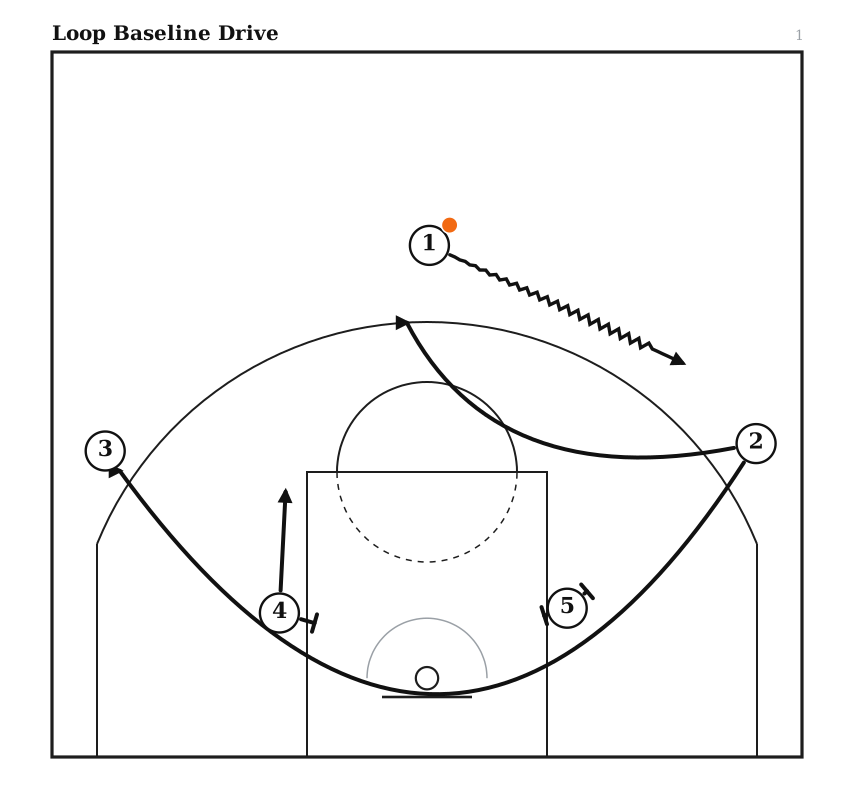
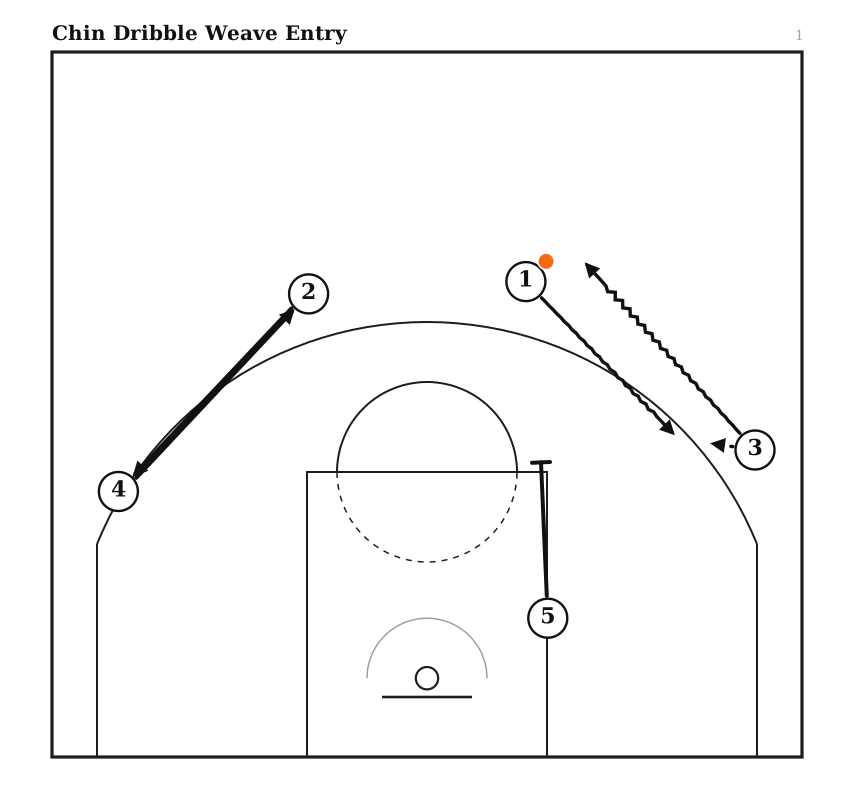
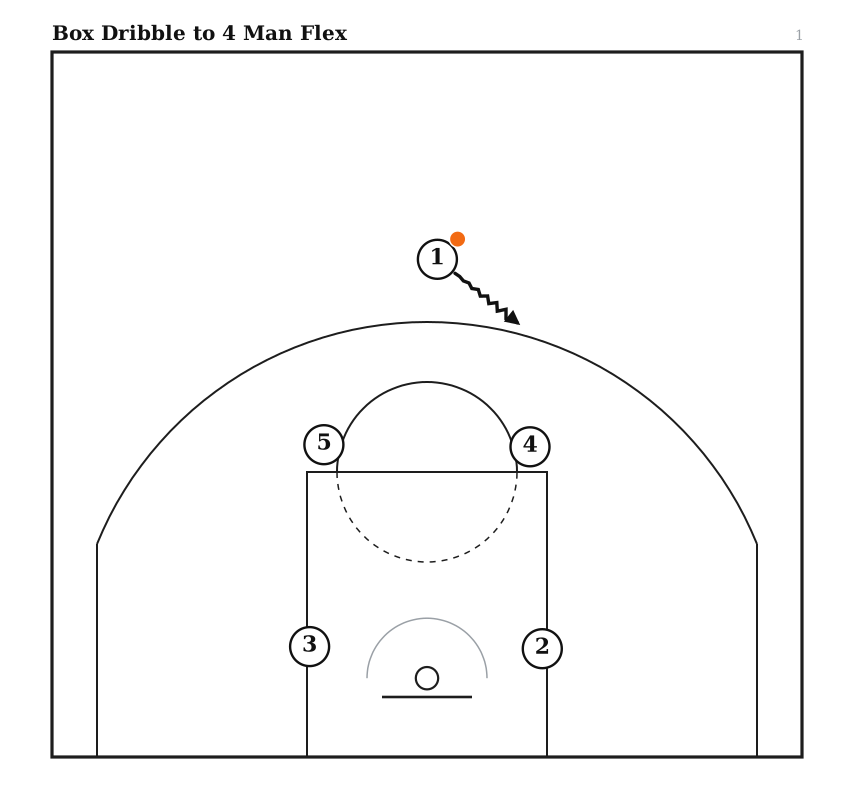
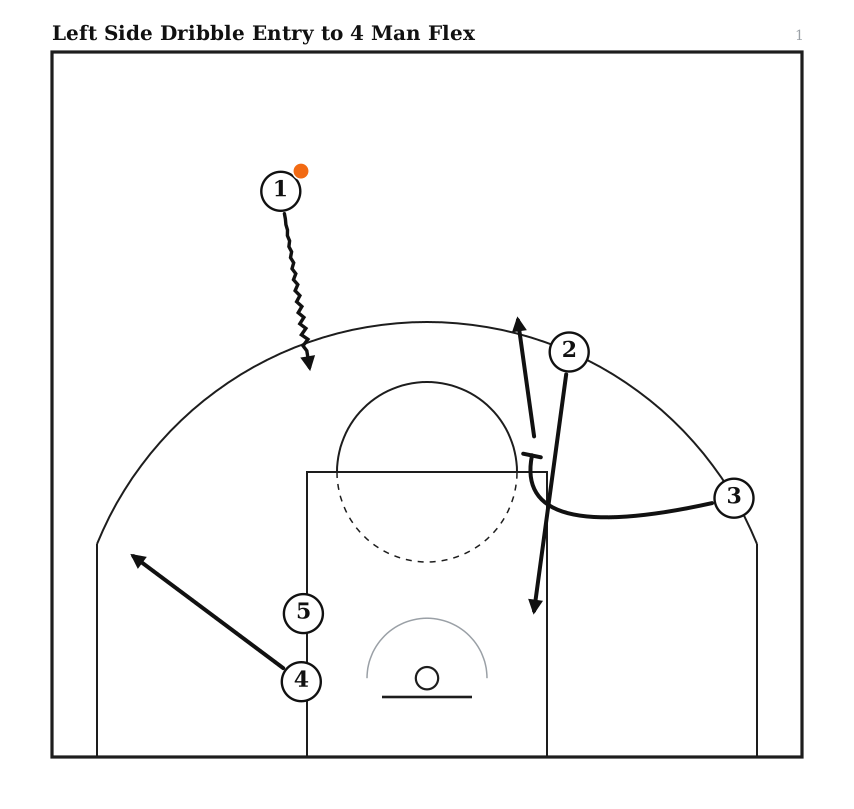
See it drawn up
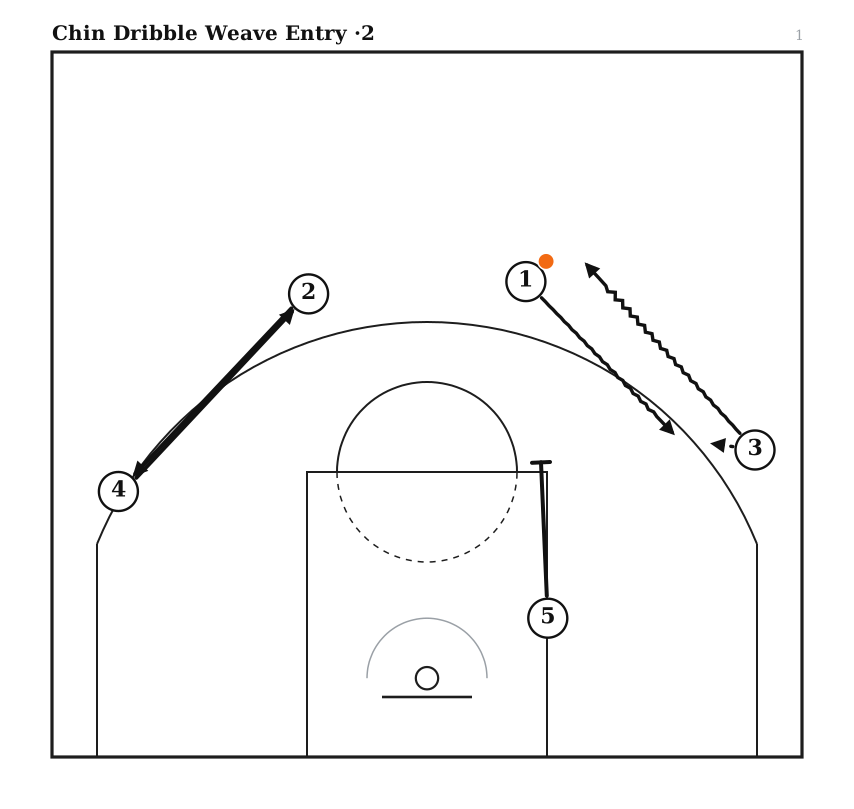
Related diagrams
Keep Building
Related breakdowns
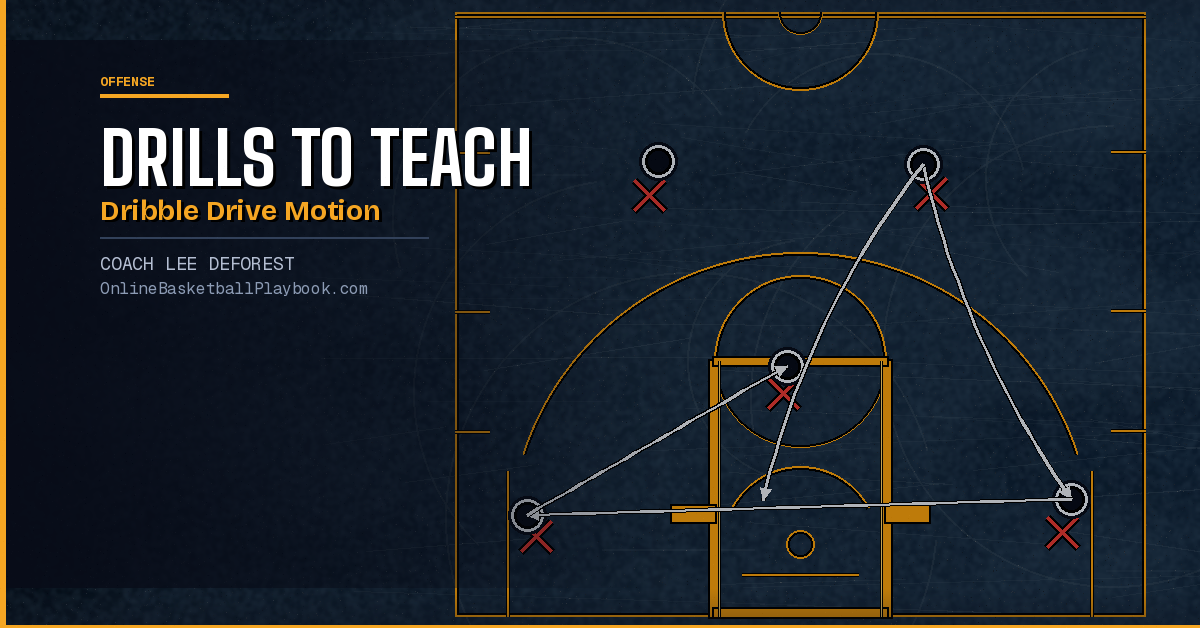
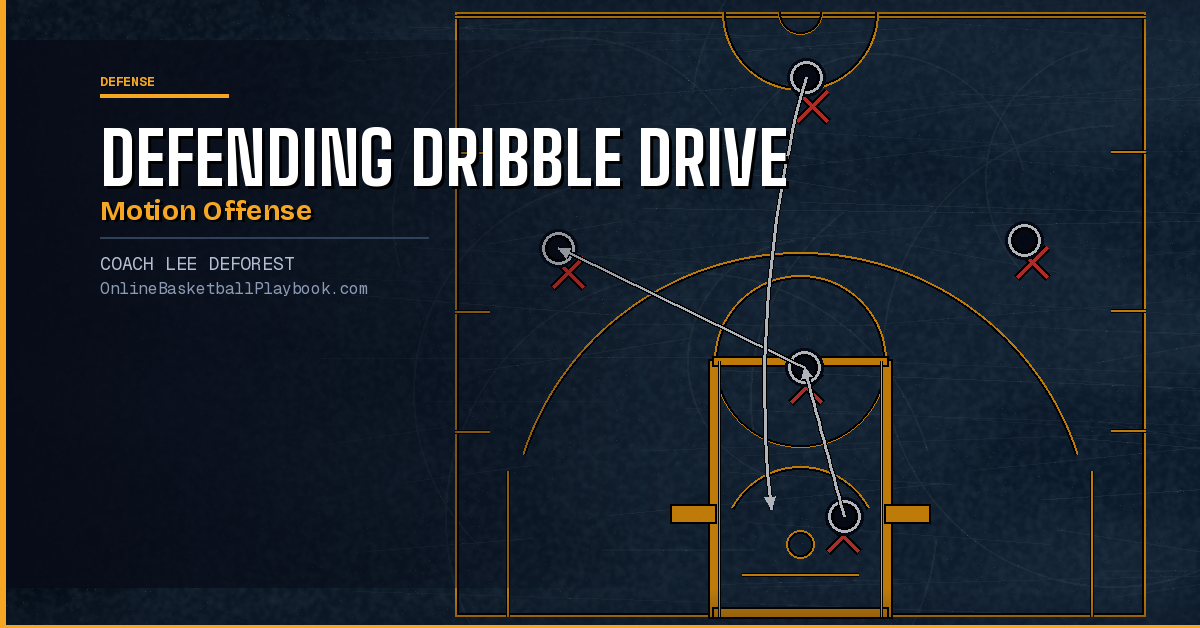
How to Defend the Dribble Drive Motion Offense
How to Defend the Dribble Drive Motion Offense