The usual answer to basketball positions for short people is guard, and for tall players it is the post. That answer is a starting point. At young ages height predicts very little, because nobody knows who will grow. Skills decide where a player ends up. This page covers where each size usually starts, how a short player wins inside and out, how a tall player avoids getting stuck on the block, and why coaches teach every young player every position.
Basketball Positions by Size at a Glance
| Position | Usual size | What matters more than height |
|---|---|---|
| Point guard (1) | Usually the smallest, quickest player | Quickness and decisions |
| Shooting guard (2) | Varies at the youth level | Shooting, moving without the ball, defending |
| Small forward (3) | Wing size | A full skill set |
| Power forward (4) | Often one of the biggest kids at the youth level | Rebounding, screening and a jump shot |
| Center (5) | Usually the tallest player on the roster | Post moves with a counter, free throws, conditioning |
Basketball Positions for Short People
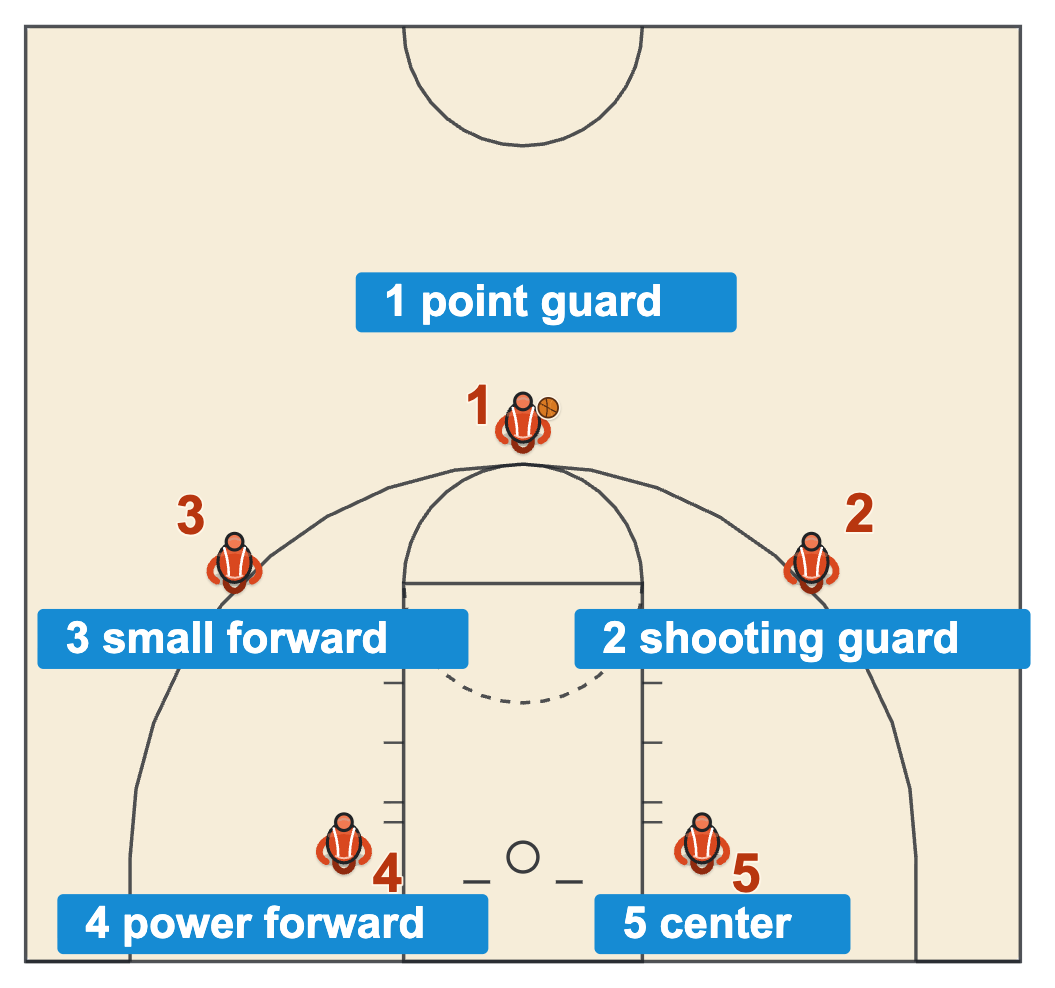
Most short players start at guard. At the point guard spot, quickness and decision-making matter more than height. The 1 brings the ball up against pressure, runs the offense and creates for teammates, and none of that needs size. At the shooting guard spot, height matters less at the youth level if the player can shoot, move without the ball and defend.
A short guard still has to finish at the rim against bigger players. Some point guard programs set aside a full day for undersized finishing. The work is finishing moves that avoid a shot blocker, such as the floater and the reverse layup. See Finishing at the Rim and Point Guard Play.
The Undersized Post
Short players do not have to stay on the perimeter. An undersized post can win if he changes the fight. One approach leans into contact. The other avoids it. Coaches teach both.
Win the contact. Accept contact on every possession. Use a lower center of gravity to get the hips under a bigger opponent's hips and box out early, before the ball comes off the rim. Play with a nonstop motor, get up and down the floor, and stay in better shape than the bigger player so he tires first. Learn post moves with counters, such as a jump hook off either hand, because footwork can make up for size.
Win with separation. Move away from the rim, where a bigger defender does not want to go. Become a good shooter from the free-throw line, the elbows, the short corners and the corners, and drill the catch, pivot and shoot every day. A post who can make threes pulls the rim protector out of the paint.
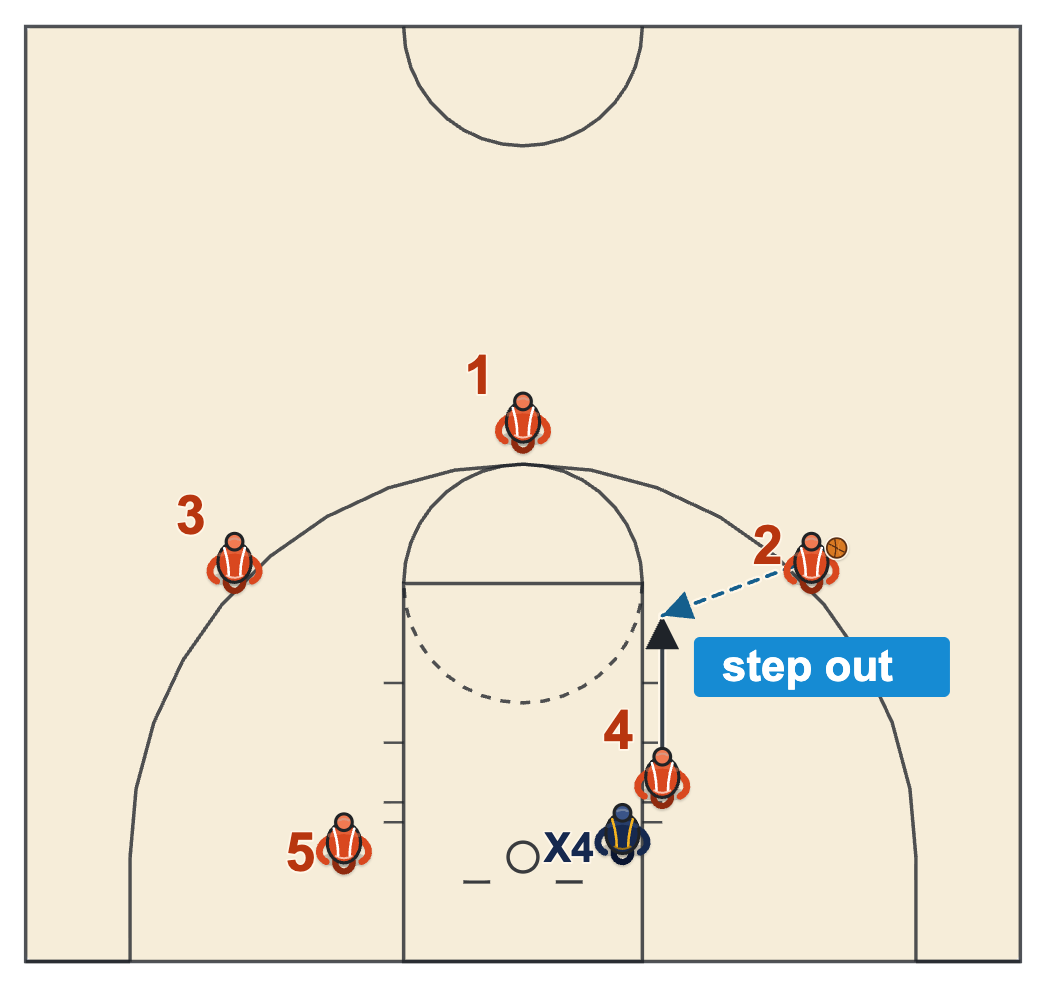
The step-out move works well here. The post starts above the block. As the ball goes to the wing, he steps out toward the passer, catches, reverse pivots to face the basket and shoots in one quick motion. He keeps the ball high and does not drop it to a low pocket first.
After any catch away from the rim, the undersized post has five reads in order:
- Pivot and shoot.
- Shot fake and drive if the defender closes out hard.
- Cut through to make space for a teammate.
- Face up and look for a high-low pass to a teammate posting inside.
- Against a zone, cut into a gap just before or just after the zone shifts.
More post work is on Basketball Post Moves and How to Post Up. Boxing out bigger players is on Box Out in Basketball.
Get the next coaching guide in your inbox
One email when a new guide or diagram set goes up. Free.
Basketball Positions for Tall Players
Tall players usually start at power forward or center. At the youth level the center is often just the tallest player on the roster, whatever his height. The 4 is often one of the biggest kids, and that should never be treated as permanent.
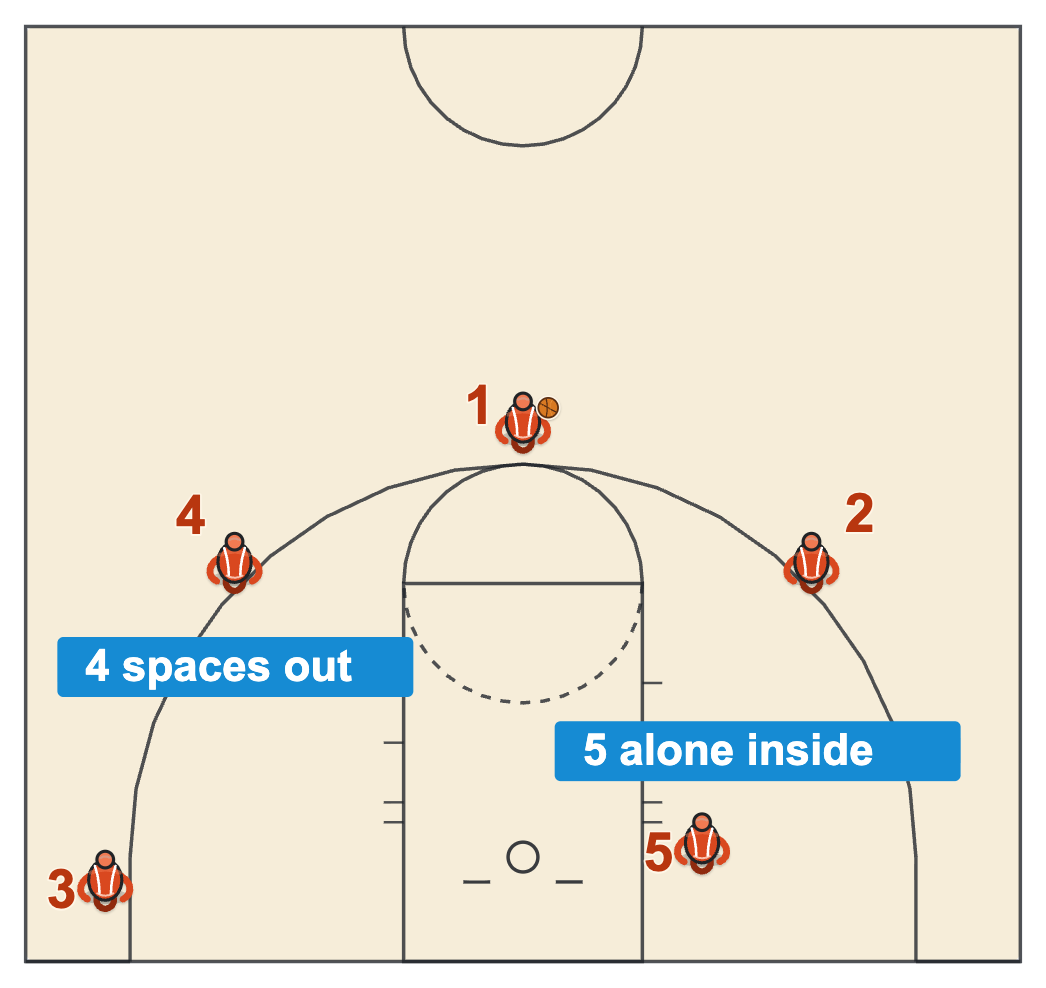
The biggest mistake with a tall young player is locking him on the low block. Height at 12 does not predict height at 18. A tall 12-year-old who only learns post moves can reach high school without a handle or a jump shot once the other kids catch up. The modern big needs a face-up drive and a pick-and-pop or short-roll game, not only back-to-the-basket moves.
Tall players have more options than the post:
- Stretch four or stretch five: a big who shoots from three and pulls a slow defender away from the rim.
- Point center: a center who runs the offense from the post the way a point guard runs it from the top.
- Small forward: a wing with size. Treat the 3 as a skill set, because a wing-sized 12-year-old may end up a guard or a post.
More on each spot: Power Forward, Center and Small Forward.
Why Young Players Learn Every Position
Many coaches refuse to split young players into bigs and smalls. Nobody can predict how a player will grow. Players who were short as kids and learned guard skills keep those skills after a late growth spurt. A short player who learned to post up can use it later against defenders who have never guarded it.
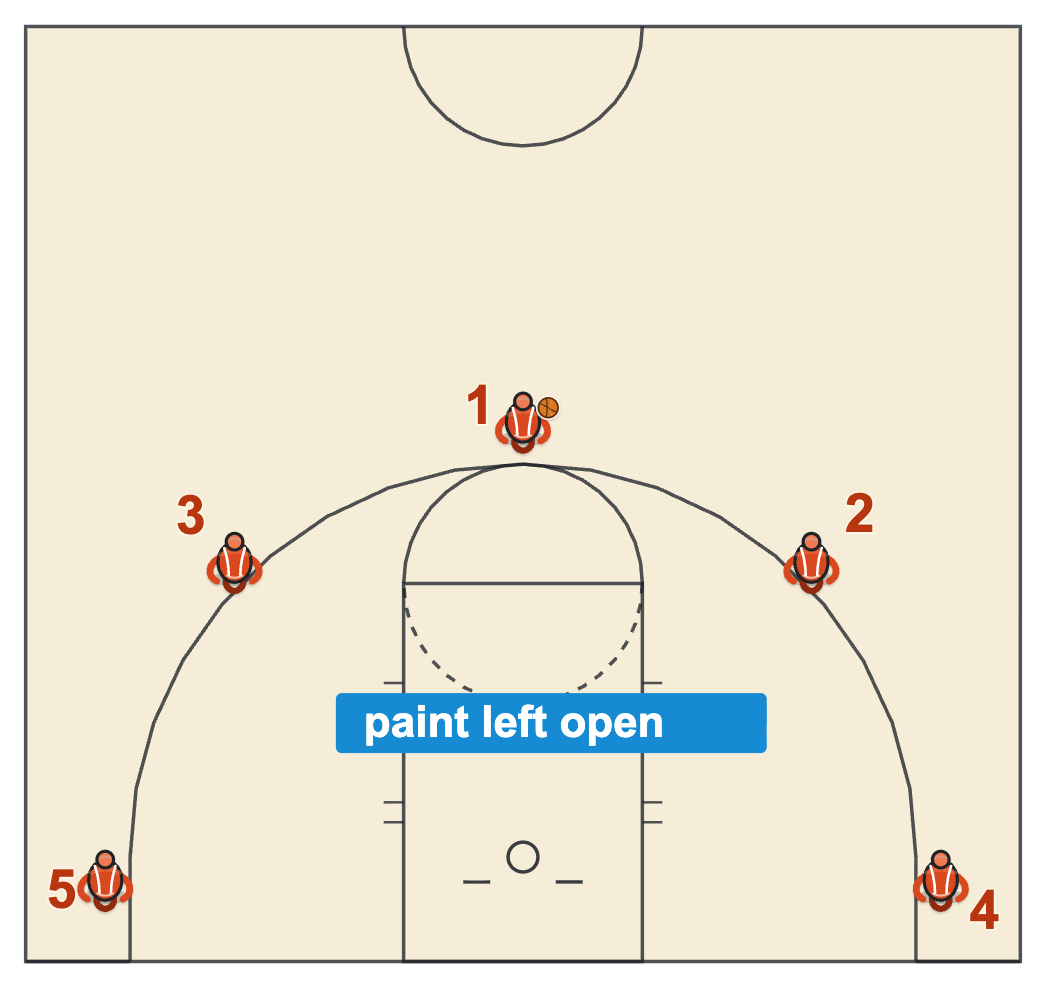
One common age guide works like this. Positions barely exist from 7 to 12. From 12 to 14, lean into a player's tendencies without locking him in. From 14 to 18, real specialization makes sense once body types are clearer. Coaches split on how far to take it at the high school level. Some say positionless play is impractical there, because most rosters are specialists and the system should fit the players. See Youth Basketball Specialization and 5 Out Offense.
How to Coach Each Size
- Do not split practice into guard lines and post lines before high school.
- Give every tall player ball handling and shooting reps every week.
- Give every short player post reps and teach him to box out bigger players with a low base.
- Teach the undersized post to shoot from the elbows and short corners and to step out.
- Teach short guards finishes that avoid the shot blocker.
- Run a positionless offense like 5-out with young teams so every player fills every spot.
- Choose the position by what the player does well now, and revisit it every season.
Questions Coaches Ask About Positions and Height
What is the best basketball position for short people?
Point guard or shooting guard is the usual fit, because quickness, decisions and shooting matter more than height there. Short players can also play the post if they win with contact, motor and a jump shot.
What position should a tall player play?
Usually power forward or center, but a tall player should also learn to handle, pass and shoot so he can play as a stretch big or a point center.
Can a short player play center?
Yes, especially at the youth level. An undersized post wins by accepting contact, boxing out early with a low base, and shooting from the elbows and short corners to pull the bigger defender out.
At what age should a player pick a position?
Many coaches say not before high school. Positions barely exist from 7 to 12, tendencies can be leaned into from 12 to 14, and real specialization fits 14 to 18.
Does height decide basketball positions?
It is a starting point. Footwork, a few dependable moves and shooting decide more, and a young player's height can change a lot by 18.
The full breakdown of all five spots is on Basketball Positions, and every rules and terms page sits under Rules and Terms. Shooting work for every size is on Basketball Shooting Form.
Want every diagram, printable?
OBP Pro members get the full diagram files for every alignment on this page, ready for a practice binder or a parent meeting. $9 a month. Or draw your own version free in the play drawer.
See what OBP Pro includesMore on Positions
Back to Basketball Positions and every Rules and Terms page.
Keep Building
Related breakdowns
Basketball Positions: What Each of the 5 Positions Does
The point guard, shooting guard, small forward, power forward and center, what each one does on offense and defense, and when to ignore the numbers.
Basketball Terms and Definitions for Coaches and Players
Basketball terms and definitions in plain English, grouped by court areas, positions, offense, defense, rules and stats, with links to the page on each topic.
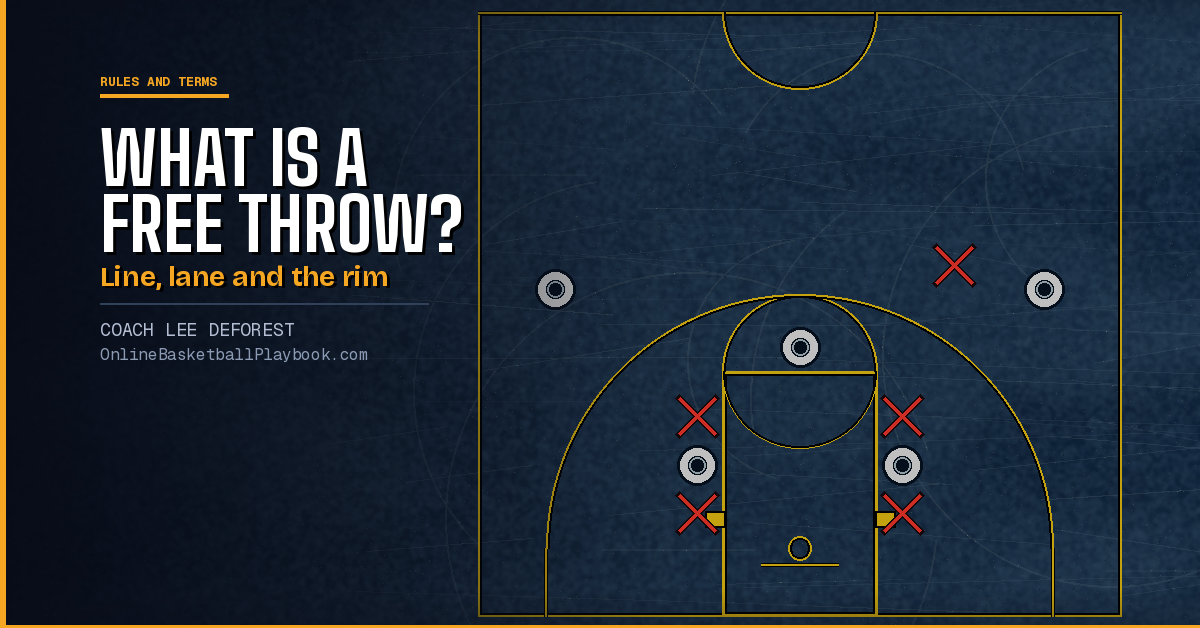
What Is a Free Throw in Basketball? Rules and Technique
What a free throw is, how long the shooter has, why the try must touch the rim, who stands where, the bonus by level and a short guide to technique.