Box Out in Basketball: How to Teach It
Coaching

Box Out in Basketball: How to Teach It

A practical coaching breakdown for your next practice.

By Coach Lee DeForest · Published June 28, 2026 · 13 min read
Box Out in Basketball: How to Teach It

Box Out in Basketball: How to Teach It

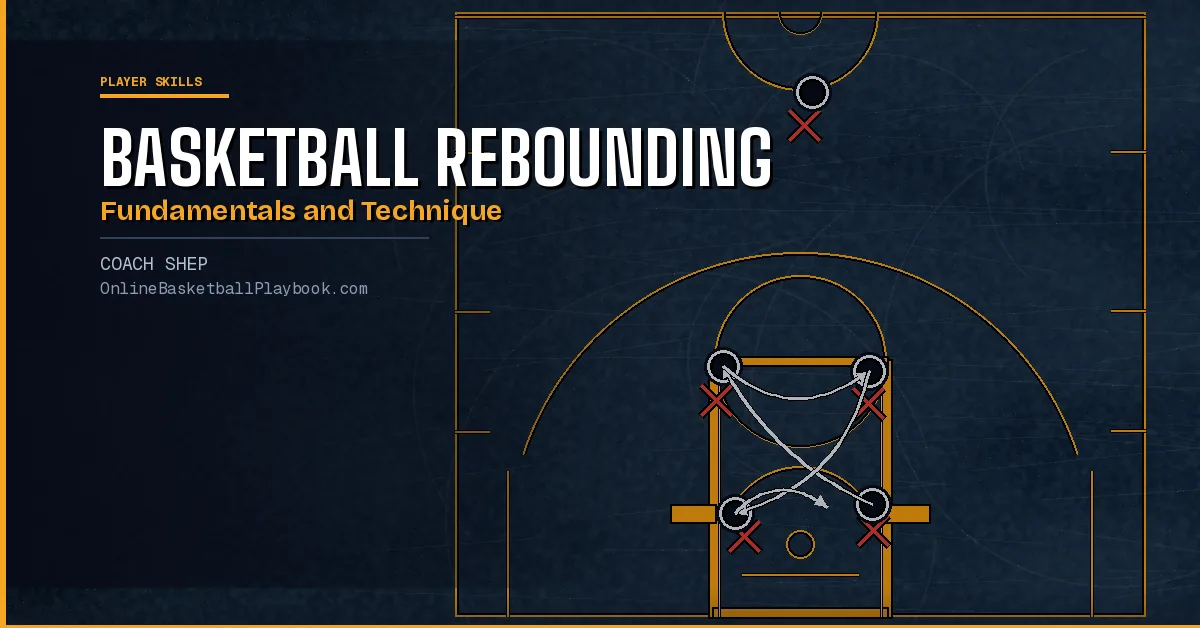
Boxing out is the most teachable skill in basketball — and the most neglected. Every player can do it, regardless of size. This guide breaks down the footwork, body position, and drills that build a team that owns the glass.

Why Boxing Out Wins Games

Rebounding margin is one of the clearest predictors of winning at every level of basketball. But raw athleticism only explains part of the equation. The teams that consistently win the glass do it through effort and positioning — not just jumping ability. Boxing out is the skill that gives your players legal authority over space before the ball even comes off the rim.

Think about what happens on a missed shot without a box out. Five offensive players are reading the ball and sprinting toward it. If your defenders haven't made contact and established position, those offensive players will out-run you to second-chance opportunities. Over a full game, that's eight to twelve possessions handed back to the opponent. At the varsity level, a rebounding deficit of five or more almost always shows up in the loss column.

The deeper reason to prioritize boxing out is what it does for your team's defensive mentality. A team that boxes out every shot has accepted collective responsibility. There's no "that's the center's job." Everyone has an assignment the moment the ball goes up. That habit of accountability — making contact, finding a body, sealing off your area — carries over into every other aspect of help defense and team cohesion.

Box outs also protect your perimeter defenders. Guards who close out hard on shooters are left vulnerable to offensive rebounds if no one cleans up inside. When you build a box-out culture, your most aggressive closeout players can take risks on contests because they trust their teammates will handle the glass. This is a direct extension of how shell drill work pays off — you're building trust through assignment and execution, not just athleticism.

The Mechanics: What a Good Box Out Looks Like

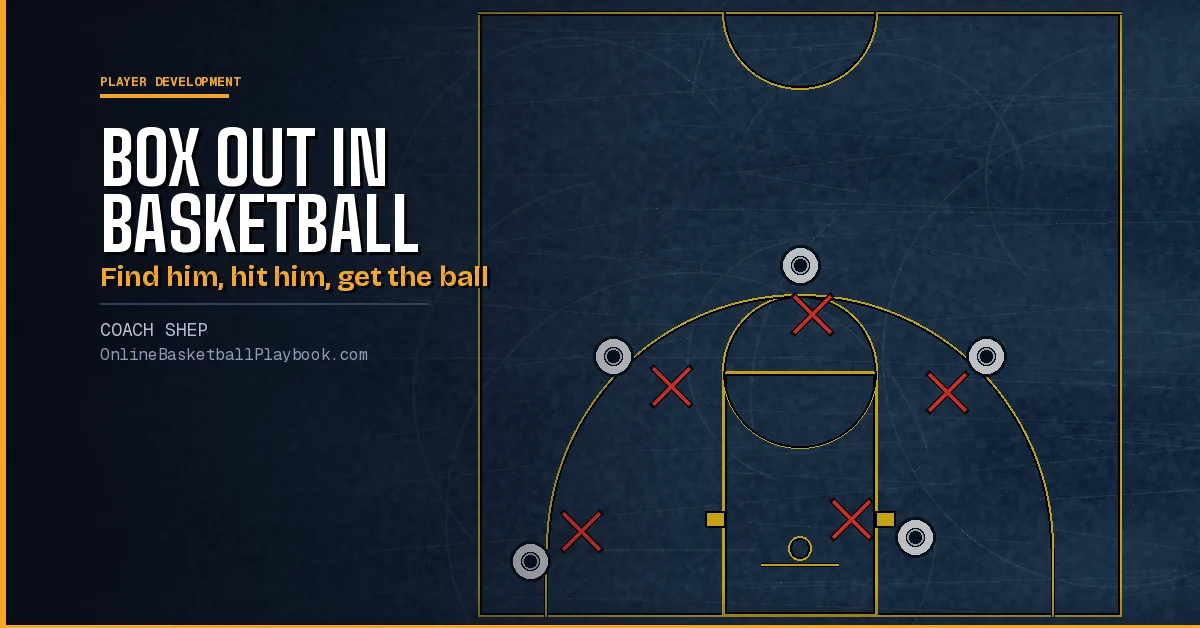
Before you can teach the box out, you need a clear picture of what it looks like when it's done correctly. There are three key positions every player must understand: the read, the contact, and the hold.

The Read

The moment a shot goes up, every player on the floor should shift their eyes from the ball to their assigned opponent. This is the read. The tendency — especially for younger players — is to watch the shot. Coaches have to train this out of them deliberately. The player who watches the ball has already lost a half-step. The player who locates their opponent immediately has the advantage.

In practice, you can train the read by calling out "Shot!" during any drill and requiring every defensive player to immediately point to their opponent. If they're pointing at the ball, they failed the read. This simple habit, reinforced hundreds of times over a season, becomes automatic.

The Contact

Once the player has located their opponent, they must make contact. This is where most breakdowns happen. Players attempt to "block out" by moving toward an area of the floor rather than to a specific person. The result is an open lane for the offensive rebounder.

The contact must be initiated by the defender, not waited for. Step into the offensive player's path. Use a reverse pivot or drop step to get your back into their chest. The key word here is into. You are not waiting for them to run into you — you are going to meet them, make contact first, and then hold your ground.

The Hold

After contact is established, the player must hold the box out. The mistake here is releasing too early to go get the ball. An effective box out doesn't end when the ball is in the air — it ends when the ball changes hands. Hold your base, keep your arms out wide, and feel the pressure from the offensive player. When you feel them stop fighting, then you can release and pursue the ball.

Footwork and Contact: Teaching the Pivot

The pivot is the foundation of the box out. Without the right footwork, players either foul, miss the contact entirely, or lose their balance when pressure is applied. There are two pivots worth teaching: the front pivot and the reverse pivot. Most players have never been taught either one explicitly — they guess at the footwork and get exposed when a physical offensive rebounder challenges them.

Front Pivot (Inside Turn)

The front pivot is used when the offensive player is on the defender's hip or side. The defender steps across with their inside foot, turning to face away from the basket, and plants into the offensive player's path. This is the faster of the two pivots and works well when the offensive player is trying to go baseline or toward the corner. The key coaching point is that the step must be decisive — a half-step gives the offensive player room to slip by.

Reverse Pivot (Drop Step)

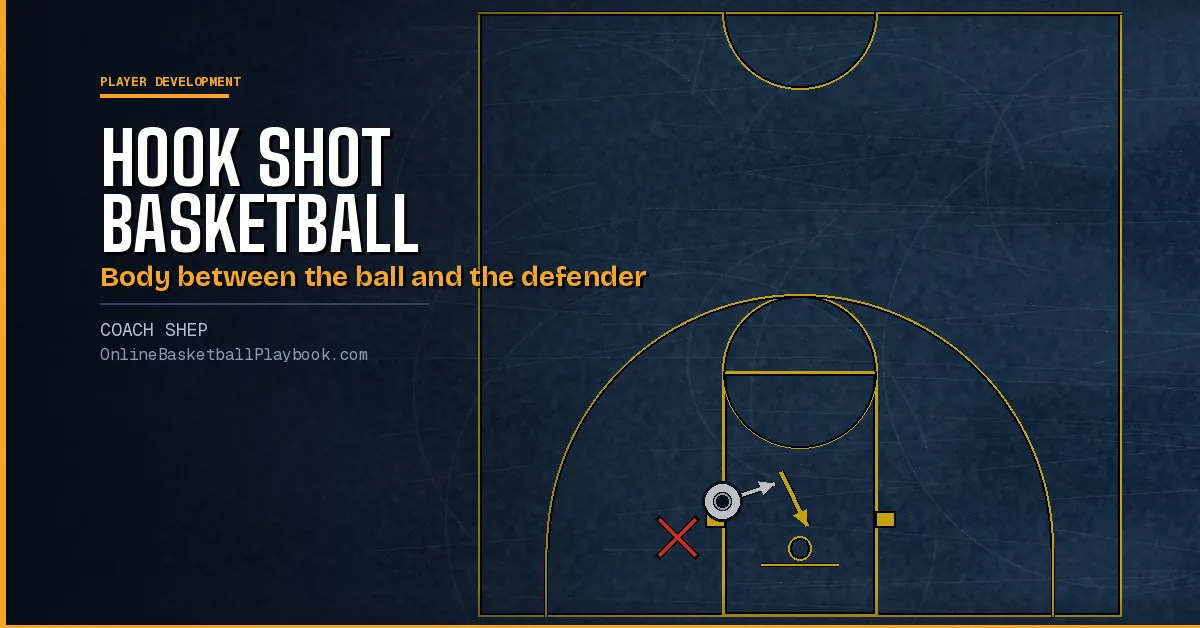
The reverse pivot is used when the offensive player is directly behind the defender or cutting through the lane. The defender drops a step back into the offensive player's chest, using their backside to make contact. This is the stronger position because the defender's center of gravity is lower and the base is wider. Guards often struggle with this pivot initially because it feels like they are backing into contact rather than creating it — that instinct has to be reversed through repetition.

Teaching both pivots requires isolated footwork reps before any live contact is introduced. Walk players through the foot pattern without a partner. Then add a stationary partner who applies light resistance. Only after players are comfortable with the mechanics do you introduce movement and full resistance. Rushing to live rebounding situations before the footwork is solid produces sloppy habits that are hard to unlearn.

Pay close attention to the stance during the hold. Feet should be wider than shoulder width. Knees bent. Arms out to the sides with elbows at roughly 90 degrees. The player should feel like a wall, not a stick. If a player is easily moved once they've established contact, their base is too narrow or their weight is too high. A useful coaching cue: tell players to imagine they are trying to take up as much floor space as possible — width beats height in the box-out battle every time.

"The quality of the rep is everything."

— Basketball Vault

Teaching Progression: From Individual to Team

The most effective way to build a box-out culture is through a deliberate progression from individual skill to team execution. Skipping steps in this progression produces players who know the concept but can't apply it under pressure.

Step 1: Stance and Footwork (No Ball)

Start with no ball. Players work on the pivot footwork patterns — front pivot and reverse pivot — against the air. Walk through each at half-speed, then full-speed. The goal is clean, automatic foot patterns before any opponent is introduced.

Step 2: Mirror Reps (Partner Work)

Pair players and have the offensive player try to get to a cone on the floor while the defender box outs without a ball. This forces the defender to make contact and hold position without the distraction of tracking a shot. It also isolates the skill so the coach can observe and correct footwork, base width, and arm position in real time.

Step 3: 1-on-1 Box Out with Shot

Now introduce the ball. A coach or manager shoots from the perimeter. The defender must execute the read, make contact, and hold until the ball hits the floor or is retrieved. Grade each rep on three criteria: Did they read the shot? Did they make contact? Did they hold? Players should get feedback on all three, not just the outcome.

Step 4: 2-on-2 and 3-on-3 Box Outs

Small-group work exposes a critical problem — players who box out their individual opponent but leave a lane open for a weak-side offensive rebounder. In 2-on-2 and 3-on-3 settings, defenders must coordinate their assignments and communicate. "Ball!" or "Mine!" calls become part of the drill. This is where structured rebounding drills help reinforce the habits in a competitive setting.

Step 5: 5-on-5 Team Box Out

The final step is team rebounding in a full 5-on-5 setting. Assign box-out responsibilities based on your defensive scheme — man-to-man assignments are straightforward; zone assignments require designated responsibility by area. Track offensive rebounding chances and second-chance points in every scrimmage. When teams see the data, they take box outs more seriously.

A box out is not an instinct — it is a trained habit. The coaches who win the rebounding battle are the ones who grade box outs at practice every single day, not just on film after a loss.

Box Out Drills That Transfer to Games

Drills only matter if they transfer. The following drills are built around game-realistic pressure and decision-making, not just going through the motions.

The "Shot Called" Drill

Set up 5-on-5 in a half-court shell. A coach holds the ball at the top. On the call of "Shot!" — without actually shooting — every offensive player crashes the glass and every defensive player must execute a box out. The coach evaluates the reaction time and contact quality. No ball in the air means players can't cheat by watching the flight of the shot. This drills the most important moment: the read.

Triangle Box Out (3-on-3)

Three offensive players set up at the three-point line. Three defenders match up in the paint. A coach shoots. Defenders must box out all three offensive players before anyone can pursue the ball. Award one point to the defense if they get the rebound, one point to the offense for any second-chance opportunity. First to five wins. Competitive scoring raises the intensity to game-level effort.

Full-Court Box Out Conditioning

Run this at the end of practice when players are tired. A coach shoots from half-court while five defenders sprint from the opposite baseline. They must box out five offensive players who are already in position near the basket. The fatigue factor is deliberate — box outs must be automatic when players are exhausted, not just when they're fresh. This also serves as conditioning work disguised as a skill drill.

One Ball, Five Box Outs

Five offensive players spread around the perimeter. One ball at the free-throw line. A coach shoots — but the rule is that the ball must touch the rim. Every defensive player must box out before the ball comes off. Award the offense a point for any offensive rebound. This drill rewards total team effort and punishes the weakest link. One player who doesn't box out can cost the team the rep.

Coaching Note

Track box-out grades in every scrimmage — not just whether your team got the rebound, but whether each player executed the three steps: read, contact, and hold. Teams that grade the process, not just the outcome, build more durable rebounding habits over a full season.

Common Mistakes and How to Fix Them

After years of watching players at every level try to box out, the same mistakes show up repeatedly. Knowing what to look for makes correction faster and cleaner.

Watching the Ball Instead of Finding a Body

This is the most common and most damaging mistake. The fix is repetition of the "Shot!" call drill described above, combined with holding players accountable in live situations. Every time a player watches the shot instead of finding their opponent, call it immediately. Delayed correction lets the habit calcify.

Turning the Wrong Direction

Players often pivot toward the ball instead of toward their opponent. This happens when they haven't fully committed to the concept of finding a body first. The correction is to make the pivot footwork completely automatic through isolated reps. When the footwork is muscle memory, players stop thinking about it and can focus on finding their opponent.

Releasing Too Early

Players who release their box out to go chase the ball often do so because they think they've "done their job" once contact is made. Teach them that the box out isn't over until the ball is secured. A good way to reinforce this is to give the offense a point every time a defender releases early and an offensive player gets a hand on the ball — even if the defense ultimately gets the rebound.

Base Too Narrow Under Pressure

When an athletic offensive player applies hard pressure, a defender with a narrow base will buckle or spin out of position. The fix is to go wider in the stance and drop lower. Practice this by having the offensive player apply maximum effort for three to five seconds of sustained pressure during drills. Players learn to brace through contact rather than avoid it.

Arms Reaching Instead of Sealing

Some players try to box out with their arms instead of their body. They reach back or flail their elbows, which draws fouls and doesn't actually create position. Teach them to keep their arms out wide at their sides — creating width, not backward reach. The body is the wall, not the arms.

Integrating Box Outs into Your Defensive System

Box outs don't exist in isolation. They are the final piece of every defensive possession, and how they integrate with your scheme matters as much as the individual skill.

In man-to-man defense, box-out assignments are simple — each defender boxes out their assigned player. But the challenge is communicating when screens or switches change those assignments. If a defender switches onto a new player on a ball screen, they now own the box-out responsibility for that new player. This must be communicated clearly and rehearsed in practice. Teams that don't account for box-out responsibility after switches leave easy offensive rebound lanes open after they've otherwise done everything right defensively. The fundamentals of man-to-man defense require that box-out assignments follow every switch, not just the original matchup.

In zone defense, box-out responsibility is area-based rather than player-based. Each defender owns a zone of the paint or paint perimeter and is responsible for any offensive player who enters that area when the shot goes up. The challenge is that offensive teams can purposely manipulate zone defenders into no-man's land — between their area and a crashing offensive rebounder. The solution is to designate a primary rebounder in each zone (usually the player closest to the basket) and a secondary contain role for players on the perimeter of the zone.

Whatever your defensive system, embed box outs into your post-drill culture. Every shell drill, every half-court defensive possession in practice, should end with a shot — real or simulated — and a box-out grade. When box outs are a separate "rebounding drill" done once a week, they stay at drill level. When they're the expected conclusion of every defensive rep, they become culture.

One practical way to build this habit is to assign a box-out grade to every live defensive possession in practice. Use a simple three-point scale: zero for no contact, one for contact but early release, two for a full read-contact-hold sequence. Tally the team score after each scrimmage and post it alongside turnover and scoring data. Players pay attention to what coaches measure. When box outs appear on the same board as points allowed, they get treated with the same urgency.

You can also create box-out accountability through small-sided games where a defensive rebound is the only way to stop the possession. If the offense gets a second-chance shot, the possession resets and the defense stays on. This structure makes the consequence of a missed box out immediate and competitive rather than abstract. Over a full practice, players develop the reflex to find a body first — because the alternative is running another possession against a fresh offensive group.

  • Read first: Eyes go from ball to opponent the instant a shot goes up — not after watching the arc.
  • Make contact: Step into the offensive player's path; don't wait for them to run into you.
  • Wide base, low hips: Feet wider than shoulder width, knees bent — a narrow stance breaks under pressure every time.
  • Hold until the ball is secured: Release early and the box out is wasted; stay sealed until possession is decided.
  • Arms wide, not reaching back: Create width with your elbows out to the sides; reaching back draws fouls and loses position.
  • Box-out assignments follow switches: Whoever you're guarding when the shot goes up is your box-out responsibility — communicate it.
  • Grade the process, not just the board: Track read, contact, and hold separately — outcome stats alone don't tell you where the breakdown happened.

Get free play diagrams, drills, and coaching guides delivered weekly.

Join the Free Newsletter →

reboundingplayer-skillsdefensebasketball-fundamentalsbasketball training