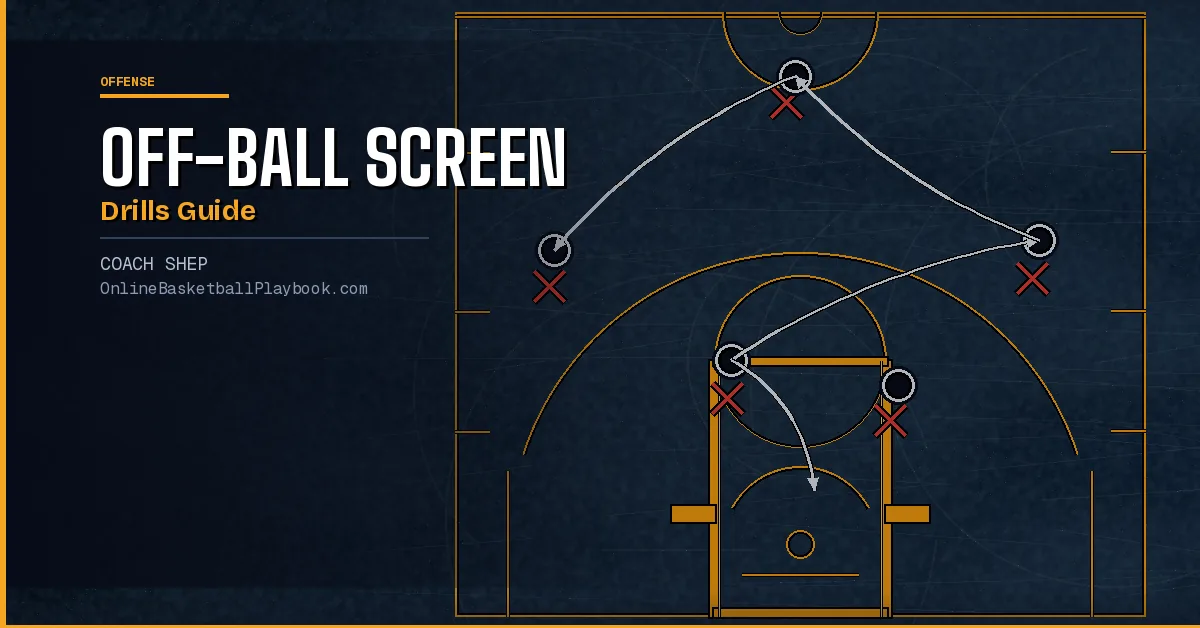
Off-ball screens create open looks without the ball handler doing anything special. These drills teach players to set legal screens, read defender positioning, and choose the right cut (curl, fade, or back-cut) in game speed.
Why Off-Ball Screens Matter
Every great offense stresses multiple defenders simultaneously. Ball screens get a lot of attention, but off-ball screens are the real engine behind open threes and mid-range looks in motion offense basketball. When a cutter reads a screen correctly, the defense is forced to help, and that help creates an advantage somewhere else on the floor.
The challenge is that off-ball screening requires two players to coordinate without ever touching the ball. The screener must set a legal, angled screen. The cutter must wait, time the cut, and then read the defender's position. Both actions happen away from where most players are watching, which is why so many teams do it poorly even at higher levels.
Teaching this starts with isolated drills before you introduce decision-making. Players need to own the physical mechanics (foot position on the screen, shoulder angle of the cut, hand target after the cut) before you add live defense and multiple reads. Rushing to 5-on-5 work before those habits are automatic is the biggest mistake coaches make with this skill set.
Off-ball screens also connect directly to basketball IQ development. Players who learn to read screens develop spatial awareness that carries over everywhere. They see the floor differently after training with real purpose and constraint.
Screen-Setting Fundamentals
Before drilling the reads, players need to drill the actual screen itself. A poorly-set screen that causes a foul, or a screen set at the wrong angle, ruins every read that follows. These mechanics must be automatic.
Stance and Angles
The screener's feet should be shoulder-width apart, knees slightly bent, arms crossed or at their sides. Not extended, which invites an offensive foul call. The screen must be set in the defender's path, not the cutter's. That's a critical distinction that most youth players get backwards.
Angle matters more than most coaches emphasize. A straight-up vertical screen gives the cutter two read options, curl or fade. A screen set at a 45-degree angle to the baseline tends to funnel the cutter in one direction. Both have their place, but players need to know which one they're setting and why.
The Contact Rule
The screener must be stationary before the defender makes contact. This sounds simple but requires repetition to ingrain. A moving screen isn't a screen. It's a foul. Drill this with a stationary defender walking through the lane before you ever add a live defender who is actually guarding the ball.
The "Seal and Show" Habit
After the cutter uses the screen, the screener should seal the defender with their body and then immediately show a hand target to the passer. This "seal and show" habit converts a screen into a scoring opportunity for the screener. Players who just set a screen and stand there are leaving half the action on the table. The screener is often the most open player on the floor the instant the cutter curls away from them.
Live Read Drills
These drills progress from no-defense mechanics to live decision-making. Each one has a specific purpose and should be run until the movements are automatic, not just familiar.
Drill 1: Dummy Screen Walk-Through (No Defense)
Two players, one ball. The screener sets a stationary screen at the elbow. The cutter walks from the wing, reads the imaginary defender's position (called by the coach: "high," "low," "under"), and makes the appropriate cut: curl toward the rim for a "high" call, fade to the corner for a "low" call, or back-cut baseline for an "under" call. The passer delivers the ball as the cut is made.
Run this at half speed until every option is sharp. The point of this drill is to build the habit of reading the call before deciding, not guessing and hoping. Ten minutes of this done right is worth an hour of chaotic live work.
Drill 2: 2-on-1 Screen and Read
Now add a live defender on the cutter only. No defender on the ball. The screener sets the screen, the defender plays the cutter straight up, and the cutter makes a true read. The ball goes to wherever the cut creates separation.
This is the first time players discover what a real defender does: fight through, go under, or trail. Most cutters have never experienced this in isolation. The defender should be instructed to mix coverages so the cutter can't anticipate. Rotate defenders through regularly so the cutter sees different looks.
Drill 3: 3-on-2 Screen, Read, and Relocate
Add a defender on the ball. Now the passer must also read the action. Is the cutter open right away, or should they pump fake and wait for the cutter to relocate? The screener pops or seals based on how the defense plays the screen.
This drill is where you start seeing basketball footwork drills pay off. Players with clean footwork make the curl cut without traveling; players without it get sloppy at game speed. Run this drill for 12 to 15 minutes in the middle third of practice when players are warm but not tired.
Drill 4: Continuous Screen-the-Screener
Three offensive players, two defenders. Player A sets a screen for Player B. Player C then sets a screen for Player A. The action keeps moving. Screen the screener, read, shoot or cut, go again. This simulates motion offense rhythm and teaches players to stay engaged off the ball even after their initial screen is used.
The coaching cue here is "never stand. You're either the screener or the cutter." That cue alone changes how players operate without the ball.
Live 5-on-5 Progression
Once the smaller-group reads are consistent, bring the full offense in. The goal is to create enough screening actions that the defense can't cheat. They have to guard everything.
Scripted Screen Actions
Start 5-on-5 with scripted screen actions where every player knows who is setting and who is cutting. This removes one cognitive load (where to go) so players can focus on reading the defense correctly. Run the same action three times in a row before switching to the next.
Half-Court Live Reads
Now run half-court 5-on-5 with a constraint: one scoring action must come off an off-ball screen each possession. If no off-ball screen is used, possession ends regardless of whether a shot went in. This forces intentional screening into the offense without scripting every action.
Pair this with a basketball practice plan that dedicates 10 to 12 minutes specifically to this constraint work. It's targeted and measurable. You'll see which players still default to dribble-drive habits instead of working the screening game.
Live Scrimmage with Tracking
In live scrimmage, have an assistant track how many possessions generate a shot off an off-ball screen versus how many possessions stay ball-dominant. Show players the numbers. Competitive players respond to data when it's their own performance on record.
Common Mistakes and Fixes
These are the errors that show up on film every week regardless of team or level. Each one has a direct fix that can be coached in the next practice session.
Cutting Too Early
The cutter leaves before the screener is set. This turns the screen into a moving pick and forces the cutter to guess rather than read. Fix it with a verbal command. Teach players to say "ready" before the cutter moves. One word eliminates the problem in most cases.
Not Reading the Defender
Players who default to the curl every time have never been trained to read. They're running a pattern, not making a decision. Force the issue in practice: give a grade for the read, not the result. A correct read that produces a contested shot is better than a wrong read that accidentally gets open.
The Screener Disappears After Setting
As noted above, screeners who stand and watch leave themselves open. Teach the "seal and show" immediately after the screen. Video evidence helps. Show a clip of a screener who was wide open and didn't have their hand up, then show what happens when they do.
The Passer Stares Down the Cut
When the passer watches the cut too long, the defense recovers. The ball needs to leave the passer's hands before the cutter's third step after using the screen. Drill timed passes in the 2-on-1 and 3-on-2 drills. The passer gets penalized for late delivery.
Flat Screens
A screen set parallel to the lane gives the defender a free path to go under. Teach screeners to set the screen at a slight angle that seals the defender's most natural recovery path. This is a small physical adjustment that has a large impact on how clean the cut looks at game speed.
Off-ball screen reads transfer directly to defending screens. Players who have drilled the curl, fade, and back-cut options know exactly what the cutter is trying to do, which makes them better defenders on the other end without additional instruction.
Integrating Into Practice
Off-ball screening drills do not need a dedicated 30-minute block. They work best in short, frequent exposures through a well-structured practice session.
Where to Put These Drills
The walk-through (Drill 1) works well in early practice during skill warm-up, right after individual footwork. The 2-on-1 and 3-on-2 drills belong in the middle block where competitive intensity is high but legs are not yet fatigued. Save the 5-on-5 read-and-react constraint for the final competitive block when you want decisions under pressure.
Repetition Volume
Meaningful improvement in off-ball screening requires about four to six weeks of regular practice exposure, not one long session. Players need to drill these reads enough times that the decision becomes automatic under fatigue and defensive pressure. Sporadic deep dives do not compound the way daily short exposures do.
Connecting to Your Offense
Every drill in this guide can be plugged directly into a 5-out motion offense structure. The reads are the same whether you are running a continuous motion action or a set play. The defender's position determines the cut, every time. That universality is what makes this skill worth the practice time investment.
Tracking film over a four-week block will show clear improvement in the percentage of possessions that generate off-ball screen looks. That data point, combined with your players' ability to articulate what read they made and why, tells you whether the teaching has actually landed or just been practiced mechanically.
- Set the screen in the defender's path, not the cutter's. Teach this distinction explicitly on day one.
- Cutter reads the defender's position before the screen is set, not after contact.
- Screener seals and shows a hand target immediately after the cutter uses the screen.
- Ball leaves the passer's hands before the cutter's third step. Drill timed delivery in every reps.
- Run the curl, fade, and back-cut reads against mixed coverages so cutters cannot anticipate.
- Grade the read, not the result. A correct decision on a contested shot beats a lucky open look off a wrong read.
Get free play diagrams, drills, and coaching guides delivered weekly.
Draw this play free in the play drawer →
Membership: the full library, playbook packs, and Pro drawing tools →
Keep Building
Related breakdowns
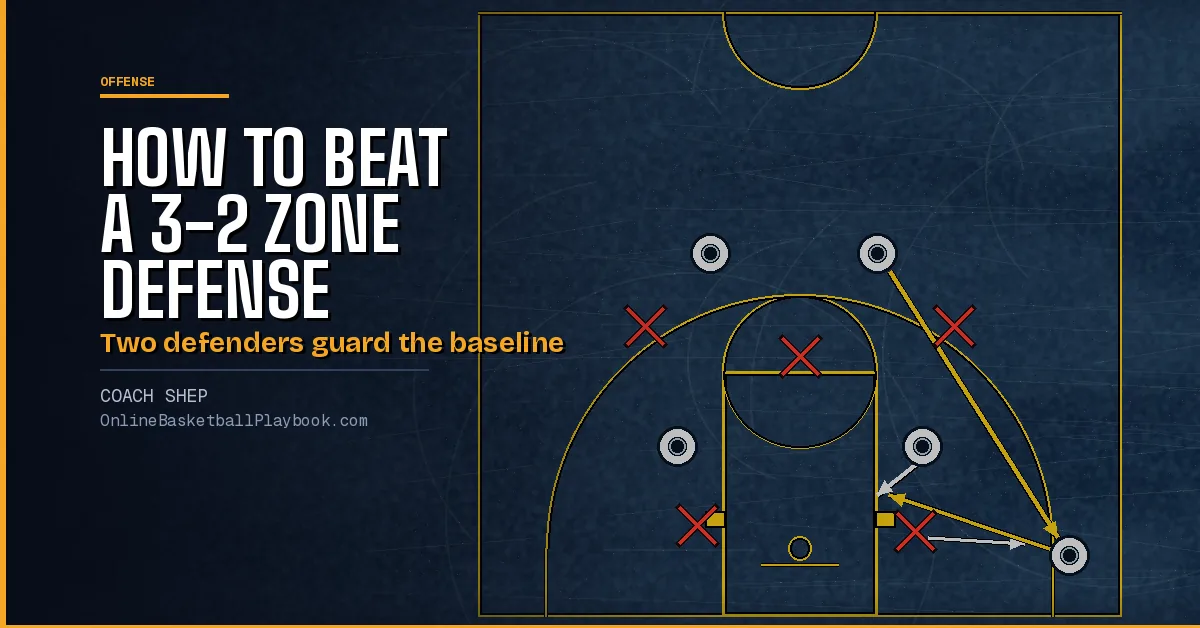
How to Beat a 3-2 Zone Defense: Sets, Screens and Reads
How to beat a 3-2 zone defense in basketball: alignments that split it, corner attacks, inside screens on the back line, the high post, skips, drives and rebounding.
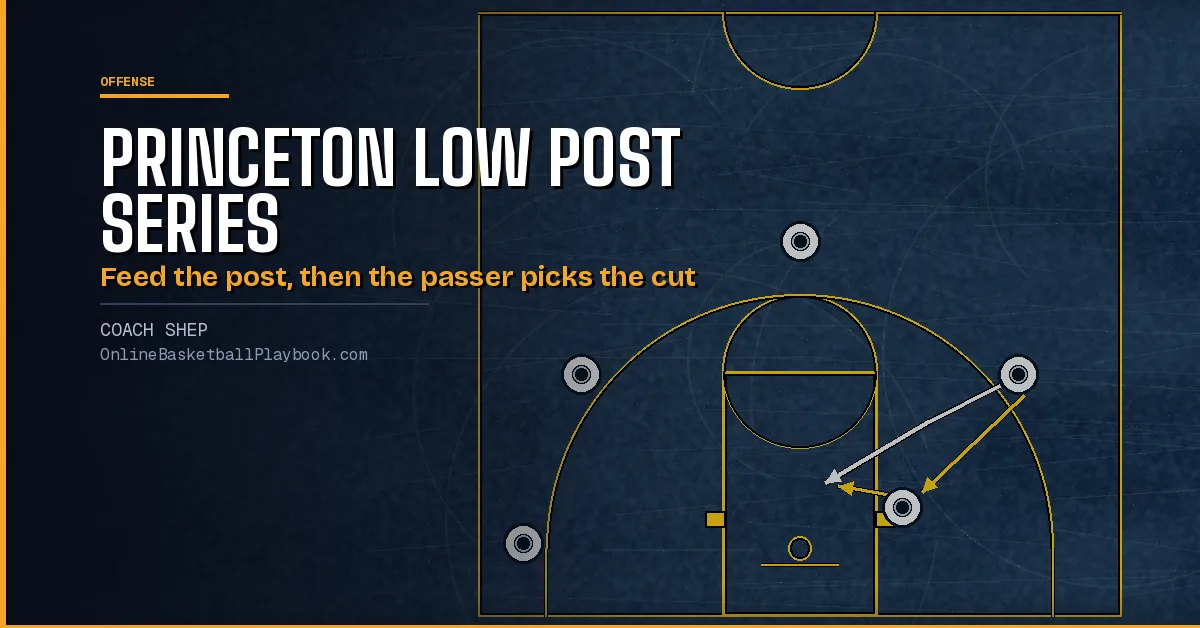
Princeton Low Post Series: Splits, Screens and the Laker Cut
The Princeton low post series: the wing entry, the passer's options after the feed, the high post split, the Laker cut and what to do when the post is denied.
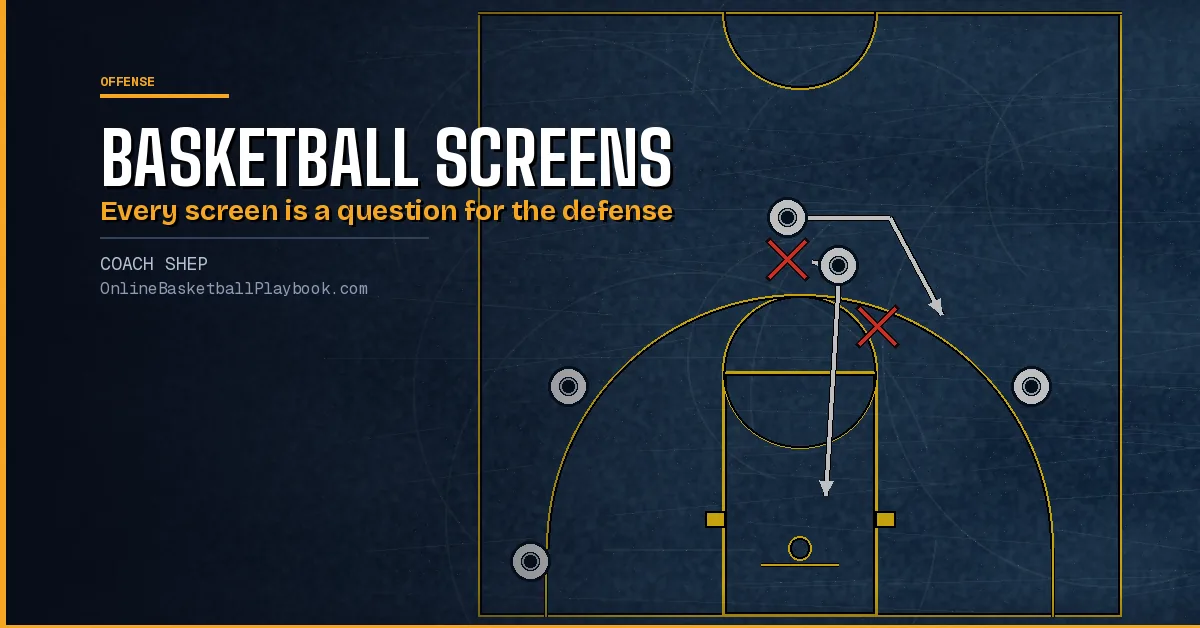
Basketball Screens: Every Type of Screen and How to Read It
Basketball screens explained by type: on-ball, down, flare, back, pin down, cross, stagger, elevator, screen the screener and hand-off, with each read and counter.