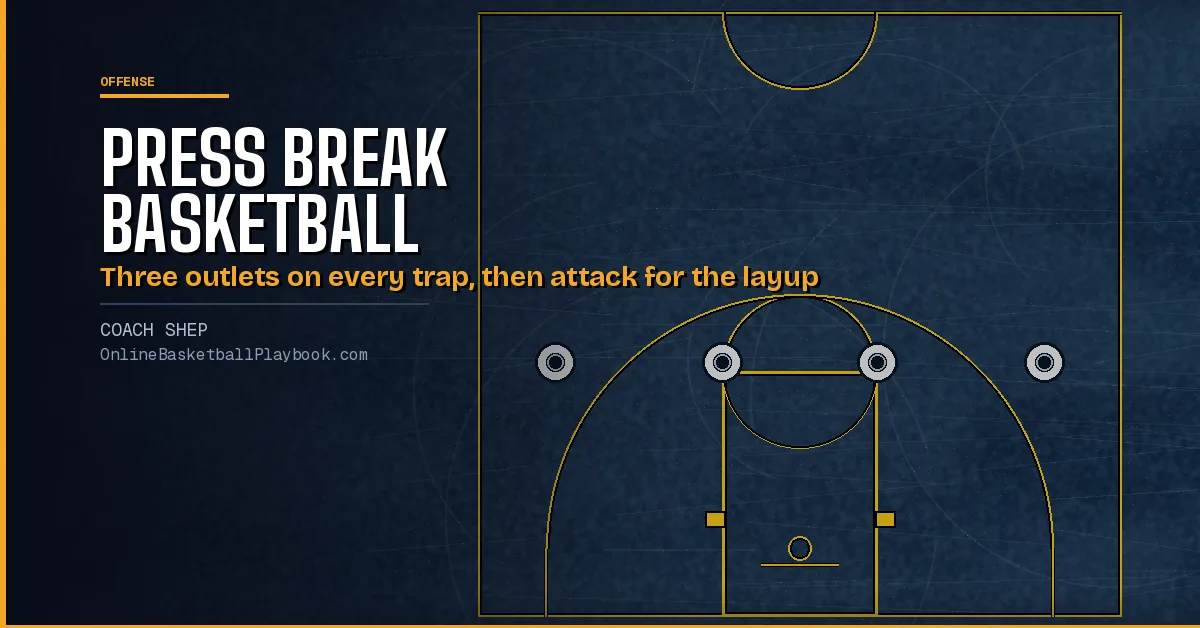
Press break basketball is the plan a team uses to inbound the ball, advance it and score against full-court pressure. It covers the alignment, who inbounds, the first pass, how a trapped ball handler escapes and how the team uses the numbers a trap leaves behind. This guide lays out the alignments coaches teach, shows how to read the 2-2-1, the diamond and the other presses, and lists the places where good coaches disagree.
Press Break Basketball at a Glance
| Break | Starting shape |
|---|---|
| 1-4 | Four players level with the free-throw line, the inbounder behind the baseline |
| 80-60-40 | One inbounder, one guard coming to the ball, two players just inside half court on the sidelines, one deep |
| 4-across (lane set) | Two players inside near the lane, two flared to the sidelines, the 5 inbounding |
| 3-Up | A triangle with one player sprinting up the middle and one deep |
| Flood (Bob Hurley Sr.) | Guards at the elbows, post players wide at half court |
| Attack box | One primary receiver, the inbounder stepping parallel to him and two attackers at midcourt |
What a Press Break Has to Do
A press break has three jobs: inbound safely, advance without turnovers and attack to score.
- Attack, not just advance. Most teams do the first two and skip the third, so possessions end with the ball walked over half court.
- Break for a layup. The youth rule is to break the press for a layup, not to get across half court.
- Never be satisfied with half court. The attack box calls it an insult to be pressed and says crossing half court alone earns nothing.
- Reset after every break. A team which resets after every break takes the penalty out of gambling.
Each system on this page is named for what it does.

Break the press to score, not just to cross half court.
Principles That Hold Against Any Press
- Sideline, middle, reverse. A trapped handler needs three outlets, and two trappers cannot cover all three. Dave Odom lists the same three outlets against a double: the middle or behind the defender, the center court area and the sideline.
- The pass beats the dribble, and the dribble needs a reason. The three-reason rule lists three reasons to dribble: avoid a trap, score or improve a passing angle.
- Do not line up behind your defender. Three players in one line hide the receiver from the passer, so receivers keep moving to open a clean angle.
- Catch with the eyes up. Most presses leave someone open deep, and the handler who panics never sees him. Have players chin the ball on the catch and look up the floor before they dribble.
- Meet the pass. Odom says you must meet pressure to beat it. The 80-60-40 system wants a receiver moving toward the ball, because a pass to a player moving away is the one that gets picked off.
- Pull back against a trap. Turn the shoulders so the ball is behind you, put the chin on the top shoulder to see the floor and take big push steps backward while teammates come back to the ball to shorten the pass.
- Square up and drive through. The 80-60-40 system squares up to the trap, gets low with the ball on the hip away from it and drives through with one low power dribble when a gap shows between the trappers. The handler's side is on how to protect the ball.
- Stay out of the trap areas. The 80-60-40 system marks the corners as trap areas, most of all the ones next to the half-court line. The reset system's danger zones are the corners, an inbound too close to the baseline and a ball carried across half court into a corner, because the boundary lines act as extra defenders there.
Teach the spacing and the eyes-up catch before any pattern.
The Inbounder
The inbounder-first approach treats the inbounder as a skill position.
- Know the odds. He faces five defenders against four teammates with five seconds to throw.
- Circle and read. He circles to see the whole floor, reads overplays, throws sharp passes and passes through a pressuring defender with a high or low fake.
- Never inbound into a corner trap.
- Stay out from under the backboard. The 80-60-40 system, the lane 4-across set and the inbounder-first approach keep the inbounder out from directly under the backboard, where the board can block a long pass.
- Run the baseline after a make. The 1-4 system has him run the baseline after a made basket, so he can use both sides and shorten the cross-court throw.
Pick your inbounder like any other starter.
Breaking a Man Press
Against man pressure the break is won in two places, the inbound and the freeing of the ball handlers. These habits cover it.
- Run the baseline after made baskets. Get the ball in quickly so the press has no time to set. The inbounder-first approach reminds players the run is allowed only after a made basket or a timeout right after one, not after a violation.
- Screen and seal against denial. The screener must be ready to catch, so he pivots and seals the switching defender on his back.
- Screen your own defender. Do it against a team that switches every screen.
- Clear out for a good ball handler. Do it if the defense will not trap, and pull back if a late trap comes.
- Use a second ball handler. Against one elite full-court defender, let a second ball handler bring it up and have the point guard take it back after half court.
- Walk the receivers to the baseline. Against face-guarding with a free defender on the inbounder, the "centerfielder," walk all four receivers to the baseline, then read the centerfielder and pass ahead.
Bob Knight gives the ball to the best dribbler against an immobile big. The attack box, against a two-man front, has the inbounder split the defenders after the pass and loop back parallel in case of a trap.
Win the inbound and free the handler.
Breaking a Zone Press
A zone press sets its traps where the lines help it, in the deep corners and on the sideline just short of half court. Four rules answer it.
- Inbound away from the corner. Choose the side the defense does not want you in.
- Flash a player to the middle.
- Reverse the ball. It shifts the zone.
- Look diagonal. Do it after the reversal.
The presses and what answers each:
- 2-2-1. Takes away the central lane in the 2-2-1 defense system, which never lets the ball enter or stay there. The 80-60-40 system describes a 2-2-1 that denies and traps the sideline at half court. Its four-across attack goes at the middle, the 1-4 system beats it through the middle, and Odom says the three outlets still exist.
- Diamond (1-2-1-1). Traps the inbound in the strong-side corner. The 1-4 system uses the baseline run and a quick reversal, the 80-60-40 system keeps a ball-side sideline receiver, and Hurley's Flood and the decoy break are built for it.
- 2-1-2. Removes the middle pass and invites the sideline dribble. The four-rule approach flashes a player to the middle. Jay Wright passes to the middle and looks opposite, passes to the middle and drives, or drives the middle.
- 1-2-2. No designer's description is on this page. The 1-4 system says patience and reversal, and Hurley's Flood is also built for it.
- 1-3-1. Keeps the ball on one side and traps the sideline near half court, with one defender home (a full-court 1-3-1). The early-attack approach attacks before it sets, and Hubie Brown reverses the ball and asks who has the trap.
For the presses themselves, read 2-2-1 Press, 1-2-1-1 Diamond Press, 1-2-2 Press and 1-3-1 Full Court Press. Best Full-Court Press compares them all.
Read the press first, then pick the break.
2-2-1 Press Break
The 2-2-1 press break below is the 80-60-40 system's four-across attack, a different break from the lane 4-across set. It reads the press as one that takes away the sideline, so it attacks the middle.
- The 5 inbounds.
- Screen for the 1. The two front defenders make it hard for the 1 or the 2 to get open, so the 2 screens for the 1.
- Fake and hit the 3. The 5 fakes to the 1 or the 2 and hits the 3 up the side, and the 3 breaks long and v-cuts back to the ball.
- Pass up the middle. When the defense traps the 3, the 1 should be open for a quick pass up the middle, and the 1 can then hit the 4 going up the opposite sideline.

The 80-60-40 system adds a counter.
- If the 1 is covered. The 1 clears to the ball-side sideline just past half court. The 2 cuts to the middle for the pass from the 3, or the 3 passes straight up the sideline to the 1.
- Keep a safety. The 5 stays back as the safety outlet, and if the ball reverses to him the 2 has to stay back to receive it.
- Fake long and cut back. The lane 4-across set answers sideline denial differently: the 3 fakes long and cuts back hard to the middle while the 4 goes long.
- Plan the kick. The 2-2-1 defense system, which teaches the 2-2-1 from the defensive side, plans for the cross-court kick and the reset to the inbounder.
The 2-2-1 Press guide shows how a team defends these reads.
Attack the middle, and keep a safety behind the ball.
Get the next coaching guide in your inbox
One email when a new guide or diagram set goes up. Free.
Breaking the Diamond Press
The diamond has three answers.
- Two guards high, two at half court. Two guards line up at the free-throw line and two players start at half court near the sidelines. The same post inbounds every time, and he does it fast after a made basket.
- Look middle, then sideline. The 80-60-40 system calls the diamond weakest up the sideline at midcourt, so the point guard looks middle first and the ball-side sideline second, and the forward opposite the ball moves toward the ball for the middle pass. If the middle is covered, the pass goes up the ball-side sideline. One defender often straddles two receivers, so the passer fakes at one and passes sharply to the other.
- Decoy the 1. The defense usually tries to deny the 1, so the 1 cuts into the lane and pulls two defenders with him. The 2 goes long toward the top of the key. The 3 and the 4 start at the sideline hash marks, fake toward the ball and drop back as over-the-top targets. If the 3 catches, he passes ahead to the 2 while the 4 sprints up the opposite sideline for a 2-on-1 against the deep defender.
- Hurley's Flood. Both guards sprint away from the ball first. One runs to the basket to pull a defender out of the press, and the other runs up the sideline to half court and cuts back to the middle. The post players sprint to the arc, not the elbows, the inbounder stays below the ball and the point guard attacks downhill after the middle pass.
The diamond guide, 1-2-1-1 Diamond Press Basketball, shows the traps these answers are built against.
Pick the answer that fits your guards, and rep it.
Press Break Alignments
Pick the alignment that fits your players.
The 1-4
The 1-4 system recommends the 1-4 (also called a 4-across) as a base for most teams. Four players spread level with the free-throw line, and the inbounder takes the ball out under them.
- No call needed. It works against man and zone, so players do not wait for a call.
- Denial gets harder. It removes back-side help.
- Break deep from high. A player who breaks deep from high is harder to guard than a player who stands deep all possession.

Against zone the 1-4 always keeps a sideline, middle and reverse outlet, and the fifth player waits deep on the diagonal. Players refill both sidelines and the middle if the ball reverses.
Against man the post sets a second screen for the point guard, so a switch puts a slow post on a quick guard and a guard on a sealing post. See 1-4 Press Break for the full breakdown.
80-60-40
The 80-60-40 system names a break by how much of the floor the press covers.
- "80." Full-court pressure including the inbounder.
- "60." Three-quarter court with no pressure on the inbounder.
- "40." Half court.
- A "1" added. As in "81," it means the inbound pass is denied.
In "80," the 3 always inbounds and the 1 comes to the ball. The 2 and the 4 wait just inside half court on the sidelines and the 5 goes long. If the sideline pass to the 2 or the 4 is open, that player attacks a 2-on-1. If the 1 is denied, the 2 and the 4 sprint the sidelines after a two-count and the 1 cuts up the middle.

4-across, 3-Up and the attack box
- 4-across, lane set. The 5 inbounds, the 1 and the 2 line up inside near the lane and the 3 and the 4 flare to the sidelines. Option 1 is a double screen for the 1, who cuts to the opposite elbow for the inbound. Option 2 is a baseline run. Option 3 brings the 4 back to the top.
- 3-Up. The 4 inbounds, the 3 sprints up the middle, the 1 and the 2 start at the elbows and split wide and the 5 is deep. If the 3 catches, the 1 and the 2 cut the sidelines for a quick pass and a layup chance. If everything is denied, all three guards take their defenders to the end line and back-cut together for a lob.
- Attack box. One primary receiver turns to face the defense, the inbounder steps parallel about 15 feet away and two midcourt attackers sit near half court. If the lanes are denied, the ball reverses to the parallel guard, the midcourt pair exchange and the box moves up with the dribbler.
Teach one alignment well before you add another.
Where Coaches Differ
Score first or control the clock.
- Score first and fast. Bruce Weber wants the ball from the net to the other end in 3.5 seconds and never lets it bounce after a make.
- Use the clock. Knight tells a team facing a zone press to use the full ten seconds. The attack box lets the press set and invites the trap for a numbers edge.
Middle first or sideline first.
- Middle first. Jay Wright, Bo Ryan, Knight and the middle-first approach.
- Sideline first. Oliver Purnell looks sideline, then middle, then reverse to the trailer. The 80-60-40 system looks middle first but keeps a ball-side sideline receiver against the diamond.
Long pass or short passes.
- Throw over the top. Bo Ryan, Rob Evans and the attack box do. The 80-60-40 system's 3-Up says not to be short on the lob.
- Short, straight passes. Weber's numbers game bans the pass over the top. The 80-60-40 system and the reset system want straight-line passes, not lobs.
Who inbounds.
- The same player every time. Guy Lewis used an inbounder who entered only for throw-ins, and the 3 inbounds every time in the "80."
- The nearest big. Weber never lets the ball hit the floor after a make and flips it to the nearest big. The lane 4-across set moves the inbound to the 3 when the point guard is face-guarded.
Avoid the trap or invite it.
- Avoid it. The middle-first approach avoids corners and traps.
- Invite it. The invite-the-trap view says do not fear the trap, and the attack box dribbles into the pocket between two waiting defenders to coax one.
Reverse or look forward.
- Look forward. Jay Wright says attack the press and do not look backward.
- Reverse on purpose. Hubie Brown, the reset system and the 80-60-40 system's "40" reverse on purpose to shift the defense.
One break or one per press.
- One break for everything. The 1-4, the 80-60-40 and the attack box each use one break.
- A break per look. The 80-60-40 system also prints dedicated breaks for the diamond and the 2-2-1, and the inbounder-first approach attaches a named counter to each defense.
Side matters to Hubie Brown. He comes up the left side because the strong defenders in a trap are set to the right-handed side, and he says a break after a made free throw must be able to come out either side.
Dribbling up the sideline draws a warning from both sides. The 1-4 system calls it the number one press break mistake, and the diamond and 2-1-2 defenses tell their players to stop that dribble.
Choose your side of each question before the game, not during it.
Press Break for Youth Basketball
The youth approach says presses beat young teams through strength, not only smarts. Young players have to wind up to throw a hard pass, which telegraphs it, and they cannot throw the lob over the top. Its advice has three parts.
- Teach principles, not patterns. A team can then adjust when a smart defense takes the first option.
- Train with passing and games. Use full-court passing drills and small games that have a winner.
- Keep one simple alignment. It picks the 1-4 for youth teams because its spacing stays the same against every press.
The 80-60-40 system prints a simple press break for youth basketball in a 1-1-2-1 shape that flows into the team's secondary break. The 3 inbounds and stays behind the ball, the 1 reads dribble, sideline or middle and the 5 runs to the spot the secondary break uses. For more, see Basketball Drills for Beginners.
Keep it simple and let the spacing do the work.
The Backcourt Clock
A team has a limited time to get the ball over half court. The limit is 10 seconds under NFHS (high school) rules and in NCAA men's and women's basketball. It is 8 seconds in the NBA and under FIBA rules.
Know the clock for your level before you teach the break.
Press Break Drills
- Live pressure every day. The attack box wants live 5-on-5 against pressure every day of the season. Hubie Brown spends 15 minutes a day, five each against a full-court press (a 1-2-1-1 or man), a three-quarter-court press (a 2-2-1 or man) and a half-court trap (a 1-3-1), one shot each, so the team works its press offense and its own presses at once.
- One practice, three looks. The 80-60-40 system teaches "80" against a diamond, "60" against a 2-2-1 and "40" against a half-court 1-2-2 in one practice. It shows it, runs it 5-on-0 down and back, then runs it 5-on-5 against the matching press.
- Weber's numbers game. Three on three to half court with no dribble and no pass over the top, then four against three.
- First-pass drill. The 80-60-40 system uses three offensive lines against two trappers and a third defender in the gap between the receivers, because the first pass after the inbound is the one most often intercepted.
More drills are in Press Break Basketball Drills and Drills to Teach Press Break. For the practice side, see How to Build a Press Break Offense, and for the game-plan side see Game Plan Against a Press Defense.
Most breaks aim at a numbers finish once the trap is beaten, either two attackers on one defender or three on two against the retreating defense.

Half-court and three-quarter-court traps follow the same principles with less room, and How to Break the Three-Quarter Court Press covers them. If you coach the other side, see Basketball Press Terminology and the Defense section.
Rep it live against pressure until the numbers finish is automatic.
Questions Coaches Ask About Press Breaks
What is the best press break in basketball?
No one break is best. The 1-4 system recommends the 1-4 because the same spacing works against man and zone, and the 80-60-40 is one system for any press. A break for each press is the other approach.
How do you break a 2-2-1 press?
The 80-60-40 system reads the 2-2-1 as a press that denies the sideline, so it attacks the middle. When the trap forms on the sideline pass, the 1 flashes to the middle for the pass.
How do you beat a diamond press?
The 1-4 system uses the baseline run and a quick reversal. The 80-60-40 system looks middle first and keeps a ball-side sideline receiver, and Hurley's Flood sends the guards away from the ball first.
How many seconds do you have to cross half court?
10 seconds under NFHS rules and in NCAA basketball. 8 seconds in the NBA and under FIBA rules.
Press break basketball is one part of offense, and the Full Court Press Defense hub lists the presses a break has to answer.
Want the printable playbook packs?
OBP Pro members get the premium playbook packs: the zone attack, out of bounds and practice plan PDFs, plus each new pack as it is finished. The membership page lists what is in each one. Or draw your own version free in PlayDraw.
See what OBP Pro includesMore Guides From This Batch
- Basketball Conditioning Drills for Teams: Runs, Games and Tests
- Basketball Tryouts: Sessions, Drills, Scoring and Cuts
- Shell Drill Basketball: Stages, Rules and Live Versions
- Defensive Basketball Drills: Slides, Closeouts, Shell and Games
Back to Full Court Press Defense and every Offense page.
Keep Building
Related breakdowns
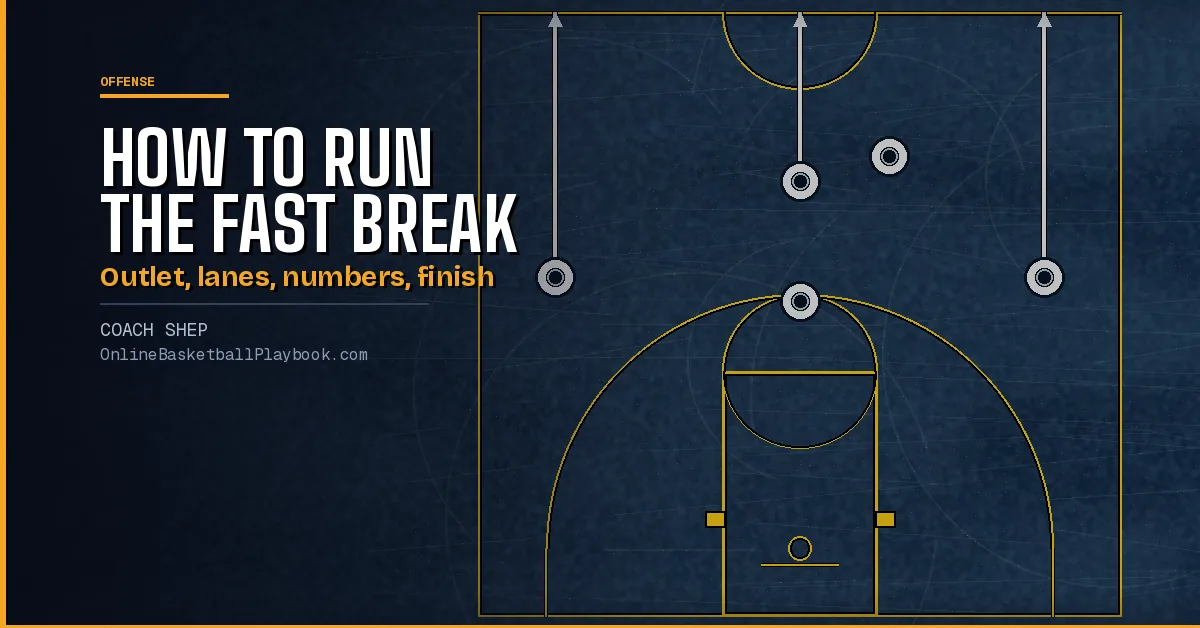
How to Run the Fast Break: Lanes, Reads and Drills
How to run a fast break: start it off a stop, fill three lanes, read each numbers situation, flow into a secondary break and build the habits with a drill ladder.
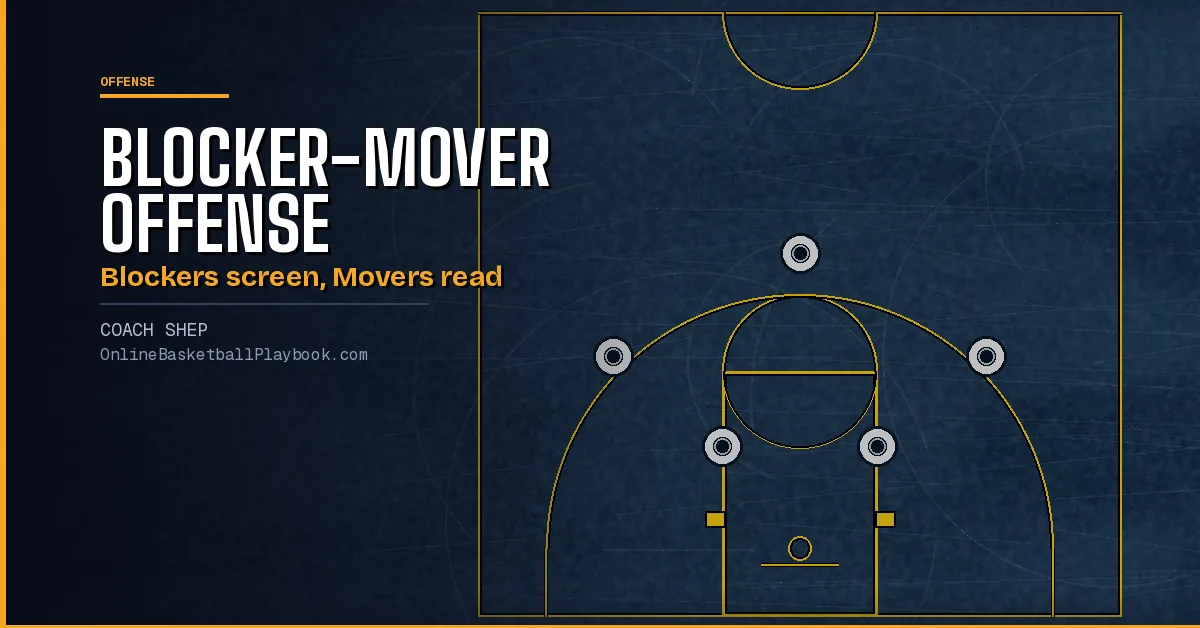
Blocker-Mover Offense: Roles, Alignments, Reads and Install
Blocker-Mover offense splits five players into Blockers who screen and Movers who cut and read. See the roles, four alignments, screen reads, sets and install plan.
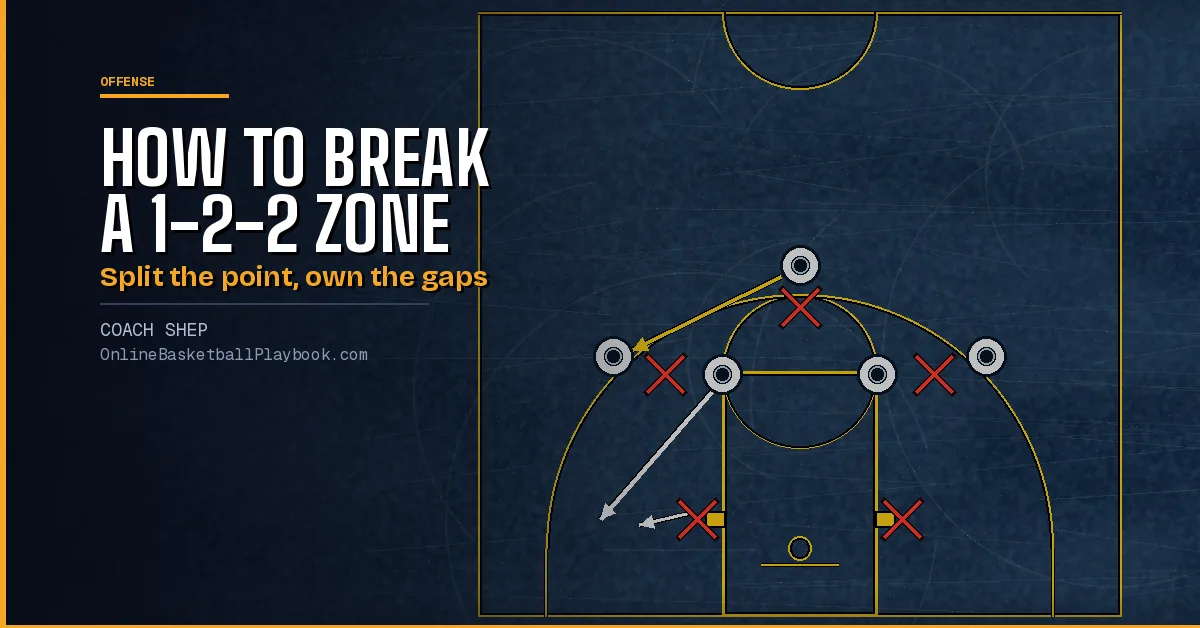
How to Break a 1-2-2 Zone Defense in Basketball: Sets and Reads
How to break a 1-2-2 zone defense: split the point defender, attack the middle and the short corners, and run a 1-4 high, 4-out, 1-3-1 or baseline runner offense.