Transition defense starts when your team shoots, not when the other team catches. These transition defense drills train who sprints where, who pressures the ball, and how you match up before the offense hits the paint. The system overview is on transition defense basketball. Pair every defensive segment with offensive balance rules so players know who is allowed to crash.
Basket, Ball, Man
Assign priorities before running live:
- Basket: No free layups. One player must be at the rim before the ball reaches the lane.
- Ball: Pick up the dribbler early enough to force a sideline or a pull-up, not a straight-line drive.
- Man: Match to the most dangerous open attacker, usually ball-side then weakside shooters.
In a 2-on-1, the defender stays on the split line and delays. In a 5-on-5 scramble, point at the first open man you can see even if it is not your check.
Roles on the Shot
Sample numbering when both teams play man-to-man:
- Dog (ball pressure): Sprints to the foul-line area on all shots, meets the first pass.
- Safety: Sprints to halfcourt on the release, takes the deepest attacker or a third pass up the sideline.
- Wing tracker: Rebounds or jams, then sprints through the center circle to contain if the dog is beat.
- Basket man: Rim runs the middle lane on a miss; protects the hoop until released.
Jam the rebounder only if your rules say someone else is already covering the basket. If you jam without a safety, you invite long outlets behind you.
5-on-0 Transition Build
Coach at each end. Players circle, coach shoots off the glass, calls shot, outlets to a sideline, ball is head-manned. Defense runs its actual transition system: jam, deny outlet, touch center circle, fan out to match.
Checkpoint drill: call shot, then rebound, then outlet, then live so players set positions before speed hides mistakes. Mirrors building up man-to-man defense in basketball pacing.
4-on-4 Recover
Four attackers on the baseline, four defenders on the foul line extended. Coach passes to any attacker; that defender's match must touch the baseline before defending. Play to a score or stop, then flip and come back.
Variations:
- Coach names one or two defenders who must tag the baseline while others slow the ball.
- Require a sideline touch after each offensive possession for the last player who touched the ball.
- No cherry picking: all attackers in the frontcourt for a made shot to count.
Progress to 5-on-5 where the shooter must touch the sideline before getting back. Offensive balance rules should match offensive rebounding basketball crash assignments.
5-on-5 Shoot and Sprint
Start with a halfcourt set, then play live to a stop or score. Rules that teach transition defense:
- Shooter touches out of bounds before matching up weakside.
- Turnover means put the ball down and sprint to the paint.
- Made basket: defense does not need to inbound; offense grabs and goes.
- Call a shot clock on slow offensive starts so the break appears often.
Emphasize loading to the ball: all defenders strongside or on the split line until matchups settle. Switch only on the weakside when sizes match.
Disadvantage Converting
5-on-4 or 5-on-6 drills exaggerate numbers. Closest defender takes the ball; others protect the paint in a diamond. Offense gets a short shot clock.
On offensive rebounds, drill 3-on-2 back the other way if the defense secures the board. Same chain as 3-on-2, 2-on-1 drill with defensive first priority.
Help-side habits from halfcourt carry over: see help defense principles and ball you man defense for eyes-on-ball language once you are matched up.
Questions Coaches Ask
What is the best transition defense drill?
5-on-0 with verbal checkpoints, then 4-on-4 recover with baseline tags, then 5-on-5 shoot-and-sprint. That stack builds habits before random scrimmage.
How many players should go to the offensive glass?
Your transition rules decide. If two crash, you need a organized safety and a rim runner on every shot. Write it on the practice plan.
Should point guards always get back?
Most programs keep the point as a permanent safety against speed teams. Match your best rebounding guard to long rebound lanes when you send three crashers.
Offensive transition that stresses these drills lives on fast break and transition offense. Pack-line teams returning in transition can read how to coach pack line defense for nail help once the ball crosses halfcourt.
Get the next coaching guide in your inbox
One email when a new guide or diagram set goes up. Free.
Want the printable playbook packs?
Playbook packs: zone attack, press break, press defense, out of bounds, quick hitters, practice plans and the youth turnover cure, each a printable PDF. Or draw your own version free in PlayDraw.
See the playbook packsMore Guides From This Batch
- Youth Basketball Practice Plans: Timed Blocks by Age Band
- Basketball Shooting Games: Competitive Reps That Transfer
- Iverson Cut Basketball: Shallow Cut Through Double Elbows
- Cross Screen Basketball: Set, Use and Defend the Lane Cross
- 3-on-2, 2-on-1 Drill: Full-Court Advantage to Disadvantage
- Drive and Kick Drills: Paint Touches and Kick-Out Decisions
- Offensive Rebounding Basketball: Crash Rules and Putbacks
Back to Transition Defense Basketball and every Defense page.
Keep Building
Related breakdowns
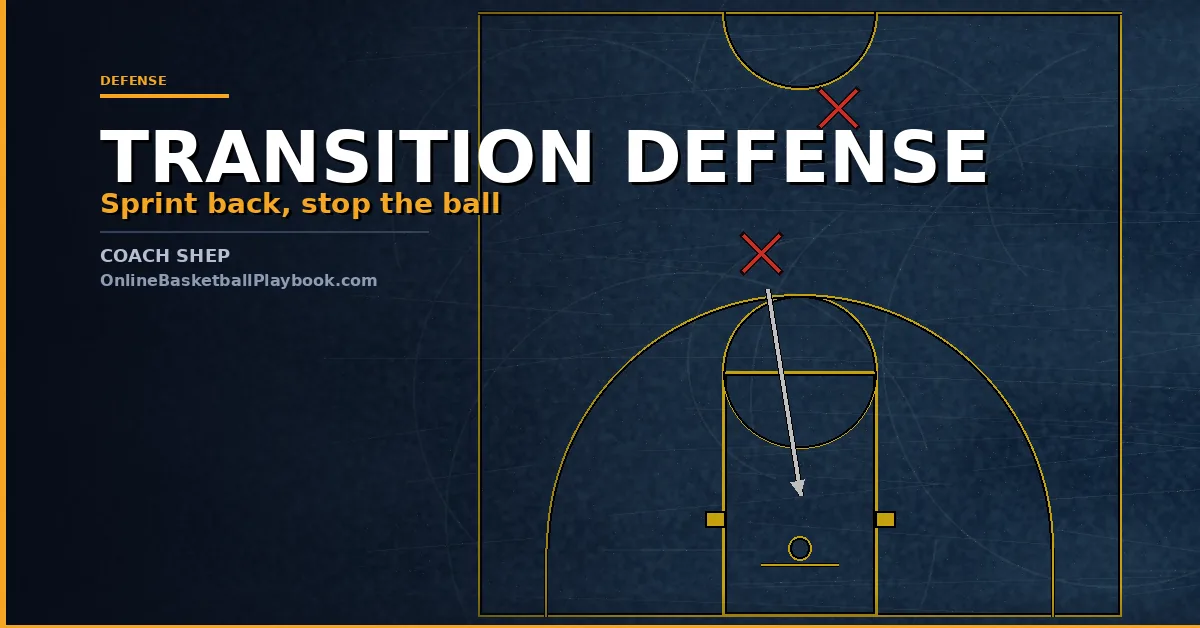
Transition Defense Basketball: Get Back, Stop the Ball, Match Up
Transition defense basketball: who sprints back, rim or ball first, where to pick up the ball, matching up, 2 on 1 and 3 on 2 rules, and the drills.
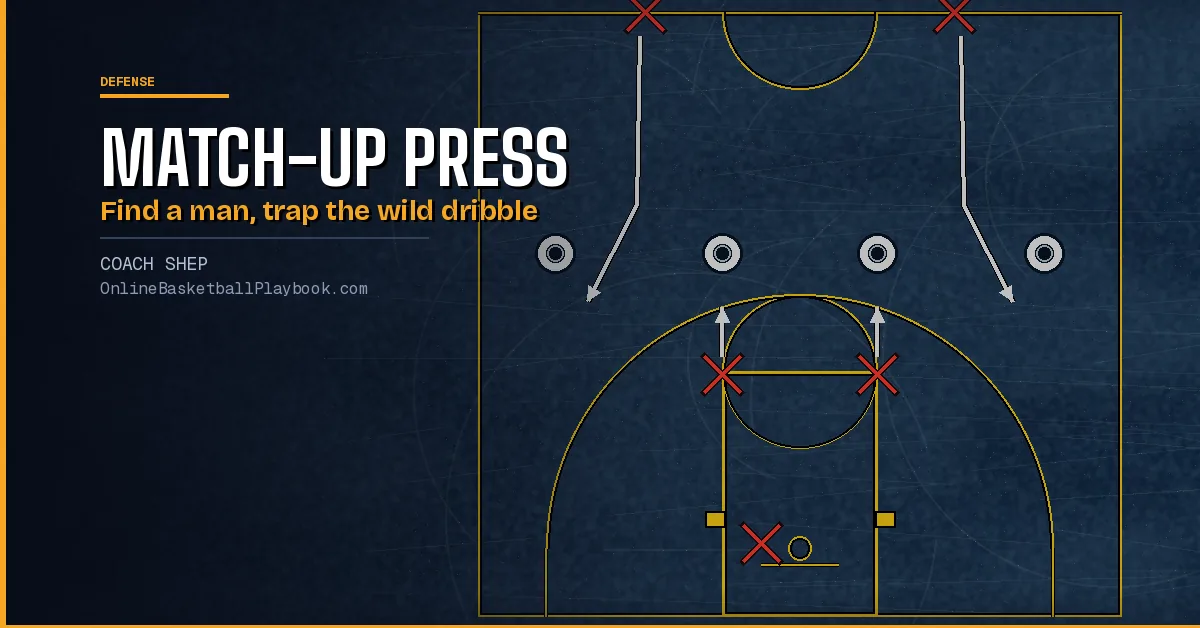
Match-Up Press: Matching Up, Who to Trap, Calls and Drills
The full-court match-up press: matching up from spots, box and diamond, trapping the uncontrolled dribble, the coffin corner, pressing by shot and call menus.
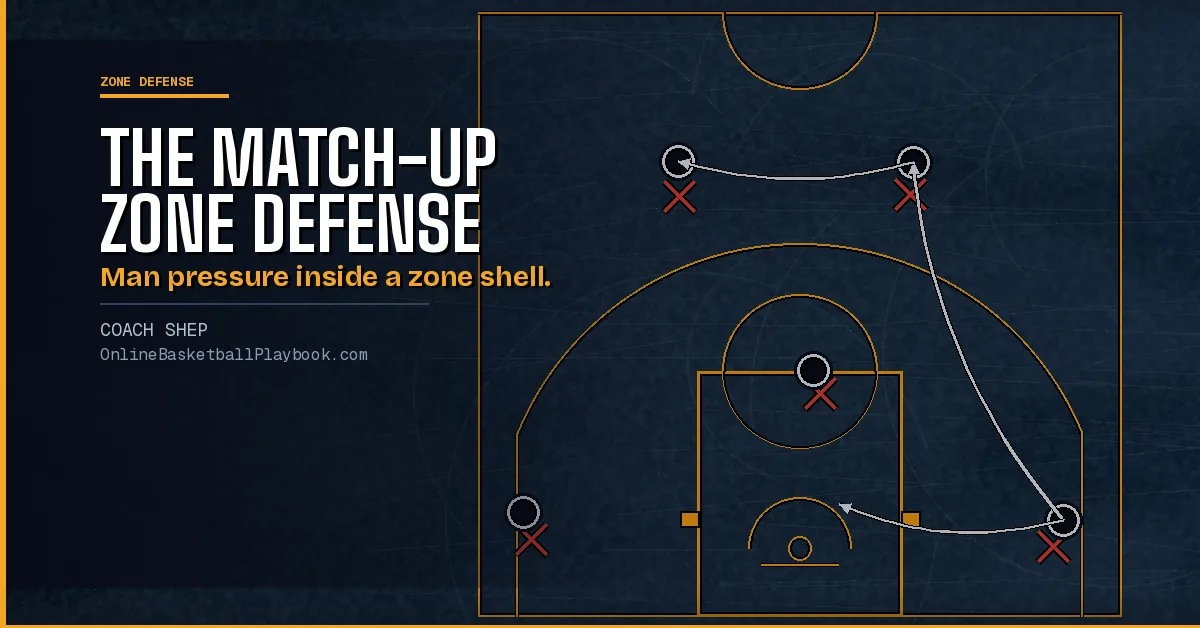
How to Coach the Match-Up Zone Defense (Complete Guide)
The hybrid defense that looks like a zone, plays like man, and confuses every scout who tries to figure it out.