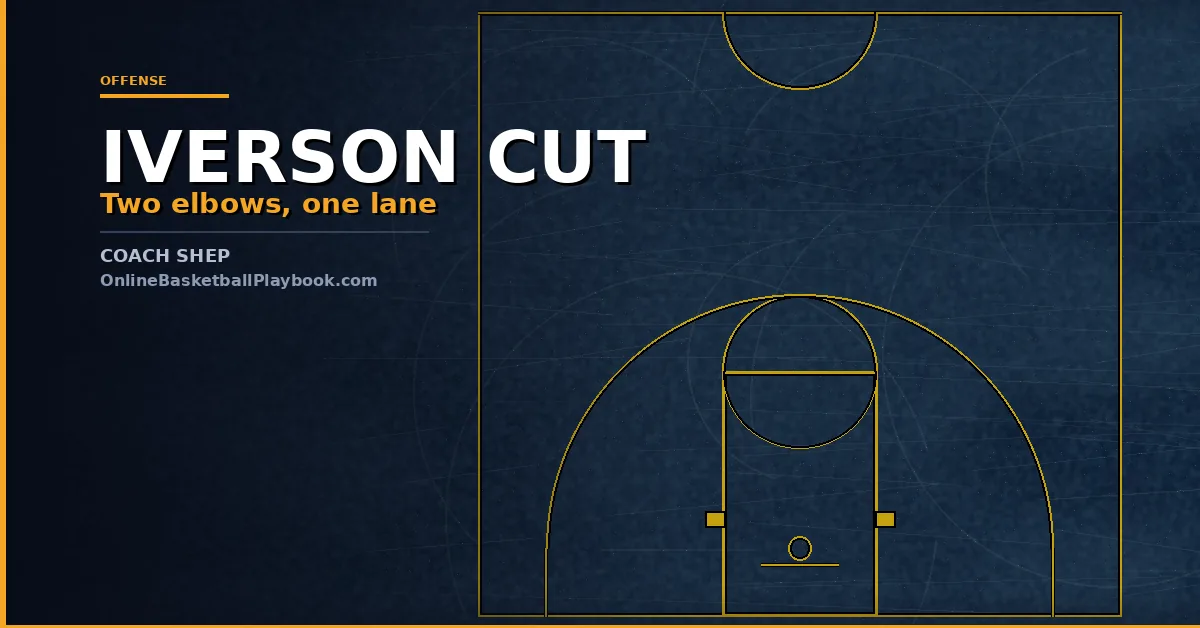
The Iverson cut moves a perimeter player from one side of the floor through a narrow lane between two elbow screeners and out to the ball-side slot. It is a screen-the-screener cousin of the zipper cut and shows up in quick hitters after a guard passes and clears. Screen taxonomy and footwork live on basketball screens. Compare zipper timing on zipper cut basketball.
Run the cut from a 1-4 high or horns look so both elbows are occupied. The passer typically clears weakside so the cutter has a clean catch lane. This page covers set-up, common second actions and defensive reads without turning into a full play call sheet.
Cut Path and Timing
The cutter starts on the weakside wing or corner. On a trigger pass to an elbow or post, both bigs set a tight stagger: first screener near the lane line, second near the elbow. The cutter runs through the slot tunnel, not around the top.
- Speed: Sprint the first step so defenders cannot slip under both screens.
- Shoulder rub: Graze the second screener's hip to shrink the gap behind you.
- Exit: Pop to the slot with hands ready; feet pointed at the basket.
Roles for Passer and Screeners
Passer (usually 1). Pass to the elbow or wing trigger, then clear to the weakside corner. Clearing late invites a dig and clouds the kick-out.
First screener. Legal screen angle, knees bent, hands inside the frame. After the cutter passes, roll or rescreen depending on your package.
Second screener. Sits higher, ready to cross-screen for the first screener or step into a ball screen on the catch.
Weakside players. Hold court balance. One weakside corner stays occupied so help cannot ignore the cut entirely.
Offensive Reads After the Catch
On the catch at the slot, the same four reads you teach on any slot catch apply:
- Turn the corner if the hedge is late.
- Pull up if the big drops.
- Hit the roll after a quick ball screen from the second screener.
- Skip weakside if both help defenders stunt middle.
A common second action sends the second screener into a pick and roll while the first screener dives or sets a cross for the weakside wing. Quick-hitter timing is similar to staggered zipper entries on how to run quick hitters.
Zipper, Elevator, Floppy and Flare
These cuts differ by screen angle and cutter path. Coaches mix them in the same week so players learn names, not one choreographed look.
- Zipper: Down screen from the elbow toward the top. Cutter runs up, not through. See zipper cut basketball.
- Elevator: Two screeners close like doors after the cutter passes between them. See elevator screen.
- Floppy: Double screen along the baseline freeing cutters to the wings or corners. See floppy action basketball.
- Flare: Cutter fades away from the ball off an angled screen. See flare screen basketball.
The Iverson cut is shallower than a zipper and more horizontal than a straight elevator entry. Tag each repetition in practice so language stays consistent.
What Defenders Try to Do
Off-ball defenders either chase over the stagger, switch both screens or jump the gap to steal the slot catch. On a chase, the cutter can reject the second screen and backcut. On a switch, post the smaller mismatch or immediately flow into a ball screen.
Teach cutters to read the trail defender's shoulder: if it is turned into the lane, curl tight; if it is high, straighten to the slot.
Drills and Play Library Reps
Install without defense first: 5-on-0, pass and cut, one second action. Add guided 3-on-3 where defenders must announce switch or chase.
Play library shooting reps build the foot speed of the cut:
- Iverson Over Top: flat sprint wing to wing above the elbows.
- Iverson High-Low: corner climb past a low cone then over a high one.
Cross-screen series that pair with shallow cuts appear on cross screen basketball. For live advantage reps after the catch, use drive and kick drills.
Questions Coaches Ask
What is an Iverson cut in basketball?
A shallow cut through staggered elbow screens from weakside to the ball-side slot, usually after a guard passes and clears.
How is an Iverson cut different from a zipper cut?
A zipper runs up toward the top off a down screen from the elbow. An Iverson runs laterally through the elbows toward the slot.
Who should run the Iverson cut?
Any guard or wing who needs a catch at the slot without fighting face denial on the wing. Posts can run it in compact lineups if they can handle a slot catch.
Screen fundamentals continue on down screen basketball and back screen basketball when you build a full screen menu.
Get the next coaching guide in your inbox
One email when a new guide or diagram set goes up. Free.
Want the printable playbook packs?
Playbook packs: zone attack, press break, press defense, out of bounds, quick hitters, practice plans and the youth turnover cure, each a printable PDF. Or draw your own version free in PlayDraw.
See the playbook packsMore Guides From This Batch
- Youth Basketball Practice Plans: Timed Blocks by Age Band
- Basketball Shooting Games: Competitive Reps That Transfer
- Cross Screen Basketball: Set, Use and Defend the Lane Cross
- 3-on-2, 2-on-1 Drill: Full-Court Advantage to Disadvantage
- Drive and Kick Drills: Paint Touches and Kick-Out Decisions
- Offensive Rebounding Basketball: Crash Rules and Putbacks
- Transition Defense Drills: Get Back, Match Up and Slow the Ball
Back to Basketball Screens and every Offense page.
Keep Building
Related breakdowns
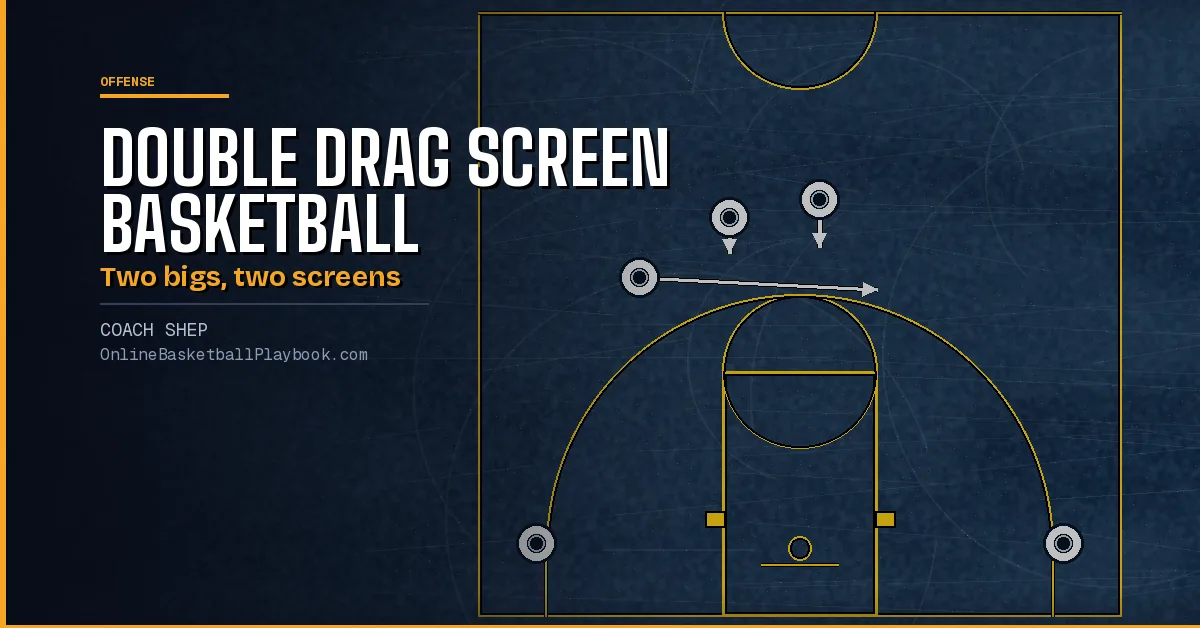
Double Drag Screen Basketball: Roll, Pop and Slip
The double drag screen explained: two trailing bigs screen in turn for the ball handler, with the roll and pop rules, the slip, the reads and the coverages.
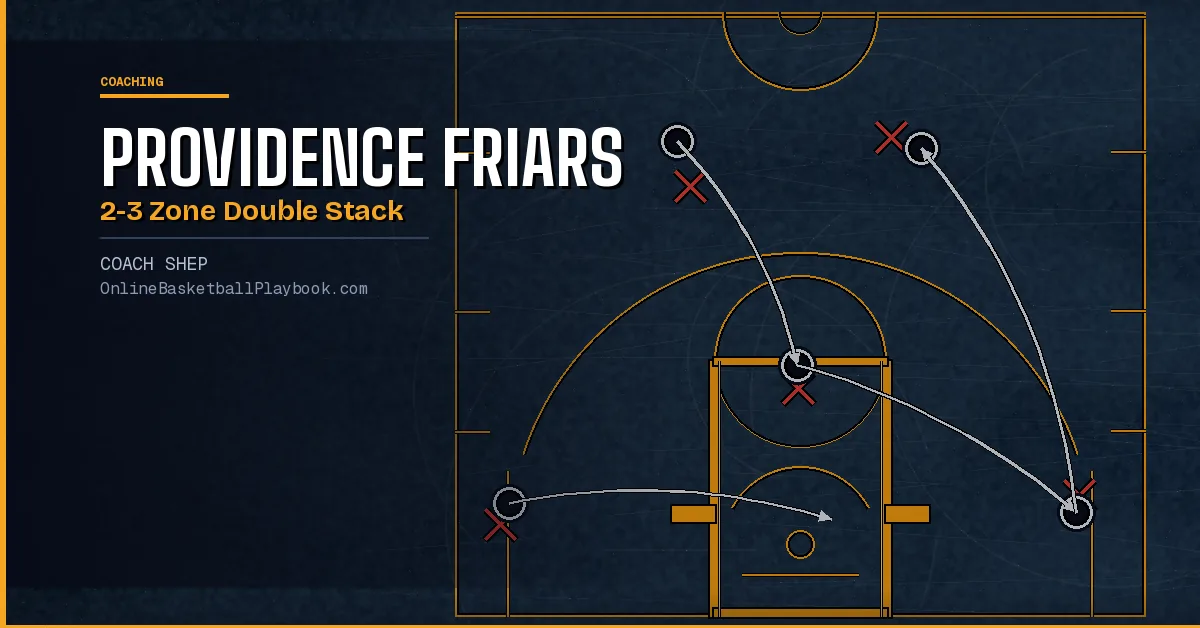
Providence Friars 2-3 Zone Low Double Stack Post Flash Basketball Play
Providence Friars 2-3 Zone Low Double Stack Post Flash Basketball Play
Offensive Rebounding Basketball: Crash Rules and Putbacks
Offensive rebounding basketball: crash rules, pursuit angles on shot location, putback footwork and drills that pair with defensive box-out teaching.