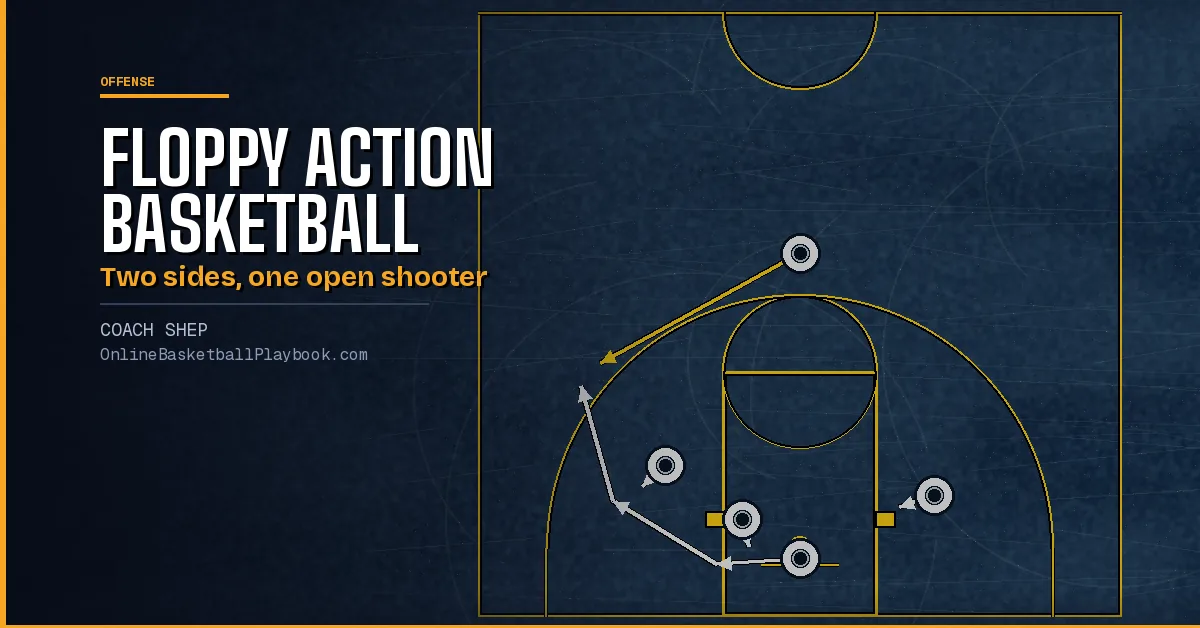
Floppy action basketball starts a shooter under the rim with a screen waiting on each side of the lane. In the common version one side has a single screen and the other a staggered double screen, and the shooter reads his defender to pick a side. A second shooter often goes the opposite way, so a defense that takes one side away still gives up a catch on the other.
This guide covers each version, the reads, the screeners' jobs, the finishes that attach to a floppy play, the defense and the teaching. The single screen is on down screen basketball, and two screens for a shooter who starts in the corner are on corner stagger action.
What Floppy Action Is
Every version puts one or two shooters near the basket with screeners on both sides of the lane.
- Single and stagger. One shooter under the rim, a single screen on one side and a staggered double screen on the other. He reads his man and takes either side. FIBA's glossary lays it out by position: point guard out front, shooting guard at the basket, a big screening down on each side and the small forward adding a stagger behind one big.
- Two shooters under the rim. Both shooters start at the basket with a screener beside each, and each comes off a screen to a wing. In the cross version they swap sides first.
- Floppy from horns. The bigs start at the elbows and the shooters in the corners. Both bigs screen down at once, and each shooter reads his own defender.
The single-and-stagger picture is also called single-double, and floppy is sometimes called stack. Floppy answers a defense that top-locks single screens. With a screen on each side, taking one side away leaves the other open.
The Base Floppy: One Shooter, Two Choices

One way in is from a 1-4 high set. The point guard calls it, both wings run the baseline, and the shooter stops close to the rim. The bigs at the elbows turn and follow them down. The other wing screens just inside the paint and the bigs set up a foot outside the blocks, which leaves two screens on one side and one on the other.
Once the shooter's defender is through, the inside screener goes the other way. He comes off the single if the shooter took the stagger, and off the stagger if the shooter took the single.

Everyone must know who cuts first, so the right player sets the inside screen. Then the screens:
- Angle. Set each screen up the lane and off the lane, an angle the cutter can use that also leaves room to slip.
- Spacing. Space the two stagger screens apart and have the shooter set up the first before he uses the second, or one defender covers both.
- Hold. Plant the feet and stay still until the cutter is past.
The passer at the top of the key has up to four targets, two shooters and two bigs. He delivers on time and on target, and if his own man overplays the pass, he drives and drops it off to a big.
Run the base until the shooter reads his side and the second cutter waits his turn.
Two Shooters Under the Rim
Here two shooters stand under the rim with a screener beside each. In the cross form each runs under the basket and comes off the screen on the far side, and the passer can hit either one.

One cutter goes first and stays low. The other waits until he is past. The floppy perimeter drill builds that timing from the blocks. The cross is optional. The floppy double baseline set keeps each shooter on his own side, one cutting to the right wing and the other clearing to the left corner for a skip pass if both defenders chase the first cut.
This version wants two players who can shoot from the wing. If the defense loads up on one, the other becomes the outlet and catches while the helper is busy elsewhere. In one cross version the next phase screens the screener: the far big comes across the lane off the ball-side big's screen to the block, and the wing feeds him.
Decide who goes first and rep the two cuts until they never collide.
The Shooter's Reads
The shooter reads his own defender as he leaves the rim and again at the screen.
- The base cut. Come straight over the screen to the catch on the wing.
- The defender trails. Curl tight around the screen into the lane, all the way to the rim if he trails late. An athletic shooter on that curl is a lob target.
- The defender goes under the screen. Fade outside for a three.
- The defender cheats over the top. Fade to the baseline, or back cut to the rim.
- The defender overplays the stagger side. Reverse and use the single. A tight defender may need several fakes first.
- The defense switches. Post the screener on his smaller man, or clear the screeners and isolate the shooter on the wing.
Read the defender, commit to one cut and arrive ready to shoot.
What the Screeners Do After
A floppy screener has a second job the moment the shooter is past. Teams pick from these:
- Duck in. Step toward the rim for a quick pass. A screener whose defender helped on the cutter now has a smaller man inside.
- Seal and space. When a shooter catches on a wing, the nearest big seals low and the other lifts to the high post to give him room.
- Slip. If his defender jumps out to block the shooter's path, the screener slips to the rim. If the baseline screener's defender comes up to stop that slip, the baseline screener heads to the rim for a lob.
- Screen the screener. The top screener of the double screens down for the low one, who pops, or rolls on a switch. Or the low one back-screens the top one for a lob.
- Step up for the ball. A big steps up just outside the elbow to catch and start the elbow game. In another form, the screener on the side the shooter chose flashes to the elbow and the shooter cuts backdoor.
- Set a ball screen. The screener the shooter used follows him out and screens for him.
- Flare the other shooter. If the shooter turns down the stagger, a stagger screener flares the second shooter to the corner for a three.

Give each screener one job per call, the same job every time. The screener's reads are on screener reads: roll, pop or slip.
Finishes and Tags
Floppy into a pick and roll. The shooter catches on the wing and the big he came off sets a ball screen for him. He can shoot or drive, hit the big rolling to the rim, or kick out to the second shooter on the far wing. In a second form the ball-side big screens for the second shooter. In a third, the passer hits the first shooter and cuts away, and a big sprints out into a side pick and roll. The reads after the screen are on pick and roll.

Floppy elbow. If neither shooter is open, a big steps up just outside the elbow for the pass from the top of the key. As he catches, the shooter on that side back-cuts, and if nothing is there he runs out to the far corner. It can continue into a pinch-post handoff, a down screen into another handoff, and a back screen for the big.

- Into a backdoor. A ball screen and a swing follow the floppy, then two players step toward each other before one cuts backdoor. More are on backdoor triggers.
- As an entry. It can serve only to get into the offense, flowing into the regular actions when nothing comes. A live-action series can open with a floppy to hide what follows.
- As a tag. In five-out offense, floppy is a tag added after a Chicago action handoff or a pin-down curl, and another version runs the shooter up from the corner off double screens. See 5-out motion offense.
- Out of bounds. From a box set under your own basket, the shooter inbounds, walks his man into the middle of the key and comes off a gate screen to one side or a single screen to the other. More are on baseline out of bounds plays.
Pick one finish per call and run it until the second option is as sharp as the first.
How Defenses Guard It, and the Counters
- Show and recover. The screener's defender shows to push the shooter wide while the shooter's defender chases, then both recover and deny. The single gets the same hard show. Bigs stay on bigs, so no big screener posts a small defender.
- Pick his side for him. The shooter's defender uses his body to keep him off his favorite side, and the ball defender pushes the ball toward the sideline away from him. Another version forces the point guard to his weak hand and takes away strong-side slips.
- Switch. A body stays on the shooter, but a screener now posts a smaller man, so switching teams get ready to trap the post on that catch.
- Top-lock. Top-locking takes one cut away. Against floppy that covers one side, and the shooter goes the other way.
- Down on the pick and roll. When floppy turns into a side pick and roll, one defensive answer is down coverage. See how to defend the pick and roll.
The offense has an answer for each.
- A denial on one side. Go the other way, or back cut.
- A hard show. The screener slips.
- A switch you know is coming. Screen your own man and use your best shooter as a decoy.
- A switch you can plan for. Put your biggest player out top and your smallest in the corner, so the switch builds a mismatch.
Scout how they guard it and have the counter ready. The techniques are on defending screens.
Teaching Floppy
- Cutter timing first. Walk the crosses with the two shooters alone, add the screeners, then the passer, then defenders.
- Options 5-on-0. Run the full set with every option against air for a minute at a time.
- Whole-part-whole. Show the whole set, break it into 2-on-2 down screen and post-up work, go 4-on-4 with the base screens, then scrimmage.
- Catch into a pick and roll. A guard comes off the floppy exchange and either attacks or takes a ball screen, finishing with a floater. It suits quick guards who can shoot.
- Make the defense guard it. Call floppy in shell, including floppy into a cross screen, so the defense guards it live, and run 4-on-4 floppy defense.
- Move the shooter. Start different shooters under the rim so the defense cannot anticipate him.
Teach the cuts, then the reads, then add a defense. More are on drills to teach off-ball screens.
Other Meanings of Floppy
Here floppy means shooters starting at the basket with screens on both sides. The word also shows up for these:
- A wing-entry ball-screen series. The name is also used for a set of side pick-and-roll options after a wing entry.
- A down screen and an away screen from the post. After an entry cut, a shooter comes off two screens from the post spot for a late catch.
- Any screen for a shooter near the baseline. A single screen that frees a shooter to pop out for a three is sometimes called a floppy screen.
Check the diagram before you borrow a floppy call.
Questions Coaches Ask
What is floppy action in basketball?
A set that starts a shooter under the rim with a screen on each side of the lane, usually a single on one side and a stagger on the other. He reads his defender and picks a side.
What is the difference between floppy and a stagger screen?
A stagger is two screens in a row for one cutter on one side. Floppy puts screens on both sides of the lane and lets the shooter choose, and one side is often a stagger.
Who starts under the rim in a floppy play?
The shooter. In the two-shooter version both shooters start there, each with a screener beside him.
How do you defend floppy action?
Show and recover, steer the shooter to one side, switch and trap the post mismatch, or top-lock. The offense answers by going the other way, back cutting, slipping or screening its own man.
Is floppy the same as single-double?
The picture is the same. A shooter at the basket chooses between a double screen and a single screen.
Every diagram on this page uses the symbols on how to read a basketball play diagram.
Get the next coaching guide in your inbox
One email when a new guide or diagram set goes up. Free.
Want the printable playbook packs?
Playbook packs: zone attack, press break, press defense, out of bounds, quick hitters, practice plans and the youth turnover cure, each a printable PDF. Or draw your own version free in PlayDraw.
See the playbook packsRelated Guides
- Zipper Cut Basketball: Zipper Screen, Action and Reads
- Step Up Screen Basketball: The Step-Up Ball Screen Explained
Back to Basketball Plays and every Offense page.
Keep Building
Related breakdowns
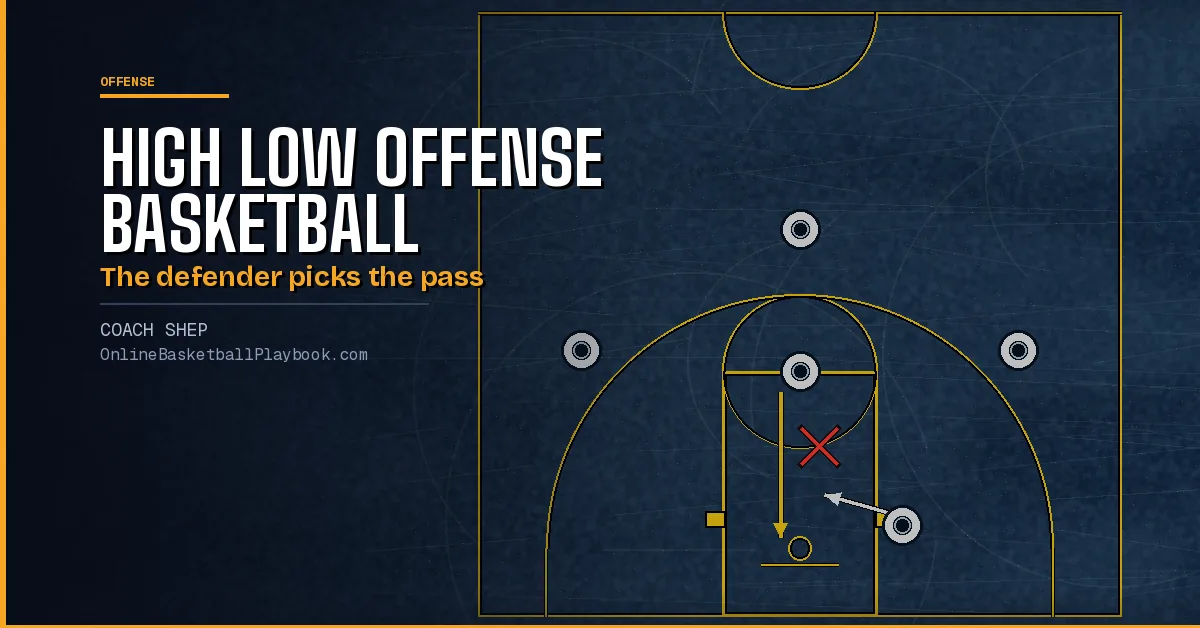
High Low Offense Basketball: Reads, Counters and Zone Rules
High low offense basketball explained: the two-post shell, the lob and bounce reads, answers to a front, down-screen reads, 1-4 low sets and the hi-lo against zones.
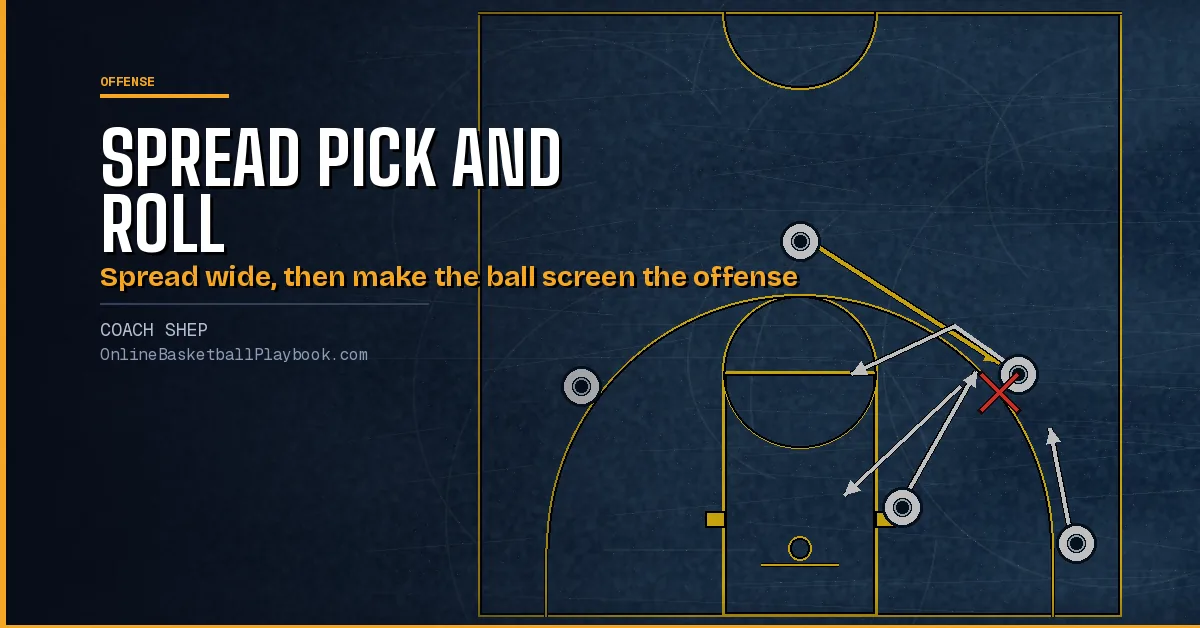
Spread Pick and Roll Offense: Flat Screens, Reads and Counters
Billy Donovan's spread pick and roll offense step by step: the trail pass, the angled wing screen, the second side, the flat screen and the counters.
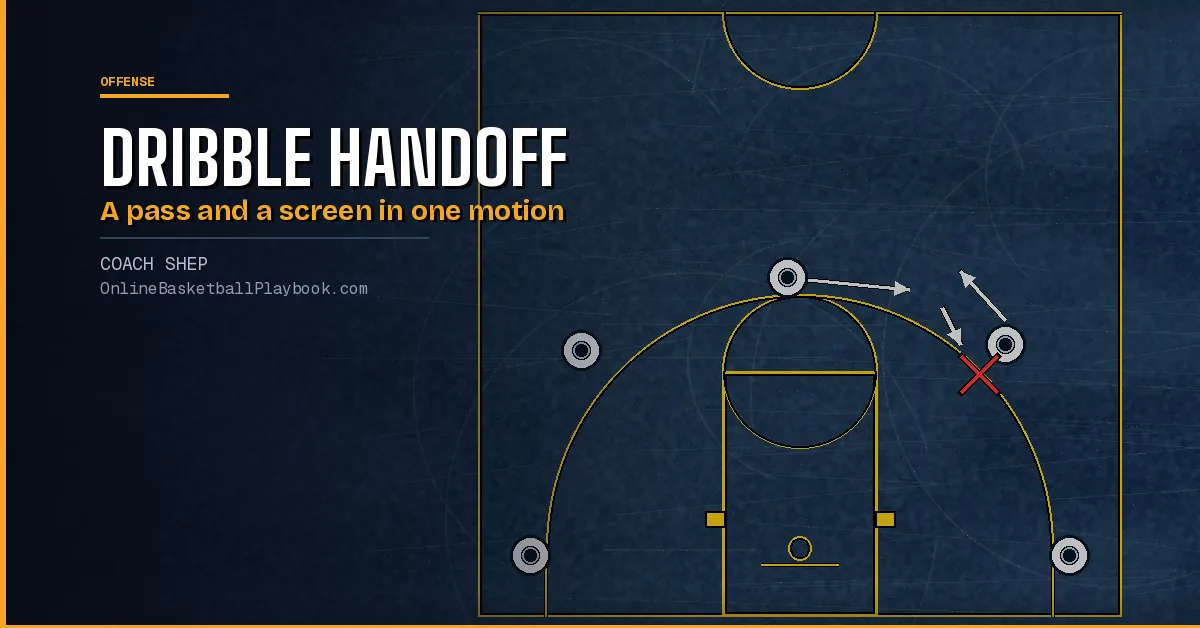
Dribble Handoff: Types, Reads, Counters and How to Defend It
The dribble handoff in basketball: the types of handoff, how the giver delivers it, the reads for both players, the counters, and how defenses guard the DHO.