How to become a basketball coach has more than one answer, because there is no single door into the job. People get into coaching through youth and recreation teams, school jobs, club and AAU teams, private training and, for a few, college staffs. What the paths share is that coaching is learned by coaching, and that most jobs go to people the hiring coach already knows and trusts.
This guide covers the skills that separate coaching from playing, the paths into the job, the entry-level college roles, coaching education, how to build a network and find mentors, and what to teach your first team. The rest of the coaching guides are on the coaching hub.
Coaching Is Not Playing
Having played the game does not make someone a coach. A playing background helps a candidate stand out and gives him drills to use, but coaching asks for a different set of skills, and a former player has to move from a player's point of view to a coach's, even one who played at a high level.
The most important requirement is the simplest one, more experience. That experience builds three things.
- Emotional maturity. Knowing when to push a player and when to encourage him.
- An eye for players. Seeing what each individual player needs.
- Study. Watching other teams, past film and other coaches, on purpose.
Confidence counts too. A coach has to give an opinion on a player or a play and sound sure of it, because hesitation makes others question his judgment. Building your own beliefs about the game is covered on basketball coaching philosophy.
Play it, then learn to coach it.
How to Become a Basketball Coach: The Paths
Many coaching jobs are part time, so many coaches hold another job. These are the common ways in.
| Path | What it looks like |
|---|---|
| Youth and recreation | Volunteer teams for young players. What to teach is under Your First Team below |
| School coaching | Middle school, freshman, junior varsity and varsity jobs. Schools prefer to fill coaching openings from their own staff, so a teaching certificate helps |
| Club and AAU | A low-commitment way to try coaching and build a resume, though the pay is small. See what is AAU basketball |
| Private lessons and training | Individual skill work, where creative marketing and certifications help |
| College | Usually reached through high school, junior college or AAU coaching, or through a volunteer or graduate assistant spot (below) |
Teaching also fits coaching because school ends around mid-afternoon and teachers have weekends and summers off. Coaching pay should be read realistically. Outside professional and major college jobs, the reward is the players' respect and the difference you make more than a large income.
The varsity job is its own competition. Playing well in high school or college does not hand anyone a varsity position. The candidates who stand out bring experience, study and coaching certifications. What the varsity job itself involves is on high school basketball coaching, and the first season as a head coach is on first timers guide to head coaching.
Start where you can and keep learning.
Getting Into College Coaching
The first college job is about who you know more than what you know, and most coaches start by volunteering for little or no pay. There are three common ways onto a full-time college staff: a network at the college level, a standout resume, or having played at a major program.
Coach high school, junior college or AAU first. The most common path is to coach at one of those levels and develop good players. College coaches then call for evaluations, and those calls build the relationships and the resume. Honesty is the currency. Oversell one player and a college coach stops trusting your word.
A high school coach who wants to move up usually needs a pipeline of talented players to make the jump attractive to a college program.
Work college camps. Camps are another way to meet a college staff and show your work, though there are fewer college camps than there used to be as AAU and private camps have grown. How camps are run is on basketball camp.
Stay on as a volunteer or graduate assistant. Play for a coach, stay on as a volunteer or graduate assistant for two to five years while working other jobs, and get hired full time when a spot opens, often at the same school or one tied to that network. Even a coach with a strong high school record may have to start as a graduate assistant rather than in the job he wanted.
Know what the entry jobs are. Common first titles are Director of Basketball Operations, Film Coordinator and Director of Player Development. These are administrative jobs.
- Check the NCAA rules. The operations staff's limits on coaching and recruiting are set by NCAA rules for each division, so check the current NCAA manual for the school's division.
- Expect desk work. The operations director handles travel, game-day operations, facility scheduling, purchases, video, the budget, academic checks and the managers, and may even miss practice when the desk work calls.
- Watch the head coach. What he gets in return is a close view of how a head coach balances recruiting, academics, budgets and the media.
Do not count on job boards. Online postings exist, but they rarely work on their own.
- Postings go stale. A posted opening may already be filled, and a resume alone seldom gets a call back.
- Hires come through people. A coach describes his college hire as a chain of referrals that reached the one person who could influence the decision maker.
What the college job involves once you have it is on coaching college basketball, and a case for building a career on one system is on becoming a college basketball coach. What goes on a coaching resume is on basketball coach resume.
Build the relationships first, and the job follows.
Coaching Education and Degrees
Coaching certifications help a candidate stand out. The NFHS offers coaching education for high school coaches, including some courses taken remotely. State and school requirements for paid coaching jobs vary, so check with your state association and the school before you apply. Camps look for staff with real playing or coaching experience and certifications, and want every staff member certified in first aid and CPR.
A degree is the bigger step. The case for going back to school is that a coaching-related degree can move a volunteer coach into the school system full time, as a coach and a teacher, rather than keeping coaching as a side job. A degree also brings a network of people in the same field.
Get certified and keep studying.
Relationships, Networks and Mentors
Relationships are called the single most important factor in a coaching career, because almost nobody hires a coach he does not know well, and being known by people matters more than knowing them. The habits that build a network:
- Decide what the network is for. Your own growth, job openings, or ideas for your team.
- Meet people in person first. Clinics, workshops and seminars come first, online contact second. See basketball coaching clinics.
- Join associations and take part. Go to the conferences and join the discussions, rather than holding a card.
- Reach out on a schedule. A college operations director writes two letters a day to coaches he does not know and asks coaches on the recruiting road to dinner.
- Keep in touch when you need nothing. Short regular check-ins, and help offered before help is asked for.
The full guide is on building a strong coaching network.
Find a mentor on purpose.
- Hold up a mirror. A mentor holds up a mirror to your goals, shows you your blind spots, and pushes your growth without needing you to like him.
- Open rooms. He also opens rooms you could not enter alone, sometimes with one phone call.
- Not a friend. A mentor is not a friend, because his concern is your growth.
- Do not wait. Do not wait for one to appear.
Programs that pair young coaches with mentors are on mentorship program for young coaches.
Be known by many, and learn from one.
Working as an Assistant
Many coaches work as assistants before they run a program, and the reputation an assistant builds follows him to the next job. Assistants who moved up give the same few pieces of advice.
- Find the value only you bring. Recruiting, running camps, organizing the office, a presence on the bench. Know the specific thing a staff would miss.
- No job is too small. Trust is built through small, unglamorous tasks, not big moments.
- Listen first. Spend the first months on a new staff learning the program and what the head coach needs before you offer opinions, and come with facts when you are asked.
- Be loyal to the system. Teach the head coach's system with his words and cues, give your input, and never argue a point once it has been made.
- Make the head coach's job easier. Ask how you can help, and find and finish work nobody asked for.
- Be first in and last out. Coaching is work for grinders.
- Stay yourself. Never drop your own personality to fit a mold, because players and staff see through it.
The daily duties are on basketball assistant coach responsibilities, and the loyalty side is on characteristics of a loyal assistant coach.
Earn trust with small jobs done well.
Get the next coaching guide in your inbox
One email when a new guide or diagram set goes up. Free.
Your First Team
Many coaches start with a youth team. Youth coaching starts with fun, and one test of a season is whether the players want to come back. Success is not a layup or being the best player. A child who could not dribble at the start of the season and can at the end has succeeded.
- Plan every practice on paper. Keep each drill to about 3 to 5 minutes for young players, put a fun game between hard drills, teach the new skill early while players are fresh, and end on something positive.
- A ball for every child. Every player moving at once, no long lines.
- Teach the skill inside a game. Short instructions, then play.
- Meet the parents before the season. Set expectations by meeting or letter before the first complaint, and use a 24-hour rule after games. See the role of parents in youth basketball.
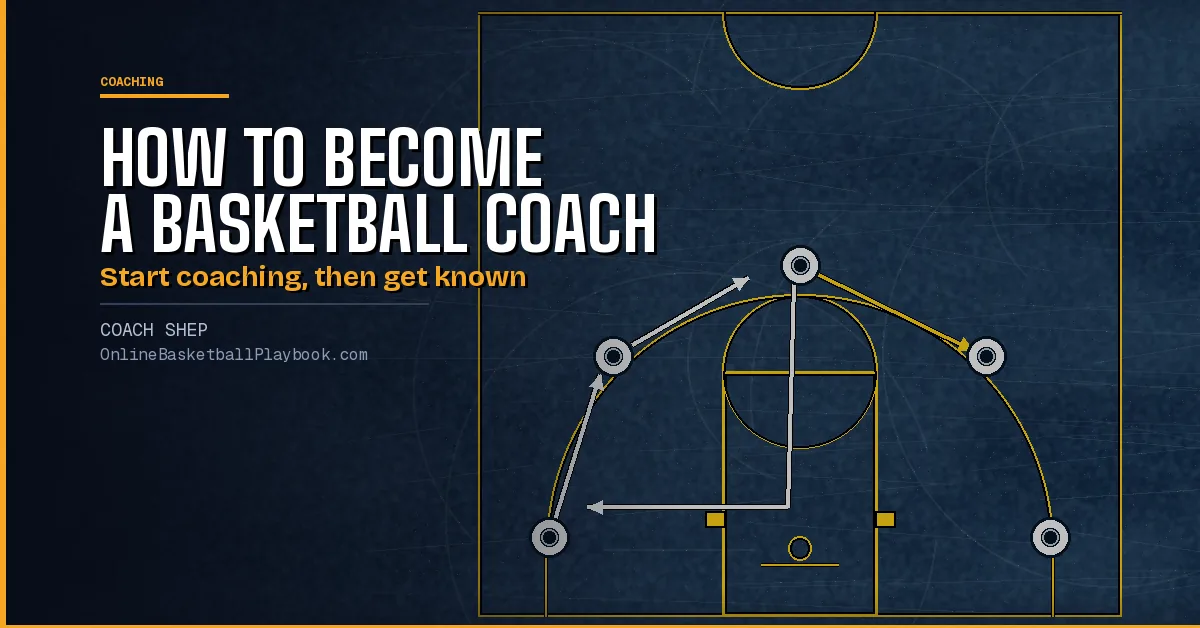
On offense, youth coaches teach how to play rather than a list of plays. A common youth 5-out has three rules: cut after every pass, fill to the ball, and back cut when denied.


The whole system is on 5-out motion offense, the youth season plan is on coaching youth basketball, and ten habits for a first-year coach are on coaching tips for new basketball coaches. Practice templates are on basketball practice plan.
Keep it fun, and teach them how to play.
Want the printable playbook packs?
OBP Pro members get the premium playbook packs: the zone attack, out of bounds and practice plan PDFs, plus each new pack as it is finished. The membership page lists what is in each one. Or draw your own version free in PlayDraw.
See what OBP Pro includesQuestions Coaches Ask
How do I become a basketball coach with no experience?
Start with a youth or recreation team, usually as a volunteer, or as an assistant to a coach who will let you help. Club teams are also a low-commitment way to try it and build a resume.
Do you need a degree to coach basketball?
Not for every job, but it helps most for school jobs. Schools prefer to fill coaching openings from their own staff, so a teaching certificate or a coaching-related degree opens those doors. Check your state association and the school for their requirements.
How do you become a high school basketball coach?
Coach at the lower levels first, study the game and other coaches, and add coaching education. The NFHS offers coaching courses, some of them online. A teaching job at the school makes a coaching opening easier to get.
How do you become a college basketball coach?
The common path is to coach high school, junior college or AAU, develop players and give college coaches honest evaluations, or to start as a volunteer or graduate assistant. Entry titles like Director of Basketball Operations are administrative jobs, and NCAA rules for each division limit what they can do on the court and in recruiting.
Is basketball coaching a full-time job?
Many coaching jobs are part time, so many coaches also teach or work another job.
More Guides From This Batch
- Horns Basketball Play: The Horns Set, Actions and Reads
- Youth Basketball Dribbling Drills: Cone Drills and Games by Age
- How to Draw Basketball Plays: By Hand and Online Free
Back to Coaching and every Coaching page.
Keep Building
Related breakdowns
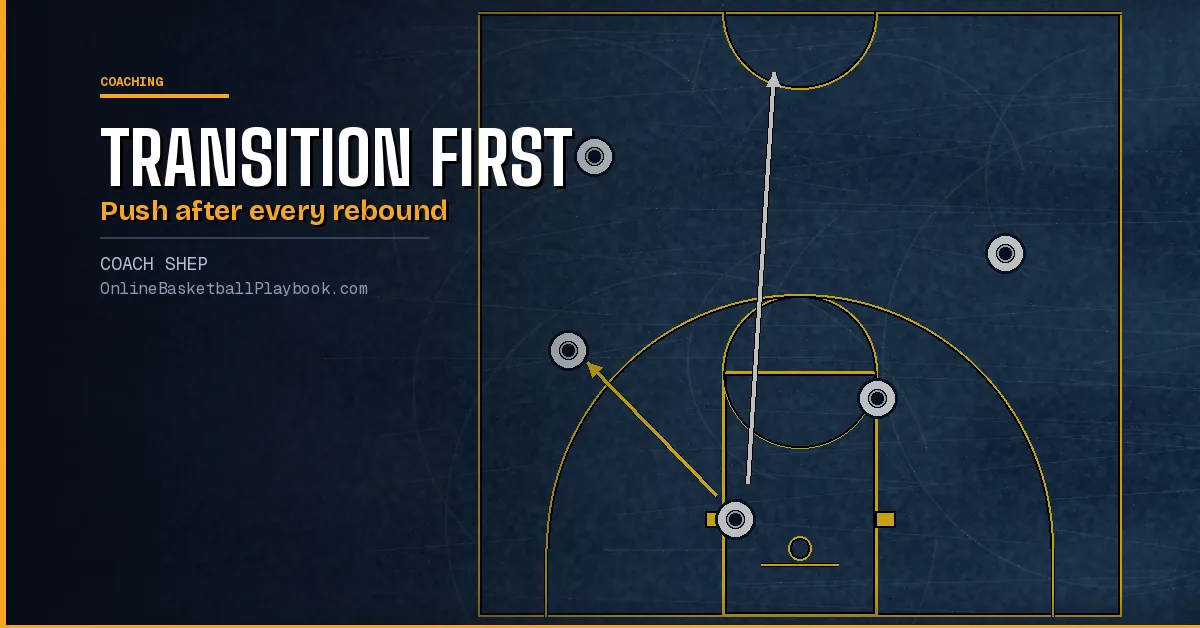
Transition First Program Model: Push, Defend, Compete
Coach Shep's transition first program model: three core beliefs, push after every rebound, layups and threes, no called plays, one contested shot, scored practice.
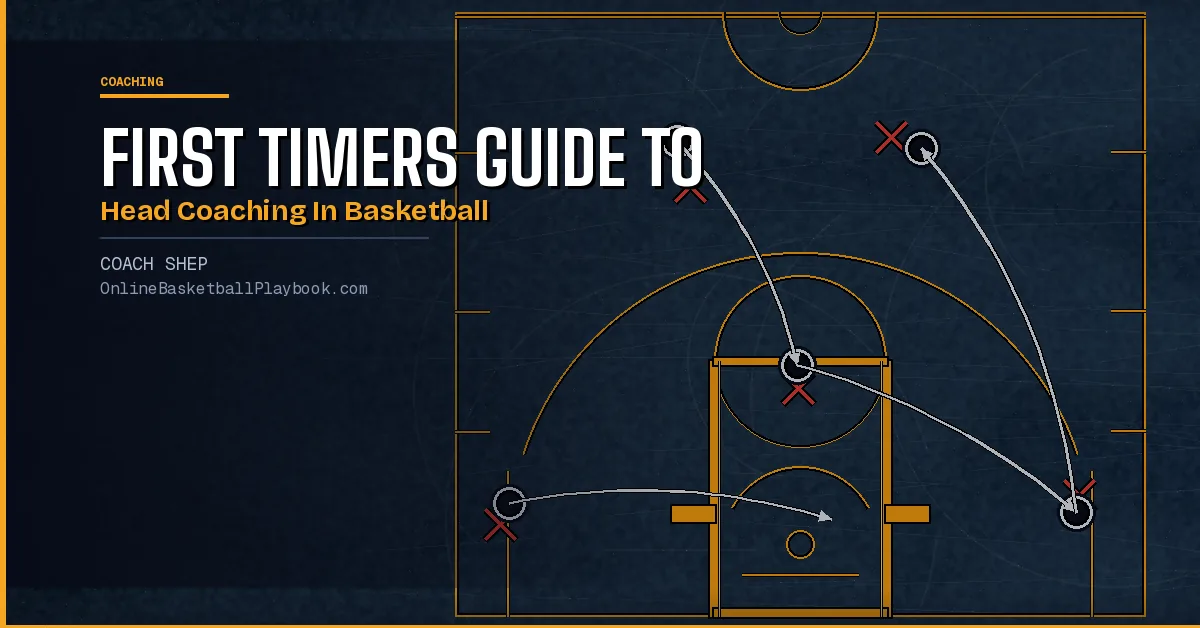
First Timers Guide to Head Coaching in Basketball
First Timers Guide to Head Coaching in Basketball
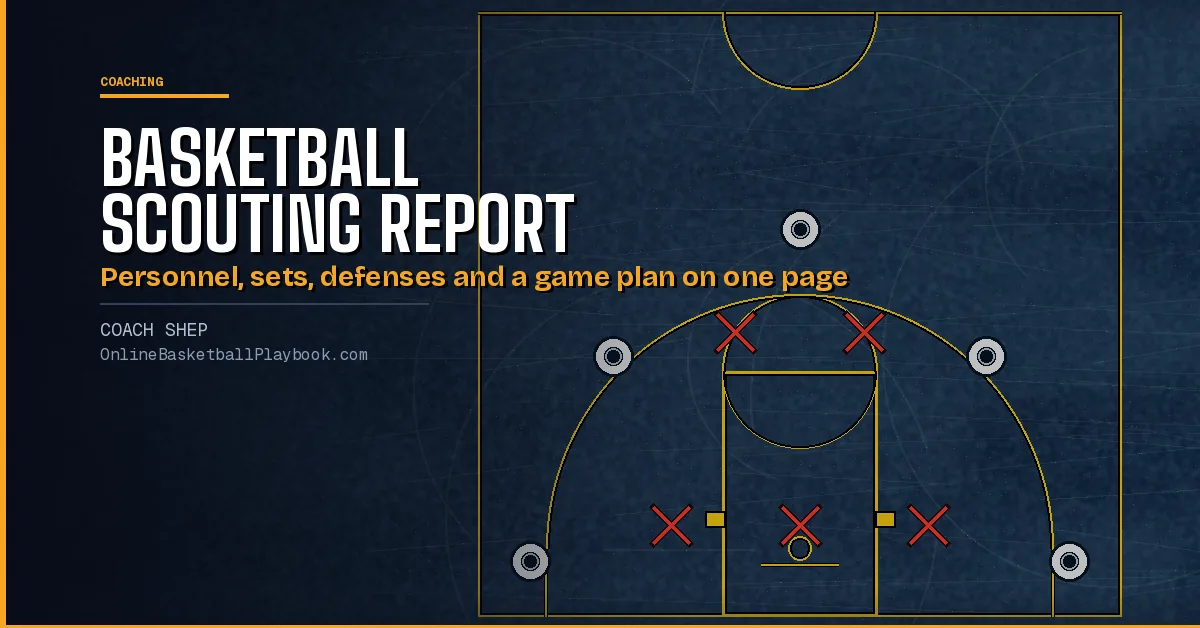
Basketball Scouting Report Template and How to Fill It Out
A printable basketball scouting report template with team, offense, defense, player and game plan sections, the questions to ask and how to brief players.