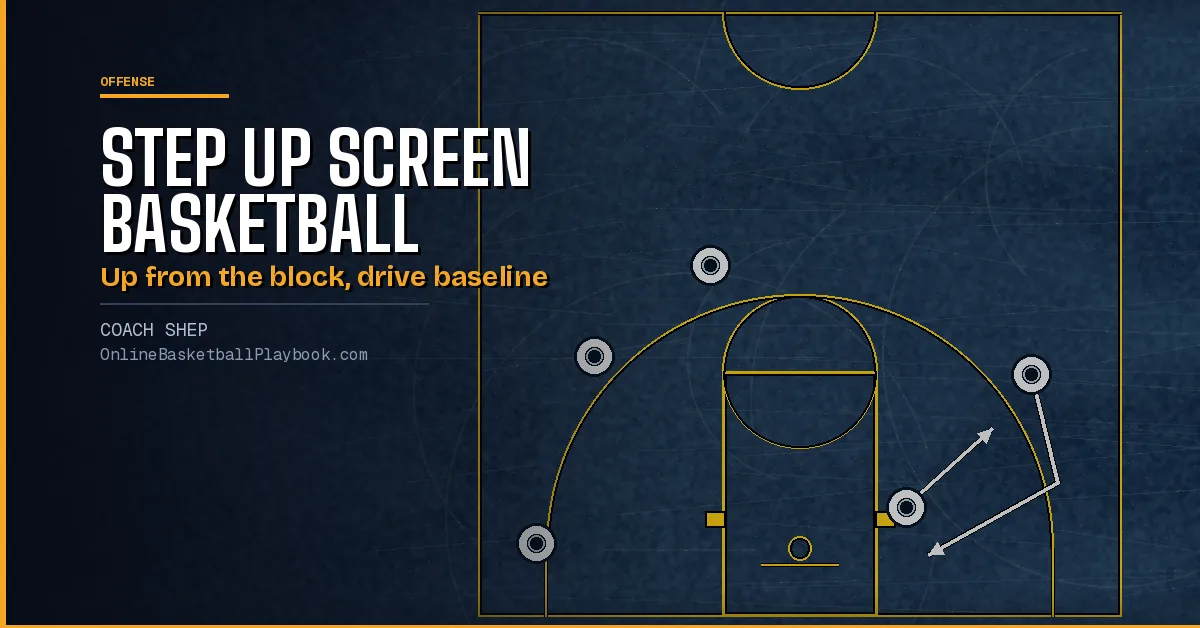
A step up screen in basketball is a ball screen set by a player who comes up from below the ball, often a big stepping off the block on the ball side. The handler, usually on the wing, uses it to turn the corner toward the baseline instead of toward the middle. Coaches also call it a step-up ball screen or a step-up pick and roll.
FIBA's terminology lists the step-up screen as its own type of on-ball screen. In that definition a big sets it, normally arriving from below the free-throw line, with his back parallel to the baseline, and the handler attacks toward the baseline. The same entry says teams use it when the defense plays ice. The general two-man game is on pick and roll, and the reads by coverage are on reading ball screens.
What a Step-Up Screen Is
The screener starts low, steps up to the handler's defender, and rolls as the handler drives past him toward the baseline.

One way to sort ball screens uses three angles.
- Get screen. Sends the handler to the middle of the floor.
- Step-up screen. Sends the handler toward the sideline and the baseline.
- Flat screen. Set in the middle third, so the handler can pick either side.
The step-up can come from a post off the block or the elbow. Not every one starts low. In one early-offense version a perimeter player sets it just above the wing, and in one half-court set the ball-side wing sets an early step-up for 1.
Surprise helps. The screener's defender often expects the screen on the middle side, so a quick step-up from the ball-side post can catch him unready to help. Decide who your step-up screener is, then rep it from both blocks.
The Step-Up Screen Against Ice
Ice is a side pick and roll coverage. The on-ball defender jumps to the middle side as the screen is called, which leaves the handler only the sideline and baseline side, away from the screen. The full coverage is on ice coverage basketball. The step-up turns that rule against the defense.
- Go where ice sends you, with a screen. Against a team that ices every sideline screen, the big steps up and the handler goes straight down the strong side. The on-ball defender's job was to send him down, so he is left trailing.
- Wait, then read. The handler holds for about one second off the step-up and reads his man. If the defender jumps the drive, he snakes the dribble back the other way.
- Flip it. When the defense ices a drag screen in transition, the screen is flipped into a step-up and the handler snakes the dribble back to the middle. From there the offense runs as it normally would.

Other coverages are on how to defend the pick and roll. Scout which screens the opponent ices, and call the step-up there.
What the Screener Does
The screener's job after a step-up depends on the coverage and on the player.
- Roll hard to the rim. The plain finish. In the handoff version he rolls to the front of the rim as the handler drives baseline.
- Short roll. He stops early on the roll, catches and shoots.
- Slip it against a switching team. As he arrives, he slips out. He slows down without stopping, and the ball attacks the gap.
- Screen low against a switch. He sets it on the low side and keeps the defender on his back, which opens a pocket pass.
- Roll or pop against a blitz. The handler gets the ball out of the trap at once, and the offense plays four against three.
- Ghost it. With a small lineup, a big ahead of the ball steps up and ghosts the screen, faking it with no contact.
The full list is on screener reads. Give each big the finishes he can make, and drill only those.
The Weak Side: Hammer, Flare, Clear
The step-up puts the ball on the baseline side of the floor, and the other three players have a job while it happens.
Hammer. A hammer is a weak-side screen for a shooter going from the wing to the corner while the ball drives baseline. In a false-motion version the 5 steps up, the ball attacks the baseline, and the 4 back-screens for a wing, who slides to the corner for the pass. A handoff-into-step-up version uses the same hammer.

Flare. In a roll-and-flare version the screener rolls hard at the rim while the other big loops behind the shooter's defender and sets a flare screen for him. More on flare screen basketball.
Clear the side. When a handoff turns straight into a step-up, the action is built to give the driver a cleared-out side. The other big relocates to the weak elbow and slides to an open window if his man drops. The guard who started the action fills to the wing behind the drive. It works best when the screener can shoot from outside, so his defender cannot sit in the lane. The screener has to pivot and set at once, and the handler can take one dribble toward the middle to give him time, because the quick change of direction draws moving-screen calls.

Pick one weak-side job per call.
Versions of the Step-Up
What changes from version to version is where the screener comes from and what comes before the screen.
- From the block. The base version, a post stepping off the ball-side block for the wing.
- From the elbow. The screener steps up from the elbow after the side has been emptied.
- On the break. The big reads his own timing. In front of the ball, he gets to the free-throw line and comes back for a step-up. Even with or behind it, he sets a drag. One double drag off the break allows a step-up or a side ball screen instead. See double drag screen and pace and space offense.
- Off an away screen. The guard catches coming off the away screen and the center twists or flips back into a step-up. It suits a shooting guard who can come off a ball screen for an open three. More on modern NBA offense.
- After a handoff. The giver turns and steps up for the player he just handed to, as in the frame above.
- Into a second screen. In early offense, the guard dribbles off a step-up above the wing and keeps going to the corner for a second ball screen. Or a teammate screens the step-up screener, who flares for the pass.
- As the counter. A reversal counter swings the ball, and the post sets a step-up for a pick and roll.
- As the fake. The big fakes a step-up and sets a down screen instead.
- As the opener. An early step-up opens the action, the screener clears to the corner, and the offense moves into a zoom action.

Other layers sit in the same ball-screen family, such as the back screen on the roller in Spain pick and roll. Add one version at a time, after the base step-up is clean.
Step-Up Plays in the Play Library
Five plays in our library are built on a step-up ball screen, each drawn step by step.
- Drag Push Stepup. 5 comes up from the right block for 1, who dribbles down to the right wing with the right corner empty.
- Drag 2 Rip 4 Stepup. 2 screens for 4 and 5 crosses away, so 4 steps up for 1 on an empty right side.
- Drag Rev 5 Stepup 1. A handoff swings the ball to 1 at the left slot, and 5 runs the baseline to step up for him there.
- Loop Stepup. 1 loops under the basket to the left wing, and 4 steps up from the left block the moment he catches.
- Empty-side step-up from the elbow. The left side is emptied, then 5 steps up from the left elbow for 2, who drives toward the left block.
The library rotation Low Post Spot Ups, Step Up uses the words for another job: the post moves up the lane line on a baseline drive, and no screen is set.
How to Teach the Step-Up Ball Screen
- Step-up shooting. Two lines and a coach on the baseline with a ball. The first player pushes the ball down the side and the first player in the other line steps up to screen. The handler passes to the short-rolling screener, who shoots, then the coach throws to the handler for a three. The screener rebounds his own shot, and the lines rotate.
- Drag next. Run the drag version right after, with a roll and a pop, so players learn two screens as two reads.
- The big's timing. In front of the ball, step up. Even or behind, drag. Small lineup, ghost. The big decides, not the point guard.
- The guard's order. Never leave before the screen arrives. Against ice, use the step-up, wait one second, read, and snake if the defender jumps.
- Against the blitz. Start ball-screen work from a step-up against a trap, get the ball out at once, and beat the closeout with two quick passes.
- Live 4-on-4. A multiple pick and roll drill mixes step-ups with pass and follow.
Keep the step-up and the drag as two separate calls.
Other Uses of the Words Step Up
"Steps up" is also a plain verb for a big coming to set any ball screen, even a flat one, as on spread pick and roll offense. On defense, a help defender steps up to meet a driver, which is help defense, not a screen. The name is also used for a wing screen that takes the baseline away and sends the dribbler to the middle, the opposite of the version on this page. Write the job next to the name on your call sheet.
Questions Coaches Ask
What is a step-up screen in basketball?
A ball screen set by a player coming up from below the ball, usually a big off the block, so the handler attacks toward the baseline. FIBA lists it as its own on-ball screen type.
What is the difference between a step-up screen and a drag screen?
A drag comes from a big even with or behind the ball in transition. A step-up comes from a big in front of it who comes back to screen. Drills teach a deep roll and a pop off the drag, a short roll and a three off the step-up.
Why use a step-up screen against ice?
Ice pushes the handler toward the baseline. The step-up puts a screen on that path, so the on-ball defender is left trailing.
Who sets a step-up screen?
Usually a post from the ball-side block or elbow, though some early-offense versions use a perimeter player.
What does the screener do after a step-up screen?
He rolls, short rolls, or slips early against a switching team. Against a switch he screens low and seals for a pocket pass, and against a blitz he rolls or pops.
Every diagram on this page uses the symbols on how to read a basketball play diagram. Quick-call sets built on ball screens are on quick hitters.
Get the next coaching guide in your inbox
One email when a new guide or diagram set goes up. Free.
Want the printable playbook packs?
Playbook packs: zone attack, press break, press defense, out of bounds, quick hitters, practice plans and the youth turnover cure, each a printable PDF. Or draw your own version free in PlayDraw.
See the playbook packsRelated Guides
- Floppy Action Basketball: Setup, Reads and Counters
- Zipper Cut Basketball: Zipper Screen, Action and Reads
Back to Basketball Plays and every Offense page.
Keep Building
Related breakdowns
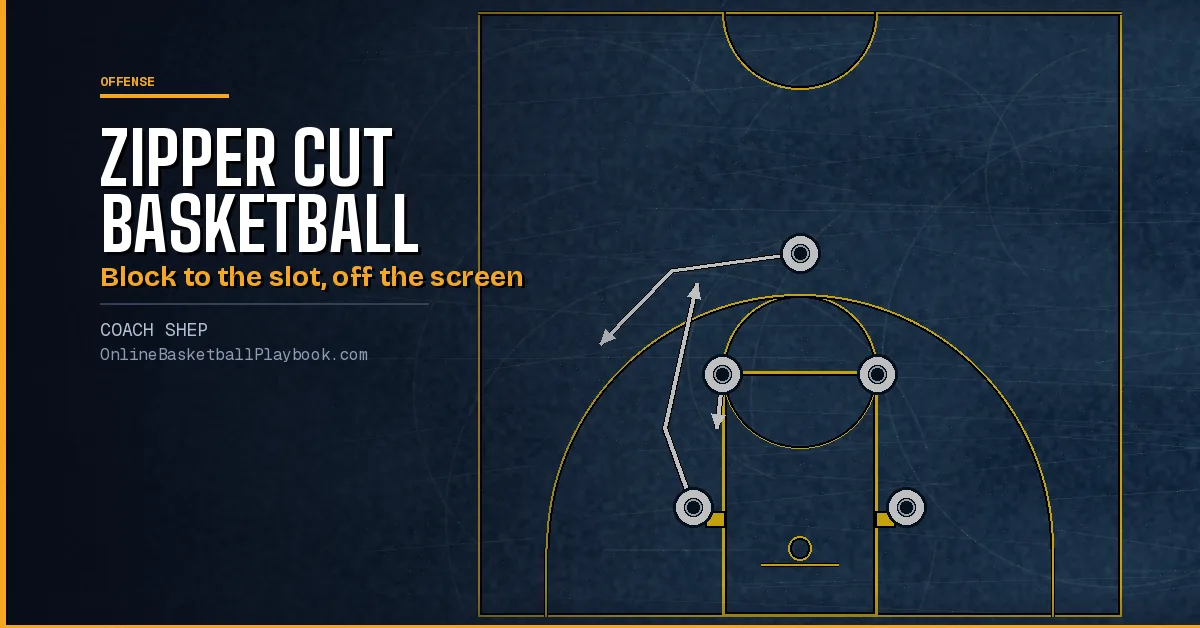
Zipper Cut Basketball: Zipper Screen, Action and Reads
Zipper cut basketball explained: the down screen that brings a player from the block to the top, where the screen goes, what the catch leads to and the reads.
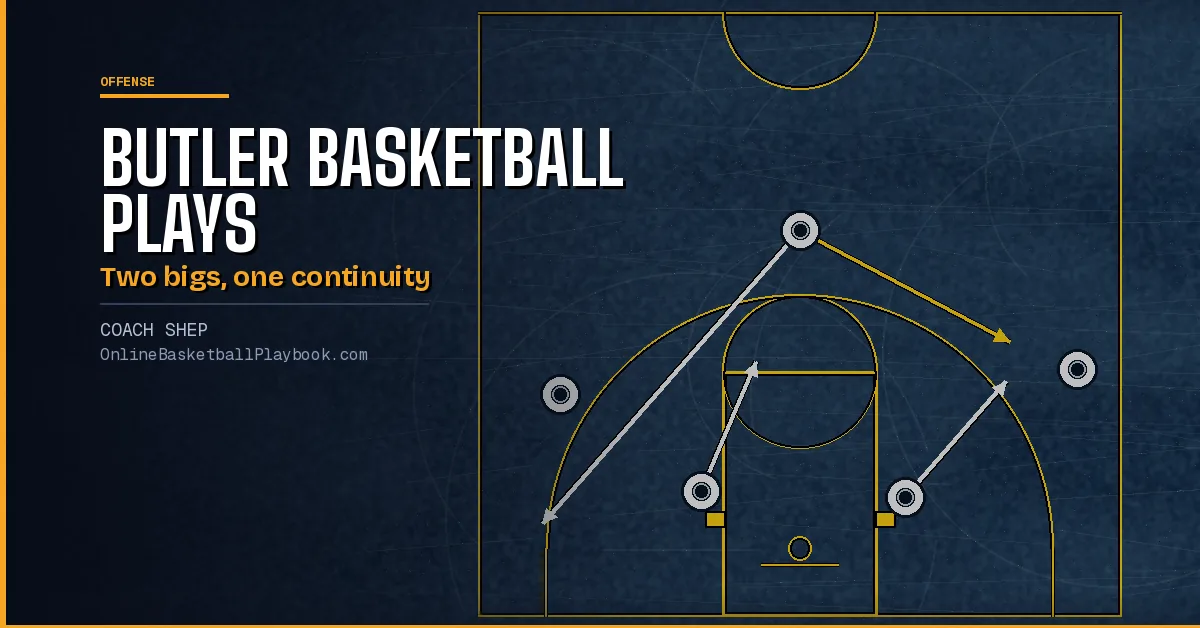
Butler Basketball Plays: Brad Stevens Ball Screen Sets
Butler basketball plays from the Brad Stevens ball screen package: every set drawn frame by frame, with where all five players go.
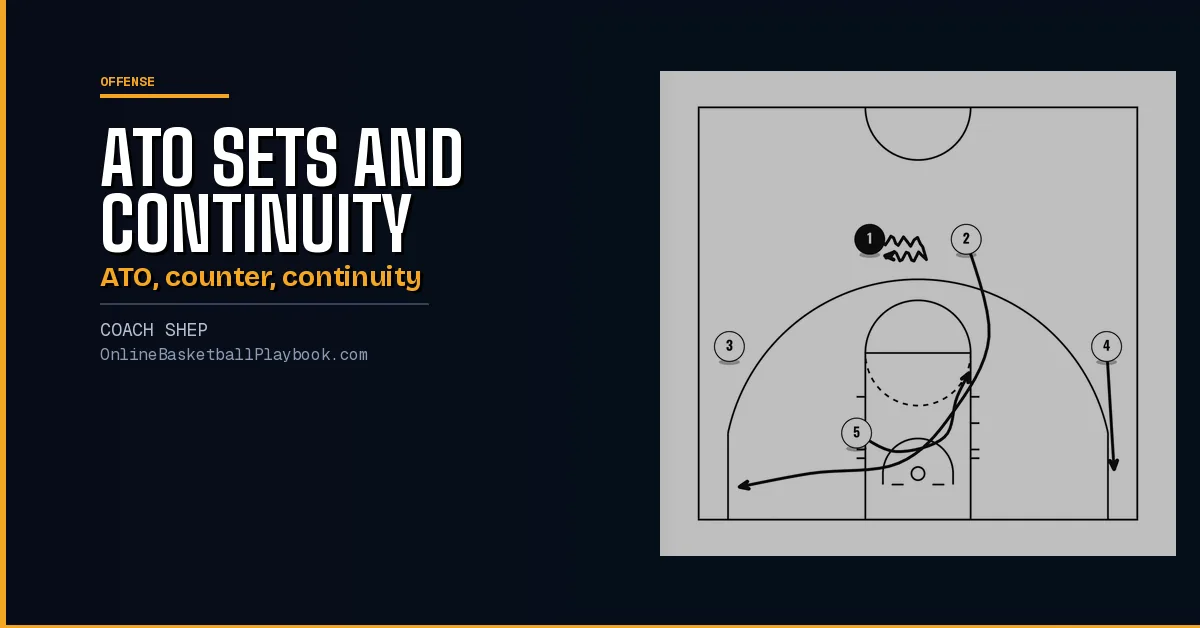
After Timeout and Continuity Sets: 4 Plays Drawn Step by Step
After timeout and continuity sets: two ATO plays, the Princeton Pearl Counter and the 2-3 low offense, each drawn frame by frame with where every player goes.