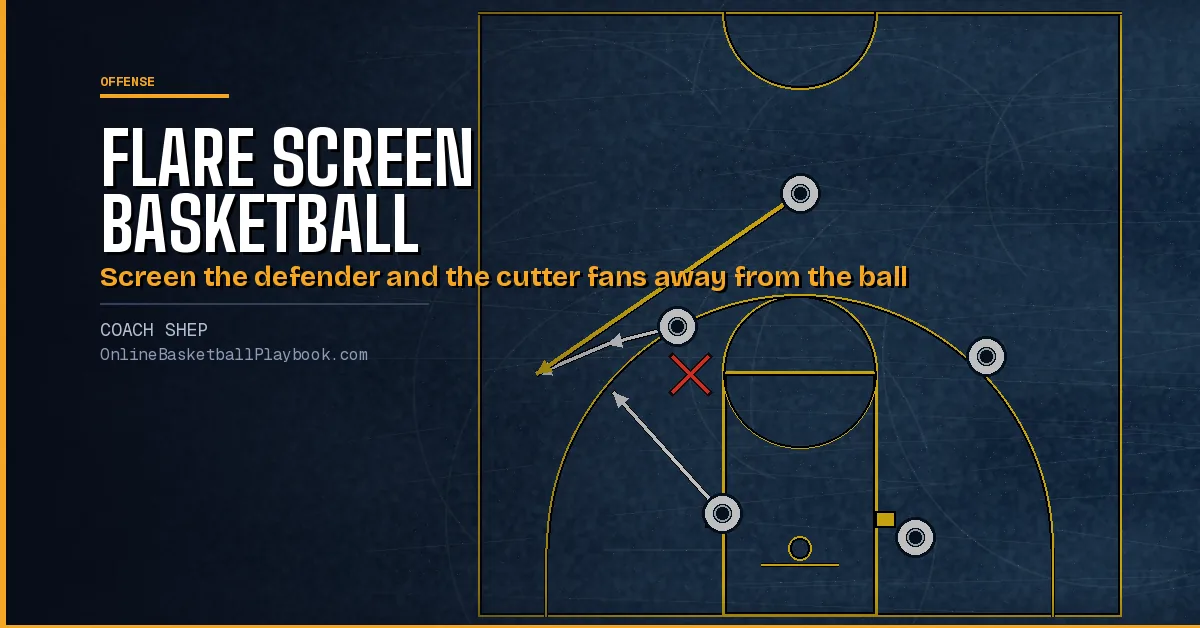
A flare screen basketball action is an off-ball screen that frees a teammate to run away from the ball toward the edge of the floor. The cutter uses the screen to shake his defender and catches the ball either ready to shoot or with a lane to drive. This guide covers the four parts of the action, the three reads the cutter and the screener make, the ways teams use it and the places where coaches teach it differently.
What a Flare Screen Is
A flare screen is a screen for a teammate whose cut leads away from the ball and out to the perimeter. It differs from the back screen by the angle. A back screen frees a player to cut into the paint for a layup, and a flare screen frees him to cut along the perimeter for a shot, away from where the ball is.
- Screen away from the ball. A player screens and a teammate fans out away from the ball.
- Cut along the perimeter. The cutter uses the screen to get a shot, not a layup.
Other systems use the word flare for other jobs: a cut off a different screen when his defender goes under it, one of four cuts off a screen away in a 3-out 2-in open post motion, the cutter's move off a flare screen ending in the corner for a skip pass, or a weak-side back screen for a defender who is cheating. Write the job next to the name.
FIBA Europe lists the flare among 22 off-ball screens and names two cousins. The hammer is a weak-side flare while the ball handler drives baseline. The wiper is a flare followed by a pin-down for the same two players. For the other screens in the family see Basketball Screens, What Is a Screen in Basketball and Elevator Screen. The offense section is at Offense.
The Four Parts of the Flare Screen
The action has four parts.
- The screen. It usually happens on the weak side and most times level with the free-throw line or higher. The screener plants a wide base and arrives early, so the cutter can see where to come off. His backside points in the direction the cutter should go, which creates the most space. The general rule for off-ball screens is the same, set with your back facing the direction you want your teammate to go.
- The cut. The cutter takes a couple of steps toward the ball and below the screener so his defender drops. He then pushes off his inside foot and backpedals off the screener, rubbing shoulders, and ends directly behind the screen so his defender has to run through the screener. In the swing offense the cutter brings the defender down level with the screen first.
- The pass. The pass covers a lot of ground, so it needs power and height. That usually means an overhead pass over the screener's head (see Basketball Passing Fundamentals). The passer reads the defender and throws it as soon as he sees the defender drop under the screen, so the catch is behind the screen. If the defender chases over the screen, the passer has to be careful about whether to throw it.
- The read. What the cutter and the screener do after the catch depends on the defenders. The next section shows each case.

The strong overhead pass is why the flare screen is usually taught later than other screens. Players usually learn the pick-and-roll and the screen away first. More are on Setting Screens in Basketball.
Rep each part until it is automatic.
Three Ways Teams Use the Flare Screen
A screen for the passer. A player passes and a teammate screens his defender, who has just been drawn to the ball. Teams use it against a pack-line defense. A pack-line team jumps to the ball on every pass, so the passer's defender has a long way to recover. Tony Bennett's motion offense at Virginia has 2 pass to 1 and then 5 set a flare screen for 2, with 1 passing to 2 off the flare.

A weak-side flare with a skip pass. The screen on the weak side from frame 1 above. The skip pass has 4 stepping out of the low post to screen behind 2's defender, 2 cutting from the wing toward the baseline and 1 skip passing over the top.
A drill with the same idea is called Flare-screen and Cut. One player passes to the right wing, the wing on the other side sets a flare screen for him, and he cuts around it to receive the skip pass and shoot.
A screen on a teammate's help defender. This is the second type of flare against a pack line, and it is harder to teach. Intelligent players can learn to look for a chance to screen a teammate's help defender, and the defense is vulnerable because it loads into the gaps. Treat the weak side of a pack line like a zone and use the same flare and skip ideas.
Flares also sit inside continuity. The swing offense lists the flare among its primary actions, and in a walk-through the slot (4) sets a flare for the weak-side wing (3). Josh Pastner's posts stay wide and set pin downs and flares for the guards, and his favorite actions are curls, flare and back screen, and flare and rescreen. See Swing Offense and Basketball Shooting Off Screens.
Pick the use that fits your shooters and your opponent.
The Reads
The reads for the flare screen depend on what the defender does.
- The defender goes under the screen. The cutter shoots from behind the screener. A cutter who is not much of a shooter can use a quick pump fake to draw the defender closer and open a drive.
- The defender chases over the top. There is space below the screen, so the cutter rips away from where the pass came from and attacks the basket. An over defender can also open a back door cut around the screen.
- The screener's defender cheats up to help. The screener slips to the basket for a layup. Facing the ball on a flare makes a slip to the basket easier against a switch.
Teach the cutter to read the defender before he decides.


Other cuts answer the same defenders, so name each one by the job it does:
- Fade or flare out for a skip pass. Off a down screen when the defender goes under. In 3-out 2-in motion the screener re-angles and the cutter faces the ball for a skip pass, and in the pop, curl or fade read the cutter flares or fades when he anticipates the pop.
- Curl tight. Off a down screen if the defender chases over the top, and against a trailing defender in 3-out 2-in motion or in the pop, curl or fade read.
- Pop. In the pop, curl or fade read the cutter pops if the defender fights over.
- Pop to the wing. Jay Wright pops to the wing for a skip pass if the defender cheats under, and goes backdoor if he plays over the top.
Every system curls a defender who trails or follows. Coaches use under and over for different cuts, so choose one set of words for the whole team and write the cut next to each name.
Who Sets It and Who Uses It
Match the screen to the right players:
- Shooters and slipping screeners. The screen is best for getting shooters an open look or hitting a slipping screener.
- Only for good shooters. Sean Miller sets flare screens only for good shooters and only with bigs.
- Posts set it. Pastner has his posts set the flares.
- Skip pass to the best shooters. With an on-target skip pass the flare is a good way to get the team's best shooters open for outside shots.
How It Is Defended
There are three ways to guard the screen.
- Go under. A team that does not shoot well can dare the offense to shoot from outside. The defender avoids the screen and slides through to the other side to stop a drive.
- Fight over. A team of good shooters, or a defense that wants to be aggressive, stays attached to the cutter. This makes the pass harder and can open a back door cut.
- Switch. Defenses that switch everything switch the flare as well. The screener faces the ball, so he can slip to the basket against a switch. The defender who switches onto the screener has to stay inside and under him, and the call has to be loud.
Ettore Messina's off-ball defense has a coverage for each side of the floor:
- Chase on the ball side. On a ball-side screen the defender chases the shooter along the same path, which forces a curl.
- Fake the chase and go over. On a weak-side screen he fakes the chase and goes over, which pushes the shooter to a flare and a skip pass, the hardest pass to complete.
He wants the defense to choose the cut it gives, so a cutter should expect the curl to be taken away on the ball side and the flare to be taken away on the weak side. See Drills to Teach Off-Ball Screens for the drill side. Pick the coverage your defenders can hold to.
Get the next coaching guide in your inbox
One email when a new guide or diagram set goes up. Free.
Teaching the Flare Screen
- Flare-screen and Cut. Described in the weak-side section above. Add a second ball and a coach passes to the screener for a shot.
- Flare-screen to Down-screen. A player passes to the left wing and 2 flare screens for him, so he cuts to the right wing. 3 skip passes to him, and 2 next sets a down screen for 3, who curls for the pass.
- Breakdown drills. A breakdown set runs 3-0 Flares and 4-0 Flares to penetration and a pitch.
- A screening line. Matt Painter marks a screening line on the floor where all the downs and flares are set, so screeners learn where to stand.
More drills are on Drills to Teach Off-Ball Screens and Off-Ball Movement. Rep each drill until the screen is automatic.
Want the printable playbook packs?
OBP Pro members get the premium playbook packs: the zone attack, out of bounds and practice plan PDFs, plus each new pack as it is finished. The membership page lists what is in each one. Or draw your own version free in PlayDraw.
See what OBP Pro includesQuestions Coaches Ask
What is a flare screen in basketball?
An off-ball screen that frees a teammate to run away from the ball toward the edge of the floor. The cutter uses it to gain separation from his defender and then shoot or drive.
What is the difference between a flare screen and a back screen?
The angle. A back screen frees a player to cut into the paint for a layup and a flare screen frees him to cut along the perimeter for a shot, away from the ball.
When should a team run a flare screen?
For a shooter, after the ball moves and the passer's defender has been drawn toward it, and against a defense that jumps to the ball on every pass. Teams use it against a pack line for that reason.
How do you defend a flare screen?
The options are going under, fighting over and switching. Messina's coverage fakes the chase and goes over on a weak-side screen to push the shooter into a skip pass.
Why is the flare screen taught later than other screens?
It takes enough strength and skill to throw the overhead pass the cutter needs.
What does the screener do on a flare screen?
He screens with a wide base and his back toward the direction the cutter goes. If his own defender cheats up to help on the cutter, he slips to the basket.
More Guides From This Batch
- Floater Basketball: How to Shoot It and How to Teach It
- Layup Drills for Every Level, From One Step to Full Court
- Basketball Dribbling Drills for Beginners and Other Basics
- Basketball Rebounding Drills for Every Age and Level
Back to Basketball Screens and every Offense page.
Keep Building
Related breakdowns
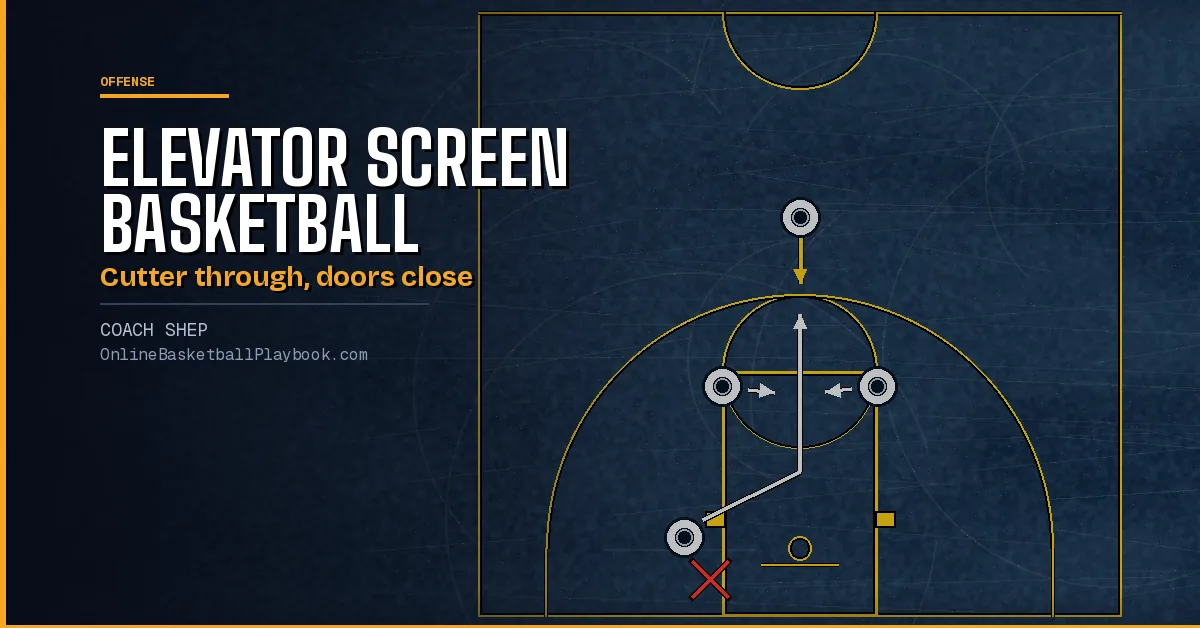
Elevator Screen Basketball: How It Works, Plays and Counters
Elevator screen basketball explained: how two screeners close on a cutter, the plays that use it, how to time it legally, and the counters when the defense reads it.
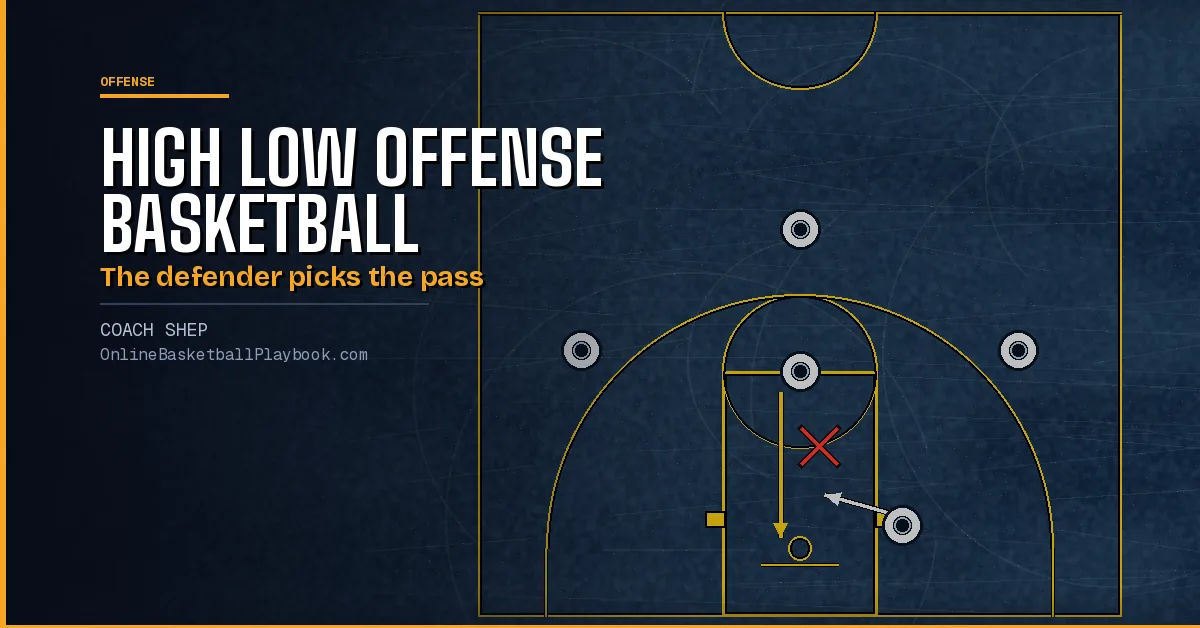
High Low Offense Basketball: Reads, Counters and Zone Rules
High low offense basketball explained: the two-post shell, the lob and bounce reads, answers to a front, down-screen reads, 1-4 low sets and the hi-lo against zones.
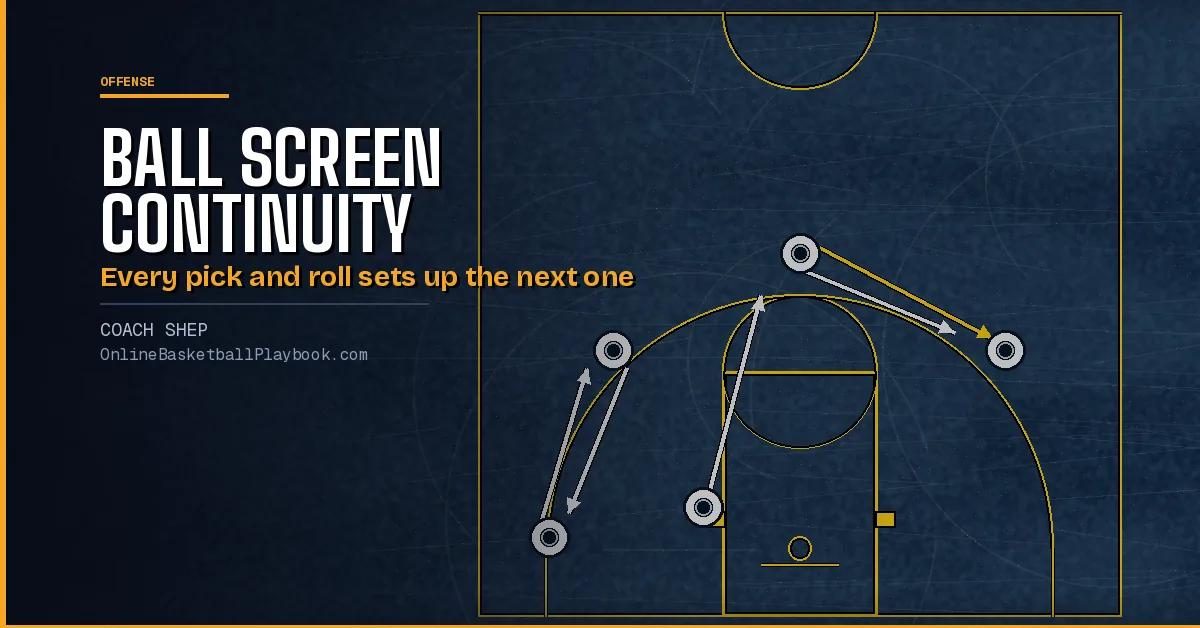
Ball Screen Continuity Offense: Pick and Roll Rules and Reads
Ball screen continuity offense in full: the 4-out and two-big engines, reload rules, spacing, angles, reads, counters, Spain, Ram, double drag and zone sets.