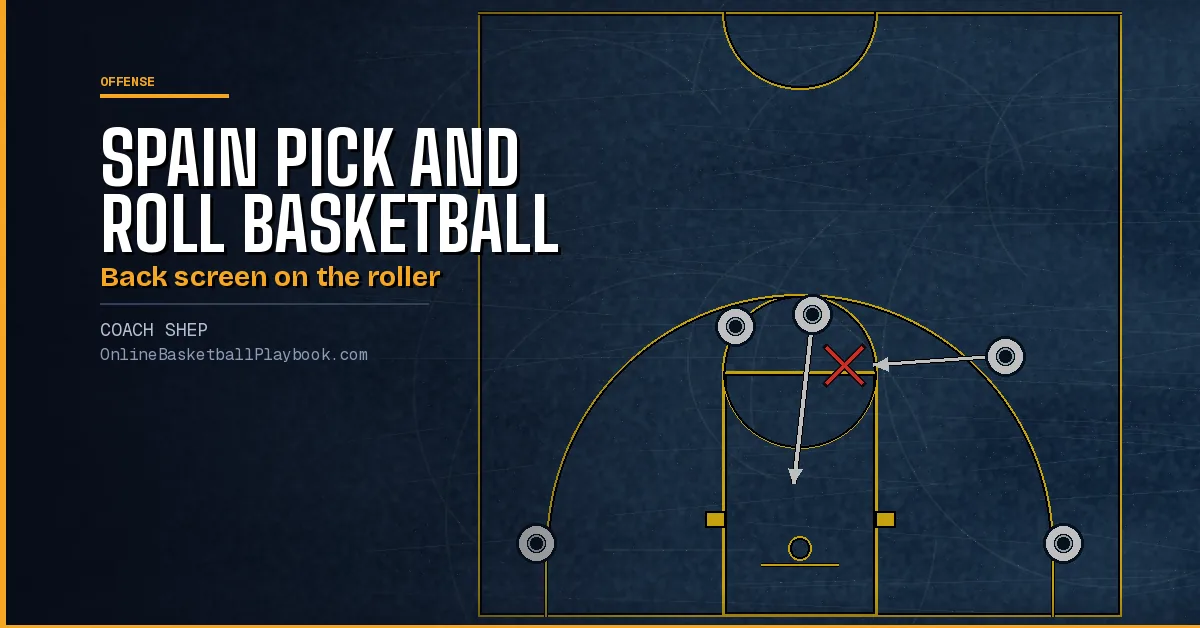
The Spain pick and roll is a ball screen with a second screen on top of it. The screener rolls to the rim, and as he rolls, a third player back-screens the roller's own defender and then pops out to the arc. Both screens arrive together, so the defense faces what is effectively a three-on-two read. FIBA lists Spain as a ball screen plus a back screen on the roll.
This page goes deeper than the set on quick hitters. It covers the three roles, the sequence, the hedge counter, the version where the other big back-screens, the ways into the action and the coverages. The base ball-screen reads are on pick and roll, and the back screen is on back screen basketball.
The Three Roles
- The ball handler. He uses the first screen to create.
- The screener. A big who sets the ball screen in the middle of the floor and rolls.
- The shooter. He back-screens the roller's defender, and then pops to the arc.

The action works inside almost any set that already has a ball screen, so a team does not need a new set to use it.
The Sequence
The order is fixed. The handler dribbles off the ball screen. The screener rolls. Only then does the shooter come in to back-screen the roller's defender.

The roller cuts to the rim off the back screen and the shooter pops back out to the arc.

The handler has several options.
- Pull up for the shot.
- Drive the whole way.
- Pass to the roller.
- Pass to the shooter for a three.
- Skip to the corner.
When the defense switches the back screen, a mismatch often results. Teach the handler to see the whole sequence before he picks one option.
The Hedge Counter
The screener's defender may leave him to hedge out on the handler.

The shooter skips the back screen and pops to the arc, and the roller keeps rolling.
Name the skip as part of the action, so the shooter never forces a back screen that is not needed.
Back Screen by the Other Big
The back screener does not have to be the shooter. In a version run from a four-out set, a guard clears through to the corner, the handler dribbles to one side to set the angle, and the big sprints up to ball-screen. The other big then back-screens for the roll, which can set up a lob.

The counters are plain. If the post defender does not help, the handler attacks for the layup. If the handler is stopped inside, he jump-stops and kicks out to a guard or to the big at the top for a three.
Decide who your back screener is before the call, shooter or big, and keep that player the same all season.
Ways Into Spain
- From a four-out set. The version above, with the clear to the corner.
- After a Ram screen. A guard first screens down for the 5, and the 5 runs up to set the ball screen. When he rolls, a shooter back-screens the other big and pops. The Ram screen is a way to stop the defense from hedging or blitzing the ball screen, and it is covered on ball screen continuity offense.
- From horns. A back screen on the roller is run from horns sets too. See horns basketball play.
- Inside a five-out front. The Spain back screen is compatible with five-out spacing, and one library tags it onto its Chicago and twirl sets.
- As a backdoor setup. One backdoor library runs a high ball screen with the Spain re-screen leading into a fake handoff. The defender jumps the handoff, and a cutter goes backdoor.
- Out of bounds. Two Olympic teams ran Spain in out-of-bounds sets, one from a sideline and one from a baseline.
One more meaning of the word is on record. One film analyst's glossary describes Spain as a ball screen and replace, where the player who replaces him screens the big guarding the roller, and the original screener is often left open. Write the job next to the name on your call sheet.
The Olympic playbook that lists these sets calls Spain unsuitable for less experienced teams, so the head coach decides when the team is ready.
Layering Triggers and Names
Spain is one of several triggers that can sit in front of a ball screen. A Ram screen comes first, screening for the screener. Spain puts a back screen on the roller's defender while the handler attacks. A handoff before the screen hits a defense that is already moving, and a ghost screen fakes the contact and sprints away. Several programs stack these.
- Standalone and embedded. One library runs Spain by itself and also inside longer calls. It pairs the action with a Punch tag, which is the empty-corner complement.
- Off different looks. Another program runs it three ways, plain, from its nail series and from a weave.
- Stacked with other tags. A third stacks Spain, a Ram into Spain, and a zipper and Miami action into Spain.
The tags change the first action. The back screen on the roller stays the same, so players learn it once.
How Defenses Cover It
Drop coverage is a poor choice against Spain, because the back screen lands on the drop defender and the roller can be lobbed free. Letting the handler reject the screen also breaks it. The coverages are on how to defend the pick and roll and drop coverage. The modern pro game, covered on modern NBA offense, runs Spain as one action in the delay front.
The offense should know the counters before it knows the coverage.
Questions Coaches Ask
What is the Spain pick and roll?
A ball screen followed by a back screen on the roller's defender. The screener rolls, and a shooter back-screens his defender and pops to the arc.
Who sets the back screen?
Usually a shooter, who then pops. In one four-out version it is the other big.
What if the screener's defender hedges?
The shooter skips the back screen and pops to the arc, and the roller keeps rolling.
Is the Spain pick and roll the same as a ghost screen?
No. A ghost screen is a fake ball screen where the screener sprints away without contact. Spain is a real ball screen with a second screen on the roller's defender.
Every diagram on this page uses the symbols on how to read a basketball play diagram.
Get the next coaching guide in your inbox
One email when a new guide or diagram set goes up. Free.
Want the printable playbook packs?
OBP Pro members get the premium playbook packs: the zone attack, out of bounds and practice plan PDFs, plus each new pack as it is finished. The membership page lists what is in each one. Or draw your own version free in PlayDraw.
See what OBP Pro includesRelated Guides
- Zoom Action Basketball: Down Screen Into a Handoff
- Split Action Basketball: Post Splits, Cuts and Reads
- Double Drag Screen Basketball: Roll, Pop and Slip
- Chicago Action Basketball: Pin Down Into a Handoff
- Corner Stagger Action Basketball: Screens for a Shooter
Back to Basketball Plays and every Offense page.
Keep Building
Related breakdowns
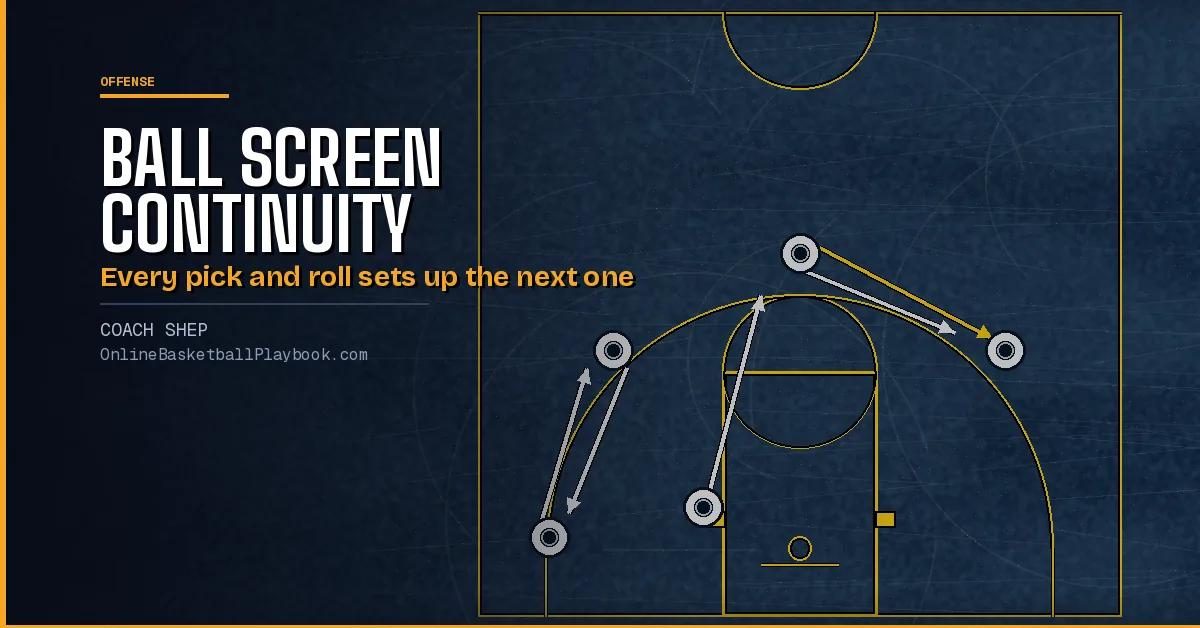
Ball Screen Continuity Offense: Pick and Roll Rules and Reads
Ball screen continuity offense in full: the 4-out and two-big engines, reload rules, spacing, angles, reads, counters, Spain, Ram, double drag and zone sets.
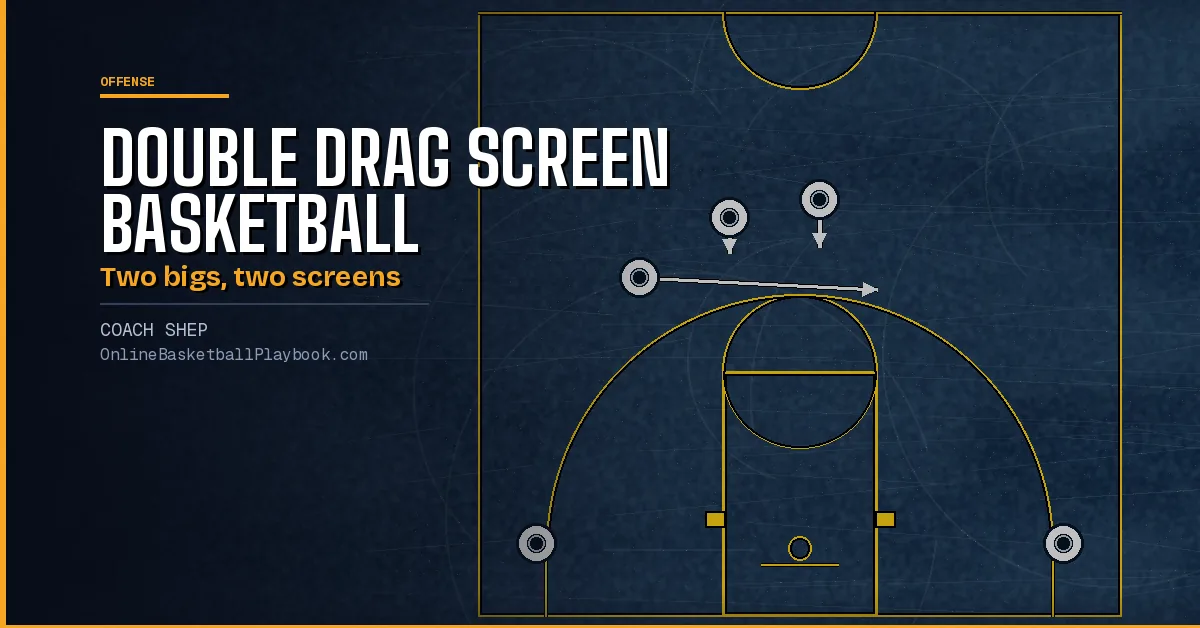
Double Drag Screen Basketball: Roll, Pop and Slip
The double drag screen explained: two trailing bigs screen in turn for the ball handler, with the roll and pop rules, the slip, the reads and the coverages.
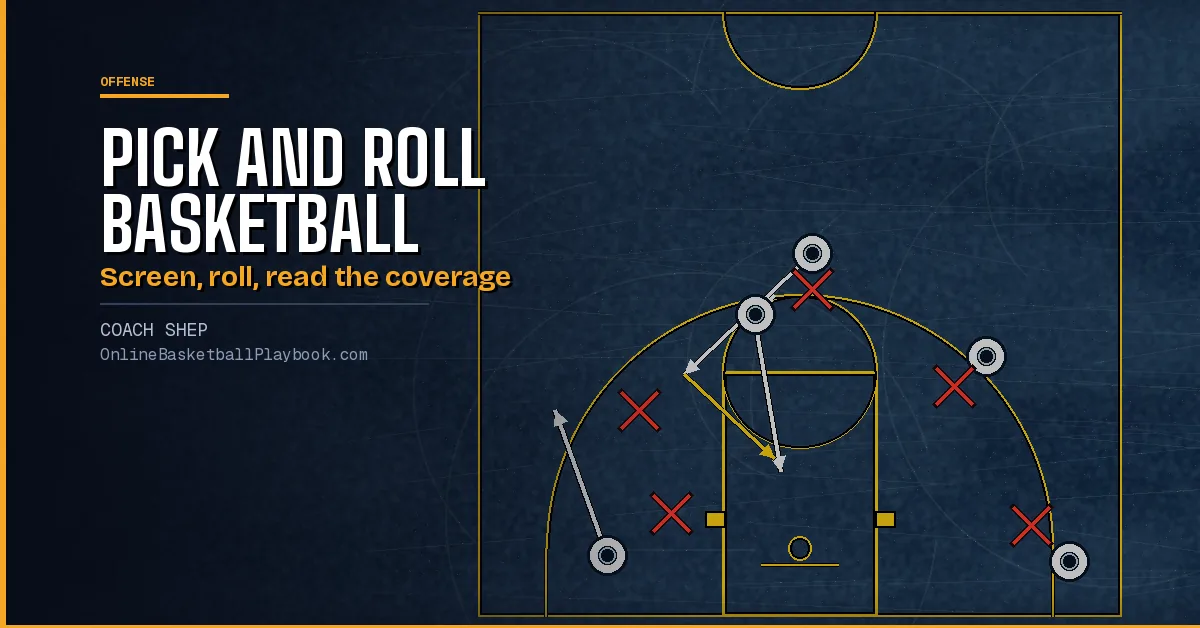
Pick and Roll Basketball: How to Run It and Read It
How to run the pick and roll in basketball: the screen and its angle, the handler's reads, roll, pop, slip and short roll, spacing, and a youth teaching order.