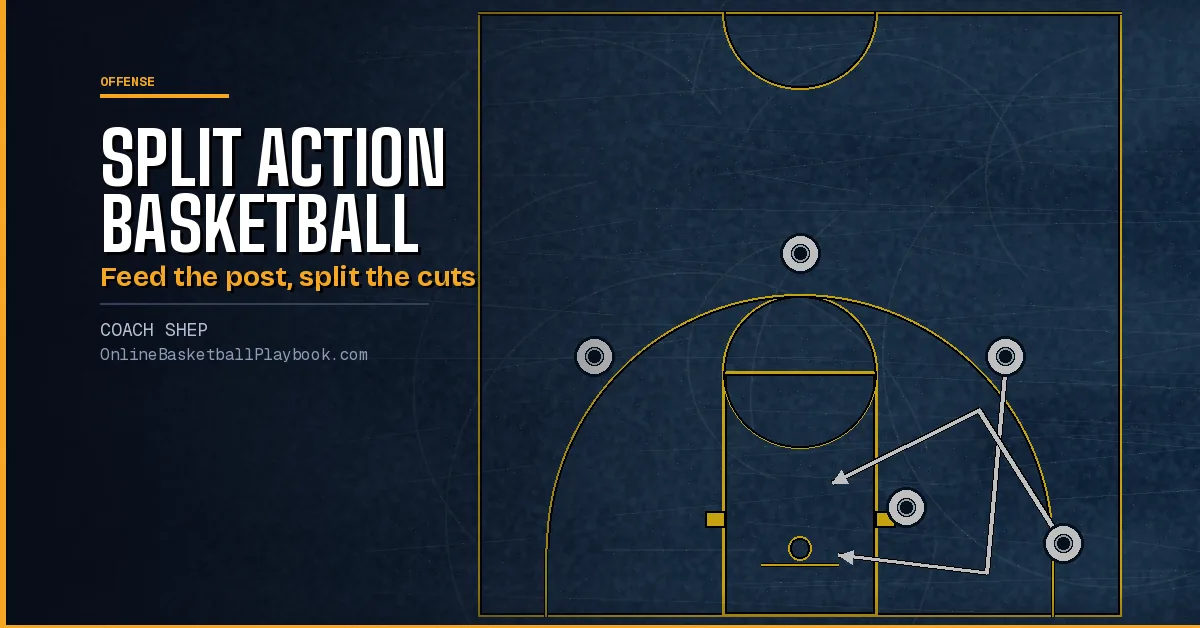
Split action basketball starts with a pass into the post. The passer and one more player then cut past the post in different directions, and the post player reads what the defense does. Splitting removes the post's help defender by rule, so the post is isolated one on one. It is a two-man game that appears without a call, and it is the post-feed action of the triangle offense.
FIBA defines it as ball-side action that runs while a teammate is attacking from the low post on that same side. This page is about that action. Splitting a ball screen is a different skill, and it is on how to split a ball screen. The wider system is on triangle offense basketball.
The Post Feed
Every split starts with a feed. The wing passes to the post on the block, In the triangle, the ball side forms a sideline triangle of post, wing and corner, and the weak side runs a two-man game.

The post holds a line between the ball, himself and the basket. If he holds it, the defender must play behind him, and the feed is simple. If the defender plays one side, the passer throws to the other.
The Low Post Split
In the basic low post split, the wing feeds the post and cuts baseline. The corner player brushes off that cutter like a moving screen and cuts tight over the high side. The cutters leave on opposite sides of the post.

The passer's cut can take several shapes.
- The fast cut. The passer cuts on the baseline side of the post. The second cutter follows as close behind the passer as he can, not behind the post.
- The change-of-pace cut. The passer slows and tries to screen for the second cutter.
- Speed cut and screen. The passer speed cuts into a screen for a teammate.
- Rebound screen cut. The passer screens for the second cutter, step-fakes and cuts, and the movement recycles.
- Screen the screener. The passer screens a teammate, who pops to the free-throw area, and the post can pass to him or to the passer rolling baseline.
The post can also kick the ball to a weak-side guard on a catch-and-shoot spot. If nobody is open, the triangle forms again on the other side.
Whatever cut you choose, rep it until the passer is moving before the post turns.
Straight and Reverse Splits
FIBA names two versions, and the difference is who screens.

The straight split. After the pass to the low post, the wing screens for the player at the top of the key.

The reverse split. The wing passes to the low post and then receives a screen from the player coming down from the top of the key.
Two more triangle versions use the same feed. In the split with a screen, the wing feeds the post and then down-screens for the point guard. In the corner post split, the feed comes from the corner, and the rule is the same, whoever feeds the post cuts first. Pick the version that fits the players who stand on your ball side.
The High Post Split
The same idea works from the free-throw line. In a 2-3 high set, a guard passes to the post at the nail and cuts first, and the second guard brushes off him as he goes. The post can throw to either.

The high post split carries its own reads. When the guards cut, the wings are set up for down screens, and if the post feeds no one, the wings screen down for the guards. The post can also turn and face the basket. With the ball in the middle of the floor, there is little help, so the post has the green light to shoot or drive. Give the spot to your best triple-threat player, not only to your post player.
Reads and Counters
The cutters and the post read the post defender and the defenders who guard the cutters. The low post split has six reads, and the answer to each is built in.
- Chase over. Both cutters clear, and the post is one on one.
- Switch. The post feeds the passer, who is already cutting to the rim.
- Anticipate and switch. Show the split, then back cut.
- The defender plays high and forces baseline. Send two cutters to the same side.
- The defender anticipates. An optional back cut.
- No split at all. An optional post isolation, with a speed cut instead of the split.
The high post split has its own list.
- The defenders stay tight and do not switch. Hand the ball off as the guards split.
- They drop off and switch. Show the split and cut to the same side.
- They collapse on the post. The guards may back cut to the rim freely.
- They switch automatically. Send both cutters to one side to make a two-on-one.
Drill each read against a defender who has been told what to do.
More Split Versions
- The solo cut. One cutter goes baseline or over the top while the other clears. The post can hand off and drive, fake the handoff, pull up, or roll.
- Post isolation. Both perimeter players clear and screen the weak side to leave the post alone.
- The Laker cut. The wing passes inside and cuts hard backdoor, looking for the dump pass. If he is not open, he fills the corner.
- Pinch-post splits. A guard dribbles at the high-post player, hands off and runs off him to set up a two-man game or clear to the corner. The player at that spot needs to read well more than he needs size.
- The post-initiated screen. The post steps out and screens for the wing, who can shoot, pull up or pass to the rolling post.
The Laker cut also appears in Princeton's low post set, covered on the low post series. Post feeds into a two-big look are on high-low offense basketball, and the guard cut off a high post is on UCLA offense basketball.
Install one version, drill it from both sides, and add the next only when the first is automatic.
How to Defend a Split
The split removes the post's help by rule, so the defense has to plan for the cut before the pass. Against the high post split, the two guards sag a stride in front of the post to deny the direct cut between them. The wings sag into a help shape, one hand at their own player and one toward the ball. The post defender drops an arm's length off him toward the basket, then steps up and jams him once he turns to face the basket. NBA staffs avoid switching the down screens that follow, because a big on a little hands the offense a post-up.
The offense should know the sag before it runs the split.
Questions Coaches Ask
What is split action in basketball?
After a pass into the post, two players cut past the post in different directions. The passer cuts first, and the post reads the defense.
What is the difference between a straight split and a reverse split?
In a straight split, the wing passes to the post and screens for the player at the top of the key. In a reverse split, the wing passes and then receives a screen from the player at the top.
Who cuts first on a post split?
The player who feeds the post cuts first.
Is split action the same as splitting a ball screen?
No. Splitting a ball screen is a ball handler stepping between the screener and the screener's defender. The page on how to split a ball screen covers it.
What if the defense takes the split away?
The post isolates one on one, feeds the cutter who is going to the basket after a switch, or the cutters back cut.
Every diagram on this page uses the symbols on how to read a basketball play diagram. The screens in the split are on setting screens in basketball.
Get the next coaching guide in your inbox
One email when a new guide or diagram set goes up. Free.
Want the printable playbook packs?
OBP Pro members get the premium playbook packs: the zone attack, out of bounds and practice plan PDFs, plus each new pack as it is finished. The membership page lists what is in each one. Or draw your own version free in PlayDraw.
See what OBP Pro includesRelated Guides
- Zoom Action Basketball: Down Screen Into a Handoff
- Double Drag Screen Basketball: Roll, Pop and Slip
- Chicago Action Basketball: Pin Down Into a Handoff
- Spain Pick and Roll Basketball: Screen the Screener
- Corner Stagger Action Basketball: Screens for a Shooter
Back to Basketball Plays and every Offense page.
Keep Building
Related breakdowns
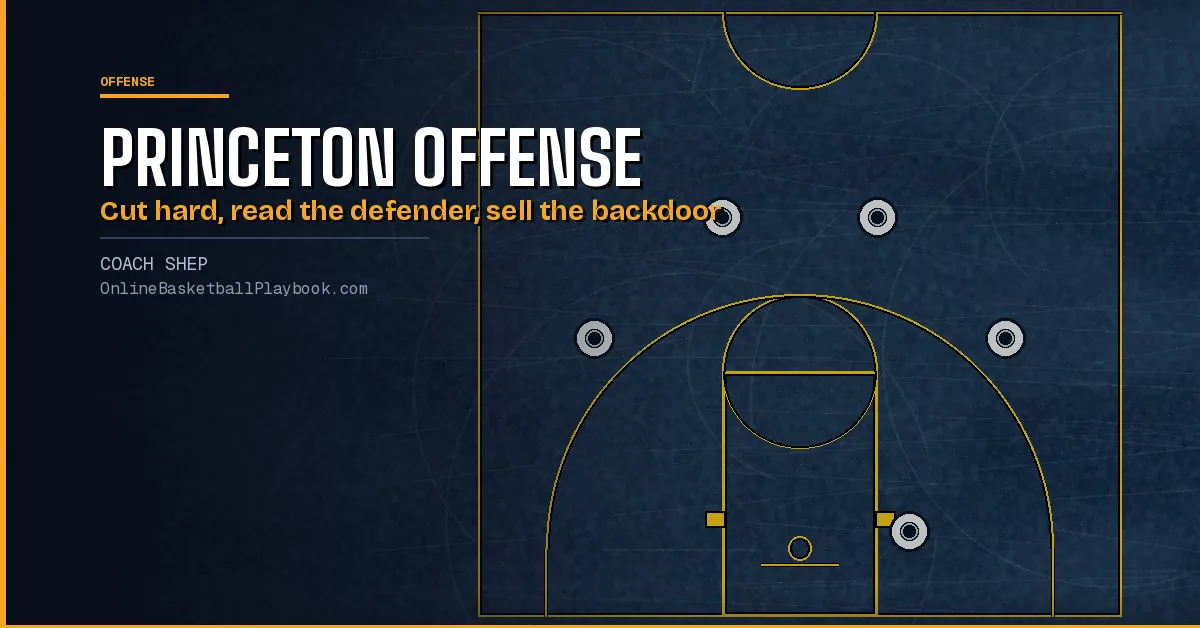
Princeton Offense: Cuts, Reads and Sets
How the Princeton offense works: the Chin set, backdoor cuts, the high-post reads, the players it needs, how to install it and what defenses do to stop it.
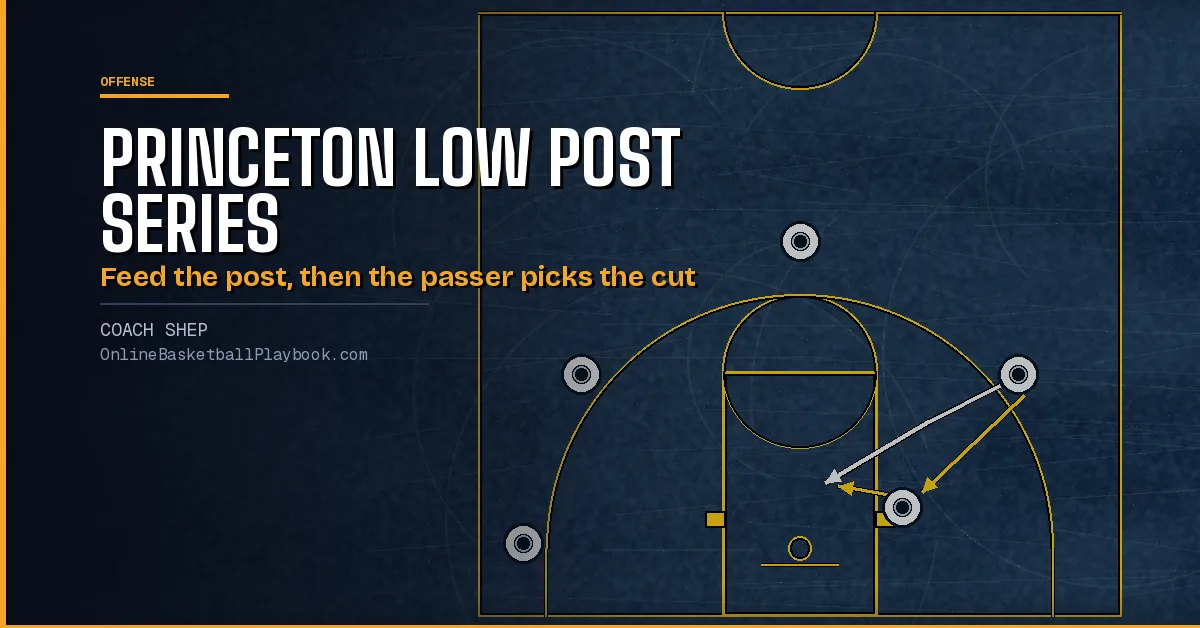
Princeton Low Post Series: Splits, Screens and the Laker Cut
The Princeton low post series: the wing entry, the passer's options after the feed, the high post split, the Laker cut and what to do when the post is denied.
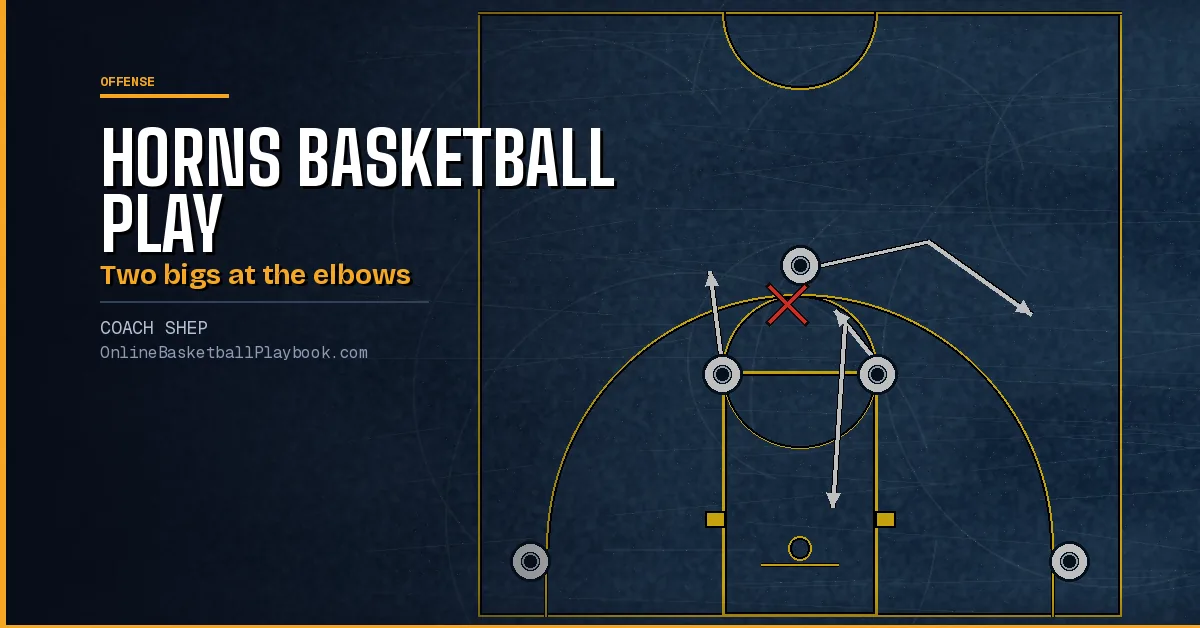
Horns Basketball Play: The Horns Set, Actions and Reads
The horns basketball play explained: the horns set, the elbow pick and roll, roll and pop rules, hi-lo, flex and shooter actions, the reads and the install.