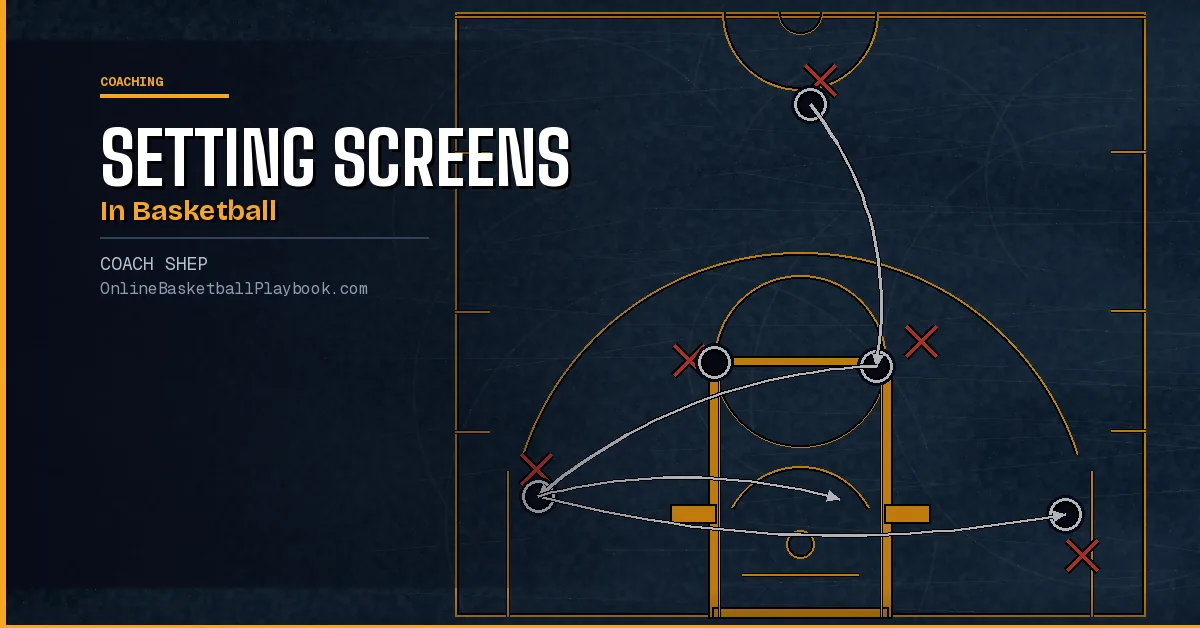
A well-set screen is one of the most powerful actions in basketball. Done right, it creates open shots, driving lanes, and mismatches, without the screener ever touching the ball.
What Makes a Legal Screen
Before a player can set an effective screen, they need to understand what a legal screen actually is because an illegal screen is worse than no screen at all. It gives the defense a free possession and teaches bad habits to the entire offense.
A screen is legal when the screener is stationary at the moment of contact. The feet must be set, the body must be still, and the screener cannot lean into the defender. The arms matter too: both hands should be held in front of the body (one fist inside the other or both palms flat against the chest). Elbows wide, arms extended, or a hand shooting out to grab the defender are all moving-screen violations that officials will call, especially at the high school and college level.
The other piece officials watch is the setup distance. When screening a defender from behind (a back screen or a screen the defender cannot see), the screener must give the defender space to stop or change direction before making contact. Screening a moving defender requires even more distance than screening a stationary one. Planting in a defender's path when they have no time to react is a foul, even if the screener's feet are set at the moment of contact.
The practical rule for players: arrive early, get wide, get still. Those three words cover most illegal screen situations before they happen.
Types of Screens and When to Use Each
There is no single right screen for every situation. Each type of screen is designed to attack a specific defensive position, create a specific advantage, and demand a specific response. Coaches who teach only the ball screen are leaving half the offense on the table.
Ball Screen (Pick-and-Roll)
The most common screen in modern basketball. A teammate sets a screen directly on the ball handler's defender, freeing the ball handler to attack the basket or pull up for a shot. The screener then rolls to the rim (pick-and-roll) or pops to the perimeter (pick-and-pop). The ball screen works best when the screener is set at the defender's inside hip (the hip closest to the middle of the floor), forcing a choice between going over or under the screen.
Down Screen
A perimeter player cuts from the three-point line toward the baseline, and a teammate screens their defender from above, freeing the cutter to pop back up to the three-point line for a catch and shoot. Down screens are the backbone of motion offense. They work best against man defense that is playing denial. The down screen forces the denying defender to navigate traffic.
Back Screen
A player on the perimeter sets a screen on a post defender, freeing a teammate to cut backdoor to the basket. Back screens are high-risk, high-reward. When they work, they produce layups. When the defense fights through them, the screener often ends up open on the perimeter. The angle of the screen matters: the screener should approach from the high side to pin the defender toward the baseline.
Flare Screen
A player moving toward the ball uses a teammate's screen to cut away from the ball (toward the corner or the wing), creating a wide-open look for a corner three or a wing catch. Flare screens are most effective against aggressive on-ball defenses that are trying to prevent the catch. The more pressure, the more the flare screen hurts. Timing is critical: the cutter should not show where they are going until the screener is in position.
Cross Screen
Used almost exclusively in the post, a cross screen has one post player screen across the lane for another, freeing a low-post cutter from one block to the other. It is especially effective against face-guarding post defense and is a core action in many half-court sets designed to create a clean catch in the paint.
Screener Footwork and Body Position
Most teaching on screens focuses on the ball handler or the cutter (the person using the screen). The screener's technique gets less attention, but it is just as important. A soft screen frees no one. A screen set with poor angles does not attack the defender. And a screener who does not know what comes next after contact wastes the advantage they just created.
The foundation is a wide, low base. The screener's feet should be shoulder-width apart or slightly wider, with knees bent and hips down. This low center of gravity makes the screener harder to move through and keeps them stationary at contact. A tall, narrow stance is easy to squeeze through and easy to knock off balance.
The screen angle determines what advantage is created. To force a ball handler's defender toward the baseline, the screener sets on the defender's inside hip. To force them toward the middle, the screener sets on the outside hip. This is not about where the screener lines up relative to the ball. It is about where they position themselves relative to the specific defender being screened. Players who always set screens in the same spot are not reading the defense; they are running a pattern the defense can predict.
The screener's chest and shoulders should face the direction the ball handler is going to cut. This maximizes the surface area of the screen and makes it harder for a defending big to step into the lane and show.
Timing: The Most Undercoached Part
A screen set too early is useless. The defender adjusts before the cutter arrives. A screen set too late is an illegal pick. The screener is still moving at contact. The window for a perfect screen is narrow, and it requires communication between the screener and the user of the screen.
For ball screens, the standard cue is: the screener should arrive as the ball handler is making their move. The ball handler has to read when the screener is set and then make their attack. If the ball handler drives before the screener is stationary, the screener takes the illegal screen call. If the ball handler waits too long, the defense has time to communicate and adjust.
For off-ball screens (down screens, back screens, flare screens), the cutter controls the timing, not the screener. The screener sets the screen and holds it. The cutter must set up the defender first: take a step or two away from the direction they actually want to go, sell the fake, then use the screen. A cutter who runs directly at the screen without setting up the defender makes the defense's job easy. The defender just follows the path.
The coaching cue that fixes most timing problems: "Set up your man before you use the screen." Two hard steps in the wrong direction before cutting to the screen is not wasted movement. It is what makes the screen work.
The Screener's Read After Contact
The screener's job does not end when they make contact. What happens in the two seconds after the screen is often what determines whether the action produces a good shot or not. Every screener needs to know their read before they set the screen.
Roll vs. Pop
The most fundamental read. After setting a ball screen, the screener reads the coverage. If the defending big steps up to hedge or show, the lane behind them is open. The screener rolls hard to the rim, looking for a pass in space. If the defending big drops back to protect the rim, the screener pops to the three-point line, looking for a mid-range or three-point shot.
This is not a predetermined choice. It is a read. Players who always roll or always pop are not picking-and-rolling. They are running a two-man play with one option. Real pick-and-roll offense demands that the screener react to what the defense gives them on every single possession.
The Slip
When the defense is fighting hard to get through the screen before it is fully set, the screener reads this aggressiveness and cuts backdoor before setting the screen at all. This is called a slip or a ghost screen. The screener does not actually set the screen. They just act like they will, and then cut. The defense, cheating to fight over the screen, cannot recover. Slips produce uncontested layups against aggressive coverages, but they only work when the defense is overplaying. If the defense is dropping and playing soft, slipping produces nothing.
The Flare as a Third Option
In modern ball screen offense (particularly in European systems), the screener has a third option beyond roll and pop. After the ball handler uses the screen and the help defense collapses, the screener can set a flare screen for a corner or wing player who has slid into position. This third layer is what separates advanced ball screen offense from basic pick-and-roll. Defenses that only account for the roll and the pop leave themselves vulnerable to the flare every time.
How Defenses Guard Screens and What to Do About It
Understanding how defenses are taught to guard screens makes every screen-setter a more dangerous offensive player. Defenses do not just react to screens. They have a planned coverage for every action, and the offense wins when it reads that coverage and attacks the correct counter.
When the Defense Hedges or Shows
The defensive big steps into the ball handler's path to slow them down while the ball handler's defender recovers. The offensive counter: the ball handler hesitates at the screen, lets the big step out, then attacks as the big is scrambling back. The roll man cuts hard, because the hedging big has left the lane. The screening player should recognize the hedge before it happens. A big who is going to hedge will show their weight shifting toward the ball before the screen is even set.
When the Defense Drops
The defensive big sags back toward the rim, giving up space to take away the roll. The counter is simple: the screener pops to the perimeter for an open shot, and the ball handler attacks the space the dropped big is giving up on the drive. A drop coverage that works against a non-shooting screener fails completely against a screener who can knock down a mid-range or three-point shot.
When the Defense Switches
Both defenders trade assignments when the screen is set. Against a switch, the screener seals the switched defender immediately and calls for a post entry. The smaller guard who just switched onto the screener has no chance in a post situation. If the post entry is not available, the ball handler attacks the switched defender (a bigger, slower player trying to guard a guard in space) for an isolation advantage.
When the Defense Blitzes
Two defenders trap the ball handler off the screen. The counter is a quick pass before the trap closes. The screener slips early to get a direct catch. The weak side is almost always open because the blitz pulls two defenders to one spot. A skip pass to the corner or an extra pass to the roll man beats the blitz. The ball handler cannot hold the ball or dribble into the trap. The advantage exists for one second, and then it is gone.
Teach your players one of these coverage reads per week rather than all four at once. Run 2-on-2 reps where you call out the defensive coverage before the action, forcing the offense to execute the correct counter before they have to read it at game speed. Recognition at full speed only comes after hundreds of deliberate reps at slower speeds against a known coverage.
- Arrive wide and low: feet shoulder-width or wider, knees bent, hips down. A narrow stance is easy to squeeze through and easy to knock off balance.
- Set the screen on the correct hip: Screen the inside hip to force the defender baseline. Screen the outside hip to force them middle. Always read the defender's position, not the ball's position.
- Set up the defender before using the screen: two hard steps away from the true cut direction sells the fake and makes the screen work; running directly into a screen without setup is easy to defend.
- Read the coverage before you roll or pop: Hedge or show means roll hard. Drop means pop to the perimeter. Switch means seal and call for the post entry. Never make this decision before contact.
- Hold the screen until contact: a screener who releases early or drifts forward before the cutter arrives is the reason the action gets called as a moving screen. Be still, absorb the contact, then move.
Want more basketball coaching strategies and drills?
Join the Online Basketball Playbook newsletter →
Draw this play free in the play drawer →
Membership: the full library, playbook packs, and Pro drawing tools →
Keep Building
Related breakdowns
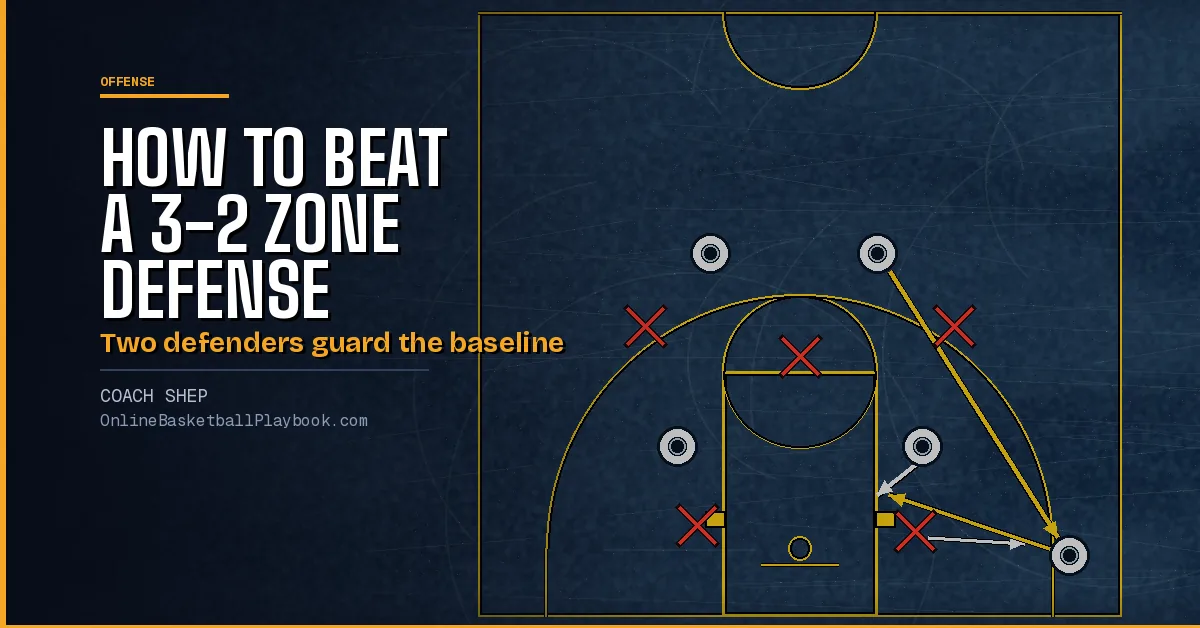
How to Beat a 3-2 Zone Defense: Sets, Screens and Reads
How to beat a 3-2 zone defense in basketball: alignments that split it, corner attacks, inside screens on the back line, the high post, skips, drives and rebounding.
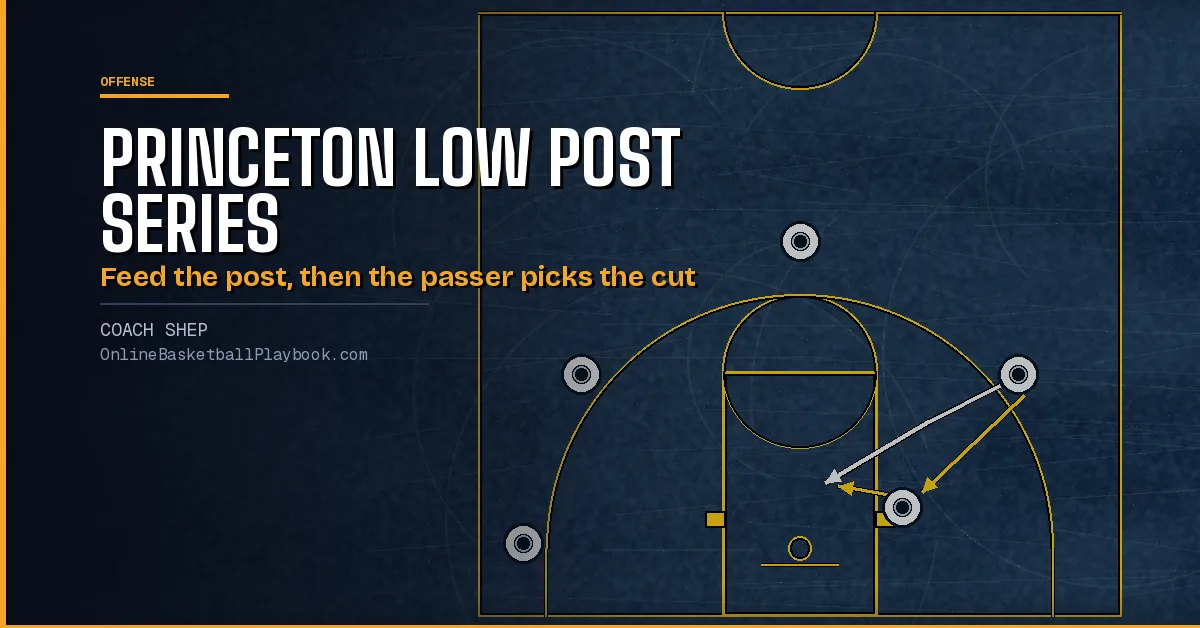
Princeton Low Post Series: Splits, Screens and the Laker Cut
The Princeton low post series: the wing entry, the passer's options after the feed, the high post split, the Laker cut and what to do when the post is denied.
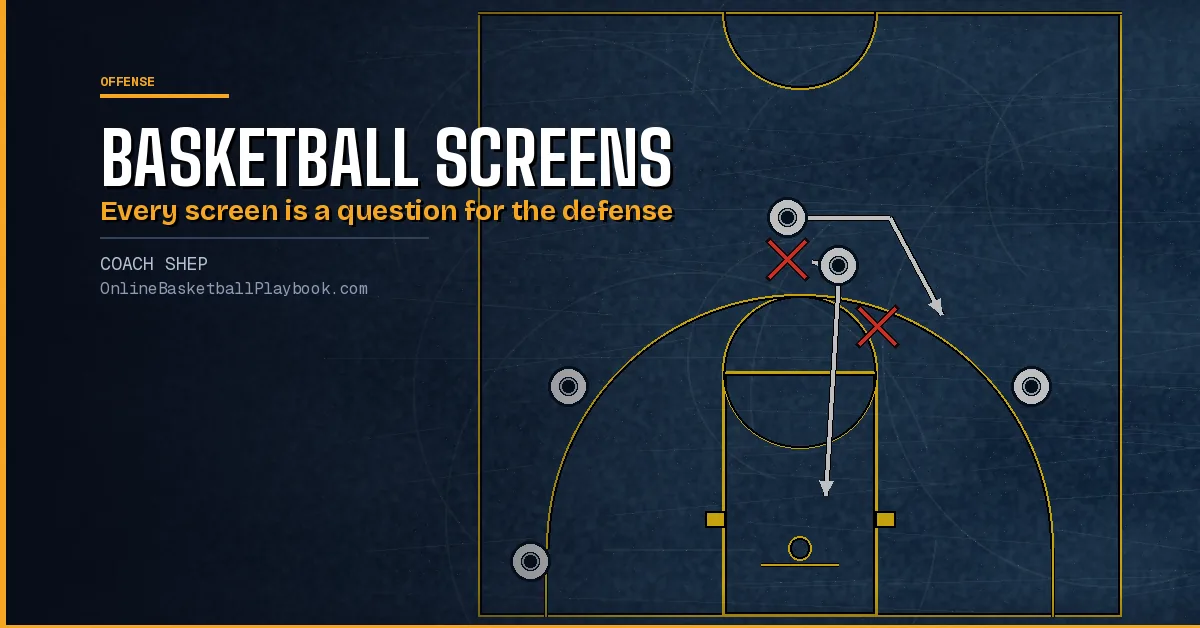
Basketball Screens: Every Type of Screen and How to Read It
Basketball screens explained by type: on-ball, down, flare, back, pin down, cross, stagger, elevator, screen the screener and hand-off, with each read and counter.