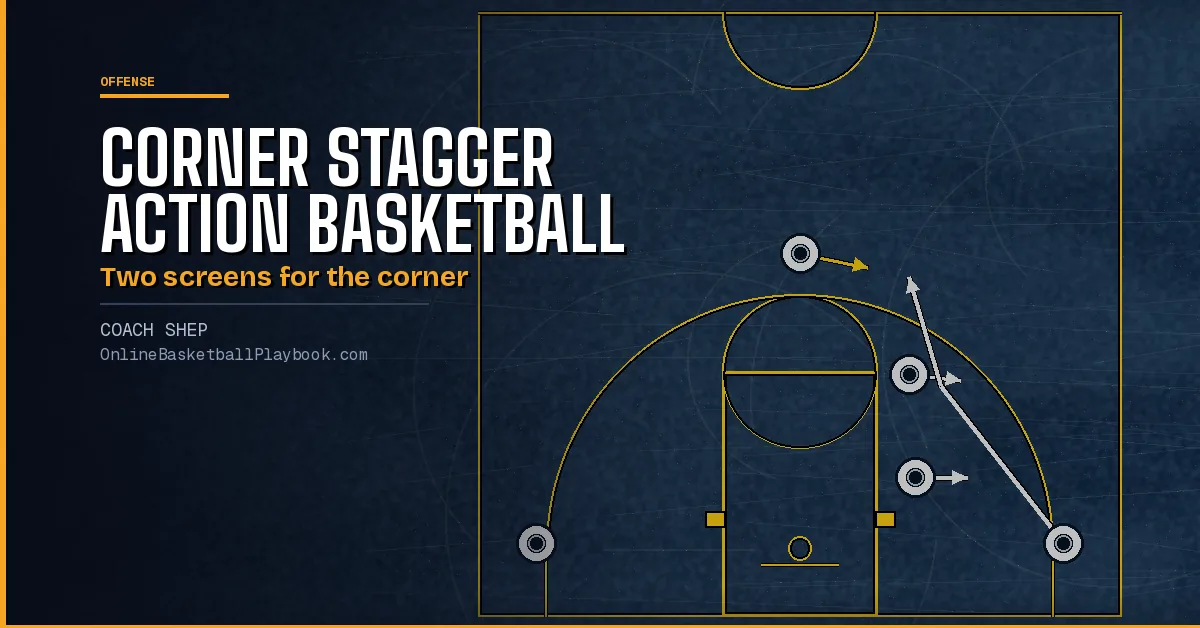
A corner stagger action sets two screens, one after the other, for a shooter who starts in the corner. The shooter runs past the first screen and then the second and curls up to the slot for the pass. Two screens in a row mean the shooter's defender has to get past both.
This guide covers the base picture, five ways into the action, the exits off the second screen, the switch counters and the spacing rules. The stagger is covered as one screen type on basketball screens, and the down screen that it is built from is on down screen basketball. A baseline play that uses a stagger to reach the corner is on the baseline stagger into a corner pick and roll. That play runs the other way, from a stagger into the corner.
The Base Picture
One five-out family of sets opens every page with a single picture. A player starts in the left corner and runs past two screens set along the lane line, the first by a big and then a second by another, and curls up to the top slot, where he takes the pass from the passer at the top of the key. The tags then change the finish. The point guard can dribble back off the second screener, the player in the other corner can run the same stagger, and a handoff with a dribble up the other side is another tag.

The picture does not change. The finish does. Teach the stagger once, and let the tags change what happens at the catch.
Five Ways Into the Stagger
Coaches reach the same two screens in different ways.
- On the reversal. In one motion offense, every time the ball is reversed, there is an automatic look for a stagger for the player in the dead corner. The reversal then calls one of four actions, a stagger, a split of the stagger area, a slip by the screener, or a flare.
- After a corner pass. In the flex, a pass to one corner can call two players to set a staggered screen for the opposite corner player. In another version of the flex, a pass from the elbow to the corner sends the top two players to run a double stagger away for the corner man.
- After a pin-down. In a set that starts with both posts at the top and shooters in the corners, the point dribbles to start a pin-down for the ball-side corner player, who then comes off a double stagger.
- Into a handoff. Two players stagger for the corner guard, and a big waits until the guard is clear, then dribbles at him for the handoff. See zoom action.
- With a choice. The corner player reads. One set lets him choose between a flex screen and the down screen, and a horns set has the wing read his defender on the double screen, flex-cutting if the defender cheats the double and using the stagger if he cheats the flex.


Pick one entry, run it from both sides, and keep the stagger itself the same.
Exits Off the Second Screen
One base shape, two screens set close together, has many exits. The shooter and the second screener decide among them.
- Shoot or drive. The basic exit. The shooter comes off both screens to shoot or drive.
- Quick release. The shooter catches and shoots at once off the second screen, using the short window while the defense recovers.
- Backdoor cut. If his defender overplays, the shooter cuts backdoor for a layup off the entry pass.
- Pick and pop. After setting the second screen, the second screener pops to the three-point line, which gives the passer a second read.
- Flare. The shooter runs away from the ball off the screen rather than curling to it. He shoots, or drives if the flare defender overreacts.
- Isolation. If the defense collapses on the stagger, the ball goes to a player on the weak side to isolate.
- High-low. After using the stagger, the shooter passes to the high post, who can pass down to the low post or shoot.
- Reversal. After the first shooter uses the stagger, the ball reverses to the opposite wing, who runs a second stagger set by the same two bigs.


A triple staggered screen adds a third screener for a shot at the wing, and the first screener can slip if his defender helps on the cutter. The staggered handoff from the corner looks like this.

Rank the exits for your shooter, and teach the first two before the rest.
When the Defense Switches
The answer to a switched stagger is built into the action. If the defense switches the staggered screens, the cutter goes backdoor, and the second screener slips the stagger. A flex staff teaches the same two answers to a switched flex screen, the backdoor and the slip. The screeners are told to make contact and screen the man, not the area.
Name both answers on the call sheet, and let the screeners know the slip is theirs.
Spacing the Stagger
An unspaced stagger is one screen, not two. The screens have to be set apart on purpose. The shooter sets up the first screen before he uses the second, or one defender covers both. When two cutters use the same screens, the second waits until the first has cleared, or they collide. A stagger also needs the other players to hold their spacing so the lane stays open.
Walk the spacing on air before the first live rep.
Questions Coaches Ask
What is a stagger screen in basketball?
Two screens set one after the other along the same cutter's path, usually by two bigs. The cutter runs past both.
Where does the shooter end up?
In the base picture he curls up to the slot and takes the pass from the player at the top of the key.
What does the second screener do?
He can pop to the three-point line, or slip if the defense switches.
What if the shooter's defender overplays the pass?
The shooter cuts backdoor for a layup off the entry pass.
Every diagram on this page uses the symbols on how to read a basketball play diagram. The flex corner pass is covered on how to coach the flex offense.
Get the next coaching guide in your inbox
One email when a new guide or diagram set goes up. Free.
Want the printable playbook packs?
OBP Pro members get the premium playbook packs: the zone attack, out of bounds and practice plan PDFs, plus each new pack as it is finished. The membership page lists what is in each one. Or draw your own version free in PlayDraw.
See what OBP Pro includesRelated Guides
- Zoom Action Basketball: Down Screen Into a Handoff
- Split Action Basketball: Post Splits, Cuts and Reads
- Double Drag Screen Basketball: Roll, Pop and Slip
- Chicago Action Basketball: Pin Down Into a Handoff
- Spain Pick and Roll Basketball: Screen the Screener
Back to Basketball Plays and every Offense page.
Keep Building
Related breakdowns
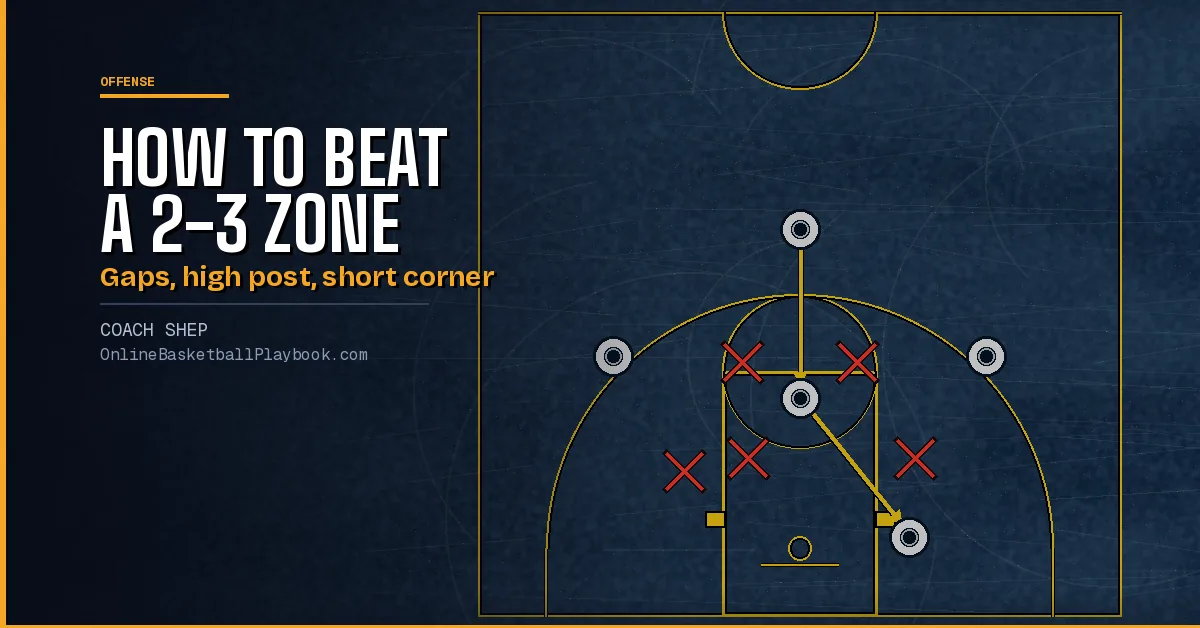
How to Beat a 2-3 Zone: Gaps, High Post and Short Corner
How to beat a 2-3 zone: sit in the gaps, flash the high post, use the short corner, skip to the corner and reverse, plus a simple version for youth teams.
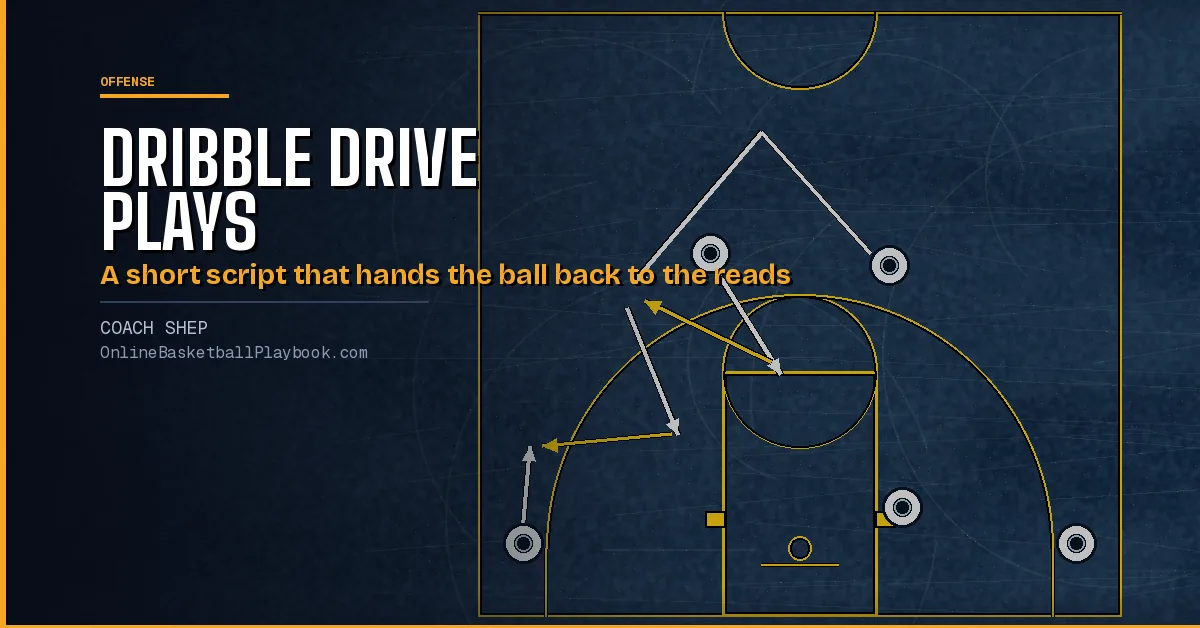
Dribble Drive Named Plays: Drop, Quick, Pop and Corner Sets
Dribble drive named plays, each drawn: Drop, Drag, Quick and Pop calls, a corner ball screen set, one entry with four finishes, the numbering and when to call one.
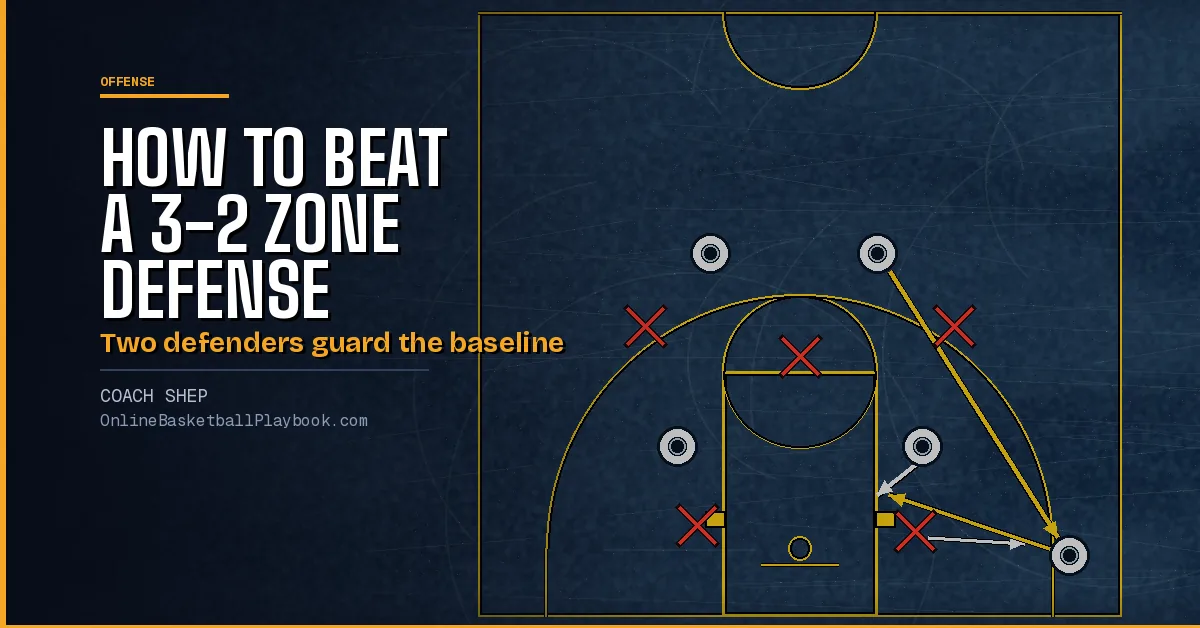
How to Beat a 3-2 Zone Defense: Sets, Screens and Reads
How to beat a 3-2 zone defense in basketball: alignments that split it, corner attacks, inside screens on the back line, the high post, skips, drives and rebounding.