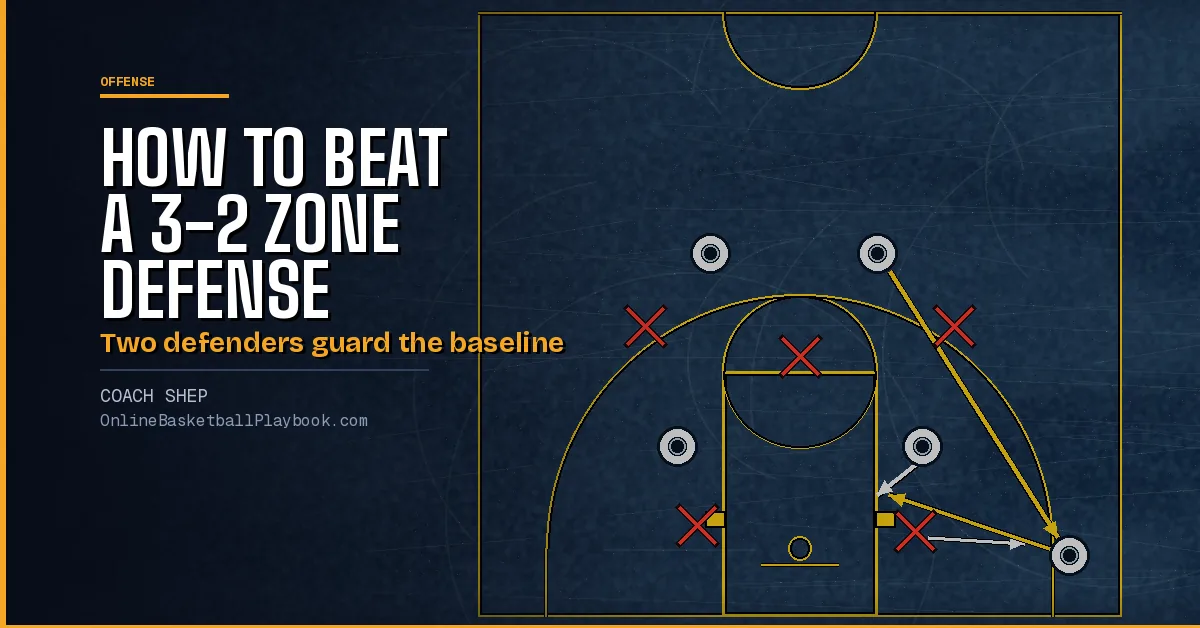
How to beat a 3-2 zone in basketball starts with its shape. Three defenders stretch across the top, so outside catches are contested, and only two are left to cover both blocks, both short corners and both corners. Every answer on this page puts more threats on that back line than two defenders can handle, or moves the ball faster than they can slide.
The guide covers what the 3-2 is and how it differs from the 1-2-2, the alignments that split it, the corner attack with its three inside counters, the high post, skips and drives, screening the zone, the offensive glass and the drills. The defensive side of the same zone is on 3-2 zone defense, and the principles that apply to every zone are on how to attack a zone defense.
What You Are Facing
Two different defenses go by one name, so the first job is to see which one is on the floor.
- The straight 3-2. It lines up like a 1-2-2, except the middle defender sags into the high post area instead of guarding the point guard. A point guard who can shoot threes should get open looks, because the middle defender plays off him.
- The denial 3-2. Three across the free-throw line. The two wings hard-deny the wing pass and the middle player (a rover) denies the high post. Nobody pressures the ball at the top of the key, so it gives up open looks at the top of the key, hard rotations against penetration and passes to the corner.
The denial 3-2 separates itself sharply from the 1-2-2, where the top defender pressures the ball and the wings pinch to protect the high post and allow the wing pass. The two are different defenses that are often confused. The straight 3-2 is one problem from the offense's side, with the same attack for both.
Both have the same back line: two low defenders guard the blocks and the corners. The full comparison of the two zones is on 1-2-2 zone defense and 2-3 zone vs 3-2 zone.
The denial 3-2 does a few things well, which tells the offense what not to chase.
- Ball at the top of the key. The rover sits on the foul line and the wings deny, so the offense is pushed to play through the elbows or skip to a corner.
- Ball in the corner. The ball-side low defender steps out, the weak-side low defender slides to the ball-side block and plays behind, and the weak-side wing drops toward the basket.
- Rebounding. The zone rebounds well, because every perimeter shot leaves three defenders in a rebounding triangle.
Know which 3-2 is on the floor before you pick the attack.
3-2 Zone Offense: Line Up Where They Are Not
Set up in the gaps. Against an odd front (one defender in the middle of the top line), use an even front, and against an even front, use an odd one. A one-guard zone such as the 3-2 gets a two-guard offense. The 3-2 zone offense alignments:
The 2-1-2
The first even-front choice. Two guards in the slots split the three defenders, so the top defenders have to chase the ball as it moves, which will likely open the high post. Teams usually put their two best ball movers in the slots, but putting shooters in the two low spots also works. The high post player has to be a threat from that spot.

Two guards, a corner runner and two posts in the gaps
The straight 3-2 attack uses a two-guard front, stations its best shooter in the corner on the ball side, where he runs the baseline, and sets one post on each side of the lane, sitting in the seams between the low defenders and the outside defenders above them. The baseline-runner offense built on the same look for the 1-2-2 is on how to break a 1-2-2 zone.
Three flat through the middle
Bob Knight attacks a 3-2 through the middle with three flat players. Mike Krzyzewski uses a penetrate-and-fill set against zones with one man in front: the point guard penetrates and the other four fill and read, combining a gap attack with a weak-side screen on the helper. That set does not name the 3-2, so it fits the straight 3-2 that plays like a 1-2-2.
The overload
An overload puts more offensive players than defenders on one side of the floor, with good spacing inside the overload so one defender cannot guard two players at once.
Pick the front your players can run, then rep it against the zone until it is automatic.
How to Beat a 3-2 Zone From the Corner
Start at the corner, for two reasons. When the ball is in the corner every zone becomes a 2-3, and the defender who must close out to the corner is usually a post player, so a guard catching there should have an athletic edge. If the closeout is late, the shot is open. If it is on time, the guard drives.
The straight 3-2 attack works the corner in order:
- Make the low defender keep coming. If the low defender comes out to cover the shooter, a couple of made shots force him to keep coming, and then the pass goes inside to the low post or the lane.
- Hit the weak-side post. If the opposite low defender comes over to help, the ball goes to the weak-side post.
- Kick to the weak-side wing. If the weak-side wing drops to cover that post, the kick-out to the weak-side wing is open.
Either the weak-side post or the weak-side wing should be free.

- Drive the baseline. A baseline drive from the corner is hard for the 3-2, because it pulls the defense to the strong side and opens a drift pass to the weak corner.
- Run corner to corner. A baseline cutter running from corner to corner, especially a shooter, pulls the low defenders out toward him even before he catches, which opens the paint, and a cutter who runs behind the defense can get lost.
Get the ball to the corner and read the low defenders.
Inside Screens on the Back Line
When the ball goes to the corner, the zone has to cover the ball-side block. The straight 3-2 attack reads how it does that and has a screen for each answer.
The middle defender slides down
If the middle defender slides down from the high post to cover the ball-side block, the ball-side post screens him and seals him outside, and the opposite post cuts across for the pass. If the weak-side low defender covers that cut, the screener, who should now have inside position if he sealed correctly, cuts to the opposite block for the pass. If the weak-side wing drops down to help, the kick-out to that wing is open.

The opposite low defender slides over
If the zone covers the block by sliding the weak-side low defender across, the ball-side post screens that defender before he gets there, and the other post cuts across to the open block for the pass and a layup.

The wing slides down to the corner
If the zone covers the corner with the wing defender instead of a low defender, the first look is the corner shooter's three, because the wing has a long way to go. Then the ball-side post has two ways to attack:
- Down screen and cut. The ball-side post down-screens the low defender and the opposite post cuts into the ball-side gap just outside the lane for the pass and a shot.
- Step into the gap. The ball-side post steps out into the gap himself, and if his defender comes out, the pass goes underneath to the other post cutting to the ball-side block. Skips to the opposite wing work too.

A baseline-runner variation runs a related action against the 1-2-2: on the corner pass, the ball-side post screens the opposite low defender and the other post cuts to the ball-side block for the pass and a layup. It is said to work against a 2-3 too.
Slip the screen
The part of screening a zone that coaches overlook is the slip.
- Slip toward the ball. Zone defenders are taught to fight through screens, so there is usually a gap inside them, and a screener who slips toward the ball after contact can catch there for a shot. It is an easy way to get the ball to the high post.
- Still screen the ball and the shooter. A ball screen on a zone defender still gives the handler a path into the paint, and a down screen still frees a shooter.
Rep the slip until the screener sees the gap on his own.
The High Post and the High-Low
The high post is a prime spot against any zone, and the denial 3-2 is built to keep the ball out of it. There are two ways in:
- Tall post over the top. A tall post catches over the top of the zone.
- Wing cuts from behind. A wing cuts to the free-throw area from behind the defense where nobody sees him.
The pass gets easier once the ball has moved and the defense has spread out.
Once the ball is there, one of the low defenders usually has to come up to take it. That leaves the other low defender alone, and the offense's post can seal him in the paint for the high-low pass.
The player at the free-throw line has to be a threat to shoot the mid-range shot or drive, and a good enough passer to find the dump-off or the kick-out when the defense collapses.

Against the denial 3-2 the defense answers a high-post catch with the rover taking the ball, both low defenders pinching and both wings dropping into the space between the high post and the corners, so the pass back out to the perimeter is the next read. High-post reads against every zone are on attacking a zone from the high post, and the post partnership itself is on high low offense.
Move the ball first, then feed the high post.
Ball Movement, Skips and Fakes
- Quick reversal. Side-to-side ball movement keeps the defense always moving and never set to survey the floor. The habit is "zero-second decisions": shoot, pass or drive on the catch.
- Skip passes. 3-2 defenders shift until all five are on the strong side, so a skip to the weak side often finds an open shot, and a hurried closeout opens the drive. In the baseline-runner offense, a low post pins the outside low defender so a skip from the opposite wing reaches the shooter in the corner. The denial 3-2 answers a skip by having the weak-side wing close out first, then get bumped by the low defender.
- Pass fakes. Zone defenders guard areas, so a fake that moves them the wrong way opens the real pass. The common saying is fake a pass to make a pass. Fakes help most on passes into the high post and the short corner, because most zone offenses are stationary.
- Make shots. Teams often play a zone because they doubt the opponent can shoot. Made outside shots force closeouts, which open the passing and driving lanes.
Whatever you choose, make every catch a decision.
Drive the Gaps
The denial 3-2 lists penetration among its weaknesses, because only two defenders are back.
- Drive between two defenders. Either the gap defenders are late and the lane is open, or both slide to the ball and someone is open for a kick-out or another drive.
- Pull all five in. Against a 3-2, a drive into the lane often pulls all five defenders in, which leaves several shooters open at once.
- Dribble at a teammate. Dribble movement away from the ball: dribble at a teammate and have him cut away or loop up to the top of the key, which shifts the zone and can open the weak side.
Drive with the kick-out in mind.
Crash the Glass and Run
- Offensive rebounds. Zone defenders do not know who they are boxing out, so they have to turn and find a man first, and offensive players farther from the basket when the shot goes up are the least likely to be found. The exception is any player assigned to get back. Rebounding drills are on offensive rebounding drills.
- Score before it sets. Many 3-2 teams run to their spots without watching the ball, which leaves driving lanes and passes ahead. Attacking a zone before it forms is part of early offense.
Send the offensive rebounders and know who gets back.
Get the next coaching guide in your inbox
One email when a new guide or diagram set goes up. Free.
Practicing the 3-2 Attack
There are practice rules rather than one named 3-2 drill:
- Game-like shooting. Making outside shots is close to a requirement against a 3-2, so shooting should be practiced with game-like drills.
- Call it from the bench. Call the zone counter from the bench when the defense changes, with no timeout needed.
Rep the shot you need in the game and the call you make from the bench.
More zone drills are on drills to teach zone offense, ready-made sets are on zone offense quick hitters, and the companion pages for the other common zones are how to beat a 2-3 zone, how to beat a 1-3-1 zone and how to beat the matchup zone.
Questions Coaches Ask
What is the best offense against a 3-2 zone?
There are several: a 2-1-2 even front that splits the three on top, a two-guard front with a shooter running the baseline and two posts in the gaps, three players flat through the middle, or an overload with more offensive players than defenders on one side. All of them aim at the two-man back line.
What is the weakness of a 3-2 zone?
Two defenders guard the whole baseline, so the corners, the short corners and the low post are thin. The denial 3-2 adds open looks at the top of the key and hard rotations against penetration.
What is the difference between a 3-2 zone and a 1-2-2 zone?
In the straight 3-2 the only difference is that the 3-2's middle defender sags to the high post while the 1-2-2's top defender guards the point guard. The denial 3-2 is a different defense: its wings deny the wing pass and its rover denies the high post, while the 1-2-2 pressures the ball and allows the wing pass.
Should you skip pass against a 3-2 zone?
Yes. The zone shifts toward the ball side, so a skip to the weak side can find an open shot or a closeout to drive.
How do you get the ball into the high post against a 3-2 zone?
Move the ball first so the zone spreads, then use a tall post who catches over the top or a wing who cuts to the free-throw area from behind the defense. A screener who slips toward the ball after contact also gets the ball in.
Want the printable playbook packs?
OBP Pro members get the premium playbook packs: the zone attack, out of bounds and practice plan PDFs, plus each new pack as it is finished. The membership page lists what is in each one. Or draw your own version free in PlayDraw.
See what OBP Pro includesMore Guides From This Batch
- Run and Jump Press Basketball: Rules, Rotations and Drills
- Basketball Drills for 10 Year Olds: Shooting, Handling, Offense
- Early Offense Basketball: Pace, First Actions and Drills
Back to How to Beat a Zone Defense and every Offense page.
Keep Building
Related breakdowns
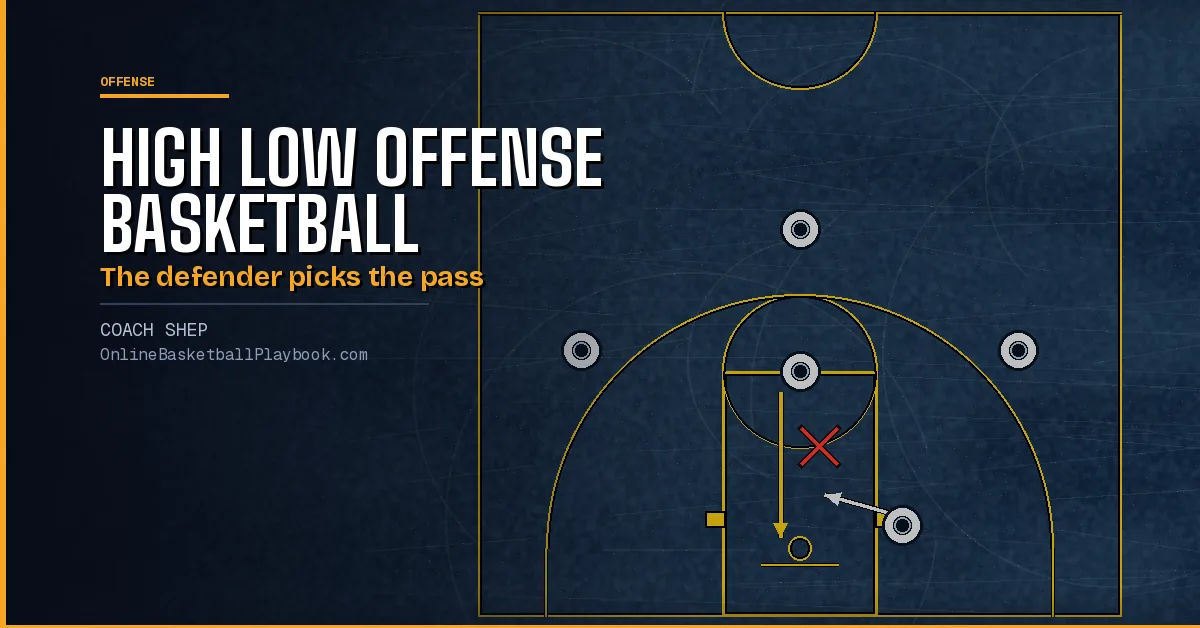
High Low Offense Basketball: Reads, Counters and Zone Rules
High low offense basketball explained: the two-post shell, the lob and bounce reads, answers to a front, down-screen reads, 1-4 low sets and the hi-lo against zones.
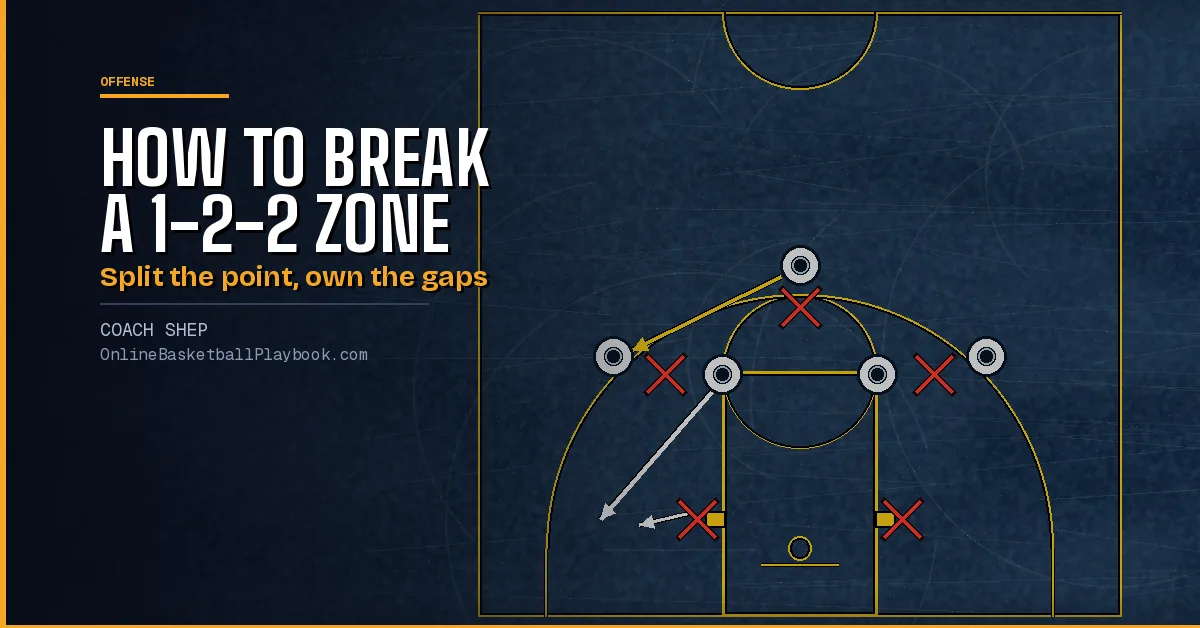
How to Break a 1-2-2 Zone Defense in Basketball: Sets and Reads
How to break a 1-2-2 zone defense: split the point defender, attack the middle and the short corners, and run a 1-4 high, 4-out, 1-3-1 or baseline runner offense.
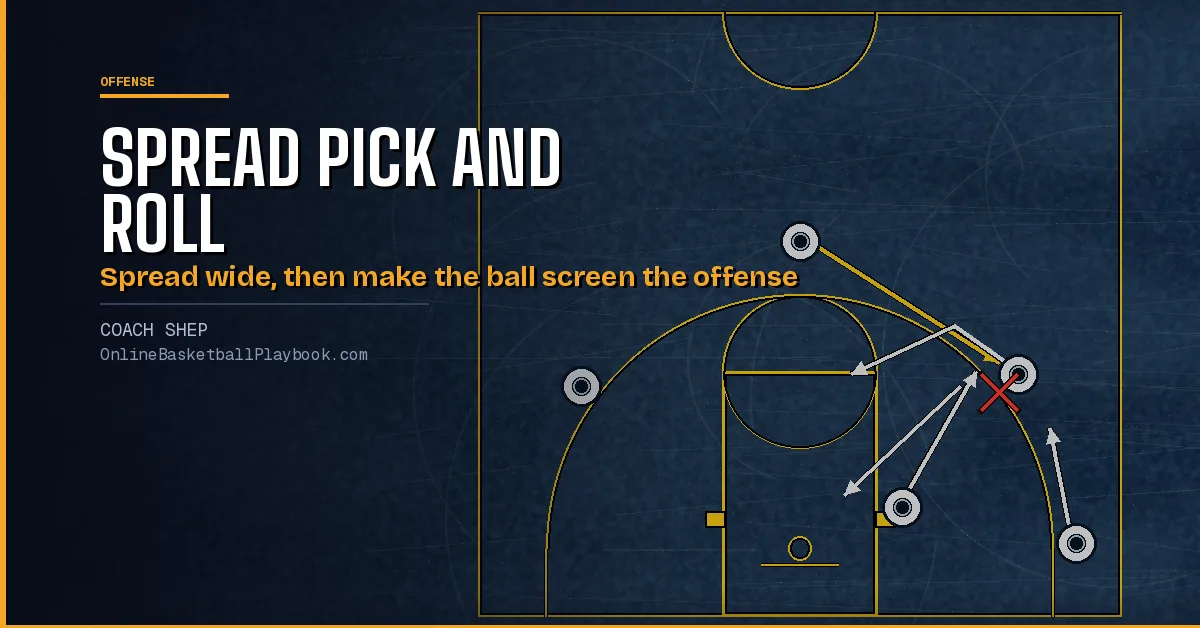
Spread Pick and Roll Offense: Flat Screens, Reads and Counters
Billy Donovan's spread pick and roll offense step by step: the trail pass, the angled wing screen, the second side, the flat screen and the counters.