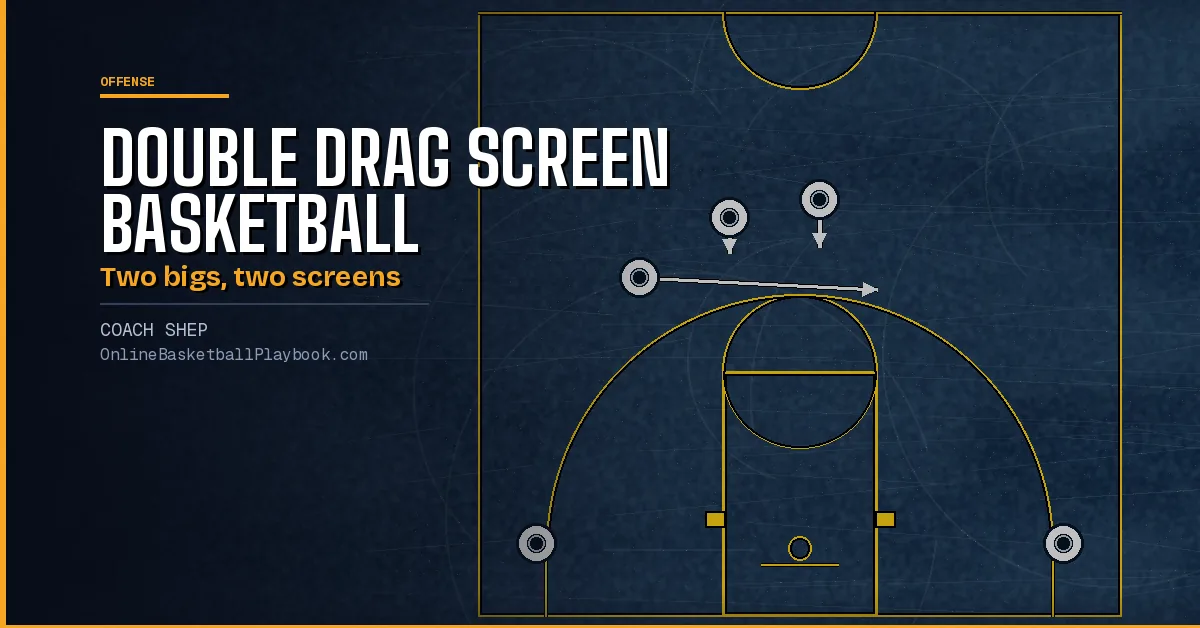
A double drag screen is two ball screens in a row, set by two bigs who are trailing the play. The ball handler dribbles toward the middle of the floor off the first screen and then the second. FIBA defines it as a two-person staggered on-ball screen for the handler to dribble toward the middle, and it defines a drag screen as an on-ball screen traditionally set in transition.
That is why the double drag lives in early offense. The defense sees two screens in one trip down the floor, and the post defenders have not set up their help yet. This guide covers the set-up, who rolls and who pops, the slip, the reads off the pop, and how defenses cover it. The single screen and the rest of the ball-screen menu are on pick and roll.
The Double Drag Screen Set-Up
The two guards who are not handling the ball drop to the corners. The two bigs come down the floor behind the handler, one behind the other, and set their screens in turn. The handler dribbles at the first screen and then at the second.

Setting the screen early has a reason. An early ball screen is set before the helping big has reached his help spot, so he cannot help as easily. One early series requires at least two dribbles past the screen, so the handler uses the space instead of picking up the ball.
Start with the corners filled, the bigs spaced and the handler going downhill.
Who Rolls and Who Pops
Two bigs leave the screens at the same time, so the team needs a rule. Coaches use more than one.
- First screener rolls, second pops. The big who screens first rolls to the rim, and the second big pops out toward a spot about 45 degrees from the basket. It is the rule in transition sets that teach the double drag.
- The 5 rolls, the 4 pops. Position decides. In one set, 2 and 3 drop to the corners, the 5 and 4 set the staggered screen, and the 5 rolls while the 4 pops.
- The corner decides. In a transition library the screener's choice to pop or roll depends on whether a corner is empty.
- First pops, second rolls. The same double screen run from a horns look sends the first screener out and the second to the rim.

Pick one rule and teach it as the only rule. A team that mixes them will put both bigs at the rim.
The Slip Version
The first screener can slip instead of rolling. In one playoff set the first big runs to the drag spot, screens, and slips away to the opposite block. The second big comes right behind him, sets the second drag and rolls to the rim. The handler reads where the help comes from.

A slip is also a wrinkle on the away-screen entry that the pro game uses. The guard cuts over the top of an away screen into two drag screens, and the first screener ghosts or slips out. The second screen then creates a double gap for the guard to attack. In a pro set that opens with an elbow screen, the 5 slips the second ball screen and a teammate lifts.
Name the slip as a call, and tell both bigs before the possession.
Reads Off the Pop
The handler looks to penetrate first. If he is stopped, he reads the roller and the popper.
- Hit the roller. The big going to the rim off the second screen.
- Hit the popper. The big who stepped out to the left slot, for a shot.
- High-low. The popper catches and passes to the roller posting low.

On a single drag two reads come together, a layup for the roll man and a mid-range shot for the popper. A double drag stacks a second screen on top of those reads. See pick and pop for the shot off the pop.
Decide the first read for the handler, and rep the whole sequence from both sides of the floor.
Other Ways Into It
- Off a miss or a make. Many transition libraries run a ball screen off the break. One coach does not. In his three-on-three drill the offense cannot screen after a miss or a turnover. His reasoning is that guards use the drag as a crutch and stop winning their own matchups, so his team pushes the ball ahead and attacks the paint.
- From a secondary break. A drag is the landing spot of several secondary breaks, so the double drag is a call, not a new set. See early offense basketball and fast break and transition offense.
- As a continuity layer. Spain, Ram and double drag are second-screen layers on a ball-screen continuity. The rules for the layers are on ball screen continuity offense.
Pick where the double drag fits in your offense before you call it, so the bigs know where to be.
How Defenses Cover It
The early coverages are built to meet the handler far from the three-point line. One coach picks the handler up early and well away from the line so the defender can go under, with a small show from the screener's defender and a called Under. A late pickup at the line takes away the under against a shooter. In one offense the double drag comes early, the five rolls and the four pops, and the defense meets two screens on one trip.
The offense answers with the slip and the pop. The coverages are laid out on how to defend the pick and roll.
Questions Coaches Ask
What is a double drag screen?
Two bigs set a staggered ball screen for the handler, one after the other, as he dribbles toward the middle.
What is the difference between a drag screen and a double drag?
A drag is one screen set in transition. A double drag is two screens in a row for the same handler.
Who rolls and who pops?
Coaches differ. In several sets the first screener rolls and the second pops, and one set has the 5 roll and the 4 pop. Name one rule and drill it.
When do you slip the screen?
The first screener slips to the block when a defense will not let him screen, and the second screener comes behind him and rolls.
Every diagram on this page uses the symbols on how to read a basketball play diagram. The horns picture that also produces a double screen is on horns basketball play, and the NBA's early actions are on modern NBA offense.
Get the next coaching guide in your inbox
One email when a new guide or diagram set goes up. Free.
Want the printable playbook packs?
OBP Pro members get the premium playbook packs: the zone attack, out of bounds and practice plan PDFs, plus each new pack as it is finished. The membership page lists what is in each one. Or draw your own version free in PlayDraw.
See what OBP Pro includesRelated Guides
- Zoom Action Basketball: Down Screen Into a Handoff
- Split Action Basketball: Post Splits, Cuts and Reads
- Chicago Action Basketball: Pin Down Into a Handoff
- Spain Pick and Roll Basketball: Screen the Screener
- Corner Stagger Action Basketball: Screens for a Shooter
Back to Basketball Plays and every Offense page.
Keep Building
Related breakdowns
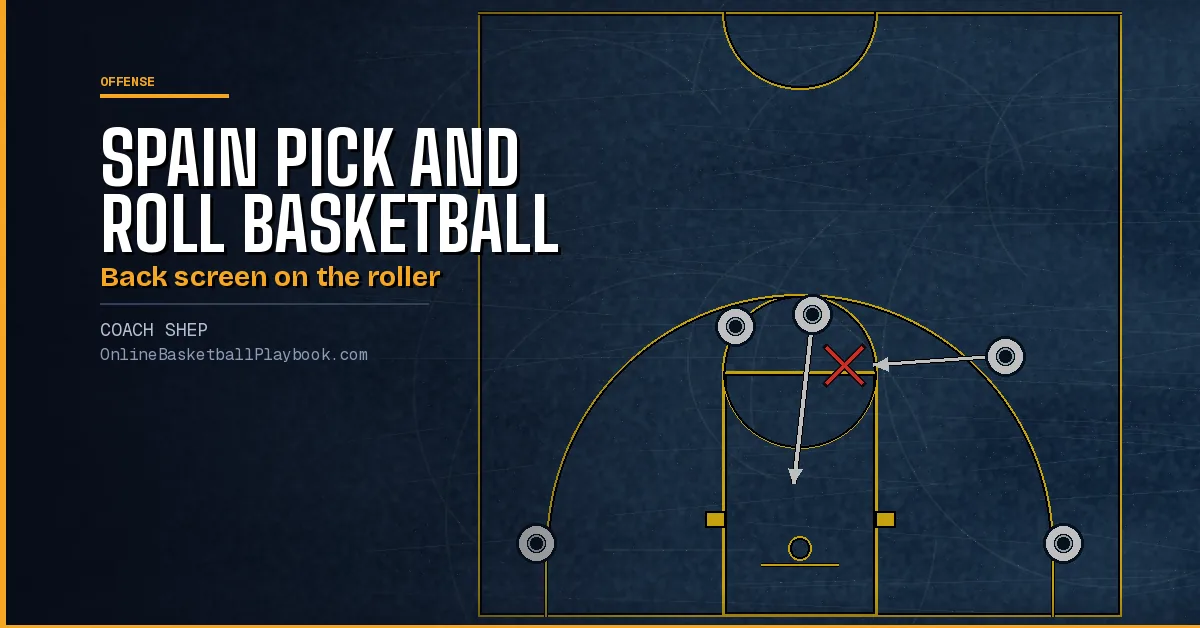
Spain Pick and Roll Basketball: Screen the Screener
The Spain pick and roll explained: a ball screen plus a back screen on the roller's defender, the pop, the hedge counter, the versions and the coverages.
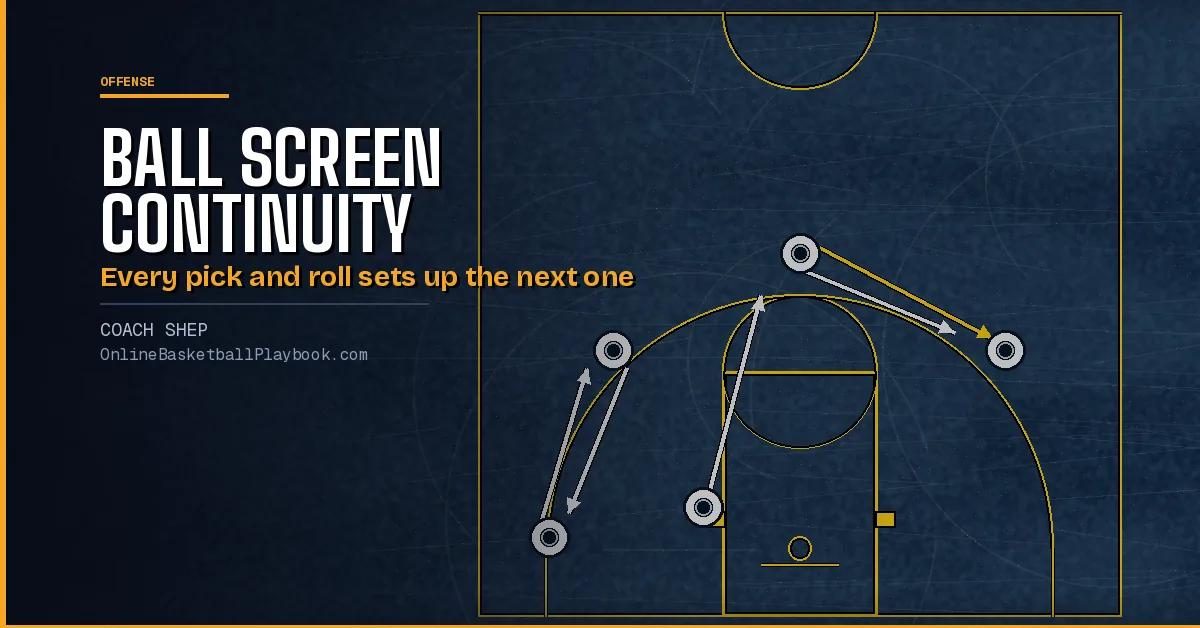
Ball Screen Continuity Offense: Pick and Roll Rules and Reads
Ball screen continuity offense in full: the 4-out and two-big engines, reload rules, spacing, angles, reads, counters, Spain, Ram, double drag and zone sets.
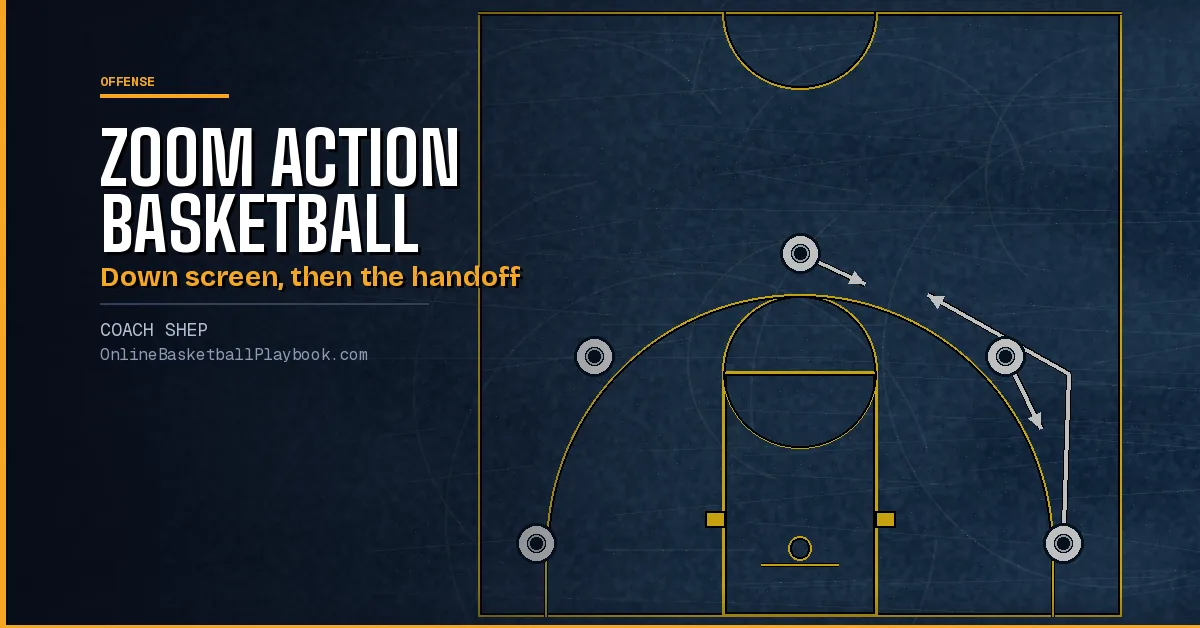
Zoom Action Basketball: Down Screen Into a Handoff
Zoom action basketball explained: the down screen into a dribble handoff, the three reads, the back cut and slip counters, every version and how to teach it.