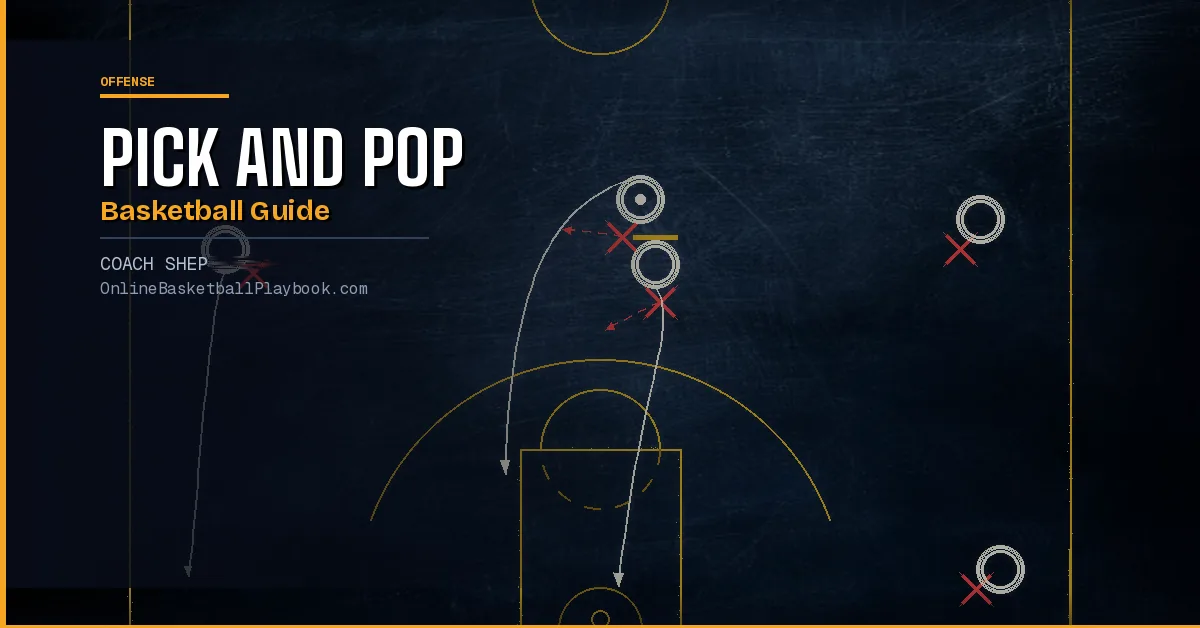
The pick and pop is one of the most effective weapons in modern basketball. The screener sets the ball screen, reads the defense, and pops out to the perimeter for an open three, punishing the very coverage designed to stop the roll.
What Is the Pick and Pop?
The pick and pop is the screener's answer when the defense takes away the roll. In a standard ball screen action, the screener has three options after making contact: roll to the rim, pop to the perimeter, or short-roll to create a triangle. The pop is the version that sends the screener away from the basket (typically to the wing, three-point line, or elbow) for a catch-and-shoot opportunity.
What separates the pick and pop from a simple spot-up look is the timing and the reason it opens. The pop works because the defensive coverage that eliminates the roll (switching, sagging, or helping off the screener's man) automatically creates space on the perimeter. The screener reads the coverage and moves into exactly the spot the defense has abandoned.
At the highest level, this read happens before the screen is even fully set. The screener watches the defending big's positioning, identifies the coverage, and decides on slip, roll, or pop before contact. When the pop is the right call, the screener is already in motion before the ball handler turns the corner, which means the catch can happen in rhythm for a clean look.
When to Pop: Reading the Defense
The pop is the correct screener decision in three primary situations. Understanding each one is how coaches install the action as a rule rather than a guess.
The Switch Coverage
When the defense switches ball screens (trading defensive assignments so neither defender has to fight through the pick), the screener's man is now guarding the ball handler. That leaves the screener being guarded by a player who is almost always smaller, slower, or both. The pop to the three-point line creates a mismatch catch-and-shoot: a big man shooting over a smaller defender who was just matched up by accident.
This is the most reliable scenario for the pop. Florida's spread offense codified it as a rule rather than a read: versatile bigs who can shoot threes make the switch coverage self-defeating without needing a separate play call. The screener's pop IS the switch counter. No play call, no signal. The coverage dictates the action.
The Sag or Drop Coverage
When the defending big drops back to protect the rim and take away the roll, the screener has two options: roll to an open lane, or pop to the uncontested perimeter. If the ball handler is a strong pull-up threat who can attack the dropped big in space, the screener rolls. But if the dropped big is positioned to cut off the driving lane, the screener pops to the open wing, creating a skip target that the help defense has no one to cover.
The Hard Hedge or Show
A hard hedge (where the defending big jumps out aggressively to cut off the ball handler) typically calls for the screener to slip to the basket. But in certain alignments, the pop is the better read. If the weakside help is already loaded toward the rim and the corner is vacated, the screener who pops can catch in a spot that has no help coverage at all. The ball handler attacks the hedge to collapse the interior, then kicks to the popping screener as the hedge recovers.
The Ball Handler's Role
The pick and pop is only as good as what the ball handler does with his end of the action. A passive ball handler who immediately looks for the pop turns the play into a simple drive-and-kick. A ball handler who attacks the defense first creates the pressure that actually opens the pop.
The fundamental rule is the same as in any ball-screen action: come off the screen at the level of the screen. Brad Stevens' clinic work with Butler introduced this as the "ball-handler level rule." The handler shouldn't drift higher (which removes the angle and lets the defender recover without contact) and shouldn't go lower (which hands the baseline to the defense). The level of the screen is the read point: the exact location where the ball handler identifies the coverage and decides to turn the corner, pull up, or deliver the skip pass to the popping screener.
Two passes make the pick and pop work consistently. The first is the skip pass to the opposite corner, sending the ball over the defense while the screener relocates, which keeps the play alive when the pop is on the weak side. The second is the pocket (bounce) pass to a screener who has rolled or short-rolled into the paint. Understanding both passes gives the ball handler a complete set of options off the screen, rather than committing early to one read.
When the defense shows a hard hedge, the ball handler's job is to drag the hedger: attack his outside shoulder, pull him further out of position, and then deliver the pass with the outside hand while the screener is opening to the ball. This sequence (attack, drag, rip, pass) is the ball handler's specific responsibility in the drag-hedge read, and it creates the clean catch-and-shoot window that the pop is designed to produce.
Spacing That Makes It Work
No ball-screen action functions without correct spacing, and the pick and pop is especially sensitive to it. The pop opens a perimeter shot, but if the perimeter is already crowded by another offensive player, the window closes before the screener can arrive.
Florida's spread offense, built around the 1-4 High and 4 Flat alignments, treats spacing as the non-negotiable precondition of every ball screen, not a byproduct of it. No spacing means no pick and pop. The system runs two named rules to preserve the perimeter before any screen fires.
The first is the "Double Side" rule. When two players are positioned on the same side of the floor, one holds the corner and the high guard holds the sideline. This is a rule, not a read. It prevents crowding and guarantees the ball-screen lane stays clear for the ball handler and the screener's pop lane stays open on the wing.
The second is the corner-lift rule. When the ball handler uses a wing ball screen, the corner guard on that side automatically lifts into the vacated spot. No decision required. The lift guarantees a replacement shooter after every drive or after every pop. If the pop goes to the wing, the corner is already filled. If the pop goes to the elbow, the corner guard is already in position for a secondary skip target.
These two spacing rules (hold the sideline and lift the corner) are the structural frame that makes the pick and pop repeatable rather than situational. Coaches who drill these as automatic habits will find that their ball-screen actions work even when reads are late or defenses are executing well.
Teach spacing as a pre-condition, not a reaction. Run the "Double Side" rule as a named positional habit before you ever introduce screener reads. Guards who know where they should be standing before the screen fires will make faster decisions once the coverage shows because they have already eliminated every option that doesn't match the spacing rule.
The Eight Reads: Where the Pop Fits
One college program built one of the most systematic teaching frameworks for ball-screen reads in the coaching clinic record. Their 8-way taxonomy names every situation a ball handler can encounter off a screen, drilling each one as a distinct read rather than allowing players to default to one response.
The eight reads are: turn corner, hesitate, split hedge, fake split, reject, shoot behind, re-screen, and early slip. Each has a specific trigger, a defensive alignment or coverage that makes it the highest-percentage choice. Guards who can name which situation they are in make faster decisions than guards running one default option regardless of coverage.
The pop belongs primarily to the screener's side of this taxonomy, but it intersects with the ball handler's reads in predictable ways. When the ball handler uses a "fake split" (selling the split move to draw the hedge, then kicking to an open cutter or corner as the defense collapses), the screener who pops is often the primary target of that kick. When the ball handler "hesitates" off the screen to freeze a late-recovering defender, the screener's pop to the wing provides the reset target if the hesitation doesn't create a lane to the rim.
The coaching application for teams at the high-school level is to run a drill series that names and practices all eight reads, starting 2-on-0 with players calling out the read they're in, then progressing to 2-on-2 with defenders giving specific coverage cues that force the named read. Players who have named vocabulary for each situation communicate faster and execute under pressure.
The Screener's Six Options
Lason Perkins and Basketball Immersion extended the screener taxonomy beyond roll and pop into six distinct decisions: roll to rim, pop to space, short roll, re-screen, set flare screen, and roll to opposite block. The pop to space is explicitly assigned to two scenarios (a switch coverage or a sag/drop) while the roll is the default against a show or hedge. The short roll holds the screener in a triangle position to create a three-man action rather than a two-man game. The flare screen fires when the roll is covered and turns the two-man game into a three-man action by involving a third offensive player.
Installing the Pop at Practice
Most ball-screen drills stop at teaching the roll. Adding the pop as a taught, practiced, named option takes only one additional drill layer and pays off immediately against switching defenses that have taken away the roll from years of practice.
The progression follows the same model used for all pick-and-roll teaching: 1-on-0 first to establish the movement pattern, then 2-on-0 to practice the timing between screener and ball handler, then 2-on-2 with a specific defensive cue, then full-team integration.
In the 2-on-0 phase, the screener's cue is simple: if the coach (standing in for the defending big) raises a fist to signal "switch," the screener immediately pops to the wing. If the coach raises an open hand to signal "sag," the screener reads roll vs. pop based on where the open space is. Running the same drill with two different coverage cues forces the screener to read rather than pre-decide.
The 2-on-2 phase uses live defenders with a restriction: the defending big must either switch or sag. He cannot hedge. This forces real switch reads from the screener without the complexity of blitz counters. Once players are comfortable with the pop in a switch read, add the hedge coverage and the slip, which gives the full three-option screener decision tree in a live competitive environment.
Stevens' East/West screening angle rule applies directly here. A flat horizontal screen surface gives the ball handler maximum room to come off and gives the screener a clean angle to pop from. A vertical screen angle narrows the path for both. Coaching screeners to set the screen "East-West" (a single verbal cue) is the highest-leverage technical correction for teams whose ball-screen reads are correct but whose execution breaks down because the geometry is wrong.
Counters and Wrinkles
Once a defense has identified a team's screener as a pop threat, they adjust. The most common adjustment is to send the defending big out to contest the pop, which, in turn, reopens the roll. This is the built-in counter: a screener who is credible in both roll and pop puts the defending big in an impossible position. Chase the pop and the roll opens. Protect the roll and the pop is a clean catch-and-shoot.
The Horns alignment generates a particularly rich family of named counter actions off the pop. The "Flare" variant from the CSKA Moscow set sends the screener to a flare screen rather than a straight pop when the screener's defender fights the roll. The screener reads "my man is chasing the roll" and flares instead, creating a three-player action from the original two-man set. The "Ghost" variant fires when the defender goes over the screen early, rejecting the screen entirely and using the ball handler's baseline drive to trigger a secondary read.
Ram action layers an additional pre-trigger on top of the pop. In Ram action, a guard is screened coming from the slot or corner, and that same guard then immediately sets the ball screen. Two defenders are moving before the ball screen even fires. The defense is already in transition when the pick and pop action begins. The screener who pops in a Ram set is catching in a spot that was never fully covered because the defense was still sorting out the Ram action when the screen was set.
Spain action does the same thing from the other direction: a third player back-screens the screener's defender simultaneously as the ball handler attacks off the screen. The screener's defender is being screened away from the pop target at the exact moment the screener is arriving there. Spain can stack with Ram (Ram-Spain fires both layers in sequence), forcing the defense to guard two screens at once with no recovery interval between them.
For teams that run a double ball screen, position in the screen determines the action: the first screener pops to clear space, the second screener rolls to the opening. The assignment is automatic. The ball handler doesn't have to decide which big is rolling. This removes a decision from the most time-pressured moment of the action and makes the second read predictable for everyone on the floor.
- Teach the three-option screener decision as a simple rule: high hedge = automatic slip to the basket; switch or sag = pop to the perimeter; contain or recover = roll to the rim. Drill each coverage cue separately before combining them.
- Set the screen East-West, not North-South: a flat horizontal screen surface gives the ball handler room to come off and gives the screener a clean pop angle. One verbal cue corrects the most common technical breakdown.
- Install the corner-lift as a non-negotiable habit: every time the ball handler uses a wing ball screen, the ball-side corner guard lifts automatically. No decision. This guarantees a replacement shooter whether the action finishes with a roll, a pop, or a drive.
- Drill the pocket pass and the skip pass equally: guards who only know how to deliver the pass on a straight kick-out will be late when the screener pops to the strong side. The pocket pass (to the roller) and the skip pass (over the defense to the opposite corner) are both required reads off the same action.
- Use named coverage cues in every 2-on-2 drill: defenders signal "switch," "sag," or "hedge" so the screener practices the matching read in real time. Guards who can name the situation they're in ("I'm in a switch, he's popping") execute faster under pressure because the decision is already made before the action fires.
- Add the re-screen as a default screener habit: after the first ball screen, screeners should turn and re-screen automatically rather than standing. The defense has committed to one assignment; a second screen forces a second adjustment. It is a zero-cost habit that generates a real second-read opportunity every time.
Want more basketball coaching strategies, drills, and tools?
Join the Online Basketball Playbook newsletter →
Draw this play free in the play drawer →
Membership: the full library, playbook packs, and Pro drawing tools →
Keep Building
Related breakdowns
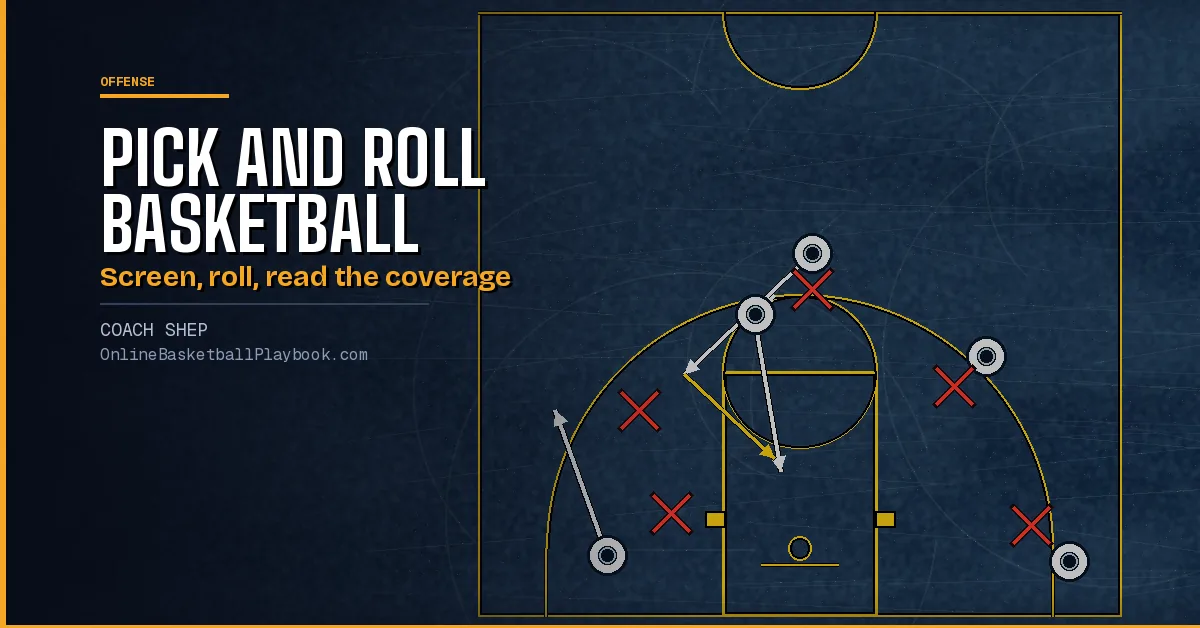
Pick and Roll Basketball: How to Run It and Read It
How to run the pick and roll in basketball: the screen and its angle, the handler's reads, roll, pop, slip and short roll, spacing, and a youth teaching order.
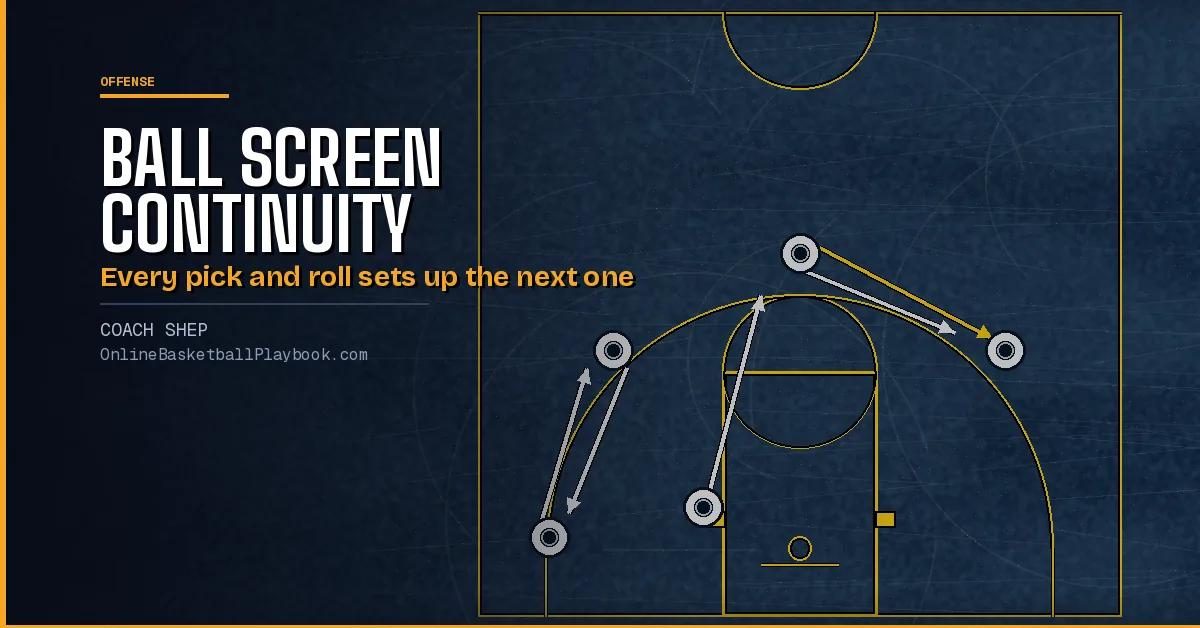
Ball Screen Continuity Offense: Pick and Roll Rules and Reads
Ball screen continuity offense in full: the 4-out and two-big engines, reload rules, spacing, angles, reads, counters, Spain, Ram, double drag and zone sets.
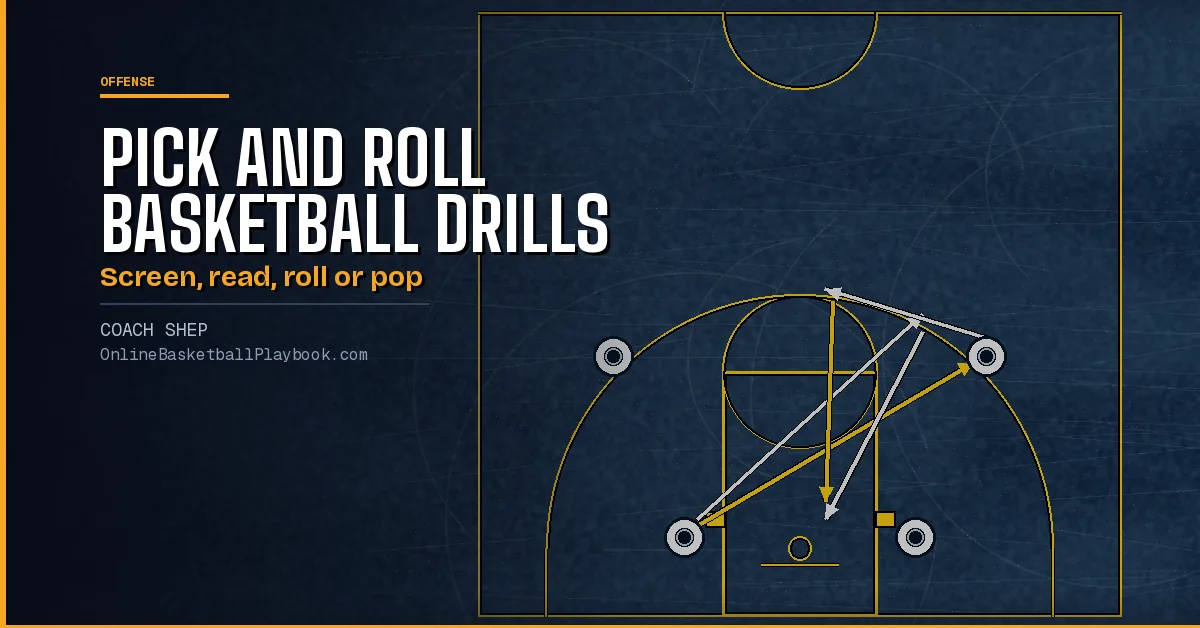
Pick and Roll Basketball Drills: From 2 on 0 to Live Reads
Pick and roll basketball drills that teach the action in order: a 2 on 0 screener series, chair reads, advantage drills, live coverage drills and youth steps.