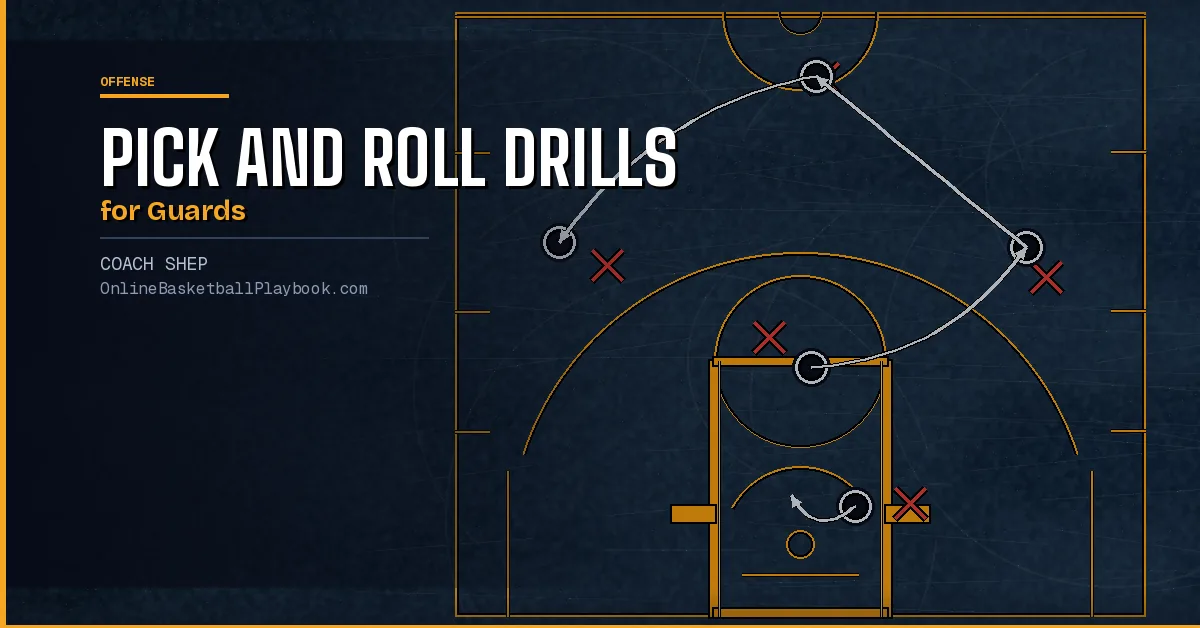
Most guards run one default move off a ball screen. The best guards run eight. These drills build the named reads, footwork habits, and decision speed that turn a ball screen into a real offensive weapon.
Why Guards Stall at the Ball Screen
The pick and roll is the most common action in basketball at every level from middle school to the NBA. Every team runs it. Almost no team drills it systematically enough that guards can identify the defense, name the read, and execute the right play in under a second. That gap, between running the action and being trained on the reads, is where possessions die.
What you usually see: a guard comes off the screen, sees a hedge, and either forces a bad floater or stops and resets. Both outcomes hand the defense a win. What you want to see is a guard who looks at that hedging defender and thinks "hard hedge, fire the dribble back to the screener's butt and split it." A named read. A drilled response. The difference is practice design.
One college coaching staff named and drilled all eight ball-screen reads as distinct options. Their philosophy: guards who can say "I'm in a hesitation situation" make faster decisions than guards running one default. That taxonomy is the foundation for everything that follows in this guide.
The other common mistake is treating pick and roll as a two-man game. A full ball-screen action involves decisions from all five players: the handler, the screener, the corner guard, the weakside big, and the second cutter. Drilling it as a two-man isolation ignores the reads that complete the possession. These drills address all five roles.
The 8-Read Framework Every Guard Must Own
These eight reads come directly from that taxonomy, one of the most complete ball-screen decision frameworks in coaching literature. Each read has a name, a cue, and a drill. Start by teaching the name. A guard who can name the situation is already halfway to executing it correctly.
1. Turn Corner
The standard go-over read. The defender chases over the screen and the lane is open. The guard drives off the screener's hip, turns the corner, and attacks the rim downhill. The goal is one dribble to the paint. Coaching cue: "hip to hip, turn the corner." This is the base read that every other option builds off.
2. Hesitate
When the coverage is late to recover, slow the dribble coming off the screen to freeze the defender, then accelerate once he commits. The hesitation is a tempo weapon. It works because the defender cannot sustain a hedge or recovery position indefinitely. One beat of pause can put the defender flat-footed. Drill this as a rhythm change, not a stop.
3. Split Hedge
Against a hard hedge, thread the dribble between the hedging big and the trailing on-ball defender. Brad Stevens' coaching cue is precise: "fire the dribble back to the screener's butt." Both defenders are out of position and the lane is open. This is an underused read because it requires a tight downhill dribble and commitment to the paint. Drill it until the footwork is automatic.
4. Fake Split
Sell the split move to draw the hedge down, then kick to the open corner or cutter as the defense collapses. This turns a defensive overreaction into an advantage pass. The read here is not the rim. It's the help defender who is abandoning a teammate to stop the drive. Drill the guard's eyes: look rim first, kick second.
5. Reject
When the coverage shades hard toward the screen side, abandon the screen entirely, change direction, and attack the opposite side. Also called going away from the screen. The guard reads the defender's pre-screen position. If he's already shaded to take the screen away, the reject is the first option before the screen is even set. Drill this as a pre-screen read, not a post-screen adjustment.
6. Shoot Behind
Stop and shoot a jump shot using the screen as a legal pick on the defender. Works when the on-ball defender is trailing close enough to be screened on the pull-up. Requires the guard to be a credible shooting threat, which is why spacing matters. A non-shooter cannot create this read; the defender will simply wait on the other side.
7. Re-Screen
When the first screen is disrupted, the guard circles back and the screener re-sets at a better angle. Brad Stevens' cue for the guard: use a behind-back dribble to change direction and give the screener time to re-set at the proper angle. This read keeps the action alive and forces the defense to adjust twice without getting a fresh possession.
8. Early Slip
The screener reads the defender's stance before contact. If the defender is showing a high hedge, the screener slips to the basket before the screen is fully set. The slip fires on the coverage tell, not after contact. This is faster than waiting for the screen to be hedged and then reacting. The Florida Spread system calls this the "pre-read slip" and treats it as automatic: high hedge defender stance equals automatic slip.
Screener Counters That Unlock the Action
Most pick and roll drills focus entirely on the ball handler. The screener has a full decision tree of his own, and if he defaults to rolling every time, the defense will take that away and the action collapses. Teach the screener's six options alongside the guard's eight reads.
Roll to the Rim
The default against a show or hedge. Pivot on the inside foot and sprint to the rim. The roll is aggressive and committed, no pausing to wait for the ball. Brad Stevens' rule: roll man pivots on the inside foot. Hesitation on the roll is what lets defenders recover. The roll should be a straight sprint to the basket every time.
Pop to Space
Against a switch or drop coverage, the screener with shooting ability pops out to a three-point shooting spot. When the defense switches, a shooter popping to three makes the switch self-defeating. The Florida Spread system builds this in as the standard switch counter. The screener's pop IS the switch counter, no separate play required.
Short Roll
Hold position after the screen to create a triangle with the ball handler and the help defender. The short roll is a decision-making hub. The screener in the short roll can feed a cutter, drive to the rim, or kick to the corner. This is the "pinch-post quarterback" concept from the NBA system: a big in the short roll who can make reads unlocks the whole offense.
Re-Screen
If the ball handler could not use the first screen, the screener re-sets at a better angle and screens again. The Timberwolves call this the "2 Man Sting" rule: after the ball handler clears an alley screen, the screener does not stand. He turns and re-screens immediately. The defense has already committed to one assignment and must adjust twice. Coaching screeners to default to a re-screen after any disrupted first action is a zero-cost habit with a real second-read payoff.
Flare Screen
When the roll is covered, the screener exits and sets a flare screen for a weakside shooter. This creates a three-man action from what started as a two-man game. The cue is coverage on the roll. If the helper is already on the roll path, the screener peels and flares instead of rolling into traffic.
Roll to Opposite Block
A cross-court post read when all other options are covered. Rarely drilled, but valuable against teams that over-help. The screener rolls all the way across the paint to the opposite block as the ball swings to the weakside. Forces the defense to recover across the entire key.
Drill Progressions: 2-on-0 to Live 2-on-2
The teaching progression that holds up across all levels: name it, walk it, rep it, then defend it. Each stage adds one layer of real-game pressure without overwhelming the guard's decision-making before the reads are automatic.
Stage 1: 2-on-0 Read Naming
Two players, guard and screener, run through all eight reads with no defenders. Before each rep, the coach calls out the read name. The guard and screener execute. This stage is about vocabulary and footwork, not reading a defense. Run every read from both sides of the floor. Do not move to Stage 2 until every guard can execute all eight reads on command without hesitation.
Stage 2: Coach-Guided Coverage Cues
Add a coach or manager standing where the defender would be, holding a pad or arm up to indicate the coverage. The guard reads the visual cue and calls out the read name before executing. This bridges the gap between vocabulary and real-time recognition. The cue must match the coverage: hedger steps hard = split or hesitate; stance shows high = early slip for the screener; defender shades screen side = reject.
Stage 3: 2-on-2 Live Reads
Add two defenders with instructions to play a specific coverage on each rep. Tell the defense which coverage to show (drop, show/hedge, blitz, switch) and let the guard read and react. The guard calls the read out loud after each possession so you can correct in real time. Progression: start with one coverage per block of reps, then mix coverages within the same drill block once guards are comfortable.
Stage 4: 3-on-3 with Corner
Add a third offensive player in the corner and a third defender. Now the guard's kick-out reads open up (fake split, drag hedge) and the corner lift rule comes into play. Corner guard: when the ball handler uses a wing pick and roll, lift into the vacated spot automatically. This guarantees a replacement shooter after every drive. Drill the corner lift as a rule, not a read. It should be automatic, not a decision.
Run the 2-on-0 naming drill at the start of every pick and roll practice block, not just during installation. Guards forget read names faster than they forget footwork. A thirty-second verbal walk-through at the top of practice keeps the vocabulary sharp so in-game communication works. When a guard calls the wrong read in a live rep, stop the drill, name the correct read, walk it once, and then run it live again before moving on.
Coverage-Specific Drills for Hard Hedge and Blitz
Two coverages give guards the most trouble and deserve their own dedicated drill blocks: the hard hedge and the blitz. Both require the guard to act decisively under pressure from two defenders simultaneously.
Hard Hedge Drill
Set up a 2-on-2 rep with explicit instructions to the defense: the on-ball defender fights over the screen, and the big steps out hard into the guard's path. Guard options: split the two defenders (fire the dribble back toward the screener's rear), use the hesitate-and-go to freeze the hedger, or use the drag hedge read. Attack the hedger's outside shoulder, drag the hedge, rip and pass back to the opening screener with the outside hand.
Brad Stevens' cue for the drag hedge is worth drilling as a standalone: "attack outside shoulder, drag, rip and pass back, screener opens to the ball." Walk it at half-speed first, then add live defense. The guard must wait for the hedger to over-commit before delivering the pass. Rushing the pass is the most common mistake; the drill should train patience under pressure.
Blitz Counter Drill
Against a hard blitz (two defenders trap the guard at the screen), the read is clear: drive away from the trap to space, split the two defenders, or throw back to the corner and slice to the rim. The key coaching point is that the guard should not try to force a pass over two defenders. Get out of the double team first, then find the advantage.
Run this as a dedicated 2-on-2 drill where the defense is required to blitz every single rep. The guard learns through repetition that the blitz is not a problem. It's a 4-on-3 waiting to happen if he gets the ball to the open corner. Add a third offensive player in the corner for the throw-back phase so the guard has a real target to find.
Switch Counter Drill
Against a switch, the guard reads which defender switched onto him. If a bigger, slower defender switched onto the guard, attack in space immediately. No longer a pick and roll, now it is 1-on-1. If the defense switched a smaller defender onto the screener, the screener flashes to the high post for an easy catch and score. Drill both scenarios explicitly. Guards who recognize a switch and immediately post the smaller defender or feed the open big have turned a defensive adjustment into an offensive advantage.
Spacing Rules Guards Must Enforce Before the Screen Fires
The Florida Spread system from Billy Donovan treats spacing as the non-negotiable precondition of the pick and roll, not a byproduct. Four shootable spots must be occupied before any screen fires. If spacing is wrong, the pick and roll collapses before the guard can use any of the reads.
The Double Side Rule
When two offensive players end up on the same side of the floor, one stays in the corner and the high guard holds the sideline. This is a named rule, not a read, not a suggestion. It preserves the pick and roll lane by preventing crowding. Teach it as a verbal cue: "hold the sideline." When a guard violates it, stop the drill and reset before continuing. The lane must be clean before the screen fires.
Corner Lift Rule
When the ball handler uses a wing pick and roll, the corner guard lifts into the vacated spot automatically. This is a rule, not a decision. No reading required. The corner always lifts when the wing pick and roll fires. This guarantees a replacement shooter is available after every drive and eliminates the dead possession that happens when the corner stays and the lane fills with offensive players crowding the drive path.
Screening Angle: East/West, Not North/South
A flat horizontal screen surface gives the ball handler maximum room to come off. A vertical screen angle narrows the path and helps the defender recover. The screening angle is one of the most consistently overlooked fundamentals in pick and roll teaching, and one of the fastest corrections a coach can make. One practice session of pointing out and correcting the angle will carry through the rest of the season. Teaching cue: "set the screen East-West."
Ball Handler Level Rule
Come off the screen at the level of the screen, not higher, not lower. Coming off higher kicks out the angle and reduces the drive advantage. Coming off lower gives the defender the baseline. The level of the screen is also the read point: the guard's eyes should be up reading the defense at the exact moment he reaches the screener's shoulder.
How to Install the Pick and Roll in Practice
Installation is not a one-week unit. The pick and roll is a system that gets better throughout the season as guards accumulate reps against different coverages. Here is a realistic weekly practice structure for building pick and roll decision-making over a full season.
Week 1-2: Vocabulary and Footwork
Run 2-on-0 naming drills for all eight guard reads and all six screener counters. Focus entirely on footwork and naming. No defenders, no live reads. The goal is that every guard can execute every read on command and call it by name. Screeners learn East/West angle and inside-foot pivot on every roll.
Week 3-4: Coverage Introduction
Add the Stage 2 coach-guided coverage cues. Introduce coverages one at a time: hedge first, then drop, then switch. Run 2-on-2 live against each coverage with the defense showing the same coverage every rep. Guards should be calling the read out loud before executing. Correct in real time when the wrong read fires.
Week 5 and Beyond: Mixed Coverage and 3-on-3
Mix coverages within drill blocks. Add the corner player and run 3-on-3 with the corner lift rule enforced. Add the blitz counter drill as a weekly staple. Blitzes will show up in games, and guards need the throw-back to corner as an automatic response. By mid-season, run full 5-on-5 pick and roll sets with defenders calling their own coverage and guards reading on the fly.
- Teach read names first. Guards who name the situation (hesitate, split, reject) make faster decisions under game pressure than guards who just "feel it out."
- Enforce the East/West screening angle every single rep. A vertical screen is giving the defense a free recovery. Correct it immediately and call it by name.
- Drill the corner lift as a non-negotiable rule: corner guard lifts on every wing pick and roll without waiting to be told, so the replacement shooter is always there.
- Run a dedicated blitz counter block every week. Guards who have been blitzed 50 times in practice do not panic when it happens in a game. They throw back to the corner automatically.
- Screeners must default to re-screening on every disrupted first action. Turning a blown-up screen into a second one at the proper angle is a zero-cost habit that forces the defense to adjust twice.
- Ball handler comes off the screen at the level of the screen, reads up, and has one dribble to the paint as the target. If the first dribble is not toward the rim, the angle was wrong.
Want more basketball coaching strategies, drills, and tools?
Join the Online Basketball Playbook newsletter →
Draw this play free in the play drawer →
Membership: the full library, playbook packs, and Pro drawing tools →
Keep Building
Related breakdowns
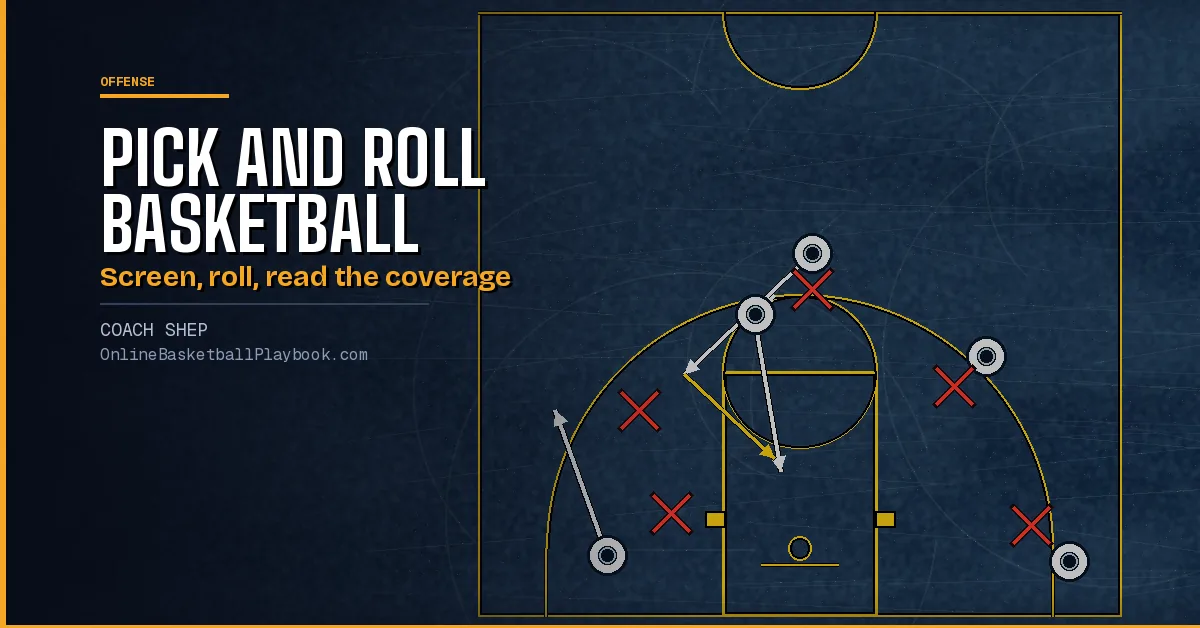
Pick and Roll Basketball: How to Run It and Read It
How to run the pick and roll in basketball: the screen and its angle, the handler's reads, roll, pop, slip and short roll, spacing, and a youth teaching order.
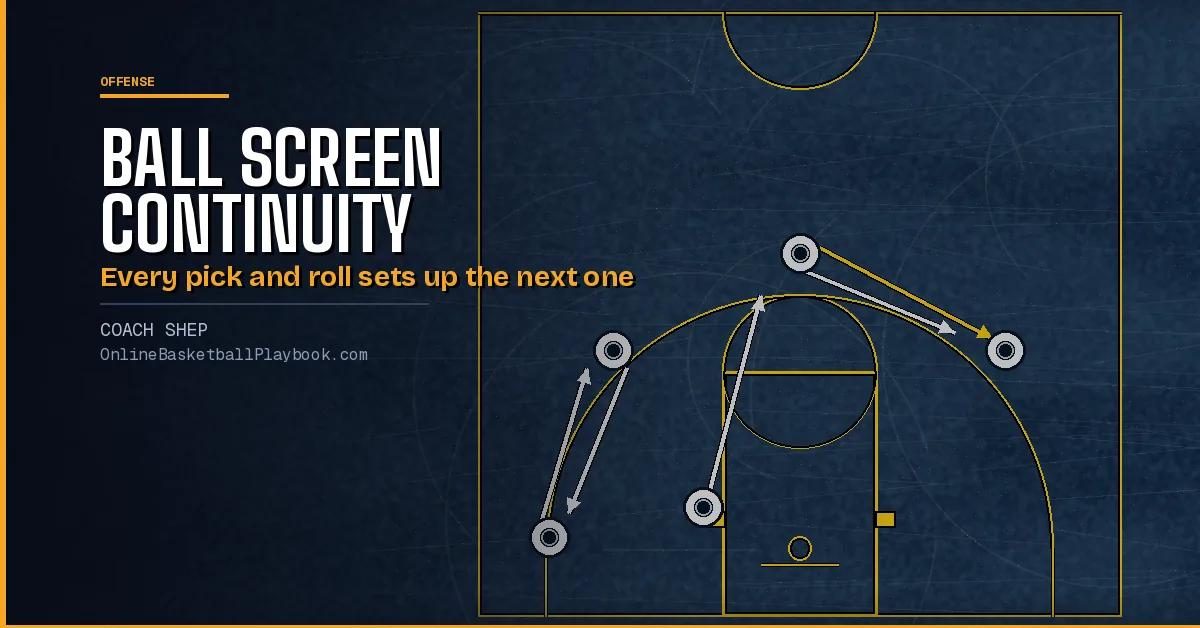
Ball Screen Continuity Offense: Pick and Roll Rules and Reads
Ball screen continuity offense in full: the 4-out and two-big engines, reload rules, spacing, angles, reads, counters, Spain, Ram, double drag and zone sets.
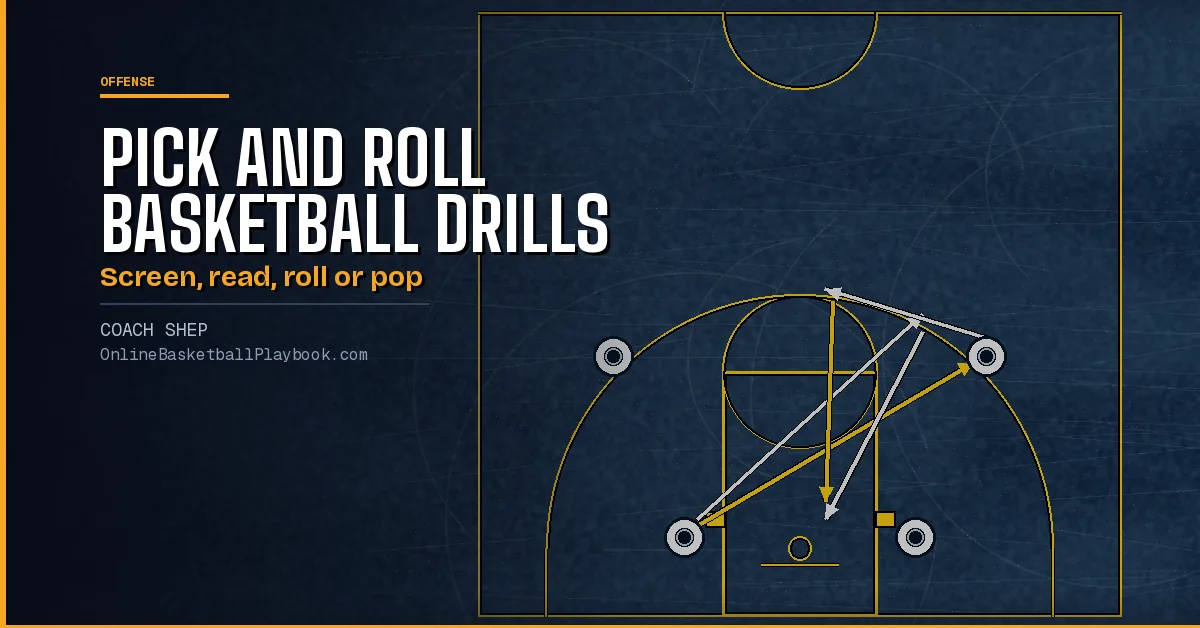
Pick and Roll Basketball Drills: From 2 on 0 to Live Reads
Pick and roll basketball drills that teach the action in order: a 2 on 0 screener series, chair reads, advantage drills, live coverage drills and youth steps.