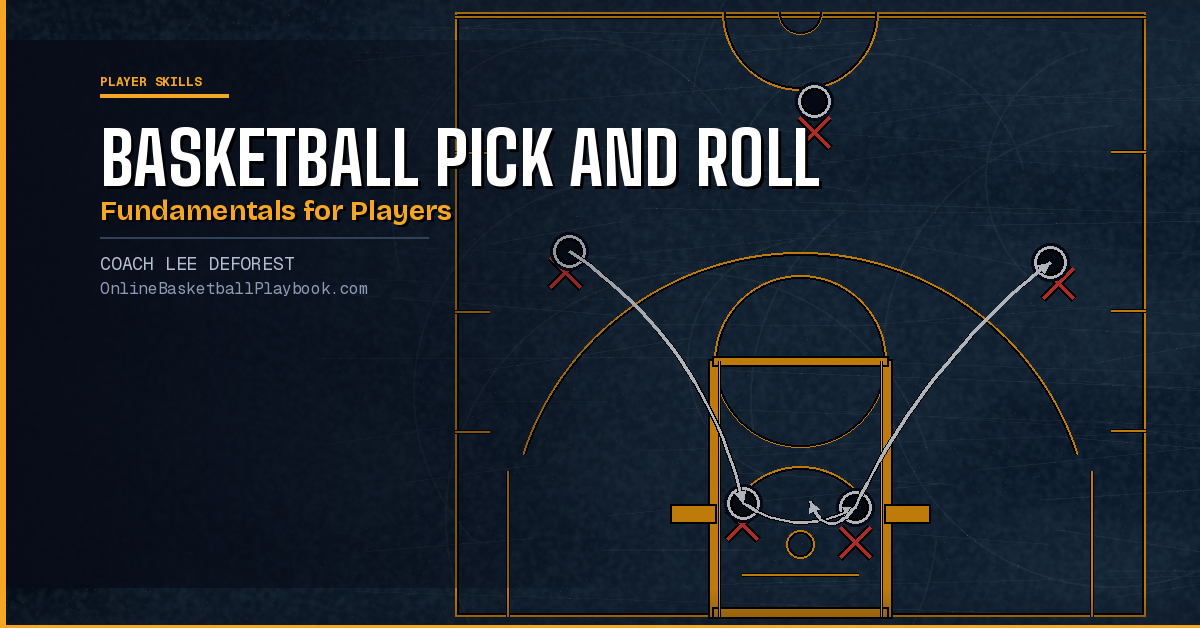

The pick and roll is the most-used action in basketball at every level — yet most players only know one move off it. This guide breaks down every read, so you stop guessing and start scoring.
What the Pick and Roll Is Really Asking You to Do
Most players think the pick and roll is a single move: come off the screen, attack the rim or kick to the roll man. That works sometimes. But defenses have evolved, and the teams that run the pick and roll effectively are not running one thing — they are running a system of decisions.
The pick and roll is really a two-person read tree. The ball handler reads the defense and selects from a menu of options. The screener reads the ball handler's action and selects from a second menu of options. When both players are reading the same cues and responding in sync, the action becomes very difficult to defend. When one player is freelancing and the other is running a scripted role, the play breaks down.
The foundation of every great pick and roll team is a shared vocabulary. When the coach yells a coverage name from the bench, the guards know the answer. When the big sees the hedge arriving, he does not wait to be told — he slips before contact. That kind of speed comes from drilling named reads, not from telling players to "figure it out."
This guide gives you that vocabulary. We pull from Brad Stevens' ball-screen clinic notes, Billy Donovan's Florida spread system, the Lickliter-Walthall Iowa taxonomy, and the Euro ball-screen read tree developed by Lason Perkins at Basketball Immersion. These are the most well-sourced, field-tested frameworks in the coaching world — and they all arrive at the same core principles.
Setting the Screen Right: Angle and Footwork
Before any reads happen, the screen has to be set correctly. A poorly angled screen gives the defense a free pass — the defender can go over the top with minimal effort, and the ball handler has nowhere to go.
East-West, Not North-South
Brad Stevens' single most teachable cue for screeners: set the screen East-West, meaning horizontally across the defender's path — not vertically pointing toward the basket. A flat, horizontal screen surface gives the ball handler maximum room to come off the hip. A vertical screen narrows that path and allows the defender to recover faster. Every screener on your roster should be able to repeat this: "East-West, not North-South."
Low and Wide Screener Stance
The Iowa Hawkeyes under Todd Lickliter used specific screener alignment pre-conditions before drilling any reads: the screener must be "low and wide" — knees bent, feet set wider than shoulder width, creating a solid surface. A tall, narrow screener gives a weak pick and invites defenders to go through it. Low and wide forces the defender to go around, which creates the separation the ball handler needs.
The Ball-Handler's Job at the Screen
The ball handler must come off the screen at the level of the screen — not higher, not lower. Coming off too high kicks out the angle and puts the defender in a better position to recover. Coming off too low gifts the defender the baseline. The level of the screen is also the read point: it is where the ball handler can see the coverage, assess the gap, and execute the correct option.
Shoulder-to-hip footwork at the screen is the drill cue: the guard's shoulder grazes the screener's hip as he comes off. This tight footwork keeps the action compact and prevents the defender from squeezing through.
Ball-Handler Reads: Every Coverage Has an Answer
The defense is going to show you a coverage. Your job is to identify it and execute the named counter. Here is the most common coverage-to-counter mapping used at the highest levels of the game.
Drop Coverage
When the screener's defender drops to the level of the paint and waits, the pick and roll is no longer a two-man game — it becomes a one-on-one between the ball handler and a big who is several steps behind the play. Attack him in space. The ball handler should be looking to pull up in the mid-range or continue downhill and make the big commit before dropping a pass. The Euro read tree puts it plainly: against a drop, it is now a one-on-one; treat it that way.
Hard Hedge
The hedge — sometimes called a show — is when the screener's defender jumps out aggressively to cut off the ball handler's path. Two counters work here depending on the gap between the two defenders.
If there is space between the hedger and the trailing on-ball defender: fire the dribble back to the screener's butt and split through. This is Brad Stevens' "Split Move" — the handler physically threads between the two defenders who are both out of position. The lane opens. The cue is simple enough to shout from the bench: "split it."
If the gap is narrower, the hesitate read works better: slow the dribble off the screen to freeze the hedger, then accelerate once he over-commits. The change of pace is the weapon, not the burst itself.
Drag Hedge
A variation on the hard hedge where the screener's defender does not jump out immediately but instead extends slowly to drag the ball handler away from the rim. The counter here is patience. Stevens' cue: "attack the hedge man's outside shoulder, drag the hedge, rip and pass back with the outside hand; the screener opens to the ball." The ball handler waits for the hedger to fully commit before delivering. Do not rush the pass — that is how turnovers happen against a drag hedge.
Switch Coverage
On a switch, the two defenders trade assignments. The screener's defender takes the ball handler, and the on-ball defender picks up the screener rolling to the rim. The mismatch created depends on which way the switch goes. If a bigger defender is now guarding the ball handler: the ball handler should post him up or arc him below the block before attacking. If a smaller defender has been switched onto the screener rolling to the rim: the screener must roll directly at the defender — not just toward the basket — and seal him on the catch. Alternatively, the screener pops to the perimeter, where his size advantage over the smaller switched defender creates a shooting mismatch. Versatile big men who can hit threes make switch coverage self-defeating without requiring a separate play call.
Blitz or Trap
Two defenders attack the ball handler simultaneously as he comes off the screen. The answer is to get out of the two-on-one before making any decision. Drive away from the trap to space, dribble around the second defender if there is a lane, or throw the ball back to the corner and cut — the throw-back-and-slice is the standard blitz counter. Do not force a pass over two defenders closing out. The key principle from multiple clinic sources: get the ball to a four-on-three situation with two quick passes after the throw-back. Move the ball and let the defense scramble.
Reject the Screen
Sometimes the right read is to abandon the screen entirely. When the on-ball defender shades hard toward the screen side, the ball handler can reject — change direction and attack the opposite side. The screener's counter when rejected: loop behind the ball handler to the wing for a kick-out. This keeps the screener involved in the action and creates a new threat off a ball handler who has now beat his defender one-on-one going the other direction.
The ball handler reads exactly what the defense shows — and the offense's best answers are named: against a trap or blitz, drive away to space, split, or dribble around the second defender; on a drop, attack the dropped big in space — it is no longer a pick and roll, it is a one-on-one.
— Pick-and-Roll Reads, Basketball Vault
Screener Reads: Roll, Pop, Slip, and More
Most players learn two screener options: roll to the rim or pop to the perimeter. The Euro ball-screen read tree developed by Lason Perkins names six distinct screener decisions. Understanding all six makes a screener genuinely difficult to guard — not because they are doing something exotic, but because the defense cannot predict which option is coming.
Roll to the Rim
The default option against a show or hedge. The screener pivots on the inside foot and sprints to the rim — not a jog, not a fade, a committed sprint with hands ready. Brad Stevens' clinic notes are specific on this: the roll man's job is to be aggressive and committed. No pausing to wait for the ball. Sprint and show the target.
Pop to Space
Against a switch or drop, the screener pops to the perimeter — usually the three-point line. This is the counter to switch coverage when the screener is a shooting threat. The defense has traded a bigger defender onto the ball handler and left a smaller one on the screener at the three-point line. The pop makes them pay for that decision.
Slip Before Contact
The slip is the highest-efficiency screener action in the game and the most underused at the high school level. The screener reads the defender's stance BEFORE making contact. If the defender is showing a high hedge — leaning toward the ball handler, setting up to jump out — the screener slips to the basket before the screen is fully set. The slip fires on the defender's tell, not after contact. This is faster than waiting for the hedge to develop. Billy Donovan's Florida spread system calls this a pre-read, not a post-read: the screener acts on what the defense is about to do, not what they have already done.
Short Roll
Instead of continuing all the way to the rim, the screener stops in the mid-post area and creates a triangle with the ball handler. This is an advanced read used when the rim is congested or when the screener can play-make from the elbow. The short roll puts the screener in position to deliver to a cutter while the defense is still recovering from the initial ball-screen action.
Re-Screen
When the ball handler could not use the first screen — it was disrupted, the timing was off, or the coverage took it away — the screener loops back and re-sets at a better angle. This forces the defense to adjust a second time and is especially effective against teams that sell out on the first screen. The alley screen re-screen habit from the Timberwolves film breakdown: after the ball handler clears, the screener does not stand. He turns and re-screens immediately. The defense has already committed to one assignment and now must adjust twice.
Set a Flare Screen
When the roll is completely covered and there is no lane, the screener pivots and sets a flare screen for a perimeter player. This turns a dead roll into a new three-man action without any huddle or reset. The perimeter player who receives the flare gets a running three-point shot off an unexpected angle.
Spacing Rules That Make Every Read Easier
The pick and roll does not work without spacing. Every read described above assumes that the three players not involved in the two-man action are positioned correctly. When spacing collapses, the reads disappear — the lane closes, the roller has no room, and the ball handler has no outlet.
No Spacing, No Pick and Roll
Billy Donovan's Florida spread system makes this a non-negotiable rule: four shootable spots must be occupied before any ball screen fires. The system runs two base alignments — 1-4 High and 4 Flat — specifically to guarantee this. If the spacing is not set, the ball screen does not run. This is not a timing cue; it is a prerequisite.
The Double Side Rule
When two players end up on the same side of the floor, one stays in the corner and the high guard "holds the sideline." This is a named rule in the Florida spread, not a suggestion. It prevents crowding that would collapse the pick and roll lane before the action even starts. The coaching cue is short enough to call from the bench: "hold the sideline."
Corner Lift Is Automatic
When the ball handler uses a wing pick and roll, the corner guard on that side lifts into the vacated spot automatically. No decision needed. This guarantees a replacement shooter after every drive — the ball handler always has a relief valve in the corner. When teams drill this until it is automatic, the ball handler never has to look for the corner player. He knows they will be there.
Run corner-lift in 5-on-0 before you ever put defenders in. If the corner guard is not lifting automatically after 10 reps of 5-on-0 practice, he will not lift in a game either. Make the movement a non-negotiable habit before you ask players to read defenders on top of it. Once the habit is locked in, add a shell defender on the corner player and let them react to live closeouts — building the full picture one layer at a time.
The Eight Named Ball-Screen Reads
The Iowa Hawkeyes under Todd Lickliter and Chad Walthall developed a complete taxonomy of ball-screen reads — eight named options that cover every defensive situation. The goal is that guards recognize which situation they are in and execute the matching read rather than defaulting to one move regardless of coverage. Here is the full set.
1. Turn Corner
The standard go-over. Come off the screener's hip, turn the corner, and attack the rim downhill. Used when the defender goes over the screen and the rim is open.
2. Hesitate
Change pace off the screen, then accelerate. Slow the dribble coming off the screen to freeze the defender, then explode once he commits. Effective when coverage is late recovering.
3. Split Hedge
Thread the dribble between the hedging big and the trailing on-ball defender when both hedge simultaneously. An underused read that requires a tight dribble and a commitment to going through the gap at the level of the screen.
4. Fake Split
Sell the split to draw the hedge, then kick it to the open cutter or corner as the defense collapses. Turns a defensive overreaction into an advantage pass. The ball handler uses the threat of the split without actually attempting it.
5. Reject
Go opposite the screen when the coverage shades hard toward the screen side. Abandon the screen entirely, change direction, and attack the other way. Also called "going away from the screen."
6. Shoot Behind
Stop and shoot a jump shot using the screen as a pick on the trailing defender. Works when the on-ball defender is chasing closely enough to be screened on the pull-up. This is the least-drilled read at the high school level and one of the most effective against teams that fight hard over screens.
7. Re-Screen
When the first screen is disrupted, the ball handler circles back and the screener re-sets at a better angle. Keeps the action alive and forces the defense to adjust twice. Brad Stevens adds a specific footwork detail: use a behind-the-back dribble to change direction cleanly before the screener re-sets.
8. Early Slip
The screener pops early before contact, reading the defender's stance as a high hedge. Fires on the coverage tell, not after the screen is fully set. This is the same pre-read slip from the Florida spread system — Lickliter's taxonomy names it explicitly as the eighth distinct option.
- East-West screening angle: Remind screeners before every drill — flat surface gives the guard room, vertical surface gives the defense a gift.
- Come off at screen level: Ball handler's read point is the level of the screen, not a step above or below it. Drill this with a cone marking the exact spot.
- Slip fires on the defender's tell: If the big shows hedge posture before contact, the slip goes now — not after the defender commits. Teach screeners to read before they plant.
- "Fire the dribble to the screener's butt": The cue for the split read against a hard hedge — the clearest single-sentence description for beating two defenders simultaneously.
- Blitz counter — two passes to a four-on-three: Throw back to the corner, then slice. Never force a pass over two defenders. Move the ball and let the help-side scramble sort itself out.
- Corner lift is not optional: The corner guard lifts after every wing pick and roll automatically. No call needed. Ingrain it in 5-on-0 first, then add a live closeout defender.
- Name the coverage before the counter: Teach guards to say the read out loud in film sessions — "that's a drag hedge, I should drag and rip back." Recognition speed transfers to game speed.
How to Install These Reads in Practice
Reading the pick and roll correctly at game speed requires a specific teaching progression. You cannot go directly from explanation to five-on-five and expect results. The Akser teaching model — referenced in multiple elite coaching clinic sources — gives a clear four-stage ladder.
Stage 1: 1-on-0 Naming
Ball handler walks through each of the eight reads without a defender. The coach calls the coverage name; the player executes the matching footwork. The point is recognition speed — hearing "hard hedge" and immediately knowing the body mechanics. Do this until the player can execute all eight in sequence without hesitation.
Stage 2: 2-on-0 Two-Man Sync
Add the screener. Ball handler and screener walk through the reads together, with the coach calling coverages. Now the screener is learning to read the ball handler's choice and select his own matching response — roll when the handler attacks, pop when the handler pulls up, slip when the handler sets for a hedge. The two players are synchronizing their decision trees without the pressure of a live defender.
Stage 3: 2-on-2 with Forced Coverage Cues
Add defenders, but give the defensive players a specific coverage to show on each rep. This is not free defense. The coach calls "hedge" or "switch" or "drop" before the action — the defenders execute that coverage, and the ball handler and screener must identify it and respond correctly. This removes guessing from the equation and makes the reads trainable.
Stage 4: Live 2-on-2 and 5-on-5
Defenders now make their own coverage decisions. Ball handler and screener must read the coverage in real time and execute. At this stage, the vocabulary built in the first three stages pays off — players are reading, naming internally, and responding, rather than reacting randomly. Film review after live reps should focus on naming the coverage correctly, not just whether the shot went in.
One additional coaching note on the cut-after-pickup rule from Lason Perkins: when the ball handler picks up his dribble in the scoring area and the drive is stopped, the possession is not dead. The rule is explicit — two players cut to the rim first, the other three fill up. This is a non-negotiable rotation that prevents dead possessions on stopped drives. Teach it as a rule, not a suggestion, and include it in your 5-on-0 walk-throughs from day one.
Pick and roll basketball is not complicated when every player knows their reads. It becomes complicated when players are improvising. Give them a shared vocabulary, drill the named reads in a progression that builds recognition speed, and hold spacing rules as non-negotiable. The two-man game becomes the most reliable scoring action you have — because now everyone on the floor knows exactly what to do.
Want more basketball coaching strategies, drills, and tools?
See it drawn up
Related diagrams
Keep Building
Related breakdowns
Advanced Strategies for Defending the Pick and Roll in Basketball
Advanced Strategies for Defending the Pick and Roll in Basketball