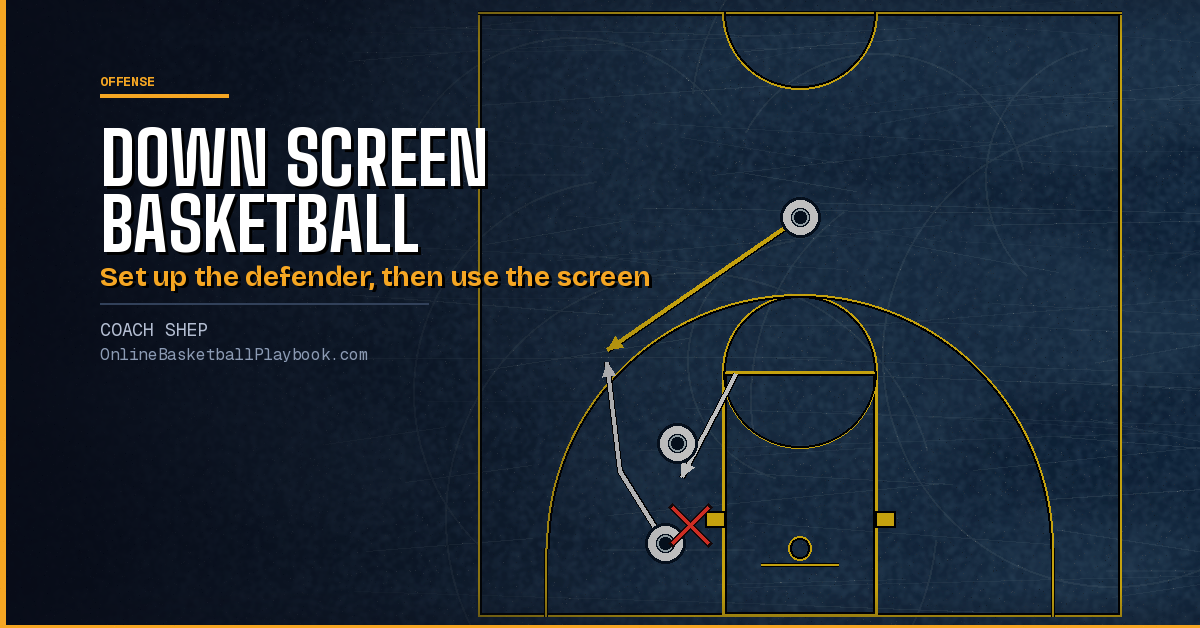
A down screen in basketball is an off-ball screen set by a player whose chest faces the baseline, so the teammate who uses it cuts away from the hoop toward the perimeter. It is also called a pin down. One coaching guide describes it that way in its list of seventeen screens, and uses it mostly to get shooters open. A down screen is not a ball screen, so the cutter starts without the ball and catches it off the screen. This guide covers how to set a down screen, how to use it, the reads each player makes and the places coaches teach it differently.
Down Screen Basketball at a Glance
| Piece | What happens |
|---|---|
| The screener | Steps off the high post or comes from the perimeter and sets the screen with his chest toward the baseline |
| The cutter | Starts lower than the screener, near the block or the lane, and comes up to the wing, the slot or the elbow |
| The passer | Delivers on time and keeps the dribble alive until the cutter is open |
| The cutter's reads | Straight cut, curl, fade or flare, back cut |
| The screener's reads | Pop, dive, slip, seal |
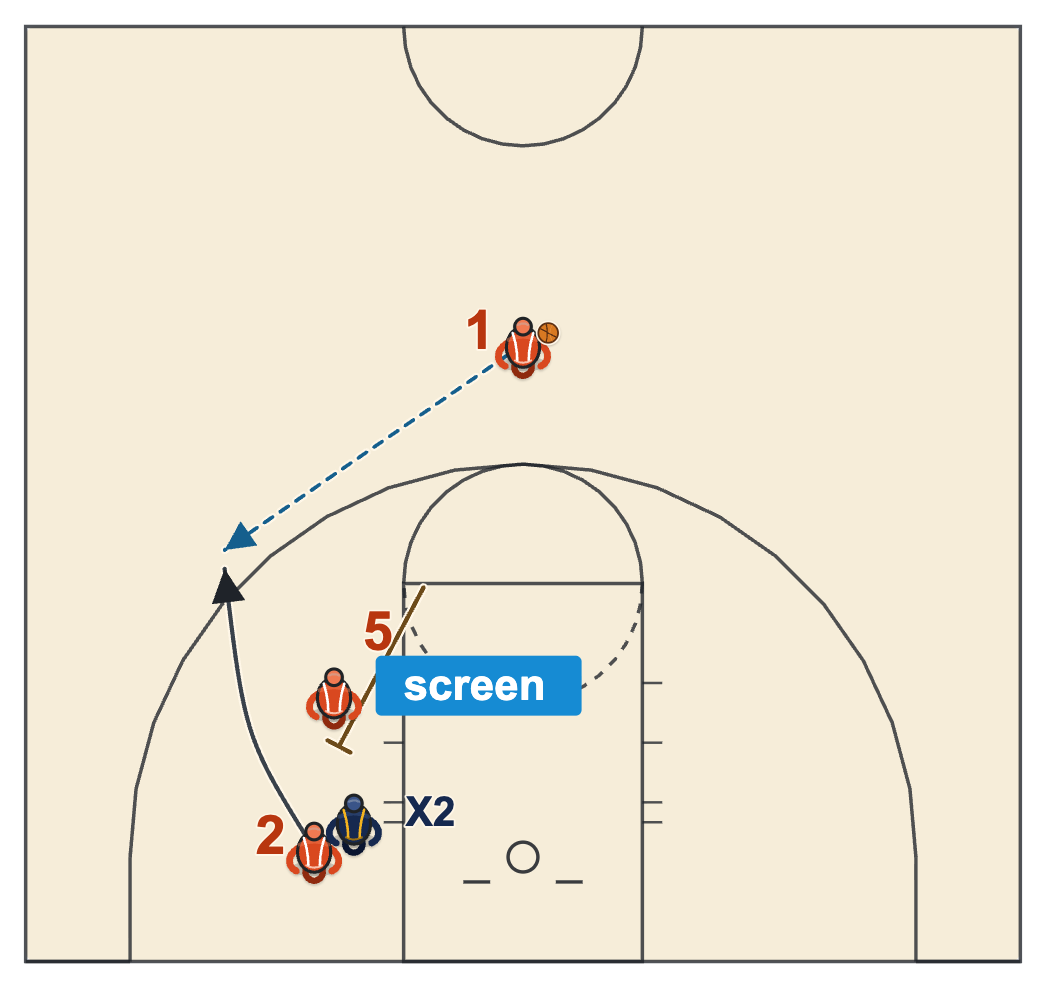
How to Set and Use a Down Screen
The screener. One version's cue is loud, low and legal, with the screener square to the defender's path. A second screens on the defender's numbers, jump stops with the feet shoulder-width apart about an arm's length away and holds two counts. Two other coaches tell the screener to hunt a defender and never screen air. Don Meyer has the screener say "wait" to the cutter on a down screen, so the cutter does not leave before the screen is set. The rules on how long to hold and how still to be are on the moving screen and illegal screen pages.
The cutter. The screen only works if the defender is set up first. One guide has the cutter walk his defender toward the hoop and then explode out to the perimeter. An assistant coach's article says to take two or three steps away, change speed and come off shoulder to shoulder, because a gap lets the defender slide through. Another coach walks the defender down until his high shoulder is level with the screener's low shoulder. Rick Pitino has the cutter dislodge his man with an L-cut first and does not allow straight-line cuts. Bob Knight tells the cutter to face the basket and not the screener, and another version has the cutter's name called before the first step, so the cutter has time to set up his man.
The passer. Pablo Laso treats the pass as its own skill. It has to come at the right moment and angle, the passer keeps his dribble, and a late pass or an extra dribble hands the advantage back to the defender. One training article adds that a perfect screen still fails if the passer cannot make the pass.
The Cutter's Reads
The cutter reads the defender before the screen, not in the middle of the cut. The curl against a trailing defender is common ground, and the back cut against a denial is close to it. The pop, fade and flare depend on whose words you use, which the table at the end of this page shows.
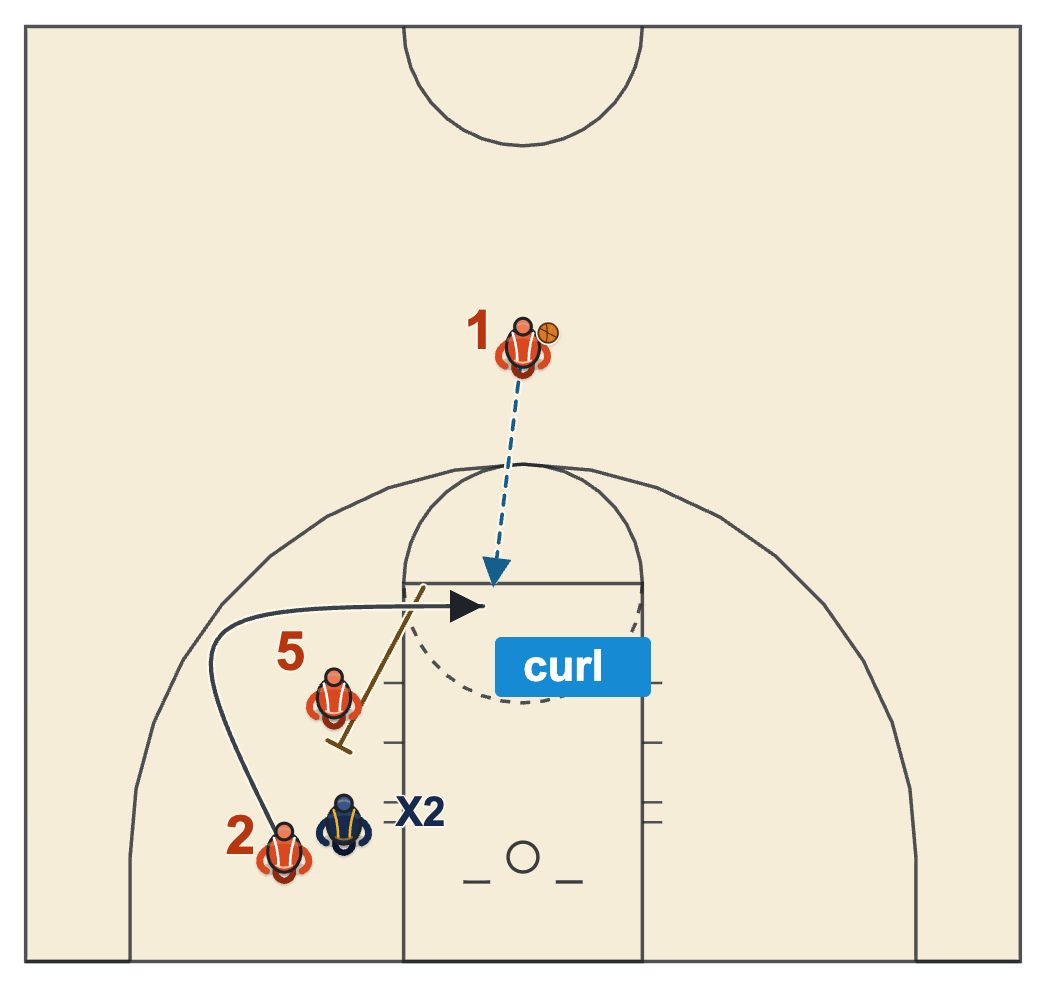
- Curl. The defender trails or follows the cutter. Four different versions curl against a trailing defender. One training video has the cutter set his man up slow to fast, curl tight, show the hands and dip the inside shoulder, then step into the shot with the inside foot first.
- Straight cut. One version uses it against a defender who sags. Jay Wright's drill version takes the cutter straight to the free-throw line area for an elbow jumper.
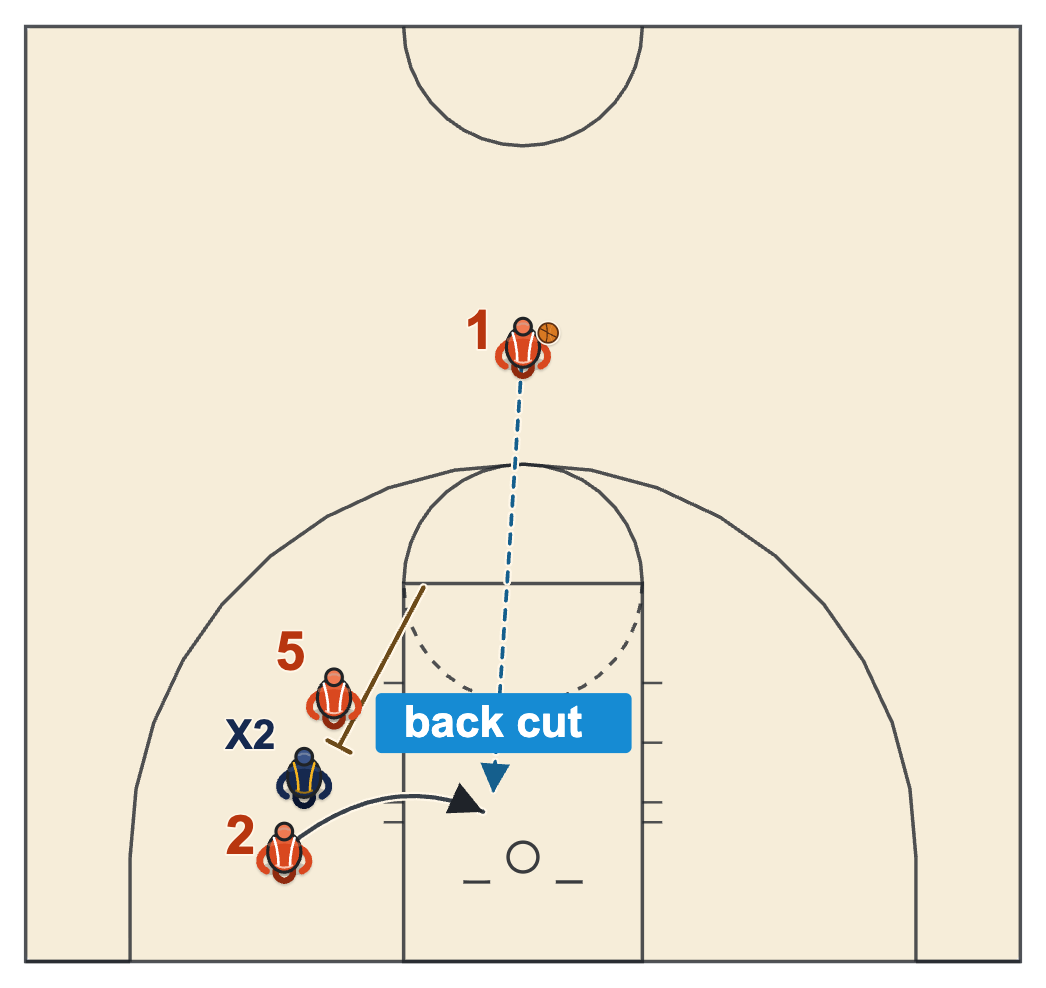
- Back cut. The defender overplays or denies. Two versions send the cutter backdoor. One coach's rule is to make the back cut and never fake it.
- Pop, fade or flare. The defender goes under, or cheats to the other side. The names and the triggers differ by version.
The Screener's Reads
The screener is not finished when the cutter leaves. Two training sites teach the screener to go the opposite way from the cutter, popping when the cutter curls and diving when the cutter cuts straight. One coach has the screener separate hard in the opposite direction as his answer to a switch.
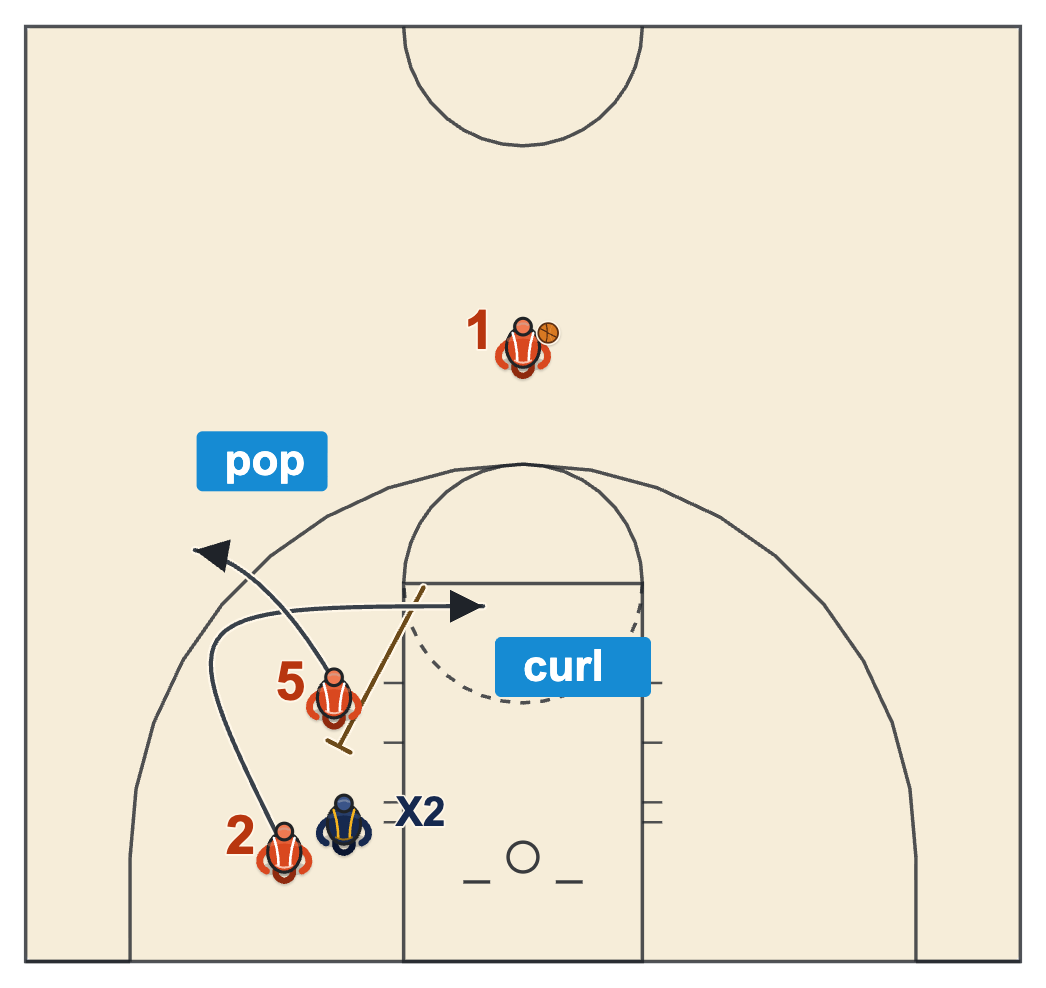
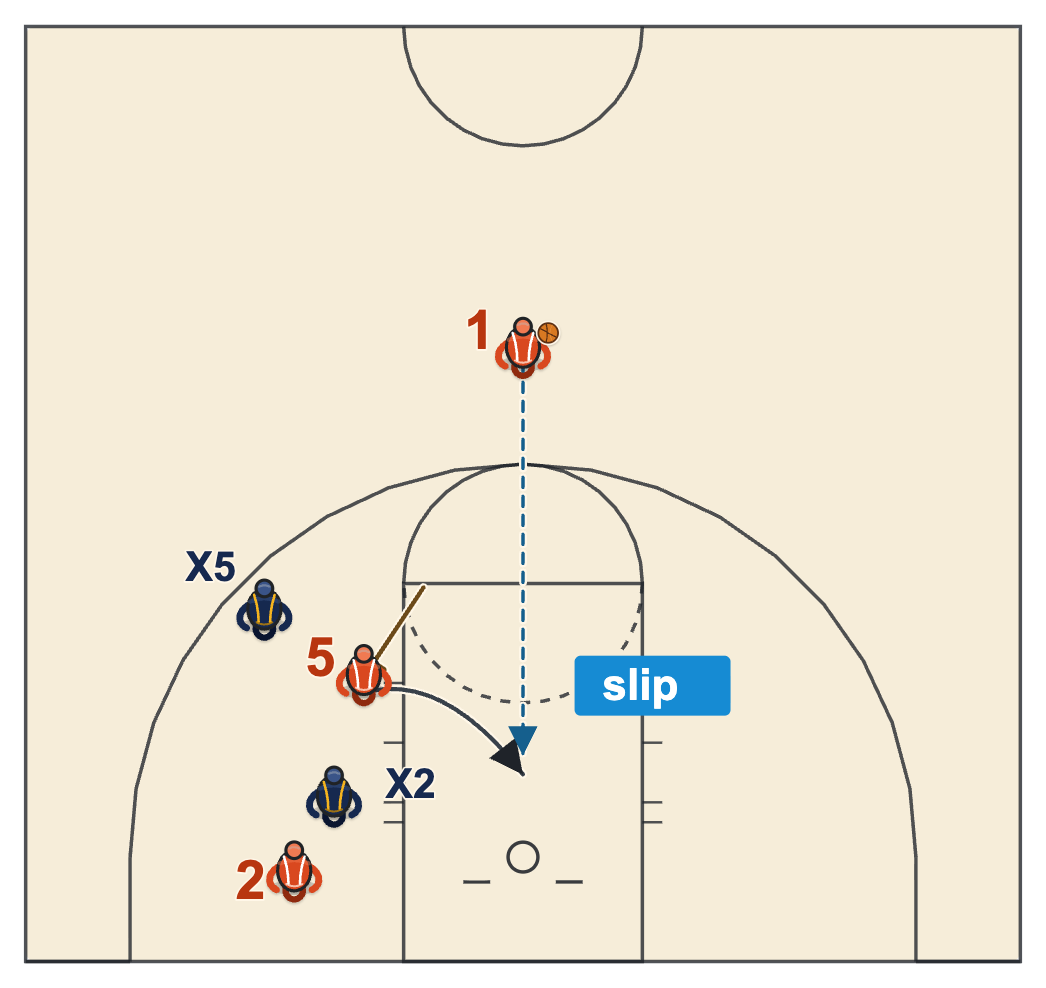
- Slip. One coach slips whenever the screener's defender gets above the screen. A coaching site's slip play slips when the defender jumps to deny. Shaka Smart's Washington series calls the slip the shot and the screen the bait.
- Seal after a switch. One version has the screener seal on the screen so a switch hands him inside position, and another says the screener is usually the better target after a switch, so the passer looks at him first.
- Re-screen. One coach always re-screens a flare off a down screen, and another re-screens when the cutter goes through. Bob Knight back screens a shooter and then turns and re-screens for him.
- Step back and look for the ball. A screening handout that gathers quotes from Sampson, Knight and Wooden calls the screener the most open man in the game after a good screen. Pablo Laso's screener becomes dangerous only after he holds still.
Get the next coaching guide in your inbox
One email when a new guide or diagram set goes up. Free.
Down Screens in Sets and Chains
Down screens rarely stand alone. The FIBA Europe glossary names the common combinations. A zipper is a down screen for a player on the low block who cuts to the slot to catch the ball. A Ricky is a back screen followed by a down screen for the same player. Zoom action is a pin down followed by a dribble hand-off. The same glossary lists a wiper as a flare screen followed by a pin down.
Pablo Laso runs three or four screens in a row, such as a zipper, a pin down, a back screen, a baseline exit and another pin down, and reads each defender until the shot or the ball inside is good. In Princeton's Chin set, as one college coach teaches it, the 5 follows the three-point line to set the down screen for a pop. The cutter reads the 5's down screen with three answers, which the table below shows. Related actions are on the flare screen, elevator screen and basketball screens pages, and the Princeton family is on Princeton offense. Defending these screens has its own page, defending screens.
Drills That Isolate the Read
- Two Ball Shooting (Jay Wright). A screener and a cutter with two passers. The cutter gets the first pass, passes to the screener and pops out for a second pass and a jumper. Version one is a straight cut to the elbow. Version two is a curl and pop. Version three is a back cut to the rim, then a pass back to the screener spotting up.
- Curl, pop, fade. A college program's drill has the player step into the lane to set up the defender, then take alternating curl, pop and fade shots. Its note sets five makes of each as a standard for the footwork. A dummy defender comes later so players read.
- Curl-Pop-Fade. A high school coach's drill with one down screen and three shots. The cutter curls for a pull-up elbow jumper, pops to the arc, or fades to the corner for a three, and the point guard adjusts spacing.
- Screen and cut with a defender. Start with a defender who plays one way on purpose, such as denying the curl, then let the defender go live. A defender who denies the curl sends the cutter to fake the curl and cut to the rim, and a defender who slides below the screen lets the cutter pop out for a three.
- Start with no defense (Don Meyer). Screening work begins two on zero without a ball, then with a ball, then four players at once.
- Chair read. A chair stands in for the screener, a partner passes, and the cutter pictures the defender while he practices the curl footwork.
For a menu of screening drills see drills to teach off-ball screens and for the practice structure around them see basketball practice plan. Keep a down screen inside a motion system with motion offense.
Where Coaches Disagree
The cutter's read is the clearest split. The words over the top and under are used in opposite ways, so settle one vocabulary for your team and use it in every workout. Version A is a Princeton Chin teacher's. Version B is a motion-offense coach's four-read package. Version C is Pablo Laso's. Version D is a skills trainer's. Version E is a coaching site's cutting page and a college offense that uses the same words.
| Defender | Version |
|---|---|
| Trails, riding his heels | Curl (Versions A, B and C) |
| Goes under the screen | A: pop it. B: flare. D: curl. E: fade or pop |
| Jumps over the top, ahead of the cutter | C: reach the corner. D: fade to the corner. E: curl |
| Denies the wing | Back cut (Versions A and B) |
| Question | Version |
|---|---|
| Who sets it? | Version 1: blockers screen and movers score (Dick Bennett and Tony Bennett) |
| Version 2: guards screen only for guards, and forwards only for guards at the slot (Jay Wright's Villanova) | |
| Version 3: the best shooters set the screen and pop back for shots (Bob Huggins and one 5-out guide) | |
| Version 4: bigs screen for smaller players (Bo Ryan's swing and one set-offense page) | |
| Screen the man or an area? | Version 1: hunt the man (Laso and several others) |
| Version 2: screen the midpoint area between the basket and the sideline (Hubie Brown) | |
| Chase or switch on defense | Version 1: chase down screens |
| Version 2: switch equal sizes |
Want every diagram, printable?
OBP Pro members get the full diagram files for every drill, screen and rule situation on this page, ready for a practice binder or a team meeting. $9 a month. Or draw your own version free in the play drawer.
See what OBP Pro includesQuestions Coaches Ask
What is a down screen in basketball?
An off-ball screen set by a player facing the baseline, so the cutter comes up to the perimeter. It is also called a pin down.
What is the difference between a down screen and a pin down?
One coaching guide and the FIBA glossary treat them as one action under two names.
How does a cutter use a down screen?
He sets up his defender first, walks him toward the hoop or changes speed, then comes off the screener's shoulder and reads how the defender plays it. The curl, back cut, pop and straight cut are the answers.
What does the screener do after a down screen?
He reads his own defender. Common answers are to pop when the cutter curls, dive when the cutter goes straight, slip when his defender gets above the screen and re-screen when the first screen is busted.
Is a down screen a ball screen?
No. A ball screen is set for the player with the ball. A down screen is set for a cutter who does not have it yet.
More Guides From This Batch
- Basketball Warm-Up Drills for Practice, Games and Youth Teams
- Box Out Drills for Basketball: Footwork, Contact and Games
- Moving Screen Basketball: The Rule, the Call and How to Coach It
Back to Basketball Screens and every Offense page.
Keep Building
Related breakdowns
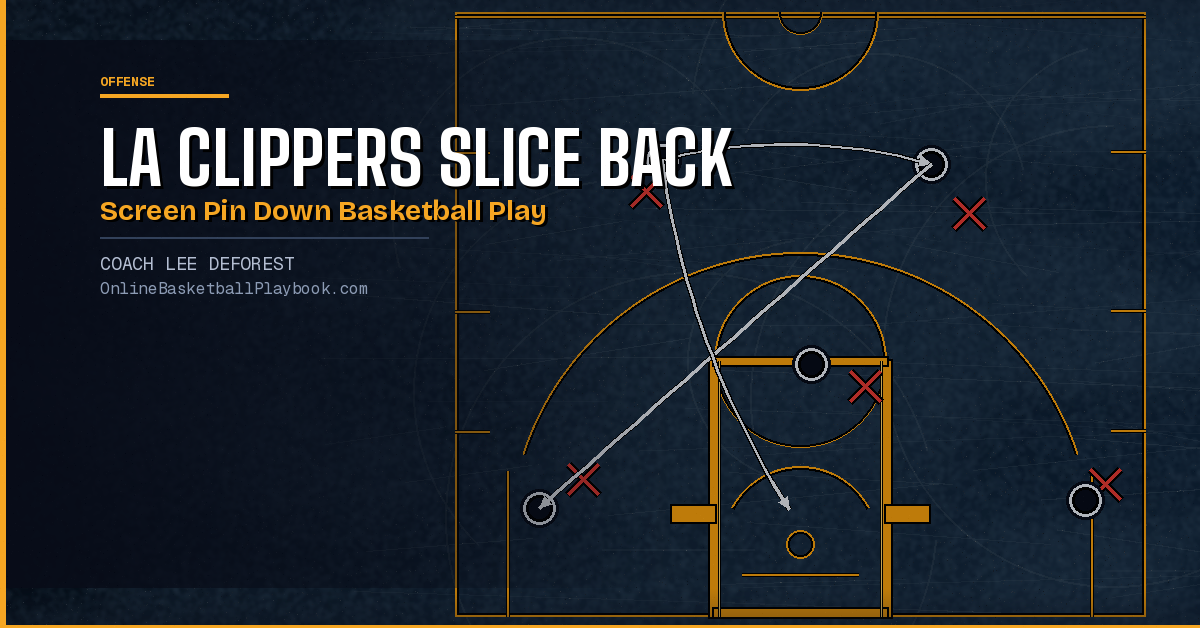
LA Clippers: Slice Back Screen Pin Down Basketball Play
LA Clippers: Slice Back Screen Pin Down Basketball Play
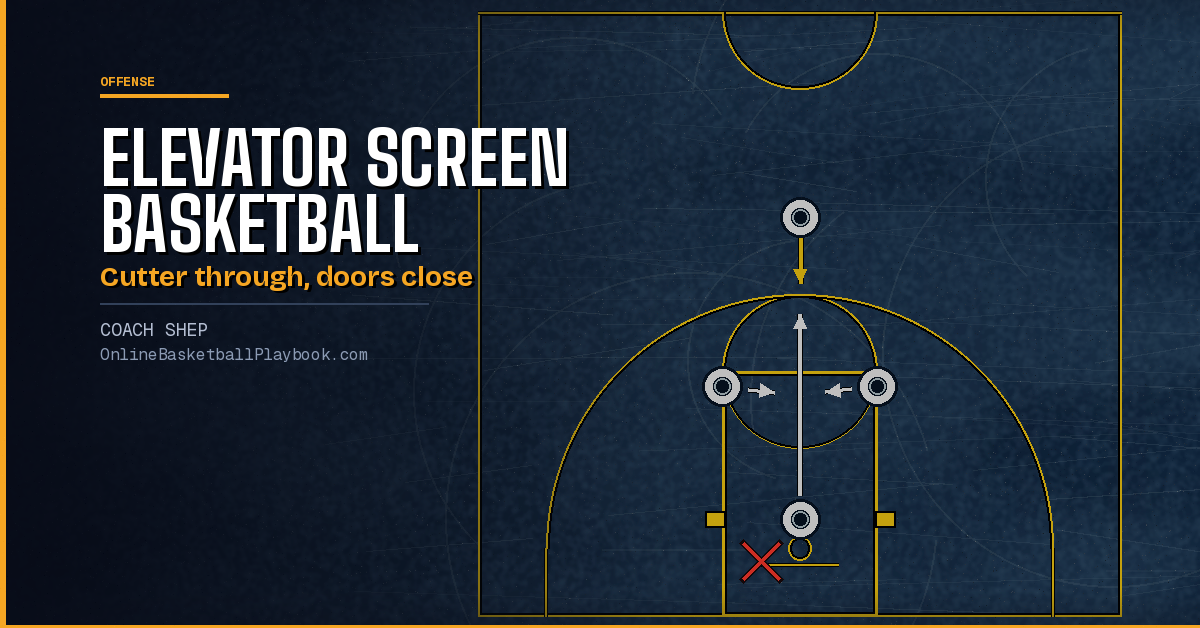
Elevator Screen Basketball: How It Works, Plays and Counters
Elevator screen basketball explained: how two screeners close on a cutter, the plays that use it, how to time it legally, and the counters when the defense reads it.
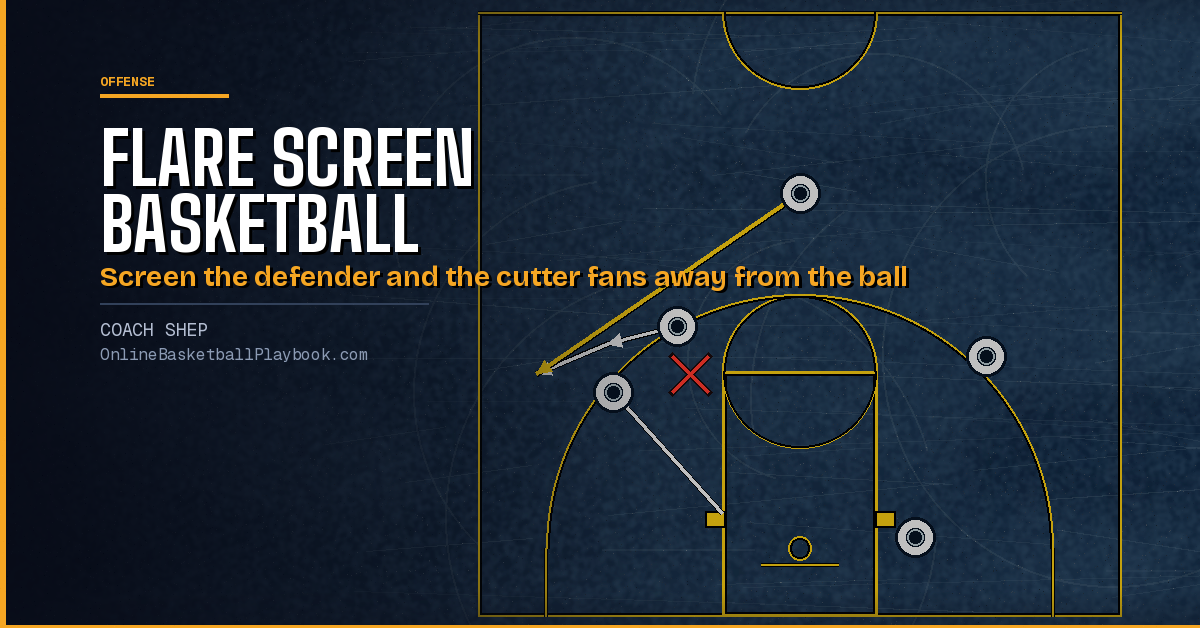
Flare Screen Basketball: How It Works, Reads and Counters
Flare screen basketball explained for coaches, with the screen, the cut, the pass, the three reads, where teams use it and how coaches teach and defend it.