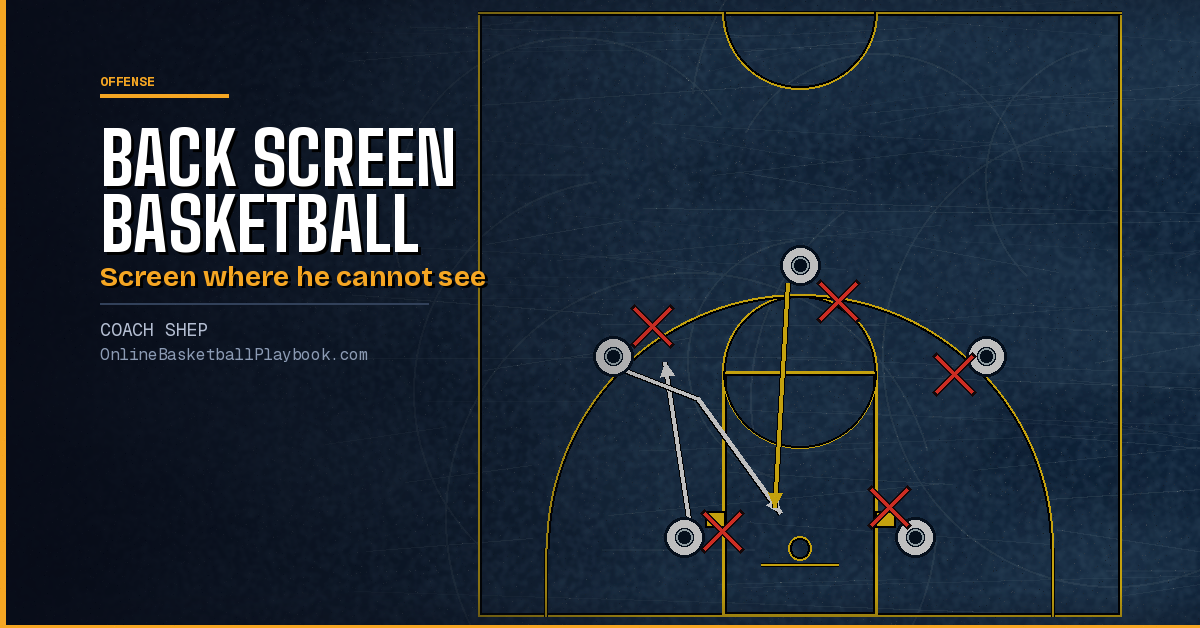
A back screen in basketball is an off-ball screen set behind a defender, on the side away from the ball, so the player he is guarding can cut to the rim. Because the screen comes from behind, the screened defender cannot see it. That is what makes the back screen work against a defender who is denying or playing high, and it is also why the rules on blind screens apply to it. It is also called a rip or a rip screen. This page goes deeper than the back screen section on the basketball screens hub: how to set it, how to use it, the reads for both players, the actions built on it and how defenses take it away.
What a Back Screen Is
The screener comes up behind a defender, with his back toward the basket side of the floor, and the cutter goes off his shoulder toward the rim. The names vary:
- Back screen, back pick or rip. The same screen. FIBA's terminology lists back and rip as one off-ball screen.
- A narrower use of rip. One narrower usage keeps "rip" for an angled back screen a guard sets for a big near the block, and call the same shape set higher, usually by a big for a perimeter player, a shuffle screen.
- Up screen or UCLA screen. The back screen at the high post or elbow for a guard cutting to the basket. The UCLA cut is its best-known use, covered on the UCLA offense.
The back screen is one of a family. A down screen faces the baseline and frees a cutter coming away from the rim. A flare screen is also set out of the defender's sight, but the cut goes out wide.
How to Set a Back Screen
Every off-ball screen has three jobs, the screener, the cutter and the passer, and each is a technique. The screener's part on a back screen:
- Leave room. One version sets every screen an arm's length from the defender, another gives him one step of space. The rules on that distance are below.
- Set up the screen. Start with a step the other way, and if the defense does not react, the screener can take a give-and-go cut himself.
- Be legal and still. Jump stop with a wide base, arms tucked, eyes on the ball, both feet on the floor, no leaning and no extended limb. Screens are loud, low and legal, perpendicular to the defender's path.
- Hold it. One rule is to hold every screen for a two count.
- Then become a threat. A good screen often leaves the screener open, so after the cut he looks for the ball (the reads are below).
The cutter's part matters as much. The receiver, not the screener, is responsible for running his defender into the screen. Screening technique in full is on basketball screening technique and setting screens in basketball.
Using the Back Screen as the Cutter
The back screen beats a defender who is playing high or denying. Don Meyer beats pressure defense with back or down screens, and saves pin and flare screens for sagging or pack defenses. He also never sets a screen so low that a back cut becomes impossible.
- Set your man up. Run him into the screen and change speed and direction as you use it.
- Cut shoulder to shoulder off the screener.
- Read before the ball arrives. The cutter's reads off any off-ball screen are a straight cut, a curl, a flare away from the ball or a back cut, chosen by what the defender does.
The passer has a clock. A late pass loses the advantage, and an extra dribble lets the defender recover.

Back Screen Basketball Actions
The UCLA cut
A guard passes to the wing and cuts off a back screen at the high post or elbow to the ball-side block. It is the base of the UCLA offense.

Back screen into a ball screen
Tom Izzo chains a UCLA back screen for the entry player into a ball screen by the same screener, who then rolls. Continuity rules use the same idea: after a back screen, follow the pass and set a ball screen.

Back screen, then a down screen (Ricky)
The screener sets a back screen and then comes off a down screen himself. FIBA's terminology calls the pair a Ricky. It is the plain form of screen the screener.
Spain action
A ball screen, then a back screen on the rolling big's defender. Ball screens are covered on pick and roll.
The shuffle cut
A back screen at the high post on the weak side for a cutter going to the basket. See shuffle offense.
Back screen lobs from out of bounds
With the ball close to the rim on a baseline or sideline inbound, a back screen for a lob is a common first look. In Jay Wright's late-game sideline play, 4 sprints to the elbow and back-screens 3 for the lob. See baseline out of bounds plays and sideline out of bounds plays.
Back screens also run inside chains of off-ball screens, such as a zipper, a pin-down, a back screen and a baseline exit in a row, reading each defender until there is a good shot. Pro sets that use them are broken down on the Clippers slice back screen and pin-down and the Providence transition back screen and diagonal screen.
The Screener's Reads
After a good screen, the screener is often the most open player on the floor. If his defender helps on the cut, the screener is free. Coaches teach several options:
| Read | When |
|---|---|
| Pop out | A big who can shoot sets the back screen and steps out for the shot when his man helps on the cut |
| Re-screen or post | A big who cannot shoot re-screens, or the offense moves a smaller player into the post |
| Turn and re-screen | Bob Knight back-screens a shooter, then turns and screens for him again |
| Slip | The screener's defender jumps out early, so the screener slips to the open space |
| Seal | The defense switches, so the screener seals the smaller defender for inside position |
One spacing rule applies to all of them: never send the back-screen cutter and the screener's slip to the same spot.

Get the next coaching guide in your inbox
One email when a new guide or diagram set goes up. Free.
The Blind Screen Rule by Level
A back screen is a blind screen, set outside the defender's field of vision, so the NCAA, NBA and FIBA books all ask the screener to give space.
| Level | Screen behind a stationary defender | Screen on a moving defender |
|---|---|---|
| NCAA men | No contact from a screen outside the visual field that does not allow a normal step (Rule 4 Sec. 35 Art. 3). The officiating guidelines call a foul on a blind screen that does not allow a stationary defender a normal step | Ample time, usually one to two strides (Appendix III) |
| NCAA women | The same screening rule (Rule 10 Sec. 5). The visual field includes forward and peripheral vision | Enough time and distance to stop or change direction, set by the defender's speed |
| NBA | No closer than a normal step from a stationary opponent who is unaware of the screener (Rule 12B Sec. III) | One to two normal steps or strides, depending on speed |
| FIBA | The opponent must be able to take one normal step toward the screen (Art. 33.7) | Never less than one and never more than two normal steps |
| High school | Check your state association rulebook | |
Once a legal screen is set, the screened player is responsible for contact with the screener (FIBA Art. 33.7). Moving into the defender after setting up, or setting up too close, is an illegal screen. The full screening rules are on illegal screen basketball.

Defending the Back Screen
The screened defender cannot see the screen coming, so the defender guarding the screener carries the warning. Defenses answer it two main ways.
- Automatic switch. The screener's defender calls the screen and jumps into the cutter's path to the basket. The screened defender steps over the screener into a denial position to take away the roll. The ball defender pressures the passer into dribbling. When a big starts high, invert (switch early) before the screen to keep the bigs inside.
- Switch by screen type. Some teams switch back screens, flare screens and inside post screens but chase down screens.
Three things to avoid on a back screen. Chasing under it gives up a lob or a layup. Showing and recovering lets the screener fake the screen or slip it. Cheating over it early lets the cutter pop back out for a shot or back-cut. Off-ball position also helps. Ettore Messina's defenders play up the line, between their man and the ball, partly because from there they see the back screen earlier and recover on the ball side. More is on defending screens in basketball.

Drills
- Two-ball screen shooting. Jay Wright pairs a down screener and a cutter with two balls so both shoot every rep. Its backcut version teaches the cutter to look back for the screener, the same look a back-screen cutter needs.
- Down screen and back pick shooting, then 2-on-0 and 2-on-2, in short 5 to 7 minute blocks.
- Defensive progressions that end with down screens and back screens, with a defender guarding the rim against the lob.
More are on drills to teach off-ball screens.
Questions Coaches Ask
What is a back screen in basketball?
An off-ball screen set behind a defender, out of his sight, so the player he is guarding can cut to the basket. It is also called a back pick or a rip screen.
What is the difference between a back screen and a down screen?
A back screen frees a cutter going toward the rim, behind a defender who is playing high. A down screen faces the baseline and frees a cutter coming away from the rim to catch on the perimeter.
Is a back screen legal?
Yes. In the NCAA, NBA and FIBA books the screener must give a stationary defender room for a normal step, and a moving defender time to stop or change direction (one to two steps in the NBA and FIBA books, depending on speed). Contact inside that space is an illegal screen. For high school, check your state association.
What is a rip screen in basketball?
Another name for a back screen. One narrower usage keeps the word for an angled back screen a guard sets for a big near the block.
How do you defend a back screen?
The screener's defender has to warn his teammate, who cannot see the screen. Some teams switch it automatically: the screener's defender takes the cutter, and the screened defender takes the screener.
Want every diagram, printable?
OBP Pro members get the full diagram files for every drill, screen and teaching progression on this page, ready for a practice binder. $9 a month. Or draw your own version free in the play drawer.
See what OBP Pro includesMore Guides From This Batch
- Tips for Basketball Tryouts: How to Prepare and Stand Out
- HORSE Basketball Rules: How to Play the Shooting Game
- Teaching Man to Man Defense in Youth Basketball, by Age
- Basketball Hesitation Dribble: How to Do the Hesi Move
- Basketball Referee Signals: Foul Signals and Calls by Level
Back to Basketball Screens and every Offense page.
Keep Building
Related breakdowns
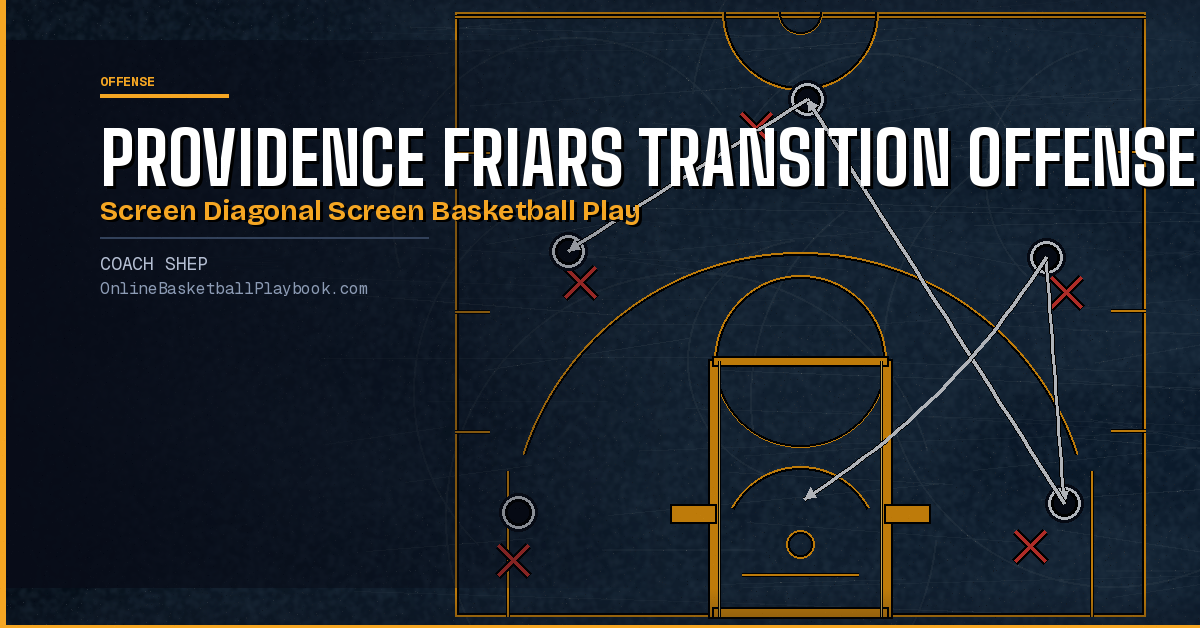
Providence Friars: Transition Offense Back Screen Diagonal Screen Play
Providence Friars: Transition Offense Back Screen Diagonal Screen Play
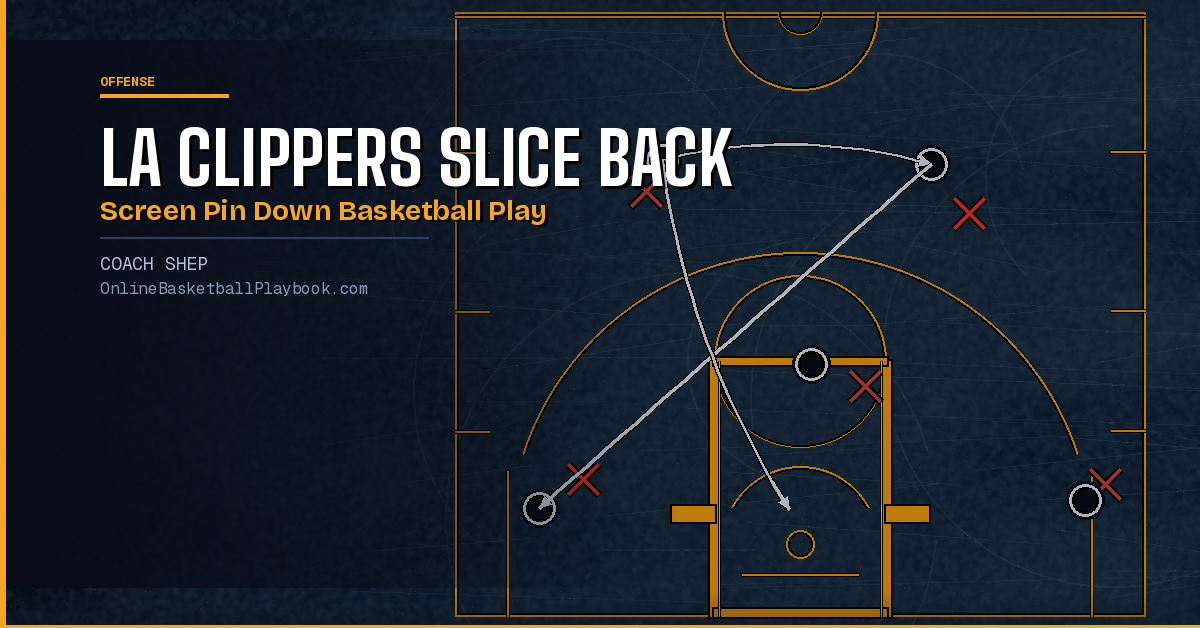
LA Clippers: Slice Back Screen Pin Down Basketball Play
LA Clippers: Slice Back Screen Pin Down Basketball Play
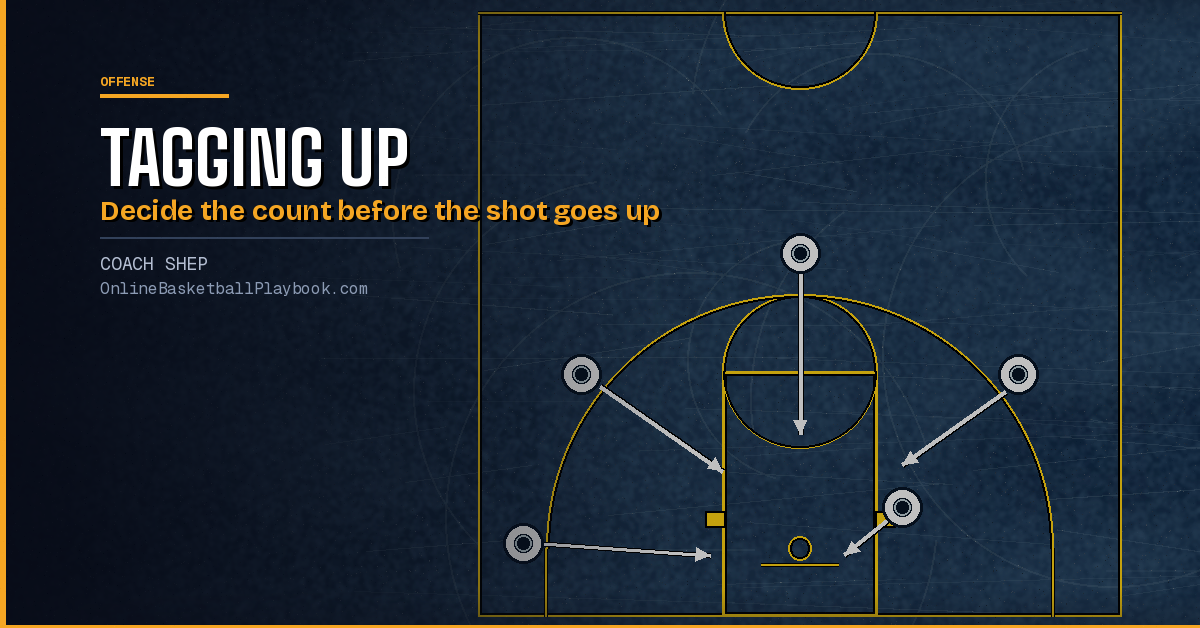
Tagging Up in Basketball: Crash the Glass or Get Back
Tagging up in basketball explained: how many crash the offensive glass, who gets back, the tag-up matchup rule, crash technique, the numbers to chart and the drills.