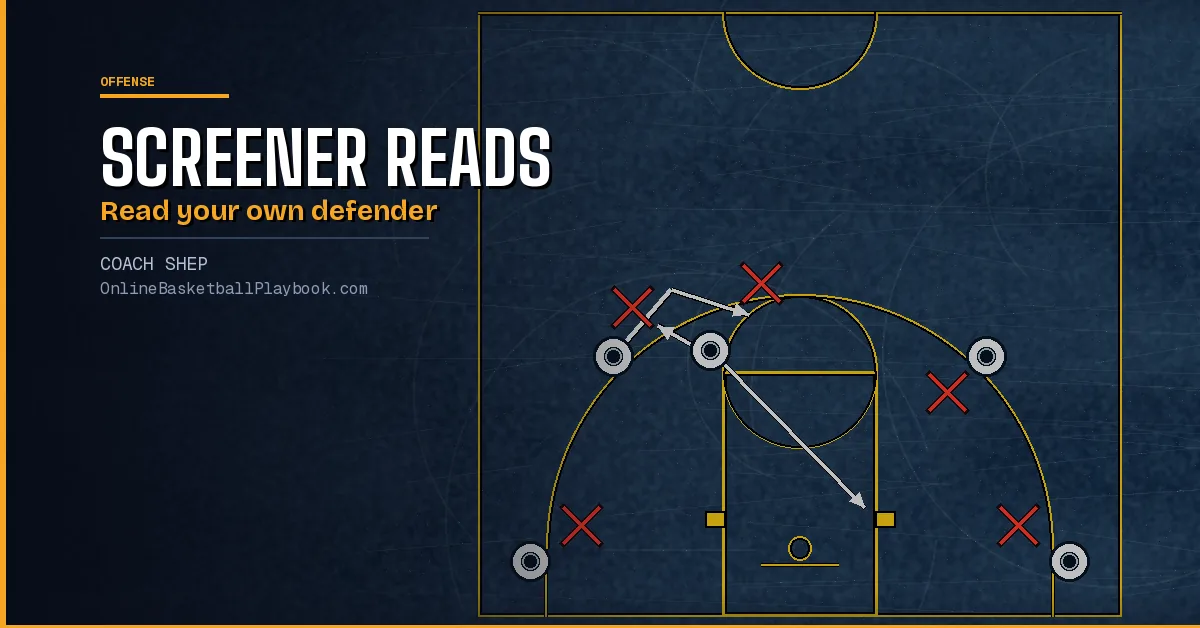
Screener reads decide what the big does once the ball screen is set: roll, pop, slip, short roll or re-screen. The screener reads his own defender, and the notes teach that read in three different ways. This page covers the screener's side of the action only: the menu of finishes, how the screen is set, the three versions of the read side by side, and the technique for each finish. The ball handler's decisions against each coverage are on pick and roll reads by coverage. The whole action is on pick and roll basketball, and the screen itself is on basketball screening technique.
The Screener's Menu After the Screen
The finishes available to a screener are listed three different ways. Each list is kept apart here:
| Version | The options |
|---|---|
| Six-option list | Roll to the rim, pop to space, short roll, re-screen, set a flare screen, roll to the opposite block. The list does not say when to choose each one. |
| Five-finish drill series | Roll, short roll with a step-through, short roll with a jump shot, fake the screen and slip, pop. |
| Four daily reads off a sprint screen | Roll and finish, roll and make a secondary move against a manager simulating weak-side help, pop to the short corner for a jumper, pop to the short corner with a shot fake into a drive. Each is worked from both sides of the floor. |
The five-finish series keeps one setup for every drill, a post on each block and a guard on each wing, and the sides alternate after each rep. Only the finish changes, so a coach can run the whole menu as one continuous progression. More ball screen work is on pick and roll basketball drills.
The fakes also have names, taken here from one video glossary:
- Shocker: a fake with no contact where the big slips to the rim.
- Ghost: a fake where the big fades out to the arc. The glossary calls it the most common version now because bigs shoot threes.
- Flip: a get screen that turns into a step-up screen toward the baseline.
- Twist: a screen with no contact where the big spins around and sets a get screen.
Whatever names a staff uses, every player hears the same word for the same fake.
Setting the Screen: Angle, Separation and Timing
The finish only works if the screen sets it up. Four descriptions of the screener's angle and timing appear in the notes:
| Version | What the screener does |
|---|---|
| Back-hip angle | Screens the on-ball defender's back hip with his back to the corner, not the sideline, so the defender cannot slide under. He makes contact and hunts the defender, with no screening air. He gets separation from his own defender by not telegraphing, by sprinting to the screen, or by a ram screen, where a third player screens the screener. |
| Low and wide | Sets the screen low and wide with his back toward the paint, which gives the ball handler a better driving angle. |
| Flat screen | Gives the handler a flat, horizontal screen surface for the most room to come off. A north-south angle narrows the room and helps the defender recover. |
| Four screener rules | Create separation from the defender, do not release early, change the angle late to create bad hedges, and know when to slip. |
The versions differ on where the back points. The back-hip version aims it at the corner, and the low-and-wide version aims it toward the paint. Screens are covered by type on basketball screens.
One handout also names three ways to take away the show from the screener's defender:
- Sprint to the screen and leave the defender behind.
- Pivot late, so the screener's side is decided late.
- Set the screen with the screener's back to the baseline.
Whichever angle a staff teaches, the screener repeats it the same way every rep.
Screener Reads by Defender Coverage: Three Versions
Three versions tie the screener's finish to what his defender does. They use different words for the defender's action, so each is shown in its own terms:
- Height version. The screener reads the height of his defender and makes the choice before the screen is set. The slip is a pre-read triggered by the defender's stance, not a reaction after contact.
- Named-coverage version. Each finish is matched to a named coverage, such as show and recover, switch or deny.
- Show-early version. Each read is paired with how the screener's defender and the ball defender play the screen. After the action one player attacks the basket and the other pops to the perimeter, a split called one in, one out.
| The screener's defender | Height version | Named-coverage version | Show-early version |
|---|---|---|---|
| Shows | High hedge or extreme show: slip to the basket before the screen is set. | Show and recover: the screener pops out. | Shows too early: slip. Shows hard: the handler takes a distance dribble, and the screener can dive. |
| Contains, drops or squeezes | Contain or drop: roll hard to the rim. | Not given. | Squeezes the screen high: the handler turns the corner. When the handler turns the corner, the screener spots up. |
| Switches or sags | Switch or sag: pop to the wing or arc. | Switch: roll to the post, then a post isolation against a small mismatch or an outside isolation for the handler against a big mismatch. If the defenders anticipate the switch, the screener slips. | Not given as a read. |
| Denies or disrupts the screen | Not given. | Lob pass to the screener cutting to the rim. | Not given. |
The versions differ in three places:
- A defender who shows. The height version slips against a high hedge. The named-coverage version pops against show and recover. The show-early version slips when the show comes too early. The notes do not say whether a high hedge, a show and recover and a show that comes too early describe the same defender action, so each stays in its own words.
- A switch. The height version pops. The named-coverage version rolls to the post and slips only if the defenders anticipate the switch.
- A dropping big. The height version rolls against a drop. A separate pick and pop description calls the pop especially effective against drop coverage, where the defender sits low to protect the rim and faces a long closeout. The defensive side is on drop coverage basketball and pick and roll defense.
Whichever version a staff installs, it reps that one until the screener's choice is automatic.
Slip: Leaving Before Contact
A slip skips the screen. The screener fakes it and cuts to the rim before contact. The notes name several triggers:
- The screener's defender hedges high or shows extremely, and the screener slips before the screen is set.
- The screener's defender shows too early.
- The defense over-shows on a double team before the screen is even used. The slip gets a shot or a finish and keeps the defense honest on the next screen.
- The screener's defender jumps out over a ball screen. In one set the big back-screens for a guard, then re-screens for a second guard, and when his defender jumps out the big slips for a lob or air-pass finish instead of rolling into the covered space.
- The defenders anticipate a switch.
The same set of notes that lists the fake-and-slip drill puts the work on the fake itself: the screener has to sell it to beat the defender. The shocker described above is the same idea with no contact at all. Double drag actions, with the roll, pop and slip, are on double drag screen basketball.

Whatever triggers the slip, the screener sells the screen first and leaves second.
Get the next coaching guide in your inbox
One email when a new guide or diagram set goes up. Free.
Rolling to the Rim
The roll is the base finish, and the notes give it in several forms:
| Version | The roll |
|---|---|
| Wait, open up, roll diagonal | Does not start to roll until the guard is completely off the screen. Opens up, never turns his back on the ball, keeps his eyes on it and rolls diagonally across the lane to the low block, then posts up. |
| Pivot and sprint | Pivots on the right foot and sprints to the rim. The roll is aggressive and committed, with no stopping to read. |
| Pivot toward the cutter | In a screen-away drill, the pivot on the roll turns toward the cutter, because turning away puts his back to his own teammate. |
| Reverse pivot and seal, or dive | Rolls by a reverse pivot and seal, or by an immediate dive. |
| Straight-line drill roll | The post passes to the far wing, follows the pass, sets the screen and rolls in a straight line to the rim for the pass and layup. |
The first two disagree on timing. One waits until the guard is completely off the screen, and the other sprints without stopping to read. One more version sets the path by coverage. Against a show or a switch, the ball goes ahead and the screener rolls diagonally, which forces longer help from the weak side. Against flat coverage, the ball goes behind the action and the screener rolls straight, first for a lob and second to set up a throwback.

Pick one set of roll cues, rep it from both sides of the floor, and the roll stops being a decision.
Short Roll: Catch Early
A short roll stops early to catch instead of going all the way to the rim. Three descriptions cover it:
- Catch at the free-throw line. The screener catches a bounce pass around the free-throw line, jump-stops and either shot-fakes into a step-through finish or shoots the pull-up jumper.
- Pocket pass. The pass comes from the waist to the big in the short roll. When the help defender takes the short roll away, the ball goes out to the perimeter. The two bigs can also trade jobs, which is called a yo-yo or roll and replace.
- Against a trap. The handler takes two retreat dribbles while the screener short-rolls one step, so the offense plays four on three.

Pick the catch and the finish the staff wants, then rep them as one move.
Popping to Space
The pop sends the screener to the perimeter instead of the rim. The pop spot is not the same in every description:
| Version | Pop spot and finish |
|---|---|
| Wait, open up, sprint away | Waits until the guard is off the screen, opens up, drops the foot and shoulder, and sprints away from the guard with hands up ready to catch. If the defense is late to rotate, he shoots. If it closes out hard, he ball fakes and drives. |
| Arc, catch and shoot | The guard dribbles over the screen once or twice and passes back for a catch-and-shoot three. |
| Near where the handler started | Pops to the perimeter near where the ball handler started, with the shoulders turned toward the basket so he is shot-ready on the catch. The handler takes multiple dribbles first so the post defender cannot both help and recover. |
| Short corner | Pops to the short corner for a jumper, or pops there and shot fakes into a drive. |
Choosing between the pop and the roll depends on the roster in one description: a big who is a great shooter or can put the ball down suits the pop, and a big who scores only in the paint suits the roll. The same notes have certain players always rolling and certain players always popping. The pop is covered by itself on pick and pop.

Whichever pop spot a staff uses, the screener repeats the same spot and the same footwork every rep.
Reading a Switch
The notes give six answers when the defenders switch the ball screen, and they are not the same answer:
- The screener pops to the wing or arc, because the guard switched onto him cannot guard a big at the three-point line.
- The screener rolls to the post. A small defender on him means a post isolation, and a big defender on the handler means an outside isolation for the handler.
- The screener seals the defender who switched and rolls to the rim, expecting a bounce pass.
- The big and the small swap, and the screener dives to the post.
- The ball goes ahead and the screener rolls diagonally, which forces longer weak-side help.
- The screener arcs below the block to keep the switched defender on his back and continues across. The ball reverses and the look is to post, with a lob if the switched defender helps on the arc.
The defensive side of the same switch is on switching defense basketball.
Whichever answer a staff chooses, rep it until the screener's switch read is automatic.
The Third Defender and Double Screens
A second big adds a read. Two spread pick and roll looks start from the same two-big alignment:
- Big lifted. The weak-side big lifts high to the top of the key and takes his defender away from the rim. The rim is open for the roll for a moment, especially if the roller's defender hedged.
- Rim spot. The weak-side big ducks in hard right in front of the rim, while the screener pops.
More two-big ball screen sets are on Butler basketball plays, and the wider spread system is on spread pick and roll offense and Florida basketball plays.
With two screeners the notes assign the jobs. In a double drag in transition the first screener rolls and the second pops. In a Horns ball screen the screener rolls on the side the ball is used and pops on the other. A Spain ball screen adds a third player who back-screens the roller's defender, covered on Spain pick and roll basketball.
Whatever the look, each big needs to know his one job in it.
Want the printable playbook packs?
Playbook packs: zone attack, press break, press defense, out of bounds, quick hitters, practice plans and the youth turnover cure, each a printable PDF. Or draw your own version free in PlayDraw.
See the playbook packsQuestions Coaches Ask
What does the screener read in a ball screen?
His own defender. Three versions tie the finish to that defender: one reads his height before the screen is set, one matches named coverages such as show and recover, and one pairs each read with how early the defender shows.
When should the screener slip?
The versions differ. The triggers in the notes are a high hedge or extreme show, a show that comes too early, an over-show on a double team before the screen is used, a defender who jumps out over the screen, and defenders who anticipate a switch.
When should the screener pop instead of roll?
One version pops against a switch or a sag, another pops against show and recover, and a pick and pop description calls the pop especially effective against drop coverage. One description also ties the choice to the big: a great shooter suits the pop, and a big who scores only in the paint suits the roll.
What do the two screeners do in a double drag?
The first screener rolls and the second pops.
What is a short roll?
A roll that stops early to catch, often around the free-throw line. The pass can be a bounce pass or a pocket pass from the waist, and if the help defender takes it away, the ball goes out to the perimeter.
What is the difference between a shocker and a ghost?
In one glossary both are fake screens with no contact. In a shocker the big slips to the rim, and in a ghost the big fades out to the arc.
More Guides
Back to Pick and Roll and every Offense page.
Keep Building
Related breakdowns
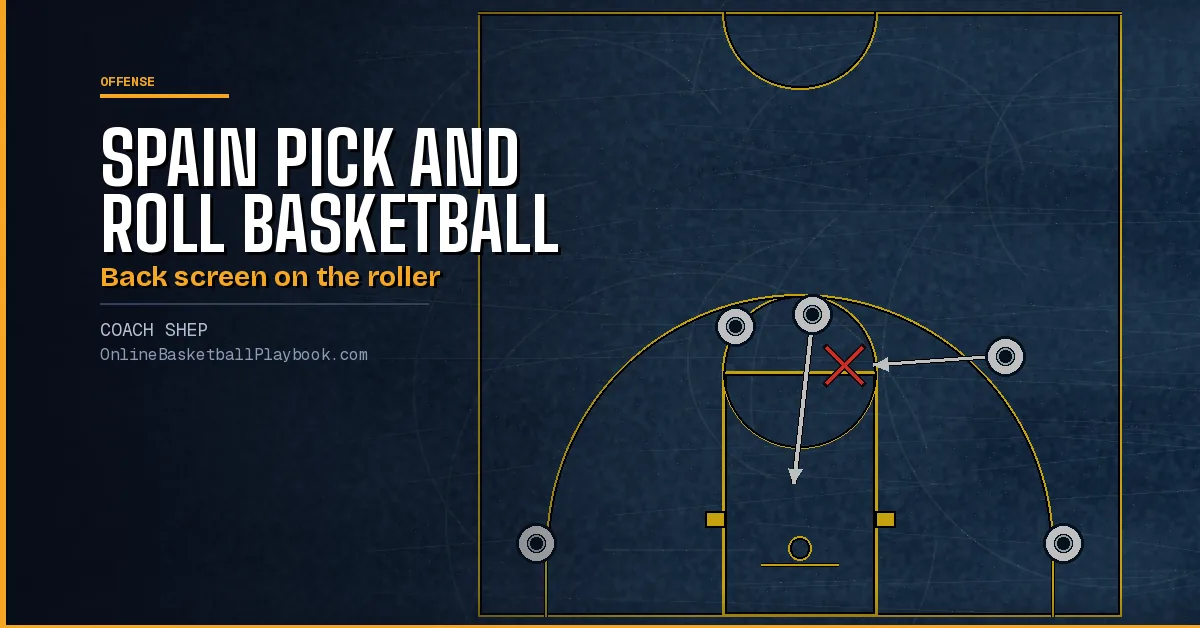
Spain Pick and Roll Basketball: Screen the Screener
The Spain pick and roll explained: a ball screen plus a back screen on the roller's defender, the pop, the hedge counter, the versions and the coverages.
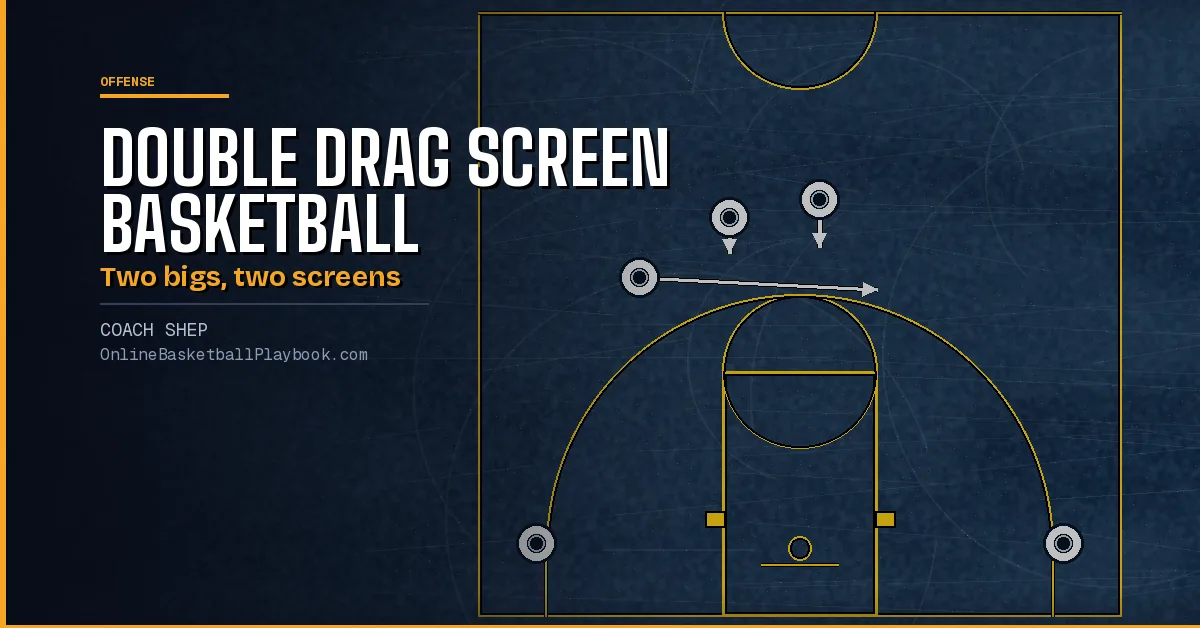
Double Drag Screen Basketball: Roll, Pop and Slip
The double drag screen explained: two trailing bigs screen in turn for the ball handler, with the roll and pop rules, the slip, the reads and the coverages.
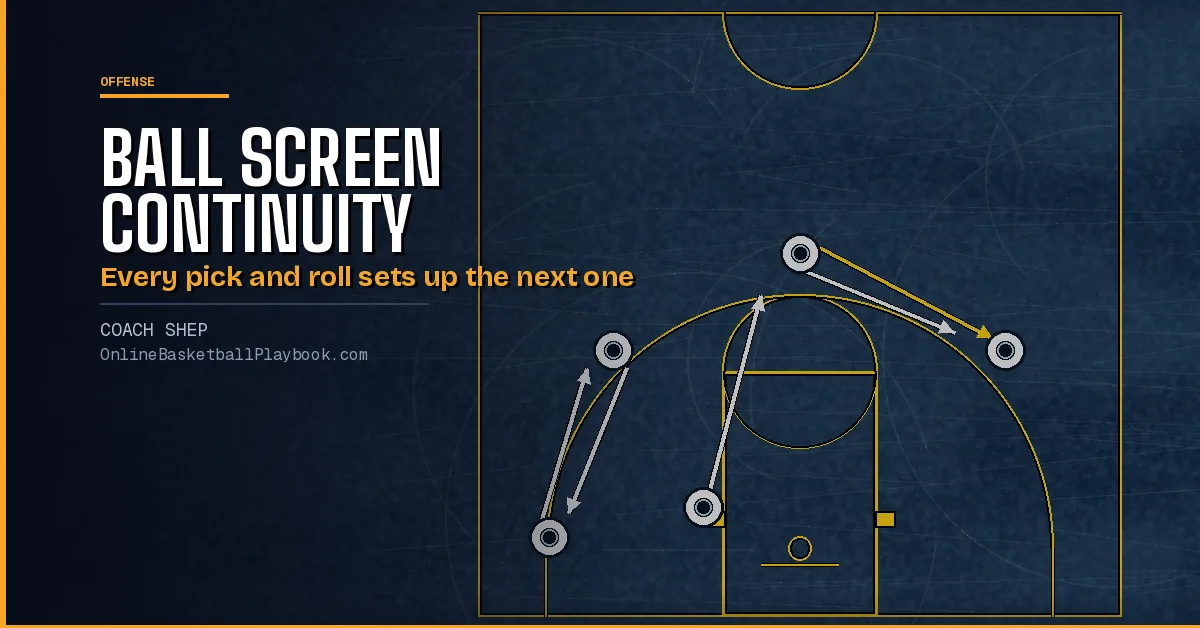
Ball Screen Continuity Offense: Pick and Roll Rules and Reads
Ball screen continuity offense in full: the 4-out and two-big engines, reload rules, spacing, angles, reads, counters, Spain, Ram, double drag and zone sets.