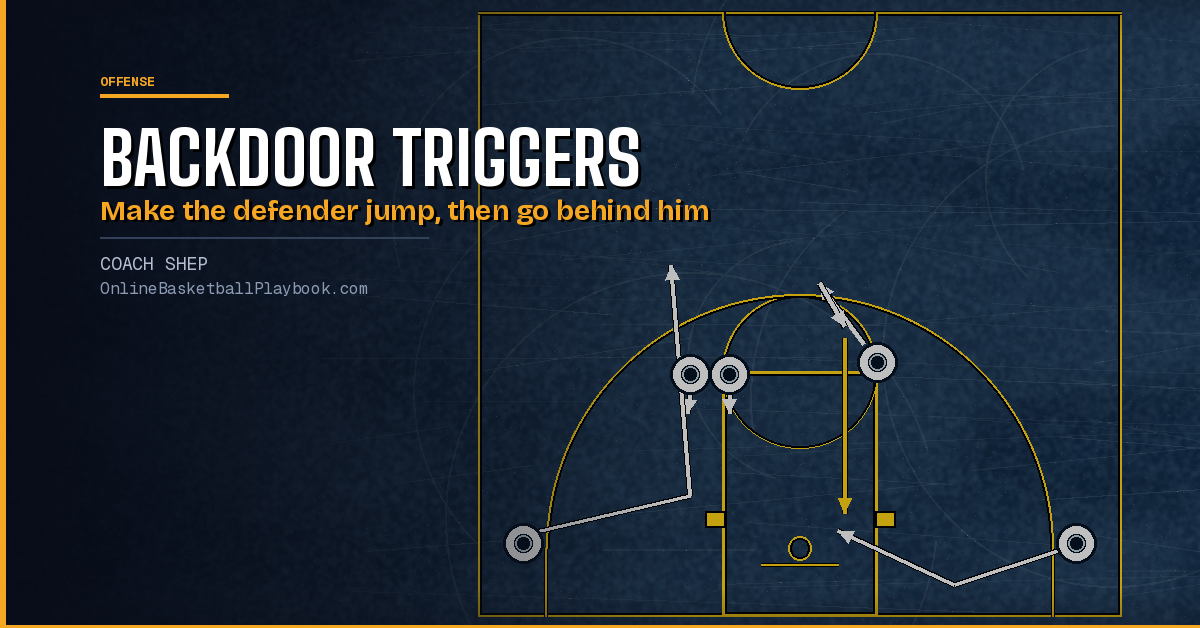
Backdoor triggers are the cues that tell a cutter to go behind his defender: an overplay, a turned head, a teammate dribbling at him, a pass fake, a catch at the high post, a spin dribble. The read itself, how a cutter knows he is overplayed and how he finishes the backdoor cut, has its own page. This page covers what calls the cut. It lays out six triggers that show up across these offenses, the decoys offenses use to make a defender jump, and the backdoor plays built on top of them, with the Princeton sets first and the rest of the game after.
What a Backdoor Trigger Is
Pete Carril's rule was "When closely guarded, go back door." That rule is a read, and the Princeton offense treats it as automatic. Coaches also build plays that call it on purpose. A trigger is whatever starts the cut. Some triggers are things the defense does, like a denial or a turned head. Others are things the offense does to signal the cut, like a dribble at a teammate or a spin dribble. John Beilein names the two kinds sudden and signaled, and the sudden kind is covered on the backdoor cut page.
Two of Princeton's numbered rules sit under every trigger: go backdoor at once if overplayed, and do the opposite of what the defense does. Another rule ranks the shots: layups, then threes.
The Six Backdoor Triggers
| Trigger | Who starts it | What the cutter sees |
|---|---|---|
| 1. Overplay | The defense | His defender denies the pass one pass away |
| 2. Head turn | The defense | His defender glances away toward the ball |
| 3. Dribble-at | The offense | A teammate dribbles straight at him |
| 4. Pass fake | The offense | The passer fakes the pass and the defender jumps it |
| 5. High-post catch | The offense | The ball goes to the post at the elbow or the top of the key |
| 6. Spin or reverse dribble | The offense | The ball handler spins or reverses toward him |
1. The overplay. A denial one pass away sends the cutter behind his defender, and the tests for when a defender counts as overplaying are on the backdoor cut page.
2. The head turn. One Princeton version also sends the cutter when his defender glances away toward the ball, a test laid out with the others on the backdoor cut page.
3. The dribble-at. Princeton's rule sheet and Jay Wright both make a dribble-at on a tightly guarded player an automatic backdoor, and the one-second hold, the sag answer and the hand-off-or-back-cut split are on the backdoor cut page.

Jay Wright's hand-off turns the same moment into a lob. His hand-off is two hard dribbles and a jump stop, with the ball put on a plate for the cutter to take. If the defense cheats the hand-off and takes it away, it becomes an automatic lob to the cutter. His teaching point is that the cutter has to have the ball in his hands before he reaches the rim, and the pass goes right over the defender's head. More on the hand-off is on DHO basketball.
4. The pass fake. A pass fake makes a denying defender commit. In one motion version, a receiver who gets a pass fake back cuts at once. Princeton sets use it to sell the cut in the middle of an action.

This is the end of Chin High, where the pass fake is written into the play to sell the cut. The same fake can mean the opposite in another set. In a Chin counter, the guard's pass fake to the forward signals the post to come set a ball screen. A team has to know which one its fake means. The full Chin High sequence is on Princeton Chin series.
5. The high-post catch. In the Point series, the passer's fake screens send the corner player or the far wing backdoor off the post catch. In John Beilein's two-guard Chin, when the flashing post catches, both guards sprint backdoor at once, as a sprint and not a read. In Carril's Chin, a center whose defender denies him at the high post goes backdoor himself. Another version calls the guard-to-post pass at the elbow its richest entry, and the post's first look after he catches and protects the ball is the ball-side wing going backdoor. The Point cuts are on Princeton Point series.
6. The spin or reverse dribble. The signaled trigger, covered next.
The Spin Dribble and Other Signals
A signal turns the backdoor into a called play the defense cannot read. The signals in use:
- Dribble away and spin back. Beilein's signaled backdoor. The passer dribbles away from the cutter and spins back to make the passing angle.
- Spin dribble at the top. In the Point series, a denied pass to the high post keys a spin dribble by the guard, and the far wing cuts hard backdoor. If he is not open, he reverse pivots into the post.
- Hard reverse dribble. One Princeton teaching version makes a hard reverse dribble toward a player his cue to go backdoor.
- The driver's jump stop. In Vance Walberg's dribble drive, a driver who jump-stops in the drop zone signals the back cut. The cut is drawn on dribble drive motion offense, and the drop zone on dribble drive zones.
- The cutter's jump stop. The cutter jump-stops and pivots to tell the passer he is going.
The best-known spin-dribble backdoor is the UCLA play. The play is drawn under UCLA's name and captioned as the backdoor that beat defending champion UCLA 43-41 in 1996.

It starts with a spin dribble by the 1, the 5 filling the high post to catch, and the 3 filling the corner. On the catch, the 3 cuts along the baseline at about half speed to set up the real cut, and the 1 and the 4 set a double screen at the far elbow for the 2. That screen is a distraction. As the 2 comes off it, he pulls the weak-side help away from the basket. The 5 sells the action by dribbling toward the top of the key, then spin-dribbles back toward the 3, who cuts hard to the rim for the layup.
Making the Defender Jump
A backdoor play manufactures the overplay with misdirection first, a zipper, a hand-off, a stagger, a ball screen, a UCLA cut, a drag, a flare or Spain action, then cuts when the defender jumps the fake. In a called backdoor play, there is no backdoor without the setup. The ways teams sell it:
- A decoy screen. The double screen in the UCLA play, a fake screen by the passer in the Point series, or a fake screen that holds the help while an athlete backdoors.
- A repeated action. A set run several times before its backdoor counter is subbed in, so the defender has learned to jump it. The Boston Celtics ran their transition action this way. In Princeton's Circle, the guards return high off down screens until the defense starts to cheat up.
- A normal cut first. The San Antonio Spurs' zipper backdoor from the 2015 playoffs walks the defender up like an ordinary zipper cut before the cutter goes behind him. A misdirection version has the cutter act like he is coming to the top, then reverse pivot for the layup.
- A change of speed. The UCLA play's cutter runs the baseline at about half speed before he cuts hard. Another cutter walks his defender up before he goes.
- A misleading name. One backdoor play is named so the defense hears it as a call for a corner three.

Circle is the repeated-action trigger in a Princeton set. The 1 and the 2 cut to the paint, come back off down screens from the wings set no lower than the free-throw line extended, and return to the guard spots beside the 5. After it has run a few times, the defense tends to cheat up and overplay the guards coming back high, and the overplayed guard back cuts hard, with the 5 hitting him at the rim. Down screens are covered on down screen basketball.
Get the next coaching guide in your inbox
One email when a new guide or diagram set goes up. Free.
Princeton Backdoor Plays
The Princeton offense has backdoors in every set, and several plays exist to call one. Each is named here by what it does.
| Play | How the backdoor comes |
|---|---|
| The UCLA play | Spin dribble, high-post catch, decoy double screen at the far elbow, a spin back to the cutter from the corner |
| Chin | If the 2 is denied on the swing, the 4 dribbles at him for the backdoor |
| Chin High | The 3 cuts backdoor for a layup pass from the 5 after a pass fake |
| Point Over and Away | The passer fakes a screen and the corner player or the far wing backdoors off the post catch |
| Point spin counter | A denied post keys a spin dribble and the far wing backdoors |
| Circle | Guards circle back up off down screens, and the one whose defender cheats up backcuts for a pass from the 5 |
| Circle high screen | The 5 sets a ball screen in the middle and does not roll, and the other guard sets his man up and backdoors from the top. It is called against backcourt pressure |
| Wing shooter play | Starts like Low. The 4 cuts backdoor on the dribble-at by the 3, the 5 flares the 3, and the play resets into Chin |
| High-post isolation backdoor | The 1 passes to the 5 high and fakes a screen for the 4 cutting backdoor, while the 2 comes off a double screen. The order is the 2 off the screen, then the backdoor, then the 1 one on one on the empty side |
| Screen-away backdoor | The 2 screens away for the 4, and if the 4's defender cheats, the 4 backdoors |
The base system around these is on the Princeton offense hub, and the defensive side, including how teams try to defend the backdoor, is on how to defend the Princeton offense.
Backdoor Plays From Other Systems
Backdoor plays come in two build types. Unscreened sets sell the cut with a fake and need no teammate. Screened sets give the cutter a back screen so the cut is tighter. Beilein teaches the screened cut chest to chest with the post so the trailing defender cannot follow.
| Play | Alignment | How the backdoor comes |
|---|---|---|
| Dean Smith's box backdoor | Box | The back cutter fakes toward the wing first. It was built against teams that deny the leading scorer |
| Tom Izzo's scissors backdoor | Box | A scissors screen, then the 2 fakes and back cuts |
| Larry Brown's zipper series | Zipper start | Every play starts with the same pin down and dribble out, then ends in a hand-off, a flex cut, a backdoor, a clear-out or a lob |
| 1-4 high split backdoor | 1-4 high | The 2 chooses between the backdoor and the screen |
| Baseline screen backdoor | 3-out 2-in or 1-3-1 | The low post sprints along the baseline to screen the far wing, who cuts backdoor for the high post's pass. If the defense switches, the post seals and cuts |
| Back screen lob and its sister | Half court | The post back-screens for a lob, timed until the guard clears another screen. The sister play runs the same action with a down screen for a three |
| Belmont's backdoor series | Ten base sets | A 20-play series that pairs a backdoor with each base look, from Horns and Stack to Delay and Weave |
| Spain backdoor | High ball screen | A high ball screen with a Spain re-screen into a fake hand-off. The defender commits to the hand-off and the cutter goes |
Pairing a backdoor with every base set is the idea behind Belmont's series, and other programs tag one onto a continuity. In a flex offense, the backdoor against denial is the main pressure release, and one version replaces a flex down screen with a straight cut that catches teams who never expect a backdoor from the flex. The flex version is on flex offense basketball, and quick hitters in general are on how to run quick hitters.
Out of Bounds, After Timeouts and Junk Defenses
The same cut works from a dead ball, where the defense is set and often denying hard.
- Baseline out of bounds. Belmont runs a backdoor off its baseline sets, and the dribble drive drop series is suggested for baseline and sideline plays against hard overplays. More sets are on baseline out of bounds plays.
- Sideline out of bounds. A box sideline play inbounds with the best guard so the back-screen return pass is his, with the screener sealing and rolling as the second option. More are on sideline out of bounds plays.
- After a timeout. Butler labels its Chin backdoor for after a timeout, and UConn carries a delay backdoor marked the same way. Keeping a backdoor on the after-timeout card is covered on basketball after timeout plays.
- Box and one. The wing cuts backdoor the instant the post's own defender steps over to help. Other answers to junk defenses are on how to beat a box and 1.
Building a Backdoor Play
The plays above share a few design rules.
- Empty the lane. Start from a double gap, two empty spots between the cutter and the ball, so no helper is waiting at the rim.
- Trigger on a defensive event, not a count. In Chin the cutter waits until the ball leaves the passer. Beilein never cuts early, because the cutter times the pass, not the motion. The box and one set cuts on the helper's first step.
- One start, several endings. Sister plays change one variable.
- Plan the exit. The box backdoor sets add a rule. If the pass is not there, do not throw it, and flow into the base offense. Princeton's wing shooter play resets into Chin.
- Posts go backdoor too. A high post who pops out after a UCLA cut and is overplayed can go backdoor for a lob, and a wing who misses the backdoor can reverse pivot into the post.
Drill the Trigger First
A play that calls a backdoor needs players who already make the cut. A three-line drill rehearses the dribble-at back cut with bounce passes, then air passes, then left-handed layups. A Princeton two-on-zero drill runs the dribble-at from two spots on the floor with a bounce pass that leads the cutter and a straight-line cut. A ten-practice Princeton plan teaches the backdoor read on the third day and scores a backdoor layup off a denial as two points in the closing scrimmage. More drills are on drills to teach the Princeton offense, and cutting in general is on cutting in basketball.
Questions Coaches Ask About Backdoor Triggers
What triggers a backdoor cut?
Six cues show up across these offenses: an overplay, a defender turning his head, a teammate dribbling at the cutter, a pass fake, a catch at the high post, and a spin or reverse dribble used as a signal.
What is a backdoor play in basketball?
A called play whose payoff is a backdoor cut to the rim. It sells the defender a fake first, a screen, a hand-off or a cut he expects, and then sends the cutter behind him when he jumps it.
What play did Princeton run to beat UCLA?
The play drawn under UCLA's name is a spin-dribble backdoor, captioned as the one that beat defending champion UCLA 43-41 in 1996. The post catches at the high post, a double screen at the far elbow pulls the help away, the post dribbles toward the top and spins back, and the corner player cuts hard to the rim.
Should a player cut backdoor when dribbled at?
In Princeton's rules and Jay Wright's, yes, when he is played tight. Some offenses use the dribble-at for a hand-off instead and make the back cut the answer when the defense jumps it.
How do you run a backdoor against a sagging defense?
The backdoor closes when the defender sags. Princeton versions answer with a flare for the player being dribbled at, or a down screen for a shooter, and keep the backdoor for the defender who denies.
Want every diagram on the site?
OBP Pro members get the full diagram files for every offense guide on the site, ready for a practice binder or a scouting report. $9 a month. Or draw your own version free in the play drawer.
See what OBP Pro includesMore Offense System Guides
- Spread Pick and Roll Offense: Flat Screens, Reads and Counters
- Princeton Chin Series: 4 Ways Coaches Run the Chin Offense
- Princeton Point Series: Over, Away and Under Reads
- Princeton Low Post Series: Splits, Screens and the Laker Cut
Back to Princeton Offense and every Offense page.
Keep Building
Related breakdowns
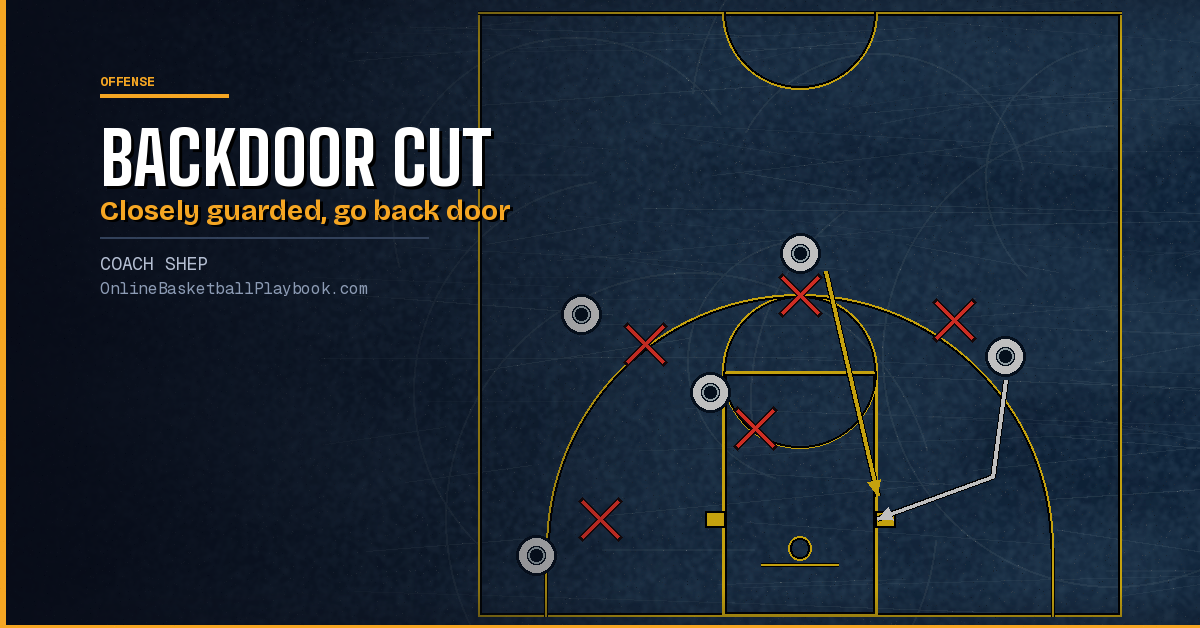
Backdoor Cut Basketball: How to Read the Denial
Backdoor cut basketball: the cutter's read of a denying defender, front cut or rear cut, timing, the passer's job, and the diagrams for each version.
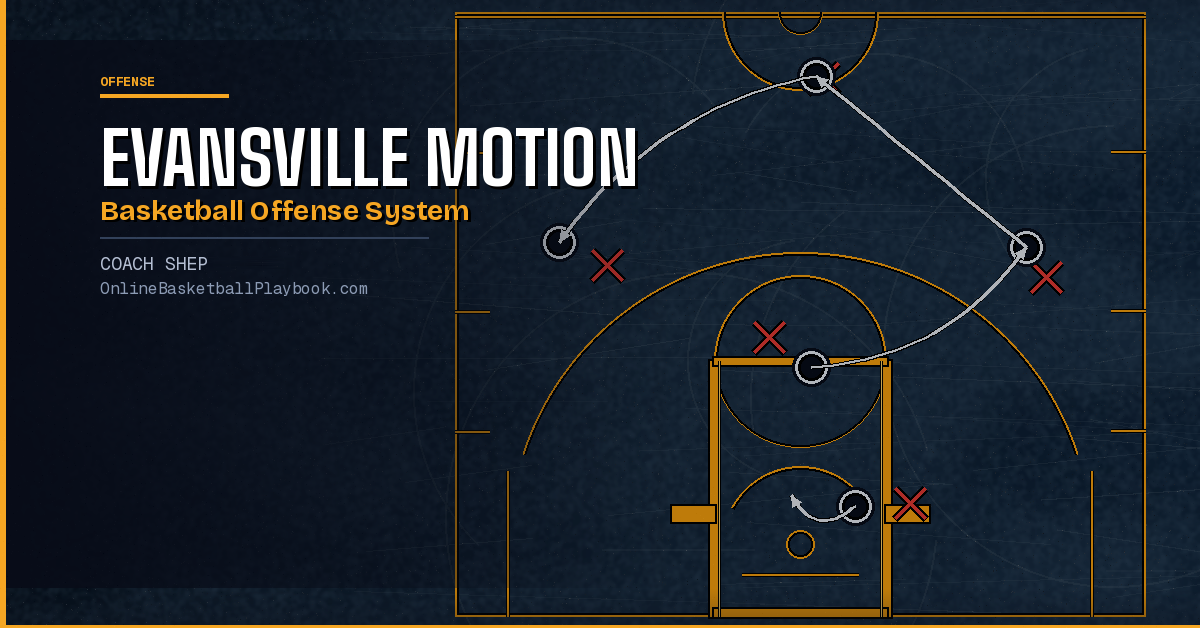
Pass-and-Cut Motion Offense: Reads, Backdoor and Install
This motion offense is a read-based system built on spacing, ball movement, and purposeful cutting. Every pass triggers a decision.
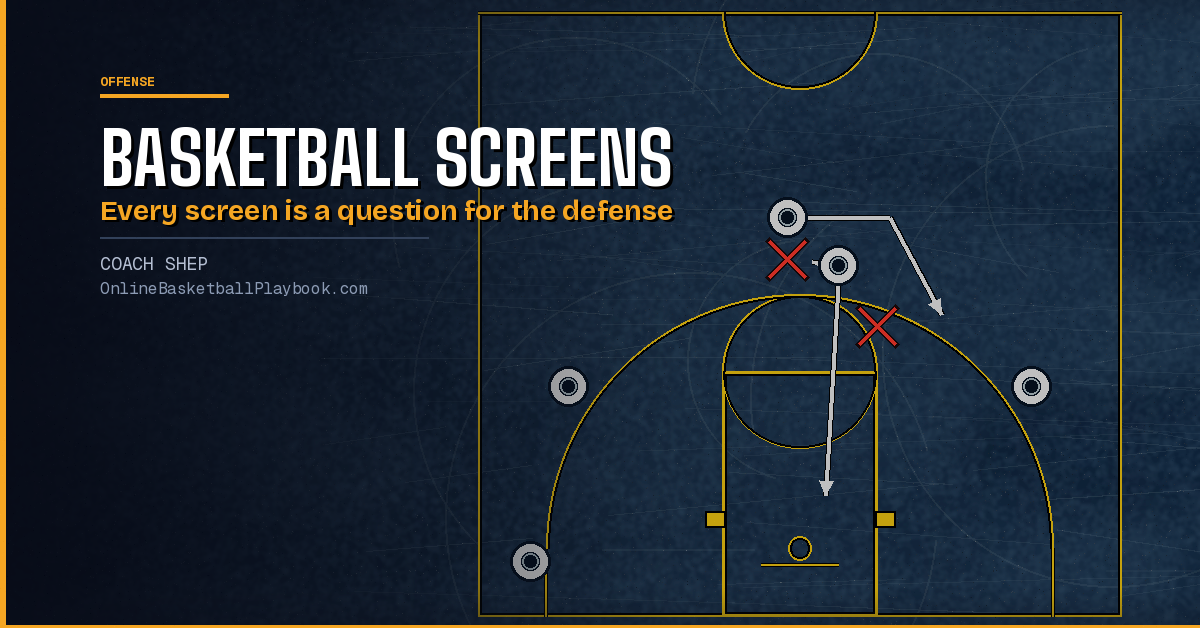
Basketball Screens: Every Type of Screen and How to Read It
Basketball screens explained by type: on-ball, down, flare, back, pin down, cross, stagger, elevator, screen the screener and hand-off, with each read and counter.