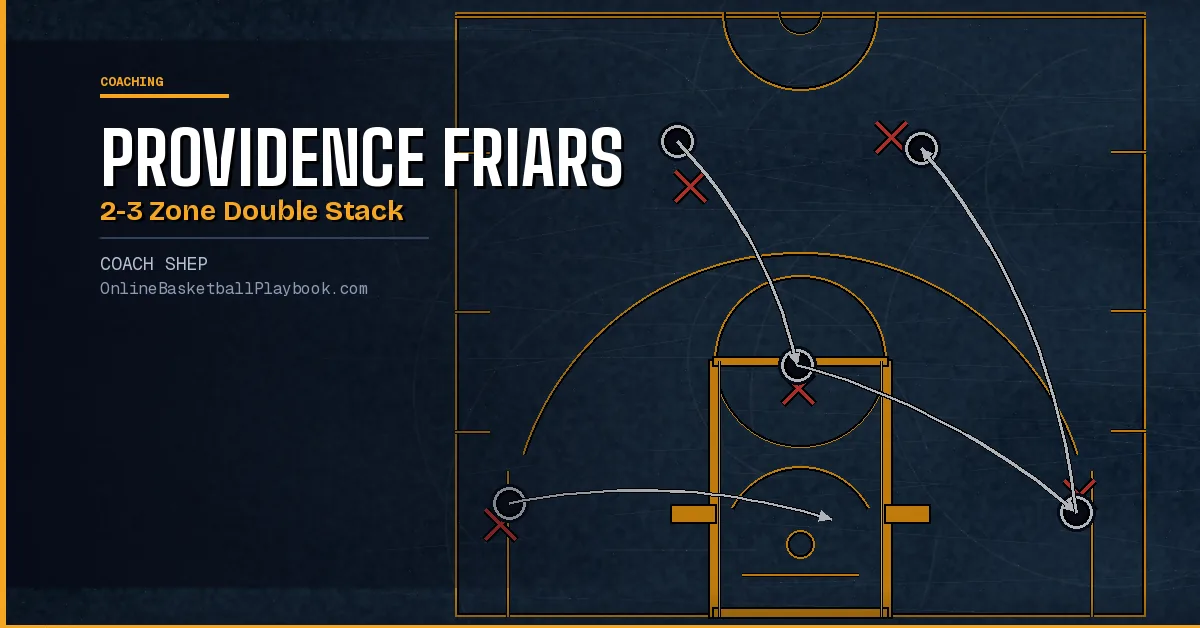
Providence uses a low double stack to occupy the 2-3 zone's back line, then flashes the post to the high elbow, the zone's most exploitable soft spot, to generate a high-percentage mid-range or dump-off look.
Why This Play Works Against the 2-3 Zone
The 2-3 zone is the most common zone defense at every level of basketball, from youth programs all the way through college. Its structure, two guards in the slots and three defenders stretched across the baseline, is built to protect the paint, wall off dominant interior players, and eliminate rim shots. When it is deployed well, it forces offenses into contested mid-range attempts or desperate corner entries against closing wings.
But every defense has a design trade-off, and the 2-3's trade-off is this: the elbow area and the high post are where the zone bleeds. When the two top guards narrow their gap to protect against ball reversal, they open a lane for a high-post flash. When they spread to cover the elbows, they lose their ability to contest the quick pass at the top of the key. The Providence Friars' low double stack post flash play is built entirely around that structural tension.
Providence sets two posts in a low stack on one side of the lane. That action immediately forces the zone's back three into a choice: help down and condense on the stack, or hold their positions and leave the high post exposed. If they condense, the corner opens. If they hold, the flashing post catches at the elbow with a clear look at the basket or a direct pass to the block. Either way, the zone must give something up.
The play also stresses the zone's communication. The low double stack reads as a baseline scoring threat and pulls the attention of the ball-side wing and center downward, at exactly the moment the flashing post is cutting upward through the lane. That opposite-direction movement, posts going down while one flashes up, is difficult to track in real time, especially for a wing defender who must both close on a potential corner entry and honor the high-post flash simultaneously.
Play Setup: The Low Double Stack
The play begins in a basic zone offensive set, typically a 1-3-1 or 1-4 alignment, with the point guard at the top of the key. The critical action is the positioning of the two post players, who align in a tight double stack at the low block on the strong side, both players within a step of each other on the ball-side block or short corner.
This low stack is not passive spacing. It is an active threat. The zone's ball-side wing defender (X3 or X4) is responsible for the corner, and the center (X5) owns the paint. When two offensive players are stacked at the low block, the center must choose: shade toward the stack and give up the short corner, or stay central and allow a clean catch at the block. Neither option is clean, and that ambiguity is the whole point of the alignment.
The ball-side wing in the offense positions on the wing or slightly above it, giving the point guard a clear outlet if the initial post entry is denied. The weak-side wing holds the opposite corner or wing, keeping the zone's weak-side wing defender from collapsing entirely into the paint.
The point guard's job before the action triggers is patient. He is not probing or driving. He is reading the zone's alignment, keeping the ball at the top of the key, and waiting for the stack to settle into its position. The moment the zone's back three are visibly anchored to the baseline, leaning toward the stack, is the trigger for the post flash.
The Post Flash: Attacking the High-Post Soft Spot
The flash is the play's defining action. The upper post in the stack breaks toward the high post, the elbow or the area just above the free-throw line, on a hard, direct cut. The timing of the flash is critical: it must happen as the ball is being passed or during the zone's ball-movement rotation, when the defenders are shifting their weight and attention.
A well-executed flash catches the ball-side wing mid-rotation. That wing defender is responsible for closing on a corner catch AND honoring a high-post entry, two jobs in opposite directions. A flash cut that arrives at the high post just as that wing is stepping toward the corner makes both responsibilities impossible to meet simultaneously. The result is a free catch at the elbow.
The high-post catch is the play's primary reward. From the elbow, the flashing post has several live options: a face-up jump shot off the catch, a one-dribble pull-up toward the lane, a direct drop pass to the second post who has sealed his defender at the low block, or a kick-out pass to either wing if the zone collapses on the catch. All four options are viable because the zone's rotation to the high post, the correct defensive response, pulls four perimeter defenders toward their corner-box positions, leaving the kicking wing a clean catch-and-shoot.
The second post player in the stack has an equally important job. Once the flash cut begins, the remaining post player must seal his defender and establish low-post position on the ball-side block. He becomes the primary dump-off target if the zone sends two to the high-post catch, and the skip-pass threat that prevents the weak-side wing from helping on the drive. His positioning makes the high-post catch a three-way threat rather than a two-way threat, and that third option is often what creates the cleanest look of the entire play.
Reads, Secondary Options, and Decision Points
The best zone offense coaches teach their players to read what the defense gives, not to execute a predetermined sequence regardless of what they see. The Providence low double stack post flash is designed to be read, not just run. The point guard and the flashing post must both make quick decisions based on how the zone rotates.
If the zone does not send a defender to the high post: The flashing post catches at the elbow in a one-on-one situation. He attacks the basket off a single dribble or takes the face-up jumper if his feet are set. A clean elbow catch with no closeout is the play's best-case scenario, and it happens more often than coaches expect, especially early in a game when a zone team has not yet recognized the double stack action.
If the zone closes hard to the high post: The ball-side wing or the upper guard rotates to the elbow, and the flashing post must dump the ball to the low post or kick it to the open wing quickly. This is the corner-shooter option. The wing on the weak side should already be reading the closing rotation and moving to the corner or the wing slot for a catch-and-shoot. A patient kick-out pass here produces a high-quality three-point attempt.
If the zone's center steps up to the short corner: The remaining post at the low block has an open baseline cut to the basket. The flashing post at the high post delivers a lob or a bounce pass to the cutting post, who catches near the rim for a layup or close-range finish. This is the play's skip-reverse option. It punishes a zone that over-commits its center to the stack.
If all options are covered: The point guard resets the offense. Zone offense rewards patience above all else. A reset is not a failure; it is a second chance to run the same action from a different angle or to hit the same zone read from a different entry point. Providence will run the same stack action to the opposite side if the zone has shifted too heavily toward the original strong side.
2-3 Zone Principles This Play Exploits
Understanding why the low double stack post flash works requires understanding how the 2-3 zone is built and where its structural weaknesses live. The zone's design priorities, protecting the paint and eliminating rim shots, create predictable soft spots that a disciplined offense can consistently target.
The elbow and high-post area is the 2-3's most exploitable gap. Both top guards must narrow their gap to deny the top-to-high-post entry pass; if a gap opens between them, a direct pass to the elbow splits the entire front line in one action. The Providence flash exploits this gap directly. Rather than trying to slip a pass through two alert guards, the play removes one potential gap-closer by pulling the zone's attention to the low stack first, then sends the cutter through before the front line can re-establish its width.
The short corner area, the block-to-corner space beyond the center's comfortable range, is the second soft spot the play touches. The low stack occupies that area before the flash, forcing the center to make a positioning choice with incomplete information. The zone cannot perfectly cover both the stack and the flash simultaneously, and the play forces the defense to reveal which weakness it will accept.
Ball-side rotations in the 2-3 require the wing to close hard on corner entries. When that wing is occupied by the stack's corner threat, the high-post flash arrives in the area behind the wing's rotation, in the dead zone between the top guard and the wing's starting position. The wing bump concept, which high-level 2-3 teams use to handle quick reversals and flash cuts, requires precise positioning and timing. A well-timed flash cut arrives faster than the bump can set.
Installing This Play in Practice
Teaching the low double stack post flash requires breaking it into three separate drills before combining them into a full-play walkthrough. Coaches who skip straight to the live scrimmage setting often find that the timing breaks down. The flash cuts too early, the point guard doesn't wait for the zone to settle, or the remaining post player drifts out of position instead of sealing on the block.
Start with the two-man flash drill. The two post players only, with a coach feeding the ball at the top of the key. One player sets the low stack position, the other executes the flash cut to the elbow on the coach's signal. The flashing player works on reading the catch, high-post jump shot versus drive versus dump, while the remaining post seals and positions. Run this without defenders first, then add a passive defender to represent the zone's center, making the catch-and-read decision live.
Next, add the point guard and work the full entry sequence. The guard reads the zone's top line, holds the ball patiently, then makes the entry pass to the flashing post at the right moment. Timing the pass to arrive as the flash cut reaches the elbow, not before, not after, is a practiced skill. Early passes give the defense time to recover; late passes allow the zone to re-set its coverage. The right moment is just before the cutter's inside foot plants at the elbow.
Finally, add defenders and run the play in a 5-on-5 zone shell. Walk through all three read options: high-post jumper, dump to the block, kick to the open wing. Coaches should call out which option they want after the catch so players can feel each pathway without having to make a live read in the initial repetitions. Once all three options feel comfortable, move to a live read where the defense determines which option opens.
Run this play early in the game before the opposing defense has scouted the stack action. The first two possessions against a 2-3 zone are your best opportunity to get an uncontested elbow catch. The zone's center has not yet learned to track the upper post's flash direction while holding position at the low block. Use those early reps to establish the high post as a live threat, which opens the corner-shooter option for the rest of the game.
- Stack positioning matters: Both post players must be within one step of each other at the low block before the flash triggers. A loose or spread stack does not stress the zone's center enough to pull his attention away from the paint.
- Patience at the top of the key: The point guard waits until the zone's back three visibly anchor to the baseline before triggering the flash. A rushed entry gives the front guards time to cover the elbow before the cutter arrives.
- Time the pass to meet the cut: The entry pass to the flashing post should arrive just before the cutter's inside foot plants at the elbow. Early passes allow recovery, late passes let the zone reset its coverage completely.
- Second post seals immediately: The remaining post at the low block must seal his defender the moment the flash cut begins. He is the primary dump-off target and must have position before the catch happens at the high post.
- Teach all three reads, not just one: Players who only look for the high-post jump shot will force bad shots. All three options, face-up, dump to the block, kick to the wing, must be equally comfortable before running this play in a game.
- Reset without hesitation: If no option is open after the high-post catch, reset to the opposite side immediately. Zone offense rewards patience, and running the same stack action from the other side often catches a defense that over-shifted in its initial rotation.
Want more basketball coaching strategies, drills, and tools?
Join the Online Basketball Playbook newsletter →
Draw this play free in the play drawer →
Membership: the full library, playbook packs, and Pro drawing tools →
Keep Building
Related breakdowns
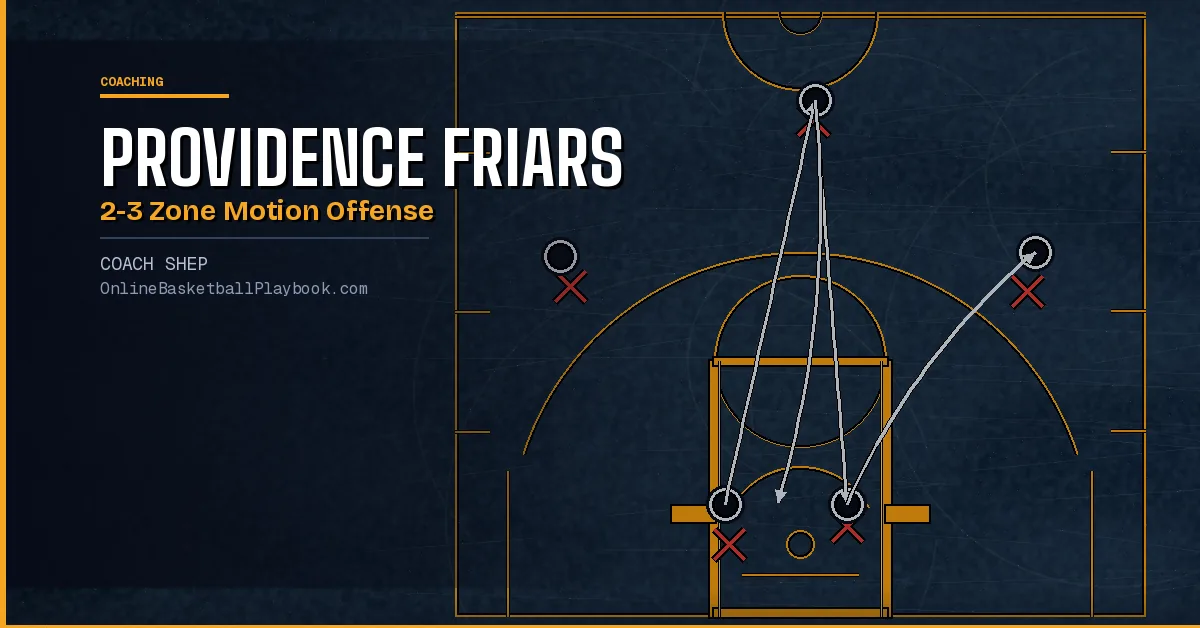
Providence Friars 2-3 Zone Motion Offense Baseline Runner Basketball Play
Providence Friars 2-3 Zone Motion Offense Baseline Runner Basketball Play
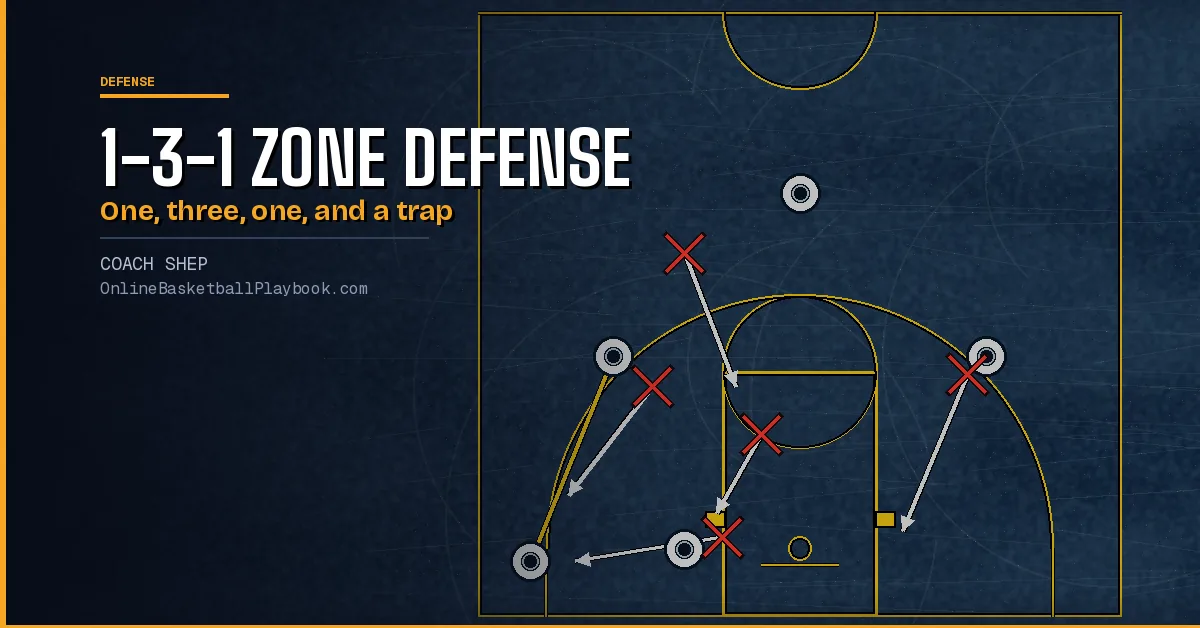
1-3-1 Zone Defense: Traps, Rotations and Drills
How to run the 1-3-1 zone defense: the five roles, the corner and wing traps, the skip pass that beats it, loose and tight depth, and the drills to install it.
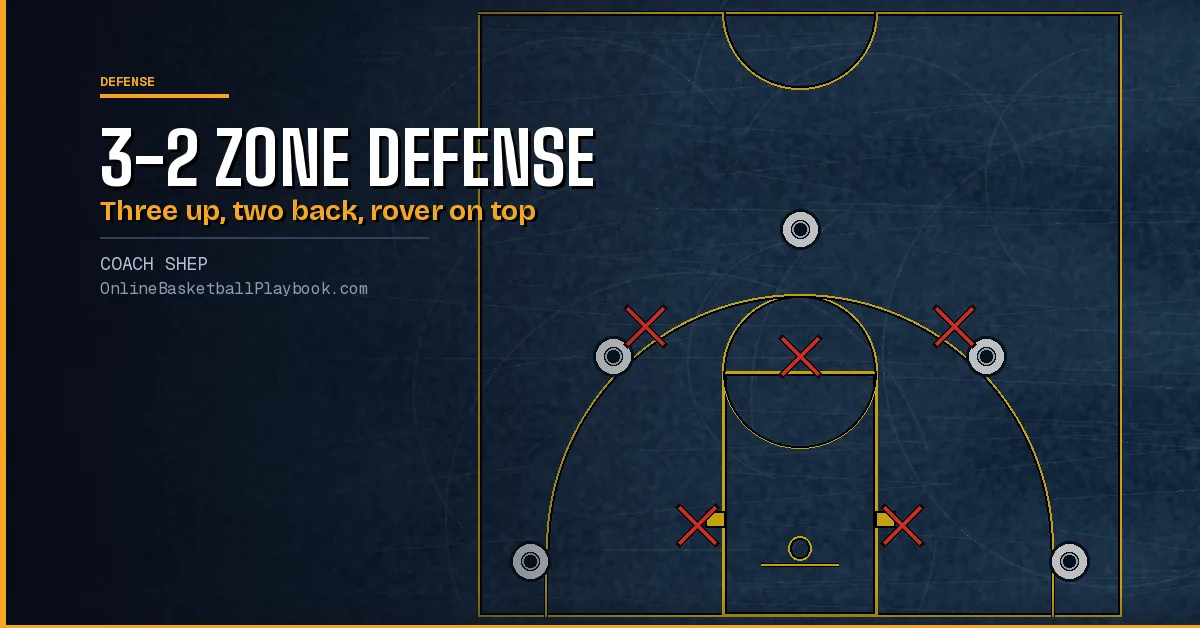
3-2 Zone Defense: Rotations, Weak Spots and Drills
How to run the 3-2 zone defense: the alignment, the rover, every rotation, the weak spots, the 3-2 matchup zone and the drills, plus when to pick it over a 2-3.