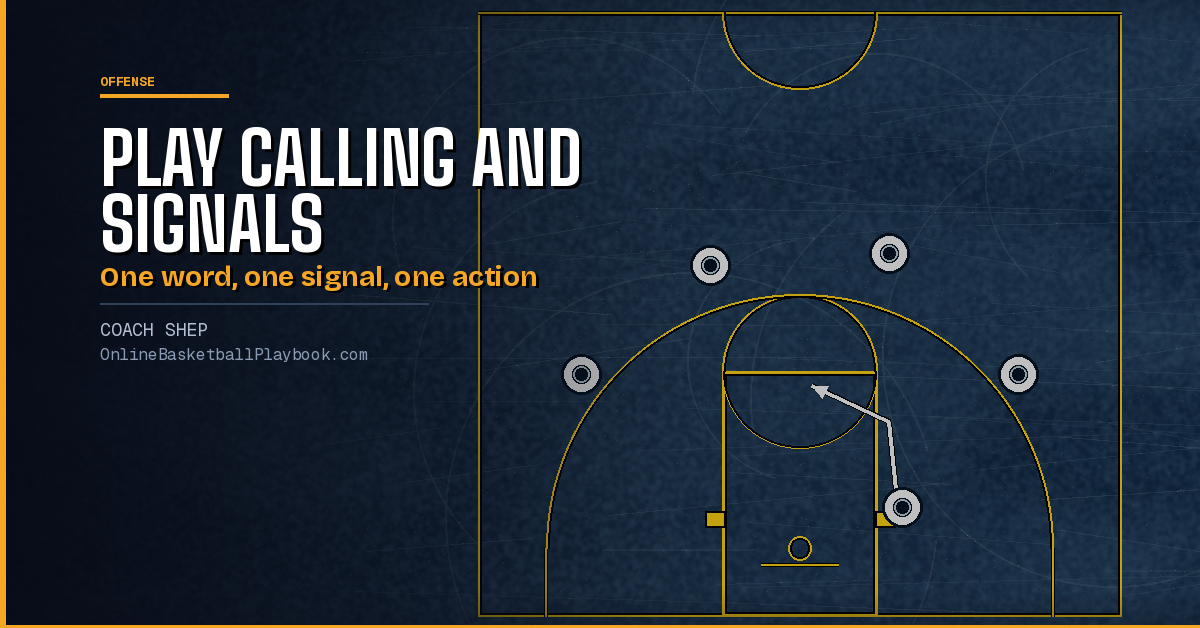
Basketball play calling is how a coach gets a chosen set or defense to all five players during a game. It covers how the plays are named, how the call travels (voice, hand, gesture or card), who makes it, how it is hidden from a scout and how a team rehearses it. This page compares the ways coaches do each of those. The plays themselves are on basketball plays, the shared vocabulary on basketball terminology, and the dead-ball calls out of a timeout on after-timeout plays.
How Much Gets Called
Coaches range from calling almost nothing to calling almost everything:
| Version | What gets called |
|---|---|
| Set-heavy, from the huddle | About 80 percent of plays called from the huddle, from a catalog as large as 120 set plays with eight or nine counters for each |
| Motion plus man sets | Motion as the base, with 30 to 40 man sets beside it called from the bench |
| A handful of sets | Jim Boeheim's "5 or 6 sets and motion" |
| Repeat what scores | Few plays, and a play that scores gets run again |
| One special | One core special action, run at every club the coach has led |
| No called half-court plays | One alignment for every look, with call words naming actions inside the motion |
The size of the menu is a separate decision, covered with its trade-offs on basketball plays. One warning from the set-heavy side applies to every menu. Young players struggle to learn more than one position, so a big catalog has to fit the roster. Another coach notes that plays get harder to score from as the season goes on and leans more on concepts and the play after the play.
Naming Systems for Plays
Teams name plays in many ways. Each version below comes with an example.
| Version | Example |
|---|---|
| Numbers | 1, 2, 2A, 2B for a numbered set of continuity man plays |
| Numbers plus names | Numbered calls 10 to 17 and 40 to 48, then named sets |
| One-word actions | Fred for a flare, Charlie for a curl, Texas for an isolation |
| Schools and cities | Sets named after schools or cities so players remember them |
| Pro clubs | Pick and roll sets named after European clubs |
| Scenario names | Maryland for a desperation three, Split for a two-point drive |
| Ordinary sentences | "Box-out Scott," a phrase a coach would shout anyway |
| Root word plus tag | Fist Corner, Fist Up, Fist Counter |
| Family with a common start | Three plays share their first two actions, then split |
| Codes | A known play renamed with a color or a number for one opponent |
| Number by phase | 80, 60 and 40 for the three phases of a press offense |
Counters under the same name. Several versions name the counter after the play. One calls every counter "[play] again," so after Fist comes Fist Again and the defense thinks it is seeing the same play. One NBA version names its counters the same way. An inbounds series runs a base play, the same play again and the same play up from one box, and a zone series adds Push and Dive to its base play, each built to answer the zone's last adjustment. The quick hitters these names usually sit on are on how to run quick hitters.
Verbal Calls
One word beats two. Don Meyer's rule is to say "high" instead of "high hole." Other versions give one word per action, per floor spot and per situation, such as one color for eight seconds left on the shot clock, and hand players the glossary.
Do not sound like the referee. One coach shortened his "5-Out" call to "5" after an official mistook it for a timeout request. A call word is heard by the officials and the other bench too.
Say it early, loud and often. One call is not always heard the first time. One version wants players to echo the play call, then call the actions inside it.
Basketball Play Calling With Hand Signals
Hand signals carry the call where voices do not. Defensive call words such as "Switch" get a matching hand signal for loud gyms, and on out-of-bounds plays a signal or a verbal call tells the team which play is on. One definition of a set offense is planned screening run on a verbal call or a hand signal.
- One signal, one action. The same signal means the same action out of different sets, which makes plays easier to remember.
- Callable from the base set. One version requires every quick hitter to be callable straight out of its base formation with a signal, a thumbs-down for one play and a fist for another, so no possession time is lost resetting.
- Call families. One root word with tags, so the family stays together.
- Play cards. Some teams head every play card with two lines, the play call and the hand signal.
Players signal each other. Not every signal comes from the bench. A wing who is denied gives the point guard a hand signal and cuts backdoor. John Beilein splits backdoors into sudden ones, read and go, and signaled ones, called and triggered by the passer dribbling away and spinning back. His rule is never to fake a backdoor cut.

A Princeton version uses arm signals between players: one arm out means look for the pass, two hands up means he wants the ball, and a raised fist with a verbal call tells the team who is being screened for. In one sideline special, the lob cutter makes eye contact and raises his eyebrows as the signal. Dean Smith's players raised a fist to the bench when they were tired.
Who Makes the Call
| Version | Who calls | How |
|---|---|---|
| Bench | The coach, almost every time | From the huddle. Players relay it at the free-throw line and on timeouts |
| Point guard | The point guard | Call words and hand signals |
| Point guard on defense | The point guard | Five signaled calls choose which trap, or none |
| A post | The post | He flashes from low to high and touches his chin to call Chin |
| The front of the press | The top defender | He reads the passer's eyes and calls the press sets |
| Players by reading | Whoever reads it | Slips are chosen from how the defense plays, not called |
| Coach, then players | Both | The coach calls four possessions of a drill and the players call the last two |

The Chin series itself is on Princeton Chin series, and the read-based alternative to calling at all is on the read principle.
Get the next coaching guide in your inbox
One email when a new guide or diagram set goes up. Free.
Calling Defenses
Most defensive menus are a number or a word plus a hand signal, so the bench can change the defense without a timeout. The systems differ in how they build the code:
| Version | Calls and signals |
|---|---|
| Two-digit codes | The first digit names the type of defense (man, trapping zone, straight zone, trapping man, switching man) and the second digit the pick-up point |
| Arm signals | Arms out for straight man, arms pushed below the waist for another call, arms in a circle for run and jump, arms overhead for another |
| Fist signals for traps | Don Meyer's one fist up traps the first pass inbounds, two fists up trap the dribble, a side fist traps after half court, and a cross fist is the only trap from the sideline |
| Words and thumbs | A word for man, words for presses after made free throws and after makes, and thumbs up or down to pick the half-court trap |
| Two intensities | One defense, with hands together for aggressive and hands apart for conservative |
| One look, three presses | The same diamond after every make, with a signal choosing among three presses and an echo call to switch |
Meyer's two trap calls show how much one signal can carry. On one fist, the trap comes at a right angle so it cannot be split, toe to toe with hands up, and it takes away the diagonal pass. On two fists, nobody traps until the ball is put on the floor.


One word, several meanings. The same call word means different things from one team to the next. Red alone means eight seconds on the shot clock, an aggressive intensity, a reset for a flat possession, a half trap, a zone series and a press variation. White, Black and Fist each carry several meanings too. A team that borrows calls from several systems inherits the clash. The press vocabulary is on basketball press terminology.
Hiding the Call
A call is heard and seen by the other bench, so coaches hide it in two ways.
- Hide the call. Name plays with ordinary sentences a coach shouts anyway. Rename plays with a color or a number for one opponent. Change the backdoor signal (a hand out, a fist, a pat on the leg) every week so a scout cannot read it.
- Hide the look. Bob McKillop runs the same play from different alignments (1-4, box, stack) and signals out-of-bounds actions by pulling his tie or his socks. Another coach prefers all his sets from one alignment. A press team lines up in one diamond after every make and changes among three presses by signal. One desperation play hides inside the team's normal press-break look.
Choosing the call by the scout is part of the same job. One set-heavy coach starts game preparation with how the opponent guards screens and picks sets that attack those rules. Another builds automatic calls. When a defender goes under a big's screen, the team is in one action without a call. One 2013 NBA scout lists each opponent call with how often it was run in each of five games, with Drag called 9 to 14 times a game. The scouting side is on basketball scouting report.
Installing the Calls
Get the call to all five, then confirm it. In the set-heavy version players huddle at the free-throw line and on timeouts to pass the call. McKillop has all five players give the coach's signal back. In one 5-on-0 down and back drill the point guard yells the call before half court and all four teammates yell it back.
Teach the calls the way they will be used. One installation sequence is see it, do it, write it, watch it, then half speed against a defense, then dummy offense, then full speed, with a warning that too much dummy offense builds movement that does not survive a real defense. Another installs a new play 5-on-0 at both ends, then out of the secondary break, then live against man. One coach rehearses his timeout calls in "down 8, 3 minutes left" games in August and September.
Run the timeout so the call lands. One bench procedure lines the five players up by position, point guard to center, for a 30-second timeout so the coach can talk to each spot, and seats everyone for a full timeout. One assistant tracks fouls and timeouts and one watches the opponent's lineup changes. Timeout rules and strategy are on basketball timeout management.
Keep a call sheet. One call sheet sorts calls into columns for each player (drives, post-ups, screens, pressure) and boxes for baseline out-of-bounds, sideline out-of-bounds, zone, first sets and specials. Late-game choices on that sheet are on basketball late-game situations.
Questions Coaches Ask About Play Calling
How do basketball coaches call plays?
With a word, a number or a hand signal from the bench, or by having a player make the call. Many teams pair a word with a signal so the call carries in a loud gym.
What are common basketball hand signals for plays?
There is no standard set. Teams make their own, such as a thumbs-down for one quick hitter and a fist for another, and a common rule is one signal for one action in any set.
How do you call a counter to a play?
Several versions name it after the play, such as "Fist Again," so the defense thinks it is seeing the same play.
How do you hide play calls from the other team?
Use ordinary words as calls, rename plays with colors or numbers for an opponent, change signals weekly, or run the same play from different alignments.
Who should call plays, the coach or the point guard?
Teams use both. Some benches call almost every set, some give the point guard words and signals, and some let players call actions by reading the defense.
Want every diagram on the site?
OBP Pro members get the full diagram files for every guide on the site, ready for a practice binder or a scouting report. $9 a month. Or draw your own version free in the play drawer.
See what OBP Pro includesMore Coaching Guides From This Batch
- Pick and Roll Reads: Reading Ball Screens by Coverage
- Tagging Up in Basketball: Crash the Glass or Get Back
- Secondary Break Basketball: Lanes, Options and Trailers
- 1-1-3 Zone Defense: Man-Zone Rules, Slides and Traps
Back to Basketball Plays and every Offense page.
Keep Building
Related breakdowns
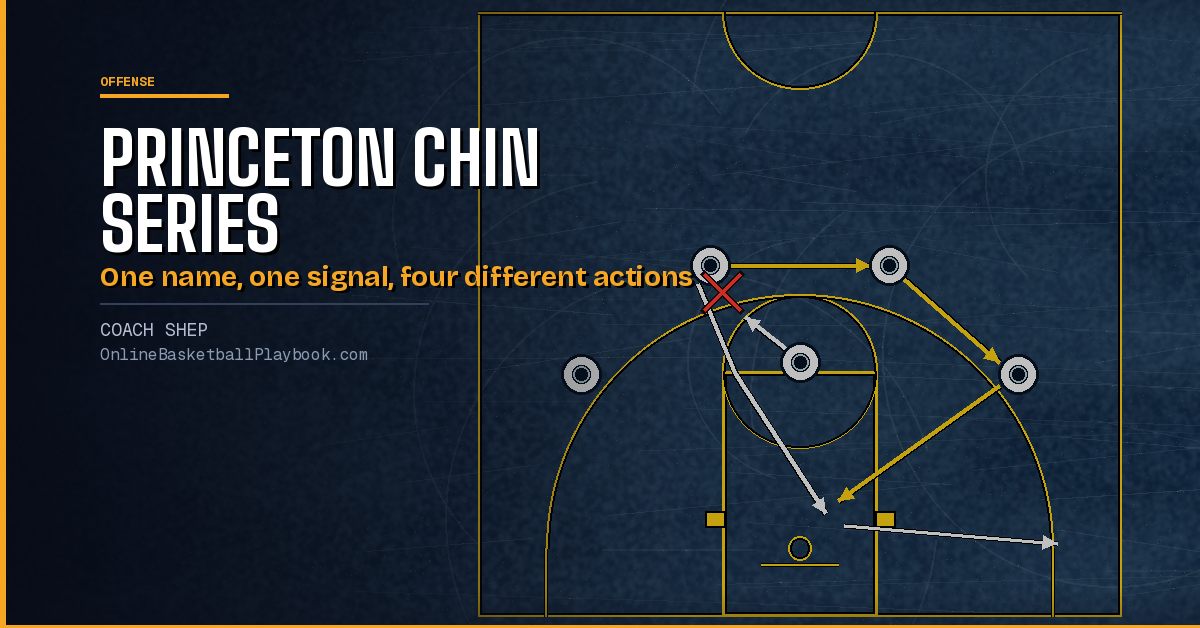
Princeton Chin Series: 4 Ways Coaches Run the Chin Offense
The Princeton Chin series compared: dribble weave and flare, shuffle cut, down screen and pop, and the two-guard read, plus branches, resets and counters.
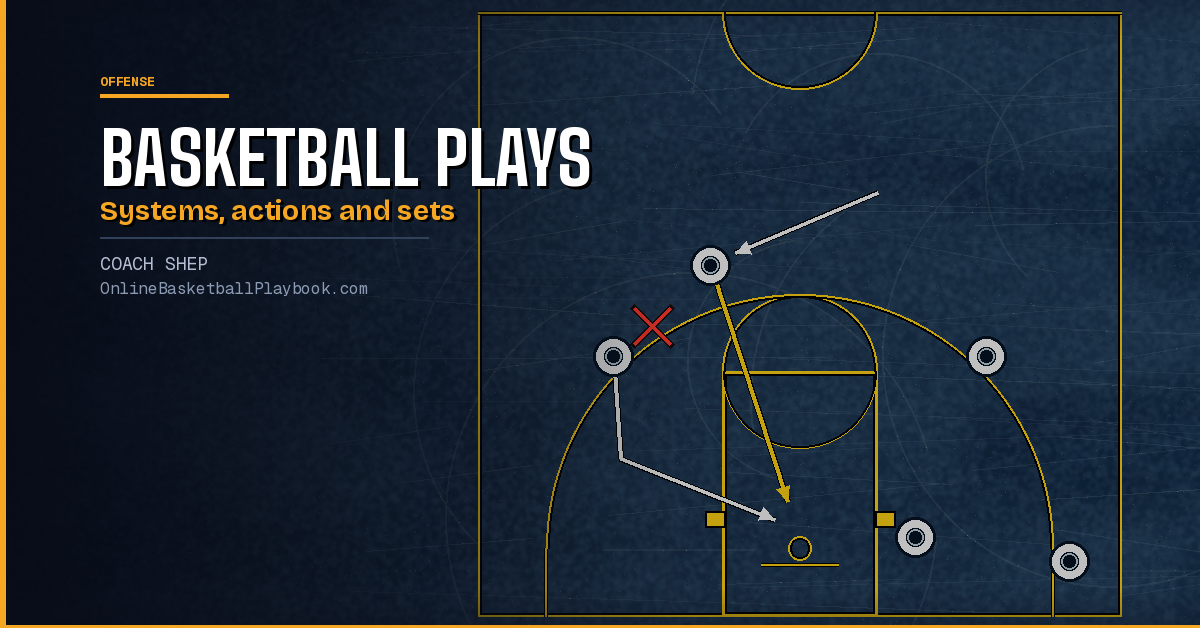
Basketball Plays: Sets, Quick Hitters and Diagrams
Basketball plays explained for coaches. Systems, actions and sets, the types of plays, when to call one, how many to carry, and three diagrammed plays.
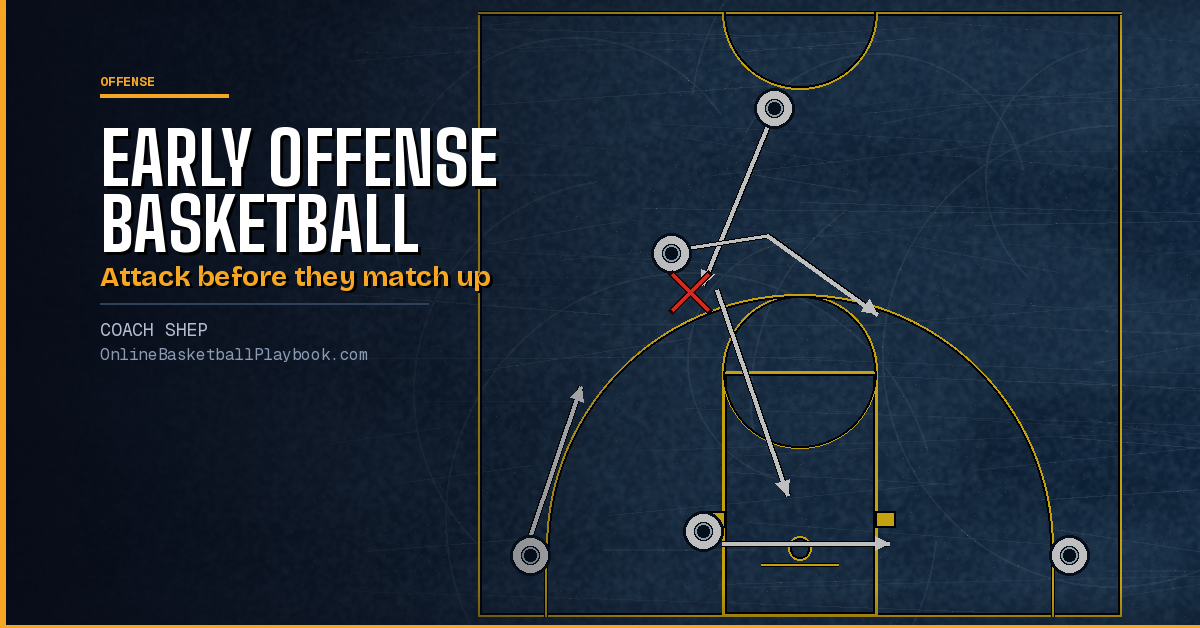
Early Offense Basketball: Pace, First Actions and Drills
Early offense basketball from the outlet to the first action: the push clock, the outlet, drag screens, pistol, flowing into your offense, shot rules and the drills.