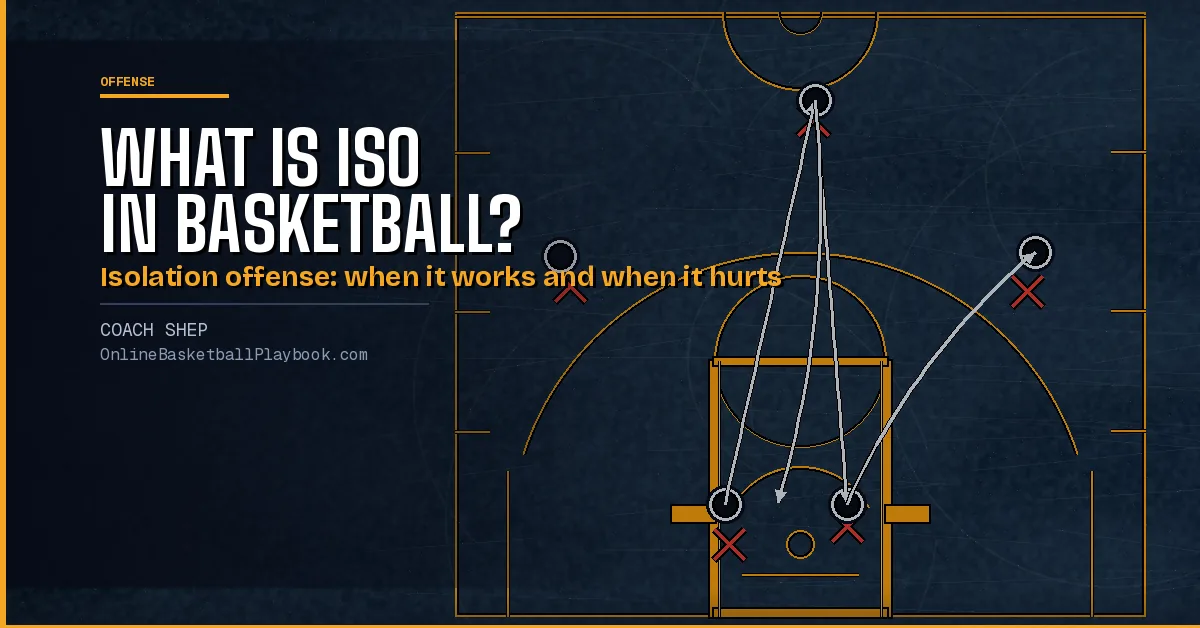
ISO in basketball is short for isolation (an offensive play where one player clears out space to go one-on-one against a single defender, with all other teammates standing aside to prevent help defense from rotating).
What ISO Means
ISO stands for isolation. The idea is simple: get one of your best offensive players the ball in space, clear everyone else out of the way, and let that player go one-on-one against a single defender. No screens, no cuts, just a straight duel.
The word isolation describes exactly what the play does to the defense. By spreading four players to the corners, the opposite wing, and the opposite slot, the offense removes every nearby teammate who might trigger a help rotation. The defender covering the ball is isolated from help. No one is close enough to double-team without leaving a wide-open shooter behind them.
ISO is not the same as a broken play or a player freelancing. A called ISO is a deliberate offensive design. The coach recognizes a mismatch or a moment and tells the team to get the ball to a specific player in a specific spot, then get out of the way.
When Coaches Call ISO
Coaches call ISO when the situation makes a one-on-one contest the highest-percentage option available. There are three situations that trigger it most often.
End of game, shot clock winding down. When the offense needs a basket with limited time to run a complex action, ISO is reliable. The play demands no timing, no pass sequences, and no cutting reads. The ball handler takes the defender off the dribble or pulls up. The team gets a shot.
Exploiting a mismatch. If a switch left a slower defender on a quick guard, or a smaller defender on a big with post skills, ISO is how the offense targets that mismatch before the defense can fix it. Every second the mismatch stays on the floor is an opportunity to call ISO and attack it.
Getting a star player in rhythm. Sometimes a team's best scorer is cold through the first half of a game. They've been a part of the offense without getting chances to create. A called ISO gives the ball to that player in a favorable spot and lets them get to work, re-establishing rhythm before the game gets critical.
When behind late: foul, speed up the pace, get the ball to the best scorer in isolation and use timeouts.
That late-game checklist captures why ISO is always part of the late-game coaching toolkit. When a team is trailing and needs quick, reliable baskets, putting the ball in your best scorer's hands in space is the move.
How ISO Works Offensively
The play starts with spacing. Four offensive players clear to the widest positions on the floor: corners, opposite wing, and opposite slot. The goal is to occupy all four help defenders far enough from the ball that none of them can rotate to double-team without abandoning an open three-point shooter.
Once the floor is spread, the ball handler receives the ball at the top of the key, on the wing, or at the elbow (wherever the play is designed to initiate). From there, it is entirely in their hands.
There are two primary ways to finish an ISO:
- Drive to the basket. The ball handler attacks the defender off the dribble, going middle or baseline depending on how the defender is positioned. The goal is to get past the defender's lead foot before they can recover. A clean drive gets a layup or draws a foul.
- Mid-range pull-up. The ball handler uses a jab step or hesitation move to create a step of separation, then pulls up for a jump shot before the defender can close out. Elite ISO scorers are dangerous at this because they can score with or without getting past the defender.
ISO fails when teammates crowd the ball. If the four "spread" players drift toward the paint, they collapse the driving lane and invite the defense to load up. Great ISO teams treat spacing as a discipline. The four players away from the ball stay wide and stay still, making it impossible for the defense to help without giving up an open look.
The best ISO initiations happen when the ball handler receives the ball already moving at the defender, not standing still. Catch-and-go attacks are much harder to defend than catch-and-think attacks, because the defender has to react to movement immediately rather than getting time to set their feet.
How Defenses Guard ISO
The core principle of defending ISO is simple: do not let the ball handler get comfortable. Once a skilled ISO scorer is settled, stationary, and reading the defense with the ball in their hands, the defender is in trouble. The job of the on-ball defender is to deny that moment of comfort from happening at all.
Early pressure at the catch. The on-ball defender should be in the ball handler's space the instant the catch is made, or even before it, forcing a difficult catch rather than an easy one. Any moment the offense uses to gather, read, and settle is a moment the defense has given up.
Take away the dominant hand. Most ISO scorers have a preferred direction. The defender should position their lead foot to force the ball handler to their off-hand before any move begins. Forcing a right-handed scorer left, or a left-handed scorer right, makes every dribble move harder and every finishing attempt more contested.
No space to gather. ISO scorers use hesitation moves, jab steps, and ball fakes to create a step of separation before shooting. If the defender stays tight throughout (closing every hesitation rather than biting on fakes), the ball handler has to work harder for the same shot they would normally get in rhythm.
No reaching. Reaching fouls on ISO defenders are the best outcome for the offense, an easy trip to the free throw line. The on-ball defender has to stay in front with their feet, not their hands.
Team defense matters too. The four help defenders should be in a position where they can help if the ISO scorer beats their defender off the dribble, but close enough to their own assignments to contest any kick-out pass to an open shooter. It is a narrow window (stay home enough to contest, help enough to stop the drive), and it is one reason elite ISO scorers are so hard to stop even when the scheme is correct.
When ISO Is Overused
ISO is a tool, not a system. Teams that run isolation as their primary offensive approach over the course of a game pay a long-term price for short-term convenience.
Ball movement disappears. An offense built on ISO is an offense where four players are spectators on every possession. That kills offensive rhythm, takes non-ISO players out of the flow, and makes the team easier to scout. The defense knows where the ball is going and can load up accordingly.
The star player wears down. ISO requires the ball handler to create under pressure on every possession. Over 32 or 40 minutes, that workload compounds. Late-game ISO (the kind coaches call when it matters most) is less effective if the star player has been running ISOs for three quarters already and their legs are gone.
The defense adjusts. When a team runs ISO repeatedly through the same player, the defense can plan for it specifically. They front the catch, deny the entry pass, double-team early, or send a big to help before the ball handler even starts their move. The more predictable the ISO, the more prepared the defense.
It stifles team chemistry. Players who are regularly parked in corners while one teammate dominates the ball develop bad habits: standing instead of moving, losing their offensive timing, disengaging mentally. Teams that win consistently need all five players threatening the defense on every possession.
The coaches who use ISO most effectively use it surgically, a few times per game, in specific situations, against specific mismatches. They do not live in it.
NBA Examples of ISO Masters
Some of the most celebrated offensive players in NBA history built their reputations in large part on ISO effectiveness. Understanding what made them special in isolation helps coaches recognize what actually wins in one-on-one situations.
Michael Jordan was the standard by which every ISO scorer is measured. His ability to score from mid-range, pulling up off the dribble in either direction, with either hand, made him impossible to guard in isolation because defenders could not simply take away one option. He created space with footwork, not just athleticism.
Kobe Bryant studied Jordan's ISO game directly and built one of the most complete individual scoring arsenals in NBA history. His post-up ISO and mid-range pull-up were relentless, the result of deliberate technical development rather than relying on an advantage in speed or size.
Kyrie Irving represents the modern ISO scorer, smaller than traditional one-on-one players but nearly impossible to stay in front of because of his ball-handling craft. His ISO scoring is built on creating space with the dribble rather than clearing to a spot, which reflects how the role has evolved with pace-and-space offenses.
What connects all three is decision-making under pressure, the ability to read how a defender is positioned and exploit the specific gap they leave, rather than running the same move regardless of the coverage. ISO at the highest level is not improvisation. It is pattern recognition executed with precision.
- ISO = isolation. One player, one defender, teammates spread wide and stationary to remove all help-defense rotations.
- Call it for mismatches, late-game situations, and getting a scorer in rhythm: not as a default for every halfcourt possession.
- Spacing is the play. Four players in the corners and opposite slots make it impossible for the defense to help without giving up open threes.
- Defend it with early pressure at the catch: no space to gather, no hesitation room, stay in front with feet not hands.
- Overused ISO kills ball movement, tires your best player, and lets the defense script their game plan around one guy.
Get free play diagrams, drills, and coaching guides delivered weekly.
Draw this play free in the play drawer →
Membership: the full library, playbook packs, and Pro drawing tools →
Keep Building
Related breakdowns
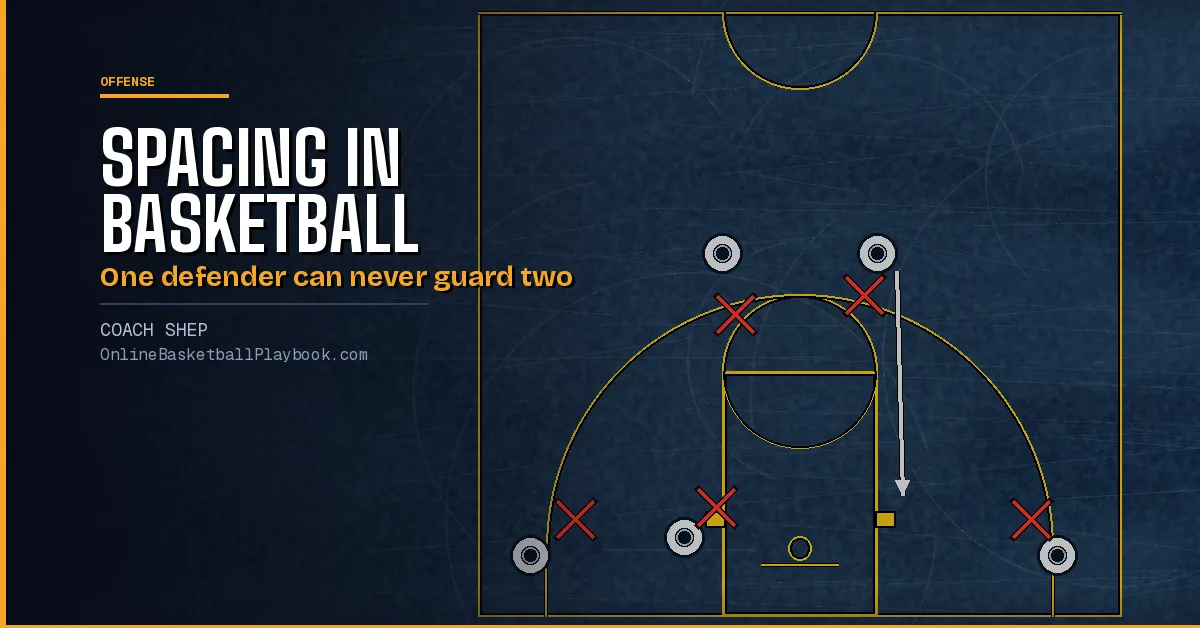
What Is Spacing in Basketball? Distances, Gaps and Alignments
Spacing in basketball explained: the distances coaches teach, single, double and triple gaps, spacing in 5 out, 4 out 1 in and 3 out 2 in, and the common errors.
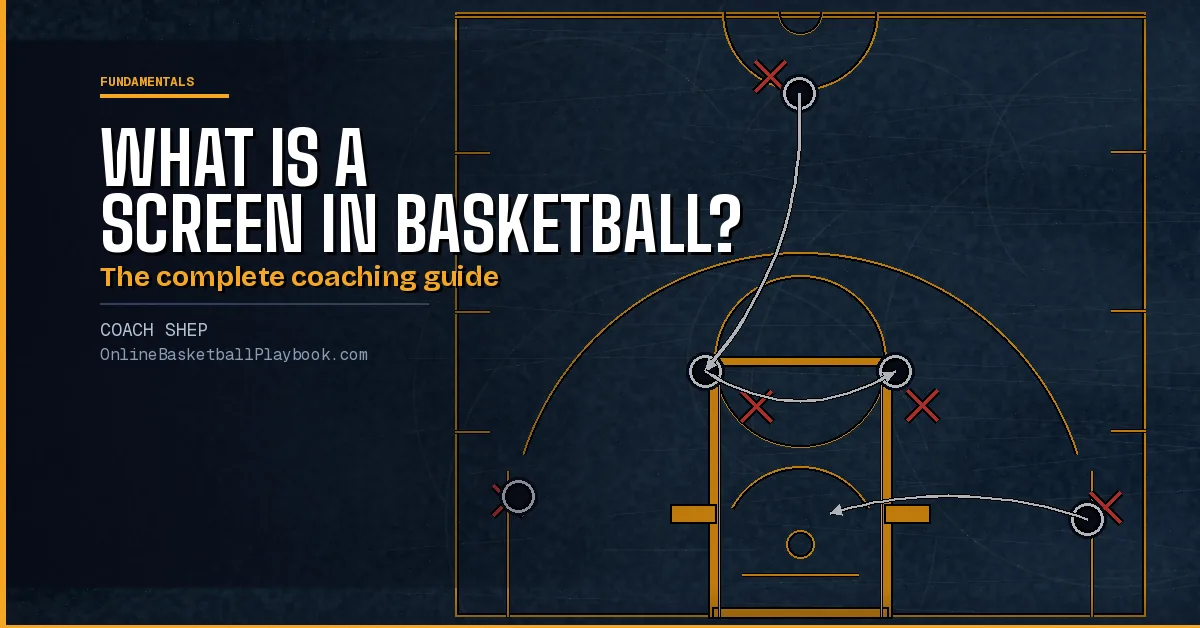
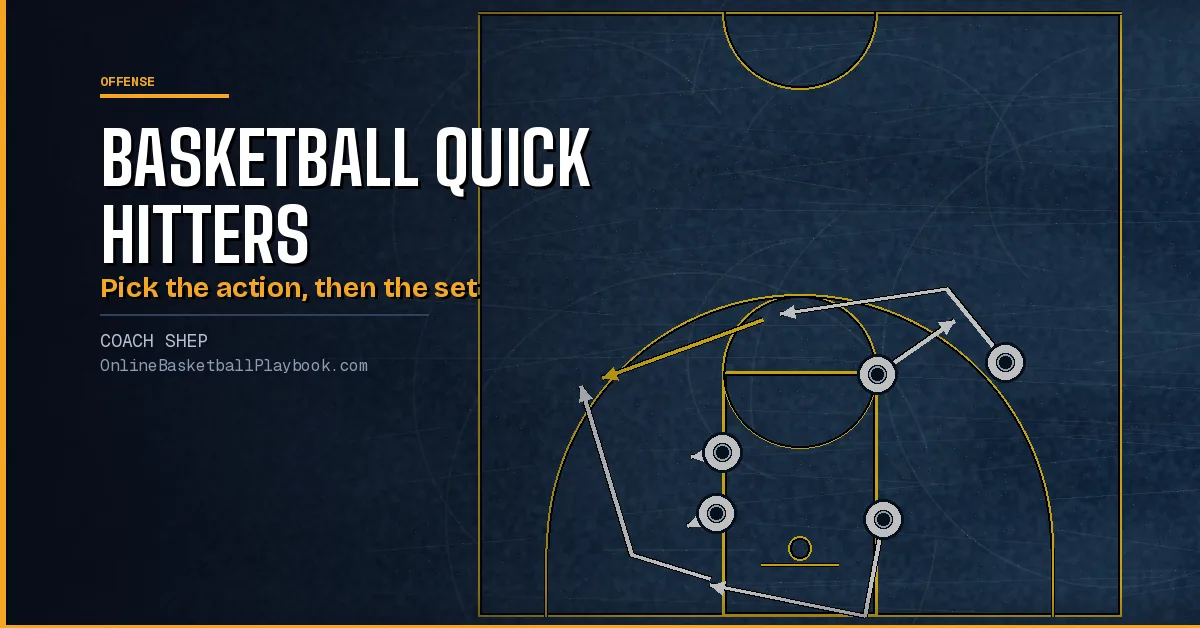
Basketball Quick Hitters: 25 Sets by Action and Formation
Basketball quick hitters sorted by the action you want, catch-and-shoot to post feed, with each set's formation, diagrams, the read and the counter.