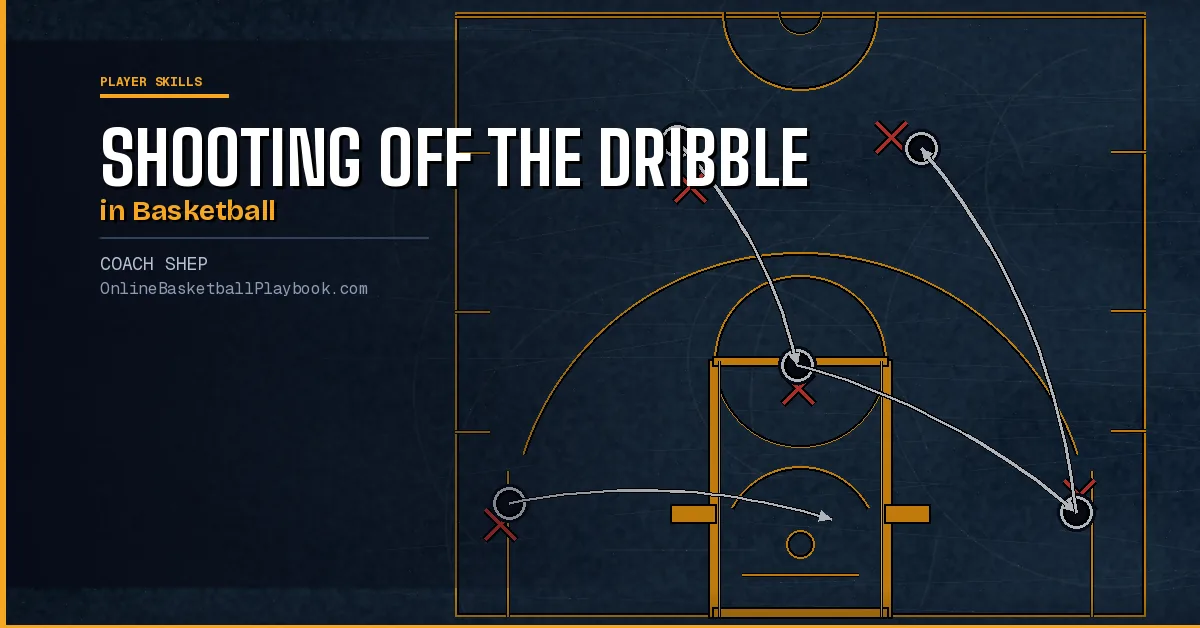
Shooting off the dribble is one of the most valuable and undercoached skills in basketball. Players who master the pull-up jumper force defenses to respect every drive, opening up the entire offense.
Why the Pull-Up Jumper Matters
Defenses at every level are built to take away the drive or the catch-and-shoot. The pull-up jumper (a shot taken off one or two dribbles in the mid-range area) lives right in between those two threats. When a player can consistently make that shot, the defense cannot fully commit to either extreme. They have to respect all three options, which is exactly when offenses become genuinely difficult to guard.
Despite how valuable it is, the pull-up is often called a "lost art." Most player development programs swing hard toward the three-point line or the paint, skipping the free-throw extended and elbow zones entirely. That is a mistake. A player who can stop on a dime at fifteen feet and shoot a reliable jumper is a matchup problem for any defense (at the youth level, the high school level, and beyond).
Think about how many offensive sets create this look. Motion offense in basketball generates pull-ups constantly through DHO actions, pin-downs, and dribble penetration that draws help. The 5-out motion offense in particular relies on perimeter players who can shoot off the bounce. Without that skill, the spacing collapses. Once you understand how often this shot comes up in a real game, it becomes obvious why training it specifically and seriously is worth your practice time.
The pull-up also develops the dribbler's full threat package. When a guard can stop and shoot at any moment, every hesitation move becomes more dangerous, every change of direction gets a longer look from the defender, and every drive to the rim opens up because the defense can never fully commit to stopping the ball.
Footwork Fundamentals
The shot starts with the feet. Poor footwork forces shooters to compensate with their upper body, which destroys consistency. Good footwork puts the body in a mechanically sound position before the hands even matter.
The One-Two Stop
The most common footwork for a pull-up jumper is the one-two stop, also called a stride stop. The player gathers on the second-to-last dribble, takes a longer first step (the gather step), then plants the second foot to halt momentum. This sequence allows the body to load naturally into the shot (hips sit back slightly, knees bend, and weight centers over both feet without leaning forward or fading back).
A common mistake is gathering too late, on the last dribble. That forces the player to rush the footwork and often results in a traveling call or a shot taken while still moving forward. Gather one dribble early. That single adjustment cleans up footwork errors for most players almost immediately.
The Hop Stop
The hop stop (where both feet land simultaneously) is a legal and effective alternative, particularly for players driving at full speed. It stops momentum cleanly and gives the shooter a square stance instantly. The downside is it requires good body control and a strong lower body to absorb the stop without losing balance. For younger players, the one-two stop is usually easier to learn first.
Pivot Options and Live Dribble Reads
After a one-two stop, the back foot is the pivot foot. This gives the player the option to shot-fake and drive if the defender flies at the ball. Teaching players to recognize when the defender is closing out hard and using a shot fake followed by a one-dribble attack turns the pull-up footwork into a two-move package that creates layups as well as jumpers. Good basketball footwork drills will build these reads automatically over time.
Shooting Mechanics Off the Dribble
The mechanics of a pull-up jumper are identical to a catch-and-shoot jumper in one important sense: the moment the ball reaches shooting position, the motion should look the same. Everything before that moment (the gather, the footwork, the body load) is about getting to that identical position efficiently.
The Gather and Bring-Up
As the player makes the final dribble, the shooting hand gets under the ball (the "pizza waiter" position) and the off hand comes to the side for balance. The ball should come up close to the body along the centerline (not looped out wide) so the motion stays compact and quick. A ball that travels far from the body during the bring-up adds time that a closing defender can use to contest.
Elbow Alignment and Follow-Through
Once the ball is at shooting height, the elbow aligns under the ball and over the knee. This stacked alignment (hand under ball, elbow under hand, knee under elbow) is the mechanical chain that produces a consistent shot. If the elbow flares out, the ball comes off at an angle. If the knee is not under the elbow at the point of release, the player is pushing rather than shooting. Review the full breakdown in our guide on basketball shooting form: The same principles that apply to the catch-and-shoot apply here.
The follow-through stays high, fingers pointing down ("cookie jar"), held until the ball hits the rim. Players who drop their follow-through early often miss short. Hold it. That habit alone fixes a significant percentage of short misses for players at every level.
The Shot Fake
One of the most powerful tools attached to the pull-up jumper is the shot fake. A convincing shot fake (ball coming up to forehead height, knees bent, eyes on the rim) will get most defenders off their feet. The player then gathers and attacks in one motion. Teaching this counter alongside the base pull-up is essential. The shot and the fake work together; a great shooter is also a dangerous shot-faker because defenders know the shot is real.
Drills to Build the Skill
Building a reliable pull-up requires deliberate repetition. The goal is not just volume. It is purposeful repetition where each rep is tracked, scored, or competed so the brain registers the skill with stakes attached.
Elbow Pull-Up Series
Start at the elbow (the corner of the lane and the free-throw line). Take one hard dribble toward the baseline, one-two stop, shoot. Make ten, move to the opposite elbow, repeat. Add a second dribble, then a change of direction before the stop. This drill builds the feel for gathering off a live dribble without adding the complexity of full-speed drives.
Wing Attack Pull-Ups
From the wing, drive two hard dribbles toward the lane, gather on the second dribble, one-two stop on the wing, shoot. Alternate sides. This simulates the most common pull-up opportunity in a real game (the guard who attacks off a ball screen or a DHO and pulls up before the help arrives). Set a make goal: ten makes from each wing before you move on.
Numbered Pull-Up Drill
Mark three spots with cones: elbow left, top of key, elbow right. A coach or partner calls a number (1, 2, or 3) and the player drives hard toward that spot, stops, and shoots. The unpredictability of the call forces the player to read and react rather than anticipate, which is closer to a game environment. Run it for 60 seconds and count makes.
Competitive Shooting Games
Every shooting drill is more effective when it has a winner. Use a make-race format: two players start at the same spot, race to ten pull-up makes, first one there wins. Or use a 60-second clock and beat your personal best. The competitive format (even against your own previous record) trains the mental side of shooting alongside the mechanical side. Shooting under mild pressure in practice produces better results under real game pressure.
Shot Fake to Pull-Up
Same footwork as the base pull-up, but add a shot fake before the shot. The player drives, stops, pump fakes (holds the fake until the defender reacts), then shoots on the way back up. If no defender is present, train the habit of holding the fake for a full count before going up. This builds patience, which is one of the hardest things to teach in player development.
Training It Competitively
The drill is only half the equation. The other half is the mindset and measurement system around it. Players who shoot aimlessly for an hour are far behind players who shoot competitively for thirty minutes. A shooting workout should have a scoreboard.
Track makes, not attempts. Put a record board in your gym or your notebook. Assign personal records to specific drills. "Ten pull-up makes from the left elbow in 60 seconds" becomes a mark to chase and eventually break. When a player signs their name to a record, they own it. That psychological investment changes how they practice.
Mix in game-context repetitions. Add a ball screen, a DHO, or a closeout to trigger the pull-up. The shot does not come up in a vacuum in real games. It comes off a specific action. Training those triggers builds automatic responses. When the defense gives up a pull-up in a game, the player's feet and hands already know what to do because they have done it hundreds of times in practice.
Build this into your basketball practice plan as a regular block rather than an afterthought. Ten focused minutes on pull-up shooting three times a week produces far better results than an occasional long session with no tracking. Consistency and measurement compound. The player who records their numbers each session builds a feedback loop that accelerates development automatically.
Coaching Tips by Age Level
The pull-up looks different depending on who you are coaching. The fundamentals are the same, but the teaching points and the expectations should match the developmental stage of the player.
Youth (Ages 8–12)
At this level, the priority is form before anything else. A young player trying to add a pull-up without sound shooting mechanics will ingrain a broken shot. Use form shooting to the wall, one-handed form shots close to the basket, and then very short pull-ups (one hard dribble, stop, shoot) from no more than eight to ten feet. Master the gather and the footwork at a slow pace before adding distance or speed. Patience here pays dividends for years.
For coaches working on overall player development, understanding how to build fundamental skills systematically matters as much as knowing the drills. Our guide on how to coach youth basketball covers the sequencing principles that apply across all skill areas at this age.
Middle School and JV (Ages 12–16)
At this stage, players can handle more complexity. Add the shot fake counter, introduce the hop stop alternative to the one-two stop, and start incorporating pull-ups off DHOs and ball screens in practice. Begin tracking numbers. Personal records become motivating at this age. Players want to compete, and a record board gives them something concrete to chase.
Also introduce the concept of shot selection. Not every pull-up is the right play. A contested pull-up late in the shot clock is different from a clean pull-up off an early ball screen. Build the habit of taking the shot when it is open and passing when it is not. This connects the individual skill to basketball IQ development: Knowing when to use the tool is as important as having it.
High School Varsity and Above
Varsity players should be training pull-ups at game speed, off game actions, with defensive pressure where possible. Add a defender who closes out. The player must read the closeout and decide: shoot, shot fake and attack, or skip pass. Run competitive shooting drills with stakes (the loser runs, the winner picks next drill). The technical work is largely done at this point. The focus is on making the shot automatic under pressure and developing the decision-making layer around it.
For program-level player development, consider how pull-up shooting fits within your broader player skill curriculum. A guard who can attack off ball screens and pull up is far more valuable to a motion offense than one who can only catch and shoot. Build the skill intentionally as part of a basketball player development system rather than leaving it to chance.
Most missed pull-ups are short. The cause is almost always a late gather. The player brings the ball up while still moving forward, which pushes the shot rather than lifting it. Fix the gather timing before adjusting anything else: gather one dribble earlier than feels natural, let the footwork stop your momentum, then shoot straight up. Short misses drop significantly within one practice session when the gather is corrected.
- Gather one dribble early: Late gathers cause forward lean and short misses. Fix this before anything else.
- One-two stop before hop stop: Teach the stride stop first. It is easier to control for developing players.
- Hold the follow-through: Fingers down, held high until the ball hits the rim. Dropping early causes short misses.
- Shot fake must be convincing: Ball to forehead, knees bent, eyes on rim. A weak fake fools nobody.
- Track makes, not attempts: Record personal bests by drill and spot. Measurement turns practice into a competition.
- Train off game actions: Pull-ups off DHOs, ball screens, and drive-and-stop are more transferable than stationary reps.
- Build the decision layer: Teach when to take the pull-up, not just how. A contested pull-up is a bad shot regardless of mechanics.
Get free play diagrams, drills, and coaching guides delivered weekly.
Draw this play free in the play drawer →
Membership: the full library, playbook packs, and Pro drawing tools →
Keep Building
Related breakdowns
Basketball Shooting Form: Step-by-Step Mechanics
Basketball shooting form step by step, from the ready stance and grip to release and follow-through, with drill progressions and where coaches disagree.
Free Throw Shooting: Routine, Form and Drills
Free throw shooting starts with a routine the player never changes. Form cues, the mental side and drills that copy the fatigue and pressure of a game.
Competitive Shooting Drills: Scored Games and Records
Competitive shooting drills with a score on every shot: streak games, timed targets, Beat the Pro, plus and minus, 2-on-1 shooting and record boards.