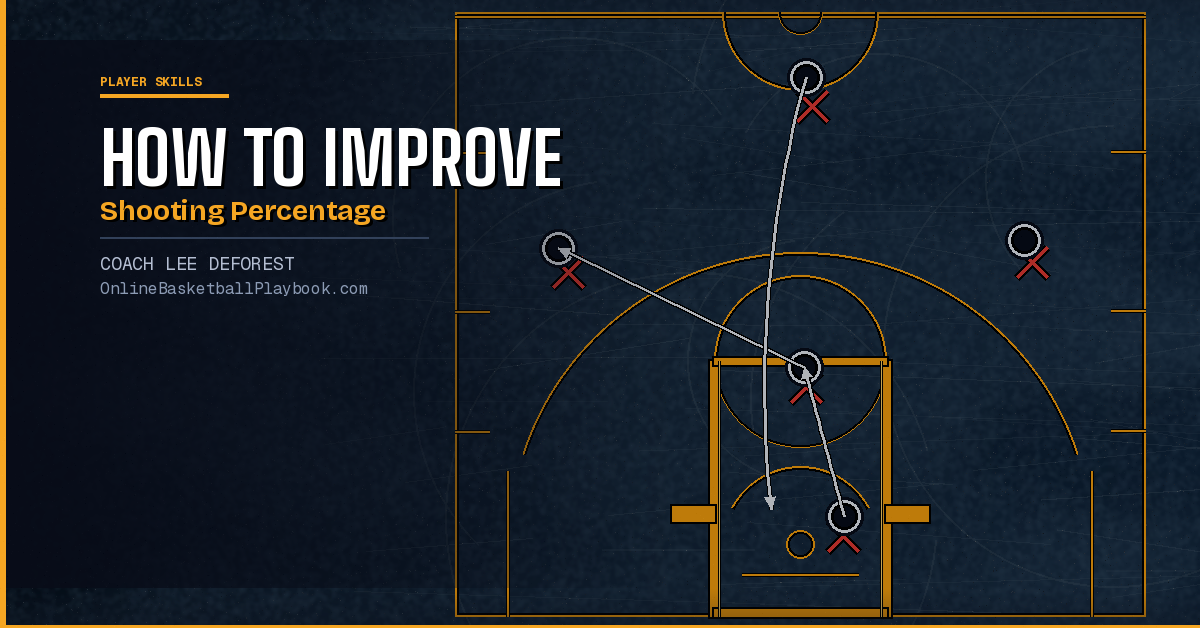

Shooting percentage improves when players stop shooting aimlessly and start treating every rep like a scored competition. Build the mechanics first, then add volume, speed, and accountability to your workouts.
Build Form Before Adding Volume
The most common mistake players make is chasing volume before their mechanics are sound. A thousand bad reps only deepens bad habits. The foundation of a higher shooting percentage starts with building the shot from the ground up — literally, without the ball in your hands.
Start with a balanced, athletic stance: feet shoulder-width apart, shooting-side foot slightly staggered, knees bent with weight on the balls of your feet. The ball sits on your shooting hand like a "pizza waiter" carry — flat palm under the ball, elbow directly beneath it and aligned over your knee. Your guide hand sits to the side, not underneath. The entire kinetic chain — legs, core, shoulder, elbow, wrist — should fire in sequence, not simultaneously.
Practice the motion without a ball first. Mime the full release, finishing with your arm extended high, fingers pointed down toward the rim ("cookie jar" finish). This trains the muscle pattern before weight and distance complicate things. From there, progress to a wall — stand close, one-handed, and push the ball with proper form against the wall. Then move to the rim from two feet. Only after that does distance and a full jump shot come into the equation.
Elite shooting trainers open every workout with "Quarters" — one-handed form shots close to the rim at a fraction of full speed. No matter how advanced the player, form shots precede everything else. The goal is to engrain the correct pattern so deeply that it holds under fatigue, pressure, and game-speed chaos. If your basketball shooting form breaks down late in games, your foundation isn't solid enough yet.
The elbow position matters more than most players realize. A flying elbow (splayed out to the side) creates a looping, inconsistent arc. An elbow tucked directly under the ball and tracking straight toward the rim produces the most repeatable shot. Check this in front of a mirror or ask a coach to film your release from behind — most players don't know what their elbow is doing until they see it on video.
Make Every Rep Competitive
Aimless shooting — just pulling up and launching without any stakes — is one of the lowest-value uses of practice time. The body doesn't adapt to volume alone; it adapts to volume under pressure. If there's no consequence to missing, you're training a different skill than the one you need in games.
Every shooting workout should have a winner. The structure can be simple: beat a time, beat a partner, or beat your own personal record. A drill like "Streak" asks the player to make a certain number of consecutive shots from a spot before moving on. The competitive element — the streak ending on a miss — immediately changes how the player approaches each shot.
Partner competition raises the stakes further. In "Beat the Pro" format, your miss is worth two points for your opponent. Now there's asymmetric pressure on every shot — just like a real game where missed shots cost more than made shots gain. When a player's body learns to perform under that pressure in practice, it handles game pressure with more composure.
Timer-based drills add a different kind of stress: urgency. A player who can make 20 shots in 60 seconds from the elbow is training both form and pace. The timer teaches you to get your feet set quickly, catch in triple threat, and release without wasted motion. These aren't just shooting drills — they're conditioning for the full skill set of player development.
The key principle is simple: if the drill doesn't tell you whether you won or lost, it's missing something. Add a score. Add a clock. Add an opponent. The quality of competitive reps — not just the quantity of shots attempted — is what moves a player's percentage.
"Make every rep competitive — against the clock, an opponent, or yourself."
— Basketball Vault
Create a Shooting Culture With Records
The difference between a program where players improve as shooters and one where they plateau often comes down to culture, not just drills. When shooting becomes a team pursuit — with names on a board, records to chase, and public accountability — players invest in it differently.
Post a record board in your gym. Name your drills and track the all-time marks beside them. "Around the Horn — Record: 14 made in 60 seconds — Jones." When a player breaks that record, they sign it. Suddenly shooting practice carries weight. Players arrive early not because a coach told them to, but because they want their name on the board.
Programs that do this well run specific named drills consistently. "Star Shooting" has players shooting from five spots around the arc, tracking total makes in a fixed time. "30-30" asks for 30 makes in 30 seconds from the elbow. "Burner" is a timed full-floor workout where the clock never stops. Each drill has a clear score, a team record, and a personal-best target. Players know where they stand.
This approach also creates accountability without a coach having to enforce anything. If the record board shows a player hasn't improved their mark in three months, the player sees it. Peers see it. The social pressure to improve is more powerful than any coach's demand — and it's self-sustaining once established. Pair this with a strong culture of accountability and the shooting culture takes on a life of its own.
Building records also identifies who your shooters really are. In a competitive drill setting, the players who perform under pressure become visible quickly. That information matters for play-design, late-game shot selection, and player development priorities going forward.
Train Game Shots at Game Speed
Stationary block shooting — standing still at a spot and launching until you make a target number — has its place early in a workout. But it is not sufficient on its own. Games don't give you a stationary catch with no defender and all the time you want. Every shooting drill eventually needs to account for movement, catch-and-shoot timing, and realistic spots.
Movement shooting requires the player to relocate before the catch. This means sprinting off a screen, curling around a cone, or coming off a pin-down action before receiving a pass and shooting immediately. The footwork before the catch matters as much as the release itself — players who can't gather quickly or who reach with their arms instead of their feet will be a half-step late and their shot will leak left or right.
Game-spot shooting means shooting from where you actually get shots in your offense. If your 5-out motion offense produces most of your catch-and-shoot looks from the corners and the short corners, your individual training should emphasize those spots. If you're a wing playing in a system that generates pull-up opportunities off the DHO, your workout should include DHO entries, not just spot catches.
Adding a contest — even a passive one, like a coach holding a hand up — changes the shot. Some players shoot a clean catch at 55% and a contested catch at 38%. That gap is the skill you need to close. Training with a passive defender, then an active one, builds the ability to shoot through contact and over length without altering mechanics.
One common practice drill: "can't shoot the same spot twice." The player must relocate to a new spot after each made basket. This forces continuous footwork, weight transfer, and balance — all of which mirror what actually happens in a game sequence. It also prevents players from unconsciously cheating to their favorite spot and inflating their "percentage" in practice.
Every shooting drill should specify the spot, the movement required before the catch, the release target, and how the drill is scored — without those four elements, you're not training a skill, you're just taking shots and hoping something sticks.
Develop the Pull-Up and Mid-Range Game
The pull-up jumper and the hesitation mid-range shot have become undervalued at almost every level. Perimeter players work obsessively on three-point catch-and-shoot mechanics, but neglect the one- and two-dribble pull-up that creates the same open looks from a different angle — and often from a higher-efficiency spot on the floor.
A player who can take one dribble off a ball screen and pull up from the free-throw line extended is creating a high-quality shot in a high-traffic area of the floor. Defenses are trained to hedge, switch, or go under ball screens — all of which create a pull-up opportunity if the ball-handler recognizes it. Without the pull-up in their arsenal, players are forced into decisions they haven't trained: drive all the way, skip to a corner, or reset.
Building the pull-up starts with footwork. The one-two stop — also called a stride stop — lets the player gather on two feet and rise without traveling. Practice it with no ball first, then with a pound-dribble, then as a live rep off a penetration. The footwork and basketball footwork drills that support driving also support the pull-up — they are the same foundations.
The hesitation is a separate but related skill. The player attacks downhill, hesitates to read the defender, and either continues or pulls up. This requires the player to be "catch ready to attack" — already in a position where driving is a threat, not a fake. The hesitation only works when the defender is genuinely uncertain about what you'll do.
Incorporate mid-range pull-up reps into every serious shooting workout. Elbow pull-ups, high-post drop-steps into a face-up jumper, and off-the-dribble shots from the short corners are all worth tracking and competing in. A player who makes 40% from the elbow on the pull-up is more valuable to an offense than a player who only shoots catch-and-shoot threes — and far harder to defend.
Integrate Shooting Into Your Practice Plan
Individual shooting skill only transfers to games when it gets reinforced inside team practice. Too many coaches treat shooting development as something that happens before or after practice, entirely separate from the team session. The players who improve fastest are the ones whose coaches embed shooting reps into the flow of team drills.
Transition drills can end with a shot. Shell drills can include a kick-out and catch-and-shoot. Any offensive set run in a structured basketball practice plan creates shooting reps if the coach allows full possession finishes instead of stopping before the shot. The key is intentionality — knowing which players need reps from which spots and designing practice so they get them in realistic contexts.
Pre-practice shooting is only valuable if it's structured. Give players a specific drill with a specific target, not an open gym free-for-all. Ten minutes of structured, competitive shooting before practice is more valuable than 30 minutes of casual warmup shooting with no tracking. Set the standard: show up with a plan, record your numbers, and compete against your previous mark.
Post-practice shooting serves a different purpose: conditioning under fatigue. A player who can shoot after running is building the mental discipline to maintain mechanics when their legs are gone. End a conditioning block with a shooting drill, scored and timed. The combination of physical fatigue and competitive stakes is the closest thing practice offers to late-game shooting pressure.
Shooting improvement also depends on how you run your overall practice. If practice energy is low or sessions run long without structure, players disengage — and their shooting reps become low-quality by default. High-tempo, well-organized practice creates the environment where shooting development can actually compound over a season.
- Start every shooting workout with one-handed form shots close to the rim — before you add distance or a jump.
- Track at least one metric per session: makes in 60 seconds, longest streak, or personal best on a named drill.
- Relocate before every rep in at least half your drills — footwork before the catch is part of the skill.
- Add a pull-up block to every individual workout: elbow pull-ups, high-post face-ups, and one-dribble attacks from the wing.
- Post a team record board for your top three drills — the social accountability it creates outlasts any coach reminder.
- End at least one practice per week with a scored shooting drill run under fatigue — make it competitive, make it count.
Get free play diagrams, drills, and coaching guides delivered weekly.
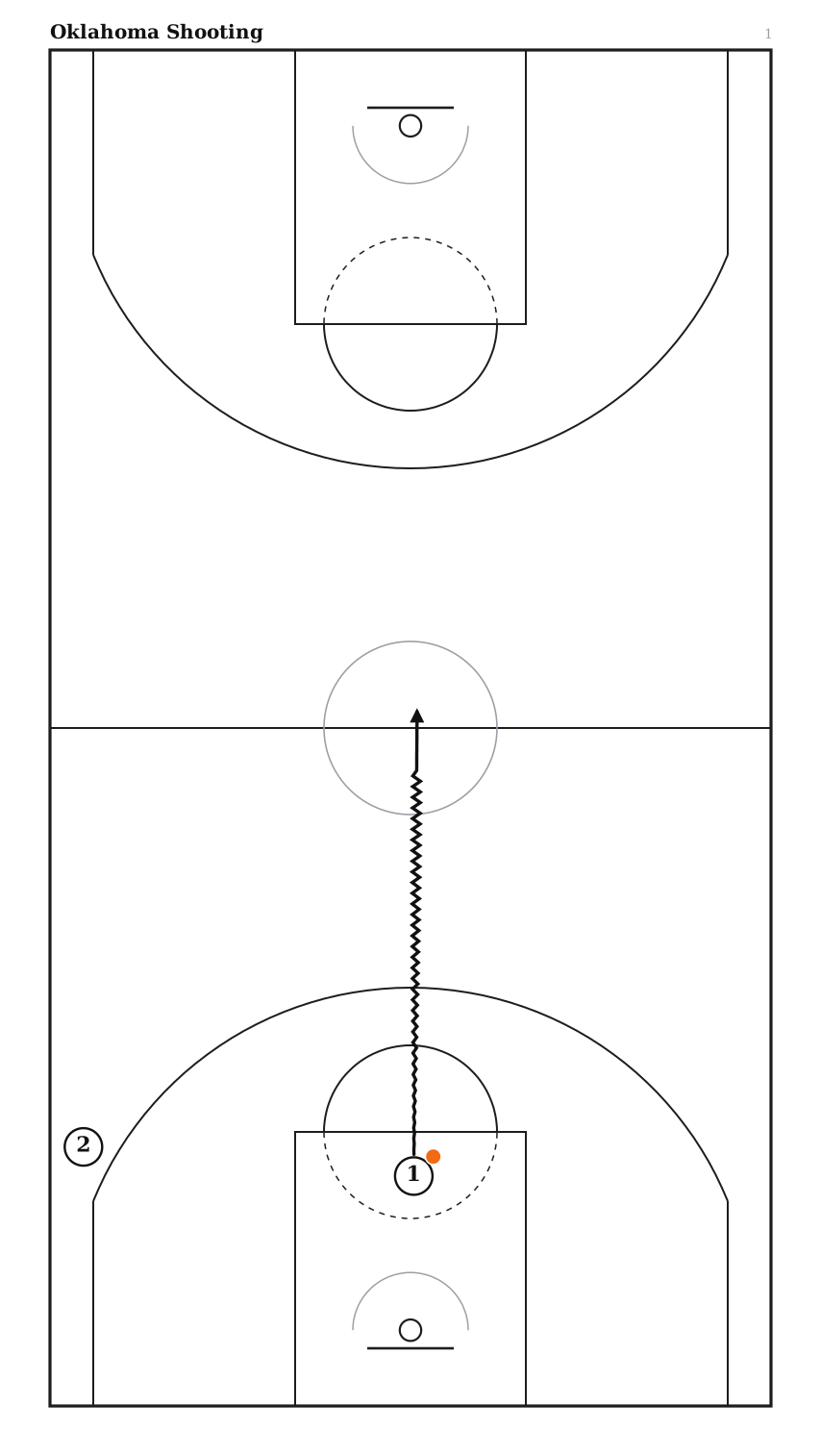
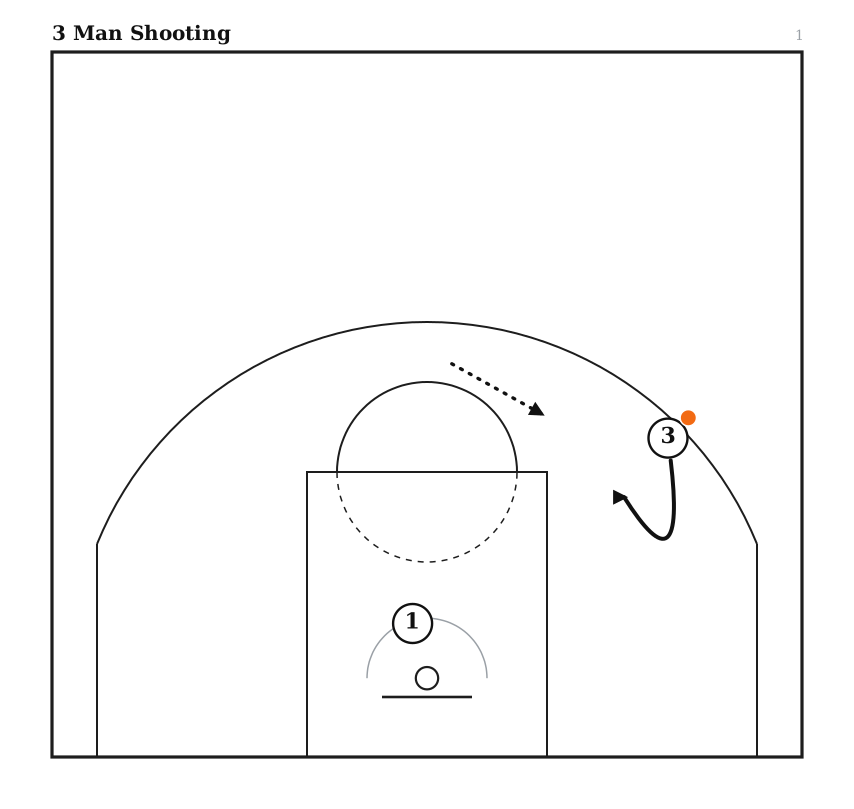
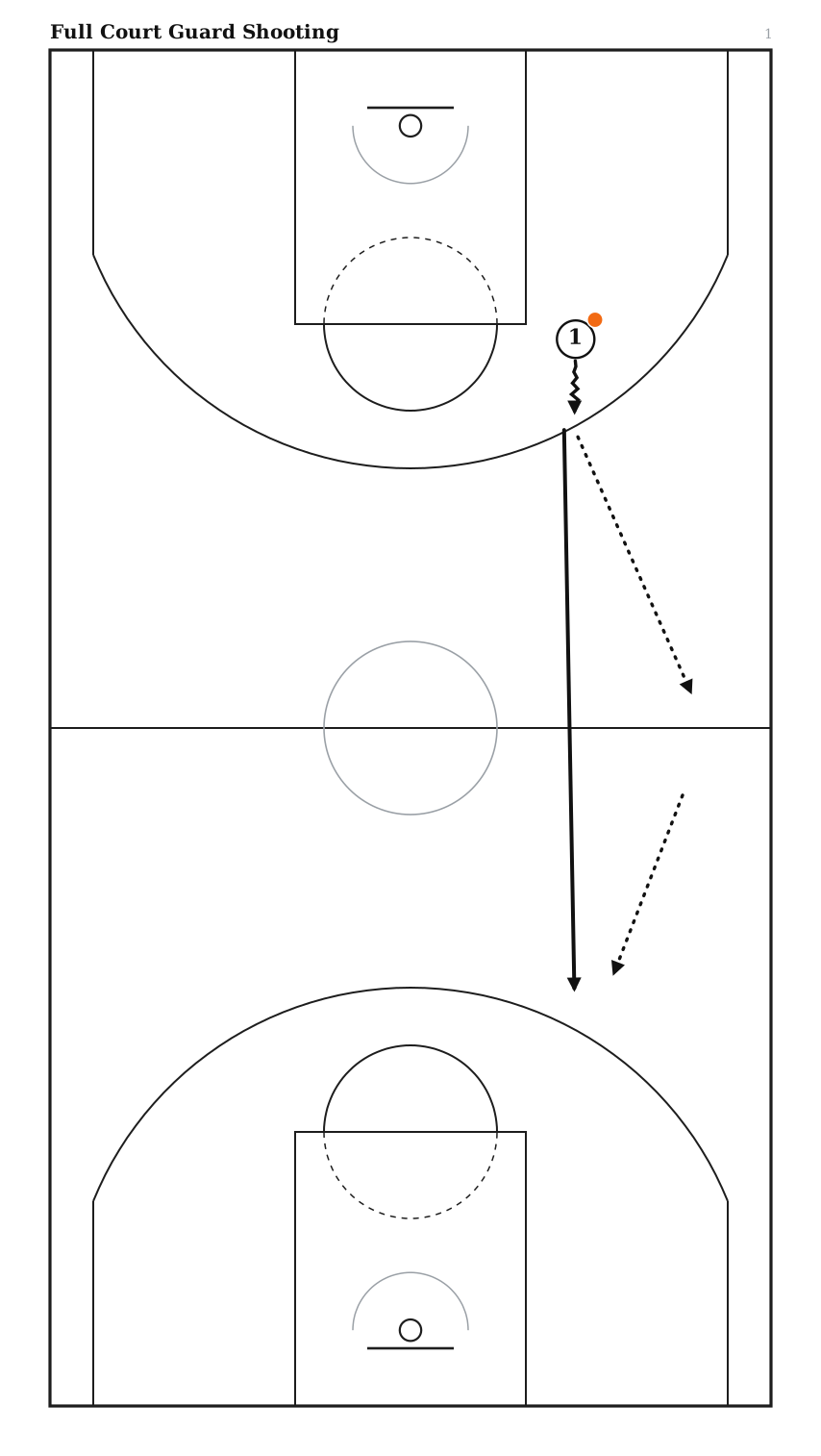
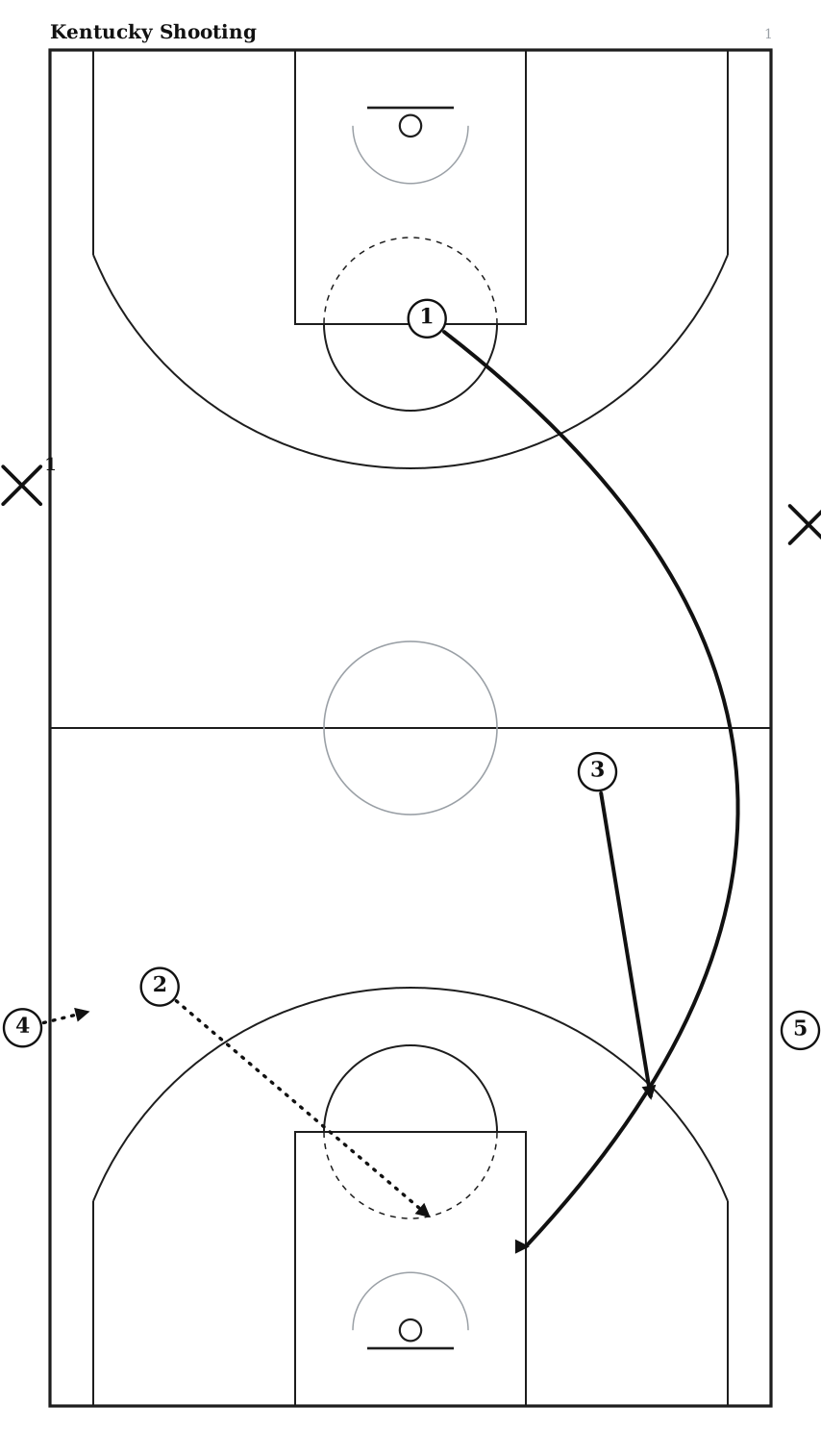
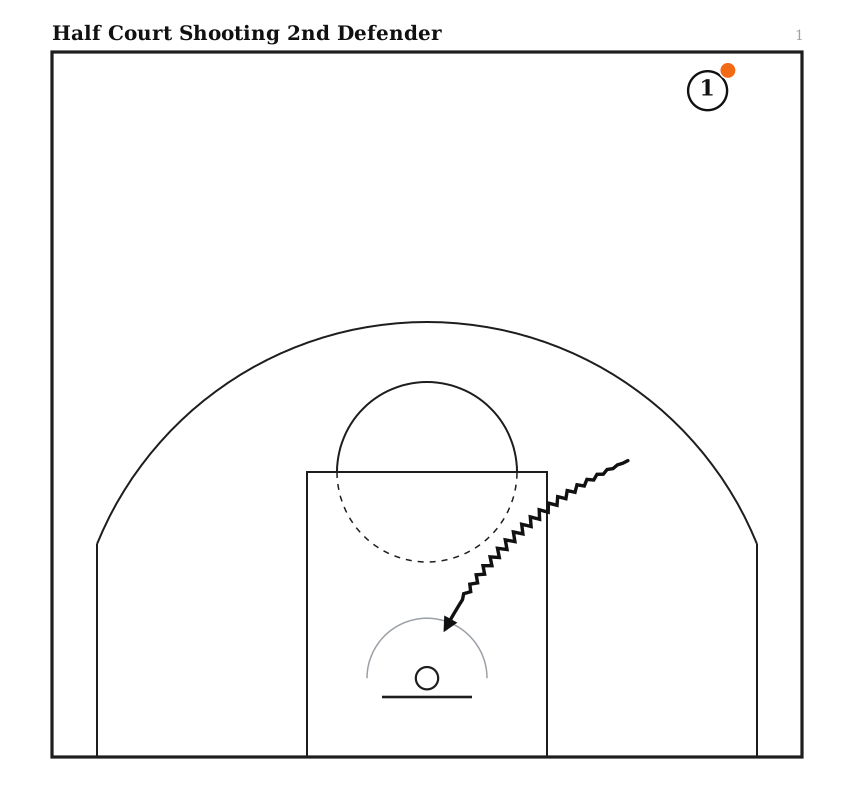
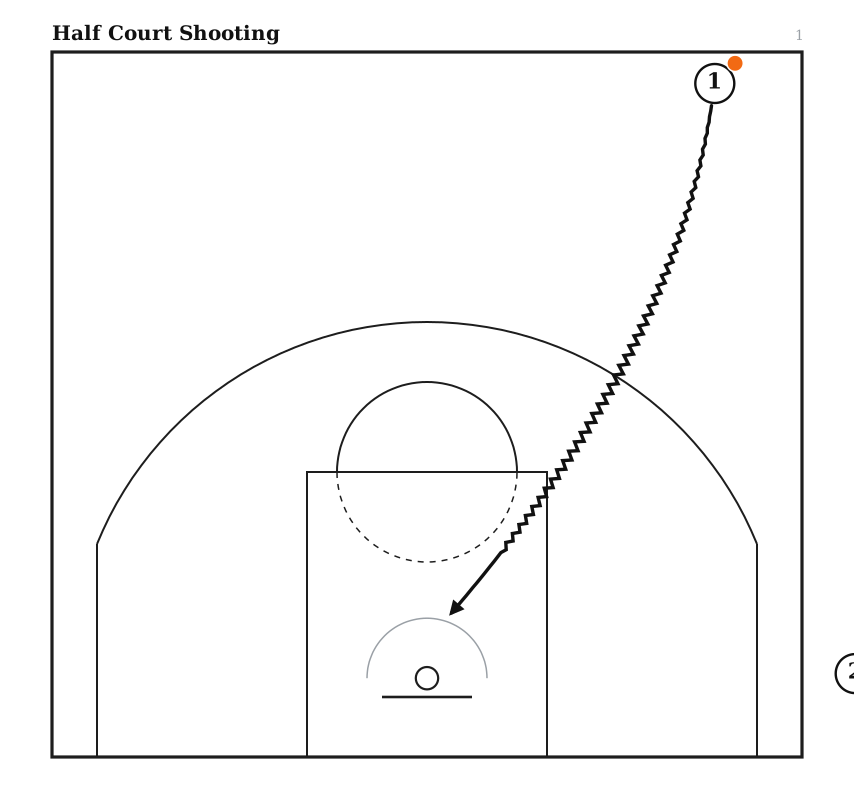
See it drawn up
Related diagrams
Keep Building
Related breakdowns
How to Improve Your Vertical Jump for Basketball
How to Improve Your Vertical Jump for Basketball