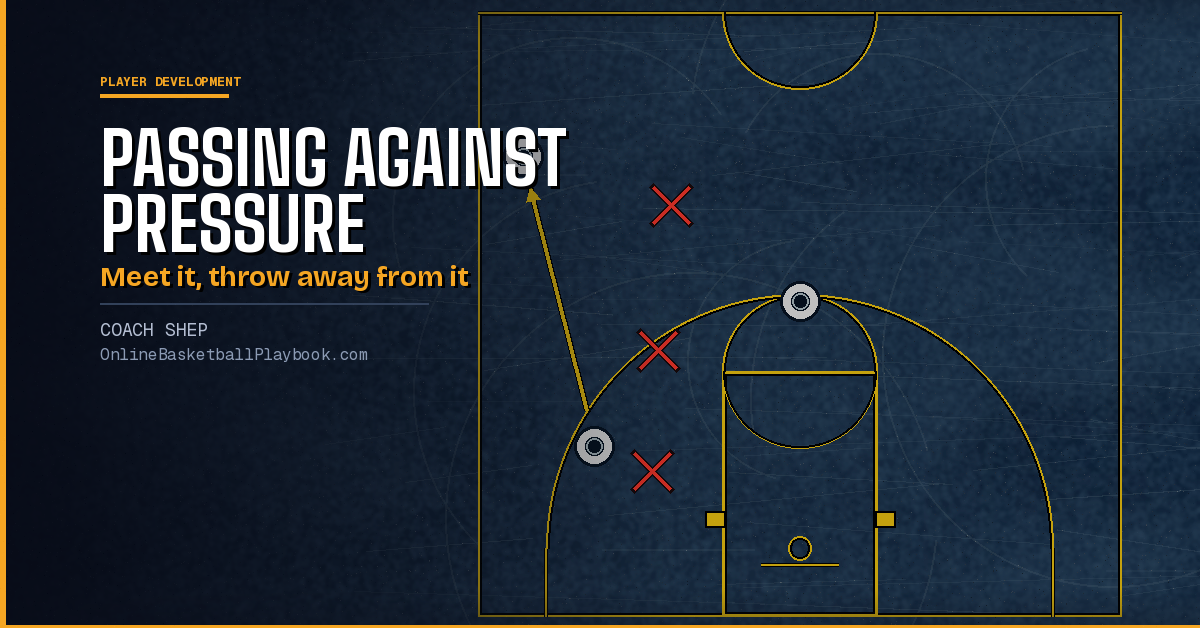
Passing against pressure is a two-player skill: the receiver has to get to the ball and the passer has to put it where the defense cannot. A defense that denies, traps or presses is betting the pass will be late, soft or within reach, and every rule on this page is about making that bet lose.
Dave Odom's message on pressure was to attack it, not try to get away from it, and his first stage was passing and catching. This page follows that order, starting with the receiver's job, the passer's job, the first pass against a press, passing out of a trap, the long-pass debate and the drills that teach it. The pass types themselves are on types of passes in basketball, and the full drill bank is on basketball passing drills.
Passing Against Pressure Starts With the Receiver
A pass is only as good as the catch. Against pressure, the receiver's work starts before the ball is thrown:
- Meet the pass. You must meet pressure to beat it. Go to the ball, do not wait for it. A pass to a player moving away is the one that gets picked off.
- Shorten the catch. Shorten the catch distance as the defensive pressure rises.
- Show a target. Show the hands early, and show the numbers and eyes to the passer.
- Get open first. Make a V-cut before the catch, switch to an L-cut when the V fails, and back cut when you are overplayed instead of begging for the ball.
- Never stand still. Never pass to a man standing still, and catch where you can do something with the ball.
- Do not stop between two defenders. Clear the line between two defenders. A receiver who stops right between them is easy to pick off.
The catch itself depends on how the defender plays:
- Defender off. Come toward the ball, jump behind the pass and land in a jump stop in triple threat, with either foot free to pivot.
- Defender tight. Come toward the ball, turn your back to shield it, reverse pivot, swing the ball over the top and drive in a straight line.
Odom adds a post rule for every full-court attack: a post player lines up on the line of the ball to the basket to be a pass receiver, and he re-centers on that line after every pass.
Meet every pass.
The Passer: Throw Away From the Defense
Throwing away from the defender is the first stage of attacking pressure. The ways to do it:
- The outside hand. Throw to the receiver's outside hand, so a deflection comes off the defender.
- The open side. Read which side, top or baseline, the receiver's defender is denying and pass to the other.
- Pocket or outside. Pass into the shooting pocket when the wing's defender sags, and to the outside when he is tight, expecting a back cut.
- The simple pass. John Calipari's rule: make the simple pass that gets the job done, and never pass into a crowd.
The kind of pass matters as much as the target:
- Air, not bounce. Against a trap, an air pass beats a bounce pass, because a bounce pass is easier to intercept. Odom never allows a bounce pass on the perimeter.
- Straight lines. Throw straight-line passes, not lobs or looping passes, because off-ball defenders play the lanes like free safeties.
- Zip and precision. Throw with zip, and with shooting precision: five target spots, either ear, either hip or the head, and every passer asked whether he hit the receiver in the hands.
- Feet on the floor. Leaving your feet to pass, or forcing a pass into a tight defender, are leading causes of desperation turnovers.

Open the lane before you throw. A defender who plays off the passer in the passing lane can be beaten by dribbling to within about 3 feet of him, and one dribble can open a lane into the post, toward the baseline against a high-side defender and toward the top of the key against a low-side one. Pivot out of pressure to find a new angle. Most steals on post feeds come from the passer's own defender.
Throw away from the hands. The defender who cannot reach the ball cannot steal it.
Fakes That Move the Hands
Bob Knight called the pass fake one of the two most under-taught fundamentals, and the rule is "fake a pass to make a pass." Pressing defenders are aggressive by nature, so a fake moves them. Coaches teach the fake differently:
- Fake one way, pass the other. A ball fake, head bob or eye fake one way, then the pass the other way.
- Read the hands. Against hands up, fake high and pass under the armpit. Against hands down, fake low and pass over the shoulder.
- Vertical fakes. One or two vertical fakes only, on the same side you pass.
- Short punch fakes. Short, compact punch fakes rather than big swings.
- Fake the sideline. Fake the sideline to open the middle, or fake the middle to open the sideline.
Keep fakes short. A head, shoulder or pass fake is often all it takes to free a receiver. Where the passer looks splits coaches too: beginners look at the target and learn later to stop staring, while advanced passers use split vision that looks off the receiver.
Pick one fake and make it a habit.
The First Pass Against a Press
The first pass after the inbound is the one most often intercepted. The catcher's rules:
- Catch facing up. Catch in triple threat and see the floor, instead of putting the head down and starting to dribble.
- Find the open man. Read the defense, locate the open receiver and throw it with zip.
- Air pass. Use an air pass when possible, because a bounce pass is easier to intercept.
- Fake to free him. A head, shoulder or pass fake may be needed to free a receiver.
- Look up before down. Look up the floor before looking down at the ball, before you pass and before you dribble.
Young players throw before they see the receiver, especially against a full-court press, which is why a find-the-receiver drill exists for them. Most presses leave someone open deep, and the handler who panics never sees him. The whole press break is on basketball press break, and its drills on press break basketball drills.
See it, then throw it. The first pass sets up every pass after it.
Passing Out of a Trap
A double team needs three outlets, and two trappers cannot cover all three. Odom names them: middle or behind the defender, the center court area, and the sideline.

The passer's rules in the trap:
- Square up, stay low. Face the trap, get low with the ball on the hip away from it. Standing up or turning your back lets the trappers close in.
- Pass before it sets. Throw the pass just before the double arrives, or swing it before the trap closes.
- A short and a long pass. Against good defense or a trap, Hubie Brown wants a short pass and a long pass available every time, and says a team must be able to reverse the ball against any trap.
- No lob over the trap. Throwing high out of a double team is the mistake 4 on 3 with traps is built to stop.
- Never off the dribble into a reach. Hubie Brown says never pass off the dribble into a reaching defender.

The receivers come back to the ball to shorten the pass. Dribble escapes from the trap, the split and the outside leg, are on how to protect the ball, and the defense's side is on trapping in basketball.
Three outlets, every trap.
Get the next coaching guide in your inbox
One email when a new guide or diagram set goes up. Free.
Long Pass or Short Passes
Against a press, coaches split on the long pass over the top:
- Throw over the top. Bo Ryan puts a big in the middle and throws over the top, and the long pass can be the first look with the short pass second. A baseball pass that beats a press deep once or twice softens it.
- Short and quick. Advance with short, fast passes instead of dribbling into traps, and throw straight-line passes, not lobs. Bruce Weber's numbers game bans the pass over the top.
They split on one hand or two as well:
- One hand for the deep pass. The baseball pass is a one-handed throw, taught for full-court pressure.
- No one-handed passes. No one-handed or bounce passes, especially on the inbound.
The long pass is harder for young players, who may lack the strength for a full-court throw. The baseball pass is taught on types of passes in basketball, and the overhead pass on overhead pass.
Pick the long pass or the short game before the press shows up, and drill the one you pick.
Drills for Passing Against Pressure
Teach passing against a defender as its own step: first a passive defender, then an active one. The drills that put pressure on the pass:
- First-pass drill. Three lines of offensive players and three defenders, who can be assistants. Two defenders trap after letting the inbound pass go through, and the third plays the gap between the two receivers to intercept. The catcher finds the open man and throws with zip.
- Circle trap passing. Five passers on a circle against two trappers and an interceptor.
- 4 on 3 with traps. Four offensive players against three defenders who trap the ball, built to stop the lob out of the double team.
- Bull in the middle, trapper style. The defender in the middle drop-steps toward each pass like a trapper.
- Find the receiver. The passer speed-dribbles to the arc, jump stops and reverse pivots while a partner sprints to either corner, so the passer has to find him before he throws. He passes, cuts and finishes on the return.
- Partner pressure passing. Hold triple threat under harassment for three to four seconds, then pass.
- 4 on 5, no dribble. Ten passes or a score wins.
- No dribble to half court. Bruce Weber drills the break with no dribble until half court: four trips in 18 seconds, then 3 on 3 and 3 on 4 with no dribble until half court.
- Look through the double. Jump stop at the free-throw line, half court and the far free-throw line, looking through the double team, then add two defenders at each of four spots at half court.

Score it. A point per pass and points off for a dribble or a turnover, and the drill becomes a game. Ask every passer whether he hit the receiver in the hands. More scored passing games are on basketball passing drills, ball security is on what is a turnover in basketball, and every player development page is on the drills hub.
Pressure in practice, every day. The first time your guards see a trap should not be in a game.
Questions Coaches Ask
How do you pass against pressure in basketball?
The receiver meets the pass and shows a target. The passer throws away from the defender, to the receiver's outside hand, with an air pass that does not float, and uses a short fake to move the defender's hands.
Is a bounce pass good against a press?
Against a trap, an air pass is preferred because a bounce pass is easier to intercept. Odom never allows a bounce pass on the perimeter.
How do you pass out of a trap?
Stay low and square to the trap with the ball on the hip, and throw to one of three outlets: middle or behind the defender, the center court area, or the sideline. Pass before the double arrives, and never lob it over the top.
Why is the first pass against a press so dangerous?
It is the pass most often intercepted. Catch it facing up and see the floor first, because a catcher who puts his head down to dribble, or throws before he sees the receiver, gives it away.
What drills teach passing against pressure?
The first-pass drill against a trap, circle trap passing, 4 on 3 with traps, bull in the middle with a trapping defender, and no-dribble games such as 4 on 5 to ten passes.
Want every diagram on the site?
OBP Pro members get the full diagram files for every guide on the site, ready for a practice binder or a scouting report. $9 a month. Or draw your own version free in the play drawer.
See what OBP Pro includesMore Pressure, Inbounds and Guard Guides
- When Not to Press: Bad Reasons, Thin Benches, Poised Guards
- Youth Basketball Inbound Plays: Simple and Safe Plays to Run
- Deny the Inbound or Concede the Catch: Two Schools
- Fouling When Trailing: When, Who and How by Time and Score
- Guard Workout: Handles, Reads and Finishing You Can Print
Back to Basketball Passing Drills and every Player Development page.
Keep Building
Related breakdowns
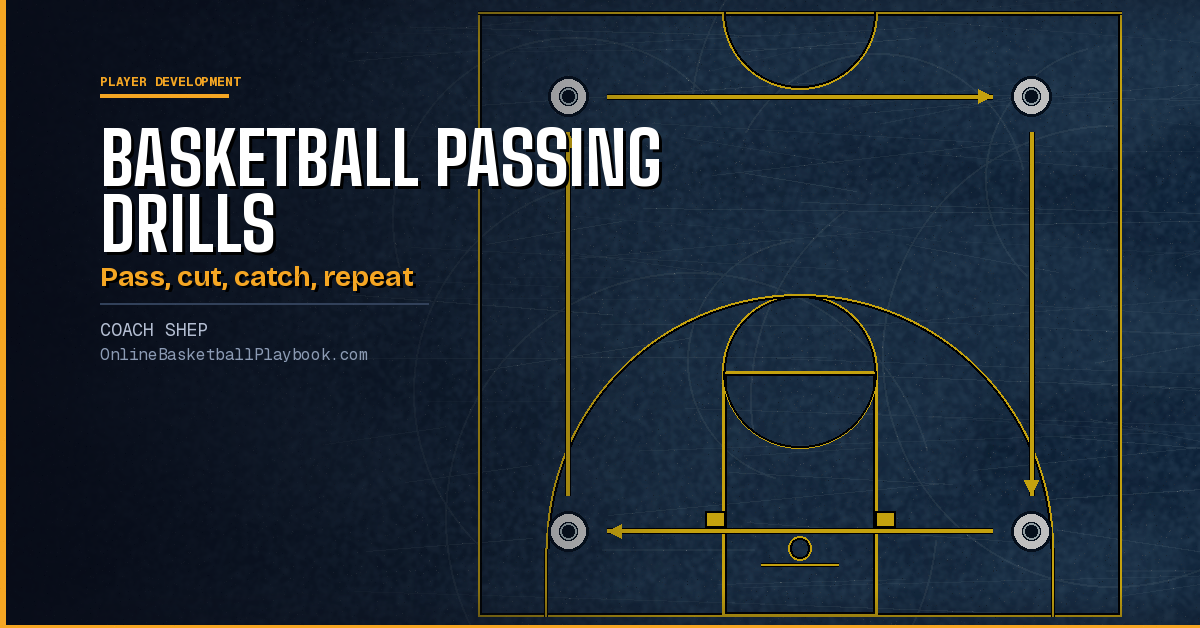
Basketball Passing Drills for Beginners and Full Teams
Basketball passing drills for beginners, partners and full teams: the basics to coach, drills with setups and coaching points, pressure drills and scored games.
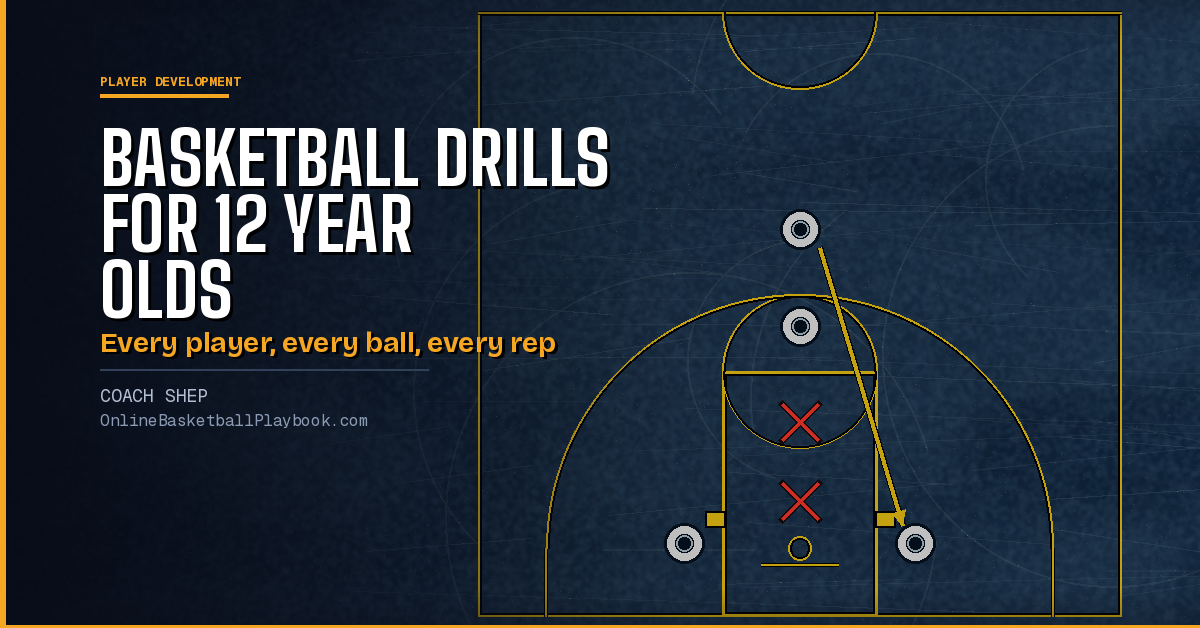
Basketball Drills for 12 Year Olds: Dribbling, Passing and Games
Basketball dribbling drills for 12 year olds, passing and cutting drills, decision games and a 90-minute practice, all written for players this age.
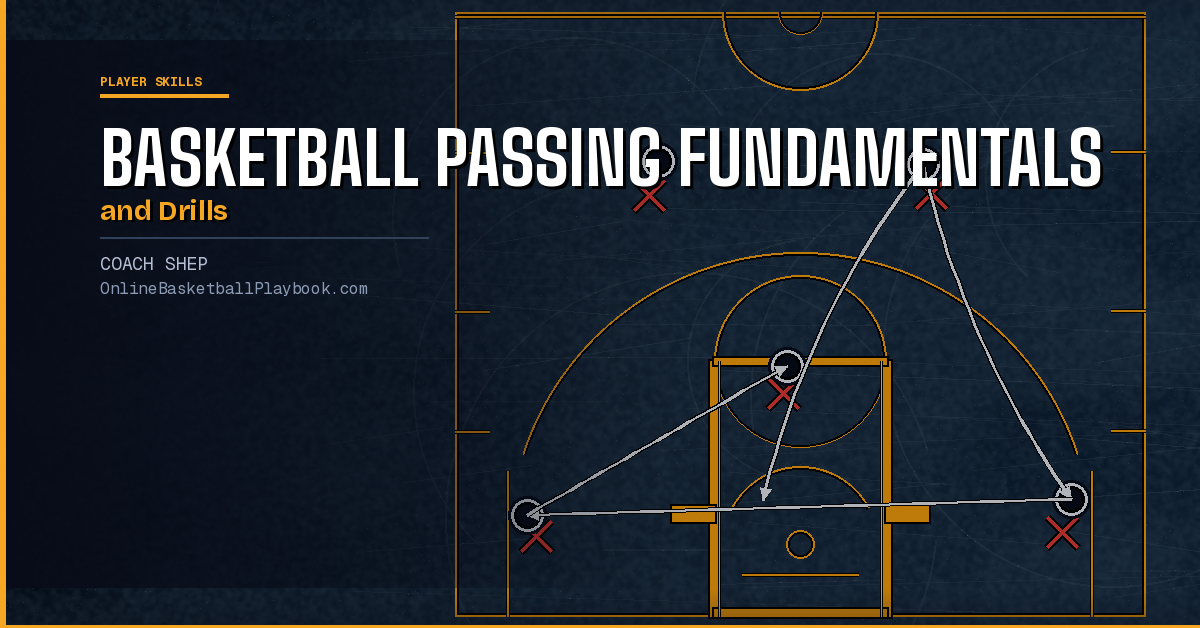
Basketball Passing Fundamentals and Drills
Basketball Passing Fundamentals and Drills