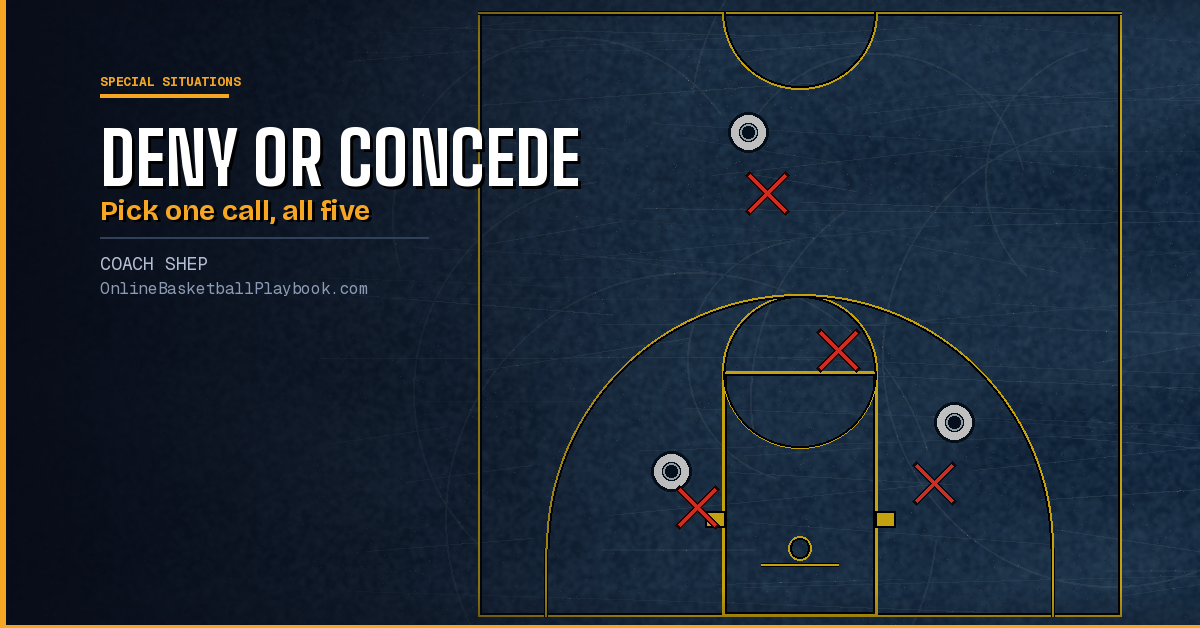
Every inbounds defense starts with one choice: deny the inbound pass and hunt a five-second call or a turnover, or concede the catch, protect the rim and attack whatever comes next. Both schools have owners, and both have a price.
This page sets the two schools side by side, then the middle ways between them, the full-court versions after a score, the counters an offense uses against each, and the drills that teach them. Every option for guarding the inbounder, plus the baseline and sideline sets, is on how to defend inbounds plays.
Why the Choice Matters
Out of bounds is the only moment in a game when the defense plays five against four, because the inbounder is stuck behind the line with a five-second count. Yet teams drill their own out-of-bounds plays and spend little or no time defending them, so easy baskets go to the prepared offense. A baseline inbound is its own problem: the ball starts behind the defense instead of in front of it, and the cuts go straight at the rim.
Bob McKillop's note puts the stakes in one line: the defense wants the first pass to be bad, and the offense wants it good. Denying and conceding are two ways to make that first pass bad.
Make the choice before the ball is handed over, and make it as a team.
School One: Deny the Inbound
The deny school takes the five-on-four edge literally. Every receiver is guarded hard, the inbounder has to find someone in five seconds, and a lob over the top is the offense's only easy answer. The versions:
- Jam. Every cutter gets hard, in-your-face denial and nobody switches. The aim is a five-second call or an offensive foul. On the sideline, defenders jam each receiver the instant the official hands over the ball and take a charge instead of switching. Jam is called the most effective of the four baseline options it comes with.
- Deny with a centerfielder. The inbounder's defender drops off him to play centerfield, reading the inbounder's eyes to intercept or trap, while the other four play full deny between their man and the ball and do not worry about the lob. The centerfielder shades toward the inbounder's side, because the lob usually goes there.
- Deny with a safety. Nobody guards the passer. One defender drops back to at least half court to stop the long pass and the layup, and the other four match up and deny, hunting a five-second call or a bad pass.
- Front the guards. One of the most aggressive full-court looks fronts both guards with contact so the inbounder must throw over the top. It is used mainly after free throws.
- Face-guard all four. All four receivers are face-guarded while the defender on the ball harasses the inbounder. It is a high-risk call, usually after a dead ball.

The case for denying comes from turnovers. Turnover-hunting deny systems rest on one number: teams that are plus 8 on offensive rebounds and minus 8 on turnovers win over 90 percent of the time. A late sideline interception usually becomes an uncontested layup.
The price is the space behind the deny. Four defenders denying four receivers is four on four with nobody helping, and a deny look fails if even one defender slacks. Denying works only when every defender commits on every trip.
School Two: Concede the Catch
The concede school lets the first pass go to a spot that does not hurt and protects the rim first. On a baseline play the ball starts a few feet from the rim. The versions:
- Inbound to the top. The stated goal is to make the offense inbound to the top of the key, away from the rim.
- One-man zone. The inbounder's defender plays a one-man zone in the paint until the ball goes outside, then recovers.
- Inside out. Bruce Pearl's under-the-basket defense exists so the ball cannot go inside. His five rules: the ball-side block may not duck in, no clean screens, every defender stays inside his man, the defender on the ball keeps his hands up, and defenders come together on screens.
- A baseline 1-3-1. A 1-3-1 built only for baseline inbounds packs the paint, makes the inbounder afraid to throw it in and baits a lob toward half court. Any deep pass toward the backcourt counts as a win.
- Drop to a 2-3. Sit in a 2-3 zone for the inbound and convert back to man once the ball is in.
- Give it to them. Against a team that likes to set up its press break, Gary Williams says to give them the ball and attack the receiver, since most players are right handed.

The case for conceding is the layup. Alert cutters go straight to the basket off any defender who is out of position or has his back turned when the official puts the ball in play. Taking away an opponent's baseline sets is credited with 6 to 8 points a game.
Protect the rim first. A catch at the top of the key is a possession, a catch at the rim is two points.
The Middle Ways
Between the two schools sit two choices that concede some catches and deny others.
Concede the catch to a chosen spot, then attack it. Let the ball in, but only where the defense wants it:
- Corner funnel. A 1-2-1-1 always denies the inbound pass to the middle and forces the ball to the corner, with two trappers, two interceptors and one safety.
- Side-front. Vance Walberg side-fronts receivers from the inside out to force the catch in the corner and onto the weak hand.
- Trap the catch. On a baseline play, the inbounder's defender follows the pass and locks up a hard double team on the receiver while the other three take help spots in a triangle. It pays most against a play that needs more than one pass.

Keep it from one player only. Concede every catch but one:
- Double the point guard. Two defenders double the primary ball handler before the inbound while the other three hold snug denial, which also drags the shooting guard into bringing the ball up.
- Deny the return pass. When the best handler inbounds and takes it right back, one defender denies him the return pass in full man-to-man while the other four play zone, with the weak side left open for a long pass that is often thrown away.
- Chase the scorer. On a baseline play, a chaser face-guards the best scorer chest to chest while the other four play a box.
Coach Shep's own call for this is Hold Fist, the double on the point guard before the inbound, on Coach Shep's full court press. Pick the spot or the player before the game, and tell all five.
Sag First or Deny First
The schools also split on when the defense commits:
- Sag, count, then go. Before the official hands over the ball, every defender sags to protect the basket against a quick lob or basket cut. The inbounder's defender plays off and reads the pass for a three count, then smothers the inbounder with both hands up. Jam, the jump switch and the trap all start this way.
- Deny from the first instant. The full-court deny looks commit before the ball is live, and so does the sideline deny drill below.
- Protect inside the whole time. The concede defenses keep the paint covered until the ball goes outside, with no stated count.
Whichever you pick, be set and matched before the ball is live.
Full Court After a Score
After a made basket or a made free throw, the same choice decides how a press starts. Walberg keys his inbound rules on how many offensive players come up:
- One up. Full denial.
- Two up. Force the ball to the corner.
- Three up. Keep it out of the middle.
- Four up. Two defenders take two players and a third handles the long pass.
The three-up and four-up rules apply only after a score. Otherwise his team plays man.

Who guards the inbounder full court splits as well:
- Attack him. Tom Davis sends his 4 at the ball because the 4 is near the end line after every rebound: body on the ball, hands up and touching to block his vision, and attack the right hand.
- Steer him. The defender on the ball sets his feet at 45 degrees, never squared up, to steer the pass to the near sideline.
- Bait him. Walberg's deep man plays long and opposite the ball to bait the long pass and moves when the inbounder's arm cocks back.
- Leave him. Drop his defender to centerfield or to a safety spot past half court, as in the deny looks above.
Presses that start this way are on full court press defense and best full-court press, and the reasons to skip the press entirely are on when not to press.
Decide who has the inbounder before the free throw goes up.
How Offenses Beat Each School
Each school has a known counter, so plan for it:
- Against full denial. Three denied players back-cut for a lob while the 5 pulls the deep defender away, because four defenders end up low with no help behind them.
- Against a doubled point guard. Give the catch to someone else and get it back to the point guard in the middle.
- Against a quick inbound. A team that inbounds quickly is tough to press at all, and a team that sets up its press break is easier.
- Against an automatic zone. A zone on the baseline still has to adjust to a ball behind the basket and is exposed to the screen-and-roll and the overloads that make up most inbounds plays.
The offense's side of the inbound is on basketball inbound plays and basketball press break. Scout which counter they run, and practice against it.
How to Choose
Neither school is tied to an age group or to a score late in the game. What a staff can do is answer four questions before the game:
- What does the opponent run? Chart every baseline and sideline inbound they run, not just late-game sets, to learn who the actions are for and whether they inbound and set up or try to score at once.
- Switch or stay? Settle switch everything or stay on your man in a short-clock, up-two spot before it happens.
- Who is the safety? A deny look with nobody over the top gets beaten by the lob.
- Will every defender commit? One slack defender breaks a deny.
Pick one base call and one change-up, and write both on the call sheet. Late-game rules are on basketball late game situations.
Get the next coaching guide in your inbox
One email when a new guide or diagram set goes up. Free.
Drills for Each School
The deny school has the most specific drills:
- Deny past five. Three offensive players and an inbounder, with the inbounder's defender at centerfield and the other three in full deny, switching screens as needed. The goal is to deny past the five-second count toward eight seconds, played to five turnovers.
- 3-on-3 deny. The same centerfield-and-deny shape in a 3-on-3, with the centerfielder picking off the lob or trapping once the pass is completed. It runs at both ends with 12 players and an assistant.
- Layup to deny. In groups of three, one player scores an uncontested layup, a teammate inbounds quickly to a trailing third player, and the scorer must find and deny that inbound at once, with no celebrating.
- Sideline deny. The defender on the inbounder drops inside along the ball-side lane line as the centerfielder while the other two face-guard, so neither offensive player gets the lob on a back cut.
For the concede school, the work is the rules after the catch. Have a scout team run the opponent's plays, not your own, against the defense. More inbounds drills are on how to defend inbounds plays, every situation page is on the situations hub, and every defense page on the defense hub.
Drill the call you will use in the game, against the plays you will see in the game.
Questions Coaches Ask
Should you deny the inbound pass?
Coaches split. Deny when you want a five-second call or a turnover and have a centerfielder or safety for the lob. Concede the catch when protecting the rim matters more.
What is the best way to defend a baseline inbound?
Match up before the ball is live, protect the rim and pick one plan: deny everything, concede an outside catch, trap the catch in a chosen spot or keep it from one player.
Who guards the inbounder when you deny?
Often nobody. His defender drops to centerfield to read the lob or to a safety spot at half court while the other four deny.
How do offenses beat a full deny?
Denied players back-cut for a lob while a big pulls the deep defender away, or the ball goes to someone else and back to the point guard in the middle.
Is it legal to deny the inbound pass?
Yes. Denial is legal man-to-man defense. The inbounder must release the ball within five seconds at NCAA, NBA and FIBA levels. For high school, check your state association rulebook.
Want every diagram on the site?
OBP Pro members get the full diagram files for every guide on the site, ready for a practice binder or a scouting report. $9 a month. Or draw your own version free in the play drawer.
See what OBP Pro includesMore Pressure, Inbounds and Guard Guides
- When Not to Press: Bad Reasons, Thin Benches, Poised Guards
- Youth Basketball Inbound Plays: Simple and Safe Plays to Run
- Fouling When Trailing: When, Who and How by Time and Score
- Guard Workout: Handles, Reads and Finishing You Can Print
- Passing Against Pressure: Beat the Trap, the Deny and the Press
Back to How to Defend Inbounds Plays and every Special Situations page.
Keep Building
Related breakdowns
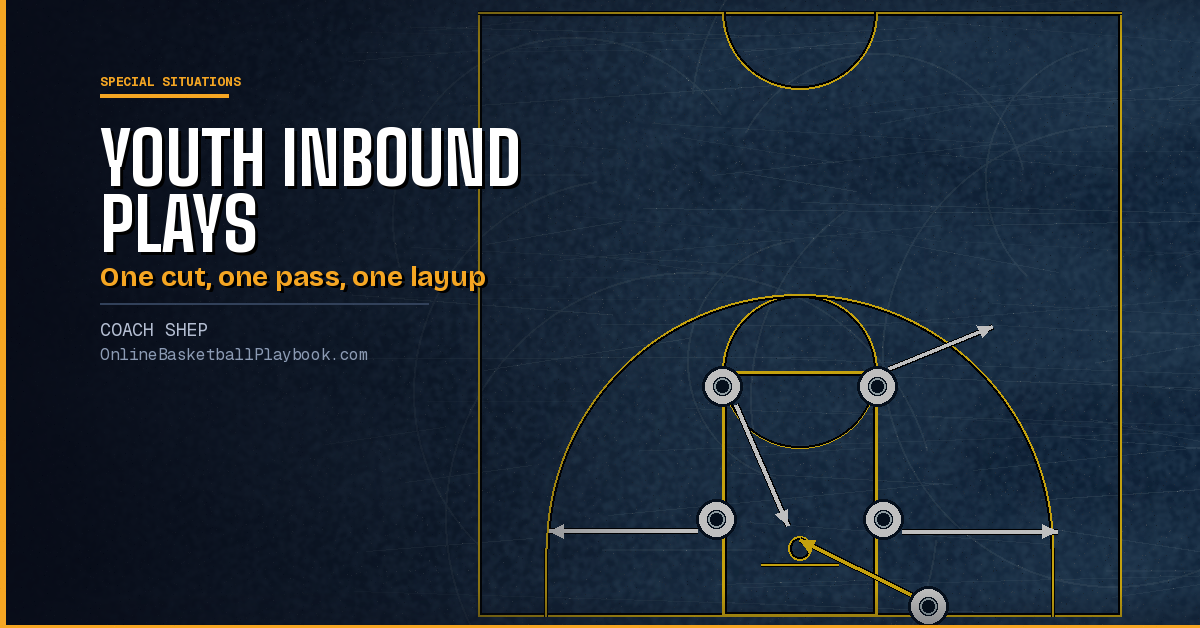
Youth Basketball Inbound Plays: Simple and Safe Plays to Run
Youth basketball inbound plays that work: one-pass baseline plays from the box and the line, the reads under every play, the inbounder, zone answers and practice.
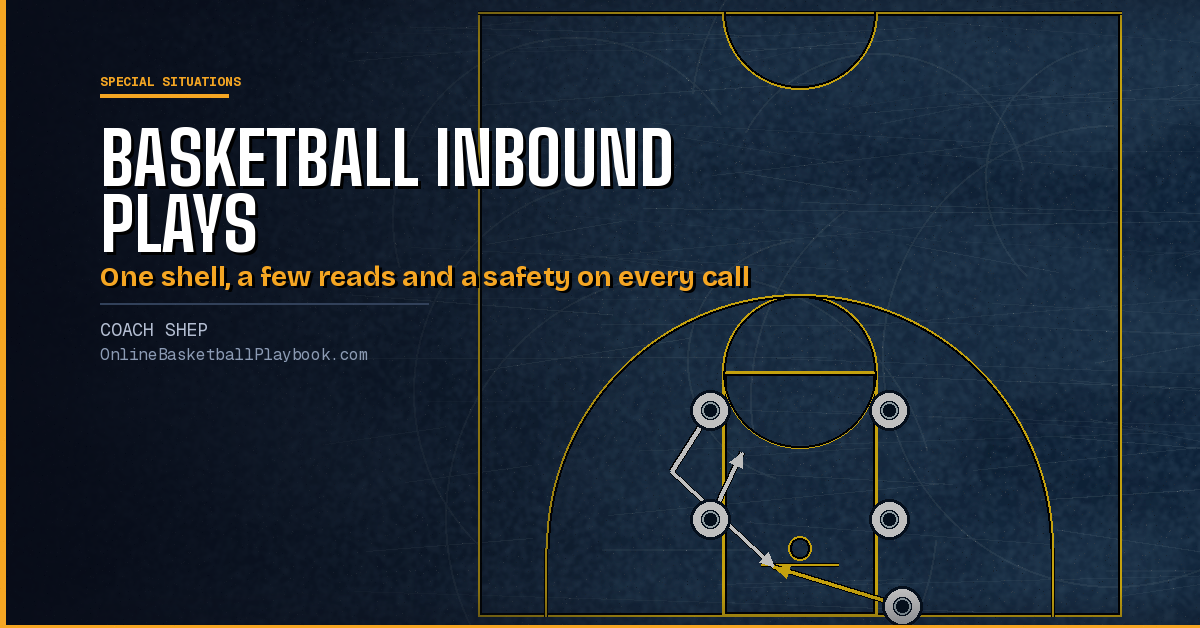
Basketball Inbound Plays: Baseline and Sideline Sets to Run
Basketball inbound plays for baseline and sideline throw-ins, with six drawn sets, simple plays for youth teams, zone looks and where coaches disagree.
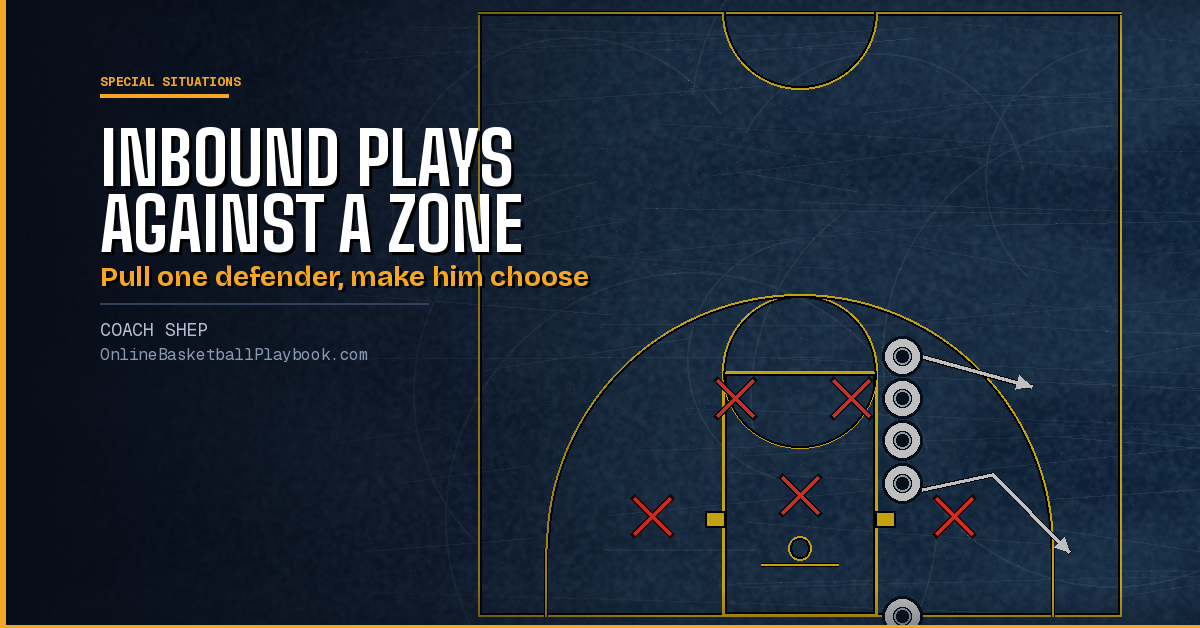
Inbound Plays Against a Zone: Baseline and Sideline Sets
Inbound plays against a zone from the baseline and sideline: the read, the stack near the elbow, short-corner pulls, split cuts, two-part sets and sideline answers.