Man-to-man gives every defender a player. Zone defense gives every defender an area. Under that difference the habits are the same: stance, help position, moving while the pass is in the air, and keeping the ball out of the middle. That is why so many coaches teach man first. A zone is only as good as the man-to-man habits underneath it.
This page puts the two side by side on the questions coaches actually ask. For every variation of each, see Types of Defense in Basketball.
The Same Ball, Two Defenses
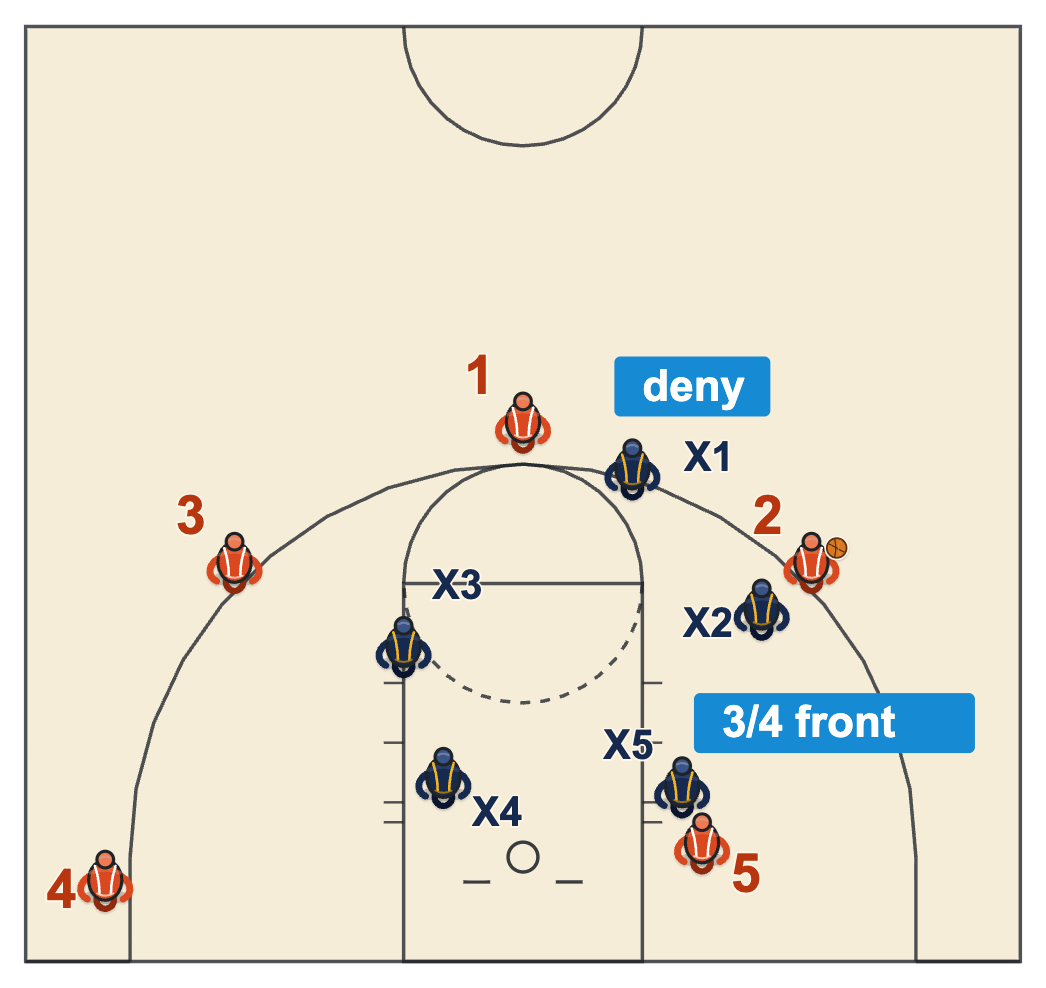
In man-to-man, each defender asks three questions on every pass. Where is the ball, where is my man, where is the basket. The answers put him on the ball, one pass away in a denial or gap position, or two passes away in help. The farther his man is from the ball, the farther he can be from his man.
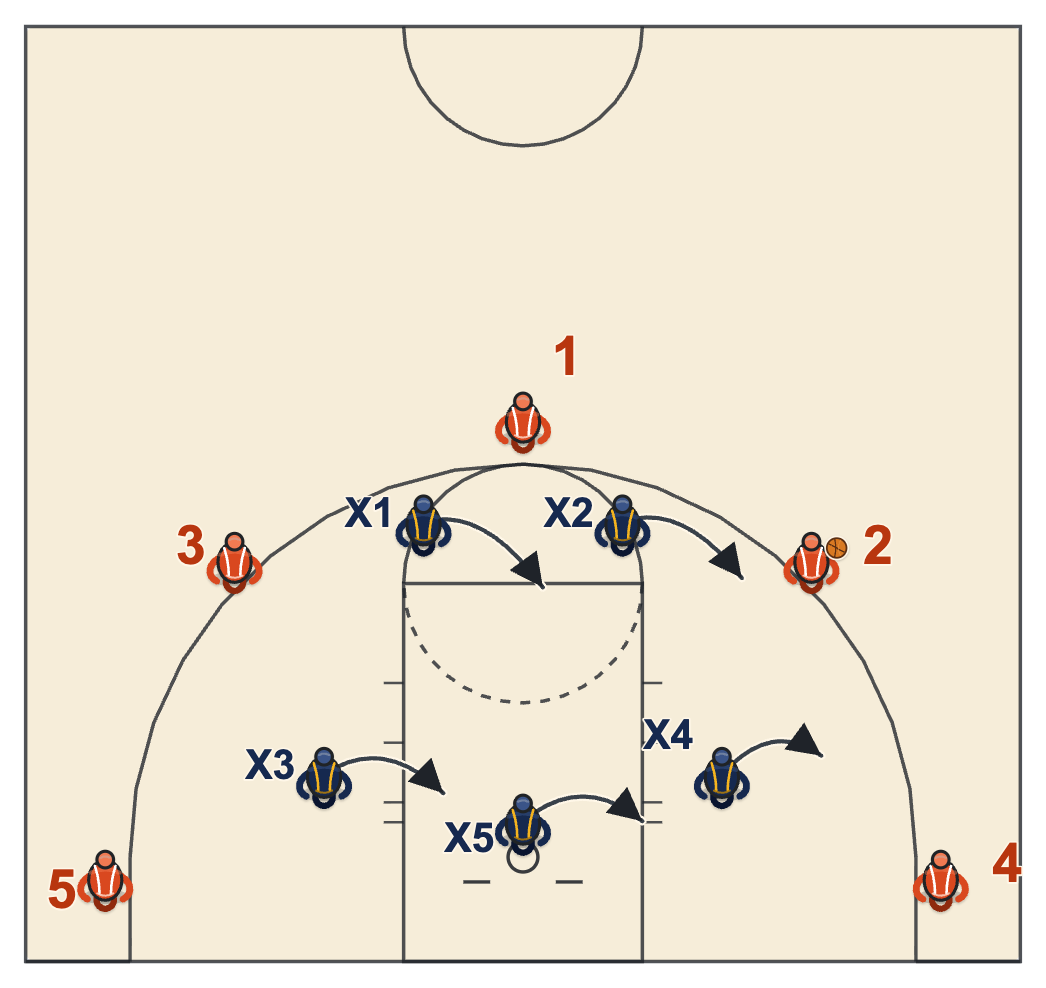
In a zone, each defender asks where the ball is and which area it can hurt him from. The whole shape slides on every pass. Nobody follows a cutter across the floor. The next defender picks him up.
Side by Side
| Man-to-man | Zone | |
|---|---|---|
| Who guards whom | A player | An area |
| Accountability | Easy to see who got beat | Harder to see, easier to hide a weak defender |
| Fouls | More body contact on drives and screens | Fewer, which helps a team in foul trouble |
| Screens | A decision on every screen: fight, switch or help | Few screens to fight, but ball screens against the top two still need a rule |
| Weak spots | Mismatches, a slow defender on a quick scorer | Gaps, corners, the high post, offensive rebounds |
| Rebounding | Every defender has a man to block out | Box-out jobs have to be assigned, or nobody owns them |
| Scouting | The opponent's man offense | The opponent's zone offense, often less practiced |
| Change of pace | Hard to disguise | A zone for a few trips can stall a team that only practiced against man |
Player Development
Most youth and coaching-education guides land in the same place. Teach half-court man first. On-ball stance, help position, closeouts and communication carry into every defense a player will ever run. A player who only plays zone skips those habits. Many programs hold zones back until the junior varsity years, around age fifteen or sixteen.
The honest counterpoint: a packed zone can win more games at the younger levels, because young offenses cannot shoot over it. That is exactly the trade. The wins come now and the defenders are behind later. A middle path used by some programs is to teach on-ball defense first, then add denial and help around sixth grade, and bring in a zone as a change-up once the man habits hold.
There is also an accountability argument. In man, when a player gets beaten, everyone sees who it was. That visibility pushes improvement. It is also a useful answer when parents or players ask why the team does not just play zone. See Best Defense for Youth Basketball Teams for more on this.
Get the next side-by-side in your inbox
One email when a new comparison or diagram set goes up. Free.
When to Switch Mid-Game
From zone to man:
- The offense keeps getting the ball to the high post or the short corner, and your center is losing those one-on-one plays. Switch before the next easy look, not after the third.
- The opponent has shooters in several spots who can all catch a skip and fire.
- Your zone is giving up offensive rebounds because nobody owns a box-out.
From man to zone:
- A big is in foul trouble. A zone cuts body contact and keeps him on the floor.
- One opponent is beating your man defense through size or speed, and you want to change coverage without telling him.
- The opponent has spent the whole week preparing for your man defense. A few trips of zone forces a timeout.
- The opponent cannot shoot from outside.
Some teams build the switch into the defense itself. They start every possession in a zone, then quietly change to man after a set number of passes, using a call word the offense will not read as a change.
The Hybrid: Matchup Zone
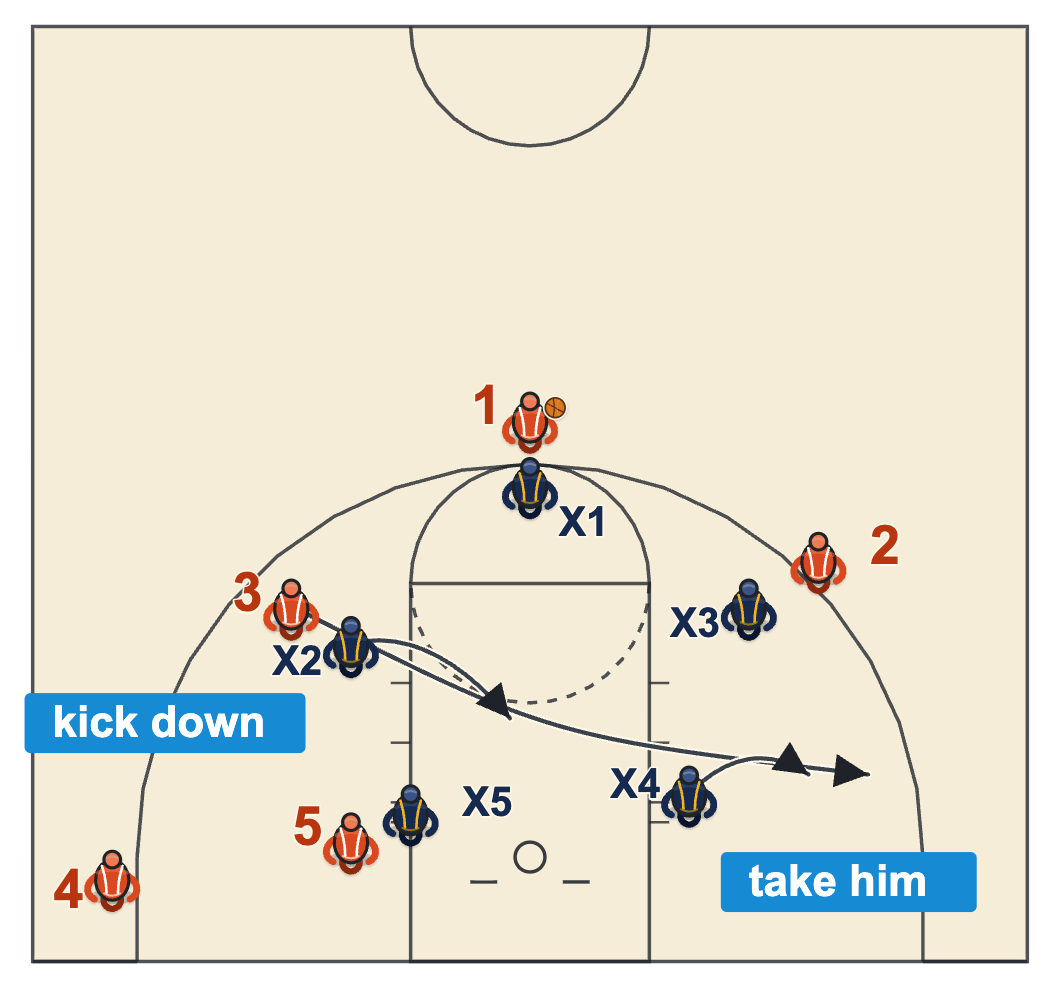
The matchup zone starts in a zone shape, often a 1-2-2, and then guards every player who enters an area the way man-to-man would. No offensive player stands in a gap unguarded. Cutters are handed off with a call instead of chased. The four off-ball defenders keep a foot in the paint, which gives it zone help with man pressure on the ball.
It is the hardest of the three to teach, because it lives on talk. A silent matchup zone is worse than either a plain zone or plain man. Reserve it for an experienced group. Full breakdown: How to Coach the Match-Up Zone.
Which One for Your Team
- Young team, long season: man-to-man as the base, a zone as the change-up.
- Size advantage, opponent scores inside: a 2-3 or a pack-line man.
- Quick, deep, well-conditioned team: pressure man, or a press into man.
- A big in foul trouble: a zone for stretches.
- Experienced, vocal team: add the matchup zone to make scouting hard.
Man-to-man in full: Man-to-Man Defense: The Complete Coaching Guide. The zones ranked: Best Zone Defense for Your Team. The two main kinds of man-to-man compared: Pack Line vs Pressure Man-to-Man. From the offense side: How to Beat Man-to-Man Defense.
Want every frame, printable?
OBP Pro members get the full diagram files for every defense on this page, ready for a practice binder or a scouting report. $9 a month. Or draw your own version free in the play drawer.
See what OBP Pro includesMore Side-by-Side Pages
- Types of Defense in Basketball
- Best Zone Defense for Your Team: 6 Zones Compared
- 2-3 Zone vs 3-2 Zone
- Pack Line vs Pressure Man-to-Man
- Best Full-Court Press: 6 Presses Compared
Back to Types of Defense and every Defense page.
Keep Building
Related breakdowns
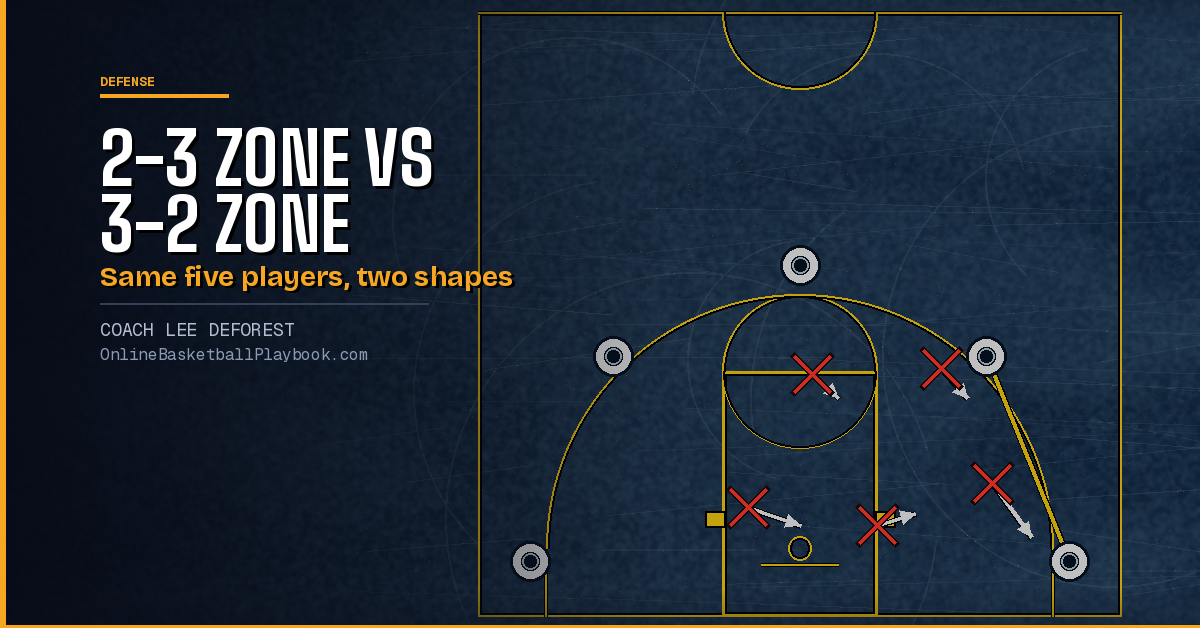
2-3 Zone vs 3-2 Zone
The same five players in two shapes. One guards the rim, the other guards the high post, and each leaves a different spot open.
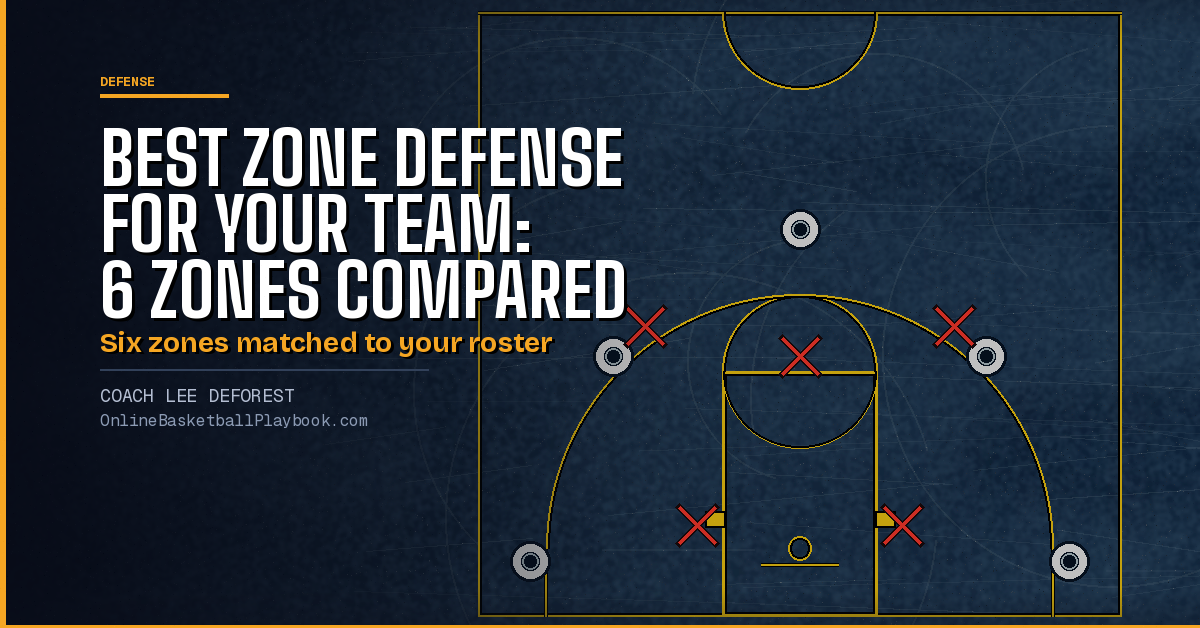
Best Zone Defense for Your Team: 6 Zones Compared
The 2-3, 3-2, 1-3-1, 1-2-2, 2-1-2 and matchup zone, each matched to the roster and the opponent it beats.
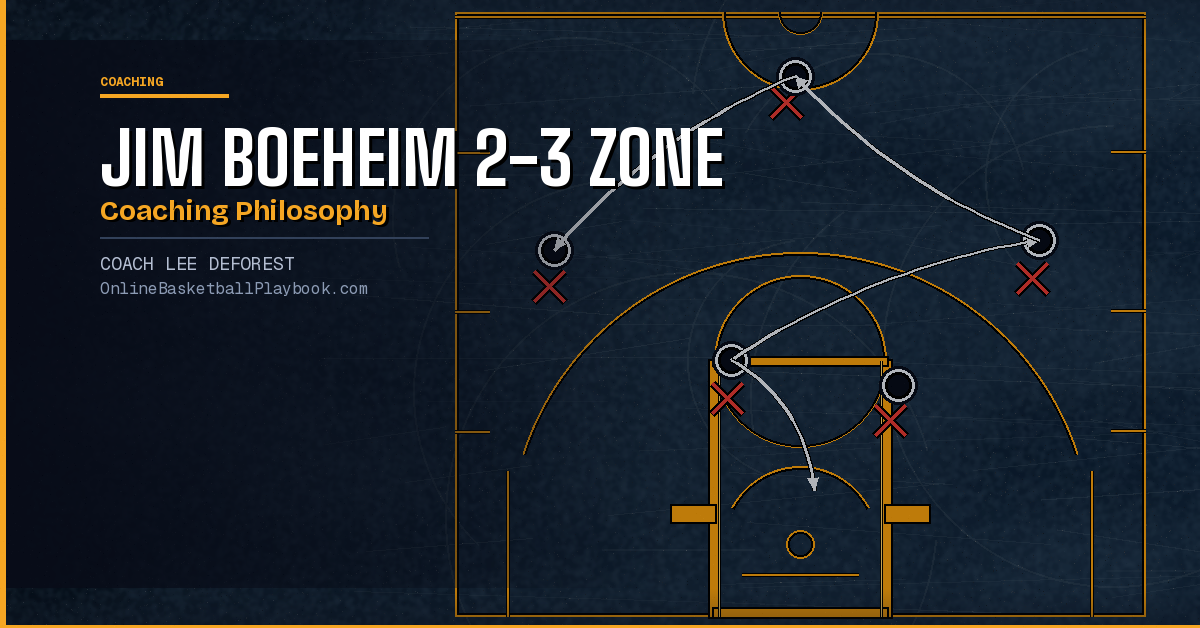
Jim Boeheim 2-3 Zone System and Coaching Philosophy
Jim Boeheim 2-3 Zone System and Coaching Philosophy