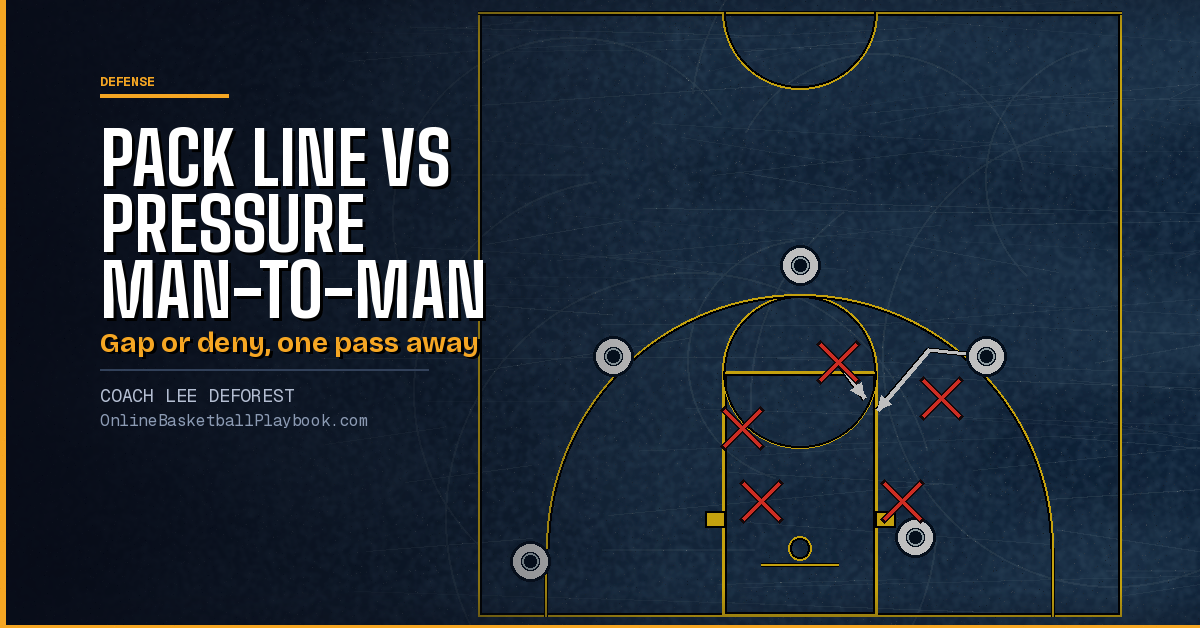
Pack Line and pressure man-to-man agree on more than they disagree. Both guard the ball hard. Both protect the middle. Both move on the flight of the pass. They split on one question: what does the defender one pass away do? In pressure man he denies the catch. In the pack line he sits in the gap and lets the catch happen. Almost every other difference follows from that choice.
Pack Line vs Pressure Man: One Pass Away
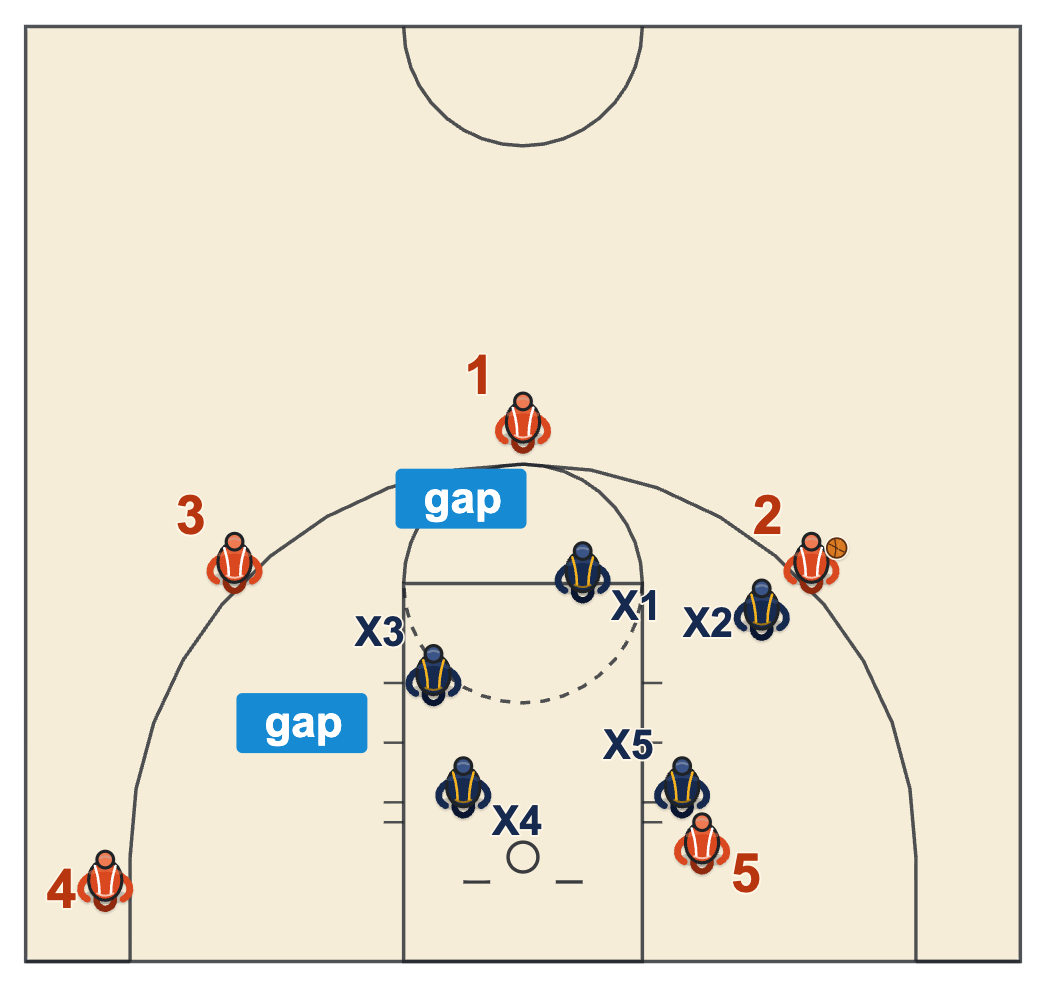
Pack line. If your man does not have the ball, both feet are inside the pack line, an imaginary arc about a step inside the three-point line. You stand roughly halfway between the ball and your man, a step off the line between them, seeing both. Too close to your man and the driving lane opens. Too deep and you cannot get back out to the kick-out.
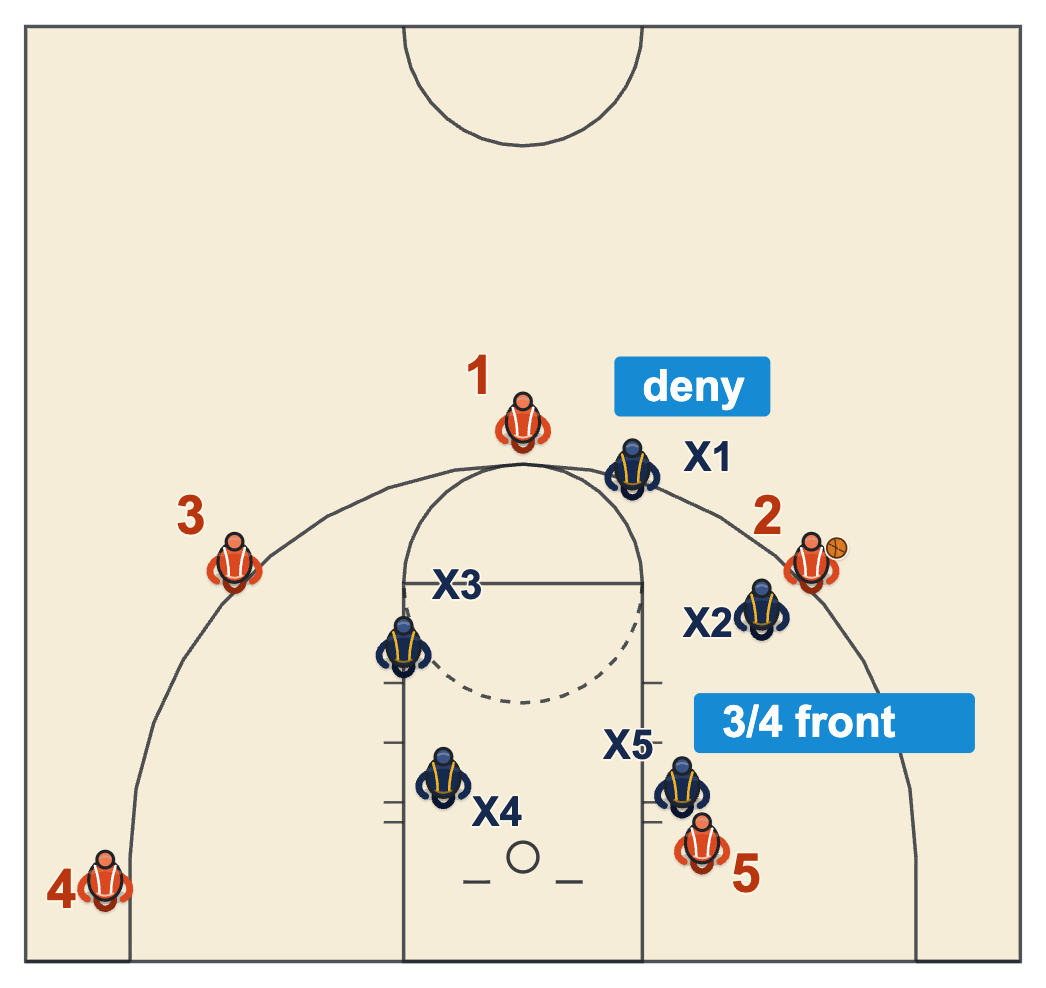
Pressure man. One pass away, you stand up the line with a foot and a hand in the passing lane and your chest toward your man. You fight the catch. Two passes away, one foot in the lane. Three passes away, both feet in the lane. The idea is that a defender already denying is already close to helping.
The Drive
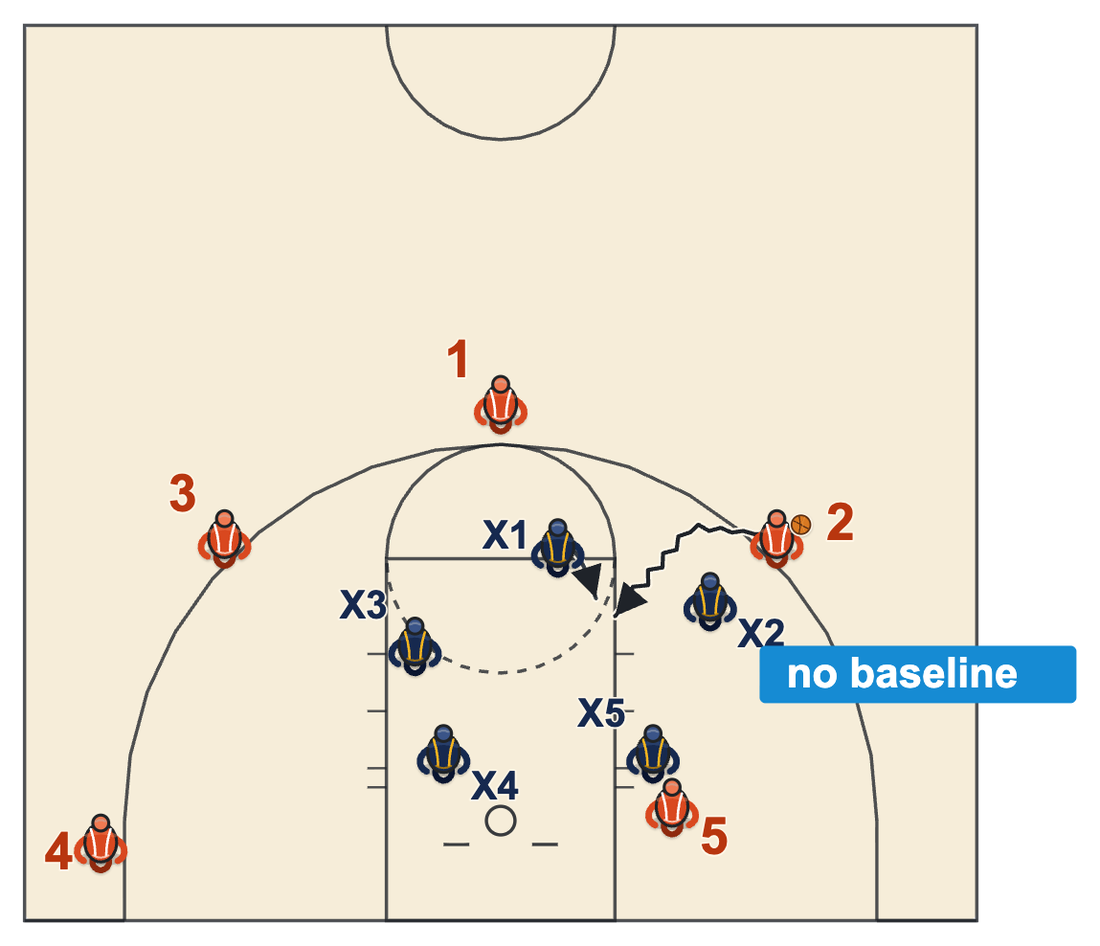
The pack line is built for the drive. The on-ball defender keeps the ball out of the baseline and never gives a straight line to the rim. All help comes from the middle, because the defense puts no help on the baseline by design. When the drive comes, the gap defender is already there. He shows, then recovers on the flight of the next pass.
Pressure man has to rotate to stop the same drive, because the nearest defender was up the line denying. The rotation starts from farther away. Pressure teams answer that with quickness and with help defenders who sit deep in the lane two and three passes away.
The Backdoor
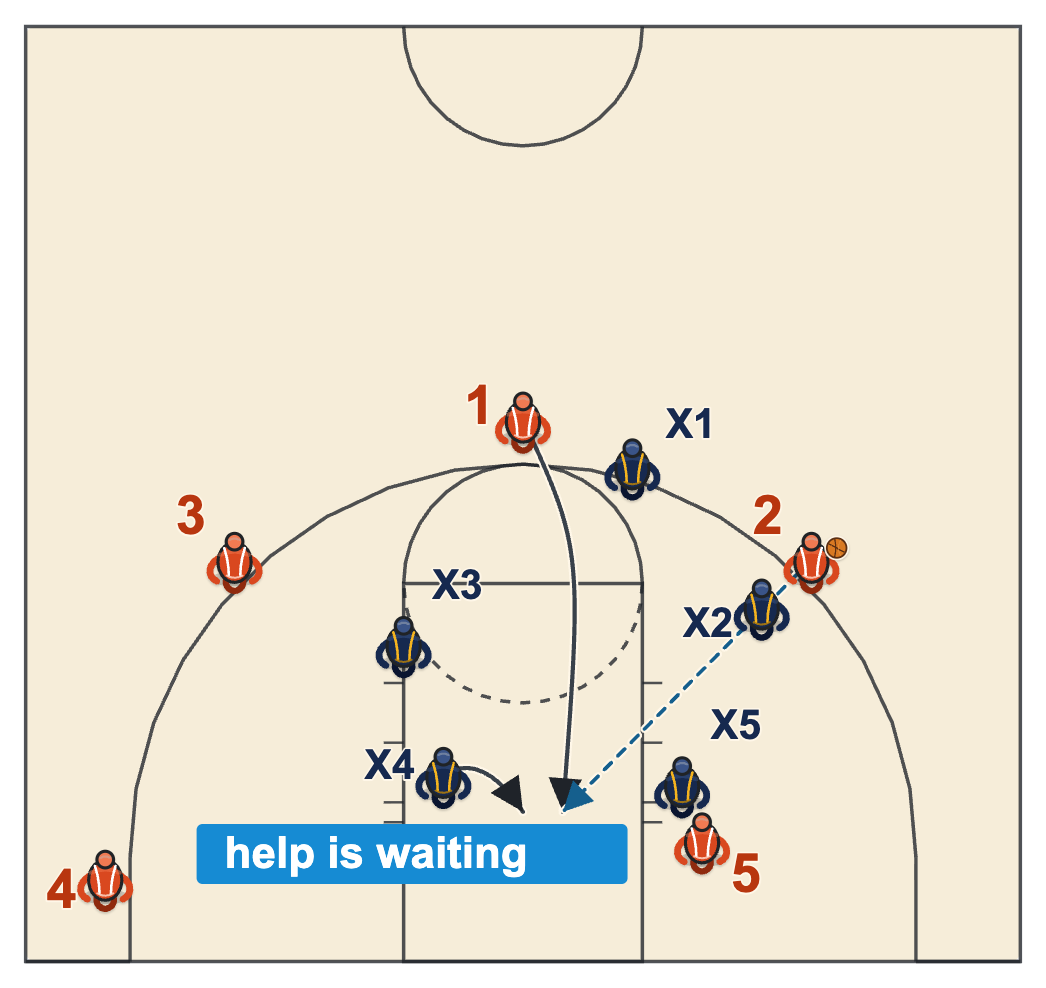
Denial invites the backdoor. Good pressure teams treat that as part of the plan. The help side is placed to take the lob or the bounce pass before the cutter gets it. The pack line rarely sees a backdoor, because nobody is denying. Its cutter rule is simpler: deny cuts inside the pack line, and release a cutter once he clears it.
Get the next side-by-side in your inbox
One email when a new comparison or diagram set goes up. Free.
Side by Side
| Pack line | Pressure man | |
|---|---|---|
| One pass away | In the gap, inside the arc | Up the line, denying |
| Force the ball | Middle, never baseline | Varies by coach, often to a side or baseline |
| Gives up | Perimeter catches, closeouts on every swing | Backdoor cuts, more fouls, longer rotations |
| Takes away | Drives, the paint, straight-line penetration | Rhythm, easy entries, passes near the basket |
| Fouls | Low. Hands back on drives, no reaching | Higher. More contact on denials and cuts |
| Tempo | Slows the opponent down | Speeds the game up and creates turnovers |
| Breaks down when | The on-ball defender cannot keep his man in front | The help side is late to the backdoor or the drive |
Post and Screens
Pack line
Play the post three-quarters on the high side and push the catch out of the post box. On the entry, slide behind and wall up with high hands. Then guard him one on one, dig with the perimeter, or double with a set rule. When the dribble is picked up, everyone switches from the gap to full denial.
Screens: the classic version fights through and does not switch. Ball screens get a hard show as the default, with a trap for an elite handler and softer coverages for a slow big.
Pressure man
Front or three-quarter front the post, with weak-side help ready for the lob. Some pressure systems fully front the low post whenever the ball is below the free-throw line.
Screens: go over the top inside the arc. Outside the arc the screener's defender steps back to let his teammate through, except against a hot shooter. Some pressure systems switch by default to remove hesitation.
Most versions of both chase the same short list: no layups, no open threes, no fouls and no second shots.
Which Team Fits Which
- Pack line: a team that is outmatched athletically but disciplined, a team that needs to cut fouls, and any roster with at least one defender at every spot who can guard the ball without help.
- Pressure man: a quick, well-conditioned team with a deep bench, and a staff willing to live with some backdoor layups in exchange for turnovers.
- Against a great shooting team: the pack line has to close out hard on every swing. Pressure man takes away the catch in the first place.
- Against a great driving team: the pack line has help waiting. Pressure man has to rotate from farther away.
Blending the Two
Plenty of coaches do not pick a side for the season. They pick by opponent. Deny the wing against a team that shoots from the wing or feeds the post from there. Against a point guard who lives on penetration, let the wing catch and take away the return pass instead. Some systems go further and deny or sit one pass away depending on where the ball is on the floor. Either way, settle the calls before the game, not during it.
Pack line in full: How to Coach the Pack-Line Defense. Man-to-man in full: Man-to-Man Defense: The Complete Coaching Guide. Help rules: Help Defense Principles and Drills to Teach Help and Rotation. Both are placed among all the other defenses on Types of Defense in Basketball.
Want every frame, printable?
OBP Pro members get the full diagram files for every defense on this page, ready for a practice binder or a scouting report. $9 a month. Or draw your own version free in the play drawer.
See what OBP Pro includesMore Side-by-Side Pages
- Types of Defense in Basketball
- Best Zone Defense for Your Team: 6 Zones Compared
- 2-3 Zone vs 3-2 Zone
- Man-to-Man vs Zone Defense
- Best Full-Court Press: 6 Presses Compared
Back to Types of Defense and every Defense page.
Keep Building
Related breakdowns
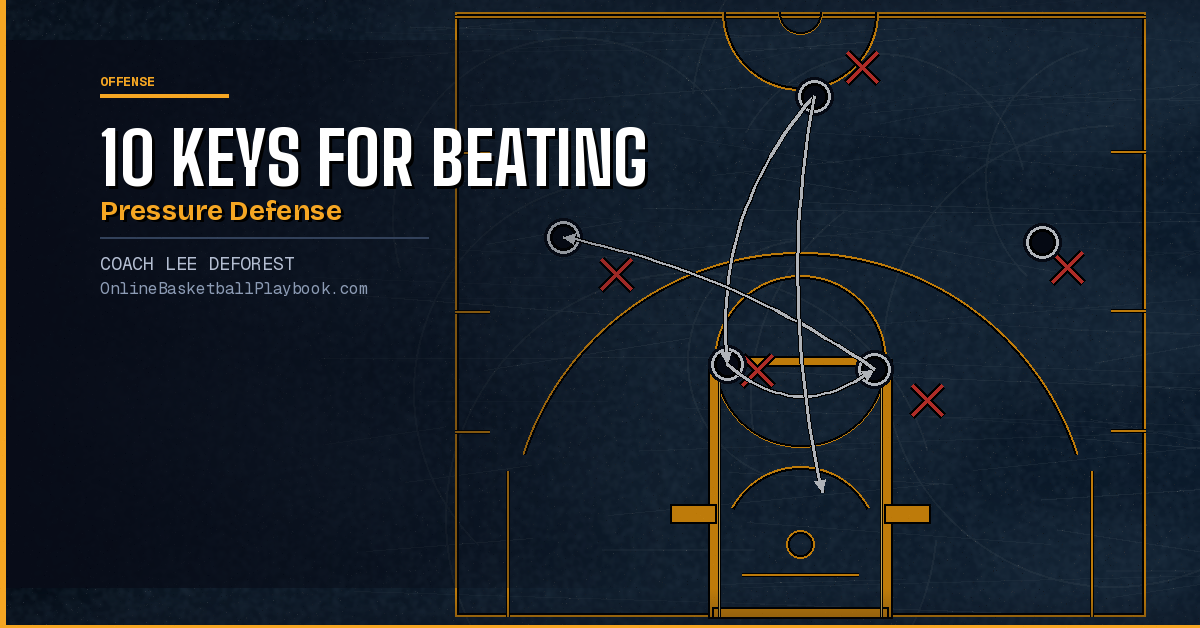
10 Keys for Beating Pressure Defense in Basketball
10 Keys for Beating Pressure Defense in Basketball