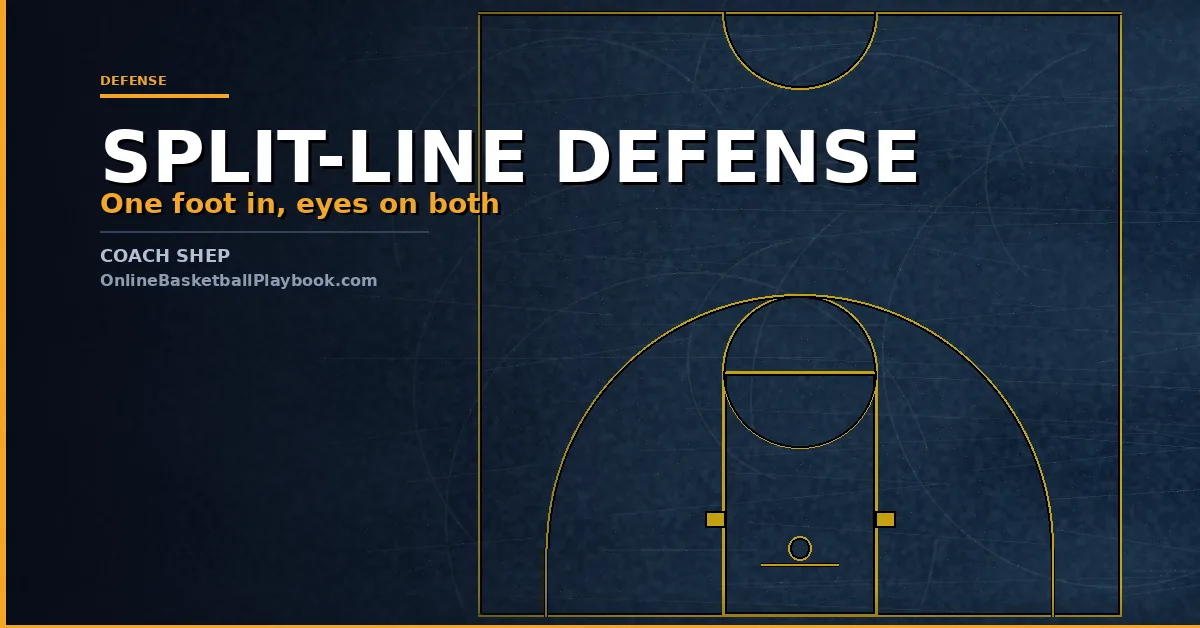
Split-line defense is off-ball man-to-man positioning on the weak side of the floor. Two help-side defenders form a vertical line on or just inside the split line through the rim, usually with one foot in the paint. They can see the ball and their man at once, which makes the first step to stop a drive short and the recover back to a cutter quicker than standing flat on the three-point line.
The full help vocabulary sits on help defense principles. Rotation chains after the first helper are on how to coach defensive rotations, and the pack line version that shrinks the floor without tagging every pass sits on pack line defense.
What Split-Line Positioning Is
On ball-side, defenders play denial, gap or pack rules you already teach. On help-side, split-line defenders stack on a line from ball to rim instead of sagging in a flat arc. The low split-line player often has one foot in the lane. The high split-line player sits between his man and the ball above the block.
This is not a zone. Matchups stay the same. Only the weak-side home position changes. It pairs with the ball-you-man idea on ball you man defense: ball, you, man in that order so the eyes hit the right targets.

Feet, Vision and the Paint Line
Three habits keep the split line honest:
- Tail toward the baseline. Angle the back hip toward the baseline so the defender sees ball and cutter in one glance.
- Move on the pass. Shift while the ball is in the air. Waiting until the catch leaves the split line one step late.
- Closed stance. Chest turned enough to see both threats without turning fully away from the basket.
Against post catches, the low split-line player may pinch one step lower. Against four-out spacing with weak-side corners occupied, the high split-line player widens one step toward the slot to take away the skip.
Read the Driver Before He Attacks
Split-line defense starts before the dribble reaches the paint. On the catch, the weak-side defender reads ball handler, defender and next pass. If the on-ball defender is square and the ball is above the block, the split-line player stays home. If the on-ball hip is open to the middle and the driver has a step, the split-line player pokes a foot toward the charge circle before the first dribble.
Teach the read in 1-on-2 walks first, then 2-on-3, then live shell. The teaching point is the same at every level: arrive early and shorten the closeout instead of gambling late.
Help Without Abandoning Your Man
When the ball enters the lane, the nearest split-line defender becomes the first helper. He does not need to take every drive. His job is to make the driver pick up the dribble or change the angle. While he steps, his eyes stay on his man long enough to know if a cutter is diving behind him.
If the help defender fully leaves, the offense wins with a quick pass to the spot he vacated. The fix is a short close and a loud call so the second defender knows you left. That second layer is the rotation topic on defensive rotations and in reading the help on offense.

Baseline Drive and the Split-Line Trap
On a wing baseline drive, the low split-line defender meets the ball just outside the paint while the on-ball defender turns the driver into the trap. The high split-line defender drops toward the corner shooter. The top weak-side defender splits the two farthest players. That pattern matches the split-line rotation called out in the baseline section of help defense.
If your pack line rules already force middle and never trap baseline, split-line positioning still helps the middle helper. The trap option is a scheme choice, not a requirement of the stance itself.
When to Stay Home
Stay-home beats help when:
- The cutter is already moving to the rim before the drive starts.
- Your man is the best shooter and the driver is not a finisher.
- The offense stacks the weak side with two shooters and one dive cutter.
Pack teams sometimes live here by default because every defender is already packed toward the rim. Split-line teams choose each possession. Calling stay or go before the drive cuts down second guesses.
Drills That Install Split-Line Defense
Start with shell and no dribble: pass only, and grade the split line after every pass. Add 1-on-1 drives from the wing with a live split-line helper. Score the drill on both stops and kick-out recoveries. The closeout series on closeout and recover pairs well when the offense swings the ball after help.
Man-to-man install order sits on building man-to-man defense and on man-to-man defense practice drills. Every guide sits under Defense.
Questions Coaches Ask
What is split-line defense in basketball?
Weak-side man-to-man positioning on a line through the rim so defenders see ball and man and can help on drives without starting on the three-point line.
Is split-line the same as the pack line?
No. Pack line keeps all off-ball defenders inside an arc toward the rim. Split-line is the weak-side stack only, and ball-side rules still come from your man scheme.
When should a split-line defender help?
When the drive threatens the paint and the cutter behind him is late. Stay home when the cutter is early or when your man is the clear shooting threat.
Transition cover when the split line breaks is on transition defense basketball. Types of team defense are compared on types of defense in basketball.
Get the next coaching guide in your inbox
One email when a new guide or diagram set goes up. Free.
Want the printable playbook packs?
Playbook packs: zone attack, press break, press defense, out of bounds, quick hitters, practice plans and the youth turnover cure, each a printable PDF. Or draw your own version free in PlayDraw.
See the playbook packsMore Guides From This Batch
- Motion Offense vs Switching, Sagging and Pressure Defenses
- Basketball Style of Play: One System Across Four Phases
- 4 Out 1 In Penetration Rules: Drive, Fill and Kick
- Naked Post Basketball: When the Weak Side Opens Up
- How to Coach Defensive Rotations Effectively
- How to Mentally Prepare for a Basketball Game: A Coach's Complete Guide
Back to Help Defense and every Defense page.
Keep Building
Related breakdowns
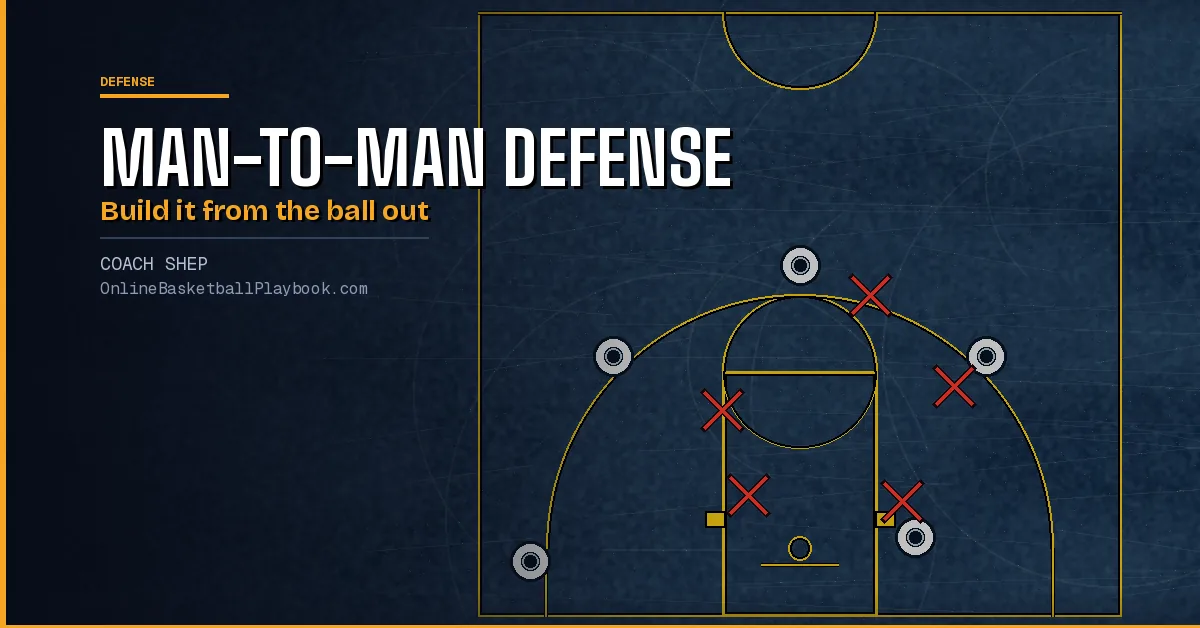
Man-to-Man Defense: Stance, Positioning, Help and Drills
Man-to-man defense starts with the ball-you-man line. Build it in order: on-ball stance, one pass away, help and rotation, screens and the shell drill.
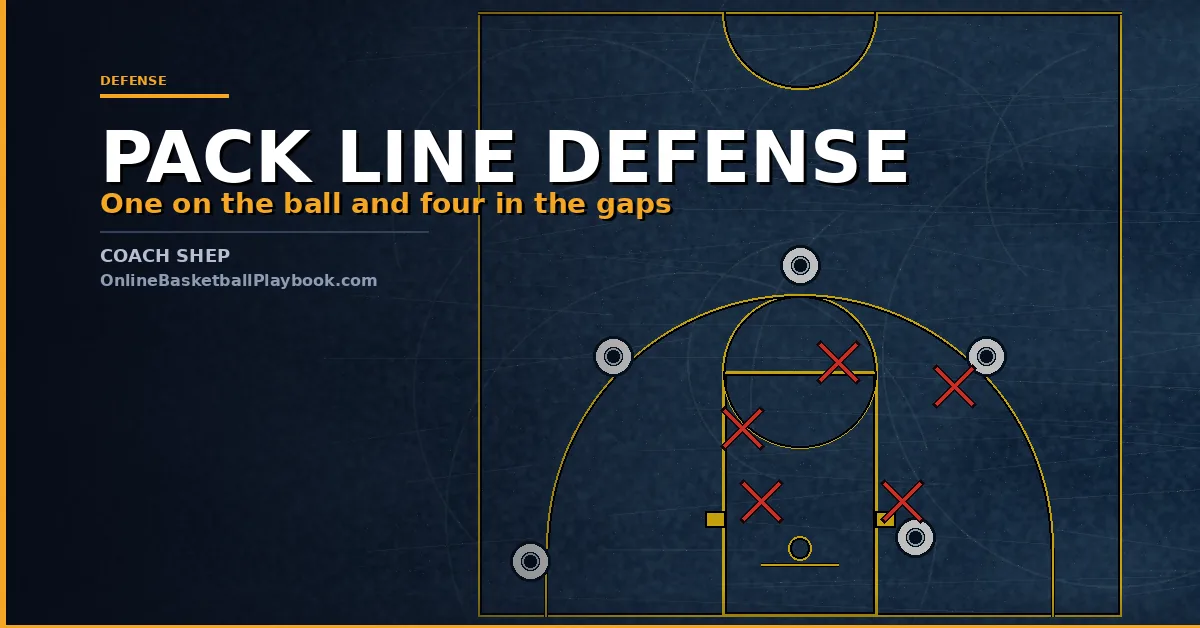
Pack Line Defense: Rules, Post Coverage and How to Install It
Pack line defense as coaches run it: where the line sits, on-ball and gap rules, post doubles, screens, dead balls, the costs and an install order.
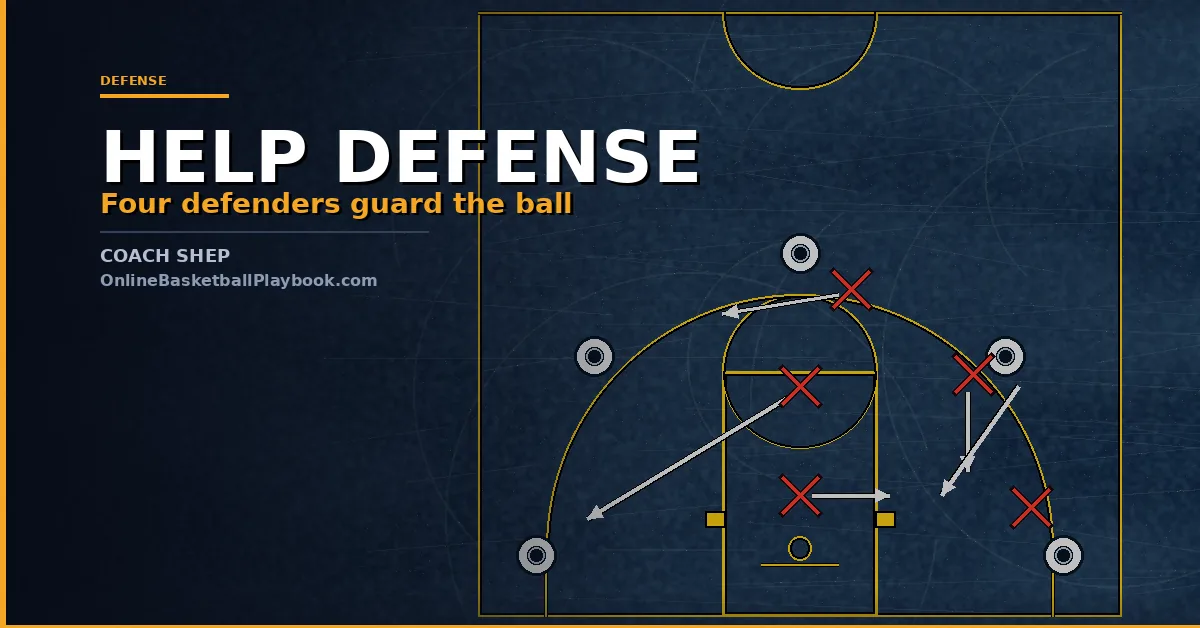
Help Defense Basketball: Help Side, Stunts, Rotations and 911
Help defense basketball explained: where help side defenders stand, stunt or commit, who rotates on a drive, the 911 call, and how coaches teach each.