Motion offense vs switching, sagging and pressure looks like three different games, but the spacing rules and reads still apply when the defense changes its terms. A team that only rehearses against vanilla man-to-man gets stuck when the opponent sags the paint, switches every screen or jumps every pass. This guide holds the same motion principles and swaps the winning answer for each of those three defenses.
The base rules live on motion offense basketball. Spacing language is on what is spacing in basketball, and 4-out reactions to drives are on 4 out 1 in penetration rules.
Rules That Stay the Same
Spacing, pass-and-cut, fill toward the ball and screen timing do not disappear. The ball still has to move faster than the defense shifts. Cutters still punish overplays with back cuts. What changes is which option is first when the help position shows you a new gap.
- Never pass and stand. Pressure and switches both hunt stationary players.
- Fill behind the drive. Every penetration needs a teammate one pass away on the perimeter.
- Screen the helper. Deep help only works if nobody makes that helper navigate a screen.
Vs a Sagging Defense
When weak-side defenders sink below the lane line and the on-ball defender goes under screens, the middle is crowded and the rim help is early. Answers:
- Keep moving. Hold spacing but relocate after every two passes so the saggers have to reshuffle.
- Flare the helper. When a cutter draws the low helper, set a flare for the player whose man left to help. The read is curl to the rim, catch and shoot on an under, or attack the double gap after the catch.
- Screen-in and skip. After a ball-side screen, screen the next helper who shows and skip weak before he recovers.
- Penetrate and fill. If the driver still has an angle, go, but the fill behind must arrive before the help can rotate out. Details on the 4-out page link above.
Zone sag looks similar. The zone hub on how to attack a zone defense covers middle catches and skips that also punish a packed paint.
Vs Switching
Switching can erase the first screen but it leaves mismatches. Motion offense wins by identifying the mismatch before the second action, not by running more sets.
- Organize the mismatch early. If a guard ends up on a post, bring the post to the ball or run him into a ball screen. If a big ends up on a guard, clear the side and let the guard attack.
- Screen before they switch comfortably. Pair screens on the same side so the switch leaves someone in a blind spot.
- Switching defense from the offense side lists more counters when the whole game plan is switch-heavy.
Dribble hand-off teams get the same read on dribble hand-off basketball. Ball screens after motion passes are on pick and roll.
Vs Pressure and Denial
When the defense extends, overplays passing lanes and traps the catch, spread the floor and shorten the decisions.
- Back cut the denial. Hand in the lane on a player you are looking at means go backdoor now.
- Use two outlets. Position a second perimeter receiver above and below the trap so the passer is never stuck.
- Reverse before you hold. One quick reversal beats a trap that expects the first pass to hold.
- Release valves. Use a high reversal or a guard cut to the nail when the press sits on the point. Press answers live on basketball press break.
Early offense spacing that keeps the middle open is on early offense basketball and on how to run the fast break.
How to Rehearse Each Look
Scout tags in small-sided games beat drawing new plays. Play 4-on-4 or 5-on-5 with one constraint: coach yells sag, switch or pressure for two possessions and grades only the first read. Scored games belong on competitive basketball drills and on small sided games.
Install order for motion is on drills to teach motion offense. The whole offense section is under Offense.
Questions Coaches Ask
Does motion offense work against a switching defense?
Yes, when players hunt mismatches quickly and screen twice on the same side before the defense settles the matchup.
What is the best read vs a sagging helper?
Flare or skip to the player whose defender left to help, or attack the gap if the helper is late.
How does motion beat pressure without new plays?
Spread, back cut on denial, reverse before the trap forms and keep a second outlet one pass away.
Get the next coaching guide in your inbox
One email when a new guide or diagram set goes up. Free.
Want the printable playbook packs?
Playbook packs: zone attack, press break, press defense, out of bounds, quick hitters, practice plans and the youth turnover cure, each a printable PDF. Or draw your own version free in PlayDraw.
See the playbook packsMore Guides From This Batch
- Split-Line Defense: Off-Ball Positioning and Help Reads
- Basketball Style of Play: One System Across Four Phases
- 4 Out 1 In Penetration Rules: Drive, Fill and Kick
- Naked Post Basketball: When the Weak Side Opens Up
- How to Coach Defensive Rotations Effectively
- How to Mentally Prepare for a Basketball Game: A Coach's Complete Guide
Back to Motion Offense and every Offense page.
Keep Building
Related breakdowns
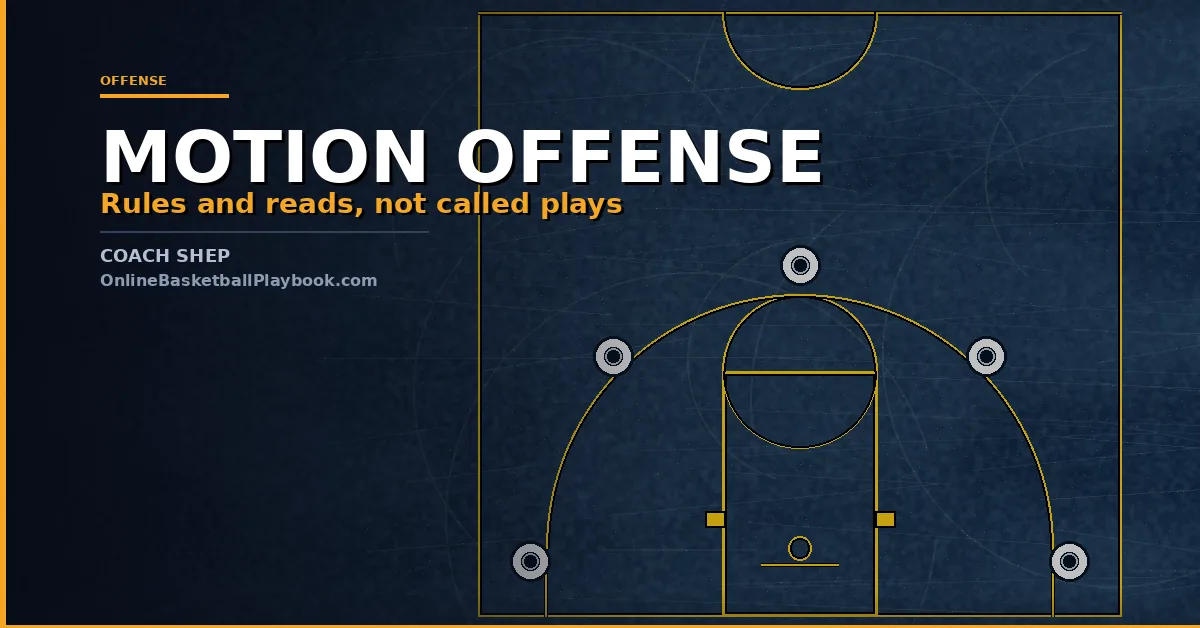
Motion Offense: Spacing, Rules, Actions and How to Install It
Motion offense runs on rules, not called plays. See the spacing, four core actions, 5-out versus 4-out 1-in, the install order, drills and where it struggles.
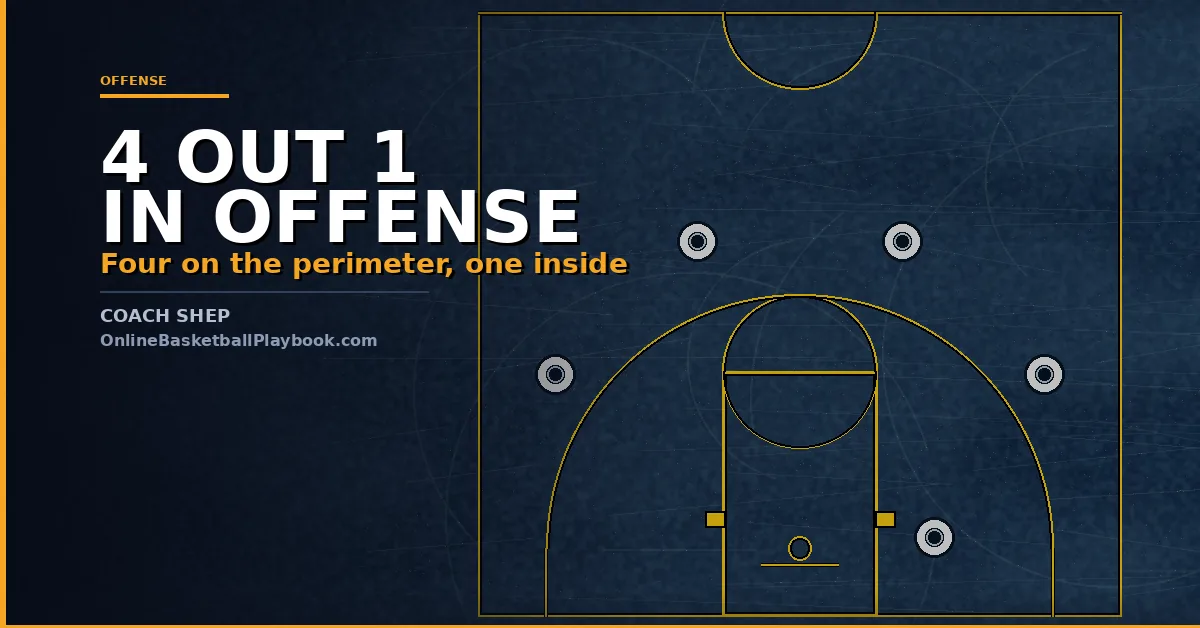
4 Out 1 In Motion Offense: Rules, Spacing and Sets
4 out 1 in motion offense: spacing, the six rules, what the post does, pass-cut-fill, screens, quick hitters, zone adjustments and how to install it.
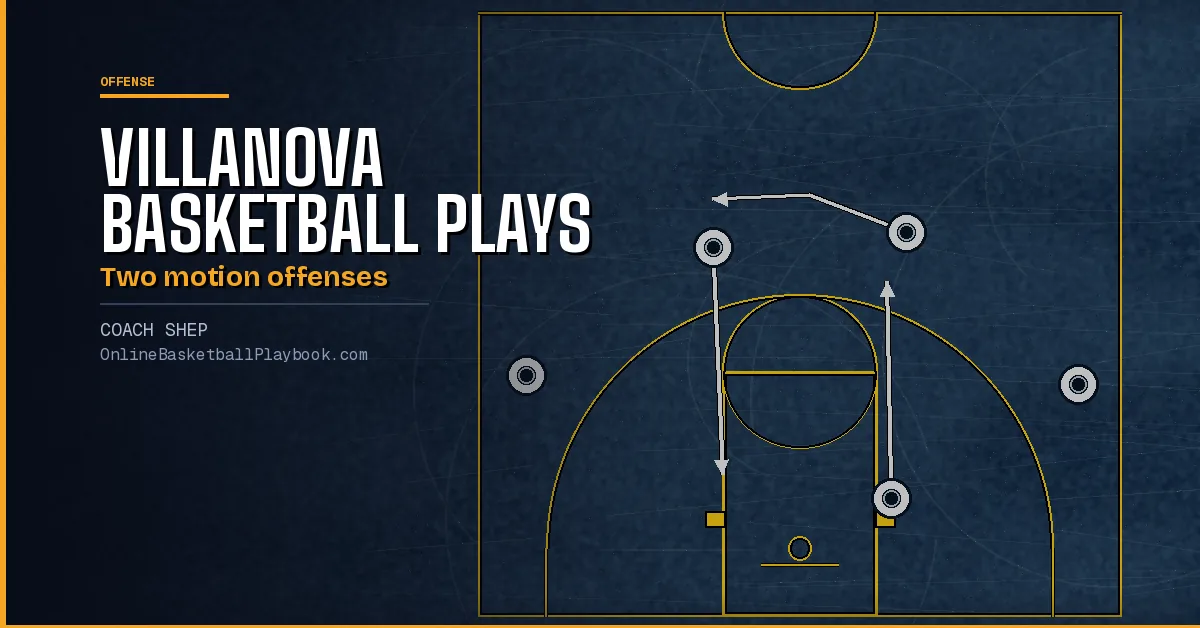
Villanova Basketball Plays: Jay Wright 4-Out, Perretta Motion
Villanova basketball plays from two programs: Jay Wright's men's 4-out rules and Harry Perretta's women's numbered motion, drawn frame by frame.