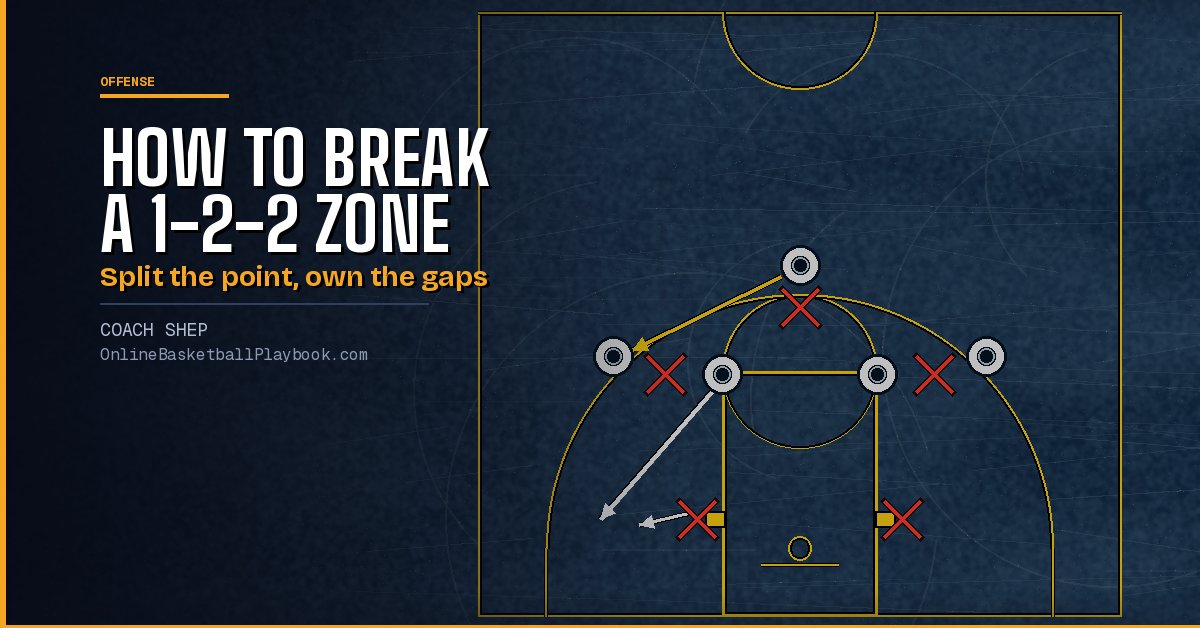
How to break a 1-2-2 zone defense in basketball starts with its first defender. The 1-2-2 puts one player out on the ball at the top of the key, two at elbow height who pinch toward the high post, and two near the low blocks who have to cover everything from the lane to both corners. That leaves a hole in the middle and two back defenders who cannot guard the short corner, the block and the corner at the same time. This guide covers what the zone gives up, why a two-guard front comes first, and five 1-2-2 zone offense alignments with diagrams: the 1-4 high attack, a 4-out motion, a 1-3-1 set, a baseline runner and three deep. The defense itself is on 1-2-2 zone defense, and the principles that apply to every zone are on how to attack a zone defense.
What You Are Facing
The 1-2-2 and the 3-2 look alike, and the first job is to tell them apart. In the 1-2-2 the top defender plays out on the point and pressures the ball, and the two wings pinch to protect the high post, which allows the pass to the wing. In the 3-2 the middle defender sags to the free-throw line to deny the high post and leaves the point guard open. The full comparison is on 2-3 zone vs 3-2 zone, and the attack on the denial 3-2 is on how to beat a 3-2 zone.
The two pages share some tools, because both zones have only two defenders on the back line. This page stays with what is particular to the 1-2-2: the point defender, the gaps beside and behind him, and the short corner and high post seams the back two cannot close. Do not confuse the half-court zone with the 1-2-2 press, a pressing defense with its own page.
Where the 1-2-2 Is Weak
The zone is strong against outside shooting. Its holes are inside and along the baseline.
- The middle. The middle has the biggest hole.
- The corners. The two baseline defenders must cover corner to corner, so the zone is very open to corner shots and baseline attacks.
- The high post. The high post is the other weak spot, and a team that passes well and gets the ball there often can pick the zone apart.
- The weak-side boards. With the ball on a wing or in a corner, the weak-side wing defender drops to the baseline and becomes the main rebounder on that side.
Scout the shifts before you pick an attack. Can the back two reach both corners? Do they fight post entries? Who takes the middle, and how quickly do they recover when the ball is reversed? Which wing defender drops all the way to the baseline, and how quickly?
How to Break a 1-2-2 Zone: Split the Point Defender
The rule several zone coaches share is to line up where the defense is not. A one-guard zone like the 1-2-2 gets a two-guard offense, and a two-guard zone like the 2-3 gets a one-guard offense. Two guards in the slots split the point defender.
There are exceptions. The 1-4 high and 1-3-1 attacks below keep one guard at the top of the key and use the alignment behind him instead. Both put a player at the high post, the spot the zone wants to protect.
A few habits apply to every alignment here. Swing the ball two or three times before attacking, so the zone has to slide, enter at the short corner, and overload one side so the back line is outnumbered. One version also drives the middle seam first against a 1-2-2, which pulls the front defenders together and opens the corners.
The 1-4 High Attack in Six Parts
The fullest of these 1-2-2 zone offense plans starts in a 1-4 high: the point guard at the top of the key, both posts at the elbows and both wings out on the wings. It runs in six parts and turns over to the other side when the first side is done.
- Entry. The point guard passes to the wing on the side away from your best post. The ball-side post dives to the short corner, which forces the ball-side low defender to go with him.
- The wing's looks. He reads the short corner, the other post diving to pin the middle of the zone, and a flash to the high post from the opposite wing. The point guard fills the opposite wing. The post pinning the middle has to work at it even when he is not getting the ball.
- Short corner entry. If the low defender stays in the lane to pinch the post in the middle, the short corner shoots. If he comes out to guard the short corner, the short corner passes to the post inside. The post in the middle has to watch his three-second count and leave the lane when he needs to.
- High post counter. After a few good low feeds, the top defender starts to dig at the post. Then the short corner passes to the high post, where the player who flashed can shoot the 15-foot jump shot, or feed the post with a high-low pass if the top defender closes out hard. The player who flashes is probably your shooting guard.
- Reversal. The high post steps out to take a reversal pass.
- Rotation. The middle post cuts to the ball-side short corner, the high post dives to pin the middle, and the weak-side short corner flashes to the high post. The same looks are now on the other side.


Two quick sets from the same 1-4 picture are built for one-guard zones like the 1-2-2 and the 1-3-1. In the high post entry, the ball goes into the post at the high post, he faces up, the other post and a wing cut to the basket, and the far wing flares to the corner. In the wing entry, the point guard passes to the wing, one post dives to the low block, the other cuts to the high post for a high-low with him, and the far wing banana-cuts to the corner to overload the side. More reads from the high post are on attacking a zone from the high post, and the two-post partnership is on high low offense.
4-Out Against the 1-2-2
The second plan is a 4-out, 1-in motion offense with a two-guard front that splits the point defender. The inside player starts at the high post. The two wings stretch the zone toward the corners, which gives the zone's wing defenders trouble and can pull the low defenders out to guard them. From there the wings attack the short corner gaps.
The post starts at the high post, between defenders, and gives the zone trouble when he drops to the ball-side block. When a wing dribbles into the short corner and the low defender comes over to stop him, the post cutting down the lane is open for the dish. The two guards stay in position to attack the outside gaps.

The man-to-man version of the same alignment is on 4 out 1 in offense.
The 1-3-1 Set
A third plan uses a 1-3-1 set to put two offensive players on one back defender. After his pass to the wing, the point guard runs beneath that side's zone wing into the corner and gets the ball back there. As he cuts, the high post drops down to the block on the ball side. That puts heavy pressure on the zone's wing defender and its low defender on that side, and the guard, the wing and the post have three players against two defenders if the passing is crisp.

Two options follow. Once the high post reaches the block, the low post on the other side can flash to the ball-side elbow, and the weak-side wing can cut backdoor to the weak-side block. The base 1-3-1 alignment is on 1-3-1 offense.
Get the next coaching guide in your inbox
One email when a new guide or diagram set goes up. Free.
The Baseline Runner and Three Deep
The baseline runner offense is a two-guard, two-post attack built for the 1-2-2 and run from the corner. Two guards flank the point defender, two posts sit just above the blocks in the gaps between the high and low defenders, and the best shooter travels along the baseline from one corner to the other, staying on whichever side has the ball. If the runner makes a couple of shots from the corner, the low defender has to come out to him, which frees the post on that block.
The middle of the paint is open while the ball is at the top, so the post away from the ball flashes into the middle looking for the pass and the shot. When the pass goes to the corner instead, he goes straight back to the opposite block, where he is in rebounding position for the corner shot. That habit is called flash and go back.

- Pass-fake the corner. Once the corner shooter has scored a couple of times, the low defender starts leaving early. The guard dribbles toward the wing to draw the wing defender out, fakes the pass to the corner and passes straight to the low post.
- Runner comes back. The runner reverses hard to his starting spot for the catch.
- Runner stops in the paint. He cuts into the lane for a turnaround jump shot instead of finishing the run.
- Pin and skip. The weak-side post pins the low defender so a skip pass finds the runner cutting back to the corner.
The inside screens off the corner pass, where one post screens the low defender and the other cuts to the ball-side block, are drawn on how to beat a 3-2 zone, because the same attack beats the straight 3-2. The runner offense is also said to work against a 1-3-1, a tightly packed 2-3 and a box-and-one when the runner is the player guarded man-to-man (how to beat a box and 1).
Three deep is the last alignment. Mike Krzyzewski is credited with setting three players deep along the baseline against a 1-2-2. His own notes describe three deep for one-man fronts: the point guard penetrates and the other four fill and read, which joins a gap attack with a weak-side screen on the helper.
Reads That Finish the Attack
Every alignment above gets the ball to a spot. These reads decide what happens there.
- Post up the weaker back defender. Zone post defenders usually play upright and behind, and do a poor job of contesting post feeds. Move your best post scorer to the side of the weaker baseline defender and get the ball inside. With the defender behind, the post scores, draws a foul or both.
- Put the best corner shooter on the slow side. Watch how each baseline defender closes out to the corner and how fast he recovers to the low post. Any time one is slow getting back, an easy inside shot opens.
- Watch the wing drop. If the weak-side wing defender is slow to drop to the baseline, the cross-court pass to that side is open. If he does drop, he is now the weak-side rebounder, so put a big player on that board.
- Attack the weakest rebounder. Find which baseline defender rebounds worst and put a strong rebounder on his side. Rebounding is a weakness of any zone because nobody has a man to box out, and the drills for it are on offensive rebounding drills.
Beat the zone down the floor when you can, too. Attacking before the zone is set is part of early offense.
Practicing the 1-2-2 Attack
Zone breakdown drills (the high-post flash and short-corner drill, the 3-on-2 overload and skip drill, and 3-on-3 to 5-on-5 progressions) are on drills to teach zone offense, and ready-made sets are on zone offense quick hitters. The pages for the other zones are how to beat a 2-3 zone and how to beat a 1-3-1 zone.
Questions Coaches Ask
What is the best offense against a 1-2-2 zone?
There are several. A 1-4 high attack that sends a post to the short corner and pins the middle, a 4-out with a two-guard front and a post who slides from the high post to the ball-side block, a 1-3-1 set that makes a 3-on-2 on one side, a baseline runner offense, and three deep along the baseline. All of them aim at the middle and the two back defenders.
What is the weakness of a 1-2-2 zone?
The middle and the corners. The middle has a big hole, the high post is hard to guard, and two baseline defenders have to cover from corner to corner.
How do you beat a 1-2-2 zone with a two-guard front?
Put two guards in the slots so the point defender cannot pressure both, then attack the short corner gaps with the wings and keep a post at the high post who can slide down to the ball-side block.
What is the difference between a 1-2-2 zone and a 3-2 zone?
The top defender's job. In the 1-2-2 he pressures the ball and the wings pinch to protect the high post. In the 3-2 he sags to the free-throw line to deny the high post and leaves the point guard open.
Is a 1-2-2 zone the same as a 1-2-2 press?
No. The 1-2-2 press is a pressing defense with its own page. The 1-2-2 zone is a half-court defense.
Want every diagram, printable?
OBP Pro members get the full diagram files for every shot, rule and zone attack on this page, ready for a practice binder or a team meeting. $9 a month. Or draw your own version free in the play drawer.
See what OBP Pro includesMore Guides From This Batch
- Jump Shot Basketball: Footwork, Release and the Step-Back Jumper
- Is Zone Defense Allowed in the NBA? Rules and History
Back to How to Beat a Zone Defense and every Offense page.
Keep Building
Related breakdowns
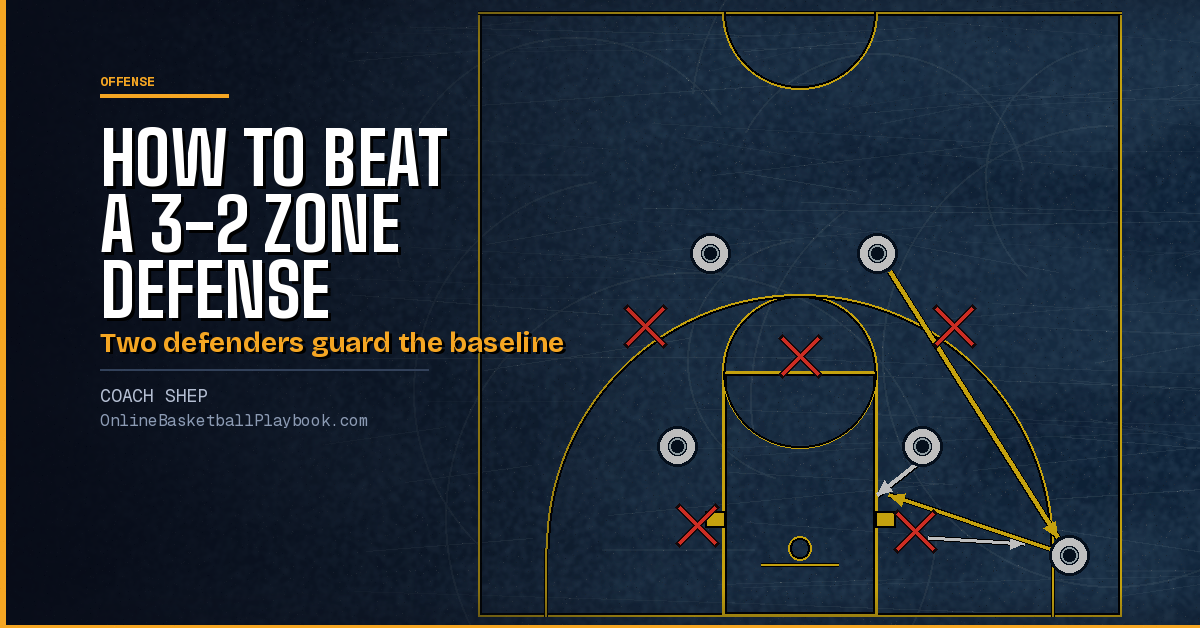
How to Beat a 3-2 Zone Defense: Sets, Screens and Reads
How to beat a 3-2 zone defense in basketball: alignments that split it, corner attacks, inside screens on the back line, the high post, skips, drives and rebounding.
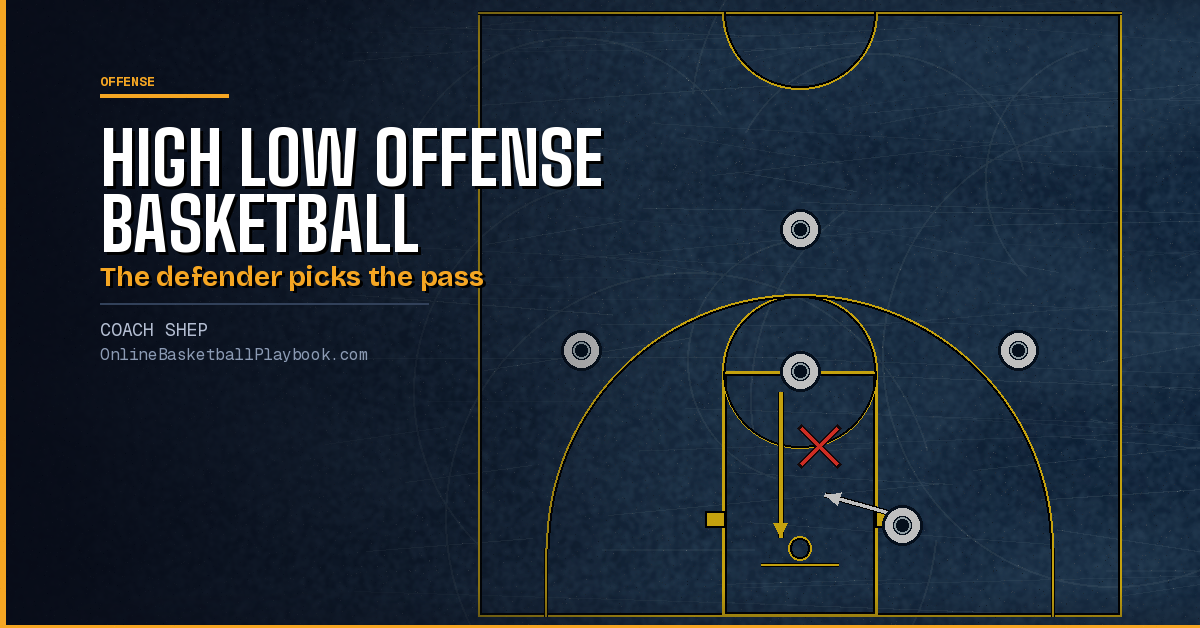
High Low Offense Basketball: Reads, Counters and Zone Rules
High low offense basketball explained: the two-post shell, the lob and bounce reads, answers to a front, down-screen reads, 1-4 low sets and the hi-lo against zones.
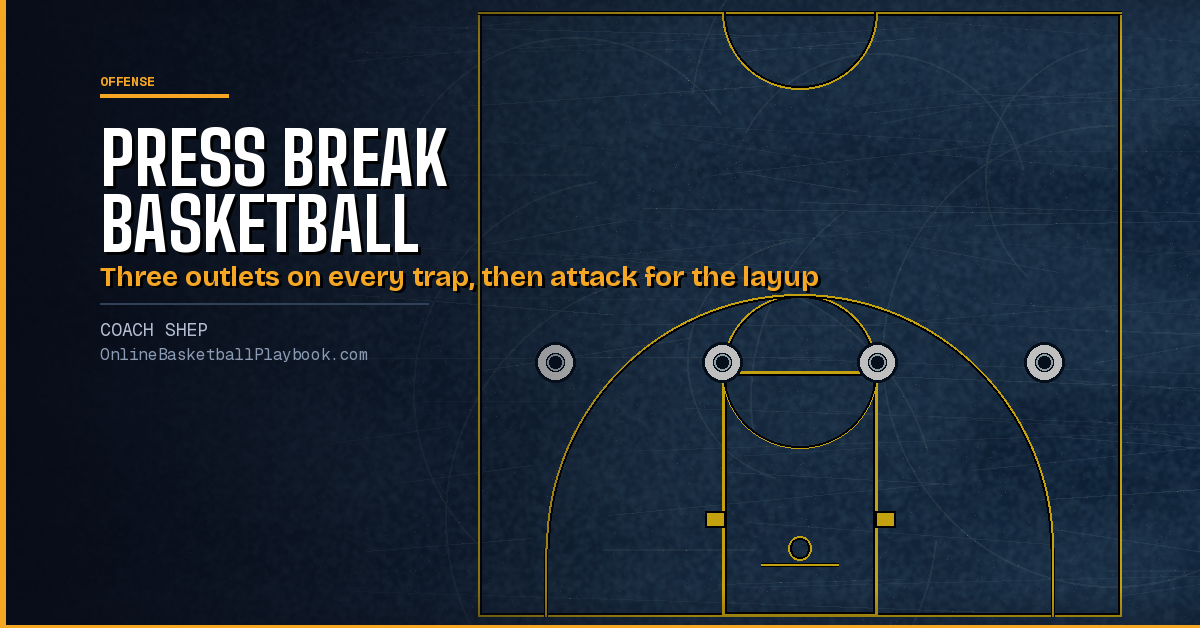
Press Break Basketball: Alignments, Reads and Drills
Press break basketball guide with the 1-4, 80-60-40 and 4-across alignments, reads against the 2-2-1, diamond and 2-1-2 press, and where coaches disagree.