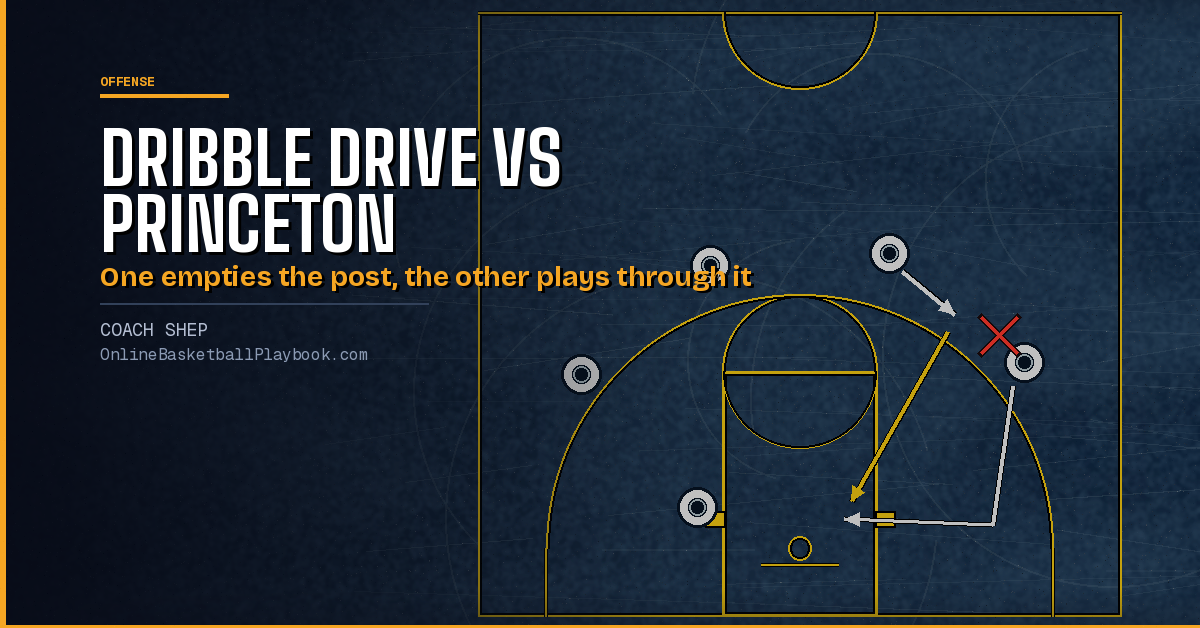
Dribble drive vs Princeton is a comparison that goes back to the dribble drive's own story. Vance Walberg writes that Calipari's nickname for the dribble drive was "Princeton on Steroids." The two offenses do share a lot. Both run on reads more than on called plays, both answer a denial with a backdoor cut, and both want layups and threes. They split on the post, on whether the dribble or the cut moves the defense, and on tempo. This guide puts the dribble drive motion offense and the Princeton offense side by side, one principle at a time, and leaves the choice to the coach and the roster. Princeton against standard motion is on Princeton offense vs motion offense.
Dribble Drive vs Princeton at a Glance
| Principle | Dribble drive | Princeton |
|---|---|---|
| The post | Opposite the ball, out of the driver's way, scoring on dump-offs and rebounds | Played through, as a passer up high or a scorer down low |
| Spacing | Four out and one in, with the shooters deep in the corners | Two guards high, forwards on the wings, the center low opposite the ball or high |
| What moves the defense | The drive, on every catch | Cuts, passes and the threat of the backdoor |
| Denial | Backdoor, and a dribble at a wing is an automatic backdoor | Backdoor, and a dribble at a tightly guarded player is a backdoor |
| Screens | Very few ball screens, plus the blur screen | Named screens inside the sets, with cutting ahead of screening |
| Shots | Threes or layups, no mid-range | Layups and threes, in that order |
| Tempo | Push the ball the whole game, often with a press | Make the defense guard movement before the attack |
| Called plays | None each trip, with a few quick hitters | No called set plays in one version, with sets keyed by a pass or dribble in others |
The Post: Empty It or Play Through It
Dribble drive. The offense was born when Walberg moved his post to the weak-side block so two quick guards could reach the rim. The post stays opposite the ball and does not follow it. Walberg calls him the 4, and the dribble drive diagrams on this page use that number. The Princeton diagram keeps the usual 5 at center. Walberg makes the 4 the rim runner, who sprints the floor and has to know when to clean up, when to T-up and when to relocate. Calipari gives the post two reads on a drive. Driven at, he goes under the rim to the other side, ready for a drop-off. Driven away from, he faces the ball and seals the helper coming from the far corner.

His points come from the work around the rim, on dish-offs and offensive rebounds, and Walberg wants the big to shoot about 60 percent.
Princeton. The ball goes through the post instead of around him. A common rule of thumb follows from that. With a strong big man, run the low post offense. Without one, run the high post offense or Chin. Why Pete Carril played through the high post, and the post's passing job, are on Princeton offense vs motion offense, and the series on Princeton low post series and Princeton Chin series.
Spacing and the Starting Picture
Dribble drive. Four players stay outside the arc and one is inside. Walberg found that with four out, wings standing on the wings make driving hard, so he put them deep in the corners. He wants his shooters patient, at NBA range, with the inside foot in line with the rim. The goal is the biggest gap to drive.

Princeton. Princeton starts higher. The two guards start out high, the forwards on the wings and the center low opposite the ball or at the high post, with players 15 to 18 feet apart. The full starting picture is drawn on Princeton offense vs motion offense.
The pictures differ below the free-throw line. The dribble drive keeps its shooters low, in the corners, and the lane empty for a drive. Princeton keeps its perimeter players high and the post as a target. More on gaps is on what is spacing in basketball.
Dribble or Pass and Cut
Dribble drive. Every catch looks to attack. Walberg's name for the offense, AASAA, is Attack, Attack, Skip, Attack, Attack. A player who cannot attack skips the ball to a teammate who can. The rules around the drive are about movement too. If you pass, you usually cut, and the passer cuts away to give the ball room. The decisions off each drive are on dribble drive reads.
Princeton. The offense moves the defense with cuts and passes before it attacks. The cutting-first rules ask cutters to cut like they mean it, then get back outside. The dummy-offense version opens every trip with movement that makes the defense guard 10 to 12 seconds of movement before the real attack begins, unless the team is behind late and needs a quick score.

If the defense gets lazy during that movement, the offense cuts backdoor for a layup. The dribble drive has no such opening phase. Its first action is the drive.
The Read They Share: Denial Means Backdoor
This is where the two offenses meet. Carril's rule is "when closely guarded, go back door," and in Princeton a teammate dribbling at a tightly guarded player is the signal to go.
Walberg's rules say the same thing in dribble drive words. Any pass fake or dribble at a wing is an automatic backdoor. In the version he taught with Calipari, players accept the pressure and go backdoor, sell the back cut with voice and hands, and never fake it and come back. A drive that stops in the Drop zone is a backdoor cue for the corner player too, drawn on dribble drive zones.

The triggers are listed on backdoor triggers and the cutter's own read on backdoor cut.
Get the next coaching guide in your inbox
One email when a new guide or diagram set goes up. Free.
Screens
Dribble drive. Walberg writes that the offense has very few ball screens, and Calipari has said screens are not a focal point. The built-in exception is the blur screen, a quick running screen after a guard-to-wing or guard-to-guard pass that ends outside the arc. One version adds a high ball screen when the guards are struggling to get to the rim.
Princeton. Screens are named and taught inside the sets, but cutting comes first. The Princeton list is on Princeton offense vs motion offense.
Shots and Tempo
The same shot list. Walberg's slogan is that his teams like threes but love layups, and his rule is three or the key, with mid-range shots banned. Princeton's rules list the shots as layups and threes, in that order, and the cutting-first rules say the same. On paper the two offenses chase the same two shots. The dribble drive adds a hard ban on mid-range shots, priced on dribble drive system.
Different clocks. Walberg's written rules push the ball for all 32 minutes of a high school game to wear the opponent out late, and he pairs the offense with a press that raises the number of trips from about 60 to 80 or more. The Princeton dummy offense does the opposite on purpose. It makes the defense work for 10 to 12 seconds before the attack starts. Tempo choices are on basketball pace and tempo.
Personnel and Install
Dribble drive. Walberg's 1 and 5 are both point guards, drivers first and shooters second. The 2 and 3 are shooters first, and the big runs the floor. The offense needs guards who can beat their man, and Walberg's warning is that it also needs shooters, not just athletes. It is taught through daily drills, which are drawn on dribble drive drills.
Princeton. Carril's line is "Everybody with the ball is a point guard." He adds that a player with skills dictates to the defense while a player without them is dictated to. Its install is on Princeton offense drills.
| Need | Dribble drive | Princeton |
|---|---|---|
| Ball handlers | Two guards who beat their man and get to the rim | Everyone handles and passes |
| Shooters | Two corner shooters, shooters first and drivers second | Every player passes, dribbles and shoots |
| The big | A rim runner who finishes and rebounds | A passer at the high post, or a scorer at the low post |
Borrowing Across the Line
The two offenses are not sealed off from each other. A multi-system version of the dribble drive also runs the stack, the swing and five-man motion, on the belief that a good team needs more than one way to score. And the backdoor read and the layups-and-threes shot list read the same in both rule books.
A coach with two quick guards, corner shooters and a big who runs the floor will find his roster described in Walberg's numbering. A coach with five passers and a post who can see the floor will find his in Carril's. The dribble drive's weak spot against a sagging, pack-line defense is on how to stop dribble drive motion, and Princeton's on how to stop the Princeton offense.
Questions Coaches Ask About Dribble Drive vs Princeton
Is the dribble drive offense the same as the Princeton offense?
No. Both read the defense and use the backdoor, but the dribble drive empties the post and attacks off the dribble, while Princeton plays through the post and moves the defense with cuts and passes.
Why was the dribble drive called Princeton on steroids?
It was John Calipari's nickname for the offense, as Walberg tells it. Walberg does not explain it beyond the line.
Do both offenses use the backdoor cut?
Yes. In both, a denied player goes backdoor, and a dribble at a tightly guarded wing is a backdoor signal.
Which offense plays faster?
The dribble drive. Walberg pushes the ball the whole game and pairs it with a press. The dummy-offense version makes the defense guard 10 to 12 seconds of movement first.
Which is better for a team without a big man?
It depends on the roster. The dribble drive wants two guards who beat their man and corner shooters. Princeton wants every player to pass, cut and shoot, with a passing post as the hub.
Want every diagram on the site?
OBP Pro members get the full diagram files for every offense guide on the site, ready for a practice binder or a scouting report. $9 a month. Or draw your own version free in the play drawer.
See what OBP Pro includesMore Dribble Drive Guides
- Dribble Drive System: Walberg's Pressure, Pace and Shot Diet
- Dribble Drive Drills: Breakdowns, Blood and Scramble
Back to Dribble Drive Motion Offense and every Offense page.
Keep Building
Related breakdowns
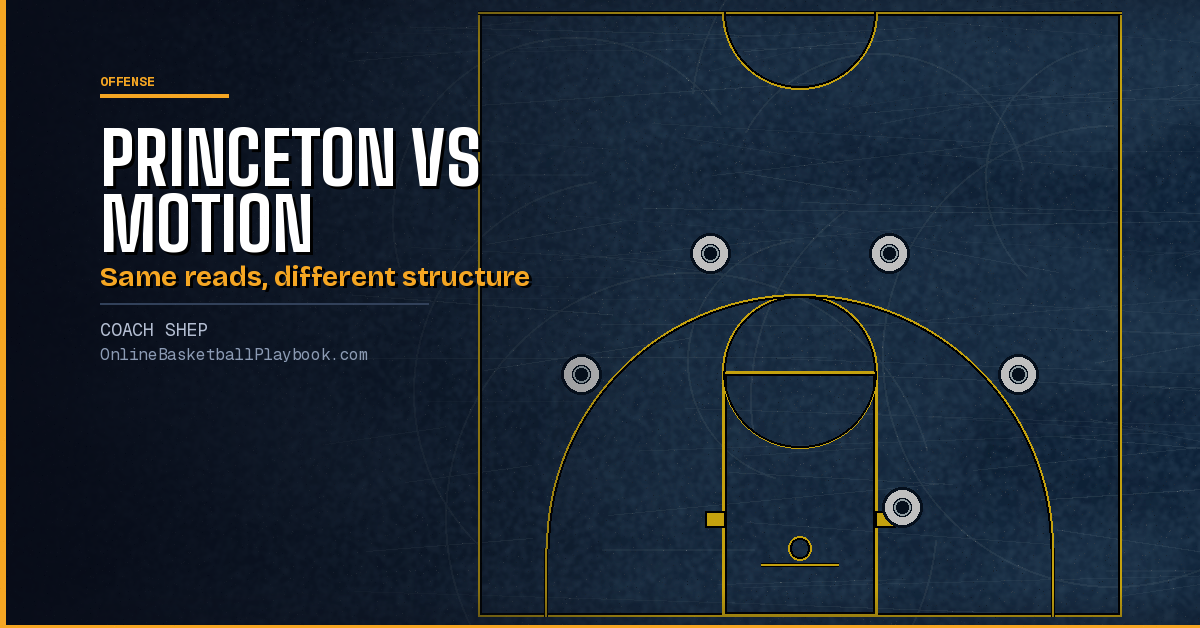
Princeton Offense vs Motion Offense: Compared by Principle
Princeton offense vs motion offense, side by side: spacing, the post's job, cuts and screens, reads, the dribble, called sets, personnel, shots and the install.
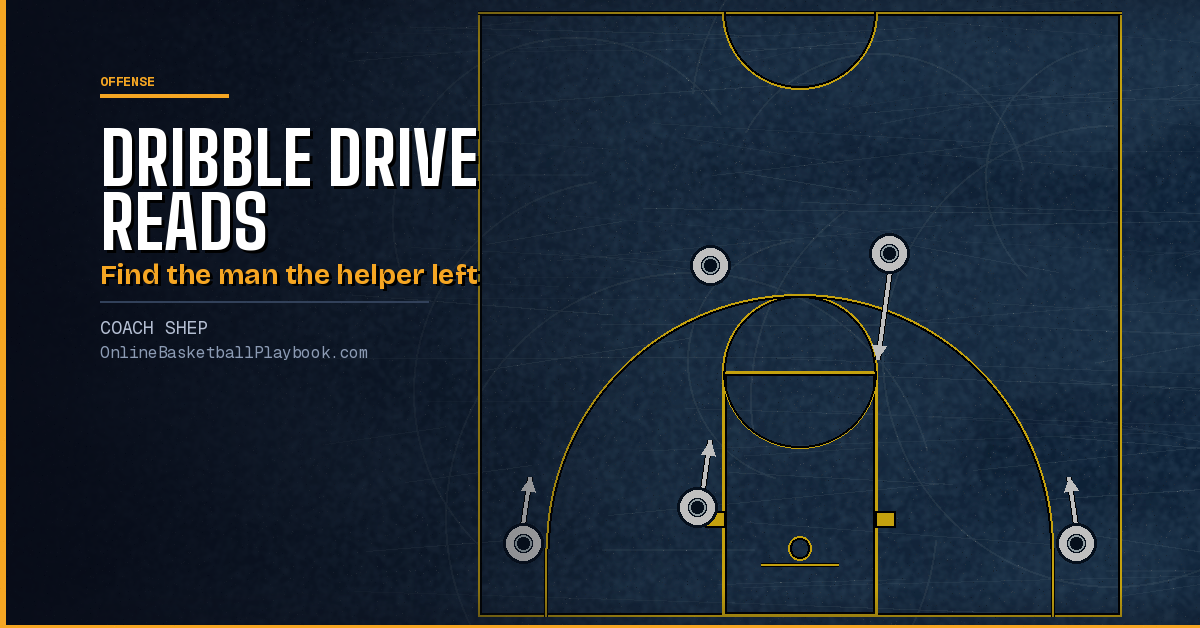
Dribble Drive Reads: Kick Up, Kick Back, Loop and Dump
Dribble drive reads for the driver and the four players around him: the helper tree, kick up, kick back, loop cut, dump, baseline drive jobs and the passing rules.
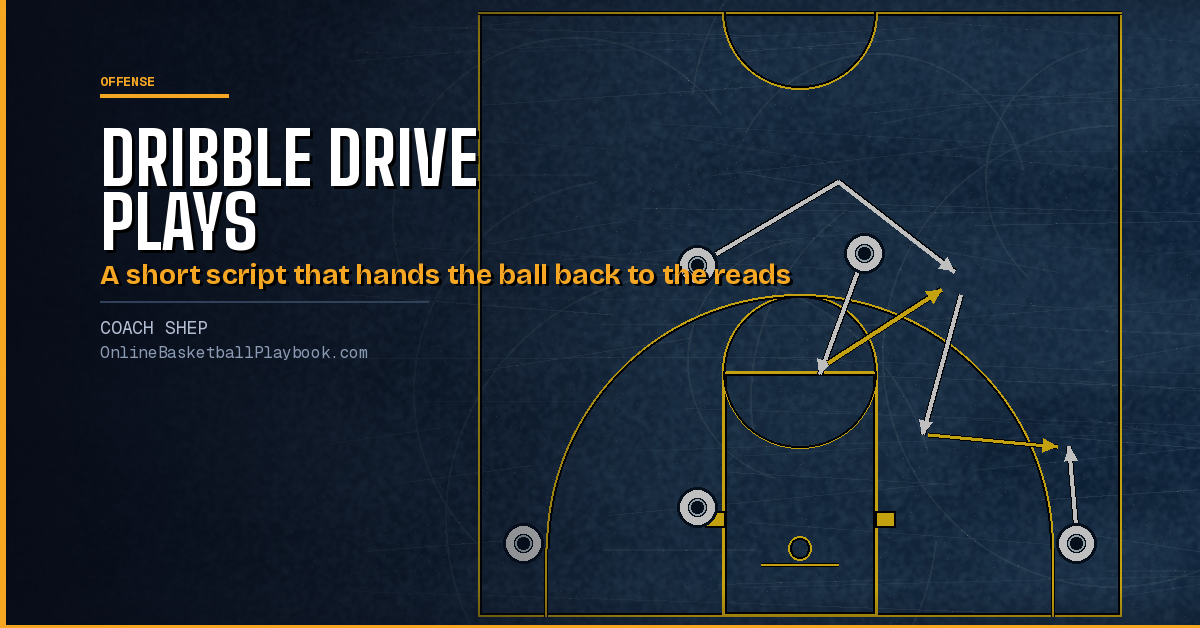
Dribble Drive Named Plays: Drop, Quick, Pop and Corner Sets
Dribble drive named plays, each drawn: Drop, Drag, Quick and Pop calls, a corner ball screen set, one entry with four finishes, the numbering and when to call one.