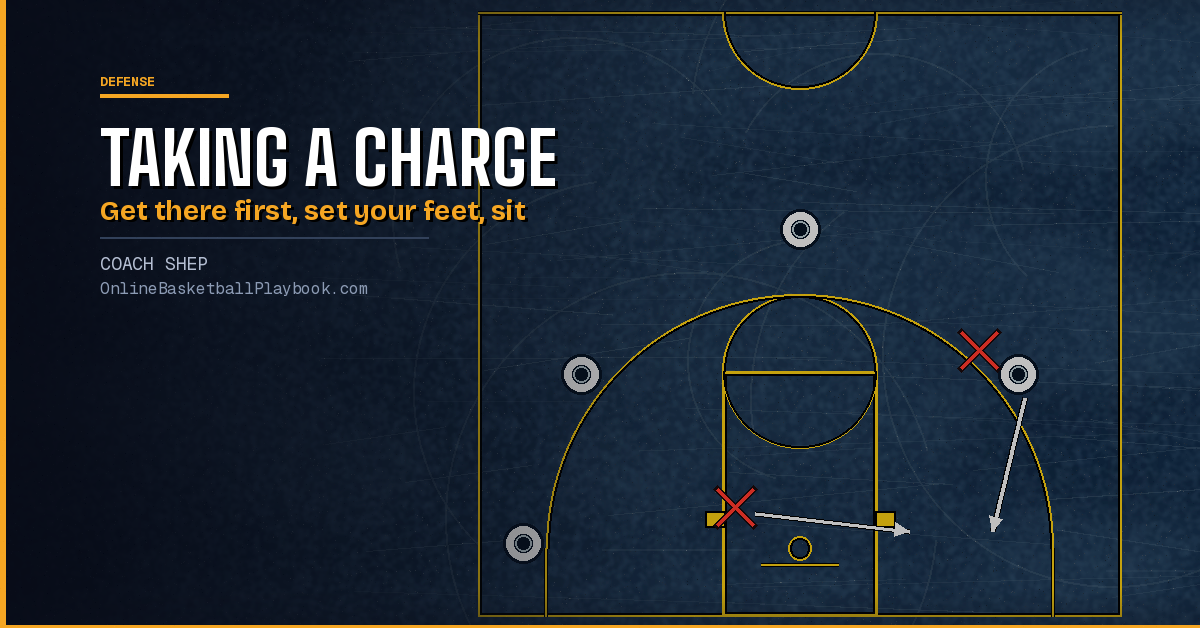
Taking a charge in basketball means a defender beats the ball handler to a spot, sets both feet legally and absorbs the contact so the official calls an offensive foul. One play ends the possession, takes away a shot and puts a personal foul on the offense. Coaches teach it as a help-defense skill, a safety skill and a toughness standard. This page is the technique side: where charges come from, how to set up, the legal spot at each level, three ways to fall, the drills, how programs score and chart it, and where coaches would rather wall up. The rule itself, block against charge, is on what is a charge in basketball.
Where Charges Come From
The help side. The charge is mostly taught as a help defender's job. The low help-side defender steps in once a baseline drive gets past the ball defender, or steps out on ball-side penetration while the ball-side defenders stay home. Secondary help on the block can take the charge or wall up.

The middle drive. The back defender in a combination defense steps up to take a charge or trap on middle penetration.

The post. Against a post man who drives, one version builds a cushion, pushes him to a side and takes a charge. Against a lob over a fronted post, the low help defender rotates to double and takes a charge if he can. More is on post defense.
Screens and traps. A jump switch puts the screener's defender into the dribbler's path for a steal, a travel or an offensive foul. Trappers who keep their feet together turn a step-through into a charge, and a dribbler who leaves his feet to pass out of a trap is an easy charge to step into. When a press is broken, one rule for slowing the dribbler is to lunge, fall back and take a charge.
Transition. In a 2-on-1 the last defender fakes and drops back, then steps up into the ball handler's path once he commits to the basket. Another rule is that the first man back must not stand under the hoop, where he cannot take a charge.

Help spots in general are on help defense principles, and the get-back rules are on transition defense.
Setting Up: Feet, Body and Hands
Get there first and set both feet. Both feet are planted before the driver arrives. After that, the only movement is the backward fall, because a turn of the hip or shoulder reads as a block. One version says to square up before the shooting motion starts. Another gives the order as get in front of the dribbler, feet shoulder width, arms crossed, lean back and sit.
Position makes it possible. Moving as the ball moves is what lets a defender take charges instead of playing catch-up. One practice plan teaches the charge as body position, never reaching with the hands.
Keep the hands in. The hand position differs by version, and none of them reaches back to break the fall:
- A forearm across the body with the hands up, never behind the body, to protect the wrists
- Hands beside the hips, fingers forward
- Arms tucked in
- Arms crossed
Stance work that feeds this is on defensive stance.
The Legal Spot by Level
Where a help defender may draw a charge depends on the level. The full block-charge call is on what is a charge and what is a blocking foul, and the arc itself is on restricted area basketball.
| Level | Legal guarding position | Restricted area |
|---|---|---|
| NFHS (high school) | Check your state association rulebook for the full definition | None. Legal position may be established anywhere on the court. |
| NCAA men | Both feet on the court and the torso facing the opponent. No time and distance needed on the player with the ball. | A secondary defender cannot set up in the 4-foot arc to draw a charge, and contact there is a blocking foul unless flagrant. Exceptions: the driver leads with a foot or an unnatural knee or wards off with an arm, or stops moving toward the basket and then starts the contact, and a set defender who jumps straight up to block a shot. |
| NCAA women | Both feet down, torso facing, no time and distance on the player with the ball | A defender cannot get initial legal guarding position in the restricted area to draw an offensive foul on a player in control or one who has released a pass or try. |
| NBA | A defender may set up in a dribbler's path regardless of speed and distance | A secondary defender cannot draw a charge in the 4-foot arc on a player who goes straight to the rim, with an exception for a player who catches in the Lower Defensive Box. |
| FIBA | Facing the opponent with both feet on the court. No time and distance on the player with the ball. | Contact by an airborne offensive player with a defender inside the no-charge semi-circle is not a team-control foul, unless the offensive player uses his hands, arms, legs or body illegally. |
A cutter without the ball. Against a player without the ball, time and distance do apply: never more than two strides in the NCAA men's and women's books, and never less than one normal step in FIBA.
The driver's momentum. In the NCAA men's and women's books, contact caused by the momentum of a player who has tried for goal is charging.
Check the rulebook your games are played under before teaching the spot. One coaching version has the defender square up outside the lane entirely, because officials tend to call blocks inside it.
Three Ways to Fall
Every version protects the head, neck and wrists, and every version rejects the defender who stays standing, which one version says risks injury to both players.
| Version | How to fall |
|---|---|
| Two-cheek fall, stay down | Get low as the driver closes, fall on both cheeks in the direction of the drive (a one-cheek fall to the side reads as a block), roll onto the back and pull the feet up to absorb a player who lands on you. |
| Seat-first sit | Sit down seat first, never on the back or shoulders, chin tucked, hands beside the hips. Land on the buttocks, never the back, head, wrists or hands. Yell, and get up for the next one. |
| Shoulder roll, pop up | Sit to lower the center of gravity, roll over the back of a shoulder with the chin tucked, never onto the neck or head, and bounce back up. Players learn to roll off either shoulder. |
The shoulder-roll version adds that a properly taught roll prevents injury and makes players more willing to take charges in games.
Selling Contact
Coaches split four ways on how much to sell it:
- A sound is fine, a flop is not. An exhale or groan at contact is fine, but never go down without contact.
- Exaggerate the fall. One version calls this a modern skill.
- Never flop. Another calls it unethical.
- Teach all of it. One defensive list covers how to take a charge, fake or flop, and how to land.
Two rulebooks punish faking: the NBA lists flopping among its technical fouls, and FIBA has an article on faking being fouled. Technical foul rules by level are on technical foul basketball.
Get the next coaching guide in your inbox
One email when a new guide or diagram set goes up. Free.
Charge, Wall Up or Block
Coaches split five ways on the last defender at the rim:
- Take the charge on help drives. One version says a charge is smarter than a block attempt on a help drive, that only players with size and jumping ability should try to block shots, and that blocking instead of taking a charge is a careless foul.
- Wall up and go vertical. Another version chests the driver near the rim and contests with a full vertical jump instead of planting. At NCAA men's and NBA games a help defender who plants inside the restricted area is called for the block, while the NCAA men's book lets a set help defender jump straight up with arms in legal verticality (Rule 10-1-14.c).
- Wall up first, then charge. Pack line programs offer take the charge or wall up, and their wall-up drill keeps the defender on the floor before adding the charge later.
- Any stop beats a layup. A pressure pack line list accepts a charge, a deflection, a blocked shot or a hard clean foul, anything but a layup in the paint.
- Never pass one up. One scoring system takes points away from a player who passes up a charge.
The pack line's wall up is on how to coach the pack line defense.
Taking a Charge Drills
Teach the fall before live contact. One early drill uses a mat, with a manager under the basket to catch the driver. A hustle drill has the driver jump-stop into the defender instead of a full-speed collision, and says to teach the charge alone before chaining it to other skills. A team version starts the driver from the wing at reduced speed. A line drill gives each defender 5 or 6 charges in a row onto a mat.
Partner charges. Partners stand about a lane width apart and take 30-second turns, or run it for 1 to 2 minutes. The dribbler comes at his partner, who lands on his seat, yells and gets straight up for the next one. It often sits in a mental toughness block beside loose-ball and cutter-bump drills.

Fold it into stance work. One mass-sliding drill includes a charge with the slides and closeouts. Another ends each rep with players falling back as if taking a charge after calling "dead."
Chain it into help and closeouts. One chain runs closeout, sprint to on-ball, sprint to help, then a charge against a pad, and ends with teammates lifting the defender with a loud celebration. Another stops a basket cut, then takes a charge from the baseline attacker. A jump-to-the-ball drill finishes with a charge. Wall-up and closeout stations end in controlled charges, and a 1-on-1 denial and closeout drill ends with a charge outside the paint.
Hustle gauntlets. One drill strings a charge, a dive for a loose ball, a long lob and a layup. Another adds a help-side charge and an outlet before the loose ball.
More scored and hustle drills are on competitive basketball drills and drills to teach help and rotation.
Scoring It and Charting It
Competitive drills usually give the charge their biggest reward. Some of the values:
| Drill or system | Charge value |
|---|---|
| 3-on-3 cut throat, first to three stops | Automatic win |
| Practice sprint | A charge wipes out a sprint |
| Practice accountability points | +5, with a deflection +2 |
| 4-on-4-on-4 defensive game | 3 points, a steal 2, a rebound 1 |
| Film grading | +7, and a passed-up charge is -7 |
| Live shell drill | 2 points |
| Turnover chart | +2, the same as a steal or a rebound |
Game targets range from one charge per quarter, to 6 per game, to 3 or more a game as a bonus, to 2 a game. Hubie Brown counts charges in place of blocks on his halftime board at the high school level.
Charting. Some coaches count a charge inside the deflection total, and others track it separately. Charges show up on hustle charts and play-hard charts, in postgame talks as specific praise, and in film sessions as positive clips.
Celebrate it. Dean Smith's teams ran over to help the charge taker up, with the coaches joining in practice, and another college team does the same. Another program points, talks and touches after a charge.
Who Takes Charges, and When Not To
Who. Coaches give five answers:
- Everyone. Don Meyer says good teams have one or two players doing the dirty jobs and great teams have all of them.
- The point guard. One version says the tough point guard leads the team in charges.
- The power forward. Another lists charges among the four's jobs.
- The bottom defender. The back defender in a 1-3-1 or a scramble defense takes charges.
- The low help-side defender. The man who sees the drive coming.
Foul trouble. A player in foul trouble should not take one, because the call is the official's judgment.
Late in close games coaches split. One version says be careful gambling for a charge late, since officials rarely call one that is not obvious. Another puts taking charges on its checklist for a team that is behind late, and says that when you need to foul, attack the passing lane for a steal or a charge first.
Age. One youth program tells 8- and 9-year-olds not to take charges at all. Pickup games rarely call offensive fouls, so the charge is not a real strategy there.
Questions Coaches Ask About Taking a Charge
How do you take a charge in basketball?
Beat the driver to the spot, set both feet facing him before he arrives, keep your hands in, take the contact in the chest and fall safely, seat first or with a roll.
Can you take a charge under the basket?
It depends on the level. NCAA and NBA rules stop a secondary defender from drawing a charge inside the restricted area, and FIBA has its no-charge semi-circle. NFHS has no restricted-area rule.
How do you fall when taking a charge?
Three ways are taught: a two-cheek fall that stays down, a seat-first sit, and a shoulder roll that pops back up. All protect the head, neck and wrists.
Do you have to be still to take a charge?
The defender must have legal guarding position, both feet on the floor and facing the driver, before contact. Coaching versions add that the only movement after that is the fall, because turning a hip or shoulder reads as a block.
What is a good drill for taking charges?
Start with partner charges about a lane width apart, onto a mat if needed, then chain the charge into help and closeout drills.
Want every diagram on the site?
OBP Pro members get the full diagram files for every guide on the site, ready for a practice binder or a scouting report. $9 a month. Or draw your own version free in the play drawer.
See what OBP Pro includesMore Coaching Guides From This Batch
- Tandem 2-3 Zone: Rules, Rotations and the Tandem Front
- Zone Defense Drills: Slides, Closeouts, Traps and Rebounding
- How to Defend Cutters in Basketball: Every Cut, Every Rule
- Post Defense in Basketball: Front, Three-Quarter or Behind
Back to Building Up Man-to-Man Defense and every Defense page.
Keep Building
Related breakdowns
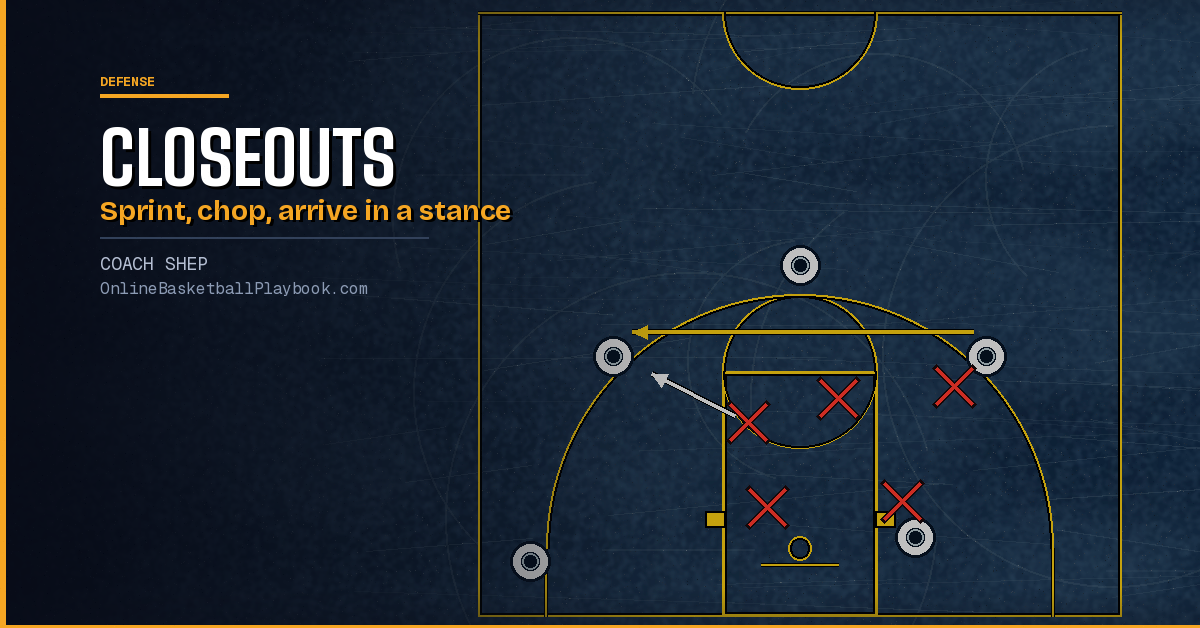
Closeout Basketball: Technique, Angles, Shooter Reads and Drills
Closeout basketball explained: when to leave, sprint and chop, hands and feet on arrival, which way to send the drive, shooter labels, and closeout drills.
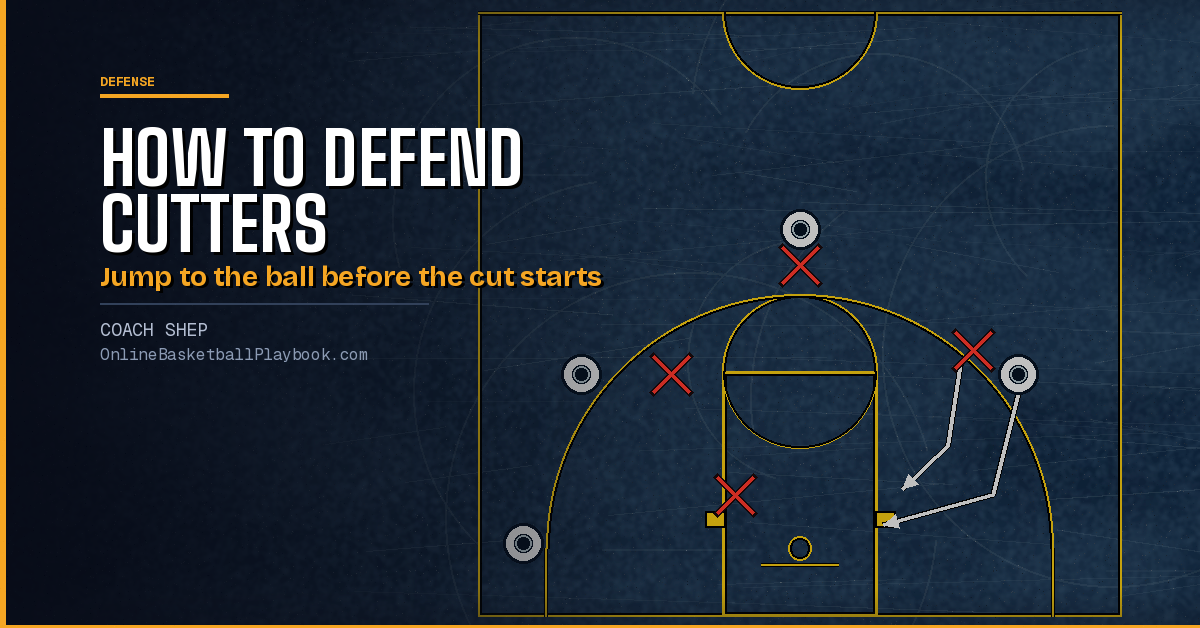
How to Defend Cutters in Basketball: Every Cut, Every Rule
How to defend cutters in basketball: jumping to the ball, the one-pass-away stance, bumping the cutter, the give and go, back cut, flash, curl and screen cuts.
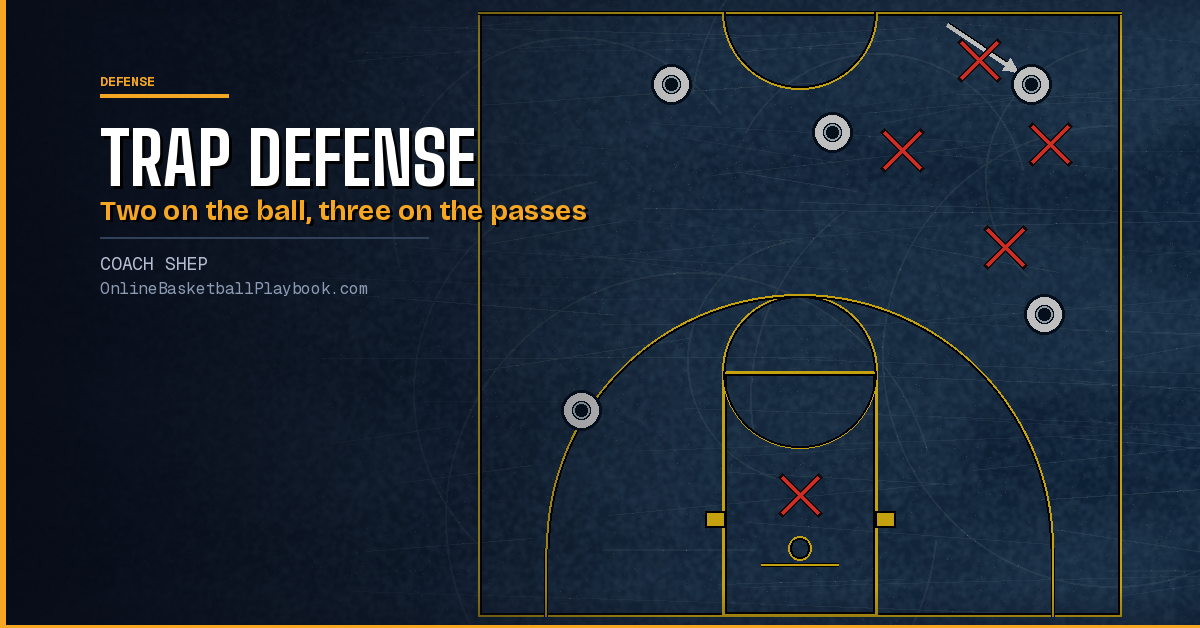
Trap Defense Basketball: When, Where and Who to Trap
Trap defense basketball explained: how two trappers close, when to spring the trap, the spots on the floor, the interceptors and goaltender, and every version.